Edinburgh Open Research Conference 2025 Highlights

On 4th June 2025, we held the 4th annual Edinburgh Open Research Conference. The conference welcomed anyone who is part of a research community, from researchers and technicians to support services and curious citizens. This year almost 300 people joined us from around the world to discuss challenges, success stories, and next steps to further open research.
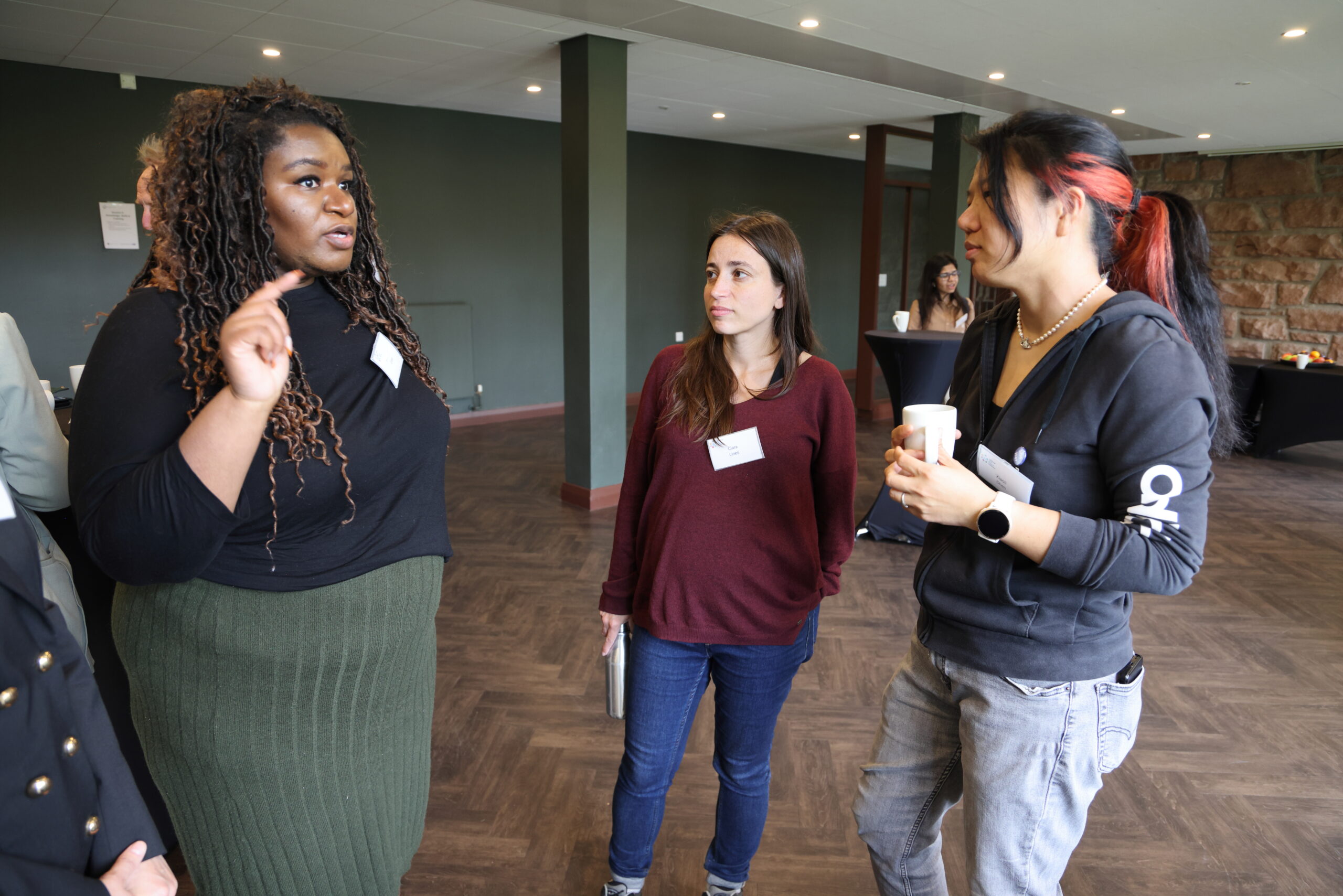
Attendees chatting. Photo by Eugen Stoica.

This year’s theme was “What’s stopping us?” and centred around barriers to making progress in Open Research. We had a full-on bill of events, with 18 speakers presenting their work and ideas throughout the day. We were honoured to host many speakers who had travelled to attend the conference, especially those who travelled from as far as India and the USA. In case you couldn’t join us, all sessions were recorded – you can find the videos on our Media Hopper:

https://media.ed.ac.uk/channel/Edinburgh+Open+Research/259602172

And you’ll find the proceedings from this year’s conference here:

https://journals.ed.ac.uk/eor/issue/view/696

Session 1: Communities and collaborations

In the first session we heard about different methods for understanding the barriers to adopting open research (Ailsa Niven and Zuzanna Zagrodska). I was particularly interested in Zuzanna’s finding that people become less enthusiastic about Open Research with more experience as a researcher. We also heard about some personal experiences of engaging with Open Research. Judith Fathallah spoke about how Open Access publishing models centre author agency, while Fiona Ramage talked about putting her career on the line to stand up for academic integrity.
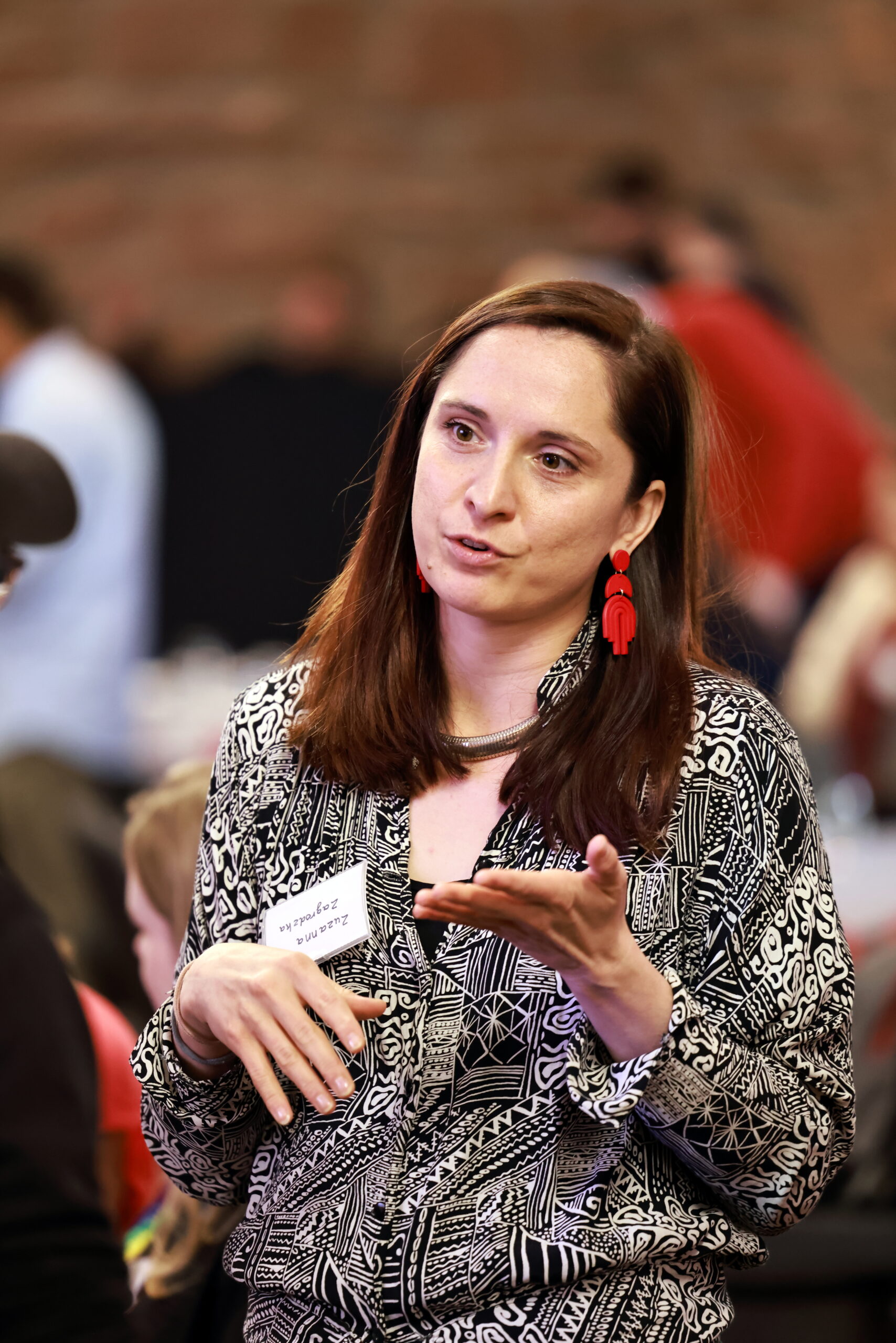
Zuzanna Zagrodzka. Photo by Eugen Stoica.
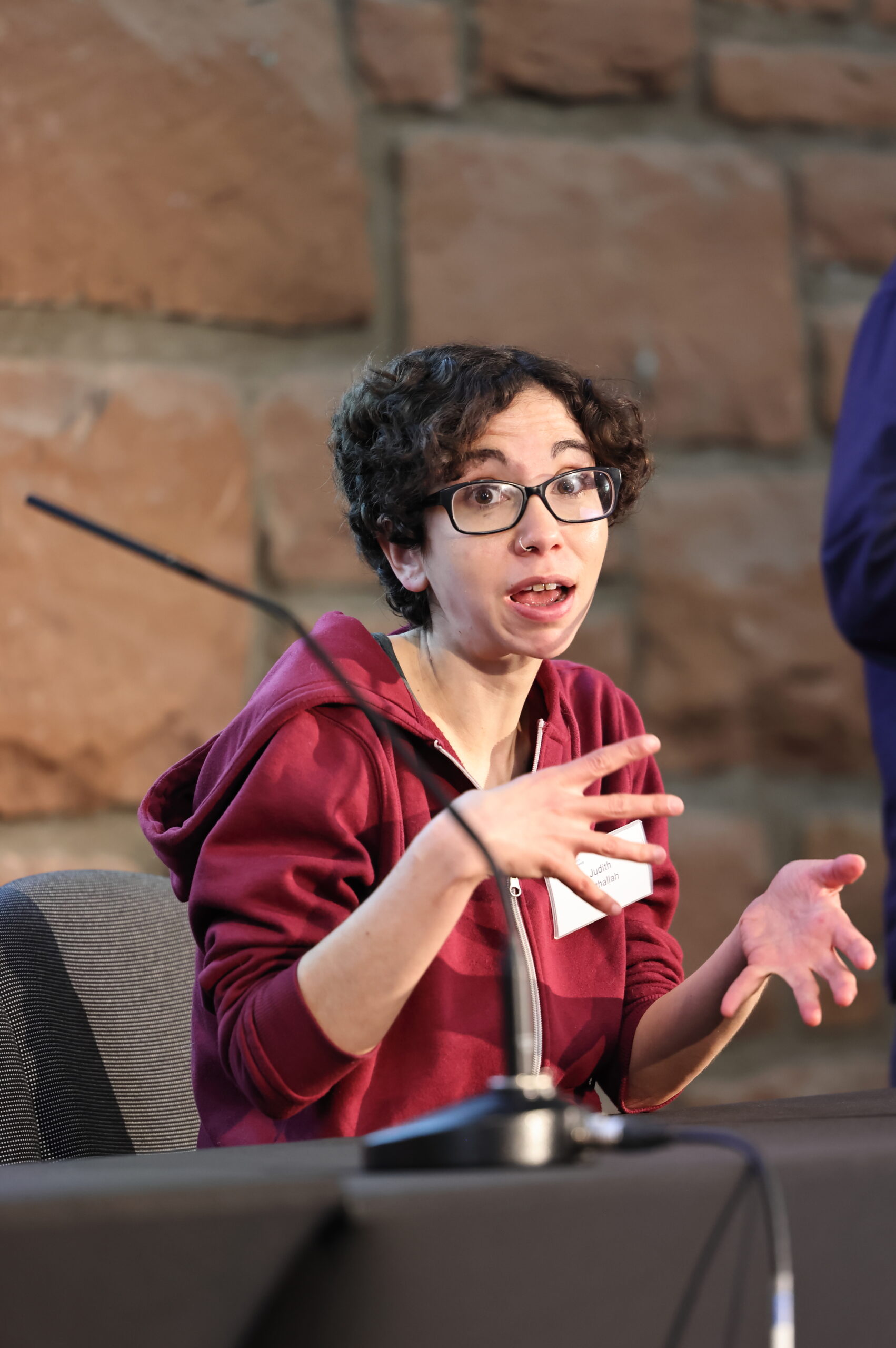
Judith Fathallah. Photo by Eugen Stoica.

Session 2: Policy and Procedures

In the second session we heard lightning talks on how the Diamond Open Access model can help early career researchers (Varina Jones-Reid and Sarah Sharp), applying FAIR data principles to institutional data (Damon Querry), and whether open research mandates work in the context of the 2021 REF Open Access Policy (Ali Kay). The final talk was on the Research Culture Action plan at Edinburgh and how Research Culture and Open Research intersect (Crispin Jordan and Will Cawthorn).
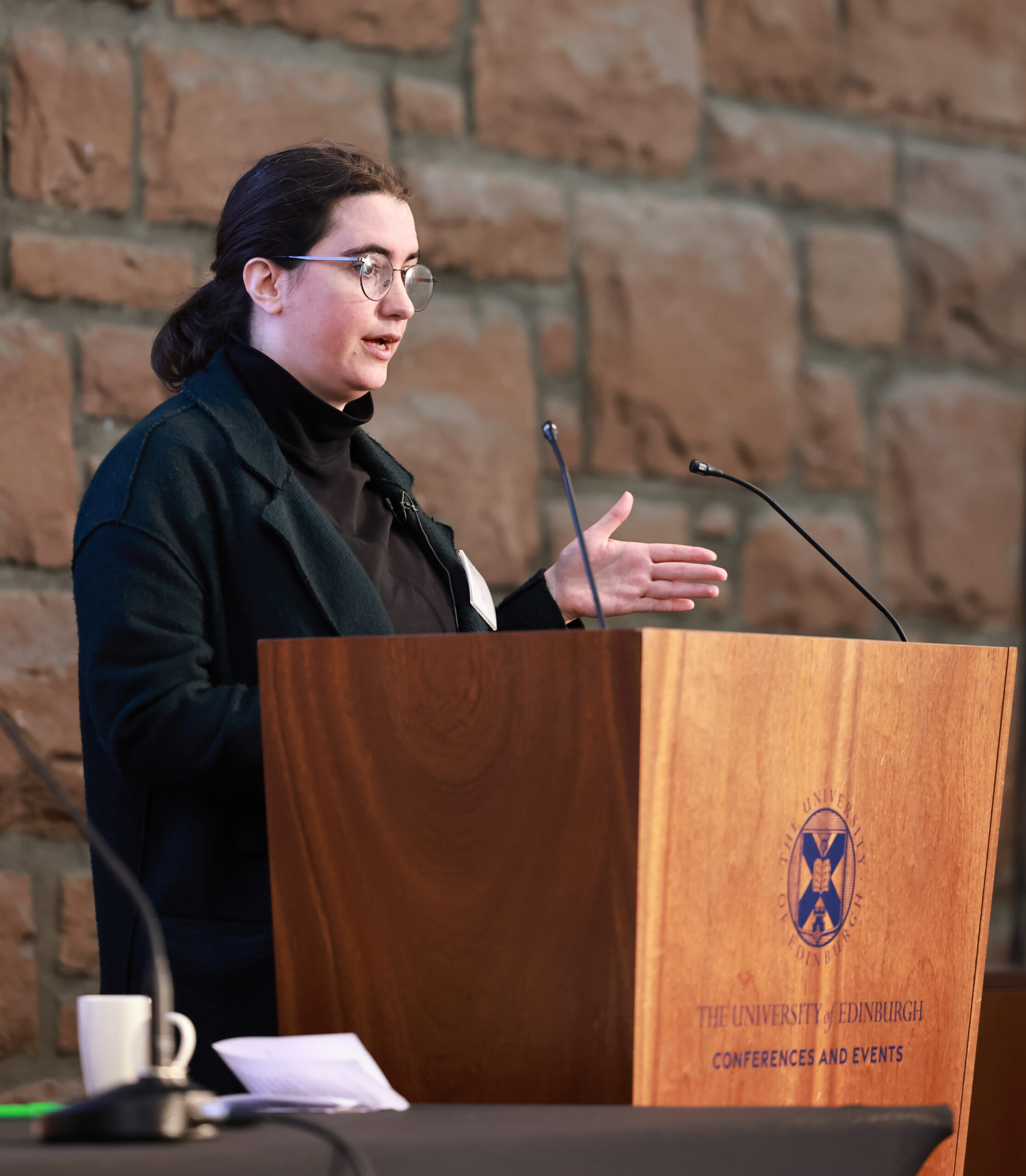
Ali Kay. Photo by Eugen Stoica.
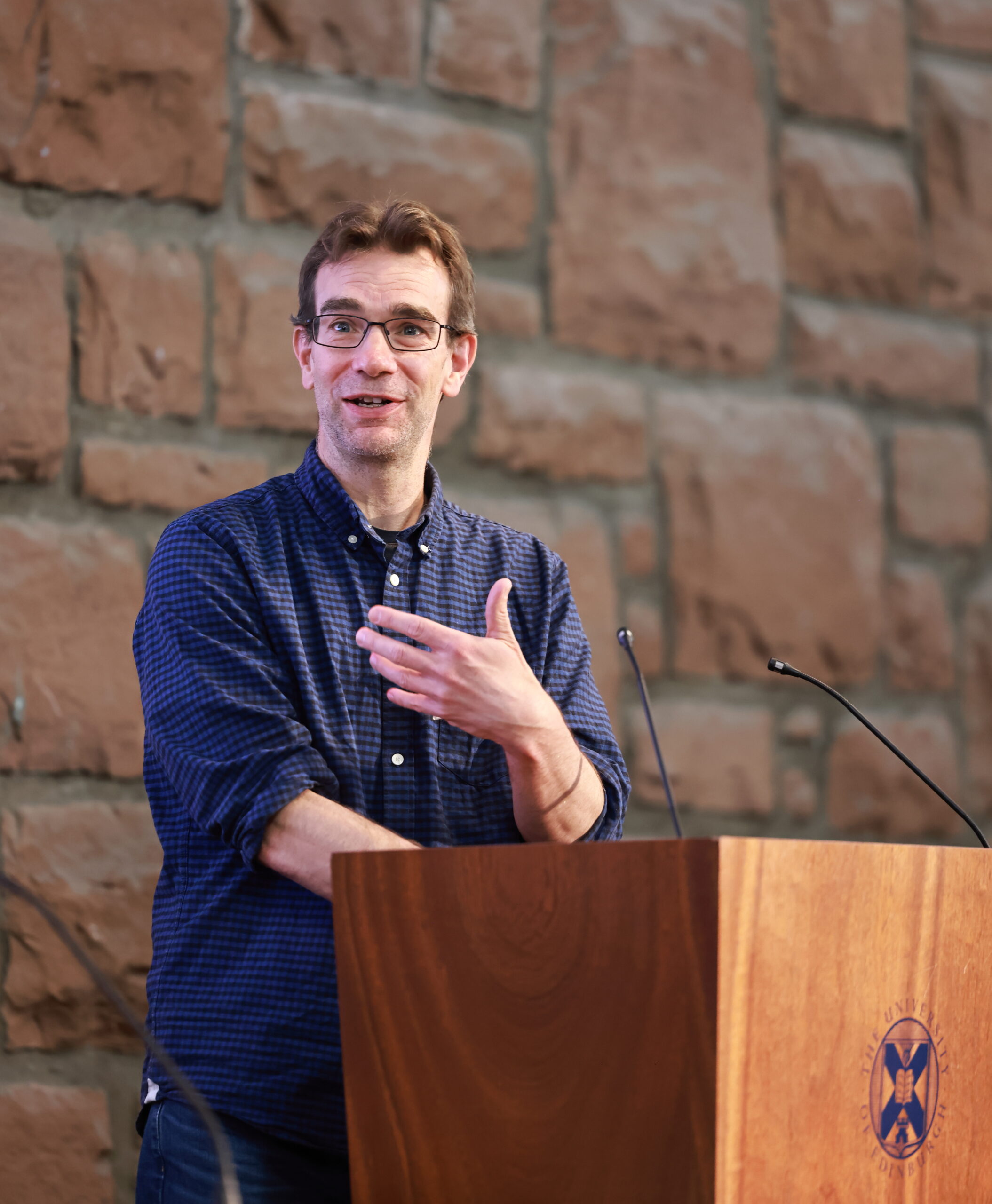
Crispin Jordan. Photo by Eugen Stoica.


Lunch: Research Cafe / Networking

During the lunch break, we had the opportunity to gather and network or to attend this month’s Research Cafe event, held monthly by our wonderful Academic Support Librarians. Ruthanne Baxter, Civic Engagement Manager for our Heritage Collections, joined us to talk about prescribing heritage-based social support programs as a non-clinical health intervention for students and Edinburgh locals.
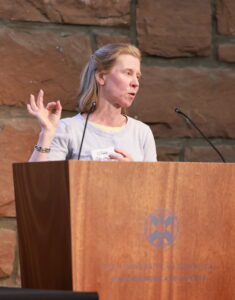
Ruthanne Baxter. Photo by Eugen Stoica.

Session 3: Systems and Infrastructure

After lunch, a couple of speakers talked about open-source software, one for automating lab work and for divesting from Big Tech corporations whose values are not aligned with our own. We also heard about new tools aimed at solving specific obstacles to Open Access – one tool for helping researchers identify and overcome barriers to sharing qualitative research data, and a new platform to make publication in neuroscience more accessible using preprint peer-review. I liked that the speakers in this session provided practical solutions and tools.
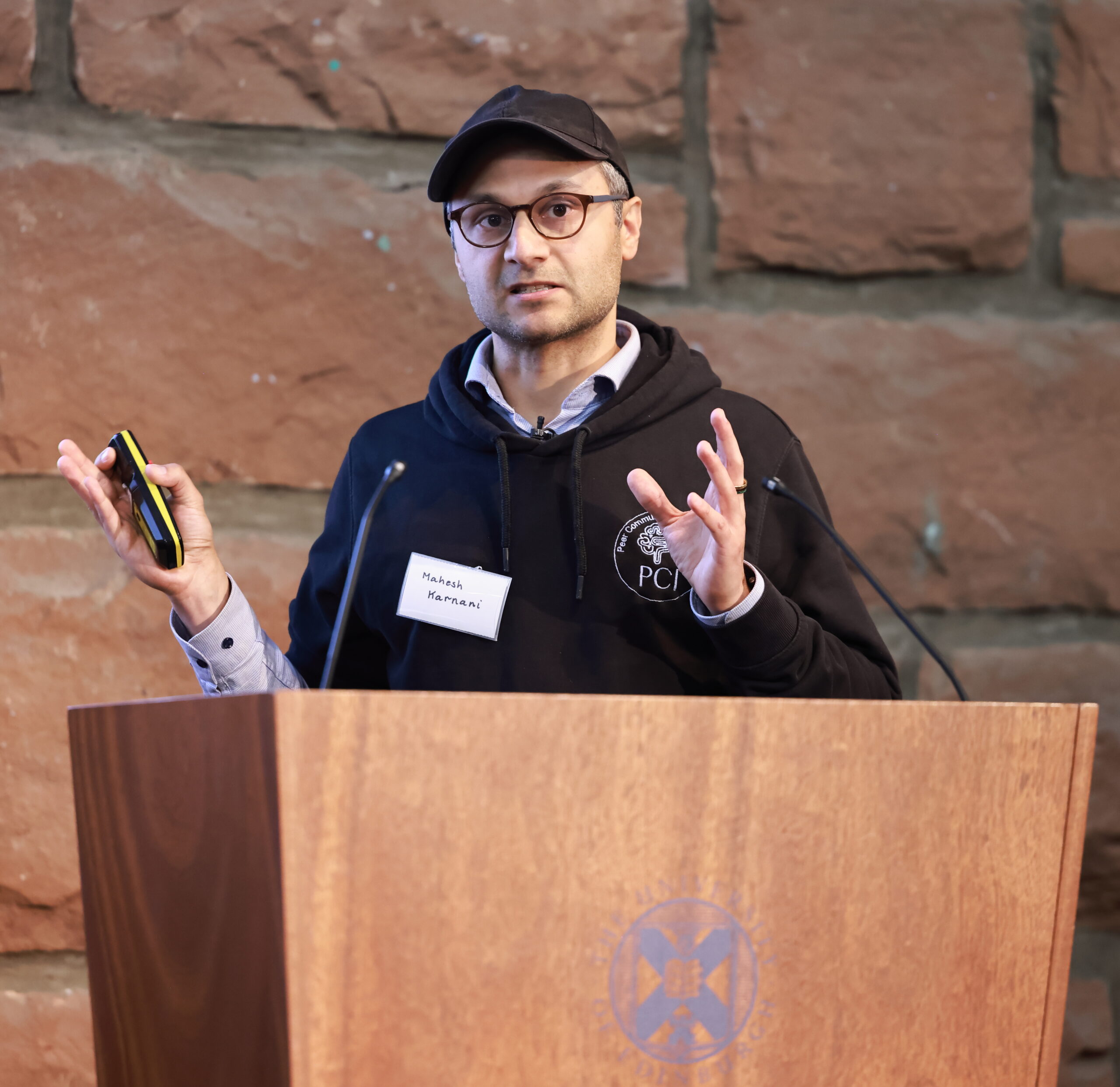
Mahesh Karnani. Photo by Eugen Stoica.

Audience member listening. Photo by Eugen Stoica.

Session 4: Knowledge, Skills & Training

During the final session, speakers discussed Open Research in a global context: Milena Dobreva shared her reflections on her knowledge exchange in Bulgaria, and our old friend Tapas Kumar Mohanty talked about building a culture of Open Science in a Global South context through the NIHR Global Health Research Unit on Respiratory Health (RESPIRE) project. We also heard about new training-related innovations. Louise Saul discussed reward and recognition for research-enabling staff who provide Open Research training, and Camilla Elphick presented a new interactive and accessible Open Research learning resource she co-developed at the Open University.

Milena Dobreva. Photo by Eugen Stoica.
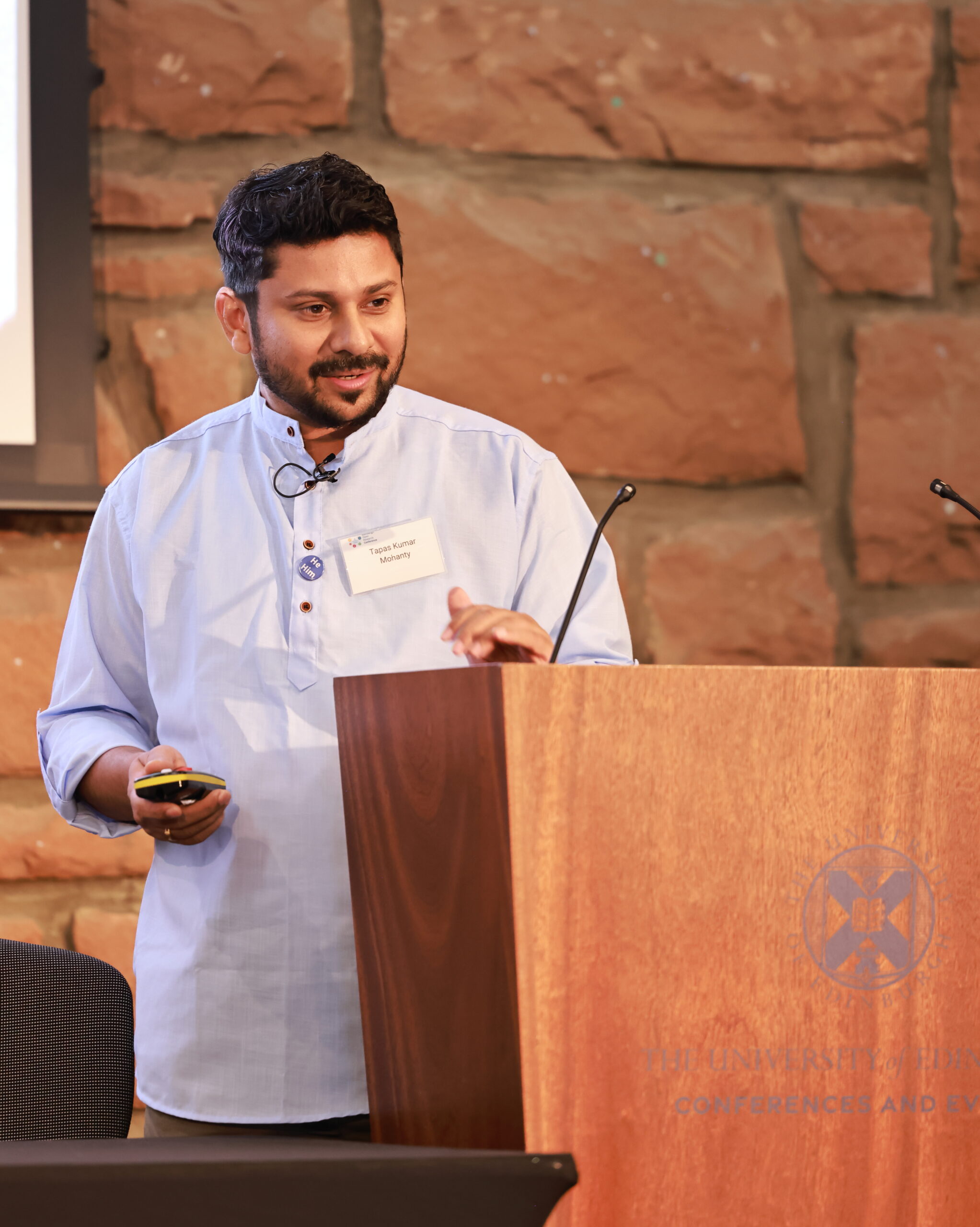
Tapas Kumar Mohanty. Photo by Eugen Stoica.


For me, the day highlighted the benefits of including a patchwork of voices in discussions around open research. Hearing personal stories and case studies alongside quantitative methods and formal analysis provided great insight into the state of Open Research now, the obstacles different research communities face, and ways we can enable people to embrace more open research practices. I left the day with a much clearer picture of where we are along the path of progress and where we should go next.

Thank you to all our speakers, our staff volunteers, and everyone who attended. A huge thanks to Kerry Miller and Nel Coleman, who pulled it all off without a hitch!

You can find all this year’s sessions as videos on MediaHopper:  https://media.ed.ac.uk/channel/Edinburgh+Open+Research/259602172

To read more about Edinburgh Open Research and sign up for the newsletter, where we’ll notify you about future events:                                        https://library.ed.ac.uk/research-support/open-research 

To read more about Edinburgh ReproducibiliTea and Open Research Initiative:  https://library.ed.ac.uk/research-support/open-research/reproducibilitea-eori

Evelyn Williams
Research Data Support Assistant
Research Data Service

Knowledge Exchange with Japan

Two members of the Research Data Support team recently had an adventure visiting Japan in order to provide practical lessons to library students and librarians studying in a research data management (RDM) course.

When Professor Emi Ishita had visited the team in 2023, she was preparing a new syllabus for research data management for her library students at the Kyushu University iSchool. Struck by the strong engagement our team members had with researchers through training, supporting data management plans, and moderating data deposits, she returned in August, 2024 with a delegation of practicing librarians to learn from the Universities of Edinburgh, Leeds, and Oxford. The group spent a full day with various members of Library Research Support, going over a question list they had sent in advance, about Open Access (OA) and RDM support, and our approach to training researchers.Staff and visitors eating lunch

At the end of the session, Emi revealed that a grant was available to pay for two RDM practitioners from UoE to come to Kyushu University in Fukuoka to contribute to an October, 2024 public symposium and a two day-long in-person training sessions for her students. The students would include Masters students enrolled in the iSchool at Kyushu, as well as practicing librarians looking to reskill themselves following government policy directives embracing immediate open access and data sharing for research publications.

bento boxThe speakers for the hybrid symposium on OA and RDM in Japan were myself with Dr Simon Smith, along with long-time RDM service provider Jake Carlson from the University of Buffalo (New York), and the Library Director from Chiba University, and the Research Data Service Director at Kyushu University providing a Japanese context for OA and RDM. Dr Ishita introduced the symposium and chaired the panel session – her team also provided all the speakers with beautifully presented bento boxes tailored to each person’s diet for lunch.

While the symposium was exciting, with about 60 people in attendance and about 130 more watching and listening online, it was the practical training that myself and Simon found truly inspirational. The students overcame their customary reserve to answer Simon’s open-ended questions about supporting researchers with data management planning in a classroom setting. Later, they formed into small groups to try out depositing data in DataShare, and evaluate each other’s metadata for quality. The technology worked, the students were curious and engaged, and the Kyushu instructors were pleased with the outcome.

library trainers at Kyushu University, Oct 2024

Japanese hospitality lunchDuring the week of the event, Simon and I visited prior and new contacts at Tokyo University, Chiba University, Kyoto University, Nagoya University and NII. In addition to the excellent company, we were pleased to be visiting such a beautiful country and eating the wonderful food.

NII staff outside restaurant

Mount Aso volcano

RESPIRE Fellowship

This is a guest blog post from Tapas K Mohanty, Informatics & Data Science Liaison Officer for the RESPIRE project, who recently dropped by for a visit. Tapas, who is based at the KEM Hospital Research Centre in Pune, India, was here on a RESPIRE Fellowship to meet with his Edinburgh-based RESPIRE colleagues. Of course, he was mainly here to hang out with the cool kids: viz. Research Data Support.

If that wasn’t exciting enough, Tapas was also one the many very amazing presenters at this year’s Edinburgh Open Research Conference. Amid the whirligig of fun and excitement, he found time to jot down some thoughts on what was a Very Good Day. These are they:  

Wednesday 29th May: a good start. Setting out for Pollock Halls, where the Open Research Conference was being held, I found Kitty Flynn, a RESPIRE colleague, on the same bus. Kitty was coming along to cheer me on during my presentation.

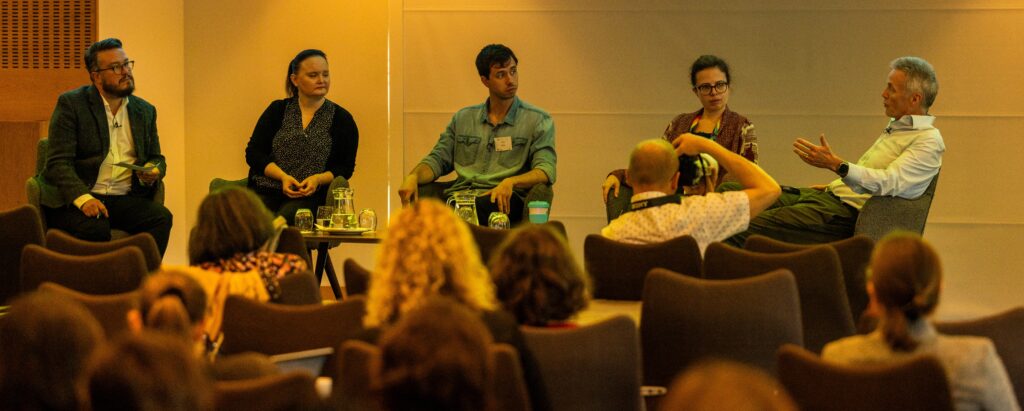
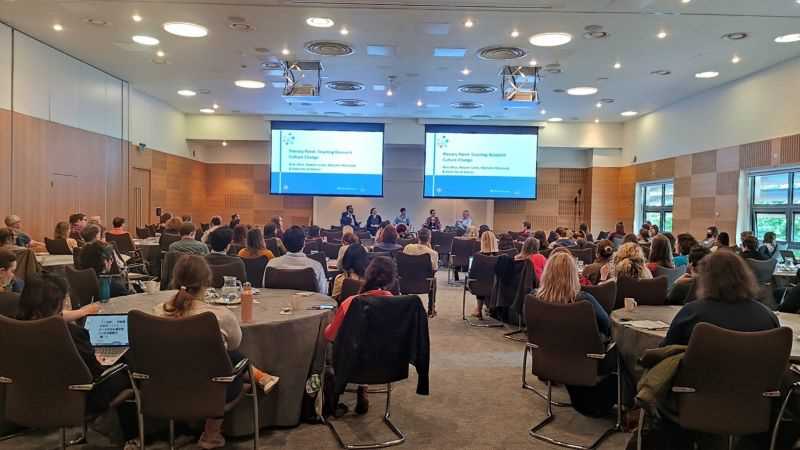
The conference opened with a thought-provoking Plenary Panel featuring Nick Wise, Rowena Lamb, Malcolm MacLeod, and Katie Nicoll Baines. Together, they explored the intersection of research culture change and Open Research. Key considerations included the delicate balance between policies and international collaboration. Notably, while discussing the legacy of racism in scholarly research institutions, the panel acknowledged its existence and advocated for a shift from blame-culture to accountability as the only way to effect real change.

Photo of the Plenary panel discussion with attendees in the foreground.

Plenary panel discussion – Photo credit: Tapas K Mohanty

Session One focused on Education, Skills, and Recognition. Lee Murphy opened the session with a technician’s viewpoint on the dominant academic perspective, which rarely credits technical support staff. Second was Haley Eckel, who described the introduction of Data Management Plan requirements for PhD students at the University of St Andrews. Third and last, Nik Tahirah Nik Hussin & Veronica Cano talked about the Contributor Roles Taxonomy (CRediT).

Next came the lightning talks, with me as the first presenter. Stepping up to the microphone, my heart raced and my throat felt dry. Brittany (another presenter) reassured me. Nervously, I wondered if I could finish within 5 minutes. My subject was an Open-Source Hardware initiative to enhance MRI accessibility in India’s low-resource areas. Ignited by last year’s Open Research Conference, the project will be hosted by Pune’s KEM Hospital Research Centre with support from PTB, Berlin, and GOSH (Gathering for Open Science Hardware). Utilising open-source designs, the initiative seeks to expedite the diagnosis of traumatic brain injuries in rural regions, ensuring essential medical technology is available wherever it’s needed.

The other speakers in this session were:

  • Nicola Osborne, ‘Nurturing responsible data practices in creative industries R&D through applied ethics and open research practices.’
  • Rachel Steeg, ‘Making iPSCs FFAIR.’
  • Tom Morley, ‘From compliance to culture: How can we address the barriers that are preventing a culture of Open Research in relation to Open Monographs?’
  • Dominic Hewett, ‘Humanities researchers’ perspectives towards scholarly communication practices’
  • Brittany Blankenship (on behalf of Kasia Banas), ‘See one, do one, teach one: Teaching Open Research Skills for Data-Driven Innovation in Health and Social Care.’

Stuart King opened the final session on Next Generation Metrics and Recognition with a talk on preprints and reimagined of peer review. Lucy Woolhouse followed, returning us  to the topic of credit and attribution. The legendary Marta Teperek came next, outlining the Netherlands’ strategic investment in Open Science, an investment that seeks to cultivate a research environment which prioritizes quality, equity, and inclusivity. Marisa De Andrade closed the session by challenging traditional research metrics through the lens of her new book on knowledge justice. She argued for methodologies that consider the lived experiences of marginalized communities and promote research that tackles inequalities.

The conference closed with a poster session in which presenters delivered one-minute, rapid-fire talks on their posters.

I can honestly say that this trip to attend the Open Research Conference will forever be in my memory. I will always remember the presentations and the people I was able to meet. It was an exciting day for new learning and it left the mark of an enriching experience.

Edinburgh Open Research Conference 2024

This is a guest blog post from Emma Wilson, Emma is a final year PhD student in the Centre for Clinical Brain Sciences. She is currently interning with the Library Open Research Team.

On 29th May 2024, we held the third annual Edinburgh Open Research Conference online and in person at the John McIntyre Conference Centre. Over 300 people attended the hybrid event, from Edinburgh and further afield, to listen to a jam-packed programme of talks and posters on all things open research.

This year’s theme was culture change, and thinking about how open research principles can steer us towards healthy and inclusive research environments.

Panel host Dominic and panel speakers Rowena, Nick, Katie, and Malcolm sit on a stage in front of the conference audience

Plenary panel – photo credit: Eugen Stoica

The events kicked off with a plenary panel featuring Nick Wise (University of Cambridge), Rowena Lamb, Malcolm Macleod, and Katie Nicoll Baines (all University of Edinburgh) discussing the ways in which we can drive healthy and sustainable culture change and how this applies in the context of open research.

Marisa de Andrade delivering her keynote

Marisa de Andrade delivering her keynote – photo credit: Eugen Stoica

Presentations and lightning talks touched on the topics of education and skills, research culture change, and next generation metrics. We heard from a diverse range of perspectives including technicians, researchers in both STEM and the humanities, and professional services staff. Equality, diversity, and inclusion (EDI) was a strong theme running throughout each of the presentations.

The keynote lecture was delivered by Marisa de Andrade on ‘The Madness of Metrics and Possibilities of Pause in Open Research’, which offered perspective on research metrics, what they really mean, and what really matters.

Maria Juliana Rodriguez Cubillos presenting her poster during the drinks reception

Poster session – Photo credit: Eugen Stoica

Following a busy day, the conference closed with a drinks reception and posters. Each presenter gave a quick-fire summary of their poster in a round of ‘Minute Madness’.

We want to thank everyone who attended the conference, our fantastic presenters, and of course our organisers Kerry Miller and Nel Coleman for making the day enjoyable and insightful. And if you missed it, be sure to come along next year!

Stay up to date on open research activities and future conference announcements by signing up to the Edinburgh Open Research Newsletter and joining our Edinburgh Open Research Initiative Microsoft Teams group.