When planning a research project, whether this involves carrying out interviews for a first dissertation project or analysing secondary data for a PhD, it is important to ensure that you are handling your research data safely and effectively. Taking time to think about where and how you will store and organise your files, how your data can be backed up to protect against accidentally losing your work, and what to consider if working with sensitive information, will help make the research process simpler and help you become a better researcher.
The Research Data Service provide a range of training materials to help both new and experienced researchers to work with their research data more effectively. For students planning a dissertation project we have developed the online Data Mindfulness: Making the most of your dissertation data course (available as part of the Library’s LibSmart II course). This short introductory course is designed to be accessible and engaging, and incorporates videos, quizzes and reading materials to provide helpful tips and guidance for those preparing to undertake their first dissertation project.
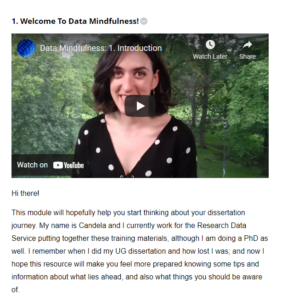
Data Mindfulness is available online as part of the library’s LibSmart II research skills course
We are happy to share some of the positive feedback we have received from students who recently completed the Data Mindfulness course:
“It was clear and easily accessible, especially for someone who is an online student”
“A lot of information that I had no idea about but feel better having received it”
“It provides useful tips about organizing and storing data and files”
“Every SSPS student should be aware that they have access to this course before starting their dissertation”
For post-graduate students and those with previous experience working with research data we recommend checking out MANTRA, our well-established online training course which provides more in-depth training on key research data management topics.
Dr Bob Sanders
L&UC Research Data Support
 One of the ambitions for the EOR conference held in March, 2022, when we first started planning it was to make it as open and accessible as possible. To achieve this we made the whole event hybrid so that plenary talks, posters, and workshops were all accessible on the day to both in person and remote attendees. While this generally worked very well for both remote and in-person attendees, we also wanted to make it available to people who couldn’t attend on the day – so we recorded everything, and the recordings of the talks and posters can now be openly accessed through our Edinburgh Open Research journal at
 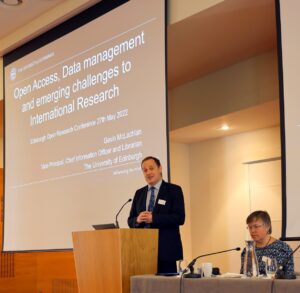 Attendees online and in person were treated to a fine and varied selection of talks. To begin with, topics ranged from Gavin McLachlan’s overview of current national and international political contexts and Dominic Tate’s review of the University’s Open Research Roadmap, to the latest in open access publishing from Rebecca Wojturska and Dominique Walker, FAIR principles from Susanna-Assunta Sansone, and Eugenia Rodrigues on inclusivity and Citizen Science.
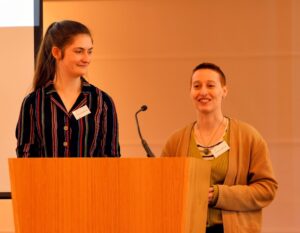 Nicely complementing Madeleine’s study, Emma MacKenzie and Felicity Anderson gave us the benefit of hands-on experience. Speaking from either side of the student-supervisor relation, they described their use of open source tools, materials, and mind-sets in student projects. Here, too, we saw the development of core competencies, this time including the documentation, discussion, and resolution of errors.
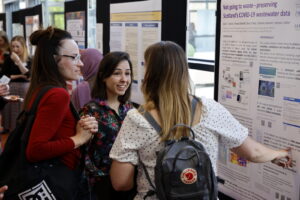 There were also poster sessions, culminating in first prize for Livia Scorza’s ‘Not going to waste – preserving Scotland’s COVID-19 waste water data,’ and there were workshops covering everything from public engagement to Open Research and AI.