Dancing with Data

I went to an interesting talk yesterday by Prof Chris Speed called “Dancing with Data”, on how our interactions and relationships with each other, with the objects in our lives and with companies and charities are changing as a result of the data that is now being generated by those objects (particularly smartphones, but increasingly by other objects too). New phenomena such as 3D printing, airbnb, foursquare and iZettle are giving us choices we never had before, but also leading to things being done with our data which we might not have expected or known about. The relationships between individuals and our data are being re-defined as we speak. Prof Speed challenged us to think about the position of designers in this new world where push-to-pull markets are being replaced by new models. He also told us about his research collaborations with Oxfam, looking at how technology might enhance the value of the second-hand objects they sell by allowing customers to hear their stories from their previous owners.   Logo for the Tales of Things project

All very thought-provoking, but what about the implications for academic research, aside from those working in the fields of Design, Economics or Sociology who must now develop new models to reflect this changing landscape? Well, the question arises, if all this data is being generated and collected by companies, are the academics (and indeed the charity sector) falling behind the curve? Here at the University of Edinburgh, my colleagues in Informatics are doing Data Science research, looking into the infrastructure and the algorithms used to analyse the kind of commercial Big Data flowing out of the smartphones in our pockets, while Prof Speed and his colleagues are looking at how design itself is being affected. But perhaps academics in all disciplines need to be tuning their antennae to this wavelength and thinking seriously about how their research can adapt to and be enhanced by the new ways we are all dancing with data.

For more about the University of Edinburgh’s Design Informatics research and forthcoming seminars see www.designinformatics.org. Prof Chris Speed tweets @ChrisSpeed.

Pauline Ward is a Data Library Assistant working at the University of Edinburgh and EDINA.
RDM Surgery!

Do you have a query about storing, sharing or preserving your research data? Do you need assistance with a Data Management Plan?

RDM Service staff will be in the Pop-up library space on the first floor of the Main Library on Monday 29 September (2pm-4pm) to answer any questions you may have about our services including:

For further information please also visit:

So please pop by and pay us a visit and let us answer your Research Data Management queries.

Stuart Macdonald
RDM Service Coordinator
email: stuart.macdonald@ed.ac.uk

New release of Research Data MANTRA (Management Training) online course

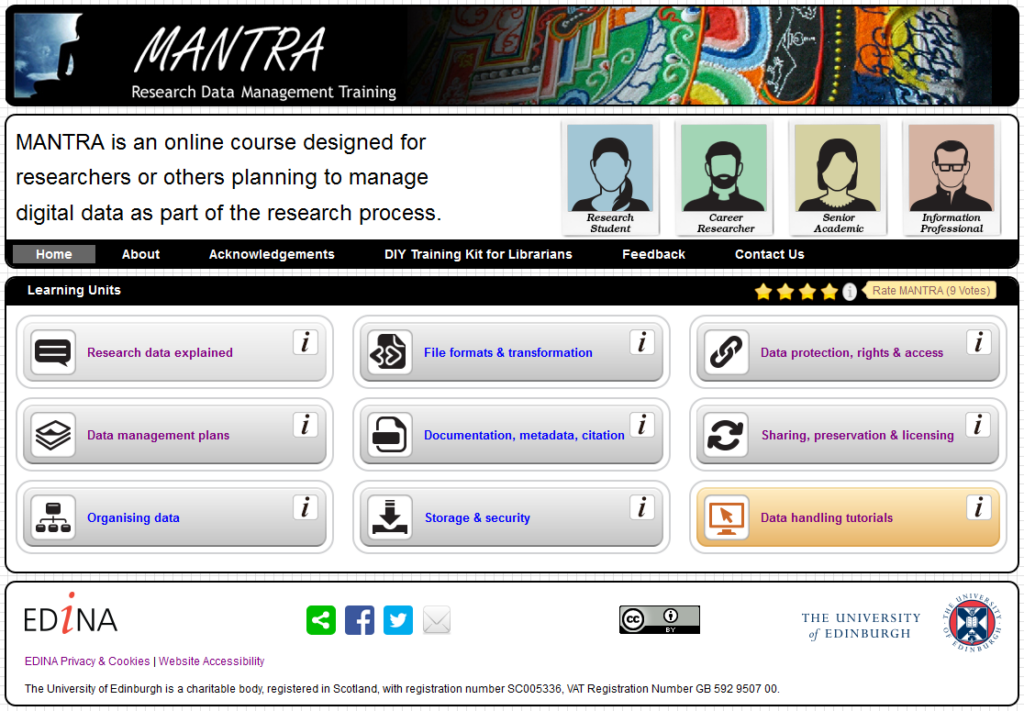
The Research Data MANTRA course is an open, online training course that provides instruction in good practice in research data management. There are nine interactive learning units on key topics such as data management planning, organising and formatting data, using shared data and licensing your own data, as well as four data handling tutorials with open datasets for use in R, SPSS, NVivo and ArcGIS.

This fourth release of MANTRA has been revised and systematically updated with new content, videos, reading lists, and interactive quizzes. Three of the data handling tutorials have been rewritten and tested for newer software versions too.

New content in the online learning modules with the September, 2014 release:

  • New video footage from previous interviewees and introducing Richard Rodger, Professor of Economic and Social History and Stephen Lawrie, Professor of Psychiatry & Neuro-Imaging
  • Big Data now in Research Data Explained
  • Data citation and ‘reproducible research’ added to Documentation and Metadata
  • Safe password practice and more on encryption in Storage and Security
  • Refined information about the DPA and IPR in Data Protection, Rights and Access
  • Linked Open Data and CC 4.0 and CC0 now covered in Sharing, Preservation & Licensing

MANTRA home pageThis release will also be more stable and more accessible due to back-end enhancements. The flow of the learning units and usability of quizzes have been improved based on testing and feedback. We have simplified our feedback form and added a four-star rating button to the home page. A YouTube playlist for each unit is available on the Data Library channel.

MANTRA was originally created with funding from Jisc and is maintained by EDINA and Data Library, a division of Information Services, University of Edinburgh. It is an integral part of the University’s Research Data Management Programme and is designed to be modular and self-paced for maximum convenience; it is a non-assessed training course targeted at postgraduate research students and early career researchers.

Data management skills enable researchers to better organise, document, store and share data, making research more reproducible and preserving it for future use. Researchers in 144 countries used MANTRA last year, which is available without registration from the website. Postgraduate training organisations in the UK, Canada, and Australia have used the Creative Commons licensed material in the Jorum repository to create their own training. The website also hosts a ‘training kit’ for librarians wishing to increase their skills in supporting Research Data Management.

Visit MANTRA and consider recommending it to your colleagues and research students this term! http://datalib.edina.ac.uk/mantra/

Usage Statistics

According to Google Analytics, the following organisation’s websites were the top ten referrers to the MANTRA website for the academic year 2013-2014 (discounting Data Library, EDINA and Information Services):

  • Institute for Academic Development, University of Edinburgh
  • LIS Links (India)
  • Digital Curation Centre
  • eScience Portal for New England Libraries at University of Massachusetts Medical Library
  • Oxford University
  • University of Nebraska-Lincoln (USA)
  • Carleton University (Canada)
  • Glasgow University
  • Food and Agriculture Organization of the United Nations
  • Jisc

Social media sites Facebook, Twitter and Slideshare provided a large number of referrals; several more came from other UK institutions, and HEIs in Australia, the rest of Europe, and North America—University Library pages especially. Forty percent of sessions came  from a referring website.

Visitors to MANTRA over the year came from 144 countries. Google searches accounted for 4,000 sessions, 25% of the total. Nearly ten thousand visits were from new users (based on IP addresses) over the year from 22nd August, 2013 – 23rd August, 2014. Here is a link to a Google Analytics summary spreadsheet extracted from our account.

We expect to have more detailed usage statistics over the forthcoming year due to moving the learning units out of the authoring software (Xerte Online Toolkits) onto the main MANTRA website.

Postscript, 15 Sept: See my Storify story, “Research Data MANTRA Buzz” to find out who’s been talking about MANTRA on twitter!

Robin Rice
Data Librarian


Dealing with Data Conference & RDM Service Launch – summary

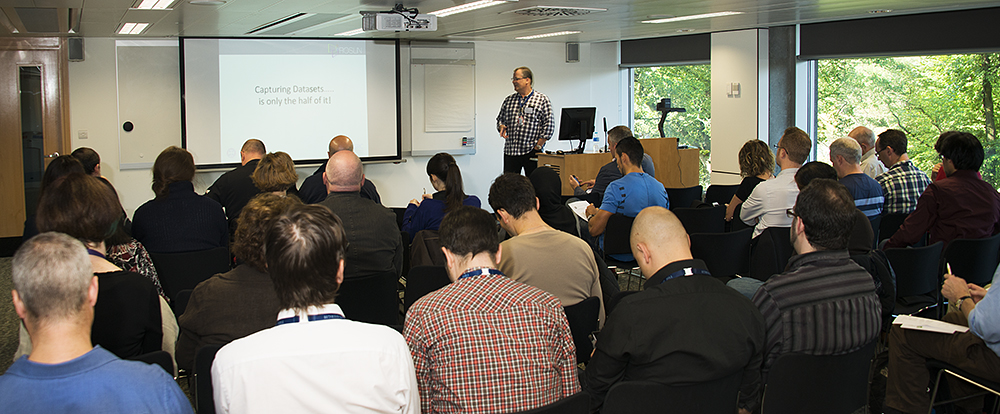
University of Edinburgh Research Data Management Service LogoInformation Services (IS) held a half-day conference in the Main Library on the subject of ‘Dealing with Data’ to coincide with the launch of the University of Edinburgh’s Research Data Management support services on 26 August.

University researchers presented to over 120 delegates from across the disciplinary and support spectrum on many aspects of working with data, particularly research with novel methods of creating, using, storing, or sharing data. Subjects included Big Data for disease control, managing West Nilotic language sound files, sharing brain images, geospatial metadata services, visualising qualitative data via carpets!

Dealing with Data Conference

The RDM Programme team are currently collecting feedback and will report on this and the conference in more detail via this blog.

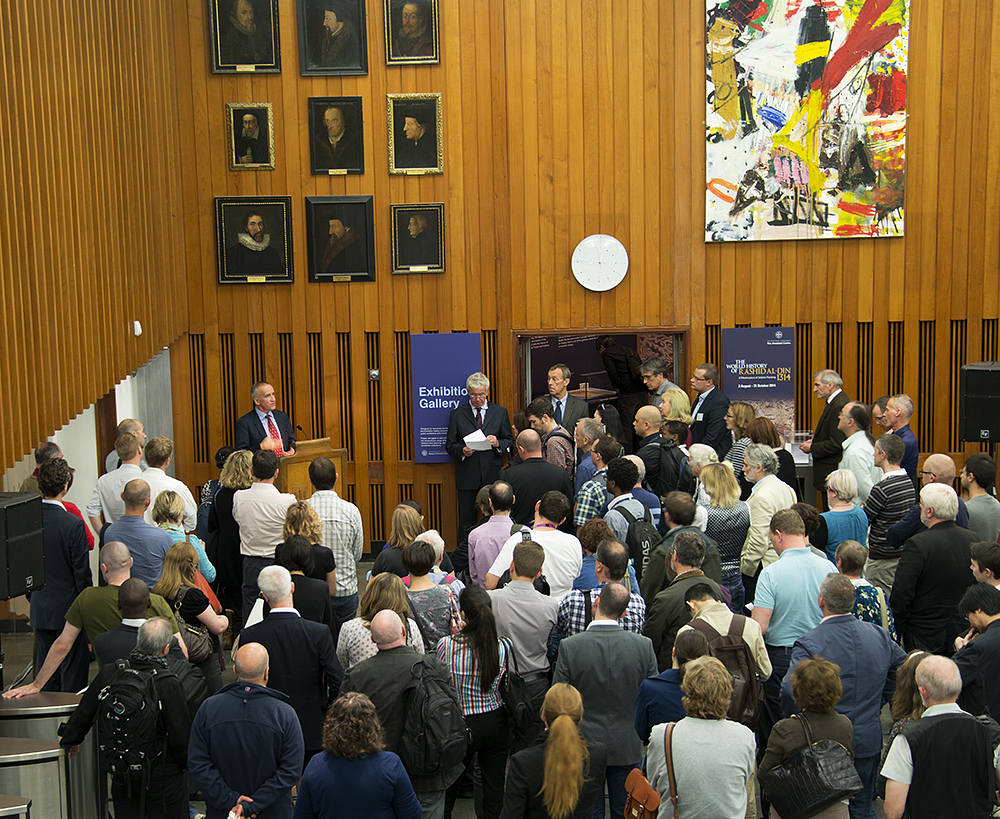
‘Dealing with Data Conference’ delegates then gathered in the Main Library foyer to hear brief talks by Professor Jeff Haywood, Professor Peter Clarke and Dr John Scally followed by the formal launch of the RDM Services by the University’s Principal, Sir Timothy O’Shea who underlined the successful collaboration between research and support service communities in establishing research support services worthy of a leading UK research-intensive university.

University of Edinburgh RDM Service launch by Sir Timothy O'Shea

A ‘storify’ story of tweets collected during the launch and the conference is available, with pictures and perspectives from various attendees.

The launch of the IS-led RDM Services is the culmination of work detailed in the RDM Roadmap which began in earnest in August 2012 following approval of the RDM Policy by the University Court in May 2011.

Details of available and planned RDM Services for University of Edinburgh researchers were reported on in the blogpost: RDM Roadmap: Completion of Phase 1

Conference presentations can be downloaded from Edinburgh Research Archive (ERA) at: https://www.era.lib.ed.ac.uk/handle/1842/9389

Stuart Macdonald
RDM Service Coordinator
stuart.macdonald@ed.ac.uk