Managing data: photographs in research

In collaboration with Scholarly Communications, the Data Library participated in the workshop “Data: photographs in research” as part of a series of workshops organised by Dr Tom Allbeson and Dr Ella Chmielewska for the pilot project “Fostering Photographic Research at CHSS” supported by the College of Humanities and Social Science (CHSS) Challenge Investment Fund.

In our research support roles, Theo Andrew and I addressed issues associated with finding and using photographs from repositories, archives and collections, and the challenges of re-using photographs in research publications. Workshop attendants came from a wide range of disciplines, and were at different stages in their research careers.

First, I gave a brief intro on terminology and research data basics, and navigated through media platforms and digital repositories like Jisc Media Hub, VADS, Wellcome Trust, Europeana, Live Art Archive, Flickr Commons, Library of Congress Prints & Photographs Online Catalog (Muybridge http://hdl.loc.gov/loc.pnp/cph.3a45870) – links below.

Eadweard Muybridge. 1878. The Horse in motion. Photograph.

From the Library of Congress Prints and Photographs Online Catalog

Then, Theo presented key concepts of copyright and licensing, which opened up an extensive discussion on what things researchers have to consider when re-using photographs and what institutional support researchers expect to have. Some workshop attendees shared their experience of reusing photographs from collections and archives, and discussed the challenges they face with online publications.

The last presentation tackling the basics of managing photographic research data was not delivered due to time constraints. The presentation was for researchers who produce photographic materials, however, advice on best RDM practice is relevant to any researcher independently of whether they are producing primary data or reusing secondary data. There may be another opportunity to present the remaining slides to CHSS researchers at a future workshop.

ONLINE RESOURCES

LICENSING

Dancing with Data

I went to an interesting talk yesterday by Prof Chris Speed called “Dancing with Data”, on how our interactions and relationships with each other, with the objects in our lives and with companies and charities are changing as a result of the data that is now being generated by those objects (particularly smartphones, but increasingly by other objects too). New phenomena such as 3D printing, airbnb, foursquare and iZettle are giving us choices we never had before, but also leading to things being done with our data which we might not have expected or known about. The relationships between individuals and our data are being re-defined as we speak. Prof Speed challenged us to think about the position of designers in this new world where push-to-pull markets are being replaced by new models. He also told us about his research collaborations with Oxfam, looking at how technology might enhance the value of the second-hand objects they sell by allowing customers to hear their stories from their previous owners.   Logo for the Tales of Things project

All very thought-provoking, but what about the implications for academic research, aside from those working in the fields of Design, Economics or Sociology who must now develop new models to reflect this changing landscape? Well, the question arises, if all this data is being generated and collected by companies, are the academics (and indeed the charity sector) falling behind the curve? Here at the University of Edinburgh, my colleagues in Informatics are doing Data Science research, looking into the infrastructure and the algorithms used to analyse the kind of commercial Big Data flowing out of the smartphones in our pockets, while Prof Speed and his colleagues are looking at how design itself is being affected. But perhaps academics in all disciplines need to be tuning their antennae to this wavelength and thinking seriously about how their research can adapt to and be enhanced by the new ways we are all dancing with data.

For more about the University of Edinburgh’s Design Informatics research and forthcoming seminars see www.designinformatics.org. Prof Chris Speed tweets @ChrisSpeed.

Pauline Ward is a Data Library Assistant working at the University of Edinburgh and EDINA.

Dealing with Data Conference & RDM Service Launch – summary

University of Edinburgh Research Data Management Service LogoInformation Services (IS) held a half-day conference in the Main Library on the subject of ‘Dealing with Data’ to coincide with the launch of the University of Edinburgh’s Research Data Management support services on 26 August.

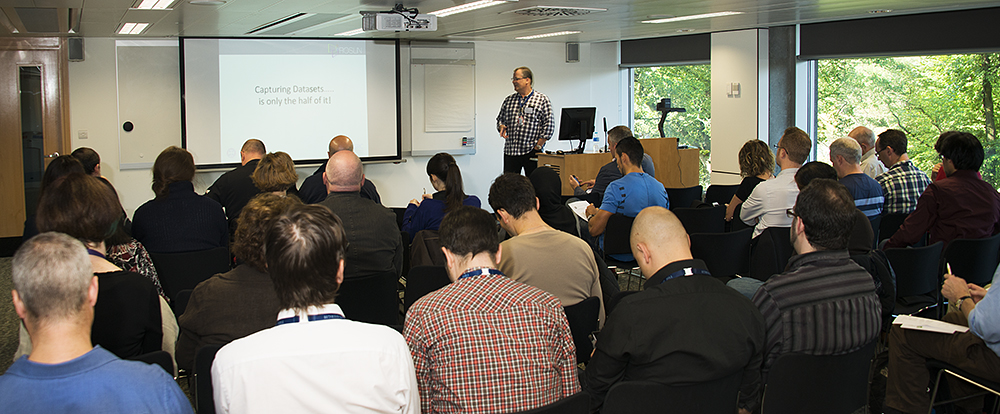
University researchers presented to over 120 delegates from across the disciplinary and support spectrum on many aspects of working with data, particularly research with novel methods of creating, using, storing, or sharing data. Subjects included Big Data for disease control, managing West Nilotic language sound files, sharing brain images, geospatial metadata services, visualising qualitative data via carpets!

Dealing with Data Conference

The RDM Programme team are currently collecting feedback and will report on this and the conference in more detail via this blog.

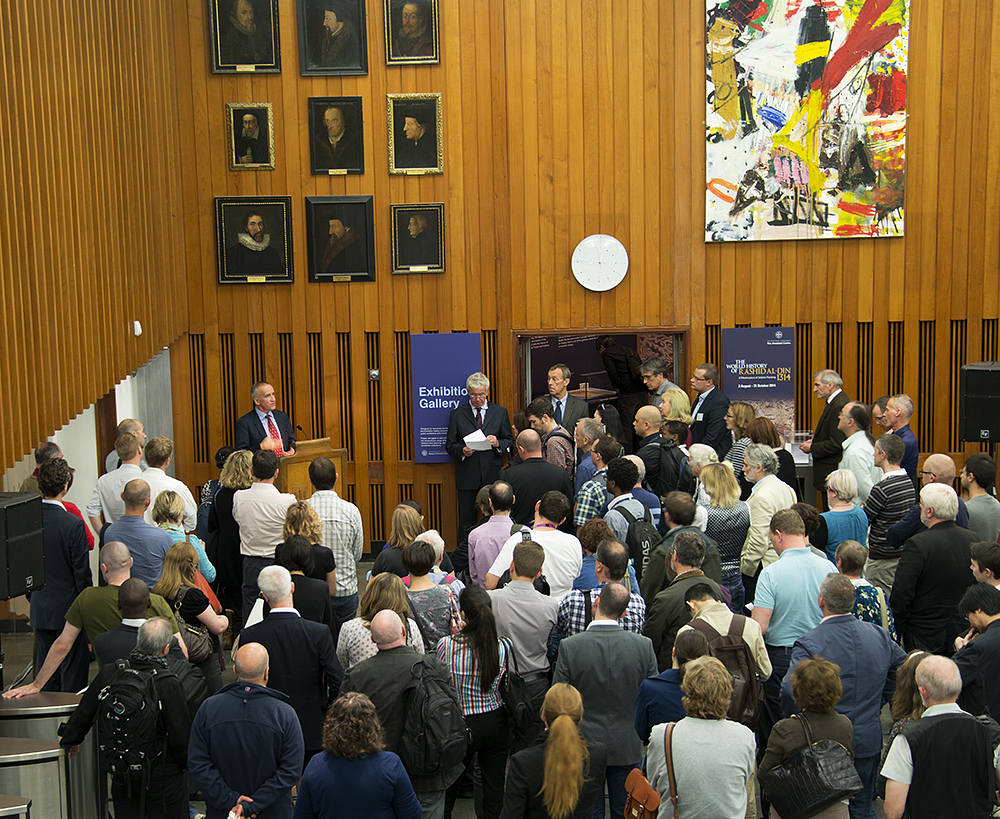
‘Dealing with Data Conference’ delegates then gathered in the Main Library foyer to hear brief talks by Professor Jeff Haywood, Professor Peter Clarke and Dr John Scally followed by the formal launch of the RDM Services by the University’s Principal, Sir Timothy O’Shea who underlined the successful collaboration between research and support service communities in establishing research support services worthy of a leading UK research-intensive university.

University of Edinburgh RDM Service launch by Sir Timothy O'Shea

A ‘storify’ story of tweets collected during the launch and the conference is available, with pictures and perspectives from various attendees.

The launch of the IS-led RDM Services is the culmination of work detailed in the RDM Roadmap which began in earnest in August 2012 following approval of the RDM Policy by the University Court in May 2011.

Details of available and planned RDM Services for University of Edinburgh researchers were reported on in the blogpost: RDM Roadmap: Completion of Phase 1

Conference presentations can be downloaded from Edinburgh Research Archive (ERA) at: https://www.era.lib.ed.ac.uk/handle/1842/9389

Stuart Macdonald
RDM Service Coordinator
stuart.macdonald@ed.ac.uk

Upcoming Dealing with Data Conference and RDM Service Launch

The Edinburgh RDM team is a-buzz this week with preparations for the launch of our services, which will be carried out by the University’s Principal, Sir Timothy O’Shea in the Library next Tuesday morning, 26th August, 2014 with 120 stakeholders in attendance.

rdm-logo-finalAlthough the RDM Policy was passed by the University Court in May, 2011, and our RDM Roadmap work began in earnest in August 2012, it has taken until now to be sure our core services are ready for a formal launch. See this post by the RDM Services Coordinator for a recent snapshot of Roadmap progress.

The launch will be short and sweet–lasting no more than half an hour. But the event is enhanced by a mini-conference, featuring researchers discussing Dealing with Data from across the disciplinary spectrum. If they mention any of our services that will be a bonus for us! The programme is available now, and a summary will be posted after the event.

For those who want to follow live tweets, the hashtag will be #DWD2014. For those who attend, be sure and fill out the feedback form at https://www.survey.ed.ac.uk/dealing_data-feedback!

Robin Rice on behalf of Cuna Ekmekcioglu (RDM team)