
About Robin Rice

Data Librarian and Head, Research Data Support Library & University Collections

Research Data Service achieves ISO 27001 accreditation for Data Safe Haven facility

Following a five day on-site audit by Lloyd’s Register, the Information Security Management System (ISMS) which forms the basis for the Data Safe Haven facility for University of Edinburgh researchers has been officially certified to the ISO/IEC 27001:2013 standard. In a few weeks we will receive a certificate from UKAS (United Kingdom Accreditation Service).

The Data Safe Haven (DSH) team, comprised of members of Research Data Support in L&UC and Research Services in ITI, and with input from the Information Security team and external consultants, has been working toward certification since 2016. The system, designed by ITI’s Stephen Giles, has been extensively and successfully ‘white box penetration tested’ by external experts, one of the many forms of proof provided to the auditor. (White box means the testers were given access to certain layers of the system, as opposed to a black box test where they are not.)
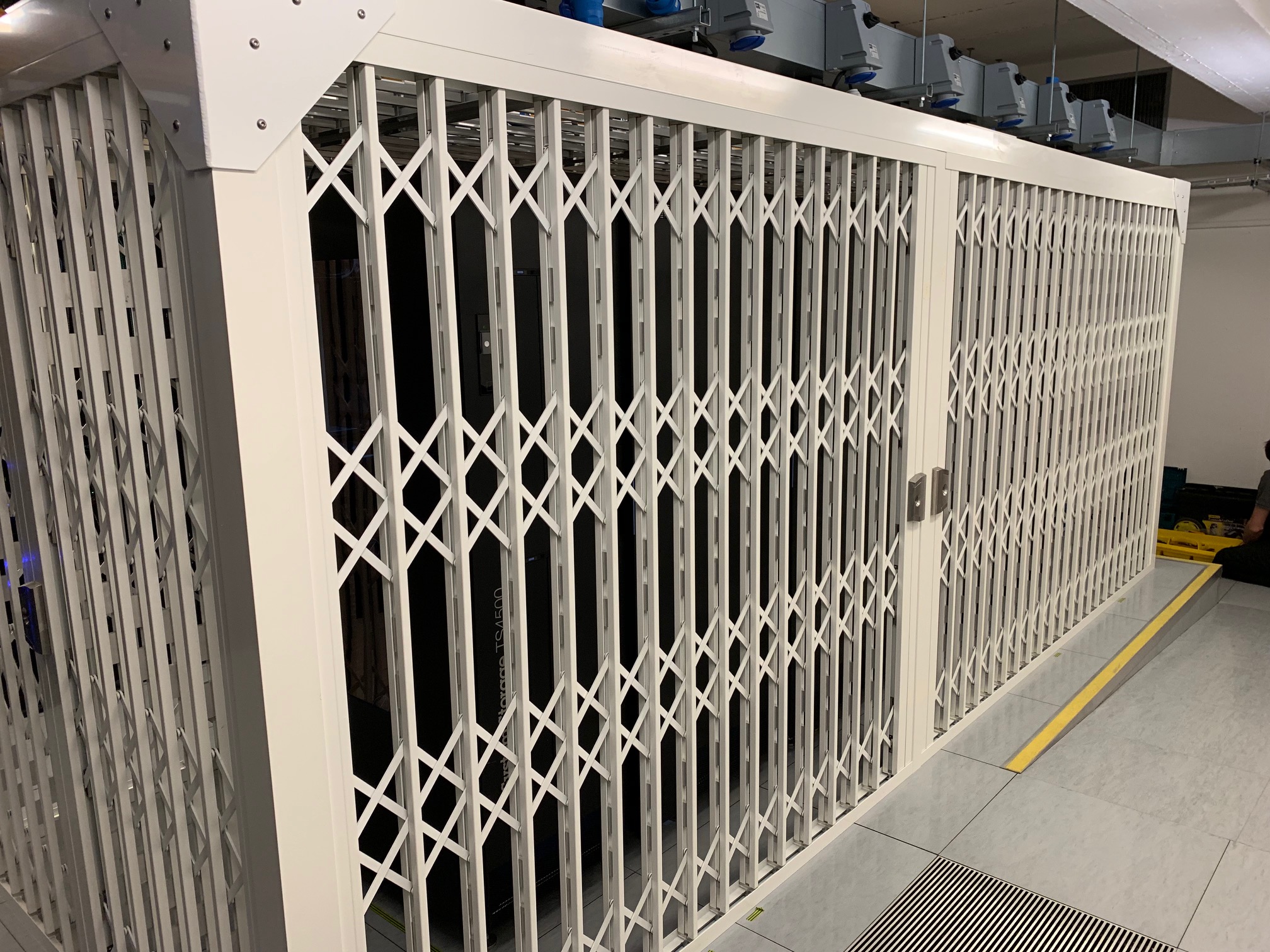
The steel cage surrounding Data Safe Haven equipment in one of the University data centres.

In addition to infrastructure, a proper ISMS is made up of people who perform roles and manage procedures, based on organisational policies. The Research Data Support team work with research project staff to ensure their practices comply with our standard operating procedures. The ISMS is made up of all the controls needed to ensure that it is sensibly protecting the confidentiality, availability, and integrity of assets from threats and vulnerabilities. Over 150 managed and versioned documents covering every aspect of the ISMS were written, discussed, practiced, reviewed and signed off before being examined and questioned by the auditor.

The auditor stated in the final report, “The objectives of the assessment were achieved and with consideration to any noted issues or raised findings, the sampled areas of the management system demonstrated a good level of conformance and effectiveness. The management system remains supportive of the organisation and its business and service management objectives.” On a slightly more upbeat note, Gavin Mclachlan, Vice-Principal and Chief Information Officer, and Librarian to the University said by email, “Congratulations to you and the whole team on the ISO 27001 certification. That is a great achievement.”

The Digital Research Services programme has invested in the Data Safe Haven to allow University researchers to conduct cutting edge research, access sensitive data from external providers and facilitate new research partnerships and innovation. Researchers are expected to include Data Safe Haven costs in funded grant proposals to achieve some cost recovery for the University. To find out if your project is a candidate for use of the Data Safe Haven contact data-support@ed.ac.uk or the IS Helpline.

Robin Rice
Data Librarian and Head, Research Data Support
L&UC
Research Data Workshops: DataVault Summary

Having soft-launched the DataVault facility in early 2019, the Research Data Support team -with the support of the project board – held five workshops in different colleges and locations to find out what the user community thought about it. This post summarises what we learned from participants, who were made up roughly equally of researchers (mainly staff) and support professionals (mainly computing officers based in the Schools and Colleges).

Each workshop began with presentations and a demonstration by Research Data Service staff, explaining the rationale of the DataVault, what it should and should not be used for, how it works, how the University will handle long-term management of data assets deposited in the DataVault, and practicalities such as how to recover costs through grant proposals or get assistance to deposit.

After a networking lunch we held discussion groups, covering topics such as prioritisation of features and functionality, roles such as the university as data asset owner, and the nature of the costs (price).

The team was relieved to learn that the majority (albeit from a somewhat self-selecting sample) agreed that the service fulfilled a real need; some data does need to be kept securely for a named period to comply with research funders’ rules, and participants welcomed a centralised platform to do this. The levels of usability and functionality we have managed to reach so far were met with somewhat less approval: clearly the development team has more work to do, and we are glad to have won further funding from the Digital Research Services programme in 2019-2020 in order to do it.

Attitudes toward university ownership of data assets was also a mixed bag; some were sceptical and wondered if researchers would participate in such a scheme, but others found it a realistic option for dealing with staff turnover and the inevitability of data outlasting data owners. Attitudes toward cost were largely accepting (the DataVault provides a cheaper alternative than our baseline DataStore disk storage), but concerns about the safekeeping of legacy and unfunded research data were raised at each workshop.

A sample of points raised follows:

  • Utility? “Everyone I know has everything on OneDrive.”
  • Regarding prioritisation of features – security first; file integrity first; putting data from other sources than DataStore; facilitating larger deposit sizes; ease of use.
  • Quickness of deposit and retrieval? Deposit was deemed more important to be quick than retrieval.
  • University as data asset owner?
    • Under GDPR the data are already university assets (because the Uni is the data controller).
    • People who manage the data should be close to the research; IT people can manage users but shouldn’t be making decisions about data. Danger that because it’s related to IT it gets dumped on IT officers. The formal review process helps to ensure decisions will be made properly. Include flexibility into the review hierarchy to allow for variation in school infrastructure.
    • When I heard that I was – not shocked – but concerned. If I move to another university how do I get access? This might be a problem. Researchers might prefer to retain three copies themselves.
  • Is the cost recovery mechanism valid?
    • Vault costs are legitimate costs.
    • Ideally should come from grant overheads, until then need to charge.
    • Possible to charge for small / medium/large project at start rather than per TB?
  • Is the 100 GB threshold sufficient for unfunded research? How else could unfunded or legacy data be covered (who pays)?
    • Alumni sponsor a dataset scheme?
    • There will be people with a ‘whole bunch of data somewhere’ that would be more appropriately stored in DataVault.

The team is grateful to all of the workshop participants for their time and thoughts; the report will be considered further by the project board and the Research Data Service Steering Group members. The full set of workshop notes are colour-coded to show comments from different venues and are available to read on the RDM wiki, for anyone with a University log-in (EASE).


Robin Rice
Data Librarian and Head, Research Data Support
Library & University Collections

FAIR dues to the Research Data Alliance

It has been a while since we’ve blogged about the Research Data Alliance (RDA), and as an organisation it has come into its own since its beginnings in 2013. One can count on discovering the international state of the art in a range of data-related topics covered by its interest groups and working groups which meet at its plenary events, held every six months. That is why I attended the 13th RDA Plenary held in Philadelphia earlier this month and I was not disappointed.

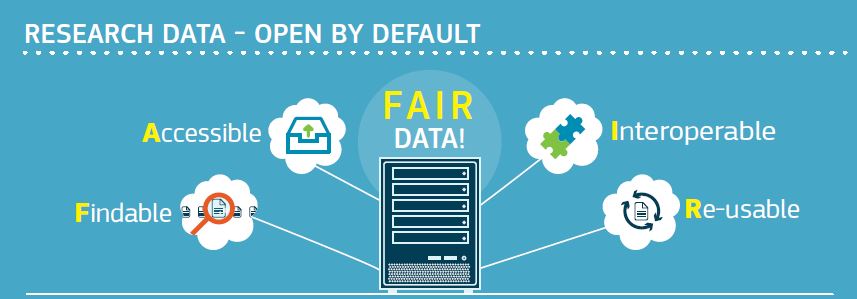
I arrived Monday morning in time for the second day of a pre-conference sponsored by CODATA on FAIR and Responsible Research Data Management at Drexel University. FAIR is a popular concept amongst research funders for illustrating data management done right: by the time you complete your research project (or shortly after) your data should be Findable, Accessible, Interoperable and Reusable.

Fair enough, but we data repository providers also want to know how to build the ecosystems that will make it super-easy for researchers to make their data FAIR, so we need to talk to each other to compare notes and decide exactly what each letter means in practice.

Borrowed from OpenAire 

Amongst the highlights were some tools and resources for researchers or data providers mentioned by various speakers.

  • The Australian Research Data Commons (ARDC) has created a FAIR self-assessment tool.
  • For those who like stories, the Danish National Archives have created a FAIRytale to help understand the FAIR principles.
  • ARDC with Library Carpentry conducted a sprint that led to a disciplinary smorgasbord called Top Ten Data and Software Things.
  • DataCite offers a Repository Finder tool through its union with re3data.org to find the most appropriate repository in which to deposit your data.
  • Resources for “implementation networks” from the EU-funded project GO FAIR, including training materials under the rubric of GO TRAIN.
  • The Geo-science focused Enabling FAIR Data Project is signing up publishers and repositories to commitment statements, and has a user-friendly FAQ explaining why researchers should care and what they can do.
  • A brand new EU-funded project, FAIRsFAIR (Fostering FAIR Data Practice in Europe) is taking things to the next level, building new networks to certifying learners and trainers, researchers and repositories in FAIRdom.

That last project’s ambitions are described in this blog post by Joy Davidson at DCC. Another good blog post I found about the FAIR pre-conference event is by Rebecca Springer at Ithaka S+R. If I get a chance I’ll add another brief post for the main conference.

Robin Rice
Data Librarian & Head of Research Data Support
Library & University Collections

We’re hiring!

Information Services has a new vacancy for a Data Safe Haven Operations Assistant to work directly with the Data Safe Haven Manager in the Research Data Support Team in providing operational support for the Data Safe Haven and its users across the University. This is an excellent opportunity for an enthusiastic researcher or professional to apply their academic and support skills to a growing service area, and to help build and raise awareness of our new Data Safe Haven.

You will have research experience and knowledge of current data protection regulations and other relevant legislation in the context of research. You will have an understanding of university structures and norms. You will know how to work methodically and transparently, following and documenting standard operating procedures. You will document and present the service for different audiences to ensure high levels of uptake and engagement with the service.

The Data Safe Haven Operations Assistant is a key role in the development and delivery of the new Data Safe Haven component of the Research Data Service, delivered by Library Research Support together with other sections of Information Services. The role allows the post-holder to contribute to defining the way the Data Safe Haven service will operate within the University, including achieving standards-based certifications.

This is a fixed-term full-time position for two years. Funded by the Digital Research Services programme, you will be part of a collaborative, engaging, and innovative working environment within Information Services. There are many advantages to working at the University. Benefits include flexible working, an excellent pension, career prospects and generous holiday provision.

Closing date: 15th February, 2019

Full details are available at: https://www.vacancies.ed.ac.uk/pls/corehrrecruit/erq_jobspec_version_4.jobspec?p_id=046776

On behalf of Cuna Ekmekcioglu
Data Safe Haven Manager