
This is a guest blog post from Tapas K Mohanty, Informatics & Data Science Liaison Officer for the RESPIRE project, who recently dropped by for a visit. Tapas, who is based at the KEM Hospital Research Centre in Pune, India, was here on a RESPIRE Fellowship to meet with his Edinburgh-based RESPIRE colleagues. Of course, he was mainly here to hang out with the cool kids: viz. Research Data Support.
If that wasn’t exciting enough, Tapas was also one the many very amazing presenters at this year’s Edinburgh Open Research Conference. Amid the whirligig of fun and excitement, he found time to jot down some thoughts on what was a Very Good Day. These are they:
Wednesday 29th May: a good start. Setting out for Pollock Halls, where the Open Research Conference was being held, I found Kitty Flynn, a RESPIRE colleague, on the same bus. Kitty was coming along to cheer me on during my presentation.
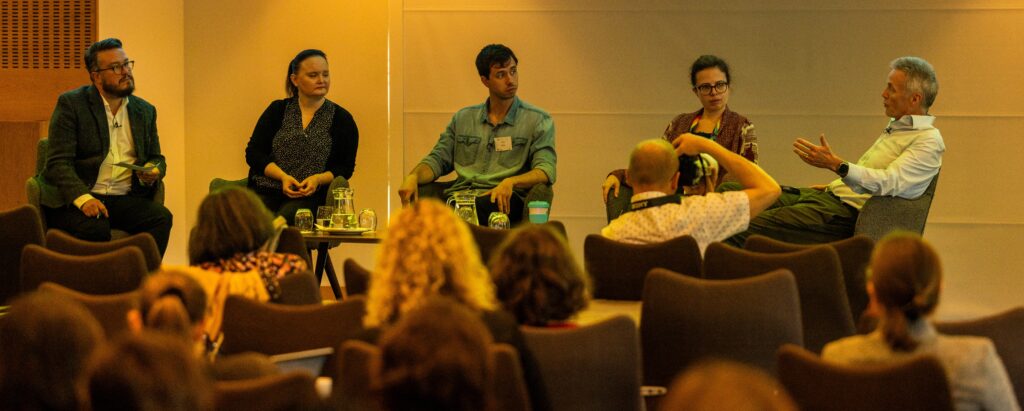
The conference opened with a thought-provoking Plenary Panel featuring Nick Wise, Rowena Lamb, Malcolm MacLeod, and Katie Nicoll Baines. Together, they explored the intersection of research culture change and Open Research. Key considerations included the delicate balance between policies and international collaboration. Notably, while discussing the legacy of racism in scholarly research institutions, the panel acknowledged its existence and advocated for a shift from blame-culture to accountability as the only way to effect real change.
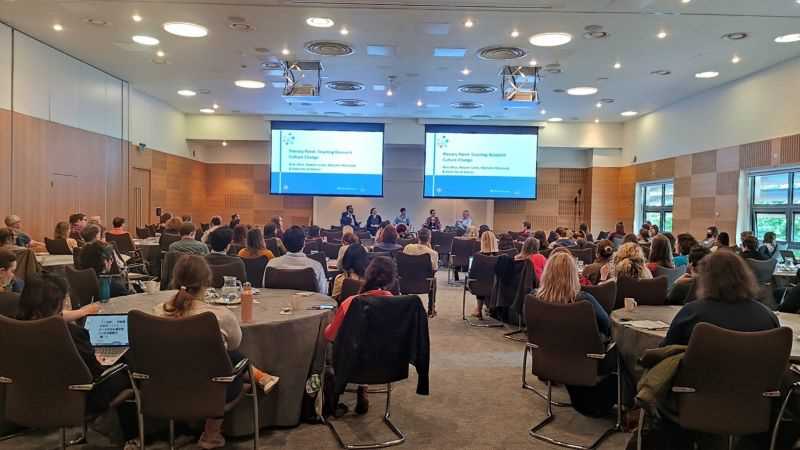
Plenary panel discussion – Photo credit: Tapas K Mohanty
Session One focused on Education, Skills, and Recognition. Lee Murphy opened the session with a technician’s viewpoint on the dominant academic perspective, which rarely credits technical support staff. Second was Haley Eckel, who described the introduction of Data Management Plan requirements for PhD students at the University of St Andrews. Third and last, Nik Tahirah Nik Hussin & Veronica Cano talked about the Contributor Roles Taxonomy (CRediT).
Next came the lightning talks, with me as the first presenter. Stepping up to the microphone, my heart raced and my throat felt dry. Brittany (another presenter) reassured me. Nervously, I wondered if I could finish within 5 minutes. My subject was an Open-Source Hardware initiative to enhance MRI accessibility in India’s low-resource areas. Ignited by last year’s Open Research Conference, the project will be hosted by Pune’s KEM Hospital Research Centre with support from PTB, Berlin, and GOSH (Gathering for Open Science Hardware). Utilising open-source designs, the initiative seeks to expedite the diagnosis of traumatic brain injuries in rural regions, ensuring essential medical technology is available wherever it’s needed.
The other speakers in this session were:
- Nicola Osborne, ‘Nurturing responsible data practices in creative industries R&D through applied ethics and open research practices.’
- Rachel Steeg, ‘Making iPSCs FFAIR.’
- Tom Morley, ‘From compliance to culture: How can we address the barriers that are preventing a culture of Open Research in relation to Open Monographs?’
- Dominic Hewett, ‘Humanities researchers’ perspectives towards scholarly communication practices’
- Brittany Blankenship (on behalf of Kasia Banas), ‘See one, do one, teach one: Teaching Open Research Skills for Data-Driven Innovation in Health and Social Care.’
Stuart King opened the final session on Next Generation Metrics and Recognition with a talk on preprints and reimagined of peer review. Lucy Woolhouse followed, returning us to the topic of credit and attribution. The legendary Marta Teperek came next, outlining the Netherlands’ strategic investment in Open Science, an investment that seeks to cultivate a research environment which prioritizes quality, equity, and inclusivity. Marisa De Andrade closed the session by challenging traditional research metrics through the lens of her new book on knowledge justice. She argued for methodologies that consider the lived experiences of marginalized communities and promote research that tackles inequalities.
The conference closed with a poster session in which presenters delivered one-minute, rapid-fire talks on their posters.
I can honestly say that this trip to attend the Open Research Conference will forever be in my memory. I will always remember the presentations and the people I was able to meet. It was an exciting day for new learning and it left the mark of an enriching experience.

 One of the ambitions for the EOR conference held in March, 2022, when we first started planning it was to make it as open and accessible as possible. To achieve this we made the whole event hybrid so that plenary talks, posters, and workshops were all accessible on the day to both in person and remote attendees. While this generally worked very well for both remote and in-person attendees, we also wanted to make it available to people who couldn’t attend on the day – so we recorded everything, and the recordings of the talks and posters can now be openly accessed through our Edinburgh Open Research journal at