Reflections on IDCC 2026

In February, Robin Rice and I ventured to Zagreb, Croatia, for the 20th International Digital Curation Conference. This year’s theme was ‘AI, austerity, and authoritarianism: contemporary challenges in digital curation’, which made for a very timely programme of presentations.

In her opening keynote, Dr. Antica Čulina discussed her fascinating research into the reproducibility crisis in Ecology and how Open Research practices can address it.

I attended most of the sessions focused on AI and machine learning, and heard about the different ways digital curators are trying out new applications of these technologies to automate research data management tasks. A popular theme of these sessions was using Large Language Models to fill in missing metadata and to provide automated feedback to researchers writing Data Management Plans. These use cases are both very appealing, but as the outputs of the tools still needed to be checked by human curators every time, the presenters weren’t sure whether these tools were saving or costing time. It was useful to hear different perspectives on creating tools for repository users versus for repository curators, and I’ll follow these projects with great interest. I also enjoyed Michael Groenendyk’s talk on using Large Language Models to detect data citations, which allows institutions to assess the impact of their researchers’ open datasets.


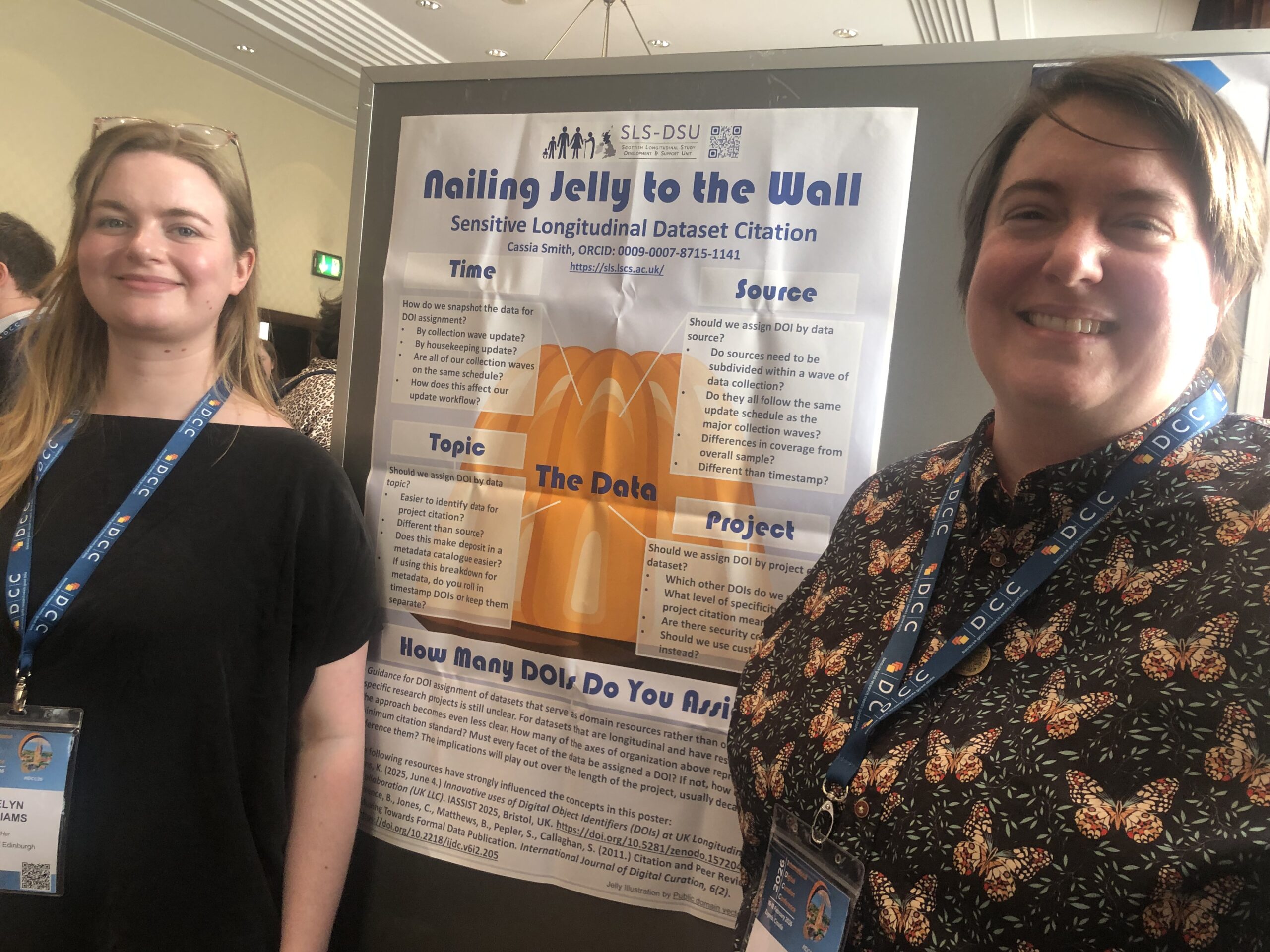
Me and Cassia Smith, beside her award winning poster! Photo by Robin Rice.

Cassia Smith and myself, beside her award winning poster! Photo by Robin Rice.

The closing keynote featured Dr. Lynda Kellam and Mikala Narlock from the Data Rescue Project, who reflected on the past year they spent preserving access to United States federal data and building a community that cares deeply about the integrity of the US government and its institutions.

DCC put on some excellent social events throughout the conference, including a drinks reception in the Emerald Ballroom at the historic Esplanade Hotel, and dinner and a beer tasting at The Garden Brewery & Taproom. I had so much fun meeting other digital curators from all around the world and sharing experiences and knowledge.

Overall, I highly recommend attending IDCC to anyone who’s interested in current issues in digital curation, and I hope I can go again in the future!

To read more about what went on at IDCC26, you can check out DCC’s summary here:

https://dcc.ac.uk/events/idcc26/summary

To see all the presentation slides and posters, visit the Zenodo page:

https://zenodo.org/communities/idcc26/

Evelyn Williams
Research Data Support Assistant
Research Data Service

Two upcoming Edinburgh data-related conferences

As we all settle into the new year, it is good to start filling the calendar with events that provide new insight, provide opportunities to interact with peers, offer the chance to share knowledge and to have an experience set apart from everyday work. To help with this, it is worth taking note of a couple of conferences coming up this year, hosted here at the University of Edinburgh.

Digital Research Conference 2026

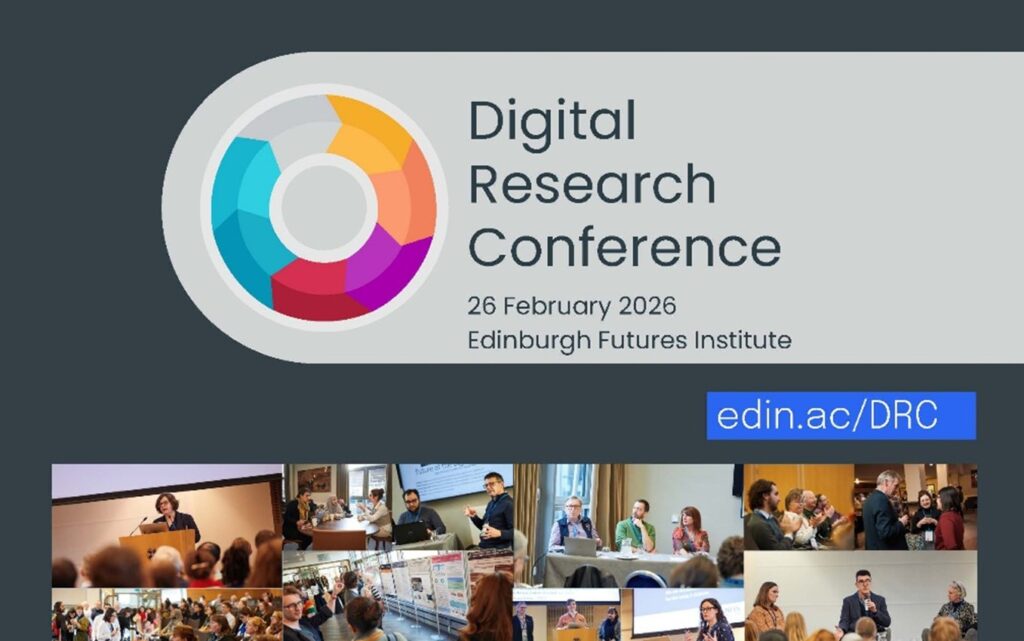
On February 26th, the 2026 Digital Research Conference will take place at the Edinburgh Futures Institute. It brings together University of Edinburgh researchers and professional staff engaged in digital, data-intensive, and computational research to promote best practices, inspire collaboration, and stimulate discussions across various research fields.

Infographic showing date and title of the conference.

Attendees experience a diverse programme featuring keynote talks, interactive panels, hands-on workshops, and breakout sessions covering emerging trends, digital research skills, and innovative methodologies.

Registration is free but tickets are available only to University of Edinburgh Staff and PGR students: Registration link.

Edinburgh Open Research Conference 2026

On June 18th, the Edinburgh Open Research Conference 2026 will take place at 50 George Square and the call for submissions is now open.

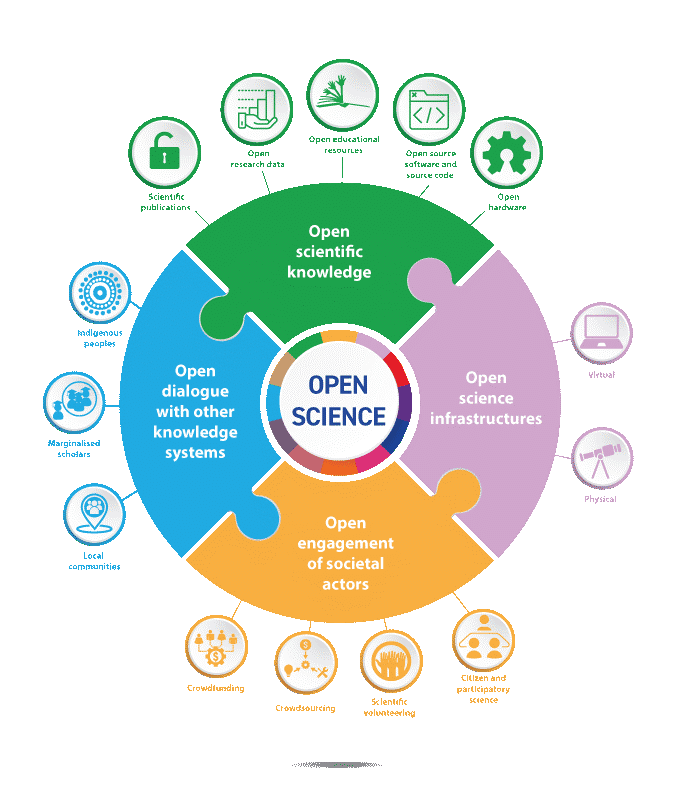
This year’s call is based on the ambitious “Recommendation on Open Science”, produced by UNESCO, it recognises the broad scope and impact of Open Research – not just on knowledge production, but also on the world at large. Value driven and built around the values of Quality and Integrity, Collective Benefit, Equity and Fairness, and Diversity and Inclusion, the model provides a foundation for a strategic and principled path forward. Over the past year Edinburgh Open Research (EOR) have revamped their action plan and internal model at the University of Edinburgh to reflect this ambitious and expansive scope.

Infographic detailing the components of the UNESCO Model of Open Science

Image: UNESCO Model of Open Science, © UNESCO, 2024,
CC BY-SA 3.0 IGO [14029] https://doi.org/10.54677/MNMH8546

EOR’s new action plan has become more diverse and expansive than ever before, and their strategies going forward will be built upon this new perspective, taking into account their local context. To celebrate this positive step forward, this year’s conference will therefore delve into the various values, principles, and actions highlighted by UNESCO’s model.

The organisers are keen to hear from speakers from a diverse range of backgrounds (academic, professional services, and students) and research disciplines. They especially welcome contributions from early career researchers, junior professional services staff, and technicians.

The deadline for submissions is end of day – Friday 13th February 2026.

Registration and submission are open to all, further details and link to submissions: Edinburgh Open Research Conference 2026.

Members of the Research Data Service will be at both of these events, we hope to see you there!

Keith Munro,
Research Data Support Assistant

Digital Research Services: What’s on This Semester

This a guest blog post written by Dr Eleonora Mameli, Research Facilitator in the Digital Research Services team.

To help the research community get the best out of the University’s digital resources, the Research Facilitation Team has organised a diverse programme of events for the 2025–2026 academic year.

From research planning to high-performance computing, there is something for everyone interested in using digital tools in research.

Digital Research Conference

The University of Edinburgh’s Digital Research Conference will take place on 26 February 2026, bringing together researchers, students and staff working with digital and data-intensive methods.

Poster for the Digital Research Conference

This year’s themes include:

  • AI in Research: Promise, Pitfalls & Practice
  • Digital Research Infrastructure & the Future of Research Computing
  • Interdisciplinary Digital Research: From Humanities to Medicine
  • Ethics, Security & Integrity in Digital Research
  • Green Digital Research Practices & Sustainability
  • Embedding Digital Tools in Research, Innovation, Teaching & Learning

Abstract submissions are invited for posters, lightning talks, and oral presentations. The deadline for submissions is October 20th at 5pm.

Find out more on the Digital Research Conference webpage.

Event Series

Spotlight on Research Planning

Join this bite-sized online seminar series, running every Tuesday from 21 October to 25 November at 12 pm. Open to academics, research support staff and postgraduate researchers, the sessions will cover:

  • Data and computing cost estimation
  • Research data management
  • DMPOnline
  • Project management
  • Copyright and licensing
  • Open Science Framework

More information at Spotlight on: Research Planning.

Introduction to Digital Research Services

The introduction to Digital Research Services (DRS) webinar runs on various dates throughout the semester.

It is perfect for newcomers, early career researchers (ECRs), or anyone who wants to get started with the University’s digital research tools and services.

HPC in Focus

Explore High-Performance Computing (HPC) through a mix of online and in-person sessions.
These events showcase the University’s research infrastructure, services and support, featuring expert insights, hands-on training, and networking opportunities.

Upcoming sessions will spotlight ARCHER2, the national supercomputer, and Eddie, the University’s local HPC cluster.

More details at HPC in focus training.

On-demand resource: Induction Video Series

If you would like to explore the University’s digital tools and services at your own pace, our Induction Video Series is a great place to start.

This collection of short videos is designed to help you navigate and make the most of the University’s digital tools, services, and resources.
Each video supports a stage of the research lifecycle, from planning and design to publishing and sharing data.

Watch the induction videos here.

If you would like to stay up to date with upcoming events and resources, keep an eye on the Digital Research Services website!

Edinburgh Open Research Conference 2025 Highlights

On 4th June 2025, we held the 4th annual Edinburgh Open Research Conference. The conference welcomed anyone who is part of a research community, from researchers and technicians to support services and curious citizens. This year almost 300 people joined us from around the world to discuss challenges, success stories, and next steps to further open research.
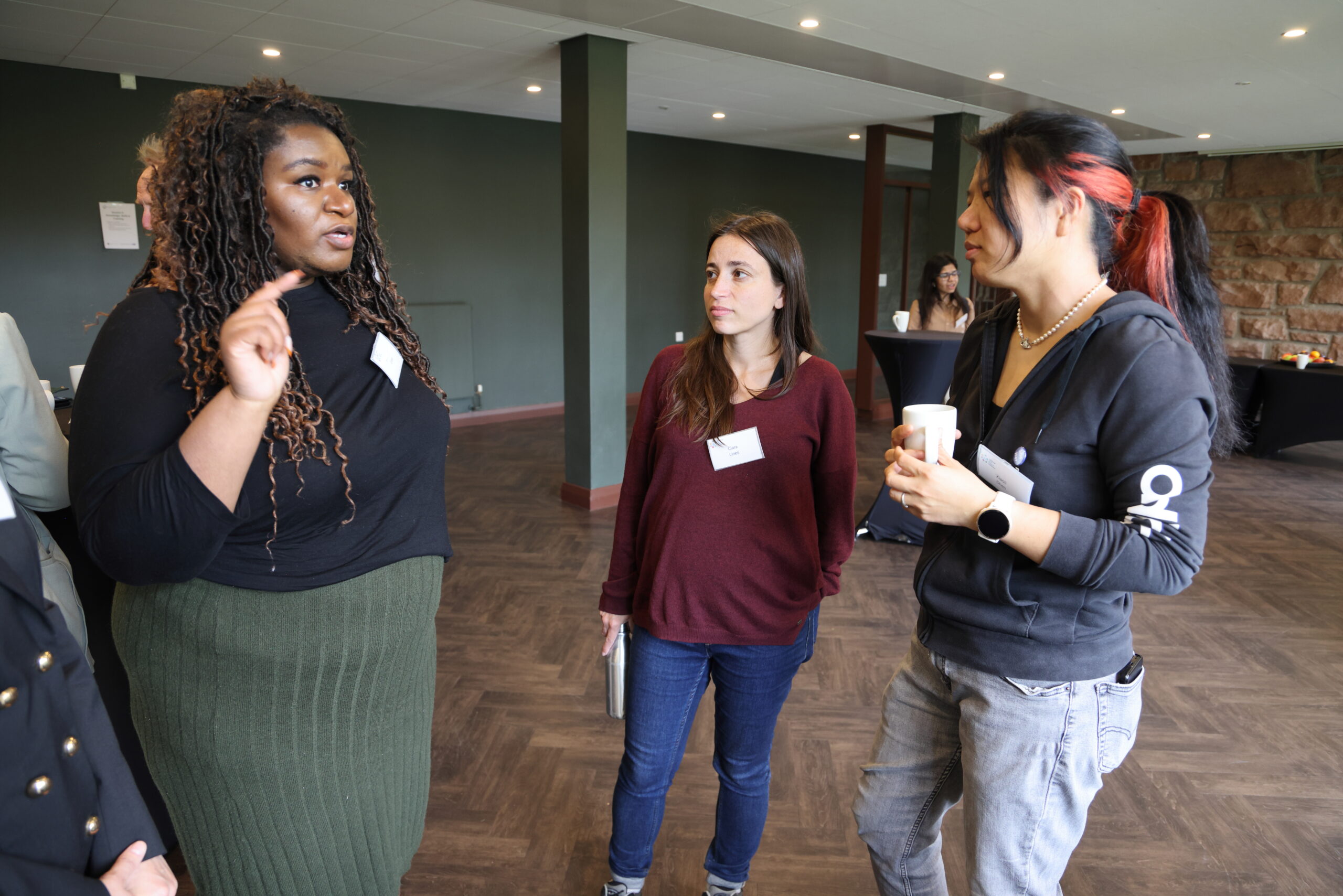
Attendees chatting. Photo by Eugen Stoica.

This year’s theme was “What’s stopping us?” and centred around barriers to making progress in Open Research. We had a full-on bill of events, with 18 speakers presenting their work and ideas throughout the day. We were honoured to host many speakers who had travelled to attend the conference, especially those who travelled from as far as India and the USA. In case you couldn’t join us, all sessions were recorded – you can find the videos on our Media Hopper:

https://media.ed.ac.uk/channel/Edinburgh+Open+Research/259602172

And you’ll find the proceedings from this year’s conference here:

https://journals.ed.ac.uk/eor/issue/view/696

Session 1: Communities and collaborations

In the first session we heard about different methods for understanding the barriers to adopting open research (Ailsa Niven and Zuzanna Zagrodska). I was particularly interested in Zuzanna’s finding that people become less enthusiastic about Open Research with more experience as a researcher. We also heard about some personal experiences of engaging with Open Research. Judith Fathallah spoke about how Open Access publishing models centre author agency, while Fiona Ramage talked about putting her career on the line to stand up for academic integrity.
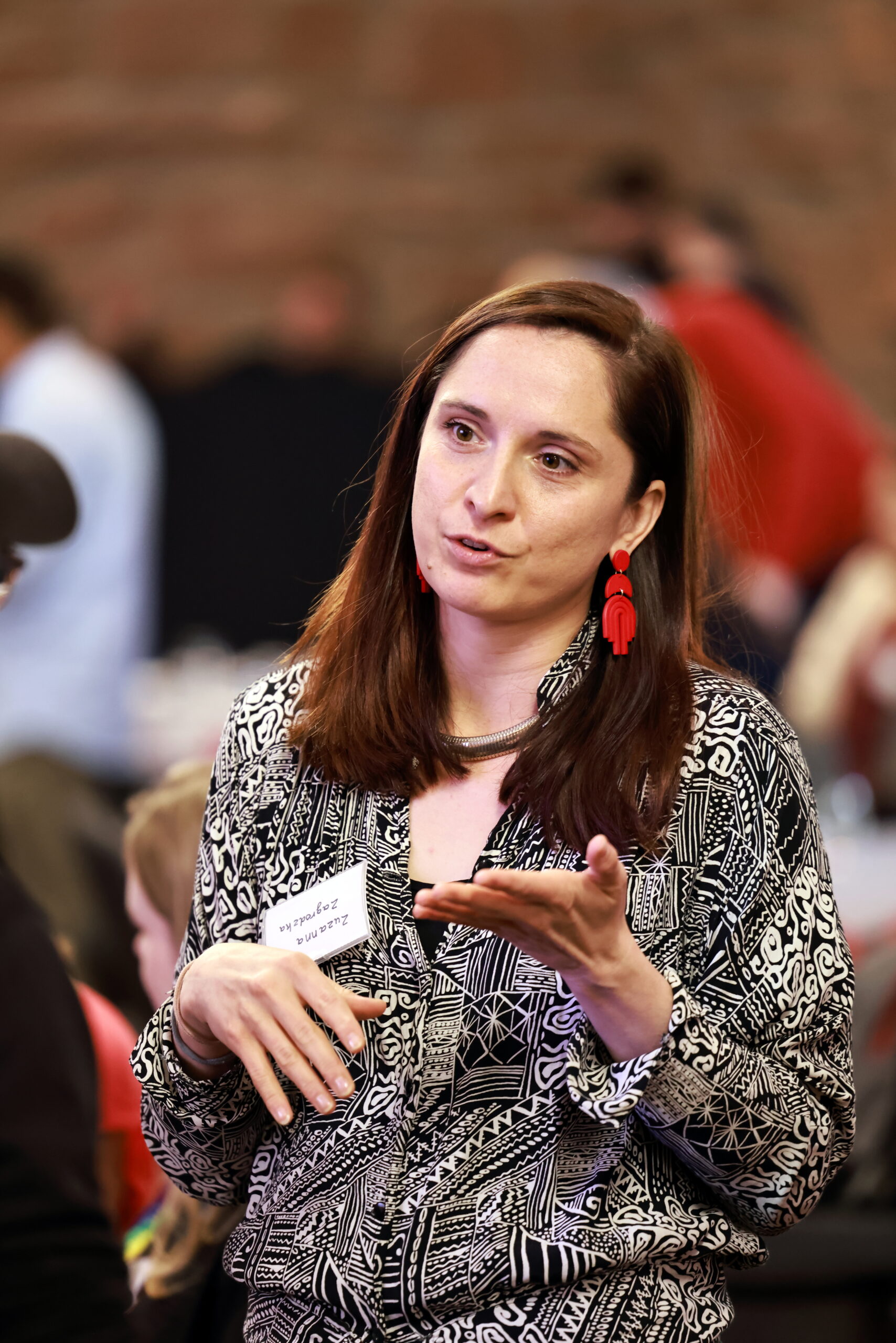
Zuzanna Zagrodzka. Photo by Eugen Stoica.
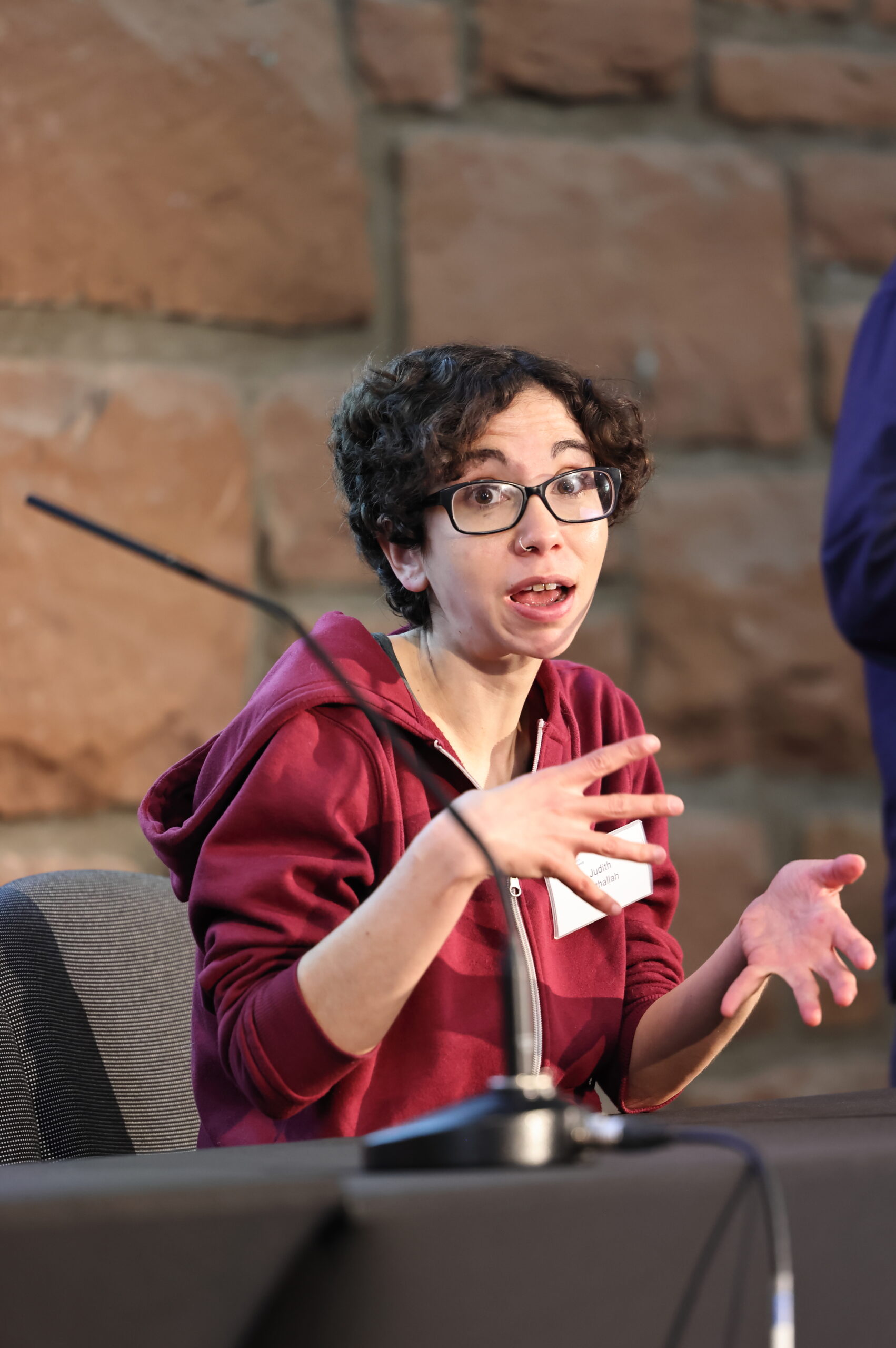
Judith Fathallah. Photo by Eugen Stoica.

Session 2: Policy and Procedures

In the second session we heard lightning talks on how the Diamond Open Access model can help early career researchers (Varina Jones-Reid and Sarah Sharp), applying FAIR data principles to institutional data (Damon Querry), and whether open research mandates work in the context of the 2021 REF Open Access Policy (Ali Kay). The final talk was on the Research Culture Action plan at Edinburgh and how Research Culture and Open Research intersect (Crispin Jordan and Will Cawthorn).
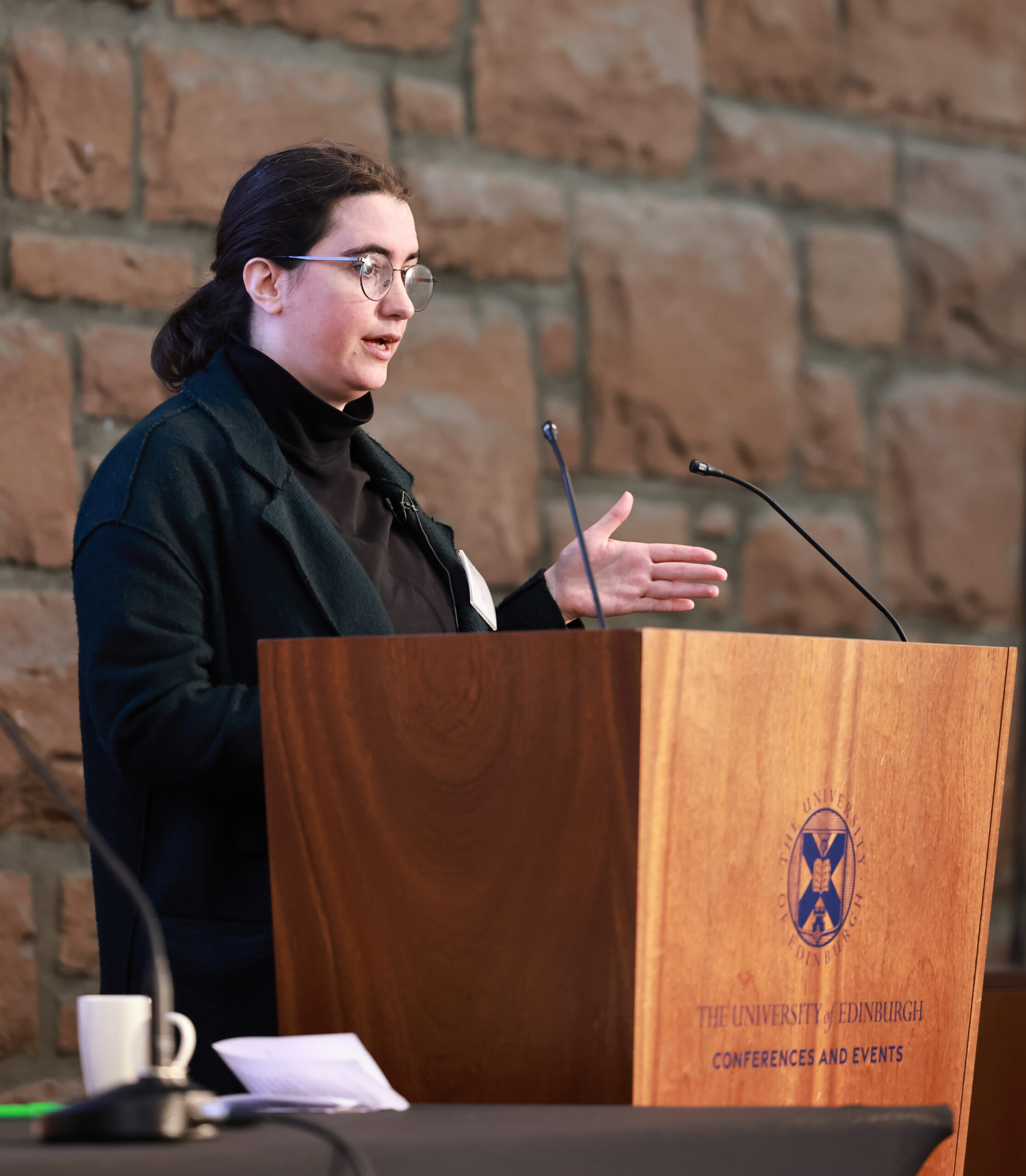
Ali Kay. Photo by Eugen Stoica.
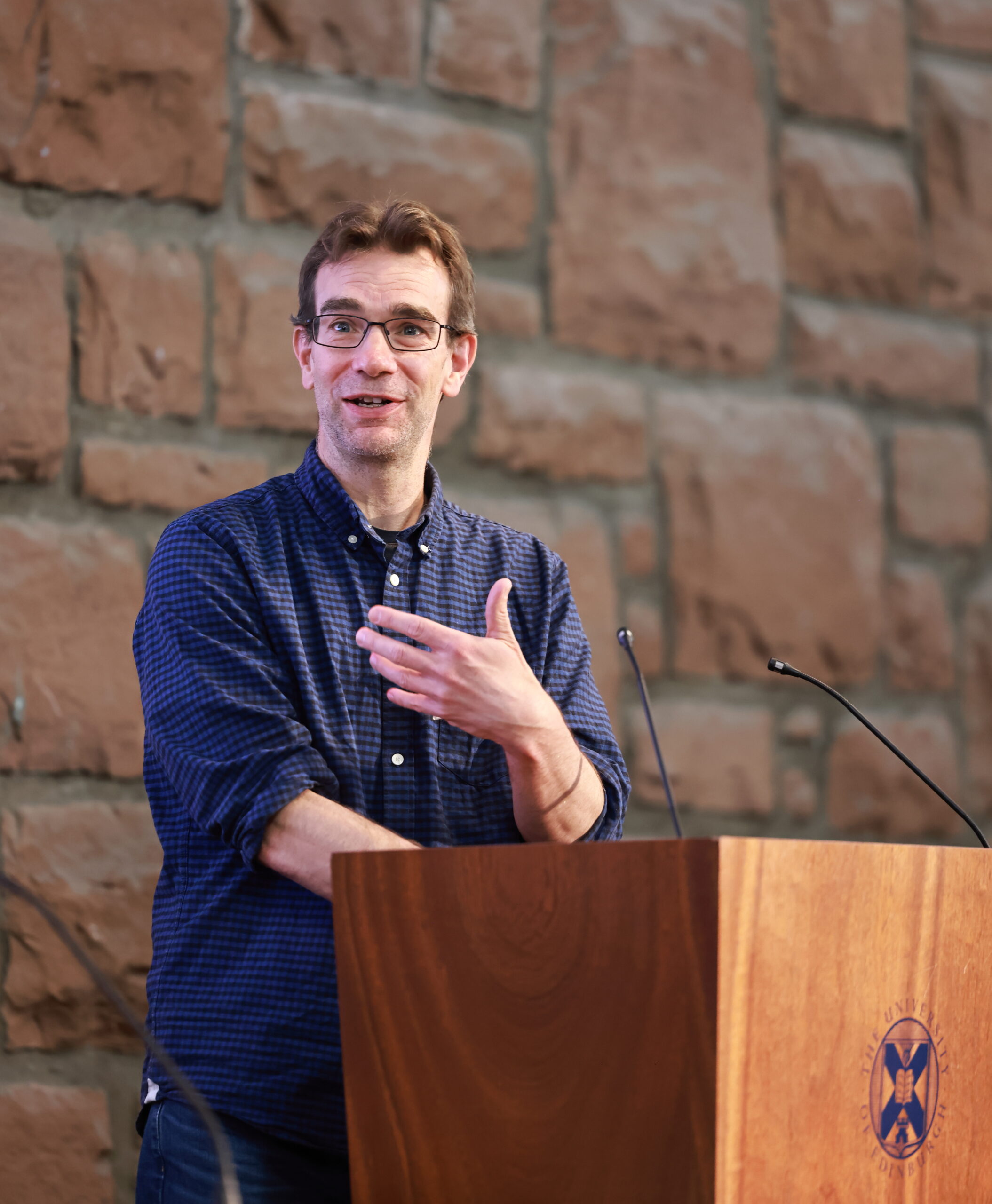
Crispin Jordan. Photo by Eugen Stoica.


Lunch: Research Cafe / Networking

During the lunch break, we had the opportunity to gather and network or to attend this month’s Research Cafe event, held monthly by our wonderful Academic Support Librarians. Ruthanne Baxter, Civic Engagement Manager for our Heritage Collections, joined us to talk about prescribing heritage-based social support programs as a non-clinical health intervention for students and Edinburgh locals.
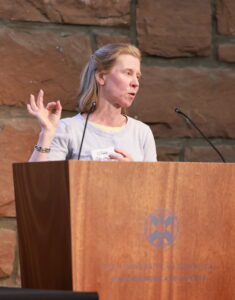
Ruthanne Baxter. Photo by Eugen Stoica.

Session 3: Systems and Infrastructure

After lunch, a couple of speakers talked about open-source software, one for automating lab work and for divesting from Big Tech corporations whose values are not aligned with our own. We also heard about new tools aimed at solving specific obstacles to Open Access – one tool for helping researchers identify and overcome barriers to sharing qualitative research data, and a new platform to make publication in neuroscience more accessible using preprint peer-review. I liked that the speakers in this session provided practical solutions and tools.
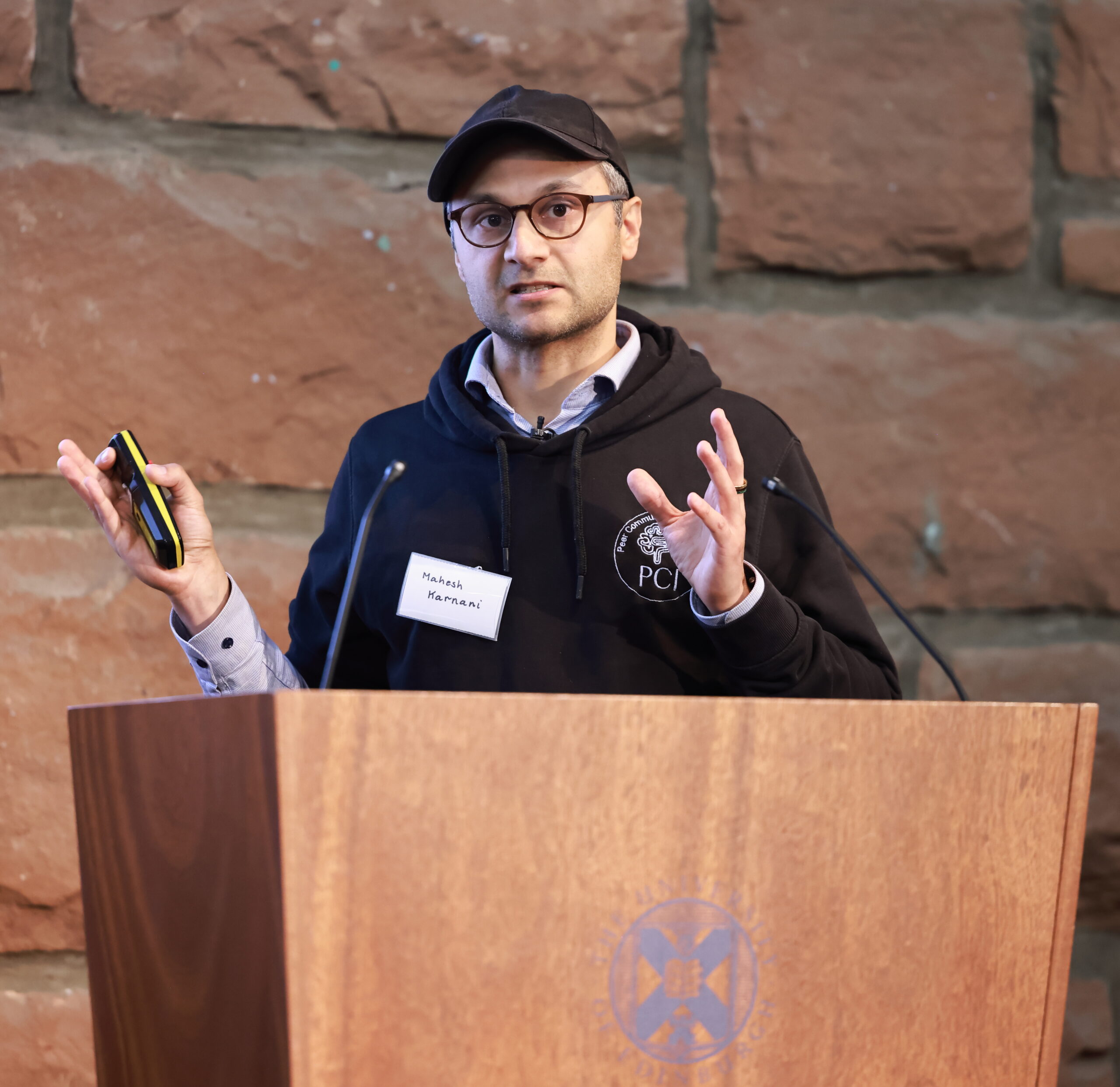
Mahesh Karnani. Photo by Eugen Stoica.

Audience member listening. Photo by Eugen Stoica.

Session 4: Knowledge, Skills & Training

During the final session, speakers discussed Open Research in a global context: Milena Dobreva shared her reflections on her knowledge exchange in Bulgaria, and our old friend Tapas Kumar Mohanty talked about building a culture of Open Science in a Global South context through the NIHR Global Health Research Unit on Respiratory Health (RESPIRE) project. We also heard about new training-related innovations. Louise Saul discussed reward and recognition for research-enabling staff who provide Open Research training, and Camilla Elphick presented a new interactive and accessible Open Research learning resource she co-developed at the Open University.

Milena Dobreva. Photo by Eugen Stoica.
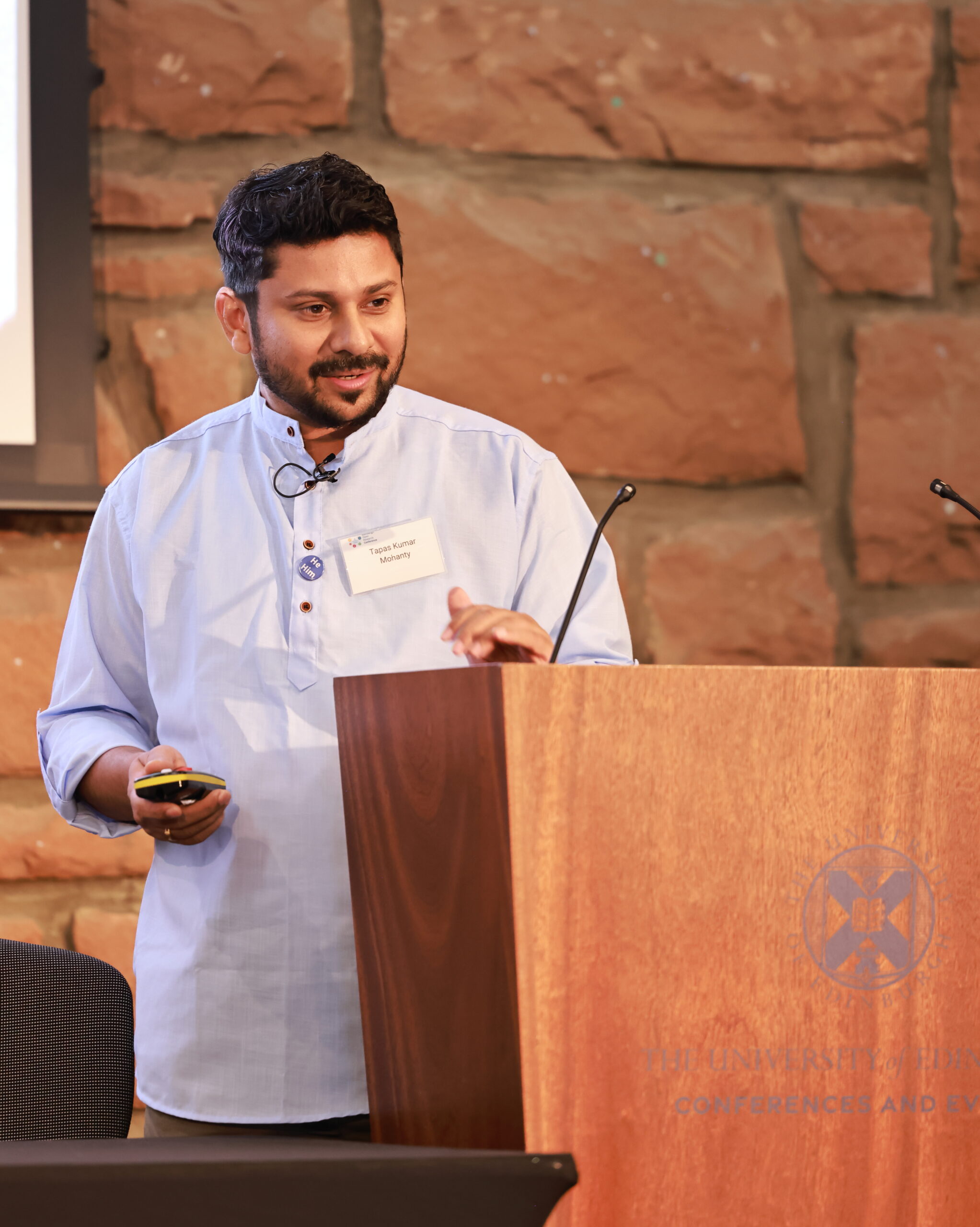
Tapas Kumar Mohanty. Photo by Eugen Stoica.


For me, the day highlighted the benefits of including a patchwork of voices in discussions around open research. Hearing personal stories and case studies alongside quantitative methods and formal analysis provided great insight into the state of Open Research now, the obstacles different research communities face, and ways we can enable people to embrace more open research practices. I left the day with a much clearer picture of where we are along the path of progress and where we should go next.

Thank you to all our speakers, our staff volunteers, and everyone who attended. A huge thanks to Kerry Miller and Nel Coleman, who pulled it all off without a hitch!

You can find all this year’s sessions as videos on MediaHopper:  https://media.ed.ac.uk/channel/Edinburgh+Open+Research/259602172

To read more about Edinburgh Open Research and sign up for the newsletter, where we’ll notify you about future events:                                        https://library.ed.ac.uk/research-support/open-research 

To read more about Edinburgh ReproducibiliTea and Open Research Initiative:  https://library.ed.ac.uk/research-support/open-research/reproducibilitea-eori

Evelyn Williams
Research Data Support Assistant
Research Data Service