A Hurdy-Gurdy Experience

Today’s blog post comes from Michelle Kirk, a West Dean College student (MA Conservation of Furniture and Related Materials) who undertook a conservation placement with the CRC this Summer...

Although usually practising and training within the realms of furniture, this summer kicked off to a musical start with a work placement at the CRC, under direction of their musical instruments conservator Jonathan Santa Maria Bouquet.

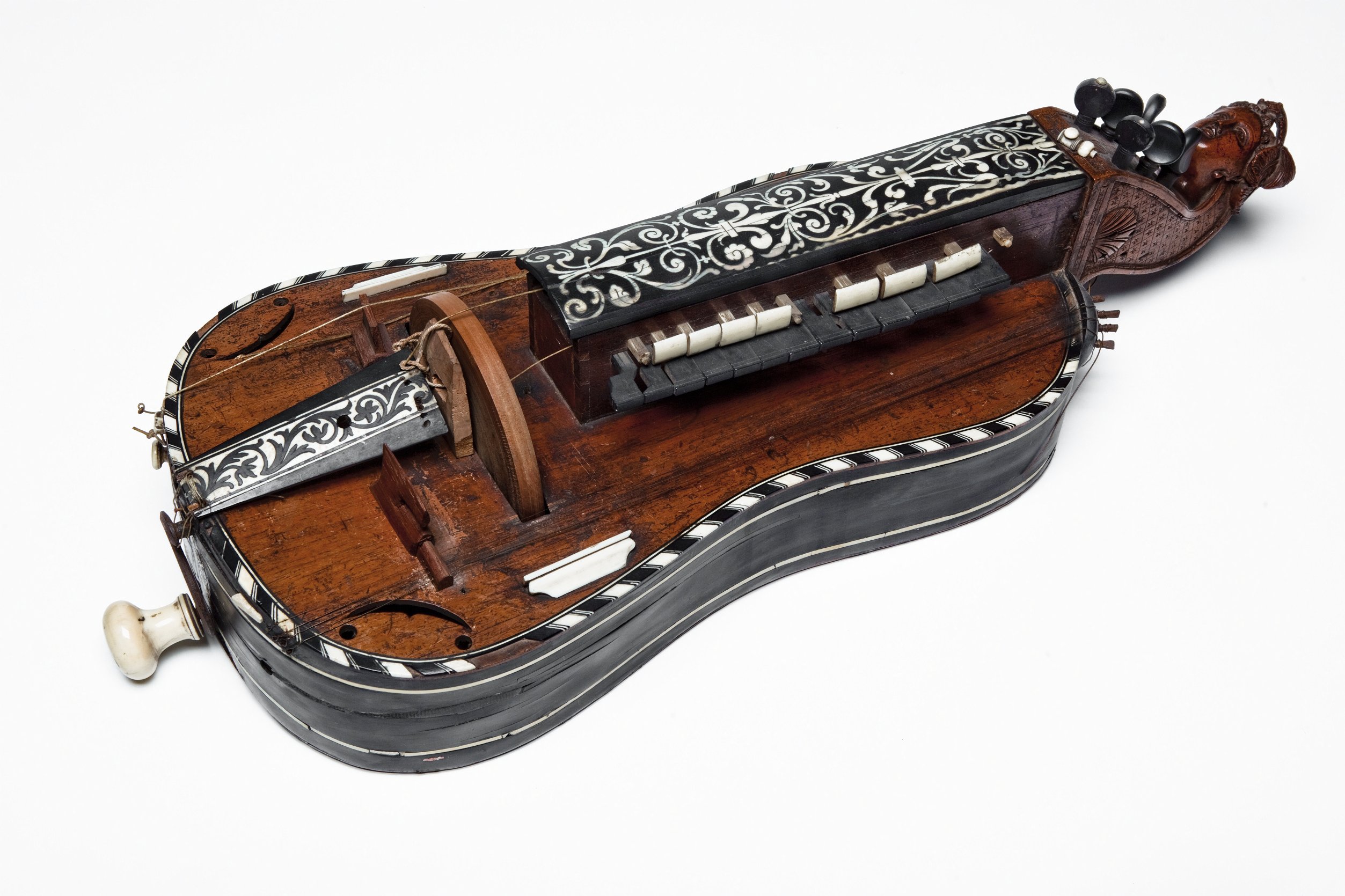
This was an especially exciting time due to the redevelopment of St Cecilia’s Hall, and I was presented with a number of objects to work with, one of which intrigued me more than anything else – a rather sorry looking late 18th century hurdy-gurdy (MIMEd 1052) made by ‘Ouvrard’ in Paris.

\\sg.datastore.ed.ac.uk\sg\lib\users\jsantam\Hurdy gurdy\images8559885699752800803\0032950c-0001.jpg

The instrument before treatment. Photographed by Susan Pettigrew

Continue reading

Shooting the breeze

It’s not every day that you are asked to conserve a magic spell on papyrus, but this is exactly what happened when I was asked to take a look an ancient fragment of text, recently discovered in the archive collections at the CRC.

The fragment was unearthed by an archives intern who was assessing the foreign language material in the David Laing collection. A vague catalogue entry labelling the box as miscellaneous languages, and an inscription on the folder wrongly identifying it as Chinese script, meant that this item had not been consulted for years and the staff were unaware of its existence. It has been suggested that it could be an Egyptian spell from the book of the dead, but further research is needed to confirm this.

Fragment of papyrus, before conservation

Fragment of papyrus, before conservation

Continue reading

Conservation Placement – Northumbria University

Lisa Mitchell, conservation placement student from Northumbria University, describes her experience of working at the CRC in this week’s blog post…

Over the past two weeks I have had the pleasure of working with the conservation team at the CRC as part of my summer placement for my Master’s degree in conservation on works of art on paper.

Following an intense but fulfilling first year studying at Northumbria University, the summer has provided a very welcome respite from assignment writing and the opportunity to put some of my newly taught conservation skills into practice!

Working alongside Emily Hick, the Special Collections Conservator, I have been fortunate enough to assist her in the completion of the final stages of the conservation treatment of a collection of 32 portraits from India, which Emily has recently written about in her Passage to India blogs (part 1 and part 2 can be read by clicking on the highlighted text).

Continue reading

A Passage to India – Part 2

In this week’s blog, Special Collections Conservator, Emily Hick, describes the next stage of conserving a collection of Indian paintings, and explains how she used a rigid gel to remove old tissue papers that were adhered to the front. You can read part one of this blog here.

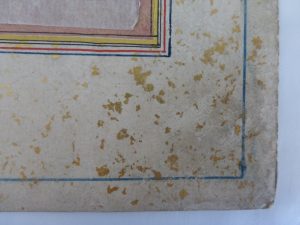
After completing a condition report and putting together a treatment proposal, we began interventive treatment. The first step was to surface clean the paintings. This removes all loose surface dirt, which can be harmful to paper documents, and prevents the dirt from sinking further into the paper fibres during the later aqueous treatments, making it difficult to remove. To do this we used a soft goat hair brush on the painted areas and smoke sponge on the borders. We cut the smoke sponge into small pieces and used a dabbing motion to avoid removing any of the gold leaf sprinkled on the surface. A good quality Mars Staedler™ rubber was cut into thin slithers and used to remove areas of ingrained dirt on the edges of the painting.

Ingrained dirt at the corner of a painting

Ingrained dirt at the corner of a painting

Continue reading

Student Placement – Joey Shuker

Joey Shuker, conservation placement student from Camberwell College of Art describes her experience of working at the CRC in this week’s blog post…

I have been very fortunate to have spent the last four weeks in the CRC as part of my summer placement for my masters degree in Conservation of Paper. I have just finished the first year of a two-year masters at Camberwell College of Art, part of the University of Arts London.

I have been working mostly in the studio with Emily Hick, but my placement here has also taken me to the National Library of Scotland conservation studios, The Scottish Conservation Studio (private studio) and I have spent days working at the Annexe (the CRC’s of site facility) with Katharine Richardson.

One of the projects I spent most time working on was conserving a collection of photographs of Leith in the 1920s.The condition in which the photographs arrived in meant they where not able to be digitised. The prints were mounted on thick card that had distorted due to past environmental and storage conditions. The distortion of the card mount was pulling and creasing the photograph. Being so distorted meant that any pressure to put them under glass during the digitisation process would have caused more damage to the print. The decision was made (before I arrived) to remove the mount backing which would allow the prints to relax and flatten.

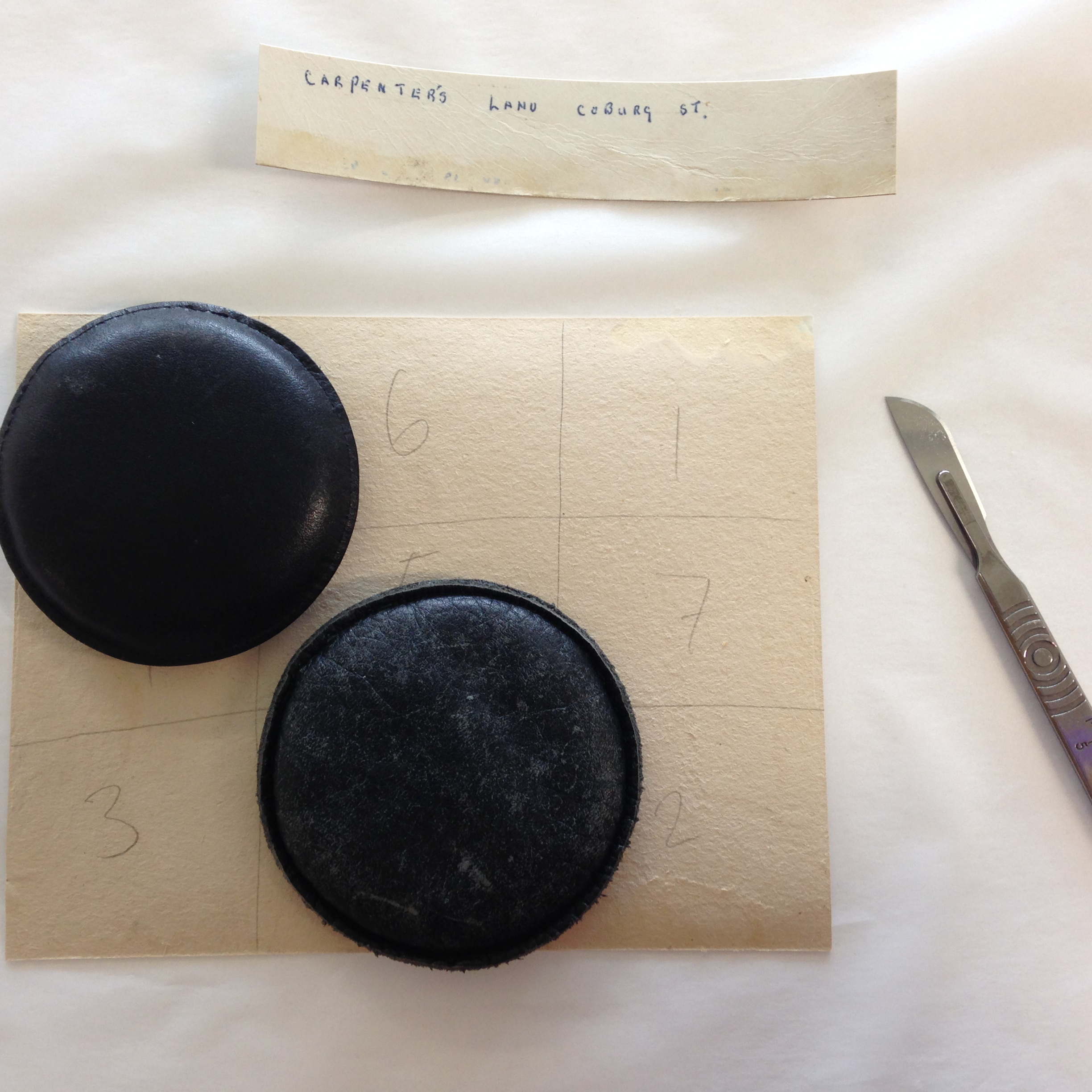
Days were spent removing the backing down to the layer just above the back of the print. A scalpel with a no.22 blade was used to remove the backing layer by layer and a pencil grid was drawn on each layer to ensure even removal which would support the print during this process.
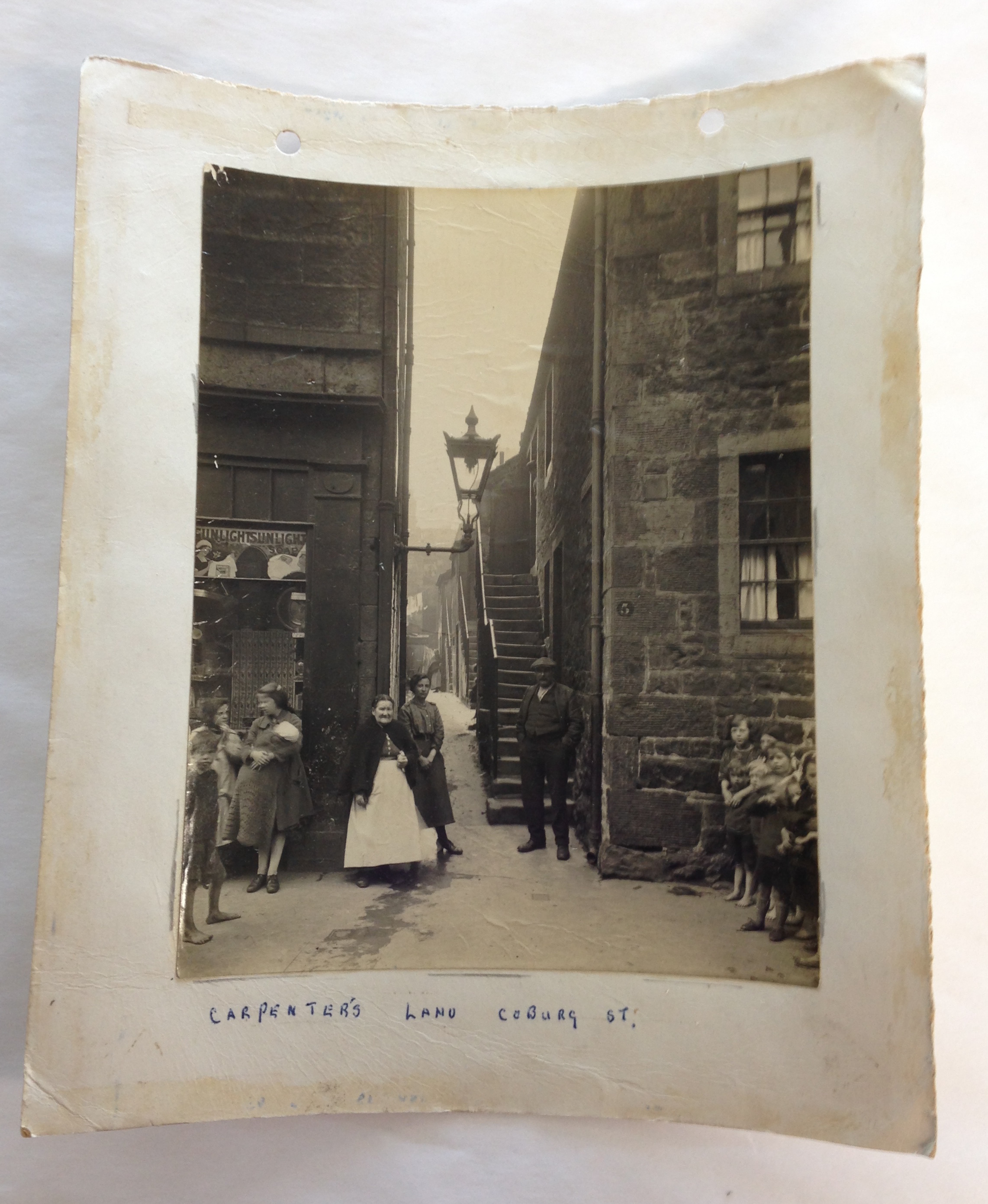
Macintosh HD:Users:joannashuker:Desktop:Edinburgh Placement 2016:Day 7:IMG_3844.JPG

Curved photograph and mount

Macintosh HD:Users:joannashuker:Desktop:Edinburgh Placement 2016:Day 7:IMG_3848.JPG

Grid on back to aid even removal of card

After the majority of the backing mount had been removed and the prints began to relax and could be pressed under glass overnight. Backing removal was something I had learnt on my course but I had only ever done it on large prints rather than a collection of small ones.

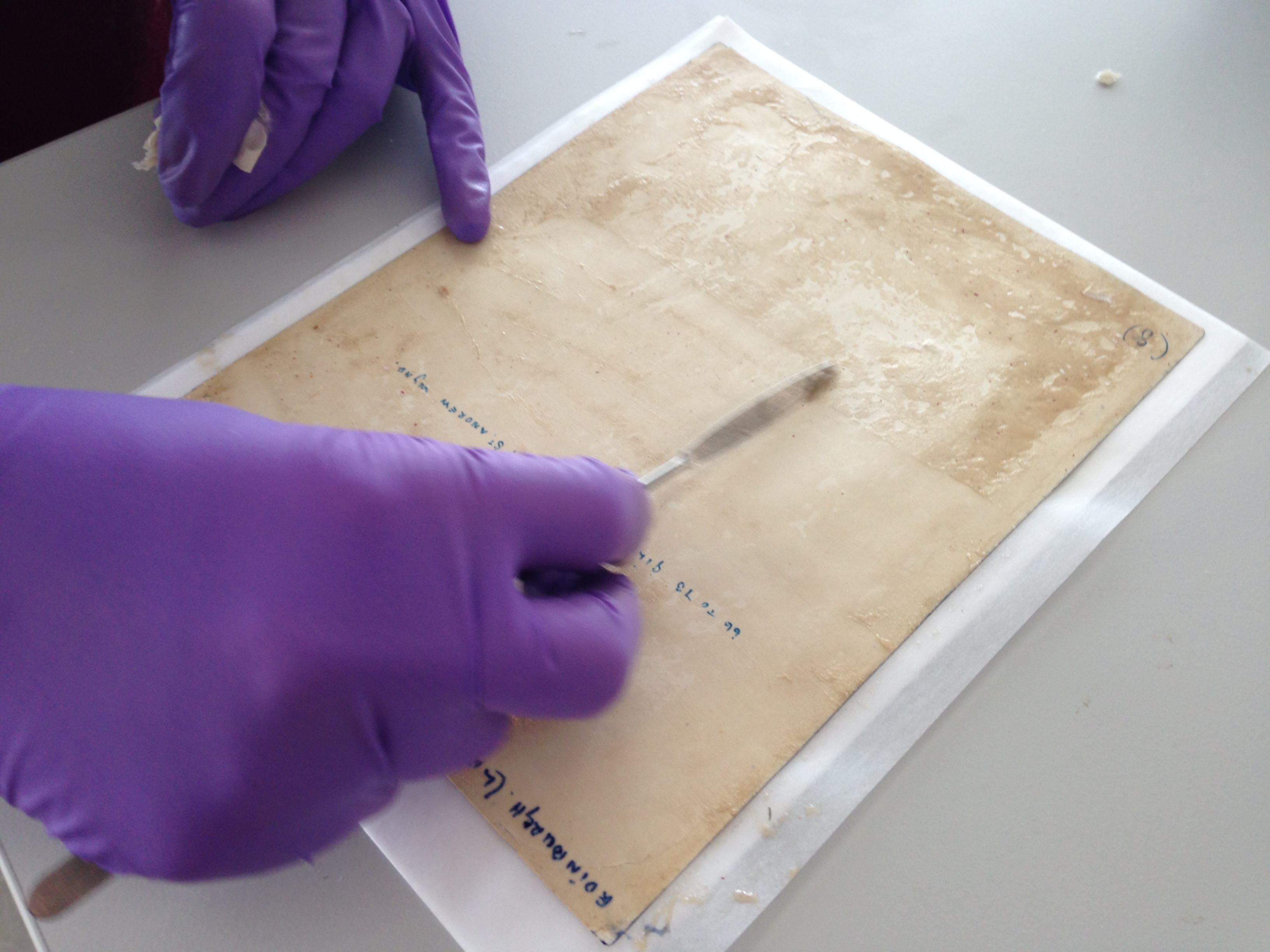
Doing aqueous treatments on photographs was something I had not yet covered on my course. Emily showed me a humidification method that allowed enough moisture to soften the paste holding the last backing layer on, but didn’t affect the print. We used fords gold medal blotter, which was recommended for use with photographs as it is thinner and holds less water. We used a blotter sandwich for humidification, the print were humidified for 30 minutes. After this time, the last layer of backing could be easily peeled away and the paste could be removed with a spatula.
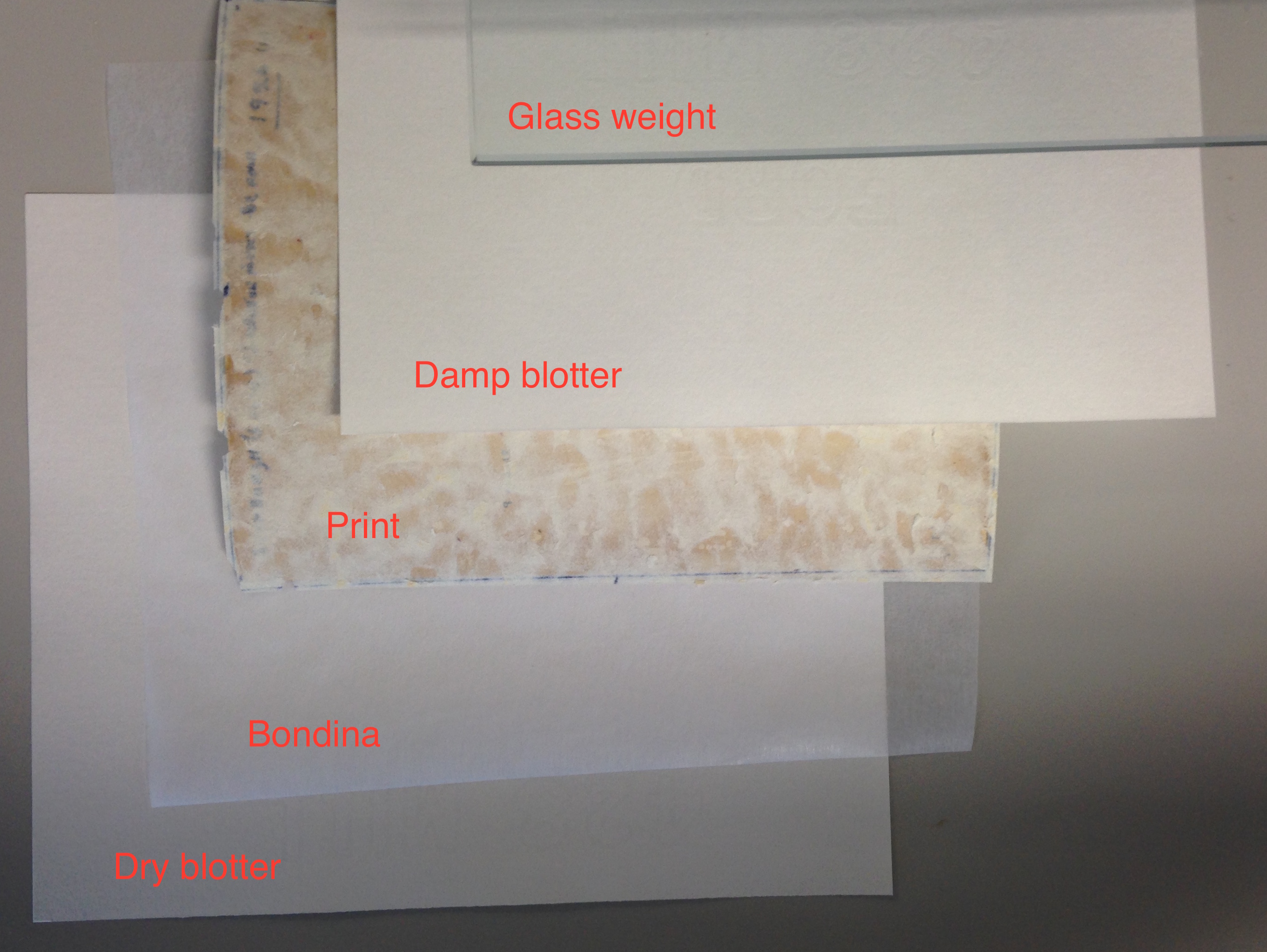
Macintosh HD:Users:joannashuker:Desktop:Edinburgh Placement 2016:Day 14. 15.07:IMG_4033.JPG

Blotter sandwich for humidification

Macintosh HD:Users:joannashuker:Desktop:Edinburgh Placement 2016:Day 12 13.07:IMG_4002.JPG

Removing the paste

After this treatment and being put into a press for a couple of days, the box of photographs that arrived at CRC curved and stiff are now relaxed and flattened and ready to be sent to the photography lab for digitisation. This was a great project to work on as I could follow the project almost from start to finish.

I have learnt many new skills and I have been introduced to new treatment methods throughout my time here. Alongside working with Emily and the conservation team in the studio, I have also had introductions to other members of staff who have taken time to show me their role in the wider CRC such as the Archives, Photography Lab, Exhibitions, Rare Books and the Musical Instruments Conservation studio.

This placement has been highly valuable to my studies and preparing for work after university. Many thanks to everyone at the CRC that I have met during my time here.

Joey Shuker

Conservation Student Placement
Volunteer Voice – Laura Keizer

In this week’s blog, we interview a conservation volunteer to find out what they do in the studio and the benefits of volunteering….

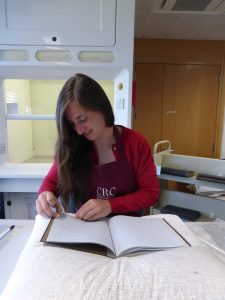
Laura Keizer surface cleaning a bound volume in the conservation studio

Laura Keizer surface cleaning a bound volume in the conservation studio

1.What is your name?

Laura Keizer

2. Where are you from?

I’m originally from the Netherlands, but – following a short stint in Reykjavík – have been an Edinburgh resident for over three years now

3. What do you do when you are not volunteering?

Despite currently being swamped in dissertation research for the MSc in Book History and Material Culture, I love to go hiking in the Scottish hills and highlands, hunting for castles or other medieval vestiges on my bike, or simply reading a book or knitting.

Continue reading

Uninvited Pests

In this week’s blog, Project Conservator Katharine discusses the new Integrated Pest Management Plan for the CRC Special Collections, and describes the common pests found in heritage institutions….

Integrated pest management (IPM) is the practice of monitoring for insect activity to prevent damage to collections and cultural heritage. It was originally developed by the agricultural industry to control insect populations in crop stores without continuously using pesticides. It has now been adopted by libraries and archives as a means to monitor and deter the insect pests that use organic materials present in special collections as a food source.

Continue reading

Paper Conservators: News and Ideas Exchange 2016

This week’s blog post comes from Conservation Volunteers Mathilde Renauld and Paula Burbicka, who recently attended a paper conservators new and ideas exchange event at the CRC….

Scotland’s Paper Conservators gathered on May 4th 2016 for informal 5-minute presentations and socialising, hosted by the Centre for Research Collections (CRC), University of Edinburgh.

Organiser Helen Creasy (The Scottish Conservation Studio) began by enumerating the outcomes of last year’s news and ideas exchange; this year’s well attended event will also assuredly be impactful. Talks were enthusiastically received, prompting many questions and fruitful discussions.

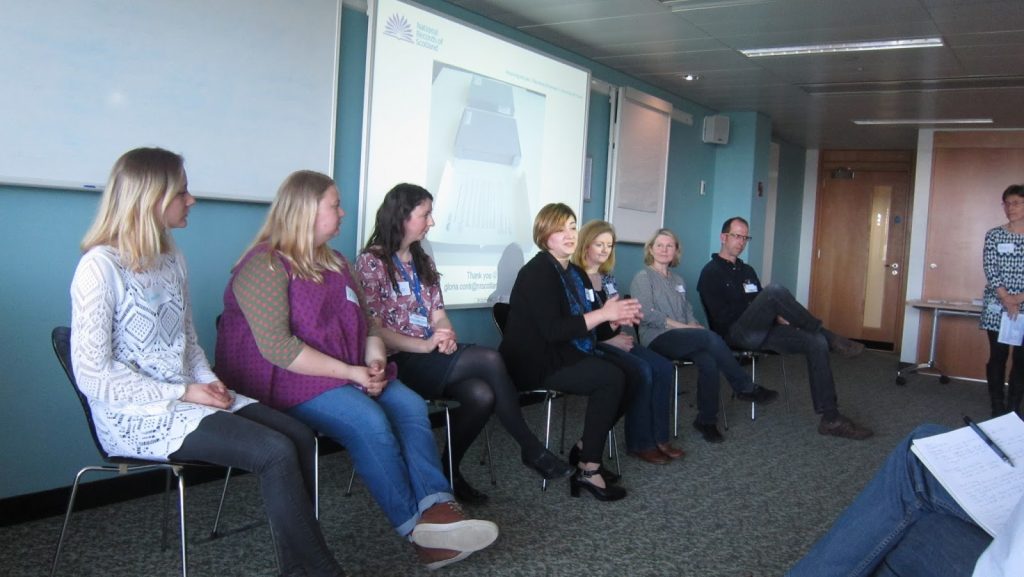
Paper conservators at the news and ideas exchange

Paper conservators at the news and ideas exchange

Continue reading

A Passage to India – Part 1

In this week’s blog, Special Collections Conservator Emily, describes the first stage of conserving a collection of Indian portraits…

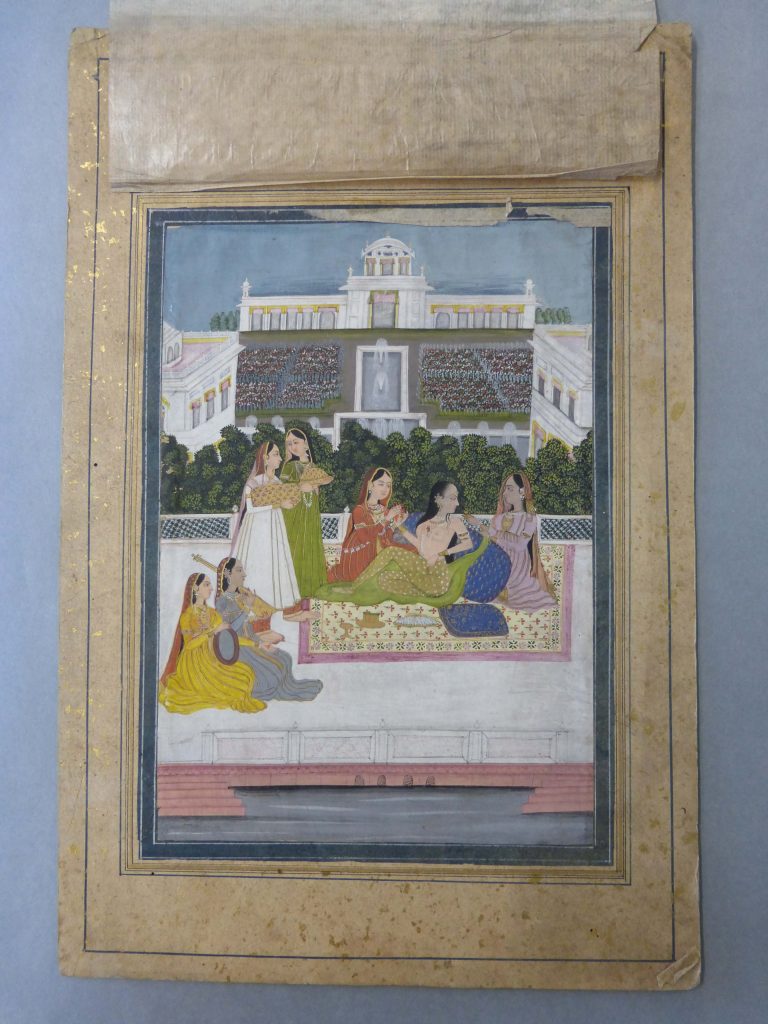
I was recently asked to complete a condition report and treatment proposal for a collection of 32 portraits from India, known as a Tasawir, dating from the late eighteenth or early nineteenth century. The images have been pasted onto gold-sprinkled paper, and 7 have examples of calligraphy on the back. They are due to be used in a teaching seminar at the University in the new academic year and are scheduled for exhibition in 2017, but need to be conserved and rehoused before they can be safely handled and displayed. Prior to any conservation work carried out on treasures in the collection such as this, a full condition report is required to document any signs deterioration. This allows the conservator to study the object in detail to understand the materials used, the types of damage found and what may have caused it, ensuring that the treatment proposal put forward is carefully considered and suitable for the item. The brilliance of the pigments used, and the detailed nature of the paintings make these items visually stunning and I was delighted to be given the opportunity to examine them closely.

One of the paintings in the Tasawir

One of the paintings in the Tasawir

Continue reading

George, in Focus: Hidden Text Revealed

In this week’s blog, Special Collections Conservator, Emily, discusses how she is using different imaging techniques to reveal concealed script.

I was recently challenged with a seemingly impossible task in the conservation studio; to reveal hidden texts in a book without using any invasive conservation treatment. The item in question is Recueil de Desseins Ridicules (1695), a bound volume with 111 illustrations by French artist George Focus. The illustrations have been pasted down overall on to the pages of the volume, however, there is writing on the verso of the drawings which is now, of course, obscured. Little is known about the artist, and this text is thought to be unique, so being able to read it could reveal a great deal about this enigmatic figure.

Illustration from Recueil de Desseins Ridicules (1695) by George Focus

Continue reading