Chagall You Need is Love (and Conservation)

One of the most interesting parts of my job as the University’s Conservation Officer is working on the CRC’s exhibitions programme. Whether it be condition checking, installing works, framing and mounting exhibits or consulting on display conditions such as temperature, relative humidity and light, one thing I can be always sure of, is the work is always varied. Due to ever-changing nature of the exhibitions and exhibits, I can never be quite sure what will come through the doors of the conservation studio, which was certainly the case when assisting with the installation of the recent ‘…Something Blue’ exhibition.

As Emma Smith, Exhibitions Officer and curator of the exhibition explains “In spring of this year the University’s Special Collections presented a wide ranging exhibition in the Main Library Gallery, on the colour and concept of blue. This was a great opportunity for the various expertise within the department to come together to showcase the variety of the University’s collections. It was during one conversation with Dr Andy Grout, Honorary Research Fellow at the Centre for Research Collections, that the work of Russian born artist Marc Chagall (1887 – 1985) was first mentioned. “When I think of blue, I think of Marc Chagall.”

A simple search through the library catalogue http://collections.ed.ac.uk/art confirmed two holdings attributed to the artist in the University’s art collection. Abraham and Sarah (1956) and Rehab and the Spies of Jericho (1960) are colour lithographs from Chagall’s Bible Series which was first commissioned by the important French dealer Ambroise Vollard (1866 – 1939) in 1930. To include the work of such a prominent figure in the landscape of Modern art was to be an excellent addition to the exhibition, but then to discover through the photographic records of the works, that they were both washed in a beautiful rich shade of blue, was a delightful bonus!

Both works were hanging in a faraway corner of the University, and were found to both have the frames they were bought in when they were acquired by the university in the 1970s. Neither of which were ‘display ready’, and the decision was made to reframe the works and fit them with UV filter glass.”

The two Chagall lithographs were therefore passed to conservation to undertake this process. The first step was to remove the prints from their frames and window mounts, an important step due to the fact they remained as they had been when framed in the 1970s. The window mount, and the method by which the prints were hinged, were therefore likely to be of a poorer quality which can ultimately be the cause of long-term damage to the object. Acidity in poor quality materials has to potential to migrate to the collection items and cause discolouration and embrittlement and hasten their deterioration. It is therefore important that these issues are identified so action can be taken which, in this case, consisted of replacing the poor quality materials with acid-free mount board hinged with Japanese tissue and wheat starch paste, thus minimising the risk of any further deterioration.
Chagall 7

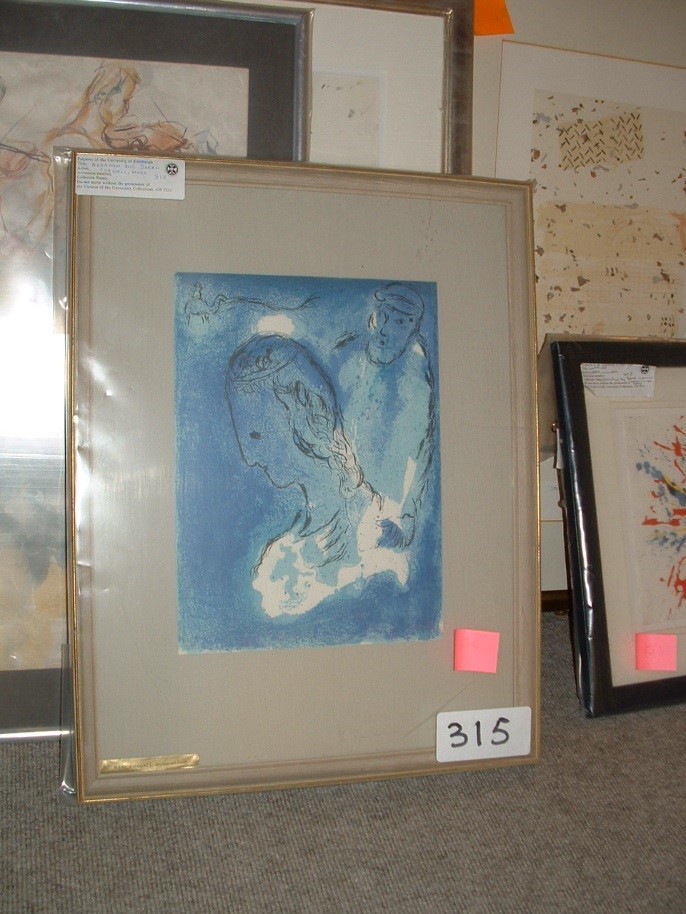
Chagall’s ‘Abraham and Sarah’ in its previous frame

Although pressure sensitive tape had been used to position the prints in their window mounts, it was thankfully relatively simple and easy to remove due to the natural degradation and ageing process causing the tape to become brittle and lose its adhesive qualities. Using a metal spatula, the tape could be lifted from the paper, with any more stubborn areas being removed by the gently application of heat to soften the adhesive.

Chagall 6

Unframing the Chagall Prints

Upon removing the print from its mount, we were to find a nice (and rather unexpected) surprise! A previously hidden Chagall image – most likely a lithograph – on the reverse which was duly photographed and documented for future record.

Chagall 5

Previously hidden image on the reverse

The decision was taken to float mount the prints in their new frames – allowing the edges of the print to be shown – and hinged to the mount board along the top and bottom edge using Japanese tissue and wheat starch paste; a process which can be easily reversed if necessary with no adverse effects to the object. Once in their new frames, with the added protection of UV filtered glass to minimise risk the risk from ultra violet light, the prints were ready to be displayed in the exhibition.
Chagall 4

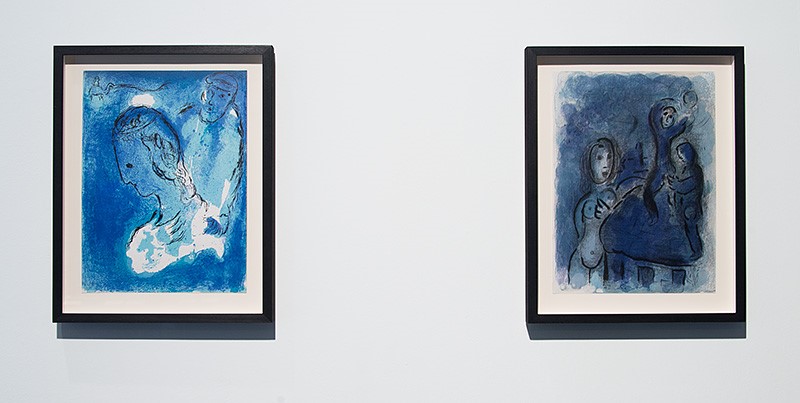
Chagall’s on display in the ‘…Something Blue’ exhibition, Main Library

The old 1970s frames were not significant in themselves, however they did have some very important features that had to be preserved, namely the labels on the reverse. These labels, which are commonly found on the reverse of frames, are an important part of any object as they can help determine the provenance of the work. In the case of the Chagall’s, the labels demonstrated where it had previously been framed and sold before coming the University. This documentation can be greatly important information in tracing its history, and ultimately determining its authenticity and value.

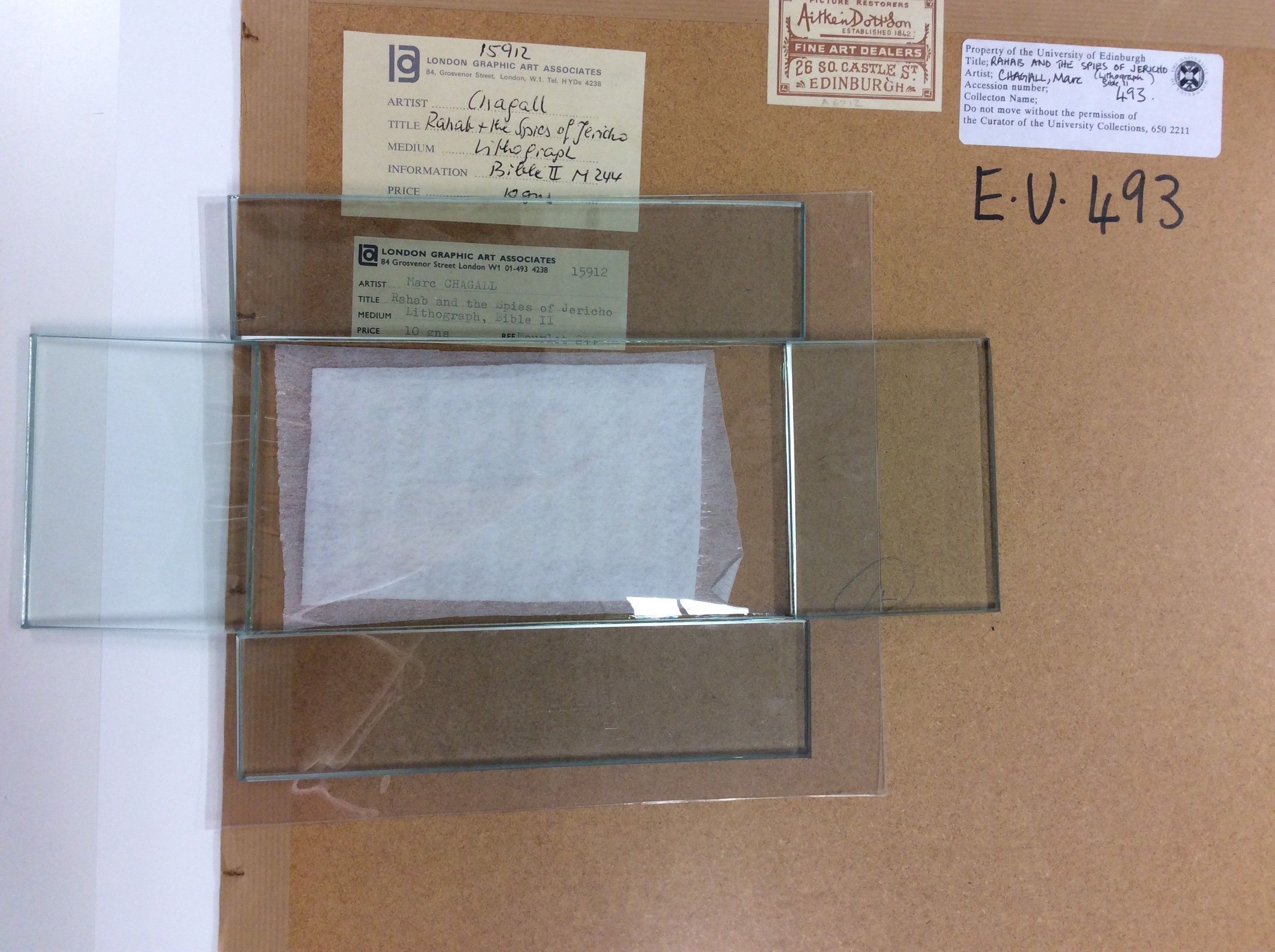
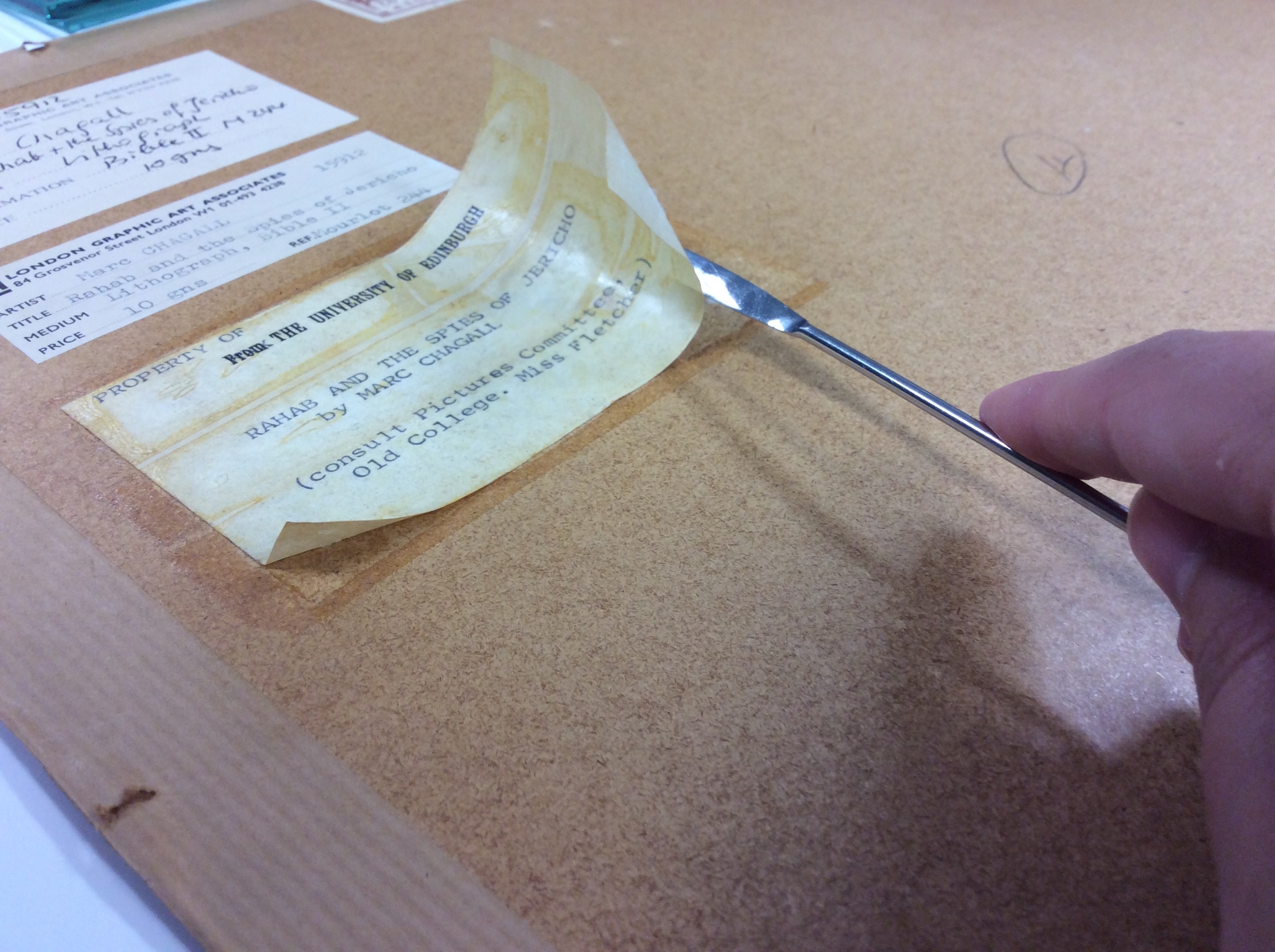
It was therefore important that when reframing the Chagall’s, these labels were kept for future reference. The old 1970s frames were no longer required which meant that the labels that were adhered upon the verso of the backing board would have to be removed and transferred to the new frames. This was achieved by slowly introducing moisture to the labels thus softening the adhesive and allowing the label to be gently lifted from the backing board. A wetted piece of capillary matting was placed upon the label with a sheet of Gore-tex acting as an interleaving layer; its micro-porous nature allowing moisture to slowly penetrate the label without saturating the paper and possibly disturbing any moisture sensitive media. Finally, a layer of transparent polyester was placed over the label and weights placed around the edge to ensure a humid environment was maintained. Once the adhesive had been suitably softened, the label could be lifted from the backing and pressed under weight to ensure they remain flat whilst drying.
Chagall

Label during the humidification process
Chagall 2

Lifting the label off the backing board once the adhesive has been softened

Now that the labels have been removed, they are ready to be transferred and kept with the new frames, with all the appropriate records updated to document how the Chagall’s were previously framed. So although its housing may have changed, its “back” story endures…

Post by Emma Davey, Conservation Officer
School’s in for Summer!

At the beginning of June I began working with the Moray House Archive at the CRC. It’s been a fantastic collection to work with, as every box I have opened has contained something new and presented different conservation problems.

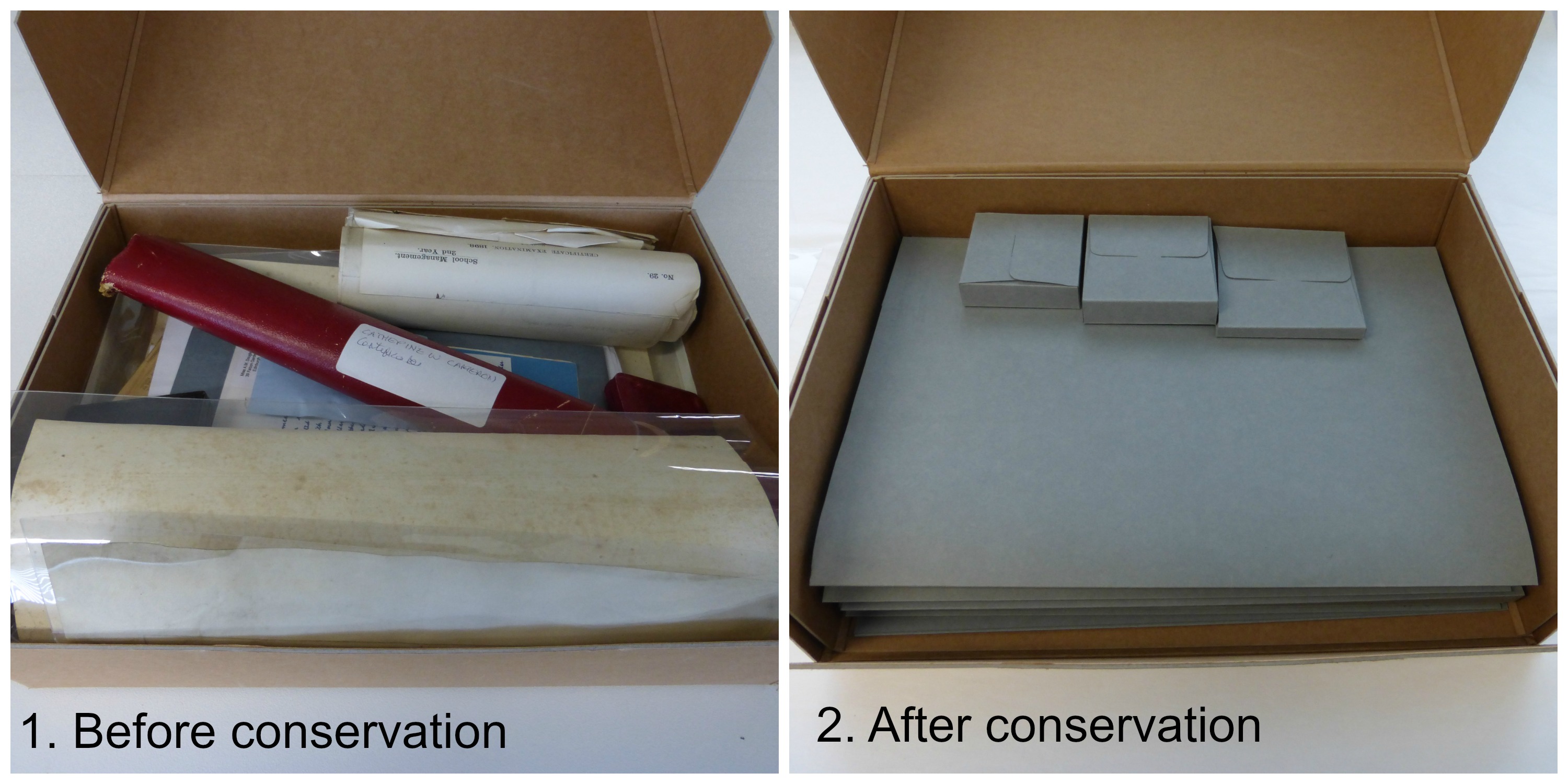
A box from the Moray House Archive, before and after conservation

A box from the Moray House Archive, before and after conservation

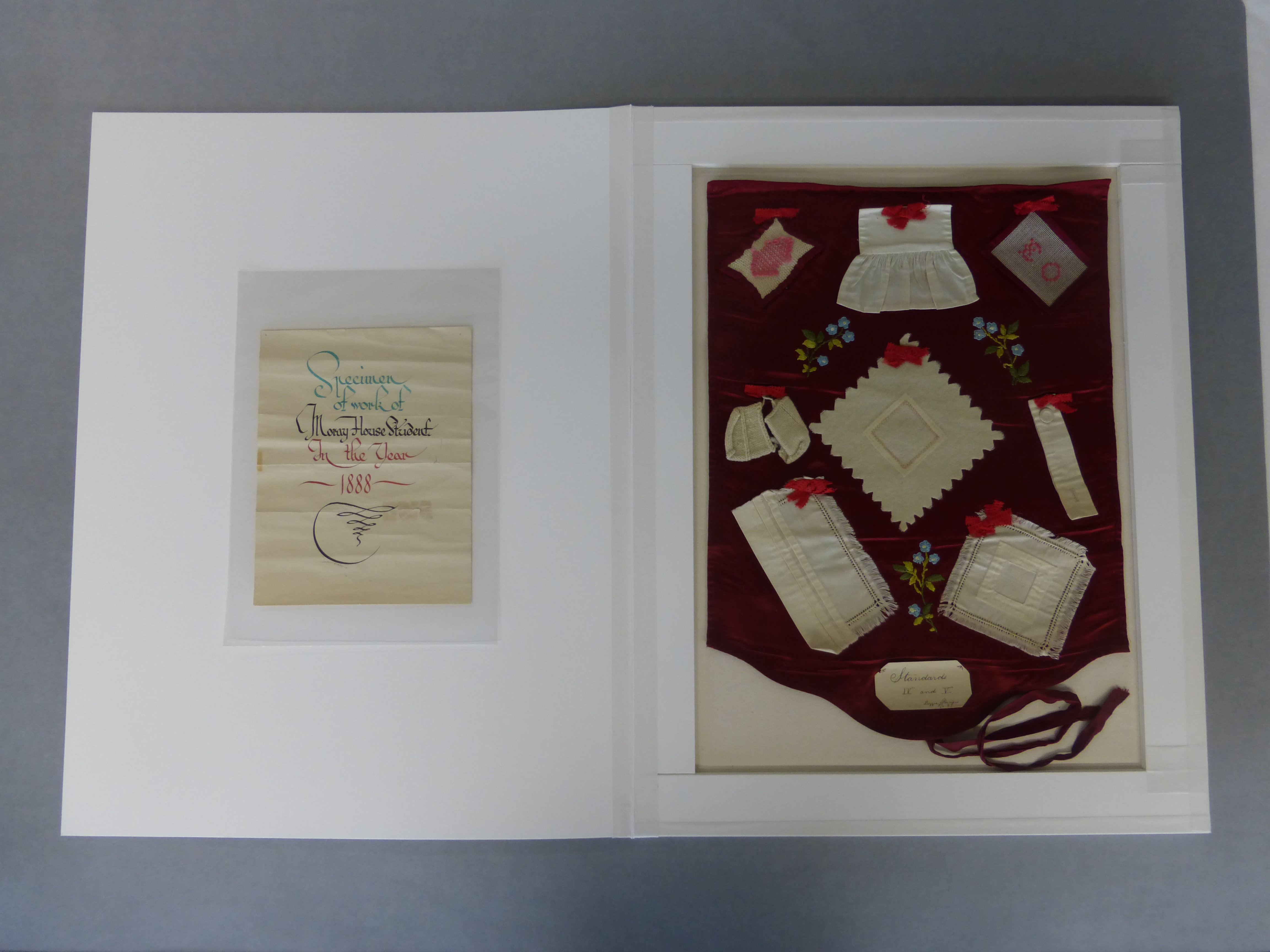
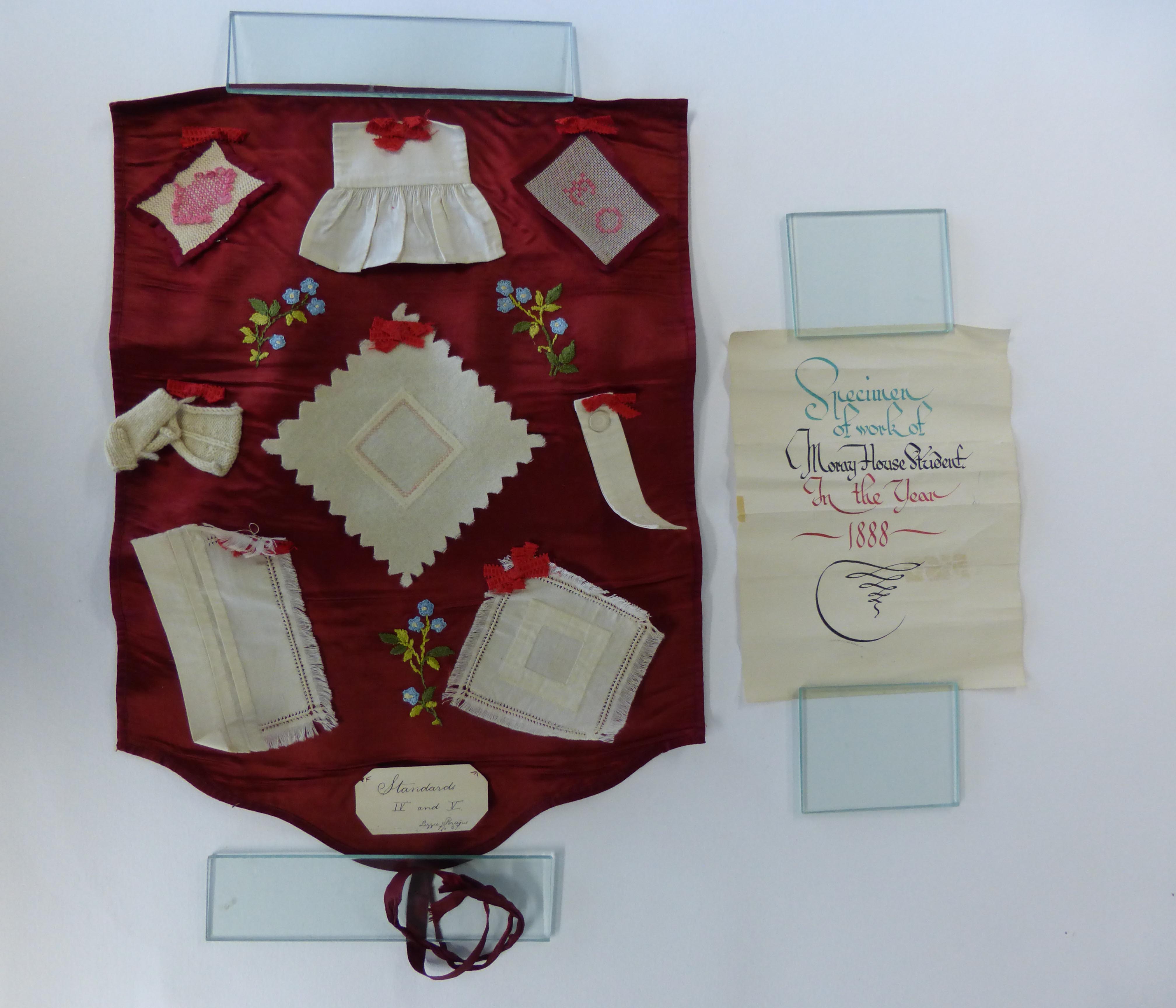
My favourite so far has been a box containing craft work donations. It held five needlework samples, a cotton dress and an embroidery piece. The needlework samples were mounted on a piece of faux leather, which had been rolled tight and stiffened over time, so that it was difficult to view. Since these items were relatively small, I decided it would be best to store them flat so reduce excessive handling of the samples which could lead to further damage.

Box of craft work donations

Box of craft work donations

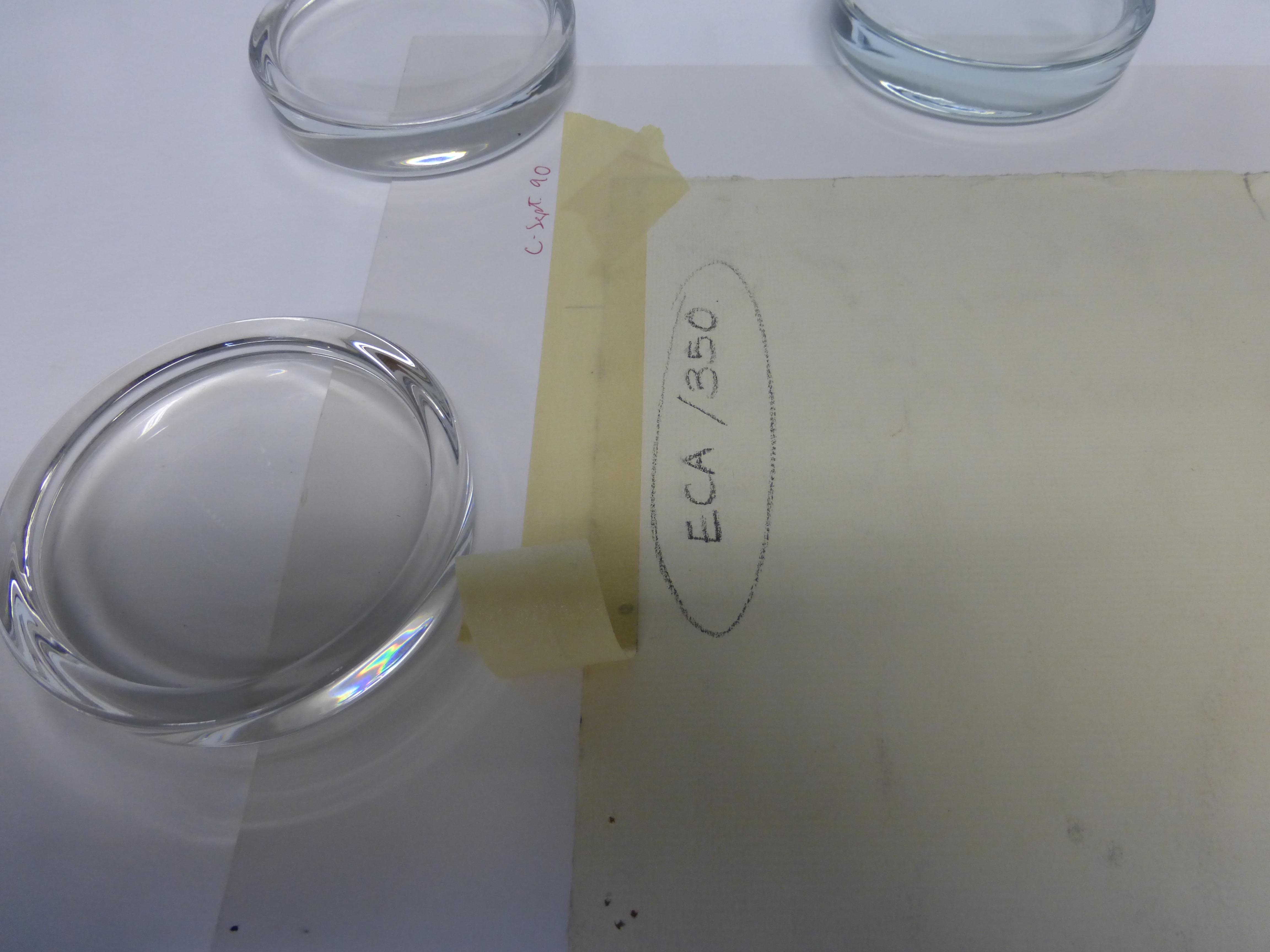
First the samples needed to be flattened as they had a tendency to curl at the edges. To do this, I carefully held the corners down with glass weights and left them overnight, after which they remained flat by themselves.

Needlework sample, rolled before conservation

Needlework sample, rolled before conservation

Needlework sample held down with glass weights to flatten

Needlework sample held down with glass weights to flatten

I then made a bespoke folder for each item. The folders were made from unbuffered mount board, with a domette and calico cotton layer to provide cushioned support for the samples. The edges were built up using strips of mount board and sealed with linen tape. The cushioned support can be made for the upper and lower side of the folder so that the items can be closed, flipped over, and then opened up again to view the back, without touching the item at all.

Needlework sample in bespoke folder, after conservation

Needlework sample in bespoke folder, after conservation

This new housing will prolong the life of these textiles and provide an easy way for them to be displayed in the future.

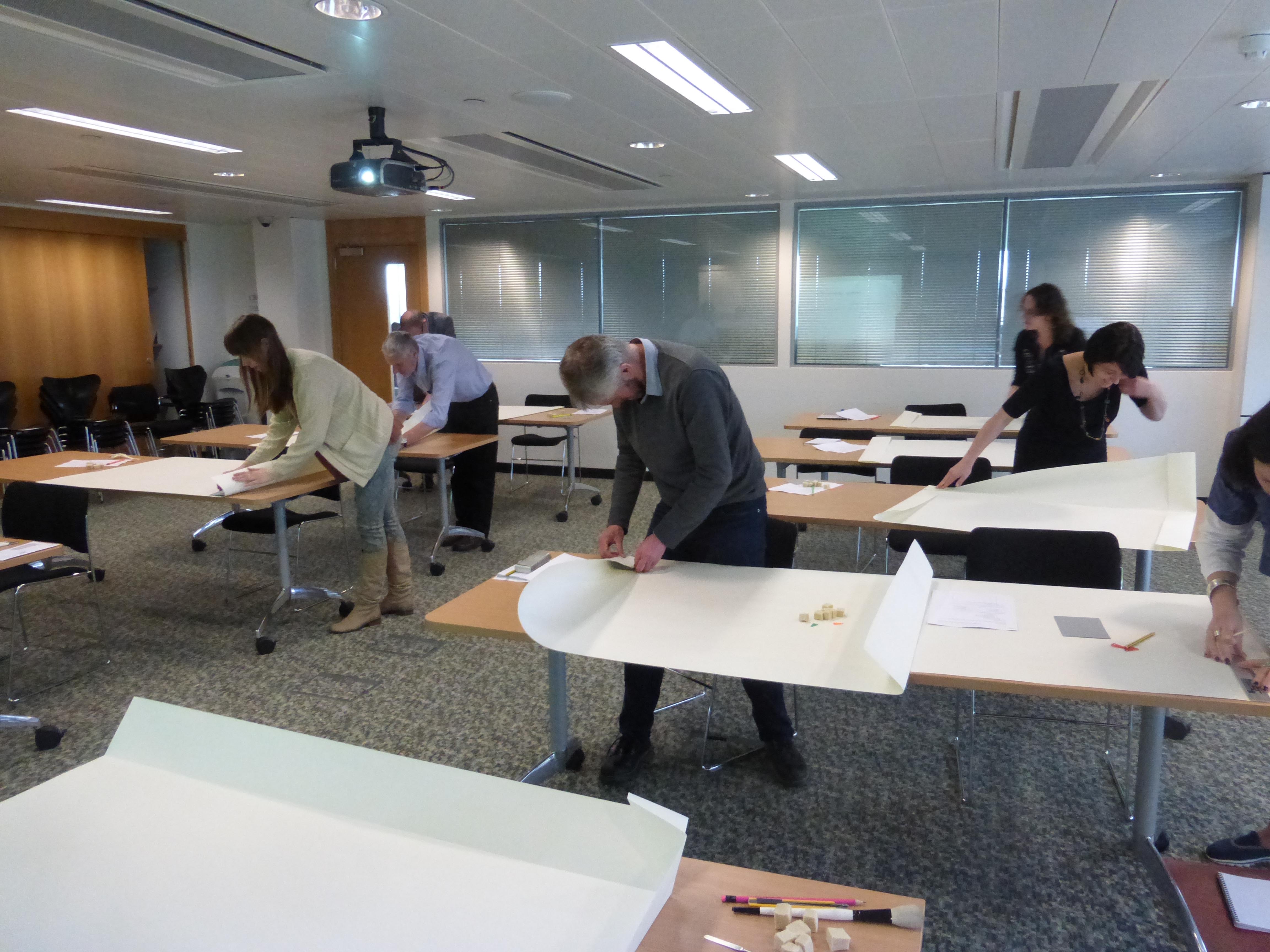
As a part of my time working with the archives collections, I have also hosted two conservation workshops for CRC staff. In the first workshop, I described basic conservation techniques that archivists could use at their desk to improve the condition of the collection. During the session staff had a go at surface cleaning, removing metal fasteners (staples and paper clips) and rehousing techniques such as making a book shoe. The second session focused on the using archival material in outreach workshops. I described ways of protecting objects when using them with groups of people and also how to present them in ways to avoid excessive handling.

'Conservation for Archivists' workshop

‘Conservation for Archivists’ workshop

'Use and Display of Archival Materials' workshop

‘Use and Display of Archival Materials’ workshop

I have really enjoyed working with this collection. The diversity of objects and the range of activities involved have been very interesting. Throughout the collection there are humorous and curious items that have always made me smile when working through the shelves. I’ll leave you with a couple of my favourite to enjoy!

Sick note from the Moray House Archive

Sick note from the Moray House Archive

Exam paper from the Moray House Archive

Exam paper from the Moray House Archive

Emily Hick

Project Conservator

Let me introduce myself!

I am Thais, a first year conservation student at Northumbria University and I am now part way through a four week placement at the conservation studio in CRC (Centre for Research Collections) – Main Library of Edinburgh University.

I have a bachelor degree in art during which time I developed an enormous interest in conservation. I had the opportunity to undertake various placements which helped me to decide that I wished to pursue a career in paper conservation. This led me to enroll in a course in the conservation of documents and graphic material in Brazil. I worked primarily in preventive conservation where I was always looking for further opportunities to improve my knowledge and professional skills. This has subsequently led me to the UK to study for my Masters in the Conservation of Fine Art on Paper at Northumbria University, and my current placement at the CRC.

Thais

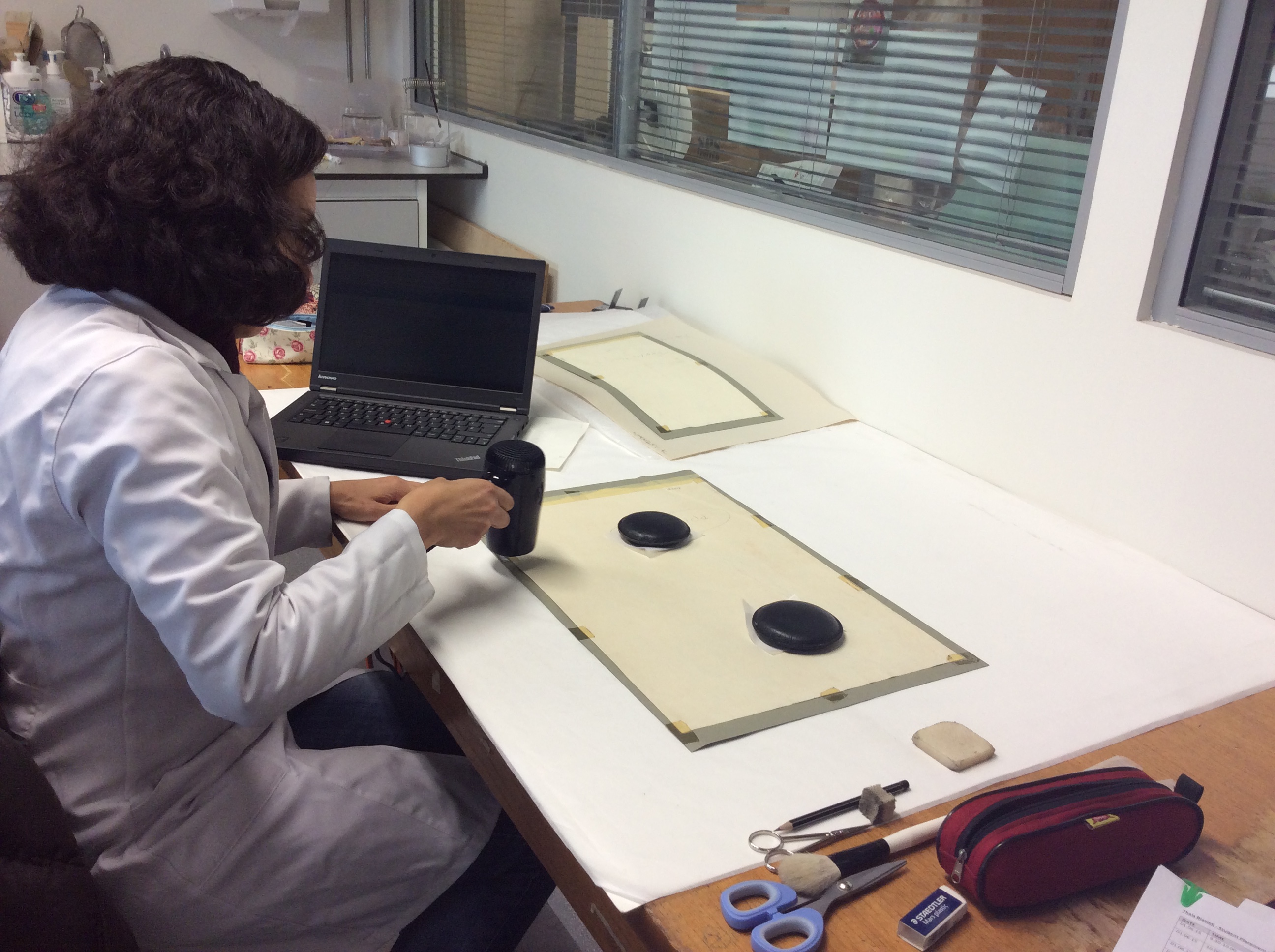
Thais carrying out treatment in the Conservation Studio

Apart from all the people I`ve met at the CRC and their amazing passion for showing and talking about their work, I was presented with the Thomson-Walker print collection; a group of 2500 prints collected by the surgeon Sir John William Thomson-Walker that were hinged or partially fixed on to poor quality backing boards.

A brief condition report for each print was made before any conservation treatment was undertaken. Once the appropriate documentation had been completed, the hinges could be cut using a scalpel separating the prints from boards.The prints were then cleaned using chemical sponge, carefully removing any debris and dirt. Surface cleaning is an important conservation procedure not only for aesthetic reasons but also to remove material that may cause abrasion, acidity and attract insects (e.g. food or mould residue).

Once the prints were surface cleaned, the paper and adhesive used on the hinges could then be removed. Samantha Cawson – during her internship in the beginning of this year – started this project and tried different approaches to remove the adhesive from the prints. She observed that a carboxymethyl cellulose poultice, interlayered with tissue paper, would be most effective on the range of adhesives present in this collection. The poultice technique consists of applying a small amount of moisture on a specific area, in this case to soften the water based adhesive thus allowing the hinges to be removed with a metal spatula or a scalpel.

For those prints that were glued directly onto a backing board, I was able to reduce the board to a fine layer using a scalpel. This allowed the poultice to be placed under light weight in the area where there was adhesive as before but for a few more minutes.

So far, this has been my first two weeks at the conservation studio and I`m glad to say that the prints treated look much better.

I`m very happy to have the opportunity to practice and improve my skills at the CRC and observe the distinct answers to the treatment on varied medias and supports. I`m excited about the upcoming projects that I will work on during my stay as well as the chance to see some of the the amazing work develop in the conservation studio.

Post by Thais Biazioli, Conservation Student Placement

A Hare Raising Tale

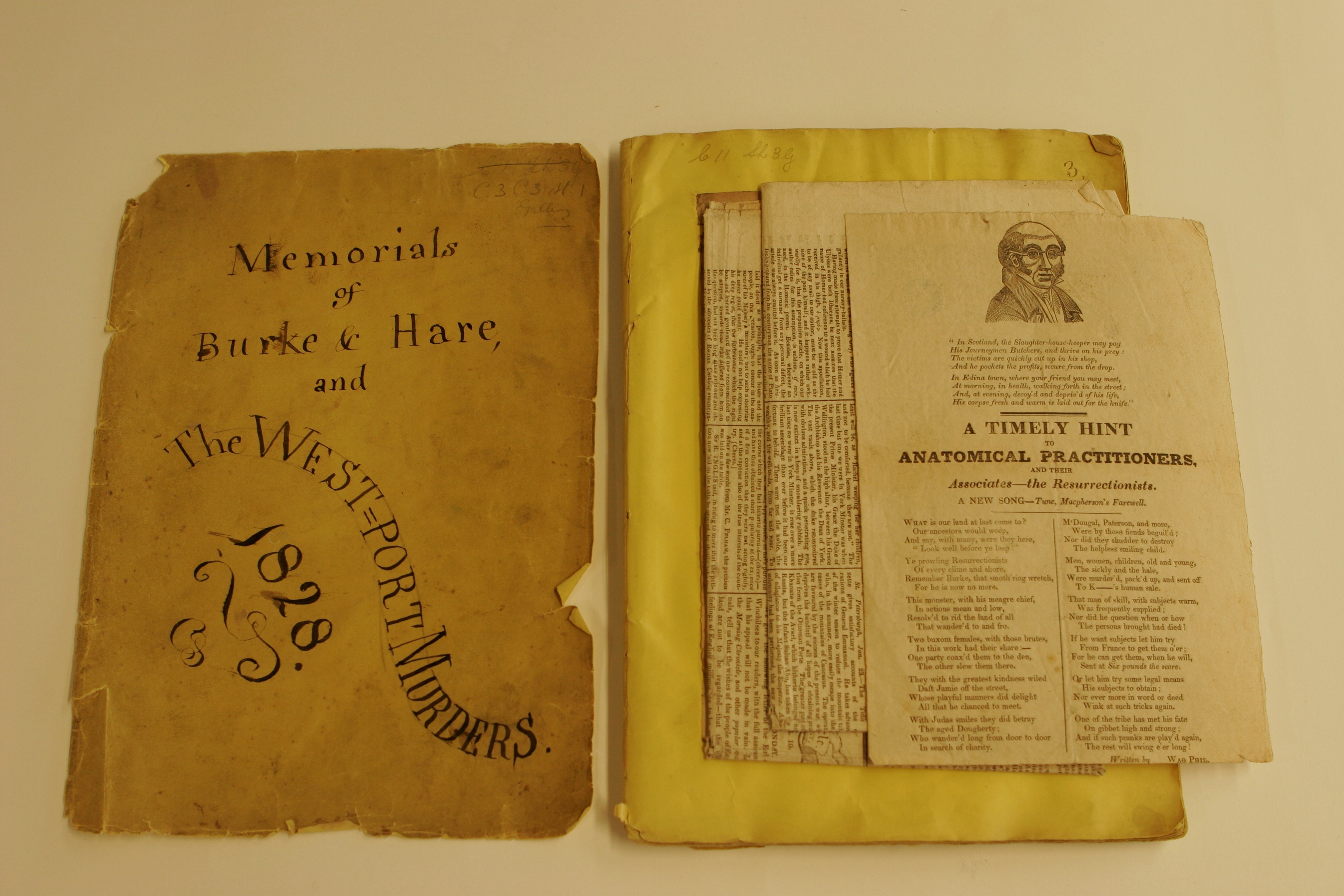
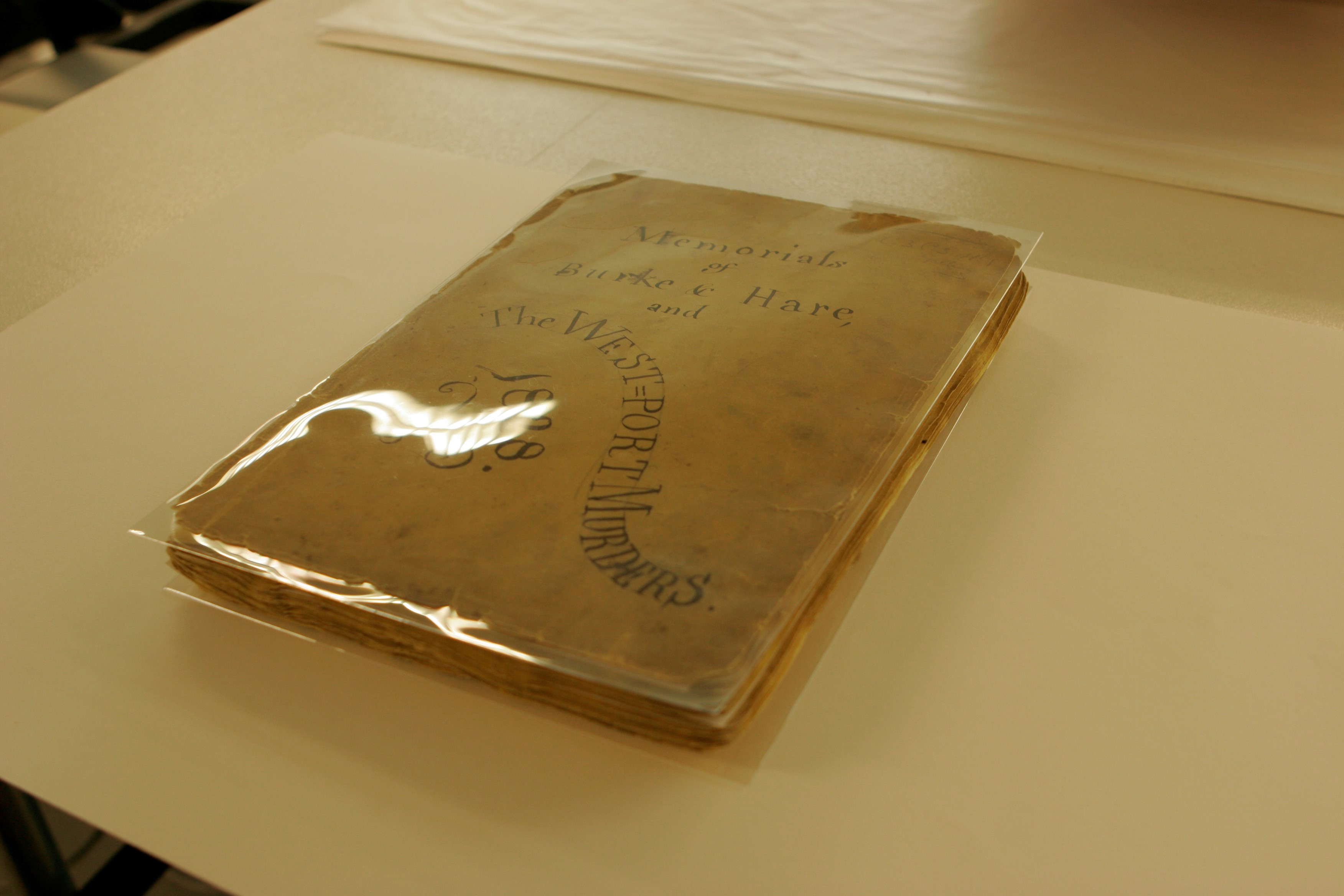
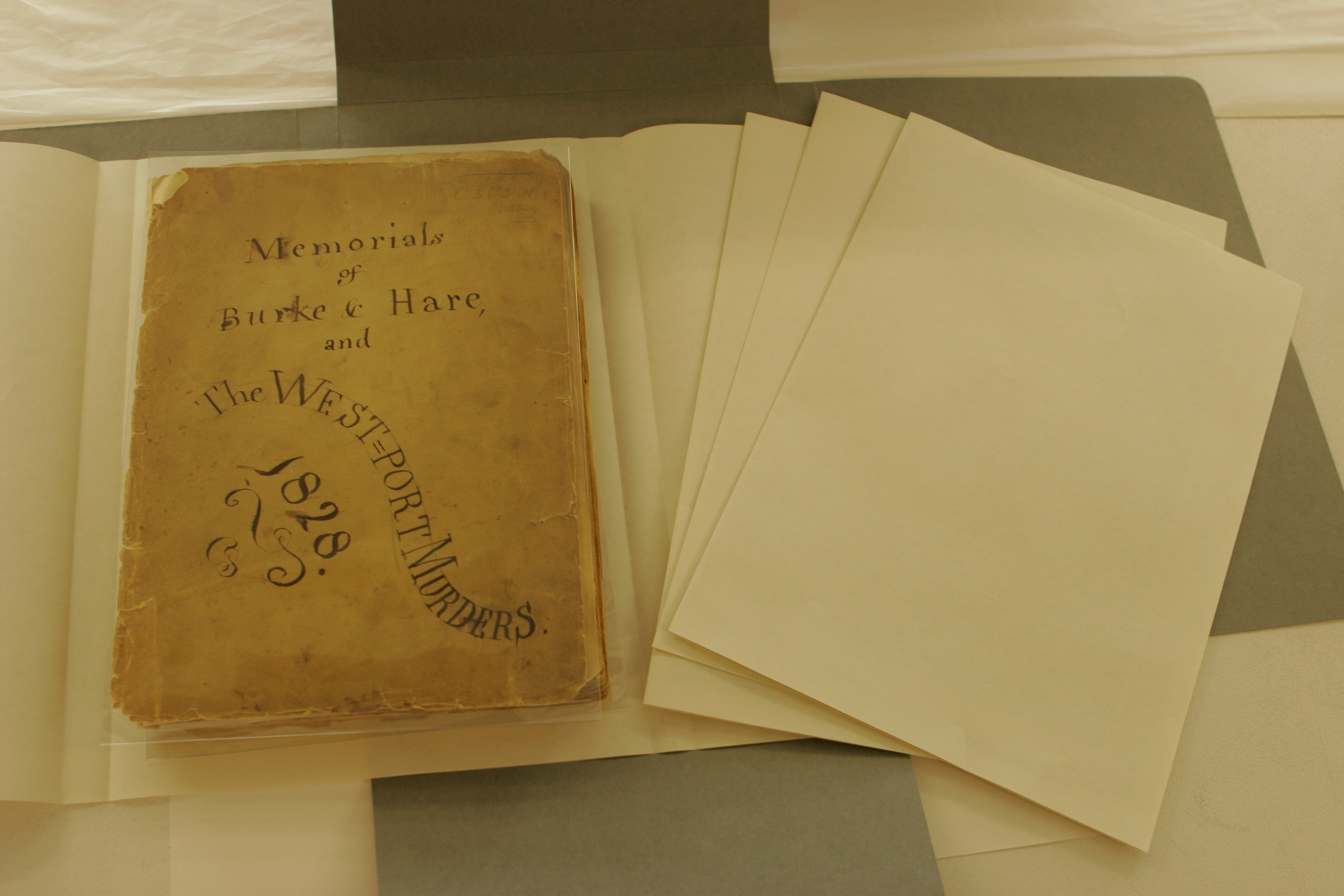
Over the last month, conservation has been playing host to two rather notorious and unsavoury characters, namely William Burke and William Hare. Thankfully for us not in person but rather in the form of a scrapbook containing original documents and cuttings from their capture and subsequent trail and execution.

scrapbook 1

Burke and Hare Scrapbook before treatment

Scrapbook 5

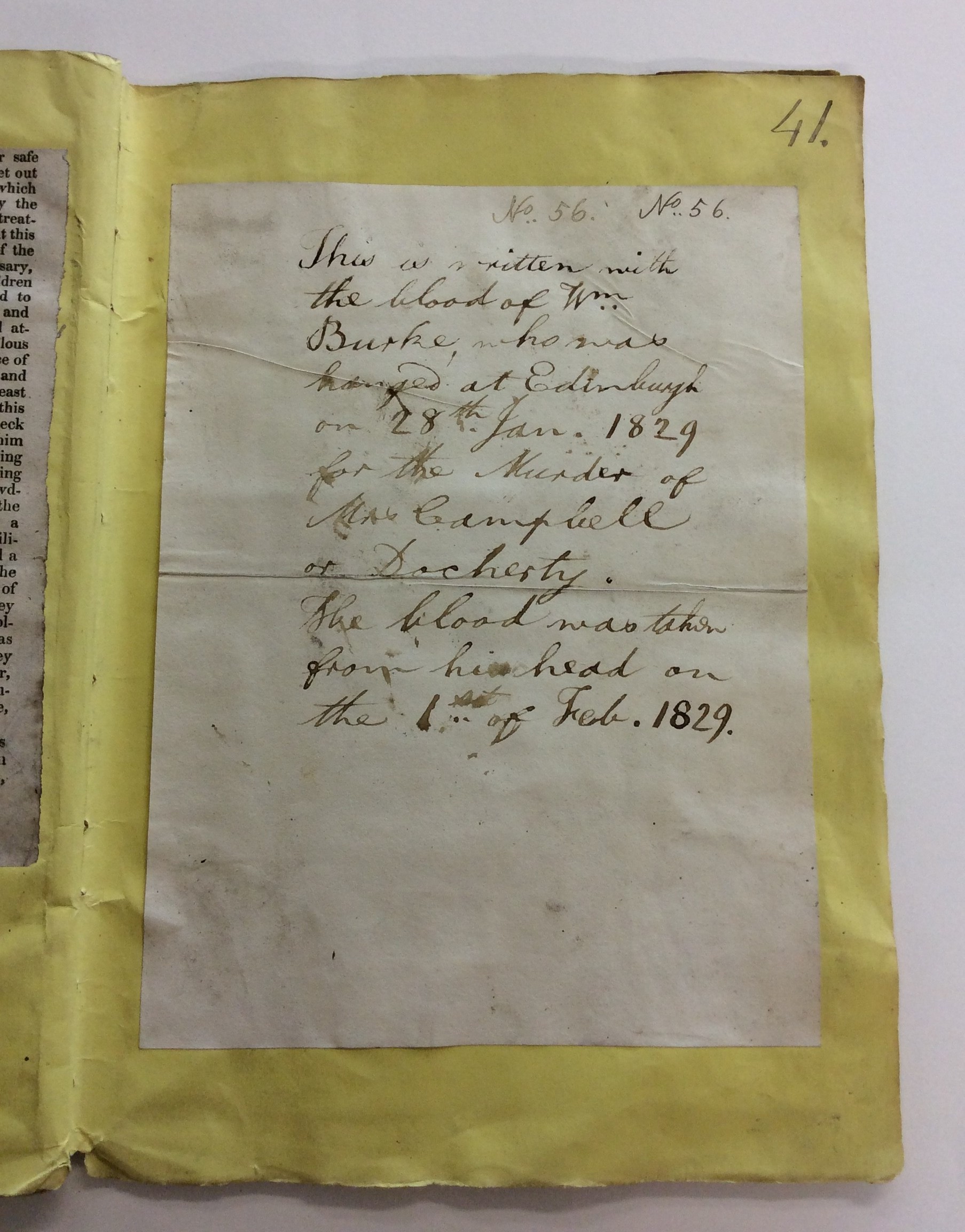
William Burke ‘blood’ Letter

The most interesting and macabre of all of these is a letter written in the blood of William Burke – as it (helpfully) states “This is a letter written with the blood of Wm. Burke, who was hanged at Edinburgh on 28th Jan. 1829 for the Murder of Mrs. Campbell or Docherty. The blood was taken for his head on the 1st of Feb. 1829.” Unsurprisingly, the scrapbook, and this letter in particular, has caused a lot of attention, and has recently appearing in a number of newspaper and websites. I have found myself in the rather unusual position of combining conservation with press calls – the conservation life is not always quite so glamorous!

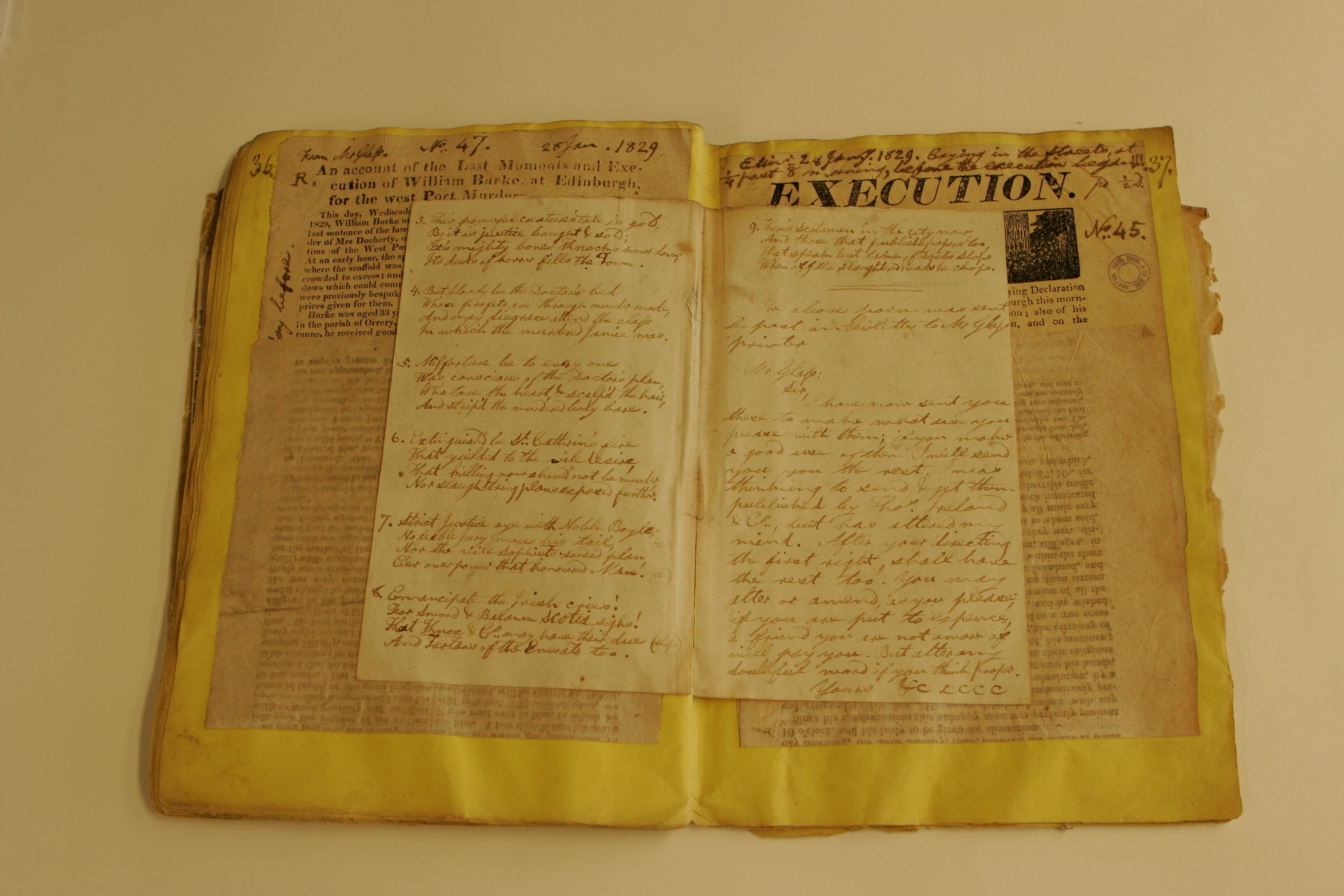
The scrapbook has a pamphlet style of binding with the cuttings pasted into its pages, the larger of which have been folded in order to fit within the volume. Overall, the scrapbook was in a reasonable condition and it was decided therefore to take a minimal interventive conservation approach with treatment focused on surface cleaning, tear repair where necessary and rehousing. The aim was to stabilise the object allowing it to be stored and accessed with minimal risk, at the same time as maintaining its authenticity.

Scrapbook 6

Scrapbook containing folded cutting and hand-written documents

The first stage of treatment was to surface clean the pages. This was done with “chemical sponge” – made of vulcanised rubber which (despite its name) contains no chemicals – which works by gently lifting off any surface dirt on the pages. This has not only aesthetic benefits but, more importantly, will remove any potentially damaging substrates. Surface dirt can contain acidic particulates, cause abrasions, attract moisture, and become a food source of mould, all of which can affect the long-term preservation of the object.

Secondly, I carried out tear repairs where necessary using Japanese tissue and wheat starch paste. The tears where primarily on the larger format cuttings that had been folded in position within the scrapbook and found in areas where the paper had become weak, especially along the folds or along edges where the cutting has projected beyond the edge of the scrapbook. Again, as with surface cleaning, repairing tears will not only improve the appearance of the pages, but will also provide structural stability making the paper easier to handle and reduce the risk of the tear getting caught and becoming worse.

Theatre Bill_2

Before tear repair

Theatre Bill_1

After tear repair

The last stage in treatment, and arguably the most important, was to address the housing needs of the scrapbook. As well as providing physical support to the item, choosing appropriate storage has the added benefits of giving an extra layer of protection from accidental damage, as well as acting as a buffer to atmospheric pollutants, dust and light, and any fluctuations in environmental conditions. It is important to know and understand what the materials you are using are made from as poor quality materials that are in close contact with collection items can cause severe damage. Acid from these materials can migrate to the object causing discolouration and embrittlement and hastening the its deterioration.

Scrapbook 4

Scrapbook during treatment and rehousing

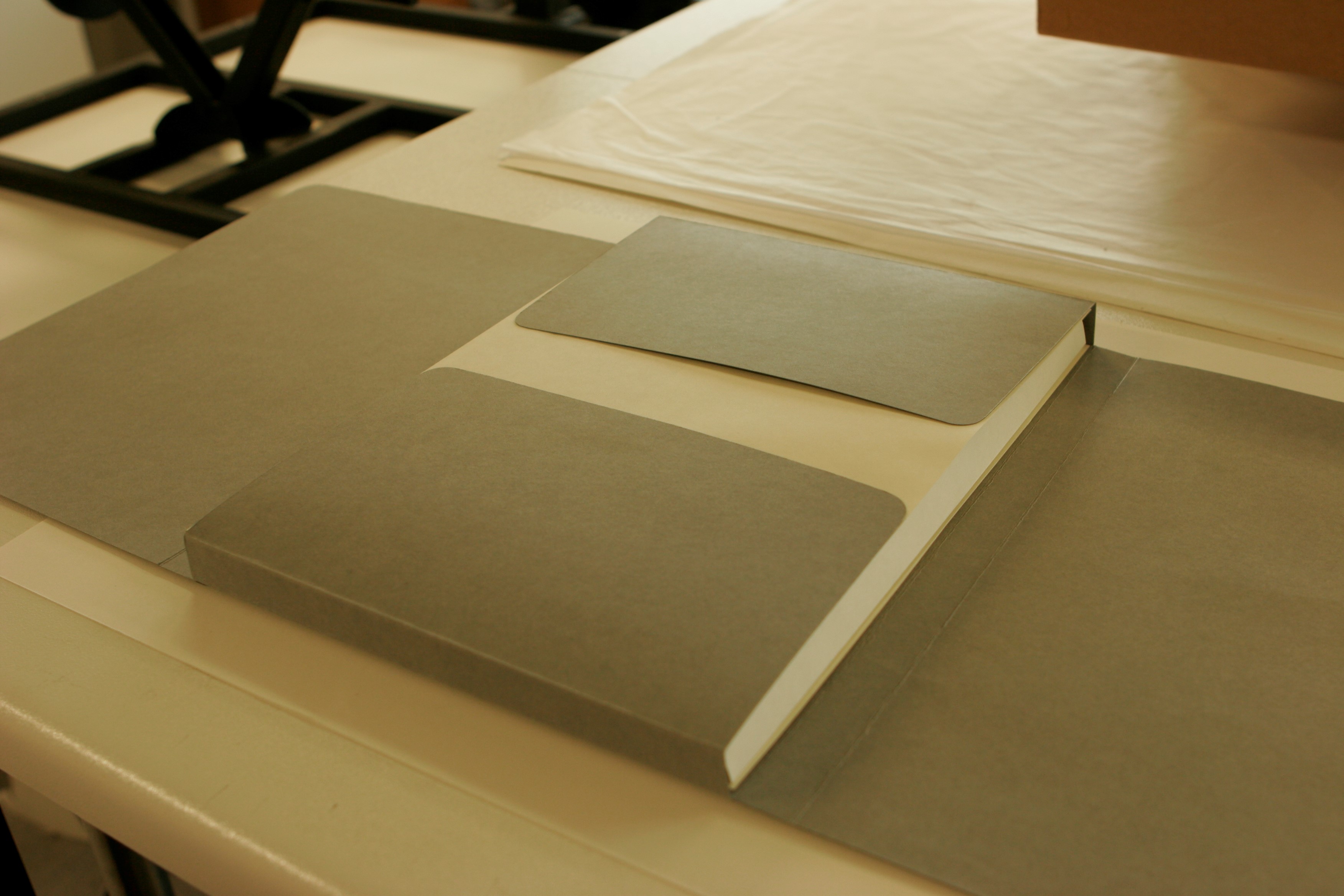
I decided, therefore, to house the detached, fragile and vulnerable front and back covers of the scrapbook in polyester sleeves allowing them to be easily consulted without being removed and so would drastically improve handling whilst minimising the risk of any tears getting worse. Because of the poor quality and acidic nature of the paper cuttings contained within the scrapbook, the individual pages were interleaved with a light-weight acid-free paper to reduce the transfer of any potential harmful elements within the sheets. The scrapbook itself – alongside some loose-sheet material contained within – were rehoused in acid-free paper folders which, in turn, were placed inside a four-flap enclosure made from acid-free card.

scrapbook 2

Rehousing of the scrapbook into acid-free paper enclosures

Scrapbook 3

Rehousing of the scrapbook into four-flap enclosure

And the blood letter? Well, it is certainly not every day that I come across something so unusual, interesting and, quite frankly, a little unsettling. However, by applying general conservation principles of minimal treatment and the use high-quality and appropriate conservation and rehousing materials, I was able to treat the letter, and scrapbook as a whole, very much like other paper-based material. Perhaps with just a little more murder and intrigue this time…

Post by Emma Davey, Conservation Officer

The Conservation of the Musical Instruments of the MIMEd Collection

The collections of Musical Instrument Museums of Edinburgh (MIMEd) comprise an extensive array of musical instruments from very different periods, geographical regions, and social contexts. Contrary to some of the comparable collections in the world, MIMEd maintains a significant portion of the instruments in playable condition. This provides an invaluable resource for musicians, researchers, and the general public to better understand and appreciate the music played on historical instruments, nonetheless, this involves a great responsibility, and a significant work load to keep the instruments in optimal conditions.

The preservation of such a large and diverse collection involves many challenges: from the understanding and knowledge of numerous materials and their properties; techniques of instrument manufacture through history; treatments to better protect the objects of the collection; to the history of music, musical instruments, and art history.

Portrait

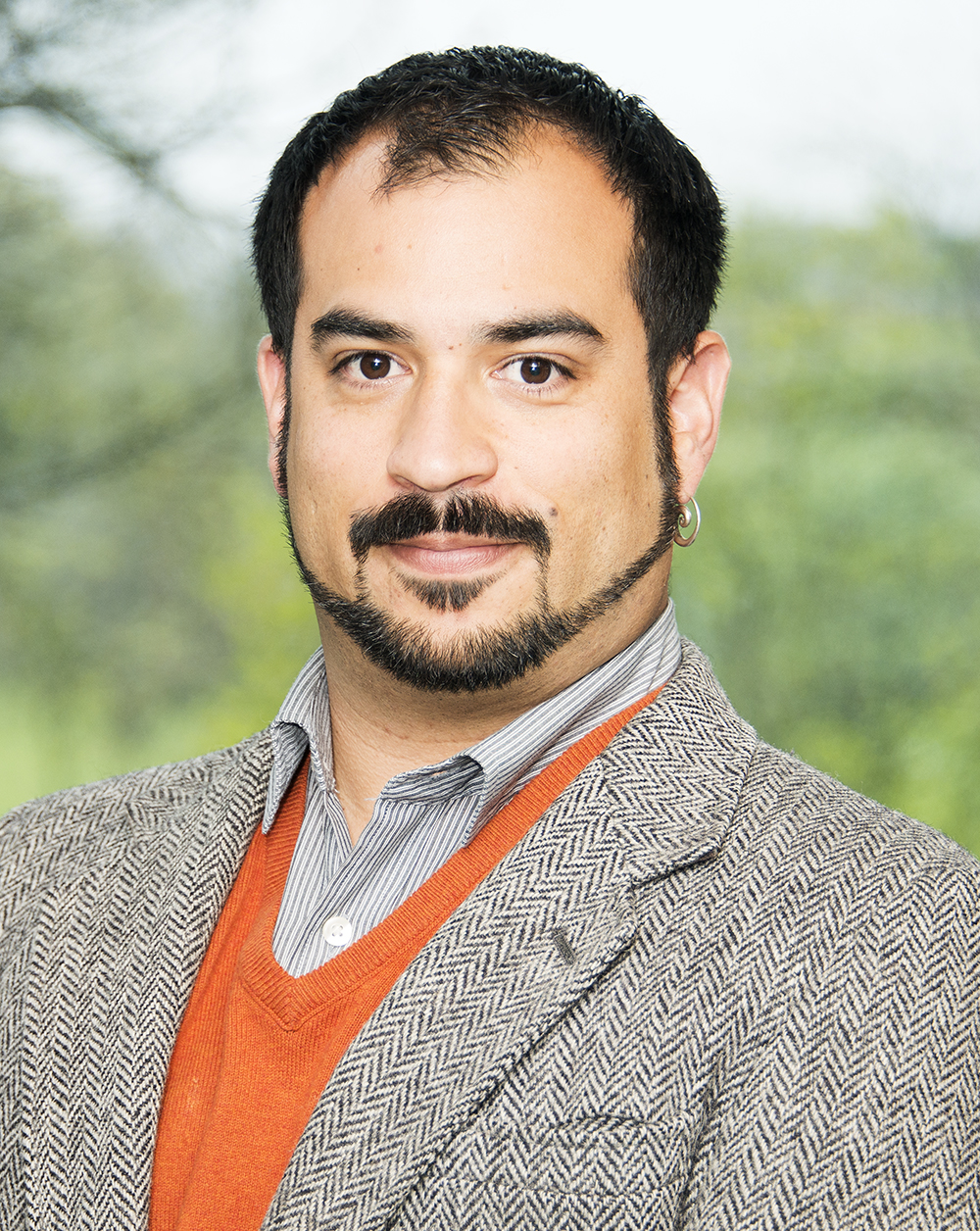
Jonathan Santa Maria Bouquet, MIMEd Conservator

Previous to my appointment as the MIMEd Conservator, I trained as a musical instrument maker and conservator, as well as a musician. I completed conservation internships and fellowships in distinguished institutions like the Metropolitan Museum of Art in New York, the Museo degli Strumenti Musicali in Milan, and the National Music Museum in South Dakota, where I worked as the Conservation Research Assistant. Currently I am working on a PhD in Organology at the University of Edinburgh.

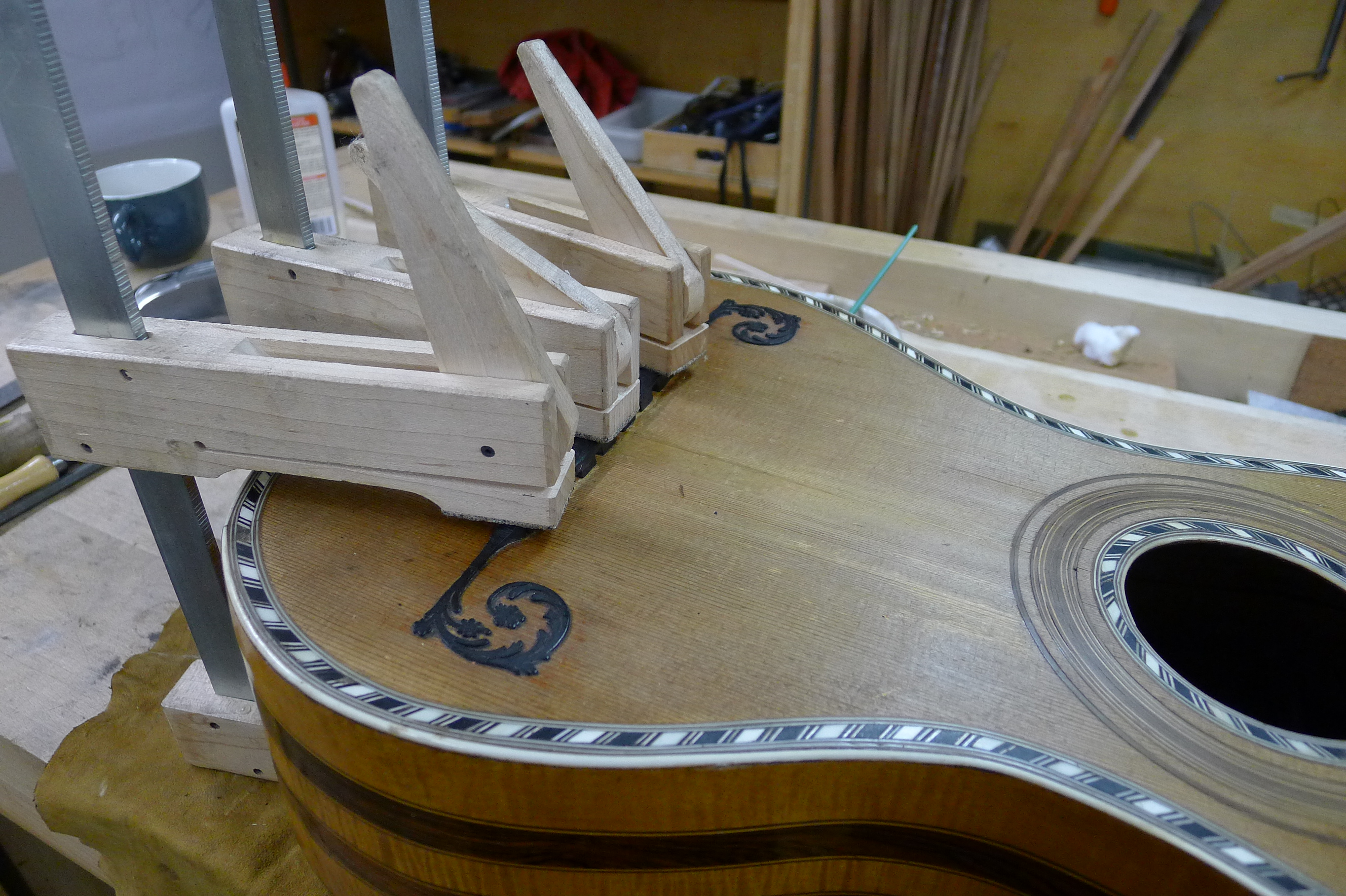
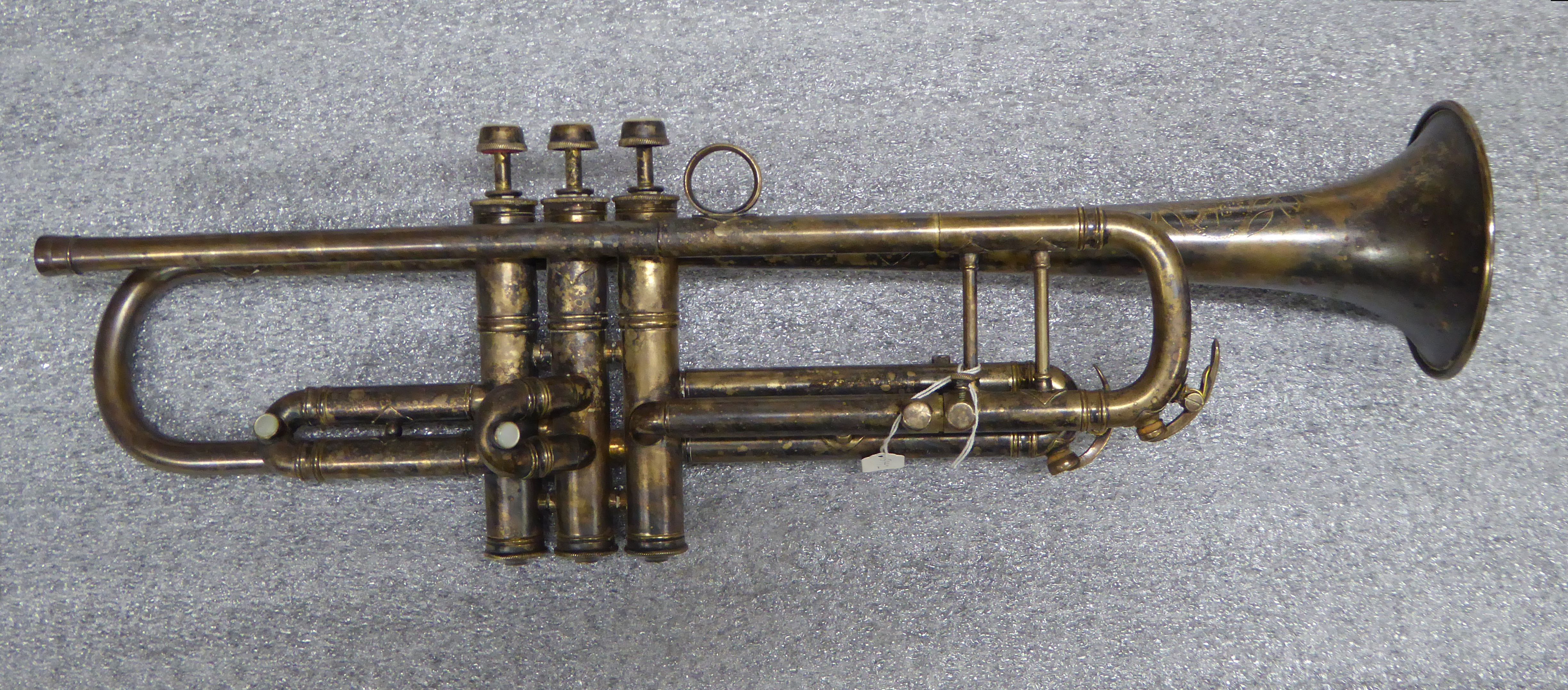
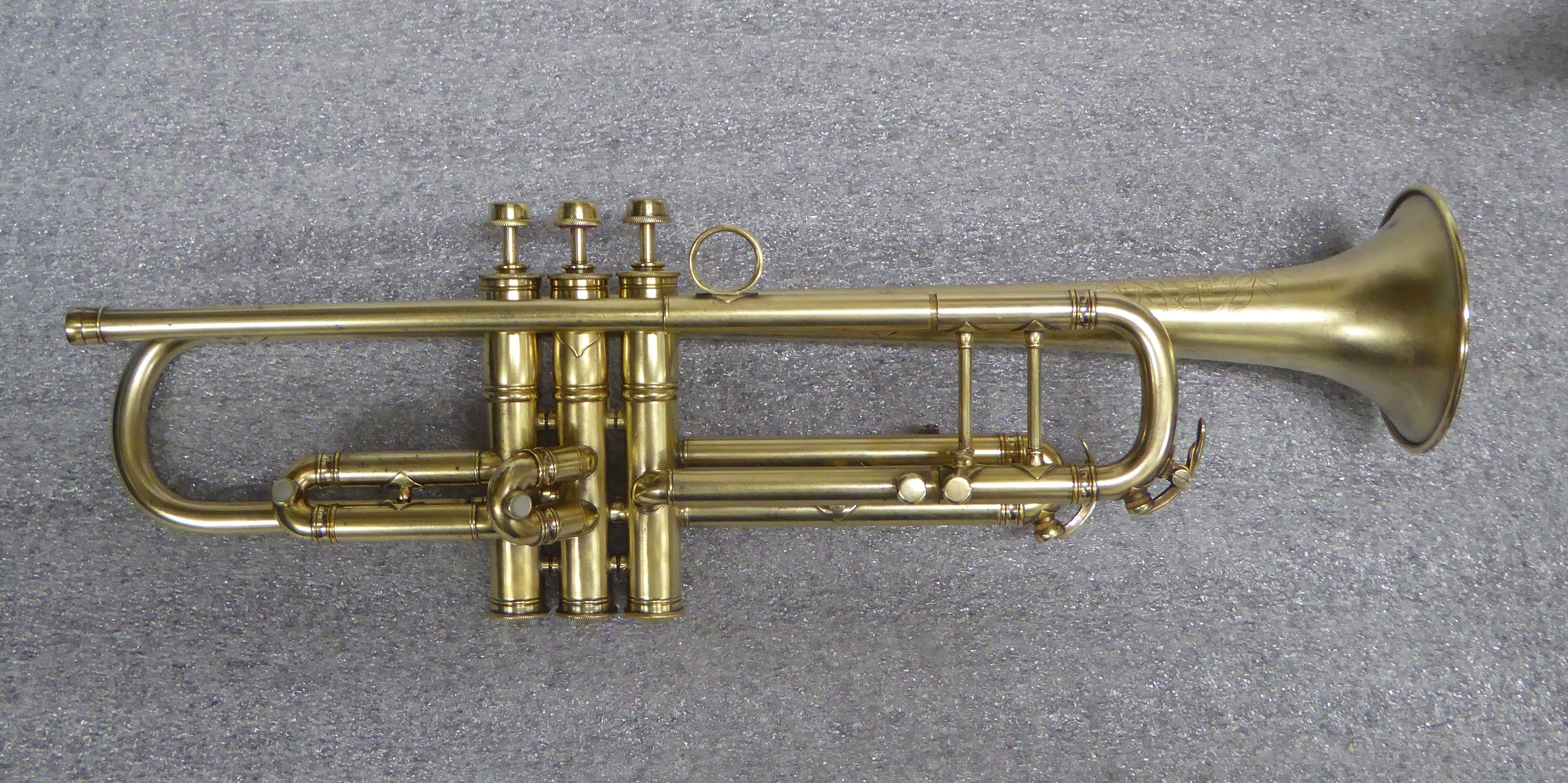
As the MIMEd Conservator my responsibilities include the preservation, conservation, and maintenance of all the objects in the collection. Since undertaking the conservation of the collection, I have had numerous challenging and diverse projects, from cleaning and removing tarnish from trumpets and trombones, getting bagpipes ready for display, to major treatments of a Ruckers harpsichord made in 1609, and a severely damaged mandolin made in 1775.

Madolin

 18th Century Guitar during conservation treatment

At present the main focus of my work is directly linked to the Saint Cecilia’s Hall Redevelopment Project. The new displays and layout of the museum will exhibit several hundred objects of MIMEd’s collections, and all of them need to be ready to be displayed for the re-opening of the museum in September 2016. Whilst the museum is closed to the public, I have undertaken the gargantuan task of treating every single object to be displayed: anything from dusting, cleaning, and changing strings, to full treatments that can involve several weeks of delicate and intensive work. To achieve this I have been working with volunteers and interns who can help to carry out those simple but time-consuming tasks, whilst learning and building up their curricula. By the time Saint Cecilia’s Hall re-opens its doors to the public, the instruments will reflect all this work by looking as good as they deserve.

Trumpet Before  Conservation Treatment

Trumpet before conservation treatment

Trumpet after

Trumpet after conservation treatment

To be the conservator of such an important collection is a great responsibility, St Cecilia’s Hall and MIMEd have an extensive common history, and exciting changes will take place in the near future with the redevelopment plan. To form part of the staff team of this great institution is both an honour and a pleasure, and I am looking forward to the many projects yet to come.

Post by Jonathan Santa Maria Bouquet, MIMEd Conservator

The Day the Earth Moved

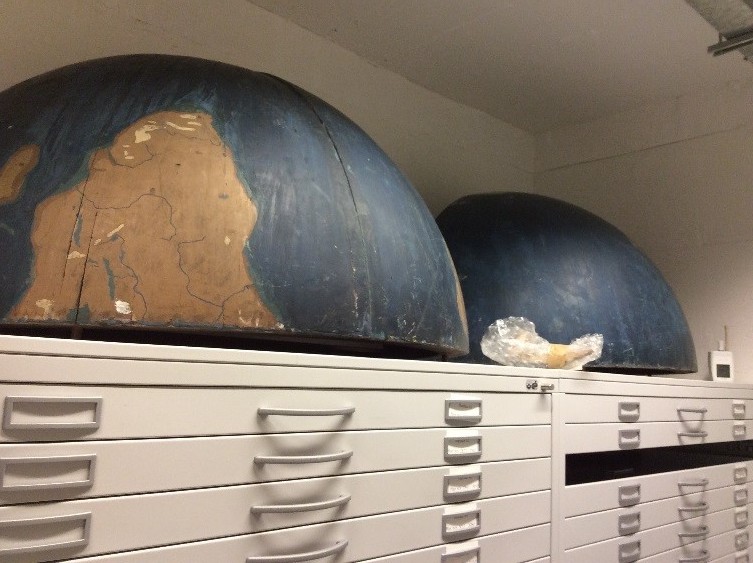
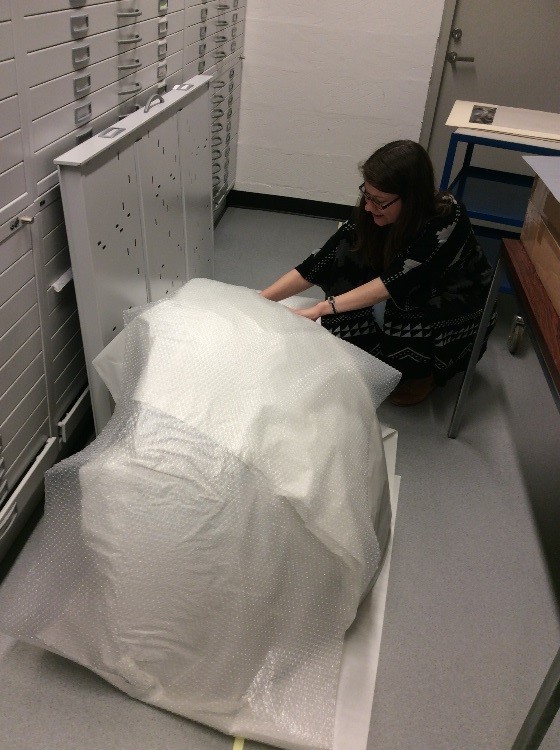
This week, conservation went global – in a very literal sense. Our task: to package and transport sections of a wooden globe, no mean feat considering the globe in question was nearly 1.5 metres in width.

PG Globe_1

Sections of the Geddes globe in their original location

This globe is one of two made by Jacques Elisée Reclus, a French geographer, both of which are held in the Patrick Geddes collection. In 1895, with the support of Alfred Russel Wallace and Patrick Geddes, Reclus proposed the construction of a huge relief globe approximately 420 feet in diameter, but this was never realised.

Geddes’ proposed Institute of Geography in Edinburgh was to incorporate the Reclus globe within it.  We think the two globes we have here, which came from the Outlook Tower and were made for Geddes by Reclus, may have been models made for that project.

These globes, now in sections, were required to be packed for storage and transported to a new location (luckily for us, still in the same building!). For this purpose, it is important to choose appropriate housing methods and materials as this will act as a good preventive measure, helping to ensure the long-term preservation of the object. As well providing physical support for items, suitable storage will have the added benefits of providing an extra layer of protection from accidental damage during handling and transportation. It will also act as a buffer to atmospheric pollutants, dust, and light, and guard against any fluctuations in environmental conditions. Appropriate packaging will also come into its own if there was ever to be a flood or water ingress, acting as a barrier and thus protecting the contents from more serious damage.

PG Globe_2

Emily (paper conservator) helping to package the globe

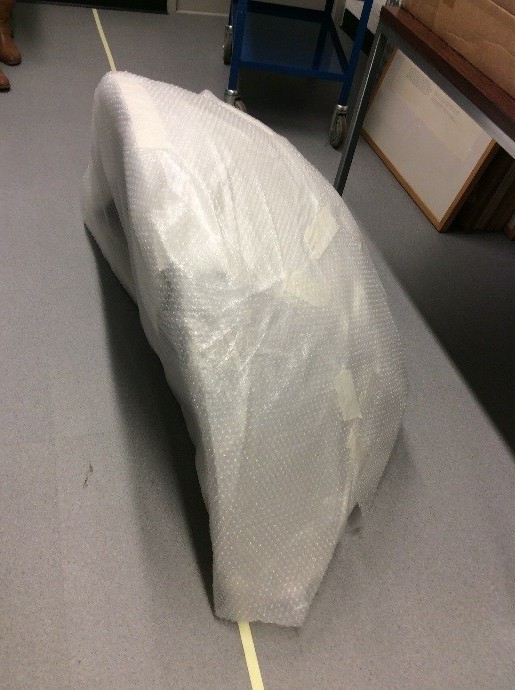
Due to its weight and size, boxing the first globe was not an option. It was decided therefore to soft-wrap its individual sections, using acid-free tissue paper and bubble-wrap. Bubble-wrap was used to provide protective cushioning to the item but it is important that it is used correctly (yes, there is a right and wrong way to use bubble-wrap!). In most cases, it is recommended that the ‘bubbles’ face away from the object – this reduces the risk of creating indentations or marks up the item, particularly if the surface or media is vulnerable, friable or has surface dirt. It is not recommended, however, for bubble-wrap to be placed in direct contact with an object as it is not a recognised conservation-grade material.

Acid-free tissue was therefore used as an interleaving layer between the surface of the globe sections and the bubble-wrap. As the name suggests, it is acid-free and thus a material that we use often, whether for interleaving, wrapping and cushioning objects or padding out excess space in the form of tissue ‘puffs’ or ‘sausages’.

PG Globe_3

A rehoused section of the globe

Once safely packaged, we were able to move the globe sections into one of our environmental controlled stores. This will ensure that the temperature and relative humidity conditions are kept stable, and protect against any global warming….

Post by Emma Davey, Conservation Officer

You’ve Been Unframed!

At the start of April, I started conservation work on the Edinburgh University Art Collections. I had previously been working at the Lothian Health Services Archive on a 12-month project to conserve their HIV/AIDS collections. When this came to an end, I was delighted to be offered the chance to work on a new collection at the University.

I started off by unframing a selection of works of art on paper. These items has been previously framed using low quality mountboard. This can be damaging to the artwork as this board can become acidic over time, which can migrate to the artwork and cause staining.

Acidic migration from mount causing brown staining on artwork

Acidic migration from mount causing brown staining on artwork

Unframing artworks is great fun as you never know what you will find underneath. Sometimes, you can find interesting inscriptions or hidden sketches, however, often you find more conservation problems! In this collection, I found that many artworks had been adhered into frames using pressure sensitive tapes, such as masking tape and sticky tape. Tapes such as this can become stuck on to the paper and be very difficult to remove. To remove these tapes, I used the gentle application of heat which softens the adhesive and makes it easier to peel off using tweezers and a spatula.

Removal of masking tape using heat

Removal of masking tape using heat

As these tapes age, it becomes even harder to get them off and the adhesive can soak into the paper causing staining. To remove these aged tapes, solvents can be applied using a poultice. However this can be time consuming, and has health and safety issues due to the exposure to solvents.

Staining of verso of artwork due to aged pressure sensitive tape

Staining of verso of artwork due to aged pressure sensitive tape

Another problem I encountered was that some artworks were adhered overall to a piece of mountboard. This can be problematic if the mountboard is acidic as this acid can migrate to the paper and cause weakening and discolouration of the sheet. Also, if the artwork is stored in high or low humidity, the mountboard and paper will react differently to moisture, and potentially cause cockling (paper conservation term for rippling of the sheet) and tearing. Boards such as this can be removed in small pieces by using a scalpel with a number 22 blade. The layers closest to the artwork can then be removed using a poultice such as the one described in Samantha Cawson’s blog.

When an artwork is unframed, it can give you clues to it’s original condition. For example, when I unframed this artwork by Anne Redpath, I found that there was a clear difference between the areas that could be seen and the areas underneath the window mount. The paint that was white in the exposed area, is pink in the hidden areas; the blue in the visible area is red underneath the mount! The difference in colours could be caused by the effect of light on the exposed areas of the artwork, which has caused the pigment to fade. Equally, the pigments may have changed colour due to contact with an acidic window mount. More research is needed to find out the exact cause. As you can see this discolouration has completely changed the look of this painting and it is hard to imagine how it could of looked originally.

Painting by Anne Redpath, before (left) and after (right) unframing. Note the difference in colour between the areas hidden and exposed to light

Painting by Anne Redpath, before (left) and after (right) unframing. Note the difference in colour between the areas hidden and exposed to light

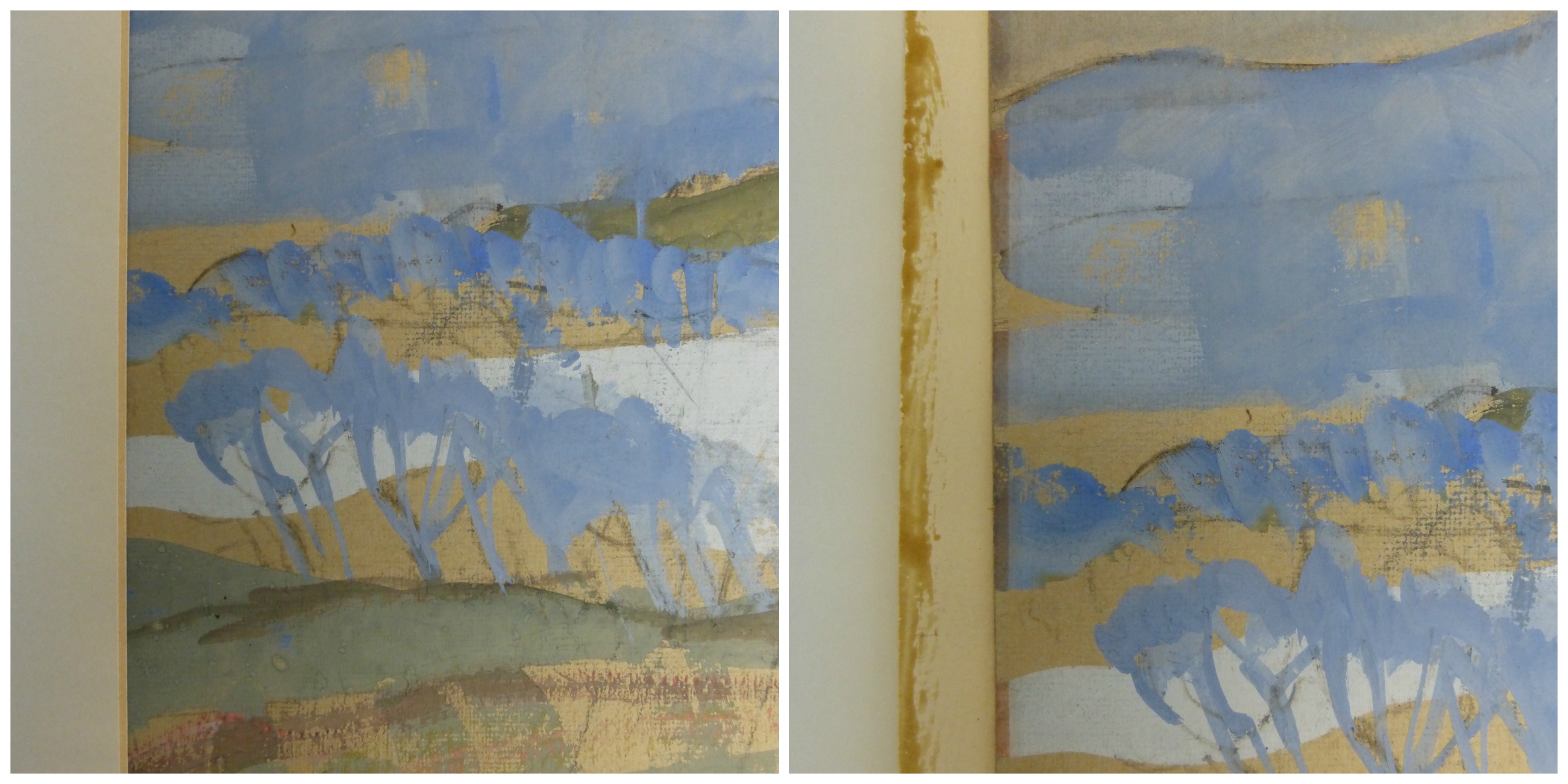
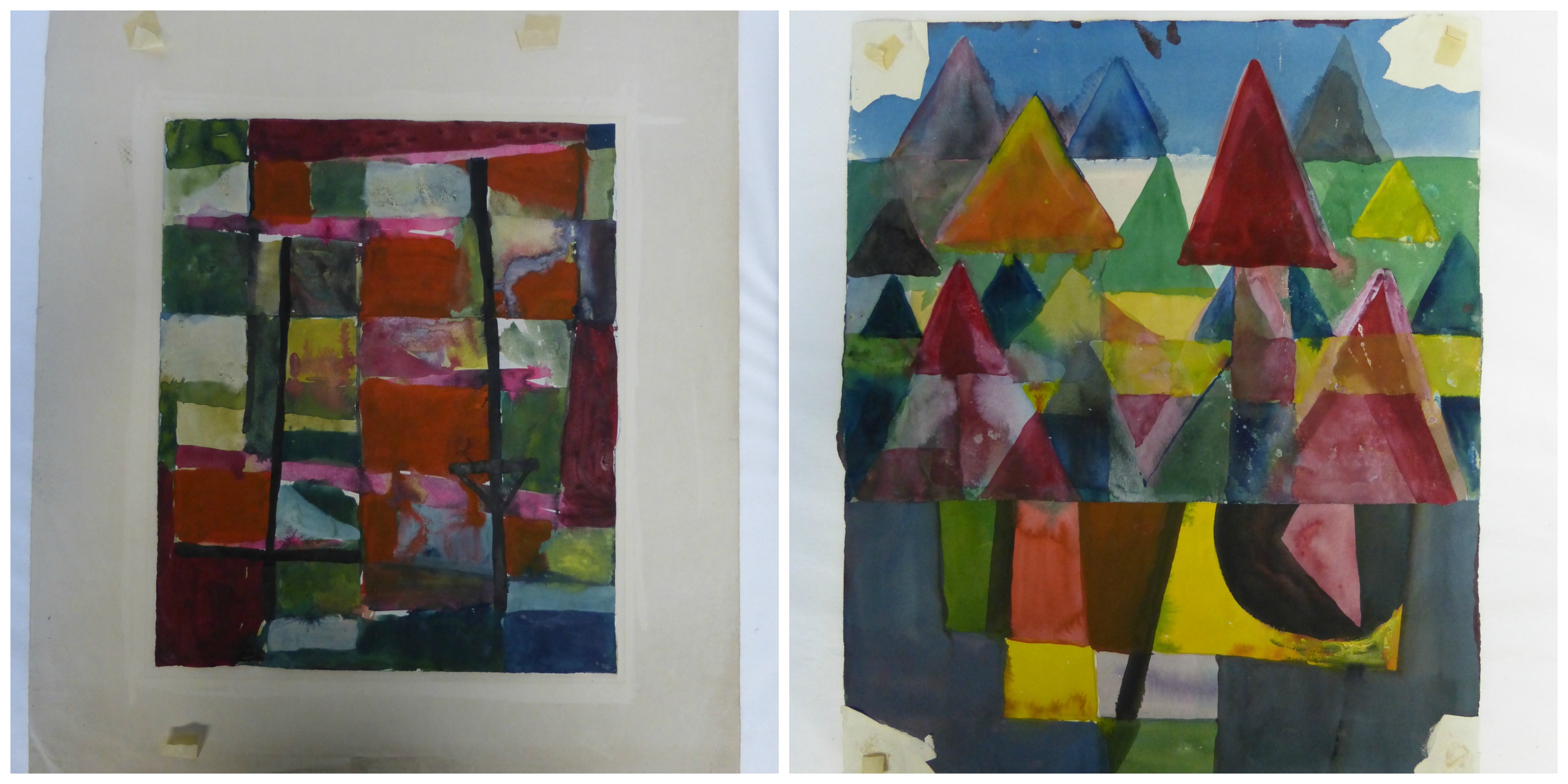
Sometimes during unframing you can also discover things that are completely new. For example, after I had unframed this watercolour by Alan Davie, I found another watercolour painted on the other side! This watercolour has been protected from the light, and so the colours have remained very bright and vibrant.

Alan Davie Watercolour before (left) and after (right) unframing. New watercolour found on verso

Alan Davie Watercolour before (left) and after (right) unframing. New watercolour found on verso

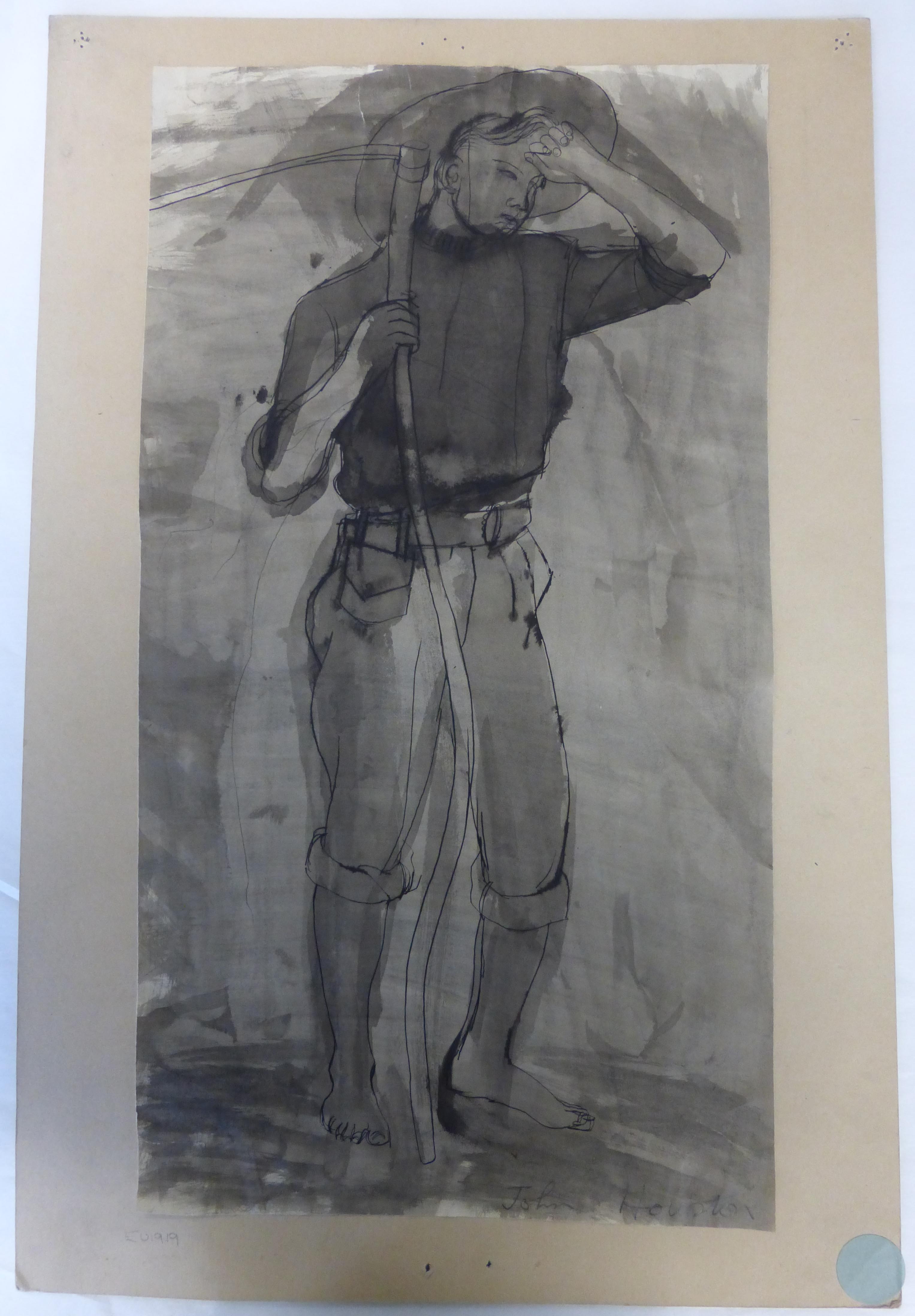
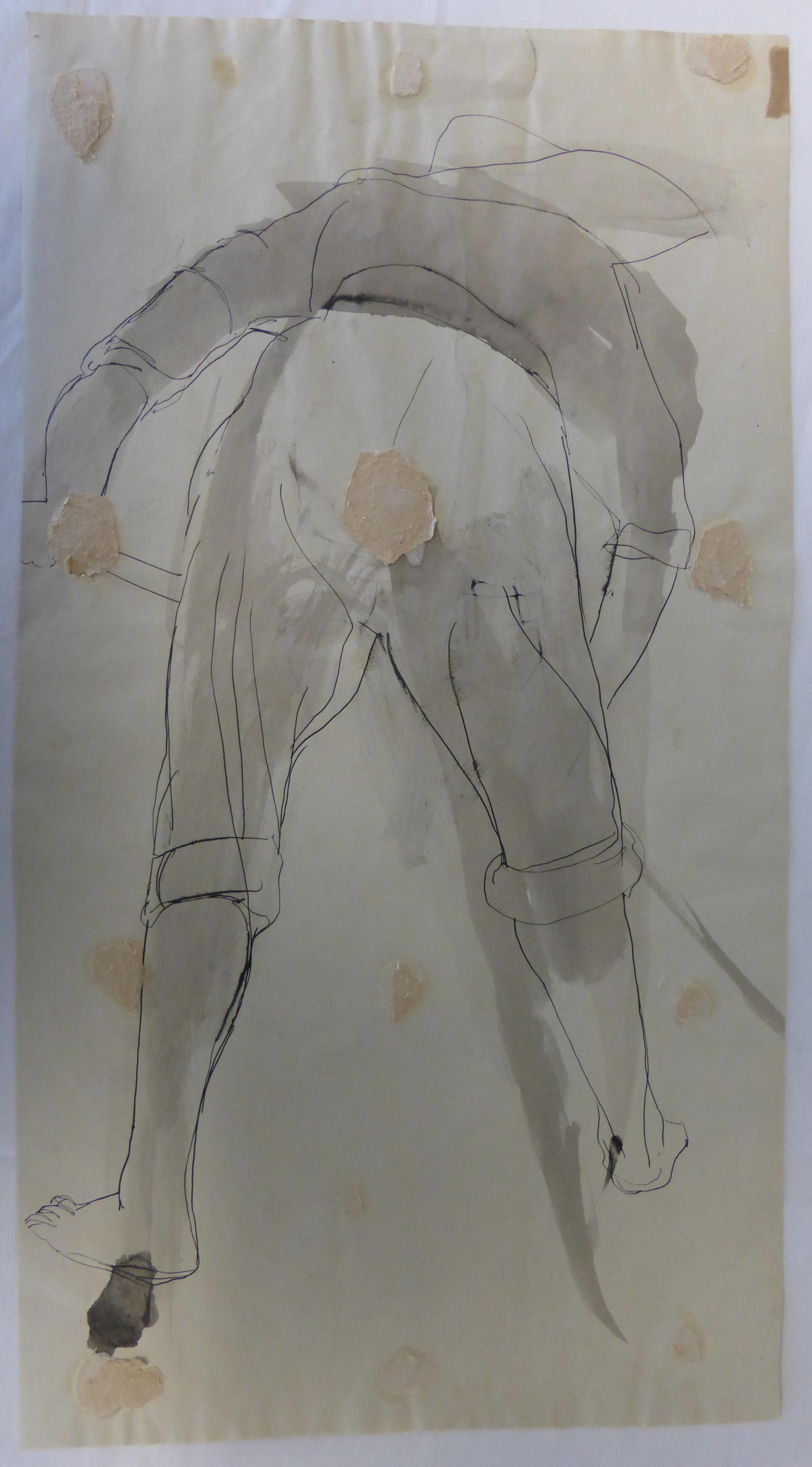
Here is another sketch I found underneath a mount. The card mount had been adhered to the back of the artwork with multiple dots of glue. I removed the card mount using a scalpel which revealed another sketch of a similar model on the recto, and then removed the adhesive residue using a CMC poultice. This reuse of the sheet is common among artists as a way of making the most of expensive art materials!

Houston, before removing mount

Recto of Houston, before removing mount 

HoustonVerso

Verso of Houston, after removing mount. Another sketch found beneath


Good framing is essential to the longevity of an artwork. When framing works of art on paper, always use good quality inert materials, such as 100% cotton rag mountboard, and use reversible adhesives such as wheat starch paste. Never adhere artworks directly to a secondary support, instead use hinges made from Japanese paper. And please do us paper conservators a favour, never use pressure sensitive tapes on paper artworks!

If you would like any advice on framing artworks, please do get in contact or check out this website: http://www.conservationregister.com/PIcon-Mounting.asp


Emily Hick

Paper Conservator

Emily.hick@ed.ac.uk

Vintage Conservation

Our conservation volunteers have been doing a fantastic job over the past months surface cleaning, repairing and re-housing the Library Correspondence from the University’s archive collection. There have been many interesting pieces uncovered during this work, but one such item in particular caught our eye, namely an advertisement for conservation services – 1940s style!

Perma advert

This advert for ‘PERMA’ treatment and its claims that it can make your important papers last forever with its “dirtproof, rotproof, waterproof, greaseproof” qualities just goes to demonstrate how far conservation has developed from the 1940s to the present day. Although the attached treated sample piece does certainly appear to have lasted the years (although whether it is “everlasting” awaits to be seen…) it is not a treatment method that we would employ today. Ethical considerations and guidelines, are much more ingrained in the modern-day conservation profession with the physical, historical and aesthetic integrity of the object now being placed at the forefront of our decision making. Alongside the development of the conservation profession, comes a greater understanding of the methods and materials that we use, allowing us to make much more informed decisions regarding appropriate treatment options. Two of the main principles that we work towards are the concepts of minimal interventive treatment and reversibility (ideas that are not particularly compatible with ‘PERMA’ treatment). This ensures that the risk of introducing anything which may adversely affect the object is kept to a minimum, whilst allowing for the chance that new, improved, techniques and materials may be developed in the future. However sound these principles may be, it can only go so far, for example, surface cleaning – although important – would not be necessarily be considered reversible and therefore must be taken into account when deciding on a treatment plan.

It is certainly apparent that our conservation priorities have changed over the years, and there are a few things which should perhaps stay in the past…

Post by Emma Davey, Conservation Officer
A knot better!

I am writing this on the very last day of my work placement here at the University of Edinburgh. I have had an amazing six weeks learning about caring for the historic musical instrument collection. Many of the things I have learnt can be applied to other kinds of collection material but some things are very instrument-specific. So I thought I’d talk about some of those.
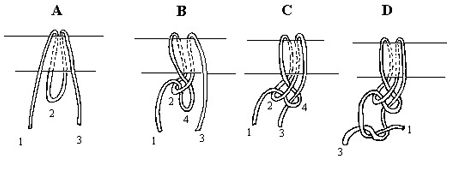
For example, I have learnt how to make frets from gut (the same material used for early strings) for 17th century string instruments. This involves using a special knot to tie the gut round the fingerboard, making it as tight as possible and sliding it to the right position, then burning the ends so it won’t unravel (and so it looks really neat). Fire is something I never thought I would use in conservation, so this was awesome!
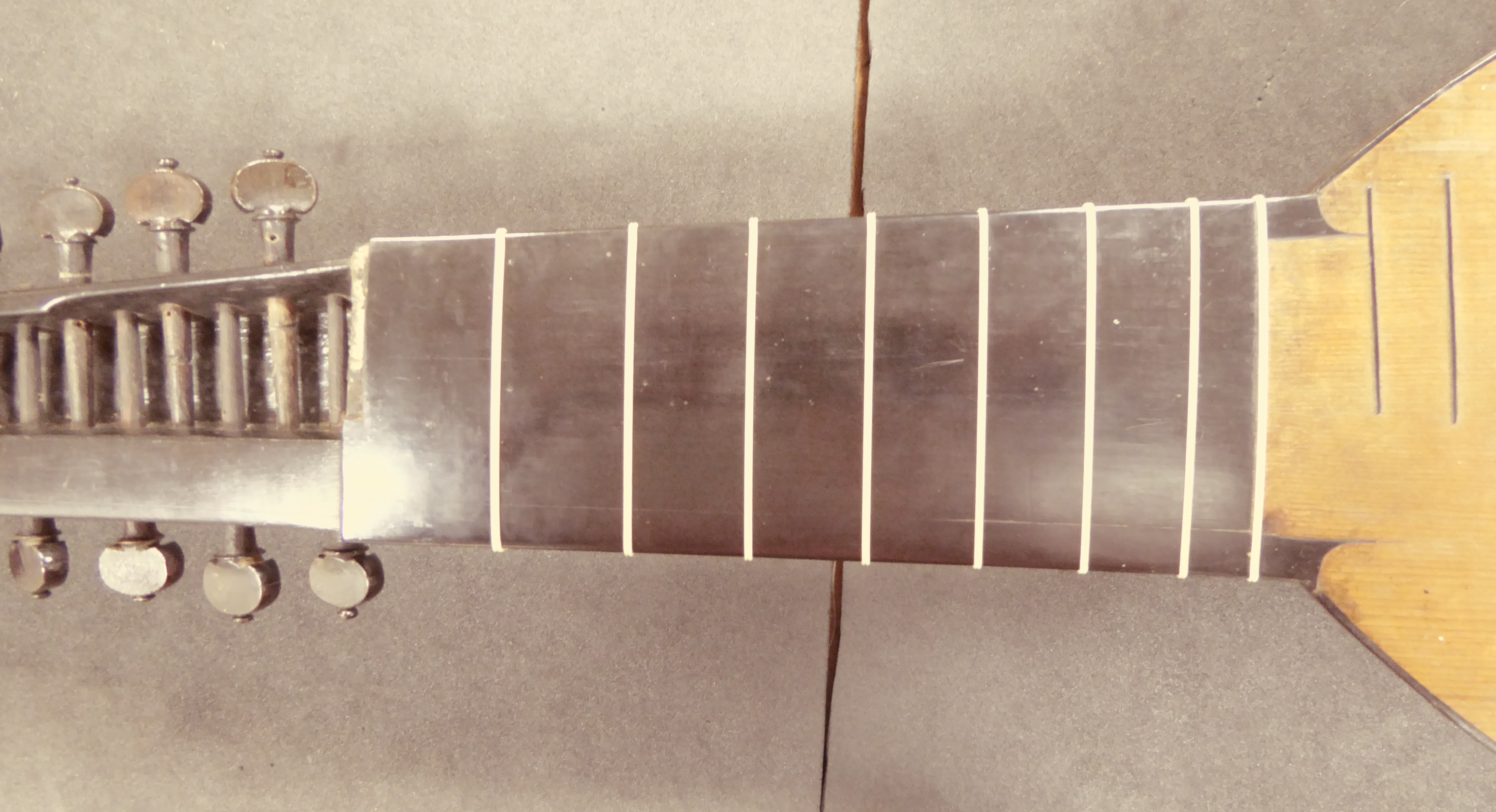
New frets on a archlute - the knots are on the back of the fingerboard, at the top, where they would be least disruptive to the player

New frets on a archlute – the knots are on the back of the fingerboard, at the top, where they would be least disruptive to the player

How to tie the fret knot. Image from Gamut Music Inc.

How to tie the fret knot. Image from Gamut Music Inc.

There is a mathematical equation for positioning the frets on the fingerboard in order to achieve perfect semi-tones. However, these instruments are not in playing condition, so it doesn’t matter too much about the precise positioning of the frets. You may ask, why put them on in the first place, if they are not needed for playing? For the same reason you’d take plastic strings off a baroque instrument and replace them with new gut strings: the instrument should be made to look complete and correct so the viewer understands how it works, and how it should look. It should look as if it could be played, and if it were played it would sound authentic. But let’s not get started on authenticity of sound…

New frets on an archlute - front view

New frets on an archlute – front view

Many of these instruments did have frets, and most people wouldn’t know (I didn’t) but it makes a lot of difference to the sounds they would have made. Also they did not have nylon in the 17th century!

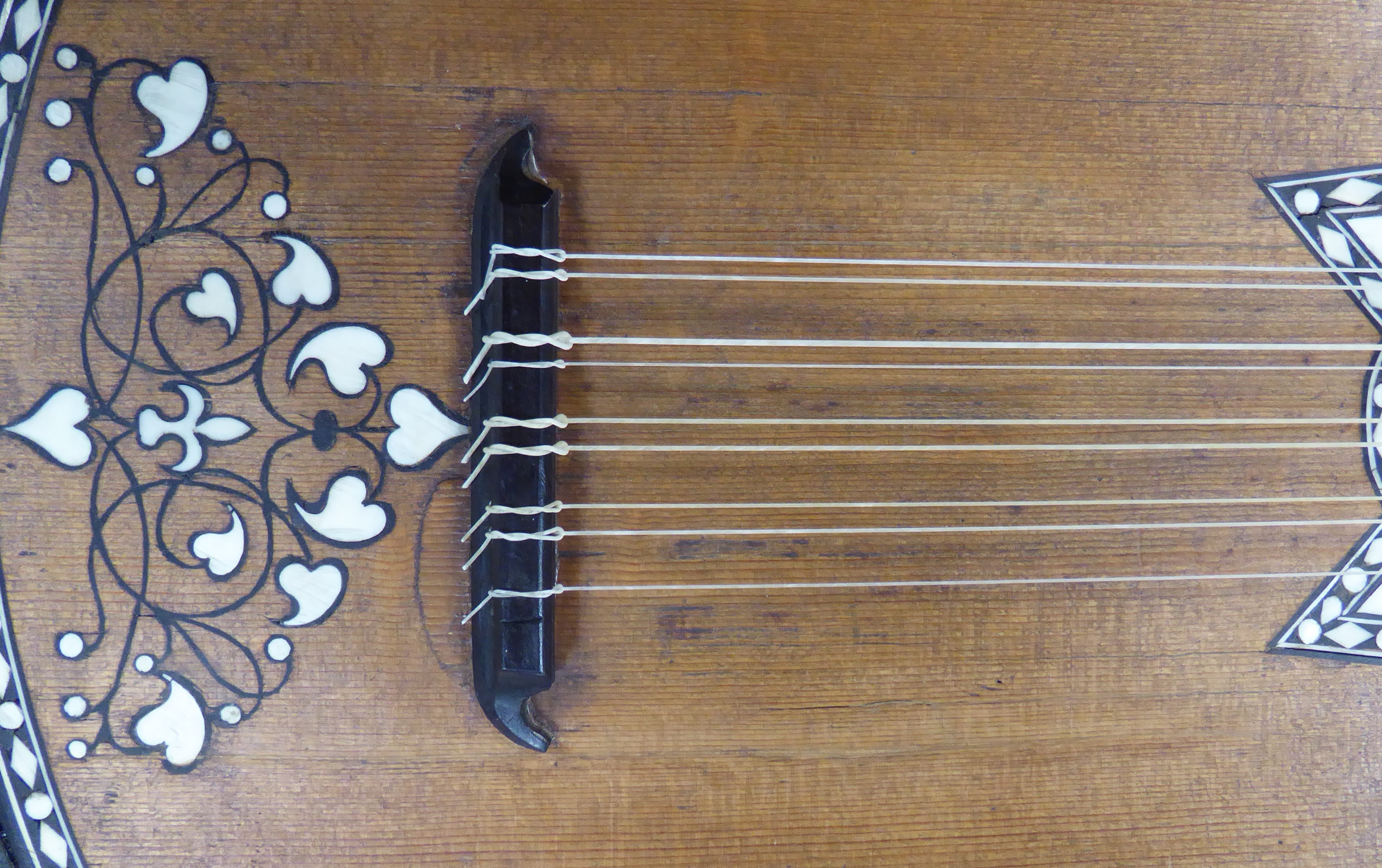
However, it’s not just about using the correct materials, but using them properly and wasting as little as possible. So when I put strings on a baroque guitar, the strings which have been made (by Gamut, an early music string maker) have a few extra inches that are not needed. These few inches can then be used to make frets, for example. The knots at the bridge of a guitar or lute can be tied in many different ways, but the way we do it here is so that all the ends point downwards (when the instrument is held as if for playing) and are tucked away behind the bridge. Beautiful!

Baroque guitar with new gut strings, detail of bridge. Check out that inlay!

Baroque guitar with new gut strings, detail of bridge. Check out that inlay!

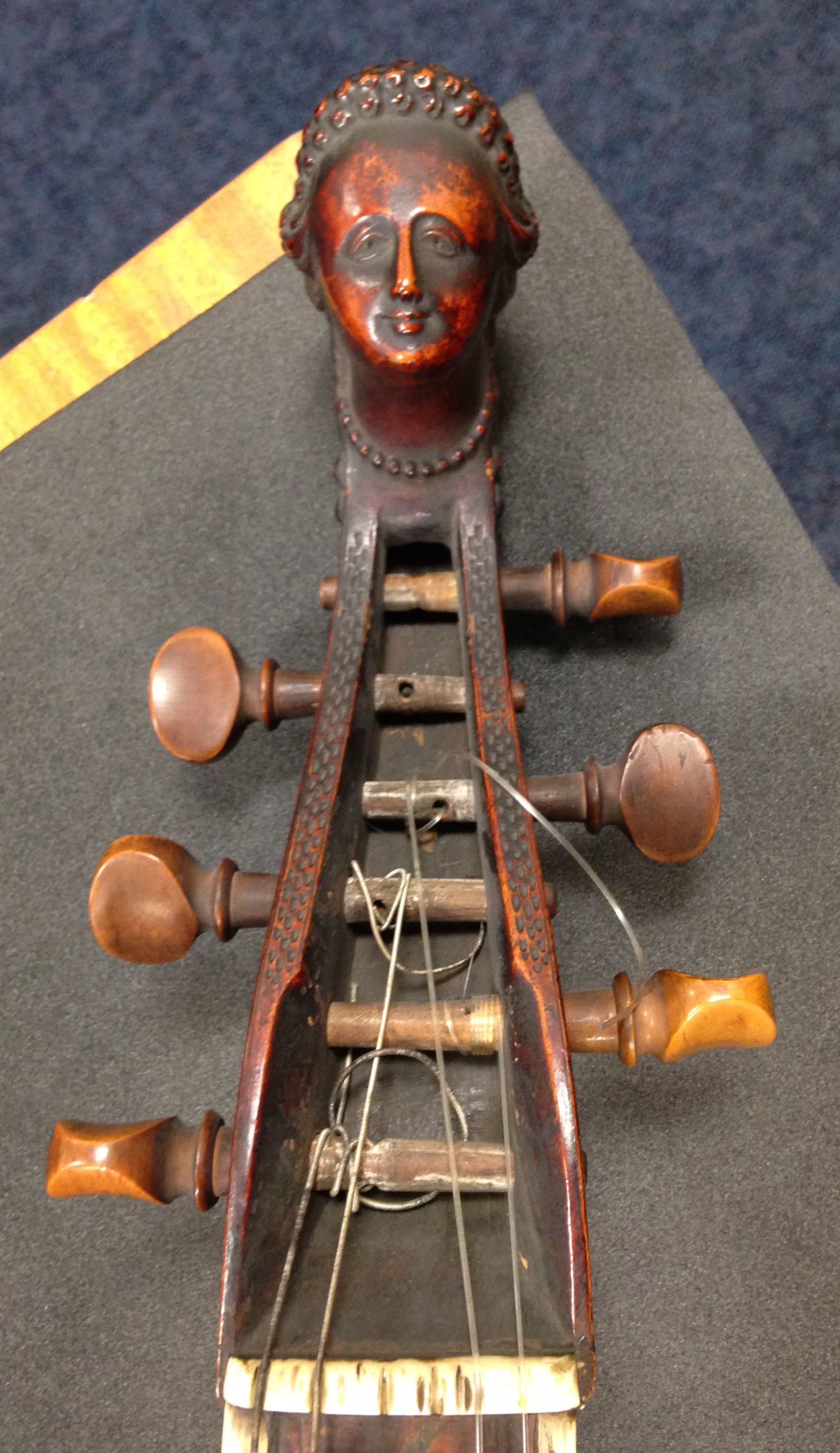
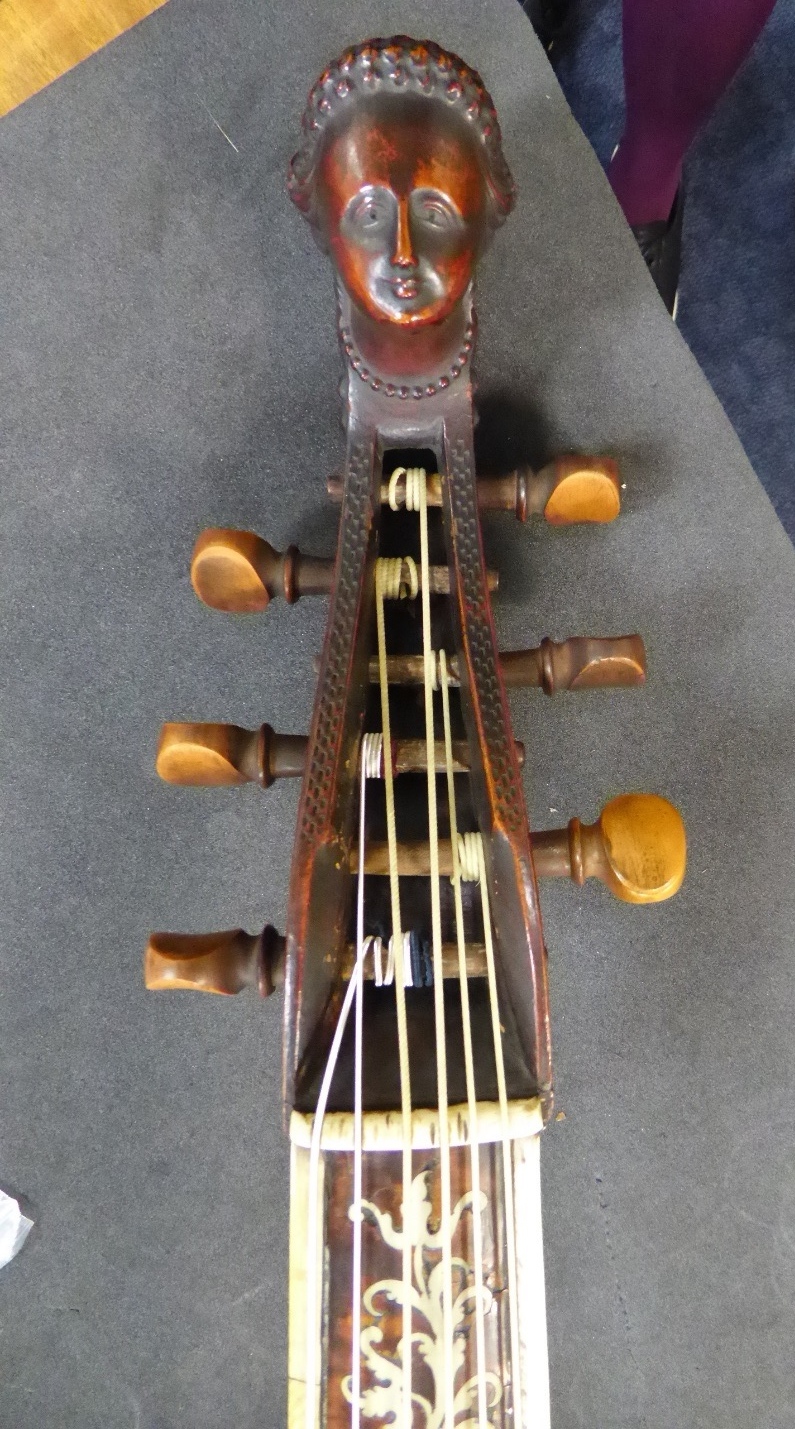
Last week I did a short presentation to show the CRC staff what I have been doing during this placement, which I rounded off with before and after images of the head of an instrument called a viola da gamba – the first string instrument I had the pleasure of working with. And the loveliest, I think. In Southampton I volunteer at the SeaCity Museum, working with their objects conservator who likes to personify things in the collection, describing a piece of newly consolidated Murano glass as ‘a lot happier’, or a rusty medieval sword as ‘not very well’. I think this can be applied nicely to the viola da gamba. She looks great for a 319 year-old, and genuinely seems happier with her new strings.

Viola da gamba before cleaning and re-stringing

Viola da gamba before cleaning and re-stringing

Viola da gamba after cleaning and re-stringing

Viola da gamba after cleaning and re-stringing

Post by Harriet Braine, Preventive Conservator Student Placement

Saying Goodbye to Dr. Coffin

This week, we say farewell to our conservation intern, Samantha. To mark the end of her 10-week internship working on the Thomson-Walker collection, we put some questions to Samantha to find out more about her time working on the project:T_W Sam

  1. Why did you decide to apply for the internship at the CRC?

When I graduated last June I decided to make a career plan. This included at least one year of work experience, which would allow me to put my education into practice, strengthen my skills set, and improve areas of weakness. This need to develop had been my main ambition when applying for opportunities. However this particular internship intrigued me for a couple of other reasons. I was interested in the idea of working for a University conservation studio and how this might compare with working for a museum for instance. Inviting also was the prospect of leading a big project during the first phase of conservation; when you train as a conservator it is unusual to work on a large collection independently and so this was an excellent opportunity to do so.

  1. What did you expect from the internship? Has anything surprised you?

I thought I would be working solely on the Thomson-Walker collection, but I very quickly recognised that this was not the case. I would indeed be occupied with the Thomson-Walker collection on a daily basis, however I would also be giving tours, supervising volunteers, teaching taster days, writing blog posts and assisting with an exhibition, which was a pleasant surprise.

  1. Tell us about what you’ve learnt over the past 10 weeks.

I now know how to survey a collection and create a project proposal. Creating a programme of conservation and preservation that doesn’t just benefit one print but over 2000 felt very daunting 10 weeks ago. But by taking small steps, and keeping in mind that my approach would have to be interpreted by interns after me I have been able to get through it by staying methodical, and making vigorous notes and to do lists!

  1. Can you describe for our blog readers a typical day within the CRC conservation studio?

The conservation treatment of the Thomson-Walker collection included removing old backing boards and using a carboxymethyl cellulose poultice to remove tape and adhesive. As this poultice is essential to the treatment I would prepare the CMC the previous evening and construct the poultices as soon as I arrived at the studio the following morning. Once these were ready I began the treatment. Because of the demanding nature of the project, I worked on a number of prints simultaneously, aiming to conserve and rehouse around 10-15 per day. Whilst this is going on I might assist with a tour of the conservation studio, discussing the project with visitors and giving demonstrations. And then during the second half of the day a volunteer would help me to create archival folders to rehouse prints that I’d previously conserved. The CRC has a number of dedicated volunteers, usually students with an interest in conservation wishing to gain experience before embarking upon a relevant degree. This partnership has been very successful for the Thomson-Walker collection, as it has allowed me to conserve more prints, whilst a volunteer has gained new skills and experience.

  1. What have you enjoyed most about your time with us?

Working within a University. I was unsure how this would compare with my previous experience of working within a museum or archive setting, but the difference has been huge. One of the main objectives of the CRC conservation studio is to make their collection more accessible and fun. I have really embraced this ideology during my time here, and hope to be an advocate of such aims during my future career. Working in such an open and exciting atmosphere has also done wonders for my confidence.

  1. What have you found most challenging?

Creating a rehousing programme for the Thomson-Walker collection. This wasn’t just difficult because of the sheer number of prints but because they are all completely different sizes! I started out by wrestling with measurements, conservation catalogues, budgets, time restrictions, calculations, and ordering forms. Once this was all worked out I could relax a little. That was until my order arrived…then I had to make sure that all those calculations had been correct and actually get the project underway.

  1. What shall you miss about the internship?

As an intern, it is not always possible to be self-directed, and projects aimed for interns are typically already set up and ready to go. For this reason I shall miss the independence I have experienced whilst working on the Thomson-Walker collection. I have enjoyed creating and following my own rules.

  1. Do you have a favourite print?

Yes! I recently discovered a print of Dr Albert Isaiah Coffin (1790–1866). Whilst the print itself isn’t spectacular I found the name rather amusing and decided to do some T_W Coffinresearch on the American herbalist. It turns out that Dr Coffin was a man ahead of his time and has even been called a revolutionary. Instead of paying extortionate fees for a conventional doctor, Dr Coffin advocated that one should learn the secrets of medical botany and be their own doctor. In the north of England, Coffin delivered lectures to working people and set up botany societies where people could meet to learn and discuss medicine, as well as sharing problems and tips. This idea was nicknamed, “coffinism.” In a way I feel that Coffin’s aims are echoed within the CRC conservation studio…well not quite, but we do offer conservation taster days!

  1. What advise would you give to the next intern working on the Thomson-Walker collection?

The conservation studio is currently a very exciting place to be working for all of the reasons I’ve mentioned above. Take advantage of all the extra activities on offer. Work hard but play harder!

From all of us in the conservation studio, and the CRC as a whole, we would like to thank Samantha for all her fantastic work, and wish her the best of luck in her future career. In the meantime, we will be sure to keep you updated on how the Thomson-Walker project developments….

Post by Samantha Cawson, Conservation Intern