Home University of Edinburgh Library Essentials
September 24, 2026
SSSA in 70 Objects: Together Forever
Rab Noakes in the Edgar Ashton Collection

Rab Noakes at Oran Mor 2010. Image: PKImage CC-BY-SA
We were very sad to learn that Scottish singer songwriter Rab Noakes passed away last month, aged 75. Rab was a leading figure in the music scene in Scotland; performing live, touring and recording 20 studio albums, He also created music programming for BBC Scotland for many years.
We would like to take this opportunity to pay a tribute by sharing a recording of him from our collections. There are several appearances by Rab in our Edgar Ashton Collection; Ashton was a long serving member of the Edinburgh Folk Song Society and created an incredible number of recordings in folk clubs, at sessions and in gatherings in his own home. Ashton’s collection was deposited in the SSSA over 20 years ago.
From that collection, we would like to share this recording of Rab Noakes singing Together Forever (EA2001.282). We believe this was recorded in the Kirkcaldy Folk Club at the Elbow Room, but unfortunatley we don’t have a date for the recording. Maybe you were there?
Rab was introduced by John Watt (1933-2011), himself a familiar face and voice around the folk clubs of Fife.
Rab Noakes was a unique, unparalleled voice in the Scottish and UK music scene, who will be much missed.
Open Research Support at Russell Group Universities
As part of my work as Research Data Steward, I was asked by our Open Research Co-ordinator to investigate the open research support available at Russell Group universities and how the University of Edinburgh compares.[1] Open research, which is also known as “open science” or “open scholarship”, refers to a collection of practices and principles around transparency, reproducibility and integrity in research. To understand to what extent Russell Group universities have adapted to the ongoing development of open science, we have conducted analysis in terms of four areas. Do they have a published policy around Open Research? Do they have an Open Research Roadmap? Do they mention any training or specific support for researchers in achieving Open Research? What services do they provide to support Open Research?
Firstly, we checked whether those universities have a policy/statement that outlines the university’s approach to support open research and key principles for researchers. Less than 30% of these universities have a clear policy or statement for Open Research. Good examples include the University of Cambridge,[2] University of Sheffield,[3] and Cardiff University.[4]
Secondly, we checked whether they have a Roadmap that provides a set of questions that universities can use to monitor their progress in implementing Open Science principles, practices and policies at a local level. Among the Russell Group members, University of Edinburgh and University College London – two members of the League of European Research Universities (LERU) – [5] provide a roadmap/page dedicated to monitor their progress. (Ours can be found on this Open Research page.)
 Thirdly,what services are provided to researchers to make their work public? Most universities provide support like a data repository (except for LSE), Research Data Management support, Open Access to publications and thesis and guidance on sharing research software. A few provide support on protocols sharing. Some universities have started hosting an open research conference. For example, UCL Open Science Conference 2021, 2022,[6] Open Research Symposium hosted by the University of Southampton,[7] and University Open Research Conference, June 2021, at the University of Birmingham.[8] As an active member of LERU, our university also joined in to launch our first Edinburgh Open Research Conference in May, 2022.
Lastly, we have found all universities have training relevant to open research, with around half of them clearly advertising their training. Some good examples which we could learn from include the “Open Research education for doctoral students” from Imperial College[9] and a practical libguide for open research provided by the University of York[10].
We are glad to see that Russell Group members have started adopting actions to support Open research, which is considered part of the new normal for research-intensive universities. However, this is a long and ongoing process. We have seen that many universities are still in the early stages of the implementation process and more can be done to advance their practice, including ours.
Yue Gu
Research Data Steward
Footnotes
[1] https://russellgroup.ac.uk/about/our-universities/
[2] https://osc.cam.ac.uk/open-research-position-statement
[3] https://www.sheffield.ac.uk/openresearch/university-statement-open-research
[4] https://www.cardiff.ac.uk/documents/2519297-open-research-position-statement
[5] https://www.leru.org/publications/implementing-open-science
[6] See the UCL Blog post for more information. https://blogs.ucl.ac.uk/open-access/2022/03/15/bookings-now-open-for-ucl-open-science-conference-2022/
[7] https://library.soton.ac.uk/openaccess/Plan_S_open_research_symposium
[8] See https://intranet.birmingham.ac.uk/as/libraryservices/library/research/open-research.aspx
[9] https://www.imperial.ac.uk/research-and-innovation/support-for-staff/scholarly-communication/open-research/open-research-education/
[10] https://subjectguides.york.ac.uk/openresearch/home
From Tantruming Cobots to Stephen Hawking at Work- CHDS at the AHFAP 2022 Conference
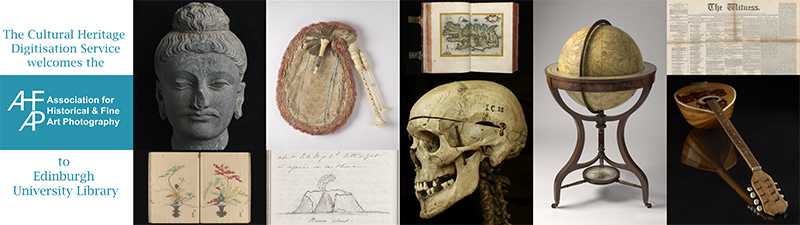
The Association for Historical and Fine Art Photogapher’s (AHFAP) conference is always a highlight of the year and, alongside 2and3D Photography at the Rijksmuseum and Archiving, it has become one of the must-attend events for any cultural heritage imaging professional. This year we were fortunate that AHFAP took place at the National Museum of Scotland here in Edinburgh, meaning for the first time ever the entire Cultural Heritage Digitisation team could attend! Read More
Collecting in East Lothian
We are always encouraging people to get involved with our Project, whether as a volunteer fieldworker or transcriber, or as a willing interviewee. As well as valuing the oral history interview for its own sake we are also keen to encourage and facilitate opportunities for people to get together and learn from each other about the community they live in. In this month’s blog post we hear from one of our East Lothian volunteer fieldworkers, Janis Macdonald, about her interest in social history, how she came to be involved with the RESP and what she has learned from her participation. To date, Janis has carried out 17 interviews with 18 interviewees and, as the following report demonstrates, she doesn’t seem to be thinking of hanging up her microphone anytime soon! We’re very glad to hear this!
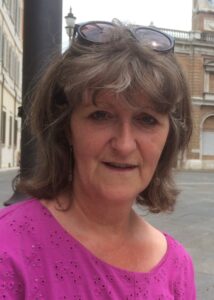 fieldworker, Janis Macdonald
For as long as I can remember I have had an interest in family history. I was very close to my maternal grandparents and I used to love encouraging them to share stories of when they were younger. Both were local and came from large families. However, it wasn’t until more recently that I realised how little I actually knew about their early years. My nana used to deliver Sunday papers for her father, regularly cycling miles out into the country from Haddington. My papa went to school in Prestonpans. I also knew that, as the oldest child he took on responsibilities for the well-being of his siblings.
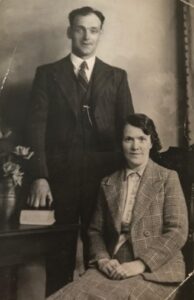 my grandparents, William and Helen Cunningham
On reflection now, I realise that most of the memories shared with me were from their married years, and the childhood years of my mother and her four brothers. My grandfather worked for the local Council and my grandmother for a local baker. I know they both had bikes and that my grandfather, having driven a Council lorry for many years, found the size of his first car challenging and it was regularly to be found parked quite far from the kerb! It’s often too late when we realise how little we know about our families.
Tracing family trees can give us names, dates and places but it is the social history that catches my interest. The Ethnology research project is helping us ensure that we can build our knowledge. People share their stories and this contributes to the pictures we have of when our relatives were younger.
I became involved in the Regional Ethnology of Scotland Project after attending a Haddington Remembered session with my uncle. At that event Ruth, one of the John Gray Centre archivists, asked if I would be interested in helping with fieldwork and later Mark, one of the project researchers, contacted me. He arranged a short training meeting for myself and two other interested volunteers. The session covered how to use the recording equipment, guidance on conducting interviews and there was also time to make some practice interviews. Now that I’m a fully-fledged fieldworker, I find I prefer to refer to the interviews as conversations. The term interview can seem a bit intimidating! Mostly I have engaged in guided conversations though, as I like to have a little knowledge of the person I am talking with!
My first conversation was with my mother-in-law and her twin sister. I felt a bit anxious beforehand but as they started talking I relaxed and it was good fun. One lesson I learned was that when the recorder was switched off the stories kept on coming! Mark gave me feedback on this first interview and commented on the electrical noise throughout the recording. It was my mother-in-law’s air mattress – a noise that we had become so used to that we didn’t give it a thought! Mark’s feedback was supportive and reassuring and he uses his experience to comment on recording levels, types of question and where there might be opportunities to elicit more information.
Everyone has a story to tell. I have had the privilege of talking with a number of local people who have grown up in East Lothian. Some may have similar experiences but each story has personal reminiscences which bring our County to life. East Lothian used to be called Haddingtonshire. The name Haddingtonshire conjures up a different way of life from East Lothian and, to my mind, lends itself to a more rural description. Rural links come across quite strongly in many of the conversations I have had.
It is also a real privilege to talk with people about East Lothian. It can be humbling to hear of their early years and make comparisons with those of today’s children. Despite what may appear to us now as hardships, their memories are usually positive and the importance of family and community comes through very strongly. I have been fortunate to know mostly all the people I have talked with, and my family has known their families. This connection has made these conversations all the more interesting to me. I can put faces to some of the personalities they mention, or even add to the reminiscences. Older people who knew my mother, and even those who knew my grandparents have told stories that I can make links to. Having lived in Haddington all my life, I too can remember the High Street shops as they were in the past: visiting several stores to acquire everything on the list – no credit cards, no scouring shelves for specific brands, no home deliveries and everyone had their own shopping bag!
As a volunteer fieldworker with the RESP I have been encouraged to follow my own connections and ideas while allowing each person the opportunity to speak about what matters to them. The people I have recorded have come from a wide range of backgrounds and our conversations have been varied – ranging from the drummer of a popular local band to a retained fireman working in Haddington. Stories I have heard cover a wide range of subjects too and have included changes in local businesses, school experiences, memories of World War 2, fashion, fishing life and Haddington Pipe Band. Although I have chatted with many older people, including a gentleman who is 101, I am also keen to record some school pupils in order to have contrasting experiences. And so there’s plenty to get on with and lots of people willing to share stories. Today’s events are tomorrow’s memories!
Janis Macdonald
You can find out more about the recordings made by janis on our RESP Archive website: www.collections.ed.ac.uk/eerc
On (long term) Trial: More Gale Primary Sources
*The Library has subsequently purchased access to Archives of Sexuality and Gender: Inernational Perspectives on LGBTQ Activism and Culture, British Library Newspapers Part VI: Ireland, 1783-1950, Financial Times Historical Archive 1888-2021 and The Mirror Historical Archive, 1903-2000. These can be accessed via the Databases A-Z.*
During the summer the Library was able to purchase two Gale primary source databases to add to our collections: U.S. Declassified Documents Online and The Telegraph Historical Archive, 1855-2016. Because of this, Gale have offered us free long-term trial access to 7 more of their digital primary source databases through their Gale Accelerate programme.

The Library has access to these 7 databases until 12th July 2023.
They can be accessed from our E-resources trials.
They can also be accessed via the Digital Primary Source and Archive Collections guide or Newspapers, Magazines and Other News Sources guide, as appropriate.
So what do we now have access to?
(In alphabetical order) Read More
BOO-lean operators
We know Hallowe’en was last week, but saw this on Twitter and it’s too good not to share! If you’ve ever wondered what library staff (and mathematicians and engineers and many other professions) talk about when they mention Boolean operators or logic gates, this handy infographic from @38mo1 may help!
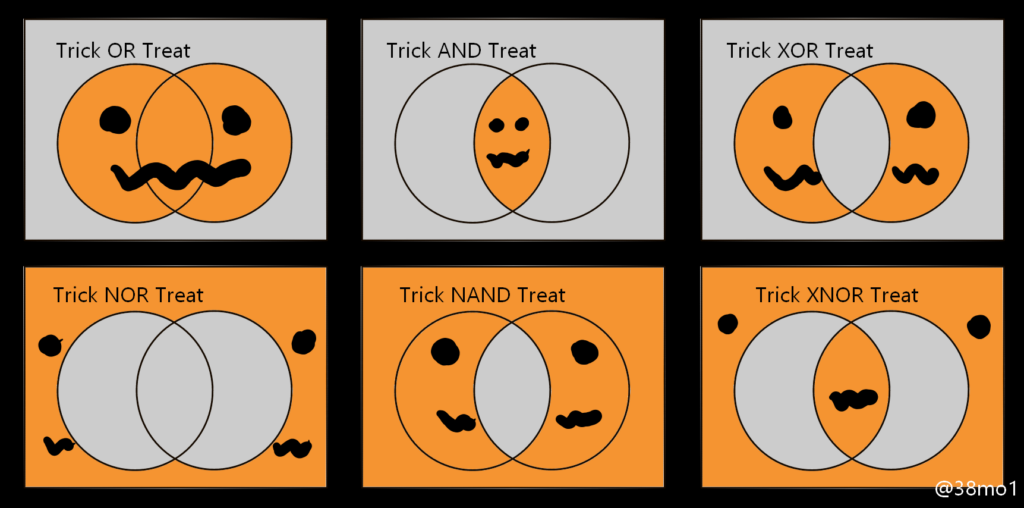
Traditionally search engines and databases used Boolean operators along with keywords to help you search more constructively. Some (like Google) now accept natural language searching, but many academic or technical databases still require you to search in this format.
For example, if you search on DiscoverEd:
- “Property Law” OR Servitudes: 70,745 results.
- “Property Law” NOT Servitudes: 57,500 results.
- “Property Law” AND Servitudes: 154 results.
Those little connecting words can make all the difference!
For more help with searching, watch this short video (9 minutes) about Search Techniques on our Law Librarian Media Hopper Channel. Unfortunately pumpkins not included.
Join the L&UC Journal Club!
Part of the professional development we’re involved in as library staff includes attending conferences and reading journals relevant to our profession. Recently the ASL team realised that we don’t have dedicated time in our schedules to get to grips with issues facing libraries at the moment, and so we decided to resurrect the L&UC Journal Club! We’d like to invite our colleagues from across Library & University Collections to join us to discuss articles and developments in libraries and information sectors at regular meetings throughout the year.
Are you a member of Library and Universities Collections staff interested in keeping up to date with issues and events in the Library and Information sector, but struggle to make time for professional development? Would you like to prioritise improving your academic discussion skills and network with colleagues from across L&UC?
We will alternate online and in-person meetings from November, and have a rotating chair and moderator system so everyone gets the chance to suggest articles and lead discussion. Our first meeting will be on Wednesday 23rd November 2022 at the Digital Scholarship Centre in CRC, Main Library. We’ll be discussing What Academics Really Think About Information Literacy by D. Stebbings et al.
If you fancy joining us or finding out more, search for L&UC Journal Club on Teams or contact Christine Love-Rodgers or SarahLouise McDonald.

Halloween Divination in our Sound Collection
Today is Halloween and – placing pumpkins and trick-or-treating (as we know it today) firmly to one side for now – this is the day on which we traditionally mark the end of the harvest season and the commencement of the dark season of the year. It is also the night of the Celtic calendar where the boundaries are thin between this world and the Otherworld; between life and death – making way for all sorts of spooky shenanigans, including divinations games and rites!
Our collections here at The School of Scottish Studies Archives are rich indeed with personal memories of such practices and we thought we would share some of these with you, should you care to try any out yourself.
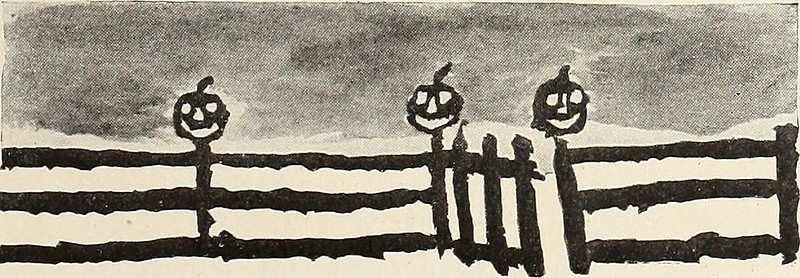
Burning Hazelnuts
The placing of nuts in a fire for divination occurs more than once in our collections. For many this was a love divination – a very popular reason for Halloween rituals – if the nuts burned to ash then any union would not prosper, but if they cracked or fused, this was a good sign. However in this recording, from 1964, William Forbes told Anne Ross that in Perthshire they would watch to see if the nuts cracked and if so they made a wish!
Kale Stalk
Kale is relevant to several Halloween pranks and rites. This recording tells of the practice in Shetland of using kale stalks to divine how large a woman’s family might be or what shape her future husband would take. The woman was blindfolded and led to the kaleyard where she tied one of her garters to a kale stalk. It was pulled up and hung above her house door. If she was a newly-married woman, the number of shoots on the side of the stalk forecast the number of children she would have.
In this later recording, also from Shetland, Andrew Hunter told Alan Bruford about the practice of ‘Casting Kale’ where kale stalks would be throw into people’s houses or down their chimneys. A particularly messy form of chap-door-run!
Andrew also describes some other seasonal customs and rites in Shetland, which would also occur at Yule too.
SEASONAL CUSTOMS AND CELEBRATIONS
SA1978.067
Contributor: Andrew Hunter
Fieldworker: Alan J Bruford
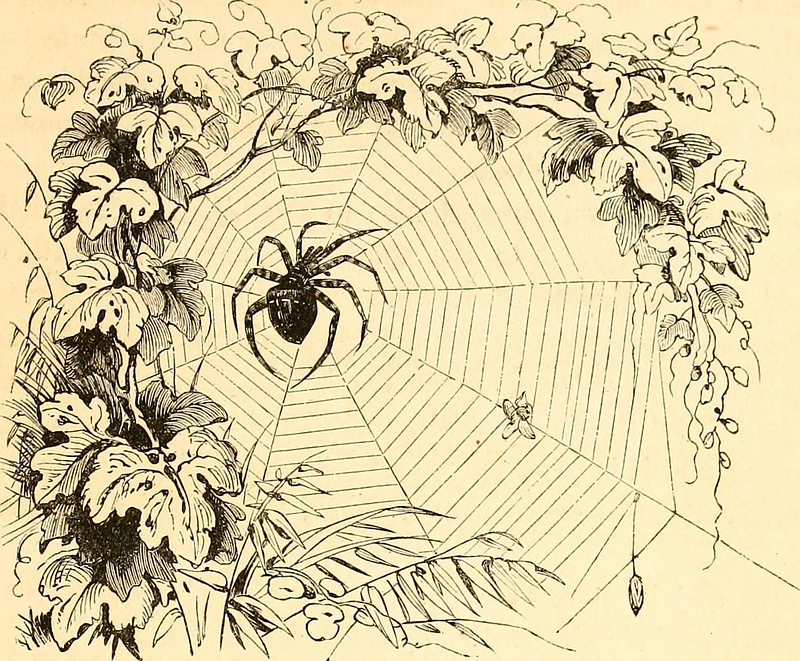
Balls of Wool
“Cò tha siud thall air ceann mo ròpain?” or “Wha haads my clew end?” are questions you may heard called on Halloween night! We have recordings of this marriage divination across Scotland. Reverend Norman MacDonald, from Skye, described this practice to Calum Iain Maclean in 1952.
Kate Manson, from Foula, described to Sandy Fenton this practice when she was a girl, but instead of a wall, the wool was dropped down the chimney of an old watermill. She also told that another practice was for a girl to go to a big standing stone and go three times around it one way and three times around the other. The first man she saw after that was to be her future husband – hopefully she didn’t get too dizzy!
Eggs and Shirt Sleeves
Divination using eggs was once common and not only at Halloween, but at other calendar customs as well. Much like tea-leaf reading, it is said that egg whites could be read if poured slowly into a glass of water; different shapes could foretell the future.
In South Uist, Donald Alastair Johnson described egg divination in a different way; An egg was broken into a glass and stirred. Everyone took a mouthful, chose a house, and stood outside the window. The first name heard would be the same as their future spouse – but whilst this was happening they had to keep the egg in their mouths This was done by boys and girls – which is a refreshing change from these often being prescribed rites for young unmarried girls or women. He also describes further customs such as cabbage-stealing which is aligned with some of the kale-related high-jinks elsewhere in our collections
Cleachdaidhean Samhna ann an Uibhist a Deas.
SA1971.043
Donald Archie MacDonald Angus John MacDonald
From Orkney, we have a round up of Halloween customs from Johina Leith (recorded in 1977), she also talked of egg reading and how it was to prove true for her own aunt. Johina also described the process the dipping of a garment sleeve in water where three lairds land crossed. The shirt was left over a fire to dry and it was said that the person who approached would be the person they will marry.
Orkney Halloween customs, including divination; tricks at Halloween
SA1977.085
FIELDWORKER: Alan J. Bruford
Brucie Henderson, from Yell in Shetland, also had evidence of the shirt washing rite. As he described it, on the night of Halloween, a girl might wash her blouse in a burn at a bridge where a corpse had crossed for burial in the churchyard. The blouse would be taken home for drying and as she left the burn the girl was supposed to see the man she would marry passing by.
SHETLAND HALLOWEEN DIVINATION CUSTOMS
SA1970.242
Contributors: Brucie Henderson
Fieldworkers: Alan Bruford
These are but a few examples from our collection and you can access more of our collection over at Tobar an Dualchais, where there are over 33,000 tracks from SSSA available to listen to online.
Do take care with your Halloween divinations: we cannot vouch for the efficacy or outcome and you may need to think about your health and safety before undertaking any of these!
Images from Internet Archive Book Collection on Flickr and are public domain
Out of (Kar)luck
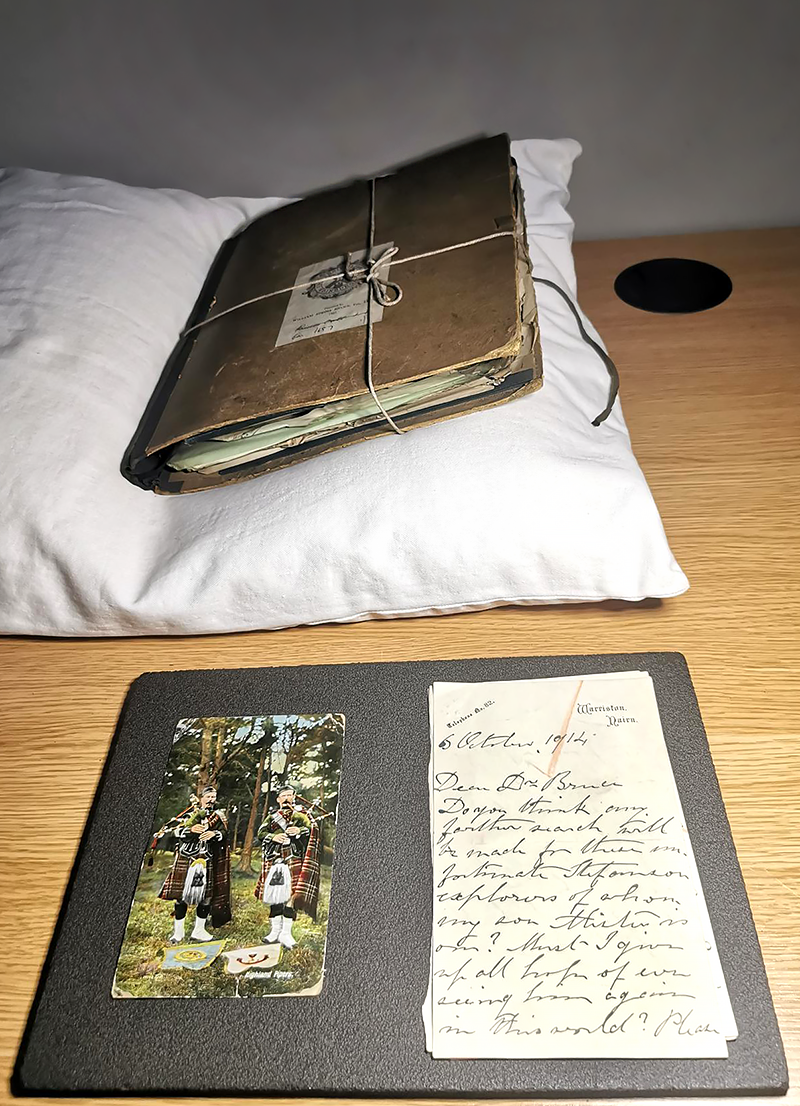
For several months now I have been working as a Digitisation Operator at our studio in the main University library, and that time has flown by. A large part of my job is to take care of orders that come into the Cultural Heritage Digitisation Service (CHDS), which will often be requests from academics or researchers who require a digital copy of something from our collection. This means that I get to see a fantastic cross-section of what we have here, on a daily basis. This will usually be books, pamphlets, letters – any paper-based object that can sit safely on the scanner, and where the digitised copy doesn’t need to be publication-quality as this would be done on the high-quality cameras at a higher charge.
A recent favourite of mine was a set of letters and ephemera relating to a doomed Arctic expedition that set off from the west coast of Canada in June 1913, led by Canadian anthropologist Vilhjalmur Stefansson, and captained by American explorer Robert Bartlett. This was to be the last voyage of the Canadian ship, the Karluk.
Have you heard about LibSmart?
We’re midway through the first semester now, and many students will have settled into the routine of lectures, seminars and practical class preparation. You may even be thinking ahead to the end-of-module deadlines moving ever closer, and beginning to consider how to research and write assignments. For some students this can be stressful or confusing as they realise they don’t really know where to start with looking up resources to back up their work. Don’t panic though, we’ve got you!

Enter, LibSmart! This is our online information literacy course which you can access via Learn at any time throughout your studies. It’s self-enrol and open to absolutely everyone, and will provide you with a great grounding in how to access resources online and via the library, and how to reference your research correctly. There’s five modules in LibSmart I and although we recommend you work through them all, you can dip in and out of the bits you feel you need a bit of help with.
If you’ve completed that, you may find that you want to go a step further. In that case, check out LibSmart II which has ten modules on a variety of different topics all designed to help you get to grips with a specific focus. Unlike LibSmart I we don’t ask you to work through all the modules here, just pick ‘n’ mix your favourites! You might be interested in health information and systematic reviews, or legal information and government and policy research. Maybe you’re unsure of what’s in our Special Collections and you’d like to explore that more fully. Students who’ve completed these modules before have said that they’re extremely useful and relevant to their work.
If this sounds interesting to you, you can find out more on the LibSmart webpage. Remember you can access LibSmart any time you like throughout the year, and for each module you complete you get a digital badge!
There’s a video here on how to self-enrol in case you’re unsure of the steps. Hope to see you in LibSmart soon!
Collections
 Love, Loss, and Literature: Cataloguing the Papers of Irene Jessie Young
My name is Nancy Britten, and I’m in my fourth year of studying History at...
Hill and Adamson Collection: an insight into Edinburgh’s past
My name is Phoebe Kirkland, I am an MSc East Asian Studies student, and for...
Love, Loss, and Literature: Cataloguing the Papers of Irene Jessie Young
My name is Nancy Britten, and I’m in my fourth year of studying History at...
Hill and Adamson Collection: an insight into Edinburgh’s past
My name is Phoebe Kirkland, I am an MSc East Asian Studies student, and for...

Projects
Cataloguing the private papers of Archibald Hunter Campbell: A Journey Through Correspondence
My name is Pauline Vincent, I am a student in my last year of a...
Archival Provenance Research Project: Lishan’s Experience
Presentation My name is Lishan Zou, I am a fourth year History and Politics student....