Computer Enhanced Genetics

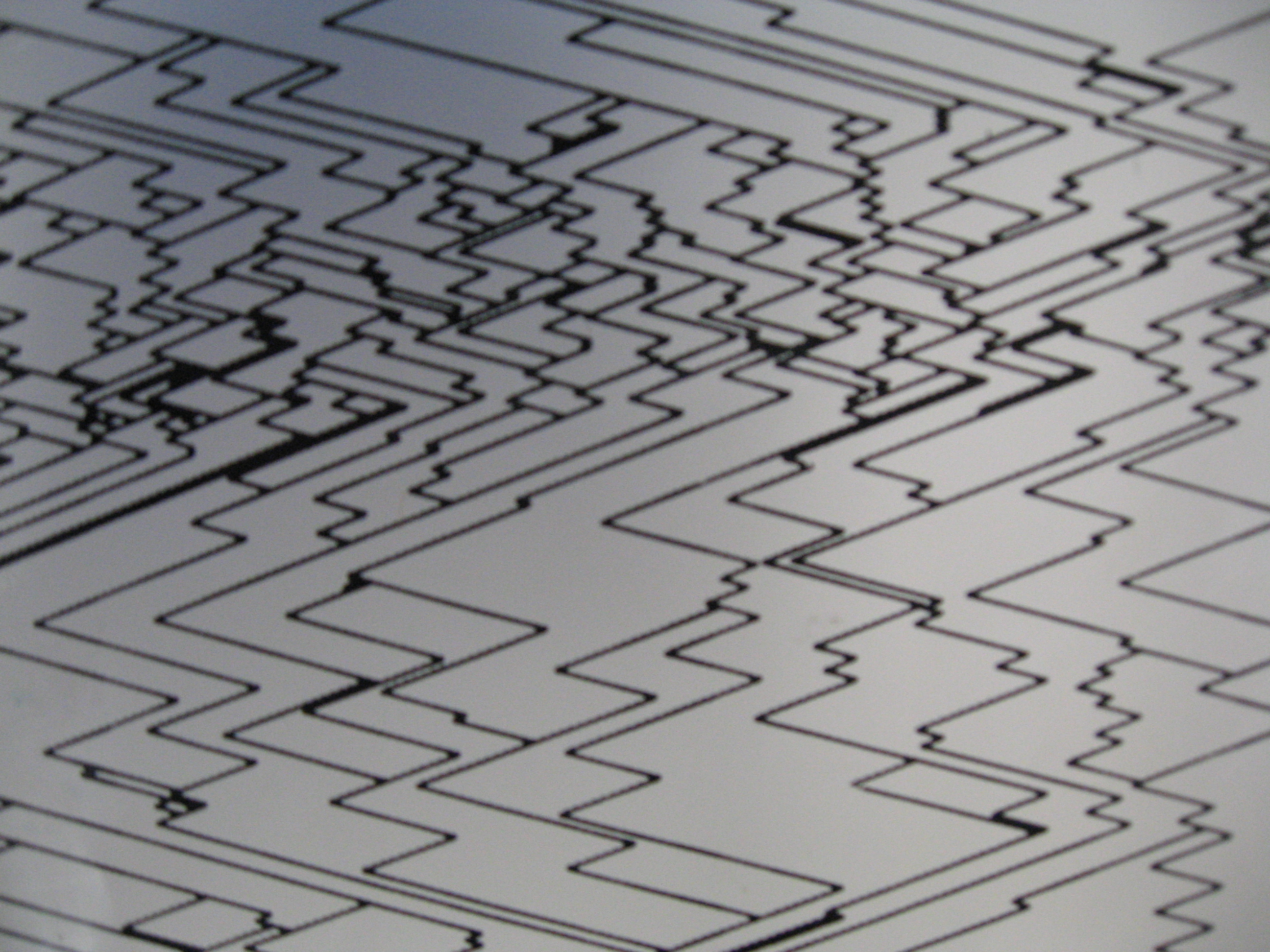
As we saw on a post here two weeks ago, Waddington was very interested in exploring the processes by which the shapes and patterns of biological forms are brought into being (morphogenesis). These two pictures are part of a file relating to a short research project which Waddington conducted in collaboration with Russell J. Cowe, a programmer from the Department of Computer Sciences at the University of Edinburgh, between June and August 1968. Cowe worked with Waddington on the simulation of molluscan shell patterns using Computer-Aided Design. This project involved a computer programme being written (in Fortran, and worked out on an Eliot 4130 computer) which attempted to simulate the pattern on the shell and so provide some idea of the rules controlling how pigment is deposited during pattern formation, particularly the random factor determining points of initiation of diverging lines of pigment. The computer programme contained parameters controlling the density of random points of pattern initiation and different parts of the developing shell, and the angle of divergence of the lines.

The results, which were published as a paper entitled ‘Computer Simulation of a Molluscan Pigmentation Pattern’ in the Journal of Theoretical Biology (Vol. 25, No. 2, pp 219-25, November 1969), appear strikingly imaginative and futuristic considering the early date in computer technology!
The First Cloned Chicken Gene at Edinburgh Research Station

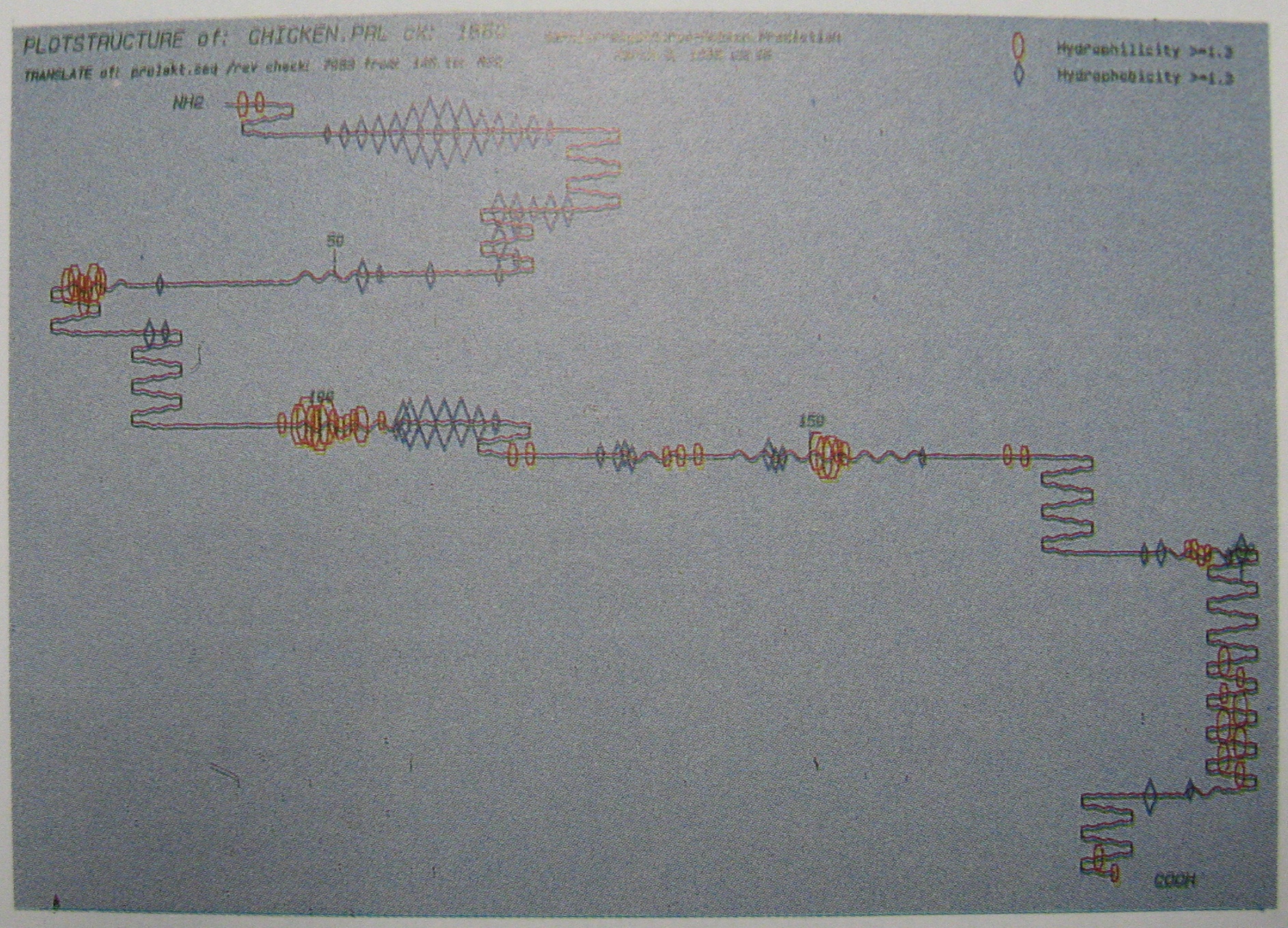
According to scientist Peter J. Sharp in the Reproduction section of the IAPGR-ERS Report for 1986-1987, molecular geneticists and reproductive physiologists had begun work on a project ‘cloning the chicken LHRH gene…’ in which the result was the ‘molecular cloning of chicken prolactin.’ It was hoped that the ‘cloning of the chicken prolactin gene will make it possible to produce recombinant derived material for physiological studies and create opportunities for investigating immunopharmacological methods for the prevention of broodiness.’ Evidently, ’knowledge of the nucleotide sequence of the gene made it possible to predict the amino acid sequence of this hormone which had not been previously established’ and ‘the predicted amino acid sequence has been used to generate this plot of the structure of chicken prolactin showing hydrophilic and hydrophobic regions. (Photo: Figure 5, p. 25)

New Patterns…

On last week’s blog we looked at a print of C.H Waddington’s epigenetic landscape, part of our collection of diagrams, illustrations and photographs used in Waddington’s publications.

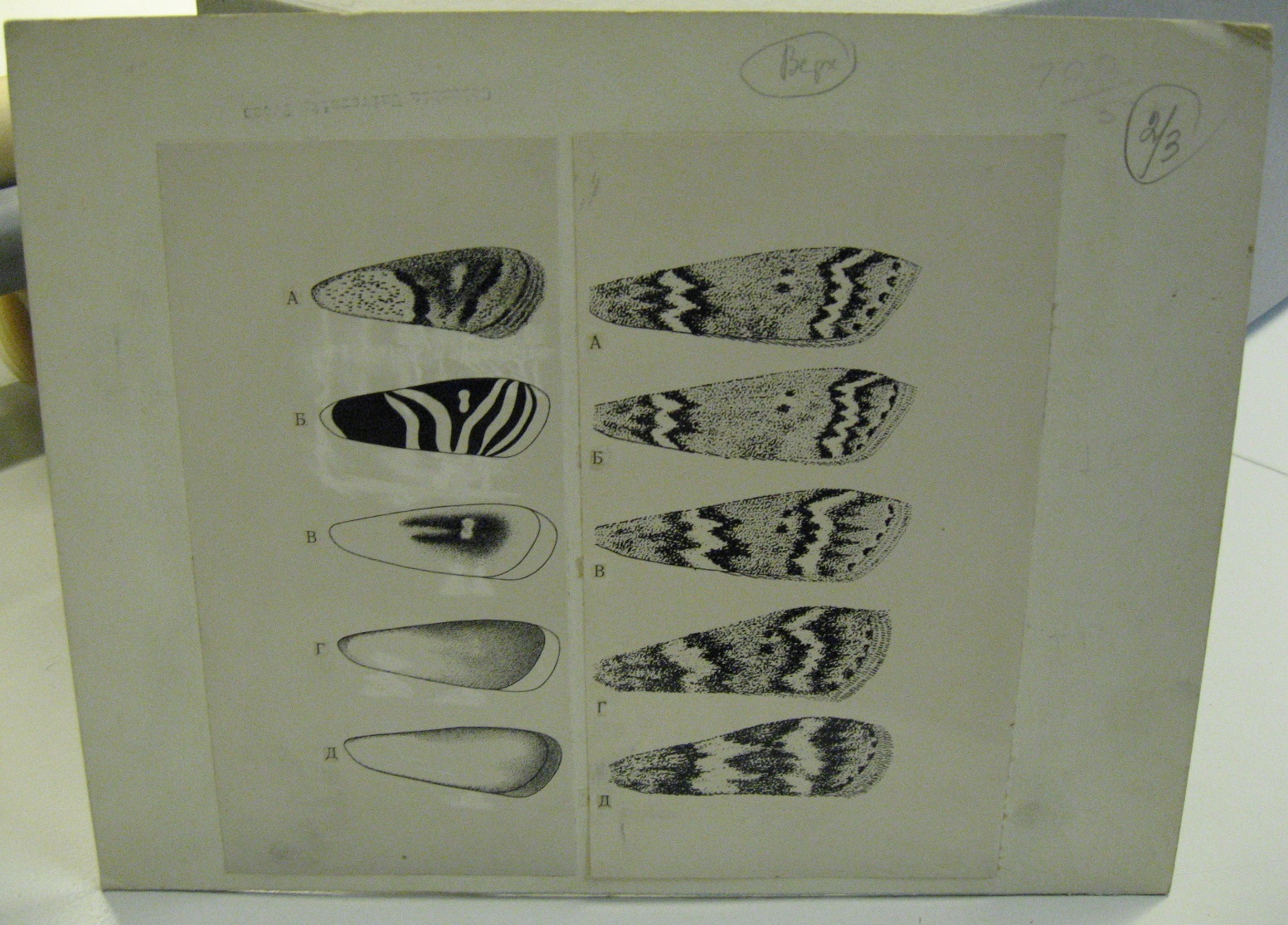
This picture is also from this collection of illustrative material, being one of the original plates and figures used for Waddington’s 1962 book New Patterns in Genetics and Development (Figure 56 in the book). There are 68 figures and 23 plates present in the collection, out of the total 72 figures and 24 plates which appear in the book. The images, mounted on card, bear the stamp of the book’s publisher, Columbia University Press and are marked with symbols and annotations.

The image shows patterns in the wings of the moth Plodia interpunctella, and is used in the book to illustrate a fundamental question posed by Waddington: ‘How is any individual pattern generated?’ Waddington describes what he calls ‘the superposition of several different patterns, which can be recognised as physiologically distinct from one another, either because they are formed at different times during development, or because they react differentially to experimental treatments.’ The image shows ‘a series of adult wings that have been, as it were, frozen in successive stages in the process of pattern formation’. The normal adult wing at a) on the right, while e), for example, shows the result of heat treatment in wild moths (one way by which one can externally disrupt or divert the process of wing pattern formation during development).

The images were returned to Waddington by Columbia University Press in August 1963, along with the original manuscript, which also forms part of the Waddington archive.

Waddington’s Epigenetic Landscape

This is a print from our collection of photographic and illustrative material from Waddington’s publications. It illustrates the epigenetic landscape, the concept for which Waddington is perhaps best remembered. This image first appeared in Waddington’s book The Strategy of the Genes (Allen and Unwin, 1957) and visualises the developmental history of a cell in an embryo, represented here by a ball rolling down the ‘landscape’. As it rolls, the ball has several ‘choices’ as to which way to go – just as the developing embryo is influenced down certain ‘paths’ by various genetic and environmental factors – and by the time it reaches the bottom of the landscape, it will have made several such ‘choices’. Waddington called the pathways which are permitted ‘chreodes’ (described as ‘the path followed by a homing missile, which finds its way to a stationary target’). The underlying concept is that the entire ‘landscape’ of development is influenced by the actions and pathways of each individual gene, and also that development can even be disturbed (ie by the ball being pushed up a ridge) and yet still reach an normalised equilibrium (the bottom of the ‘valley’) before the adult state is reached.

In The Strategy of the Genes, Waddington states that although the epigenetic landscape ‘only provides a rough and ready picture of the developing embryo, and cannot be interpreted rigorously, it has certain merits for those who, like myself, find it comforting to have some mental picture, however vague, for what they are trying to think about.’ Quite! Waddington’s epigenetic landscape is as influential a concept – and diagram – today as it ever was, and part of its effectiveness relies on Waddington’s ability to describe a complex idea using clear language and striking visuals.

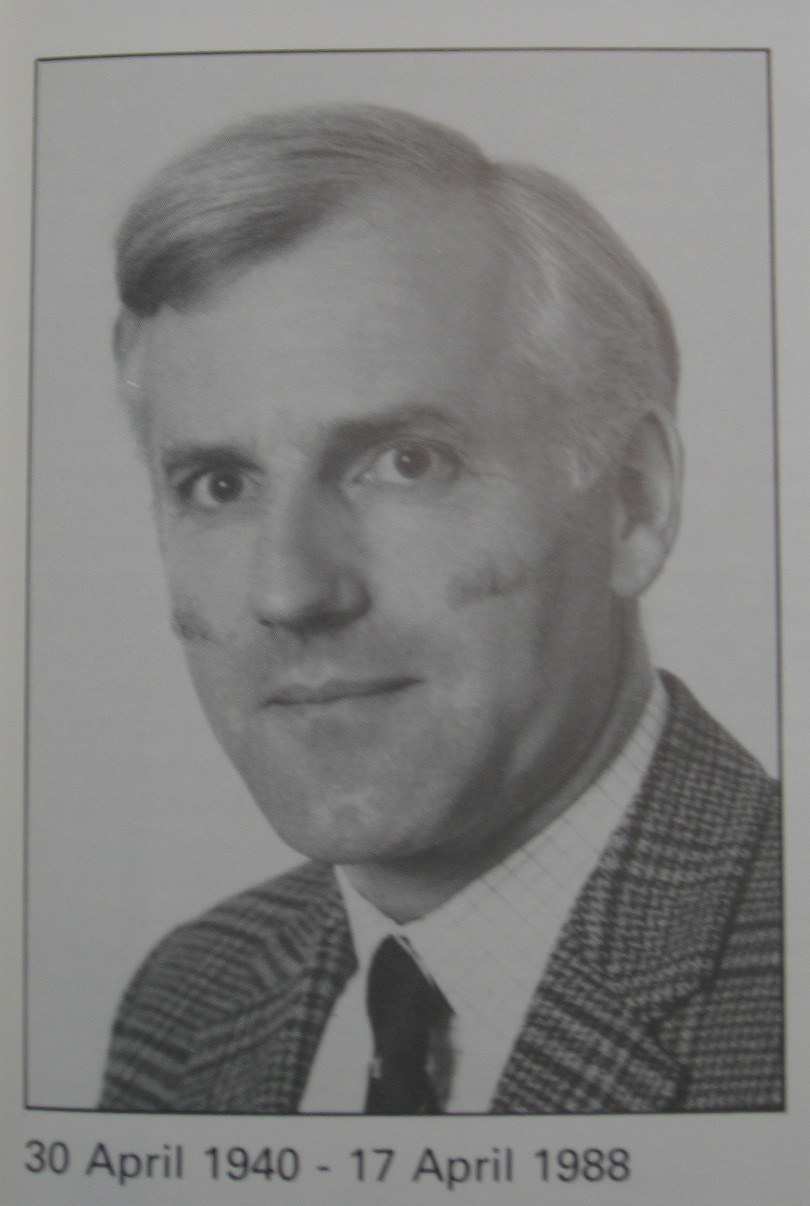
IAPGR / Edinburgh Research Station’s first Head – Roger Burton Land (1940-1988)

Geneticist, Roger Burton Land’s tenure as the first Head of the Edinburgh Research Station of IAPGR from 1986 to 1988 lasted for only a brief two years owing to his early death. He began his career in 1962 when he began his studies in animal genetics at the University of Edinburgh and continued on to do his PhD. His research project focussed on the selection of mice for natural and for induced ovulation rate and his findings were reported in his thesis and in subsequent publications. In 1966 he joined the staff of the Animal Breeding Research Organisation (ABRO) and continued to pursue his research interest in the genetics of reproduction. Over the course of his employment, he was involved in many significant contributions in improving reproduction rate in sheep; physiological and metabolic issues relating to milk yield and in the ‘development of immunization against ovarian feedback hormones in order to increase reproductive rate of sheep.’ In 1983, Land was appointed acting Director of ABRO, and according to his obituary by W. G. Hill, given a ‘remit to revamp the research programme and lead it towards more basic science.’ And so his focus shifted towards molecular biology, but his main interest was still in genetics. When the AFRC was reorganised in 1986, Land was appointed Deputy Director of The Institute of Animal Physiology and Genetics (IAPGR) and Head of the Edinburgh Research Station (ERS) and also took over much of the Poultry Research Centre (PRC) where he continued his work until his passed away.

Horse-play…

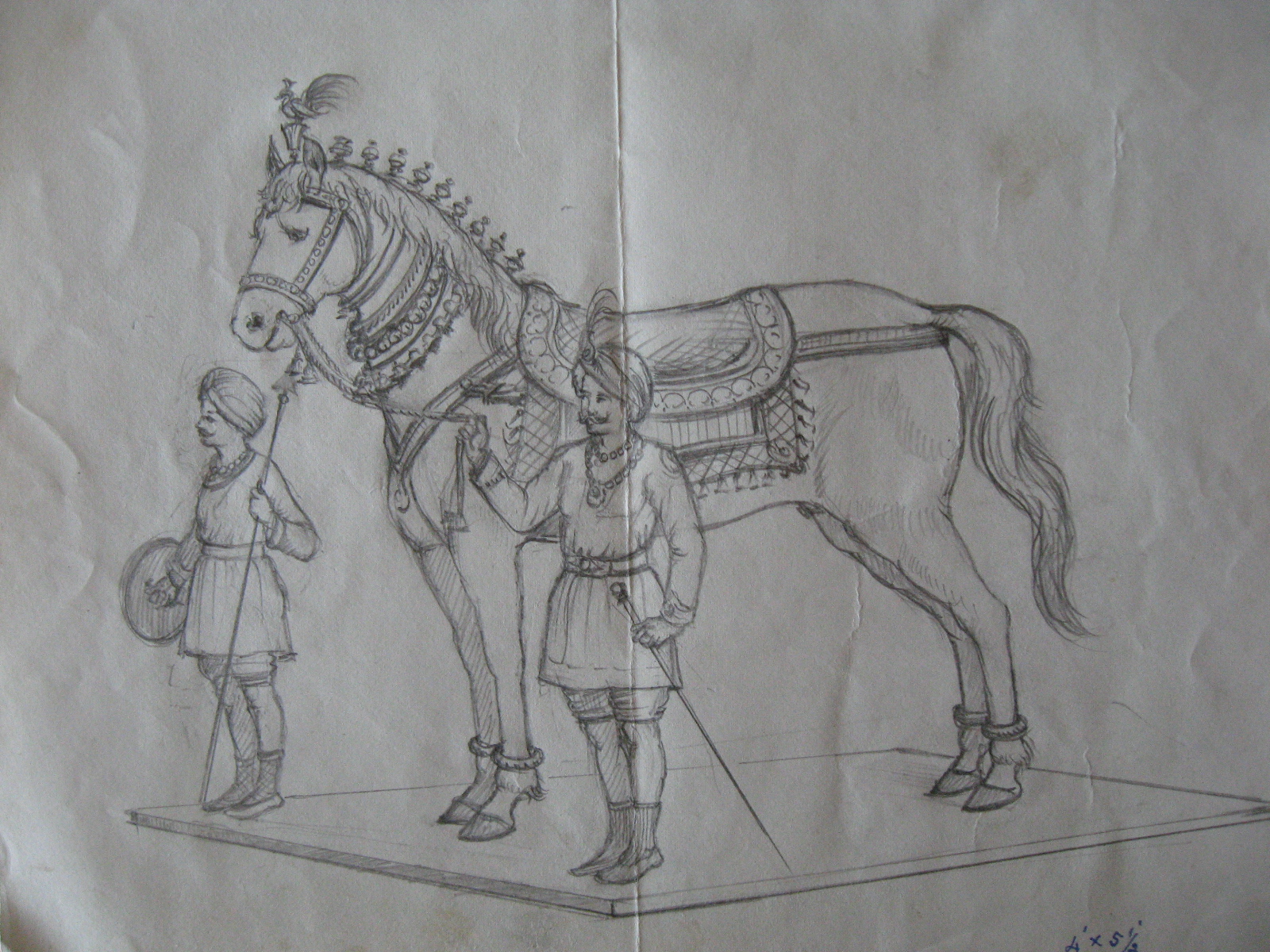
It appears that C.H Waddington’s interest in animals was not merely confined to biology and genetics: the other day I happened across this drawing among some correspondence of Waddington’s about his visit to various Universities and research institutions in India in October 1968 under the auspices of British Council. Waddington seemingly took a fancy to having a statuette of this horse made out of clay ‘by a village craftsman’, a process overseen by his friend Prof R.V. Seshaiya from the Centre of Advanced Study in Marine Biology, Annamalai University, Porto Novo, in South India. A letter from Seshaiya to Waddington on February 27 1969 claims that ‘the ‘horse’ is nearing completion. The only item of work is painting it. The doll-maker tells me that he will hand over the finished model in about a week’s time’ before adding, ‘of course his measure of time is different from ours.’ It would certainly appear so –  the parcel eventually arrived in September!

Waddington’s reply to Seshaiya on 26 September 1969 notes that ‘my wife and I are very pleased with [the horse]. It travelled quite safely except for one or two of the minor ornaments which we can quite easily put back with adhesive. I am very grateful for the trouble you took over this and it will be a wonderful reminder of our pleasant time at Porto Novo.’ We don’t know whether the two wonderfully dressed gentlemen ever formed part of the ornament!

The significance of the horse is not known, and neither is it clear who made this rather accomplished drawing, from which, presumably, the horse was modelled. We’ve seen from previous posts that Waddington could clearly draw, but I suspect even his skills did not extend this far. It could possibly have been his architect wife, Justin Blanco White, or perhaps someone in India. The mystery remains, but it’s certainly interesting to see what can turn up in folders of correspondence!

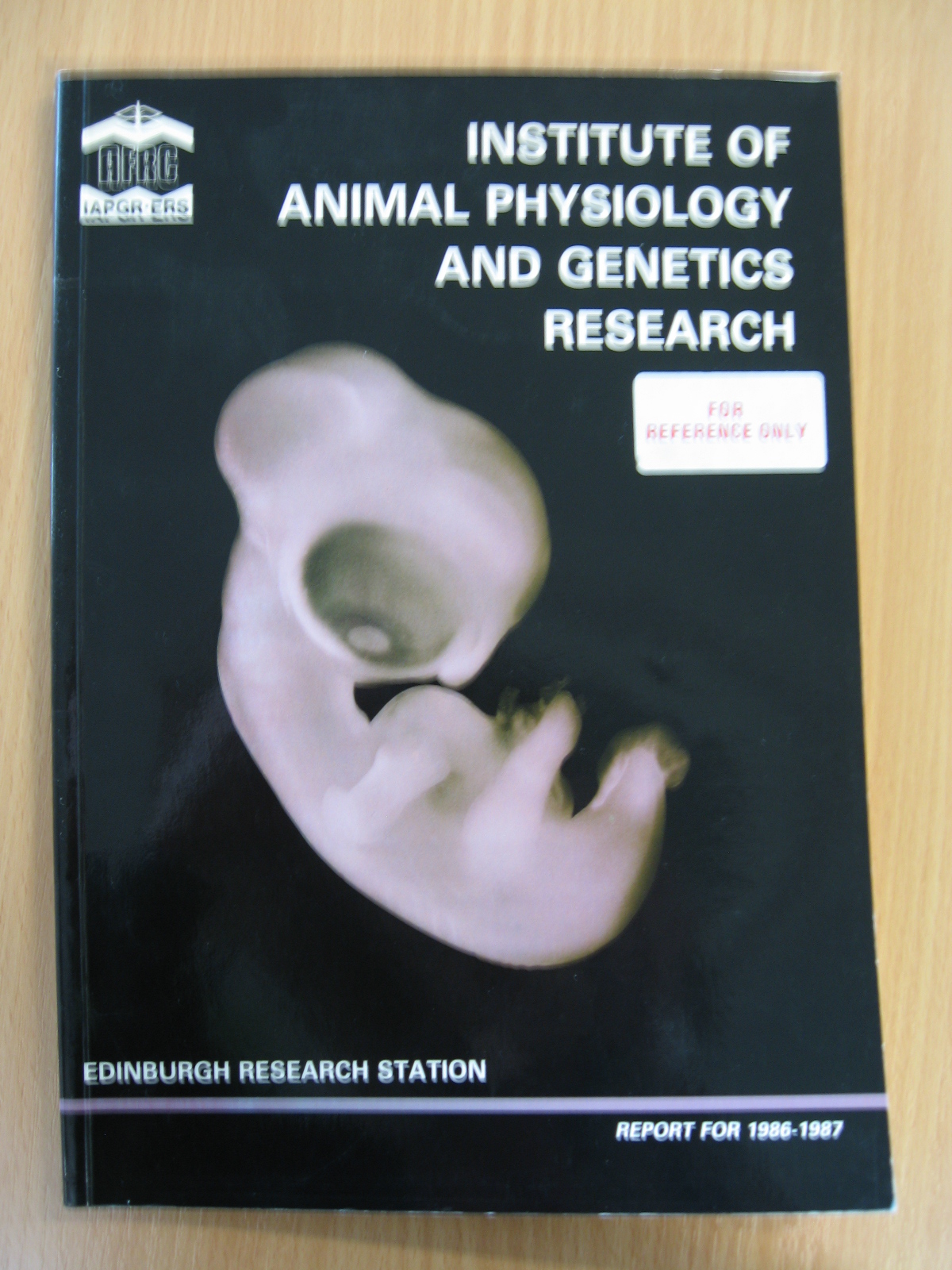
Institute of Animal Physiology and Genetics Research – Edinburgh

The Institute of Animal Physiology and Genetics Research was created in 1986 when the Animal Breeding Research Organisation (ABRO) and most of the Poultry Research Centre (PRC) were amalgamated to form the Edinburgh Research Station along with the Cambridge Research Station which was also known as the Institute of Animal Physiology at Babraham. These institutions developed from the animal breeding research station founded in 1919 by Dr F. A. E. Crew. While ABRO concentrated on long term breeding experiments and genotypes and their environment; the PRC concentrated on aspects of poultry biology. Both, however, developed research interests in molecular genetics which was the common denominator in the reasons for them joining together. According to P.E. Lake’s 1986-87 report, ‘the aims of the Edinburgh Research Station are to advance fundamental, scientific knowledge of the molecular, cellular and systemic processes that contribute to the development, fertility, behaviour and welfare of livestock. Further objectives are to seek genetic improvement of livestock by research on gene transfer and embryo manipulation within a framework of selected breeding derived from careful traits.’ He noted that their goal was to integrate the Research Station into one site at Roslin by 1989.

‘Dolly’ in Broadsheet

We are delighted to see our article about the progress of ‘Towards Dolly’ in the latest issue of the Scottish Council on Archives’ magazine Broadsheet!

 The patterns on the page are details from a drawing made by Waddington from his 1923 essay ‘Alchemy’ from his school days (see below). I especially like the way that these patterns have been made to look almost psychedelic in the article!

You can read the full edition of SCA Broadsheet here


Immunogenetics, Animals and the Genetics of Health

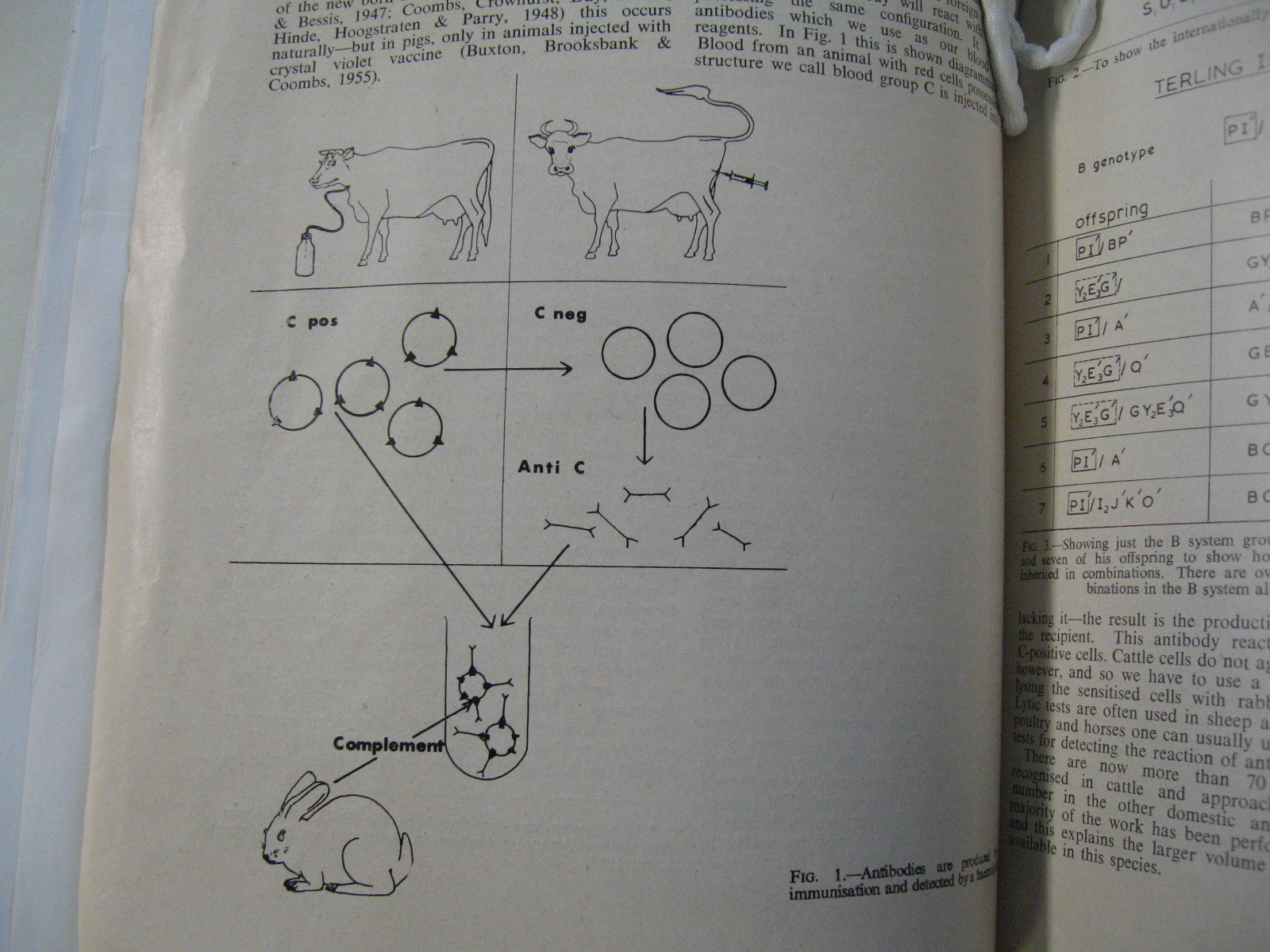
Based on the amount of papers I’ve found collected in the bound  off-print series from the Animal Breeding Research Organisation (ABRO) various aspects of animal health, diseases and genetics were just as important to research as livestock improvement and animal breeding. Many of the articles I’m cataloguing focus on immunogenetics, animal blood groups, diseases, such as scrapie, and transfer of immunoglobulins from mothers to their offspring. 

Additionally, they also researched and wrote about animal blood groups, connections between disease and heredity and immunity.  Again, there were some wonderful illustrations amongst the papers!

New patterns

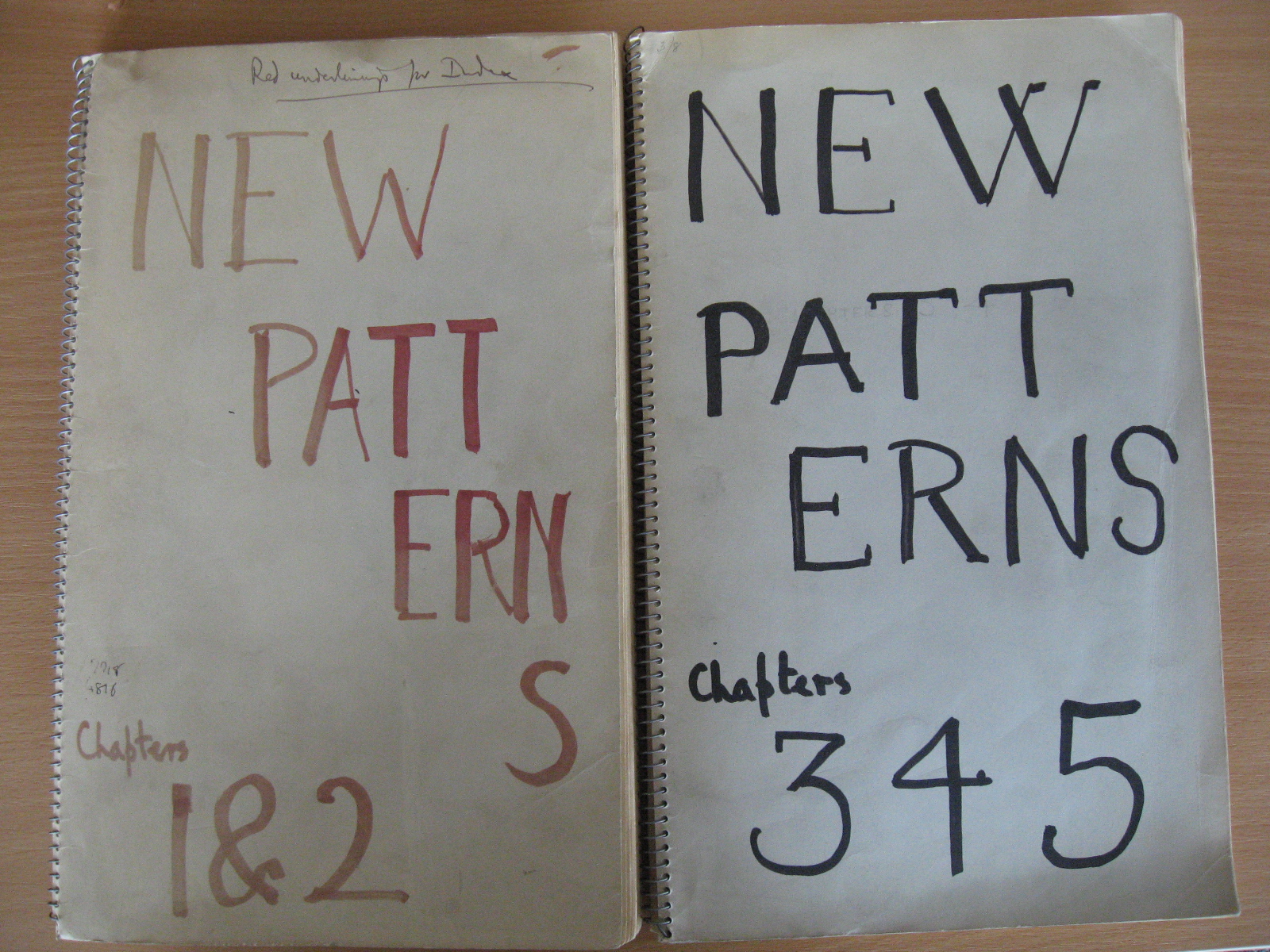
I was interested to find among Waddington’s typescripts and manuscripts these notebooks containing the printed draft proofs of Waddington’s book New Patterns in Genetics and Development. The book was based on the Jesup lectures Waddington delivered to Columbia University in 1961 and was published by Columbia Press in 1962.

In New Patterns, Waddington not only explores the emergence of patterns in biological development, but also examines the new patterns of thought that had emerged in genetics and biochemistry. As ever though, he pushes forward to working towards developing new approaches, particularly with regard to morphogenesis (the biological process which causes an organism to develop its shape, causing ‘the appearance of organised structure within a vast range of sizes from the cellular organelle to the elephant’).

In typically visual language, Waddington describes the ‘ancient conundrum of morphogenesis’ as having ‘the attraction of a real frontier, a region where one is not just trying to fill in an already existing sketch map, but where one has to try and figure out the bare bones of the geography from scratch.’

I like how ‘patterns’ even find their way onto the covers of these notebooks!