Home University of Edinburgh Library Essentials
June 17, 2026
Cataloguing the correspondence of Thomas Nelson & Sons (cont.)
Cataloguing the correspondence of Thomas Nelson & Sons (cont.)
Our intern Isabella has now finished her 10-week placement at the CRC, during which she was box-listing part of the records of Thomas Nelson & Sons Ltd. Her thoroughness and fine attention to details made her perfect for the job. Luckily for us, Isabella enjoyed her placement so much that she decided to keep working on the collection as a volunteer! We are delighted that she is going to keep doing excellent work on this great collection. Here are a few more of her great finds.

Isabella working in the CRC reading room.
1. Jane Borthwick Letter: While every other letter in this bundle is written in black or dark blue ink, with edits often made with red ink, Jane Borthwick writes a letter here in an aesthetically appealing purple ink. The letter concerns a manuscript which she was enlisted to read, review, and recommend for either publication or rejection. Unfortunately for the author, Ms. Borthwick found the piece too dull to be printed. On the back of the letter there is slight evidence of handling where several ink stained fingers held the letter. While the marks are slight and it cannot be determined if these are the product of Jane herself, an employee of Nelson & Sons or of a later cataloguer or archivist, it stands as evidence of this letters connection to the people that have interacted with it, carrying its handling history on its surface. 1. Jane Borthwick’s letter
2. R. Anderson Letter: A letter from R. Anderson displaying discoloration of paper, dust and dirt – Some of the correspondence we are working to catalogue requires light conservation methods before we can return them to storage. In this letter from an R. Anderson, one side shows how protected and covered paper ages as that side has been stored firmly pressed against another letter, while the other side reveals how long-term exposure to the elements of stacks can fade, damaged and color the paper. In order to attempt to combat this issue a small dry sponge is used to wipe away what dirt or dust can be wiped away, however, due to the age of the ink on the paper we must be careful not to take any of the ink off the page itself. This then becomes a conundrum of whether to maintain the precision of the ink or to treat the residue before it becomes a larger and more expensive issue.

2. R. Anderson’s letter
3. French Postcard: Here we have a postcard from Vienna written entirely in French. Unfortunately, our cataloguer does not read French and so help was requested from a fellow student from the Book History and Material Culture course, Eleanor Cambridge, as well as the cataloguer’s supervisor and resident Archivist with the Center for Research and Collections, Aline Brodin. The emersion of this postcard from the collection allowed for cooperation between postgraduates as well as Archivists to engage in a multi-national approach to decipher another element of the archive. This opportunity not only demonstrates the way archivists and cataloguers often work in tandem in order to contextualize information and collections, but it further speaks to the multi-national nature and reputation of Nelson & Sons.
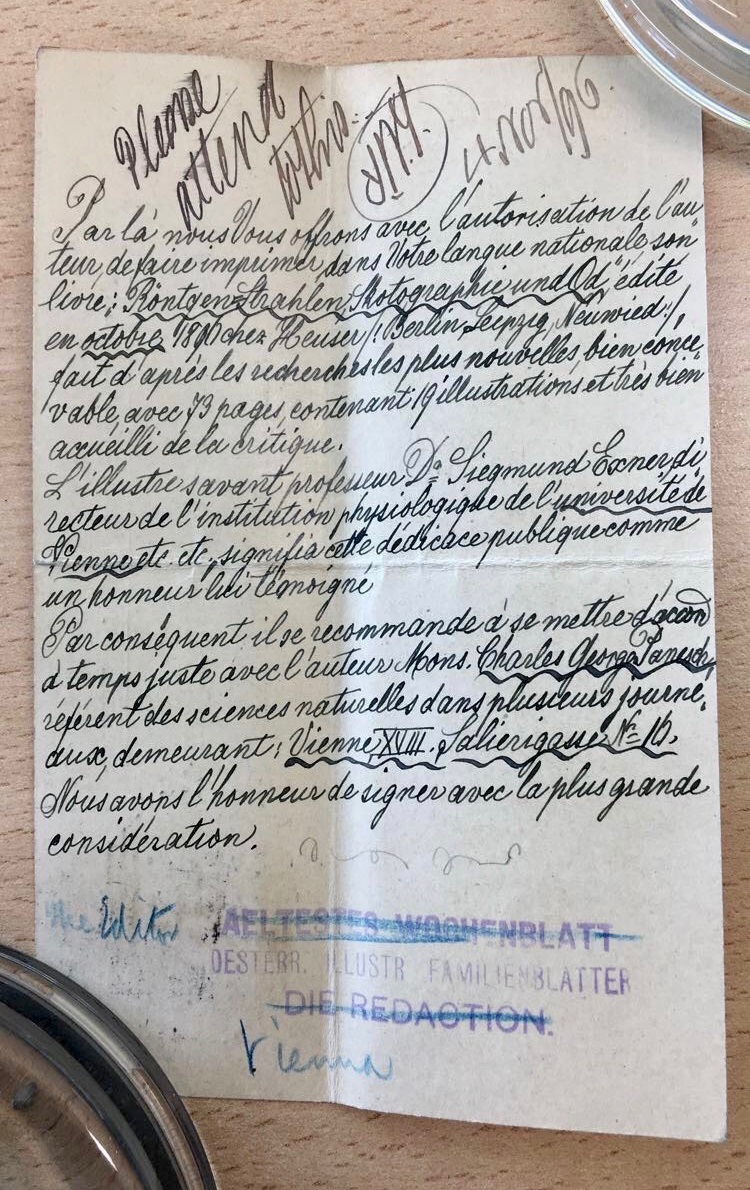
3. French postcard
4. J. A. Bains Letter: Pictured here is part of a collection of nine letters sent from one J. A. Bains on highly personalized stationery decorated with fastidiously carved print images on one side. Despite the intricacy of the prints on the stationary, their appearance is not entirely a surprise as if you look to the right-hand side of the image you will see that Mr. Bains was a bookseller as well as a Stationer. Mr. Bains interactions with Nelson & Sons was such that he had been writing a biography on the Norwegian explorer Fridtjof Nansen and was very determined to see his piece published with their company alone. This sentiment was made plain to Mr. Brown, a manager at the company, in the final line of Mr. Bains letter from May 12th, 1896 writing, ‘I am determined that Messrs. T. Nelson & Sons shall publish it – even if I have to wait for months or years! I have spent too much labor (even if amateur) too much money and wandered too many miles to gather information to let it fall through.’ Bains was a jovial correspondent, often using exclamation points in his letters, reasserting that he would have no one else publish his work but Nelson and Sons, and on two occasions joking that if Nansen, who was on expedition at the time of these letters, did not return then his book would be the first biography published and probably a roaring success. Unfortunately, Mr. Brown did not return his enthusiasm as he rejected the opportunity to publish the work, multiple times, and so Mr. Bains took his biography to Walter Scott Publishing Co. Ltd. and the book was published in 1897.

4. J. A. Bains’s letter
5. Sophia Caulfield and Audrey Curtis Letters: Many of the manuscripts sent to Nelson & Sons were full of differing content and came from a variety of people throughout a number of countries. Audrey Curtis and Sophia Caulfield were two of those authors. Ms. Curtis submitted her manuscript of ‘a tale of the Huguenot persecution in France about the date 1685’ while Ms. Caulfield wrote about ‘little-known curiosities in the department of Natural History’ of London. Each woman worked on historical and amateur scientific novels. Curtis herself had previously been published by the National Society for her short story entitled “The Artist of Crooked Alley” as well as for her story for children titled “Little Miss Curlylocks”. Each woman was a fairly accomplished author by the time they came across Nelson & Sons for their publications with Ms. Caulfield identifying herself as one of the original writers for a popular magazine aimed at young women interested in science and politics. As well Ms. Caulfield included a written resume with her manuscript to Nelson & Sons of all that she had worked on which included compiling a dictionary of needlework, textiles, and lace, as well as editing magazine articles, and her latest book which had been shown at the Chicago “World’s Fair” as well as the ‘Great Paris Exposition’.

5. Audrey Curtis’s Letter
6. Rev. F. Docker Letter: The Reverend F. Docker, pictured here, was a religious short story author who sent several stories for potential publication to Nelson & Sons in 1896. Along with his letter and his manuscripts he included a newspaper clipping from The Christian Age newspaper bearing one of the stories which he had written as well as his picture. If you peer at the heading of the paper, you will see that it is identified as No. 1,268. -Vol. XLVIII.-26. and was published in ‘London, Wednesday, December 25, 1895’ meaning that the story Reverend Docker submitted to the publishers was in fact a Christmas installment.

6. Rev. F. Docker’s Letter
7. Miss M. Douglas Letter: Here we see another example of Nelson & Sons enlisting the help of an expert for practical scientific publications. M. Douglas was a woman who worked with Nelson & Sons when producing a new book about Arctic Exploration. She was the designated reader and critic for the configuration and aesthetic design of the maps illustrated in the book. Unfortunately, this letter does not give the reader any more background as to her work but rather it does prove she showed a high proficiency for spatial relations, math, and geography in order to conceptualize and stylize maps for the Arctic which in 1896 was still a relatively unknown climate. In her letter here she shows a high understanding of Polar currents as well as a strong familiarity with the literary histories of Arctic Exploration.
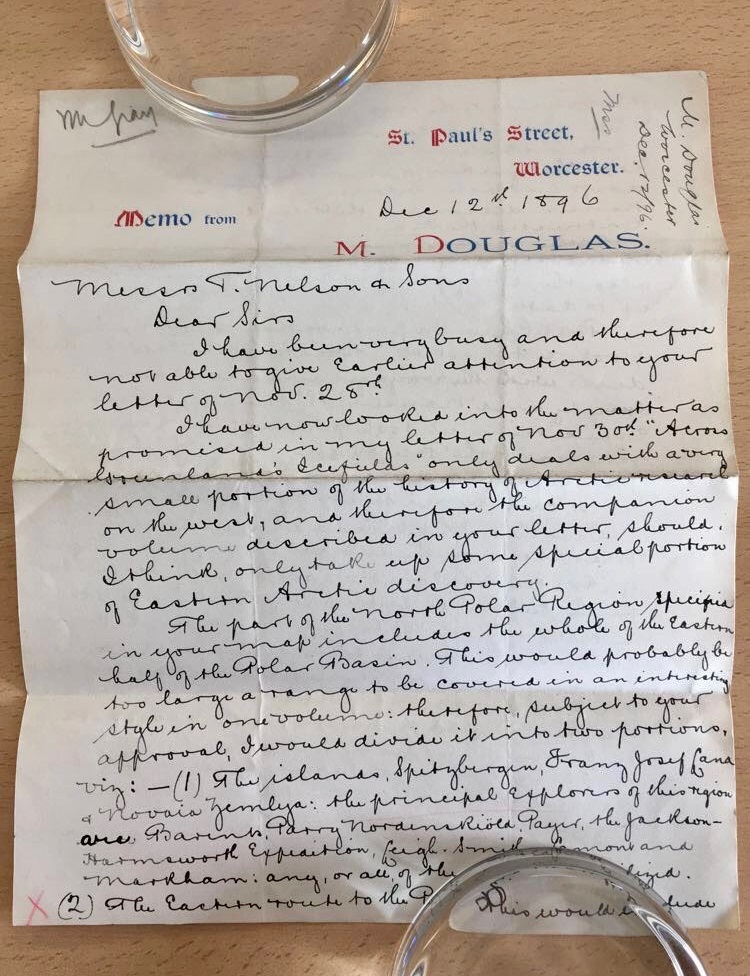
7. Miss M. Douglas’s letter
8. Ernest Ingersoll Book Submission: In 1896 Ernest Ingersoll submitted to Nelson & Sons his story entitled “A Railway Stowaway” which had previously been published in the United States by the well-known publishers of Harper & Brothers. In his letter Mr. Ingersoll offers Nelson & Sons ‘all rights outside the United States’ to the publication. While many authors include a full manuscript along with their letters, which they either request to be returned if they are rejected for publication, a gamble if the author has not written out or commissioned printed copies, Mr. Ingersoll included a small pocket copy of his story which was printed in the style of the Harper Collins 1882 edition. This particular copy was hand bound as you can see from the string threaded through the center pages and came complete with illustrations. The size of the copy enabled it to stay with the letter in this case, instead of the manuscript being returned or archived in a different location within the collection. This inclusion allowed us to not only understand the background of this submitted manuscript but also to collect the priority piece of knowledge that Nelson & Sons were offered sole rights to this piece for every publication outside of the United States. Unfortunately, Nelson & Sons decided to reject the offer. However, Mr. Ingersoll did not give up entirely and instead sent them a copy of one of his other stories entitled “The Ice Queen” which had been well received in the United States and which Harper & Brothers were willing to negotiate on copyright purchasing and illustrations expenses. While the last photo in the below series is not included in any copy of Ingersoll’s printed work, it is a wonderfully interesting example of marginalia which mimics medieval style. Referred to as a manicula, the hand design which was used to draw attention to specific passages, is used by Ingersoll here to identify the final paragraph of his letter.

8a. Ernest Ingersoll

8b. Ernest Ingersoll

8c. Ernest Ingersoll
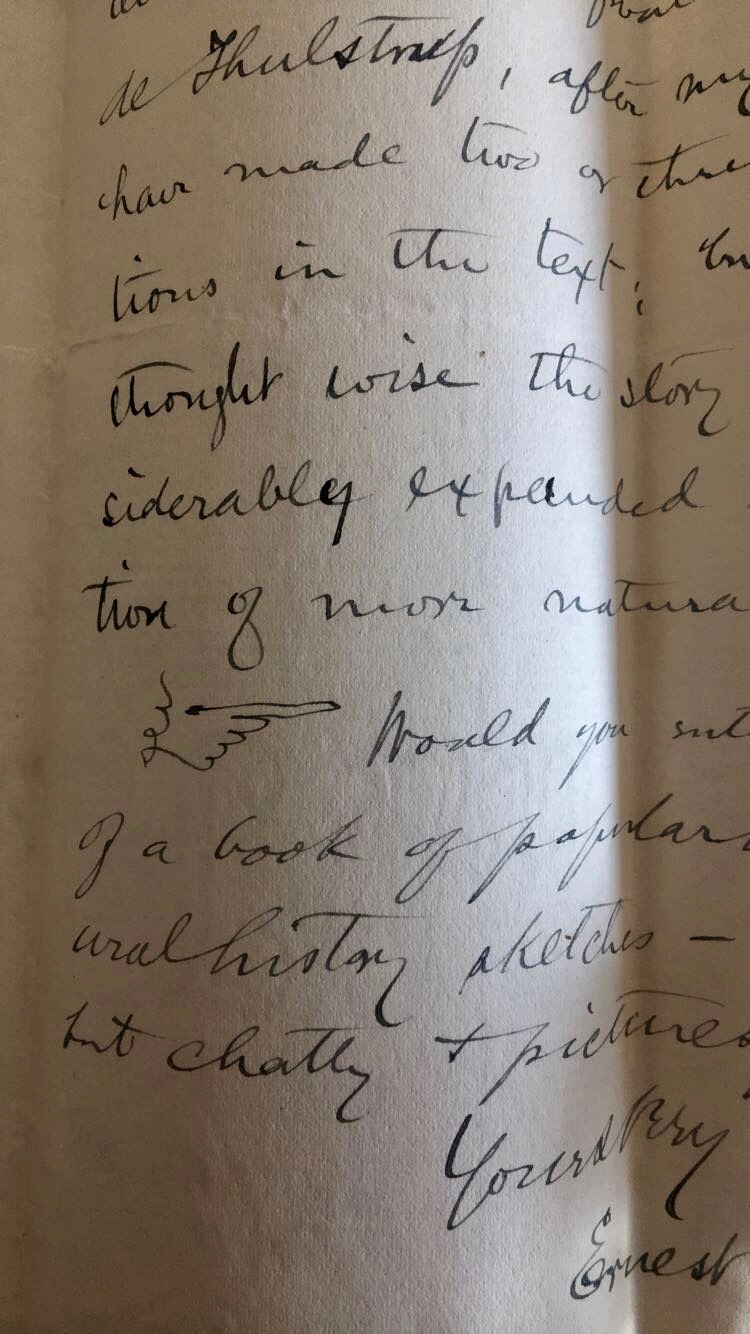
8d. Ernest Ingersoll – manicula
FAIR dues to the Research Data Alliance
It has been a while since we’ve blogged about the Research Data Alliance (RDA), and as an organisation it has come into its own since its beginnings in 2013. One can count on discovering the international state of the art in a range of data-related topics covered by its interest groups and working groups which meet at its plenary events, held every six months. That is why I attended the 13th RDA Plenary held in Philadelphia earlier this month and I was not disappointed.
I arrived Monday morning in time for the second day of a pre-conference sponsored by CODATA on FAIR and Responsible Research Data Management at Drexel University. FAIR is a popular concept amongst research funders for illustrating data management done right: by the time you complete your research project (or shortly after) your data should be Findable, Accessible, Interoperable and Reusable.
Fair enough, but we data repository providers also want to know how to build the ecosystems that will make it super-easy for researchers to make their data FAIR, so we need to talk to each other to compare notes and decide exactly what each letter means in practice.

Borrowed from OpenAire
Amongst the highlights were some tools and resources for researchers or data providers mentioned by various speakers.
- The Australian Research Data Commons (ARDC) has created a FAIR self-assessment tool.
- For those who like stories, the Danish National Archives have created a FAIRytale to help understand the FAIR principles.
- ARDC with Library Carpentry conducted a sprint that led to a disciplinary smorgasbord called Top Ten Data and Software Things.
- DataCite offers a Repository Finder tool through its union with re3data.org to find the most appropriate repository in which to deposit your data.
- Resources for “implementation networks” from the EU-funded project GO FAIR, including training materials under the rubric of GO TRAIN.
- The Geo-science focused Enabling FAIR Data Project is signing up publishers and repositories to commitment statements, and has a user-friendly FAQ explaining why researchers should care and what they can do.
- A brand new EU-funded project, FAIRsFAIR (Fostering FAIR Data Practice in Europe) is taking things to the next level, building new networks to certifying learners and trainers, researchers and repositories in FAIRdom.
That last project’s ambitions are described in this blog post by Joy Davidson at DCC. Another good blog post I found about the FAIR pre-conference event is by Rebecca Springer at Ithaka S+R. If I get a chance I’ll add another brief post for the main conference.
Robin Rice
Data Librarian & Head of Research Data Support
Library & University Collections
New to the Library: African American Studies from Oxford Bibliographies
Thanks to a request from staff in History I’m happy to let you know that the Library now has access to Oxford Bibliographies: African American Studies.

You can access Oxford Bibliographies: African American Studies via DiscoverEd, the History subject guide or via the entry to Oxford Bibliographies on the Databases A-Z list.
Oxford Bibliographies: African American Studies provides bibliographic articles that identify, organise, cite, and annotate scholarship on key areas of African American Studies—culture, politics, law, history, society, religion, and economics. Regularly updated and expanded with new content, this module is one of the first places you should turn to if you are interested in authoritative references to African American Studies. Read More
Contributors to the Old Statistical Account: Reverend John Clunie (1757-1819)
Below is a guest blog post written by John Moore, an independent researcher, focusing on the writer of the parish report of Borthwick, County of Edinburgh (OSA, Vol. XIII, 1794, p. 622-639), the Reverend John Clunie.
______________________
This month sees the bi-centenary of the death of the Reverend John Clunie (1757-1819), minister of Borthwick from 1791 until his death and author of the parish entry in the Old Statistical Account. Clunie was licensed to preach by the Presbytery of Edinburgh in December 1784 and was a schoolteacher in Markinch for a while. His first charge was at Ewes parish before he moved to Midlothian. He had a reputation as a fine singer and led his congregation as precentor in his church at a time before organ music accompanied services. He wrote a version of the Scots song ‘I lo’e na a laddie but ane’ and his reputation as a song-writer led to an acquaintance with Robert Burns, who described him as ‘a worthy little fellow of a clergyman’. During his time of office, Clunie served as Chaplain to the Eastern Regiment of the Midlothian Volunteer Infantry. He married Mary Oliphant, daughter of the minister of Bower in 1790 and his son, James, subsequently became commandant of Moreton Bay Penal Settlement in Australia between 1830 and 1835.
Published in 1794, his extensive description of Borthwick states that ‘the air is pure; the inhabitants in general are healthy, and subject to no particular local distempers.’ (OSA, Vol. XIII, 1794, p. 623) He notes that the six leading proprietors, who would have been the parish heritors, owned nearly half of the property. In discussing agricultural improvement, Clunie mentions James Small of Ford, the best plough-maker in Scotland who produced up to 500 ploughs in a year and introduced a superior cast-iron version of this important farming tool. Like many other accounts, the author mentions ale-houses ‘which are by no means favourable either to the health or morals of the inhabitants.’ (OSA, Vol. XIII, 1794, p. 627) Having been a teacher, Clunie also provides much detail about the parish education and the ‘sort of genteel starving’ faced by the local schoolmaster. (OSA, Vol. XIII, 1794, p. 628) The Account estimated the parish population at 858.

Borthwick Church
Borthwick Church stands in a dominating site close to Borthwick Castle, which Clunie describes in his account. The east part of the building is substantially medieval with a 12th century apse and the 15th century Arniston Aisle. Medieval fabric survives inside, notably the magnificent Borthwick tomb and pre-Reformation piscina. Clunie’s account relates that the old church suffered a serious fire in May 1775 and was rebuilt three years later. The church continues to serve Middleton, Borthwick and the surrounding area.
________________________
We would like to thank John for this guest post. Look out for the next installment in May!
New! African Studies – Oxford Bibliographies
I’m pleased to let you know that following a request from staff members in the Centre of African Studies (CAS) the Library now has access to Oxford Bibliographies: African Studies collection.

You can access Oxford Bibliographies: African Studies via DiscoverEd, the African Studies LibGuide or via the entry to Oxford Bibliographies on the Databases A-Z list.
Since the literature on African Studies is diverse, fast moving, controversial, and scattered among unfamiliar sources, Oxford Bibliographies have asked leading scholars to identify the most significant themes and areas of study in their fields, recommend the best sources for exploring them, and discuss these works conceptual and empirical significance to provide a series of guided studies through the diverse approaches to a wide array of complex subjects. Read More
On trial: Prosecuting the Holocaust: British investigations into Nazi war crimes
I’m happy to let you know that the Library currently has trial access to the brand new digital primary source collection, Prosecuting the Holocaust: British investigations into Nazi war crimes, 1944-1949, from British Online Archives. Drawn from the UK National Archives, this collection contains a wealth of information regarding the British government’s efforts to investigate and prosecute Nazi crimes.

You can access Prosecuting the Holocaust via the E-resources trials page.
Access is available both on and off-campus.
Trial access ends 30th April 2019. Read More
Board Games at Break
 Playful Engagement by Madeleine Leisk CC BY-NC
The UCF is always a fun place to work, but this past month, we have had the opportunity to add even more fun, excitement and teamwork to the UCF with the help of the Playful Engagement box. The box, a treasure trove of games, colouring books and creative materials, was created as part of the ISG commitment to Playful Engagement and the Innovation Fund project. We had the honour of being the first site location to receive the travelling box, while another box is located at Argyle House. These activities have been carefully curated so that they can be used during a short break, as part of a team building exercise, or as a way to relax individually. Some of our favourite objects in the box were: Hanabi, Perudo, One Night Werewolf, and an animal colouring book.
We dove right in with a game of One Night Werewolf, a quick game whereby players are randomly assigned characters and must discover which player is the werewolf. We were also able to practice our poker-faces with the dice game, Perudo, and made some goofy cartoons for our lunch room.
This month, we have also welcomed two new Library Assistants to the UCF and a game of Hanabi was a great introduction to the team. The game required teamwork to build the best fireworks display from a set of cards. It was simple enough to complete a game during our tea break but it was also challenging as it required players to rely on each other to provide clues to reach the communal goal of building a vibrant fireworks display.
These activities have been a great way to continue our development as a team and to add some more fun to our work. The individual activities, like the Animal Kingdom colouring book and the art supplies, have also been a good way to relax individually during our lunch breaks.
We will be sad to see the Playful Engagement box leave, but we hope that whatever team receives the box next enjoys it as much as we did (and does not mind the completed colouring pages). I would also recommend that you visit the Playful Engagement website, https://thinking.is.ed.ac.uk/playful-engagement/ and play some of the metadata games at https://librarylabs.ed.ac.uk/games/.
Madeleine Leisk, UCF Library Assistant
Anniversary of Andrew Lang
March 31 marks the 175th anniversary of the birth of one of Scotland’s most prolific and versatile writers, Andrew Lang (1844-1912). The author or co-author of 249 volumes, Lang worked in fields as varied as anthropology, folklore, classical scholarship, Scottish history, poetry, drama, and children’s writing. As a perennially in-demand journalist, he also penned articles and reviews on an almost daily basis.
At the Centre for Research Collections, we hold a suitably diverse collection of 35 letters (Coll-732) from Andrew Lang to a number of literary and professional colleagues. The publications mentioned in these letters convey the full breadth of Lang’s interests: controversially pro-Jacobite studies of Mary Queen of Scots and Charles Edward Stuart, translations from Homer, an epic poem on Helen of Troy, a history of Oxford University, a study of three French Romantic poets, and anthologies of ballads and folktales.
Although many of the letters are brief and business-like, they provide a vivid glimpse into the daily labour of a Late Victorian professional writer. There are letters asking magazine editors what they pay contributors; thanking his literary agent Hughes Massie for a cheque; requesting transcripts of historical manuscripts held by the British Museum; offering advice to young authors; submitting work on behalf of protégés; accepting or declining invitations to address clubs and societies; and turning down commissions when over-committed or short of inspiration.
Read More
Open Access Scotland Group meeting
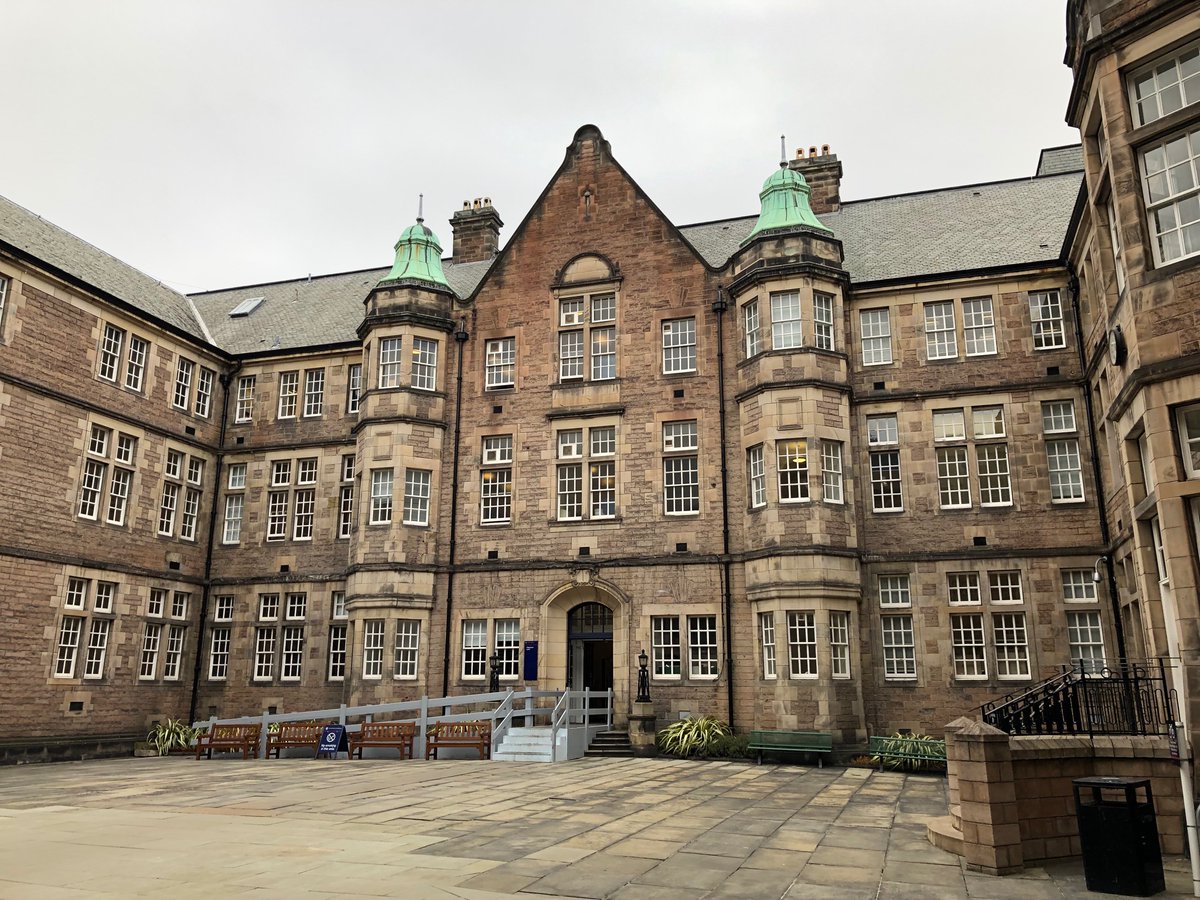
Photo by @hblanchett : https://twitter.com/hblanchett/status/1110843583320473600
On 27th March the Scholarly Communications Team at the University of Edinburgh were delighted to host the 6th regular meeting of the Open Access Scotland Group at the impressive Paterson’s Land building (pictured above).
The Group aims to provide a voice for open access in Scotland, allow the sharing of best practice, facilitate opportunities for networking between stakeholders, and lobby on behalf of Scottish organisations. It is an open group and comprises members from Scottish HE institutions and other allied organisations, like academic publishers, software vendors, local and national government agencies and research funders. The group also has honorary members from Iceland and Northern Ireland.
The event on 27th March was attended by 40 people representing over 20 organisations.

Photo by @hblanchett
The first speaker was Pauline Ward who gave a well received talk on Open Science Approaches – including the fantastic Research Data Service at the University of Edinburgh.
During the main session we had a facilitated discussion around issues such as the use of research notebooks, how to do open access for Practise-led Research, and updates on Plan S, UK-SCL and Jisc Support.
The draft notes from the event are available online here:
https://docs.google.com/document/d/19OZEX6QajIl-LNgUrGsY-Fdk7LSGUUhvfp0GM2Jubg4
If you are interested in Open Access and are based in Scotland then I would heartily recommend joining up to the Open Access Scotland Group. The next meeting is pencilled in for September and will probably be hosted by the University of the Highlands and Islands in Inverness. Hope to see you there!
What’s New in DiscoverEd – March 2019
DiscoverEd has some useful new features. Read on for full details…
1. Lockable Filters
It is now possible to lock a set of filters which you have applied to your search results, in order to make them active for the remainder of your DiscoverEd session. For example, you may wish to lock the Full Text Online Show Only filter and the Books Resource Type filter. This would result in subsequent searches being limited to electronic books.
To lock filters:
- Run an initial search in DiscoverEd and apply the filter(s) you wish to use.
- In the Active filters section, click on the opened padlock icon next to the filter you wish to lock – the icon will change to a closed padlock icon. Repeat this process for each of the filters you want to lock for the rest of the session.

These filters will remain locked for any subsequent searches that you carry out during the session. If you want to unlock the filters at any stage in your session, simply repeat the above process, this time changing the closed padlock icon back to the open padlock icon.
2. Personalised Search Results
It is now possible to alter the order of the results of a search, so that material that is more relevant to your preferred subject disciplines appears higher up the results list. To do this:
Run a search and then select the Personalise your results option:

You can now select up to 5 preferred disciplines from the available options. When you have finished making your selections, click on APPLY:

The order of your search results will now change, according to your preferences, and material which is more relevant will appear higher up the list of results. Your preferred disciplines are now shown to the left of your search results:

Please note that only the order of articles will change when you personalise your results, with the most relevant articles appearing nearer the top of your results list. The positioning of books from the University Library will not change in the list.
Your personalised preferences will remain in place for the remainder of your session, unless you switch them off by clicking on the red Personalised option:

You can also change your preferences at any time by selecting Edit Disciplines:

If you are signed in to DiscoverEd when you set your preferences then they will be retained and will be automatically applied to your search results in your next session, unless you change them or switch off the feature.
3. Citation Trails on Results List
DiscoverEd allows you to view journal articles which have cited, or were cited in, other journal articles. This “citation trails” feature was previously only available when viewing the full details of an article, but it is now available directly from the results list.
Articles which have cited or were cited in other articles can be easily identified by the citation trails icons which appear in the brief results display:

Click on the first icon (with the two upward arrows) to retrieve articles which have cited the article you are viewing. Click on the second icon (with the single downward arrow) to find articles that are cited in the article.
4. Renew Selected Items in My Account
It was previously only possible to renew borrowed items one at a time, or else to renew all the items you had on loan. It is now possible to select a group of items from your Loans list and renew only those selected items.
Click on the numbered boxes to select the items you wish to renew, then select the RENEW SELECTED option:

Collections
 Hill and Adamson Collection: an insight into Edinburgh’s past
My name is Phoebe Kirkland, I am an MSc East Asian Studies student, and for...
Cataloguing the private papers of Archibald Hunter Campbell: A Journey Through Correspondence
My name is Pauline Vincent, I am a student in my last year of a...
Hill and Adamson Collection: an insight into Edinburgh’s past
My name is Phoebe Kirkland, I am an MSc East Asian Studies student, and for...
Cataloguing the private papers of Archibald Hunter Campbell: A Journey Through Correspondence
My name is Pauline Vincent, I am a student in my last year of a...

Projects
Cataloguing the private papers of Archibald Hunter Campbell: A Journey Through Correspondence
My name is Pauline Vincent, I am a student in my last year of a...
Archival Provenance Research Project: Lishan’s Experience
Presentation My name is Lishan Zou, I am a fourth year History and Politics student....