Home University of Edinburgh Library Essentials
April 6, 2026
DataShare awarded CoreTrustSeal trustworthy repository status
CoreTrustSeal has recognised Edinburgh DataShare as a trustworthy repository.
What does this mean for our depositors? It means you can rest assured that we look after your data very carefully, in line with stringent internationally-recognised standards. We have significant resources in place to ensure your dataset remains available to the academic community and the general public at all times. We also have digital preservation expertise and well-planned processes in place, to protect your data from long-term threats. The integrity and reusability of your data are a priority for the Research Data Service.
Book to attend our practical “Archiving your Research Data” course
The certification involves an in-depth evaluation of the resilience of the repository, looking at procedures, infrastructure, staffing, discoverability, digital preservation, metadata standards and disaster recovery. This rigorous process took the team over a year to complete, and prompted a good deal of reflection on the robustness of our repository. We compiled responses to sixteen requirements, a task which I co-ordinated. The finished application contained over ten thousand words, and included important contributions from colleagues in the Digital Library team and from the university Digital Archivist Sara Thomson.
Our CoreTrustSeal application in full
The CTS is a prestigious accreditation, held by many national organisations such as the National Library of Scotland, the UK’s Centre for Environmental Data Analysis and UniProt. Ours is the first institutional research data repository in the UK to receive the CoreTrustSeal (the Cambridge Crystallographic Data Centre has the CTS but, in contrast to DataShare, is a disciplinary repository which archives data from the international research community).
DataShare is a trustworthy repository, where you as a researcher (staff or student) at the University of Edinburgh can archive your research data free of charge. Bring us your dataset – up to 100 GB(!) – and we will look after it well, to maximise its discoverability and its potential for reuse, both in the immediate term and long beyond the lifetime of your research project.
All CTS certified repositories

The Research Data Support team has earned the right to display this CTS logo on the DataShare homepage
Pauline Ward
Research Data Support Assistant
Library & University Collections
Lulu: the most dangerous dog in Birmingham
The purpose of a headline is to draw a reader into the story written below. “The dog of death roams a city for five hours”, is a headline that surely makes a person want to read more. It conjures up images of a dog shaped manifestation of the Grim Reaper roaming the streets to claim passing souls, or an atomic age puppy causing havoc on buildings and city infrastructure.
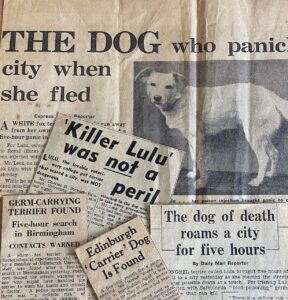
An assortment of newspaper headlines relating to Lulu the dog, 1961
The above headline was published by the Daily Mail in January 1961. Other papers at the time had similar headlines referring to Killer Lulu and the germ-carrying terrier. But what is the story behind these headlines and why is there a collection of these newspaper cuttings in the archive of the Royal (Dick) School of Veterinary Studies?
During the Christmas break 1960-1961, Mr Barry Leek, an assistant in veterinary physiology at the Royal (Dick) School of Veterinary Studies, was visiting Birmingham with his family. Whilst he was driving through town he was involved in an unfortunate incident when a lorry backed into his car. In the ensuing panic his dog Lulu jumped out the car and ran away. Mr Leek quickly informed the police of the missing dog and stressed that she must be found as quickly as possible since she had been injected with the salmonella “duck egg” virus!
A dog, which could supposedly kill a man with a single pat*, was on the loose in Birmingham city centre, and this caused a massive emergency service response. All police officers were informed of the situation, “find this dog…it’s dangerous”. Police cars with speakers patrolled the streets warning people to stay away from Lulu. If anyone had come into contact with her, they were to visit their doctor immediately! The police also visited schools to warn children not to approach the dog and pictures of Lulu were quickly sourced to be shown on the news later that day.
After five hours, Lulu was found in an alley not far from where she was last seen. Relief all round. The city was saved. Though the question remained, how much of a danger was Lulu to society?
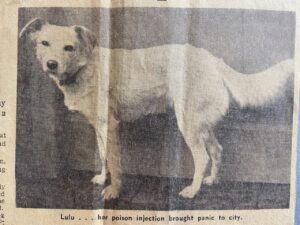
A photograph of Lulu the dog, from the Scottish Daily Express, Tuesday January 3 1961
The University of Edinburgh denied that Lulu could have been injected with salmonella. Mr Charles H. Steward, Edinburgh University’s secretary at the time stated, “We have investigated the matter, and we are convinced that the dog is not used for experimental purposes, and that there was NO danger to anyone.” The R(D)SVS principal, Professor Alexander Robertson, agreed by saying no experimentations were carried out on dogs at the veterinary college and even added, “it is not a very serious disease – in fact, I am surprised there had been so much fuss made.” Mr Leek later admitted that no such injection was given to Lulu and she was suffering a case of naturally occurring food poisoning at the time. He was more worried about Lulu’s reaction to children having not been socialised with them and feared Lulu might pass on salmonella to them.
The result of such a major reaction to a dog with a tummy bug lead to protests in Birmingham for different reasons. One being a reaction to why such a dangerous dog was allowed to go through the city without adequate preparation was allowed. The other protests were concerned with dogs being kept for experimental purposes by the University.
These newspaper cuttings can be found in one folder of many in the archive of the Royal (Dick) School of Veterinary Studies, which is currently being catalogued as part of the One Health project. There are plenty of stories emerging from the pages and they will be shared here.
*even I’m getting swept up in the sensationalism
Hello from Pamela, new Strategic Projects Archivist
Strategic Projects Archivist, Pamela McIntyre started in mid January, and will be leading on the Charles Lyell Project. Pamela introduces herself, and shares her insight on the internationally significant Sir Charles Lyell archive.
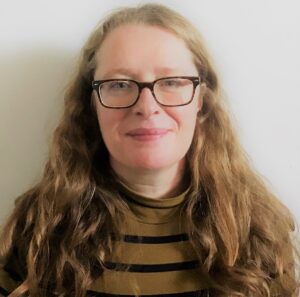
Hello! After training in a number of repositories across the UK I qualified as an Archivist from Liverpool University in 1995. My first professional post was a SHEFC-funded project to catalogue, preserve and promote the archives of Heriot-Watt University, and its then associated colleges – Edinburgh College of Art, Moray House and the Scottish College of Textiles. Since then, I’ve worked with local authority, private and business archives, and with fine art and museum collections. I have always really enjoyed the practical elements of archive work, and getting people involved, and consequently, I’ve diversified, working in the third sector with volunteers. My last post was Project Development Officer, Libraries. Museums & Galleries for South Ayrshire Council – some highlights of my time there include breaking the ‘Festival of Museums’ with a ‘Day o’ the Dames’ event (sorry, Museum Galleries Scotland!), hosting an amazing exhibition about the history of tattoos, and spending two days at Troon, Prestwick, Maidens and Girvan beaches in support of COP26. I’m thrilled to join Edinburgh University, getting back to my archival roots – and it’s safe to say, Charles Lyell and I are getting on great!
I’m so impressed with the work that’s been done so far. I want to thank the previous staff for all of their efforts.
I am new to Geology, and one of the ways I get to know collections is by searching for subjects I do know about – using family names or places I know. Lyell travelled extensively, and whilst this may well influence my forthcoming holiday plans – it was particularly reassuring to find and read about his trip to the Isle of Arran – a place I love.
From Hutton’s visit in 1787, many geologists have visited Arran. Robert Jameson published his account in 1798, followed by John Macculloch in 1819. Geologists from overseas also visited, and Lyell had studied von Dechen and Oeynhansen’s accounts of 1829. As Leonard Wilson notes in his book Charles Lyell: the Years to 1841:
With its granite mountains and numerous dikes of traprock intersecting and altering stratified sedimentary rocks, Arran was a veritable laboratory for Lyell’s study of hypogene rocks and for the confirmation of his metamorphic theory.
Charles and Mary Lyell stayed at Arran for the first two weeks of August 1836, a trip chronicled by Lyell in Notebooks 62 and 63. Notebook 62 is digitised, and available on the University of Edinburgh’s LUNA image website. From page 60, Lyell noted their plans – arriving in Glasgow, a meeting with Hooker, and stop offs at both the Hunterian and the Andersonian – then plans his trip around the island.
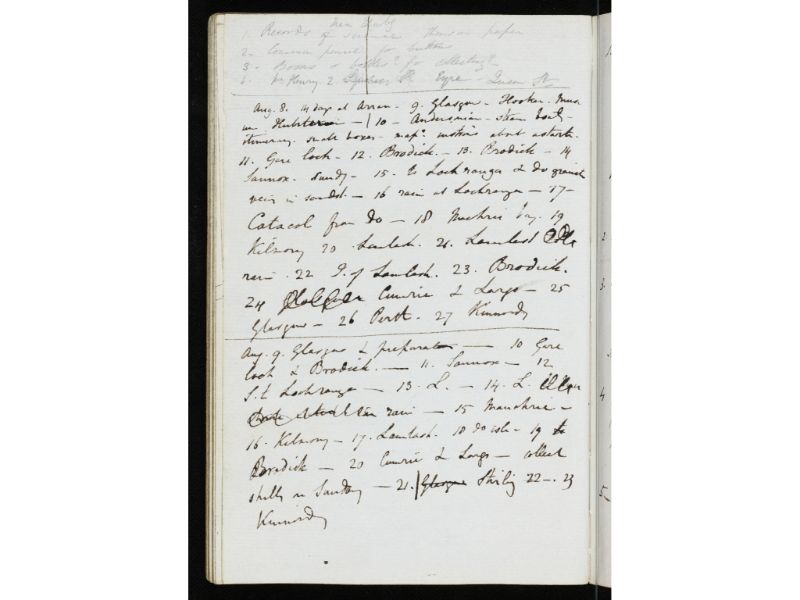
He then began an analysis of the geology of the island, posing questions, and offering amazing drawings.The pages of the notebooks are packed with details, almost at a breath-taking pace.
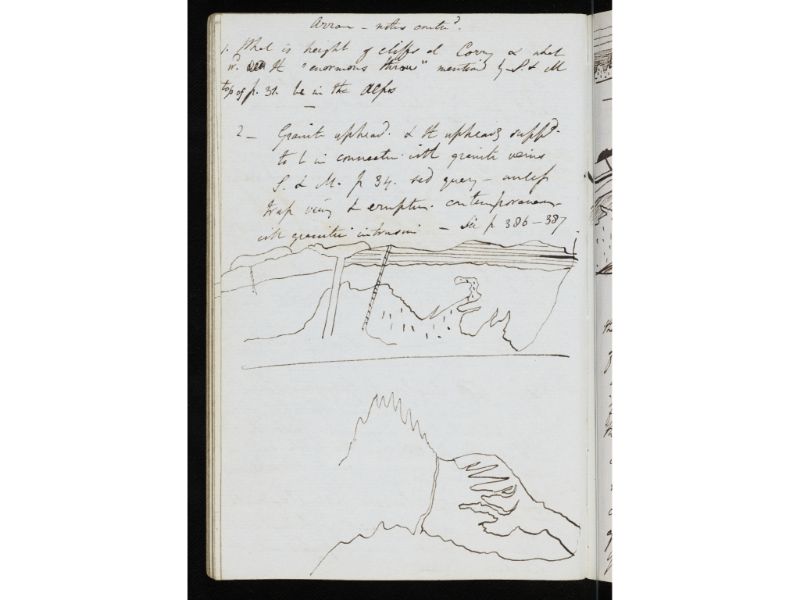
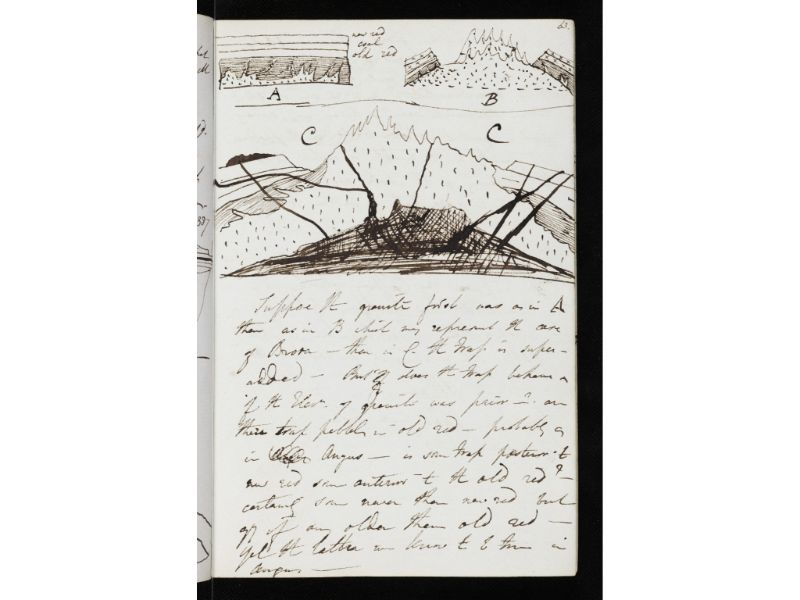
Lyell immediately made connections with what he saw in Arran with Forfarshire, Fife and Antrim, whilst taking the details of experts and mineral sellers resident in Glasgow, and making another simple line drawing showing the skyline of Goatfell.
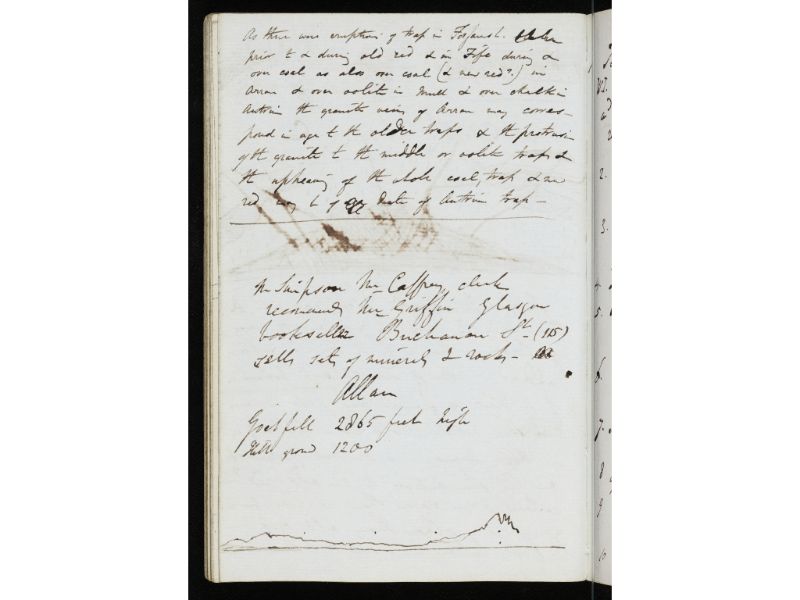
By page 66 he is making significant notes entitled ‘Elements’, culminating in what appears to be the proposed structure of chapters for his book.
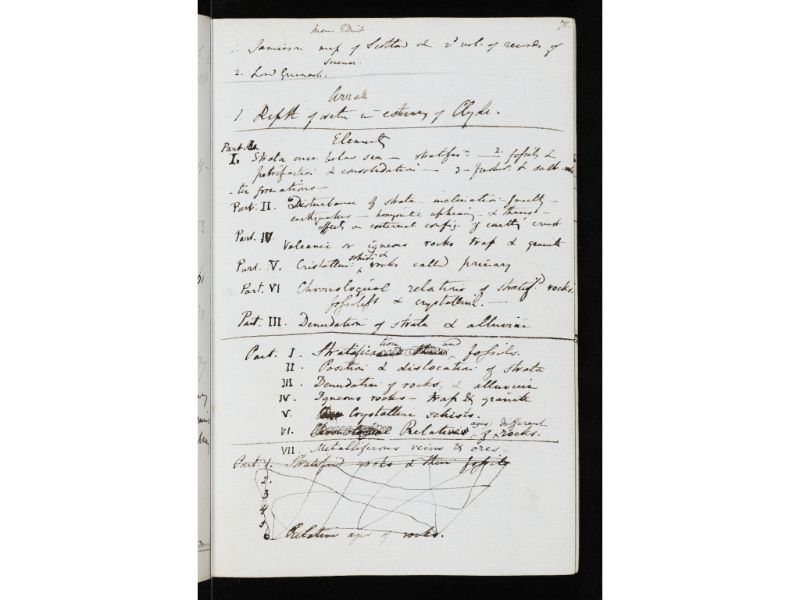
Wilson adds to the context of that trip; Mary met Lyon Playfair on the boat across – Andrew Ramsey later joined the party. Playfair accompanied Mary on the beach collecting shells, whilst Ramsey and Lyell geologised. At the end of their trip to Arran, the Lyells returned to Kinnordy until the 28th September. Wilson notes:
It was a long rest and summer vacation – a complete break from London, foreign travel and scientific meetings. During the preceding four years Lyell had worked through three editions of the Principles, three tours on the continent, one long trip through Sweden, and all the duties and demands of the foreign secretaryship and presidency of the Geological Society. Mary had acted in part as his secretary and assistant. She wrote many of his letters, helped to catalogue shells, and protected him from visitors. She had accompanied him on his excursions on the continent often under extremely primitive conditions; she had been abandoned in hotel rooms while Charles was off geologizing; she was often lonely. The vacation was for her too a chance to revitalise. When they arrived back at 16 Hart Street Lyell wrote to his father “Everyone is quite struck with the improvement in Mary’s health & appearance’.
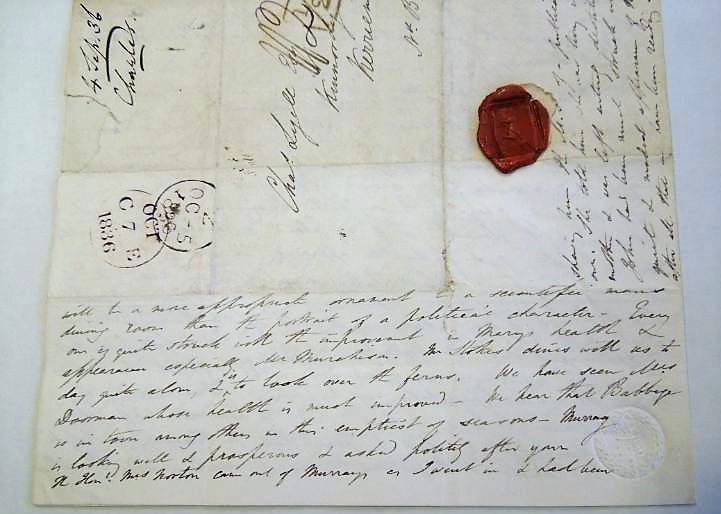
I know Mary Horner Lyell as the daughter of Leonard Horner, who by setting up the Edinburgh School of Art in 1821 laid the foundations for Heriot-Watt College. It’s a small world. I am looking forward to being reacquainted with Mary, whose intelligent support to her husband is evidenced in the Lyell Collection by copious correspondence from when they first met.
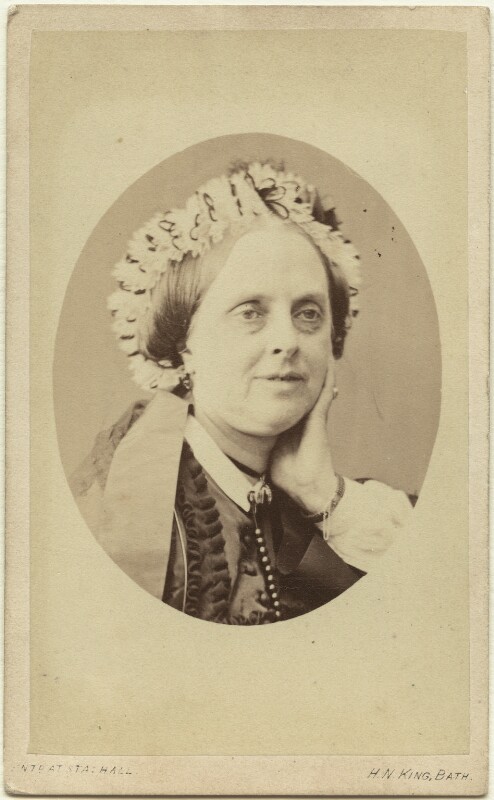
Mary Elizabeth (née Horner), Lady Lyell
by Horatio Nelson King
albumen carte-de-visite, 1860s
NPG x46569
© National Portrait Gallery, London
I have not come across any mention of Ailsa Craig! However, I have found a reference to Kilmarnock, a topic for a future blog! Familiarisation – to some extent – achieved, it’s now time to decide priorities, to create projects, to engage with people, and to continue the aims of opening up the Lyell collection to all.
Ten ways students can save money and time by using the library
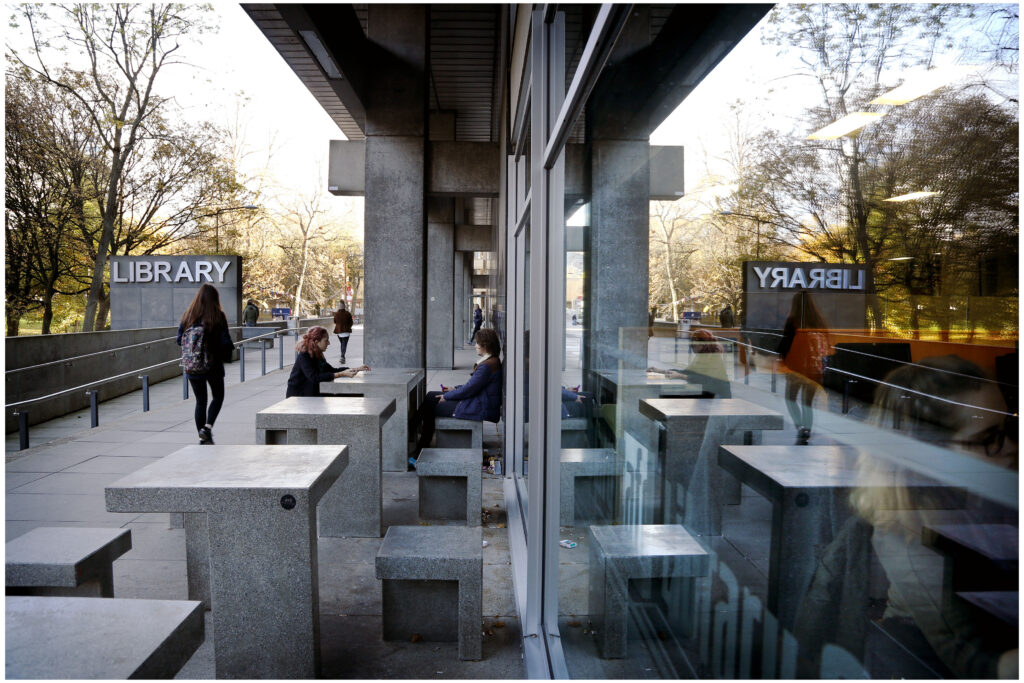
Photo: Paul Dodds
Everyone’s noticing the cost of living at the moment. And when you’re a student juggling your studies with a job, time is money. Here’s ten tips to help save money and time by using the library.
Glazy in Love: Rehousing the Emma Gillies Collection
Today we have the first instalment of a two-part series from Collections Care Assistant, Sarah Partington. In this post, she talks about rehousing a collection of ceramics made by the artist Emma Gillies. Sarah is working at the CRC on a government-funded Kickstart placement and will be sharing two of the projects that she has completed during her time with us.
This year, I have had the absolute joy of working with an exciting collection of ceramics by Emma Gillies. Previously, Emma Gillies was thought of largely in relation to her brother, the renowned painter and past Edinburgh College of Art Director, William Gillies. However, due to a discovery of a large body of her work, we are now able to gain fresh insights into her practice as a prolific artist in her own right.
A significant amount of work has already been done to catalogue and house the collection since its rediscovery in 2013. My role in this project built upon this foundation of existing collections management and care work, and was focused on two main tasks: checking and updating the existing inventory, and rehousing the ceramics in such a way that they could be accessible visually, whilst also being secure and stable.
Scoop a student award for using digital library resources in Chinese
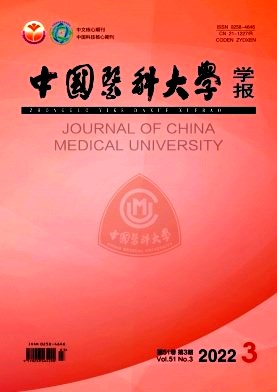 The Library subscribes to two databases from CNKI (China National Knowledge Infrastruture): China Academic Journals and China Doctoral and Masters Dissertations Full-text Database. These databases are receiving very high usage across all three Colleges of the University, and our overall usage is the highest in the UK.
CNKI is offering database users opportunities to win packs of awards for using CNKI e-resources. Please see https://cnki.mike-x.com/Fe8LP, with links to:
- 2022 CNKI Award for Excellence in eResource Discovery (until 31 July): https:// cnki.mike-x.com/vuMuh
- 2022 CNKI Retrieval Contest (until 28 June): https://cnki.mike-x.com/vTdCa
The prizes are:
- Zhuang Yuan (状元) Prize: a plaque and $800 BOOK grants( $300 for books at Amazon, $500 for ebook from CNKI)
- Bang Yan (榜眼) Prize: a plaque and $500 BOOK grants ($200 for books at Amazon, $300 for ebook from CNKI)
- Tan Hua (探花) Prize: a plaque and $300 BOOK grants ($100 for books at Amazon, $200 for ebook from CNKI)
- Jin Shi (进士) Prize: a plaque and $100 BOOK grants ($100 for ebook from CNKI) and over 100 other prizes for learning chances of learning and researching on China.
The names Zhuang Yuan, Bang Yan, Tan Hua and Jin Shi are the titles of top winners in the imperial examinations of pre-1911 China.
LILAC 2022: Power structures in library and information services

Geese and goslings on Rochdale canal
Last month, three of our Academic Support Librarians team attended the LILAC conference. LILAC is a conference for librarians and information professionals who teach information literacy skills, are interested in digital literacies and who want to improve the information seeking and evaluation skills of library users. You may have seen our previous post about LILAC 22 here.
Much of the conference covered issues of critical information literacy, including long and slightly intimidating words such as critical pedagogy and decolonisation, and it was great to have the space to explore what these mean.
Keynote speaker Marilyn Clarke, Director of Library Services at Goldsmiths, University of London, spoke on Decolonisation as a means to creating an equitable future.
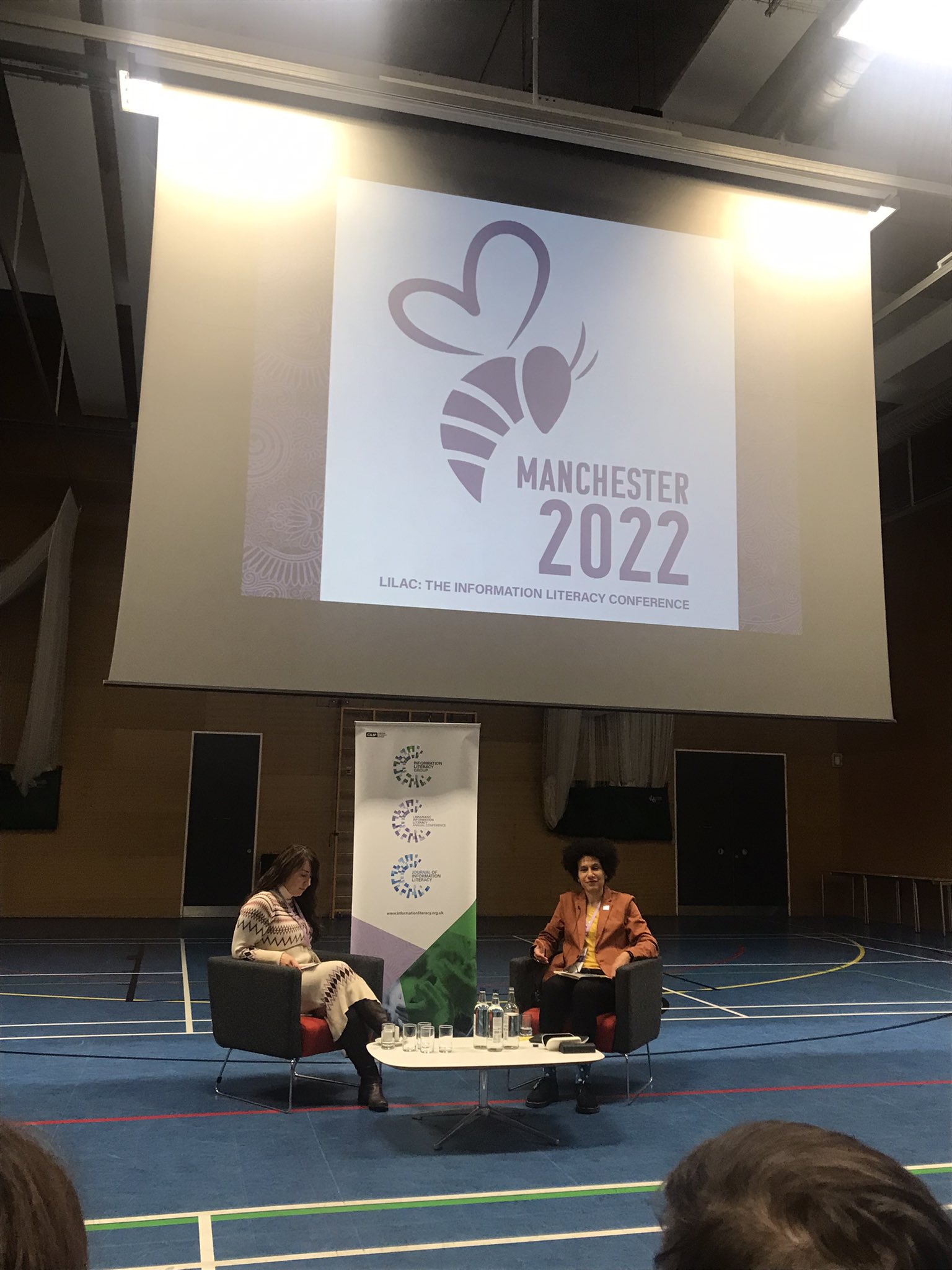
Marilyn Clarke with discussion chair Elizabeth Brookbank at LILAC 2022.
Marilyn clarified succinctly the difference between decolonising and diversifying library collections; diversifying ≠ decolonising, we need to ask the question why are these voices underrepresented?
She highlighted fantastic work at Goldsmiths to dismantle Eurocentric structures in the library and university, including funds for the ‘Liberate My Degree’ collection set aside for student book purchase suggestions to address gaps in the library collection. At the University of Edinburgh we have the Student Request a Book service which empowers students to request purchase of books and other resources to be added to the Library collections.
When cataloguing their Zines collection, librarians gather suggestions for keywords (used as a finding aid in the catalogue) from the authors themselves, to ensure the language used is representative. This is not just about addressing race, but also other systemic oppression such as LGBTQ+ and class.
In the final keynote of the conference, Emily Drabinski, Critical Pedagogy Librarian at the Graduate Center, City University of New York, explored how information literacy can reveal and challenge structures of power, and equip our students with tools to recognise and understand power dynamics.
By power, this mean the ability to change things, do things, influence things – we all have power in different ways and different situations. As librarians who help people find, use and understand information, we need to take societal values and power structures into account.
For example, who designed this database? With whom in mind? What is included in the database and what isn’t, and who makes those decisions? That feeling, where you get no results from a search, or too many, or their wrong – that’s not you, that’s the way the system is constructed with power.
Myself, I will be doing more to incorporate discussions of power into my teaching. It’s something I do when teaching literature searching for Systematic Reviews in medicine and biomedical sciences (these aim to find and synthesise all clinical evidence on a topic), where comprehensive searches and minimising bias are a core foundation of the review methodology – and as such, knowing what is included in a database, and crucially what is excluded, is crucial. But we can introduce this criticality earlier in students’ academic careers. I am not sure yet what that will look like exactly, but it’s exciting to consider.
Ruth Jenkins, Academic Support Librarian
Royal Reflections from the RESP Archive
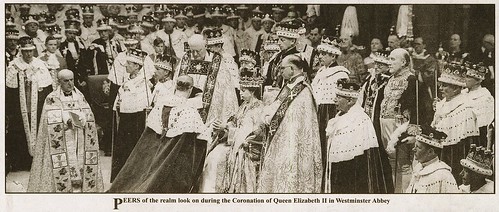
This weekend sees the culmination of celebrations to mark the Platinum Jubilee of Queen Elizabeth, and marks her 70th anniversary as monarch. This event provides us with an opportunity to explore some of the Royal Family related material that can be found in RESP archive recordings.
The RESP archive includes a number of recordings which contain memories of monarchs and royal celebrations. The earliest relates to a recording made in 1975 with 100 year old Granny Blacklock. Recorded by her grandson, Ian Blacklock, and subsequently donated to the RESP, this interview takes us back to Granny’s childhood, in the late 1870s and provides us with some of the earliest recollections we have in the archive. Although not yet available to listen to on the website, there is a published summary on the site https://edin.ac/3NavMXC and the recording and transcription will be uploaded soon. As a young woman, Granny worked for a family who were based in Manchester for a while and she was taken along to the opening of the Manchester ship canal, in 1894. Queen Victoria was there, and Granny could recall the monarch in her ‘wida’s weeds’ as she passed quite close by and waved to the crowd. When asked by Ian if she’d waved back, she recalled, ‘Aye, Ah waived back, aye’.
We then jump to the green at West Barns, East Lothian, 1935. Peter Aitchison, who was a small child in 1935, recalled a cedar being planted to celebrate the silver jubilee of Queen Mary and King George V. In a moving, informative and often funny interview, https://edin.ac/3NJKioW Peter mentions this occasion and then adds quickly that he’s always keen to tell people that the tree ‘wisnae his fault’, a reference, perhaps, to the impressive, or possibly intrusive, size of the tree today!
Other interviewees recall the coronation celebrations in different parts of Dumfries and Galloway. These include Tom Allan, who remembers the celebrations, including pipe bands and bonfires, in Lochmaben https://edin.ac/3NQlZWm and Sheila Austin, who remembers the celebrations in the more remote farming parts of the region https://edin.ac/3NJLrNg.
My favourite recollection comes to us from Davie Graham, of Sanquhar, who recalls that only a few people in the town had a television in 1953 and so many, himself included, watched the coronation through a shop window! https://edin.ac/3NdQoxV
Dissertation Support
At this time of year many students are finishing their dissertations. There are a few places where students can get some advice and support on this in relation to library resources:
- Law Librarian Resources Media Hopper Channel: We have collated several videos that cover using legal databases and also referencing.
- Law Subject Guide: This collates all the useful legal resources that the library has in one guide. With links out to useful resources it also has a section on referencing.
- List of Legal related databases: This list collates resources that students could find useful for their studies. It helps to distill ones that relate to this subject area- however if the research spans other topics then looking through the lists for those areas could also offer useful resources. If you are not sure which database will help then take some time to look at the descriptions.
- LibSmart II Legal Module: This short online module offers information and advice on finding legal resources.
- Contacting the Academic Support Librarians who support the Law School: You can contact us on Law.Librarian@ed.ac.uk .
Other help and advice:
The Institute for Academic Development have resources which offer assistance to students undertaking their dissertations.
Rock, Paper, Scissors – Conserving the Lyell Collection
Today’s blog post concludes Lyell Intern Joanne Fulton’s two-part series on the Lyell Project. Joanne discusses the variety of work she carried out over the last few weeks of her internship at the CRC.
As my internship at the CRC draws to a close, I can reflect on the many exciting opportunities I’ve had to experience all aspects of the work involved in conserving the Lyell Collection. As I shall discuss further in this second blog, my responsibilities have not solely covered the rehousing of the specimens in the geological collection which was explained in my first blog.
In my last blog, I spoke of the labels on the Lyell Geological specimens, some of which were more fragile than others. In twelve cases, these labels needed to be conserved and re-attached. To do so, I needed an adhesive. While I tested both gelatine mousse and EVA, a co-polymer adhesive commonly used in bookbinding. I chose to use gelatine mousse as I found it to have the strength required and was more historically appropriate than EVA, as the labels had previously been attached with an animal glue.
The labels offered a few different challenges and solutions. Following the discovery that white tack was attached to one of the rocks previously, upon closer look at the labels I found one of these labels had used blue tack to be secured to the specimen. Once I had carefully removed both the blue tack from the specimen and label, I made the decision not to reattach the label but to slip it into a Melinex pocket, which I then housed with the specimen in its box.
Collections
 Hill and Adamson Collection: an insight into Edinburgh’s past
My name is Phoebe Kirkland, I am an MSc East Asian Studies student, and for...
Cataloguing the private papers of Archibald Hunter Campbell: A Journey Through Correspondence
My name is Pauline Vincent, I am a student in my last year of a...
Hill and Adamson Collection: an insight into Edinburgh’s past
My name is Phoebe Kirkland, I am an MSc East Asian Studies student, and for...
Cataloguing the private papers of Archibald Hunter Campbell: A Journey Through Correspondence
My name is Pauline Vincent, I am a student in my last year of a...
Projects
Cataloguing the private papers of Archibald Hunter Campbell: A Journey Through Correspondence
My name is Pauline Vincent, I am a student in my last year of a...
Archival Provenance Research Project: Lishan’s Experience
Presentation My name is Lishan Zou, I am a fourth year History and Politics student....