Home University of Edinburgh Library Essentials
April 9, 2026
New video about the Research Data Service
The Research Data Service team is delighted to announce a new resource to help researchers and research support staff become familiar with the wide range of tools and support that we offer:
The video, produced by Senate Media, outlines how the University of Edinburgh Research Data Service can help you access, manage, store, share and preserve your research data. The permanent location for the video is: https://media.ed.ac.uk/media/1_cm6au55u .
Robin Rice
Data Librarian & Head, Research Data Support
EDINA and Data Library
How to…read your reading list and search for readings in the Library
Got your reading list but not sure what you’re being asked to read (is it a book, is it an article, is it a bird, is it a plane…)? Or are you just not sure how you’re meant to search for and find these items in the Library (in print or online)?
 It may just be the first week of semester but many of you will already be required to start reading material in preparation for your lectures, seminars or tutorials. Finding and accessing this material can be an early hurdle for many new students but don’t panic, it can be a lot easier than you think.
Learning how to read your reading list and recognise references now will make you more confident using the Library and will save you a lot of time in your studies later. And these skills will be of use to you at all stages of your University life and beyond.
What’s in a reading list?
Reading lists are just lists of essential, recommended or further readings for your course. They can include a wide range of material including books, book chapters, journal articles, documentaries, films, newspaper articles, websites, blogs, etc., but I am going to concentrate on the 3 most common:
- Books
- Book chapters
- Journal articles
Reflections on Repository Fringe 2017
The following is a guest post by Mick Eadie, Research Information Management Officer at University of Glasgow, on his impressions of Repository Fringe 2017.
 From the Arts
The first day afternoon 10×10 (lightning talk) sessions had many of the presentations on Research Data topics. We heard talks about repositories in the arts; evolving research data policy at national and pan-national level; and archival storage and integrations between research data repositories and other systems like Archivematica, EPrints and Pure.
Repositories and their use in managing research data in the arts was kicked off with Nicola Siminson from the Glasgow School of Art with her talk on What RADAR did next: developing a peer review process for research plans. Nicola explained how EPrints has been developed to maximise the value of research data content at GSA by making it more visually appealing and better able to deal with a multitude of non-text based objects and artefacts. She then outlined GSA’s recently developed Annual Research Planning (ARP) tool which is an EPrints add-on that allows the researcher to provide information on their current and planned research activities and potential impact.
GSA have built on this functionality to enable the peer-reviewing of ARPs, which means they can be shared and commented on by others. This has led to significant uptake in the use of the repository by researchers as they are keen to keep their research profile up-to-date, which has in turn raised the repository profile and increased data deposits. There are also likely to be cost-benefits to the institution by using an existing system to help to manage research information as well as outputs, as it keeps content accessible from one place and means the School doesn’t need to procure separate systems.
On Policy
We heard from Martin Donnelly from the DCC on National Open Data and Open Science Policies in Europe. Martin talked about the work done by the DCC and SPARC Europe in assessing policies from across Europe to assess the methodologies used by countries and funders to promote the concept of Open Data across the continent. They found some interesting variants across countries: some funder driven, others more national directives, plans and roadmaps. It was interesting to see how a consensus was emerging around best practice and how the EU through its Horizon 2020 Open Research Data Pilot seemed to be emerging as a driver for increased take up and action.
Storage, Preservation and Integration
No research data day would be complete without discussing archival storage and preservation. Pauline Ward from Edinburgh University gave us an update on Edinburgh DataVault: Local implementation of Jisc DataVault: the value of testing. She highlighted the initial work done at national level by Jisc and the research data Spring project, and went on to discuss the University of Edinburgh’s local version of Data Vault which integrates with their CRIS system (Pure) – allowing a once only upload of the data which links to metadata in the CRIS and creates an archival version of the data. Pauline also hinted at future integration with DropBox which will be interesting to see develop.
Alan Morrison from the University of Strathclyde continued on the systems integration and preservation theme by giving as assessment of Data Management & Preservation using PURE and Archivematica. He gave us the background to Strathclyde’s systems and workflows between Pure and Archivematica, highlighting some interesting challenges in dealing with file-formats in the STEM subjects which are often proprietary and non-standard.
On trial: State Papers Online: Eighteenth Century
Following a request from a student in HCA I’m pleased to let you know that the Library currently has trial access to State Papers Online: Eighteenth Century, 1714-1782, Part II: State Papers Foreign: Low Countries and Germany from Gale Cengage.This contains the papers written or received by the secretaries of state in the course of British diplomacy in the Low Countries and Germany through the 18th century.

You can access this resource at State Papers Online: Eighteenth Century, 1714-1782. Access is available on-campus. Off-campus access is only available if using the VPN.
Trial access ends 6th October 2017.
Read More
Welcome to New College Library 2017 #edwelcome
 A big welcome to all students starting and returning to the University of Edinburgh, at the beginning of Welcome Week 2016. We’re looking forward to meeting you. To help you get started with Library & IT services at the University, check out this ‘Useful Information for New Students’ page : www.ed.ac.uk/is/new-students. Don’t forget to collect your University card from the Main Library in George Square.
You can find out more about New College Library at http://www.ed.ac.uk/is/new-college-library and about library resources for Divinity at : http://www.ed.ac.uk/is/subject-guides-divinity.
I’ll be running library tours that are open to all UG and PG students on Friday 22 September at 1.15pm and on Friday 29 September at 1.15pm – as well as meeting many of you in the introductory Welcome Week sessions.
Christine Love-Rodgers – Academic Support Librarian
What’s New in DiscoverEd – September 2017
The latest release of DiscoverEd includes some very useful new features and functionality. Read on for full details…
1. New Filter for Special Collections Material
A new “Special Collections” filter has been added to the Show Only filters section. Selecting this filter allows you to limit the results of your search to material held at the Centre for Resource Collections (CRC) and other special collections in the Main Library, the Library Annexe (our off-campus storage facility), New College Library, Moray House Library and ECA Library.

Click on image to enlarge
2. Exclude/Include Multiple Filters
It is now possible to select multiple filters to include or exclude items from your search results:
To include a filter, hover on the filter name and click on the tick box which appears to the left.
To exclude a filter, hover over the filter name and click on the Exclude This.. icon which appears to the right.
You can exclude or include as many filters as you wish. When you are finished making your selections, click on the APPLY FILTERS button to apply your selected filters to your search results.

Click on image to enlarge
3. Sticky Filters
It is now possible to apply a set of filters to a search and make them “sticky” for the remainder of your DiscoverEd session. For example, you may wish to make the “Full Text Online” Show Only filter and the “Books” Resource Type filter sticky. This would result in subsequent searches being limited to electronic books.
To make filters sticky:
- Run an initial search in DiscoverEd and apply the filter(s) you wish.
- In the “Active filters” section, hover over the name of a filter you wish to make sticky. A small opened padlock icon will appear. Click on this icon and it will change to a closed padlock icon. Repeat this process for each of the filters you want to make sticky.
If you want to remove sticky filters at any stage in your session, simply repeat the above process, this time changing the closed padlock icon back to the open padlock icon.

Click on image to enlarge
4. Sort items in My Favourites
It is now possible to sort the items you have stored in My Favourites by Date Added, Title and Author.
To use this functionality, simply go to your My Favourites and use the Sort by dropdown menu to apply the sort order you require.

Click on image to enlarge
5. Support for RSS Feeds
DiscoverEd now allows you to harvest the results of a saved search in your chosen RSS reader application.
- Make sure you are signed in to DiscoverEd.
- Run a search and click on Save this search to My Favourites.
- Go to My Favourites and select the SAVED SEARCHES tab.
- Click on the RSS icon on the right hand side of the display.
- Follow your usual procedure for setting up an RSS feed in your browser or dedicated RSS reader application.
You can also create an RSS feed for any of the searches you have already saved in My Favourites by following steps 3-5 above.

Click on image to enlarge
Interactive Integrated Pest Management
The final post from Sophie Lawson, our conservation Employ.ed intern, in this week’s blog…
We are approaching the end of our Conservation E-learning project, with a completed trial resource being prepared to go to our first focus group. The resource focuses on providing the user with an introductory level of knowledge of Integrated Pest Management, with a focus on the problem of insect pests in Special Collections storage. More specifically, the resource aims to provide a wider knowledge of the following: an introduction to Integrated Pest Management (or IPM), how an IPM plan is implemented, pest identification procedures and the quarantine and treatment procedures within an institution.
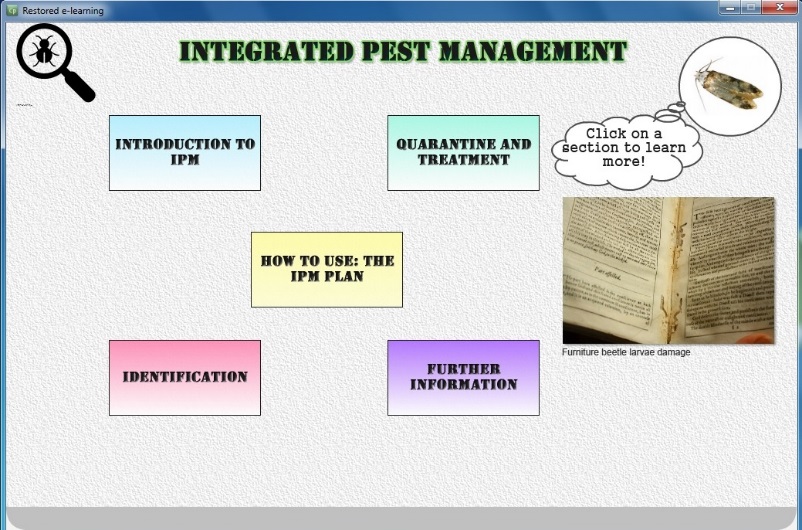
The interactive menu-based home screen of the trial e-learning resource
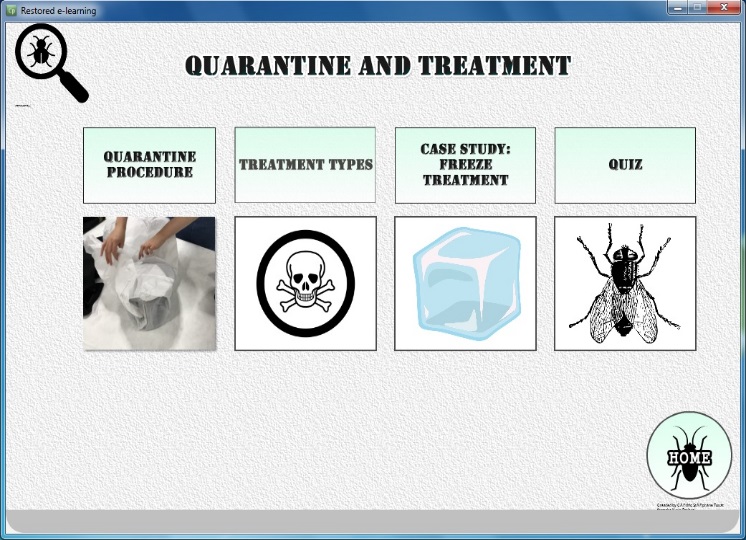
Quarantine and Treatment clickable menu screen
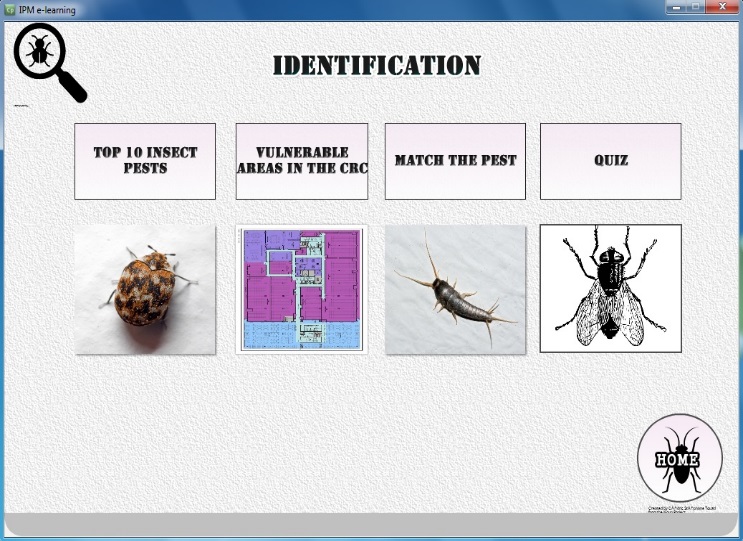
Identification clickable menu screen
On trial: Codices Vossiani Latini Online
 Thanks to a request from a member of staff in Classics, we currently have trial access to Brill’s Codices Vossiani Latini Online which publishes all 363 codices which form the world-famous Latin part of Isaac Vossius’ manuscript collection held at Leiden University Library.
You can access this resource via the E-resources trials page. Access is available both on and off-campus.
Trial access ends 27th September 2017.
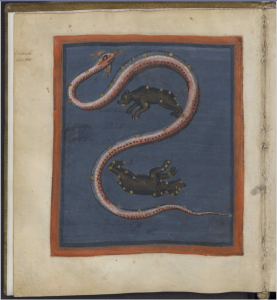
Screenshot from VLQ 079 – Aratea, c. 850.
Isaac Vossius (1618-1689) was a Dutch scholar and collector of manuscripts, maps, atlases and printed works, who for a few years was also the court librarian to Queen Christina of Sweden. According to contemporaries Vossius’s extensive library was the best in Europe, if not the world, and after he died his library of books and manuscripts was sold to the University of Leiden. Read More
Christian-Muslim Encounters in Texts
This week, the School of Divinity hosts the first conference of the Global Network for Christian-Muslim Studies, Reframing Christian-Muslim Encounter : Theological and Philosophical Perspectives.
In a new display in New College Library, we can see some Christian-Muslim encounters in texts from New College Library’s collections. These texts record Christian reactions to the Muslim encounters Turkish military campaigns brought close to home, and the preparations of Christian missionaries to venture into Muslim territories.
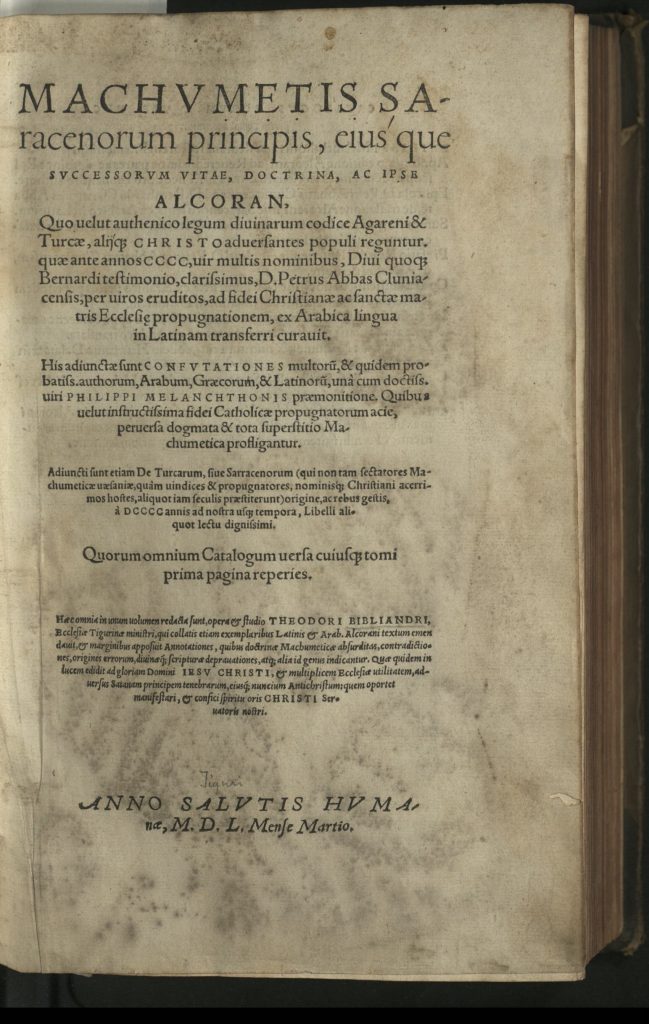
Robert, of Chester, active 1143, Peter, the Venerable, approximately 1092-1156, Bibliander, Theodorus (1504-1564), Luther, Martin (1483-1586) Melanchthon, Philipp (1497-1560), Machumetis Saracenorum principis, eius’ que successorum vitae, doctrina, ac ipse Alcoran.
(Basel, 1550) MH.163
At the same time as Martin Luther was challenging the authority of the papacy using scripture, the military campaigns of the Turks were approaching closer into Europe. Luther approached this encounter with Islam by inquiring into Islamic texts, which culminated in his involvement in this publication in Latin of the Qur’ān. Read More
Dealing with Data Conference 2017 – Call for Papers
[Update: Deadline for submissions has now been extended to Thursday 5th October]
Date: Wednesday 22nd November 2017
Location: Playfair Library
Themes:
- Balancing openness with privacy – How do you meet funder demands for open data without exposing research participants sensitive information?
- Informed consent – Is it possible to get informed consent from a research participant if you don’t know how their data may be used in future?
- Is your research data Findable, Accessible, Interoperable, and Reusable (FAIR)? – How easy is it to apply the FAIR data principles to your research data?
- Is open data changing the way you do research? – Has open access to research data helped your research? Have you struggled to access data which ought to be open? Is the need to make our data open taking you away from conducting new research?
- How have research data tools impacted on your productivity? What tools do you need to work with your research data effectively?
Format: Presentations will be 15 minutes long, with 5 minutes for questions. Depending on numbers, thematic parallel strands may be used. Presentations will be aimed at an academic audience, but from a wide range of disciplines. Opening and closing keynote presentations will be given.
Call for proposals:
Open research data is not an end in itself, its purpose is to push research forward by making existing research data available to others so that they can build upon it and in doing so make new discoveries not even envisaged by the original data creators.
The Dealing with Data 2017 one-data conference is your opportunity to talk about how the drive towards open data is affecting your research. How do you balance competing demands for data openness with the right to privacy of research participants? Has access to open data already helped in your research, or are the demands for openness discouraging you from undertaking certain types of project?
Are new tools providing new and exciting ways to work with your data or are you struggling to find tools to help you do what you need?
This is your opportunity to tell fellow researchers how you are benefiting from, or struggling with, the ever changing research data environment.
Please send abstracts (maximum 500 words) to dealing-with-data-conference@mlist.is.ed.ac.uk before Thursday 5th October 2017. Proposals will be reviewed and the programme compiled by Friday 3rd November 2017.
Kerry Miller
Research Data Services Coordinator
Library & University Collections
Collections
 Hill and Adamson Collection: an insight into Edinburgh’s past
My name is Phoebe Kirkland, I am an MSc East Asian Studies student, and for...
Cataloguing the private papers of Archibald Hunter Campbell: A Journey Through Correspondence
My name is Pauline Vincent, I am a student in my last year of a...
Hill and Adamson Collection: an insight into Edinburgh’s past
My name is Phoebe Kirkland, I am an MSc East Asian Studies student, and for...
Cataloguing the private papers of Archibald Hunter Campbell: A Journey Through Correspondence
My name is Pauline Vincent, I am a student in my last year of a...

Projects
Cataloguing the private papers of Archibald Hunter Campbell: A Journey Through Correspondence
My name is Pauline Vincent, I am a student in my last year of a...
Archival Provenance Research Project: Lishan’s Experience
Presentation My name is Lishan Zou, I am a fourth year History and Politics student....