A Trick of the Eye…

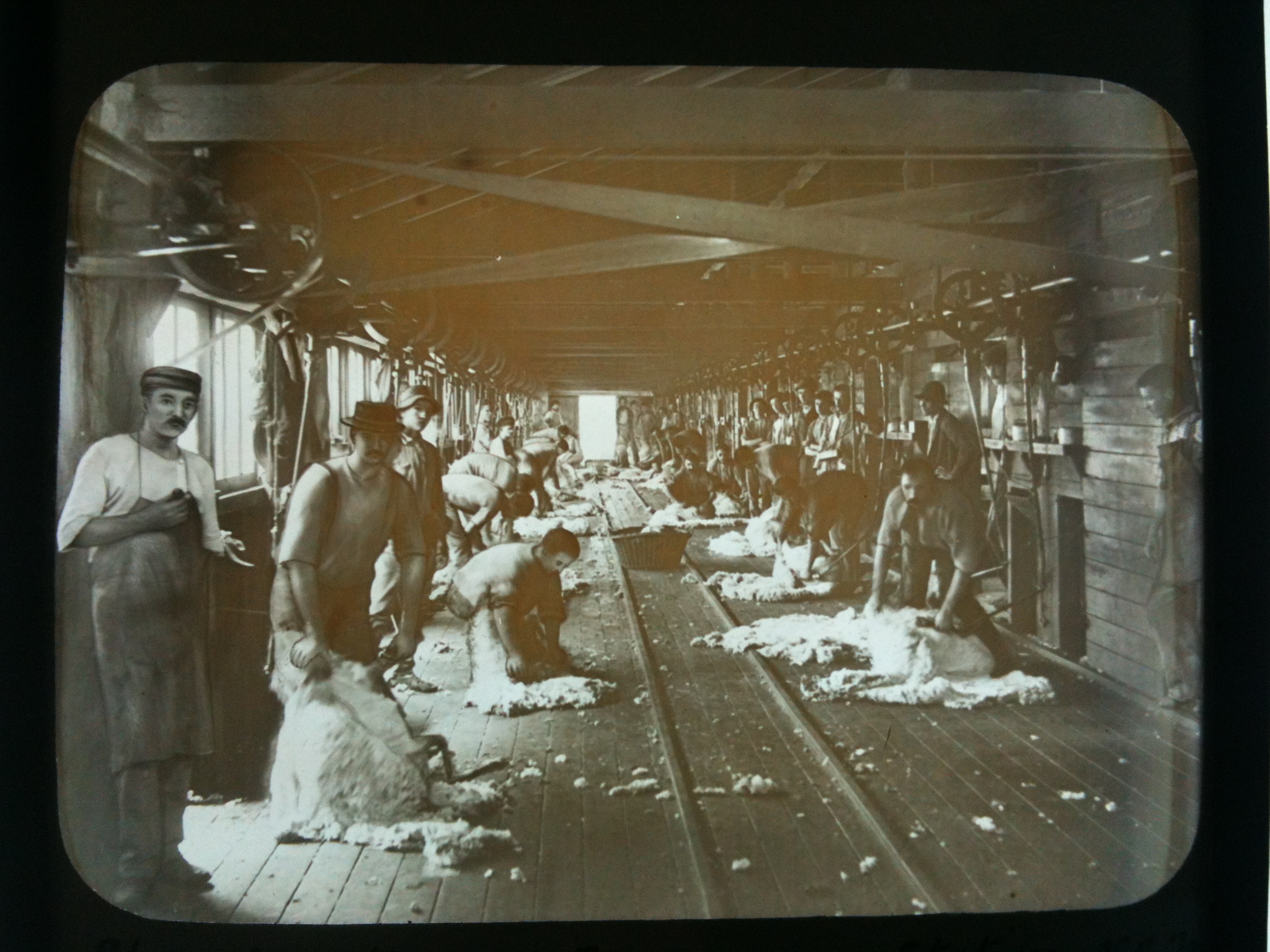
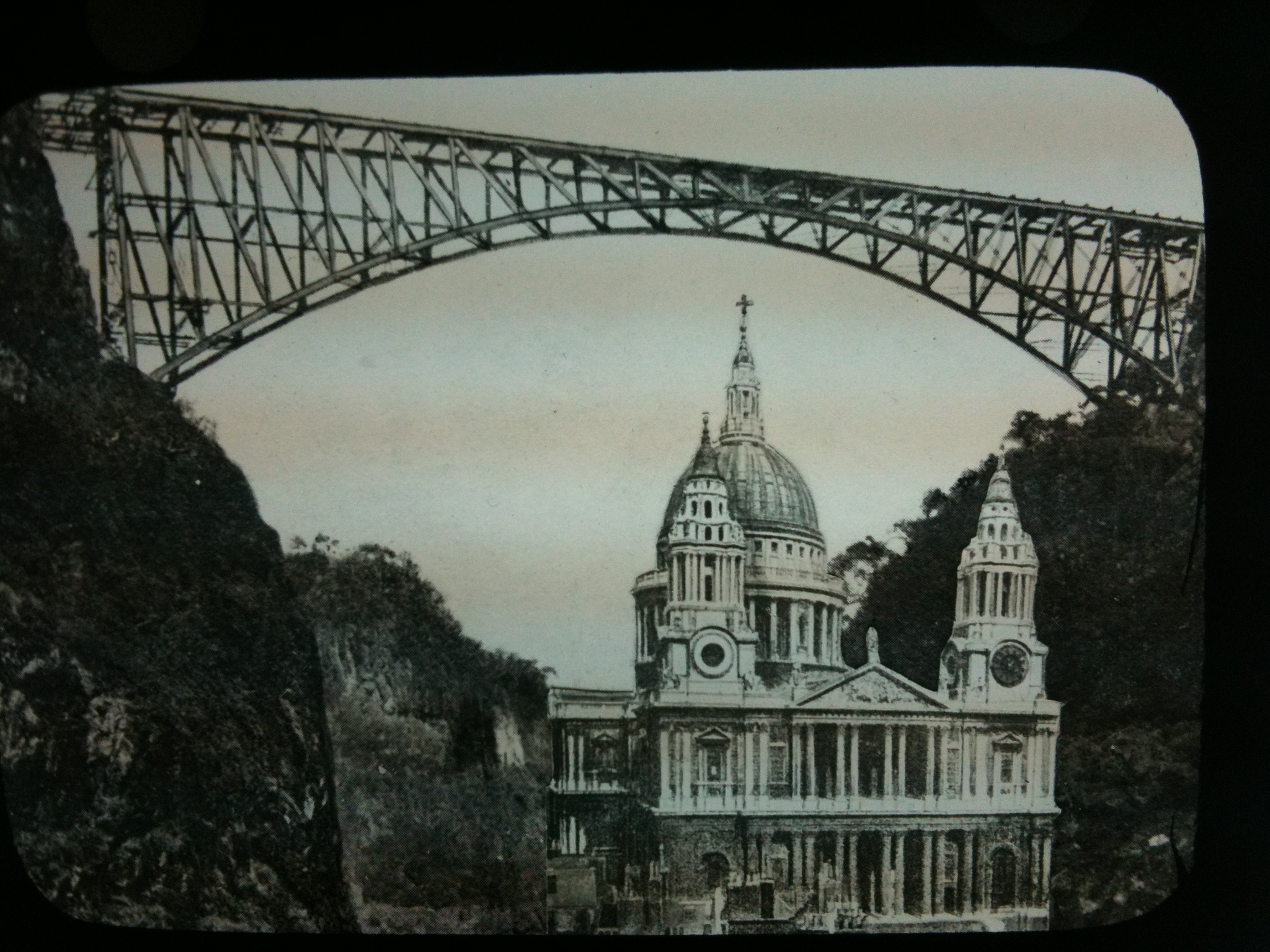
One of the joys of working with older forms of visual resources is stumbling across a wide array of images from the banal to the fantastic. Two images in particular have caught my eye – the first depicts men shearing sheep in a shed at Burrawang Station in New South Wales, Australia in the late 19th or early 20th century: Sheep Shearers, NSWThe second depicts a bridge and a cathedral and simply labelled: ‘Zambesi Bridge and Cathedral’: Victoria Falls Bridge St Pauls

Can you spot what makes both of them unusual?

The first image – while it is a photograph several of the men shearing sheep some of those standing in the front have been painted in–possibly to cover up or make clearer a blurred image. The second image is slightly trickier – hint – it’s an early form of Photoshop! The photographer has placed a cut-out of St. Paul’s Cathedral in London underneath the Victoria Falls Bridge in the gorge at Victoria Falls, Zimbabwe in the early 20th century.

While one might also wonder how these fit into ‘animal genetics’, as I’ve written before in a post, the slides images cover a wide range of natural and anthropological sciences, besides it’s great to see scientists have a bit of fun!


Happy Birthday to Crew!

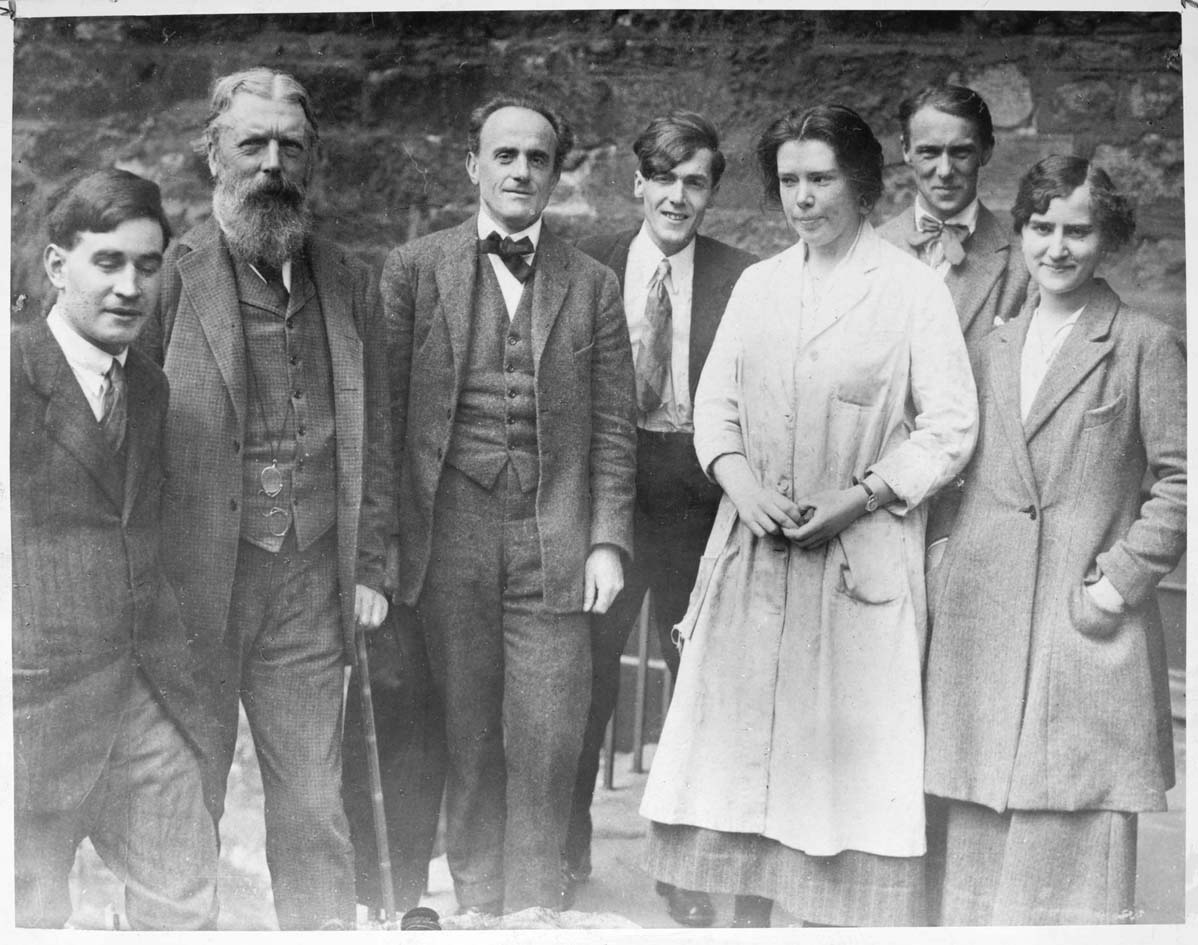
Walton, Thompson, Kammerer, Hogben, Fell, Crew, Cytovich 1924Tomorrow (2nd March) marks the birthday of Professor F.A.E Crew (1886-1973), who was the first Director of what became known as the Institute of Animal Genetics in Edinburgh from 1921 until 1944. It would be a long blog post indeed to try and do justice to this remarkable man. Crew, medically qualified but with a lifelong interest in breeding fowl, steered the Institute from its penniless early days into its heyday as a world renowned research centre, attracting such individuals as Nobel winner H.J Muller. The image above shows Crew (second from the right in the natty cravat) with a group of similarly renowned visitors to the Institute including Dame Honor Fell (Director of Strangeways Laboratory, Cambridge) and zoologist/medical statistician Lancelot Hogben. However, Crew’s influence was by no means confined to the sphere of genetics. He fought in both world wars, attaining the rank of Major in the First War, then Brigadier in the Second. By the time the Second War was at a close, Crew gave up the Directorship of the Institute in order to take up the Chair of Public Health and Social Medicine at Edinburgh University. He also established the Polish School of Medicine in Edinburgh (which awarded medical degrees recognised by the Polish government in exile until its closure in 1949), wrote the impressive six-volume official Army Medical History of the War, was World Health Organisation Visiting professor at Rangoon and Bombay (he also set up the first medical genetics clinic in India) and was happily driving around Turkey in a caravan well into his seventies.

Charismatic, handsome, a beautiful writer and renowned as a public speaker (his friend Hogben remarked that ‘he had a histrionic talent worthy of a Shakespearean actor’) Crew nevertheless remained self effacing all his life, always claiming that his career moves were down to ‘pure luck’ and that ‘mine has not been a very distinguished career’. Crew left no traceable personal archive, but treasures such as a photocopied draft of an autobiography and an endlessly colourful 8 hour interview recording with Margaret Deacon of the Science Studies Unit helps to fill out the picture. The latter recording captures Crew’s wry humour, compassion and humility perfectly whilst also providing such memorable anecdotes as his keeping of tame goats in his office at the Institute (whose constant grazing apparently saved him from having to be bothered by any official correspondence) and the experimental cocks which Crew trained to walk down to the cellar each night so as not to disturb the neighbours!

He remained eloquent and witty right up until his death aged 87.  As he was also a committed humanist, his conclusion to his essay ‘On the Meaning of Death’ published in A.J Ayers’ The Humanist Outlook (1968), is a fitting epithet: ‘In a world so organized that everyone equipped to do so would be able to enjoy life at least as much as I have done, there would be very few who would hanker after an existence beyond the grave for the life lived on this earth would be complete in itself.’

Zebra Crossing – James Cossar Ewart, Romulus and the Penicuik Experiments

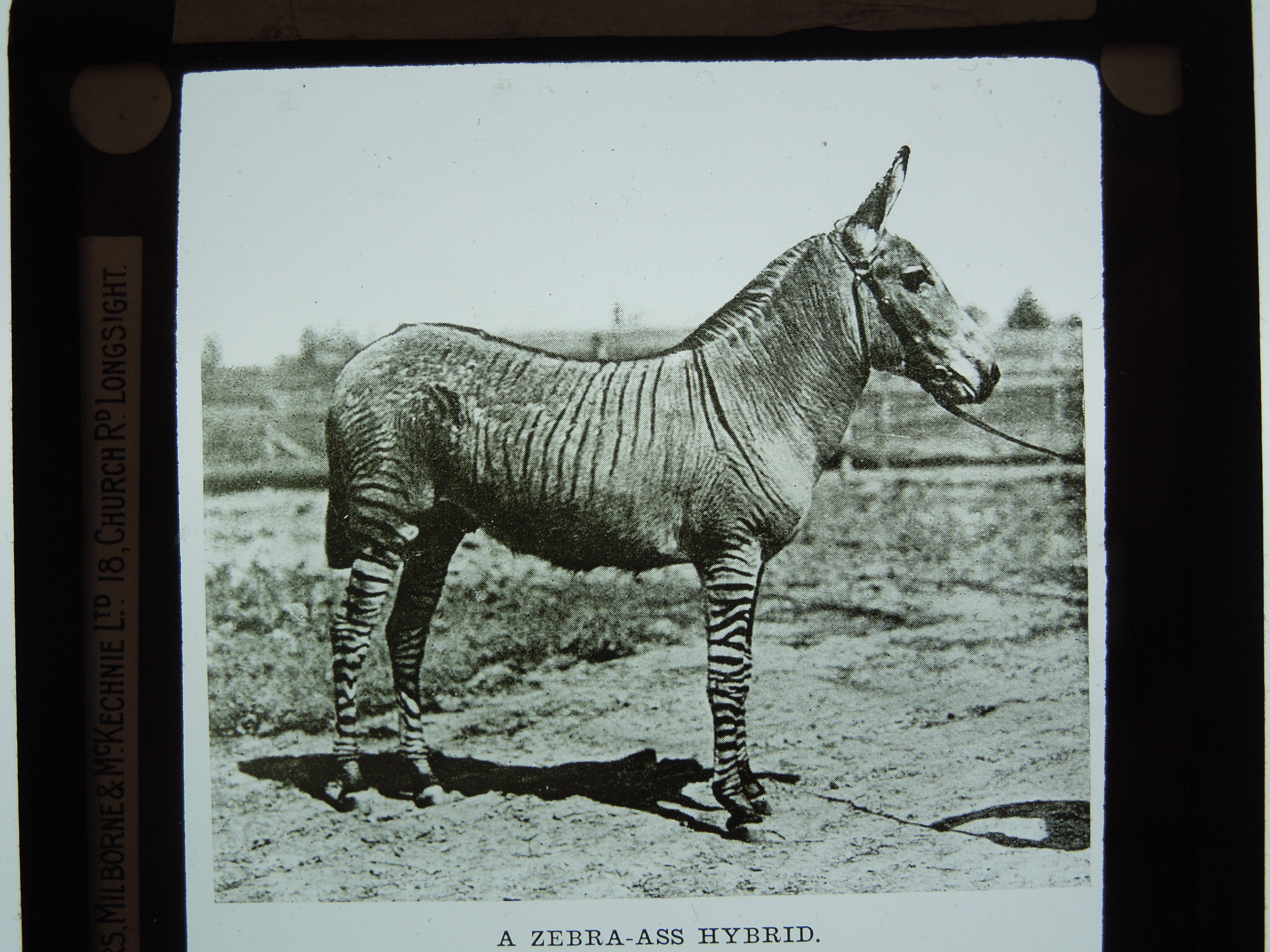
“Zebroid, zedonk, zorse, zebra mule, zonkey, and zebrule” –  these are the names of the offspring of any cross between a zebra, usually the stallion, and any other equine; however, the offspring of a donkey sire and zebra dam is called a “zebra hinny” or “donkra”, but are rare.

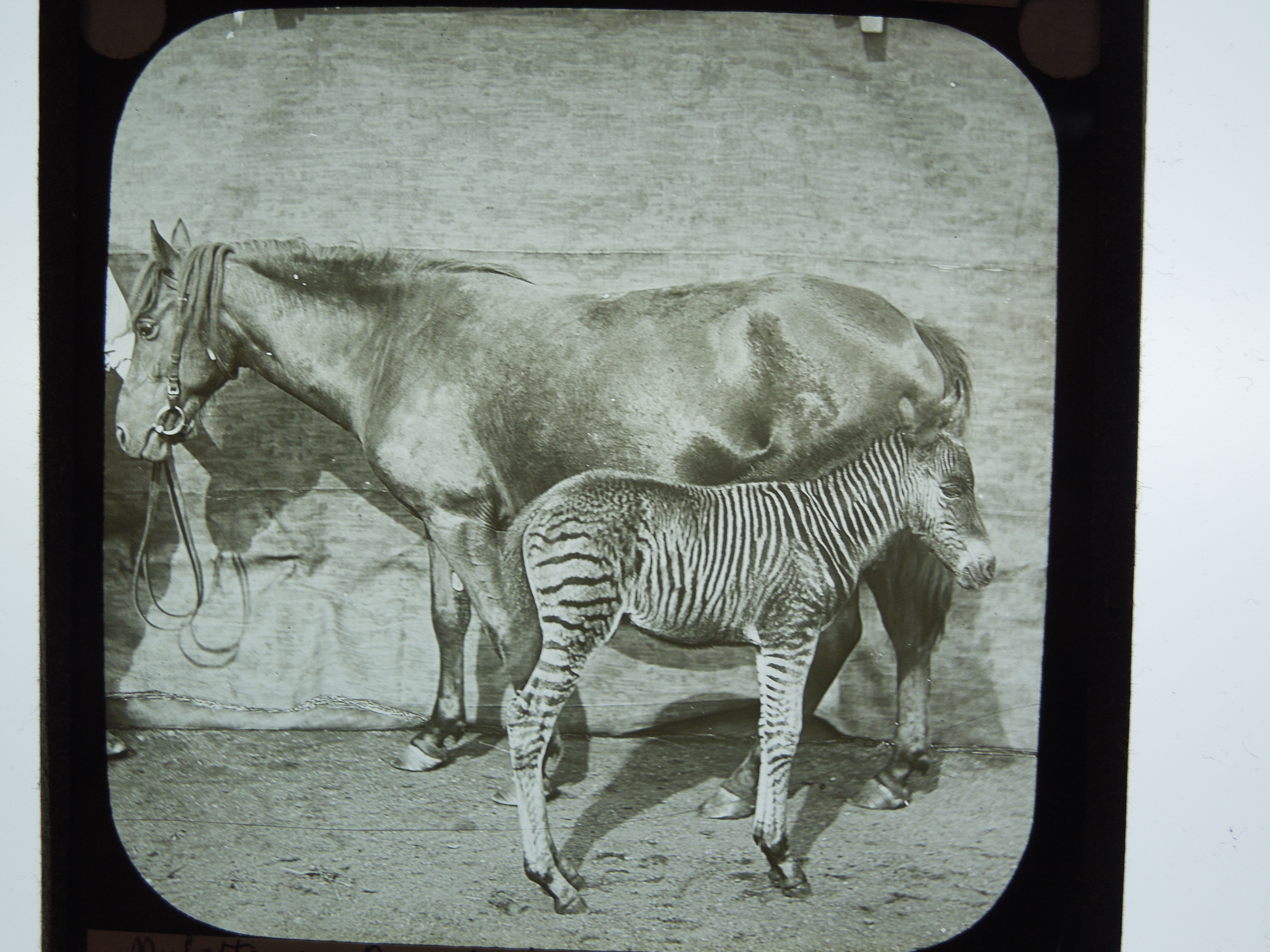
Ewart and RomulusIt was around the years 1894-95, when Scottish zoologist, James Cossar Ewart began his Penicuick Experiments in animal breeding on his private experimental farm where he conducted many pioneering investigations in genetics. His most famous experiments were related to telegony, which is the theory, accepted at the time by most scientists and breeders, that ‘a previous sire may so “infect” the dam served by him as to impress certain of his characters upon her subsequent offspring by other sires.’ Ewart’s experiments with a variety of species; however, were uniformly negative. One of the most famous experiments with telegony was Darwin’s lengthy citation of ‘Lord Morton’s Arab mare which first being served by a quagga produced a striped hybrid foal, and subsequently gave birth to an Arab foal as a result of mating with Sir Gore Ouseley’s Arab stallion. This foal, which is figured by Darwin, had striped markings that were said to resemble those of the quagga with which the mare had first mated.’ Ewart attempted to repeat this experiment; however, the quagga species had become extinct by that time, so he decided to use a Burchell’s zebra stallion which served several different breeds of mares which proRomulus and damduced striped hybrid foals, called “Tartan Cuddies” by the people in the Midlothian area. One particularly fine hybrid of this pairing was “Romulus”. The mares were then bred to horses of their own breeds, but the resulting ‘subsequent foals’ never showed any evidence of The mares were then bred to horses of their own breeds, but the resulting ‘subsequent foals’ never showed markings or traits of the previous zebra sire. Ewart collected these findings into a book entitled The Penycuick Experiments (1899).

In addition to these lovely images of Ewart and Romulus, I found a couple of images of a zorse and a zonkey!

Zonkey Hybrid

Juno, Zorse

Letters in the Limelight: E.A. Clemens

Cataloguing the correspondence of zoologist/animal breeder James Cossar Ewart (1851-1933), I have been intrigued by the various ‘life stories’ which emerge from the letters. Periodically I will be including some highlights in a series of posts entitled ‘letters in the limelight’ .

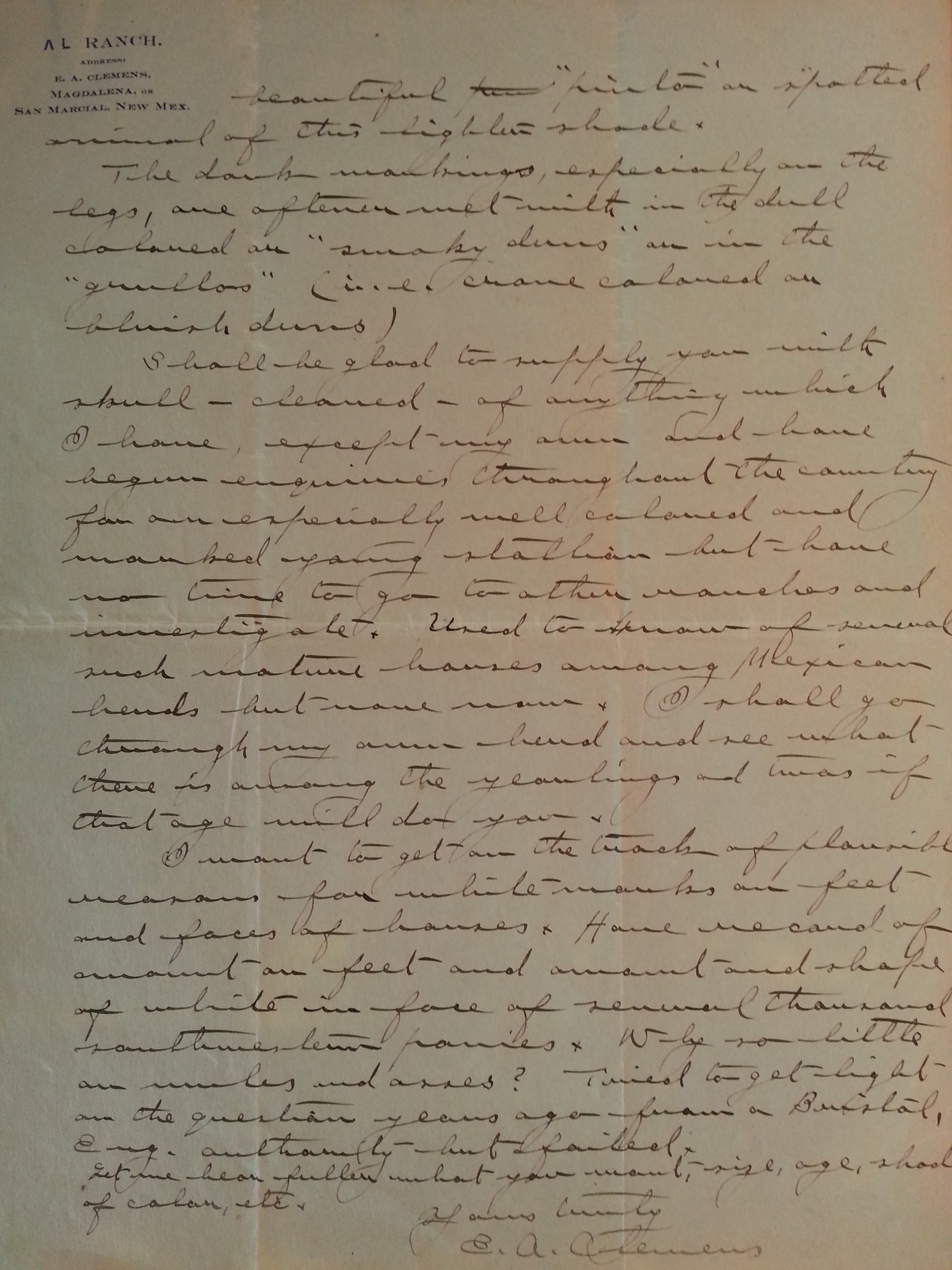
E.A Clemens letter Coll14.9.8.3E.A.  Clemens (d. 1924) is perhaps one of Ewart’s more ‘exotic’ correspondents – not least due to his being the nephew of Samuel Clemens (aka Mark Twain). Earnest Allen (‘Al’) Clemens owned a ranch in Magdalena, New Mexico, and so owned a fair number of horses, which were Ewart’s primary focus of study at this time. In a letter dated 21 June 1902, Clemens tells Ewart that he would happily supply him with any horses from his own herd for experimental purposes, as well as any required skulls and other anatomical parts for analysis. One important motive behind breeding and cross-breeding at this time was the production of animals hardy enough to cope with heavy work or difficult conditions. In a letter to a mutual friend, American naturalist Theo Cockerell, Clemens reports that he was aiming to set up an experimental breeding station on his ranch to breed hardy ponies adapted for life in the prairie or desert. Whether or not he achieved this is as yet unknown (maybe this will emerge in later correspondence), but he was clearly a man with ambition.

Fascinated by this exchange of letters between a ranch in New Mexico and a rural bungalow south of Edinburgh, I did a bit of rooting around for any more information on Clemens. And what a story! His home, now named Clemens Ranch House, is now a registered cultural property and the current owners have created this informative website:

http://clemensranchhouse.com/briefhistory.html

It is interesting to read about how Clemens’ personality manifested itself in the building of his ranch house. He was obviously a perfectionist: he reputedly ordered stonemasons from Italy to cut the locally quarried stone for the ranch house and ordered his back porch to be ripped out and remade three times before he was happy with the height. He was also cautious: after apparently being held hostage for three days by desperados, Clemens designed numerous trap doors, tunnels and escape routes from each room of the house!

 Join us again for more ‘letters in the limelight’…

Bio-Pirate! Henry Wickham’s Audacious Brazilian Rubber Removal

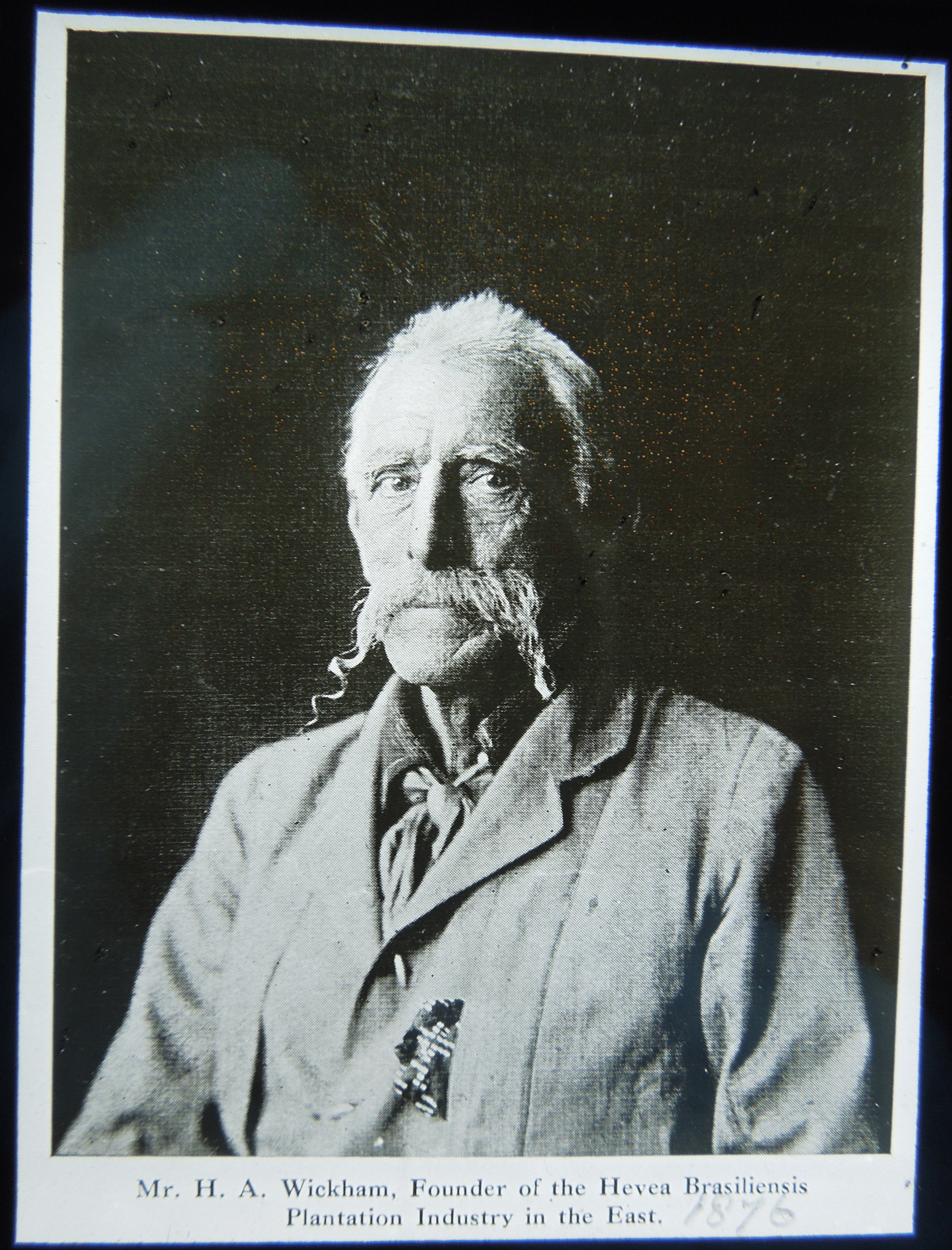
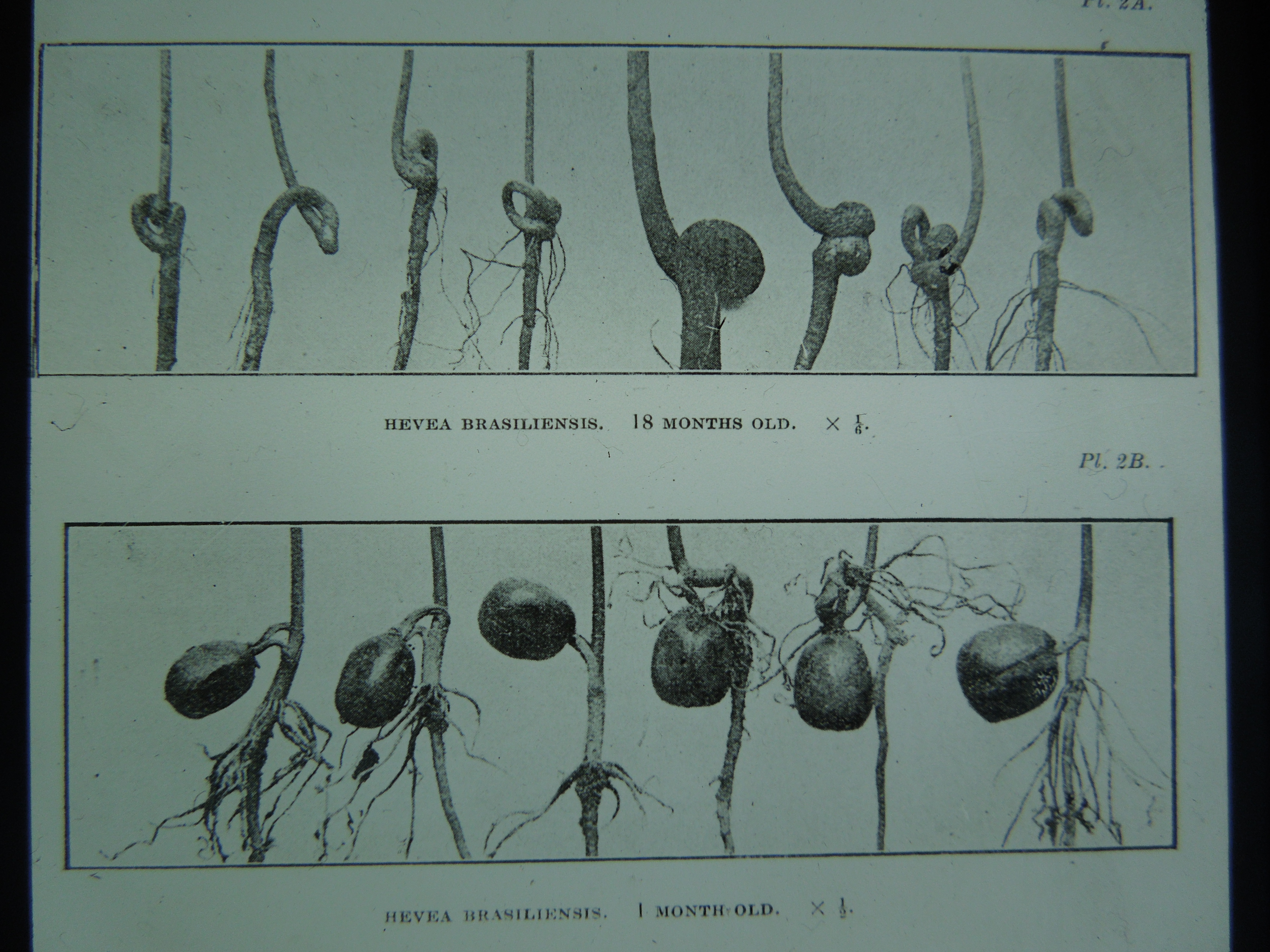
An audacious truth or an embellished fiction? Sir Henry WickhamHistory credits Sir Henry Alexander Wickham (b.1846, d.1928),  a British explorer, with bringing 70,000 rubber seeds from the plant, Hevea brasiliensis, in the Santarem area of Brazil to the Royal Botanical Gardens, Kew, London in 1876. These seeds would go on to be shipped to the Far East to establish rubber plantations expanding the rubber industry and breaking Brazil’s monopoly. The export laws in Brazil at this time did not prevent Wickham’s seed gathering and removal, but there is evidence that he may have misrepresented his cargo as ‘exceedingly delicate botanical specimens specially designated for delivery to Her Britannic Majesty’s own Royal Gardens at Kew’ in order to convince the Brazilian customs officials to grant him an export license. He had hoped to be sent to the Far East to help establish the new rubber plantations; however, Dr. Joseph Hooker, the director of the Royal Botanical Gardens at Kew refused to let him go.  Evidently Wickham had been promised £10 per 1,000 viable seeds delivered to Kew, but unfortunately he was only rewarded with £700 for his efforts. Hevea brasilienisAccording to the website, Bouncing Balls, there are doubts to the veracity of his story and thoughts that he may have embellished his role. While it is known that he was in the Amazon at that time, there are questions to the collection and the shipping of the seeds. Regardless of what may have actually happened he is known throughout history as committing the world’s first act of bio-piracy by removing Brazilian rubber plan seeds, shipping them off to England and starting the rubber industry in South-East Asia.

A Sense of Place

Last week the Dolly team enjoyed a trip out to King’s Buildings, the main campus for the University of Edinburgh’s College of Science and Engineering. Bustling with students – not to mention architectural styles – the site is a chessboard of history, not least where animal genetics is concerned. King’s Buildings was home to, for instance, the Institute of Animal Genetics, the MRC Epigenetics Unit and the Poultry Research Centre. We were fortunate enough to have for our guide Professor Grahame Bulfield (former Director of the Roslin Institute and a University genetics student during the 1960s), who is also a valued adviser on the Dolly project board. Grahame’s encyclopaedic knowledge of the roll-call of each building’s previous occupants meant that we were able to visit the habitats of many of the individuals that Kristy and I have been ‘getting to know’ through our cataloguing. It was fascinating to be able to put, if you like, ‘places to names’, and gave us a sense of the social geography of animal genetics at Edinburgh. Here are a couple of our highlights:

Crew building

This building, now called the Crew building and used by the School of Geosciences, was formerly known as the Institute of Animal Genetics. Frances A.E Crew, Director of the Department in Animal Breeding since 1920, had worked to raise funds partly to pay for a designated building for the Department. Designed by John Matthew, the building was opened in 1930.

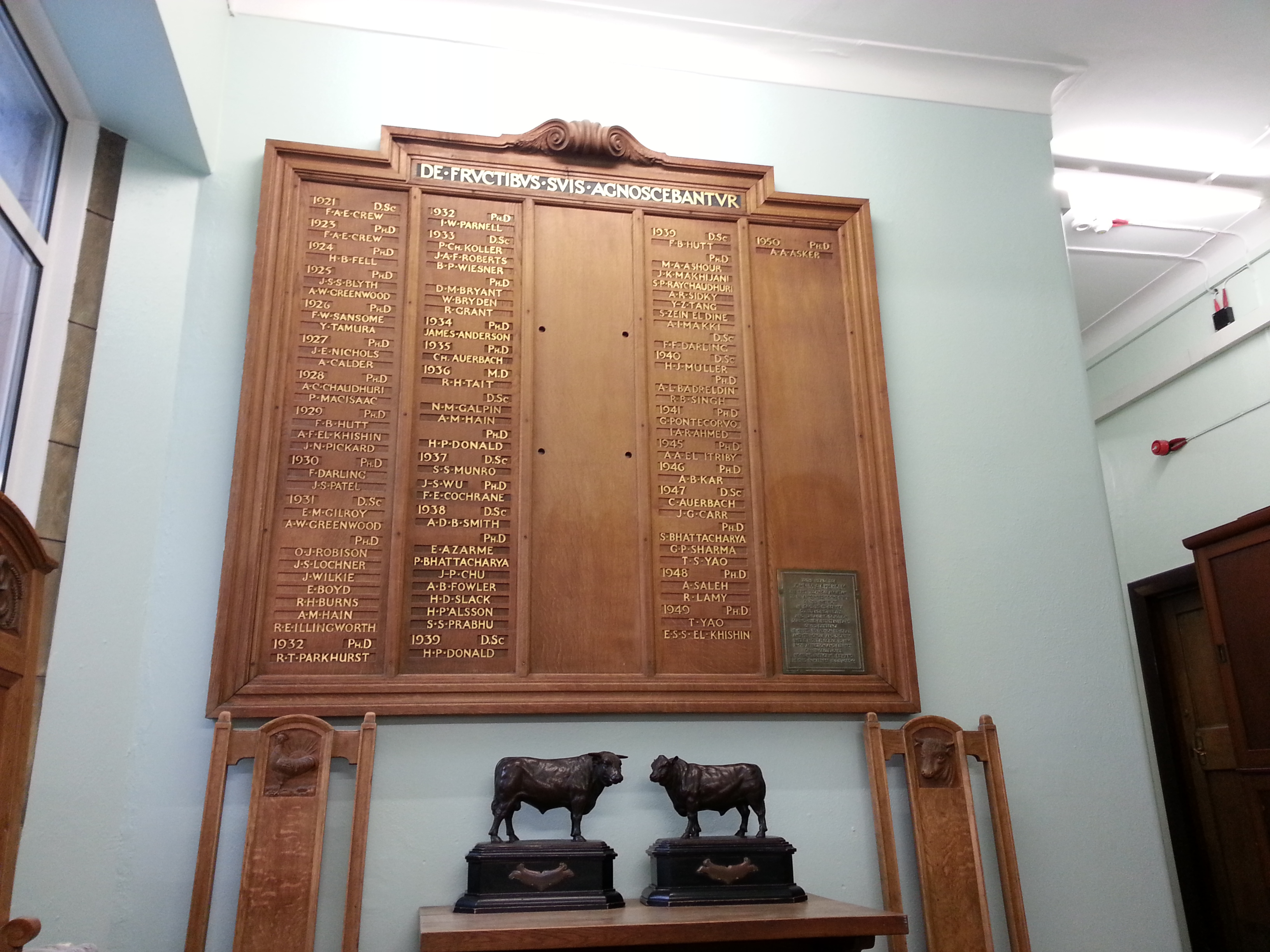
This oak panel contains the names of those who obtained higher degrees from theOld Genetics plaque and memorabilia now in Ashworth Department up to the year 1950. It used to hang in the entrance hall of the Institute building (above) but has now been moved to the Ashworth Laboratories (also built in 1929), now used by the School of Biological Sciences. Note also the wonderful chairs carved with various farm animals!
 

Ashworth staircase and palms right

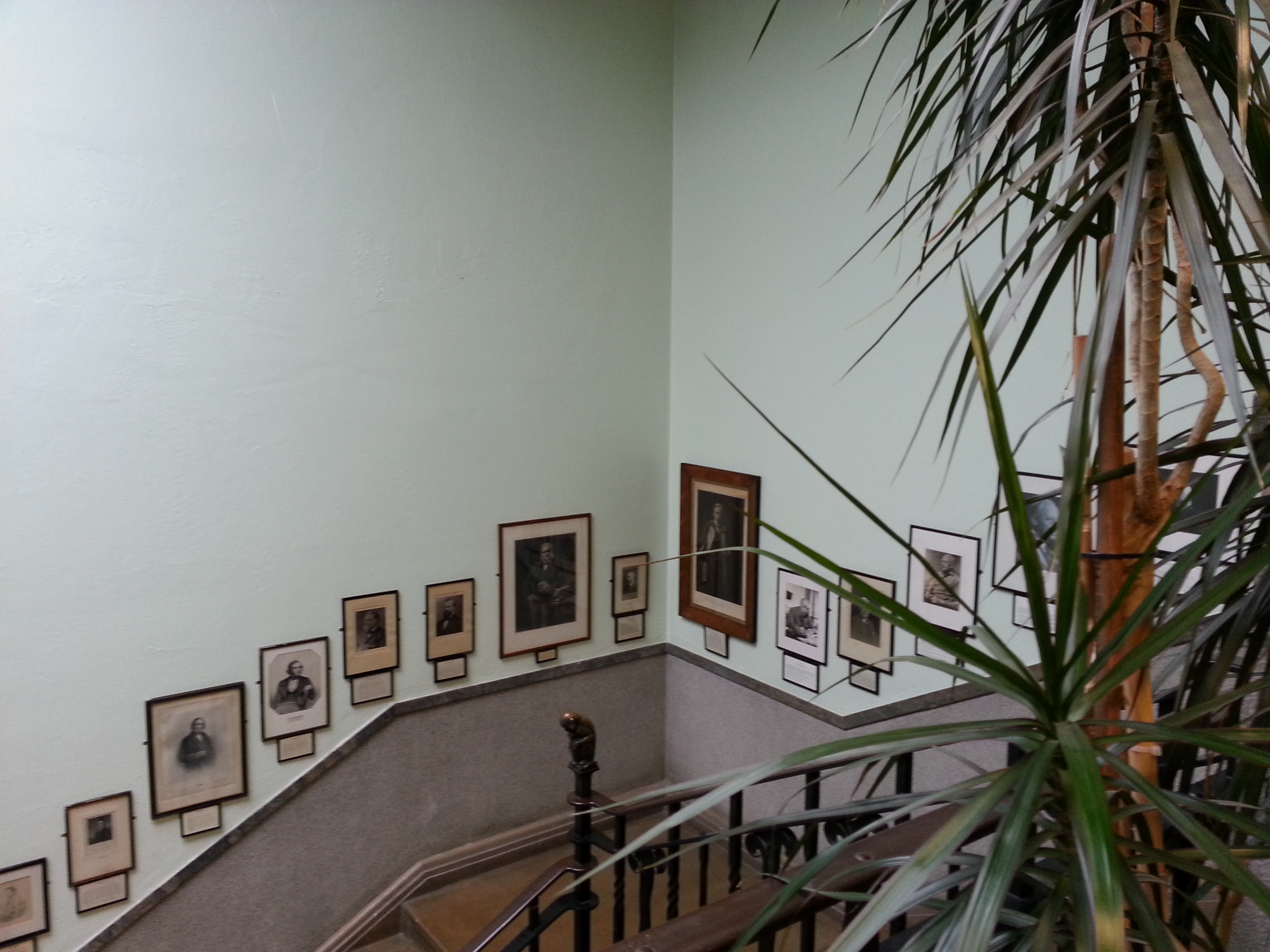
The majestic staircase in the Ashworth building displays portraits of many key scientific figures within the University. F.A.E Crew can be seen on the right next to the wooden-framed picture, with his successor as Director, C.H Waddington, two pictures up.


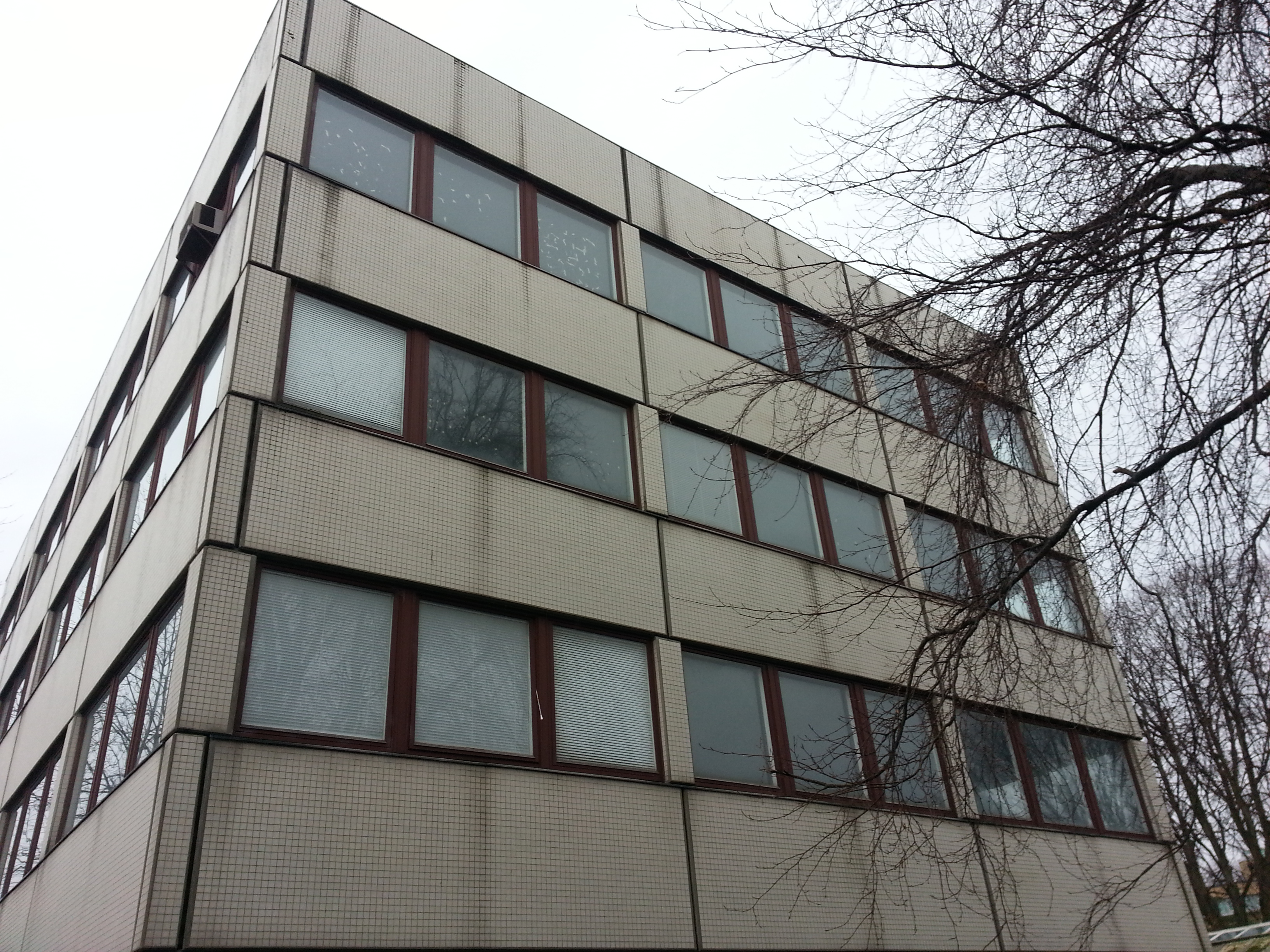
Not quite so visually grand as the two preceding buildings, this used to house C.HOld Waddington MRC Epigenetics Building Waddington’s Epigenetics Laboratory. Funded by the Medical Research Council, the Wellcome Foundation and the Distillers Company, the building was opened in 1965, with Waddington moving his office from the Institute of Animal Genetics building into the top floor here. Aesthetically perhaps a far cry from John Matthew’s creation, but also a bold statement of the continuing expansion of genetics at the University.

With thanks to Professor Grahame Bulfield.

The Glass Plate Slides Collection – A View into Early 20th Century Documentation of Animals, Plants and Farming

While I’ve been busy cataloguing the scientific off-prints from the various institutes that have comprised the animal genetics programme in Edinburgh; with the start of the New Year I am moving on to catalogue the glass plate negative slide collection that makes up another aspect of the Towards Dolly project. There are c4000 glass slides, which we think were used as teaching materials, covering images of animals, plants, farming techniques and machinery from places like Australia, New Zealand, Canada and South East Asia among other places.

Instructing students, Wagga Farm, New South Wales, Australia, early 20th century

Instructing students, Wagga Farm, New South Wales, Australia, early 20th century

First, though, I’d like to tell you a bit about what a glass plate slide is and a bit of its history in regards to photography. The first collodion wet plate negative was made by the British photographer, Frederick Scott Archer in 1851 and Richard Leach Maddox, a British physician and photographer, made the first dry glass plate negative twenty years later in 1871. What is meant by these types of negatives? ‘Glass plate negatives comprise two formats collodion wet plate negatives and gelatin dry plate negatives. Both types have a light sensitive emulsion with a binder thinly layered on one side of a glass plate.’ The article, Handle with Care: Glass Plate Negative and Lantern Slide Collections at the Syracuse University Archives, is particularly useful in describing the history and technique.

Since I’m just beginning to catalogue the glass slides collection and have already found many interesting and diverse images – from a photograph of men loading horses in the Chicago Stockyards:

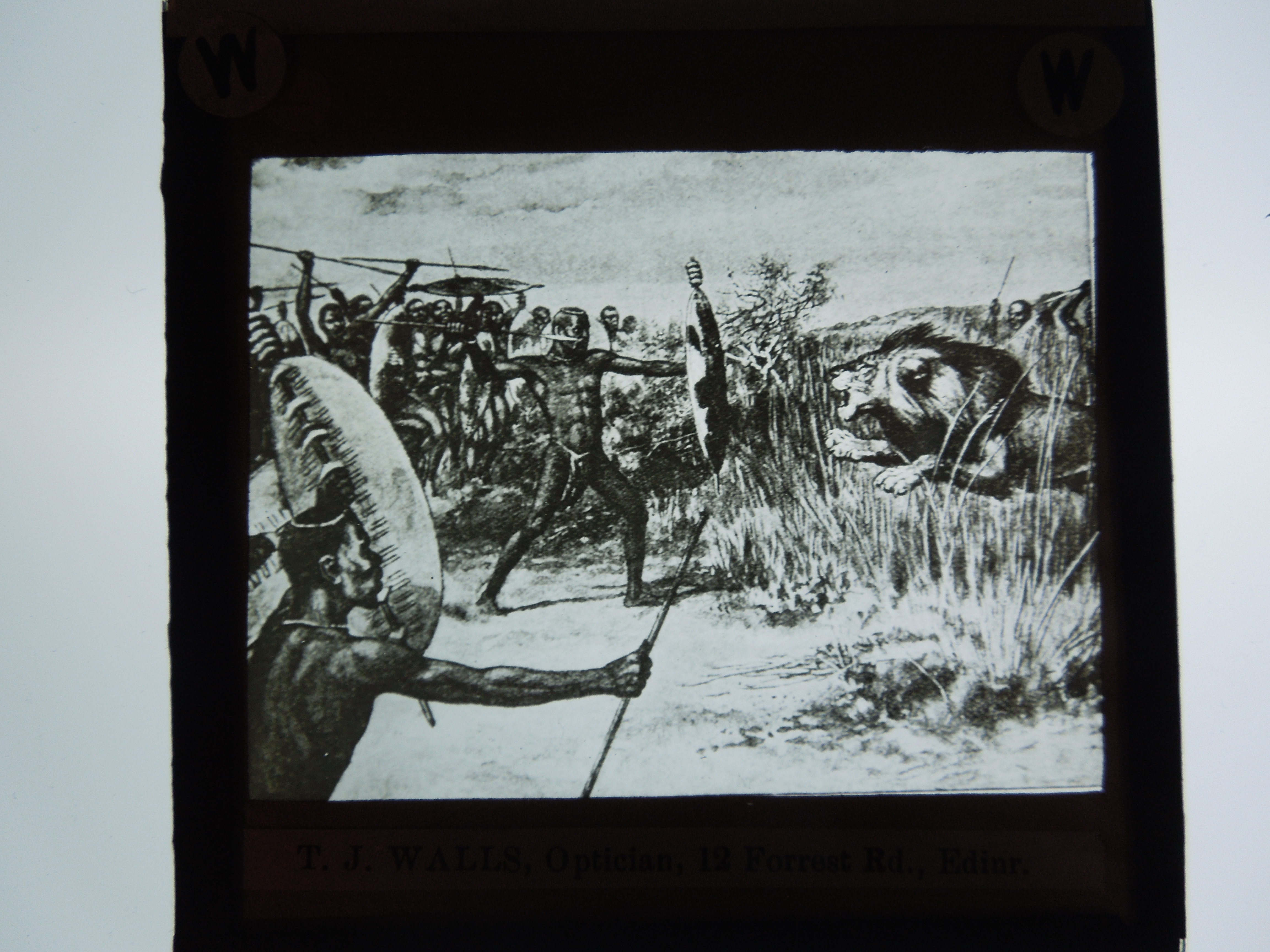
to an illustration of man-eating lions from Tsavo (Kenya) :

– I’m looking forward to discovering more fascinating things as time goes on. I’ll keep you posted!

Star of the Stripes

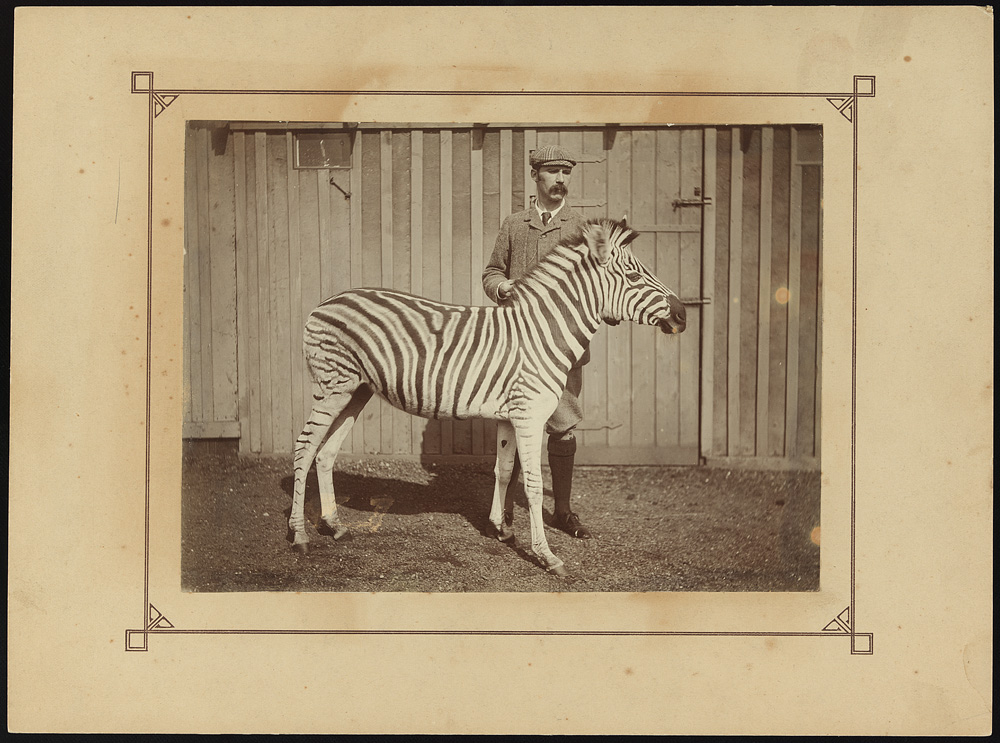
J.C Ewart with Burchell's zebra c.1900I have recently begun cataloguing the papers of James Cossar Ewart (1851-1933), who was Professor of Natural History at the University of Edinburgh from 1882 to 1927. Cossar Ewart was a pioneering zoologist and animal breeder who is probably best remembered for his work on cross-breeding zebras and horses. This work, written up as The Penycuik Experiments (1899), was instrumental in disproving the long-held theory of telegony, which held that the a sire could ‘infect’ the dam he serves by influencing the genetic inheritance of the offspring of subsequent sires.

To disprove this, Ewart cross-bred a zebra stallion with various mares of different breeds, which produced foals with zebra-like stripes. The mares were afterwards mated with horses of their own breeds, but these offspring never showed any evidence of having been affected by the previous zebra sire.

Cossar Ewart was also the driving force behind the establishment of a lectureship in genetics (1911) at the University, the first in the UK. He is pictured above with one of his prized zebras – an image which has already proved to be one of our most popular, as seen here

More about Cossar Ewart and his zebras to follow…

Avian Hieroglyphs in Ancient Egypt

Poem

In this first post of the New Year, I thought I’d start off with something fun, and while it’s not scientists performing interpretive dance in the 1950’s, it takes us in another direction combining archaeology and animals – back to the first mention of domestic birds in Ancient Egypt!

I came across J B Coltherd, a scientist at Edinburgh’s Poultry Research Centre’s article, “The Domestic Fowl in Ancient Egypt”, in Ibis, 108 (1966): 217-223 in the off-print series and discovered some interesting ideas on origin of chickens and geese in Egypt and that it could be reference by hieroglyphs depicting the different kinds of birds. In this article, he traces the birds’ history through trade routes and appearances of references in hieroglyphs from different time periods.

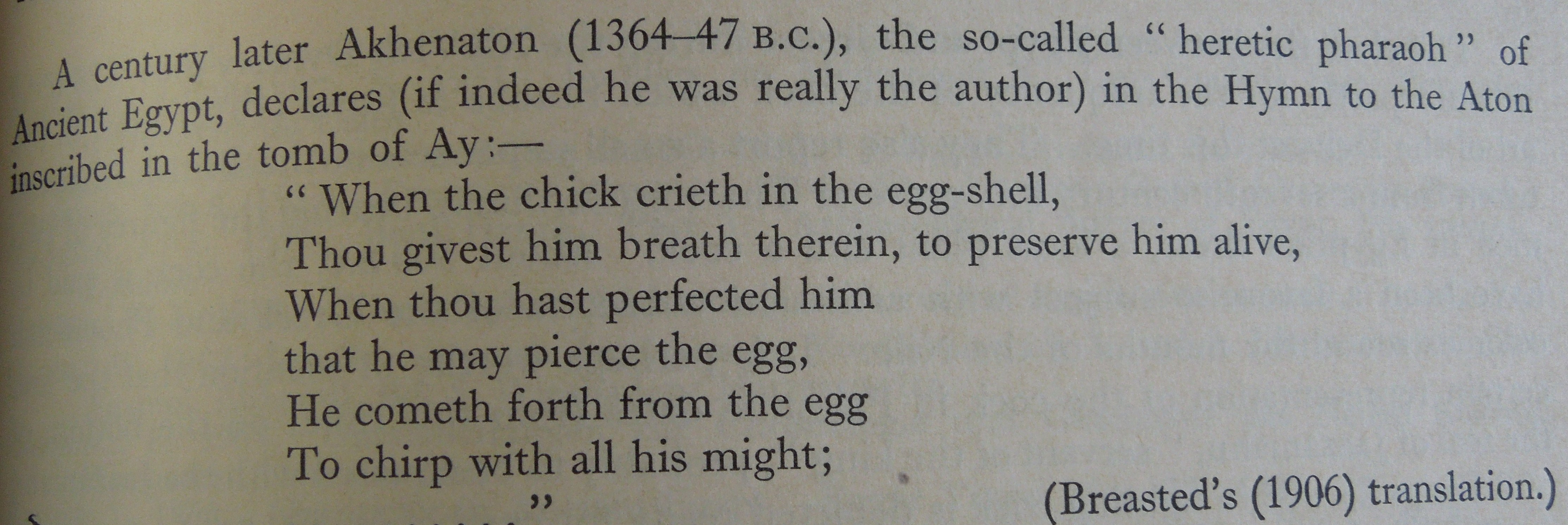
According to Coltherd, in 1966, ‘there is no recorded mention of the domestic fowl in Ancient Egypt before the Middle Kingdom (2134-1786 BC). Evidence for its existence there before this time is completely negative. The hieroglyph Quail which is found in the earliest inscriptions, and certain peculiarities in the mention of the indeterminate birds, led some early writers to believe that the fowl had already been introduced into Ancient Egypt at the dawn of history, by invaders from Mesopotamia.’

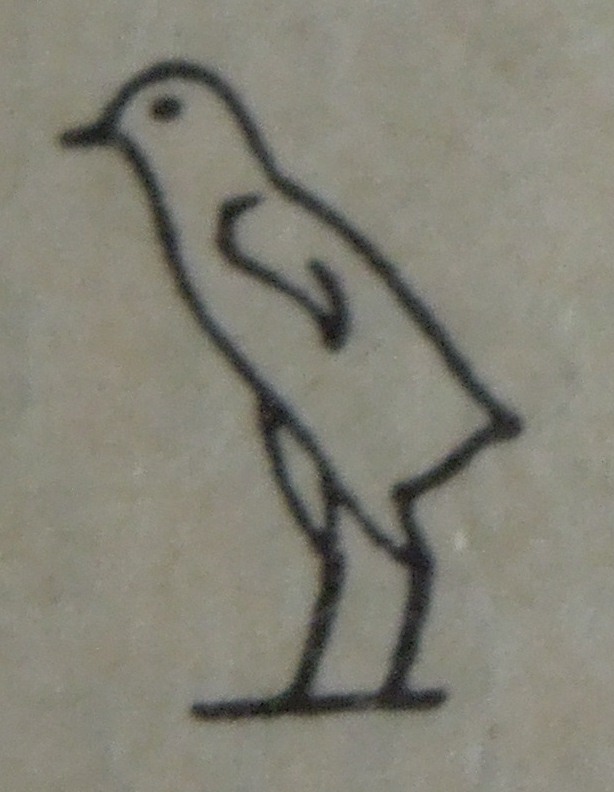
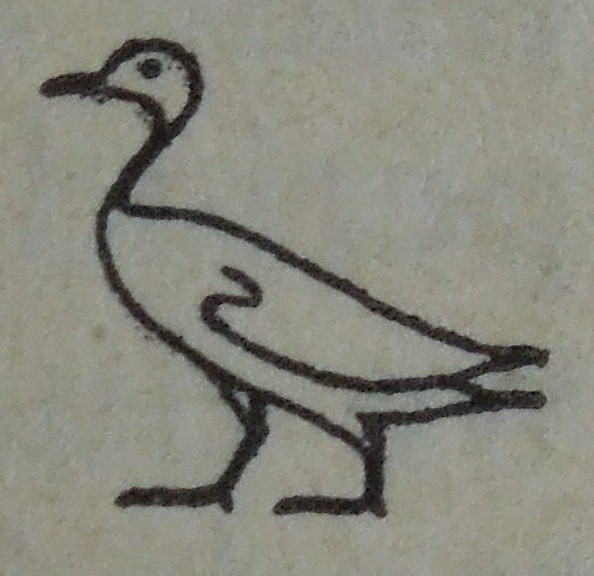
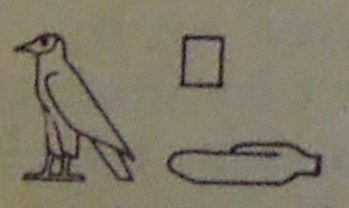
He illustrates the article with several examples:

A goose: Goose HeiroglyphA sentence on how four birds lay eggs every day:

Sentence and a general symbol for birds:

General birdThis article would certainly be fascinating to anyone interested in archaeology, Egyptology, as well as biology and animal migration. It would be interesting to know if anyone – scientist or archaeologist – has found any more specific and current information on when domestic fowls were introduced to Egypt. Any ideas – please post!