Animals and Disease

Another theme within the Roslin Glass Slides Collection is physical manifestations of disease and abnormalities in animals from genetic diseases to viral and bacterial infections to insect borne illnesses. Some of the most prevalent in the images are scrapie and scab with some images of Spirillosis in a horse, a double headed calf and cattle meat infected with tuberculosis. Additionally, there are images of animal hospitals and disease prevention methods. This was certainly a vital area of research and interest to these scientists since understanding the genetic aspects of the various diseases could lead to improved treatments and prevention methods to ensure the animals survival and to benefit the economic impact in animal breeding.
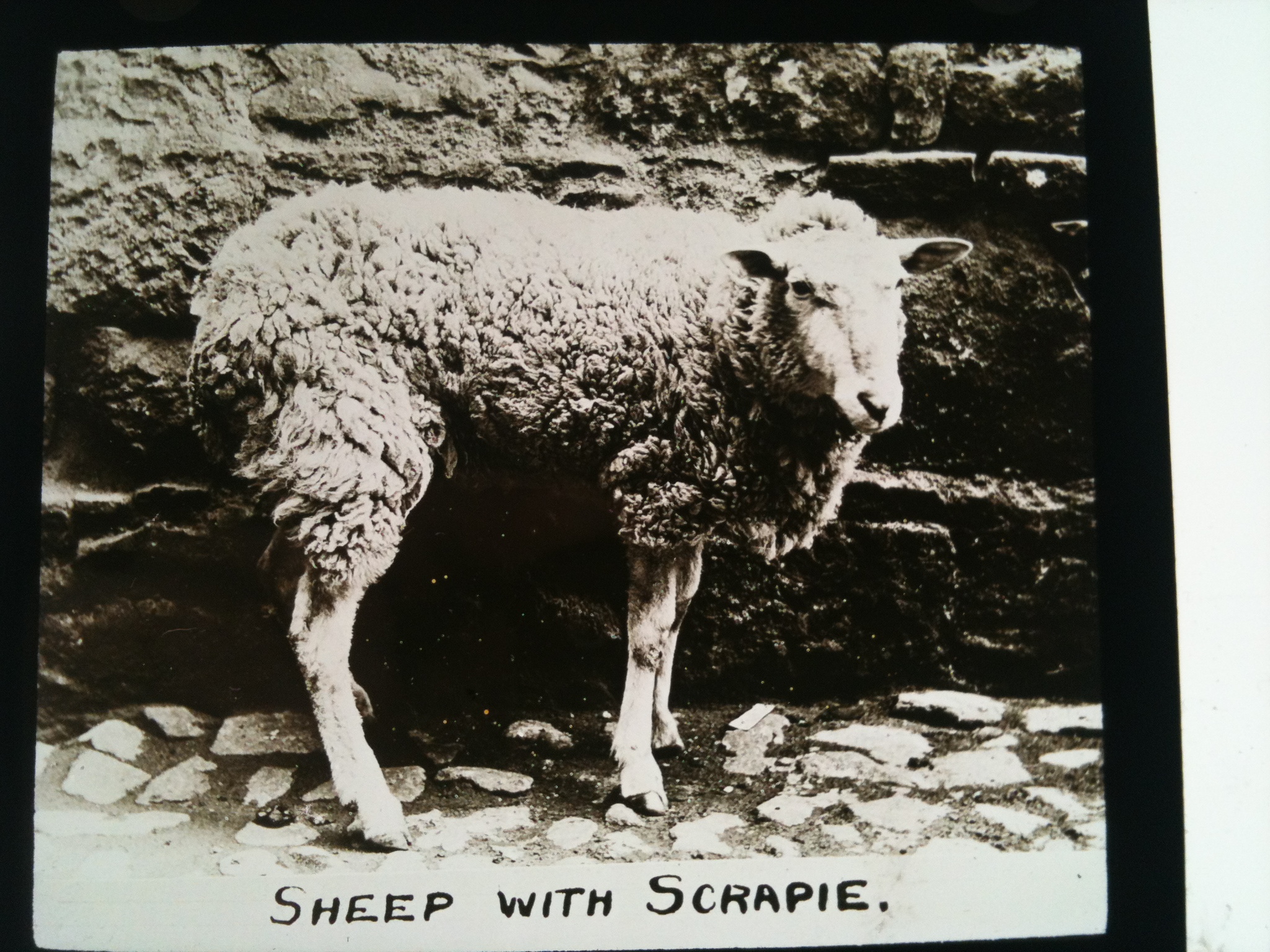
Sheep with ScrapieScrapie is a fatal, degenerative disease that affects the nervous systems of sheep and goats. It is one of several transmissible spongiform encephalopathies (TSEs), which are related to bovine spongiform encephalopathy.
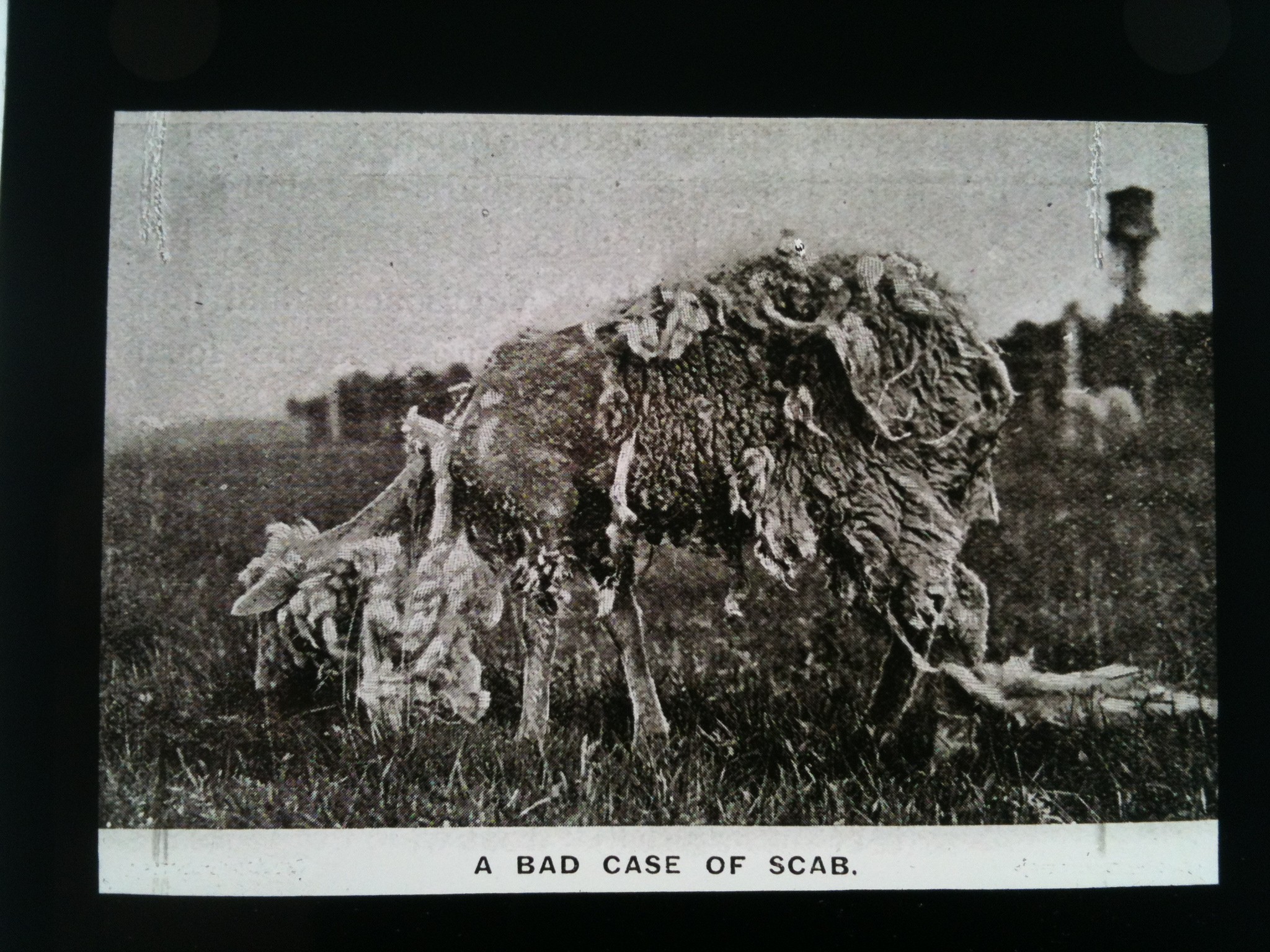
 

Sheep with ScabSheep scab is a highly contagious skin disease caused by a mite called Psoroptes ovis causing scaly lesions to develop on the woolly parts of a sheep’s body making them itch resulting in them rubbing or biting themselves causing wool loss.
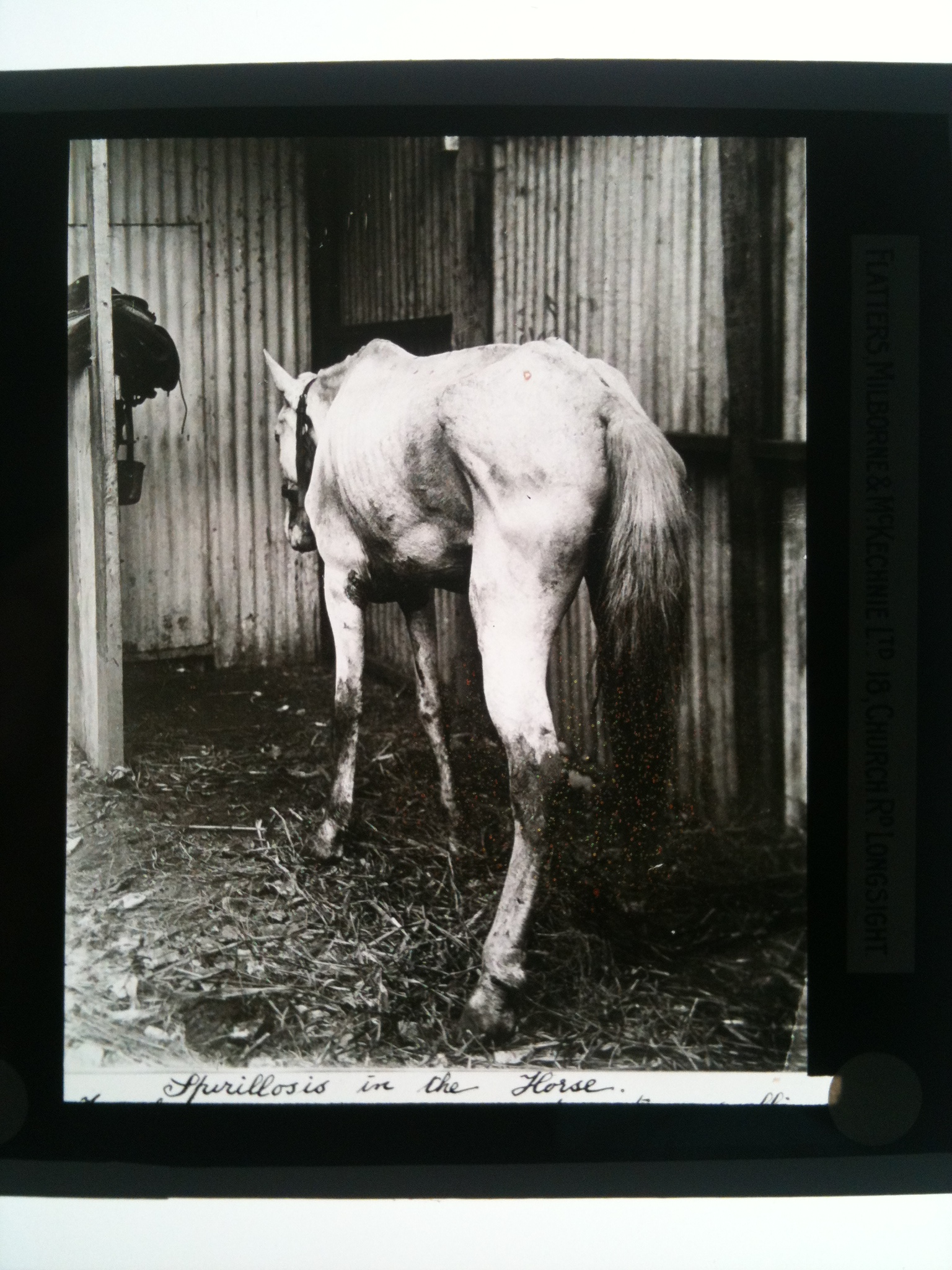
 

Spirilosis in HorseSpirillosis is a disease caused by the presence of spirilla in the blood or tissues. Spirilla is a ‘genus of large (1.4–1.7 mcm in diameter), rigid, helical, gram-negative bacteria (family Spirillaceae) that are motile by means of bipolar fascicles of flagella. These freshwater organisms are obligately microaerophilic and chemoorganotrophic, possessing a strictly respiratory metabolism; they neither oxidize nor ferment carbohydrates. ‘
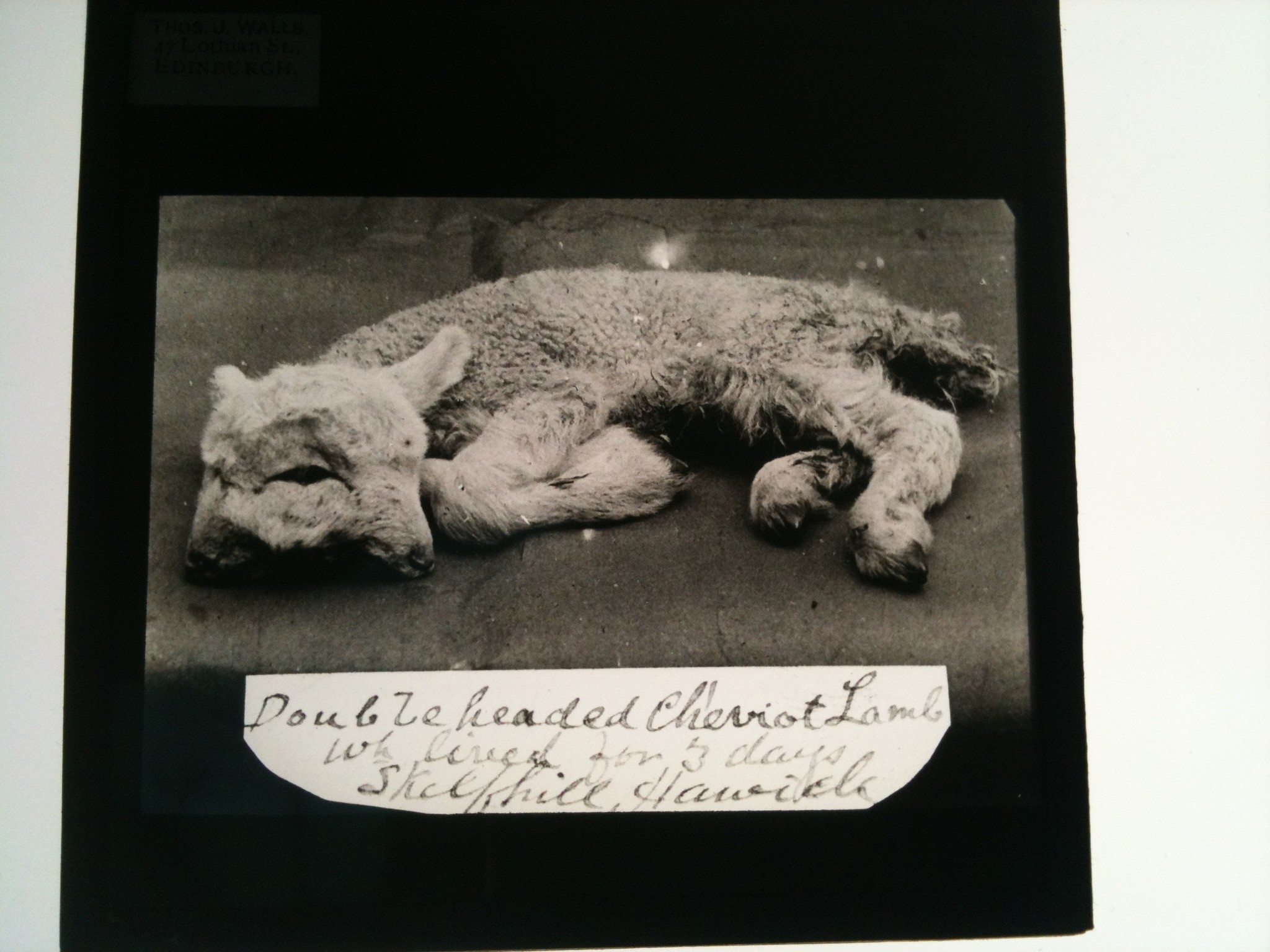
Double Headed Cheviot LambThe double-headed Cheviot lamb suffered from Diprosopus or Cranialfacial duplication which is a rare congenital disorder whereby parts (accessories) or all of the face is duplicated on the head.
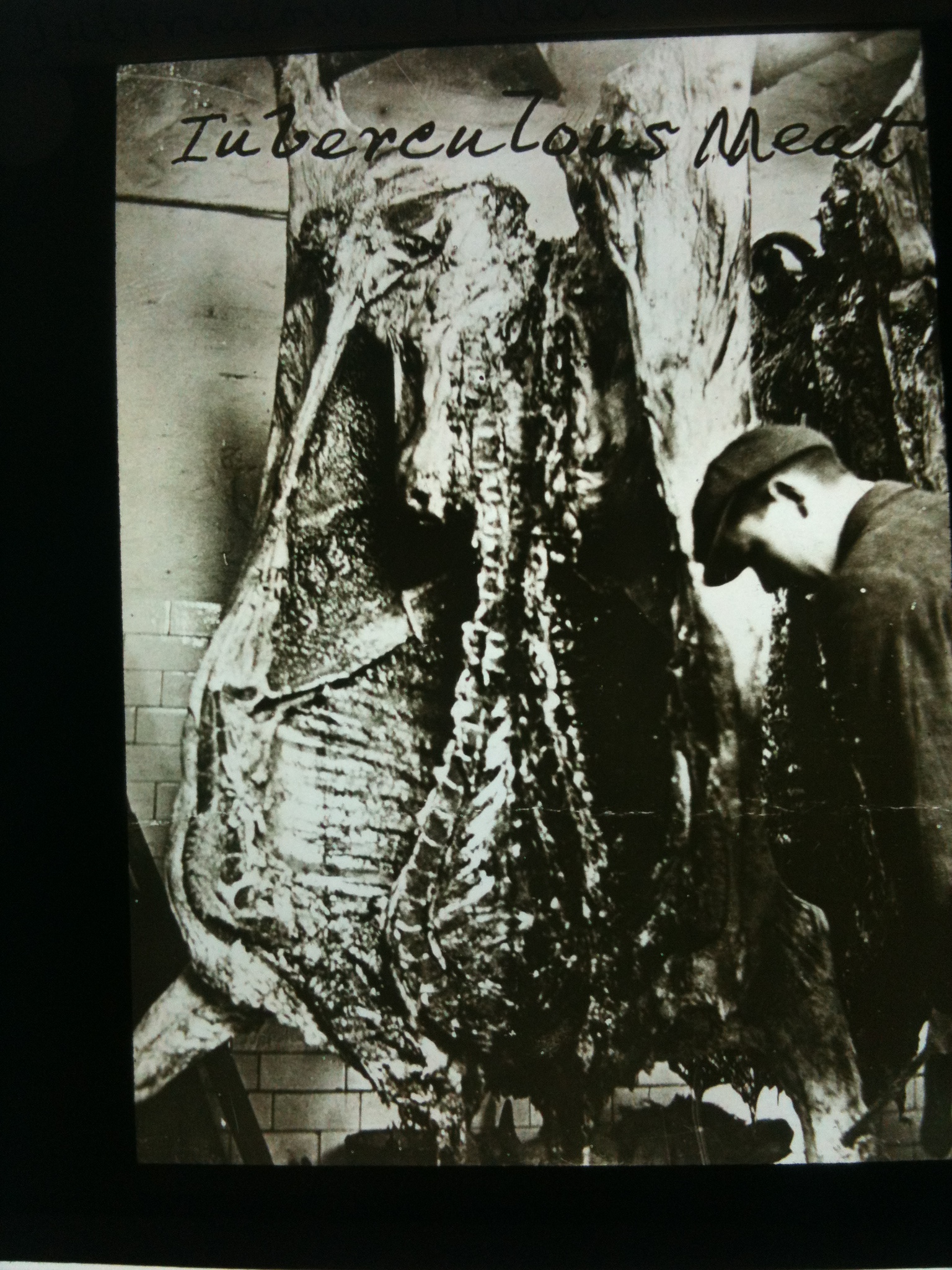
 

Tuberculous MeatTuberculosis is a common, and in many cases lethal, infectious disease caused by various strains of mycobacteria, usually Mycobacterium tuberculosis which infects the lungs and occasionally other parts of the body.


There are also images of disease prevention methods though mostly of cattle dipping to prevent ticks and one of an animal hospital in India.
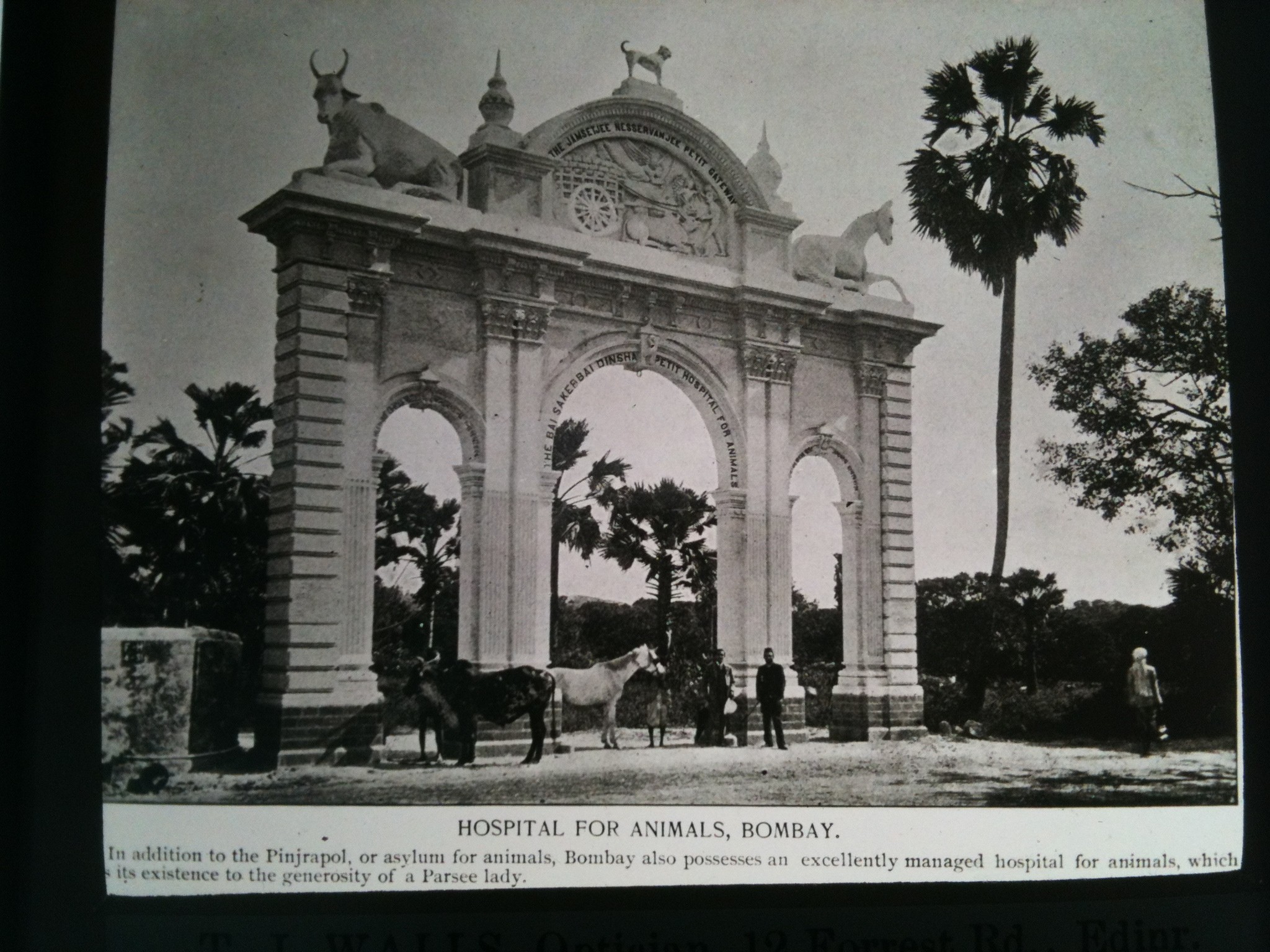
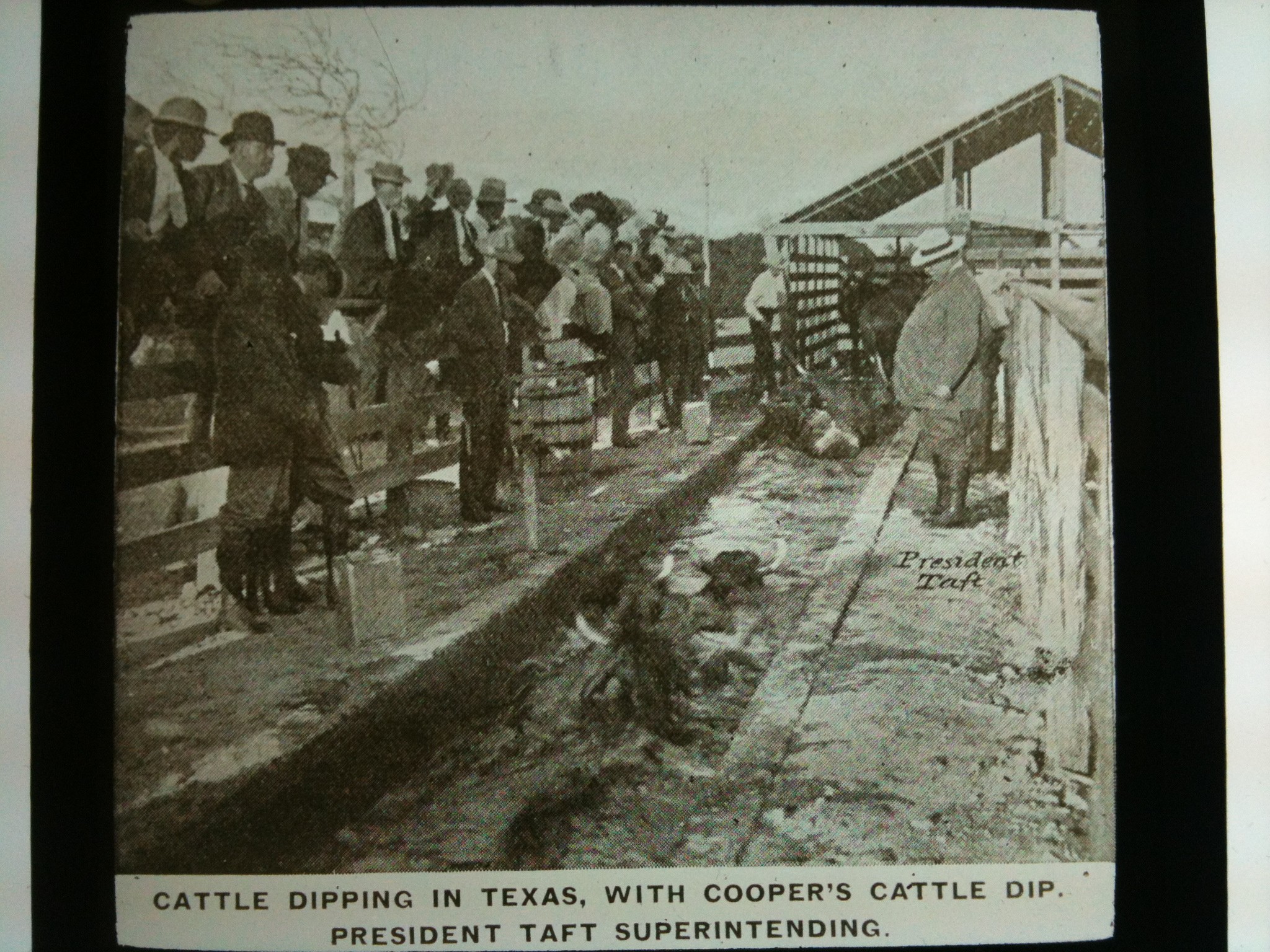
India Animal HospitalCattle Dipping Texas with President Taft


While I’ve catalogued many scientific off-prints and glass slides on animals and disease in the Roslin Collection which are available for you to see if you make an appointment to see the material, I’d also recommend having a look at the DEFRA website for more information.
A New Arrival

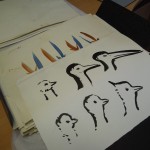
The ‘Towards Dolly’ team are rather excited about a recent acquisition by Edinburgh University Library Special Collections: a collection of original artwork by acclaimed artist and designer Yolanda Sonnabend (1935-) created to illustrate developmental biologist Conrad Hal Waddington’s book Tools for Thought (London, 1977). The collection consists of around 250 watercolours, black inkwork drawings, tracings, collages and material sourced for collage-work. Although not officially part of the ‘Towards Dolly’ project, Sonnabend’s artwork and papers relating to her collaboration with Waddington forms a timely and fascinating complement to the Waddington papers which have been catalogued as part of the project.

As we have seen from earlier posts on this blog, Waddington (Director of the Institute of Animal Genetics in Edinburgh from 1947 until his death in 1975) held a lifelong interest in art, particularly in how it can be used to illuminate and represent scientific concepts. This interest culminated in his 1969 book Behind Appearance, a comparative study of science and painting in the twentieth century. Tools for Thought: How to understand and apply the latest scientific techniques of problem solving was Waddington’s last completed work (published posthumously) and presented approaches such as systems and catastrophe theory, cybernetics and futures research as tools for facing the world’s economic, social and ecological problems. Yolanda Sonnabend’s boldly confident illustrations are a perfect partner to Waddington’s imaginative cross-disciplinary thinking. Here is a slideshow showing a few examples from the collection:

This slideshow requires JavaScript.

Born in Rhodesia, Sonnabend studied painting and stage design at the Slade School of Fine Arts. As well as being an accomplished portraitist, she is probably best known for her work as a designer for theatre and ballet, having worked for the Royal Opera House, the Royal Ballet, Sadler’s Wells and the Stuttgart Ballet company. We are delighted to have this unique collection of her artwork at Edinburgh University Library Special Collections.

You can see more examples of Sonnabend’s work here on the BBC’s website: http://www.bbc.co.uk/arts/yourpaintings/artists/yolanda-sonnabend

All images appear here with kind permission from Yolanda Sonnabend.

Dining ‘Al Fresco’ in the Early 20th Century

In anticipation of the (hopefully) approaching warm weather, I’ve found a selection of images of people dining al fresco in Uruguay, Argentina and British Columbia, Canada in the early 20th century.

 
Two of the images are from Fray Bentos, Uruguay – one showing a group of men standing around a traditional South American barbeque pit/campfire roasting three animals on spits and the other shows the same men, joined by women, sitting around a picnic table. Unfortunately, no one is identified in either image; however, one of the group members may be Oldfield Thomas, a zoologist who travelled to South America around the late 19th / early 20th century. If anyone can identify the people in the group, it would be greatly appreciated!


Cooking on an Asado for lunch near Fray Bentos, Uruguay

Cooking on an Asado for lunch near Fray Bentos, Uruguay

Camp lunch near Fray Bentos, Uruguay

Camp lunch near Fray Bentos, Uruguay


In contrast, the next two images show groups of gauchos, sitting around their camp fires on the Argentinian plains outside of Buenos Aires.


Shearers Midday Meal, Cabana Foriane, Argentina. Photograph of a group of sheep shearers sitting and standing around a cook fire and pot for their midday meal on the plains in the early 20th century.

Shearers Midday Meal, Cabana Foriane, Argentina. Photograph of a group of sheep shearers sitting and standing around a cook fire and pot for their midday meal on the plains in the early 20th century.

Photograph of a group of men, gauchos, eating breakfast in their camp on the plains in Argentina in the early 20th century.

Photograph of a group of men, gauchos, eating breakfast in their camp on the plains in Argentina in the early 20th century.

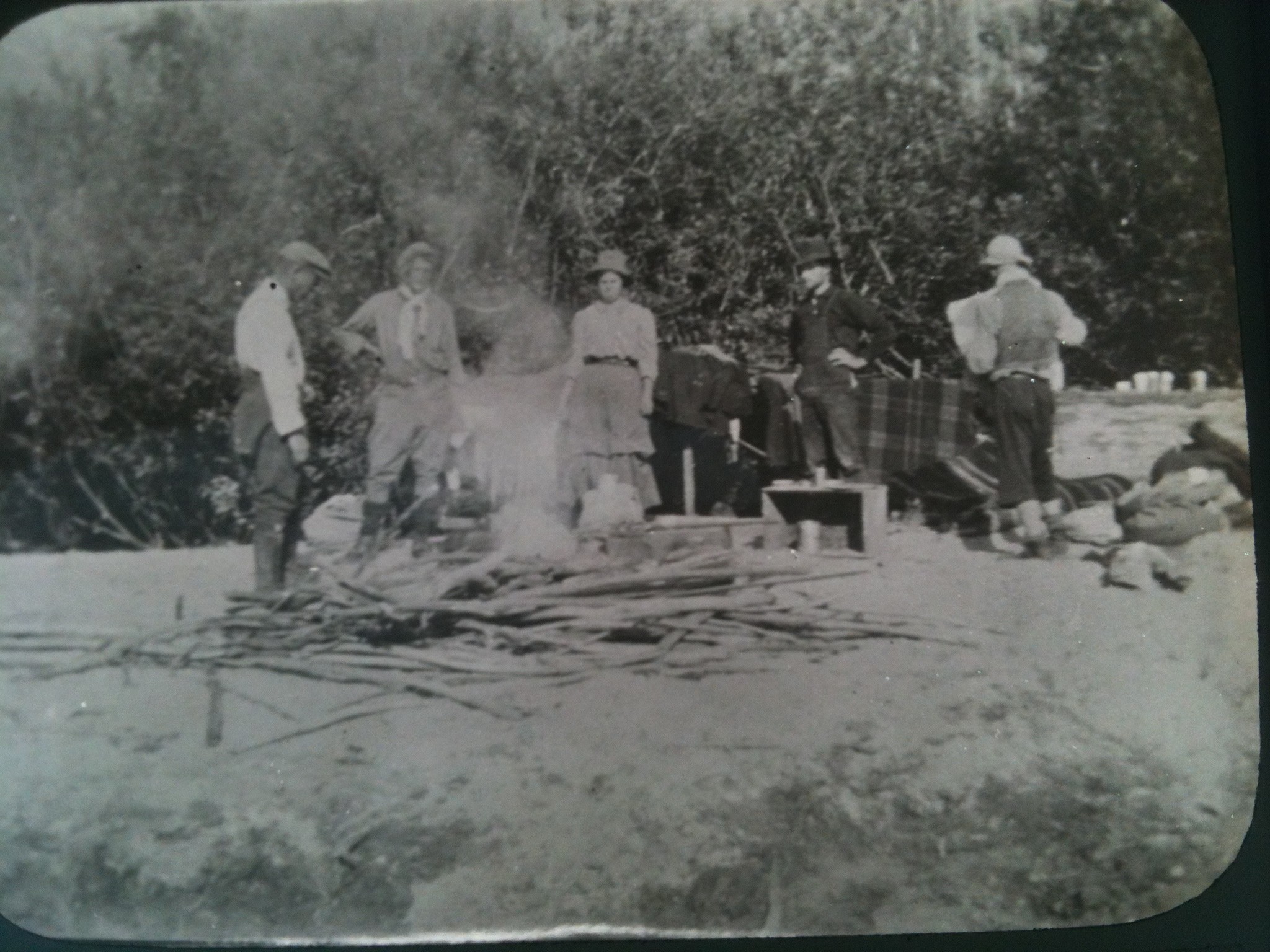
Photograph of a group of men and a woman standing around a camp fire in camp in British Columbia, Canada in the early 20th century. One of the men may be Professor Robert Wallace, another man may be Alex Easton and the woman may be Isabel Easton.

Photograph of a group of men and a woman standing around a camp fire in camp in British Columbia, Canada in the early 20th century. One of the men may be Professor Robert Wallace, another man may be Alex Easton and the woman may be Isabel Easton.


Finally, there is an image of Professor Robert Wallace, who taught rural agriculture and natural history at the University of Edinburgh in the early 20th century, next to a camp fire in British Columbia, Canada.

These images illustrate a fascinating aspect of social history at the turn of the 20th century – that scientists on expeditions around the world documented what and how they ate when ‘out in the field’ provides an interesting insight.

Letters in the Limelight: Edwin Brough, the man who hunted Jack the Ripper

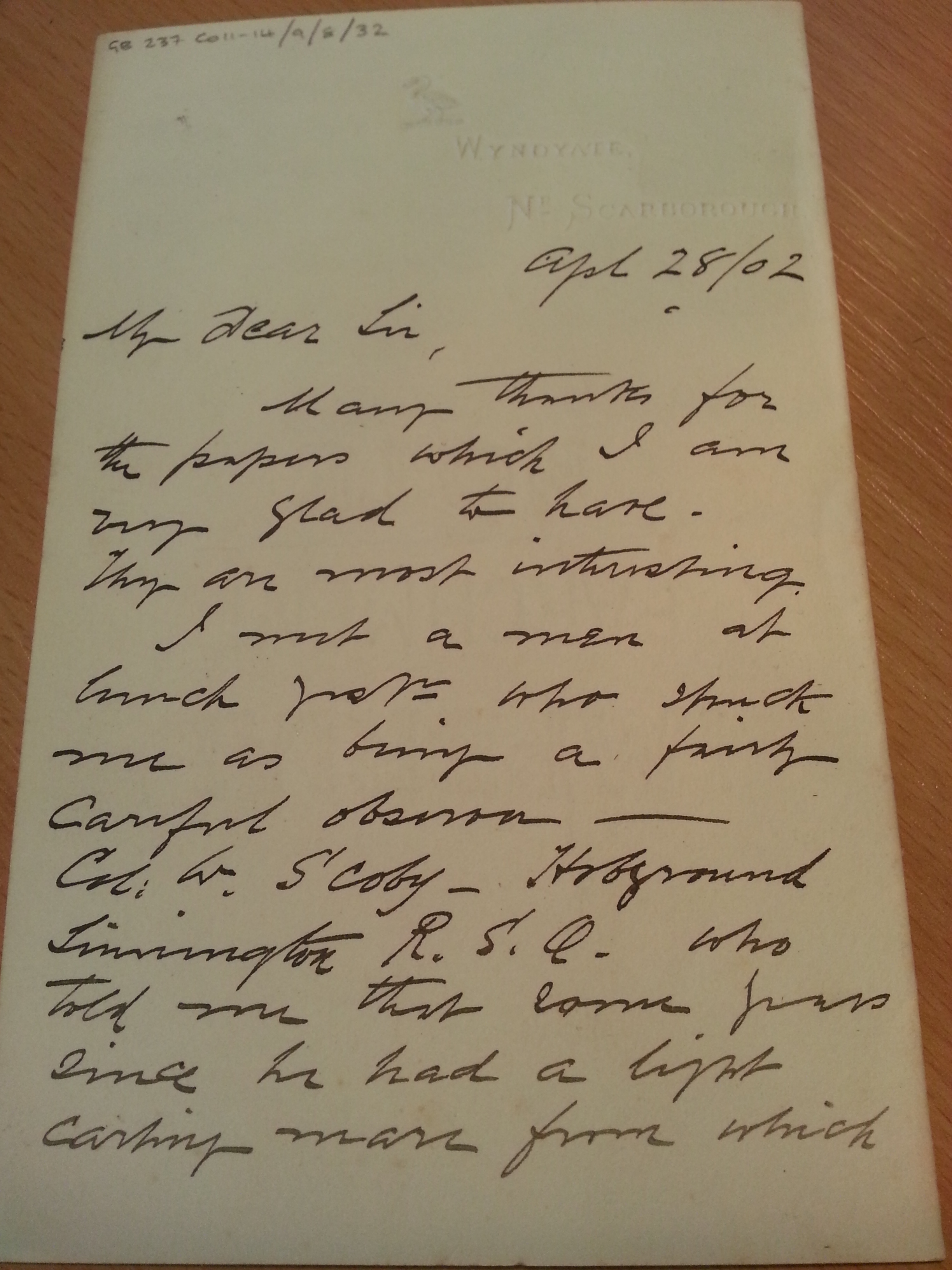
Coll.14.9.8.32 Edwin BroughCataloguing the correspondence of zoologist/animal breeder James Cossar Ewart (1851-1933), I have been intrigued by the various ‘life stories’ which emerge from the letters. Periodically I will be including some highlights in a series of posts entitled ‘letters in the limelight’ .

I would never have guessed that there would be even a slight link between James Cossar Ewart and Jack the Ripper, but this week’s letter in the limelight, written to Ewart on 28 April 1902 by Edwin Brough, proves otherwise…

Brough was a silk manufacturer and bloodhound breeder who became publicly well known when two of his hounds, Barnaby and Burgundy (‘Burgho’), became involved in the hunt for Jack the Ripper, the infamous Whitechapel serial killer of 1888, who was never caught. In the huge public outcry surrounding the hunt for the murderer, numerous suggestions were made for the use of bloodhounds, whose extraordinary sense of scent and ability to follow a trail tirelessly makes them ideal tracking animals. However, Brough maintained that the hounds were of limited use due to the age of the scent and the crowded city environment, although it does seem that the presence of the hounds in the City temporarily deterred any further murders.

Brough predominantly bred hounds for tracking competitions, and was also a key figure in the introduction of the breed into America after exhibiting three of his hounds at the Westminster KC show in New York City. However, Brough was clearly interested in other types of animals breeding: in his letter to Ewart he discusses the experiments of a Colonel W. Scoby, who crossed a carting mare with a blood horse to produce excellent hunting horses. Brough himself was also successful breeder of cows, including the famous Jersey cow ‘Antic’ who in 1896 gave 1,071 gallons of milk!

The letter to Ewart bears the heading ‘Wyndyate’ (later called Scalby Manor) near Scarborough, Yorkshire. The house, with its stables and kennels, was built for Brough in 1885 and he lived here until 1910, breeding and training his famous hounds. The building has been a hotel or pub since the 1980s. You can see pictures of the Manor as it is now here: http://www.jtrforums.com/showthread.php?t=10311

Thrills and Spills and Just another Day at the Races – Motion Studies, Breeding and Cloning in Horse Racing

Now that spring has arrived and with National Hunt season ending and Flat Season beginning, I thought I’d show you some horse racing images we have in the Roslin glass plate slide collection.

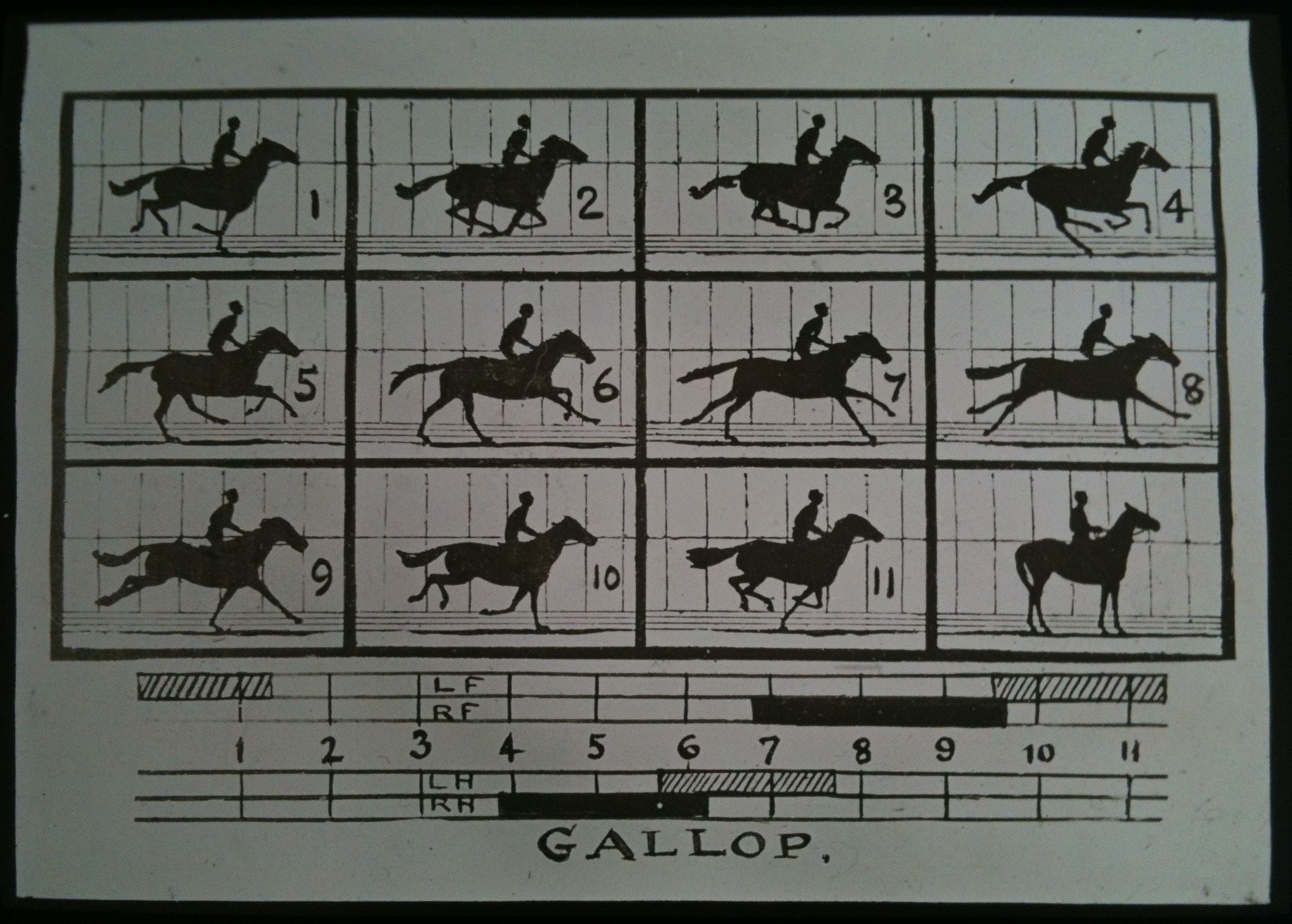
Horse racing and animal genetics go well together since issues of genetic traits and physiology are of interest to both breeders and scientists. These images illustrate the ‘body in motion’ – from Muybridge’s film still of a horse running at a gallop to a race horse in the midst of a fall during a steeplechase – they can illustrate how race horse breeding has developed by being able to compare the points of the horse in the slides.Gallop Motion StudyWhite Cockade falls


Looking over the slides I found that they fell into three sub-genres within horse racing :

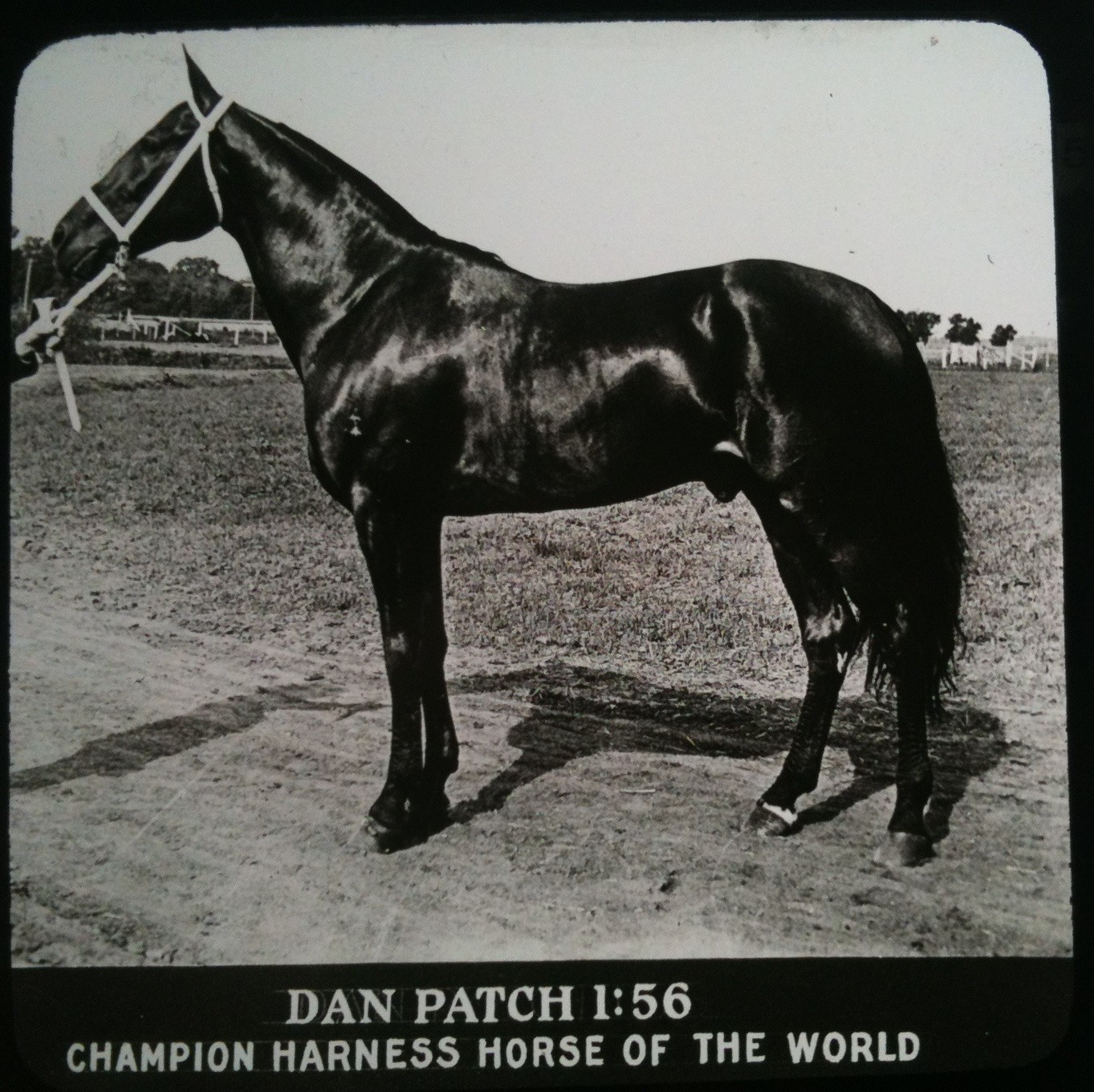
The first, ‘Racehorses at Rest,’ shows various individual well-known horses in profile which is very useful to see and compare favourable traits found in winners. Additionally, the text beneath the image provides a bit of history on the particular horse.

Dan Patch Horse

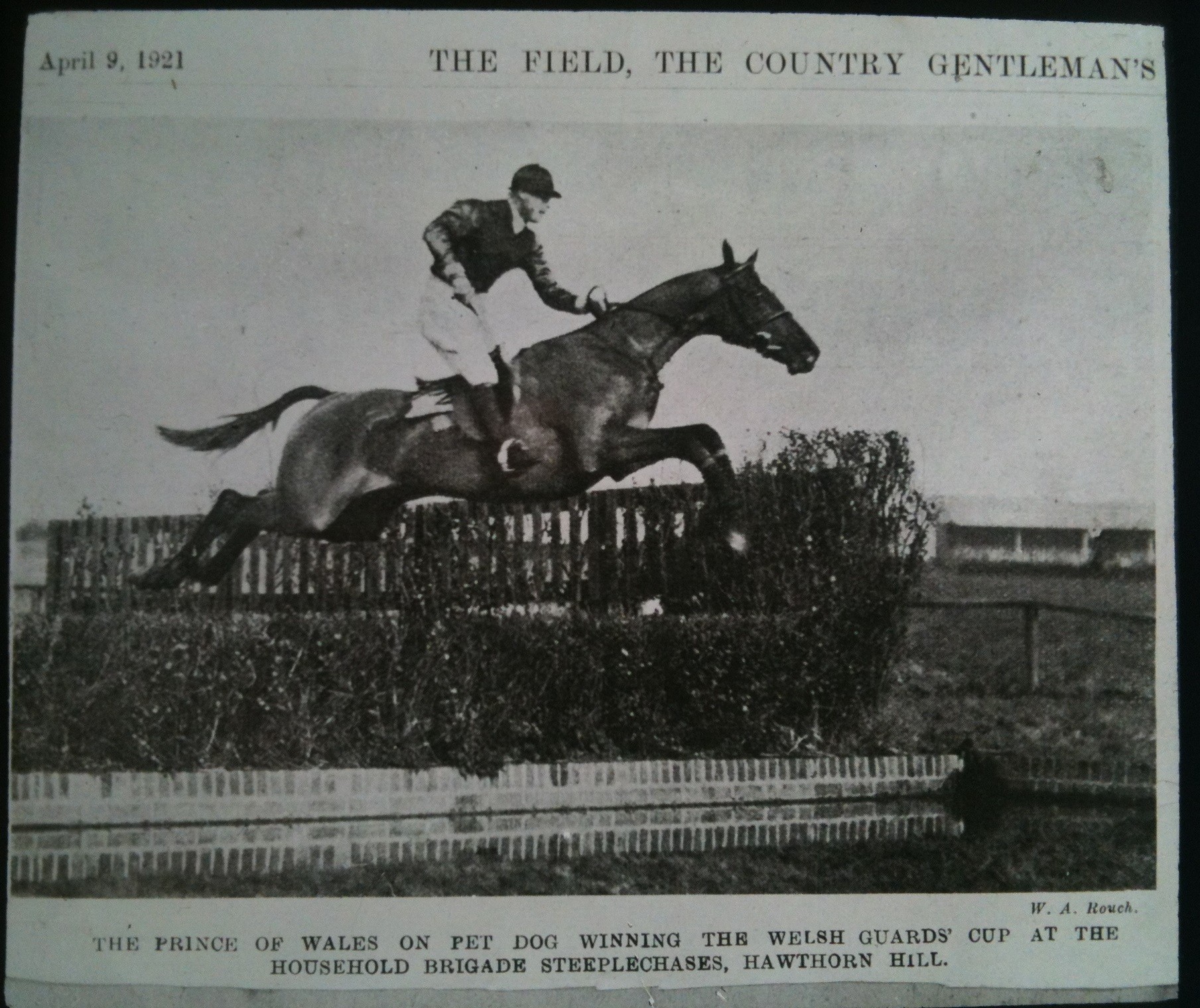
The second, ‘Racehorses during a Race,’ shows the horse and jockey in motion on a flat-track or jumping over fences during steeplechases. These images are very useful to see the physiology of the horse in motion. Prince of Wales on Pet DogMovich America's Fastest Racehorse

Grey mare's leap


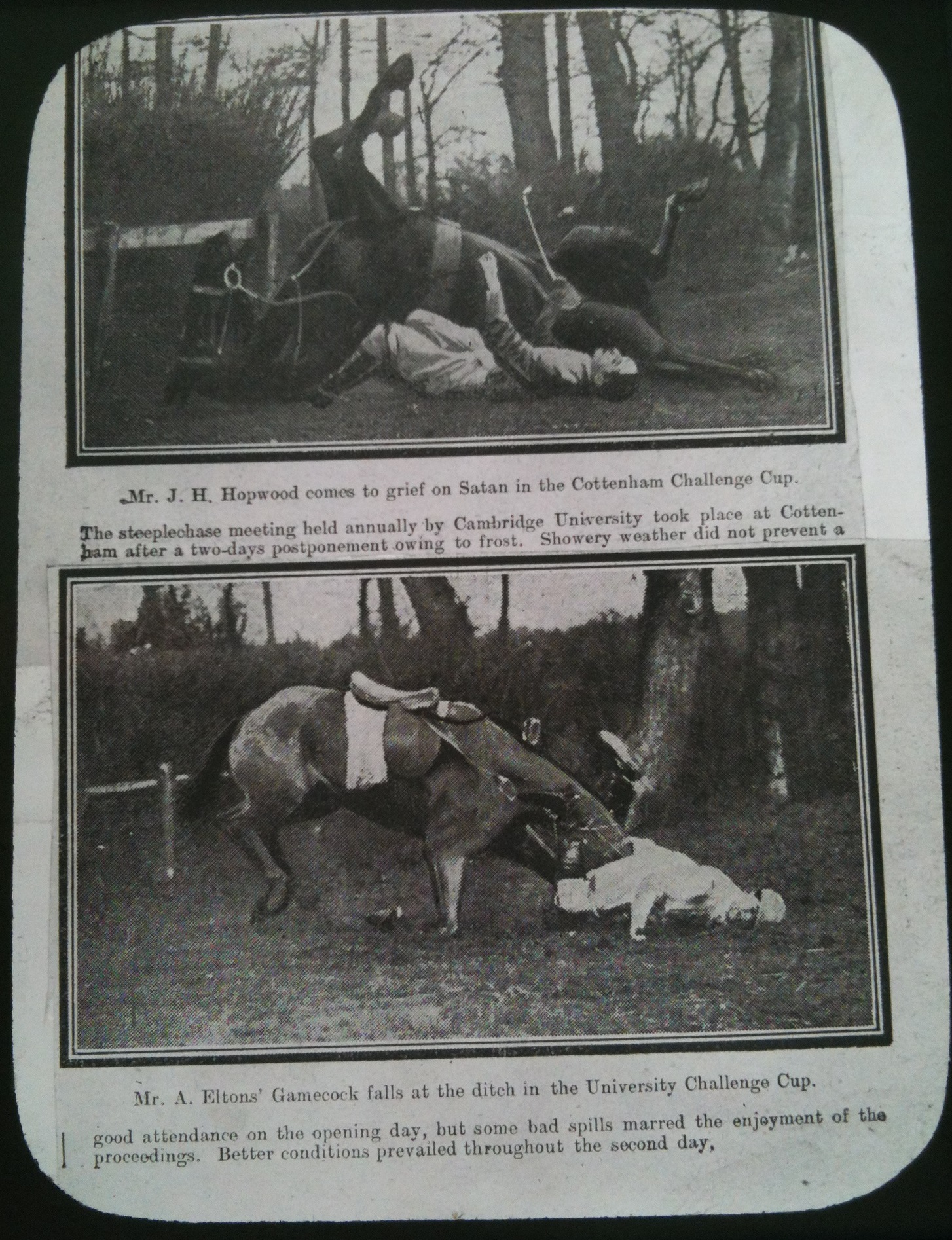
The third, ‘Racehorses – Accidents’ – is just that- from showing suffragette, Emily Davison’s pulling down George V’s horse at the Epsom Derby in 1913 to horses falling after taking a jump during a steeplechase. Just as a caution – these particular photographs are not particularly pleasant to view; however, they are fascinating to see how the camera has captured the moment and to see how the horses’ body moves.

No Damage DoneSatan and Gamecock fall over the fencesDavison Suffragette Horse 4


Another issue arising is the one on cloning racehorses – can it be done (yes); is it done (yes); are cloned racehorses allowed to race (no); and why clone racehorses (to preserve winning horses genetic lines).  Mike Bunker wrote in his article, “Cloning may be Horse Racing’s Next Horizon” on the 2007 Centre of Genetics and Society website,

Although cloning of food animals has become relatively common since 1996, when Scottish scientists made a DNA duplicate of a sheep named Dolly, the notion of copying racehorses for entertainment purposes is a controversial one. The Jockey Club, which writes and enforces thoroughbred racing’s rulebook, and the American Quarter Horse Association both prohibit the practice.

The first horse cloned was “Prometea,” in 2003 by Cesare Galli, at the University of Bologna in Cremona, Italy, though it was considered to be mostly a ‘scientific experiment’; then, in 2005, – the first champion racehorse, “Pieraz2,” was cloned by the same scientist to preserve its genetic lines. In 2008, Charlotte Kearsley (supervised by John Woolliams) wrote her PhD thesis for the University of Edinburgh on Genetic Evaluation of Sport Horses in Britain in which her “aim of this project was to derive models for predicting breeding values for British bred sport horses and hence develop procedures for their evaluation.”

There are more articles and websites on the genetics of breeding and cloning racehorses and there are more slides in the collection as well, so I hope that this has provided some interesting insight!

Letters in the Limelight: Rowland Ward, taxidermist

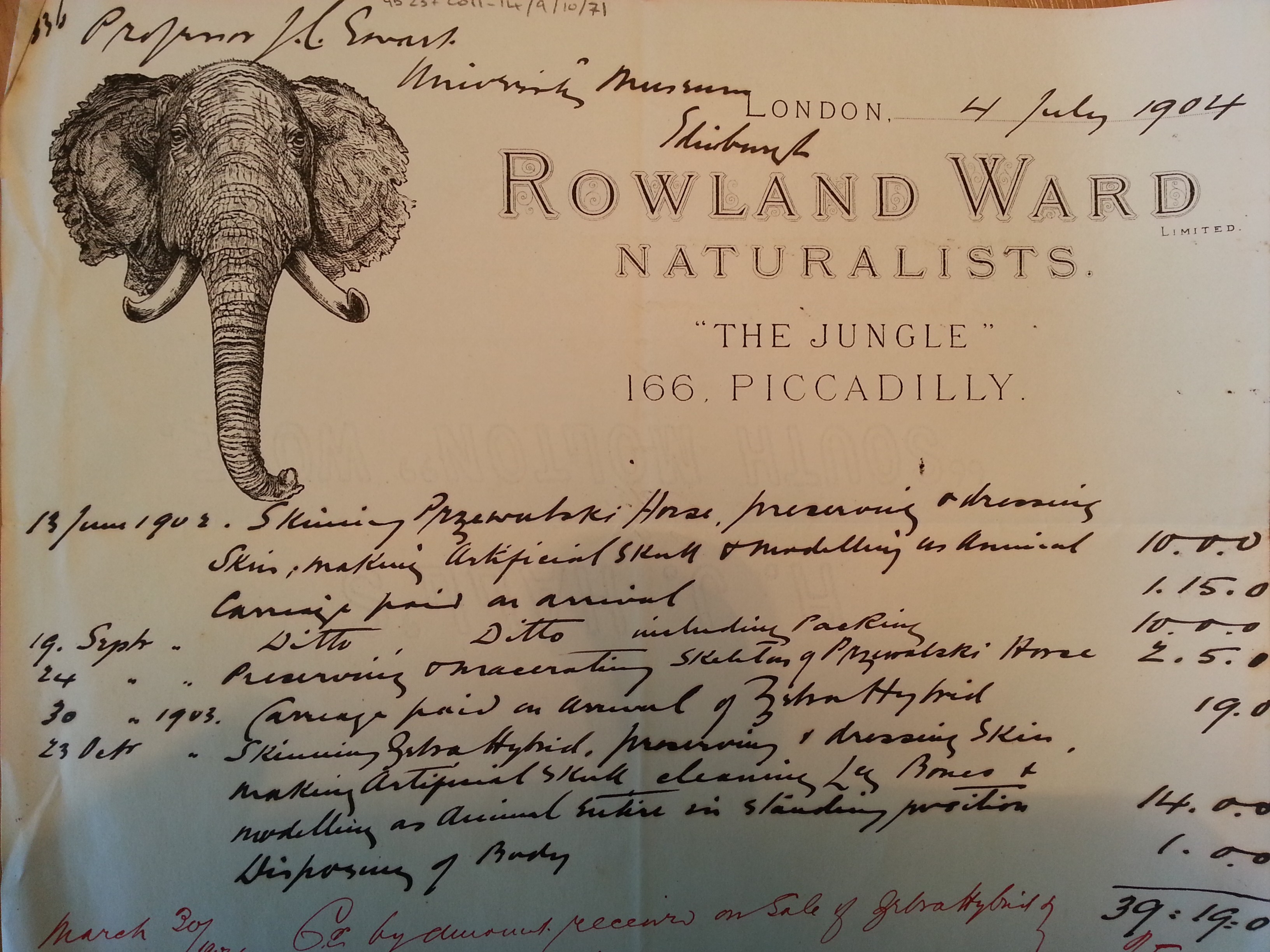
Coll14.9.10.71 Rowland Ward billCataloguing the correspondence of zoologist/animal breeder James Cossar Ewart (1851-1933), I have been intrigued by the various ‘life stories’ which emerge from the letters. Periodically I will be including some highlights in a series of posts entitled ‘letters in the limelight’ .

For anyone seriously interested in studying the various physical and biological characteristics of animals in James Cossar Ewart’s time, taxidermy played an important role. Ewart’s correspondence reveal that he travelled extensively around the world observing or seeking out various breeds of animals (for instance in 1905 he went to Mexico to study mustangs). He was also able to acquire various breeds or hybrids at his home in Penicuik (most usually sheep, ponies and his famous zebra/horse hybrids). We also know that his correspondents sent him photographs or glass slides depicting various interesting specimens. However, sometimes travel or photography was not possible, or a particular animal Ewart wished to inspect died before he could visit, or he wanted to preserve one of his own animals for future research use, such as examining colouration or markings. This is where taxidermy came into its own. The picture shows a bill from the renowned taxidermist Rowland Ward. Dated 4 July 1904, it summarises the services Ewart had received since 1902, including ‘skinning Przewalski’s horse [a species of wild horse], preserving and dressing skin, making artificial skull’, ‘preserving and macerating skeleton’ and ‘skinning zebra hybrid.’ During the course of his research, Ewart amassed quite a collection of zebra and horse skins, skulls and bones, which allowed him to compare variations in markings, bone structure and other characteristics.

Born in London in 1847, Rowland Ward left school at 14 to begin work at his father Henry Ward’s taxidermy studio. His gift for taxidermy and sculpture soon became clear, and his hard work and entrepreneurship soon made him established. His final premises, The Jungle, was situated in London’s fashionable Piccadilly district and largely catered for wealthy sportsmen and game hunters, as well as naturalists like Ewart. He became widely known for his hugely detailed dioramas, often used at large exhibitions, depicting, for example, scenes of jungle life, as well as fashionable ‘animal furniture’. However, he also pioneered techniques in taxidermy which are still employed today, and his books on taxidermy and extensive compilation of horn measurements are still consulted. The business continued to flourish after Ward’s death in 1912, its subsidiary company finally closing in 1983.

You can see examples of Rowland Ward’s work here: http://taxidermyemporium.co.uk/15.html

Roslin Glass Slides on Display in Masterpieces III Exhibition

An exciting exhibition has just opened here in the Main Library at the University of Edinburgh –  Masterpieces III – highlighting items from the University’s collection from the perspective of science and medicine. I??????????t’s open from April 5th to July 6th, 2013 at University of Edinburgh’s Main Library on George Square on the lower ground floor with hours from 10am to 5pm Monday through Saturday. See the blog for even more information and images.

Since the themes of the exhibition are ‘Science as Art’, ‘Science as Innovation’ and ‘Science as Statement’, it was a perfect opportunity to showcase some of the Roslin Glass Slide collection. So, in the exhibition you can see 26 of the glass slides on display illustrating the diversity of the collection and highlighting the scientific and research interests of James Cossar Ewart and Professor Robert Wallace.

Hopefully you can visit the exhibition and see the slides and other items on display for yourselves. Enjoy!

Letters in the Limelight: stolen birds’ eggs and ‘the curse of ornithology’

Cataloguing the correspondence of zoologist/animal breeder James Cossar Ewart (1851-1933), I have been intrigued by the various ‘life stories’ which emerge from the letters. Periodically I will be including some highlights in a series of posts entitled ‘letters in the limelight’ .

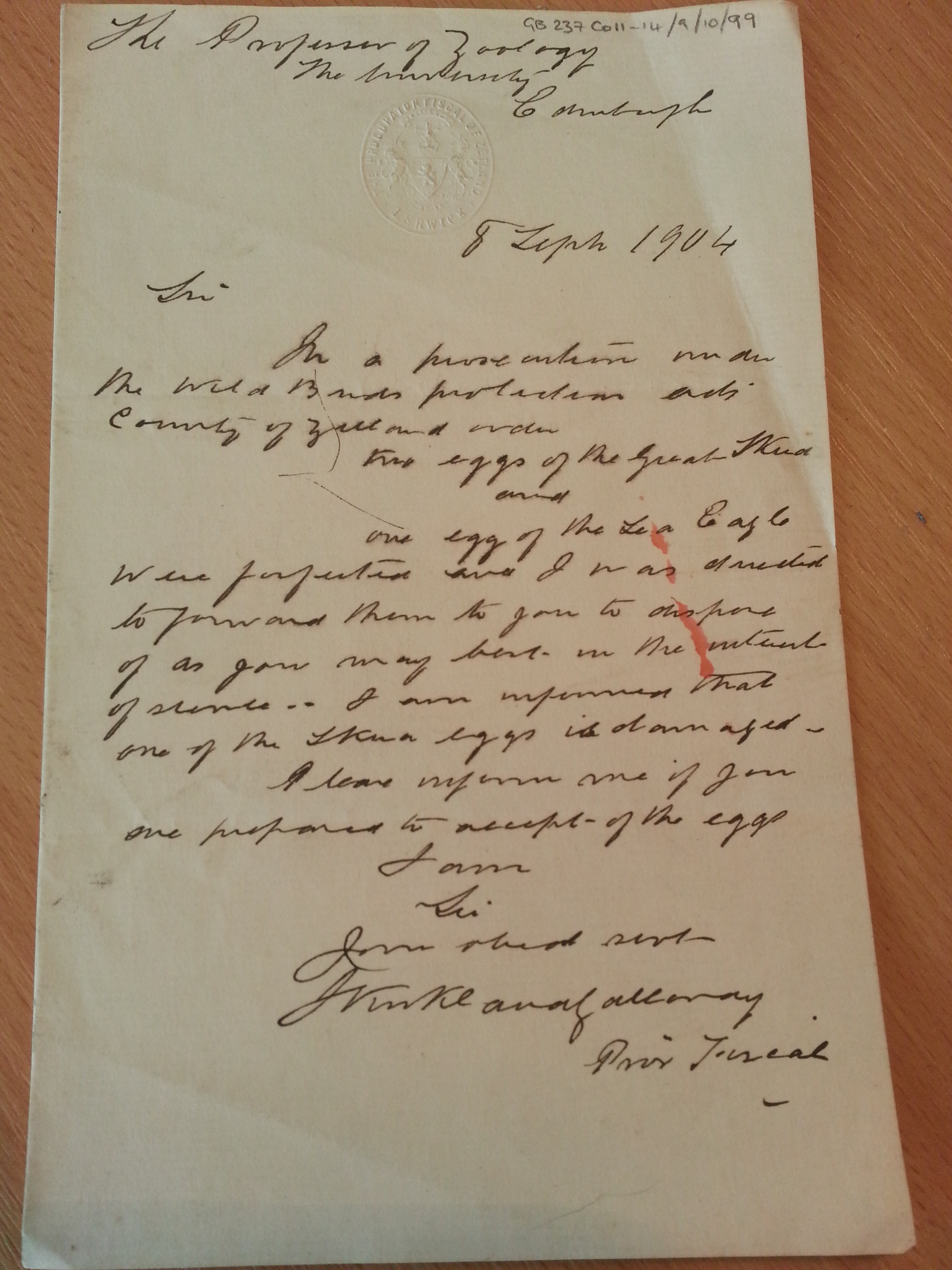
Coll.14.9.10.99 Zetland eggsAs the Easter weekend approaches, we have eggs on the mind (albeit mostly of the chocolate variety) so this week’s ‘Letters in the Limelight’ follows this theme (eggs that is, not chocolate). A letter sent to James Cossar Ewart on 8th September 1904 from J. Kirkland Galloway, Procurator-Fiscal of Zetland (Shetland), concerns the prosecution taking place in Shetland under the Wild Birds Protection Act. Kirkland-Galloway describes the taking of two eggs of the Great Skua and one egg of the Sea Eagle and writes that he has been instructed to send the eggs to Ewart ‘to dispose of as you may best in the interest of science’.  The ornithologist William Eagle Clarke wrote earlier to Ewart (28th July 1904) to suggest that the Edinburgh Museum of Science and Art, where he worked, might be the best place for the eggs. He angrily comments that egg-lifting ‘is a senseless business and is the curse of ornithology.’

Historically, the effective protection of birds and their eggs was a gradual process.  The Wild Bird Protection Act (1880) was a start but it fell short in many areas: it failed, for example, to stop the collection of eggs. This was an activity which became highly organised during the Victorian era, where specimen collecting in various forms was all the rage. The 1896 Wild Birds Protection Act which Kirkland-Galloway mentions gave county councils the right to apply for orders to protect particular areas or species of birds, while an Act of 1902 allowed birds or eggs taken illegally to be confiscated. The Society for the Protection of Birds (which got its Royal Charter in 1904) was obviously a driving force in this legislation, culminating in the Protection of Birds Act of 1925. However, the legislation didn’t stop everyone:  in 1916 a vicar stole the last native White-tailed Sea Eagle eggs on Skye and the last adult bird was shot on Shetland two years later (although the species was successfully reintroduced to Scotland in 1975).

The details of the prosecution mentioned in Kirkland-Galloway’s letter are not known and neither is the ultimate fate of the eggs, but it is sobering to see a snapshot in time where the eggs of wild birds did not enjoy the same protection as they do today.

Art of the Animal

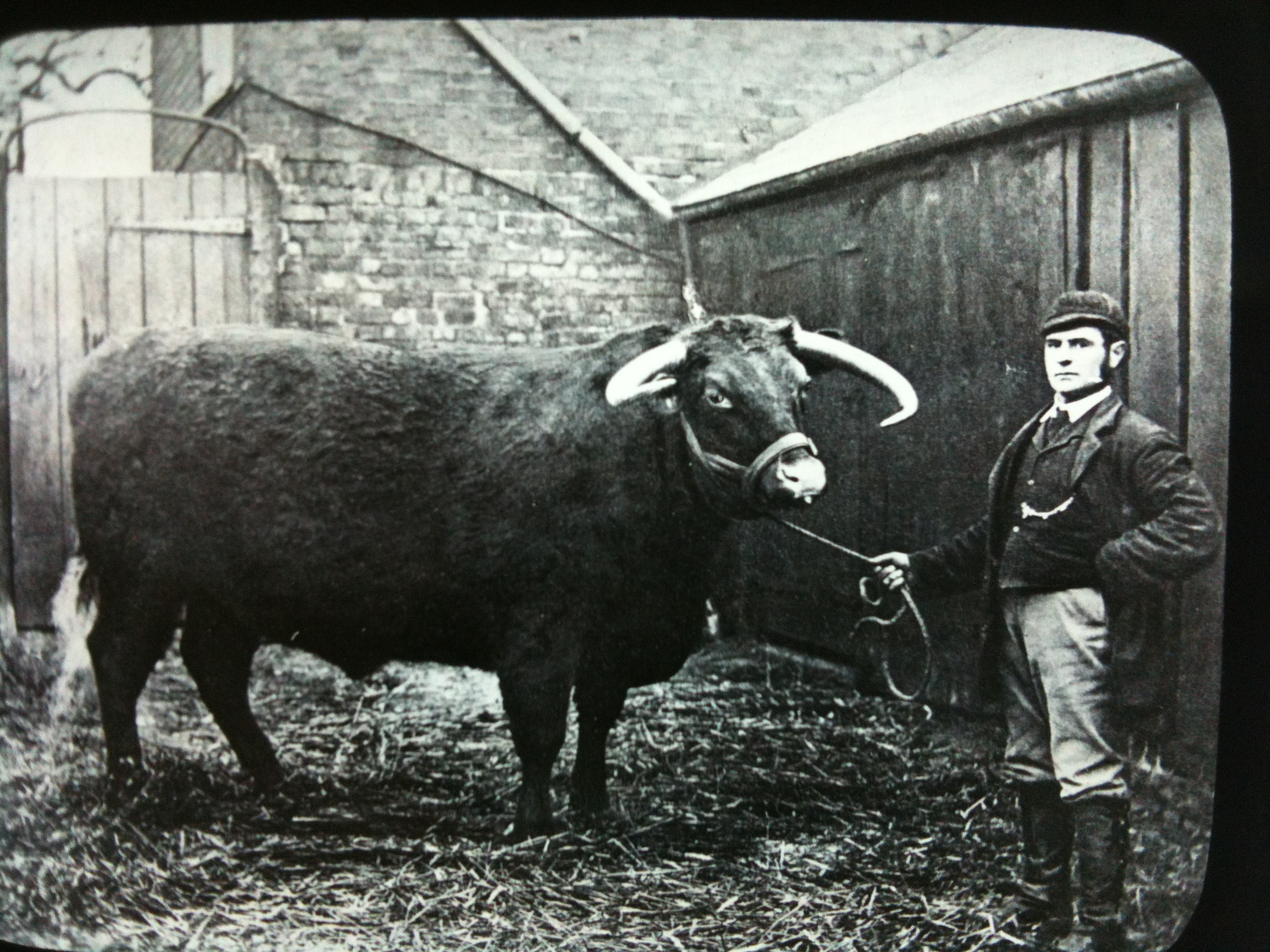
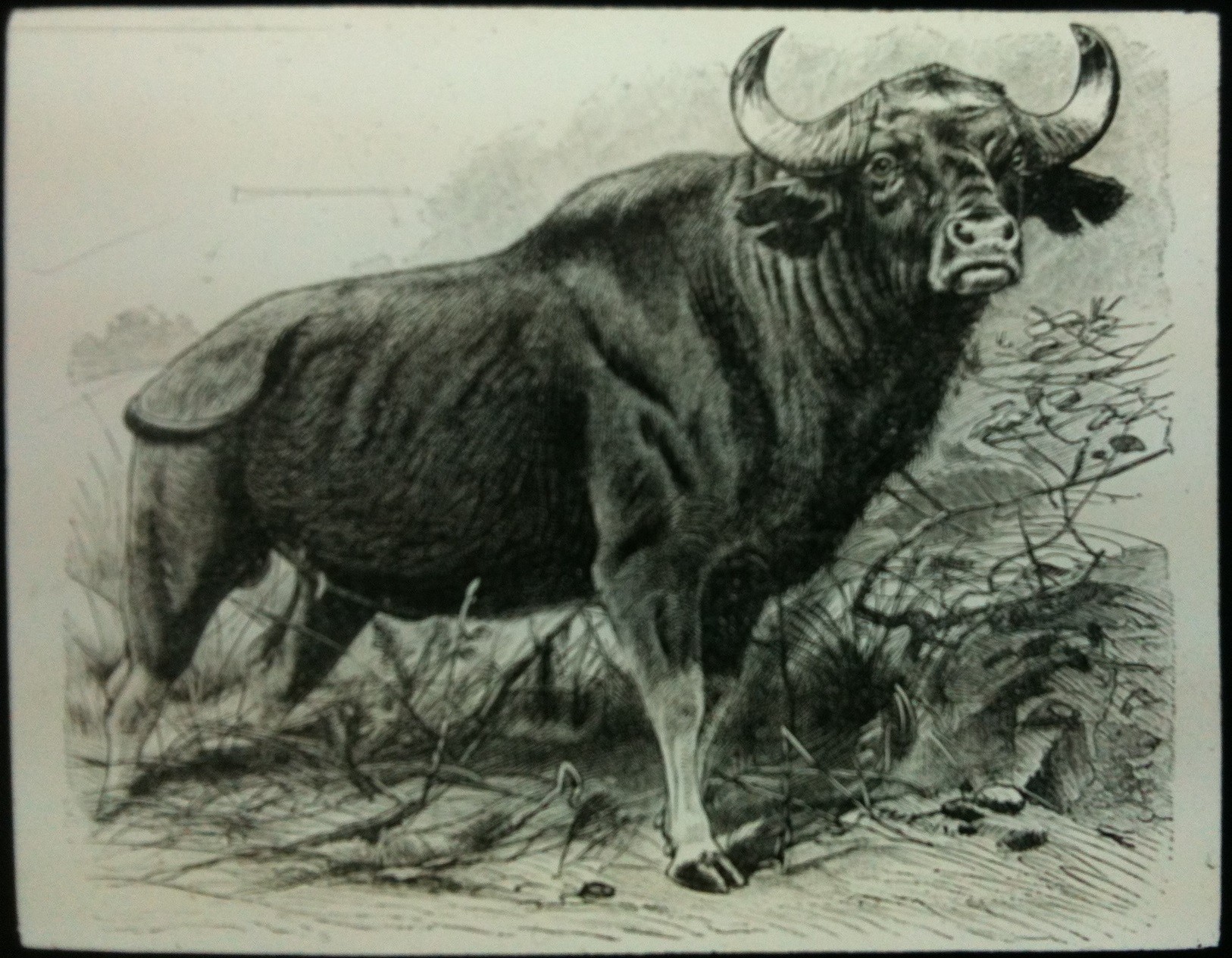
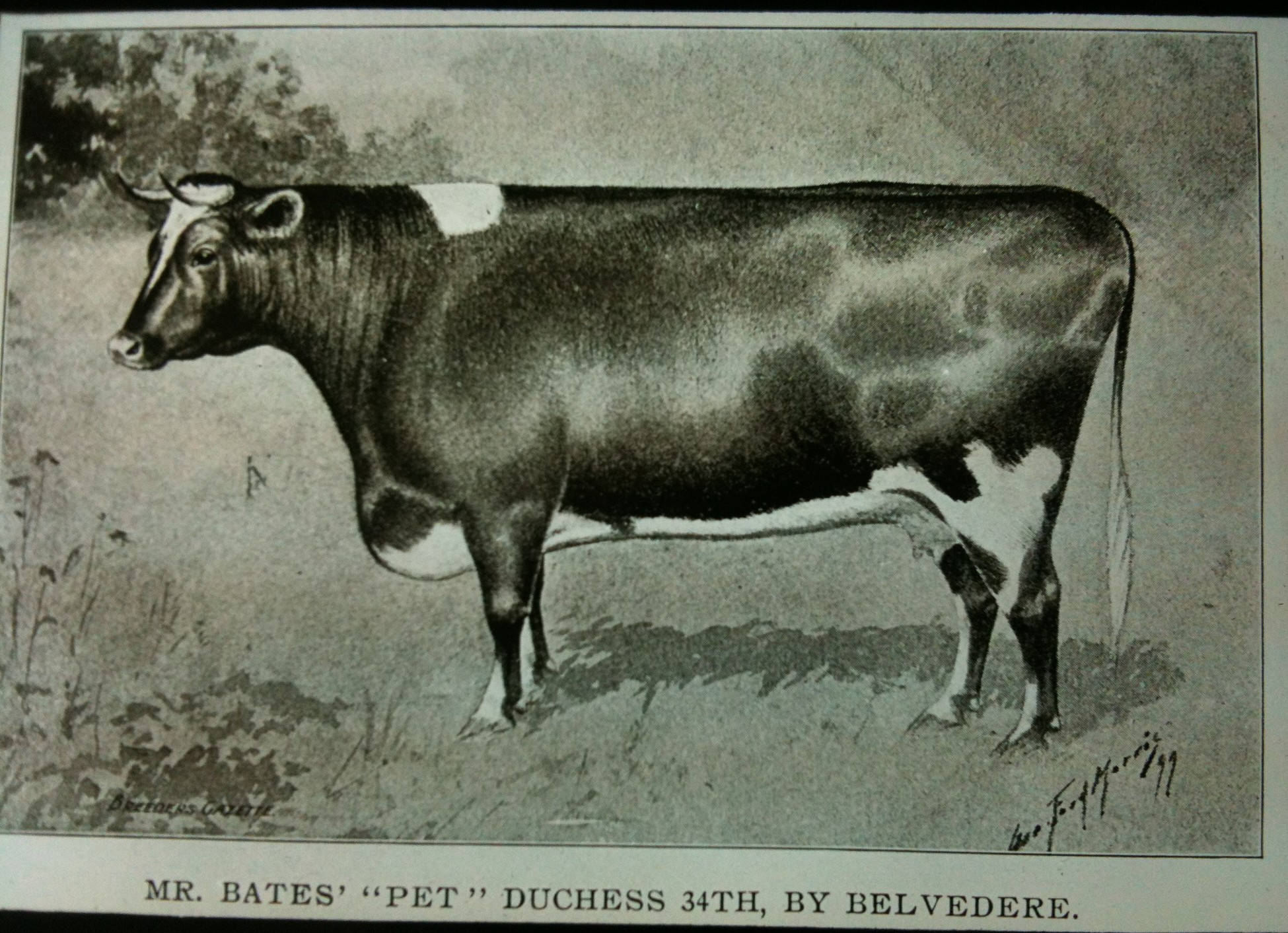
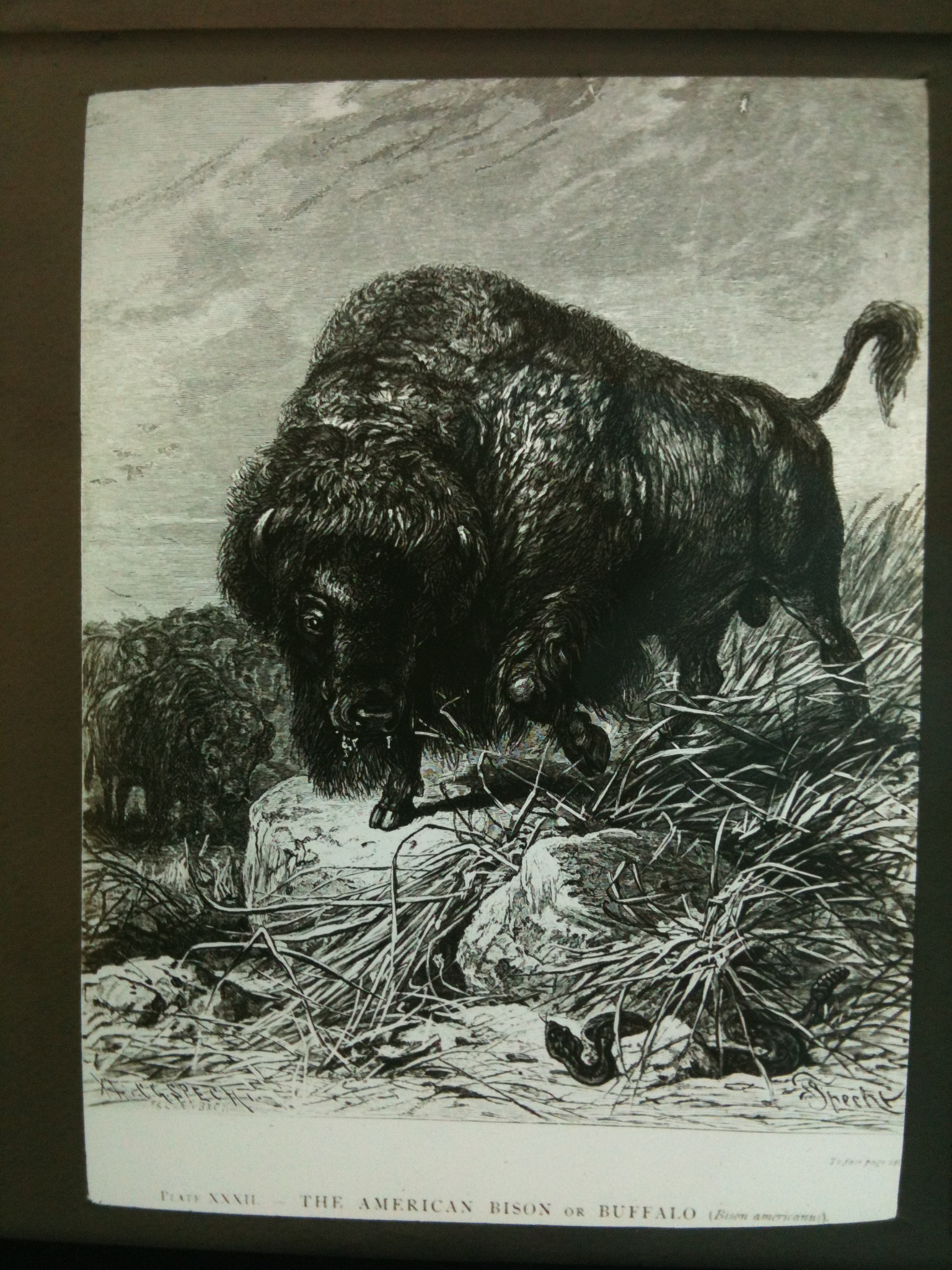
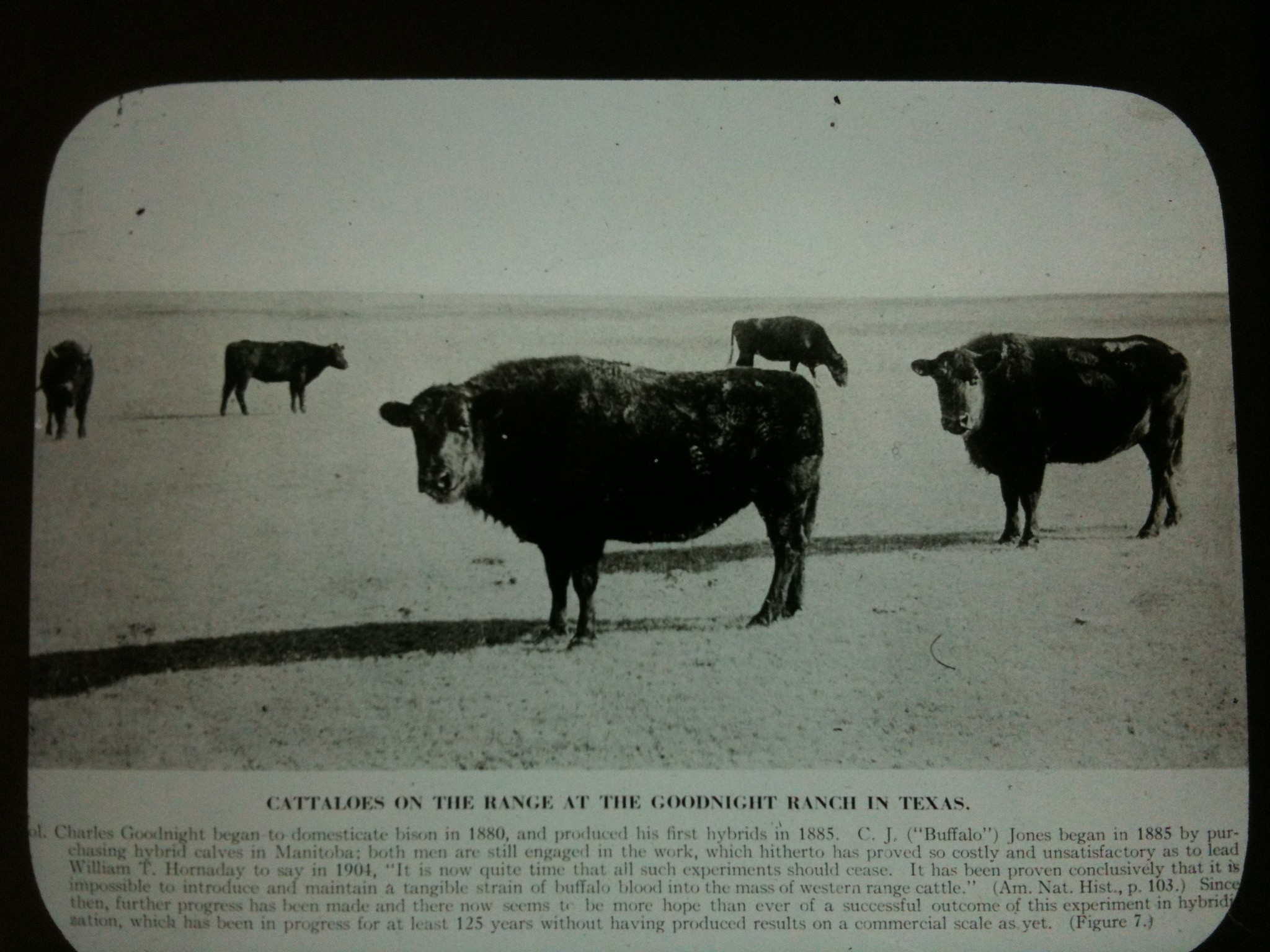
The illustrated artistic representations of animals in the slides that I’ve been cataloguing have shown both an artistic romanticization and an attempted realistic depiction. Additionally, in pre-photography days it was important for breeders and scientists to have artists depict the high quality animals to show the traits of the best of the breed. It’s been interesting to see how the physicality of the animal compares between an illustration from the 19th century and a photograph from the 20th century. http://www.societyofanimalartists.com/

 
From bulls:

Man with BullBull


To cows:

Mr Bates' Pet, Duchess 34th cowMan with Cow


Buffaloes…:

American BisonCatteloes


And boars!:

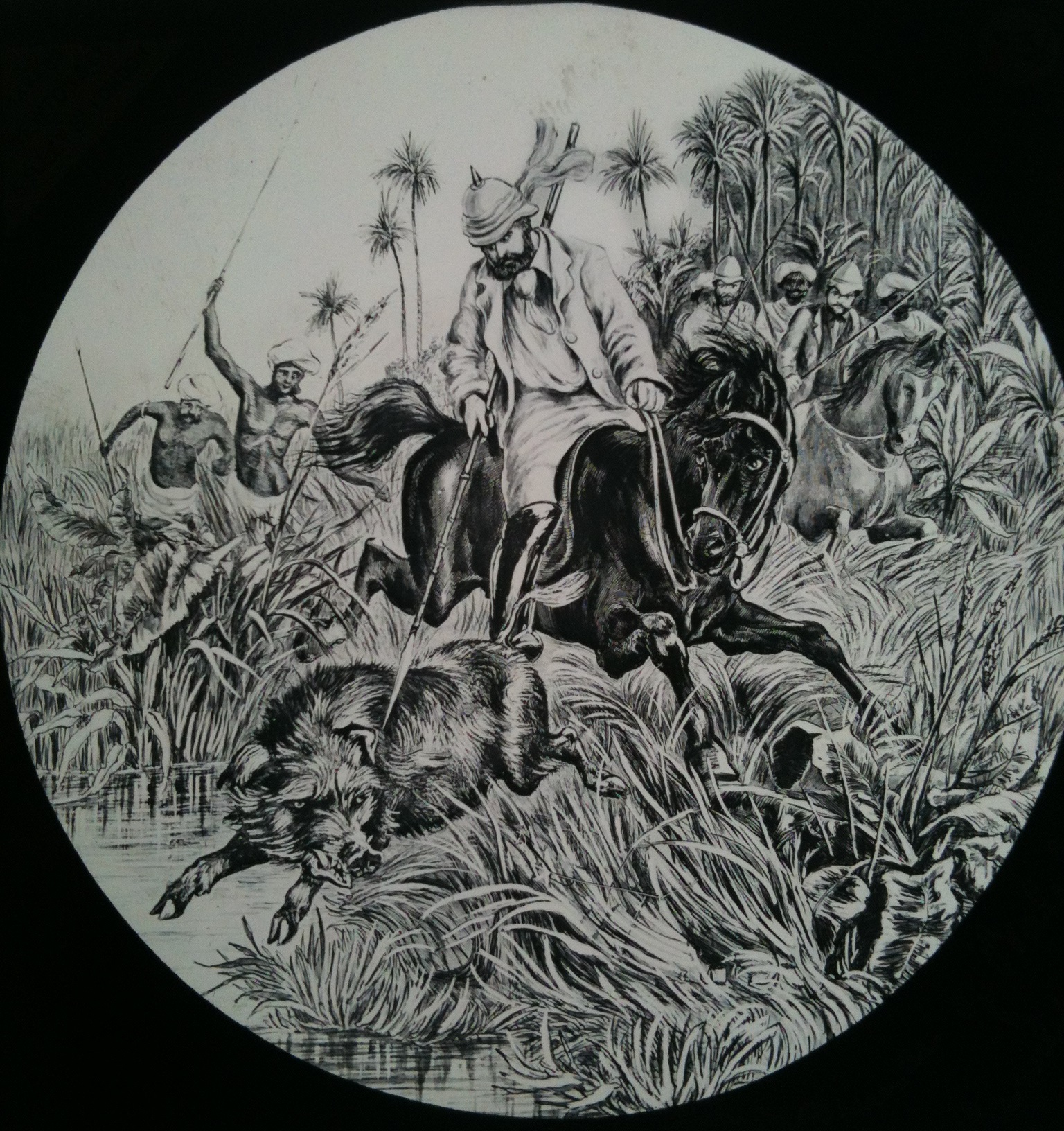
Boar HuntBoar Captured by French in WWI


Letters in the Limelight: Susanna Carson Rijnhart

Cataloguing the correspondence of zoologist/animal breeder James Cossar Ewart (1851-1933), I have been intrigued by the various ‘life stories’ which emerge from the letters. Periodically I will be including some highlights in a series of posts entitled ‘letters in the limelight’ .

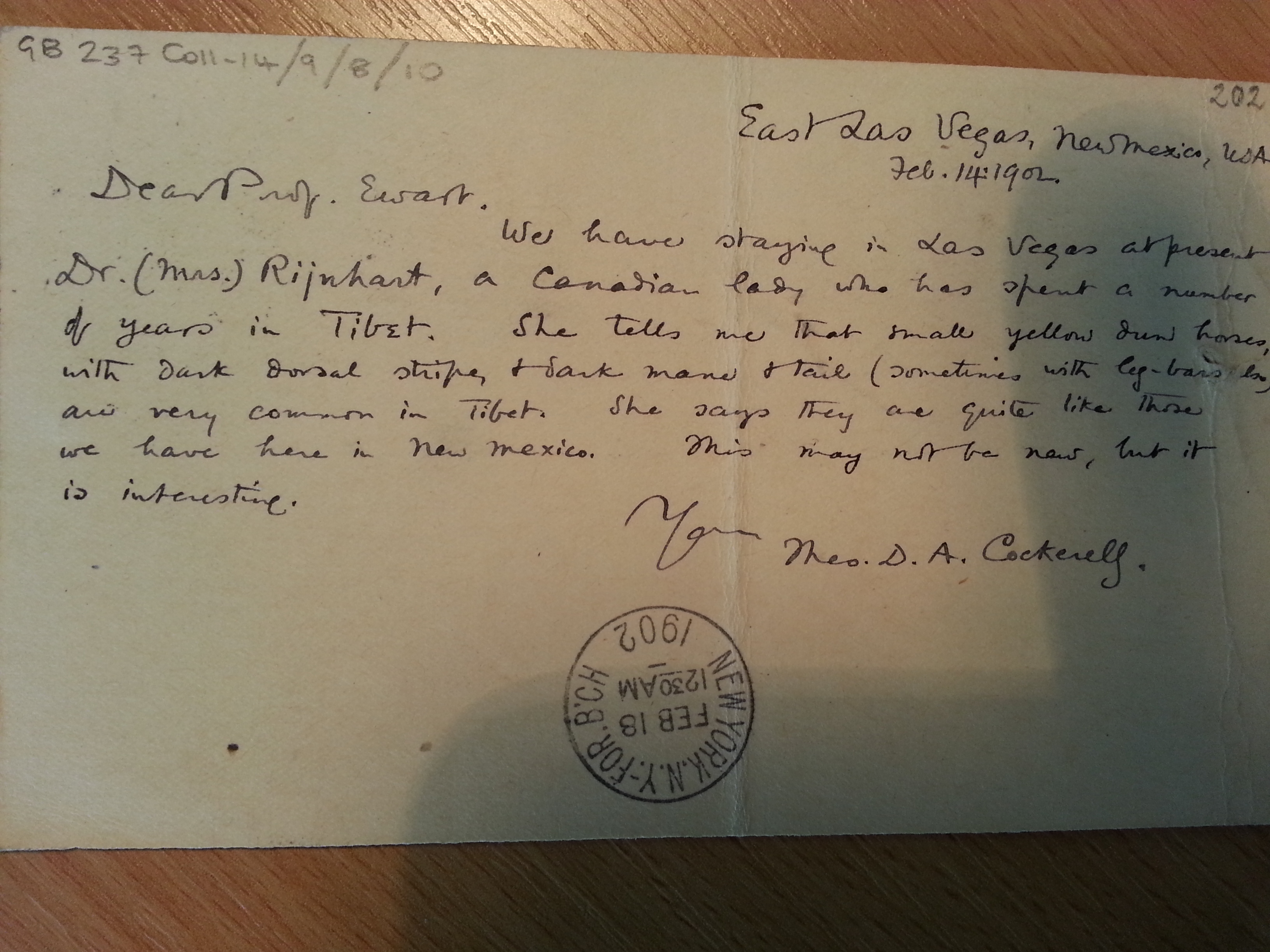
Coll.14.9.8.10 Cockerell Rijnhart mentionThis week’s ‘Letters in the Limelight’ focuses on a postcard dated 14 February 1902 which was sent to Ewart from the American naturalist Theodore Dru Alison Cockerell (1866-1948). Cockerell is worthy of a blog post in himself, but here we will focus on the name of a woman who Cockerell mentions quite casually: Susanna Carson Rijnhart. Cockerell writes:

We have been staying in Las Vegas at present [with] Dr (Mrs) Rijnhart, a Canadian lady who has spent a number of years in Tibet. She tells me that male yellow dun horses, with dark dorsal stripe and dark mane and tail…are very common in Tibet. She says they are quite like those we have here in New Mexico. This may not be new, but it is interesting.

Ewart’s abiding research interest at this time was studying those breeds of horses which bear the marks of being of more ancient stock than the popular Arabian horse, which emerged at a later date. Dr Rijnhart was obviously able to provide some information on possible examples of this ‘ancient breed’ from her experiences in Tibet, but there is no indication here of exactly how harrowing that experience was…

Born in Ontario in 1868, Rijnhart graduated as a medical doctor from Toronto at the age of 20 and practised for 6 years. But it was her meeting and marriage to the controversial Petrus Rijnhart, a Dutch-born missionary, that really sent her life on its turbulent course. Before they had been married more than a few months, the couple set out to work as independent missionaries in Tibet. Life was hard, particularly considering the Muslim revolt which broke out in 1896 in Kumbum, where the couple worked. They tended to the wounded and sick and opened a medical dispensary nearby, but their ultimate aim was to reach Lhasa, the Tibetan capital unvisited by Westerners since 1846 and which lay 800 miles away across a series of mountain ranges. In May 1898, Susanna and Petrus left for Lhasa on horseback with their baby Charles and three local hired men, but things swiftly went wrong for them. After two months, two of their hired men deserted, their pack animals were stolen and the baby Charles died suddenly. Determined, the couple pressed on, but it wasn’t long before their caravan was attacked by bandits, leaving them helpless and completely alone. Petrus left Susanna behind to seek help and was never seen or heard of again. A revolver and a little money was all Susanna had left. Still she pressed on across the mountains, bribing a series of local guides, until she reached Kangding (then the most remote outpost of Chinese missionaries) in rags and with frost-bitten feet. There she made her way to the China Inland Mission, where she met James Moyes, who would become her second husband. In 1900 Susanna returned to Canada with failing health and wrote a book about her experiences With the Tibetans in Tent and Temple (Edinburgh, 1901). She bore a son to James in January 1908 but died a month later.

From small names on postcards do big stories come…