Home University of Edinburgh Library Essentials
September 29, 2026
New video: the benefits of RDM training
A big part of the role of the Research Data Service is to provide a mixture of online and (general/tailored) in-person training courses on Research Data Management (RDM) to all University research staff and students.
In this video, PhD student Lis talks about her experiences of accessing both our online training and attending some of our face-to-face courses. Lis emphasises how valuable both of these can be to new PhD candidates, who may well be applying RDM good practice for the first time in their career.
It is interesting to see Lis reflect on how these training opportunities made her think about how she handles data on a daily basis, bringing a realisation that much of her data was sensitive and therefore needed to be safeguarded in an appropriate manner.
Our range of regularly scheduled face-to-face training courses are run through both Digital Skills and the Institute of Academic Development – these are open to all research staff and students. In addition, we also create and provide bespoke training courses for schools and research groups based on their specific needs. Online training is delivered via MANTRA and the Research Data Management MOOC which we developed in collaboration with the University of North Carolina.
In the video Lis also discusses her experiences using some RDS tools and services, such as DataStore for storing and backing-up her research data to prevent data loss, and contacting our team for timely support in writing a Data Management Plan for her project.
If you would like to learn more about any of the things Lis mentions in her interview you should visit the RDS website, or to discuss bespoke training for your school or research centre / group please contact us via data-support@ed.ac.uk.
Kerry Miller
Research Data Support Officer
Library and University Collections
The University of Edinburgh
On trial: The Stuart and Cumberland Papers
*The Library has now purchased access to the The Stuart and Cumberland Papers. See New to the Library: The Stuart and Cumberland Papers*
I’m pleased to let you know that Gale Cengage are giving us trial access to one of the digitised archive from State Papers Online, the Stuart and Cumberland Papers. This archive contains two remarkable collections from the Royal Archives at Windsor Castle, which have been digitised for the first time and are available online in their entirety.

You can access this online resource via the E-resources trials page.
Access is available both on and off-campus.
Trial access ends 14th December 2018.
The Stuart Papers represent the correspondence and personal documents of the exiled members of the Stuart dynasty after 1688. These papers were acquired by George IV when Prince Regent, following the death of Henry Bennedict Stuart, Cardinal York, and were originally kept in the Prince’s Library at Carlton House. The collection tells the story of the lives of James II and his heirs with the majority of papers concerning the period 1713 to 1770, and provide an insight into Jacobite attempts to regain the throne. The later papers in the collection concern Cardinal York’s relations with the Vatican until his death in 1807. Read More
Library Resources for Islam and Muslim-Christian Studies: an introduction
From time to time, we compile resource lists on different aspects of Theology and Religious Studies.
Islam and Muslim-Christian Studies are developing areas of our collections, responding to the new teaching and research activities of the School of Divinity. Below is a brief guide to some relevant resources you can find at New College Library.

Books
* Books on Islam at shelfmark BP (downstairs in Stack I)
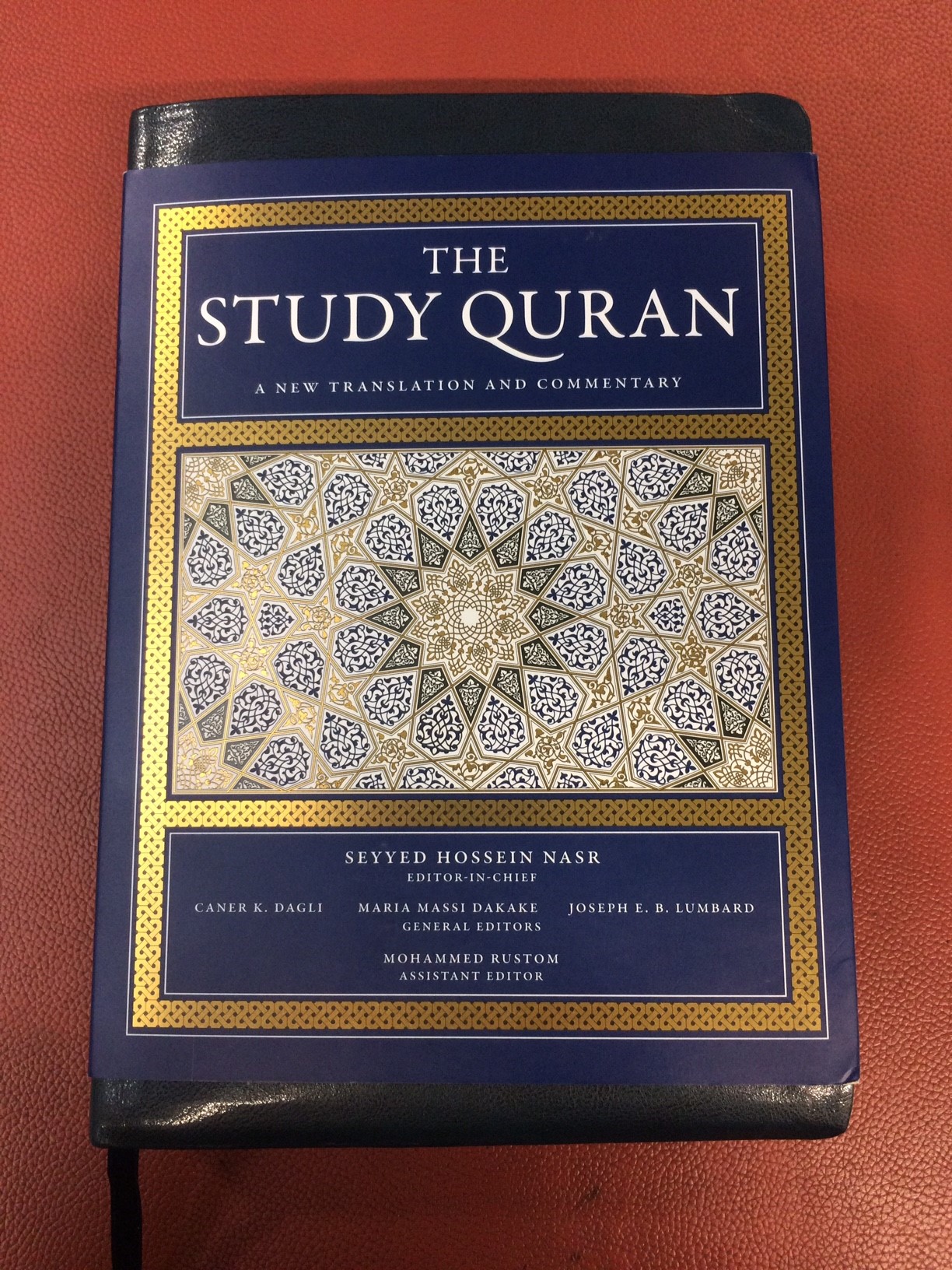
* Copies of the Qur’an at BP 109
* Books on Islamic law/Shari’a law at shelfmark K (downstairs in Stack I)
Online Journals about Islam/Muslim communities
* Al-Jamiʼah: Journal of Islamic Studies
* American Journal of Islamic Studies
* Comparative Islamic Studies
* Contemporary Islam
* Critical Muslim
* Islam & Science
* Islam and Christian Muslim Relations
* Islam and civilisational renewal: a journal devoted to contemporary issues and policy research.
* Islamic Studies
* Journal of Indonesian Islam
* Journal of Muslim Mental Health
* Journal of Muslim minority affairs
* Journal of Shi’a Islamic Studies
* Journal of the International Qur’anic Studies Association
* Sociology of Islam
* Studia Islamica
* The Muslim World
This is a selective list which features only journals published in English. The library also provides access to other online journals in the field of Islam which are published in other languages e.g. Arabic, Turkish and Indonesian: search in DiscoverEd to find these.
Online Databases
* Christian-Muslim Relations Online
* Early Western Korans Online
* Encyclopaedia of Islam
* Encyclopaedia of the Qur’an
* Encyclopedia of Women & Islamic Cultures Online
* Index Islamicus
* Kotobarabica Arabic E-Library
* Oxford Bibliographies Online: Islam
* Oxford Islamic Studies Online
* Qurʾānic Studies Online
* Twentieth Century Religious Thought: Islam
You can find further resources at: https://www.ed.ac.uk/information-services/library-museum-gallery/finding-resources/library-databases/databases-subject-a-z/database-islamic-stud
If you’d like to find out more about sources relating to the study of Islam, or any other research topic relating to Divinity, please contact Christine by e-mail at: Christine.Love-Rodgers@ed.ac.uk
Christine Love-Rodgers, Academic Support Librarian, School of Divinity, New College and Gina Headden, IS Helpdesk Assistant, New College Library.
First World War: through our Library resources
This weekend, Sunday 11th November, marks the 100th anniversary of the end of the First World War. In this week’s blog post I have pulled together just a small selection of Library resources, digital and physical, that will help you explore the First World War, the events leading up to it and the aftermath.
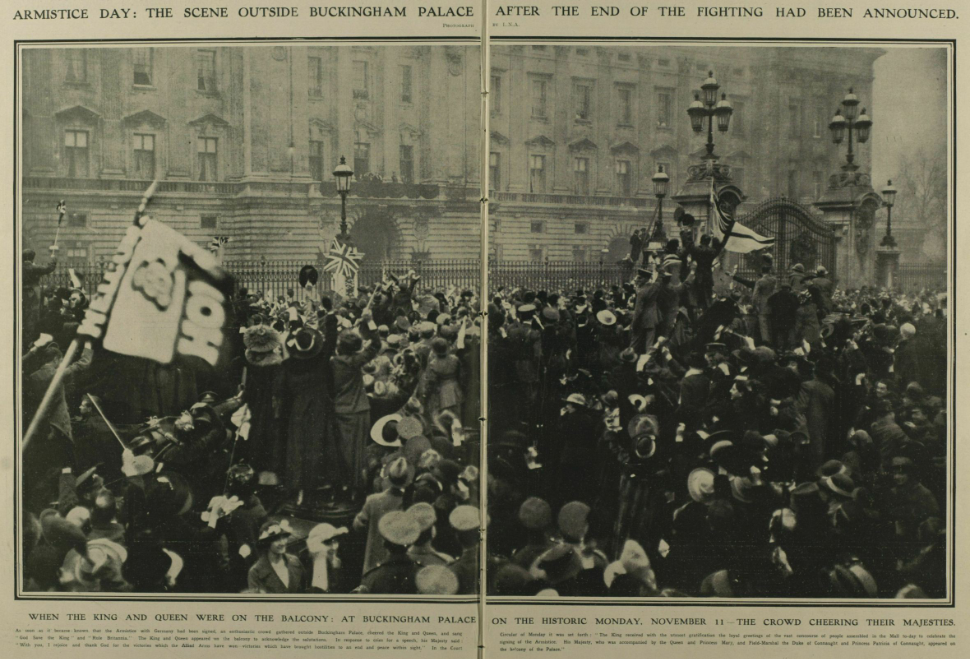
“Armistice Day: The Scene outside Buckingham Palace after the End of the Fighting Had Been Announced.” Illustrated London News [London, England] 16 Nov. 1918: n.p. Available from Illustrated London News Historical Archive.
What did the papers say?
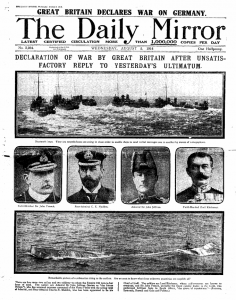
Screenshot of front page from The Daily Mirror, Wednesday, August 5, 1914. Available from UK Press Online.
During the war the British Government tried to strictly control reporting on events, particularly from the front line. Legislation was passed in 1914 which allowed the War Office to censor the press and at first journalists had to go undercover to try and report on what was happening. Even when the Government relented and agreed to send accredited British war correspondents to the front line their reports were still heavily censored and were often overt propaganda, with actual facts about events never being reported (see reporting or non-reporting on the Battle of the Somme as an example).
The Library subscribes to a large number of digitised newspaper archives that will allow you to see what events were being reported on at the time and how they were being reported. Read full text articles, compare how different newspapers were covering the same issues and stories and track coverage of the First World War from the escalating hostilities prior to the outbreak to its conclusion and aftermath. Read More
uCreate Studio – open for making!
uCreate Studio is the University of Edinburgh’s community makerspace and located in Room 1.12 of the Main Library, and offers equipment, advice, trainng and support to help you make just about anything.
Free to use 8am – 1am 7 days a week!
Read More
“Archiving Your Data” – new videos from the Research Data Service
In three new videos released today, researchers from the University of Edinburgh talk about why and how they archive their research data, and the ways in which they make their data openly available using the support, tools and resources provided by the University’s Research Data Service.
Professor Richard Baldock from the MRC Human Genetics Unit explains how he’s been able to preserve important research data relating to developmental biology – and make it available for the long term using Edinburgh DataShare – in a way that was not possible by other means owing to the large amount of histology data produced.
Dr Marc Metzger from the School of GeoSciences tells how he saves himself time by making his climate mapping research data openly available so that others can download it for themselves, rather than him having to send out copies in response to requests. This approach represents best practice – making the data openly available is also more convenient for users, removing a potential barrier to the re-use of the data.
Professor Miles Glendinning from Edinburgh College of Art talks about how his architectural photographs of social housing are becoming more discoverable as a result of being shared on Edinburgh DataShare. And Robin Rice, the University’s Data Librarian, discusses the difference between the open (DataShare) and restricted (DataVault) archiving options provided by the Research Data Service.
For more details about Edinburgh’s Research Data Service, including the DataShare and DataVault systems, see:
https://www.ed.ac.uk/is/research-data-service
Pauline Ward
Research Data Service Assistant
Library and University Collections
University of Edinburgh
On trial: African American Newspapers and Times-Picayune
*The Library now has now purchased access to ‘African American Newspapers, Series 1 and 2’. See New to the Library: African American Newspapers.*
Thanks to a request from a student in HCA the Library currently has trial access to two newspaper databases from Readex, African American Newspapers, Series 1, 1827-1998 and New Orleans Times-Picayune (1837-1922). Between them giving you access to around 170 years of newspaper archives and useful if you’re looking at African American history, American history, the Antebellum South, the Civil Rights movement and more.


You can access both databases via the E-resources trials page. Access is available both on and off-campus.
Trial access ends 30th November 2018. Read More
LLC related database trials
There are several database trials running at the moment for the next few weeks which are relevant for the School of Literatures, Languages and Cultures, in particular for English Literature, Asian Studies, and Film Studies. All these trials can be accessed via the Library’s E-Resources Trials website. These resources are: Read More
5 recommended library resources for Africa Week
Today, 25th October, is the start of Africa Week 2018 at the University. A chance to celebrate the University’s engagement across the African continent. There are a number of events taking place to mark Africa Week but I wanted to highlight just some of the library resources available to staff and students of the University that will allow you to study and research Africa and Africa related subjects further.
1. C.A.S. collection on 4th floor, Main Library

Have you ever been searching DiscoverEd for a book or journal related to Africa and come across shelfmarks starting C.A.S.?
 C.A.S. simply stands for the Centre of African Studies and there is a substantial collection of books and journals, separate to the general lending collections on the 2nd and 3rd floor of Main Library, that were purchased on behalf of the Centre over many years. The C.A.S. collection can be found on the 4th floor of the Main Library on the South-East side of the floor. This is a really interesting collection of material, mostly published in the 20th century, and includes material published by commercial and academic publishers, government agencies, Unesco, the Centre of African Studies, etc.
The C.A.S. collection is now a closed collection i.e. no newly purchased books are added to this collection, but it’s not the only place you will find books on Africa or African related subjects in the Main Library. There are a large range of books throughout the general lending collections on 2nd and 3rd floor and the HUB area, you will find books relating to Africa at a number of the site libraries as well and there are a considerable number of e-books, e-journals (and print journals) available relating to Africa. Just search DiscoverEd to discover more.
2. University’s archives – Centre for Research Collections
The University of Edinburgh holds world class collections, including rare books, archives and manuscripts, art, historical musical instruments and museum objects. And it is the Centre for Research Collections (CRC) on the 6th floor of the Main Library that is your gateway into these unique collections. Read More
On trial: State Papers Online, Part III
Thanks to a request from staff members in both HCA and ECA the Library currently has trial access to State Papers Online, Part III: The Stuarts: James I to Anne, 1603-1714: State Papers Domestic from Gale Cengage. This database is a digital collection of English government documents originating primarily from the seventeenth century that allow you to take an in-depth view of some of the issues dominating England at that time.

You can access the database via the E-resources trials page. Access is available both on and off-campus.
Trial access ends 21st November 2018.
State Papers Online, Part III documents one of the most compelling and turbulent eras in Britain’s social, political and religious history. The era’s internal struggles come to life through a wealth of primary source documents including: royal and diplomatic correspondence, reports and parliamentary drafts from civil servants and provincial administrators. Read More
Collections
 Love, Loss, and Literature: Cataloguing the Papers of Irene Jessie Young
My name is Nancy Britten, and I’m in my fourth year of studying History at...
Hill and Adamson Collection: an insight into Edinburgh’s past
My name is Phoebe Kirkland, I am an MSc East Asian Studies student, and for...
Love, Loss, and Literature: Cataloguing the Papers of Irene Jessie Young
My name is Nancy Britten, and I’m in my fourth year of studying History at...
Hill and Adamson Collection: an insight into Edinburgh’s past
My name is Phoebe Kirkland, I am an MSc East Asian Studies student, and for...
Projects
Cataloguing the private papers of Archibald Hunter Campbell: A Journey Through Correspondence
My name is Pauline Vincent, I am a student in my last year of a...
Archival Provenance Research Project: Lishan’s Experience
Presentation My name is Lishan Zou, I am a fourth year History and Politics student....