The School of Scottish Studies Archives in Light Festival
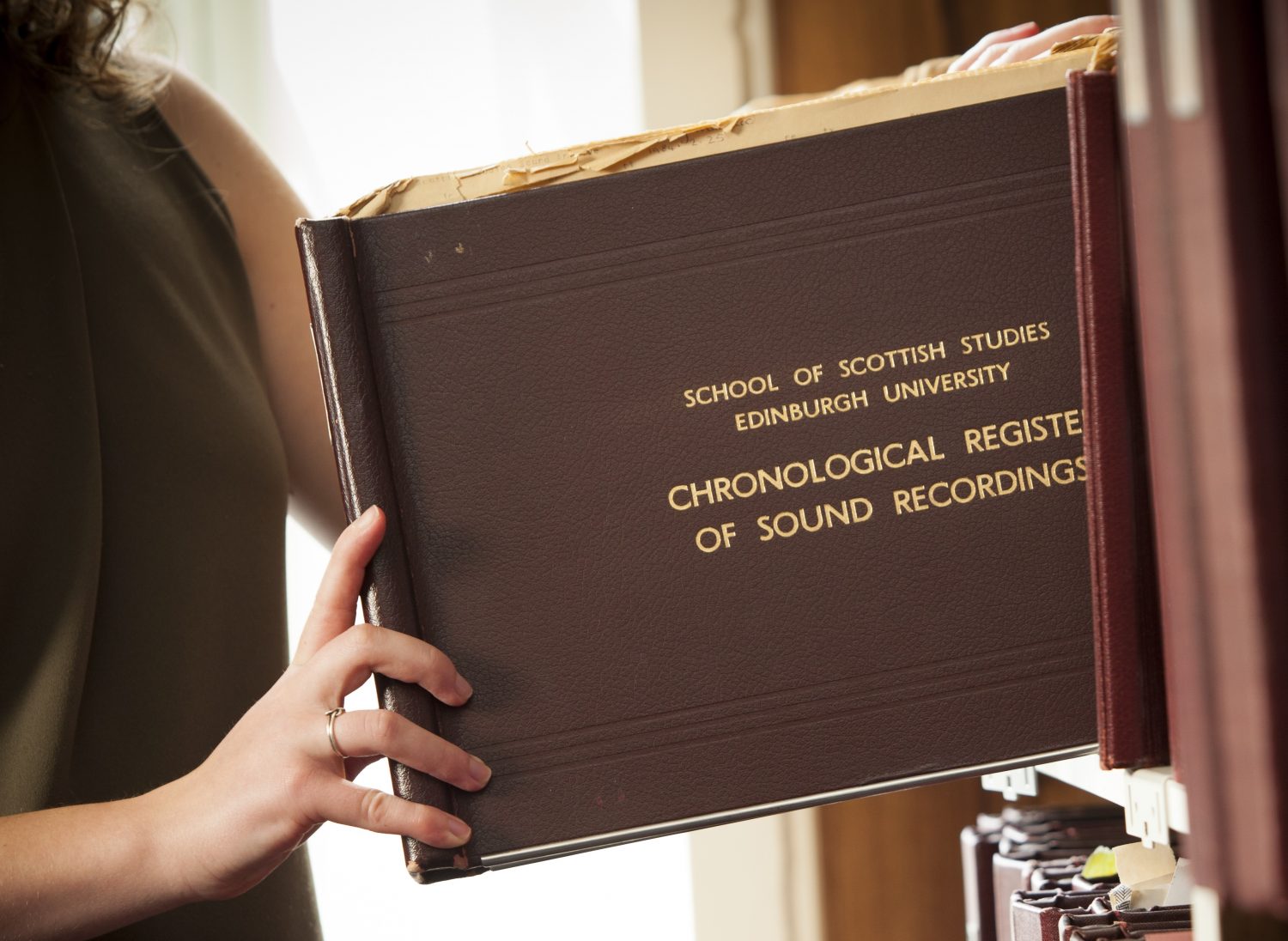
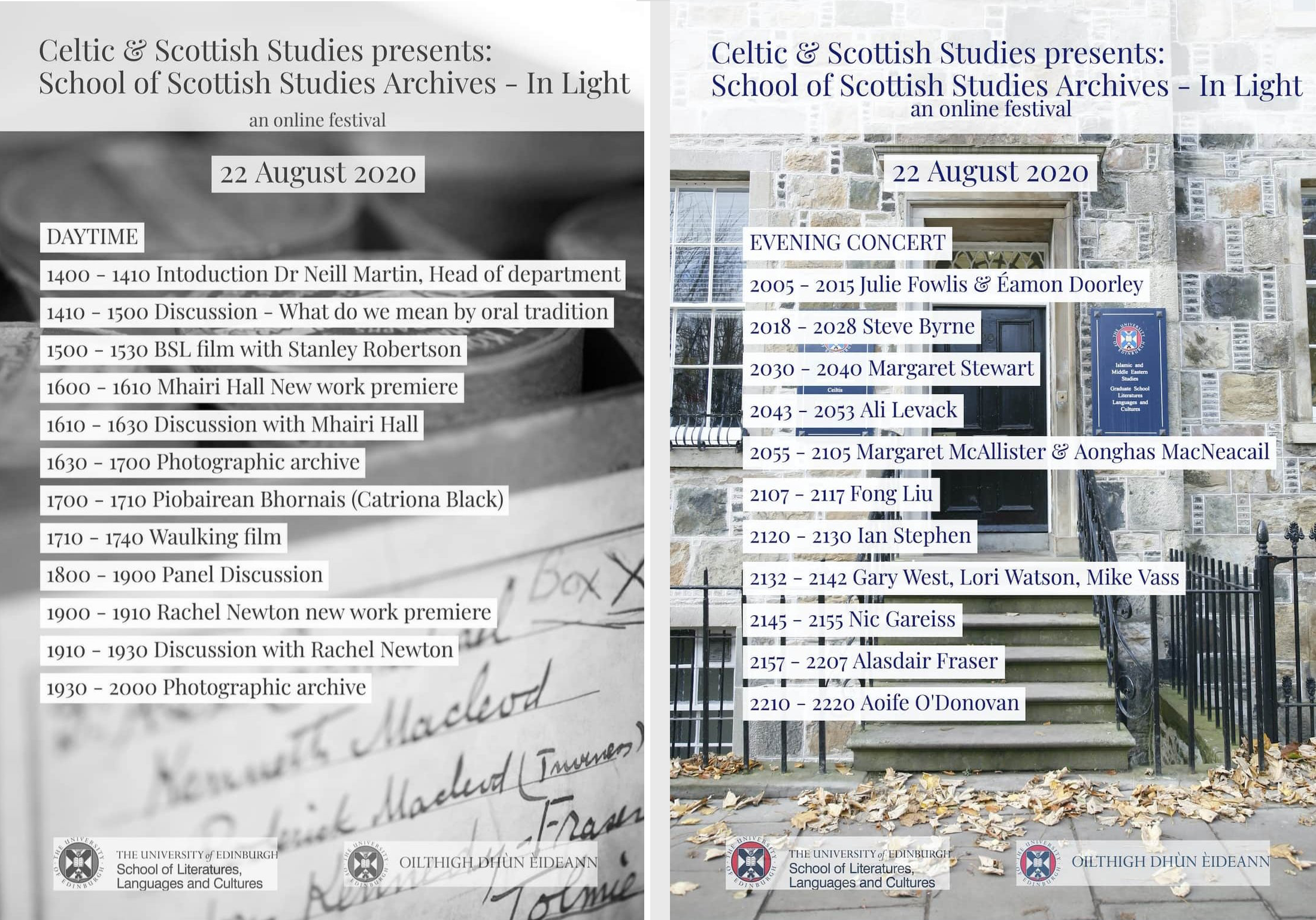
On Saturday, 22 August, the School of Scottish Studies Archives (SSSA) will be celebrated in a day-long online festival event hosted by the Celtic and Scottish Studies department. 

Curated by Mike Vass, Traditional Artist in Residence, The School of Scottish Studies Archives In Light festival will focus on the sound, film and photographic collections of SSSA and will feature new work – inspired by archive recordings – by Scottish musicians Mhairi Hall and Rachel Newton. In addition to music and song, the programme features conversations and Archives Curator, Cathlin Macaulay, along with Ella Leith and Chris Wright, will be participating in the panel discussion ‘What do we mean by oral tradition?’ hosted by Professor Gary West.

Our photographic and film collections are also set to feature. There will be with a film of Storytelling with BSL translations of audio recordings from the late Stanley Robertson, Traveller, storyteller, balladeer and piper from Aberdeen. There is also an opportunity to see a fieldwork film made in South Uist in 1970 which shows the tradition of waulking the cloth (SA1970.01). 
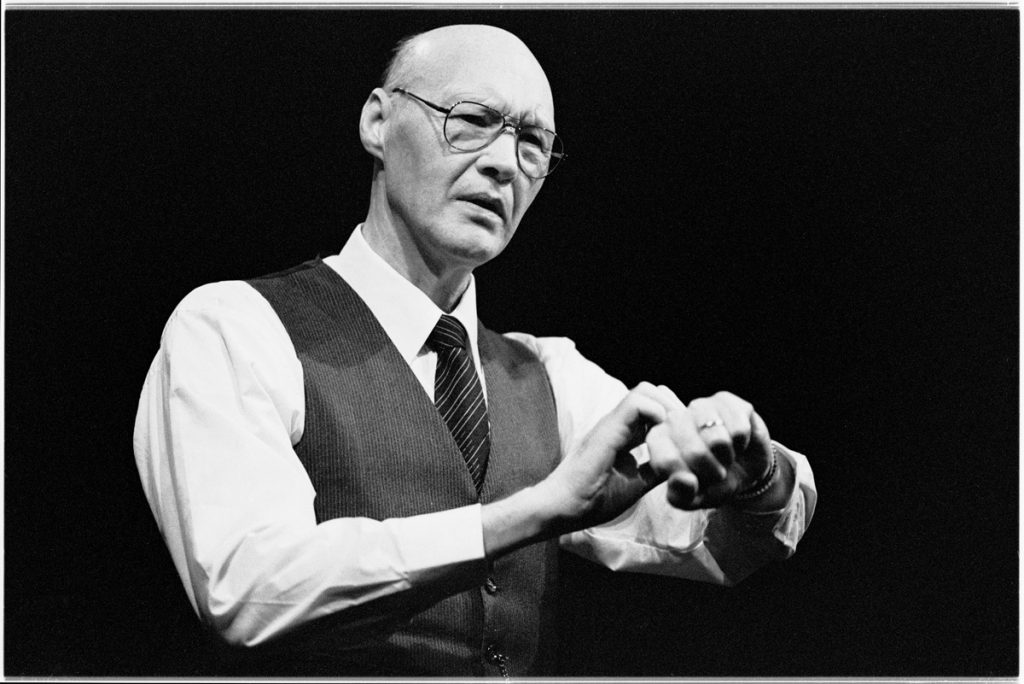
Stanley Robertson. Photographer: Ian Mackenzie (Reference: A163318) © SSSA

There will also be two visual displays from our Photographic Archive, featuring images from the collections of Werner Kissling (1895-1988) , Robert Atkinson (1915-1995) and SSSA photographer and curator Ian MacKenzie (1959-2009).  The presentations will be accompanied by archive recordings from The Scottish Tradition Series which have been produced in collaboration with Greentrax Recording Limited.
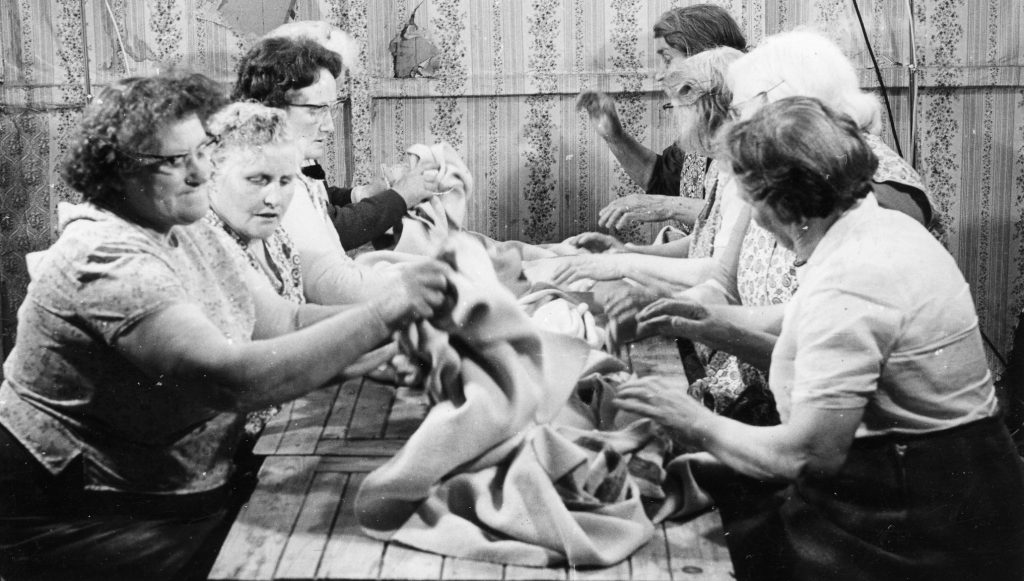
Waulking the Cloth (BVIII-3-7678) © SSSA

Finally, the festival will conclude with an evening concert of music, storytelling and dance from a stellar cast of performers from both sides of the Atlantic. The evening concert will be hosted by Professor Gary West, Chair in Scottish Ethnology, and features performances from musicians Julie Fowlis & Éamon Doorley; BBC Radio Scotland Young Traditional Musician of the Year Ali Levack; Steve Byrne, Margaret Stewart, Fulbright-Scotland Visiting Professor Margaret McAllister, acclaimed author and storyteller Ian Stephen. There will also be special transatlantic guests: singer-songwriter Aoife O’Donovan, fiddler Alasdair Fraser and dancer and musician Nic Gareiss as well as a performance from Glasgow-based Chinese singer and storyteller Fong Liu.

School of Scottish Studies Archives Traditional Artist in Residence Mike Vass said, “It has been a privilege curating this online event – many of the artists have a long association with the Archives and have drawn inspiration from it. Hosting this event online allows us to shine a light on the creativity that springs from this amazing resource, and on the wealth of material contained within it. We look forward to sharing this fantastic line-up, bringing together different audiences, and making connections through our shared cultural heritage.”

Dr Neill Martin, Head of Celtic & Scottish Studies said, “We conceived this event amid the bewildering early stages of lockdown, when it seemed that the music stopped and all around became still and eerily quiet. This is our response; an assertion of the power of music, song and the traditional arts of all kinds to create and sustain community in times of adversity. We hope you will join us.”

Daryl Green FSA, Head of Special Collections said, “The School of Scottish Studies Archive continues to amaze me, both in the content that was captured by pioneering ethnologists, but also in the empathy of those who were doing the collecting. Although new to the University, I’ve been exposed to pieces of the collection throughout lockdown which have moved me deeply: seeing the documentary evidence of traditional crafts long passed, hearing the conversation and stories, the multitude of music and accents and real connection to people and place all create this swell of emotion and sense of being. It is no surprise that this collection has inspired what will surely be a rich and powerful event.”

This special online event is a taster of what is to come in 2021 as we  celebrate our Platinum Jubilee. Also coinciding with the 70th anniversary, the department of Celtic and Scottish Studies will launch a new Master’s programme for traditional artists and is the first of its kind aimed at musicians, dancers and storytellers.

The School of Scottish Studies Archives – In Light begins at 2pm, on Saturday 22 and will be streamed on the Celtic & Scottish Studies YouTube channel:

https://www.youtube.com/CeltScotVideos

and their Facebook page:

https://www.facebook.com/traditionalartsperformance
For more information about SSSA collections you can visit our website:

www.ed.ac.uk/is/sssa

If you can’t make the online festivities you can still find material from SSSA on Tobar an Dualchais. There are almost 36,000 tracks from our collections which are available to listen to online:

www.tobarandualchais.co.uk

Find out more about Celtic & Scottish Studies on their website:

http://www.celtscot.ed.ac.uk

: : : : : : : : : : : :

Update:

Some of the events of SSSA in Light will remain available for a short time to view on the CeltScotVideos channel on YouTube.

Posted in Archives, Celtic and Scottish Studies, Presentations | Tagged | Comments Off on The School of Scottish Studies Archives in Light Festival

Preparing the Way

This week our project archivist gives us the inside view from our Body Language Archives project, bringing us on (the project management) board, with a review of project progress and highlights how archives cataloguing projects prepare the way new research.

This slideshow requires JavaScript.

The images above are a selection of some of the slides that we shared with our project board from our project progress report presentation at our virtual project management board meeting on Tuesday 11 August 2020.

At the end of our virtual meeting on Tuesday afternoon this week, our project board unanimously enthused over our project progress. We thought we would share some of the highlights.

  • Scottish Gymnastics collections catalogue complete and online
  • Dunfermline College of Physical Education Old Students’ Associaiton complete, online 
  • Dunfermline College of Physical Education 90% complete
  • Dunfermline College of Physical Education, 447 student files rehoused and listed.
  • Dunfermline College of Physical Education audiovisual / film – 180 new catalogue descriptions converted from legacy electronic data-set to online catalogue
  • Margaret Morris Collection Photographs – expanded the existing data-set from 406 catalogue descriptions to 1738 descriptions, uploaded to ArchivesSpace (online catalogue)
  • Margaret Morris Collection 2534 / 3596 catalogue descriptions completed on ArchivesSpace
  • Technical infrastructure for test project website in place with draft content

All of this work means that these collections will become more accessible and open up new areas of potential research around health, well-being, movement, dance, the history of sporting apparel, the history of sport management and so much more.  All of which afford us the opportunity to develop a greater understanding of these subject areas, their interrelationships, and the human experience as a whole.

We are helped greatly in our work by some fantastic volunteers. It is always a pleasure to report positive stories to our project board about the range of work we do to support new archive professionals. This was easy for me to do, as I had the pleasure of being supported by two up and coming professionals on the Body Language project. One of whom is just about to complete an MSc Information Management and Preservation and the second is now working as a fully qualified archivist with the Centre for Research Collections at the University of Edinburgh. Well done to both Emma and Elise, and a great big thank you to both of them for their wonderful work on the project.

Our project board is made up of a group of academics, and curatorial and archive professionals with research and collection care interests in movement, dance and physical education collections. Together they make sure that our project stays on track, and help us to think outside the day to day activities of the archive cataloguing work. I always enjoy meeting with our project board as they are so incredibly supportive of our work and inevitably bring something surprising and valuable to the table that we hadn’t thought of. It usually starts with “what about…..?”  A huge thank you to Professor John Ravenscroft, Dr Wendy Timmons, Dr Matt McDowell, Dr Tiffany Boyle, Rhona Rodger, and Rachel Hosker for their continued support.

Elaine MacGillivray
Project Archivist


Posted in Uncategorized | Comments Off on Preparing the Way

NEW Further Charles Lyell Papers

July was a busy month for the Sir Charles Lyell Collection, and the Centre for Research Collections.

After much planning and advice, the CRC passed inspection, and we opened again for University of Edinburgh researchers on 8 July with new ways of working, but offering access to our collections once again. This has also meant that we were able to welcome in new acquisitions whose delivery was paused during the nation’s lockdown. Which means, at long last, we are able to share the news of a very exciting addition of papers, correspondence, and rare manuscripts to the University’s Sir Charles Lyell Collection.

Rachel Hosker assists with off-loading the material in auction boxes, and moving them to be condition checked by Katherine Richardson.

This new collection includes over 900 letters to and from Sir Charles Lyell (including additional letters from Darwin, Joseph Dalton Hooker, John Murray, etc.); intimate correspondence between Lyell and his wife, Mary Horner Lyell, and his wider family; autograph manuscripts of a number of lectures delivered both in the United States and in the United Kingdom; a part of the autograph manuscript of Principles of Geology; maps commissioned for lectures and publications; and heavily annotated editions of Principles of Geology and other works marked up for later editions. This additional collection was allocated to the University of Edinburgh Library in 2020 by HM Government under the Acceptance in Lieu of Inheritance Scheme, from the estate of the 3rd Baron Lyell.
Daryl Green, Head of Special Collections, inspects a hand-drawn geological map of Kinnordy Estate and its district from the newly acquired Sir Charles Lyell archive. A drawing of Charles Lyell is projected on a screen behind Daryl. Photo © David Cheskin

Daryl Green, Head of Special Collections, inspects a hand-drawn geological map of Kinnordy Estate and its district from the newly acquired Sir Charles Lyell archive. Photo © David Cheskin

Daryl Green, our Head of Special Collections and Deputy Director of the CRC, has had a chance to have an initial dive into this collection in order to check its inventory and gauge its quality. Here’s some initial reactions:

“Having arrived in March to my new post as Head of Special Collections, one of my first tasks was to oversee the transfer of this material from its holding location in London to the University. Lockdown prevented our best laid plans, however, and the Acceptance in Lieu material finally arrived on a warm and quiet day mid-July. Sifting through this material in an initial ‘getting to know you’ session, I was struck at how thorough the correspondence archive was. There are folder and folders of correspondence with Charles Bunbury, Joseph Dalton Hooker, John Murray and many others, but also transcripts of letters going out that were copied by one of Lyell’s sister-in-laws, Katherine Murray Lyell. Here, too, is a lifetime of correspondence between Charles and Mary Horner Lyell, from initial courting, to full blown intellectual romance, to letters later in life. 
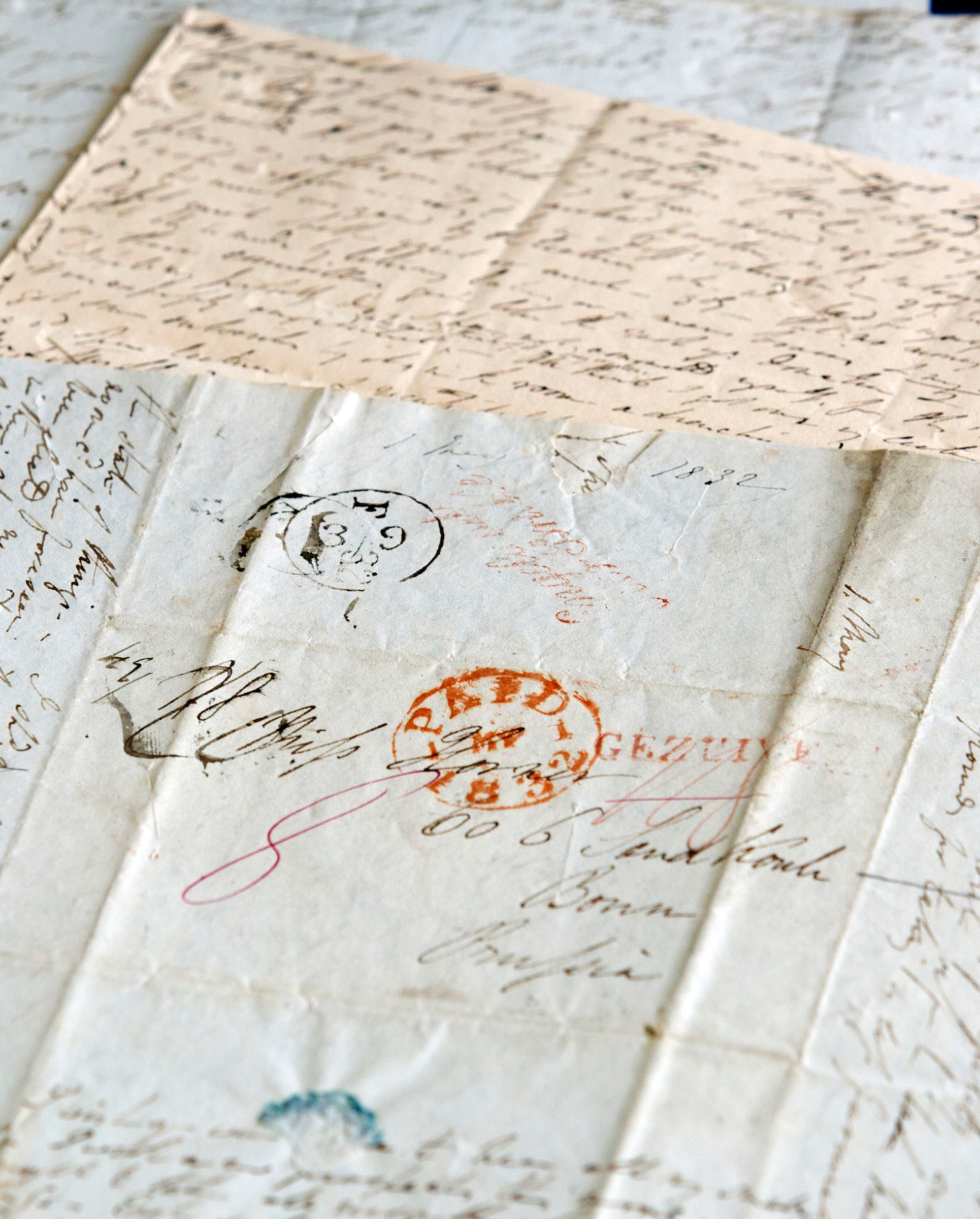
Detail of a letter to Sir Charles Bunbury from the newly acquired Sir Charles Lyell archive. Stamped envelope, with address, black script handwriting on aged paper.

Letters from Sir Charles Lyell to his fiancée, Mary Horner, from the newly acquired Sir Charles Lyell archive. Photo © David Cheskin

As I sorted through folders I came across diagrams for how Lyell wanted his lecture theatre laid out for his tour of the States, I found hand-drawn maps and illustrations, both by Lyell and commissioned from others, including alluring diagrams, a gorgeous watercolour map of Etna, and a huge geological map of the Kinnordy Estate and its district.
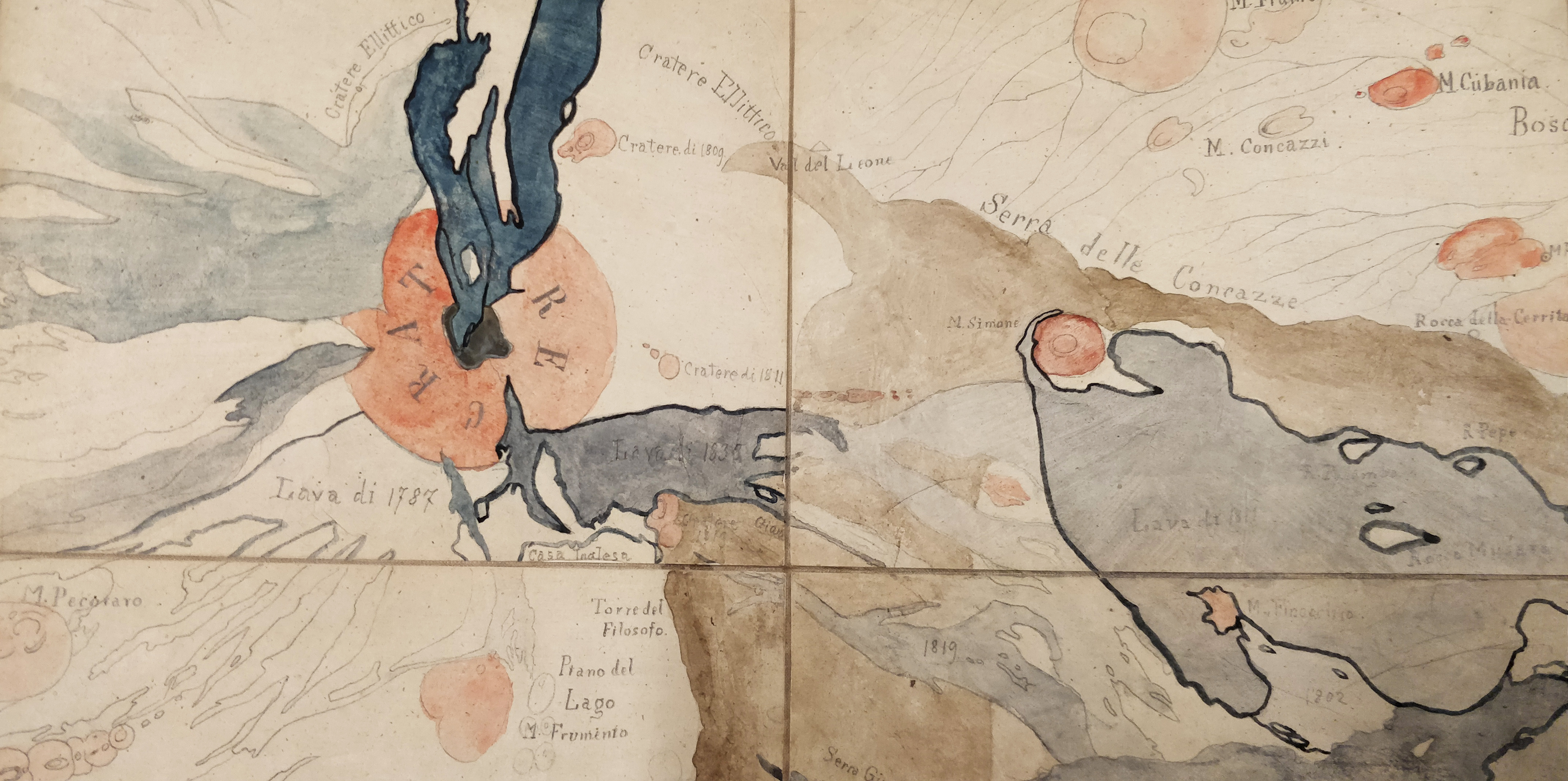
Detail of a hand-drawn map of Mount Etna from the newly acquired Sir Charles Lyell archive.

 “This archive is by all accounts an amazing resource in its own regard.”

Letters upon letters between geologists, students, and admirers have all been beautifully preserved and organized by the Lyell family, and included in the archive was some of the work done by a member of the Lyell family in the 20thcentury to track down and copy correspondence, especially between Lyell and Charles Darwin, which had ended up in other collections. This archive is by all accounts an amazing resource in its own regard and, when paired with the notebooks, the further archive material, the publications and the geological samples, gives a more complete picture of how science was conducted in the 19th century than any other archive I am aware of.”

Conservation and archival description work is ongoing in order to provide public access to this collection. To support these activities and digitisation, read more here.

Posted in Uncategorized | Comments Off on NEW Further Charles Lyell Papers

DataVault – larger deposits and new review process notifications

New deposit size limit: 10TB

Great news for DataVault users: you can now deposit up to a whopping ten terabytes in a single deposit in the Edinburgh DataVault! That’s five times greater than the previous deposit limit, saving you time that might have been wasted splitting your data artificially and making multiple deposits.

It’s still a good idea to divide up your data into deposits that correspond well to whatever subsets of the dataset you and your colleagues are likely to want to retrieve at any one time. That’s because you can only retrieve a single deposit in its entirety; you cannot select individual files in the deposit to retrieve. Smaller deposits are quicker to retrieve. And remember you’ll need enough space for the retrieved data to arrive in.

We’ve made some performance improvements thanks to our brilliant technical team, so depositing now goes significantly faster. Nonetheless, please bear in mind that any deposit of multiple terabytes will probably take several days to complete (depending on how many deposits are queueing and some characteristics of the fileset), because the DataVault needs time to encrypt the data and store it on the tape archives and into the cloud. Remember not to delete your original copy from your working area on DataStore until you receive our email confirming that the deposit has completed!

And you can archive as many deposits as you like into a vault, as long as you have the resources to pay the bill when we send you the eIT!

A reminder on how to structure your data:
https://www.ed.ac.uk/information-services/research-support/research-data-service/after/datavault/prepare-datavault/structure

 Ensuring good stewardship of your data through the review process

Another great feature that’s now up and running is the review process notification system, and the accompanying dashboard which allows the curators to implement decisions about retaining or deleting data.

Vault owners should receive an email when the chosen review date is six months away, seeking your involvement in the review process. The email will provide you with the information you need about when the funder’s minimum retention period (if there is one) expires, and how to access the vault. Don’t worry if you think you might have moved on by then; the system is designed to allow the University to implement good stewardship of all the data vaults, even when the Principal Investigator (PI) is no longer contactable. Our curators use a review dashboard to see all vaults whose review dates are approaching, and who the Nominated Data Managers (NDMs) are. In the absence of the Owner, the system notifies the NDMs instead. We will consult with the NDMs or the School about the vault, to ensure all deposits that should be deleted are deleted in good time, and all deposits that should be kept longer are kept safe and sound and still accessible to all authorised users.

DataVault Review Process:
https://www.ed.ac.uk/information-services/research-support/research-data-service/after/datavault/review-process 

The new max. deposit size of 10 TB is equivalent to over five million images of around 2 MB each – that’s one selfie for every person in Scotland. Image: A selfie on the cliffs at Bell Hill, St Abbs
cc-by-sa/2.0 – © Walter Baxter – geograph.org.uk/p/5967905

Pauline Ward
Research Data Support Assistant
Library & University Collections

Posted in Data stewardship, Digital Preservation, Roadmap progress | Tagged | Comments Off on DataVault – larger deposits and new review process notifications

New! Social Work Online

University of Edinburgh Library has recently set up a subscription with ProQuest that gives you access to almost all available ProQuest digital primary source databases until 31st July 2024. See ProQuest Access 350. This is the first in a series of blog posts that will highlight particular databases or collections from ProQuest Access 350 that are relevant to the School of Social and Political Science. 

Social Work Online

Social Work Online is a first-of-its-kind resource that pairs recently published social work textbooks along with compelling documentaries, clinical demonstration videos, and engaging lectures that illustrate the complex and challenging realities social work students will face as practitioners. The content is structured around twelve of the most important topics in the social work curriculum, most of which are applicable worldwide. Read More

Posted in Library, Library resources, New, ProQuest Access 350, Social Work | Tagged , , , , , , , , , | Comments Off on New! Social Work Online

Introduction to Leadership

This is a not one of my usual posts about Open Research, but rather a short essay written about and submitted for a Leadership course that I recently completed.

I have been in my current role as Scholarly Communications Manager since 2017. When I first began the role was very hands on, but over time the line management responsibilities have significantly increased. Initially I was the line manager for two staff, however over the last couple of years the team has grown to a total of six. I’ve never had any formal training on how to manage staff or provide leadership, and have up to now just got on with the basic mechanics of the job – performing annual development reviews, reporting sickness absences and annual leave requests. Unfortunately, this has meant that I’ve not had much time dedicated to improving the team work environment or developing the members of my team.

It was recently pointed out to me that many jobs (especially teaching, clinical medicine or emergency services) require significant training and qualifications before you can start, but with management roles you are quite often thrown in at the deep end and told to just get on with it. The University has started delivering training for leadership and management roles and I was keen to enrol on one of the many courses to learn new skills and hopefully see how management should be done.

So, at the start of the year, as part of a cohort of 14 managers and academics all from different departments and units spread out across the University, I started out on an ‘Introduction to Leadership’ course.  The course itself started in February and consisted of several monthly one day workshops spread over six months. We were able to have the first two sessions in person, however due to the COVID-19 pandemic the course had to quickly reorganise and switch to online delivery. Lots of credit is due to the trainers Agnes and Lesley who were able to act quickly and resume the course.

At the end of the course it was an expectation that attendees would deliver a Leadership Journey presentation in a format they were comfortable with – some chose a video recording, others a written document. I have chosen a public blog post to document my leadership journey over the last few months pre-and-post lockdown, focussing on some of the things I learnt during the course and how I have built them into my working practices.

Motivation Values

The Introduction to Leadership course introduced to me the idea of motivational values which I had not encountered before. Each of the participants took a Strength Deployment Inventory (SDI) test which consisted of a series of behavioural questions which asked what people do when things are going well and also when they face conflict. Depending on how you answered a profile was built up which describes your own personal motivational values focussing on three end points: People (empathy), Processes (logic) and Performance (results).

Strength Deployment Inventory plot showing motivational values

I found out that my answers placed me at the intersection of People and Processes, and that under stress I would verge towards Process based behaviour. This made sense to me as in my job I try to deliver a quality service focussed primarily on people and making sure they are happy with the outcome, rather than focussing singly on results. To run the service we have to develop new processes and protocols under rapidly changing scenarios. The guidelines and criteria we develop make sure the service we run is equitable and is understandable to our staff despite arising from an extremely complex set of policies and rules imposed on us by research funders and journal publishers who are often at odds with each other.

The technique of looking at peoples motivational values has helped me better understand my team members by understanding a little of the motives that drive their behaviours. For example, someone who is Green and values analytical approaches will feel more comfortable with clear instructions within a framework, whereas someone with Blue tendencies will prefer an empathic approach. In the last few months, I have tried to tailor my team management approach by considering the personalities involved and although it is difficult to monitor and assess I personally think that the team has been functioning better despite the difficult general circumstances we have found ourselves in. I cannot take credit for individual’s performances, but it is definitely easy to manage a team full of diligent and talented people so I can at least take some credit for hiring them!

Situational Leadership

Building upon the last point the next main concept that the Leadership Course introduced and I have found really interesting/useful is the idea of Situational Leadership. The basic premise is that a leader further tailors their approach depending on the people and task in hand.

Naturally, I found that I was changing my approach when working with colleagues – for example with new team members I was being very hands-on and with experienced team members I was able to rely on them to get on with things. However, having a framework to fit my behaviour in has given me an understanding on how to improve both my own management and my co-workers skills.

I now recognise that I have been poor at delegating tasks despite people offering to help.  My resistance is not really a fear of losing power, or believing that I can do it better, but rather I have been put off somewhat by the time involved in explaining the task, and a general unwillingness to accept risk for certain high-priority’ tasks. Acknowledging this has been useful as I can now move forwards and change from an ‘Instructing’ style through ‘Mentoring’ and ‘Coaching’ to ‘Delegating’. By developing and trusting my colleague’s skills I have been able pass work on to them and carry out other tasks.

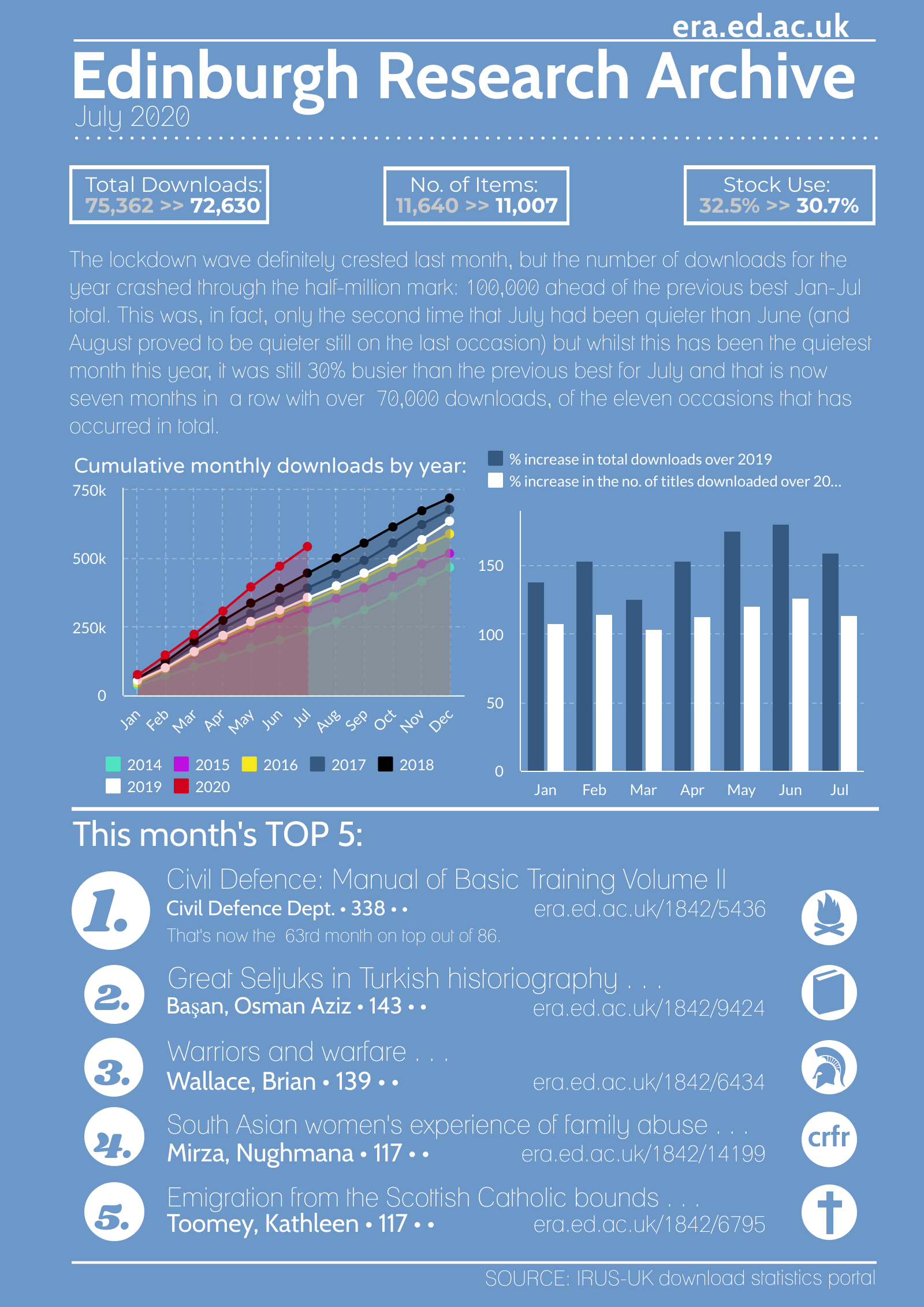
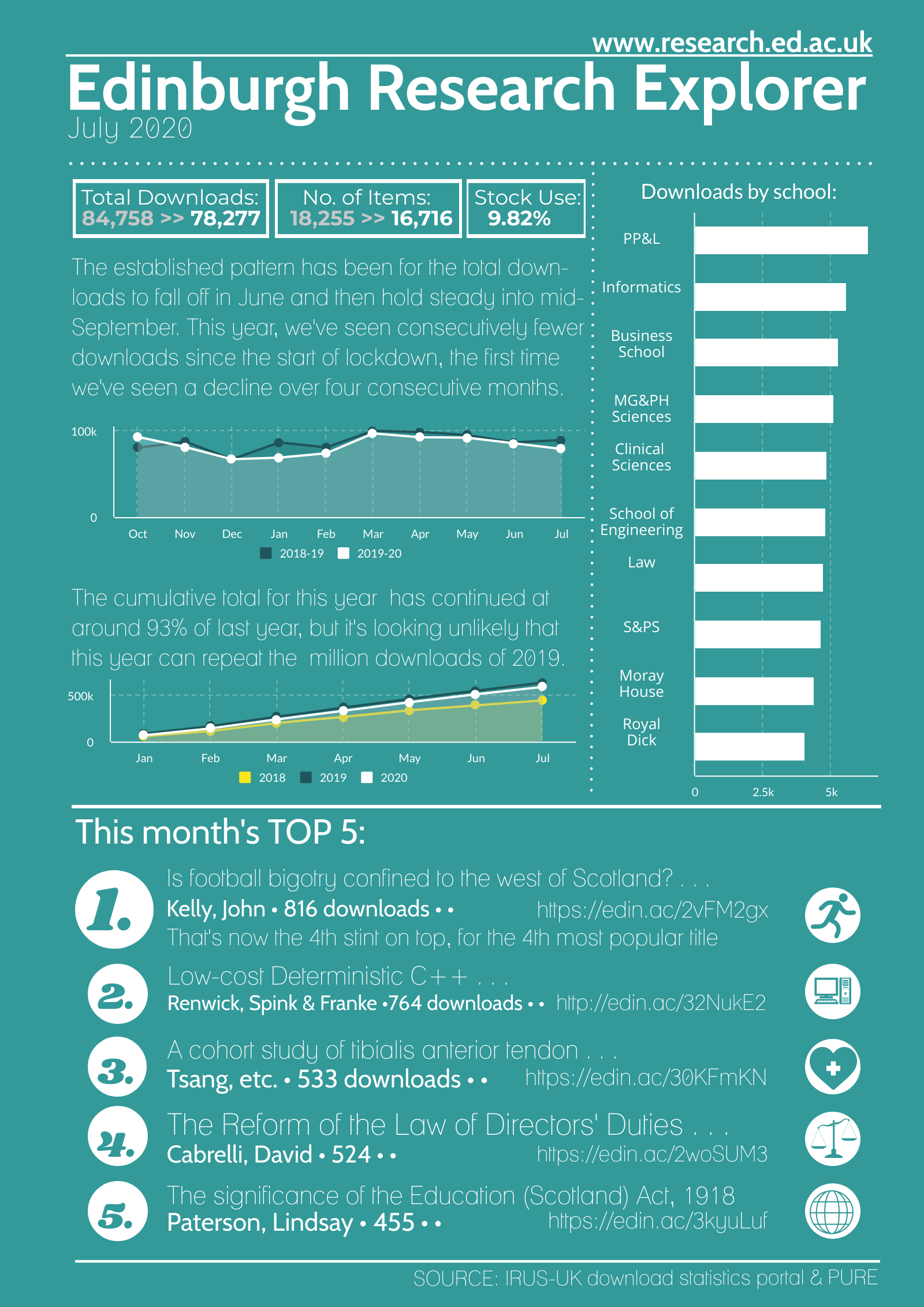
As shown in the graph below, since working from home starting in March 2020 we have seen the volume of team calls double when compared to previous years. It seems many of our academic colleagues (those without children anyway!) are using the time away from the workplace to write up papers, or carry our peer review to get through the backlog of submitted papers. More journal articles being accepted for publication means more work for my team as they deal with open access enquiries from academics.

Number of calls per month received by the Scholarly Communications Team has significantly increased during COVID-19 lockdown

During lockdown I have been working reduced hours to look after and teach my school-age children. With the increased workload I found myself working late into the evening to keep on top of things, but I soon realised that I could not keep up my old hands-on working behaviour in the long term. I would not have survived the last few months if I had not been able to fully delegate work tasks to my colleagues and I am extremely grateful that I have been supported by a wonderful team that has stepped up and responded to the challenges of working from home.

The leadership course has given me a set of tools and a framework with waypoints that I can use to inform my decision making. More importantly it has provided a support network of fellow managers who were part of this cohort.

Posted in Featured, Projects | Tagged , | Comments Off on Introduction to Leadership

Spotlight on ProQuest History Vault

Interested in American history? Then ProQuest History Vault may be exactly what you are looking for.

History Vault gives you access to millions of pages of cross-searchable, full-text/full-image documents including articles, correspondence, government records, photographs, scrapbooks, financial records, diaries and more, documenting the most widely studied topics in 18th- through 20th-century American history. It’s a fantastic resource for those teaching, learning or researching in the areas of history, African American studies, women’s studies, political science, social sciences, sociology, and international studies.

You can access ProQuest History Vault via the Databases A-Z list or Digital Primary Source and Archive Collections guide. Read More

Posted in Library, New, Online resource, Primary sources, Spotlight on | Tagged , , , , , , , , , , , , , , , , , , , , | Comments Off on Spotlight on ProQuest History Vault

The Humble Spider – A Measure of Moral Character in Physical Education

In this week’s blog post we take a closer look at the Dunfermline College of Physical Education Archives and attempt to join up the dots between the humble spider and the history of physical education in Scotland. Starting with the spider…

There are more than 45,000 species of spider found world-wide. An arachnid, they belong to a class of arthropods that include scorpions, mites and ticks. They can range in size from 0.11 inches (the tiny Samoan) to almost a foot (the Goliath birdeater tarantula). Metric, that’s around 2.5 mm up to 30.5 cm, or from a pin-head up to the length of your average class-room ruler. While a handful are dangerous to humans, the vast majority of spiders are harmless. They are critical to controlling insect populations.

The Jumping Spider - which can jump up to 50 times its own length

The Jumping Spider – which can jump up to 50 times its own length

Take a closer look at the humble spider and you’ll discover some surprising athletic prowess. The jumping spider can jump up to an impressive 50 times their body length. That’s the equivalent of a human jumping higher than a 25 storey building. The male Peacock spider lifts its legs and shakes its body in synchronised movements in order to attract mates. And every spider produces silk, the strong, flexible protein fibre which they use to build webs, to travel, to anchor themselves for jumping, and to float serenely along in the wind. Allegedly, the silk is so strong that it can absorb three times as much energy as Kevlar, the material used to make bulletproof vests.

Since ancient times, throughout the world, the spider has featured in folklore and cultural tradition. This nifty creature has been assigned a variety of moral attributes and character traits. In some cultural traditions, the spider is seen as an evil arch-intriguer, weaving webs of duplicity, designed to entrap the innocent. In others, it is cast as a model of industry, wisdom and foresight. From Persia to Poland, spiders and caves have featured in the folklore of Kings and Prophets. A Jewish story tells of a spider protecting King David, who was hiding from King Saul, by weaving a protective web across the mouth of a cave. The Story of Hijrah from the Islamic faith tells the story of a spider spinning a web in a cave to protect the Prophet Muhammad.

Here in Scotland, many will be familiar with the fabled encounter of King Robert the Bruce (1274-1329) with a spider, first popularised by Sir Walter Scott in his series ‘Tales of a Grandfather’ (1828-1830). The story goes that after defeat by Edward I at the Battle of Methven (1306), a dispirited and demoralised Bruce fled into hiding. Holed up in a cave, Bruce observed a spider stoically attempt time and again to spin its web. Every time the spider fell, it began again, until at last, the web was spun. Inspired by the tenacious spider, Bruce is alleged to have told his troops, prior to defeating the English at the Battle of Bannockburn (1314), “if at first you don’t succeed, try, try and try again”. Bruce reigned King of Scots from 1306 until his death in 1329, and is somewhat revered as a national hero in Scotland.

Lithograph of Dunfermline Abbey by T. Picken after D.O. Hill, 1847-1854 (Corson P.4114)

Lithograph of Dunfermline Abbey by T. Picken after D.O. Hill, 1847-1854 (Corson P.4114)

Dunfermline, the former capital of Scotland, has a long standing connection with Scottish kings. On his death in 1329, Robert the Bruce was the last of seven Scottish kings to be buried at Dunfermline Abbey. Sensationally, his remains were uncovered in 1818 and then re-interred at the Abbey in 1819. Towards the end of the nineteenth century, in 1891, the pulpit at Dunfermline Abbey was moved back and a monumental brass inserted to indicate the position of the royal vault.

Andrew Carnegie, the wealthy Scottish-born American industrialist and philanthropist, was born in Dunfermline in 1835. Carnegie was born just over fifteen years after the re-interment of Robert the Bruce at Dunfermline Abbey and only five years after Scott published his ‘Tales of a Grandfather’ featuring the legend of Robert the Bruce and the spider. The works of Scott were prominent in Carnegie’s education, enthusiastically relayed to him by his uncle, George Lauder, Snr. Carnegie’s ancestors had also been tenants on Broomhall Estate, the family home of Robert the Bruce’s descendants.

An embroidered spider motif on the front cover of the Dunfermline College of Physical Education Old Students' Association Minute Book, 1912-1973 (Ref: EUA GD55/1/1/2)

An embroidered spider motif on the front cover of the Dunfermline College of Physical Education Old Students’ Association Minute Book, 1912-1973 (Ref: EUA GD55/1/1/2)

Perhaps it is no surprise then, that the Carnegie funded Dunfermline College of Physical Education (DCPE), founded in 1905, should adopt the humble spider as its emblem. Its motto “Efforts are Successes” a distillation of Robert the Bruce’s alleged message to his troops. By 1905, Robert the Bruce and his spider were embedded in Scottish cultural tradition as a symbol of perseverance in the face of adversity. It is also fitting that this little creature assigned with traits of patience, dedication, resolve and resilience, and seemingly super-power athletic ability should become the lauded symbol of the college graduates.

The DCPE spider pops up in all manner of places throughout the the institution’s archives. The first minute book of the DCPE Old Students’ Association (OSA), which dates from 1912, features the spider motif intricately embroidered on its cloth cover. Open the cover and you will find revealed a controversy around the college brooch and its spider design. The minutes of 29 March 1929 read:

The Dunfermline College of Physical Education Brooch, featuring the spider, lion rampant, foundation date (1905) and the motto "Efforts are Successes". Image courtesy of Lorna M. Campbell

The Dunfermline College of Physical Education Brooch. Image courtesy of Lorna M. Campbell

The question of our badge having been raised. Mrs Manifold [the President of the Association] said it had been brought to her notice that our badge, not being registered, could be sold by Messrs R.W. Forsyth to any one who asked for it. She also said that she knew of a small shop-keeper who was making our pocket badge and had sold at least fifty, not necessarily to our members.

Inquiries were made to the Carnegie Dunfermline Trust (who owned the badge) to permit the spider design to be registered. Forsyth’s (a department store with premises in Edinburgh and Glasgow) offered to pay for the registration and were ‘prepared to protect their registration even to the point of a law-suit’ so strong were their feelings about the matter. Forsyth’s also committed to only sell badges to proven DCPE OSA members.

DCPE was founded as an instrument for improving the general health of the child but the story of the spider tells us it was about more than physical health. DCPE students and graduates were encouraged to align themselves to values of respectability, refinement, poise, deportment, and decorum. The moral standing and character of DCPE students was central to their teaching and their distinct identity in this area the source of some pride and cause for protection.

With growing secularisation, questions around how we shape the moral character and civic duty of society are as important now as ever before. Social and moral concepts such as loyalty, dedication, sacrifice, team-work, good citizenship, fairness, justice and responsibility are all tied up in the ethos of sports. But has the development of specialist sub-disciplines such as bio-mechanics, exercise physiology, sport psychology and motor learning led to a marginalisation of the social dimension of physical education? Has the renaming of physical education to ‘schools of exercise’ and ‘sports studies’ diluted its moral character? Does it matter? Asking these questions might lead us not just to a better understanding of the history of physical education, but of the human experience as a whole.

There are many ‘spider’ like stories to be found in the archives. This is one of thousands just waiting to be discovered. It is by uncovering and examining these stories that archives can help us to understand our past and our present, and subsequently, shape our future.

The records Dunfermline College of Physical Education and its’ Old Students Association are held at the University of Edinburgh Archives. You can search the catalogues of the Old Students’ Association online:
Dunfermline College of Physical Education Old Students’ Association
The catalogue of the college records will be made available online soon as part of our Wellcome Research Resource-funded ‘Body Language’ archive cataloguing project.

Sources and further reading:

  • The National Geographic – Spiders
  • On Walter Scott’s ‘Tales of a Grandfather’
  • Isabella C. MacLean, The History of Dunfermline College of Physical Education, (1976).
  • Phillips, M.G., Roper, A.P., History of Physical Education in ‘Handbook of Physical Education’ (2006).
  • On Andrew Carnegie

With thanks to Clare Button for her background research of the minutes of the DCPE OSA (Ref: EUA GD55/1/1/2).

Posted in Archives, Body Language, Collections, Physical Activity, Physical Movement, project news, Uncategorized | Tagged , , , , , , , , , , , , , , | Comments Off on The Humble Spider – A Measure of Moral Character in Physical Education

Tips for Searching Image Collections

The Digital Imaging Unit hosts the digitised content it has produced on a site called Image Collections. This site is available for searching, sharing, exporting, and reusing publically available and copyrighted images from the Library and University Collections. Many images have been used for research, teaching, publications and creating new content.

Need some images? Here are some tips for searching Image Collections.

  1. Site Overview

    The home page has a tiled look that will allow for you to jump straight into a collection of images (grouped by theme) to browse or to search across all collections using the search box at the top. If you click on a collection tile, it will take you to a collection overview page describing what you will find within that collection. Some collection pages have additional iiif manifest links so you can view an entire book as if reading through it, instead of looking at each page as an individual page. If you decide to browse that collection it will take you to a gallery style view of all the images in that collection. You can increase the number of images that appear at a time and page through to browse the entire collection. You can also use the navigation pane on the left side of the screen to filter based on specific characteristics, such as what, where, who and when.

  2. Searching Across Collections

    If you are looking for a specific search term, such as ‘student’, make sure to search across All Collections. Hover over the Collections tab on the top left of the page until Read More

Posted in Library, News | Tagged | Comments Off on Tips for Searching Image Collections

Follow @EdUniLibraries on Twitter

Collections

Default utility Image Hill and Adamson Collection: an insight into Edinburgh’s past My name is Phoebe Kirkland, I am an MSc East Asian Studies student, and for...
Default utility Image Cataloguing the private papers of Archibald Hunter Campbell: A Journey Through Correspondence My name is Pauline Vincent, I am a student in my last year of a...

Projects

Default utility Image Cataloguing the private papers of Archibald Hunter Campbell: A Journey Through Correspondence My name is Pauline Vincent, I am a student in my last year of a...
Default utility Image Archival Provenance Research Project: Lishan’s Experience Presentation My name is Lishan Zou, I am a fourth year History and Politics student....

Archives

Subscribe to Blog via Email

Enter your email address to subscribe to this blog and receive notifications of new posts by email.