Home University of Edinburgh Library Essentials
May 9, 2026
SSSA in 70 Objects: Two Alder Branches
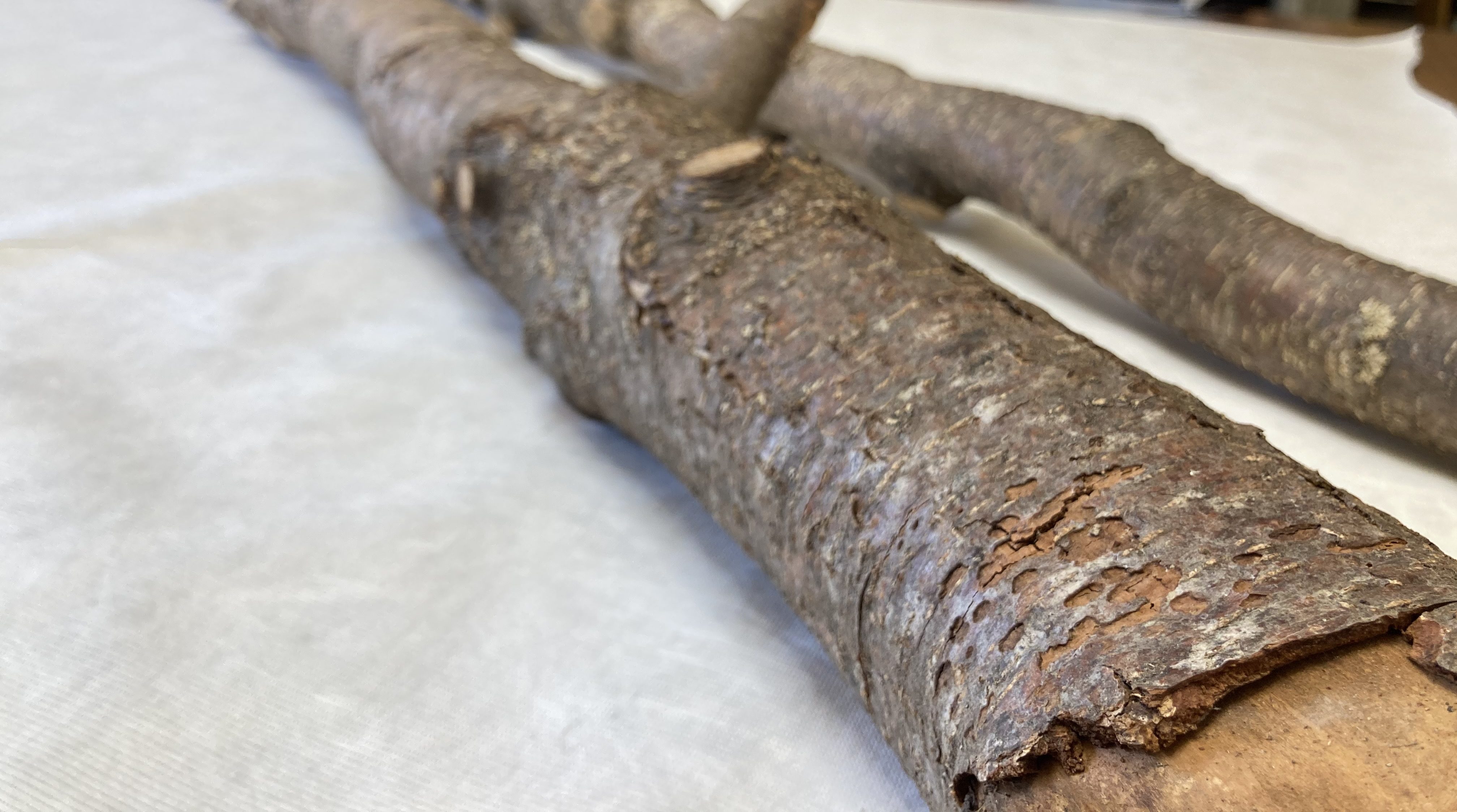
Despite this series being called The Archive in 70 Objects, we don’t actually have a great deal of artefact-type objects. We have lots of very interesting collections related to sound (and sound-related objects) and manuscripts etc, however the few artefacts we do have are related to material culture. One such item needed to be checked for conservation purposes recently and we thought you might like to see.
These are two branches of Alder. They come from Kintail and we’ve had them in the archive since about 1988. They have lasted fairly well over the years considering they have not been perhaps stored in the best location.
Why would we have two branches of alder in our archive?
These branches are actually stilts, or cas-mhaide “wooden legs. They were donated by Duncan “Stalker” Matheson (1929-2010) , Camusluinie, Kintail. Duncan was visited by fieldworkers on a few occasions and contributed material related to place names, as well as local tales and traditions.
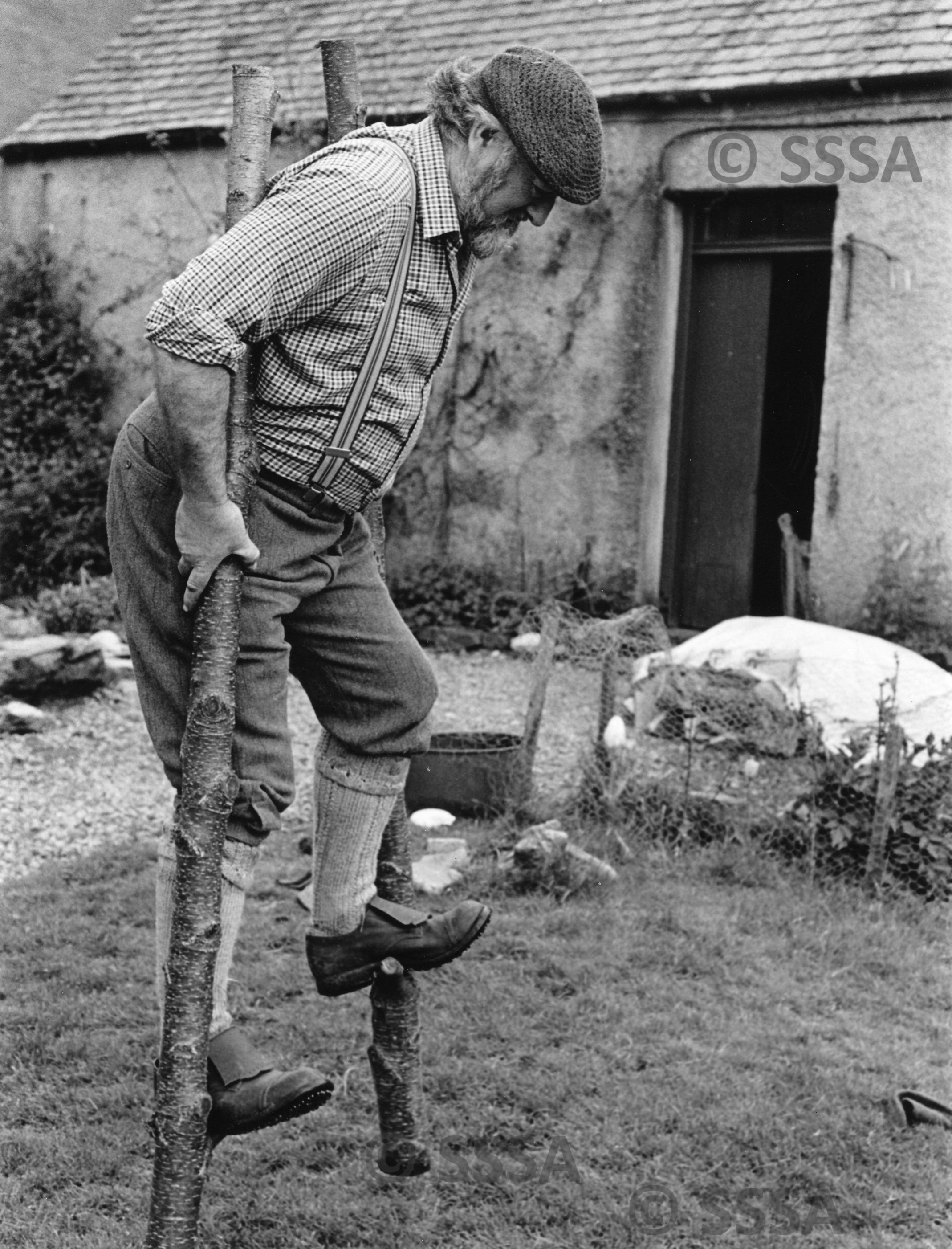
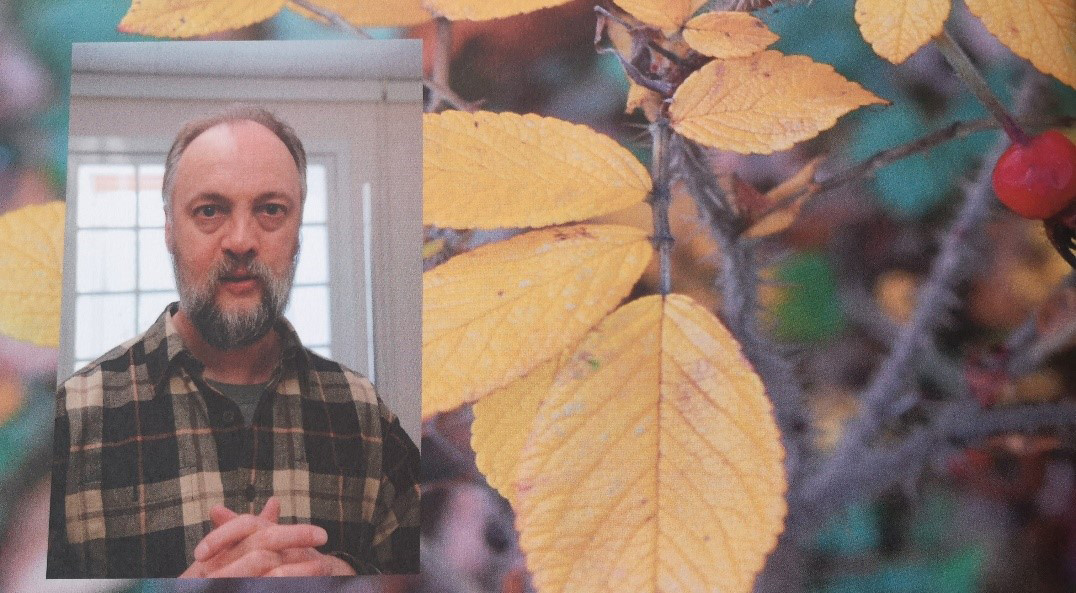
Duncan Matheson of Camusluinie, Kintail © SSSA / Ian MacKenzue
In the 1980s there was a fieldwork trip to Kintail to capture video film of Duncan thatching a roof. While they were there, Duncan told Donald Archie MacDonald about the practice of using stilts to cross the River Elchaig.
Duncan told us when he was young, in the sparsely populated Gaelic-speaking community, any of the local people who had occasion to cross the River Elchaig regularly made use of stilts… these stilts were home made, quickly cut and shaped from the local scrub woodland. They were often of alder, but any suitable sapling with a branch projecting at a convenient angle would do. Generally, there were a pair of stilts left suspended on the low branches of trees, on either side of the river, for the use of anyone who needed them.
[…]
Among notable users of stilts in Duncan’s boyhood was a famous local character, strongman, poacher and ‘smuggler’ (illicit distiller) Alex MacKay, better known as Ali Mal. Ali was reputed ro have been able to carry a full ten-stone sack of meal, tied to his back, across the river on stilts. Ali’s brother Donald, also known as ‘The Bard’, was another regular user, as was their sister Liosaidh/Leezie (Elizabeth), a diminutive woman who could perform the remarkable feat of crossing the river, hopping on one stilt.
Donald Archie MacDonald, Tocher No 58
We are not 100% sure if the stilts show in the picture with Duncan are the same stilts that we have in the archive, but these certainly came to us from that visit. The images taken on that day were by the late Ian MacKenzie, fieldwork photographer and Photographic archive curator. He captured this wonderful image of Duncan being film, using the stilts in the river.
Last week, Caroline Milligan wrote about Ian and his fieldwork photography. If you haven’t already enjoyed that post you can read it here: https://libraryblogs.is.ed.ac.uk/sssa/object-12/
We wrote a short post about another artefact-type object here: https://libraryblogs.is.ed.ac.uk/sssa/object10/
Information:
There is a poem The Stilt Men of Kintail, by Helen Nicholson https://magmapoetry.com/archive/magma-38/poems/stilt-men-of-kintail/
Duncan Matheson’s obituary in the Scotsman: https://www.pressreader.com/uk/the-scotsman/20101122/284047663253164
BIALL Conference 2021
Although we intend this blog to provide an update to news and services offered by the University which are related to the work of the Law Library, we also would like to let you know what we get up to in our work across the law library sector. Earlier in the summer I attended the British and Irish Association for Law Libraries (BIALL) conference. I was delighted to be awarded a bursary which meant I could attend with a funded place, and so I wrote up a short piece about my experience and the sessions I attended.

BIALL 2021 conference poster
I was delighted to be able to attend the BIALL conference this year with the backing of the GlobalX bursary. As a massive Agatha Christie fan I loved the theme of Bodies in the Library and the event really lived up to my expectations! I enjoyed the parallel sessions on running online escape rooms – which has inspired us to create just such an event with our own library later this year – the courtroom presentation of online vs print resources, and the speakers from Parliamentary libraries. However my favourite speaker was definitely Greg Bennett of Goldsmiths, University of London, whose session ‘A new body, a new library’ spoke to both my interests and experience of working in the Sheriff Courts library service, and my time at the University of Edinburgh.
Greg told us how he’d built a legal library from scratch with a limited budget. He’d had to make tough decisions about which publications and resources were essential, and begged or borrowed withdrawn and duplicate items from other libraries. I recognised many of his struggles and viscerally felt the pain of some of the decisions he’d had to make as in my former role at the Sheriff Courts I was responsible for managing a collection across 37 library sites which had never been managed before! Greg was candid while reflecting on some of the difficulties of justifying his decisions to stakeholders who had only limited understanding of the massive task he undertook. He concluded with some realistic considerations of what will come next for his collection. I think everyone in attendance was astounded by how much he’d done with so little – as fellow law library professionals we could appreciate that his budget for the entire collection barely scratched the surface! I also found it cheering that I could so closely relate to colleagues from different parts of the world with different roles – the usual benefits of networking in-person reached me even in this entirely online event.
Overall I had a really positive experience at this year’s conference and I feel that the organising committee pulled out all the stops presenting a varied programme using an relatively new platform – EventsAir – which I know the University of Edinburgh has also been using for it’s Open Days. It was interesting to use it as an attendee rather than a staff member. I am grateful to have been able to take part in this online conference experience and look forward to my next BIALL event.
– SarahLouise
How to Become More Sustainable
The CRC Conservation Team ran two remote internships earlier this year. This blog is from Karoline Sofie Hennum, who was our intern for our Environmental Sustainability in Collections Care project between May – July. Here, Karoline Sofie talks about her internship and shares her top tips on how we collection care practitioners can all work more sustainably.
Ever since my teenage years, I have often found myself involved in political activism, in particular animal welfare and the environment. In 2015 I entered the field of conservation and collection care as I started my BA at the University of Oslo, but it was not until my first year of my MA in conservation at the same university that I truly realised how much of a problem waste produce and energy consumption is in conservation and collections care. As result of this, I swiftly decided that I wanted to become a conservator who always considers sustainability in my own practices.
In May of this year, I started an internship in Environmental Sustainability in Collections Care with the University of Edinburgh’s conservation team. This internship is one of two remote conservation internships offered this semester, so all my work is carried out from my own living room. My supervisor, preventive conservator Katharine Richardson, has taken me and her phone camera on virtual tours around their premises – it does not get much more corona-friendly than that!
The goal of my internship is to integrate environmental sustainability into existing collections care practices amongst those working with the University’s heritage collections. I will be helping the conservation team to take their first step in forming their own sustainability plans, in particular a long-term action plan to tackle issues related to sustainability, such as reducing energy consumption in environmental control. To do this, I am researching and making recommendations on how sustainability can be introduced to their everyday collections care practices. So far, I have started or completed a range of tasks:
- Assessment of their material waste and energy consumption
- Appraisal of their materials and equipment, as well as their suppliers, to see what can be recycled or reused, or possibly replaced with more sustainable products
- Researched environmental sustainability and created a literature review and a resource list for the conservation team to use
- Reviewed and added sustainability measures to their existing collections handling guidelines, as well as their Disaster Response and Recovery Plan
- Currently looking into setting up a recycling scheme for their nitrile gloves waste.
For many, it can be difficult to fully get a grasp of how one can become more sustainable when working in collections care and conservation. If there is one thing I have learnt so far in my internship, it is that even the smallest changes can make a big difference in the long run. Therefore, I have put together a list of simple steps anyone caring for cultural heritage collections can take to become more sustainable:
- Swap all halogen light bulbs out with LEDs. Consider installing motion sensor lights or light bulbs.
- Reduce your own nitrile gloves waste. Ask yourself if you really need to wear them or if having clean hands is applicable. If a used pair has not been contaminated by dust, soil or hazardous chemicals, you should consider reusing them.
- Turn off lights and electrical appliances when they are not in use or of any importance to the work you are currently doing.
- Reuse materials. Cut-offs or waste material can often be reused or repurposed. The bin should always be your very last option. Your imagination is the only limit – come up with creative solutions. Make sure you share your solutions with other conservators in forums and on social media. Let us help each other!
- Set up recycling points around your workplace. If you do not generate enough waste on your own to fill up for example zero waste boxes, team up with another local conservator!
- Travel to work or on courier trips by public transport if you can.
- Set up a sustainability working group at your workplace. Arrange monthly tea breaks or meetings where you discuss sustainability and share your experiences with one another.
- Participate in sustainability discussions and join networks. Examples: Icon’s Environmental Sustainability Network, Sustainable Scotland Network and Fit for the Future.
And remember: Start small and keep yourself inspired. Small changes will eventually lead to bigger ones.
Scott, Globalisation and Race: father of ‘imperial romance’ or silent supporter of abolitionism?
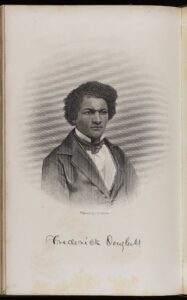
Engraving of a young Fredrick Douglass
When discussing what topics in relation to Walter Scott would be interesting and relevant to reflect upon at the beginning of my internship, one of the themes that was highlighted was that of globalisation. It seemed a bit strange to approach such in relation to Scott, seeing how as an international student who studied English Literature at the University of Edinburgh, I had only encountered Scott in a few lectures here and there. Nevertheless, as I spoke to Paul Barnaby, our resident CRC Scottish Archivist who has curated the exhibition, it became clear that Scott was influential as well as influenced by international revolutionary politics. Some allusions to Scott are less overt; for example, prominent African-American abolitionist statesman Frederick Douglass’ last name is inspired by Scott’s poem ‘The Lady of the Lake’.[1] With regards to more radical revolutionary readings of Scott, an interesting example I came across during this project (which is also highlighted in the online exhibition) is his influence on nationalism within Italy in the 19th Century against foreign domination of the peninsula. Clearly, they still resonate with a later audience as vehicles for exploring how literature and to an extent art (such as with Gaetano Donizetti’s opera Lucia di Lammermoor in 1835) can be used to discuss revolutions in a political and intellectual sense.
In truth, Scott himself was most likely troubled by issues of revolution. He was concerned about how these outside issues might influence Scotland if the sense of nationalism worked against the Union after witnessing the downfall of a number of ancient empires. The French Revolutionary Wars signalled the end of the Holy Roman Empire and the end of the Spanish Empire, the latter losing almost all of its colonies in the Americas. The Ottoman Empire was quickly finding it hard to suppress uprisings in Greece and Serbia. The Austrian and Russian Empires were fighting insurrection from Poland and Italy. There was a clear thread of nationalism and desire for self-determination within Europe at the time, which is ironic if one considers the extent of European imperialism across Africa and Asia. Scott’s work seems to indicate an understanding for the need to rebel against such empires, however he feared that the undercurrents of nationalism would lead to the fracturing of the British Union.
Nevertheless, Scott’s works do emphasise a need to preserve Scottish identity and traditions. He just simply found the idea of revolutionary nationalism as the Americans and French had pursued incompatible with the preservation of the Union.
As I continued my research into Scott and globalisation, I soon found myself in the territory of race and colonialism. The word ‘empire’ when associated with European countries is intrinsically tied to issues of racism, slave trade and colonial domination across the world. In more recent years, Scotland’s own role in transatlantic slave trade has become clearer and more widely discussed, working against the previous narrative which tended to present Scotland as uninvolved in such. Additionally, as the Black Lives Matter movement swept the world once again in 2020, a critical eye soon turned towards the way in which we preserve history of that time period and critical race theory not only in England but also Scotland.
Hence, I thought to myself: Is race a topic which can be associated with Scott? Was it an issue he wrote about explicitly or subversively in his works? Did he hold a stance with regards to the abolitionist movement?
While too young to understand in the moment, Scott would have known of the Knight v. Wedderburn trial in 1778 where an African slave, Joseph Knight, was freed from the employment of his Scottish master. It is also very unlikely that he was unaware of the notion of slave trade, seeing as he lived in New Town in Edinburgh, where many of his neighbours were likely involved in transatlantic slave trade. His training as a lawyer would likely have equipped him with knowledge with regards to the issues of property, which sadly included the ownership of slaves in this era. He also would have been aware of the movements across Europe for the abolition of slavery, as the Enlightenment ideals of ‘equality’ and ‘freedom’, which fuelled American revolutionaries, were incongruent with the idea of slavery. Scotland itself had a strong anti-slavery movement, which included groups such as the Edinburgh Committee for the Abolition of the Slave. In fact, Ian Whyte lists Scott as a subscriber of the Committee’s reprint of anti-slavery petitions in 1790.[2] He also would have witnessed William Wilberforce’s campaign against slavery and the Parliamentary abolition of slave trade which came to pass in 1833, just after Scott’s death; the former was inspired by Scott’ works.[3] Additionally, it would not be surprising if Scott followed the Haitian Revolution (1791-1804) led by former slave Toussaint L’Ouverture against the French colonisers, as he had a distinct interest in the French Revolution and Napoleonic Wars.
Nevertheless, when one looks critically at Scott’s work, there is no overt pro- or anti-slavery stance within his works. He was clearly much more concerned with the issue of nationhood and Scottish identity prevailing in the success of the Union than with the issue of abolitionism, which is simply a reflection of his privilege as a white, wealthy, heteronormative man. Critics such as Ian Duncan and Martin Green argue that Scott’s Waverley novels seem to provide a pioneering representation of military and imperial colonialism that it is only fitting that he be deemed the father of ‘imperial romance.’[4] Scott and his peers did not see imperialism in their time as the beginning of an empire, rather British expansion meant more opportunity for Scottish businessmen to extend their reach of free trade. Therefore, it would not be surprising that he did not consider the issues of slavery as important to address directly because it did not concern him with regards to Scotland’s preservation of culture or the protection of the Union; it was simply a by-product of the attempt of colonists to escape the oppression present within European monarchies and control of the free market.
Alternatively, as critic Carla Sassi has suggested in her paper about Scott and the Caribbean, there may be merit in observing how Scott may subversively address the issues of abolitionism, freedom and the rights of slaves in his works. She discusses how Scott’s works have an ‘implicature’ of silence, which very much aligns with the ‘(un)willed amnesia’ in Scotland with regards to their role in transatlantic slave trade in the 18th Century. She acknowledges that he, like Robert Burns, makes no clear stance in terms of abolition, however his silences within text could be read as a subversive way one such as Scott could present the unsaid and unsayable regarding his support of the abolitionist movement.[5] Her reading of his works presents an opportunity to critically re-evaluate his work and how he may perhaps be trying to use the ‘implicature of silence’ to further the abolitionist movement in Scotland.
It is unfortunate that Scott did not take an abolitionist stance, only referencing in passing the movement in his historical novels, however it is clear that modern readers are able to approach his texts with a new lens of criticism that may reveal more about Scott and his worldview. While it is not obvious initially to the reader, there may still be a possibility of discussion around Scott, globalisation and race within his works that can be further explored by re-examining contextual evidence along with his fictional works. Personally, as a female, Asian literature student who often found herself unrepresented by the large canon of white, privileged white men, it is exciting to find out that Scott may have been more revolutionary in his thoughts regarding race than previously thought.
Works Cited:
[1] Frederick Douglass, Narrative of the Life of Frederick Douglass, an American Slave: Written by Himself, Critical Edition. (Yale: Yale University Press, 2016), pp. 177.
[2] Ian Whyte, Scotland and the Abolition of Black Slavery, 1756-1838 (Edinburgh: Edinburgh University Press, 2006), 87.
[3] Anne Stott, Wilberforce: Family and Friends (Oxford: Oxford University Press, 2012), 12, 174, 230, 258.
[4] Ian Duncan, ‘Scott’s Romance of Empire: The Tales of the Crusaders’, in Scott in Carnival, ed. by Alexander and Hewitt, pp. 370–79.
[5] Carla Sassi, ‘Sir Walter Scott and the Caribbean: Unravelling the Silences’ in The Yearbook of English Studies, Vol. 47, Walter Scott: New Interpretations (2017), pp. 224-240.
Written by Tessa Rodrigues, one of the Engagement Assistants for the Scott250 exhibition on Scott and Revolution.
Five Sites Every Walter Scott Fan Should Visit in Edinburgh
It’s hard to visit Edinburgh’s historical Old and New Towns without spotting something relating to Walter Scott. Be it the vivid Scott monument, or the winding Georgian streets, much of the city echoes a period long since passed. We’ve compiled a guide of all the best Walter Scott sites to visit on your next trip to Edinburgh, so you can get a feel for Scott’s birthplace.
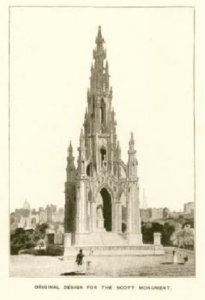
The Walter Scott Monument
After Scott’s death in 1832 a competition was held in Edinburgh for the chance to design a monument dedicated to Walter Scott. Sitting in Princes Street Gardens, the impressive structure has become synonymous with Edinburgh’s Gothic architecture. It is also located right by Edinburgh Waverley Station, as one of the first things people may see when they disembark from either the tram or train. The winner entered under a pseudonym, John Morvo, playing ironically on the name of a Medieval architect. It receives millions of visitors every year, welcoming them to Edinburgh.
George Square (University of Edinburgh)
What some visitors may not know is that Walter Scott used to be resident in George Square for 25 years of his life. The square is now famous as the home of the Edinburgh University Library and other university buildings. Back in Scott’s day, George Square was a new development by the leafy park area ‘The Meadows’. Sadly, parts of the square have been demolished, but Scott’s home remains. You can see Scott’s former lodgings at number 25 George Square, which is also honoured by a plaque.
University Law School
Before becoming a famed author, Scott studied at the University of Edinburgh. If you want a flavour of life as a law student, take a visit to the University Law School in Edinburgh’s Old Town. Located a stone’s throw from Newington, this quad is reminiscent of the Georgian architecture in the New Town. It is also complete with lecture halls and an academic law library. Despite being built after Scott’s time as a student, it is in the same location as the Law School was when he studied there!
University Archaeology Department
Prior to being owned by the University, the department was actually a secondary school. Previously named the High School of Edinburgh, the building on Infirmary Street is where Scott spent some of his formative educational years. It can be found in the Old Town, not far from the Surgeons’ Quarter.
North Castle Street
For many years, Scott’s Edinburgh address was North Castle Street in Edinburgh’s New Town. He wrote in his journal about his time in North Castle Street describing it as: ‘This morning I leave No. 39 Castle Street for the last time. “The cabin was convenient”, and habit had made it agreeable to me. […] So farewell, poor 39, and may you never harbour worse people than those who now leave you.’ The house is conveniently located near Princes Street, and easily accessible for great photo shots of Georgian, stone architecture.
Works Cited
John Gibson Lockhart, Memoirs of the Life of Sir Walter Scott, Bart, Volume 4 (Edinburgh: 1838).
SSSA in 70 Objects: A Superstar
Ian MacKenzie: More of a superstar than an object, but very much SSSA.
by Caroline Milligan
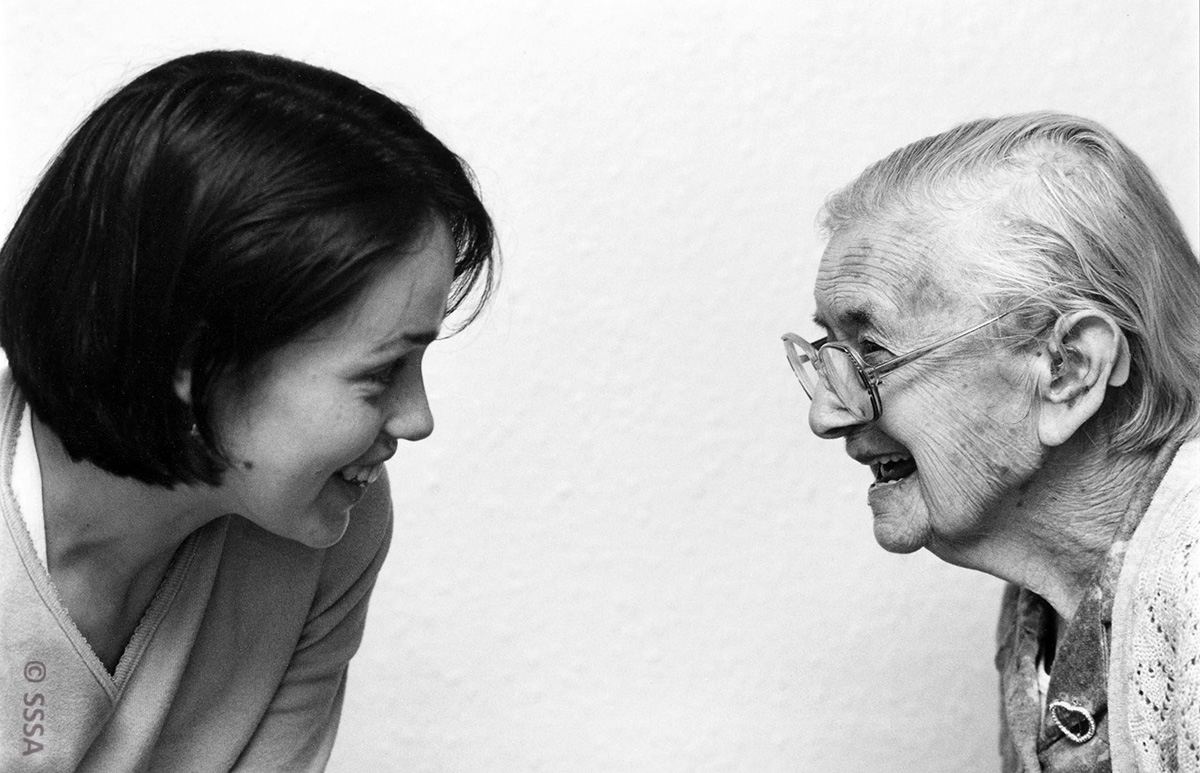
From dozens of ideas on my ‘What shall I write about for my SSSA in 70 objects blog post’ mind map I finally chose to share with you this photograph, of Kath Campbell[ii] and Lizzie Angus which I have loved and admired from the moment I first encountered it, which was probably in a Scottish Ethnology 1 lecture in my first year.
When I worked at the School of Scottish Studies (2004-2018) I would give a couple of lectures a year on Fieldwork Practice and this picture was very often the opening image for my PPT presentation. I love ethnology and thank my lucky stars that I found my way to the School as a mature student in 2000 and for me this image encapsulates so much of what I admire about my discipline.
At its very essence, ethnology is a conversation and an opportunity to share community and pass on knowledge that we, as researchers, can collate, interrogate and then describe in order to understand our shared cultural lives. In this photograph, both Kath (ethnomusicologist) and Lizzie (a sprightly 106 year old who had been a pupil of the great north-east song collector, Gavin Greig) are very obviously enjoying their time together: they’re leaning into each other, meeting each other’s gaze, and smiling like a pair of Cheshire cats. This photograph, and the others discussed in this blog post, were created by my fine, much loved and greatly missed colleague, Ian MacKenzie, who was the School’s photographer and photo-archivist for the best part of 25 years.
Ian was a photographer with a splendid eye for detail who created beautiful images across a range of themes. I especially like his portraits. He was a sociable man who loved people, and his photographs are a lasting testimony to that. He also possessed a great ability to notice, successfully photograph and develop images which celebrate and draw attention to distinct textures and details. In this image of Kath and Lizzie, just look at Lizzie’s cardigan, with its heart-shaped pattern, and the heart-shaped pin brooch on her dress. Kath and Lizzie look at each other as if through a mirror: Kath may be seeing the old woman she hopes she will one day be, while Lizzie sees the enthusiasm of youth and, perhaps, a reflection of the young woman who rests inside her own ageing body. I never tire of looking at this photograph, and always I see the sheer joy of sharing knowledge and life stories that is at the heart of many ethnological fieldwork sessions.
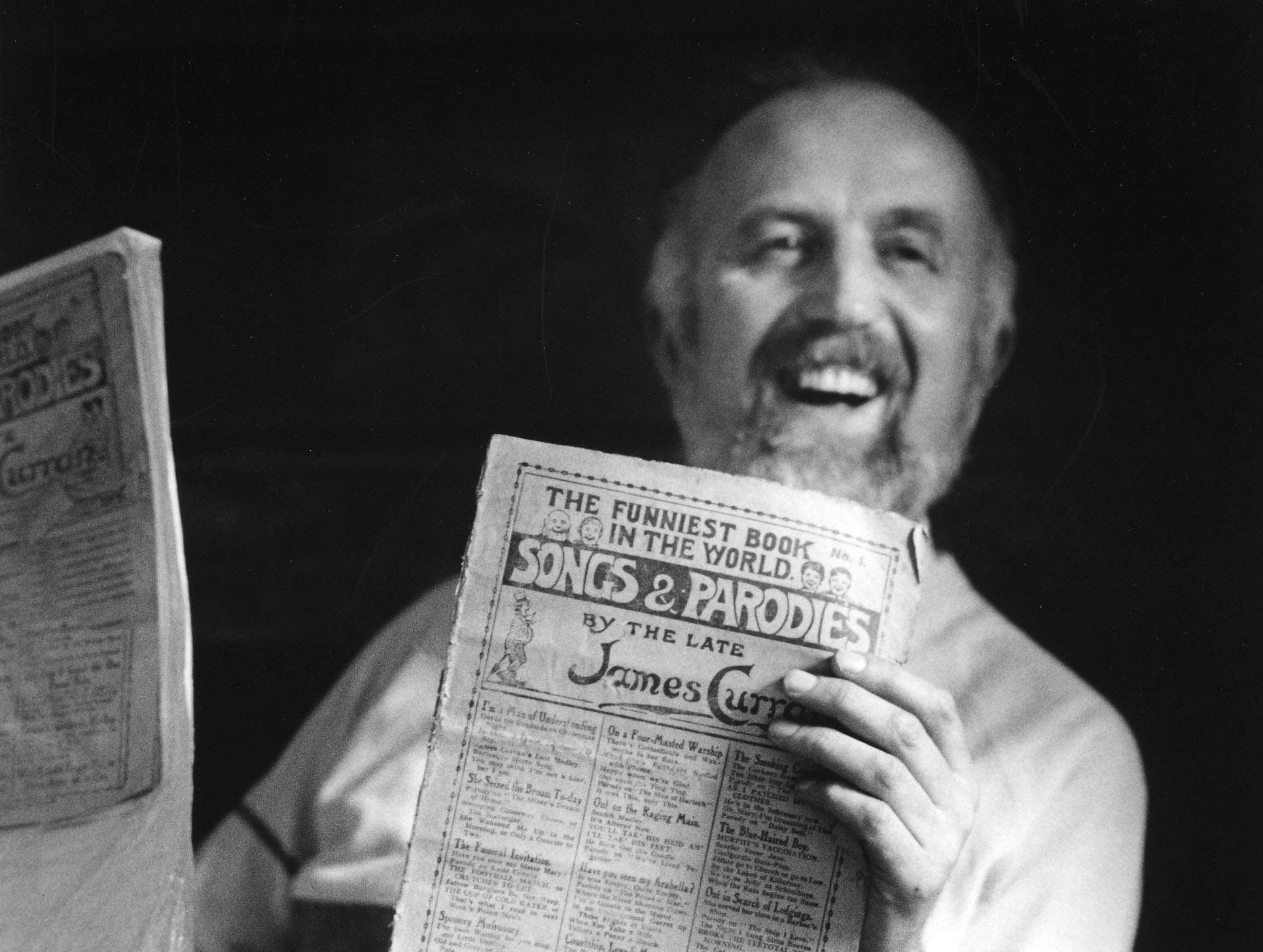
Another portrait by Ian which I adore is this one of singer, songwriter, antiquarian book-seller, teacher, researcher etc. etc.- the splendidly marvellous and multi-talented, Adam McNaughtan. This portrait seems to capture the essence of Adam: his laughing eyes, always with a ready smile, but also self-effacing – he’s almost hiding behind copies of the song-sheets he takes such a delight in. The Songs & Parodies pamphlet he holds, headed ‘The funniest book in the world’ is an entirely fitting choice given Adam’s own song-writing genius when it comes to the comedic – Skyscraper Wean, Cholestoral and Oor Hamlet being particular favourites. This photograph says to me, ‘Life’s a laugh!’, which is exactly the feeling I have whenever I’m in Adam’s company.
For T C Smout, ‘studying photographs [can convey] an untold wealth of detail in social history, and [raise] all sorts of odd questions’.[iv] While the portrait shot of Kath and Lizzie, and the one of Adam, are beautiful in their simplicity, there are other portraits by Ian which work in a very different way, with settings which can be read like a book. For Ian, this was clearly no happenchance. The settings are deliberately recorded so that we can read and understand the people being photographed, as well as the time, place and space they inhabit.
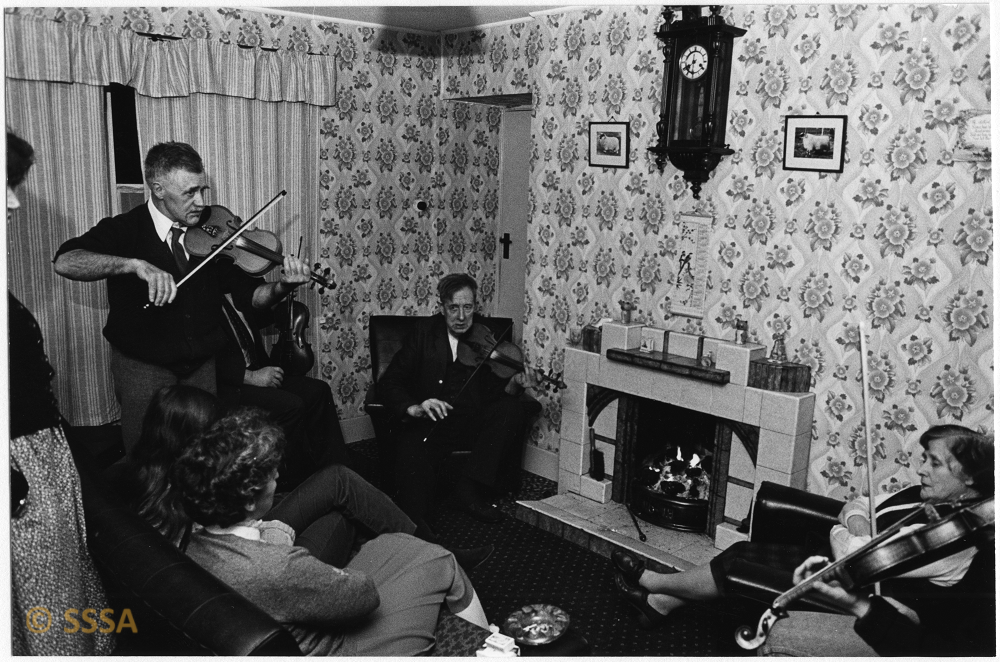
One example of this is Music in the Home, Forrest Glen, Dalry, Galloway, 1985. To my mind, Ian leaves us in no doubt that the seated musician in the middle of the photograph is the most important person in the room. All the others in the photograph seem to look and lean towards him. Although seated, your eyes go first to him, rather than the standing fiddle player to his left, or any of the other figures on the periphery. There’s a stillness and reverence to the gathering: the only hands visible belong to the musicians, the curtains are drawn over: this is all about the music. I also love the textures in this photograph and can readily conjure to mind how the cold tiles on the fire surround, or the textured pattern of the wallpaper, would feel to the touch. This textural richness is something I think Ian worked hard to reveal when he made his photographic prints.
The craft and skill of Ian as a photographic developer and printer is clear in this image. I well remember visiting Ian in his warren of rooms in the basement at 27-29 George Square.[vi] His darkroom, especially the lingering chemical smells, reminded me of evenings spent at the Street Level gallery darkrooms in Glasgow, painstakingly practicing the nuances required in producing photographic prints from my negatives. I remained pretty much a novice, but I remember the thrill of producing a print which I could be proud of and which reflected the nuances of the image I wanted to reveal. I believe working in the darkroom would have been a particularly immersive and rewarding aspect of Ian’s creative practice and this is evident in the subtle precision he consistently managed to achieve in his work.
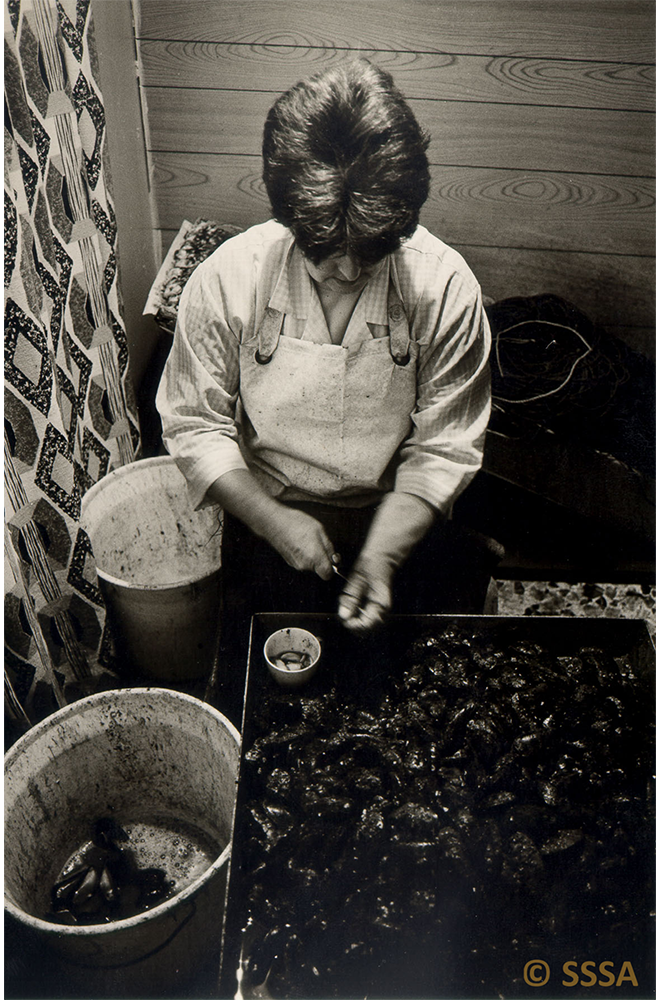
A series of photographs which illustrate Ian’s skills as an ethnologist and his eye for texture and detail are those he made of the Gourdon fishers. In contrast to the images discussed so far, these photographs were created in a much more dynamic setting. In my chosen image, the woman baiting the fishing lines for the next launch hasn’t time to look up: she’ll be racing to get the baited nets ready in time for the next launch and taking her eyes off the task in hand looks likely to result in injury. Her fingers are working more quickly than the camera shutter and her surroundings are entirely functional and efficient. You can tell at a glance that this is tough, cold, dirty, smelly work and way too important to be paused for a mere photograph. Again, I love the contrasting textures: the startling gleam of the mass of baited fishing line in the tray, the stained buckets, the wall and doorway coverings. We can glimpse a small table and chair in the background, maybe to allow for a short rest if work is going well and there’s time for a 5 minute breather.
This image is one which allows us to appreciate how Ian brings a painter’s eye to his photographic work. Like Vermeer’s, The Lacemaker, this photograph contains everything we need to see so that we can understand what is essential: in this instance about both the baiter and the bait-netting task.
The next photograph is another work-related one. The photographs of Kit Sked, taken in 1987, are perhaps some of the most well-known of Ian’s ethnological portraits. Kit was the fourth generation of the Sked family to work as blacksmith at the Cousland Smiddy, and, when this series of photographs were made, he had recently announced his retirement. With no-one yet identified as his successor, one wonders what Kit’s thoughts were during this session or when he is moving around the workshop.[viii]
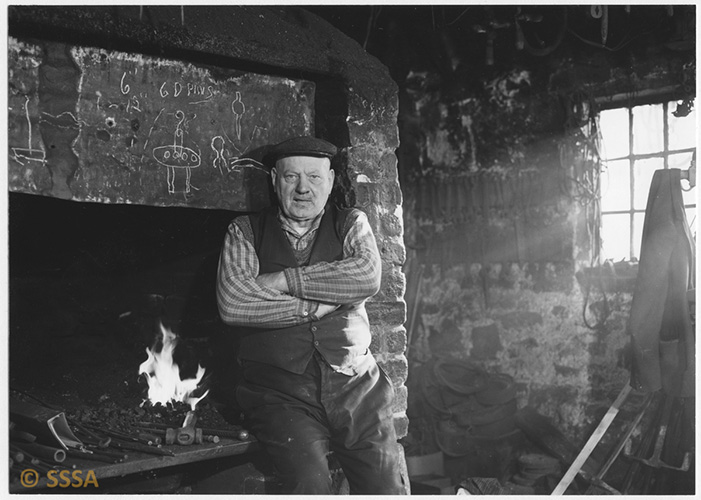
Again, we’re in a functional work-space, one that has not changed for perhaps hundreds of years. However, unlike the previous image, this space has a feeling of permanence. This is Kit’s domain. There’s a strong feeling of ‘a place for everything and everything has a place’ about the smiddy. A space that is as much part of the man as the man is part of the space. Like the fish-baiting station, the space is functional and work-ready: the fire is going strong, tools laid out, strong sunlight streams through the window and Kit’s jacket hangs such that we can believe it hangs in that exact place every working day. This time Kit meets our gaze square on. I love his clothing and the precision of the light and the way this falls into the room and over the left side of Kit’s body. Again, this image, like many created by Ian, is like a painting and can be looked at, considered and enjoyed time and time again. The surface of the brickwork, Kit’s shirt, the chalk markings on the fireplace lintel and the wide array of tools (what are they for?), all merit closer attention, yet all of it can also be appreciated and enjoyed in a single glance. Yes, Ian has left us an impressive body of work, but he also left us too soon.
I remember the occasion of Ian’s final resting which took place at Inerinate, Kintail in February 2010 on a cold, clear, bright-blue day. I recall feeling so angry that such a lovely man should be taken so early and of being quite overwhelmed by the sad truth of this. But I also remember feeling happy that so many lovely people had been brought north, to be together, by their love of the man. There was a real sense of joy on that day. Ian was a simple-living, funny, warm man who loved life. He told me more than once that there were few things in life as good as discovering that the pear you had just bitten into was at the absolutely perfect moment of ripeness for eating. This about sums up Ian’s approach to life and the joy he found in it. He lived a very good, albeit far too short, life and I remember him fondly for his humanity, humour, generosity of spirit and for his great artistry and craftsmanship and the wonderful legacy he has left within the cabinets and catalogues of the SSSA photographic archive.
It has been a pleasure to choose Ian as my ‘favourite object’ from the SSSA collection and to have the excuse to set aside a little time to spend in his company and renew our friendship. It feels like he’s given me the gift of some of his quiet joy in return and I think he’d be chuffed (if a little abashed) to be called to mind and remembered by us.
Grateful thanks to Louise Scollay for helping me with the images and photograph credits for a number of items included in this blogpost.
Caroline Milligan, July 2021
All Images by Ian MacKenzie, © The School of Scottish Studies Archives.
[i] Dr Katherine Campbell and Lizzie Angus, Ythanvale Nursing Home, Ellon (Aberdeenshire), 2000
[ii] Dr Katherine Campbell was ethnomusicologist at the School for a number of years and worked on the Greig-Duncan song collection with Dr Emily Lyle.
[iii] Adam McNaughtan – song book, 1989
[iv] To See Ourselves, Dorothy I Kidd, with preface by T C Smout, NMS 1996
[v] NII/8a/8774. Neg. A6/228/19. 6 December 1985. Gathering of Galloway musicians in the house of Robbie Murray at Nether Forrest, Forrest Glen, Dalry, Glenkens, Galloway, From L to R: Alyne Jones, Davy Jardine and Robbie Murray. Evening recorded by Jo Millar.
[vi] Ian wrote to me in 2008, when he was coming back to work after a long period of ill health and he thanked me particularly ‘for keeping the place [his archive] company’. Re-reading this letter, I smile at that line, remembering again the quiet calm of the photographic archive, the back door often open to the garden, the little zen garden on the wide windowsill, the frequent stream of people seeking Ian out for guidance, discussion and good company. He was very much part of that space, as it was very much part of him.
[vii] BIII6c1/8599
[viii] The smiddy had been in Kit’s family continuously since 1882. Kit had announced his intention to retire in 1986, and then retired in 1989).
[ix] BVIII/7/g1/8782
[x] Collage image by Colin Gateley using one of Ian’s self-portraits.
Caroline Milligan is Archives Assistant with the Regional Ethnologies of Scotland Project, at Centre for Research Collections. She is also Research Assistant, within the European Ethnological Research Centre, University of Edinburgh.
Seeing Scott through a Gendered Lens
‘Also read again, and for the third time at least, Miss Austen’s very finely written novel of Pride and Prejudice. That young lady had a talent for describing the involvement and feelings and characters of ordinary life which is to me the most wonderful I ever met with. The big Bow-wow strain I can do myself like any now going, but the exquisite touch which renders ordinary commonplace things and characters interesting from the truth of the description and the sentiment is denied to me. What a pity such a gifted creature died so early!’ Sir Walter Scott Journal entry, March 14th 1826
Walter Scott made his name through presenting daring battles and histories of old; bringing the past back to the present. Scott’s expert use, and even origination, of historical novel techniques still shape the genre today. However, Scott’s writing also presents unique and interesting female characters that can be deconstructed. These reveal subversive truths about the lives of Regency women, as well as how literary constructions attempted to present women’s idealised role within society. This blog post, we will explore three ways in which Scott’s works impacted female authors and how their role was shaped by their gender.
Two intriguing characters that Scott introduces are Minna and Brenda Troil in his 1822 Waverley novel The Pirate. Maggie’s role as a central character is heavily shaped by her gender. She departs from expectations of a social marriage and subverts expectations within the narrative. These sisters cope with being captured by pirates, as well as dealing with turbulent conditions at sea (and within their own personal lives). This story was then included by another great author, George Eliot, in her novel The Mill on the Floss (1860). Scott’s was also mentioned in Chapter 57 of one of Eliot’s most famous novels Middlemarch, which depicts the Garth children reading aloud from Scott, ‘that beloved writer who has made a chief part in the happiness of many young lives’. To Eliot’s heroine Maggie, Scott’s novels provide a sense of great comfort and companionship: ‘if she could have had all Scott’s novels and all Byron’s poems! – then, perhaps, she might have found happiness enough to dull her sensibility to her actual daily life.’ (Book 4, ch. 3). At one point, Maggie is offered The Pirate to read but refuses: ‘it would make me in love with this world again … it would make me long for a full life’. To Maggie, Scott’s heroines Minna and Brenda – as well their transformative love lives – provided a source of great longing and enjoyment. This reveals that Scott’s works did not just provide interesting and subversive heroines, but also that these heroines had a long-standing impact on some of Britain’s best female writers.
According to the British Library, Walter Scott was famed writer Emily Brontë’s ‘favourite author’. She heavily borrowed from his descriptions of the Scottish Highlands in ‘The Gondal Poems’ (1844-1848). Brontë imitated Scott’s vast and powerful descriptions, using them to build powerful images similar to her own native Yorkshire moors. This early poem in The Gondal series was written when she was just 18 years old, showing how important literary influence was in shaping her initial writing career. This highlights that Scott’s readership, as well as the content of his novels, helped to shape powerful women.
“Walter Scott has no business to write novels, especially good ones. – It is not fair.- He has Fame & Profit enough as a Poet, and should not be taking the bread out of other people’s mouths. – I do not like him, & do not mean to like Waverley if I can help it – but fear I must.”
Emily Brontë Display: British Library.
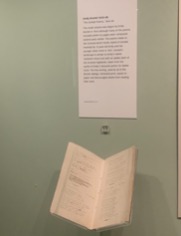
Perhaps, unusually, Scott remained a fierce devotee of Austen, despite her gender and untimely death. In 1816, Scott reviewed Austen’s longest novel Emma in the journal named Quarterly Review. He described the text as a “class of fictions which has arisen almost in our own times, and which draws the characters and incidents introduced more immediately from the current of ordinary life”. Scott recognises the incredible cultural narrative that Austen curated and was widely known as a fan throughout her literary career. Likewise, in 1826, Scott also lamented her death – acknowledging the strong contribution she made to literature. Thus, through Scott’s patronage and support, female authors also saw wider publicity than they otherwise might have done. This highlights that it is both his novels and his own role as a public author that acted as a way to shift gendered understandings during the period.
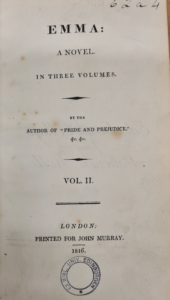
Emma First Edition.
This blog has been published in celebration of the university’s new Walter Scott 250 Exhibition, which celebrates the famed author’s relationship with contemporary and historical revolution.
Works Cited
Jane Austen Centre, Sir Walter Scott: Author and Critic, [https://janeausten.co.uk/blogs/authors-artists-vagrants/sir-walter-scott-author-critic]. Accessed 17/07/2021.
The British Library, The Pirate: novel by Walter Scott, [https://www.bl.uk/collection-items/the-pirate-novel-by-walter-scott]. Accessed 18/07/2021.
The British Library, Manuscript of Emily Brontë’s Gondal poetry [https://www.bl.uk/collection-items/manuscript-of-emily-bronts-gondal-poetry]. Accessed 16/07/2021.
The Industrial World: Scott’s Vision
‘We have accumulated in huge cities and smothering manufacturies the numbers which should be spread over the face of a country and what wonder that they should be corrupted? We have turned healthful and pleasant brooks into morasses and pestiferous lakes.’ – Walter Scott’s Journal.
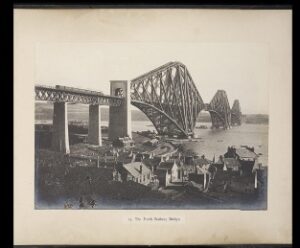
The early 19th century was a period of many dichotomies. The divide between rich and poor, city and agrarian, the industrial and the baronial seemed starker than ever before.
Scott regularly drew attention to new machines and ideas in his novels. One such example is in Scott’s novel The Betrothed (1825). This features a meeting of shareholders looking to form a joint-stock company. Whilst this scene is intended to satirize the form of novels, it also brings attention to machine inventions. One such invention that is presented is the
“great patent machine erected at Groningen, where they put in raw hemp at one end, and take out ruffled shirts at the other, without the aid of hackle or rippling-comb—loom, shuttle, or weaver—scissors, needle, or seamstress. He had just completed it, by the addition of a piece of machinery to perform the work of the laundress.”
This describes a machine that could do the work of any laundress, or modern-day dry cleaner efficiently and instantaneously. Although this may seem common to those who own a washing machine, for Scott’s day it would have been a revolutionary idea. It also points out a slightly sinister idea. Machines like this could, and did, put the lives of workers (‘the work of the laundress’) at incredible risk. This demonstrates Scott’s interest in machines and his ability to draw them, subtly, into his narrative. However, his fascination with machinery certainly ran deeper than a passing interest.
As scholar Professor Murray Pittock points out, ‘in Scott’s lifetime travel became ten times as fast, and before he died regular rail services had begun.’ It is possible that Scott’s fascination with revisiting the past was a way of negotiating the rapid changes of the present by visiting a more familiar territory.
He also heavily acknowledged the impetus of change, industry and economy within his texts. In the introduction to his novel The Monastery (1820), Scott acknowledges his contemporary James Watt with great esteem. Watt, a pioneer of the steam engine and a prolific inventor, was someone whom Scott appeared to admire, describing him as “not only one of the most generally well-informed,—but one of the best and kindest of human beings.”
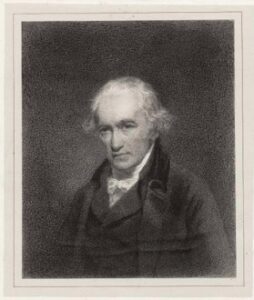
Scott’s praise of Watt also extended to machinery itself, stating
“machinery has produced a change on the world, the effects of which, extraordinary as they are, are perhaps only now beginning to be felt.”
This explains, with great awe, about the modern technology advances that shaped Scott’s day. However, there is also a sense of apprehension in Scott’s tone. In both the above introduction and in Scott’s Journal there is a slight hesitancy about the effects of industrialisation, which he senses will go further than anyone can predict. This links back to Scott’s love of history and revisiting historical sites: there is less ambiguity about what the present may hold.
This blog has been published in celebration of Edinburgh University Library’s new exhibtion, ‘Walter Scott and Revolution’, which celebrates the famed author’s relationship with contemporary and historical revolution.
Works Cited
Scott, Walter. The Journal of Sir Walter Scott, February 20, 1828.
Scott, Walter. The Betrothed (1825).
Scott, Walter. The Monastery (1820).
BBC, The Industrial Revolution, http://www.bbc.co.uk/history/scottishhistory/enlightenment/features_enlightenment_industry.shtml, Date accessed: July 10, 2021.
Pittock, Murray. The Reception of Walter Scott in Europe (London: Bloomsbury, 2006).
Balls, Bridgerton and Betrothals: Walter Scott Meets High Society
“The gentlemen, according to the fashion of the times, indulged, for the most part, in deep draughts of the richest wines, while the ladies, prepared for the ball which always closed a bridal entertainment, impatiently expected their arrival in the state gallery. At length the social party broke up at a late hour, and the gentlemen crowded into the saloon, where, enlivened by wine and the joyful occasion, they laid aside their swords and handed their impatient partners to the floor.” – Walter Scott, The Bride of Lammermoor.
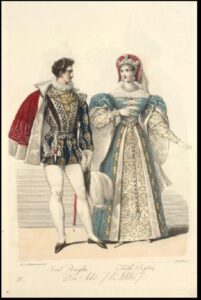
The bewitching world of Netflix’s hit show Bridgerton has overtaken international pop culture this year. For the first since the release of Joe Wright’s Pride and Prejudice in (2005), regency fashion, manners and entertainments are, once again, at the forefront of our public consciousness. When considering this upheaval in popular culture, it is worth revisiting this arena and considering what it means for both our understanding and our study of Walter Scott.
When thinking of Walter Scott, images of battles or lengthy historical novels may come to mind. However, Scott was, like any Regency man, well-acquainted with the subject of balls and the necessity of social decorum. Although set in the early 18th century, Scott’s work The Bride of Lammermoor (1819) deals intimately with issues of contemporary romance and the pitfalls that could arise from this. The novel tells the tragic story of the doomed romance between Lucy Ashton and her familial enemy Edgar Ravenswood. Throughout the intriguing, and largely tragic, narrative, we are given insight into the courting rituals and expectations of the early 19th century.
Scott himself had lengthy understandings of romance. ‘In his “Essay on Romance” (1824), Scott defines Romance as “a fictitious narrative in prose or verse; the interest of which turns upon marvellous and uncommon incidents.”’[1] Scott had an awareness of romance, balls and the business of courtship and was clear to outline this within the essay. As much as The Bride of Lammermoor exists as an historical novel in its own right, it is hard not to read the tragic love story as a kind of social commentary. This commentary recognises the risks that arose in courtship, when lovers made themselves vulnerable. It also, just like Bridgerton, shows us the importance of family when making decisions about marriage.
Scott’s understandings of romance may have also been impacted by his own turbulent love life. His story of marriage to Charlotte Scott, née Carpenter, could have inspired its own spin-off series. The couple met whilst riding and Scott proposed after just three weeks! She herself was subject to criticism and scrutiny. Scott’s family feared that she was a Catholic and initially objected to the match. However, after much scrutiny and investigation, she and Scott remained happily married for three decades. Scott’s life, like his books, reflected much of the turmoil that these 19thcentury matches could invite. Just as Lucy Ashton’s family objected to a match with Edgar Ravenswood, Scott’s family objected to his own with Charlotte. Thankfully, for both Scott and Charlotte, their union ended far more happily than Scott’s fictional creations.
Thus, the world of Bridgerton is not so far from Scott’s own work as one might initially believe. Whilst it is true that Scott’s repertoire is largely historical novels, he did also invite romance and society commentary in his works. Likewise, just as in the turbulent world of Bridgerton, Scott is quick to illustrate both the benefits and foibles of this society: from the dullness of balls to the spark and potential of young love.
This blog has been published in celebration of the university’s new Walter Scott 250 Exhibition, which celebrates the famed author’s relationship with contemporary and historical revolution.
Works Cited
Hook, Andrew D. “The Bride of Lammermoor: A Reexamination.” Nineteenth-Century Fiction 22, no. 2 (1967): 111-26.
Walter Scott Digital Archive, Edinburgh University Library. “Williamina, Charlotte and Marriage”, available at. http://www.walterscott.lib.ed.ac.uk/biography/marriage.html. Accessed July 6, 2021.
Scott, Walter. The Bride of Lammermoor (1819).
[1] Hook, Andrew D. “The Bride of Lammermoor: A Reexamination.” Nineteenth-Century Fiction 22, no. 2 (1967): 112.
Keeping up to date with Library news
The University Library Services throughout the pandemic have had to work within the limits set by the Scottish Government and the wider University. This at times has been frustrating for staff and students as access to resources has been limited.
As government guidance changes in response to the pandemic then the library services have also had to change and adapt.
But it can be difficult to keep up to date with the changes- and that is where the Library Updates pages come in! These pages are the place to go to find out the latest news including re-opening of services, links to more information, help and advice.

As things continue to develop in the run up to the next semester then keep an eye on this page:
Collections
 Hill and Adamson Collection: an insight into Edinburgh’s past
My name is Phoebe Kirkland, I am an MSc East Asian Studies student, and for...
Cataloguing the private papers of Archibald Hunter Campbell: A Journey Through Correspondence
My name is Pauline Vincent, I am a student in my last year of a...
Hill and Adamson Collection: an insight into Edinburgh’s past
My name is Phoebe Kirkland, I am an MSc East Asian Studies student, and for...
Cataloguing the private papers of Archibald Hunter Campbell: A Journey Through Correspondence
My name is Pauline Vincent, I am a student in my last year of a...
Projects
Cataloguing the private papers of Archibald Hunter Campbell: A Journey Through Correspondence
My name is Pauline Vincent, I am a student in my last year of a...
Archival Provenance Research Project: Lishan’s Experience
Presentation My name is Lishan Zou, I am a fourth year History and Politics student....