Home University of Edinburgh Library Essentials
May 24, 2026

Queer Photography Archive
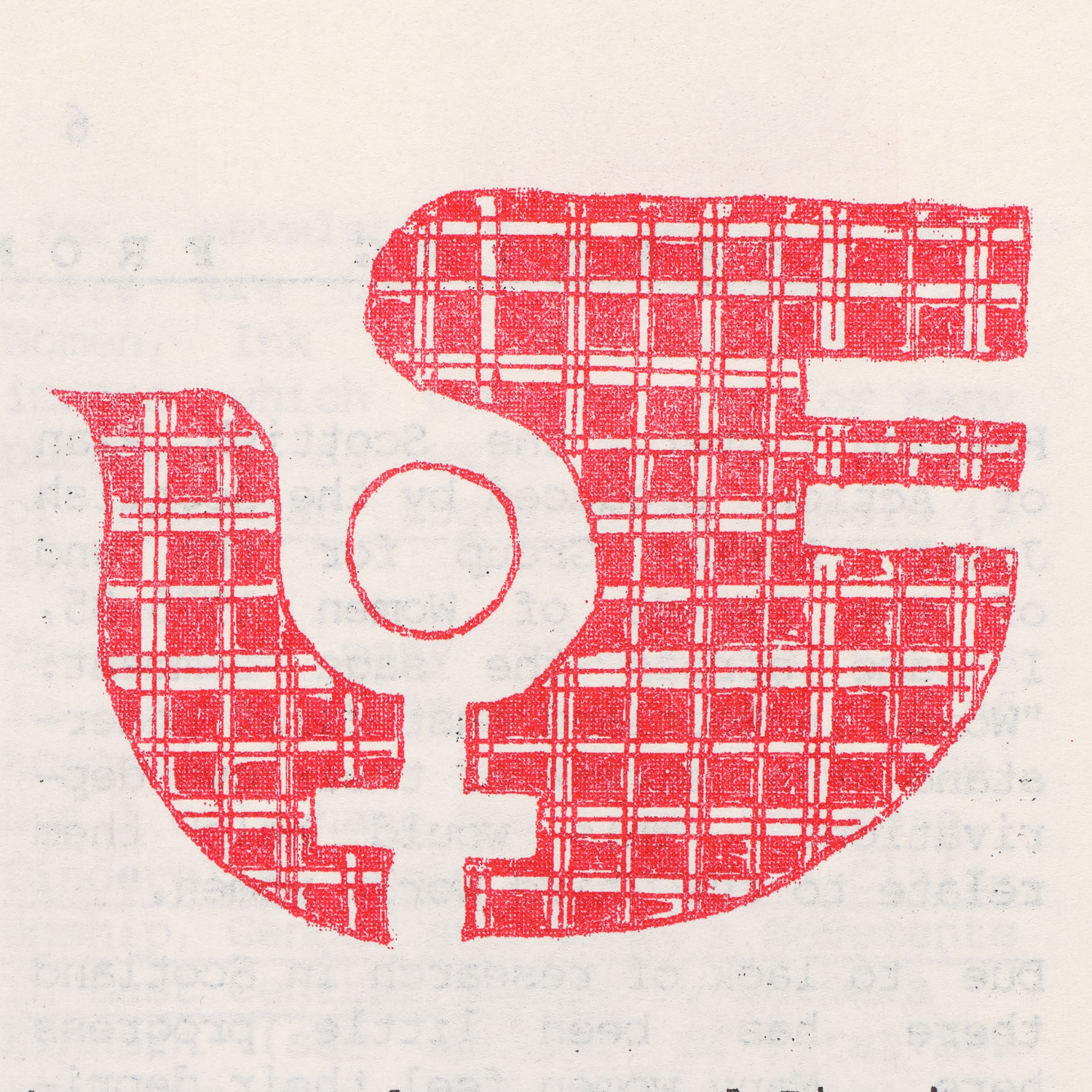
Edinburgh Women’s Liberation Newsletter. detail of Tartan dove.
For the first few months of 2023, I have been using medium format photography to document a collection of zines, posters, photographs and booklets from the Lothian Health Service Archive. The material all relates to the epic struggle to educate on the topic of gay lives and HIV at a time in Edinburgh when bigotry and fear of contracting HIV were prominent, which led to Edinburgh being described in the popular media as the “Aids Capital of Europe.” Read More
Law Library summer opening & support

‘Sunrise, The Meadows, Edinburgh’ by Jeannette King via WikiCommons (CC BY-SA 4.0)
Now that teaching and exams are officially over for the year you may be in the fortunate position of having a long summer ahead of you away from the University. If so, we hope you enjoy it!
For those of you still working or studying over the summer months rest assured that the Law Library is still open weekdays from 9am to 4.50pm. You can find more information about the Law Library and all our other campus libraries on the library opening hours webpage.
If you’re an academic looking forward to planning your next semester’s teaching we’d like to remind you to get your Resource Lists submitted before next Monday (3rd July) to be guaranteed to have your list processed and purchases made before we resume in September. Any lists received after this date will still be processed, but in the order received (so sooner is better).
You may be pleased to hear that your Academic Support Librarian team will also be available throughout the summer! Both Anna and SarahLouise can be contacted by email at any time, so please don’t be shy about getting in touch: law.librarian@ed.ac.uk
Appraisal Made Easy (If Only…): A Day in the Life of an Appraisal Archivist
Welcome to our Day in the Life Series, where each of our new team members will give you an insight into life behind the scenes at the University of Edinburgh’s Centre for Research Collections. In this post, our new Appraisal Archivist and Archive Collections Manager, Abigail Hartley, discusses what she has been up to since joining the Heritage Collections team in March. Expect one more post in this series, as we introduce our Collection Management Technician, Jasmine Hide.
You may have seen the other week my colleague Robyn upload a new blog regarding her role as Collections Care Technician. If you haven’t… Go go go! Take a look at the fantastic work she has undertaken thus far. Once you have returned, it is my turn to introduce myself and the work I’ll be tackling for the foreseeable future.
Let’s start from the beginning, shall we? My name is Abbie and I have been working at the University of Edinburgh as its Appraisal Archivist since April 2023. These past three months I have been creating an appraisal process and enacting some practice runs on smaller collections in preparation of being let loose amongst the backlog of records held at the assorted Heritage Collections sites across campus.
But what even is appraisal?
Student job opportunity!
Interested in paid business experience with a global publisher? The Gale Ambassador Library Support Program may be just what you’re looking for!
The deadline for applications has been extended, so you now have until 13 August 2023 to apply.
Through the Library you have access to a wide range of digital archives and digital primary source databases to help you with your learning and research. Read More
Edinburgh Open Research Conference 2023: in summary
This is a guest post by the Library’s new Citizen Science Engagement Officer, Neil Coleman. All of the materials from the conference may be found on the Edinburgh Open Research Journal page.
After a wonderful three days of talks, workshops, and connecting, we can now call a close to a second successful open research conference. This year, the collaborative efforts of members from the Library Research Support teams (led by the wonderful Kerry Miller) and Edinburgh ReproducibiliTea (facilitated by the talented Emma Wilson) brought together speakers and attendees from all over – allowing connections to be forged with representatives across the UK (and further afield!).
On Monday we were treated to a number of intimate workshops, ranging from a targeted discussion on the future of our very own Edinburgh Diamond, to some practical guidance on how to support good Open Research practices in the Arts and Humanities. We even had the privilege of hosting Edinburgh’s very first ‘Research Café’, where Marshall Dozier, Ruth McQuillan and Lauren Hall Hew spoke about their experiences with Open Research, leading to a delightful discussion about the future of their work, and, importantly, how we might all improve. It was a great first step in this new initiative – a chance to have an in person chat about the trials and tribulations, but also the joy and excitement found in research.
Tuesday was ‘the big day’, with over a hundred in-person tickets sold, and more than 300 online attendees throughout the day. We began with a keynote from Kirsty Wallis (Head of Research Liaison at UCL). Her talk painted a detailed picture of some of the amazing work taking place. This included some stand out discussions of the progress they have been making with their support for citizen science and community connectedness with research; the Euston Voices/Euston Young Voices were really stand out case studies of the impact open research practices can have on the world beyond research.
In depth discussions taking place at the Monday Arts and Humanities workshop.
The remainder of the day allowed us to explore the themes of the conference in depth: looking for tangible solutions to global challenges. Our lunchtime keynotes, Daisy Selematsela and Lazarus G Matizirofa gave us a tour of the current status of Open Research in South Africa and the University of Pretoria in particular. Later, Will Cawthorn (our LERU Open Science Ambassador) spoke about the structures and initiatives that are helping to realise the potential of open science. Sandwiched between these fabulous lectures, a diversity of perspectives were offered in formats including lightning talks – from a community representative of a data-focussed environmental initiative (Pauline Ward, Data 4 Climate Action) through to workflows from Xiaoli Chen (DataCite). Throughout, it was inspiring to see the levels of engagement – with a seemingly unending stream of questions and comments from the room and our online community following on from many of the talks, which continued for the in-person group in a drinks reception.
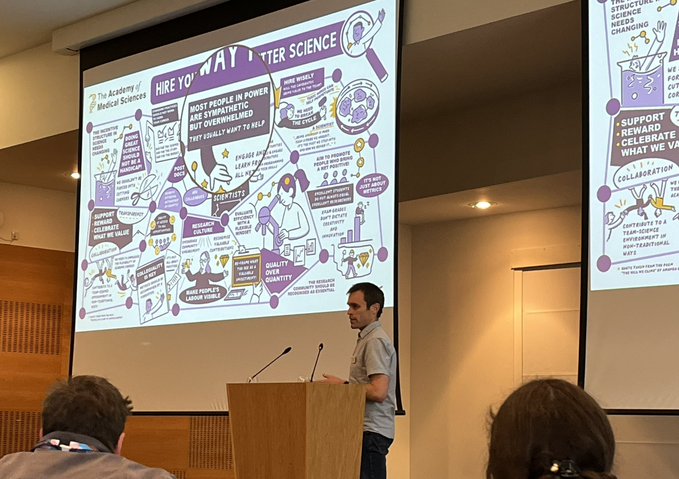
Will Cawthorne presenting on research culture, with perhaps the most beautifully illustrated slide of the day!
The Wednesday closed the workshop sandwich. Gillian Currie and Charlotte Brady worked with attendees to develop ‘Bingo’ cards to promote good academic questioning at conferences. At the same time in the Pentland Suite, the focus was on the 9th Pillar: citizen science and participatory research. Lightning talks from project leads across the colleges were followed by in-depth discussions of the challenges faced by this unique but exciting collection of approaches.
The day and the conference drew to a close in the best possible way: engaging talk with pizza. Facilitated by a wonderful team of early career researchers, the final workshop focused on the relationship between PhD researchers and open research practices. As is typical in all cases of culture change – it has to happen at every level, and there is a risk of early career researchers being left behind. The future of research is open, and so ensuring that those at the start of their careers are well equipped is at the heart of all of the work we do.
With that in mind, then, we can now look forward, where the lessons learned, discussions had, and connections made will ground our work for the coming year. With two successful conferences behind us, this will surely become a tradition with Open Research 2024!
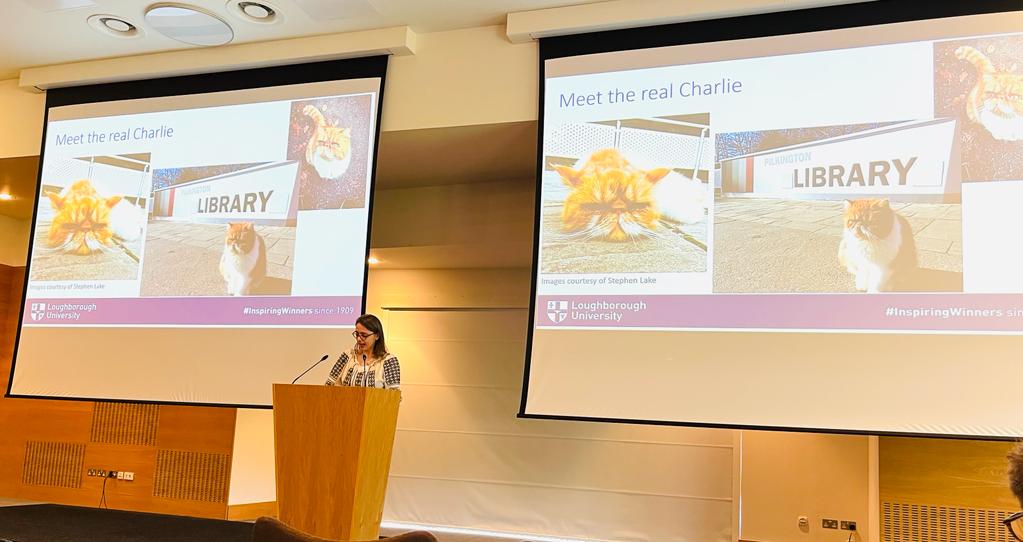
While I would of course never admit to playing favourites, I will admit to being a huge fan of Charlie the cat from Loughborough University who was an unticketed virtual attendee.
New! East African Newspapers
Following a successful trial earlier this semester at the request of staff from the Centre of African Studies I’m happy to let you know the Library now has access to East African Newspapers from EastView. This resource features key newspapers from the region from the 1940s to the early 2000s.

You can access East African Newspapers via the Databases A-Z list, DiscoverEd and the Newspapers, Magazines and Other News Sources guide. Read More
Would you like to be the next LexisNexis Student Associate?
Each year our major databases recruit for a new Student Associate to fill the role of training and peer support. LexisNexis have announced they are currently looking for a student at the University of Edinburgh to fill this position for the 2023/24 academic year. Please see the attached flyer for more information:
LexisNexis Student Associate Job Advert
The closing date for applications is 17th July, applications can be submitted in the form of CVs at the following link: https://bit.ly/3IyxXDO
Good luck!
Critical Approaches to Libraries (CALC) 2023
I attended the CALC Conference on 24th and 25th May and can thoroughly recommend this annual event to other professionals interested in critical librarianship. The gathering was welcoming and introduced the day by stating “we will operate within a spirit of liberation at this conference”. If you have not heard of CALC before, their website states that “The Critical Approaches to Libraries Conference aims to provide a space to discuss all aspects of critical practice in libraries and librarianship including (but not limited to) decolonisation, critical pedagogy, equality, diversity and inclusion in library work and the representation of marginalised groups in the workforce, academia and literature.”
The 2 day conference was packed with a diverse range of topics and speakers, so I can only highlight a few here. At the end of the blog post I have included links to further reading.
Some of my key take-aways were:
- When designing a support resource for ebook accessibility question your assumptions about students understanding of platforms, and co-design courses with students.
- When investigating library ‘decolonisation’ initiatives there is no such thing as “neutral”. Be clear about your positionality and privileges. Find actionable recommendations to solve a problem (move beyond critiquing, to action). Look at Algorithms of Oppression book (on DiscoverEd).
In the Day 1 conference Keynote: Decolonising bibliographies, referencing and citational practices Dr Gurnam Singh shared so many important reflections for where we find ourselves right now, such as:
- “Enlightenment belongs to humanity not to Europe!”
- “Colonialism is an economic endeavour and is still happening”.
- “Critiquing the canon means exposing the othering and silencing of people”.
Dr Singh discussed the various types of colonisation to be aware of such as settler colonisation, extractive colonisation, and plantation colonisation.
(Colonialism is generally classified by one of five overlapping types according to the practice’s particular goals and consequences on the subjugated territory and its indigenous peoples. These are: settler colonialism; exploitation colonialism; plantation colonialism; surrogate colonialism; and internal colonialism.)
Dr Singh then went on to compare the fixed hierarchies of arborescent thought versus rhizomatic thought’s interconnected multiplicity and networks of thought, which rejects fixed categories and sees connections and dialogues.
Some of his comments might be challenging to some people, such as “Citation rankings are monetised and racist, and so therefore is the REF [Research Excellence Framework]”. It is true that currently citation rankings perpetuate certain dominant authors and global voices, which position Western discourse as the most “valid” or important. Dr Singh said “When an article has 10 authors you just know its gaming the citation rankings – its fraud. The publishing industry is colonial – it’s based on colonial attitudes.”
“Decoloniality is about building a new humanity not going back to a “purer” time. This isn’t a specialist subject, its about being human. Maybe AI could release us to be humans and not robots?”
Other topics covered by other speakers included multilingualism in public libraries; using reflective practices to extend the impact of teaching in libraries; developing collaborative cataloguing codes of ethics; setting up Library Decol Working Groups in academic libraries; exploring working class roots of library staff and their experiences in the mostly middle class populations of HE library staff; being a neurodivergent librarian in HE; using critical race theory in medical curriculum decolonisation work; and using the Homosaurus for cataloguing in a public library consortium.
We were encouraged to develop the attitude that everybody brings something to the workplace – a richness of their own, rather than making assumptions about the limitations of people based on their assumed backgrounds, identities, or experiences of “othering”.
I can thoroughly recommend attending this very affordable and welcoming conference!
Jane Furness
ECA Academic Support Librarian

Further reading links:
The recordings of the sessions will soon be uploaded to the CALC Conference site:
https://sites.google.com/view/calcconference
If you are interested in the topics raised at the Conference these links will be useful to explore:
Future Learn course on Anti Racist Technologies https://www.futurelearn.com/courses/anti-racist-technologies
Cataloguing code of ethics:
https://www.uwtsd.ac.uk/library/support-for-staff/collection-development-policy/cataloguing-code-of-ethics/
https://sites.google.com/view/cataloging-ethics/home
https://homosaurus.org/
Journal of Information Literacy article on working class library staff experiences: https://journals.cilip.org.uk/jil/article/view/20
Critical Race Theory book: Knowledge Justice (on DiscoverEd):
https://discovered.ed.ac.uk/permalink/44UOE_INST/7g3mt6/alma9924550010502466
Critical Race Theory definition:
https://www.britannica.com/topic/critical-race-theory
CRT awareness: https://www.uksg.org/newsletter/uksg-enews-534/navigating-whiteness-and-reflecting-identity-vocational-awe-and-allyship
Neurodivergent librarians supporting each other: https://neurospicylibraries.flarum.cloud/
One neurodivergent librarian’s experience: https://www.inthelibrarywiththeleadpipe.org/2017/neurodiversity-in-the-library/
CALC conference on Youtube: https://www.youtube.com/channel/UCqB_9b3mgcJ0yu8cHK9kIoQ
Books, Boxes and Bugs! A day in the life of a Collections Care Technician at the Centre for Research Collections
Welcome to our new Day in the Life Series! The Conservation and Collections Management team recently recruited three new members of staff. In this series each of our new team members will give you an insight into life behind the scenes at The University of Edinburgh’s Centre for Research Collections. In this post, our new Collections Care Technician Robyn Rogers discusses what she has been up to since joining the team in March. Expect two more posts in this series, as we introduce our Appraisal Archivist and Archives Collection Manager, Abbie Hartley, and our Collections Management Technician, Jasmine Hide.
My first three months at the Centre for Research Collections have been jam packed – I have installed an exhibition, couriered a loan to the V&A Dundee, cleaned one hundred linear metres of rare books, and rehoused over seventy collection items – and that’s just a small selection of what I’ve been up to! On an average day you might find me jet setting across campus to move a harpsichord at St Cecilia’s Hall, or vising our offsite repository, the University Collections Facility, to clean some especially dirty books, before finishing the day in the Conservation Studio making some phase boxes. I feel fortunate to have worked with many fascinating collection items so far, from a Bible that had been rescued after falling down a well, to 60s pop stars’ microphone of choice. This demonstrates what I love about being a Technician working in cultural heritage – our work focuses on preventative collections care, as opposed to interventive treatment, allowing us to work with an exciting breadth of collections material.
The Book Surgery Part 2: Bringing Everything Together
In this blog, Project Conservator Mhairi Boyle her second day of in-situ book conservation training she has undertaken with Book Conservator Caroline Scharfenberg (ACR). Mhairi previously undertook a Maternity Cover contract at the CRC within the Conservation Department.
In the previous blog, the examination and initial steps in spine repair and board reattachment of two volumes from the Royal (Dick) School of Veterinary Studies (R(D)SVS) were described. The first blog in this series can be found here.
After my first session with Caroline, I sat down and pored over all my notes and the millions of photos I had taken. The amount of thought, precision and care that goes into book spine linings and repairs that will eventually be hidden and concealed shows how complex even in-situ book conservation steps can be. After jotting down my notes into a coherent order and cross-referencing everything with Caroline, I came back to the studio a few weeks later refreshed and ready for a full day of training and collaboration.
In this session, Caroline and I focused on making spine pieces and hollows, and examined how to reattach cracked book boards in different ways. One of the things I like most about working in Conservation is that we are constantly adapting and evolving techniques, tailoring them to the objects we are currently working on. This is exactly what Caroline demonstrated to me: informed by our initial examinations of both volumes, we tailored the treatment steps for each book based on its size, weight, and particular areas of weakness.
Collections
 Hill and Adamson Collection: an insight into Edinburgh’s past
My name is Phoebe Kirkland, I am an MSc East Asian Studies student, and for...
Cataloguing the private papers of Archibald Hunter Campbell: A Journey Through Correspondence
My name is Pauline Vincent, I am a student in my last year of a...
Hill and Adamson Collection: an insight into Edinburgh’s past
My name is Phoebe Kirkland, I am an MSc East Asian Studies student, and for...
Cataloguing the private papers of Archibald Hunter Campbell: A Journey Through Correspondence
My name is Pauline Vincent, I am a student in my last year of a...


Projects
Cataloguing the private papers of Archibald Hunter Campbell: A Journey Through Correspondence
My name is Pauline Vincent, I am a student in my last year of a...
Archival Provenance Research Project: Lishan’s Experience
Presentation My name is Lishan Zou, I am a fourth year History and Politics student....