Home University of Edinburgh Library Essentials
April 6, 2026
Non-standard research outputs
I recently attended (13th May 2014) the one-day ‘Non-standard Research Outputs’ workshop at Nottingham Trent University.
[ 1 ] The day started with Prof Tony Kent and his introduction to some of the issues associated with managing and archiving non-text based research outputs. He posed the question: what uses do we expect these outcomes to have in the future? By trying to answer this question, we can think about the information that needs to be preserved with the output and how to preserve both, output and its documentation. He distinguished three common research outcomes in arts-humanities research contexts:
- Images. He showed us an image of a research output from a fashion design researcher. The issue with research outputs like this one is that they are not always self explanatory, and quite often open up the question of what is recorded in the image, and what the research outcome actually is. In this case, the image contained information about a new design for a heel of a shoe, but the research outcome itself, the heel, wasn’t easily identifiable, and without further explanation (description metadata), the record would be rendered unusable in the future.
- Videos. The example used to explain this type of non-text based research output was a video featuring some of the research of Helen Storey. The video contains information about the project Wonderland and how textiles dissolve in water and water bottles disintegrate. In the video, researchers explain how creativity and materials can be combined to address environmental issues. Videos like this one contain both, records of the research outcome in action (exhibition) and information about what the research outcome is and how the project ideas developed. These are very valuable outcomes, but they contain so much information that it’s difficult to untangle what is the outcome and what is information about the outcome.
- Statements. Drawing from his experience, he referred to researchers in fashion and performance arts to explain this research outcome, but I would say it applies to other researchers in humanities and artistic disciplines as well. The issue with these research outcomes is the complexity of the research problems the researchers are addressing and the difficulty of expressing and describing what their research is about, and how the different elements that compose their research project outcomes interact with each other. How much text do we need to understand non-text-based research outcomes such as images and videos? How important is the description of the overall project to understand the different research outcomes?
Other questions that come to mind when thinking about collecting and archiving non-standard research outputs such as exhibitions are: ‘what elements of the exhibition do we need to capture? Do we capture the pieces exhibited individually or collectively? How can audio/visual documentation convey the spatial arrangements of these pieces and their interrelations? What exactly constitutes the research outputs? Installation plans, cards, posters, dresses, objects, images, print-outs, visualisations, visitors comments, etc.? We also discussed how to structure data in a repository for artefacts that go into different exhibitions and installations. How to define a practice-based research output that has a life in its own? How do we address this temporal element, the progression and growth of the research output? This flowchart might be useful. Shared with permission of James Toon and collaborators.
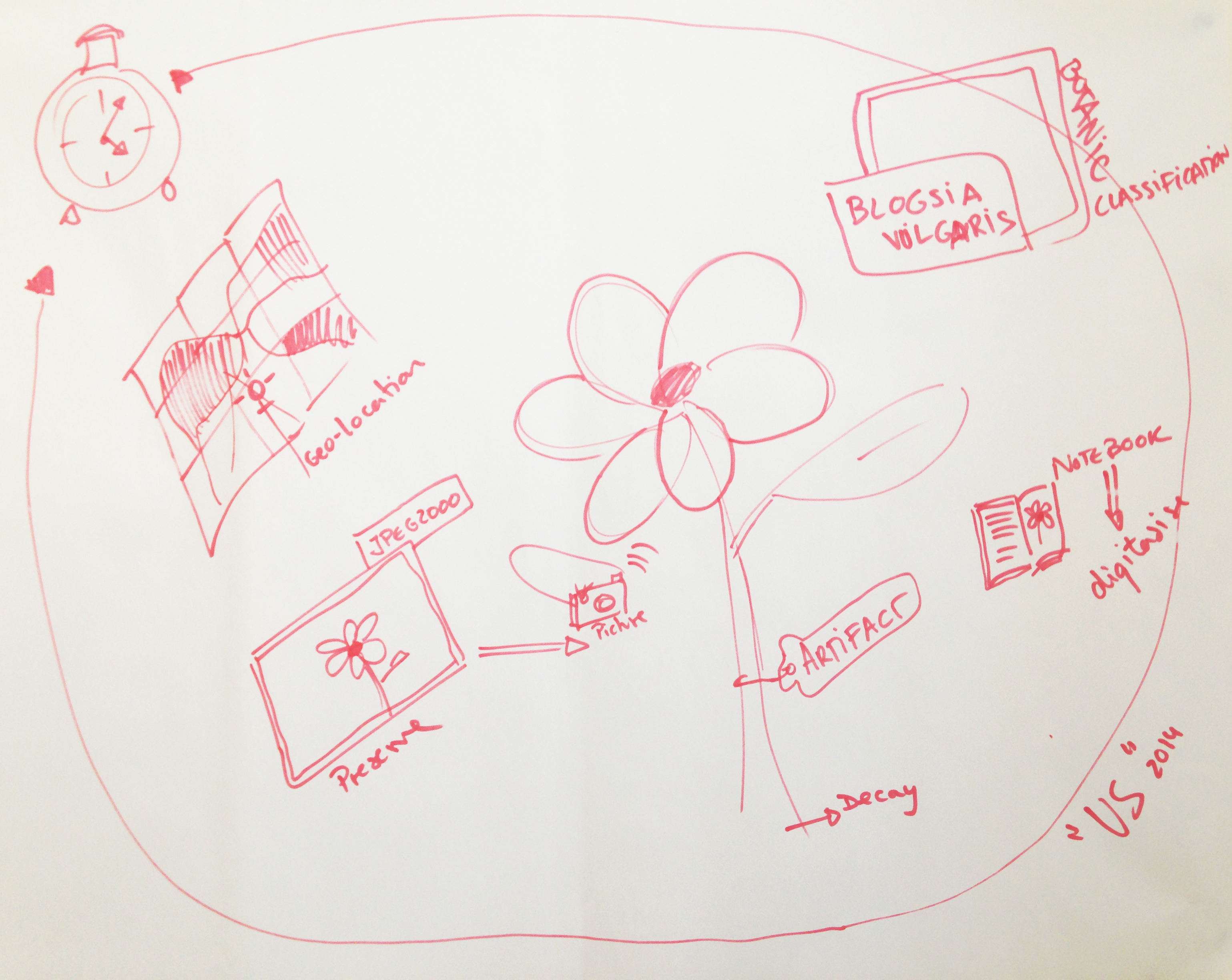
Sketch from group discussion about artefacts and research practices that are ephemeral. How to capture the artefact as well as spatial information, notes, context, images, etc.
[ 2 ] After these first insights into the complexity of what non-standard research outcomes are, Stephanie Meece from the University of the Arts London (UAL) discussed her experience as institutional manager of the UAL repository. This repository is for research outputs, but they have also set up another repository for research data which is currently not publicly available. The research output repository has thousands of deposits, but the data repository has ingested only one dataset in its first two months of existence. The dataset in question is related to a media-archaeology research project where a number of analogue-based media (tapes) are being digitised. This reinforced my suspicion that researchers in the arts and humanities are ready and keen to deposit final research outputs, but are less inclined to deposit their core data, the primary sources from which their research outputs derive.
The UAL learned a great deal about non-standard research outputs through the KULTUR project, a Jisc funded project focused on developing repository solutions for the arts. Practice-based research methods engage with theories and practices in a different way than more traditional research methods. In their enquiries about specific metadata for the arts, the KULTUR project identified that metadata fields like ‘collaborators’ were mostly applicable to the arts (see metadata report, p. 25), and that this type of metadata fields differed from ‘data creator’ or ‘co-author.’ Drawing from this, we should certainly reconsider the metadata fields as well as the wording we use in our repositories to accommodate the needs of researchers in the arts.
Other examples of institutional repositories for the arts shown were VADS (University of the Creative Arts) and RADAR (Glasgow School of Art).
[ 3 ] Afterwards, Bekky Randall made a short presentation in which she explained that non-standard research outputs have a much wider variety of formats than standard text-based outputs. She also explained the importance of getting the researchers to do their own deposits, as they are the ones that know the information required for metadata fields. Once researchers find out what is involved in depositing their research, they will be more aware of what is needed, and get involved earlier with research data management (RDM). This might involve researchers depositing throughout the whole research project instead of at the end when they might have forgotten much of the information related to their files. Increasingly, research funders require data management plans, and there are tools to check what they expect researchers to do in terms of publication and sharing. See SHERPA for more information.
[ 4 ] The presentation slot after lunch is always challenging, but Prof Tom Fisher kept us awake with his insights into non-standard research outcomes. In the arts and humanities it’s sometimes difficult to separate insights from the data. He opened up the question of whether archiving research is mainly for Research Excellence Framework (REF) purposes. His point was to delve into the need to disseminate, access and reuse research outputs in the arts beyond REF. He argued that current artistic practice relates more to the present context (contemporary practice-based research) than to the past. In my opinion, arts and humanities always refer to their context but at the same time look back into the past, and are aware they cannot dismiss the presence of the past. For that reason, it seems relevant to archive current research outputs in the arts, because they will be the resources that arts and humanities researchers might want to use in the future.
He spent some time discussing the Journal for Artistic Research (JAR). This journal was designed taking into account the needs of artistic research (practice-based methodologies and research outcomes in a wide range of media), which do not lend themselves to the linearity of text-based research. The journal is peer-review and this process is made as transparent as possible by publishing the peer-reviews along with the article. Here is an example peer-review of an article submitted to JAR by ECA Professor Neil Mulholland.
[ 5 ] Terry Bucknell delivered a quick introduction to figshare. In his presentation he explained the origins of the figshare repository, and how the platform has improved its features to accommodate non-standard research outputs. The platform was originally thought for sharing scientific data, but has expanded its capabilities to appeal to all disciplines. If you have an ORCID account you can now connect it to figshare.
[ 6 ] The last presentation of the day was delivered by Martin Donnelly from the Digital Curation Centre (DCC) who gave a refreshing view into data management for the arts. He pointed out the issue of a scientifically-centred understanding of research data management, and that in order to reach the arts and humanities research community, we might need to change the wording, and change the word ‘data’ for ‘stuff’ when referring to creative research outputs. This reminded me of the paper ‘Making Sense: Talking Data Management with Researchers’ by Catharine Ward et al. (2011) and the Data Curation Profiles that Jane Furness, Academic Support Librarian, created after interviewing two researchers at Edinburgh College of Art, available here.
Quoting from his slides “RDM is the active management and appraisal of data over all the lifecycle of scholarly research.” In the past, data in the sciences was not curated or taken care of after the publication of articles; now this process has changed and most science researchers already actively manage their data throughout the research project. This could be extended to arts and humanities research. Why wait to do it at the end?
The main argument for RDM and data sharing is transparency. The data is available for scrutiny and replication of findings. Sharing is most important when events cannot be replicated, such as performance or a census survey. In the scientific context ‘data’ stands for evidence, but in the arts and humanities this does not apply in the same way. He then referred to the work of Leigh Garrett, and how data gets reused in the arts. Researchers in the arts reuse research outputs but there is the fear of fraud, because some people might not acknowledge the data sources from which their work derives. To avoid this, there is the tendency to have longer embargoes in humanities and arts than in sciences.
After Martin’s presentation, we called it a day. While, waiting for my train at Nottingham Station, I noticed I had forgotten my phone (and the flower sketch picture with it), but luckily Prof Tony Kent came to my rescue, and brought the phone to the station. Thanks to Tony and Off-Peak train tickets, I was able to travel back home on the day.
Rocio von Jungenfeld
Data Library Assistant
Maori Moko – Capturing the New Zealand Collection
An update from the CRC Cataloguing Interns Beth and Fiona
Moko or tatooing is a crucial part of Maori culture, reflected in many of their carvings and art work, and early examples of this practise are amazingly well preserved in some photographs and drawings in Major-General Robley’s 1896 work: Moko, or Maori tattooing, one of the many fascinating books in the New Zealand Collection.


The draughtsman of Captain Cook, Sydney Parkinson, was first to draw the Maori tattoos in 1769, capturing their intricate designs and an art which was to decline rapidly with the arrival of the European missionaries and settlers who disapproved of the practise. In recent years, however, it is making a comeback using modern tattooing methods, and in this work we can see how these tattoos were made from the earliest times. 
The Moko process was extremely painful, and would produce a raised scarring with charcoal black staining, as can be seen in some of the photos of the Chiefs. The tools used were a chisel called the Uhi, made from bone, tooth, or later iron, dipped in charcoal, and driven into the skin with the tap of a mallet called He Mahoe. On occasion the Uhi would pierce the skin and Robley describes seeing a Chief’s pipe smoke coming out of such a wound in the cheek.


The most exhaustive description in English of a Maori tattooing, was that of John Rutherford, who was captured in 1816, along with several of the crew of his ship, the Agnes. He was one of the first westerners to be tattooed and gives a detailed description of this painful 4 hour process: we can see his extensive tattoos in his portrait. Facial tattoos were particularly important, and not just confined to the men: women often had at least some decoration around their mouth and such tattoos, in men and women, were designed to highlight and enhance their natural features as well as to display their status.


Within Maori culture, at that time, a person was so defined by their tattoos that these came to represent who they were and there are several examples of Maori chiefs signatures which consisted of drawing of their own facial tattoos, as can be seen in several facsimiles of treaties reproduced in this work.


It’s Not All Books…
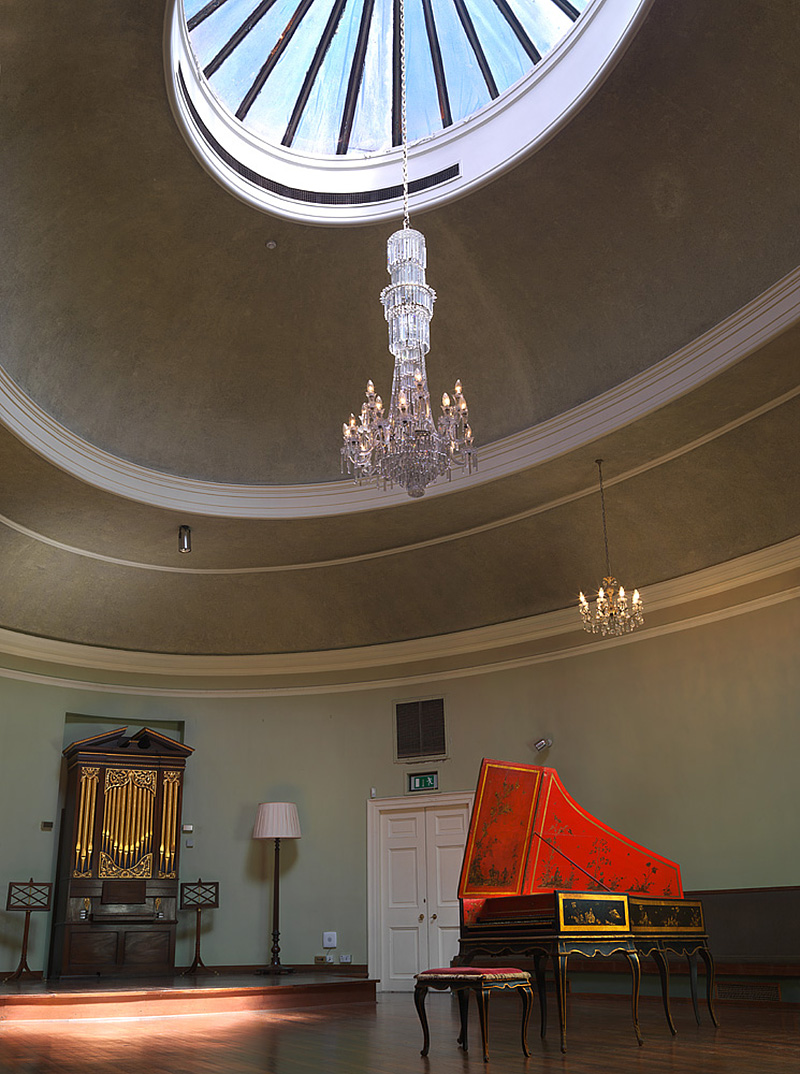
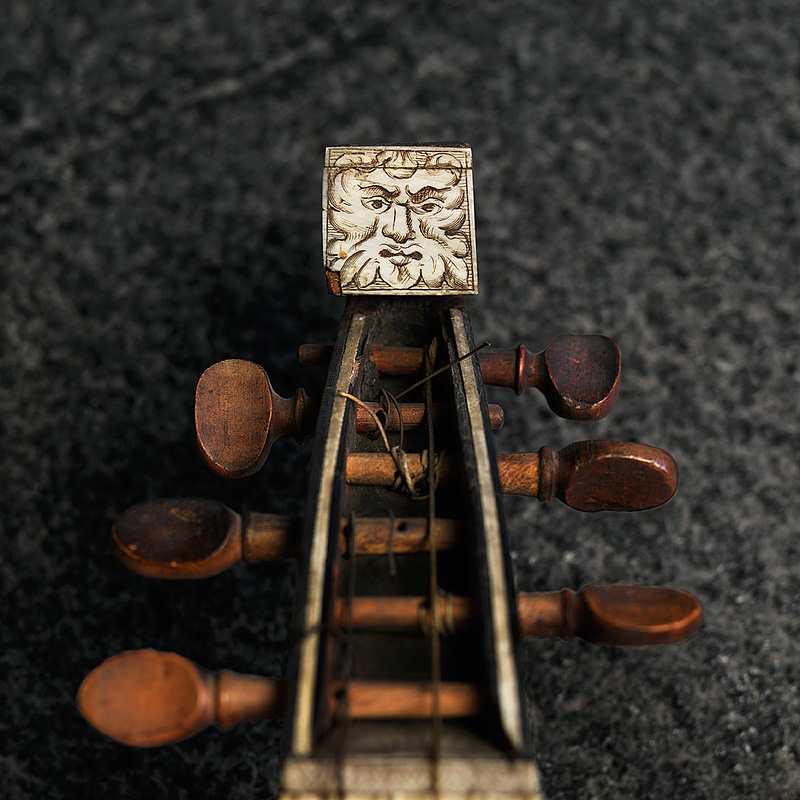
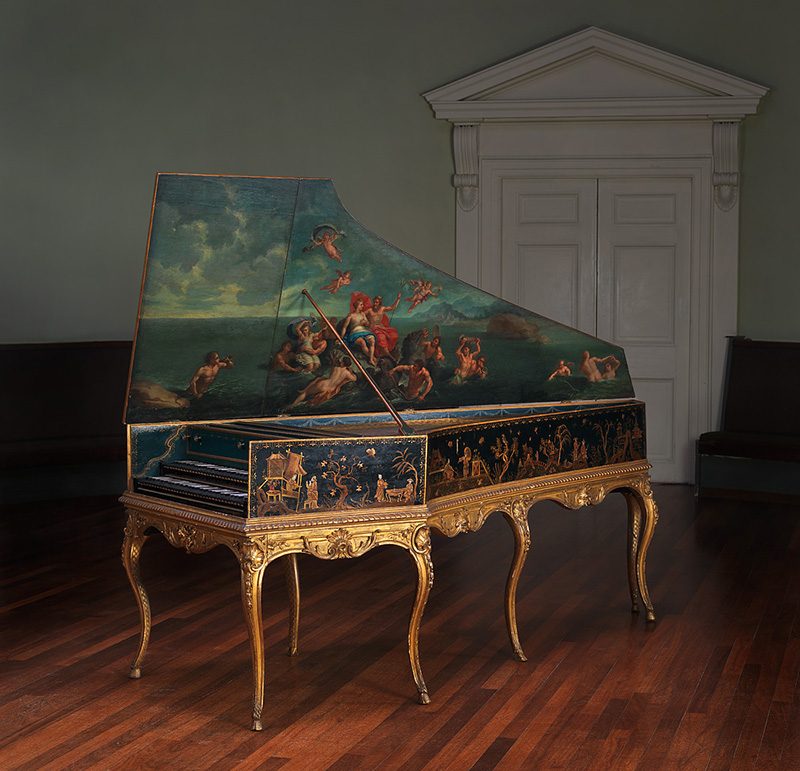
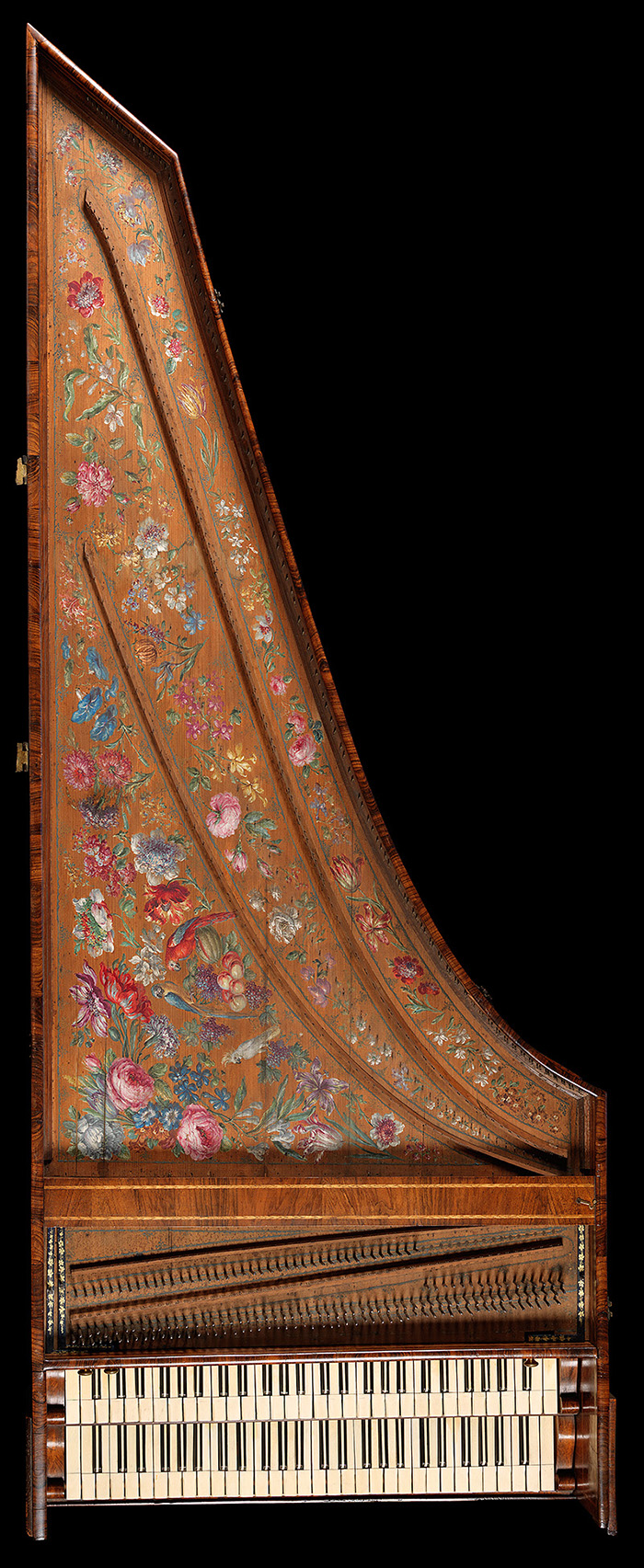
As photographers for the Special Collections in the University of Edinburgh Main Library, we’ve seen a fair amount of beautiful books and manuscripts, but the diversity of the collections, both here at the Library and from other locations around the University always surprises me. Many of these have been bought to us for photography over the years, and on occasion, we have had to decamp from the studio and go out to the collection. In 2012 we were asked to go to St Cecilia’s Hall to take photographs for a Calendar to promote the redevelopment project, then in its infancy. We had a fantastic week photographing harpsichords, guitars and lutes in the 18th Century Hall to place them within their context. The instruments provided us with many challenges: harpsichords are not the easiest to light to bring out the gold details and elaborate painting – particularly not in a room with mixed light sources and green walls. In one shot taken by my colleague, Malcolm Brown, we were asked to show the whole object as if looking from above. Thankfully, the curator allowed us to turn the instrument on its side, although we sometimes tell people who ask us how it was done that we had Malcolm suspended from the ceiling Mission Impossible style to take the photo. Further information about St Cecilia’s can be found at http://www.stcecilias.ed.ac.uk/about.html
Another highlight for us was the visit to the Anatomy museum to photograph the murderer William Burke’s Skeleton (see http://en.wikipedia.org/wiki/Burke_and_Hare_murders). On arrival at the museum we discovered that there was major building work going on outside and the drilling was causing vibrations through the floor. At the time we were working with a Hasselblad multishot which took 16 shots to build up a very high resolution image so the slightest movement would ruin the shot. We had to try to shoot in the lulls between drilling- the challenges of location photography!

We were also lucky enough to photograph the magnificent Renaissance Giambologna bronze Ecorche horse. Having decided that we wanted the photographs to be low key, dark images to bring out every muscle ripple and vein, we had to carefully light the cast so that it was distinct from the background. This required reflectors to be suspended from the ceiling to run a highlight up the neck and others to be held in place during the shots, a real team effort.


3 dimensional objects always require more thought to the lighting to bring out subtle textures and details as you can see in this image of a Gandharan Sculpture, whereas the challenge of metallic surfaces is to hide unwanted reflections.


It is always exciting to photograph these wonderful objects that have made their way into the University collections, and recently we have even seen some ‘Book Sculptures’ too.

Susan Pettigrew, Photographer
The New College Library Strong Room revisited
A guest post from our Museums Studies student volunteers, Charlotte Johnson and Liz Louis.
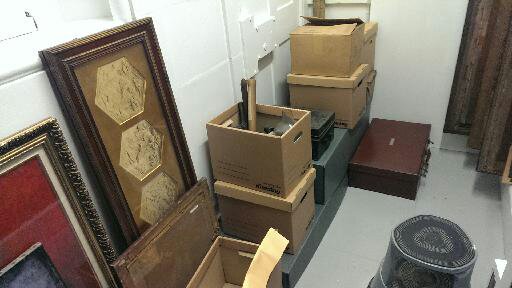
Before
Back in December we wrote a blog post on the beginning of our journey working with the collection of New College and Free Kirk related objects in the New College strong room. Five months later we are almost at the end of our journey and we still feel as lucky as we did then to have been given the opportunity to work with such an interesting and varied collection. Much hard work has gone into researching the fascinating pasts of these objects, working out who owned them and how they came to live here at New College. Time and care has also been given to cleaning the objects and properly storing them so that their survival into the future is guaranteed; some of the objects are of great importance or extremely fragile and needed to be protected from deterioration. We hope now that our project is complete our work means the collection can be properly documented and will be accessible to those that are interesting in using it for research purposes, as it is a fantastic source on the history of New College and the Free Kirk.
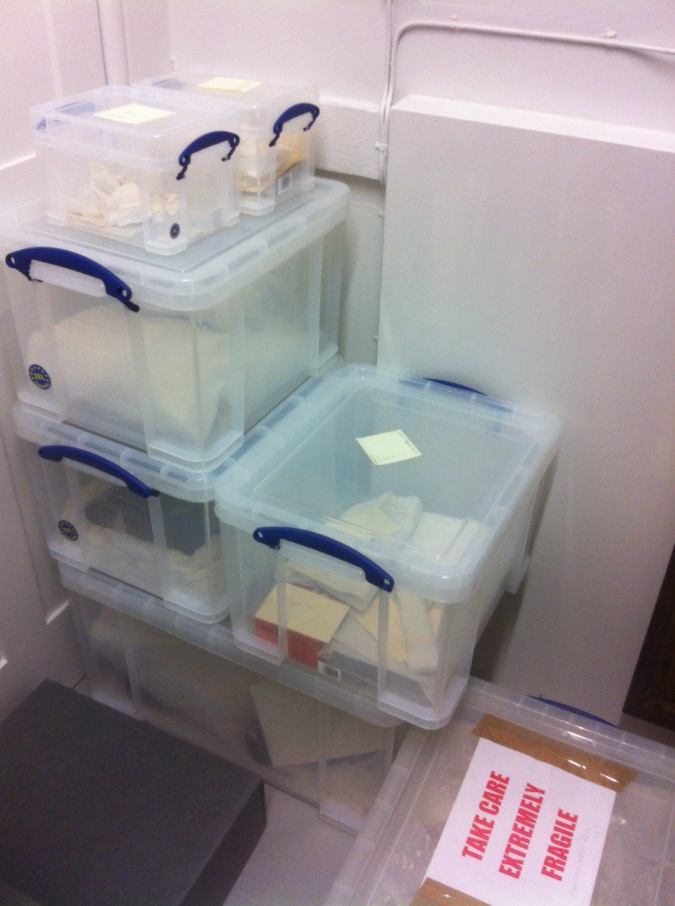
After
European Parliament elections 2014 – suggested resources for your research
Voting will take place in the UK on Thursday 24th May for the European Parliament elections 2014. If you are thinking of voting or interested in doing research in this area then you may find some of these resources useful.
Library Resources
These are mostly resources that have been subscribed to by the Library and are only available to staff and students at University of Edinburgh. You can use these to find newspaper articles and commentaries, academic literature, background reading and documentaries and news programmes.
ASSIA (Applied Social Sciences Index and Abstracts)
Provides abstracts from around 650 UK, US and international journals. Coverage includes all branches of the applied social sciences, with over 375,000 records.
Box of Broadcasts
As mentioned in a previous blog post, this service is a bit like BBC iPlayer but offers much, much more. The service allows you to record and catch-up on missed programmes, schedule recordings, edit programmes into clips, search for recordings already made by other users, etc. Includes 60+ TV and radio channels.
European Sources Online
European Sources Online (ESO) is an online database and information service which provides access to information on the institutions and activities of the European Union, the countries, regions and other international organisations of Europe, and on issues of importance to European researchers, citizens and stakeholders.
Factiva (off-campus access available via VPN)
Provides full-text access to a large number of UK newspapers as well as full-text access to a significant range of international newspapers and news sources.
IBSS (International Bibliography of Social Science)
Produced by the British Library of Political and Economic Science. One of the largest and most comprehensive social sciences databases in the world, indexing 2600 journals and 6000 books per annum, in the core disciplines of economics, sociology, politics and anthropology.
Lexis Library and Nexis UK (off-campus access by clicking on Login via Academic Sign In and UK federation)
Lexis Library includes full-text access to the vast majority of UK broadsheet and tabloid newspapers and a large number of local papers. Nexis UK provides full-text access to a large number of international newspapers and news sources.
Web of Science Core Collection, including Social Sciences Citation Index
One of the biggest online abstracting and indexing databases. Contains citations and abstracts to millions of journal articles and conference proceedings from all subjects. Impact factors, h-indexes and email alerts available.
The LSE Review of Books has suggested some books related to the European Parliament elections. You can see the full list on their blog but the following are available at the Library, just search the Library Catalogue for the title or author:
How Europe Shapes British Public Policy by Janice Morphet
Lobbying in the European Union: Interest groups, lobbying coalitions, and policy change by Heike Kluver
The Democratic Foundations of Policy Diffusion: How health, family and employment laws spread across countries by Katerina Linos
Right-Wing Populism in Europe: Politics and discourse, edited by Ruth Wodak, Majid KhsraviNik and Brigitte Mral.
Tip: An easy way to find other books on similar subject areas is to click on the “Subjects” listed in the Catalogue record or for print books you can also click on the Shelfmark.
Freely available online resources
These are just a small number of online resources available:
European Parliament site for the elections
European Parliament/Information Office in the United Kingdom
PollWatch2014
BBC News
EuroVote
London School of Economics EUROPP blog
Caroline Stirling – Academic Support Librarian for Social and Political Science
‘The object of art is to give life shape’: Festival of Museums Fun!
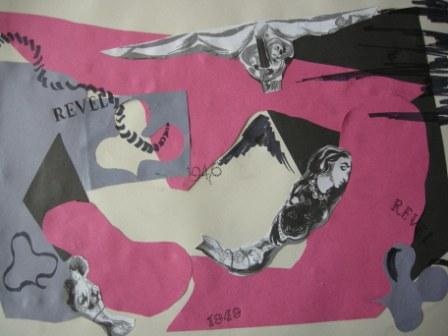
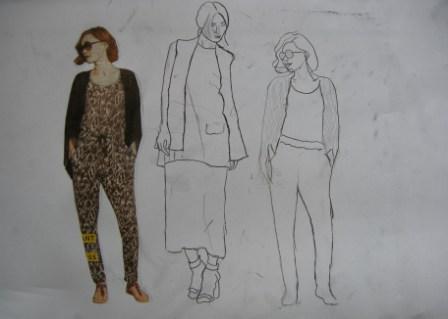
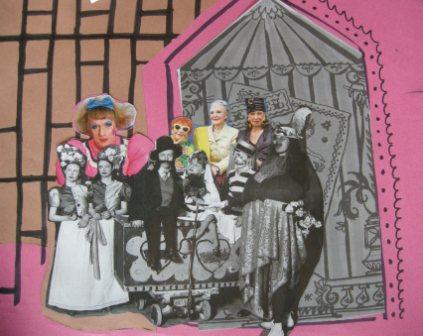
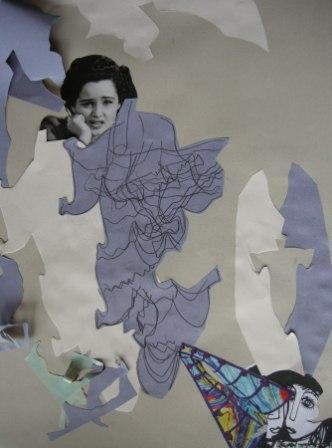
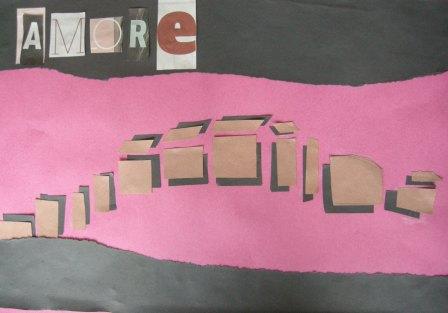
On Saturday we hosted a talk and create workshop at Edinburgh College of Art (ECA) with Drawing and Painting Lecturer Joan Smith. This was to celebrate the 1940s for the Festival of Museum events being held across the University of Edinburgh Library and Collections. We shared photos, film and stories from the collections about life at ECA in the 1940s. This was to inspire everyone attending to create collages. We thought you’d like to see some of the work!
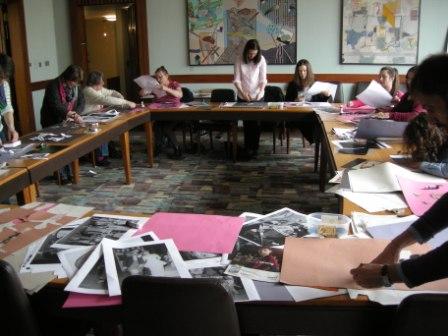
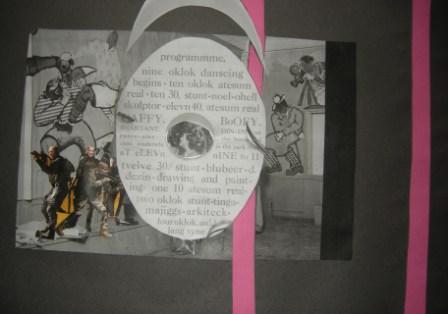
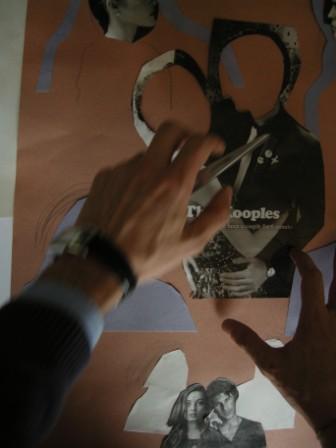
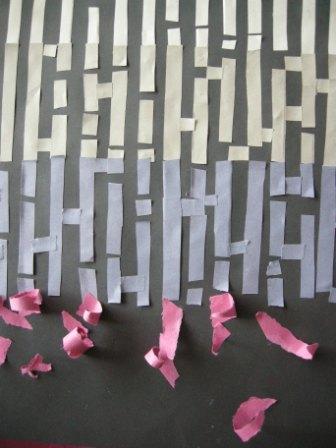
Rachel Hosker
Research and Refugees – Edinburgh genetics during the 1940s

Last Friday I delivered a talk on genetics in Edinburgh during the 1940s as part of the Scotland-wide Festival of Museums, for which Edinburgh University Library and Collections took the 1940s as its inspiration. This was of course a turbulent decade for the world in general, but not least for the science of genetics. In the four decades since the rediscovery of Mendel’s laws in 1900, scientists were gaining a greater understanding of the gene through the chromosome theory of inheritance and mutation studies, yet the discovery of the structure of DNA itself was yet to be discovered. The 1940s represented a crossroads for genetics, and Edinburgh was an important world player in its future.
Let us begin in the year 1939, when Edinburgh’s Institute of Animal Genetics hosted the prestigious 7th International Congress of Genetics. Originally scheduled for Moscow in 1937, the repressive Stalinist regime made this impossible. After some discussion, Edinburgh was chosen as the most appropriate location for the Congress, now rescheduled for the last week in August 1939. Over 40 Russian scientists were to give papers, alongside delegates from all over the world. However, it would not be plain sailing. Shortly before the Congress was due to begin, the director of the Institute Francis Crew received word that the Russians had been forbidden to attend, and the Congress programme had to frantically reshuffled. Things went from bad to worse once the Congress actually began, as war erupted across Europe and delegates from various countries began to return to their home countries while they could. Once the Congress was over, Crew, who was on the Territorial Reserve of officers, was mobilised, and posted to the command of the military hospital at Edinburgh Castle. He left the Institute in the hands of poultry geneticist Alan Greenwood.

The King’s Buildings Home Guard Transport Unit
During the lean five years which followed, the Institute did its bit for the war effort. The land adjoining the Institute building was used for allotments for growing animal feed and planting vegetables. All male staff joined the ARP or Home Guard as well as the Watch and Ward parties for the protection of University buildings, while the women were involved in First Aid work. The annual report for 1940-41 records that everyone was given ‘a daily dose of halibut liver oil to reduce the incidence of winter colds’! Genetics teaching and research continued as much as possible by a skeleton staff, including Charlotte Auerbach, who would make a major scientific discovery during this period.

Charlotte Auerbach
Charlotte (‘Lotte’ to her friends) Auerbach was from a scientific German Jewish family, and had sought refuge in Edinburgh after being dismissed from her teaching job in Berlin under Hitler’s anti-Semitic laws. Once established at Crew’s Institute, she had begun a developmental study of the legs of Drosophila, the fruit fly. But the arrival at the Institute of Hermann Joseph Muller in 1937 changed Auerbach’s career forever. Muller was the outstanding scientist of his generation: he had been part of Thomas Hunt Morgan’s famous ‘Fly Room’ at Columbia University in the 1910s, helping to formulate the groundbreaking chromosome theory; Muller’s later discovery that X-rays cause mutation, gained him the Nobel Prize in Physiology or Medicine. But he arrived in Edinburgh a broken man after undergoing political and racial persecution in America, Germany and the Soviet Union. Muller had a radical effect on the staff and students at the Institute, and he quickly interested Charlotte Auerbach in mutation studies.
In 1940, the year Muller returned to America, Auerbach and her colleague J.M. Robson were tasked with conducting research into mustard gas. They were not told the true nature of the work, which had been commissioned by the Chemical Defence Establishment of the War Office. Auerbach reported sustaining horrific injuries to her skin from working with the gas with inadequate apparatus, but it shortly became clear that the results were astonishing for the science of genetics. Mustard gas caused mutations in similar ways to X-rays. Although this important discovery had to be kept confidential until after the war, Auerbach would be awarded the prestigious Keith Prize from the Royal Society of Edinburgh for the work.

Conrad Hal Waddington
Once the war ended, it was assumed that Crew would return to the Institute and that research would continue much as before. However, Crew felt he had been left behind by recent advances in genetics, and decided to transfer to the Chair of Public Health and Social Medicine at the University. Around the same time, the government were looking to move scientific research into areas of agricultural interest, following the acute food shortage crisis of the war years. It was decided to establish a National Animal Breeding and Genetics Research Organisation (NABGRO, later ABRO), and Edinburgh’s strong track record in genetics, animal breeding research and veterinary medicine made it the obvious choice. Conrad Hal Waddington, a developmental biologist and embryologist, was appointed director of the new Genetics Section of NABGRO, which moved to occupy the more-or-less empty Institute building. Alan Greenwood moved to become director of the newly-formed Poultry Research Centre, next door to the Institute.

Staff socialising at the Institute of Animal Genetics, c. 1955
ABRO’s work was to be split between research into fundamental work on genetics and the applied science of animal breeding and livestock improvement. However, conflict soon arose between the experimental geneticists and the animal breeders, which was not helped by the rather bizarre initial arrangement of Waddington, his staff and their families living together under one roof, taking their meals communally and driving to work together every day. As might be imagined, there were some scandals and arguments, and eventually the arrangement disintegrated and administrative shifts took place to accommodate the rift.
Waddington set about recruiting as many promising research workers as he could, including some of his old army contacts from his days in Operational Research and Coastal Command. One scientist who joined the Institute at this time, Toby Carter, had been in the RAF at the time of the fall of Singapore, and had commanded the only boat to escape towards Java. A diploma course in genetics was established, and laboratory space increased apace. By 1951, Waddington’s staff numbered 90 and the Institute grew to become the largest genetics department in the UK and one of the largest in the world.
By the time the 1950s arrived, molecular biology was on the horizon, paving the way towards advances in genomics and biotechnology which we see today. Edinburgh has consistently remained at the forefront of these advances, but it is interesting to reflect that early organisations such as the Institute of Animal Genetics and ABRO paved the way, and that the 1940s was a hugely important decade for this evolution.
Clare Button
Project Archivist
Data and ethics
As an academic support person, I was surprised to find myself invited onto a roundtable about ‘The Ethics of Data-Intensive Research’. Although as a data librarian I’m certainly qualified to talk about data, I was less sure of myself on the ethics front – after all, I’m not the one who has to get my research past an Ethics Review Board or a research funder.
The event was held last Friday at the University of Edinburgh as part of the project Archives Now: Scotland’s National Collections and the Digital Humanities, a knowledge exchange project funded by the Royal Society of Edinburgh. This event attracted attendees across Scotland and had as its focus “Working With Data“.
I figured I couldn’t go wrong with a joke about fellow ‘data people’ with an image from flickr that we use in our online training course, MANTRA.
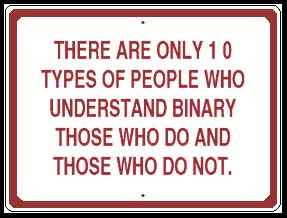
‘Binary’ by Xerones on Flickr (CC-BY-NC)
Appropriately, about half the people in the room chuckled.
So after introducing myself and my relevant hats, I revisited the quotations I had supplied on request for the organiser, Lisa Otty, who had put together a discussion paper for the roundtable.
“Publishing articles without making the data available is scientific malpractice.”
This quote is attributed to Geoffrey Boulton, Chair of the Royal Society of Edinburgh task force which published Science as an Open Enterprise in 2012. I have heard him say it, if only to say it isn’t his quote. The report itself makes a couple of references to things that have been said that are similar, but are just not as pithy for a quote. But the point is: how relevant is this assertion for scholarship that is outside of the sciences, such as the Humanities? Is data sharing an ethical necessity when the result of research is an expressive work that does not require reproducibility to be valid?
I gave Research Data MANTRA’s definition of research data, in order to reflect on how well it applies to the Humanities:
Research data are collected, observed, or created, for the purposes of analysis to produce and validate original research results.
When we invented this definition, it seemed quite apt for separating ‘stuff’ that is generated in the course of research from stuff that is the object of research; an operational definition, if you will. For example, a set of email messages may just be a set of correspondences; or it may be the basis of a research project if studied. It all depends on the context.
But recently we have become uneasy with this definition when engaging with certain communities, such as the Edinburgh College of Art. They have a lot of digital ‘stuff’ – inputs and outputs of research, but they don’t like to call it data, which has a clinical feel to it, and doesn’t seem to recognise creative endeavour. Is the same true for the Humanities, I wondered? Alas, the audience declined to pursue it in the Q&A, so I still wonder.
“The coolest thing to do with your data will be thought of by someone else.” – Rufus Pollock, Cambridge University and Open Knowledge Foundation, 2008
My second quote attempted to illustrate the unease felt by academics about the pressure to share their data, and why the altruistic argument about open data doesn’t tend to win people over, in my experience. I asked people to consider how it made them feel, but perhaps I should have tried it with a show of hands to find out their answers.

Quote by John Perry Barlow, image by Robin Rice
I swiftly moved on to talk about open data licensing, the choices we’ve made for Edinburgh DataShare, and whether offering different ‘flavours’ of open licence are important when many people still don’t understand what open licences are about. Again I used an image from MANTRA (above) to point out that the main consideration for depositors should be whether or not to make their data openly available on the internet – regardless of licence.
By putting their outputs ‘in the wild’ academics are necessarily giving up control over how they are used; some users will be ‘unethical’; they will not understand or comply with the terms of use. And we as repository administrators are not in a position to police mis-use for our depositors. Nevertheless, since academic users tend to understand and comply with scholarly norms about citing and giving attribution, those new to data sharing should not be unduly alarmed about the statement illustrated above. (And DataShare provides a ‘suggested citation’ for every data item that helps the user comply with the attribution requirements.)
Since no overview of data and ethics would be complete without consideration given to confidentiality obligations of researchers towards their human subjects, I included a very short video clip from MANTRA, of Professor John MacInnes speaking about caring for data that contain personally identifying information or personal attributes.
For me the most challenging aspect of the roundtable and indeed the day, was the contribution by Dr Anouk Lang about working with data from social media. As an ethical researcher one cannot assume that consent is unnecessary when working with data streams (such as twitter) that are open to public viewing. For one thing, people may not expect views of their posts outside of their own circles – they treat it as a personal communication medium. For another they may assume that what they say is ethereal and will soon be forgotten and unavailable. A show of hands indicated only some of the audience had heard of the Twitter Developers and API, or Storify, which can capture tweets and other objects in a more permanent web page, illustrating her point.
While this whole area may be more common for social researchers – witness the Economic and Social Research Council’s funding of a Big Data Network over several years which includes social media data – Anouk’s work on digital culture proves Humanities researchers cannot escape “the plethora of ethics, privacy and risk issues surrounding the use (and reuse) of social media data.” (Communication on ESRC Big Data Network Phase 3.)
Robin Rice
Data Librarian
Preserving the Dumfries Presbytery Library for the future
A guest post from Finlay West, Funk Projects Cataloguer
The recently completed cataloguing of the Dumfries Presbytery Library Collection housed at New College Library, finally allows the volumes to be readily available after an often fractured history .
Originally held in the Dumfries Presbytery Library until 1884, the collection had to be moved after the roof was damaged and the library was flooded. The volumes were kept in storage until 3rd March 1885 when they were lent to General Assembly Library. There they stayed until 1958 when the entire General Assembly Library was transferred to New College Library where they were dispersed by subject.
It was after John Howard became Librarian in 1965 that he noticed there were many items that had marks of provenance in the form “Ex libris bibliothecae presbyterii Dumfriesiensis ex dono Joan. Hutton M.D. 1714”, and that many were distinctive because of the water damage they received in the flooding a century before. Intriguingly almost all had the words “Ta ano” (ta ano) inscribed on the title page. Having identified them as part of a distinct collection he brought them together again.

The Practice of Piety / Lewis Bayly, 1672. New College Library DPL 912
The aforementioned John Hutton was born in Caerlaverock, Dumfriesshire and donated his book collection to the Dumfries Presbytery Library in 1714. He had an interesting history being personal physician to William of Orange and was with the King as his physician and advisor during the Battle of the Boyne in 1690.
The collection is made up of around 1500 volumes from the 16th to 18th century, with a range of subjects including, science, medicine, philosophy, politics, history , travel, and of course bibles, biblical studies and theology. It contains numerous interesting items such as “The Booke of Common Prayer and Administration of the sacraments …” (Edinburgh : Robert Young, 1637). This is the famous “Laud’s Liturgy”, the service book forced on the Church of Scotland by Charles I’s bishops.
After the collection was catalogued, it was surveyed by Caroline Scharfenberg, a specialist book conservator based at the University of Edinburgh’s Main Library, who made a number of recommendations for the future conservation and preservation of the collection.
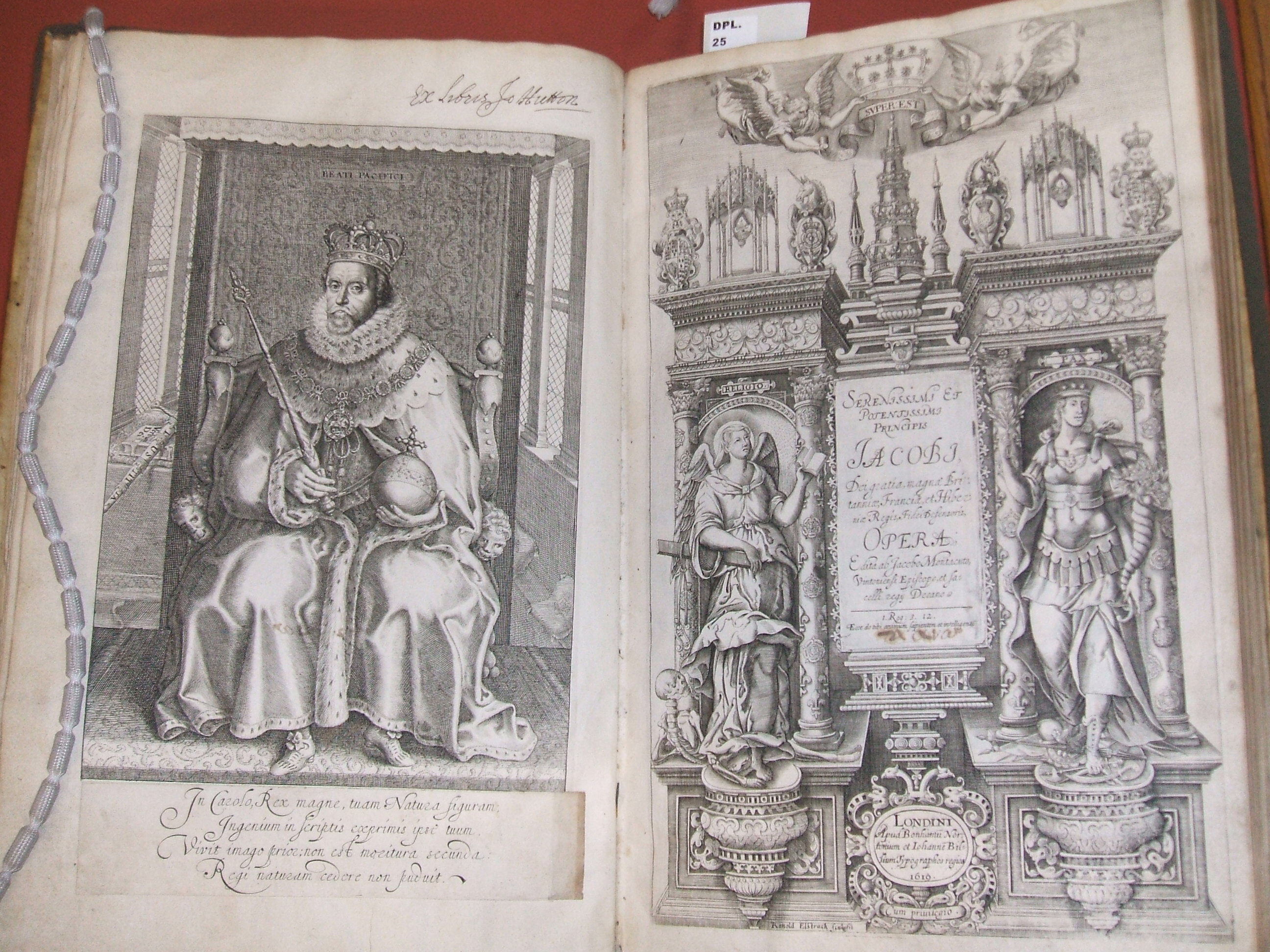
Serenissimi et potentissimi Principis Iacobi, Dei gratia, Magnae Britanniae, Franciae, et Hiberniae Regis, fidei defensoris, opera …
New College Library DPL.25
Both the cataloguing and the conservation survey for this collection were made possible by the generous donation of the Rev. Dr Robert Funk.
Finlay West, Funk Projects Cataloguer
Meet Holly, Our Skills for the Future Placement
My name is Holly and I am currently on a two week placement at ECA Archives as part of my Skills for the Future Collections Trainee programme at RCAHMS.
I began my placement here on Monday and was introduced to the department and given a tour of the CRC by Rachel Hosker, the ECA Archivist, as well as an introduction to the great art collection by Neil Lebeter , the Art Collections Curator.
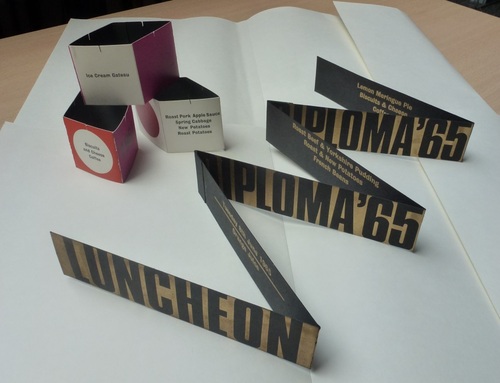
Over the next couple of weeks I will be working with the ECA’s typography collection, cataloguing and researching the material produced by the ECA’s typography department between 1930 and 1970. The collection is a varied and visually exciting one with items ranging from book covers to 3D menus for the student’s Diploma Luncheon. The material provides a good opportunity to get to grips with a collection of which little is known. A lot of the material is not attributed to a person and there is very little research material available about the work of the typography department at ECA. It is therefore important to spend time trying to understand the archive and to cataloguing it to increase public access.
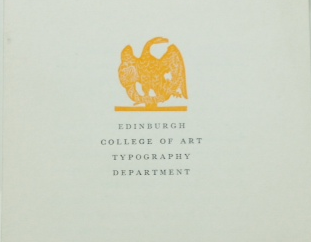
The college ran The Eagle Press, named after a statue of an eagle that sits atop the press. Hopefully I will get the opportunity to see The Eagle Press at some point over the next two weeks which still resides at ECA. It is not known when The Eagle Press started however the earliest date I have found so far on a printed item from The Eagle Press is 1948.
As well as producing students work the college also printed commercial work. Amongst the collection there are an array of leaflets, menus and brochures for various businesses.
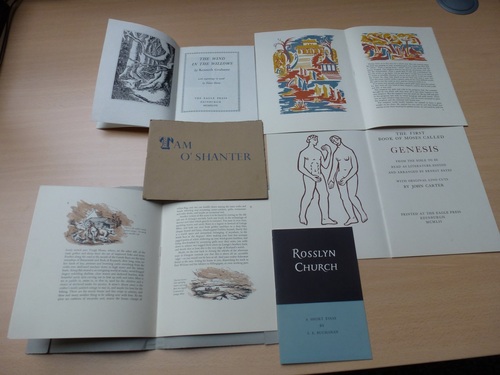
Whilst looking through the collection I found a lot of illustrated booklets that contain extracts from well-known texts such as Moby Dick and The Wind in the Willows. These booklets often have the name of a student from ECA as well as their class year and kind of typography they used printed on the back, providing an insight into the typography class. Some of the booklets have beautiful illustrations and are printed on a range of interesting papers.
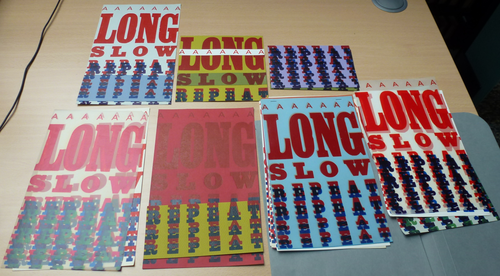
Whilst I have only just begun sorting through the collection I already have some favourites. I particularly like a series of colourful prints with the words A Long, Slow Repeat. There are sixteen prints in total, each using different combinations of coloured ink and papers that really give you the sense of a student experimenting and trying out different combinations in a typography class.
Holly Watson
Collections
 Hill and Adamson Collection: an insight into Edinburgh’s past
My name is Phoebe Kirkland, I am an MSc East Asian Studies student, and for...
Cataloguing the private papers of Archibald Hunter Campbell: A Journey Through Correspondence
My name is Pauline Vincent, I am a student in my last year of a...
Hill and Adamson Collection: an insight into Edinburgh’s past
My name is Phoebe Kirkland, I am an MSc East Asian Studies student, and for...
Cataloguing the private papers of Archibald Hunter Campbell: A Journey Through Correspondence
My name is Pauline Vincent, I am a student in my last year of a...
Projects
Cataloguing the private papers of Archibald Hunter Campbell: A Journey Through Correspondence
My name is Pauline Vincent, I am a student in my last year of a...
Archival Provenance Research Project: Lishan’s Experience
Presentation My name is Lishan Zou, I am a fourth year History and Politics student....