Home University of Edinburgh Library Essentials
June 17, 2026
Deposit Requirements Checklist
Just wanted to share a bit of re-use and sharing activity with you. As a result of our ‘mini Pathfinder’ activities (working closely with 3 Schools) we were prompted to produce a set of minimum requirements to help the deposit process. Effectively the Schools said, ‘tell us the least we need to do to get this HEFCE thing working, and give us a checklist we can work to’! So, we adapted the great diagram and wording that Theo and Eugen produced, and created a checklist that fits on a single page. We took this to a School presentation on HEFCE OA policy yesterday as an A5 leaflet, which was snapped up as people left. They had started the session with complaints about how hard all this was going to be, but seemed to be persuaded by the simplicity of this approach combined with Library support to check things and add more metadata later. By the end of the afternoon we had 17 accepted manuscripts deposited by academics from that one session.
Of course we may now be regretting this approach as it proves to be pretty resource intensive for the OA support team to work on such basic records, but hopefully should provide some good evidence of what works in terms of basic compliance.
Jackie Proven – University of St Andrews
Oxford Language Dictionaries Online – additional titles
 We have added 3 further dictionaries to our Oxford Language Dictionaries Online package.
The Chinese and Russian dictionaries are located on the original OLDO platform and a user guide is available from http://global.oup.com/oldo/tour/.
The Arabic dictionary is located on the new Oxford Dictionary platform where online help is available.
Further info
Further information about our databases can be found at http://www.ed.ac.uk/schools-departments/information-services/library-museum-gallery/finding-resources/library-databases
Further information about our e-books is available from http://www.ed.ac.uk/schools-departments/information-services/library-museum-gallery/finding-resources/resource-types/ebooks
If a book you require is not held by the library, please visit our Library Resources Plus webpage
Managing open access (OA) workflows at the University of St Andrews: challenges and Pathfinder solutions
We’re delighted to announce that the University of St Andrews has published this case study on the challenges and pain points regarding Open Access transactions and processes that arose out of a presentation made at the UKSG workshop in May this year.
Janet Aucock updated the article to include initial plans for St Andrews’ contribution to the LOCH project and also to include a brief summary of the Lean exercise they undertook earlier this year.
The team at St Andrews is now underway with a series of mini Pathfinder projects with academic schools and is getting some interesting feedback from the different disciplines. We’ll be sharing this in future LOCH reports.
You can find this publication on St Andrews repository at: http://hdl.handle.net/10023/5665, or at the publisher website: http://uksg.metapress.com/content/30457356163k1671/?p=9cb9e6b0581e4e75ada974b75ca0a3c9&pi=11
Dominic Tate – University of Edinburgh
Music Online Premium Service – updated content
Our Music Online Premium Service has been updated in the following collections:
 Classical Music Library – CLMU: 808 albums, 11,701 tracks – This update includes titles from labels such as LSO Live, Chandos, Telarc, Nimbus Records, Donemus, and Mariinsky.
 Contemporary World Music – WOMU: 49 albums 716 tracks – This release includes albums from labels including ARC Music Productions, Alabianca, and Topic Records.
 American Song – AMSO: 11 albums 209 tracks – This release features bluegrass, zydeco, jazz, blues, and folk from Rounder Records, Tompkins Square Records, Smithsonian Folkways, and Rebel Records.
 Jazz Music Library – JAZZ: 3 albums 23 tracks – this release features a recording of the reunion of the legendary Oscar Peterson Trio (Saturday Night at the Blue Note), wonderful jazz arrangements of well-known classical works (Jacques Loussier Trio Plays Debussy), and a live Dave Brubeck album (Late Night Brubeck: Live From the Blue Note).
 Popular Music Library – POPS: 3 albums, 39 tracks –Prima Voce: John McCormack (Nimbus), Magnificat (Telarc) and Dekoor: Tuesdays (Hänssler Classic).
 Smithsonian – GLMU: 1 album, 16 tracks – Klezmer Music 1910-1942: Recordings from the YIVO Archives (Smithsonian Folkways Recordings).
Video Updates…
 Classical Music in Video – CLMV: 24 titles, 18 hours including Ercole Amante, Maurice Ravel: The Colour of Music, Sondheim! A Birthday Concert – featuring performances by Mandy Patinkin, Patti Lupone, Bernadette Peters, Audra McDonald, and others.
Further info
Further information about our databases is available from http://www.ed.ac.uk/schools-departments/information-services/library-museum-gallery/finding-resources/library-databases/databases-a-z or see our Music A-Z list.
If an item you require is not held by the library, please visit our Library Resources Plus webpage.
Weekend with the Gallimaufry: Edinburgh University images added to Metadata Games

Tiltfactor and the University of Edinburgh, Library and University Collections are excited to announce the addition of over 2,500 images from the University of Edinburgh to the Metadata Games platform. This collection, a miscellaneous “gallimaufry” (a confused jumble or medley) of digitised items from Special Collections, displays the sheer variety and breadth of material held by the Centre for Research Collections.
Metadata Games is a free and open source (FOSS) crowdsourcing gaming platform that entices players to visit archives and explore humanities content while contributing to vital records. The suite enables archivists to gather and analyze information for digital media archives in novel and exciting ways. Metadata Games contains tens of thousands of media items from over 40 collections represented by 10 institutions.
The Library Development team have been developing tagging games to enhance the descriptive metadata for images created by the Library’s Digital Imaging Unit. They are excited to see how the tags created by adding the Gallimaufry images to metadatagames will compare to the tags already collected through the games run at the University, with its staff and students. The tags created through the games will enable the University’s collections to be more visible to the world.
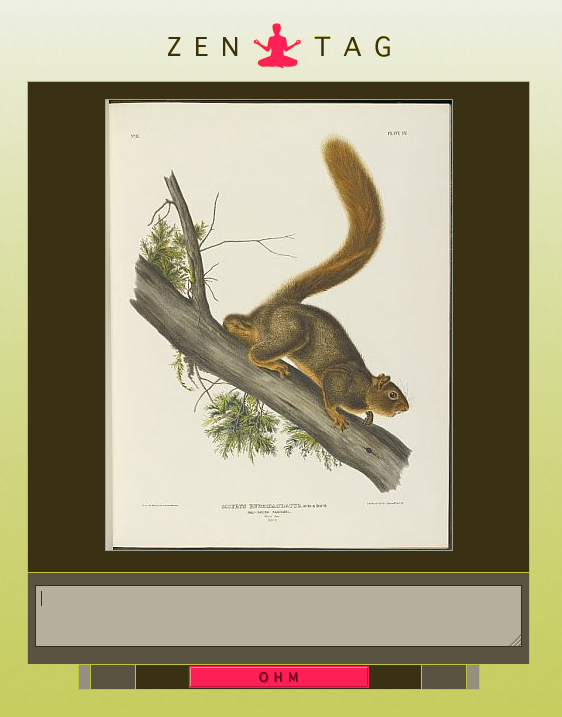
In partnership with the University of Edinburgh, spend a weekend with the Gallimaufry collection. On Friday 12th December, through Sunday, 14th December, Metadata Games will exclusively play images from this incredible collection, including the single-player games Zen Tag and the lovable Stupid Robot, and the two-player game Guess What. Metadata Games are free to play; register to keep track of scores and progress.
Happy tagging!
Sukie, Claire, Scott and Gavin.
#metadatagames
@EdUniLibraries
#16days lecture at University of Edinburgh: further reading and research
 Today, Monday 8th December, the School of Social and Political Science, in partnership with Scottish Women’s Aid and PeaceWomen is holding a 16 Days Lecture. The lecture is being delivered by feminist researcher and writer Cynthia Cockburn and is titled Male violence against women: links between peace and war.
The 16 Days of Activism Against Gender Violence is an international campaign that started on 25 November, International Day for the Elimination of Violence against Women and ends on 10 December, Human Rights Day. The campaign hopes to raise awareness about gender-based violence as a human rights issue at the local, national, regional and international level.
Christmas is coming at New College Library
We’ve started getting ready for Christmas at New College Library! The Christmas tree is now up in the Funk Reading Room, and we have a display of Christmas carol books from the Hymnology Collections in the entrance to the Library Hall.
The Hymnology Collections grew out of the gift in the 1880s of two thousand hymnbooks from James Thin, the founder of the famous Edinburgh bookshop. This collection has been added to by gift, purchase and the re-organisation of other library books of a similar nature to form the special collection of over five thousand items we have today, which are currently being catalogued online as part of the Funk Donation Projects. Primarily 18th & 19th century printed volumes, the collection covers sacred songs and poetry as well as hymns, including many items intended for children, both for Sunday School and home.
Currently on display we have :
 Husk, W.H. Songs of the Nativity ; being Christmas Carols, Ancient and Modern … London : J.C. Hotten, [1867]. Hymn 2578.

Christmas carols, hymns, etc. London : F. Pitman [18–?] Hymn 2591 With music for four voices, tonic sol-fa edition.

Hotten, John Camden. A garland of Christmas carols ancient and modern. Including some never before given in any collection. London : J.C. Hotten, 1861. Hymn 2129. A bookplate marks this item as having come from the original James Thin Collection.

A booke of Christmas carols : illuminated from ancient manuscripts in the British Museum. London : Joseph Cundall [1846] Hymn 2590
Untold Stories
When deciding on what to do in relation to marking the centenary of the First World War, we opted to let our collections talk. By that we mean letting stories emerge from the collections without trying to manipulate them to fit any agenda. This means that the only given in this will be the time frame. We will be posting a principal article at least once a month but interspersing these with smaller posts on a more ad hoc basis.
To kick things off there is the design, specifically the graphic we have used. This is taken from a set of linocuts made by the artist John Abell, as illustrations to Arthur Graeme West’s Diary of A Dead Officer.
West joined the army in February 1915, straight from Oxford. He had been turned down for an officer’s commission for his bad eyesight, so joined as a private and served in the trenches. He was one of the first poets to write about the front line from direct experience – an experience by which he was soon disillusioned with the war. His disillusionment was completed by a period of officer training in Scotland, being ordered about by bullying NCOs. A loss of his religious faith followed.
West had been at school and at Oxford with Cyril Joad, who, by the time West was training in Scotland, when they met again, was a well-known pacifist. West was greatly influenced by Joad and the pacifist movement. He went so far as to write, but never posted, his resignation from the army. Instead he returned to France, to be killed by a sniper in April 1917.
His diary was edited for publication by Joad, and issued as pacifist propaganda by the left-wing Herald newspaper and Francis Meynell’s Pelican Press.
John Abell’s powerful linocut images, in response to reading the diary a century on, but himself about the same age as West when he wrote it, have been published by the Old Stile Press, in a very fine, limited edition
Grant Buttars & Elizabeth Quarmby Lawrence
Talk, Talk
Two talks in a week, one in London, one in Warsaw
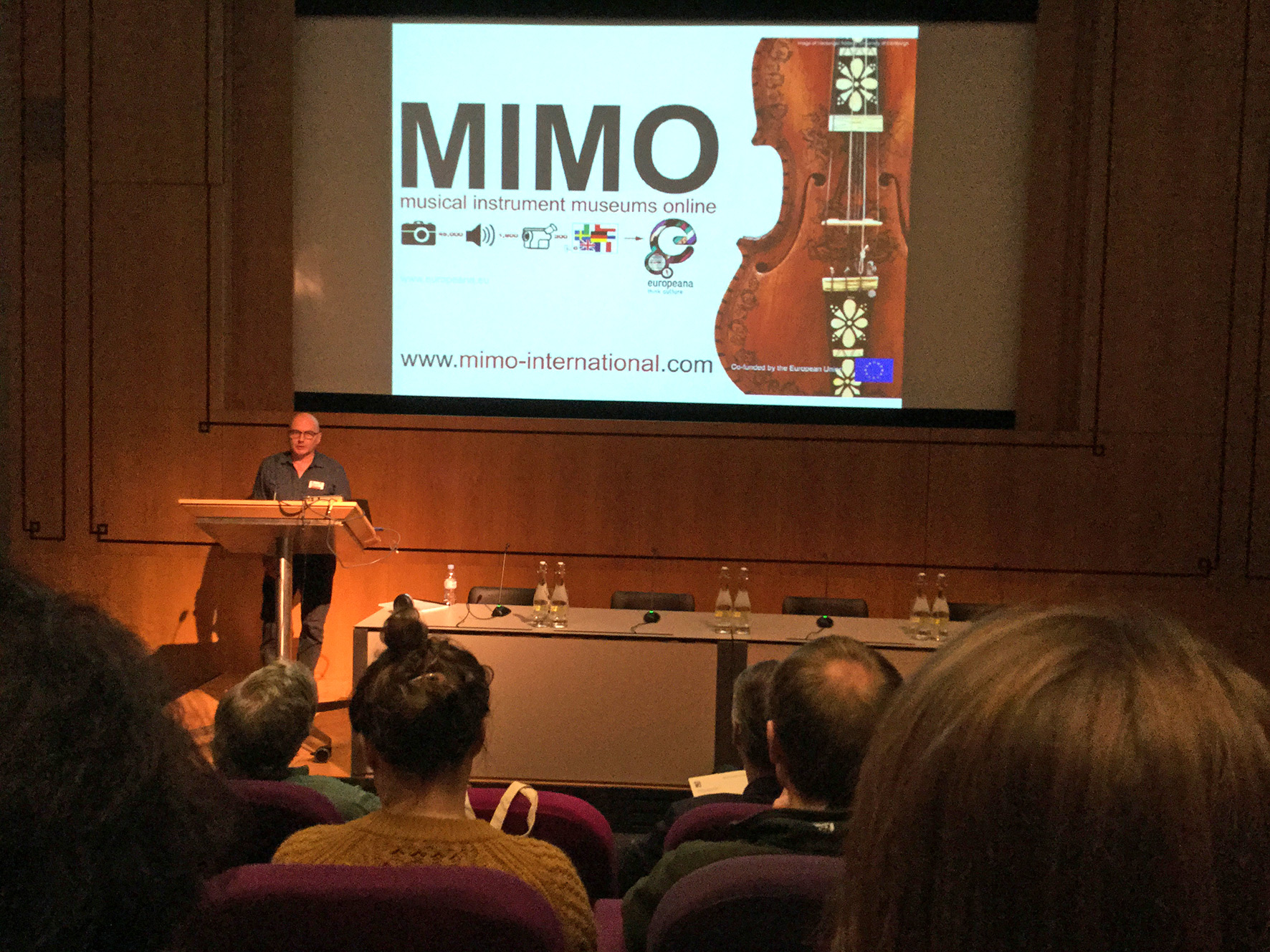
On Thursday last week I gave a presentation to the Association for Historical and Fine Art Photographs Conference in London, with particular focus on the work that MIMO has done on the digitisation of musical instrument collections but also highlighting how this has impacted on the presentation of collections within L&UC. The talk seemed to be well received, with lots of questions after the presentation. Overall the conference was heavily slanted towards the emergence of 3D photography and this is clearly something that we are going have to seriously think about in the near future.
On Sunday, Rachel Hosker and I travelled to a very chilly Warsaw to attend the NODEM conference, where we gave a joint presentation on the work on that L&UC has done on cross cutting and interdisciplinary approaches in dealing with collections, using digital tools. This followed on from the presentation that was delivered at the IC-INNFO conference earlier this year.
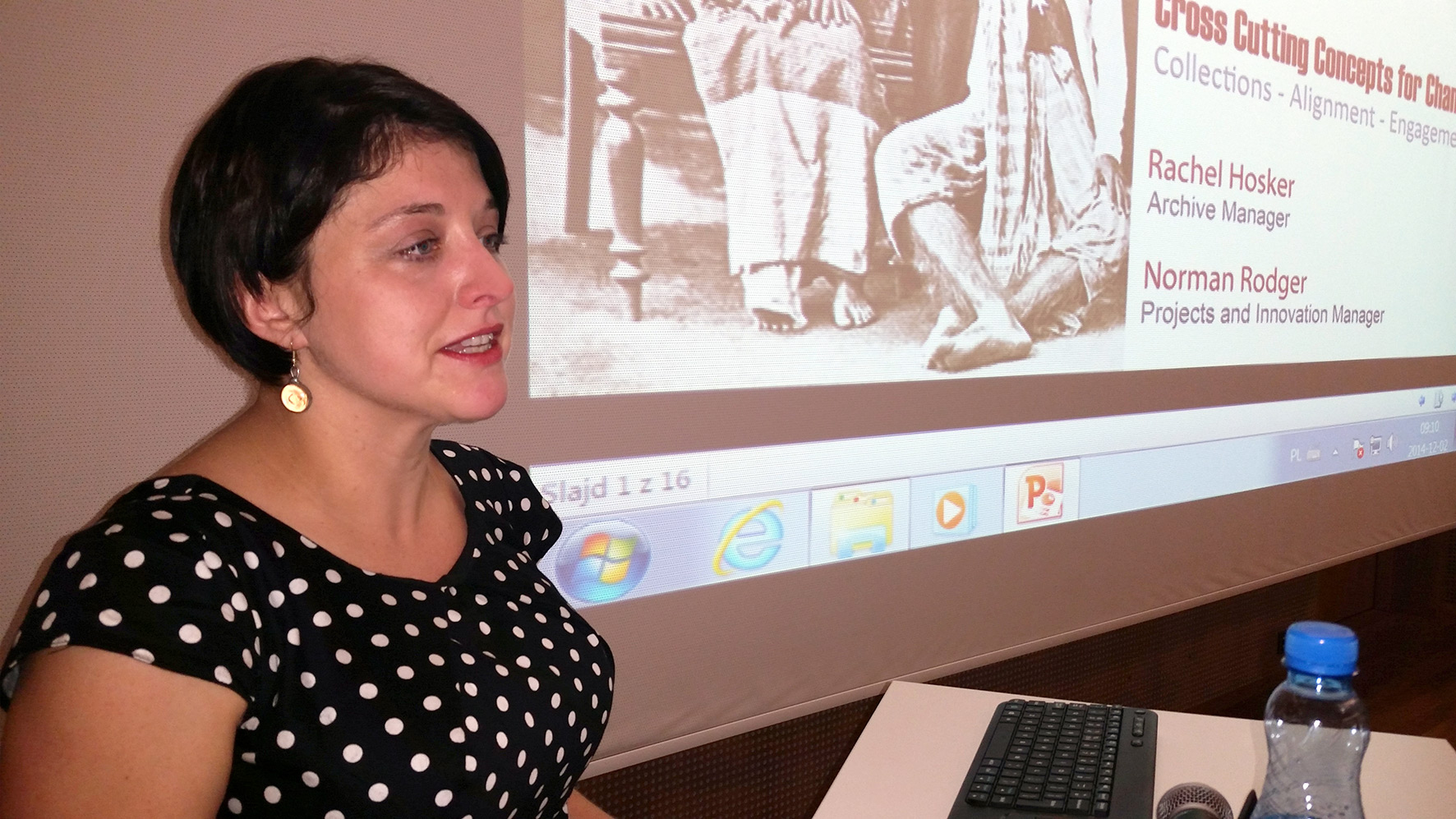
Nodem was first established in 2003 as a consortium of Nordic institutions but has since grown to a much wider international group. The focus of this year’s annual international conference was on digital cultural heritage – http://nodem.org/ – with the title ‘Engaging Spaces – Interpretation, Design and Digital Strategies’ and was held primarily at the newly opened Museum for the History of the Polish Jews. This was a genuinely stimulating conference from which we both returned with plenty to think about and loads of new ideas that hopefully we can build on here.
Travel wasn’t too great though, with a four hour delay on the return train from London on Thursday night, followed by a bomb scare evacuation at Edinburgh Airport on Sunday, turning a six hour journey into fourteen!
Norman Rodger
Projects and Innovation Manager
Sustainable software for research
In an earlier blog post (October 2013) Stuart Lewis discussed the 4 aspects of software preservation as detailed in a paper by Matthews et al, A Framework for Software Preservation, namely:
- 1. Storage: is the software stored somewhere?
- 2. Retrieval: can the software be retrieved from wherever it is stored?
- 3. Reconstruction: can the software be reconstructed (executed)?
- 4. Replay: when executed, does the software produce the same results as it did originally?
It is with these thoughts in mind that colleagues (1 December 2014) from across IS (Applications Division, EDINA, Research and Learning Services, DCC, IT Infrastructure) met with Neil Chue Hong (Director of the Software Sustainability Institute) (SSI) to discuss how the University of Edinburgh could move forward on the thorny issue of software preservation.
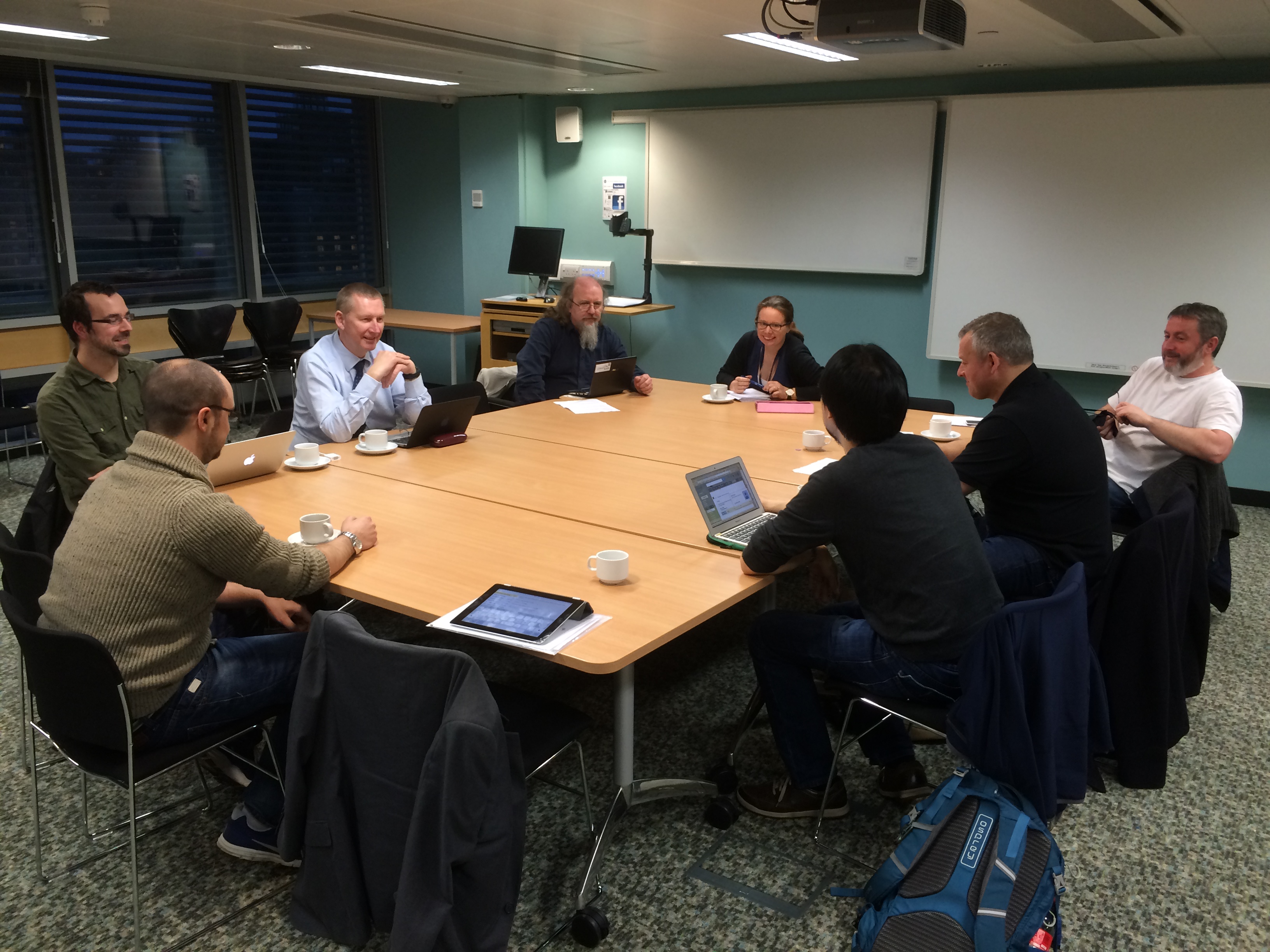
The take home message agreed by all at the meeting was that it will be easier to look after software in the future if software is managed well just now.
In terms of progressing thinking in this regard there were more questions than answers.
Matters to investigate include:
- defining what we mean by research software: a spectrum from single R analysis scripts through to large software platforms
- capturing descriptions of locally created research software products in the Pure Data Asset Registry
- understanding the number of local research projects that are creating software
- creating high-level guidance around software development and licensing (with links to SSI and OSS Watch)
- providing skills and training for early carrer researchers (such as through the Software Carpentry initiative)
- tools to measure software uptake/usage in local research
- institutional use of GitLab and other software development tools
- ascertaining instances and spend on GitHub across the University
“It’s impossible to conduct research without software, say 7 out of 10 UK researchers” or so says an SSI report surveying software generation as part of the research process in Russell Group institutions. Published in Times Higher Education (THE) the report and data that underpins the report are now available.
Much food for thought and further discussion!
Stuart Macdonald
RDM Service Coordinator
Collections
 Hill and Adamson Collection: an insight into Edinburgh’s past
My name is Phoebe Kirkland, I am an MSc East Asian Studies student, and for...
Cataloguing the private papers of Archibald Hunter Campbell: A Journey Through Correspondence
My name is Pauline Vincent, I am a student in my last year of a...
Hill and Adamson Collection: an insight into Edinburgh’s past
My name is Phoebe Kirkland, I am an MSc East Asian Studies student, and for...
Cataloguing the private papers of Archibald Hunter Campbell: A Journey Through Correspondence
My name is Pauline Vincent, I am a student in my last year of a...

Projects
Cataloguing the private papers of Archibald Hunter Campbell: A Journey Through Correspondence
My name is Pauline Vincent, I am a student in my last year of a...
Archival Provenance Research Project: Lishan’s Experience
Presentation My name is Lishan Zou, I am a fourth year History and Politics student....