Home University of Edinburgh Library Essentials
June 17, 2026

SPS Librarian Top 5 blog posts 2014 – no. 4
As exams are almost over and semester one nears its end we are reposting our Top 5 blog posts from this year, every day in the final week of semester.
At number 4 an introduction to a new online resource purchased for SPS Media Education Foundation digital films.

Caroline Stirling – Academic Support Librarian for Social and Political Science
Encyclopedia of Ancient Greek Language and Linguistics Online – new e-resource
 Following a successful trial, we have now purchased the Encyclopedia of Ancient Greek Language and Linguistics Online
The Encyclopedia of Ancient Greek Language and Linguistics (EAGLL) is a unique work that brings together the latest research from across a range of disciplines which contribute to our knowledge of Ancient Greek. It is an indispensable research tool for scholars and students of Greek, of linguistics, and of other Indo-European languages, as well as of Biblical literature.
Further info
This resource has been added to our catalogue and database A-Z lists.
Further information about our databases can be found at http://www.ed.ac.uk/schools-departments/information-services/library-museum-gallery/finding-resources/library-databases
SPS Librarian Top 5 blog posts 2014 – no. 5
As exams are almost over and semester one nears its end we are reposting our Top 5 blog posts from this year, every day in the final week of semester.
At number 5, oddly enough is another Top 5, this time Top 5 women’s studies library resources.
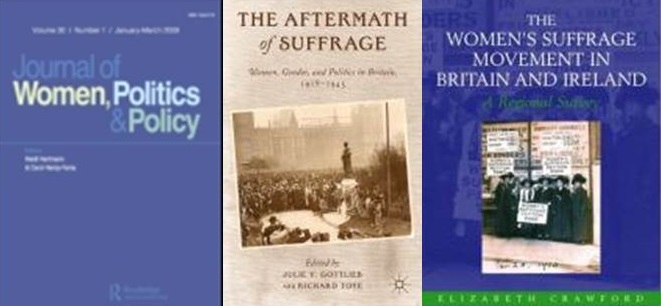
Caroline Stirling – Academic Support Librarian for Social and Political Science
Globe trekking with the Roslin Glass Slides Collection

Currently I am based in the Digital Imaging Unit where I am responsible for digitising a large number of glass plate positive slides (about 3500!) which make up part of the Towards Dolly Project within the Roslin Collection. The digitisation project itself – aptly named ‘Science on a Plate’ – is funded by the Wellcome Trust and is due for completion at the end of April 2015. Only this week, the first batch of 1000 images have been made publicly accessible via the University of Edinburgh Image Collections website.
Having worked through over 1300 images so far, it is difficult to know where to start when attempting to whittle down the numbers to a small selection of favourites to post here. I have, therefore, simply chosen a handful of images that seem to jump out at me for one reason or another. These images do something to represent the wide-reaching nature of the Roslin Glass Slides Collection; many document people and animals at a particular time and place, whilst others are more informative and study-based. The collection contains images that span the globe. I am constantly surprised as I move through them. One minute I will be looking at a photograph of a Clydesdale horse at a show in Brunstane Park, Edinburgh, and the next minute I will be looking at a sable in eastern Africa or an indigenous tribe in India. The collection is vast, diverse and engaging all at once. Read More
The Library Labs Blog
Welcome to the University of Edinburgh, Library Labs Blogs.
This site will be used to keep you up to date with experimental work and projects undertaken by Library and University Collections.

University of Edinburgh, Chemistry Laboratory
E-Resources downtime alert
 Due to essential maintenance, access to Nature.com, Palgrave-Journals.com and Palgraveconnect.com websites will be unavailable Sat. 13th Dec from 1.00pm to 5.00pm GMT. Please accept our apologies for any inconvenience caused.
Oxford Medicine Online – new e-resource
 Following a successful trial on the Oxford Medicine platform, we have access to the following Oxford Medicine Online e-books:
Oxford Handbook of Acute Medicine
Oxford Handbook of Anaesthesia
Oxford Handbook of Cardiology
Oxford Handbook of Clinical Diagnosis
Oxford Handbook of Clinical Examination & Practical Skills
Oxford Handbook of Clinical Haematology
Oxford Handbook of Clinical Medicine
Oxford Handbook of Clinical Pharmacy
Oxford Handbook of Clinical Specialities
Oxford Handbook of Clinical Surgery
Oxford Handbook of Critical Care
Oxford Handbook of Emergency Medicine
Oxford Handbook of Endocrinology and Diabetes
Oxford Handbook of Gastroenterology and Hepatology
Oxford Handbook of General Practice
Oxford Handbook of Infectious Diseases and Microbiology
Oxford Handbook of Key Clinical Evidence
Oxford Handbook of Nephrology and Hypertension
Oxford Handbook of Neurology
Oxford Handbook of Nutrition and Dietetics
Oxford Handbook of Obstetrics and Gynaecology
Oxford Handbook of Oncology
Oxford Handbook of Ophthalmology
Oxford Handbook of Orthopaedics and Trauma
Oxford Handbook of Pain Management
Oxford Handbook of Practical Drug Therapy
Oxford Handbook of Psychiatry
Oxford Handbook of Public Health Practice
Oxford Handbook of Respiratory Medicine
Training In Ophthalmology
These have all been added to our catalogue.
Further info
Take a tour of the Oxford Medicine Online website.
Further information about our e-books is available from http://www.ed.ac.uk/schools-departments/information-services/library-museum-gallery/finding-resources/resource-types/ebooks
If a book you require is not held by the library, please visit our Library Resources Plus webpage
Web of Science Downtime Sat. 13th Dec
 Please be advised that Web of Science will undergo scheduled maintenance on Saturday December 13 2014, to release new search functionality in the WoS version 5.16 release. During this time, access may be intermittent. Thomson Reuters apologise for any inconvenience this may cause.
Detailed release notes for version 5.16 are can be found at
http://wokinfo.com/media/pdf/wos_release_516.pdf
LOCH Project from Update from Heriot-Watt University
As part of the work to embed good Open Access Policy within the institution, three awareness sessions were held within Schools with research staff. Two of those sessions were led by Research Administration staff and one by the Library, reflecting the spread of open access support within the institution. At Heriot-Watt University, RCUK OA administration is within the Schools, with over-all OA coordination by the Library in close cooperation with the research office (Research and Knowledge Exchange Services). So good coordination of effort and information is essential, and we are working to consistently achieve this objective.
The message at the sessions led by research administrative staff for academic staff was kept very simple, using the opportunity to update staff on RCUK Open Access, research data requirements, ResearchFish and the HEFCE Open Access Policy. Representatives from the Library and Research Office were present to provide extra information if needed.
As an outcome of those sessions, it is clear that academic staff see open access is one stage in the administration of their research – from the grant application though to final reporting and publication, with research somewhere in the middle. Although attendance at the sessions was about 10% of the total academic staff, the slides were circulated afterwards, and as a result of those sessions we saw a direct increase in the number of full-text uploads to Pure.
In addition, an initial good practice session was held with School research administration staff, research policy managers and library staff, with the aim of refining current internal open access policies and planning for future processes. We used as a guide the lean process followed by St Andrews.
This led to two refinements in processes – one to the spreadsheet and process used to record to details of APCs and green open access papers and secondly in the creation of a process document to cover “cradle to grave” OA processes. Being able to see other institutions spreadsheet and compare and contract was extremely useful.
The OA process document was initiated in consultation with senior academic staff. It is a concise high-level document (necessarily a work in progress) but provides a reference point for all parties involved in OA administration in the university. It is intended to create a graphical representation of the process.
It is available from : http://tinyurl.com/ntew6ff
As a result of those meetings, we have a number of steps to take forward into 2015, including :-
- Developing processes to better identify green open access articles, using Pure, by adding licensing information to the metadata template
- Reaching those Schools less involved in the OA process, due to lack of RCUK funding, and planning the questionnaire developed by Edinburgh as an initial “in”.
- Development of publicity materials – posters were identified as the most useful method.
As part of the dissemination process for the project, we gave a presentation at the University Science and Technology Librarians Group, on 18th November, at Aston University.
Linda Kerr, Heriot-Watt University
Google Scholar – who is referencing us?
This is a guest blog post from Laura Keizer, one of our volunteers working in the Centre for Research Collections.
Archives are delightful places. Working in such a place regularly puts you in touch with a motley crew of visiting researchers who merrily toil away to complete diverse portfolios of original research. We help out where we can, provide documents, answer queries, and generally solve all sorts of interesting little mysteries. But despite our best efforts, we don’t often get to see where their local research takes the visitors afterwards, making the precise impact of the archive sometimes difficult to gauge.
This is where I came in. Having volunteered at the CRC for the past couple of months, I have attempted to trace the outcomes of research undertaken within these walls through reference analysis in Google Scholar. By examining and cataloguing every single digitised publication mentioning our university library for 2013, a handy account of authors, articles and associated archival sources appears (although itself absent of alliteration). Read More
Collections
 Hill and Adamson Collection: an insight into Edinburgh’s past
My name is Phoebe Kirkland, I am an MSc East Asian Studies student, and for...
Cataloguing the private papers of Archibald Hunter Campbell: A Journey Through Correspondence
My name is Pauline Vincent, I am a student in my last year of a...
Hill and Adamson Collection: an insight into Edinburgh’s past
My name is Phoebe Kirkland, I am an MSc East Asian Studies student, and for...
Cataloguing the private papers of Archibald Hunter Campbell: A Journey Through Correspondence
My name is Pauline Vincent, I am a student in my last year of a...

Projects
Cataloguing the private papers of Archibald Hunter Campbell: A Journey Through Correspondence
My name is Pauline Vincent, I am a student in my last year of a...
Archival Provenance Research Project: Lishan’s Experience
Presentation My name is Lishan Zou, I am a fourth year History and Politics student....