Home University of Edinburgh Library Essentials
April 6, 2026
Esther Inglis and her family in Edinburgh
This post explores in further detail the connections between Esther Inglis (c.1570-1624), her family, and the city and University of Edinburgh. This post is written by the project curator, Anna-Nadine Pike, with reference to unpublished research provided by Dr Jamie Reid Baxter (University of Glasgow).
Esther Inglis died on 30th August 1624. Her will, now held in the National Records of Scotland, is dated to the 11th March 1625; it records her death, and describes Inglis as “sometime spouse to Bartilmo Kello, indweller in Leith”. Four hundred years later, 2024 offers a milestone anniversary in which to celebrate and share the work of this unparalleled calligrapher, who deserves far greater recognition within and beyond the city in which so many of her manuscripts were produced. The city of Edinburgh itself plays a significant part in Esther Inglis’ life and manuscripts. From their first arrival in the city as Huguenot refugees, Inglis and her family were immersed in the urban landscape and networks of early modern Edinburgh. In September 1574, as Jamie Reid Baxter has discussed, Inglis’ father Nicolas Langlois became master of the French School in Edinburgh. From the 11th November that year, this post afforded accommodation for him and his family in a house “at the New Well”, owned by Alexander Udwart, close to the modern Guthrie Street which connects Chambers Street to Cowgate. The Burgh Records of Edinburgh for July 1580 note the payment “to Alexander Vddert £10” by the Council, to account for “the hous and schole of the maister of the Frainsche schole, Nicolas Anglois”. The Langlois family had early links with other high-ranking individuals in Edinburgh, including David Lindsay, the minister of Leith, who provided early assistance to Nicolas and Marie Presot on their arrival in the capital.
Esther Inglis’ further integration into the political and social networks of Edinburgh must have followed her marriage to the Scottish clerk Bartilmo Kello, who was a servitor to his kinsmen Bishop Adam Bothwell and his son John, Lord Holyroodhouse. Several of Inglis’ surviving manuscripts are dedicated to members of the Scottish nobility; in 1602, she presents an intricate copy of the books of Ecclesiastes and Lamentations in French to Archibald Campbell, 7th Earl of Argyll (1575-1638). In a flattering dedication, she describes the many “rares vertus desquelles Dieu et nature se sont forcez d’orner vostre Seigneurie par dessus les autres Princes de vostre aage” [rare virtues with which God and nature have been compelled to adorn your Lordship, above the other Princes of your age]. At least four manuscripts were presented to Scottish men and women in the year 1616 alone: to Robert Frenche, Clerk of Kircaldy, the Archbishop of St Andrews John Spottiswood, to Robert Boyd of Trochrig, and to Boyd’s wife, Anna Maliverne de Lavignolle. The dedicatory letters which Esther Inglis writes, mostly in French, between 1599 and 1602, and again from 1616, are often signed “a Lislebourg” [at Edinburgh] or “de Lislebourg en Ecosse” [from Edinburgh in Scotland]. In this way, her books emphasise their Scottish production, while also retaining Esther Inglis’ own identity as a Frenchwoman who lives and works “en Ecosse”.
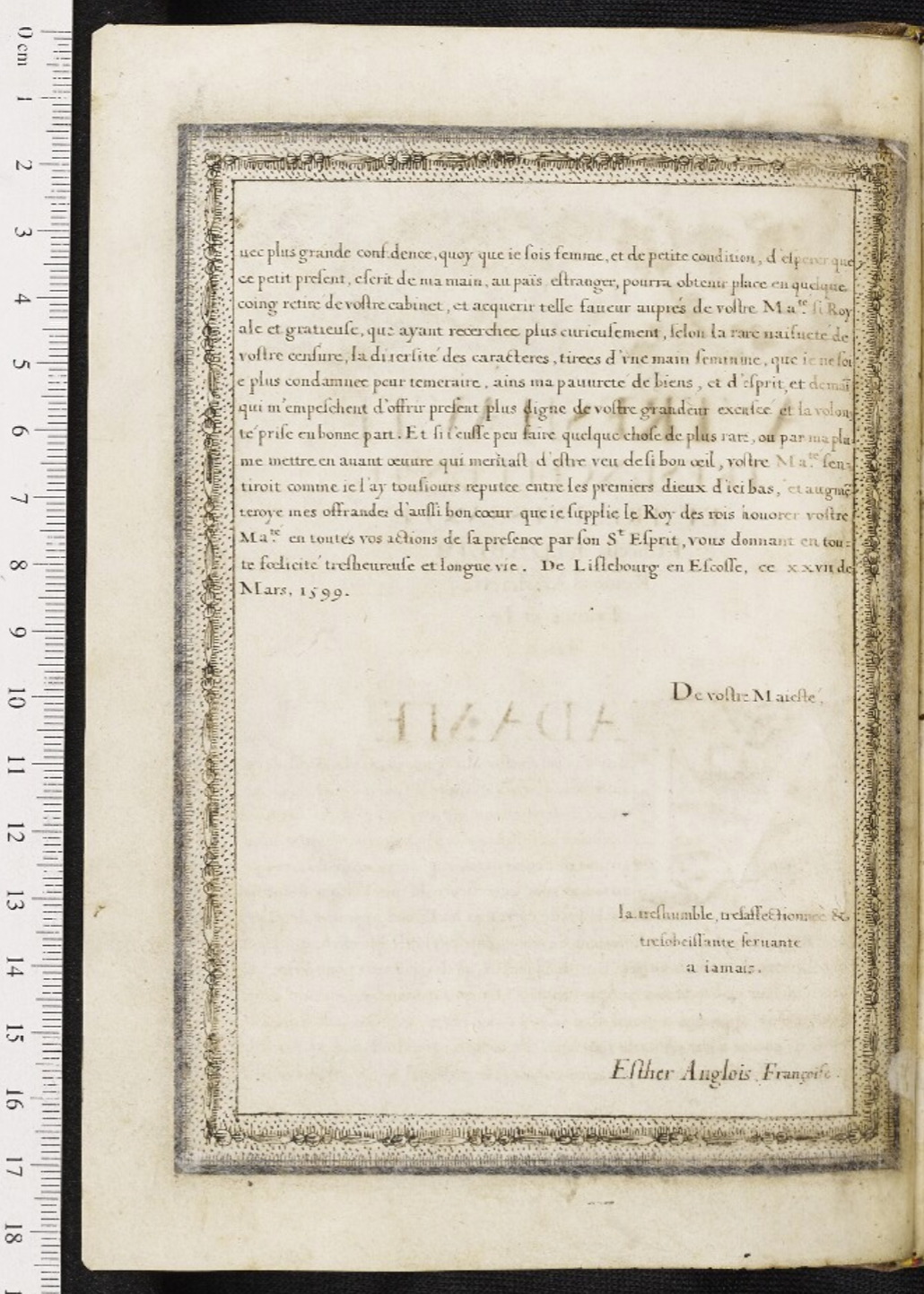
The end of Inglis’ dedication to Elizabeth I in a 1599 Book of Psalms. Oxford: Christ Church, MS 180, fol.Vv.
Beyond Inglis’ connections with the city of Edinburgh, however, there is a further significance to “Esther Inglis 2024” taking place within this University. The University of Edinburgh was founded as Tounis College in 1582, opening in 1583, and initially offered just one four-year course, the Master of Arts. The first principal of the University was Robert Rollock (1555-1599), and from August 1587 the graduations of the college began to be recorded. In 1588, one of these graduates was David Inglis, Esther Inglis’ elder brother. It is likely that this is the same “David Inglis” who, in 1588, adds his signature to the First Laureation Album held in the University’s archives.
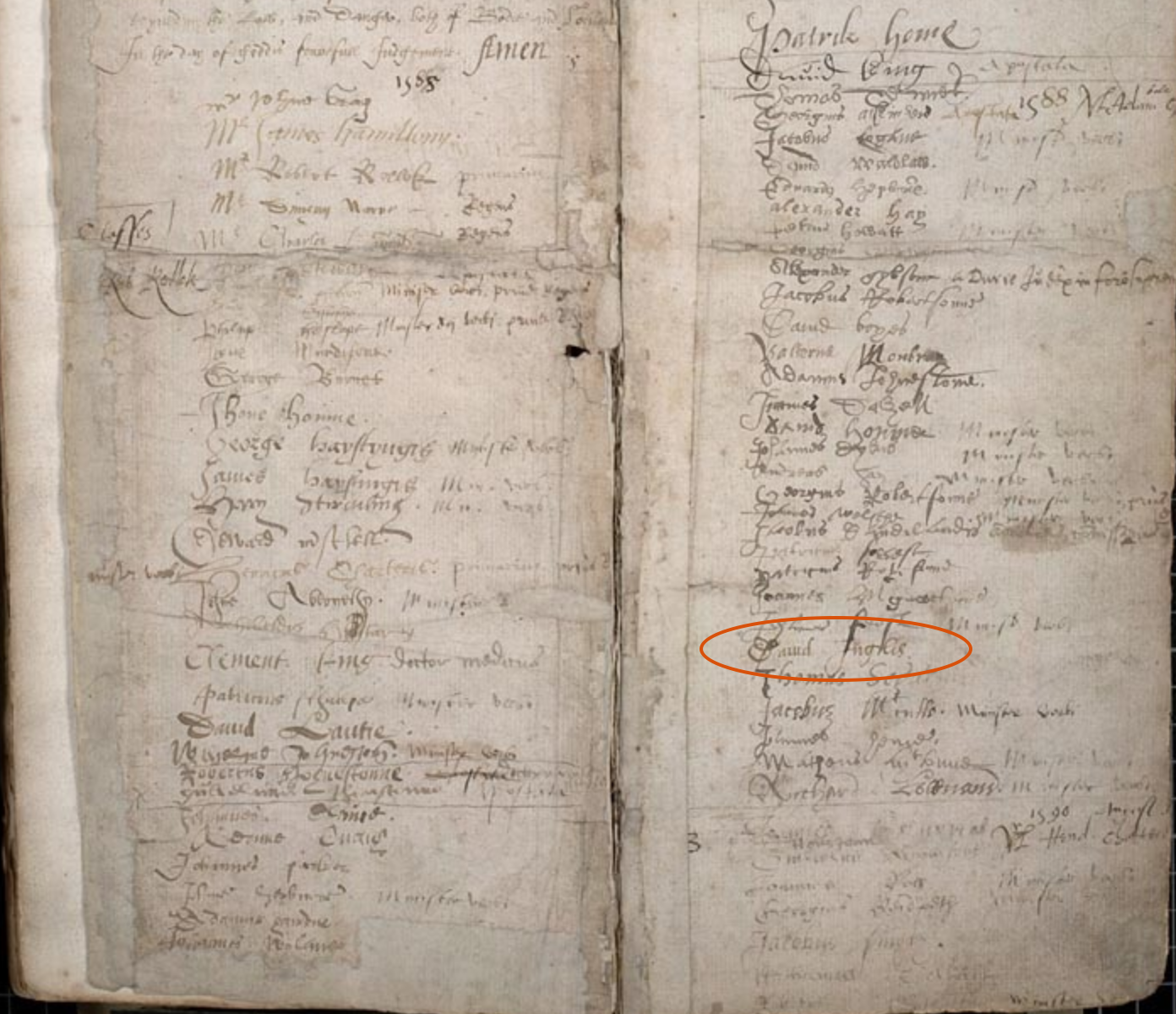
Laureation Degrees for 1588 (First Laureation Album). Edinburgh University Archives, EUA IN1/ADS/STA/1/1
Robert Rollock is also one of several Scottish individuals who composes neo-Latin verses in praise of Esther Inglis’ calligraphy; Inglis copies such laudatory verses by Rollock into her manuscripts between 1599 and 1606, and again in 1624. One such example is this four-line verse, included in Inglis’ 1599 Book of Psalms for Queen Elizabeth I. Rollock compares Inglis to the classical Greek artist Apelles who was famed for his ability to paint the finest line possible:
Egregiam peperit laudem sibi pictor Apelles
Caelatur Calamis arte etiam meruit
Tu calamo Calamin superas pictura et Apellem
Psalmographi pingens Davidis Ester opus.
[The painter Apelles won great praise for himself
It is engraved that, by the art of the pen, he also deserved it
You, Esther, by the pen surpass the pen, and surpass Apelles in depiction
Depicting the work of the psalm-writer David.]
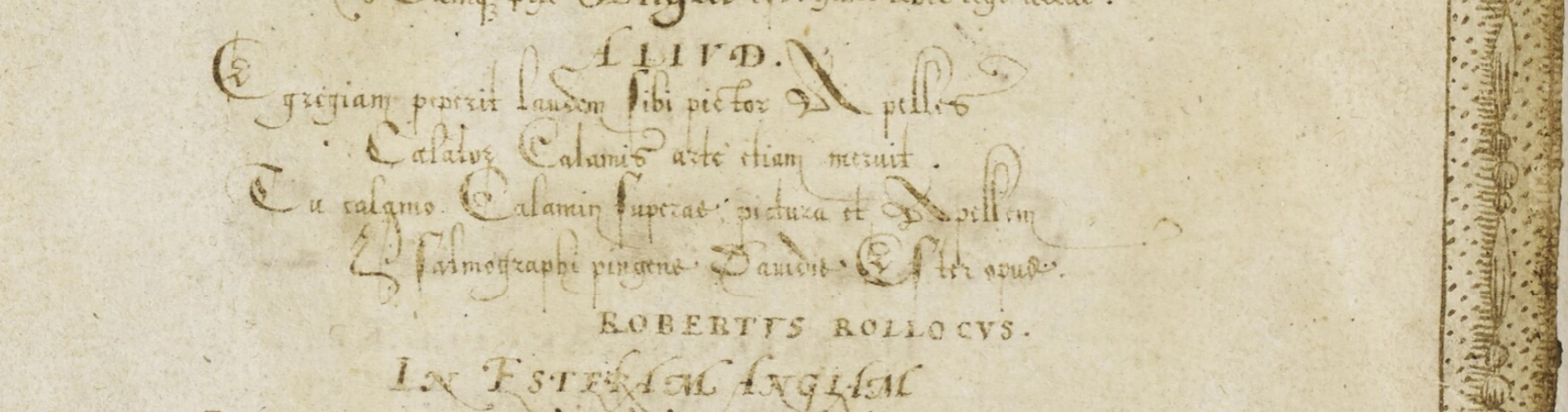
Poem by Robert Rollock in praise of Esther Inglis. Oxford: Christ Church, MS 180, fol.VIIv.
Robert Rollock writes further epigrammatic verses which are dedicated to the specific recipients of some of Inglis’ manuscripts; he writes a verse in praise of Robert Earl of Essex to be included in the Book of Proverbs which Inglis dedicates to Essex in 1599. He also writes a verse for Elizabeth I, for Inglis’ 1599 Psalms, and another for Anthony Bacon, the dedicatee of Inglis’ copy of Ecclesiastes and the Song of Songs, also in 1599.
Even prior to his offering of these verses, however, Robert Rollock seems to have have established a yet closer relationship with both Inglis and Kello. This is suggested by his appointment as a witness to the baptism of Samuel Kello on the 13th March 1596 — a role which, Jamie Reid Baxter notes, is equivalent to a godfather. Samuel was baptised with his twin sister, Agnes, about whom, sadly, nothing else is presently known.
Samuel Kello is later seen to have followed in the footsteps of his uncle, David Inglis, in attending Edinburgh’s Tounis College. He matriculated at the University in 1615, and in 1617 is described as Academiae Edinburgensis Alumno on the title-page of a printed collection of poems which he authored and dedicated to James VI/I. The shortened title of this volume is Carmen gratulatorium [a song of congratulations], published by the Edinburgh printer Andro Hart.
The University of Edinburgh, then can be seen as a truly fitting place in which to celebrate the manuscripts and life of Esther Inglis, and the circles in which she moved. The newly-founded University played an important part in the lives of Inglis’ relations, soon after their arrival in the city. The Inglis-Kello family later establish a lasting connection with Robert Rollock, its first principle, whose personalised verses seem to integrate Inglis’ calligraphic manuscripts into his own early-modern scholarly network. The city of Edinburgh itself is woven into the impression of authorial identity which is found in Esther Inglis’ early manuscripts, and becomes a place to which she returns in later life. Four hundred years later, the University of Edinburgh is working to ensure that the impression which Esther Inglis and her family left upon this city in the sixteenth and seventeenth centuries is not forgotten.
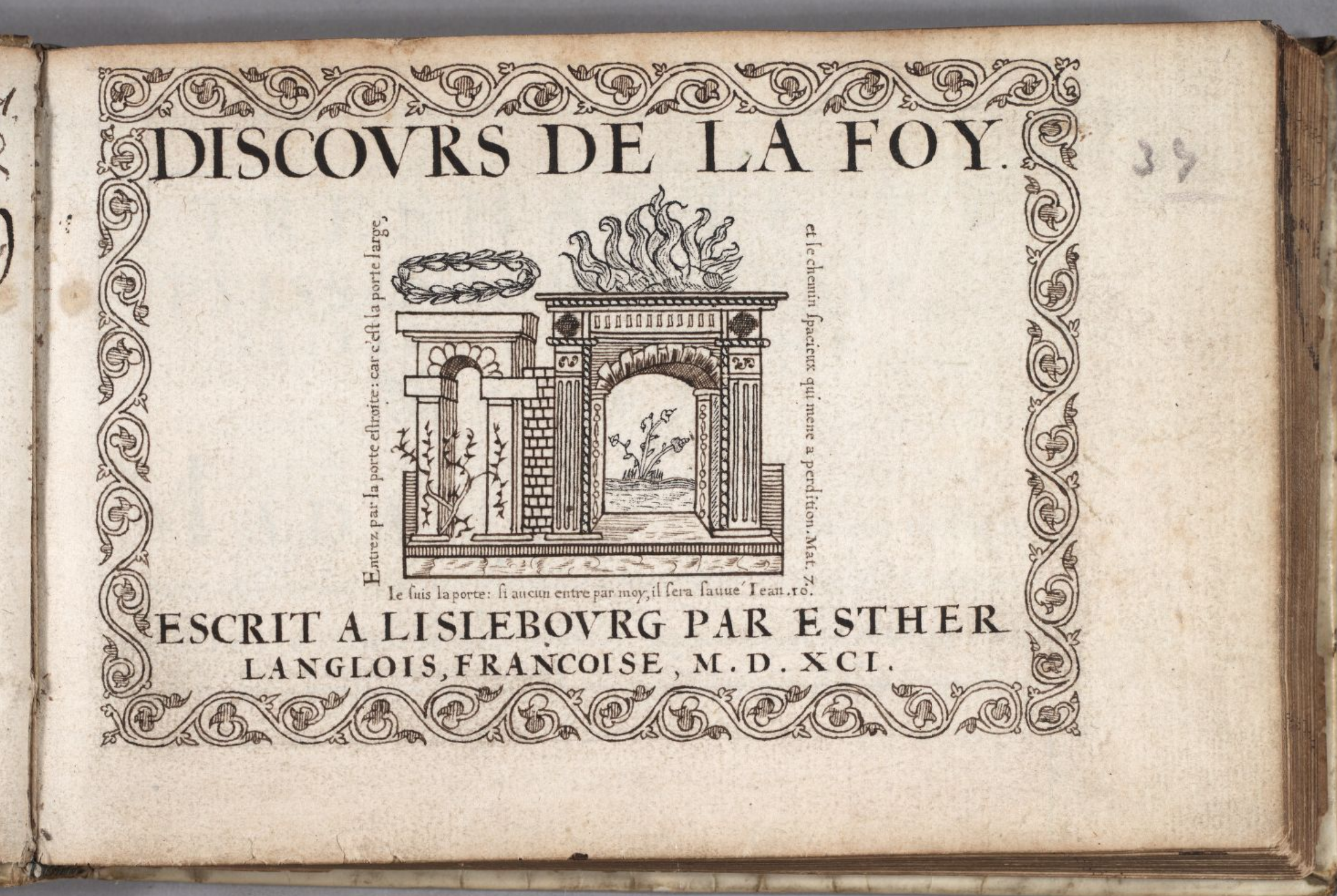
Esther Inglis’ Discours de la Foy, 1591, with “Escrit a Lislebourg” on its title-page. San Marino: Huntington Library, HM 26068.
Dissertation prep: resources for writing dissertations
Did you know the library has a list of resources that can help you get started with big research projects such as dissertations? You may feel a bit overwhelmed about how to begin, but the library team have helpfully compiled a Resource List of books, guidance and articles that we think will ensure you feel more confident:
Resource Lists are clickable pages of bookmarks that link directly to items in our library catalogue, many of which you can access online. Most courses will have prescribed Resource Lists that indicate the reading for your modules, and students tell us they find them helpful and easy to use. PG Students will also find this list linked in the Learn pages for PG dissertation students.
If this is your first time conducting a large research project, you may find the session we run each semester for PhD students in Law to be of interest. You can watch a recording of this session on our Media Hopper channel here:
Finally if you’re struggling to get to grips with literature searching then you can arrange a one-to-one appointment with us, your Law Librarian team. Visit the MyEd Events Booking system and look for ‘literature search clinic’ and select the option relating to Law. We offer appointments most weeks, and if you can’t see a bookable slot that suits you please email us on law.librarian@ed.ac.uk.
Looking Ahead – Our 2024 Project Preview
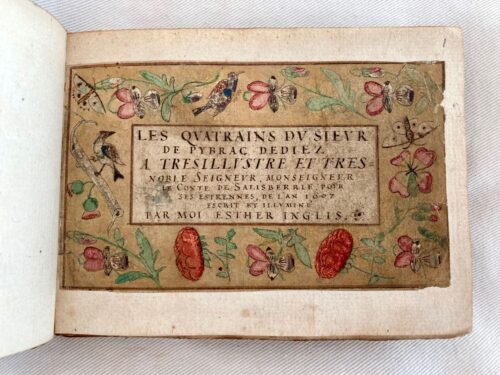
Esther Inglis Manuscript – Photo by Anna Pike, Project Curator
I began working with the Cultural Heritage Digitisation Services team last November, as a Digitisation Operator. Before joining the team, I was digitising plant specimens in the Herbarium of the Royal Botanic Garden Edinburgh. I am also a photographer, with my work most recently appearing in the Accidentally Wes Anderson exhibition which opened in London December 2023.
2024 is shaping up to be an exciting year, with several projects in the works. Some of these have been in the planning stages for a long time, and we really couldn’t be more eager to finally get started. With that in mind, we thought it might be fun to provide a ‘movie trailer’ of sorts, with a short preview of each project we plan to tackle in 2024: Read More
Looking Under the Scope this LGBT+ History Month
 February is LGBT+ History Month and this year’s theme is #UnderTheScope. This celebrates LGBT+ peoples’ contribution to the field of Medicine and Healthcare both historically and today.
To help you learn more we’ve pulled together just a small selection of Library resources that will allow you to start to look ‘Under the Scope’.
Books
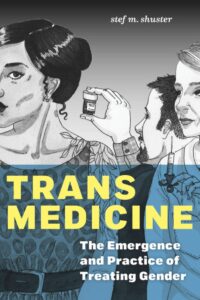 For a rich examination of the history of trans medicine and current day practice, Trans Medicine: The Emergence and Practice of Treating Gender draws on interviews with medical providers as well as ethnographic and archival research to examine how health professionals approach patients who seek gender-affirming care. The essays in Queer Interventions in Biomedicine and Public Health historicise and theorise diagnosis, particularly diagnosis that impacts trans health and sexuality, queer health and identity, and sexually transmitted diseases such as HIV/AIDS.
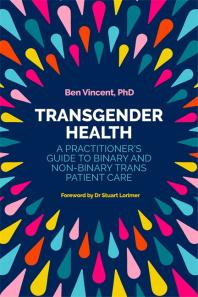
#UnderTheScope also aims to shine a light on the health inequalities facing LGBT people even today. Transgender health: a practitioner’s guide to binary and non-binary trans patient care shows healthcare and medical practitioners how to deliver excellent care to gender diverse patients. Based on cutting edge research and the lived experience of the author as a non-binary person, this is essential reading for all those working to meet the needs of transgender people in healthcare settings. The remedy: queer and trans voices on health and health care invites readers to imagine what we need to create healthy, and thriving LGBT+ communities in this anthology of real-life stories from queer and trans people on their own health-care experiences and challenges.
LGBT collections at Lothian Health Services Archive
Some of the LGBT-related resources held by Lothian Health Services Archive (LHSA) include the archive of Lothian Gay and Lesbian Switchboard, the UK’s first gay helpline and Scotland’s first gay charity, and unrivaled collections that document Edinburgh’s response to HIV from 1983 to the 21st century, spanning voluntary groups, charities, local authorities, the NHS, and health promotion campaigns.
The source list on the LHSA website provides a detailed list of LGBT resources in LHSA.
LHSA is part of the University’s Heritage Collections and holds the historically important local records of NHS hospitals and other health-related material. For information about visiting please read the information on Services and Access.
More resources to look Under the Scope
If you want to further explore LGBT+ peoples’ contribution to medicine and healthcare then you can use some of the Library’s research databases to search for journal articles, book chapters, reviews, theses, conference papers, etc., on this topic and beyond.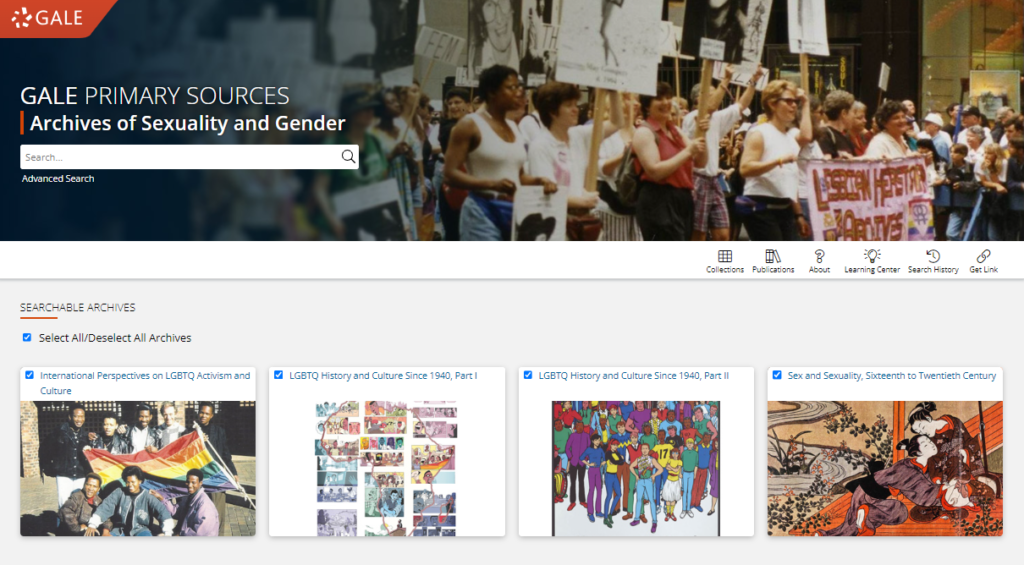
Archives of Sexuality & Gender provides a significant collection of primary sources for the historical study of sex, sexuality, and gender. With material dating back to the sixteenth century, you can examine how sexual norms have changed over time, health and hygiene, the development of sex education, social movements and activism, and many other interesting topical areas.
Use the online resource LGBT Thought and Culture to find books, periodicals, and archival materials documenting LGBT political, social and cultural movements throughout the twentieth century and into the present day. The collection illuminates the lives of lesbians, gays, transgender, and bisexual individuals and the community.
Researching hidden and forbidden people from the past can be difficult. Terminology used to write about LGBT+ people has shifted over time or is obscured. A practical guide to searching LGBTQIA historical records is an accessible guide to doing historical research on LGBT+ subjects in libraries, archives and museums.
Even more resources to help you discover LGBT+ history can be found in the Gender and Sexuality Studies subject guide.
What are we missing?
This is just a small selection of the resources on LGBT+ history in the Library. However, if there are areas in the collections that could be improved or you know of a book the Library doesn’t already have, you can use the Request a Book form to tell us.
Note that some online resources mentioned in this blog post are only available to current students and staff at the University of Edinburgh.
Large scale data transport service launched
| Research Services, IT Infrastructure Division, are pleased to report that a project that allows researchers to transfer terabytes of data between the University of Edinburgh and external collaborators has been completed. The service uses a transport mechanism known as Globus to set up multiple connections between host and client to transfer data instead of relying on a single point-to-point connection. This results in very large data being transferred between sites in parallel, allowing faster transfer.
The service is integrated with the University’s research data platform, DataStore, allowing researchers to specify specific folders that can be used as “endpoints” to the transfer. Many users have already taken advantage of the service, but it is key to note that this will not improve data transfer speeds within the University itself, rather that bottlenecks in the wider Internet can be mitigated. For more information, University of Edinburgh users may view the RSS Wiki. Mike Wallis |
Trial access to The Atlantic Magazine Archive (1857–2014)
The Library currently has trial access to the The Atlantic Magazine Archive (1857–2014).
The digital archive covers events and political issues through literary and cultural commentary. It includes more than 1,800 issues providing a broad view of 19th, 20th and early 21st-Century American thought. The Atlantic was originally created with a focus on publishing leading writers’ commentary on abolition, education and other major issues in contemporary political affairs at the time. Over its more than 150 years of publication it has featured articles in the fields of politics, foreign affairs, business and the economy, culture and the arts, technology, science and more.
Access to theThe Atlantic Magazine Archive (1857–2014) is available on the Library Databases – E-Resources Trials page. Trial access is available until 25th February 2024. Please remember to give us feedback to help us make a decision about subscribing using the E-resources Trial Feedback Form.
Trial access to the Oxford Research Encyclopedia of Linguistics
The Library currently has trial access to the Oxford Research Encyclopedia of Linguistics.
The Oxford Research Encyclopedia of Linguistics includes more than 500 articles by renowned scholars from all over the world. Peer-reviewed and frequently updated, articles feature a wide array of resources, including audio-visual materials, links to digital archives, datasets, and other pedagogical tools.
From morphology to neurolinguistics, semantics to sociolinguistics and sign languages, the Oxford Research Encyclopedia of Linguistics aims to map, over time, the entire landscape of the world’s languages, weaving together the various historical, theoretical, and experimental approaches that make up the field of linguistics.
Access to the Oxford Research Encyclopedia of Linguistics is available on the Library Databases – E-Resources Trials page. Trial access is available until 18th February 2024. Please remember to give us feedback to help us make a decision about subscribing using the E-resources Trial Feedback Form.
Academic writing help: Royal Literary Fund Fellow

Are you a student who is struggling with academic writing? Are you a staff member who knows of a student who isn’t quite getting the hang of writing at University level?
Perhaps you need to book an appointment with our Royal Literary Fund Fellow. Mary Paulson-Ellis is a well-respected expert in the field of writing, and has been a writing mentor, workshop leader, tutor and writer-in-residence for many organisations including the National Centre for Writing, the National Galleries of Scotland and the Edinburgh International Festival. She is also a committee member for the Society of Authors in Scotland, and student feedback from her first semester working at Edinburgh has been enthusiastically positive. She specialises in helping students in any discipline hone their writing skills and she does this by arranging one-to-one appointments with students in the Main Library.
The service is free, confidential and individual to each student’s needs. To find out more about the service you can visit our RLFF page, or to book an appointment please email Mary directly.
Mysterious Songs from an Arabic Manuscript by Sarah Osama
The following post has been written by Sarah Osama, who has recently completed an internship looking at our Manuscripts of the Islamicate World and South Asia (MIWSA).
*Please note that all translations in this article are my own and are not meant to convey wholly accurate, line-by-line translation. Rather, they attempt to capture the subject matter and tone of the original text for the reader.
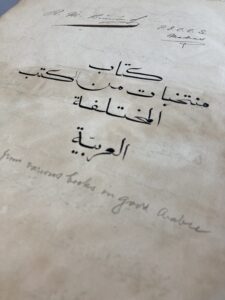
A little known fact about the University of Edinburgh’s Heritage Collections is that it boasts the third largest university collection of manuscripts pertaining to the Islamicate world in the United Kingdom- just after the Universities of Oxford and Cambridge. This impressive but long under-researched collection presents an enormous task to those working on cataloguing, curating and researching the 700+ manuscripts, which was renamed in late 2022 from the Oriental Collection to Manuscripts of the Islamicate World and South Asia (MIWSA).
While the focus of my internship with the MIWSA collection was to digitise partial legacy data, I had the opportunity to work on a number of uncatalogued material, and this included numerous manuscripts bequeathed to the University by Robert Blair Munro Binning (d. 1891), an administrator with the East India Company in the 19th century. With the exception of sevenentries in legacy data from a 1925 descriptive catalogue by Muhammed Hukk et al., the vast majority of Binning’s 40+ manuscripts are not yet properly catalogued, and Kitāb muntakhabāt min al-kutub al-mukhtalifah al-‘Arabiyyah, or the Book of Selections from Various Arabic Writings (Or Ms 526) sits among these largely unknown texts. Almost no information is available on this manuscript’s production or origins, and one particular piece of vital information that we do not have is the dating of the manuscript. However while it is undated, we know that it must have been extant by the late 19th century when Binning passed away.
Kitāb muntakhabāt is a seemingly unique collection of iconic literary and religious texts from a wide geographical and time range in the Arabic language. The contents of the manuscript include stories like Sinbad from A Thousand and One Nights, a selection of chapters from the Quran, the first Mu‘allaqah of the famous pre-Islamic Arabic poems known as al-Mu‘allaqāt al-Sab‘ li Imruʼ al-Qays, a collection of Aghānī, and finally, a seemingly random collection of writings, possibly correspondences and business-related matters on the final pages.
If you are familiar with Middle Eastern culture and literature, you would have instantly recognised some of these titles. However, the “Aghānī” section is as obscure as its title suggests. Aghānī in today’s Arabic usage generally refers to songs, but it can also refer to poems. The word aghānī is in plural form, the singular form being ughniyah. Unlike A Thousand and One Nights or the Mu‘allaqāt, the poems that form the aghānī section remain a mystery and complicate what at first appears to be a self-explanatory collection of iconic Arabic texts. Significantly shorter than its preceding sections, the Aghānī are full of religious and cultural references that go as far West as North Africa, making us question the provenance of the manuscript which would otherwise be assumed to have originated in India or Iran due to Binning’s career. This article will examine some of these aghānī and conclude with possibilities for a different understanding of the compilation and acquisition of Kitāb Muntakhabāt.
The Aghānī
During my initial examination of the manuscript, my attention was immediately drawn to the “aghānī” section. The short and easily digestible rhyming couplets make for a light read, and the subject matter- love and heartbreak- is ever relatable and entertaining. The aghānī also stand out for their anonymity as they do not come with any titles or references to their source. This is odd in light of the manuscript’s conventions. The stories in the first section of the manuscript consistently provide titles, and the Quranic chapters and mu‘allaqah, despite being widely identifiable on their own, are still titled. Up to this section, I had no trouble identifying the contents for cataloguing purposes, but upon completing quick searches of the poetry online, I was surprised by the obscurity of these poems.
However, the poems themselves provide some clues to their context as we notice several cultural, historical and religious references. For example, Layla of the famous lovers in Arabic poetry ‘Layla wa Majnun’ makes an appearance in the second half of the third ughniyah:
یا رب ان حملتني فوق طاقتي
فحمل لیلی بعض ما فی فوادیا
واال فساوی الحب بینی وبینها
اعیش
کفافا ال عل ّي وال لیا ً
یقولون لیلی بالعراق مریضة
فیالیتني کنت الطبیب المداویا
اداوي لیلی من سقام عرفته
وما یعرف االسقام اال المداویا
This roughly translates to:
O God, if You are to burden me with that which I cannot bear,
Then burden my heart with Layla
If not, then equalise the love between us
They say Layla is sick in Iraq
If only I were the healing the doctor
I would heal Layla from the sickness of knowing him
Only the healer knows of sickness
There are also multiple religious references interspersed throughout the aghānī. The line above that roughly translates to ‘Oh God, if You are to burden me with that which I cannot bear’ is a nod to a verse in the Quran (‘Our Lord, and burden us not with that which we have no ability to bear’ Quran 2:286). There are also more subtle borrowings from Quranic language, such as a curious line in ughniyah 5:
تسقی من ماء دافق
It is watered with rushing water
This line appears to combine two separate phrases in the Quran: ‘it is watered’ (من تسقی (echoes Quran 88:5 while ‘with running water’ (دافق ماء من (echoes Quran 86:6. Finally, there are intriguing references to North African history and culture within ughniyah 5 that will be explored below.
Identifying the Aghānī
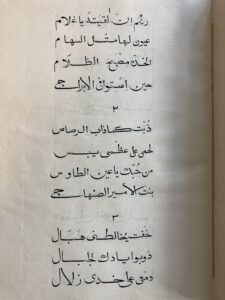
In my research for a manuscript likely acquired within the context of the East India Company’s activities, I was surprised when ughniyah 5 pointed to a North African origin. Various, but not all lines from ughniyah 5 match a poem on the Website Montadayat Jabala, a blog on the culture of the Jabala region of Morocco. According to the blog, this poem is commonly recited at weddings and joyous events, which could point to the use of the word aghānī (songs), as these poems may in fact be cultural songs.
Additionally, the final line in stanza 2 includes a historical reference, where ‘daughter of the Ṣanhājī prince’ references the Sanhaja, a historic Amazighen tribal confederation across various modern Northern and Sub-Saharan African countries:
ذبت کما ذاب الرصاص
لحمي علی عظمي یبس
من حبك یا عین الطاوس
بنت االمیر الصنهاج
I have melted like lead
The meat on my bones have wasted away
From your love, oh eye of the peacock
O daughter of the Ṣanhājī prince
Another clue to this poem’s North African origin lies in the first two lines of stanza 5, another match to Montadayat Jabala and which appears to be a prayer swearing upon the names of Ja‘far, Khālid, the Prophet, Aḥmad and Dāwūd:
وجعفر وخالد والنبي
احمد وداود یا ربي
اغفرلي امي وابي
نرجي
موالنا فضلك ُ
And by Ja‘far, Khālid and the Prophet
Aḥmad, Dāwūd, oh God
Forgive my mother and father
We seek your favour, our Lord
I found an almost identical couplet on an Algerian blog, where it suggests that these names are of local Sufi saints. It is likely that these lines reflect a convention of making a prayer within, or at the end of a poem or song, with the particular usage of local saints to call upon God situating it within a specific geographical and cultural context.
It is unsurprising that ughniyah 5 provided the most clues to its origins as it is by far the longest ughniyah in the section. Furthermore, this ughniyah is uniquely split into numbered stanzas, and may be a collection of smaller poems or parts of different poems grouped under one ughniyah. Considering that the subject matter appears to change between each sub-division of ughniyah 5 but contains several North African references throughout, this may be a collection of North African poems or songs.
The Aghānī and Contextualising Kitāb Muntakhabāt
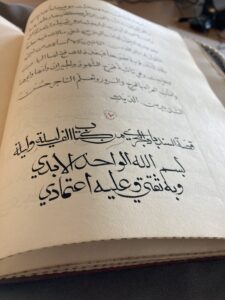
What we know about the manuscript is that it clearly samples a variety of well-known texts in Arabic, most likely to showcase a range of iconic texts in the language with literary and religious significance. I believe there are two arguments that can then be made for the aghani section: considering the other texts in the manuscript, the aghānī must also showcase well-known literature, or inversely, the fact that this section does not identify its texts as the other sections do, perhaps this is a unique selection of more obscure literature. It is also possible that at least some of them may be found in the famous Kitāb al-Aghānī, which is an encyclopaedic collection of poems and songs by Abū al-Faraj al-Iṣfahānī (d. 967 C.E.). This could explain the title of the section, but would not explain why such texts would be so obscure on the internet and untitled in the manuscript.
Researching the aghānī has pushed me to reconsider the relationship of the compiler with the manuscript. It is very likely that the compiler’s selection of literature was a personal one, and furthermore, I think the selection could indicate the compiler or commissioner was from a Western background. The manuscript does not follow conventions one might expect from an Islamic context. For example, I would have expected the text to start with the Quranic selections out of respect for the holy text. One might even say that including the Quran with a selection of literary texts is itself a foreign understanding of the material. Furthermore, beginning the selections with A Thousand and One Nights suggests this particular text’s importance to the compiler, and the inclusion of iconic stories like Sinbad would be in line with what we know about European interest in the Thousand and One Nights that was blossoming in the 19th century.
My suspicion that Binning himself may have commissioned or compiled Kitāb Muntakhabāt began with a curious note in an internal handlist that had designated this manuscript as ‘compiled by R. M. Binning’. While I could not find corroborating evidence for this note, I do think this is a strong possibility. Kitāb Muntakhabāt appears to be an original compilation and not a transcribed copy as there exists no preface or colophon, something which can be expected from older works. Additionally, and quite significantly, searching the given title online does not bring up any matches to earlier works, strongly suggesting its original compilation.
If Binning was indeed the commissioner or compiler of Kitāb Muntakhabāt, then this would better explain why selections of North African poetry appear in a manuscript assumed to be compiled or acquired in 19th century colonial India. Binning was a linguist of Arabic who published an Arabic grammar book in 1849, pointing to his great interest in the language. In addition to being stationed in India, he also travelled to the Levant, the Arabian Peninsula and Egypt, allowing the possibility that he acquired or compiled Kitāb Muntakhabāt in the Middle East instead of India.
It would be wonderful to have someone with more knowledge of these matters inspect these aghānī and the Kitāb Muntakhabāt more generally. More details about Or Ms 526 can be found here, and you can reach out to heritagecollections@ed.ac.uk to view this and other manuscripts at the University’s Centre for Research Collections.
Appendix: Some highlights from the unidentified Aghani
Ughniyah 1:
شغلتم عنا فى محبة غيرنا
واظهرتم الهجران ما هكذا كنا
وعاهدتموا اال تخونوا فى الهوى
فلما انفضح الحب خنتم وما خنا
تدللتم حتى ملكتم قلوبنا
فلما ملكتم القلب قلتم ارحلوا عنا
سنرحل عنكم ان كرهتم وصلنا
يكون انقطاع الوصل منكم وال منا
فوهللا ما زال اشتياقي اليكم
والدخل التغميض/التخميض من بعدكم جفا
ترى تجمع االيام بينى وبينكم
وبشملنا شمل السرور كما كنا
ونرجو الذى تجرى االمور بحكمه
سيجمعنا بعد الفراق كما كنا
سالم عليكم ما ا ّمر فراقكم؟
فياليتنا من قبل فرقتكم متنا
You became involved with someone else and deserted me
You promised not to betray our love
Yet when the true nature of our love was revealed, it was you who had committed the betrayal
You were kind until you captured my heart
And after you captured it, you told me to leave you
I shall leave if you so hate our relationship
But let it be known that you ended the relationship, not me
And by God, I still miss you
I beg the One Whom everything happens by His will
To reunite us, as we were before our separation
I wish I had died before this separation
Note: This ughniyah is beautifully rhythmic when read aloud and succinctly conveys the experience of betrayal and heartbreak. Despite being our first- and one might thus assume to be a famous or important ughniyah, this poem is as of now unidentified.
Ughniyah 4:
يا سيدي محمد يا اهيف الغزالن
يا من وجنته يحكي الورد والنعمان
وقدك المعتدل يحكي غصن البان
تان
جل الذي صورك لقتلي يا فّ
Roughly translates to:
Oh my master Mohammad, oh slenderest of gazelles
Oh whose face speaks of roses and wildflowers
and whose stance is like the branch of the Moringa
How great is the One who created you, o tempter!
Notes: When I first read the opening line, I thought it may be a poem praising the Prophet Mohammad. However once I reached the teasing final line, I changed my mind! While it is common for male poets and singers to pine over someone in the masculine form, the inclusion of a male name is bold if indeed written by a man. Such sensual poetry would also be bold coming from a woman. Who wrote this poem? Is Mohammad a real person or a general representation of the lover?
Academic writing help: Royal Literary Fund Fellow
Are you a student who is struggling with academic writing? Are you a staff member who knows of a student who isn’t quite getting the hang of writing at University level?
Perhaps you need to book an appointment with our Royal Literary Fund Fellow. Mary Paulson-Ellis is a well-respected expert in the field of writing, and has been a writing mentor, workshop leader, tutor and writer-in-residence for many organisations including the National Centre for Writing, the National Galleries of Scotland and the Edinburgh International Festival. She is also a committee member for the Society of Authors in Scotland, and student feedback from her first semester working at Edinburgh has been enthusiastically positive. She specialises in helping students in any discipline hone their writing skills and she does this by arranging one-to-one appointments with students in the Main Library.
The service is free, confidential and individual to each student’s needs. To find out more about the service you can visit our RLFF page, or to book an appointment please email Mary directly.
Collections
 Hill and Adamson Collection: an insight into Edinburgh’s past
My name is Phoebe Kirkland, I am an MSc East Asian Studies student, and for...
Cataloguing the private papers of Archibald Hunter Campbell: A Journey Through Correspondence
My name is Pauline Vincent, I am a student in my last year of a...
Hill and Adamson Collection: an insight into Edinburgh’s past
My name is Phoebe Kirkland, I am an MSc East Asian Studies student, and for...
Cataloguing the private papers of Archibald Hunter Campbell: A Journey Through Correspondence
My name is Pauline Vincent, I am a student in my last year of a...
Projects
Cataloguing the private papers of Archibald Hunter Campbell: A Journey Through Correspondence
My name is Pauline Vincent, I am a student in my last year of a...
Archival Provenance Research Project: Lishan’s Experience
Presentation My name is Lishan Zou, I am a fourth year History and Politics student....