Home University of Edinburgh Library Essentials
June 18, 2026
The Not-So-Lonely Lockdown of the Transcribing Geologists
 Lockdown may seem frustrating and tiresome to some, but it has made space for a few spontaneous and unexpected collaborations!
Over the last month with many “physical” tasks on hold, I have been able to peruse the sections of the Lyell notebooks which were digitised before the introduction of social distancing and the subsequent shut down of the University buildings. And far from being a lonely task – the notebooks have proven to be one of the most social activities I have ever worked on! As it turns out Twitter has a host of geologists, curators, PhD students, as well as academics in subjects ranging from the ideals of Victorian masculinity, to geomorphology… all just waiting to chip in their thoughts on what exactly Charles Lyell was thinking – and its more than likely they are all there because lockdown has disrupted their regular routines.
Now before we start, admittedly there have been some criticism of the notebooks. There is a much more standardised approach to how people “do” notebooks these days, especially in the field: Sketches must have an orientation, a scale bar and some annotation. So there have been a few comments that Sir Charles wouldn’t score very highly if he were an undergraduate summiting his work for assessment.
As a founder of modern geology, it’s important to note how the science has evolved since then, incorporating standards of which Lyell certainly would approve. A very generous statement on twitter from Professor Simon Mudd (@SimonMariusMudd), School of GeoSciences:
“I haven’t spent much time with these notebooks, but from what I have seen this (see sketch below) is the typical quality of the sketches. He was more of a ‘big ideas’ rather than ‘detailed sketches’ type of person.”
Lyell’s oversights in these areas, however, has not been too great an impediment for lively debate, especially when the diagram seems to be a bit of a mystery.
Last week I posted this sketch from notebook 4 on Twitter.

What is it?!? Is it rivers? Oxbow lakes? Waves crashing onto the shore of… Norfolk?
Cue a volley of guesses:
“A Sea-serpent?”
“You are all so wrong, it says “Loch Ness” and here, in the middle, you have Nessy…”
“Was he just bored and doodling??”
So it is true – nothing is sacred to the internet – not even one of the founding fathers of geology’s notebook!
But with the fun came a conclusion: this illustration in Notebook 4 is likely a map of sand banks off the Norfolk coast. Lo and behold, Andy Emery, the geomorphist, produced a map!
And YES – The sketch maybe isn’t as inaccurate as we had initially thought! But how did Lyell know what the submarine landscape off the coast of Norfolk look like in 1827?
There is a good chance that local fisher men would have known about these features, as they are shallower and depending on tides and currents, they might have been the best place to go fishing… or the worst place to run your boat aground.
Another of our online-super-sleuths, Jonny Scafidi (@jonafushi), messaged to say “On p.308 of Principles of Geology he mentions a Captain Hewett, R. N. who, according to p.56 of Memoirs of Hydrography, Volume 1 by Commander L.S. Dawson R.N. undertook a great survey of the N. Sea”. Most of Captain Hewett’s surveys where completed in the 1830’s but there is mention of a survey in 1822 – 5 years before Lyell sketched this diagram in his book. So it is possible Lyell had access to some surveys.
We will never know for certain where Lyell got the information that inspired this sketch. But what we can prove is that social media can be used to explore a whole array of different angles when investigating historical notebooks!
Stay tuned for more exciting installments of #TranscriptionTime over at @CockburnGeol and try your hand at deciphering the thoughts of historical scientists and collectors.
Thanks to the Science twitterati who helped with this mystery between 9.27am and 10.33am on 24th April:
Andy Emery (@AndyDoggerBank) – RA in Energy Transition, School of Earth & Environment, University of Leeds
Jonny Scafidi (@jonafushi) – PhD candidate, School of GeoSciences, University of Edinburgh
Simon Mudd (@SimonMariusMudd) – Professor of Geomorphology, School of GeoSciences, University of Edinburgh
John Faithfull (@FaithfullJohn) – Curator, Hunterian Museum & Art Gallery
Dan Hobley (@Siccar_Point) – Lecturer, School of Earth and Ocean Sciences, Cardiff Univeristy
Rich Taylor (@RockhoundRich) – Geoscience Applications Development at ZEISS Microscopy
Mikael Attal (@mickymicky06s) – Senior lecturer in Geomorphology, School of GeoSciences, University of Edinburgh
Dr. Gillian McCay
Curator, Cockburn Museum
@CockburnGeol
On trial: State Papers Online
Thanks to a request from the School of Literatures, Languages and Cultures (LLC) the Library currently has trial access to 3 further collections from the State Papers Online database from Gale. State Papers Online offers original historical materials across the widest range of government concerns, from high level international politics and diplomacy to the charges against a steward for poisoning a dozen or more people.

You can access the 3 collections on trial via the E-resources trials page.
Access is available on and off-campus.
Trial access ends 30th June 2020.
The 3 collections the Library has trial access to are: Read More
Edinburgh Research Explorer downloads: April 2020

On trial: National Geographic Magazine Archive
Thanks to a request from a HCA student the Library currently has extended trial access to the National Geographic Magazine Archive, 1888-1994 from Gale. This databases allows you to explore over a century of iconic images and fascinating narratives that capture the wonder of our planet and beyond.

You can access National Geographic Magazine Archive, 1888-1994 from the E-resources trials page.
Access is available on and off-campus.
Trial access ends 30th June 2020. Read More
Responding to a National Crisis: Social Work at Times of Great Need
(illustrated with images from the University’s art collection)
We find ourselves living through remarkable times. A global pandemic has taken hold and life has changed completely in just a few short weeks. The impact of coronavirus has presented numerous challenges for social work practitioners and students. Social workers are working hard to respond, and to ensure that clients are supported at a time when resources are stretched to the limit. There is a tangible determination to ensure that people who need help and support will receive it.
commitment to clients
In the social work profession, a commitment to clients is found throughout its history. If we look at the social work archives at the University of Edinburgh we find intriguing insights into a time of previous national crisis when social workers and social work students stepped up to meet this challenge. The Second World War, lasting from 1939 to 1945, was a time when British society changed drastically, with virtually every aspect of life touched by the impact of the war. The student admission files in the social work archive show the large numbers of past and present students in Social Study at the University who worked to improve the lives of so many people during and after the Second World War, and we can see this in a number of different areas examined below in which they either worked or volunteered their skills. Their stories remind and encourage us that individuals can make a difference, even in the face of widespread adversity.
officialdom disappeared
The mass evacuation of children from British cities to rural areas, beginning in June 1940, was designed to protect them from aerial bombing raids by the Germans. The evacuation took place rapidly with thousands of children being evacuated in a matter of days. Several former and current students from the department were involved in arranging the evacuations, and working with evacuees once they had arrived in their new homes. Times of emergency have always required different ways of working, often dispensing with normal protocols; one student, Margaret Rose, wrote positively of the speed and efficiency at which the evacuation process took place:

Extract from correspondence of Margaret Rose, Student Admission File EUA IN1/ACU/S2/8/1/756
Another former student, Marjorie Brown, worked as part of the evacuation of children to Westmoreland in the north of England. Westmoreland was a rural area and the impact on the local community was tangible. The schools in the town of Kirkby Stephen had to work double shift to accommodate all the pupils. Interestingly a longer term effect was the raising of school standards as the evacuees came with a higher level of education than local children.
the old, the chronic and the destitute
Other students served in some of the home front forces during the war, including the Women’s Royal Naval Service (WRNS), the Women’s Auxiliary Air Force (WAAF) and the Voluntary Aid Detachment (VAD). These forces provided key services in the war effort at home with personnel working in a wide range of roles including as wireless operators, weapons analysts, electricians, and in catering, aircraft maintenance and nursing. One student, Dr Mary Gregor, signed up to undertake the Certificate of Social Study in 1942 having worked in the VAD for two years. Ironically she had been based at the other side of George Square from the Social Study Department during the latter part of her service, working with the Red Cross at the Hospital Supplies Depot.

George Square, South Side, 1958 by Paul, Lord Ayshford Methuen, EU0599, copyright: Lord Ayshford Methuen’s estate
Jean Bewes Paterson volunteered with Red Cross almost immediately after graduating. She found herself in Hong Kong, a few months after it’s liberation from Japanese occupation, working in a home for “some 500 people of all different nationalities who are for one reason or another destitute or have “frozen” assets until the new Government comes in next month and releases these. Many are waiting repatriation others are the widows and dependants of Civil Defence and Police personnel and British soldiers who fell in the fighting in Hong Kong and the remainder are the old the chronic and the destitute one finds in every community”.
Her correspondence echoes the financial problems brought about for many by the the present pandemic and also illustrates that, in addition to casualties of any crisis, those in social care are also having to support those who were already at risk and vulnerable before the crisis hit.
if an end it can ever have
Jean went on to write that her work is “really interesting, if sometimes discouraging, and we expect to be here till August to finish it – if an end it can ever have”. Those on the frontline in any crisis must summon the strength to carry on despite the strain of what they are witnessing first hand and very often without a definite end in sight.
Another important role undertaken by Social Study students was in military intelligence. There are records of two students, Mary Branford and Elsie Ann Craig, who worked in this area, both at Bletchley Park. The centre of the Government Code and Cypher School was where work was undertaken to break the codes used to communicate by the Germans and their allies. This work was of paramount importance to the war effort, and the fact that the code was eventually broken was key to supporting the British war effort . Both Mary Branford and Elise Craig worked in signal intelligence at Bletchley, Mary as Foreign Office civilian staff and Elise as a member of the Women’s Royal Naval Service (WRNS).
doodle bugs
Isobel Robertson Stirling who went into the field of psychiatric social work, was put in charge of the newly created Sunderland Child Guidance Clinic in 1939. Her correspondence showed that she feared the outbreak of war would mean the clinic was shelved but in fact owing to problems posed by evacuation, the authorities saw it as a priority. She also found herself assisting the British Hygiene Council with the health of troops stationed in the area, and became the local BFSW (British Federation of Social Workers) representative for the Ministry of Health Schemes created to meet the emergencies of war in her area.
Elizabeth Milroy was another graduate who found herself supporting those at home affected by the war. Her correspondence records the long hours experienced in times of crisis, but also the rewards and satisfaction:
“I am still working at Croydon in the Billeting and Rehousing Office so you will understand that we are busy. We have been working 12 and 13 hours a day ever since the doodle bugs started and Croydon has had its fair share of the trouble. However, it is immensely interesting and one has a certain sense of achievement whenever one gets anything done.“
pristine white
In spite of all the hardships of life during this time the files often show that a sense of humour was still possible, and perhaps often necessary to get people through their various situations. One former student, Winifred Cable, wrote to Nora Milnes, Director of the Social Study Department, about her experience working at the Redhill County Hospital in 1944 when it was hit during a bombing raid. She describes in very good humour how she was wearing the pristine white uniform of an almoner, neatly starched and pressed when the siren went off. She was forced to throw herself onto the ground, rising after the raid had finished, thankfully unharmed, but covered in thick, brown mud, looking thoroughly ridiculous.
casualties of the conflict
While often the reports from the students of the work they undertook are stoic and even light-hearted the serious impact of the war was very real. Sadly, two Social Study students are known to have died during the War. Anthony Beilby died on war service in 1943, while Helena Bathgate, a civilian casualty, was killed in 1941. Their deaths highlight the fact that the very important work which the former students of the Department did during the Second World War was often sacrificial in its nature.

The Invalid, 1962, James Cumming, EU0219, copyright: James Cumming’s estate
An inspiring story is that of Freda Patience Wilson, originally from Scone, who was 2 years into her nursing training when she was caught up in an air-raid on Plymouth in 1941. She lost an eye, both her legs were broken and she sustained injuries to both arms. Unable to continue nursing Freda was determined to pursue a career in social care and enrolled on the Social Study course gaining a Certificate in 1946. While still undergoing extensive treatment for her injuries, she took a number of Assistant Almoner posts, reflecting that she “certainly saw a lot to justify the nationalisation of hospitals”.
research and reconstruction
Periods of crisis leave their mark, even after the threat of immediate danger has passed. As we are seeing, our world will face new challenges as a result of Covid-19 and it was no different in the aftermath of the war. Edinburgh University Social Study students played a part in the post-war reconstruction and identified areas of concern and/or change.
Several students worked with refugees in Europe following the war. There were at least 11 million refugees at the end of the Second World War, many of whom had been moved to Germany from Eastern Europe to act as slave labour. Although work began quickly to help them return home or find alternative homes this work took years to complete .
Before beginning her Diploma in Social Study at Edinburgh Katherine Barbour worked as a Liaison Officer in Austria for the Adopting Group of Refugees and United Nations Association, International Service. Elspeth Ogilvy-Wederburn and Arthur Clarke both worked with refugees in Germany in the late 1940s. Arthur worked for the British Red Cross Society, while Elspeth worked with troops and refugees at the Church of Scotland canteen in Celle in 1948. The Church of Scotland’s huts and canteen scheme had started during the First World War and aimed to provide huts and canteens to serve troops at home and abroad. The canteens provided a place where troops could rest and relax, where religious services and chaplaincy outreach could take place and where meals could be given out . The scheme proved to be supportive and popular and was quickly re-established following the outbreak of the Second World War.

The Canteen, 1947, Marjorie B Wallace, EU4850, copyright: Marjorie Wallace’s estate
The call for social study students to assist with the challenges of the post-war world was strong. Margaret Monkley who had graduated in 1938 and spent most of the war years working with the Innuit in the Labrador region of Canada, wrote to staff at the department that “if I come back I should want to come to a bombed area – it wouldn’t be at all satisfying to sit around in the peaceful places.”
The topics explored by diploma students for their dissertations illustrate some of the new challenges which social workers found themselves facing as a result of the Second World War: “Refugees: A Comparative Study in the Aims and Methods of the Various Organisations Engaged In Relief Work for Refugees in Europe and the Middle East during the Immediate Post-War period”; “Post-War Housing”; “Poles in Scotland 1945-51”; Juvenile Delinquency During the War”.
recognition
Within the Social Study Department there was recognition of the special nature of the work which many had done during the war. There was also an understanding that for some who had served during the war their experiences had awakened in them an interest in working with people and with social work as a career. The Department therefore made special provision for those who had served in the forces so that they could undertake Certificates or Diplomas in Social Study, both during and after the war, with war work often being considered sufficient experience to gain entry to the course.
brighter and less tired
The archives show us that social workers and social work students have been active in previous times of national crisis, and it is no surprise that the same values and motivations of caring for others and a desire to assist and support are being seen again now and will continue to be seen when we find ourselves returning to our lives and adjusting to whatever the new normal will be.
And return to our lives we will. Graduate Jean Fillingham wrote from London, “in spite of rockets, people’s faces are looking brighter and less tired – due to the grand news of the war. One really begins to think that the European part might soon be over and everyone is reflecting the same thought on their faces!”
You can read about the current concerns of the social work profession in relation to Covid-19 here: https://www.communitycare.co.uk/2020/03/19/covid-19-social-work-responded-coronavirus-crisis/ and find information about actions taken by the Scottish Association of Social Workers here: https://www.basw.co.uk/sasw-coronavirus-covid-19-guidance
The Library in the time of Covid-19
Not sure what Library resources, services and support are available to you at this unusual time? You can always keep up to date with all of this via our Library Covid-19 site but we’d like to highlight some key areas in this blog post.
Temporary access to e-books and other e-resources
E-books and books in general
Requesting a chapter from a book or journal article for personal use
Digital primary source and archive collections
Returning library books

Temporary access to e-books and other e-resources
The Library is already in a strong position when it comes to online resources and digital collections. We have around 1.4 million e-books, 185,000 e-journals, 700 licensed databases, 84,000 streaming videos and 6,000 scanned book chapters and journal articles. The majority of this content can be accessed via DiscoverEd and your subject guides. Read More
On trial: Gale Primary Sources (even more content!)
I’m very pleased to let you know that the Library has been given extended trial access to an extensive range of primary source databases and collections from Gale. This is an exciting opportunity to access a wide range of these digital primary sources that wouldn’t normally be available to us but also compliment the wide range of primary source databases we already have access to from Gale.

You can access all of these trial databases via the E-resources trials page.
Access is available on and off campus.
Trial access to these databases ends 30th June 2020. Read More
Dong Ding The Boundary of Balance – Documentary Condition Photography
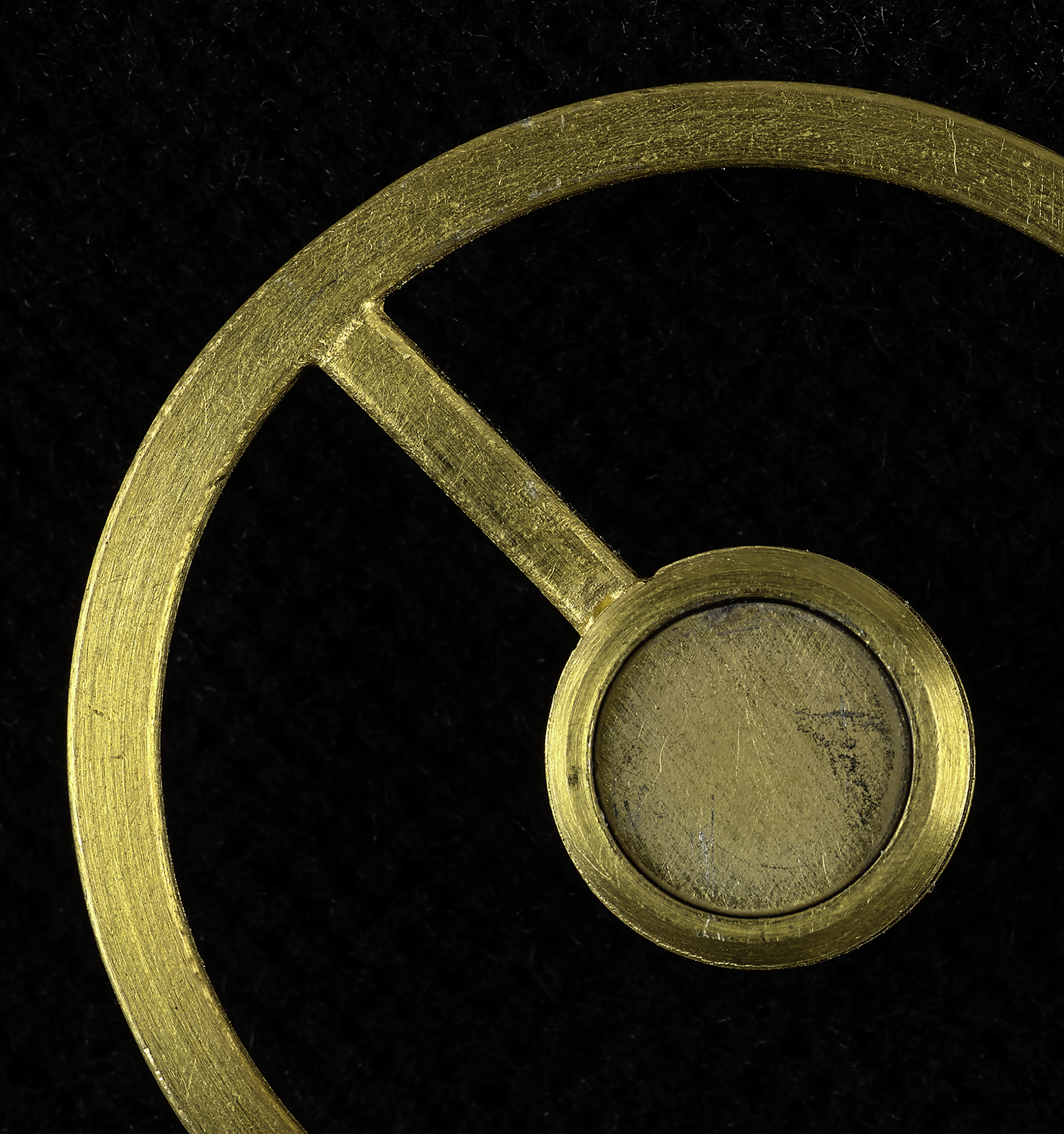
The Art Collection acquired one piece from Dong Ding’s sculptural jewellery collection Boundary of Balance; a series of works which explores the relationship and tension between balance and imbalance. Each of the carefully crafted kinetic pieces can be worn in multiple ways – disassembled and re-assembled by the wearer – with interchangeable and detachable details such as rings, tie pins and earrings integrated into the overall composition.
The movement of each piece is influenced by these counterbalanced components, as well as by the body and actions of the wearer. Sharing a passing resemblance to historical navigational tools, the works come accompanied with bespoke laser cut instructions identifying the multiple permutations for the wearer. Julie-Ann Delaney Art Collections Curator University of Edinburgh.
“A piece may contain hidden details and contrasting elements of weight and material. The work is kinetic with moveable parts that invite play. Movement is influenced by counterbalanced components, interchangeable parts and the wearer’s body movement. Through interaction with the work, the wearer is invited to play with the tension between balance and imbalance.” Dong Ding.
Museum Collections Manager Anna Hawkins outlined the photography and handling of the complex object. Multiple images were required to accurately record the condition of the piece at point of entry into the Museum Collections. This included two views of the whole object back and front and in addition back and front views of each individual part of the object in isolation.
To achieve a detailed representation I employed focus stacking to achieve the consistent detail. This involves taking multiple images at different focal lengths and aligning these images to create one image with overall focus. Below is a selection of some of the images captured. I have included partial details to demonstrate the capabilities of our medium format cameras. The resulting Tiff files are delivered to the Museum Collections team in excess of 100Mb which can be used for condition checking and allowing detailed object examination. These images are also suitable for publication, broadcast and social media.

On trial: The John Murray Publishing Archive
*The Library has subsequently purchased this database and it can be accessed via the Digital Primary Source and Archive Collections guide or the Databases A-Z list.*
I’m pleased to let you know that we currently have extended trial access to Nineteenth Century Literary Society: The John Murray Publishing Archive from Adam Matthew Digital. This collection offers unprecedented digital access to the peerless archive of the historic John Murray publishing company.

You can access Nineteenth Century Literary Society: The John Murray Publishing Archive from the E-resources trials page.
Access is available on and off-campus.
Trial access ends 16th July 2020.
The archive of the John Murray publishing company contains primary source material spanning the entirety of the long nineteenth century and document the golden era of the House of Murray from its inception in 1768. Records digitised in this resource predominantly focus on the tenure of John Murray II and his son, John Murray III, as they rose to prominence in the publishing trade, launching long-running series including the political periodical Quarterly Review, and publishing genre-defining titles such as Darwin’s On the Origin of Species, Austen’s Emma and Livingstone’s Missionary Travels and Researches in South Africa. Read More
Earth Day

Of the many celebrations of Earth Days, Earth Day 2020 will be remembered.
Not only because it is the 50th anniversary of the first Earth Day, but that it occurs during this unprecedented public health crisis; the parades, marches, and demonstrations characteristic of Earth Day have now been moved online, in the form of Earth Day Live. This intersection of Earth Day and COVID-19 is significant, as it comes at a time when we likely have heightened awareness of the power of nature, and its ability to stop humanity in our tracks, and shift our focus to the natural world we live in (which, here in Edinburgh, is springing to life in truly magnificent ways).
Sir Charles Lyell, known as a founder of modern geology, was innately interested in the course of nature, and keenly observed natural phenomena to form and prove theories about the Earth’s age, and continuous processes. Today, our understanding of climate change is built upon the concepts laid down by early geologists
like Lyell. Only with the concept of the Earth’s continuous process of deposition and erosion are we able to understand how our actions have consequences on the Earth and climate. Daryl Green, Head of Museums and Special Collections, writes,
“Lyell made acceptable the theory that the earth was millions of years old and that it was shaped by geological processes still active in the modern era. He made it possible for people to think about the earth as a dynamic and developing planet in the way we do today.”
-Daryl Green, Head of Special Collections, Deputy Head of Centre for Research Collections
In his seminal book, Principles of Geology, Lyell constructed a main, pivotal point: “The present is the key to the past.” This keenly illustrates his outlook on geology, as he observed modern phenomena, data, and formations to interpret the geological history of the Earth. His book was key to implementing evidential methods to geology, but also to illustrating these ideas in a way that the public could understand. Dr. Gillian McCay, Curator of the Cockburn Museum writes,
“He was one of the first to open up the development of science through publishing books aimed at a more general reader, allowing lay people to access ideas, and thus allowed more people to examine the world around them and draw conclusions.”– Dr. Gillian McCay, Curator, Cockburn Museum
Collections
 Hill and Adamson Collection: an insight into Edinburgh’s past
My name is Phoebe Kirkland, I am an MSc East Asian Studies student, and for...
Cataloguing the private papers of Archibald Hunter Campbell: A Journey Through Correspondence
My name is Pauline Vincent, I am a student in my last year of a...
Hill and Adamson Collection: an insight into Edinburgh’s past
My name is Phoebe Kirkland, I am an MSc East Asian Studies student, and for...
Cataloguing the private papers of Archibald Hunter Campbell: A Journey Through Correspondence
My name is Pauline Vincent, I am a student in my last year of a...
Projects
Cataloguing the private papers of Archibald Hunter Campbell: A Journey Through Correspondence
My name is Pauline Vincent, I am a student in my last year of a...
Archival Provenance Research Project: Lishan’s Experience
Presentation My name is Lishan Zou, I am a fourth year History and Politics student....