Home University of Edinburgh Library Essentials
December 15, 2025
“A Beautiful Way to Remember” – Digitising the LHSA’s HIV/AIDS Collections
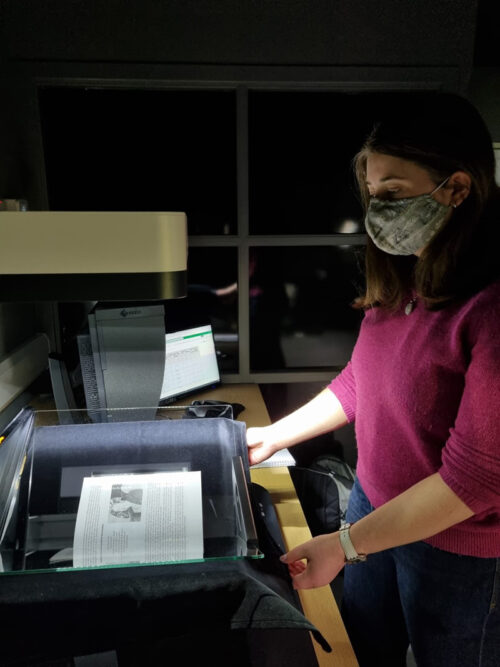
At the beginning of this year, I started in my role as the Cultural Heritage Digitisation Service’s new Digitisation Assistant. As part of the team responsible for providing the main digitisation services for the university’s heritage collections, I have been getting familiar with some the unique and varied collections here at the University of Edinburgh, as well as learning the ins and outs of cultural heritage digitisation. Read More
University of Edinburgh’s new Research Data Management Policy
Following a year-long consultation with research committees and other stakeholders, a new RDM Policy (www.ed.ac.uk/is/research-data-policy) has replaced the landmark 2011 policy, authored by former Digital Curation Centre Director, Chris Rusbridge, which seemed to mark a first for UK universities at the time. The original policy (doi: 10.7488/era/1524) was so novel it was labeled ‘aspirational’ by those who passed it.

CC-BY-SA-2.0, Sustainable Economies Law Centre, flickr
RDM has come a long way since then, as has the University Research Data Service which supports the policy and the research community. Expectation of a data management plan to accompany a research proposal has become much more ordinary, and the importance of data sharing has also become more accepted in that time, with funders’ policies becoming more harmonised (witness UKRI’s 2016 Concordat on Open Research Data).
What has changed?
Although a bit longer (the first policy was ten bullet points and could fit on a single page!), the new policy adds clarity about the University’s expectations of researchers (both staff and students), adds important concepts such as making data FAIR (explanation below) and grounding concepts in other key University commitments and policies such as research integrity, data protection, and information security (with references included at the end). Software code, so important for research reproducibility, is included explicitly.

CC BY 2.0, Big Data Prob, KamiPhuc on flickr
Definitions of research data and research data management are included, as well as specific references to some of the service components that can help – DMPOnline, DataShare, etc. A commitment to review the policy every 5 years, or sooner if needed, is stated, so another ten years doesn’t fly by unnoticed. Important policy references are provided with links. The policy has graduated from aspirational – the word “must” occurs twelve times, and “should” fifteen times. Yet academic freedom and researcher choice remains a basic principle.
Key messages
In terms of responsibilities, there are 3 named entities:
- The Principle Investigator retains accountability, and is responsible as data owner (and data controller when personal data are collected) on behalf of the University. Responsibility may be delegated to a member of a project team.
- Students should adhere to the policy/good practice in collecting their own data. When not working with data on behalf of a PI, individual students are the data owner and data controller of their work.
- The University is responsible for raising awareness of good practice, provision of useful platforms, guidance, and services in support of current and future access.
Data management plans are required:
- Researchers must create a data management plan (DMP) if any research data are to be collected or used.
- Plans should cover data types and volume, capture, storage, integrity, confidentiality, retention and destruction, sharing and deposit.
- Research data management plans must specify how and when research data will be made available for access and reuse.
- Additionally, a Data Protection Impact Assessment is required whenever data pertaining to individuals is used.
- Costs such as extra storage, long-term retention, or data management effort must be addressed in research proposals (so as to be recovered from funders where eligible).
- A University subscription to the DMPOnline tool guides researchers in creating plans, with funder and University templates and guidance; users may request assistance in writing or reviewing a plan from the Research Data Service.
FAIR data sharing is more nuanced than ‘open data’:
- Publicly funded research data should be made openly available as soon as possible with as few restrictions as necessary.
- Principal Investigators and research students should consider how they can best make their data FAIR in their Data Management Plans (findable, accessible, interoperable, reusable).
- Links to relevant publications, people, projects, and other research products such as software or source code should be provided in metadata records, with persistent identifiers when available.
- Discoverability and access by machines is considered as important as access by humans. Standard open licences should be applied to data and code deposits.
Use data repositories to achieve FAIR data:
- Research data must be offered for deposit and retention in a national or international data service or domain repository, or a University repository (see next bullet).
- PIs may deposit their data for open access for all (with or without a time-limited embargo) in Edinburgh DataShare, a University data repository; or DataVault, a restricted access long-term retention solution.
- Research students may deposit a copy of their (anonymised) data in Edinburgh DataShare while retaining ownership.
- Researchers should add a dataset metadata record in Pure to data archived elsewhere, and link it to other research outputs.
- Software code relevant to research findings may be deposited in code repositories such as Gitlab or Github (cloud).
Consider rights in research data:
- Researchers should consider the rights of human subjects, as well as citizen scientists and the public to have access to their data, as well as external collaborators.
- When open access to datasets is not legal or ethical (e.g. sensitive data), information governance and restrictions on access and use must be applied as necessary.
- The University’s Research Office can assist with providing templates for both incoming and outgoing research data and the drafting and negotiation of data sharing agreements.
- Exclusive rights to reuse or publish research data must not be passed to commercial publishers.
Robin Rice
Data Librarian and Head, Research Data Support
Library & University Collections
New Research Data Stewards in post
Very soon we will sadly say goodbye to Gina Geffers, who, along with Sam Hillman, have become our first Research Data Steward veterans. But we are very pleased to welcome two new stewards to the team this winter, Adam Threlfall and Yue Gu!
Adam Threlfall is a third-year PhD student in the Centre for Clinical Brain Sciences, working to improve analysis methods for retinal images, intending to use these

improved methods to find changes in the retinal blood vessels in connection with systemic diseases, using a combination of AI and classical image analysis applied to clinical datasets. Outside of work he enjoys cooking and going for long walks in the countryside with his partner and their greyhound, Indie.
Yue Gu is a final year PhD student in the School of Economics. Her research looks to apply advanced methods of  microeconometrics to evaluate the impact of policies and early family environment on women’s economic outcomes in China using household survey data. Outside of university work she enjoys traveling, watching movies and discovering good food in Edinburgh.
SSSA in 70 Objects: Embracing the Unknown – A musician’s response to Bob Hobkirk’s Unknown Air
Today we are delighted to have a post from Carla Michal Sayer, who used material from The School of Scottish Studies Archives in her work for the Situated Place art exhibition, curated by MScR students in Collections and Curating Practices, in early 2020. Today Carla writes about one of the sound recordings which she used to incredible effect in her composition for this exhibition.

image of an East Lothian Beach, by Carla Sayer
Archive recording: SA1973.032 Unknown Air, played on fiddle by Bob Hobkirk, recorded by Ailie Munro and Hugh MacDonald,
Response: original arrangement and solo performance by Carla Michal Sayer, free streaming and download available on Bandcamp. Created and performed live in February 2020.
A lot of the pieces on Bob Hobkirk’s profile on Tobar an Dualchais are labelled ‘Unknown’. They’re brilliant.
In the two years since I created this response there has been so much unknown that we’ve had to deal with. But is there anything to be said for not knowing? Is it worth living in this Unknown space? What are those spaces like? What would we find there? Would it be worth the not knowing?
Whatever you feel about the unknown, I think there’s something there worth exploring. Music is one way of doing this. Whilst the name is a mystery, the depth of feeling in Bob Hobkirk’s playing is not. That’s what originally drew me into this entry. The object is unknown, but the purity and clarity of feeling about it is certainly not. It travels through the slightly scratchy recording like a beam of light. The unknown story is told with conviction, held steady from beginning to end. It says something about himself. I don’t know what but it’s there. I could deeply relate to this Unknown Air and felt inspired to create a musical response as a solo performance using low whistle and synth alongside the archive recording of his playing.
My response is a dialogue between us. My whistle playing follows his fiddle playing and ornamentation exactly, and the piece is held together by droning synth that speaks to the future and past, with both Church-organ-like quality and fabulous electronic buzz and stereo movement. I play live and Bob Hobkirk ‘plays’ through recording, and we pass each other by in slow motion, both coming in and out of focus. The process reminds me of how things pass between generations, some things clearly heard and other things left forgotten and slightly out of focus.
When I performed this piece live the effect was hymnal and meditative, with a quality that looks back and forward, and is endless – with the extremely slow looped harmonic rhythm, starting where it begins with Bob Hobkirk’s playing. Combining ‘old’ sounds with new music-making possibilities was deeply rewarding in this commission, awarded by a team of MSc Curation students from Edinburgh College of Art working in exhibition design in early 2020. The performance was to launch an exhibition that showcased Edinburgh University visual archive material, in collaboration with Travelling Gallery, The gallery subsequently went on tour around East Lothian. This was the final piece of that 20 minute performance to launch the exhibition. My brief was to create music to reflect on the relationship between archive and place, it’s up to you as a listener if this was fulfilled in the piece! Here is more information on the full exhibition, which hopefully managed to go ahead in February 2020: https://www.eca.ed.ac.uk/event/situated-place-art-collection
Thank you, Bob Hobkirk, for your fiddle playing in March 1973, and thank you to the School of Scottish Studies Archives for helping me find and use his beautiful music in this arrangement in February 2020.
Here’s to what is learnt and what remains unknown.
Equity, Diversity & Inclusion resources in Law
This month the Academic Support Librarian team are highlighting resources linked to Equity, Diversity & Inclusion in the areas of Law and Social and Political Science. You may be aware that Justice Week 2022 is nearly upon us (28th February to 4th March), and we thought this would be an excellent time to shine a light on a number of legal materials which are free to access, and therefore help to make the understanding of law more accessible to a greater number of people. We list several useful resources on the Law subject guide under ‘More Legal Resources’, including:
- Free legal dictionaries
- Links to Scottish, UK and European court websites
- Links to legal regulatory and advisory bodies
- Links to resources that offer free case details e.g. BAILII
- Human Rights – free databases from UN and IJRC
The University subscribes to even more databases which offer staff and students additional access to support their study and research. You can find these by visiting our Law Databases page:
- Jutastat – containing legal content from Africa
- Slavery and the Law – a collection of petitions on race, slavery and free blacks submitted to American state legislatures and county courthouses 1775-1867
- China Law Info– also known as Beida fabao
- Making of Modern Law: Legal Treatises, 1800- 1926 – the world’s most comprehensive full-text collection of British Commonwealth and American legal treatises from the nineteenth and early twentieth centuries
- Proquest Law Sources via the History Vault Platform – including African American Police League Records, 1961-1988, Law and Society since the Civil War
You may also be interested in our short video (9 minutes) which demonstrates how to access international legal resources via library services online.:

Video: Finding International Legal resources via the University Library
As well as databases we have some great books and eBooks including:
- Diversity and Integration in Private International Law. Ruiz Abou-Nigm, Blanca Noodt Taquela (2020). OUP ; Diversity and integration in private international law.
- Equality and Non-Discrimination in the EU: The Foundations of the EU Legal Order. Zaccaroni (2021) Edward Elgar Publishing ; Equality and Non-Discrimination in the EU: The Foundations of the EU Legal Order
- Modern Law and Otherness: The Dynamics of Inclusion and Exclusion in Comparative Legal Thought. Corcodel (2019). Edward Elgar ; Modern Law and Otherness: The Dynamics of Inclusion and Exclusion in Comparative Legal Thought
- Education, Law and Diversity: Schooling for One and All? Harris (2019). Bloomsbury Publishing ; Education, Law and Diversity: Schooling for One and All?
- Racial discrimination in education and EU equality law. Farkas and Gergely (2020) Publications Office ; Racial discrimination in education and EU equality law
- Mutinies for equality : contemporary developments in law and gender in India. Herklotz and de Souza (2021). Cambridge University Press ; Mutinies for equality : contemporary developments in law and gender in India
- Women and equality in Iran : law, society and activism. Alikarami (2019). I.B. Tauris ; Women and equality in Iran : law, society and activism.
We hope this will inspire you to explore the library’s collections further when considering Equity, Diversity and Inclusion themes – so now over to you to take a look!
Qur’an Tool

Qur’an Gateway, a digital tool for the critical study of the Qurʾanic text and its early manuscripts, ceased to operate by last November. The good news is that this useful resource has now a reincarnation in the form of Qur’an Tool, which is an open source thanks to Melbourne School of Theology hosting the service. The landing page of Qur’an Tool (www.quran-tools.com) provides a link to the open source version at the hosting institution directly:
This is a powerful tool for the critical study of the text, construction, and language of the Qur’an. Formulaic analysis is based upon the tools and techniques in An Oral-Formulaic Study of the Qur’an (New York: Lexington, 2017 [2014]) by Dr. Andrew G. Bannister. You can simply look up a verse or browse the list of all Suras, root usage by Sura, word lists, word associations and intertextual connections. There is also a searchable dictionary derived from Project Root List, which has digitised several classical Arabic dictionaries (al-Mufradāt fī gharīb al-Qurʾān, Lisān al-ʿarab, Tāj al-ʿarūs min jawāhir al-qāmūs, and An Arabic-English Lexicon by E.W Lane) and made the data publicly available. (Information above is extracted from the Qur’an Tool site at Melbourne School of Theology)
For first time users, it is necessary to sign up for a personal account to use the service.
On trial: Krokodil Digital Archive
Thanks to a request from a student in HCA the Library has trial access to Krokodil Digital Archive from East View. The complete archive of what was once the leading satirical publication of the Soviet Era.
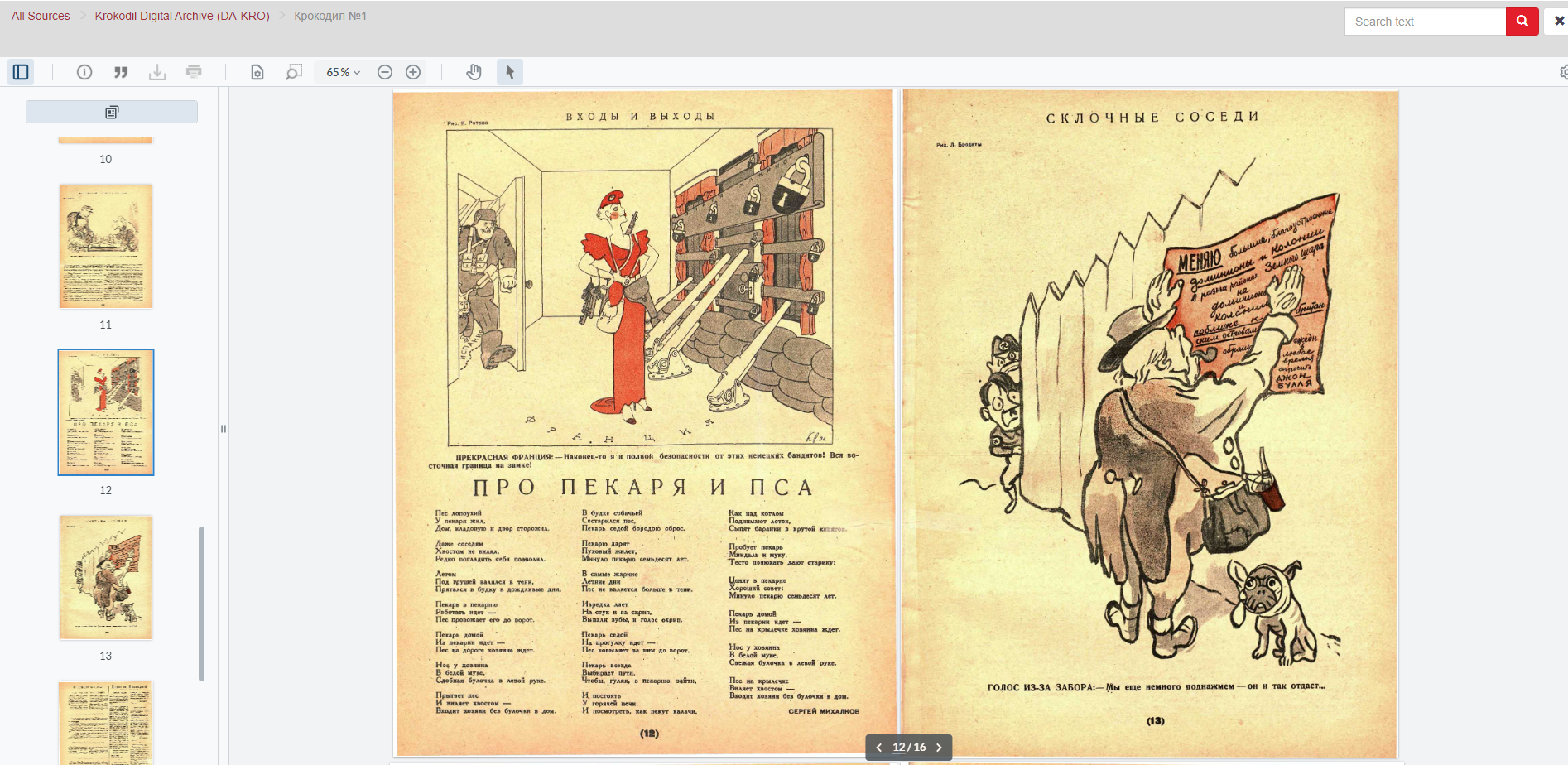
You can access Krokodil Digital Archive via the E-resources trials page.
Access is available on and off-campus.
Trial access ends 4th March 2022. Read More
Training with the ASL team

Image by Samantha Borges, from Unsplash.
A large part of the work that the Academic Support Librarian team complete relates to training and providing Information Skills guidance, whether that’s in our individual schools or sessions which are open to all. If you’re a regular reader of this blog you’ll already know about LibSmart, our online information skills course, but did you also know about some of the other training on offer?
Have you heard about Library Bitesize?
These short introductory sessions deal with a range of topics that we think will provide a good foundation in areas our students need to know about. They’re 30 minutes long and are run by ASLs and the Digital Skills team to help you get more information about skills and resources you might need to support your studying. While they’re aimed at beginner level and are particularly appropriate for Undergraduates, we think these are of use to students at any level of study. Just some of the topics include:
- Building complex searches for systematic reviews
- Choosing a reference manager
- Finding historical documents online
- How to reference and avoid plagiarism
- Introduction to copyright
- Introduction to resources for film studies
- Introduction to China-related information resources
For more information on upcoming sessions and information on how to register, visit the Digital Skills Resource Finder and search for ‘Bitesize’, or view the upcoming sessions directly on the MyEd Event Booking System.
We also record these sessions and upload them to our Media Hopper channel. You can view a playlist of past sessions here.
What if you need more in-depth training?
If you’re looking for advanced training sessions, you may be interested in our collaboration with the Institute for Academic Development. Together we run longer sessions which are usually attended by postgraduate students, though undergraduates are welcome too! These are themed around research and referencing. For example:
- (UG, PGT and PGR) Citing sources and creating bibliographies with Endnote
- (UG, PGT and PGR) Citing sources and creating bibliographies with Mendeley
- (UG, PGT and PGR) Citing sources and creating bibliographies with Zotero
- Finding Academic Literature (CAHSS)
- Finding Academic Literature (CSCE)
- Finding Academic Literature (PGR) – CMVM
- Finding Academic Literature – CMVM (Veterinary Medicine)
- Finding Academic Literature – School of Engineering
We also run ‘Getting the best out of the library’ sessions for PGT and PGR students at the start of term, and are part of the IAD’s mid-semester welcome event for postgraduate students. For more information visit the IAD’s Postgraduate pages.
If training sessions don’t work for you, what about a one-to-one appointment?
All our ASLs offer individual appointments to help students address specific questions about their work or research. A range of appointments are available via the MyEd Event Booking System – search for ‘literature search clinic’ to find available appointments with librarians from each college, or find the subject area specific to your needs.
Alternatively you can contact us directly by locating the ASL which works with your subject area. There’s more information about the one-to-one appointment system here.
We hope that with all these options for training available you will find something useful to support your studies. If we don’t offer a suitable session for your preferred learning style, why not get in touch with us to discuss?
On trial: British Online Archives
*Access has now been extended until 31st March 2022.*
I’m pleased to let you know that British Online Archives (BOA) are providing free trial access to its entire collection of digital primary sources until 28th February 2022.
You can access British Online Archives via the E-resources trials page.
Access is available on and off-campus.
Trial access ends 31st March 2022.
BOA provide students and researchers with access to unique collections of primary source documents. Their website hosts over 3 million records drawn from both private and public archives. These records are organised thematically, covering 1,000 years of world history, from politics and warfare to slavery and medicine. Read More
NEW: UK Dockets on Westlaw

Westlaw are pleased to announce the launch of UK Dockets on Westlaw UK. A docket is a record of litigation events as a case goes through the courts, starting when a claim is filed through to judgment.
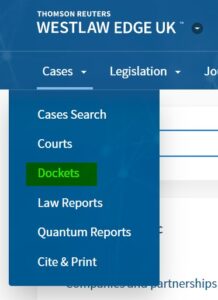
You can access UK Dockets from the Cases menu. This brand-new content set containing over 230,000 litigation events will make it easier for you to receive daily updates of new cases filed in the High Court — all in one place.
With UK Dockets on Westlaw, you can easily:
- create daily alerts on new cases, specific courts or parties, and other events
- track individual cases and be alerted to any changes
- access every step of the case journey from a claim being filed to judgment and through to the appeals process
We hope this will be an easy to use service for our staff and students, but if you’d like to attend any training on using UK Dockets please contact the Law Librarians for more information: law.librarian@ed.ac.uk
Collections
 Hill and Adamson Collection: an insight into Edinburgh’s past
My name is Phoebe Kirkland, I am an MSc East Asian Studies student, and for...
Cataloguing the private papers of Archibald Hunter Campbell: A Journey Through Correspondence
My name is Pauline Vincent, I am a student in my last year of a...
Hill and Adamson Collection: an insight into Edinburgh’s past
My name is Phoebe Kirkland, I am an MSc East Asian Studies student, and for...
Cataloguing the private papers of Archibald Hunter Campbell: A Journey Through Correspondence
My name is Pauline Vincent, I am a student in my last year of a...

Projects
Cataloguing the private papers of Archibald Hunter Campbell: A Journey Through Correspondence
My name is Pauline Vincent, I am a student in my last year of a...
Archival Provenance Research Project: Lishan’s Experience
Presentation My name is Lishan Zou, I am a fourth year History and Politics student....