Home University of Edinburgh Library Essentials
April 11, 2026
Early Bibles at New College Library
New College Library has rich and distinct Bible collections. This Geneva Bible, printed in 1599 with an illustrated frontispiece is just one example. Called a Geneva Bible because it was produced by a group of Protestant scholars who fled to Geneva during the time of Queen Mary I of England (1553 – 1558), it was innovative in being a mass-produced Bible which came with a variety of scriptural study guides and aids.
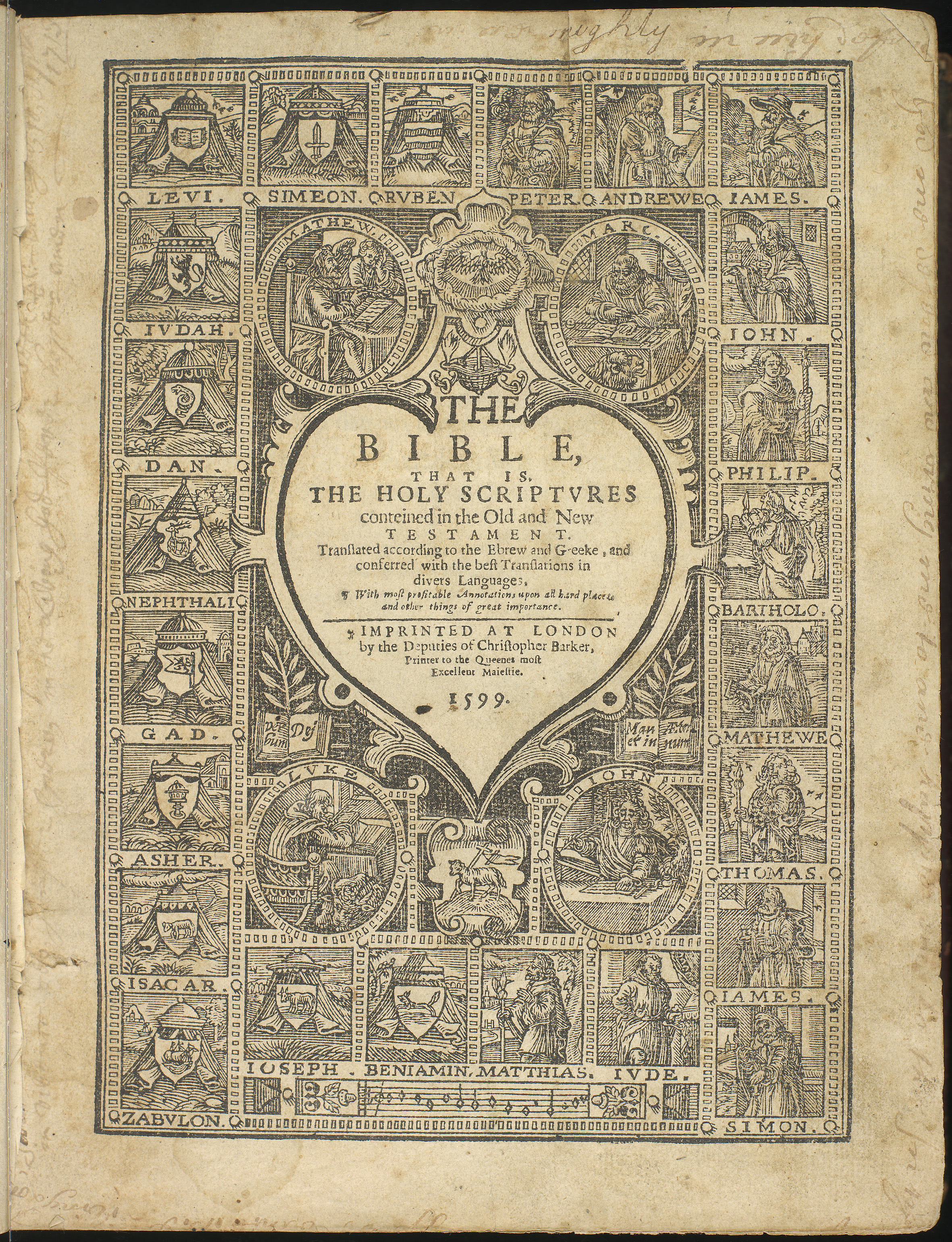
Bible, Book of Common Prayer and Psalter. London, 1599. New College Library B.r.438/1
This 1599 edition also inclues the new “Junius” version of the Book of Revelation, in which the notes were translated from a new Latin commentary by Fransiscus Junius on Revelation. It was the Bible used by John Knox and Oliver Cromwell, making it hugely important to the study of sixteenth and seventeenth century Britain.
University of Edinburgh Edinburgh Divinity students on programmes such as the Masters degree in Theology in History have the opportunity to handle rare books like this as part of their studies.
This Bible is newly catalogued online as part of the Funk Cataloguing Projects at New College Library, which has enabled the cataloguing of 631 early Bibles.
Scotland’s Methodists
I’ve had two enquiries in the last few weeks about Methodists in Scotland, from individuals researching their family history – it seems to be a hot topic!
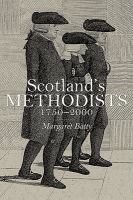
Fortunately New College Library recently received Scotland’s Methodists 1750-2000 by Margaret Batty, as a donation from the author. It’s just been catalogued and is available at BX 8285 Bat. On reference, we also have Oliver A. Beckerlegge’s United Methodist Ministers and their Circuits 1797-1932, and enquirers able to visit the library can browse the shelves of church history books at LC class BX, and in the old UTS sequence, LX, which contain other titles about Methodism.
Much useful information on researching Methodist individuals can be found on the website for the Methodist Archives at John Rylands University, Manchester e.g http://www.library.manchester.ac.uk/searchresources/guidetospecialcollections/methodist/using/indexofministers/
Archives relating to the Methodist Church in Scotland are also held by the National Archives of Scotland http://www.nas.gov.uk.
Treasures of New College Library : the Acta Sanctorum
Down in the depths of New College Library’s Stack III, one of the first rows of shelves that faces you when you enter contains the Acta Sanctorum. This huge Latin work in sixty-eight volumes examines the lives of saints, organised according to each saint’s feast day in the calendar year. Fifty-three of the volumes were published between 1643 and 1794 by the Bollandist Fathers in Antwerp. Hugh Watt, in his New College Library : A Centenary History (Edinburgh: Oliver and Boyd, 1946), relates a story that Cardinal Hume had intended to purchase this set of the Acta Sanctorum for himself as a birthday present, but arrived at the bookseller’s only to find that Dr William Cunningham, second Principal of New College, had beaten him to it and purchased the volumes for New College Library.

University of Edinburgh users have trial access to the online Acta Sanctorum Database until 24 May 2012. The Acta Sanctorum Database contains the entire Acta Sanctorum, including all prefatory material, original texts, critical apparatus and indices. Bibliotheca Hagiographica Latina reference numbers, essential references for scholars, are also included.
The General Assembly and New College Library
New College is preparing for the General Assembly of the Church of Scotland 2012, which will take place between 19 and 26 May 2012.

This year’s debates include reports on sectarianism, domestic abuse and Gaza. Researchers wanting to trace the history of these debates, and other challenging topics such as the principles of a just war, and same-sex relationships, can consult the Reports to the General Assembly which are held in New College Library at sLX 50 B. Minutes of recent meetings are available from the Church of Scotland website. The historical records of the Church of Scotland’s General Assembly are held at the National Archives of Scotland , including shorthand notes of General Assembly meetings. We expect to welcome many delegates from the Assembly as visitors to the Library, where they are welcome to use our collections of print books and journals.
New College itself will be very busy during this period, with all of the teaching rooms occupied by the Assembly. This includes the David Welsh Reading Room in New College Library which is being used for Assembly purposes. Library users are advised to carry their UoE staff/student card with them at all times as there may be a security presence at the entrance to New College.
‘It’s life Jimmy, but not as we know it’ – Science Fiction in Scotland

Visited the new Treasures exhibition at the NLS today, featuring Science Fiction from Scotland. I think the Curator’s had a lot of fun putting this selection together. On the one hand, examples of the earliest ‘science-fiction’ with Conan Doyle’s the Lost World and Robert Louis Stevenson’s Jekyll and Hyde, on the other the contribution of Scottish authors to modern sci fi phenomenons – I particularly liked the Doctor Who Annual along with mini-statue of a Weeping Angel. A bright spot to retreat to on a cold rainy day. Treasures at the National Library of Scotland.
Following in the footsteps of the New College Librarian
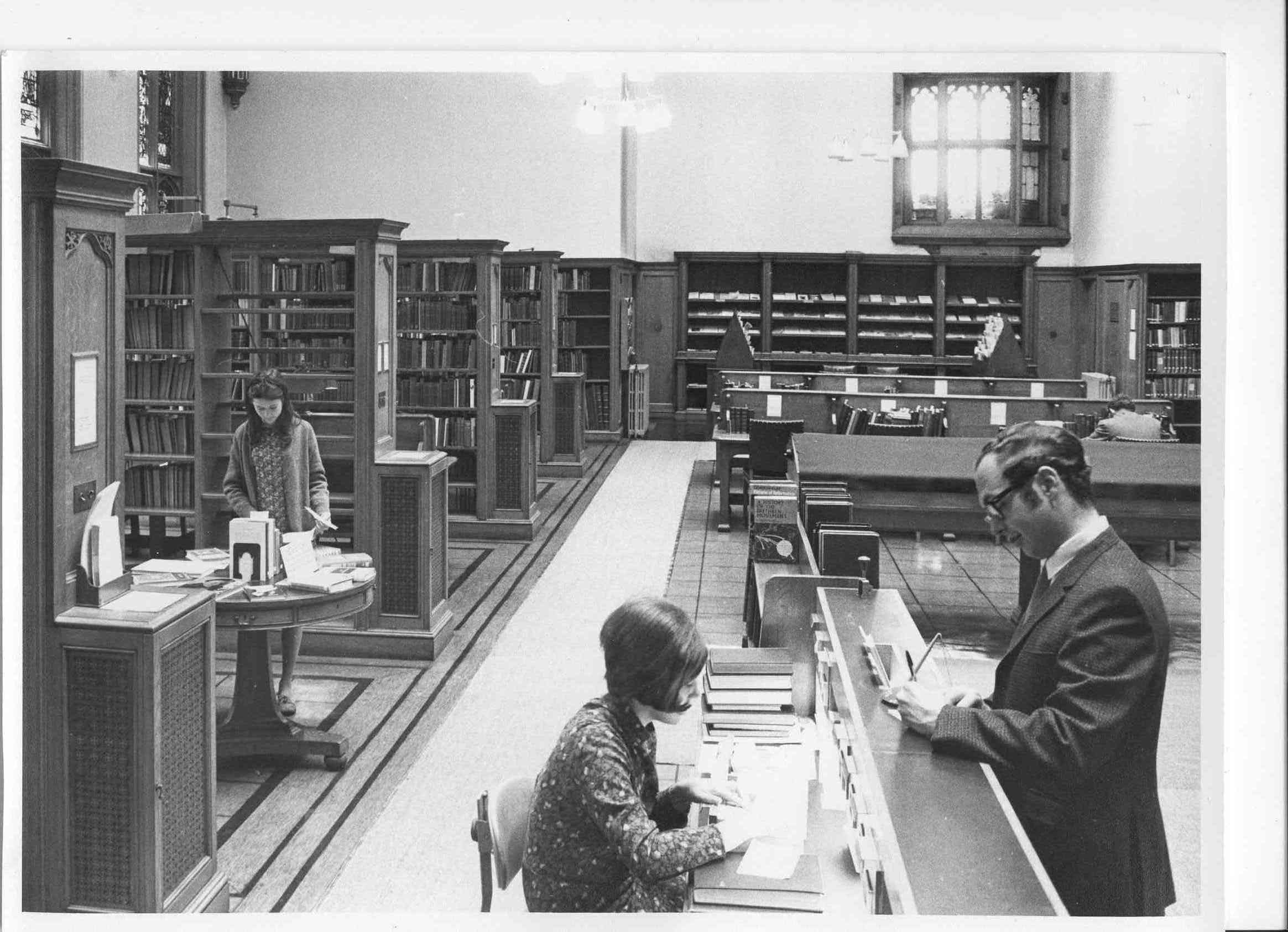 Spent some time this morning sculling through the New College archives looking for correspondence about some of the New College Special Collections, the Dumfries Presbytery Library and the Longforgan Free Church Ministers’ Library. There’s a fascination to leafing through the thin typewritten sheets that measured out the business of New College Library over the decades. One envelope contains the daily diary notes of the New College Librarian for the autumn term (no semesters then) of 1965 – jottings and tick lists of meetings about the finances, measuring up the space needed for new periodicals, noting library staff who’ve gone home feeling ill. Other letters are handwritten enquiries to the Librarian, and his replies – “Dear Miss Grant, I have very little to tell you about the revival of the use of the saints names as dedications of Church of Scotland Parish Kirks …” this said, the letter went on to give a full page of information. My life as a librarian is measured out in e-mails, with paper letters like these occasionally lurking at the fringes.
What has changed ?
(1) HEFCE has introduced the requirement that outputs submitted to the next REF be made available in an open-access form.
(2) To be eligible, authors’ final peer reviewed manuscripts must have been deposited in an institutional repository or subject repository. Deposited material should be discoverable, and free to read and download, for anyone with an internet connection.
(3) The output must have been deposited as soon after acceptance as possible but no later than three (3) months after this date (as given in the acceptance letter or e-mail from the publication to the author).
(4) Where a publication specifies an embargo period, authors can comply with the policy by making a ‘closed’ deposit on acceptance.
(5) The policy applies to research outputs accepted for publication after 1 April 2016, but HEFCE would strongly urge institutions to implement it now.
(6) The requirement applies only to journal articles and conference proceedings with only an International Standard Serial Number (ISSN).
(7) Non-compliant outputs will not be assessed in the REF.
What do I have to do ?
(1) Create a new record in PURE including the following metadata :
- title of the research output
- name of the author(s)
- year of publication
- title of the journal where it will be published
- attach the final peer reviewed manuscript
- provisional DOI (if available)

(2) The metadata mentioned above is important because
- otherwise the PURE record cannot be saved
- starting from these minimal details, the Library staff will search and add any missing metadata (such as abstract, page numbers, volume number, issue number etc.).
How do I do it ?
Just had a new paper accepted for publication? Submit the manuscript in PURE If you have any further questions please contact Scholarly Communication team.
Collections
 Hill and Adamson Collection: an insight into Edinburgh’s past
My name is Phoebe Kirkland, I am an MSc East Asian Studies student, and for...
Cataloguing the private papers of Archibald Hunter Campbell: A Journey Through Correspondence
My name is Pauline Vincent, I am a student in my last year of a...
Hill and Adamson Collection: an insight into Edinburgh’s past
My name is Phoebe Kirkland, I am an MSc East Asian Studies student, and for...
Cataloguing the private papers of Archibald Hunter Campbell: A Journey Through Correspondence
My name is Pauline Vincent, I am a student in my last year of a...
Projects
Cataloguing the private papers of Archibald Hunter Campbell: A Journey Through Correspondence
My name is Pauline Vincent, I am a student in my last year of a...
Archival Provenance Research Project: Lishan’s Experience
Presentation My name is Lishan Zou, I am a fourth year History and Politics student....