Home University of Edinburgh Library Essentials
April 8, 2026

TPDL Conference, Valletta, September 22-26, 2013
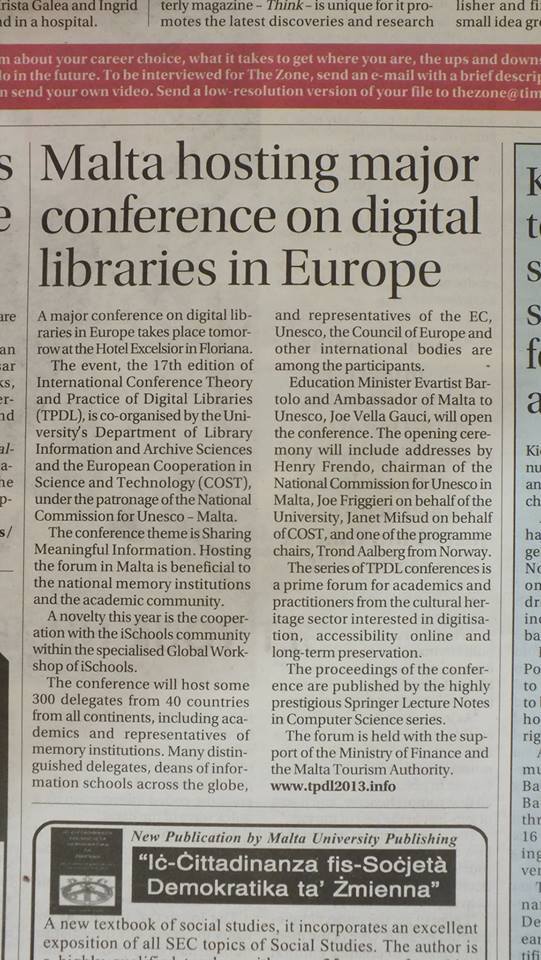

The Theory and Practice of Digital Libraries conference (TPDL) was held in Valletta, Malta on 22-26 September, and Digital Development Team manager Claire Knowles got an extra week of summertime by attending. She writes:
It was my first time attending this conference which attracts lots of attendees from academia as well as fellow library colleagues. On the first day I attended two tutorials, one on Linked Data http://www.tpdl2013.info/tut-lddl.php and the second on ResourceSync http://www.openarchives.org/rs/0.9.1/resourcesync slides http://www.slideshare.net/OpenArchivesInitiative/resourcesync-tutorial.
The following day the conference proceedings started, Christine Borgman (@SciTechProf) from UCLA, gave the opening keynote on “Digital Scholarship and Digital Libraries: Past, Present, and Future“, which was based on her current book (yet to be published) with 4 themes:
- Open scholarship is becoming the norm
- Formal and informal communication is merging
- There are a variety of data practices
- Open access to data is a paradigm shift
The closing keynote was titled: What can linked data do for Digital Libraries? by Soren Auer (http://aksw.org/About.html) who has just joined the University of Bonn. He discussed how to digitise the concept of the library and he demonstrated a number of projects he has worked on to enable this:
- OntoWiki a semantic data wiki
- Cortex, used by https://www.deutsche-digitale-bibliothek.de/ as a search tool
- Slidewiki to enable online collaborative presentations http://slidewiki.org/
- Semantic publications, which are at the prototype stage, to allow annotations to be added to publications to enhance their searchability.
There were a few re-occurring topics during the conference:
- Linked Data and how researchers are using linked data to model the complex relationships within their research.
- Europeana and its use for those working within cultural heritage. There was a lot of discussion around Europeana and how the API allows the data to be used locally.
- How academic research is becoming more open, with information being shared earlier than at the traditional publication stage.
- Web Archiving and how to create an accurate archive of a website.
- How to make use of the PDF through extraction of information and annotation.
Next year’s conference will combine the European TPDL and North American JCDL Conferences and be held in London.
Gems from the ECA Rare Books Collection
The CRC Assistant Rare Books Librarian has been busy cataloguing books from the Edinburgh College of Art Collection again, and has sent a few our way to photograph for upcoming talks and publications.
An amazingly diverse collection from 15th C. Sermons to etchings of Italian landscapes to 19th C. Japanese artistic review magazines and on to detailed plates of British Ferns, each book contains its own wonders.
Susan Pettigrew
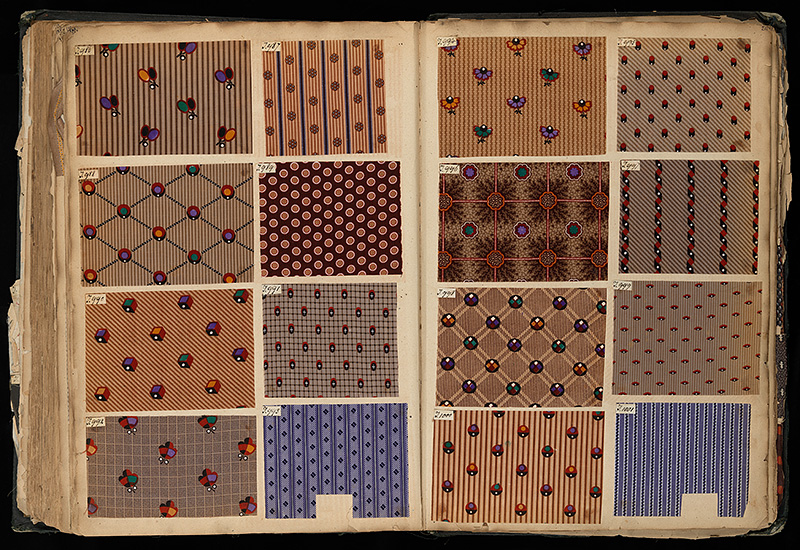
RECA.MS.26 Calico Samples Album, pp.200v-201r

RECA.F.157 Le Japon Artistique, vol.3, no.17, pl.ABD
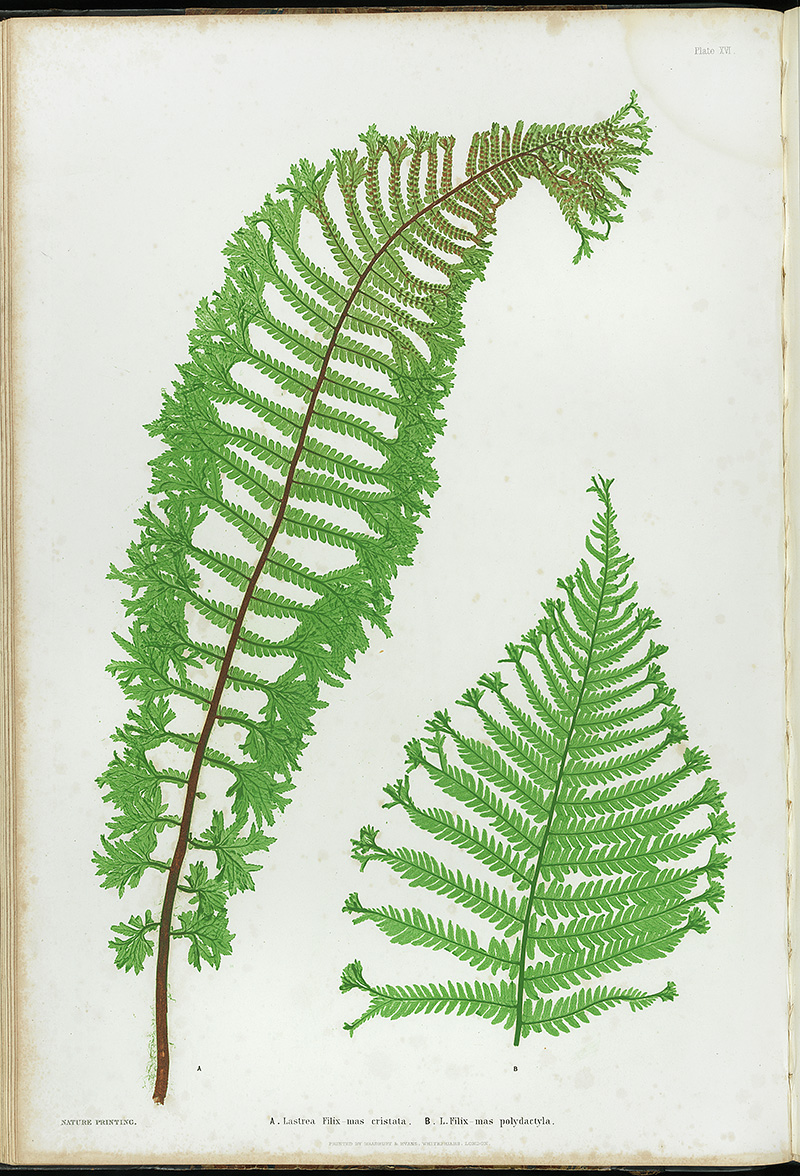
RECA.FF.210 British Ferns, Moore, Thomas, pl.XVI
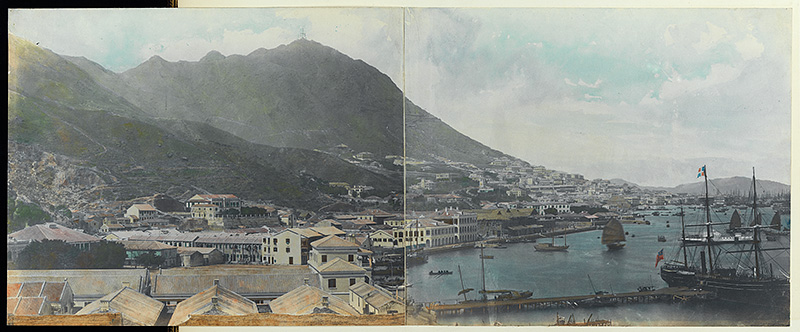
RECA.MS.8 China, Hong Kong, Shanghai, Macao: Photographs Taken on Lord Elgin’s Diplomatic Mission and Military Campaign in China 1857 – 1861, p.52
A Picture Paints a Thousand Words
Drawing out the detail through visual interpretation

As you may already know, the University of Edinburgh, through Library and University Collections, is one of the partners in the Europeana Cloud Project. Now in its eighth month, the project is tasked with establishing a cloud-based infrastructure for Europeana and its aggregators, and with facilitating access to content and tools for researchers. This is an enormous task, which requires consultation with a wide range of stakeholders.
The latest round of consultation happened in here Edinburgh, earlier this month, where two one day workshops were held to explore the legal and economic issues facing the project. For the latter, the value of the Cloud was discussed from the perspective of each of the stakeholders: content providers, research infrastructures, aggregators and researchers. One of the most interesting aspects of the workshop was the use of an independent visual interpreter, brought in by the Europeana team from an Amsterdam based company called Jam. As the discussion progressed, his role was to capture and visualise the ideas and then to draw out the values of the Cloud for each of the stakeholders.
Translating the discussion in to something visual led to the identification of problems as well as misunderstandings. That one person with a pen and paper was able to encapsulate what twenty five people had talked through over the course of a few hours was astonishing, especially as he had little prior knowledge of the complex issues around the project. We were, at least in a literal sense, on the same page.
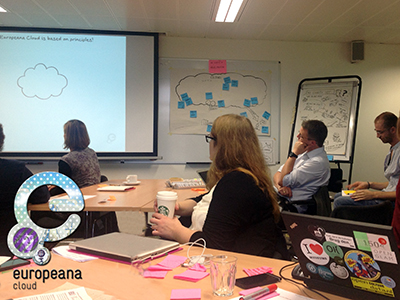
The visualisation renewed and clarified discussions and helped us to agree further actions to be taken. There are few things more amorphous than a cloud and the concept of a Cloud based infrastructure is a difficult one to thrash through.
Using a simple tool such as illustration can make a huge difference in terms of achieving clarity and focusing discussions. It’s a tool I would highly recommend to anyone struggling to reach consensus around high level concepts.
Norman Rodger, Programmes, Projects and Innovations Manager
Adapted from an original blog by Susan Reilly, EU Projects Officer at LIBER
The Library Quality Survey 2013
During October and November (21October- 18 November) the Library will take part in the LibQUAL+ survey. Complete the survey and you could win an iPad mini.


On 21st October undergraduates, postgraduates and staff who have been randomly selected to participate will receive an email which contains a link to the survey.
If you’re selected, please take 15 minutes to complete the survey and tell us what you think of the library service we provide. You could also win one of two iPad minis!
Responses are confidential and no identifying links between responses and individuals are retained.
We’re really keen for you to take part so a reminder email will be sent on 8th November. All responses should be submitted by 18th November when the survey closes.
About LibQUAL+

Edinburgh University Library runs this major survey every two years and has done so since 2003. LibQUAL+ is used by a large number of universities internationally to measure their users’ perception of service quality and identifies gaps between desired, perceived, and minimum expectations of service. All results go directly to the LibQUAL+ team in the United States who analysis and compile reports for each participating library.
The survey gives the Library the opportunity to compare user perceptions of service delivery against expectations, and identify where we need to improve our service delivery. We can also compare our service quality with that of peer institutions. The survey results and subsequent reports are published on the University website.
The 2011 LibQUAL+ survey results and reports are available here: http://edin.ac/16D1JCb
We don’t anticipate any problems accessing or completing the survey. However, if any should arise or you have any questions, please contact Angela Laurins (LibQUAL+ Co-ordinator): Library-QualitySurvey@ed.ac.uk
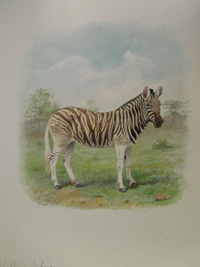
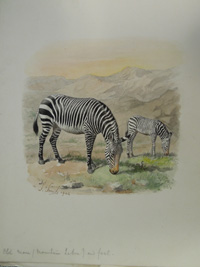
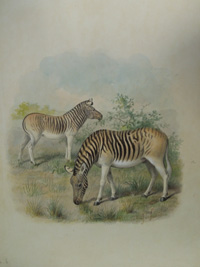
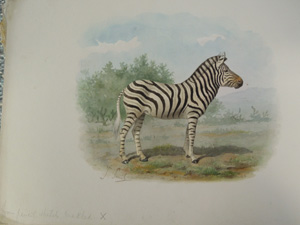
Ethiopian Horses in the thesis collection
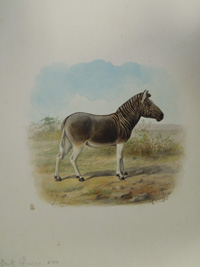
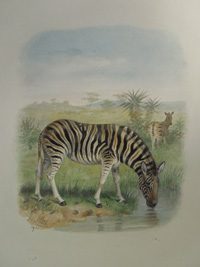
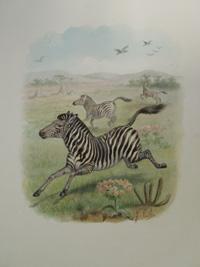
These stunning watercolours of zebras in north-eastern Africa are a surprising find in the Library’s collections of early theses, held in Special Collections. They come from a thesis written by J. P. Prazak, A study on the wild horses of the Ethiopian region (1896-1897). The original thesis is in 6 parts including 55 colour plates, and has reference MSS 2616-2621. It can be consulted through the Centre for Research Collections. Theses from this date often contain original photographs, drawings and sometimes even glass slides. Many theses are now being catalogued and digitised at the Library Annexe.








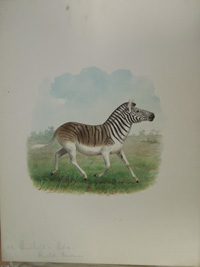
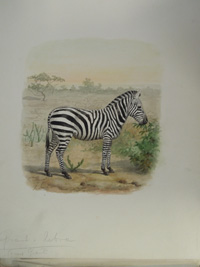



 .
.
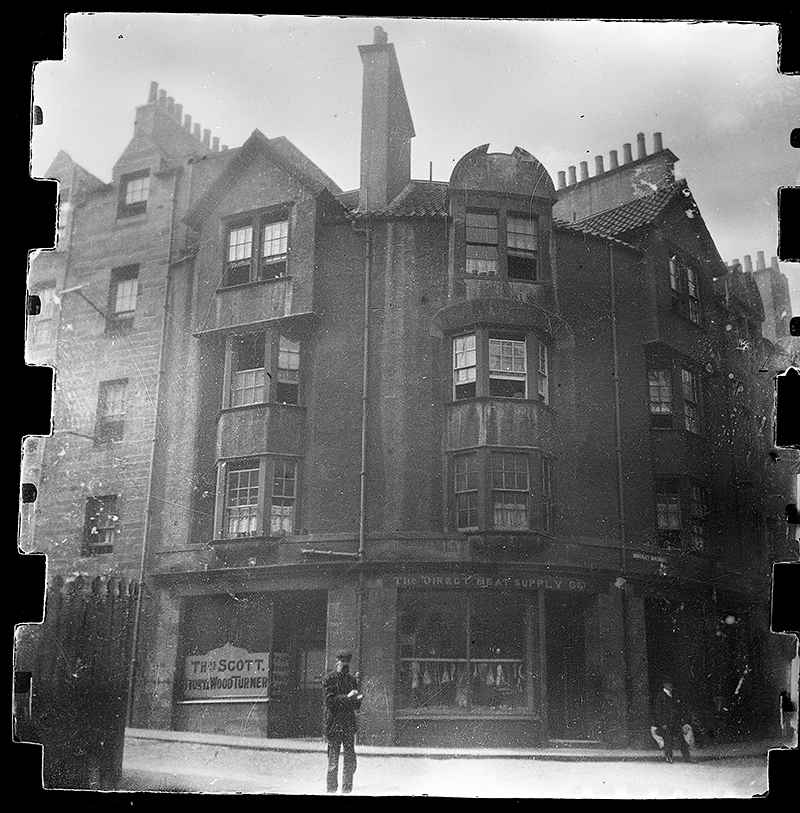
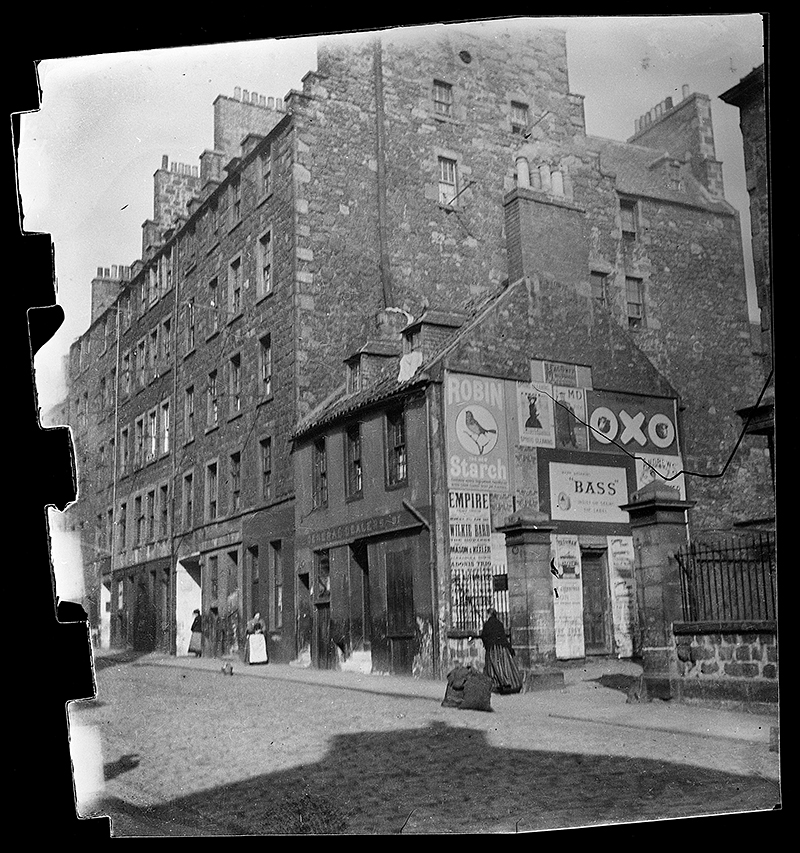
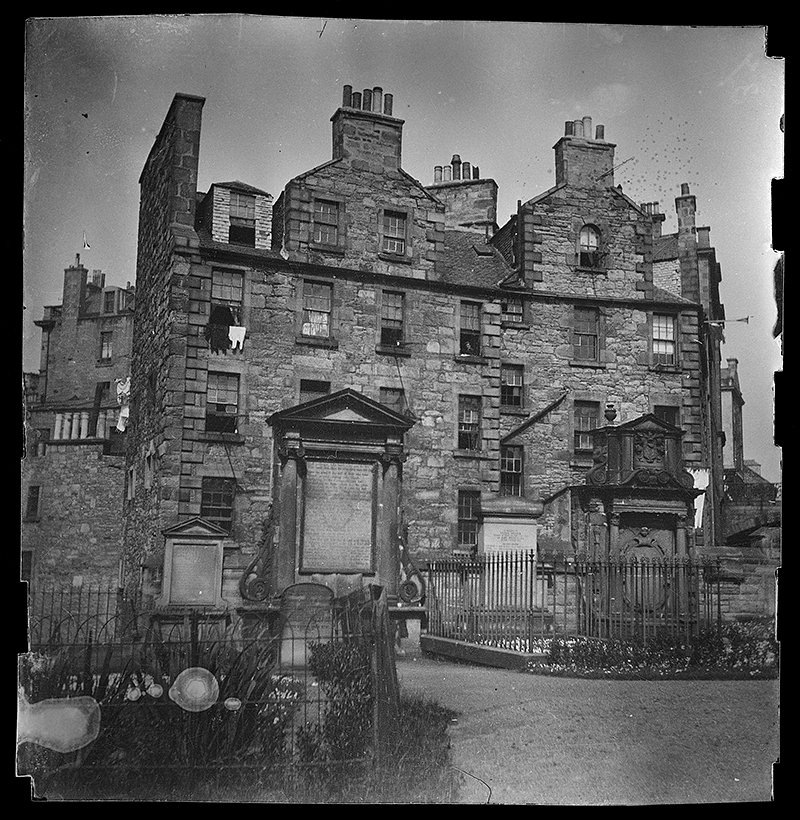
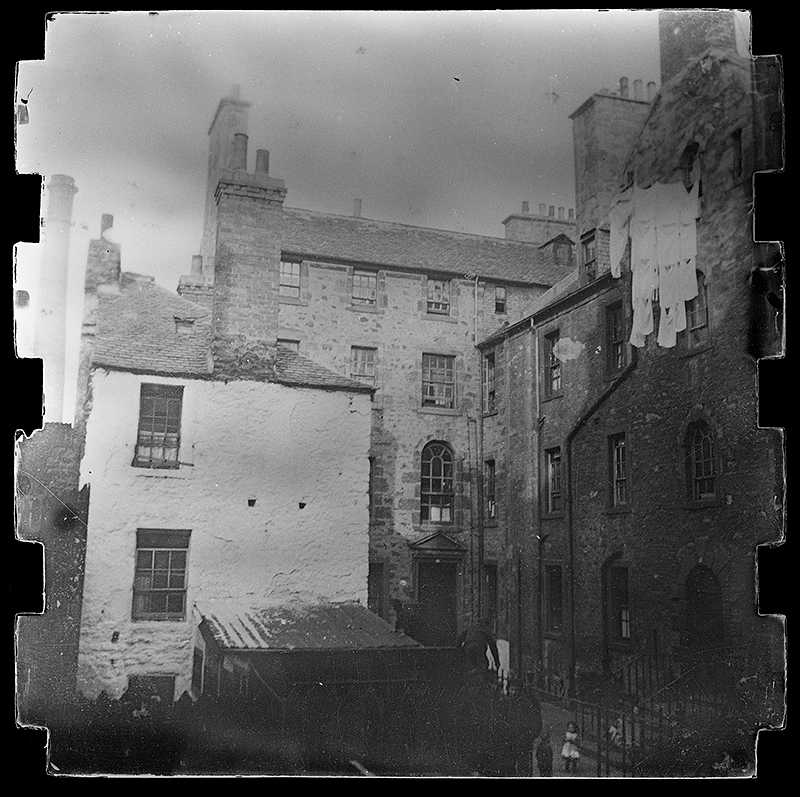
Final selection of images of “Old Edinburgh” by Baldwin Brown.
This is the Digital Imaging Units final instalment of images from the Centre for Research Collections Baldwin Brown images of “Old Edinburgh”. Many thanks to those who have responded with information regarding geographical locations and general information. The feed back has been very welcome and useful! This set has a few obvious locations but yet more mystery. We will add the data collected to our metadata records for the images enriching that data for continued research.
Malcolm Brown
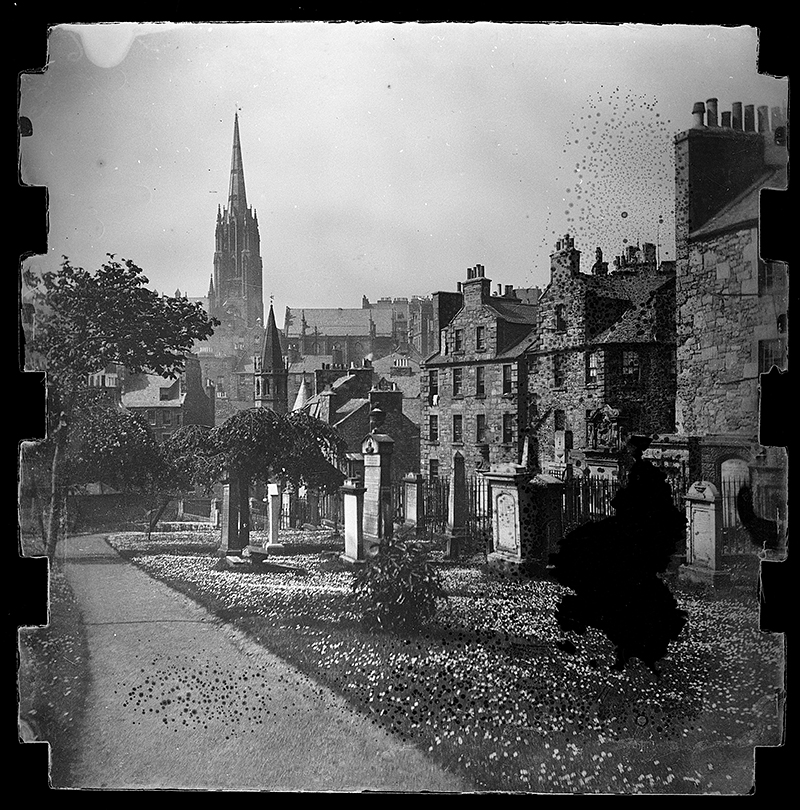
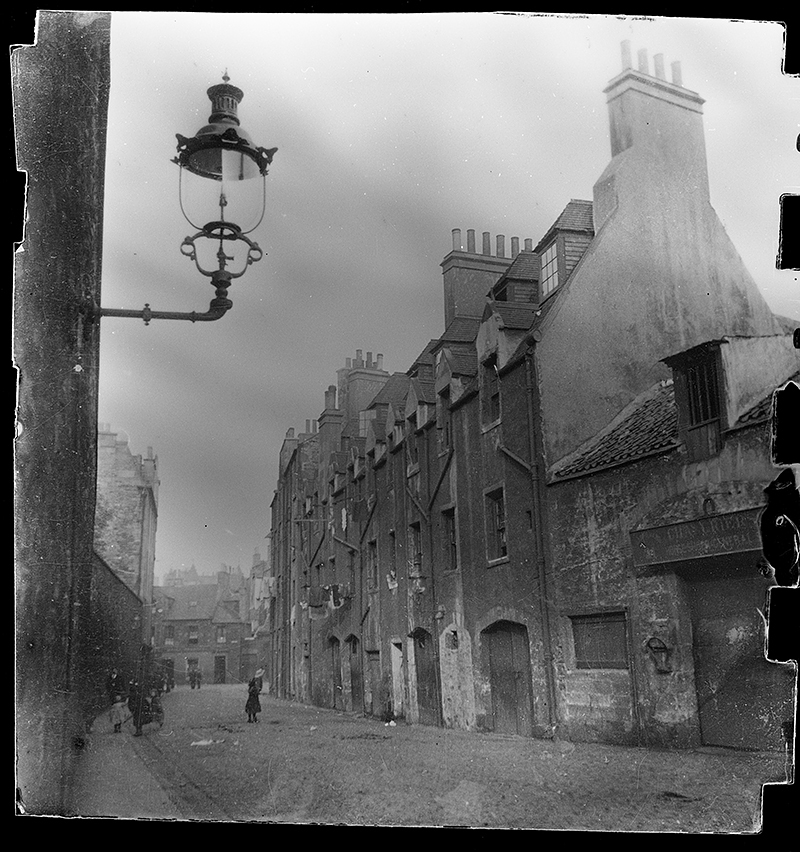
Issues for research software preservation
[Reposted from https://libraryblogs.is.ed.ac.uk/blog/2013/09/18/research-software-preservation/]
Twelve years ago I was working as a research assistant on an EPSRC funded project. My primary role was to write software that allowed vehicle wiring to be analysed, and faults identified early in the design process, typically during the drafting stage within Computer Aided Design (CAD) tools. As with all product design, the earlier that potential faults can be identified, the cheaper it is to eliminate them.
Life moves on, and in the intervening years I’ve moved between six jobs, and have worked in three different universities. Part of my role now includes overseeing areas of the University’s Research Data Management service. In this work, one area that gets raised from time to time is the issue of preserving software. Preserving data is talked about more often, but the software that created it can be important too, particularly if the data ever needs to be recreated, or requires the software in order to interrogate or visualise the data. The rest of this blog post takes a look at some of the important areas that should be thought about when writing software for research purposes.
In their paper ‘A Framework for Software Preservation’ (doi:10.2218/ijdc.v5i1.145) Matthews et al describe four aspects of software preservation:
1. Storage: is the software stored somewhere?
2. Retrieval: can the software be retrieved from wherever it is stored?
3. Reconstruction: can the software be reconstructed (executed)?
4. Replay: when executed, does the software produce the same results as it did originally?
Storage:
Storage of source code is perhaps one of the easier aspects to tackle, however there are a multitude of issues and options. The first step, and this is just good software development, is documentation about the software. In some ways this is no different to lab notebooks or experiment records that help explain what was created, why it was created, and how it was created. This includes everything from basic practices such as comments in the code and using meaningful variable names, through to design documentation and user manuals. The second step, which again is just good software development practice, is to store code in a source code management system such as git, mercurial, SVN, CVS, or going back a few years, RCS or SCCS. A third step will be to store the code on a supported and maintained platform, perhaps a departmental or institutional file store.
However it may be more than the code and documentation that should be stored. Depending on the language used, it may be prudent to store more than just the source code. If the code is written in a well-known language such as Java, C, or Perl, then the chances are that you’ll be OK. However there can be complexities related to code libraries. Take the example of a bit of software written in Java and using the Maven build system. Maven helps by allowing dependencies to be downloaded at build time, rather than storing it locally. This gives benefits such as ensuring new versions are used, but what if the particular maven repository is no longer available in five years time? I may be in the situation where I can’t rebuild my code as I don’t have access to the dependencies.
Retrieval:
If good and appropriate storage is used, then retrieval should also be straightforward. However, if nothing else, time and change can be an enemy. Firstly, is there sufficient information easily available to describe to someone else, or to act as a reminder to yourself, what to access and where it is? Very often filestore permissions are used to limit who can access the storage. If access is granted (if it wasn’t held already) then it is important to know where to look. Using extra systems such as source code control systems can be a blessing and a curse. You may end up having to ask a friendly sysadmin to install a SCCS client to access your old code repository!
Reconstruction:
You’ve stored your code, you’ve retrieved it, but can it be reconstructed? Again this will often come down to how well you stored the software and its dependencies in the first place. In some instances, perhaps where specialist programming languages or environments had to be used, these may have been stored too. However can a programming tool written for Windows 95 still be used today? Maybe – it might be possible to build such a machine if you can’t find one, or to download a virtual machine running Windows 95. This raises another consideration of what to store – you may wish to store virtual machine images of either the development environment, or the execution environment, to make it easier to fire-up and run the code at a later date. However there are no doubt issues here with choosing a virtual format that will still be accessible in twenty years time, and in line with normal preservation practice, storing a virtual machine in no way removes the need to store raw textual source code that can be easily read by any text editor in the future.
Replay:
Assuming you now have your original code in an executable format, you can now look forward to being able to replay it, and get data in and out of it. That it, of course, as long as you have also preserved the data!
To recap, here are a few things to think about:
– Like with many areas of Research Data Management, planning is essential. Subsequent retrieval, reconstruction, and replay is only possible if the right information is stored in the right way originally, so you need a plan reminding you what to store.
– Consider carefully what to store, and what else might be needed to recompile or execute the code in the future.
– Think about where to store the code, and where it will most likely be accessible in the future.
– Remember to store dependencies which might be quite normal today, but that might not be so easily found in the future.
– Popular programming languages may be easier to execute in the future than niche languages.
– Even if you are storing complete environments as virtual machines, remember that these may be impenetrable in the future, whereas plain text source code will always be accessible.
So, back to the project I was working on twelve years ago. How did I do?
– Storage: The code was stored on departmental filestore. Shamefully I have to admit that no source code control system was used, the three programmers on the project just merged their code periodically.
– Retrieval: I don’t know! It was stored on departmental filestore, so after I moved from that department to another, it became inaccessible to me. However, I presume the filestore has been maintained by the department, but was my area kept after I left, or deleted automatically?
– Reconstruction: The software was written in Java and Perl, so should be relatively easy to rebuild.
– Replay: I can’t remember how much documentation we wrote to explain how to run the code, and how to read / write data, or what format the data files had to be in. Twelve years on, I’m not sure I could remember!
Final grading: Room for improvement!
Stuart Lewis, Head of Research and Learning Services, Library & University Collections.
The Royal Medical Society publishes new issue

Res Medica, the Journal of the Royal Medical Society, founded in 1957 has published its first new issue online using the Library’s Journal Hosting Service.
The first new issue features original research (Medical Student Dress code), Clinical review articles, Case reports and Historical articles (Dissection: A Fate worse than Death? Deadly Décor: A Short History of Arsenic Poisoning in the Nineteenth Century).
The Library has also digitised all the back issues of Res Medica. Volumes 1-5 (1957-67) are available in the archives section. The remaining back issues will be made available over the next few months.
All articles, current and historic, have been allocated a DOI (Digital Object Identifier) the first time the Library has made use of its very own DOI prefix.
The new issue and the archives are available via the journal’s site: http://journals.ed.ac.uk/resmedica
If you would like to find out more about using the journal hosting service to publish a new OA peer -reviewed journal or migrate a journal from print to online, please get in touch angela.laurins@ed.ac.uk
Open Access milestone: 10,000th deposit

We are delighted to announce that this month we have deposited the 10,000th open access article in our Current Research Information System (PURE). All this content is made publicly available through the University’s research portal, the Edinburgh Research Explorer. This significant milestone was made possible by the University’s Open Access Implementation project which was funded by a grant from the Department for Business, Innovation and Skills. Each College has been allocated significant resources to recruit extra staff to assist with the sourcing of papers, and to undertake their subsequent upload and description in PURE. These staff have been working with authors, RCUK funded or not, to identify suitable published papers and to make them available online.
This month we have also seen the 7000th item archived in the Edinburgh Research Archive. The PhD thesis by Andres Guadamuz from the School of Law, titled “Networks, complexity and internet regulation scale-free law“, joins one of the largest institutional collections of electronic theses and dissertations in the UK. Together with the content held in PURE, the University of Edinburgh is proud to host one of the largest collections of Open Access materials in the UK with nearly 17,000 full text items freely available to download from our digital repositories.
Peter Higgs and Hunting the Boson

Peter Higgs paper, 1964
Peter Higgs – one of the University’s most famous living physicists – is the subject of a new exhibition at the National Museum of Scotland. We have loaned one of his earliest papers to this exhibition, which opens today: http://www.nms.ac.uk/our_museums/national_museum/exhibitions/hunting_the_higgs_boson.aspx
Collections
 Hill and Adamson Collection: an insight into Edinburgh’s past
My name is Phoebe Kirkland, I am an MSc East Asian Studies student, and for...
Cataloguing the private papers of Archibald Hunter Campbell: A Journey Through Correspondence
My name is Pauline Vincent, I am a student in my last year of a...
Hill and Adamson Collection: an insight into Edinburgh’s past
My name is Phoebe Kirkland, I am an MSc East Asian Studies student, and for...
Cataloguing the private papers of Archibald Hunter Campbell: A Journey Through Correspondence
My name is Pauline Vincent, I am a student in my last year of a...

Projects
Cataloguing the private papers of Archibald Hunter Campbell: A Journey Through Correspondence
My name is Pauline Vincent, I am a student in my last year of a...
Archival Provenance Research Project: Lishan’s Experience
Presentation My name is Lishan Zou, I am a fourth year History and Politics student....