Home University of Edinburgh Library Essentials
April 6, 2026
Remembering Arthur Dukinfield Darbishire (1879-1915)
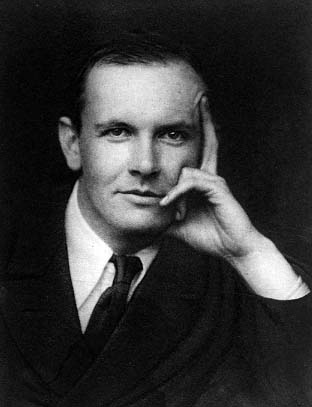 As today is Remembrance Day, it seems a fitting time to commemorate an early geneticist whose achievements were cut short by war. Arthur Dukinfield Darbishire (1879-1915) was appointed to the Lectureship in Genetics at the University of Edinburgh (the first of its kind in Britain). Had he lived, it is likely that Darbishire would have been offered the post of director of the newly formed Animal Breeding Research Station (later known as the Institute of Animal Genetics) in Edinburgh; the position that in 1921 was filled by F.A.E Crew.
Darbishire was educated at Balliol College, Oxford, where he studied zoology. He soon became absorbed in problems of heredity and in the first few years of the twentieth century he began a series of breeding experiments with mice (known informally as the ‘waltzing mice’ experiments). At this point, his interests lay in the biometric rather than a Mendelian approach to heredity (ie that heredity relies on continuous rather than discontinuous variation), but when he became Demonstrator in Zoology at the University of Manchester in 1902, he began to reassess the Mendelian approach. He continued his experiments with mice in the light of his earlier biometric position, and concluded that the supposed contradiction between the two theories was due more to differences of opinion rather than inherent theoretical incompatibilities. He therefore cut himself adrift from both schools of thought, maintaining an independent and critical distance.
After a spell as Senior Demonstrator and Lecturer in Zoology at the Royal College of Science, in 1911 Darbishire accepted the newly created post of Lecturer in Genetics at Edinburgh, where he had the run of the University’s Experimental Farm at Fairslacks for breeding experiments. By 1914, Darbishire was delivering lectures at the University of Missouri, Columbia and was so successful that he was offered professorships from two American universities. However, Darbishire could not leave England after the outbreak of war. Upon returning, he was pronounced unfit for the Army (due to ‘physical delicacy’) but in July 1915 he tried a second time at a recruiting office, where he was accepted and enrolled as a private in the 14th Argyll and Sutherland Highlanders. His sister Helen wrote that ‘[h]e devoted himself to his duties as a soldier with the same zest and the same meticulous attention to detail that marked his work in other spheres, and he won the love and admiration of his comrades.’ However, within less than six months, Darbishire contracted cerebral meningitis whilst in military camp at Gailes. He died on Christmas Day 1915. Three days after his death, he was gazetted Second Lieutenant in the Royal Garrison Artillery.
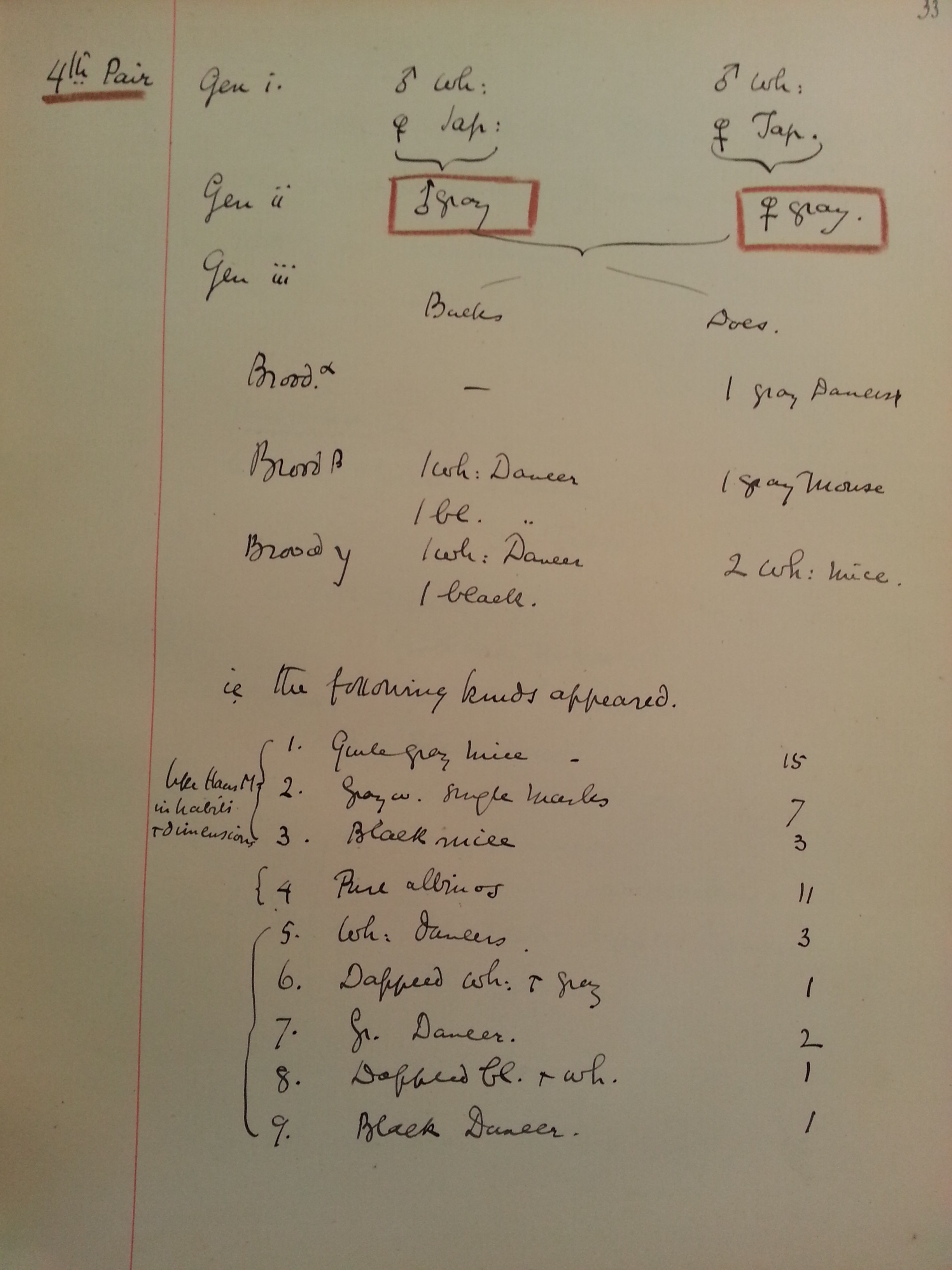
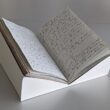
Page from Notebook of Arthur Darbishire (c.1902), Edinburgh University Library Special Collections, EUA 1N1/ACU/A1/3/6
By the time that a young medic with an interest in animal breeding returned to Edinburgh after the war, he found that his two mentors at the University, Darbishire and F.H.A Marshall, were no longer there (Marshall had accepted a post in Cambridge). These two absences meant that, when it came to appointing a director of the new Animal Breeding Research Station, F.A.E Crew was ‘on the spot’ and duly appointed to the post in 1921. As we have seen, Crew made a great success of the Institute, but one wonders what differences Darbishire might have made to the development of genetics in Edinburgh. As it is, there is little concerning Darbishire in the archival and printed collections of ‘Towards Dolly’, although we do have one of his research notebooks and some of his collected offprints.
Helen Darbishire, who was later Principal of Somerville College Oxford, wrote of her brother in 1916:
All who knew him will keep in memory a personality alive and young to a rare degree, fulfilling itself in a passion for music, much laughter, a perfectly disinterested love of truth, a delight in producing delight in others, and the keenest possible interest in life itself whichever way it led him.
Reference:
Helen Darbishire, Preface to An Introduction to Biology and other papers by A.D Darbishire (Cassell and Company Ltd, 1917)
500 years of Gavin Douglas
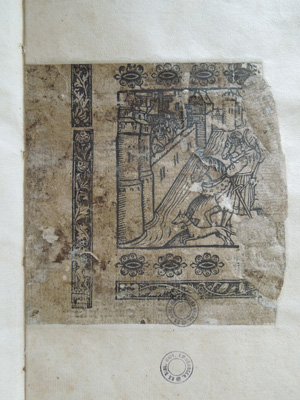
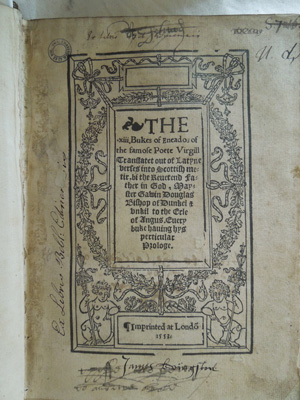
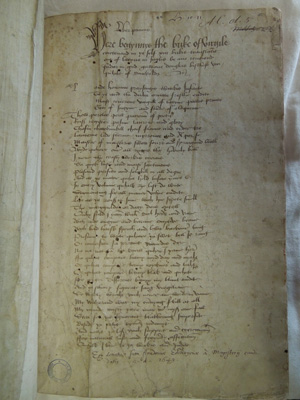
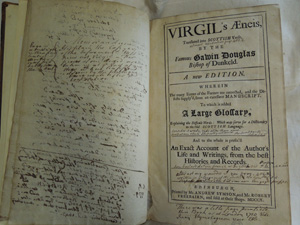
CRC is celebrating the 500th anniversary of the first translation of Virgil’s Aeneid into Scots, by the Edinburgh poet Gavin Douglas.
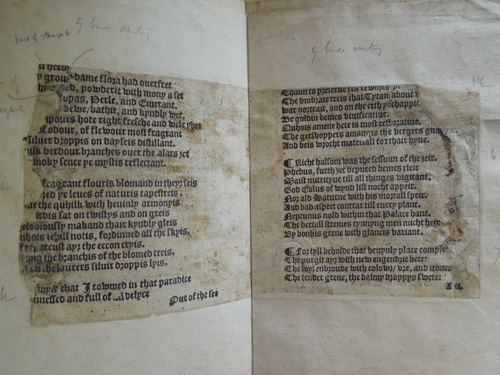
Gavin Douglas completed his Eneados, a translation of Virgil’s Aeneid into Scots, in September 1513, just seven weeks before the Battle of Flodden. Douglas, son of the Earl of Angus, was a poet, Edinburgh priest, bishop of Dunkeld, and the first translator of Virgil into any form of Anglic or English.
Douglas’ rendering of Virgil into Scots has been admired by many generations of readers and writers, including David Hume, Sir Walter Scott, and the poet Ezra Pound, who wrote of Douglas: “I am inclined to think that he gets more poetry out of Virgil than any other translator…”.
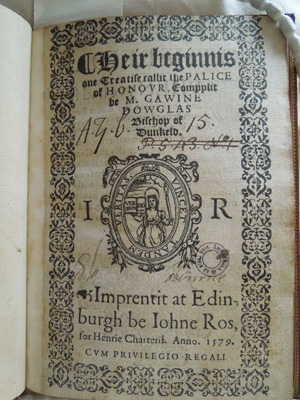
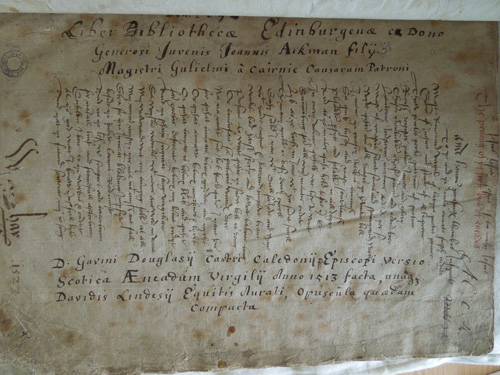
The University of Edinburgh is fortunate to possess two of the five surviving early manuscripts of Douglas’ poem. We are displaying these and some early printed editions of Douglas, during November and December 2013, in the two cases in the CRC Reception on the 6th floor of the Main Library.
Religion by numbers : looking at census data
 Want to find out more about how the religious landscape of Scotland today?
A significant seminar “The Religious Life of Scotland Today: Insights from the 2011 Census” is being held on Thursday 21st November, 12.30 – 2.00 pm, 19 George Square, Room G2. Organised by Professor Hugh Goddard, Director of the HRH Prince Alwaleed bin Talal Centre for the Study of Islam in the Contemporary World, University of Edinburgh, speakers include Amy Wilson, Head of Census Statistics at the National Records of Scotland.
In 2013 the Library added The World Religion Database (WRD) to its online resources. It contains detailed statistics on religious affiliation for every country of the world. It provides source material, including censuses and surveys, as well as best estimates for every religion to offer a definitive picture of international religious
demography. The Library also subscribes to its partner database, the World Christian Database, which provides comprehensive statistical information on Christian denominations worldwide. Extensive data are available on 9,000 Christian denominations, 13,000 ethnolinguistic peoples, as well as data on 5,000 cities, 3,000
provinces and 239 countries. Information is readily available on
religious activities, growth rates, religious literature, worker
activity, and demographic statistics.
New books at New College Library – November

 New College Library has a regular display of new books at the far end of the Library Hall, close to the door to the stacks.
New this month is The anthropology of Buddhism and Hinduism : Weberian themes by David Gellner, on the shelf in Reserve at BQ384 Gel.
Also new is An unusual relationship : Evangelical Christians and Jews, by Yaʻaḳov Ariʼel at BR1641.J83 Ari.
These titles were purchased for Religious Studies at the School of Divinity, Edinburgh University.
You can see an regularly updated list of new books for New College Library on the Library Catalogue – choose the New Books Search and limit your search to New College Library. Here’s a quick link to new books arriving in the last few weeks. A word of caution – some of the books listed here may still be in transit between the Main Library (where they are catalogued) and New College Library, so not on the shelf just yet.
Meteorites and Fossilised Rain Drops
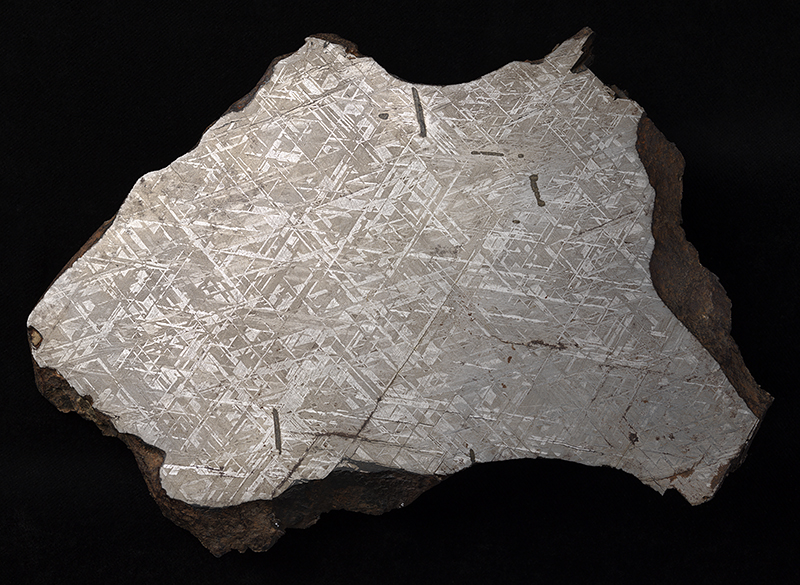
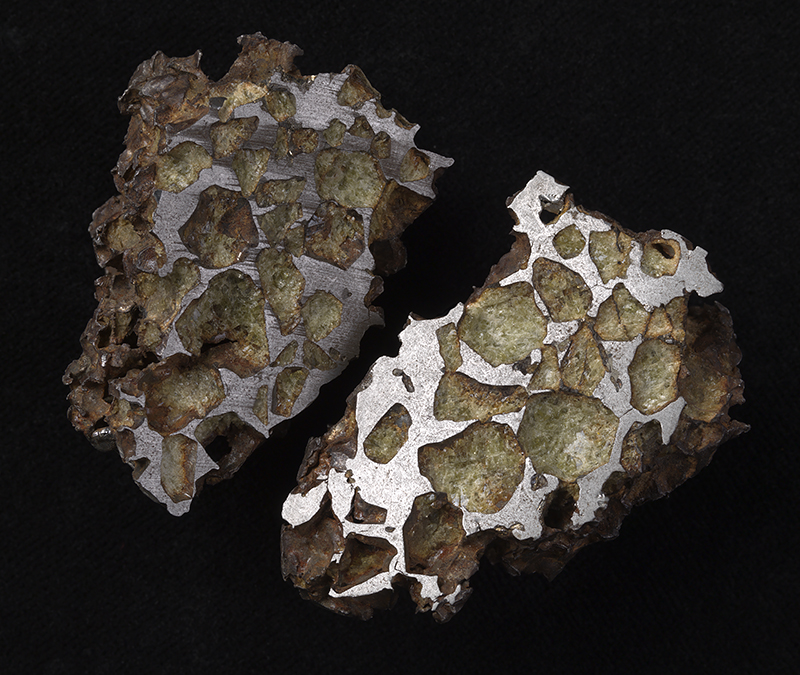
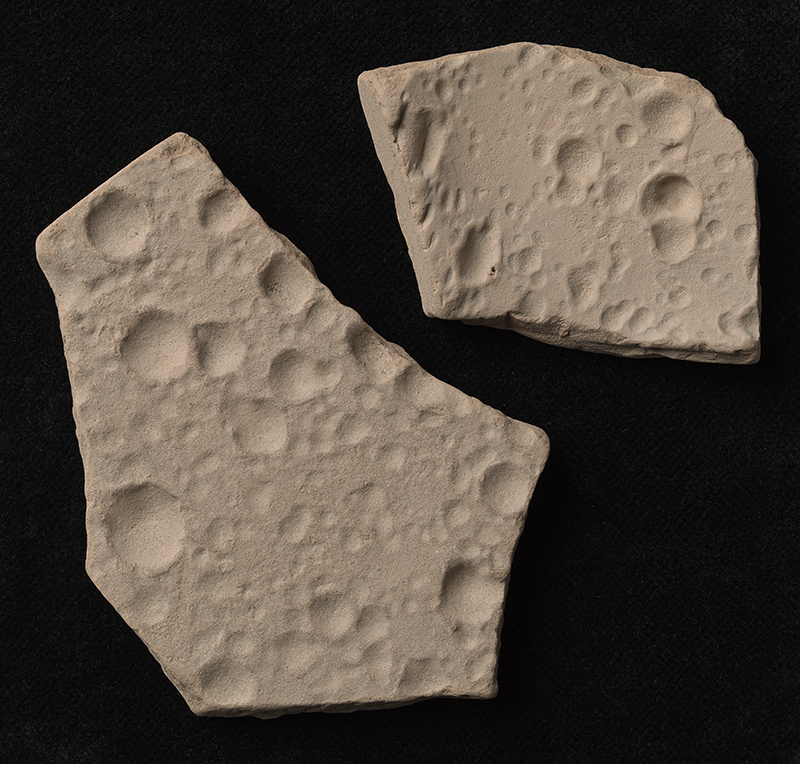
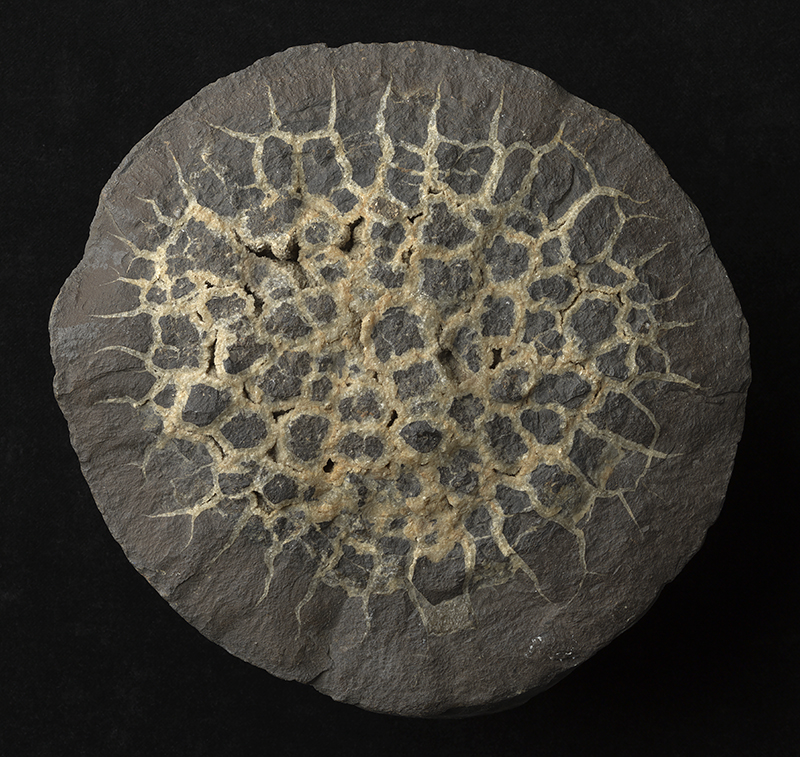
This week the Digital Imaging Unit have been photographing the Gibeon nickel iron meteorite EUCM.110.759. This fell in prehistoric times in Namibia, named after the nearest town. Made into tools by the Nama people. Analysed and confirmed as a meteorite in 1836. The wonderful pattern is called a Widmanstätten pattern. We have also been photographing the Imilac stony iron pallasite meteorite EUCM.0647.2008 found in the Atacama Desert in Northern Chile in 1822. The meteorites along with some amazing fossilized rain drops and various crystals will all feature in an exhibition opening in the Main Library exhibition space on December the 5th called Collect.ed.
Malcolm Brown
Object Handling at the National Museum of Scotland
As part of our continuous personal and professional development, we’re encouraged to attend as many training workshops as we can. Luckily for us, National Museums Scotland run a fantastic (and free!) series of Knowledge Exchange training programmes, which cover everything from pest management to caring for firearm collections.
Me and Colette signed ourselves up for their Object Handling and Packaging course, held last Friday in the brilliant National Museum of Scotland. The morning passed quickly with a presentation on handling and packing books and manuscripts by Isobel Griffin, Collections Care Manager, National Library of Scotland, before moving onto more general collections.
Chanté St Clair Inglis, Collections Store Manager, NMS, gave us an overview of the process of moving everything you can think of: musical instruments, ceramics, textiles, metal, mixed materials, ethnographic collections… All of which made me very happy to be (mostly) dealing with paintings and sculpture every day! We also got the theory behind why we do certain things (like our choice of gloves, or the packaging materials we use), to reiterate their importance.
After a very tasty lunch we got stuck into the practical exercises. Moving around in small groups, we were taught how to make a four flap enclosure by Simona Cenci, Conservator, NLS, which can be used to protect any book. We were also shown how to package textiles (creating tissue sausages and snowballs), and how to package books for moving. There were also reminders on how to make jiffy foam corners – an essential skill for painting wrapping.
I was happy to learn the art of pinning (using plastazote and bread trays to house small objects securely), which I’m already planning to use in a future project.
Overall, it was a really interesting day, with plenty of opportunity for questions and chat with the other attendees. But now, after learning all the technical bits about why we use gloves, or pack objects in certain ways, I keep thinking things like this when I see other people interacting inappropriately with objects…
Anna Hawkins, ECA Collections Assistant
ASCUS talk: Genetics in the Archives: Inspiring New Art
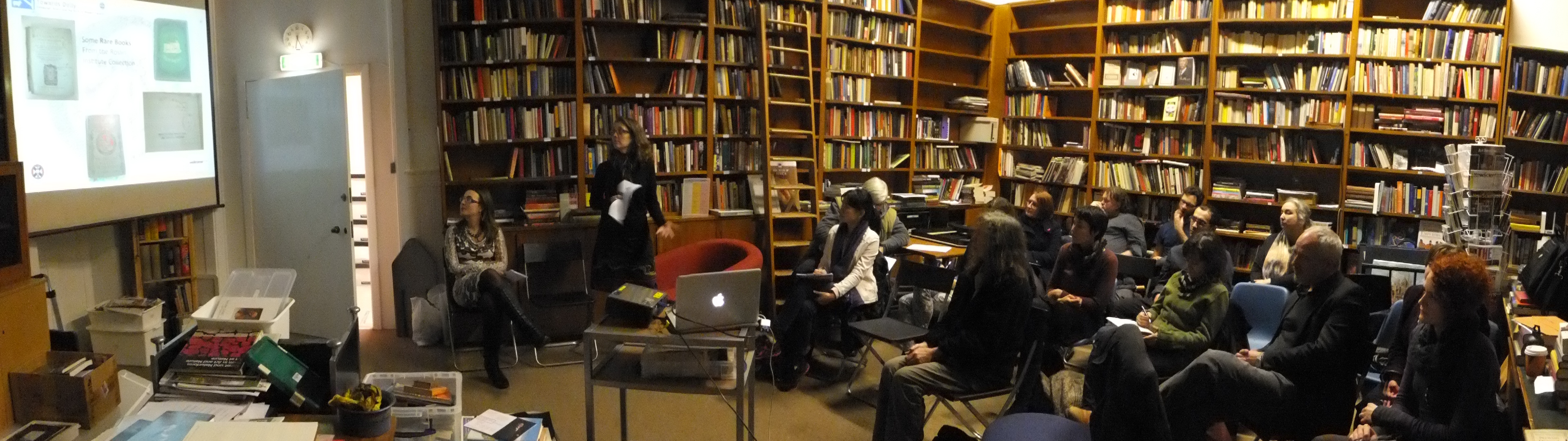
Another way we promote the project is by giving talks and last Wednesday we had the exciting opportunity to collaborate with both ASCUS: the Art and Science Collaborative and Dr. Mhairi Towler and Paul Harrison of Duncan of Jordanstone College of Art, Dundee. Our part of the talk was to introduce the collection to a wider audience and to show the wealth of material on offer to researchers; then, the artists, Dr. Mhairi Towler and Dr. Paul Harrison spoke about their current project sand how they used some of the material from the Conrad Hal Waddington Collection in their work.
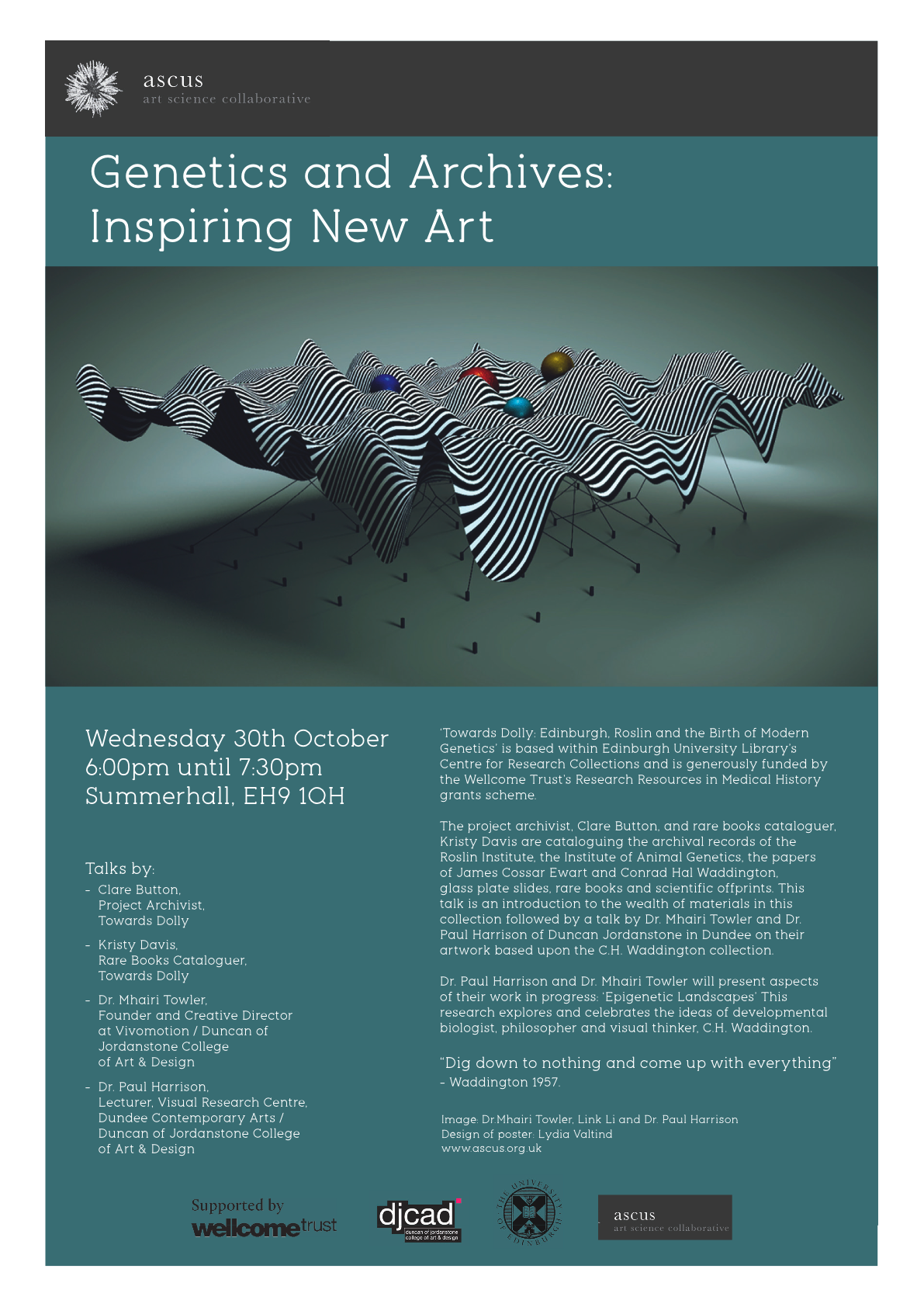
Our talk: ‘Towards Dolly: Edinburgh, Roslin and the Birth of Modern Genetics’ is based within Edinburgh University Library’s Centre for Research Collections and is generously funded by the Wellcome Trust’s Research Resources in Medical History grants scheme. The project archivist, Clare Button, and rare books cataloguer, Kristy Davis are cataloguing the archival records of the Roslin Institute, the Institute of Animal Genetics, the papers of James Cossar Ewart and Conrad Hal Waddington, glass plate slides, rare books and scientific offprints.
And Dr. Mhairi Towler and Dr. Paul Harrison of Duncan Jordanstone College of Art in Dundee spoke on their artwork based upon the C.H. Waddington collection who presented aspects of their work in progress: ‘Epigenetic Landscapes’. This research they said ‘explores and celebrates the ideas of developmental biologist, philosopher and visual thinker, C.H. Waddington.’ http://www.designsforlifeproject.co.uk/ Afterwards there was a brief question and answer session before people left or moved on to discuss it further.

We would like to thank Dr. Mhairi Towler and Dr. Paul Harrison for speaking; ASCUS for collaborating with us to make this event possible; the Art and Science Library at Summerhall for letting us use their space and all those who braved the weather and attended the event.
Complete the Library survey

If you have been randomly selected to participate in the survey, you will have now received two emails containing a link to the survey.
Please take 15 minutes to complete the survey and tell us what you think of the Library service. Your feedback is incredibly important to us. We analyse all your comments and suggestions and use them to inform our decisions on how to improve the service we provide to you.
Responses are confidential and no identifying links between responses and individuals are retained.
All responses should be submitted by 18th November when the survey closes. Remember you could also win one of two iPad minis.
More information on LibQUAL+ , the 2011 report and the Library’s response: http://edin.ac/16D1JCb
If you have any questions about the survey, please contact Angela Laurins, (LibQUAL+ survey Co-ordinator) Library-QualitySurvey@ed.ac.uk
Kirsty Bailey – October 2013
Norman Dott Project Volunteer

From March 2013 I have been volunteering on the Norman Dott project, cataloguing patient case notes using Encoded Archival Description (EAD) in an XML editor (<oXygen/>). I have found my work with this material absolutely fascinating, as each case note is unique and is so full of captivating information. Some of the files which I encounter include letters and cards between Norman Dott and his patients. Other files include drawings by Norman Dott, or photographs, sometimes of the patient, other times of tumours which have been removed. Each file seems to unveil a new insight into Dott himself, or the medical era within which he practiced, enabling you to reconstruct some form of understanding to the way he treated and dealt with his patients. My knowledge and interest in medicine and especially neurosurgery has flourished from spending time with these files; I feel they are just bursting with fascinating information, and each case is just captivating to read. More information about the project is available here: http://www.lhsa.lib.ed.ac.uk/projects/Cataloguingcasenotes.htm

A few of my favourite things…III
In his mid 20s, Thomson found himself studying for a PhD under the formidable talents of Nobel Prize winining physicist, Karl Ferdinand Braun, at the University of Strasburg. Today’s object is from this period, and likely held a great deal of sentimental value to Thomson:

Thomson’s watch fob
The watch fob bears the initials of Thomson’s student ‘verein’ or club, the M.N.St.V, (the mathematical and natural science student verein), which he described as a humble version of the expensive ‘Burschenschaften’, elite student clubs which exist to this day and often involve duals (or Mensur):
In the Mensur…the fighters are protected by goggles and nose-piece, by mattress-like chest and arm protection, must not move or flinch, hold the straight pointed rapiers above the head, touching and at the word…strike at each other’s head and faces. Two seconds crouch with drawn swords and at the first touch they strike up the combatant’s swords. this is repeated until the referee gives a decision, or for a given number of rounds. Often one man gets all the cuts, and the other none. they are mostly on the head, but also on the forehead and cheek and chin, a ‘Durch-zieher’ cutting across both cheeks almost horizontally. Then senior medical students give hasty and not very sterile assistance and stitchings, and the heroes drink beer and swagger (if well enough) through the next few days.
The Education of an Englishman, p.53

Physikalisches Institut, Strasburg, March 1906
The scarring resulting from the dual was, and is, seen as a badge of honour, and students often deliberately irritated the wound, packing it to ensure it was widened. In Thomson’s humbler club, duals were rare and usually in response to an insult or wrong doing. No uniforms were required, but members wore a watch fob with the verein’s arms. Thomson’s Leibbursch*, Carl Andriessen (whose name is engraved on the watch fob with Thomson’s) gave him his.
After World War I, Thomson lost contact with many of his German friends, many of whom were killed or missing. However, the inscription of one book in his collection, Das Deutschland Buch, shows he kept in touch with Andriessen:

Inscription from Das Deutschland-Buch
The book is inscribed with a message to Thomson and his wife Jennie, thanking them for their hospitality, and dated June 1931 – 25 years after Thomson left Strasburg. The more fluent among you might notice he refers to them as ‘Aunt’ and ‘Uncle’, which made me wonder if the giver was in fact Andriessen’s son, though he refers to them as old friends, which would suggest otherwise. It contains many beautiful images of Germany, a country Thomson loved his whole life, despite the ravages of two World Wars:


I found the book rather touching – despite the remaining animosity of their prospective nations after World War I, the two clearly have a strong friendship, and Andriessen is able to give Thomson a book about the beauty of his own country, a country Thomson also loved.
For Thomson, the time he spent in Strasburg was one of the happiest periods of his life. It allowed him to indulge in his passion for research, undertaking intensive work on Herzian waves. His German became fluent, and he immersed himself in German culture. The watch fob, which he treasured for all those years, perhaps served as the perfect reminder of his life there, and a reminder of enduring friendship.
*’A second year student who adopts a freshman, shows him the ropes, and can claim services in return’
With many thanks to Sarah Noble, LHSA Conservation Intern, who patiently spent a morning showing me how to make bespoke museum boxes and made the lovely box for Thomson’s watch fob!
Collections
 Hill and Adamson Collection: an insight into Edinburgh’s past
My name is Phoebe Kirkland, I am an MSc East Asian Studies student, and for...
Cataloguing the private papers of Archibald Hunter Campbell: A Journey Through Correspondence
My name is Pauline Vincent, I am a student in my last year of a...
Hill and Adamson Collection: an insight into Edinburgh’s past
My name is Phoebe Kirkland, I am an MSc East Asian Studies student, and for...
Cataloguing the private papers of Archibald Hunter Campbell: A Journey Through Correspondence
My name is Pauline Vincent, I am a student in my last year of a...
Projects
Cataloguing the private papers of Archibald Hunter Campbell: A Journey Through Correspondence
My name is Pauline Vincent, I am a student in my last year of a...
Archival Provenance Research Project: Lishan’s Experience
Presentation My name is Lishan Zou, I am a fourth year History and Politics student....