Home University of Edinburgh Library Essentials
June 18, 2026
Studying relationships? New SPS e-journals available
Two new SPS e-journals are now available to University of Edinburgh library users via the online library catalogue.
 Families, Relationships and Societies – an international Journal of research and debate is a new social science journal exploring family life, relationships and generational issues from interdisciplinary, social science perspectives. It aims to encompass the fluidity, complexity and diversity of contemporary social and personal relationships and their need to be understood in the context of different societies and cultures.
 The Journal of Sexual Medicine aims to serve as an interdisciplinary forum to integrate the exchange among disciplines concerned with the whole field of human sexuality. It covers the best and latest research in basic science and clinical research in male, female, and couple’s sexual function and dysfunction.
New Graduate Trainee post in Centre for Research Collections
We are for the first time offering a one-year Graduate Trainee post:
https://www.vacancies.ed.ac.uk/
Many libraries and colleges offer traineeships – this is unique in that the successful candidate will get the chance to work with all the different archives, rare books, museum and art collections curated through CRC. This will enable them to go on to professional study in any of these areas.
The love story of Hector and Andromache…
Valentines Day. A wonderful time of year when we can indulge in levels of cynicism and sarcasm simply unacceptable at any other! However, here in the archives our hardened hearts are often shamefully disarmed by the traces of friendship, romance, and (dare I say it!) love we come across every day within our collections.
Those of you familiar with Greek mythology may know the story of Hector and Andromache – Hector the bold Trojan warrior, and Andromache, his beautiful wife. For those who do not, the story doesn’t end happily, with Hector killed at the hands of Achilles. Today’s Valentine’s blog is about another Hector and Andromache – Hector Thomson, the son of Godfrey Thomson, and his rather beautiful wife, the aptly named Andromache.

Hector as a young boy with Thomson
From the outset, despite their fateful monikers, the pair seemed a rather unlikely match. Hector, according to one family friend, was socially awkward, quiet, and was most likely to be found with his nose in a book. Andromache, according to the traces of her in the letters of others, was the sort of house guest welcome at every home, who could bring cheer to even the most despondent of households.
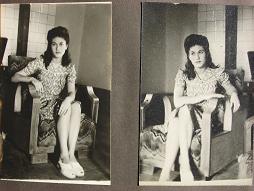
Sadly we have no photographs of Andromache in the archives. This scan was given to us by a relative.
Hector began his career as an Oxford educated Classicist. Perhaps surprisingly when compared to the accounts we have regarding his boyhood, he finished his degree with a yearning of adventure, and entered the diplomatic service, working in Baghdad.


Telegrams from Hector to his family sent during his time in Baghdad
At some point in 1939, he found himself teaching at the English School in Nicosia, Cyprus. It was here the somewhat socially awkward Hector met the vivacious Andromache! The pair quickly fell in love – in one letter from his father, Hector is told:
We would dearly love to hear from you, and especially to hear more about Andromache, but I know communication must be precarious.
His parents, of course, had their own love story.
Hector also fell in love with Cyprus – his letters to Thomson from this period discuss both the language and the religion of the Cypriots in great detail. Details which Thomson with his enquiring mind would have found fascinating. References to Andromache in the surviving letters are brief, with the Thomson’s sending their love and asking how she is – but we know in later years that the Thomsons, along with many of their friends and acquaintances, would affectionately call her ‘Mackie’.
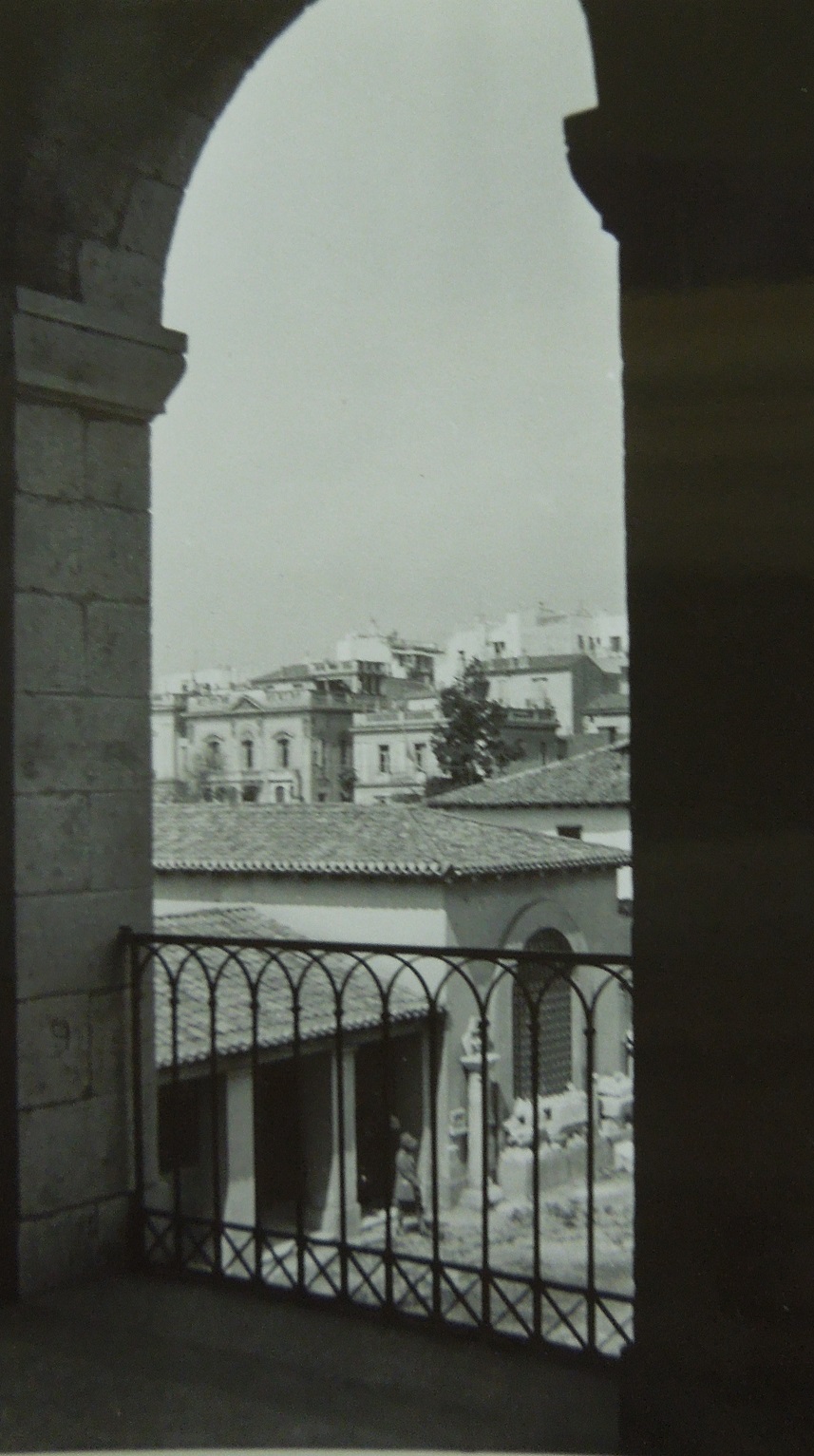

Scenes from Hector’s time in Cyprus
After their wedding, they settled in Aberdeen where Hector eventually became senior lecturer in Ancient and Modern Greek at the University of Aberdeen. Hector’s teaching techniques owed a lot to his Father’s career as a psychologist and professor of education, throughout which Thomson emphasised the need to gain and keep the attention of students and pupils. This is by no means an uncommon idea now, but one which was new and innovative in Thomson’s time.
His Father’s methods are reflected in the many ways Hector grabbed and maintained the attention of his students, apparently even making yoghurt in one lecture! He endeavored not only to teach his students Greek, but invited them to share in his love of Greek culture.
Following his retirement, he and Andromache spent their time between the Thomson’s former home in Ravelston Dykes, Edinburgh (left to Hector in their will), and Cyprus. Hector died on 19th February 2008, aged 91. According to her relations, Andromache was bereft after his death, and decided to move back to Cyprus permanently. A few short months later, she too passed away. Hector and ‘Mackie’ were married for 67 years – they were a true love match. Now that, dear readers, is better than chocolates, flowers, and stuffed toys clutching hearts!
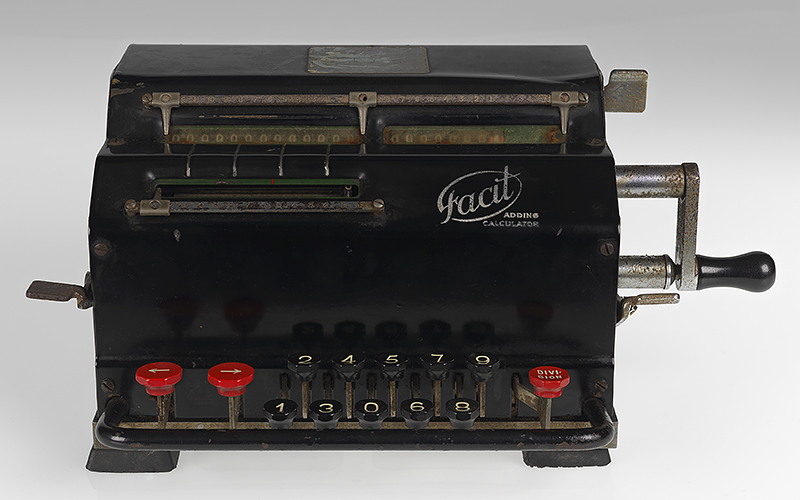
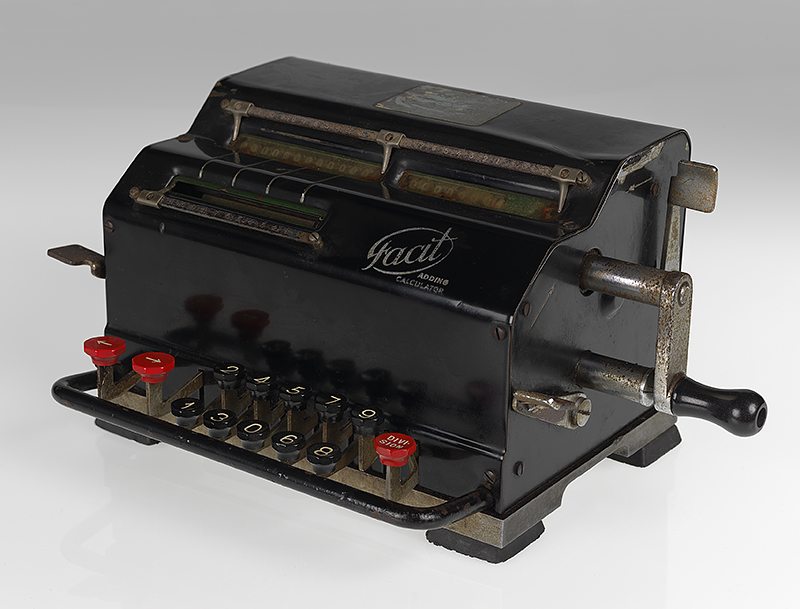
Facit Calculator Photography
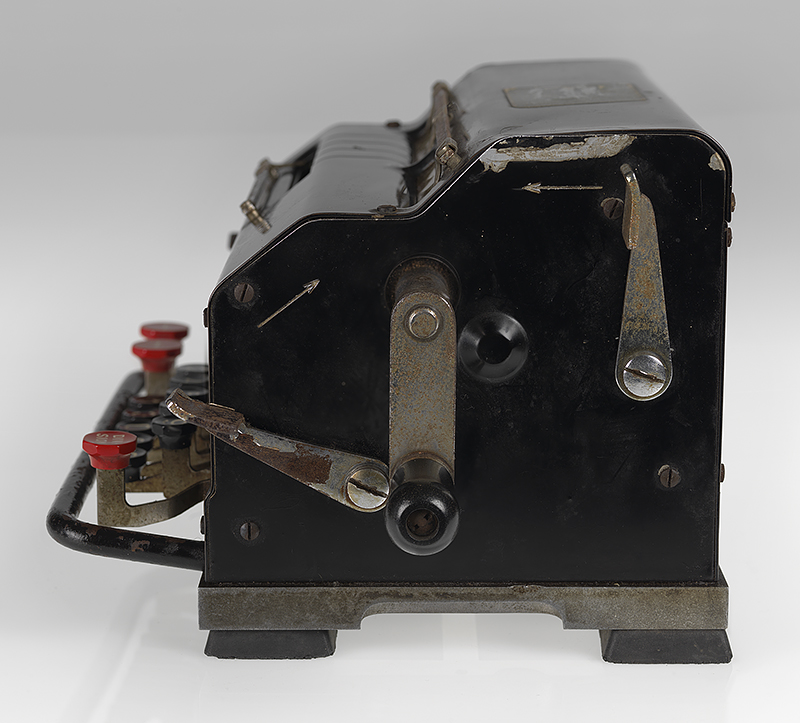
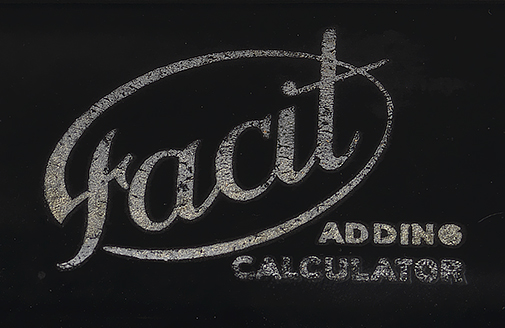 The Digital Imaging Unit recently had the mechanical calculating machine from the Godfrey Thomson Project to photograph. The calculator has this beautifully resolved logo which struck me as a little unusual for such an early and niche product. However discovering the company was Swedish explains such attention to design. The swift rise and decline of the company is a stark warning about ignoring research, development and competition http://en.wikipedia.org/wiki/Facit
The calculator was photographed using the DIU infinity table lit from below with key and fill lighting arranged carefully to maximize all the detail and information present in the calculator. This was a challenge given the black colour and metallic reflective nature of the material. In addition multiple exposures were taken and the final set of images were assembled in Adobe Photoshop.
Malcolm Brown
SCAPE workshop (notes, part 2)
Drawing on my notes from the SCAPE (Scalable Preservation Environments) workshop I attended last year, here is a summary of the presentation delivered by Peter May (BL) and the activities that were introduced during the hands-on training session.
Peter May (British Library)
To contextualise the activities and the tools we used during the workshop, Peter May presented a case study from the British Library (BL). The BL is a legal deposit archive that among many other resources archives newspapers. This type of item (newspaper) is one of the most brittle in their archive, because it is very sensitive and prone to disintegrate even in optimal preservation conditions (humidity and light controlled environment). With support from Jisc (2007, 2009) and through their current partnership with brightsolid, the BL has been digitising this part of the collection, at a current digitisation rate of about 8000 scans per day.
BL’s main concern is how to ensure long term preservation and access to the newspaper collection, and how to make digitisation processes cost effective (larger files require more storage space, so less storage needed per file means more digitised objects). As part of the digitisation projects, BL had to reflect on:
- How would the end-user want to engage with the digitised objects?
- What file format would suit all those potential uses?
- How will the collection be displayed online?
- How to ensure smooth network access to the collection?
As an end-user, you might want to browse thumbnails in the newspaper collection, or you might want to zoom in and read through the text. In order to have the flexibility to display images at different resolutions when required, the BL has to scan the newspapers at high resolution. JPEG2000 has proved to be the most flexible format for displaying images at different resolutions (thumbnails, whole images, image tiles). The BL investigated how to migrate from TIFF to JPEG2000 format to enable this flexibility in access, as well as to reduce the size of files, and thereby the cost of storage and preservation management. A JPEG2000 file is normally half the size of a TIFF file.

At this stage, the SCAPE workflow comes into play. In order to ensure that it was safe to delete the original TIFF files after the migration into JPEG2000, the BL team needed to make quality checks across all the millions of files they were migrating.
For the SCAPE work at the BL, Peter May and the team tested a number of tools and created a workflow to migrate files and perform quality checks. For the migration process they tested codecs such as kakadu and openJPEG, and for checking the integrity of the JPEG2000 and how the format complied with institutional policies and preservation needs, they used Jpylyzer. Other tools such as Matchbox (for image feature analysis and duplication identification) or exifTool (an image metadata extractor, that can be used to find out details about the provenance of the file and later on to compare metadata after migration) were tested within the SCAPE project at the BL. To ensure the success of the migration process, the BL developed their in-house code to compare, at scale, the different outputs of the above mentioned tools.
Peter May’s presentation slides can be found on the Open Planets Foundation wiki.
Hands-on training session
After Peter May’s presentation, the SCAPE workshop team guided us through an activity in which we checked if original TIFFs had migrated to JPEG2000s successfully. For this we used the TIFF compare command (tiffcmp). We first migrated from TIFF to JPEG2000 and then converted JPEG2000 back into TIFF. In both migrations we used tiffcmp to check (bit by bit) if the file had been corrupted (bitstream comparison to check fixity), and if the compression and decompression processes were reliable.
The intention of the exercise was to show the process of migration at small scale. However, when digital preservation tasks (migration, compression, validation, metadata extraction, comparison) have to be applied to thousands of files, a single processor would take a lot of time to run the tasks, and for that reason parallelisation is a good idea. SCAPE has been working on parallelisation and how to divide tasks using computational nodes to deal with big loads of data all at once.
SCAPE uses Taverna workbench to create tailored workflows. To run a preservation workflow you do not need Taverna, because many of the tools that can be incorporated into Taverna can be used as standalone tools such as FITS, a File Information Tool Set that “identifies, validates, and extracts technical metadata for various file formats”. However, Taverna offers a good solution for digital preservation workflows, since you can create a workflow that includes all the tools that you need. The ideal use of Taverna in digital preservation is to choose different tools at different stages of the workflow, depending on the digital preservation requirements of your data.
Related links:
http://openplanetsfoundation.org/
http://wiki.opf-labs.org/display/SP/Home
http://www.myExperiment.org/
Innovative Learning Week at the Library
 Innovative Learning Week is now less than a week away and Information Services have a number of events available for both staff and students. Some of the events require booking in advance so make sure you get your place.
Events include careers talks, behind the scenes tours, Library Online Treasure Hunt (prizes available!) and drop-in sessions to meet the librarians. You can find out more about the specific events and book them via the Information Services website:
Innovative Learning Week is nearly here!
As well as the events listed on the above website the following library events are also available:
Box of Broadcasts workshop
Box of Broadcasts is a TV and radio broadcast recording and archive service. This session provides an overview of the BoB database that allows users to record television and radio programmes from the Freeview spectrum with an opportunity for hands-on practice in using the service. Event is being held at King’s Buildings. Open to all staff and research postgraduates. Booking required.
ECA Library Artists Books Petting Zoo 2014
What is an artist’s book? A book made by an artist, of course!
Back by popular demand, this event gives students and staff the opportunity to handle a selection of the best and most exciting artists’ books from ECA Library’s collection of around 1000 artists’ books. Be inspired! Open to all staff and students.
Register your interest in attending
Talis Aspire workshop
Talis Aspire is an online course reading list system which allows course organisers to create and publish reading lists and make them available to students via a web interface or a VLE. Lists can include include books, e-books, book chapters, journal articles and videos. Course organisers can add notes for students and statistical data on list usage is available to course organisers. This workshop provides a brief overview and demo followed by hands-on practice. Event is being held at King’s Buildings. Open to all staff and research postgraduates. Booking required.
For further events being run by the School of Social and Political Science see:
Innovative Learning Week events in SPS
Take a look at the Innovative Learning Week calendar to see a complete list of events at the University:
The Hen Who Made History…Nearly

Edinburgh holds a number of world records in genetics and animal breeding, which, considering its historic significance in the history of the science in Britain, is not all that surprising. Its most famous ‘first’ is of course Dolly the sheep – the first mammal to be cloned from adult cells – although there are many other examples. However, sometimes the ‘almost firsts’ are just as interesting historically, as well as a little poignant, as I found recently when cataloguing the archive of Alan Greenwood, director of the Poultry Research Centre from 1947 to 1962.
Amongst his wonderful collection of photographs is one depicting a hen standing proudly astride crates and baskets of eggs. The caption informs us that the hen is ‘the sister of the hen which laid 1515 eggs in 9 laying years and shared the world’s record.’ This was intriguing enough in itself, but a full explanation wasn’t forthcoming until I came across two typed pages in Greenwood’s collection of draft lectures and articles. Titled ‘So Near and Yet So Far’, this short piece describes the particularly productive life of the chicken named L1641, ‘from which so little and yet so much more was hoped.’
Part of the research carried out at both the Institute of Animal Genetics and the Poultry Research Centre in Edinburgh was concerned with increasing the productivity and economic value of domestic animals by applied genetics and breeding schemes. In the case of chickens, a large aspect of their value clearly lies in the number and quality of eggs they produce. On 10 April 1939 however, a chicken was hatched at the Institute which would push the limits of egg production beyond the expectations of the staff.
Chicken L1641 (as she was wingbanded) laid her first egg soon after the outbreak of the Second World War. From her first year she was a high producer, laying 273 eggs ‘in spite of wartime stringencies’ as Greenwood wryly tells us. Over the next 8 years she produced on average 142 eggs per year. This is high, although not as impressive as the hens which held world records for the number of eggs laid in a single year. In 1915 a white Leghorn hen in Greensboro, Maryland by the name of Lady Eglantine set a record at 314 eggs in one year. A number of Australorp hens in Australia broke this record successively during the 1920s however, with the number of eggs in one year standing at 347 to 354 to 364!
Where Edinburgh’s chicken L1641 excelled, however, was in the total number of eggs produced over a lifetime. By the time she went into moult in the autumn of 1948, she held the joint world record, which stood at 1515 eggs. However, the strain imposed on her calcified and thickened arteries by the moult was too great, and she died before the end of the year. As Greenwood sadly concludes his article, ‘One more egg only and she would have made history.’
Alan Greenwood’s catalogue can be viewed on our brand new website at: http://www.archives.lib.ed.ac.uk/towardsdolly/
How do you access resources?
SCONUL (Society of College, National and University Libraries) and Jisc are currently undertaking a usability study into the way that students and research staff in UK Higher Education access online academic resources such as journal papers, articles and e-books.
If you have five minutes to spare and would like to share your experiences, please visit the survey:
Full details of the project and survey are available on the project blog.
Gathering Intelligence: A free seminar regarding Thomson’s life and work
Our Wellcome Trust funded project*, ‘Documenting the Understanding of Human Intelligence: cataloguing and preserving the papers of Professor Sir Godfrey Thomson’, is on course to deliver on all its objectives in the next few months. Continuing on from the cataloguing project, we aim to digitise Thomson’s papers, and catalogue related papers through the Moray House and University of Edinburgh collections. We will also be curating an exhibition regarding Thomson’s life and work in 2016.

Professor Sir Godfrey Thomson (1881-1955)
To mark this exciting and continuing collaboration between the academic and archival communities, we are holding a free seminar for researchers, students, and archivists at Edinburgh University Library, 16th May 2014.
Professor Sir Godfrey Thomson (1881-1955) was a psychologist, statistician, and educator. The seminar programme reflects this, and is a varied one exploring Thomson’s work in Psychology (especially cognitive testing), Statistics, Education, and Eugenics, with academic speakers from each field. Chaired by Professor Dorothy Meill, Vice Principal and Head of the College of Humanities and Social Science, It will also discuss current scientific research facilitated through data sets left from Thomson’s work, as well as the complexities involved in interpreting and cataloguing the collection itself.
Professor Ian Deary’s British Academy Lecture on Thomson
Programme
Gathering Intelligence: the life and work of Professor Sir Godfrey Thomson
Chaired by Professor Dorothy Meill, Vice Principal and Head of the College of Humanities and Social Science
9. 15: Coffee and introduction
10.00: Martin Lawn, Senior Research Fellow, Department of Education, University of Oxford: ‘’His Great Institution’’: Thomson’s advanced school of education in Edinburgh’
10.30: Professor Ian Deary, Director, Centre for Cognitive Ageing and Cognitive Epidemiology: ‘Use of Thomson’s data today in studies of cognitive ageing and cognitive epidemiology’.
11.00: Tea and coffee
11.30: Professor Lindsay Paterson, School of Social and Political Science, University of Edinburgh: ‘Use of Thomson’s survey work in current research on social mobility and life-long education’
12.00: Dr Edmund Ramsden, ‘Thomson’s research and opinions on the differential birth rate and eugenics’.
12.30: Lunch (lunch is provided), and viewing of the collection
2.00: David Bartholomew, Professor Emeritus of Statistics at the London School of Economics: Thomson’s original statistical contributions
2.30: Emma Anthony, Project Archivist, Godfrey Thomson Project: ‘Interpreting and Cataloguing Thomson’s papers’
3.00: Panel discussion
4.00: Moray House tour
4.30: Finish
The seminar is free, but please note places must be booked through eventbrite.
Wellcome Trust bursaries for accommodation and travel are available.
For further information, contact Emma.Anthony@ed.ac.uk.
*Funded by the Trust’s Research Resources grant scheme under the call ‘Understanding the Human Brain’. Continuing on from the current cataloguing project, we aim to digitise Thomson’s papers, and catalogue related papers through the Moray House and University of Edinburgh collections. We will also be curating an exhibition regarding Thomson’s life and work in 2016.
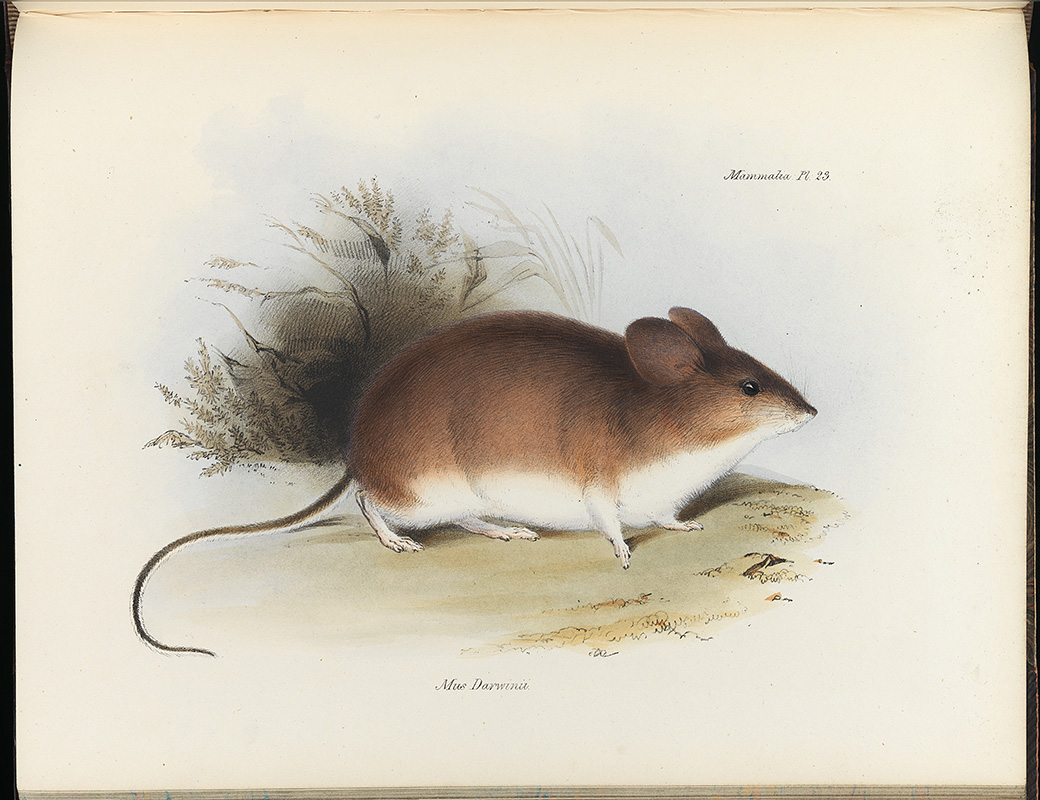
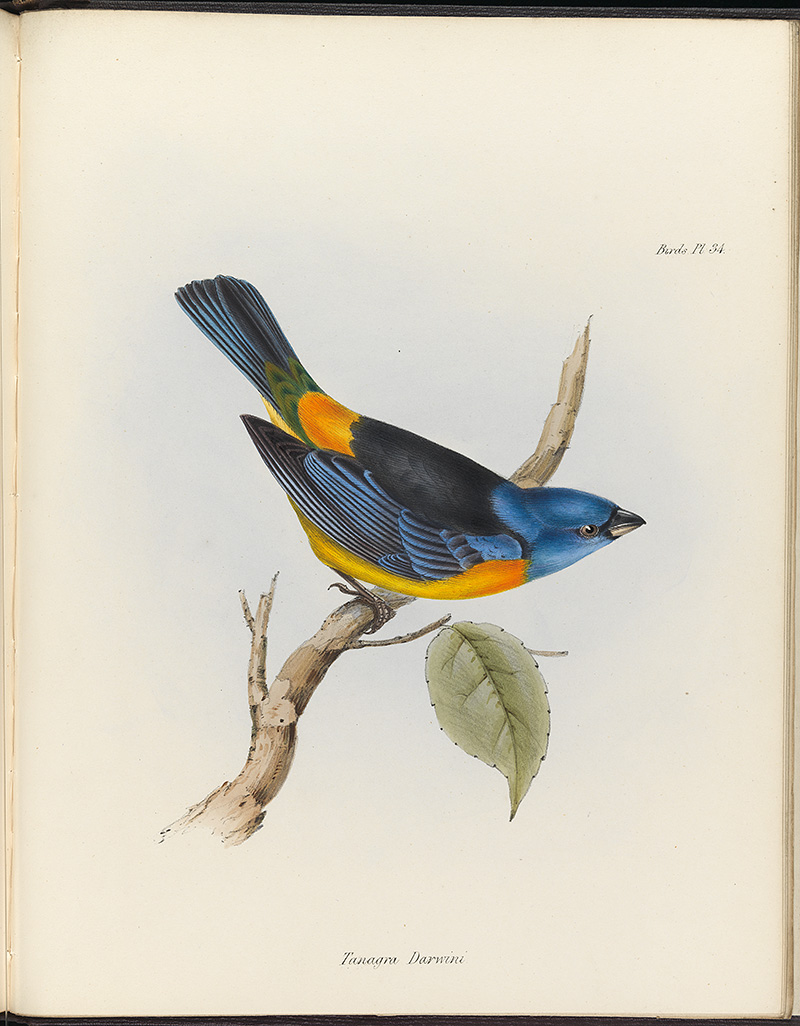
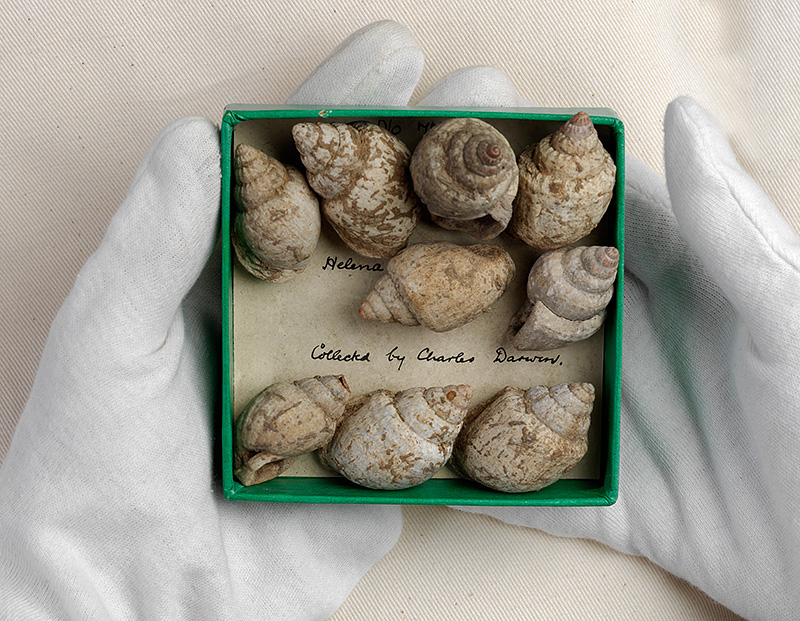
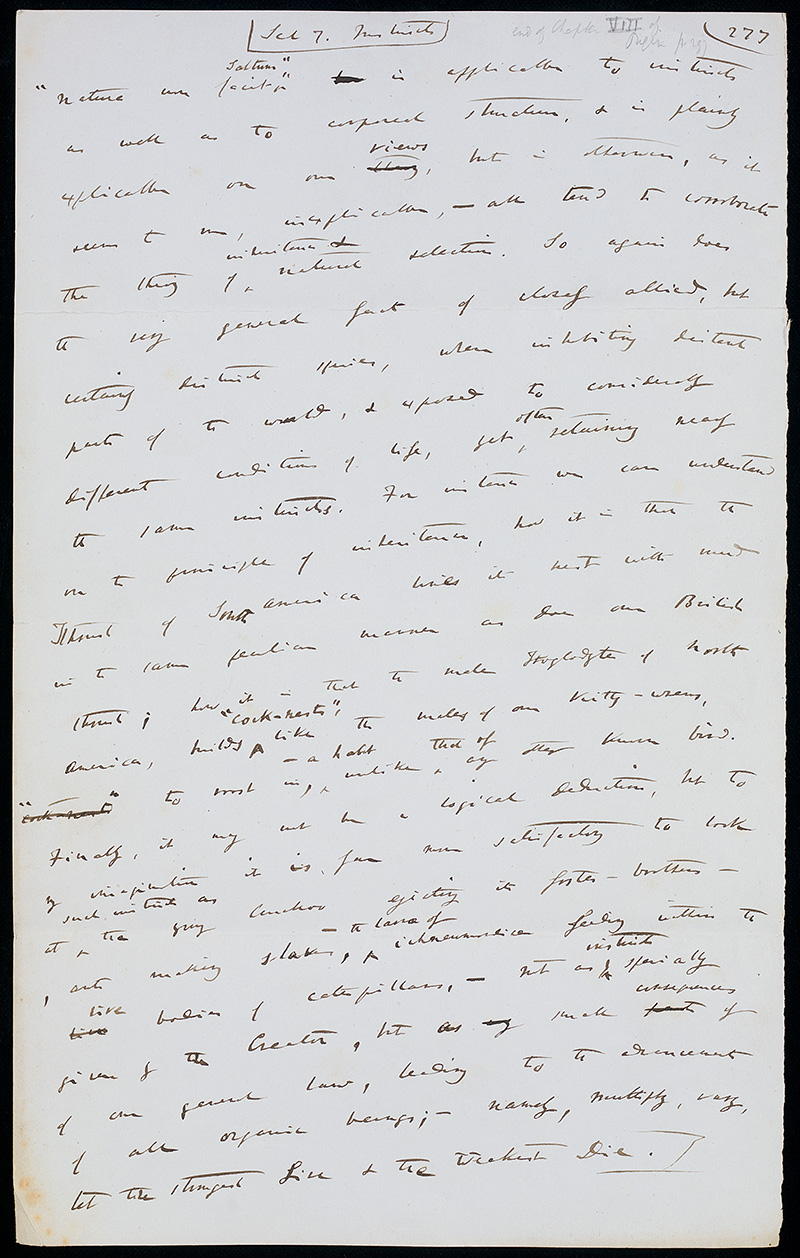
Digitising Darwin
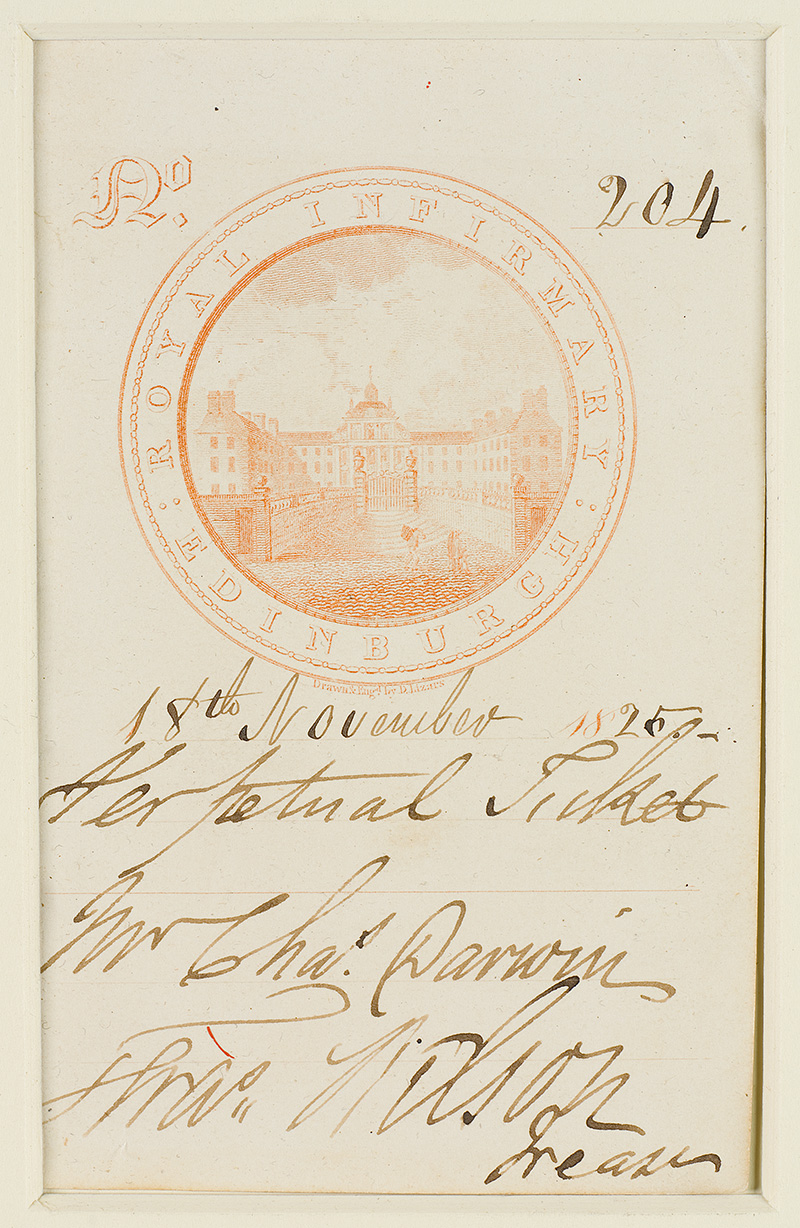
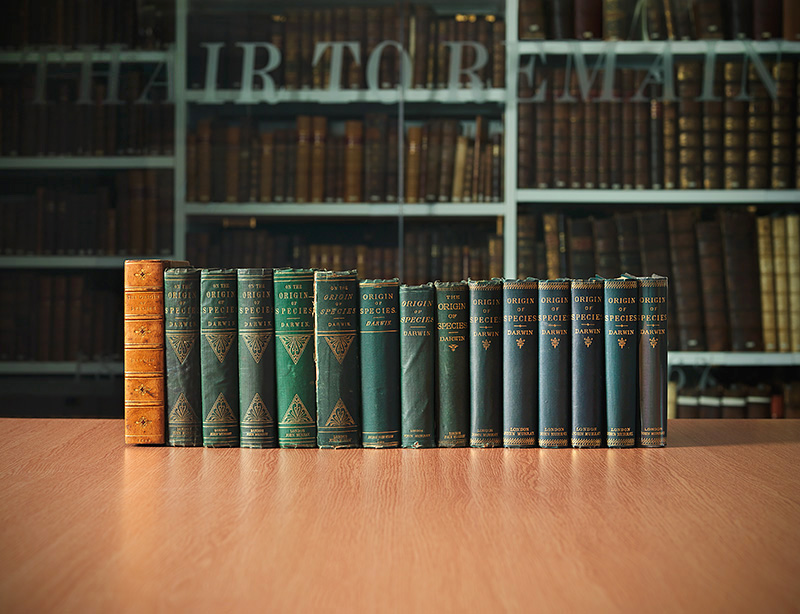
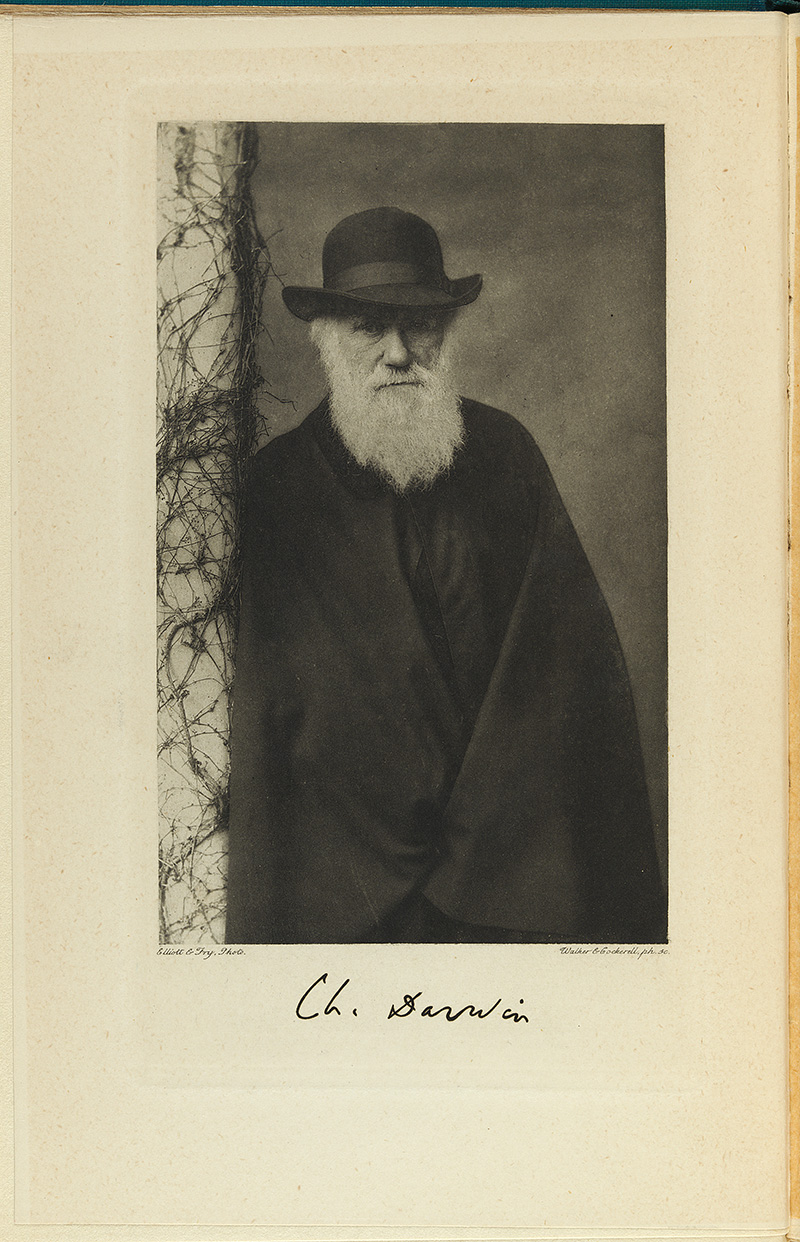 Over the years several Darwin originals have made their way to us for photography- a handwritten sheet from the manuscript of ‘On the Origin of Species’, his class cards, letters and recently some shells collected by Darwin during the voyage of the Beagle which had been rediscovered amongst Lyell’s geology collection. This week I was delighted to receive a whole trolley load of books from the Darwin collection which were being photographed in preparation for a printed catalogue. The Rare Books and Manuscripts team have already completed the online cataloguing (see their blog about this mini-project here https://libraryblogs.is.ed.ac.uk/blog/2013/08/30/darwins-voyage-of-discovery/ ).
Much of what arrived in the DIU was from the Heiskell Darwin collection- a donation of first editions made to the University in 2012 from the Heiskell Bibliographical Foundation, although some beautiful plates from the ‘The Zoology of the Voyage of H.M.S. Beagle’ came from our existing collection. As our image archive of Darwin is growing, I thought it might be nice to show some of the highlights here.
Susan Pettigrew

Collections
 Hill and Adamson Collection: an insight into Edinburgh’s past
My name is Phoebe Kirkland, I am an MSc East Asian Studies student, and for...
Cataloguing the private papers of Archibald Hunter Campbell: A Journey Through Correspondence
My name is Pauline Vincent, I am a student in my last year of a...
Hill and Adamson Collection: an insight into Edinburgh’s past
My name is Phoebe Kirkland, I am an MSc East Asian Studies student, and for...
Cataloguing the private papers of Archibald Hunter Campbell: A Journey Through Correspondence
My name is Pauline Vincent, I am a student in my last year of a...
Projects
Cataloguing the private papers of Archibald Hunter Campbell: A Journey Through Correspondence
My name is Pauline Vincent, I am a student in my last year of a...
Archival Provenance Research Project: Lishan’s Experience
Presentation My name is Lishan Zou, I am a fourth year History and Politics student....