Home University of Edinburgh Library Essentials
April 5, 2026
Fifty Years, Fifty Books
Opening: 28 March 2014 | Where: Exhibition Gallery, Main Library, George Square | Closing: 14 June 2014 | Curated by: Dr. Joseph Marshall, University of Edinburgh
1962 to 2012 – Fifty Years and Fifty Books: An Exhibition
The Centre for Research Collections is delighted to announce the launch of Fifty Years, Fifty Books exhibition at the University of Edinburgh Main Library, opening on 28 March 2014 and closing 14 June 2014.
In 1962 the Friends of Edinburgh University Library held their first meeting. They agreed to work to support “the purchase of rare or valuable books, manuscripts or documents” and “to enhance the resources and reputation of the library”. Fifty years later, we want to recognise the great contribution made by the Friends by hosting an exhibition of their purchases for the University. Thanks to their consistent support, our Special Collections are now among the world’s foremost for research, teaching and scholarship.
Many of the items in the exhibition have never been seen on public display before. The Exhibition Gallery – opened in 2009 – was itself supported by the generosity of the Friends. This fantastic space will contain a fine selection of material purchased with the help of the Friends, including early editions of English drama and modern Scottish literary papers, a beautifully illustrated ‘Birds of the Pacific Slope’ and facsimiles of medieval manuscripts. Please see a small number of images of items on display, below.
‘Fifty Years, fifty books: purchases by the Friends of Edinburgh University Library, 1962-2012’, is an exhibition showcasing the extraordinary contribution made by the Friends of Edinburgh University since the early 1960s.
The exhibition is open Monday to Saturday, 10:00 to 17:00. Free Admission, Members of the Public Welcome. The Exhibition Gallery is located within the University of Edinburgh Main Library building.
For more information on the Friends of Edinburgh University Library, including how to join as a member, please see their about page.
The exhibition runs from 28 March to 14 June 2014.
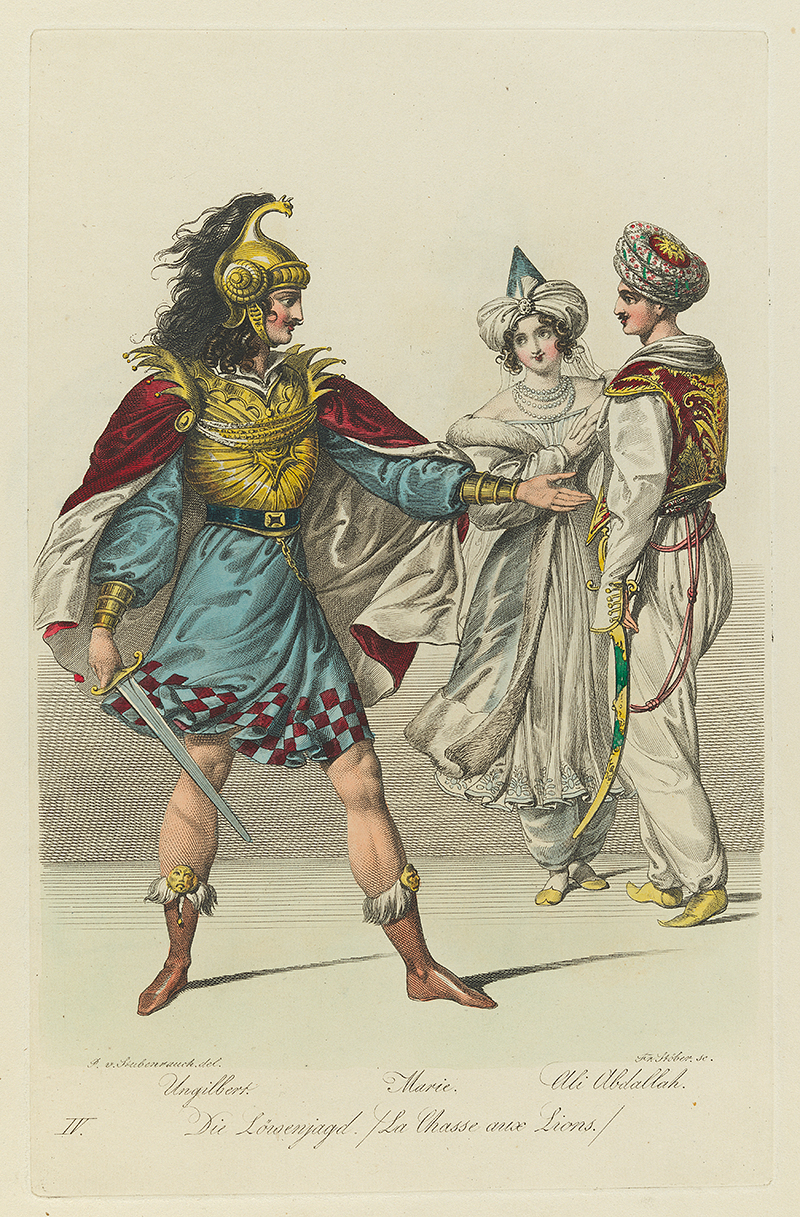
Above:
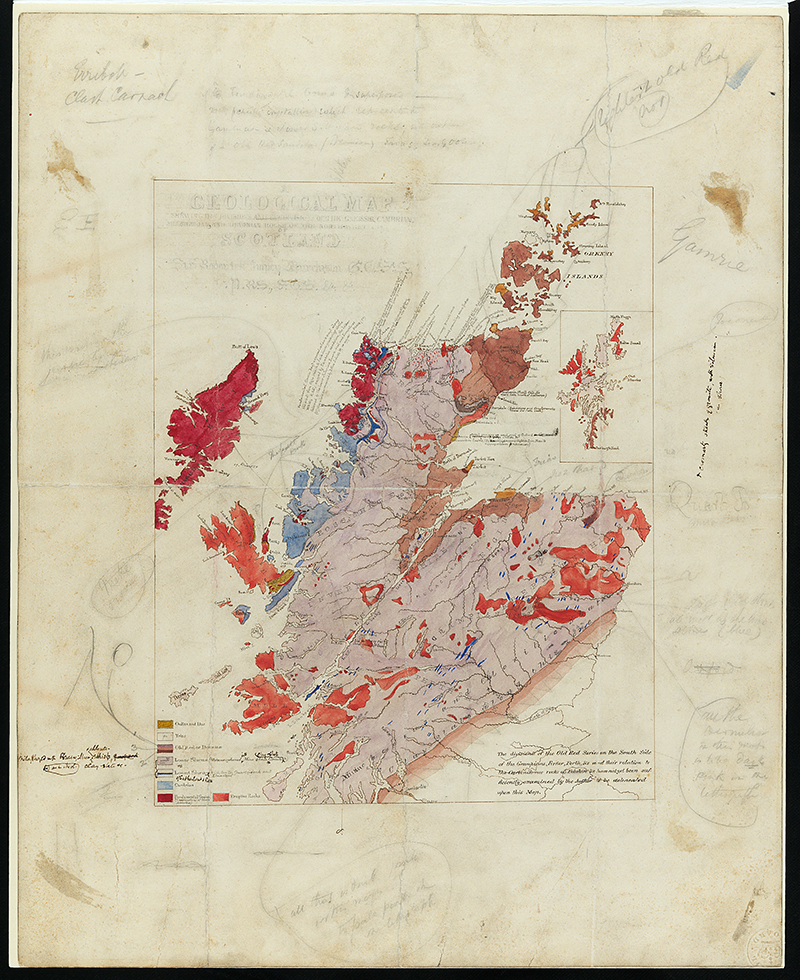
1. Murchison, Sir R. I., Annotated geological map of North-West Scotland (1861)
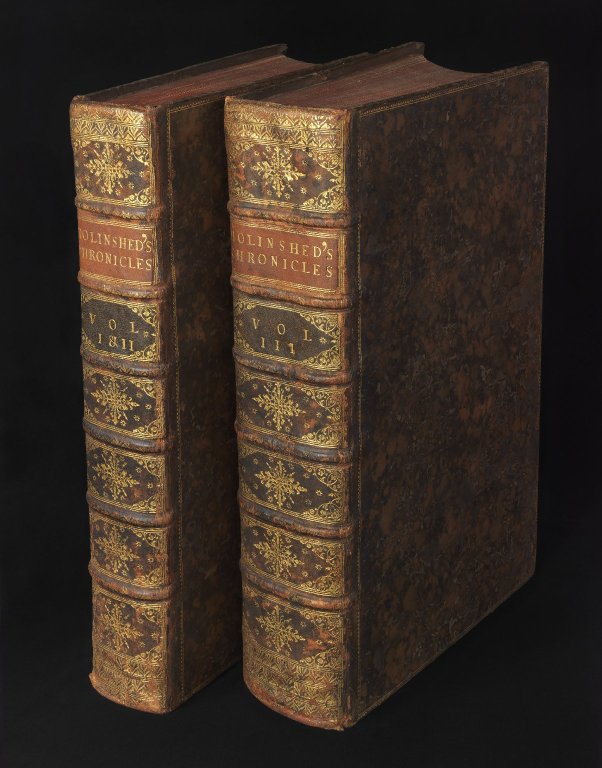
2. Holinshed, Raphael, Chronicles, volumes 1 & 2 (1587)
3. Weidmann, F C, Der Costum-Ball am Schlusse des Carnevals (1826)
____________________________________________
Blog post author: Steven Skeldon, Museums
New Ways Of Seeing
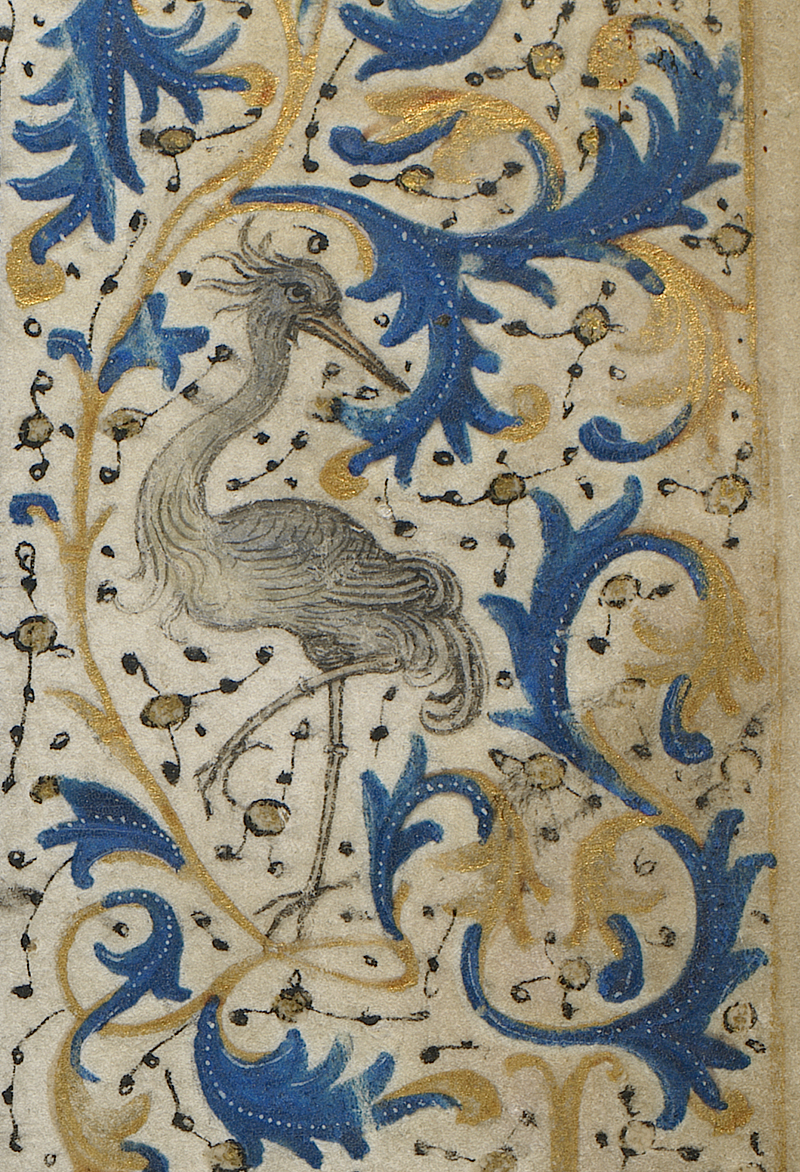 A large part of what we do in the Digital Imaging Unit is fulfilling digitisation requests from all over the world from researchers and academics who want access to our collections. This week one request required three images from Ms 195 “Poems Of Virgil” , which is part of the University’s Western Medieval Manuscripts Collection. The detail of the Heron ? or Crane? struck me as an astounding piece of work. The economy of line used to describe the plumage and structure of the bird is very accomplished. I felt this image is worth sharing in detail as it highlights the quality of visual literacy preserved within our collections. The detail also highlights that high quality capture of these works can aid discovery and give us insight into the material. If you compare the detail to the full image via the link to Ms 195 you can see how easily this information could be lost to the eye. The high quality capture provided by top of the range Hasselblad cameras gives us new “ways of seeing” the collections that in turn has multiple applications.
Malcolm Brown
Deputy Photographer
Read all about it!
Need to access online newspapers? Looking for current news or hoping to find historic newspapers?
Newspapers can be a valuable tool for researching historic events, finding current information about international, national and local events, tracing a story back and finding editorials, commentaries, expert or popular opinions.
University of Edinburgh Library subscribes to a number of databases and online news sources that allow you to search through newspaper archives, both current and historic, easily and quickly.
A full list of these resources and how to access them can be found at Newspapers databases list but here are just a few examples:
Current news sources
 Factiva
International business, financial and news information from 35,000 sources in 26 languages from nearly 200 countries. As well as providing full-text access to a large number of UK newspapers it also provides full-text access to a significant range of international newspapers and news sources.
Lexis Library
Primarily a major law database this also includes full-text access to the vast majority of UK broadsheet and tabloid newspapers and a large number of local papers. To search newspapers once you access the database click on the “News” link in top menu.
Nexis UK
Access to over 23,000 UK and international news and business sources, financial and market reports, biographical data and thousands of legal and regulatory services. Like Factiva this is a very good resource for getting full-text access to international newspapers and news sources.
Historical news sources
NewsVault
This is a cross-search facility for newspaper archives from Gale. This enables the simultaneous searching of over 400 years of primary historical sources including: 17th-18th Century Burney Collection; 19th Century British Library Newspapers; 19th Century UK Periodicals; Times Digital Archive; Times Literary Supplement Historical Archive.
 UK Press Online
Database includes 2 million pages of 19th and 20th century British popular newspapers, from 1835 to current. Titles include: Daily Mirror, Daily Express, Sunday Express, Daily Star, Church Times, The Watchman, Daily Worker, Morning Star.
ProQuest Historical Newspapers
Includes the Scotsman Archive (1817-1950), Guardian and Observer Archive (1791-2003), New York Times Archive (1851-2009), Washington Post Archive (1877-1994), Times of India Archive (1838-2003) and Chinese Newspaper Collections (1832-1953). In the Newspapers database list look for the newspaper title to access e.g. Guardian and Observer Archive or Chinese Newspaper Collections rather than ProQuest Historical Newspapers.
These are just a few examples of the online newspaper databases and resources that the Library has access to. You can find a full list with links to access on the Newspapers database list.
More information about searching newspaper content can be found at How to find newspaper content, including information on the paper copies and microfilm copies of newspapers that the Library holds.
A few of my favourite things V: a gift from ‘the Polish Teachers in Uniform’
My favourite item from all the collections I have worked with in the past 10 months is a beautiful album in the Moray House collection. The album was made for Thomson by the ‘Polish Students in Uniform’. This initiative was likely very similar to the Polish School of Medicine, set up in the University of Edinburgh during World War II with the aim of training Polish students and doctors in the armed forces (almost immediately, civilian students too were accepted). Students were trained in Polish, and could obtain Polish degrees.


Images from an album gifted to Thomson by the ‘Polish Students in Uniform’, Moray House archive (notice the ‘Scottish flowers’ on the left!)
The album itself is a beautiful object – the colours, the drawings, even the positioning of the photographs. For me, however, what really makes this object wonderful is the informality of it, the spontaneous photographs and the witty captions combine to make it, in contrast to the formal staff and student photographs, a real snapshot of life at Moray House as the students knew it.

A close up of Thomson from the album
Following German and Soviet occupation, hundreds of thousands of Polish people were deported from their home country – many of the students trained at the Polish School of Medicine would never return. At such a time of sadness, upheaval, and uncertainty for the students, it is wonderful that, nonetheless, they took the time to thank Thomson for his kindness in such a thoughtful way.

Staff and students at Moray House
It is likely that Thomson’s work with the ‘Polish Students in Uniform’ is the reason that, on the 13th June, 1944, he was awarded the declaration of the Third Class of the Order of Polonia Restituta. The order was conferred by the President of the Polish republic in recognition of his services to Polish interests during the war. The geneticist Francis Crew also had the award bestowed on him.

Thomson’s certificate for the award – his cross has sadly not survived in the collection
Roughly translated, the Polonia Restituta is ‘Order of Rebirth of Poland‘. It is generally awarded, and has been since 1921, for outstanding contributions to education, science, sport, culture, art, economics, national defence, social work, civil service or diplomacy. The vast majority of those awarded are naturally given to Polish nationals. Thomson’s award also came along with a letter from Anthony Eden (well, at least his secretary!) and an honorary membership card for the Association of Polish Teachers in Great Britain.

Letter from Sir Anthony Eden confirming that King George has given his permission for Thomson to wear the cross


Thomson’s honorary membership for the Association of Polish Teachers in Great Britain
Thomson has often proved an illusive character to those researching his history – in oral testimonies from those he worked with or who studied under he has in turn been described as reserved, friendly, quick tempered, even tempered, etc.! But objects such as the photograph album, as well as the many letters sent to Thomson’s widow by his students, show that his students were very much at the heart of what he did.
With many thanks to Ela Wiklo for information about the Polonia Restituta.
Missionary to the North – The Paterson Bible Collection
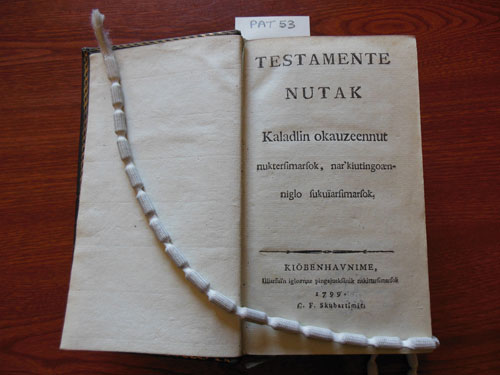
Testamente nutak : Kaladlin okauzeennut nuktersimarsok [Eskimo Bible]. Copenhagen, 1799. New College Library PAT 53
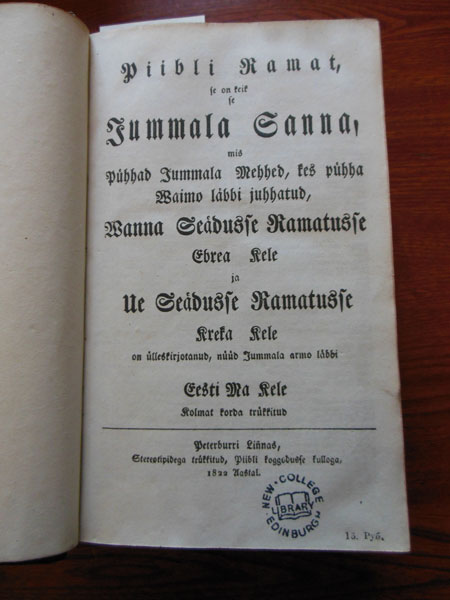
Piibli Ramat, se on keik se Jummala Sanna [Bible. New Testament. Estonian]. Peterburri Linnas, 1822. New College Library PAT 60
His work involved translating and printing portions of the scriptures into Finnish, Georgian, Icelandic, Sami, Latvian, Moldavian, Russian, Samogitian, and Swedish. First based in Sweden, where he founded the Finnish Bible Society, in 1812 Paterson moved to St Petersburg, where he was involved in the work of what became the Russian Bible Society. In later life he returned to Scotland where he continued to be active in the Scottish Congregational Church, but was also involved with early attempts to produce Bibles for the blind, in a precursor of Braille writing (2).
![Meije Issanda Jesusse Kristusse Wastne Testament [Bible. New Testament. Estonian]. Riga, 1686](https://libraryblogs.is.ed.ac.uk/newcollegelibrarian/files/2014/03/PAT-58.jpg)
Meije Issanda Jesusse Kristusse Wastne Testament [Bible. New Testament. Estonian]. Riga, 1686 New College Library PAT 58
The Paterson Bible Collection reflects the linguistic spectrum of his Northern European work, but also includes Bibles in languages as diverse as Amharic, Armenian and Ethiopian. It was received by the National Bible Society of Scotland in 1957 from A. G. C. Baxter of Gilston, Largoward, Paterson’s descendant, and subsequently gifted to New College Library in 1991.
(1) G. C. Boase, ‘Paterson, John (1776–1855)’, rev. H. C. G. Matthew, Oxford Dictionary of National Biography, Oxford University Press, 2004 [http://www.oxforddnb.com/view/article/21533, accessed 19 Feb 2014]
(2) Alexander, James M. (1974) ‘Title John Paterson, Bible Society Pioneer, 1776-1855. The later years – 1813-1855, Records of the Scottish Church History Society, vol viii, p196.
French Bible Historial Now Available in Book Reader
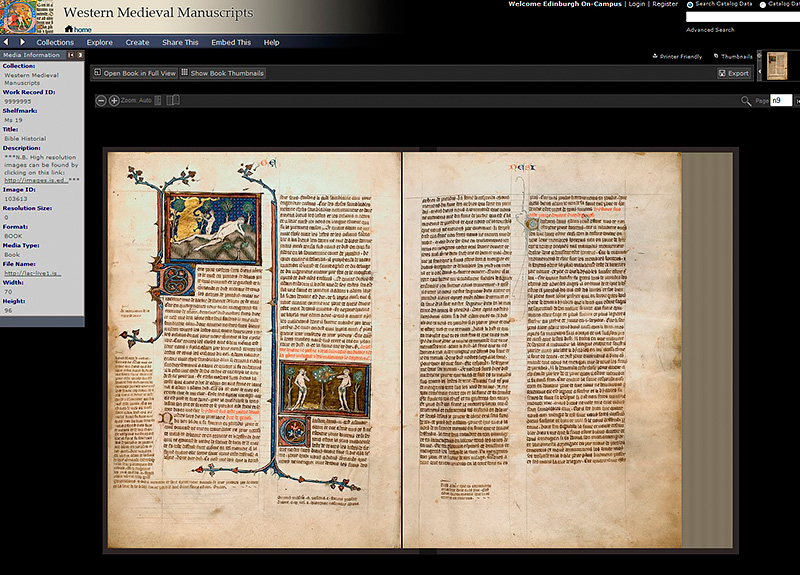
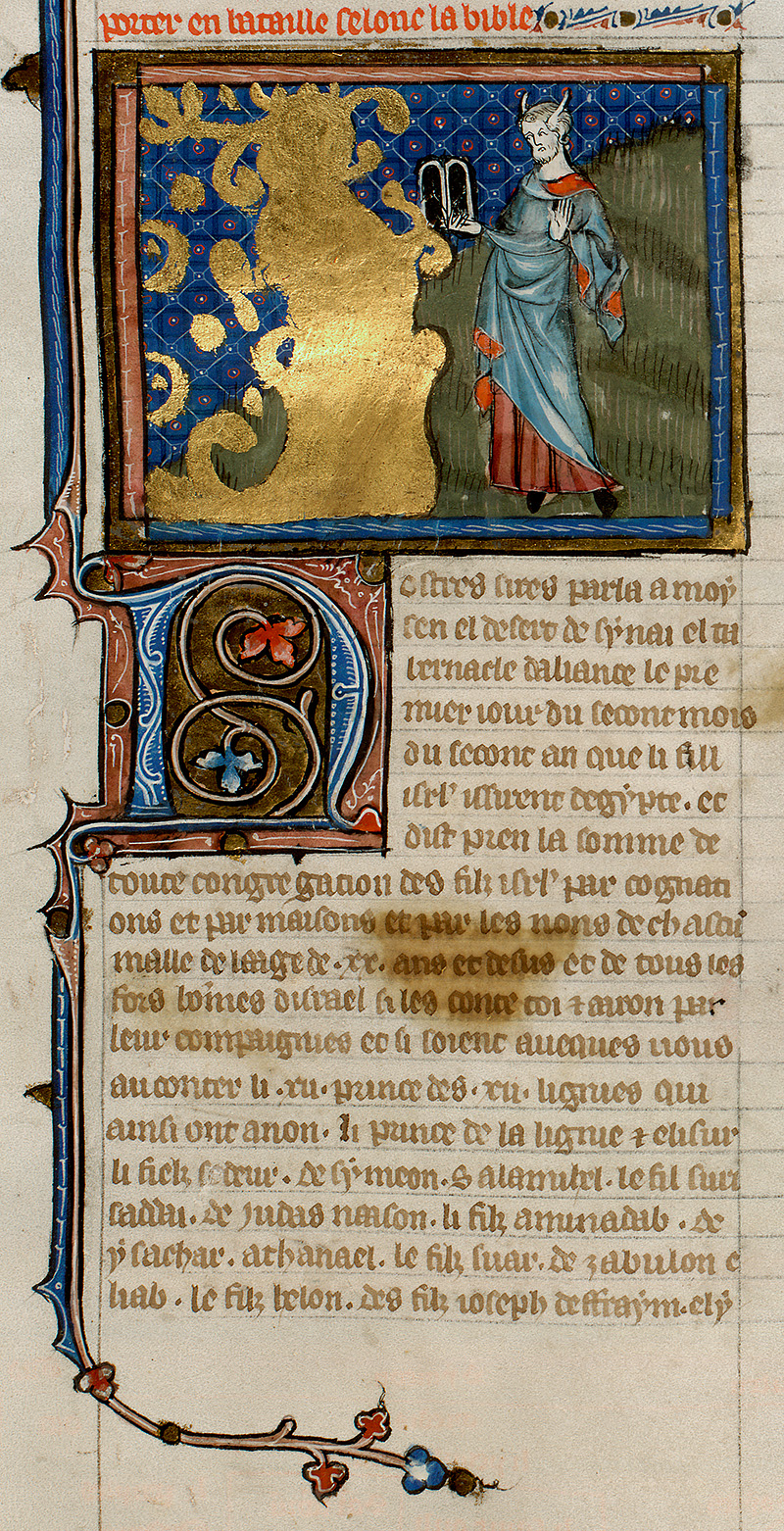
When we started at the DIU at the beginning 2004, a project to digitise a beautiful French Bible known to us as Ms 19 was already half completed, our first job was to finish it. Once this was done it was archived up to server space, and sadly, for many years, forgotten. Which is why I am delighted to announce that it is now available in Book Reader format here http://images.is.ed.ac.uk/luna/servlet/s/523yw6 . Our volunteer Ellisa Manahova – Panagiotaki has been very busy preparing the images to go into the book reader- all 966 pages. Furthermore, volunteer Jessica Macaulay has been working on enhancing the metadata for us, which we hope to add in the coming months.
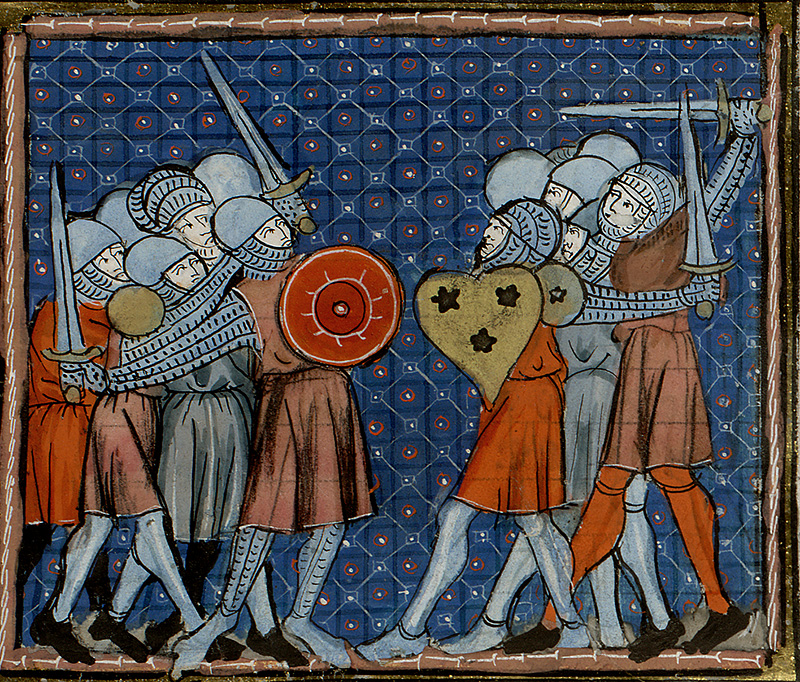
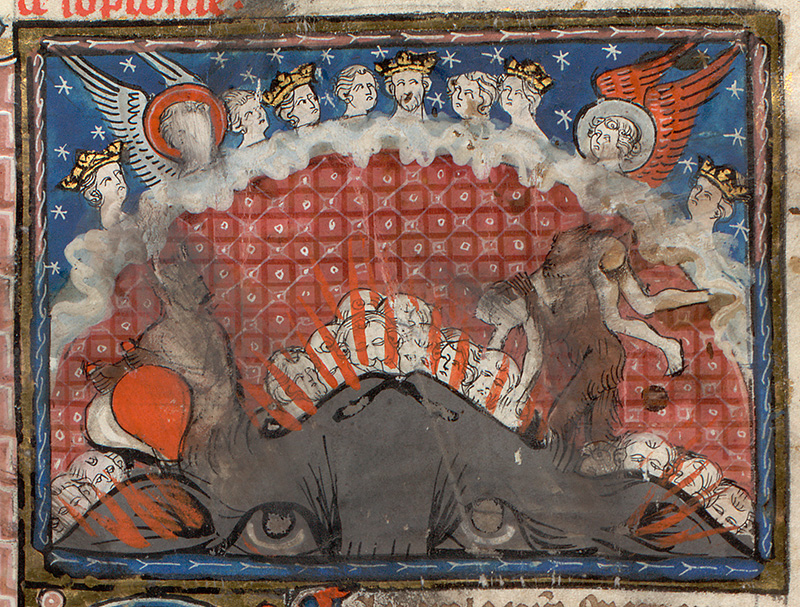
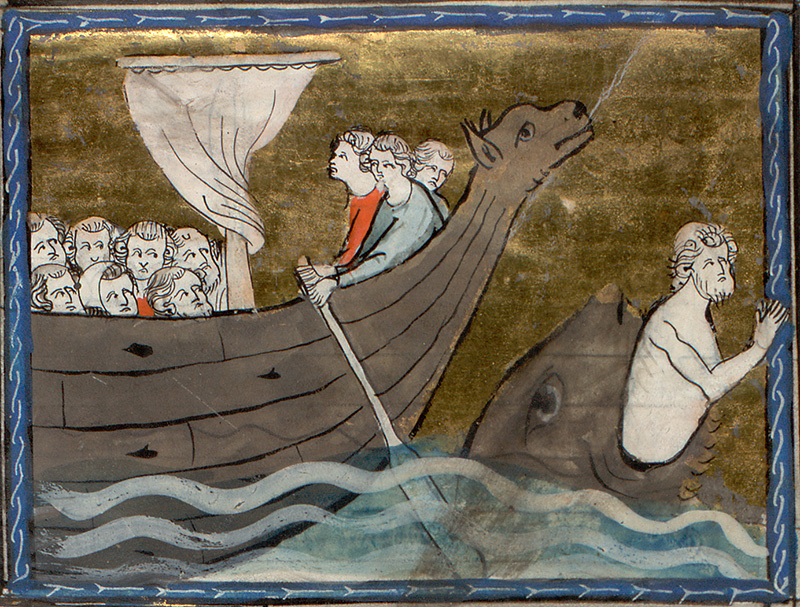
The Bible has some fantastic illuminations, including ones where God has, in an act of very polite censorship, been removed with gold paint. Enjoy!
Susan Pettigrew
CRC Cataloguing Interns
Beth and Fiona have recently started as cataloguing interns in the CRC, and tell us about their first experiences…
Thesis cataloguing comes with its perils, for a start, until the beginning of February we were both blissfully unaware of the horror of the unnumbered page. Few sights can strike fear into the heart of the intrepid rare books cataloguer quite like erratic pagination!
However, we are glad to report that this internship is not exclusively page counting, and every now and again something, or someone, truly exceptional comes along.
Among the hidden gems of the past couple of weeks, we found a 1930’s PhD thesis in physics that was submitted by a woman named Gladys Isabel Harper. A woman submitting a thesis in 1930 may not be particularly unusual, especially thanks to the progressive thinking in Edinburgh at that time, but this woman’s career certainly took an exceptional trajectory and one that even by today’s standards would appear highly impressive.
Born Gladys MacKenzie, she was the daughter of an iron founder and teacher from Edinburgh and was educated at Craigmount School in the city. She graduated with an MA in 1924, with a first in Mathematics and Natural Philosophy (now known as the physics department). As part of her PhD on J-phenomenon in x-radiation, Gladys submitted an article co-written with E. Salaman during her time at Newnham College in Cambridge where she was appointed a lectureship in 1926. In 1929 she resigned her post at Cambridge and married Wallace Russell Harper (PhD) who was a fellow physicist and published two books in the subject in 1961 and 1966.
Gladys’ PhD was granted in 1930, after she was married and while she was working in the natural philosophy department at Edinburgh University with Charles Glover Barkla, who won a Nobel prize for his work in a the field of x-radiation. Together, they wrote two articles published in Philosophical Magazine in 1926. The final leaf of Gladys’ PhD is a letter from her to the librarian at Edinburgh University stating her address in Bristol University where she was a lecturer in the department of Physics until 1947.
As we continue our quest to organize the intellectual heritage of EU, we may get shudder at the thought of chemistry PhD students who apparently had only a loose idea of how page numbers work (hint: they generally go up, one at a time), but it’s all worth it to make the work of people like Gladys Isabel Harper visible to more students today.
Inspiring Research – International Women’s Day 2014
 International Women’s Day (IWD) was celebrated on 8th March 2014. IWD has been celebrated for over 100 years and this year’s theme was Inspiring Change.
The Library subscribes to a number of databases that may inspire you when researching women’s or gender studies. You can find a full list of Recommended databases for women’s studies but a few highlights are:
Women, War & Society: the First World War had a revolutionary and permanent impact on the personal, social and professional lives of all women. Their essential contribution to the war in Europe is fully documented in this collection of primary source materials sourced from the Imperial War Museum, London. These unique documents – charity and international relief reports, pamphlets, photographs and press cuttings – are published for the first time in fully searchable form, along with interpretative essays from leading scholars.
 The Vogue Archive: contains the entire run of Vogue magazine (US edition) from 1892 to the present day, reproduced in high-resolution colour page images. More than 400,000 pages are included. Vogue is a unique record of international popular culture that extends beyond fashion. The Vogue Archive is an essential primary source for the study of fashion, gender and modern social history.
Encyclopedia of Women & Islamic Cultures Online: an interdisciplinary, trans-historical, and global project embracing women and Islamic cultures in every region where there have been significant Muslim populations. It crosses history, geographic borders and disciplines to create a ground breaking reference work reflecting the very latest research on gender studies and the Islamic world.
Project Muse: provides access to almost 200 full text journals from 30 scholarly publishers, covering the fields of literature and criticism, history, the visual and performing arts, cultural studies, education, political science, gender studies, economics, and many others.
For the full list see databases for women’s studies.
To celebrate International Women’s Day, the editors of the journal Parliamentary Affairs have drawn together recent publications examining the representation of women in parliamentary democracies around the world. All papers are free to access until the end of June 2014. See Virtual Issue: Women’s Representation.
The Library has full access to the journal Parliamentary Affairs available to students and staff of the University, search the Library Catalogue for the Journal Title to get access.
For information on events held at University of Edinburgh to celebrate International Women’s Day 2014 see:
http://www.ed.ac.uk/schools-departments/equality-diversity/news-events/events/international-women
To watch previous International Women’s Day lectures at the University see:
http://www.ed.ac.uk/about/video/lecture-series/international-womens-day
A Passage to India: J.B.S. Haldane and the Journal of Genetics
 The C.H. Waddington collection contains a folder of correspondence with J.B.S. Haldane, who died 50 years ago this year, concerning the Journal of Genetics. The correspondence, which covers 1956 to 1957, expresses Waddington’s concern at the decision made by Haldane to take the Journal, of which he was editor, out to India with him when he retired.
The Journal of Genetics had a long-standing, although somewhat fraught, relationship with Edinburgh’s Institute of Animal Genetics. Established in 1910 by two men who could be called the ‘founding fathers’ of the science in Britain, William Bateson (who coined the term ‘genetics’ to encompass its present scientific meaning), and Reginald Punnett (who held the first Chair of Genetics in Britain), it is the oldest English language journal in that field of science. However, in its first few decades it was felt to be inaccessible and somewhat limited in its publication remit by certain more experimental scientists, including those at the Institute of Animal Genetics. This was so much the case that the Institute’s director, F.A.E. Crew and his colleagues at the Institute, Julian Huxley, Lancelot Hogben and others, teamed together in 1923 to establish the Journal of Experimental Biology along with an associated Society of Experimental Biology. As hinted at in its title, the new Journal aimed to publish papers of a more experimental nature covering a wider range of genetical and evolutionary biology theories and hypotheses than covered by the Journal of Genetics at that time.
However, when editorship later passed to physiologist, geneticist, mathematician and general polymath J.B.S. Haldane, his remarkable breadth of interest and abilities and sharp, colourful personality transformed the Journal’s remit and potential (although Waddington claimed he was ‘a rather niggling editor about details and notoriously bad at answering letters’ [part of GB 237 Coll-41/5/2/9 ]).
However, when Haldane decided to retire to India in the late 1950s, where he would become a naturalised citizen, his decision to take the Journal with him caused some consternation in Britain. Waddington, who was Crew’s successor as director of the Institute of Animal Genetics, felt that the editorship should pass over to him and his colleagues and that for Haldane to continue in India would be ‘chaotic’. But Haldane would not be dissuaded, writing with characteristic wryness to Waddington on 19 January 1957:
You can, of course reply that I am an old man and may soon die or lose such intellectual powers as I still possess. I may. But my systolic pressure is 120-130mm Hg. And I have not lost a day’s university teaching through illness since 1930. And meanwhile a thermonuclear bomb or a major economic crisis may affect British publication. When I die or become too senile to edit, there need be no more difficulty in transferring the Journal back to Britain than in transferring it to India.
(part of GB 237 Coll-41/5/2/9).
Following Haldane’s death in 1964, his widow Helen Spurway continued publication in India with Madhav Gadgil, H. Sharat Chandra and Suresh Jayakar until she died in 1977. In 1985, the Indian Academy of Sciences resumed publication of the Journal, which still continues to this day in association with Springer publishing.
Look out for a longer piece here on J.B.S. Haldane late this year!
Searcher Review 2014: Refine your search
When you use Searcher, you’ll usually return a large amount of results. The limiters on the right of the screen make it easy for you to refine your search results. As part of the ongoing Searcher review, and to make it easier to understand what you’re searching, we‘ve changed the wording of the limiters on the results screen.
New limiter labels:
- Library Catalogue
- All Library Resources (print and e-content)
- Full Text (e-content)

What does this mean?
Limit to Library Catalogue: more or less the same as doing a search on the Classic Catalogue. You search books, ebooks, print journal titles and ejournal titles but NOT ejournal content. Books (both print and e-books) are weighted to appear at the top of a results list.
Limit to All Library Resources (print and e-content): this searches the Library Catalogue (as described above) PLUS the e-content (ejournals and databases) to which we subscribe. Again, books and ebooks are weighted to appear at the top of the results list.
Limit to Full Text: Check this box to find results for which the Library provides full text access. This includes ejournal and database content as well as e-books, but NOT print books.
Checking this box DOES NOT search the full text of an article or e-book. To search full text use the expander, ‘Also search within the full text of the articles’ which you’ll find in ‘Search Options’, under the search box on the Searcher homepage, or by clicking ‘Show More’ under the ‘Limit to box’ on the results page.
There will be further changes to Searcher over the next few weeks. If you’ve any feedback or suggestions please get in touch: library.learning@ed.ac.uk
Collections
 Hill and Adamson Collection: an insight into Edinburgh’s past
My name is Phoebe Kirkland, I am an MSc East Asian Studies student, and for...
Cataloguing the private papers of Archibald Hunter Campbell: A Journey Through Correspondence
My name is Pauline Vincent, I am a student in my last year of a...
Hill and Adamson Collection: an insight into Edinburgh’s past
My name is Phoebe Kirkland, I am an MSc East Asian Studies student, and for...
Cataloguing the private papers of Archibald Hunter Campbell: A Journey Through Correspondence
My name is Pauline Vincent, I am a student in my last year of a...
Projects
Cataloguing the private papers of Archibald Hunter Campbell: A Journey Through Correspondence
My name is Pauline Vincent, I am a student in my last year of a...
Archival Provenance Research Project: Lishan’s Experience
Presentation My name is Lishan Zou, I am a fourth year History and Politics student....