Home University of Edinburgh Library Essentials
April 7, 2026
New books for Social and Political Science: November 2014
Thanks to recommendations from members of staff and requests via RAB from students the Library is continually adding new books to its collections both online and in print. Here are just a small number of the books that have been added to the Library’s collections in November 2014 for Social and Political Science.
 Why we harm by Lois Presser (shelfmark: HV6025 Pre. Also available as e-book).
Toxic aid : economic collapse and recovery in Tanzania by Sebastian Edwards (shelfmark: HC885 Edw. Also available as e-book).
Sounds of the citizens : dancehall and community in Jamaica by Anne M. Galvin (shelfmark: ML3532 Gal.)
Zetoc Service downtime

The Zetoc service will experience downtime beginning on Tuesday, December 2, 2014 at 9:00am. While it is expected that this may be completed in an hour, the Zetoc Service should be considered at risk until 12.00 noon and availability of the service database functionality may be intermittent during this period.
Royal Medical Society publishes archive & Winter 2014 issue
The Royal Medical Society has now published all the back issues of their journal, Res Medica, on the library-supported open access journal hosting platform.
Res Medica started in 1957 and published regularly until the mid-seventies. A total of 42 issues have been scanned and made available online by the Library.
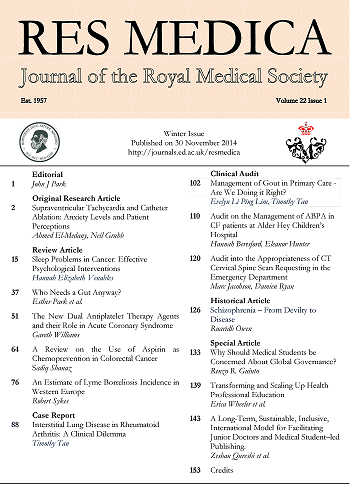
Content from some of the earlier issues is fascinating, not only because of the large number of Guinness adverts, but also because of the occasional complete lack of political correctness that will make readers squirm.
This is one of my favourite quotes, “the exclusion of ladies from membership has never been an actual law of the society—the society seems merely to have neglected the existance [sic] of the opposite sex”. The full account of the landmark decision to admit women is available in the Spring 1974 issue.
Winter 2014 issue
A new (more enlightened) editorial team has taken on Res Medica, publishing one issue per year. The second issue, published on 30th November, is now available. In this issue, alongside the regular intake of student and junior doctor led clinical articles, there are three commissioned articles by experts in global health, written with medical students and young doctors in mind.
Current and past issues of Res Medica are available here: http://journals.ed.ac.uk/resmedica
Angela Laurins, Library Learning Services
Autumn E-Book News
The following have seen additions to content and have been or are in the process of being added to our catalogue.
 Access Engineering has seen about 30 title additions as well as new calculators and videos over the last couple of months – see the new titles listed at http://ezproxy.is.ed.ac.uk/login?url=http://accessengineeringlibrary.com/pages/updates
 We have added 1156 e-books to our Cambridge Books Online package (includes some partner press titles). Titles have been added to most subject areas. Access the list here.
 Cambridge Histories Online – we have purchased the 2014 published titles and these are in the process of being added to our catalogue as the titles are published (final titles due 5th Dec). The list can be browsed here.

Dawsonera – A further 223 titles were added to our catalogue over the last couple of months. See the title list here.
 EBL – A further 140 titles were added to our catalogue over the last couple of months. See the list here.

 Ebsco/MyILibrary – A further 59 title have been added to our catalogue during Sept and Oct. See the title list here.

IEEEXplore – we have added a further 21 titles published by IEEE-Wiley. Titles listed here.
 Oxford Handbooks Online – Archaeology, Classical studies and History modules (6 titles). We have purchased the 2014 published titles listed here
 We have added a further 90 titles from Oxford Scholarship Online to our catalogue. A list of the new titles is here.
 From Palgrave Connect we have 164 new titles in Business & Management, Economics & Finance, Education, History, International Relations & Development, Media & Culture, Political Science, Religion & Philosophy, Social Sciences and Theatre & Performance. We have received the final update for 2014. Further titles will become available to us in March 2015. See the list here.

Royal Society of Chemistry – We have added 14 more titles to our catalogue recently. A list is here.
 From Springer we have access to a further 521 e-books across most subject disciplines. See the title list here.

From Taylor & Francis we have added an additional 172 titles in Education to the catalogue. See all 4 tabs on the excel list here.

University Press Scholarship Online has an additional 1226 titles added to our holdings in a wide range of subject areas and academic publishers. These have been added to the catalogue but see also a title list here.

Wageningen – we have a further 14 titles, subject area life sciences. Access the list here.
 A further 100 new Wiley Online Library titles have been added to our catalogue. A list of the titles is available here.
Further info
Further information about our e-books is available from http://www.ed.ac.uk/schools-departments/information-services/library-museum-gallery/finding-resources/resource-types/ebooks
If a book you require is not held by the library, please visit our Library Resources Plus webpage.
Study space during exams
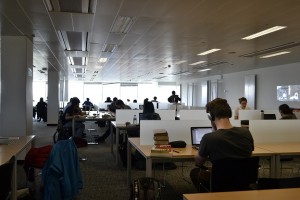 Need help finding study space?
In order to help ease pressure on study spaces in the Main Library during the busy exam period, Information Services (IS), EUSA and the University central room bookings team have worked together to identify alternative study spaces in the Central Area for our students.
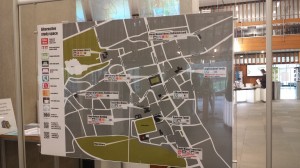
The Study Map includes information on how far each alternative study space is from the Main Library, how many study spaces are available, opening hours, what kind of study space is available, if pcs and/or cloud printing is available, etc. These spaces are all available from Saturday 29 November to Friday 19 December, with access to the libraries and open access computing labs mentioned available out with this period as well.
*NEW* this year. IS have block booked 4 teaching rooms in the David Hume Tower Hub (adjacent to café) for the purpose of general study space for students. The space will be open weekends 8.30am – 9.00pm, and weekdays 8.30am – 10.00pm.
You can access the map at http://www.ed.ac.uk/schools-departments/information-services/students/study-space/interactive-study-space-map
The map is also on display in the concourse of the Main Library as you come through the entrance gates (next to the plasma screen) and look out for smaller versions of the poster around the University.
 Out with the central area there are other site libraries with study space and computing labs available. You can find a full list of site libraries at http://www.ed.ac.uk/is/library-locations
Remember there is a free shuttle bus service that runs between the Central Area and King’s Buildings (KB) campus during semester, Mon-Fri. Shuttle bus timetable: http://www.ed.ac.uk/staff-students/students/shuttlebus
You can also book other space individually using the Web Room Bookings as usual; availability is increased due to teaching having ended.
The Main Library is open as always 7.30am-2.30am seven days a week and during revision and exam periods there are restrictions placed on external reference/consultation users access to the building during the day, to ensure that optimal study space is available to University of Edinburgh students.
Caroline Stirling – User Services Division
Chicago, 1950, Another Look: The Erving Goffman Memorial Lecture 2014
 The Erving Goffman Memorial Lecture is being held today as part of the year-long celebrations of the 50th anniversary of the Sociology department at University of Edinburgh.
Today’s lecture is titled ‘Chicago, 1950, Another Look’ and will be delivered by the eminent Professor Howard Becker. This will look at Becker and Goffman’s time at the University of Chicago Department of Sociology in the late 1940s and early 50s, which is now seen by some as the birthplace of something called “The Second Chicago School”.
Favourite character from a Scottish book
As part of Book Week Scotland, the Scottish Book Trust are holding a vote to discover the most loved characters in Scottish fiction. Here, the Library Annexe staff put forward their own favourites.
—
One of the interests that the Annexe team has in common is a love of sci-fi, which has begun a continuous stream of talk over lunch breaks and has culminated in the recent founding of the (small and unofficial) Annexe Science Fiction Club.
In this vein, and to promote what I think is one of the most underrated Scottish fiction books of the last century my nomination for favourite character goes to Maskull, the protagonist of David Lyndsay’s novel A Voyage to Arcturus.

Voyage to Arcturus by David Lindsay
Maskull, a man from Earth, awakens alone in a desert on the planet Tormance, seared by the suns of the binary star Arcturus, and embarks on an extraordinary pilgrimage with an extraordinary revelation at the end.
Having sold only 596 copies of its initial print run of 1430, Lyndsay’s masterpiece has since found a place as a classic of speculative fiction, earning itself a place in Harold Bloom’s the Western Canon, and earning words of praise by masters from J.R.R. Tolkien to Philip Pullman.
Even though he is very far from the type of hero one can relate to, I often find myself thinking about Maskull (and Lyndsay’s wildly imaginative world) when I really should be working.
And if that is not a sign of a good book, I don’t know what is.
Iraklis Pantopoulos, Library Annexe Assistant
Find A Voyage to Arcturus on the University of Edinburgh online catalogue
—
When picking a favourite Scottish character from literature, I am drawn to my two favourite Scottish authors, Muriel Spark and Iain Banks, but I find myself struggling to choose a best character. The lure of the enigmatic Long John Silver is also hard to resist – a character so well drawn, he has become the template for all pirates since.

The Invisibles Vol. 1
However, I am going to collectively go for Grant Morrison’s The Invisibles, a weird and mysterious bunch, mainly because this is the book that introduced me to his work (and is the only DC comic that is ever likely to feature Greenock as a location).
Read about The Invisibles at Wikipedia
Morrison’s work on Batman has been exceptional, but somehow Batman doesn’t feel very Scottish… apart from in Batman: Scottish Connection, as drawn by Glaswegian Frank Quietly.
(It’s terrible).
Find Grant Morrison’s Arkham Asylum on the University of Edinburgh online catalogue
Why not vote for your favourite at the Book Week Scotland website?
Carl Jones, Library Annexe Supervisor
MCG : Museums Beyond the Web Conference
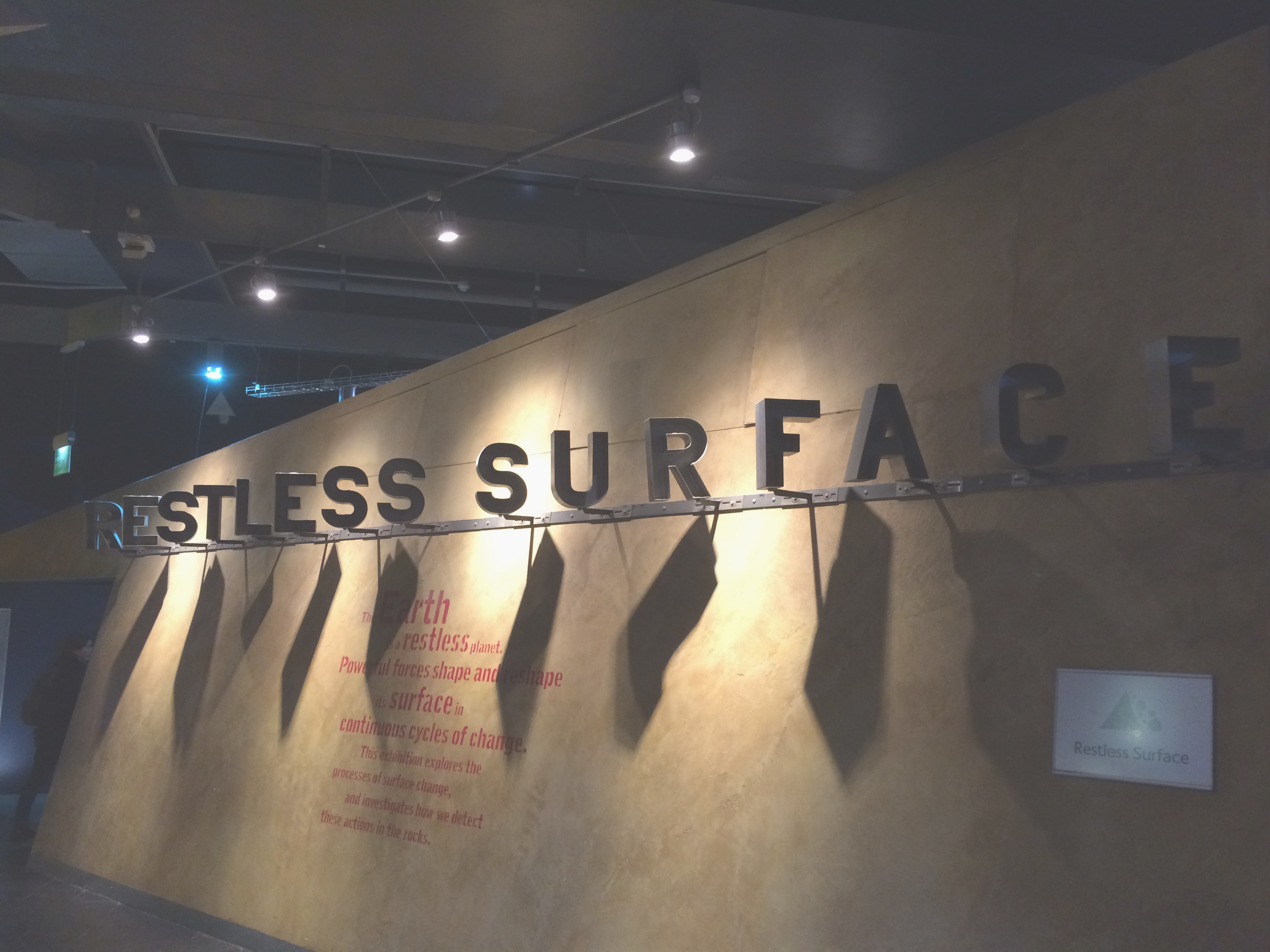
Digital, like the earth’s plates: a restless surface!
The Natural History Museum in London was the setting for the Museum Computer Group‘s Museums Beyond The Web Conference, on November 7th. There was a certain aptness to the venue, given that the Digital Development Team are currently working closely with the Geology and Anatomy collections, with Natural History itself hopefully to follow….
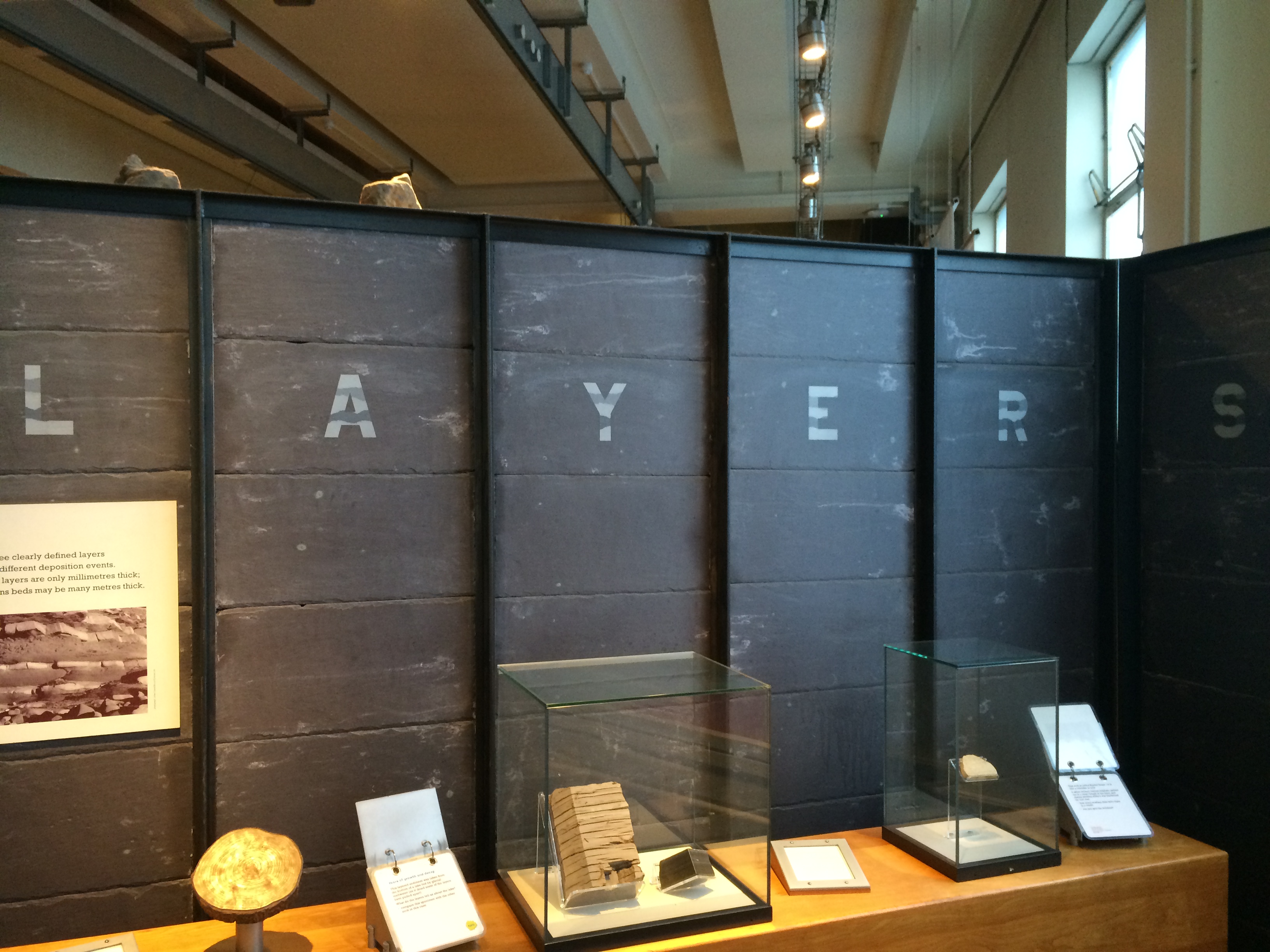
Layers. More going on than meets the eye
Certainly, while it is enough of a challenge to get the resources online, it is good to see what trends are coming up within museum spaces, and there is a lot of exciting work going on. Talks focused on museums going beyond simple catalogues, searching and retrieval: there was a huge emphasis on breaking down the barriers between the physical and digital manifestations of an object, and between visitor and curator. New methods of searching (“tumbling”, anyone?) also came up as signs that digital methods are evolving.

That’ll do.
Some of the technologies mentioned included Google Glass, being trialled by MIT; iBeacons, in use at Kew Gardens; mobile apps which could turn Dartmoor and Oxford into living museums, and (of course!) a screen combined with a wooden magnifying glass, developed by Sheffield Hallam. However, there was also a lot of emphasis given to new curation techniques, through crowdsourcing, and online museum discovery.
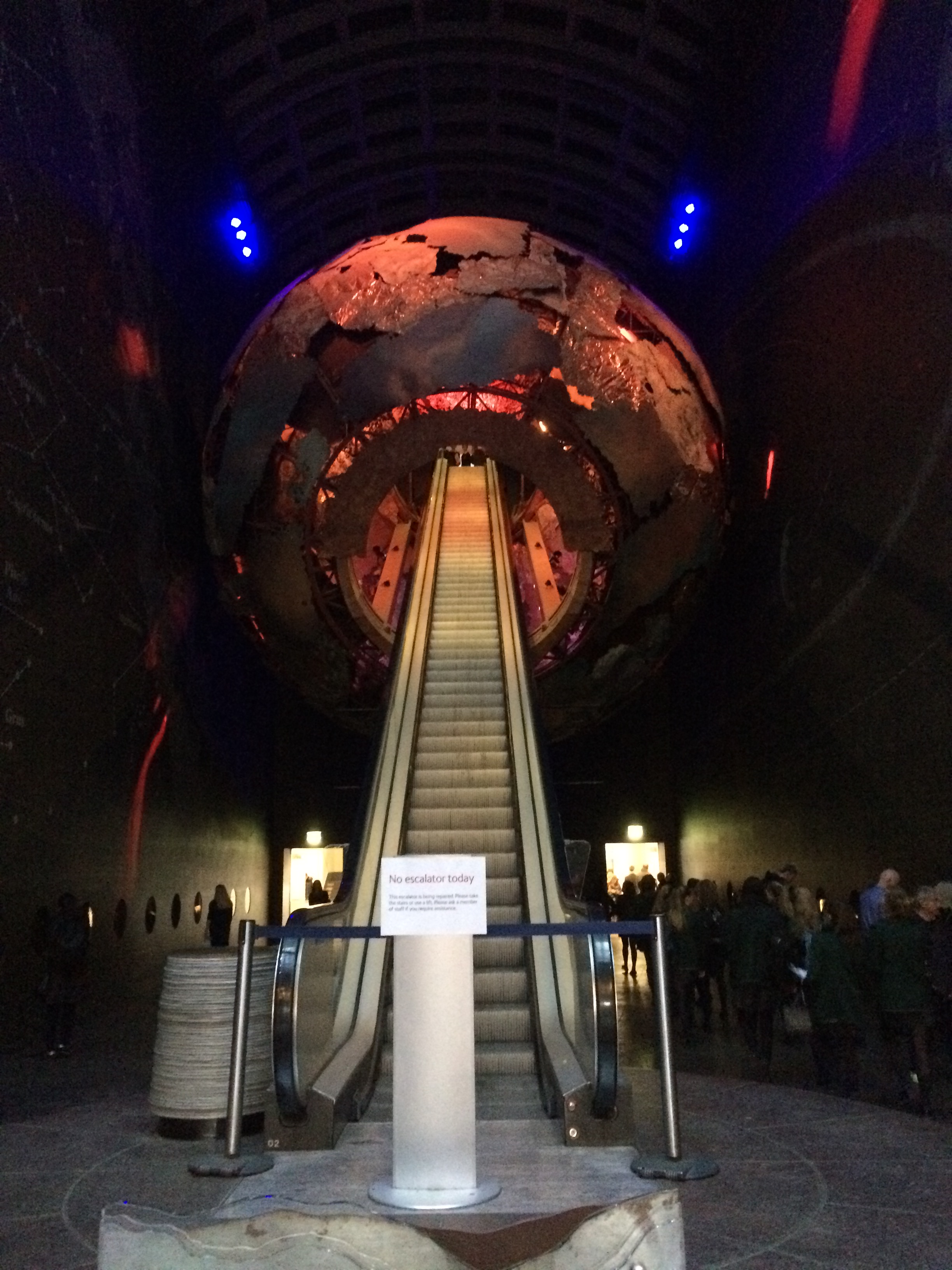
This is a metaphor for either the web emitting lots of information, or us drilling further into objects.
All of the above informed a closing keynote which basically told us that digital is now bedded in, accepted, no longer a risk. We are past the nascent period (so should be delighted that we’ve got to this stage), and now, as we move into the post-digital age, it’s no longer about the content, as much as the magic, and what we DO with it.
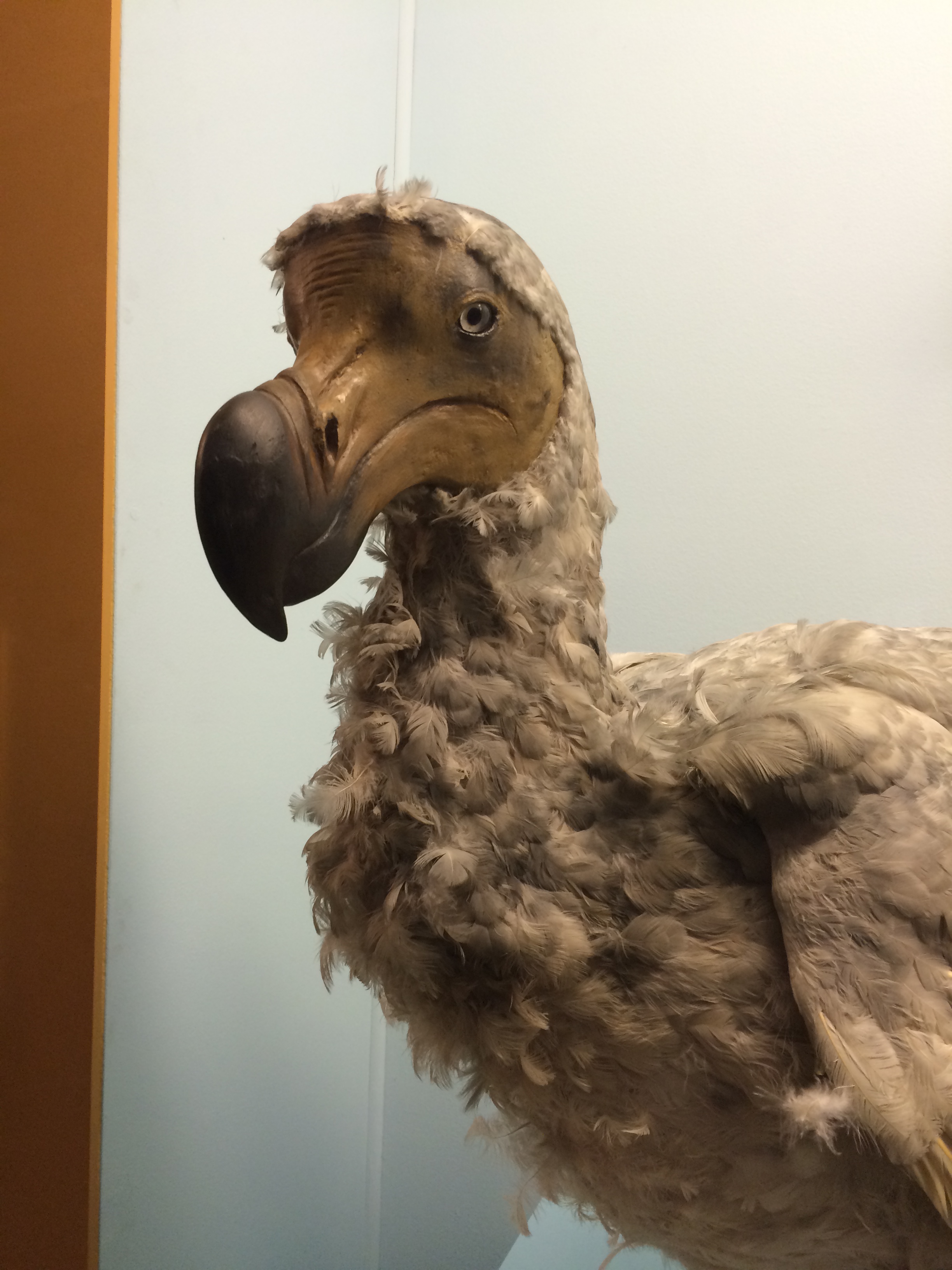
OK, we might not have got to Google Glass yet, but we’re doing better than this guy.
Scott Renton- Library Digital Development
Love books? Get involved in Book Week Scotland 2014
 I love books. I love reading. I love bookshops. And I love libraries (slight bias there as I am a Librarian after all). So Book Week Scotland is a perfect opportunity to remember why I became a librarian in the first place – I love books and I love reading and I want to share that with other people.
So if, like me, you love books, you love reading or you love libraries then why not take a quick break from your studies before exams start and get involved in Book Week Scotland, this week:
Book Week Scotland – which characters did staff at the main library helpdesk vote for
Okay here goes………..
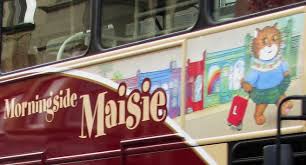 Maisie lives in Morningside and my girls when little, really liked the idea of this. We also had a soft toy of Maisie and they loved to take it along with them to….. Morningside!
Ornella
Collections
 Hill and Adamson Collection: an insight into Edinburgh’s past
My name is Phoebe Kirkland, I am an MSc East Asian Studies student, and for...
Cataloguing the private papers of Archibald Hunter Campbell: A Journey Through Correspondence
My name is Pauline Vincent, I am a student in my last year of a...
Hill and Adamson Collection: an insight into Edinburgh’s past
My name is Phoebe Kirkland, I am an MSc East Asian Studies student, and for...
Cataloguing the private papers of Archibald Hunter Campbell: A Journey Through Correspondence
My name is Pauline Vincent, I am a student in my last year of a...
Projects
Cataloguing the private papers of Archibald Hunter Campbell: A Journey Through Correspondence
My name is Pauline Vincent, I am a student in my last year of a...
Archival Provenance Research Project: Lishan’s Experience
Presentation My name is Lishan Zou, I am a fourth year History and Politics student....