Home University of Edinburgh Library Essentials
April 8, 2026
SPS Librarian Top blog posts 2014 – no. 1
As exams are almost over and semester one nears its end we are reposting our Top 5 blog posts from this year, every day in the final week of semester.
And at number one, drum roll please…………..perhaps not surprisingly Better together or better apart? Some useful resources on the Scottish referendum was our top blog post of the year.

Caroline Stirling – Academic Support Librarian for Social and Political Science
BFI InView – new e-resource

We now have access to BFI InView.
BFI InView is an online resource which offers a unique window on Britain’s changing political, economic and social landscape in the age of film and television, containing some 1000 hours of non-fiction moving image titles from 1900 to 2005 and 8000 pages of related documents. Everything can be downloaded for internal use within universities except the Parliamentary material where access is only via streaming. Access a list of the content here
This e-resource has been added to our Databases A-Z list, several subject A-Z lists and our catalogue. Further information about our databases can be found at http://www.ed.ac.uk/schools-departments/information-services/library-museum-gallery/finding-resources/library-databases
Trials ending soon
Last chance to try out these e-resources on trial.
Ending Saturday 20th December:
Chinese Electronic Periodicals Services (CEPS)
Chinese Electronic Theses and Dissertations Service (CETD)
Digital Theatre Plus
Sinica Sinoweb
Ending Sunday 21st December:
Mental Measurements
PsycARTICLES via EBSCO
PsycINFO via EBSCO
Ending Monday 22nd December:
Online Italian Dictionaries & Works of reference from Zanichelli Editore
Ending Wednesday 24th December:
Oxford Historical Treaties
Ending Wednesday 31st December:
ARAS: The Archive for Research in Archetypal Symbolism
Bloomsbury E-books
Thought: a journal of philosophy
Early English Cello
We are very excited to have a new loan join us – an early English cello. Although it doesn’t have a label, it is probably by one of the highly skilled makers working in the vicinity of St Paul’s Cathedral in London during the seventeenth century. Barak Norman is the current attribution, but we will be undertaking research based on its construction and decoration and may find that it is in fact by someone of the previous generation such as Richard Meares.
 The cello will be on display at the Reid Concert Hall Museum from this week and will also be part of the new displays at St Cecilia’s Hall in due course. The instrument is in playing condition and we are thrilled to have permission from the owner for it to be used in concerts and for demonstrations.
SPS Librarian Top 5 blog posts 2014 – no. 2
As exams are almost over and semester one nears its end we are reposting our Top 5 blog posts from this year, every day in the final week of semester.
At number 2, just missing out on the top spot, a very recent post related to the Erving Goffman Memorial Lecture that was delivered by Professor Howard S. Becker on 27th November 2014. The post highlighted a number of resources held by the University Library by and about Goffman, Becker and the Chicago School. Chicago, 1950, Another Look: The Erving Goffman Memorial Lecture 2014.

Caroline Stirling – Academic Support Librarian for Social and Political Science
SPS Librarian Top 5 blog posts 2014 – no. 3
As exams are almost over and semester one nears its end we are reposting our Top 5 blog posts from this year, every day in the final week of semester.
At number 3, a post on Study space during exams which was published at the start of the exam period in semester 2, 2013-14. An updated version of this for the current exam period (semester 1, 2014-15) can be found on the main Library Blog.

Caroline Stirling – Academic Support Librarian for Social and Political Science
SAE Digital Library – platform update
 The SAE Digital Library platform will undergo an upgrade on Thursday 18th December. No downtime is expected. Screenshots of the new layout and features are available here.
Further info
SAE Digital Library access is available from our A-Z list and catalogue.
Google Glass, gaming and Gallimaufry
Last Monday was no typical day at the office: after an early start at the Imperial War Museum exploring its First World War exhibition with Google Glass, I finished the day trying to escape the British Library before the lights were switched off! In between, I was involved in the launch of a new initiative to make our images available through Tiltfactor’s Metadatagames crowdsourcing platform.
Google Glass at the IWM

The Imperial War Museum ran an experiment to see how its First World War Galleries could be enhanced with the use of Google Glass and invited heritage professionals to try out the technology. Information Services at the University of Edinburgh have recently acquired a few sets of Google Glass and announced a competition to see how students could use it to improve their learning, so I was keen to see how it could be used in a heritage setting. The concept was actually very simple: a Glass ‘tour’ had been uploaded to the device and, whenever a wearer approached one of several beacons installed throughout the exhibition, the user was fed additional relevant content onto their Glass screen. For example, one of the exhibits was an early tank – when I came within range, a short 1916 propaganda film appeared on my screen describing how the new invention would “bring an end to the war”.
I felt the museum did a good job of providing enough additional content through the Glass to complement existing exhibits without overwhelming the user with too much additional information. The device was surprisingly comfortable and the screen wasn’t overly intrusive. This experiment showed that Google Glass can work in a museum setting: there is definitely scope for using it in one of the Library’s exhibition spaces to provide another dimension to showcasing our collections.
Digital Conversations at the British Library
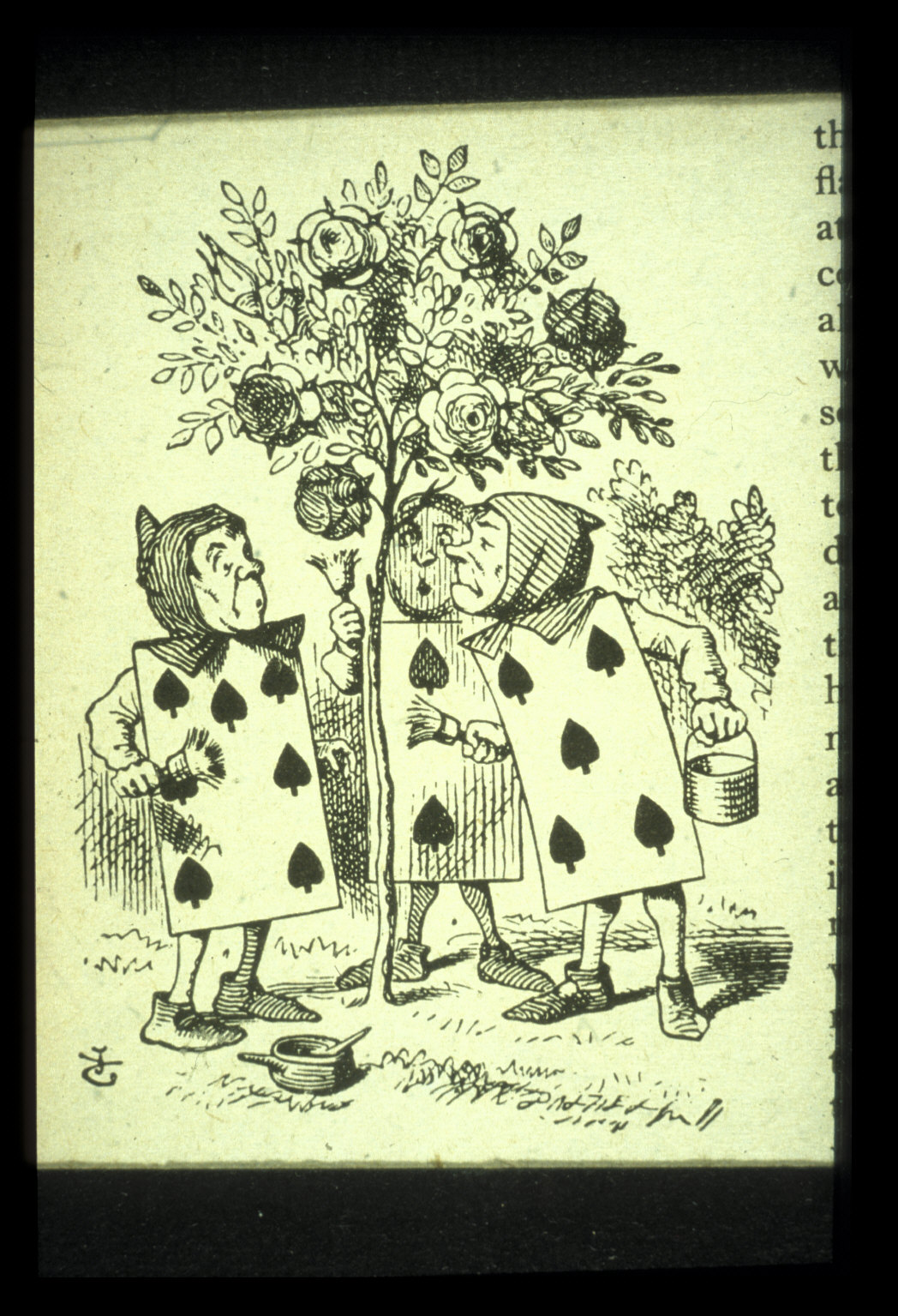
There have been some fantastic initiatives recently in using heritage content as inspiration for video games – this event, part of the British Library’s Digital Conversations series, brought heritage professionals and games designers together for the formal launch of the 2015 ‘Off the Map’ competition for students to design games inspired by the BL’s collections. The theme for the competition, ‘Alice’s Adventures off the Map’, relates to next year’s 150th anniversary of the publication of Alice’s Adventures in Wonderland. The Library provides asset packs for games designers and facilitates access to original collections; the designers use these materials to create exciting and innovative computer games. Previous winners have included an underwater adventure through the long demolished, but now digitally restored, Fonthill Abbey, and a fully immersive 3D version of London from before the Great Fire of 1666.
There were also some really interesting talks at the event about the launch of the National Videogame Arcade in Nottingham, a discussion about how the V&A’s designer in residence built a successful mobile app using items from the museum’s collections, and a demonstration of how the British Museum used Minecraft to engage users with the building and its collections. The range of ideas on display gave food for thought – how can the University take inspiration from initiatives such as these to enhance access to and use of our own collections?
Gallimaufry games
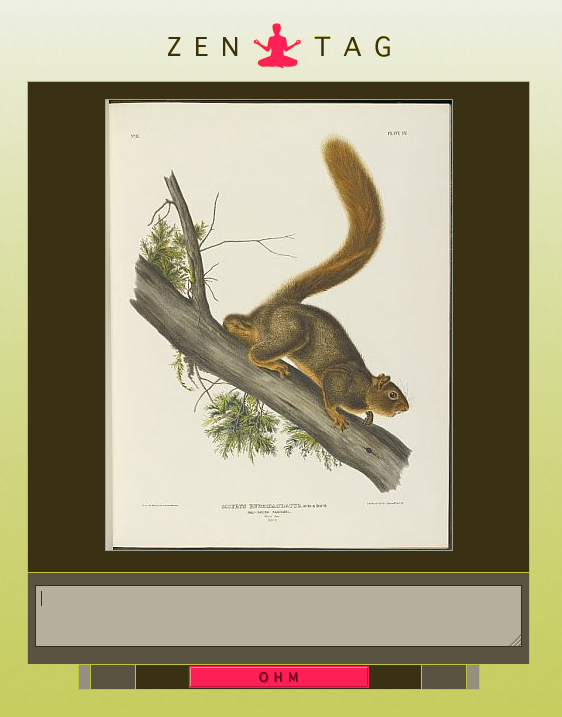
Crowdsourcing is definitely one way we can do this! We’ve been working on creating a fun metadata tagging game to encourage games enthusiasts, and those with an interest in out collections, to ‘say what they see’ and tag our images. We took inspiration from Tiltfactor’s Metadatagames platform, and on Monday we uploaded around 2,500 images from our Gallimaufry collection to their site. You can now play addictive games such as ‘Zen Tag’, ‘Stupid Robot’ and ‘Guess What’ using a diverse number of images from our own collections!
SPS Librarian Top 5 blog posts 2014 – no. 4
As exams are almost over and semester one nears its end we are reposting our Top 5 blog posts from this year, every day in the final week of semester.
At number 4 an introduction to a new online resource purchased for SPS Media Education Foundation digital films.

Caroline Stirling – Academic Support Librarian for Social and Political Science
Encyclopedia of Ancient Greek Language and Linguistics Online – new e-resource
 Following a successful trial, we have now purchased the Encyclopedia of Ancient Greek Language and Linguistics Online
The Encyclopedia of Ancient Greek Language and Linguistics (EAGLL) is a unique work that brings together the latest research from across a range of disciplines which contribute to our knowledge of Ancient Greek. It is an indispensable research tool for scholars and students of Greek, of linguistics, and of other Indo-European languages, as well as of Biblical literature.
Further info
This resource has been added to our catalogue and database A-Z lists.
Further information about our databases can be found at http://www.ed.ac.uk/schools-departments/information-services/library-museum-gallery/finding-resources/library-databases
Collections
 Hill and Adamson Collection: an insight into Edinburgh’s past
My name is Phoebe Kirkland, I am an MSc East Asian Studies student, and for...
Cataloguing the private papers of Archibald Hunter Campbell: A Journey Through Correspondence
My name is Pauline Vincent, I am a student in my last year of a...
Hill and Adamson Collection: an insight into Edinburgh’s past
My name is Phoebe Kirkland, I am an MSc East Asian Studies student, and for...
Cataloguing the private papers of Archibald Hunter Campbell: A Journey Through Correspondence
My name is Pauline Vincent, I am a student in my last year of a...
Projects
Cataloguing the private papers of Archibald Hunter Campbell: A Journey Through Correspondence
My name is Pauline Vincent, I am a student in my last year of a...
Archival Provenance Research Project: Lishan’s Experience
Presentation My name is Lishan Zou, I am a fourth year History and Politics student....