Home University of Edinburgh Library Essentials
April 19, 2026
Gunsho Ruiju – new e-book collection

Following a successful trial, we have now purchased Gunsho Ruiju.
Gunsho Ruiju is a collection of old Japanese books published from the ancient times to early Edo era. Subjects cover history, literature, religion, language, customs, art, music, cultivated arts, education, morality, legal codes, politics, economy, society and many other topics. Many textual sources are only available in this collection. This is an important primary resource for the study of classical Japanese culture.
The collection consists of three parts: Gunsho Ruiju, Zoku Gunsho Ruiju, and Zoku Zoku Gunsho Ruiju:
Gunsho Ruiju: 133 volumes, 1276 digitally compiled books and sources.
Zoku Gunsho Ruiju: 86 volumes, 2,128 digitally compiled books and sources.
Zoku Zoku Gunsho Ruiju: 17 volumes, 350 digitally compiled books and sources.
For a more detailed description, click here
Access Note
At the moment these e-books can be accessed via our E-Book A-Z list, Database A-Z list and East Asian Studies A-Z list. We hope to add individual title records to our catalogue in April once records become available from the publisher.
Further info.
Further information about our e-books is available from http://www.ed.ac.uk/schools-departments/information-services/library-museum-gallery/finding-resources/resource-types/ebooks
If a book you require is not held by the library, please visit our Library Resources Plus webpage.
Trial – Punch Historical Archive

We have trial access to Punch Historical Archive until the 14th February.
From 1841 to 1992 Punch was the world’s most celebrated magazine of humour and satire – imitated, parodied and pirated from America to India and Japan.
The Punch Historical Archive will allow users to navigate and search all issues, seasonal numbers and almanacks of this iconic publication, providing a unique insight into the politics, culture and society of the 19th and 20th centuries
Feedback and further info
We are interested to know what you think of this e-resource as your comments influence purchase decisions so please do fill out our feedback form.
A list of all trials currently available to University of Edinburgh staff and students can be found on our trials webpage.
Our most viewed images of 2014: Numbers 10 – 6
The counting is complete and we can now exclusively reveal the top ten most viewed images in our online database for 2014. Numbers 10 – 6 are displayed below – check back tomorrow for the top 5!
No.10: Native Americans riding a sea monster, 1621
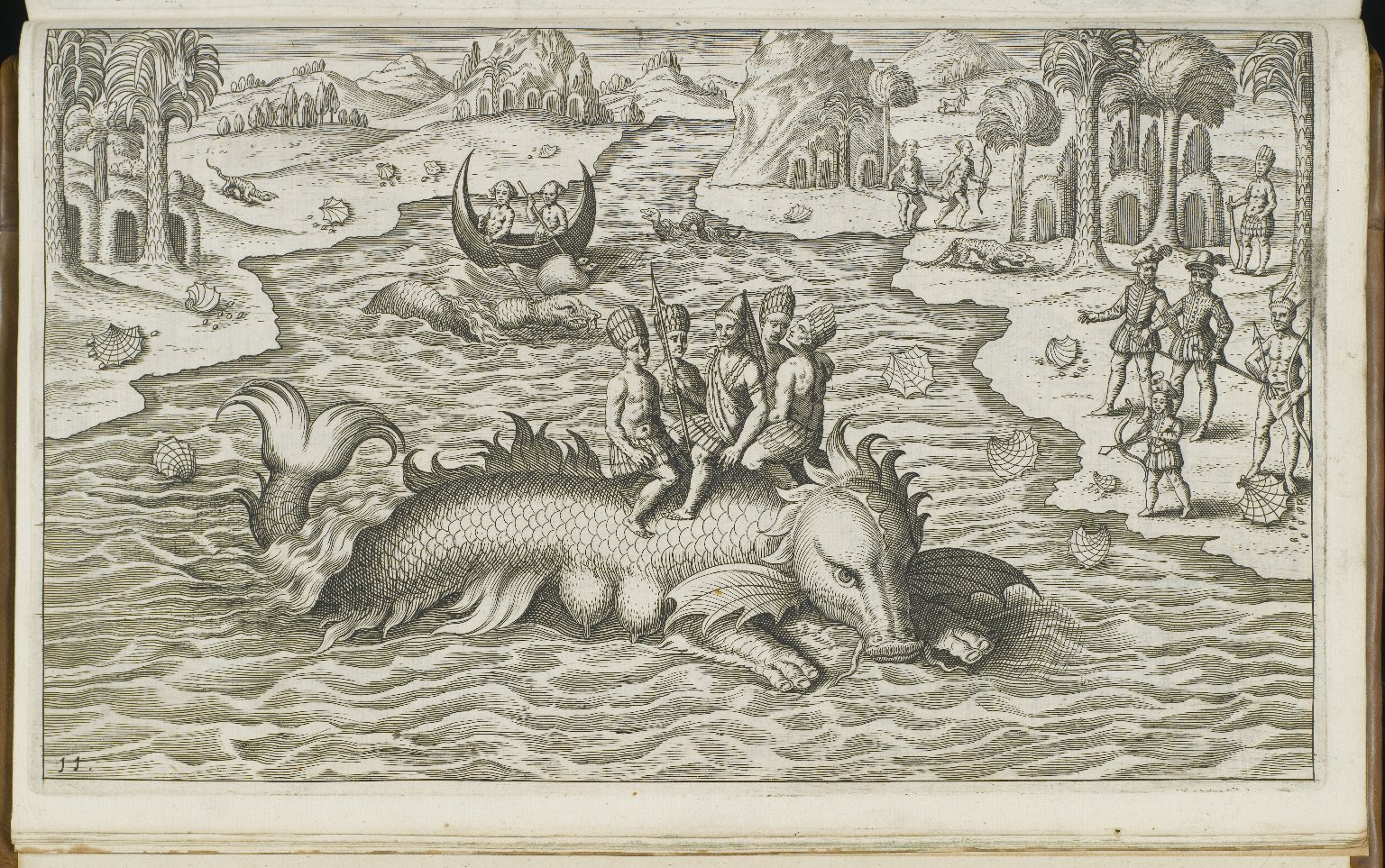
From the Nova Typis Transacta Navigatio Novi Orbis Indiæ Occidentalis, a fictionalised account of Benedictine missionaries which contains extraordinary engravings of mythical creatures, cannibalism and barbarity alongside authentic details of local customs, flora and fauna.
No.9: Current Periodicals section, University of Edinburgh Main Library, 1968
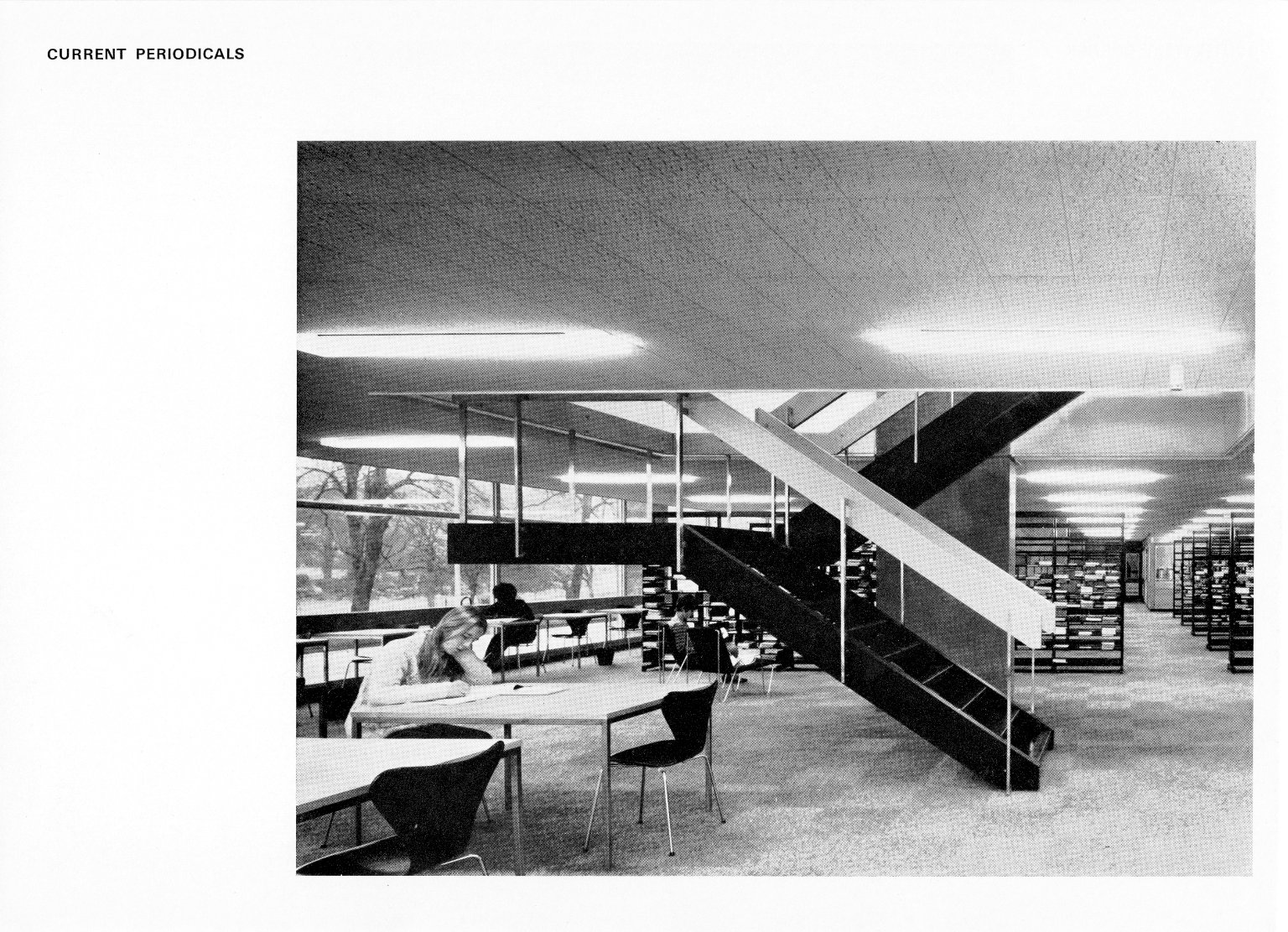 From a brochure published in 1968 containing details, photographs and plans of the Main Library on George Square. The image displays students at work in the Current Periodicals section (near the space now occupied by the Library Cafe).
No.8: Ragamala Painting, 18th century
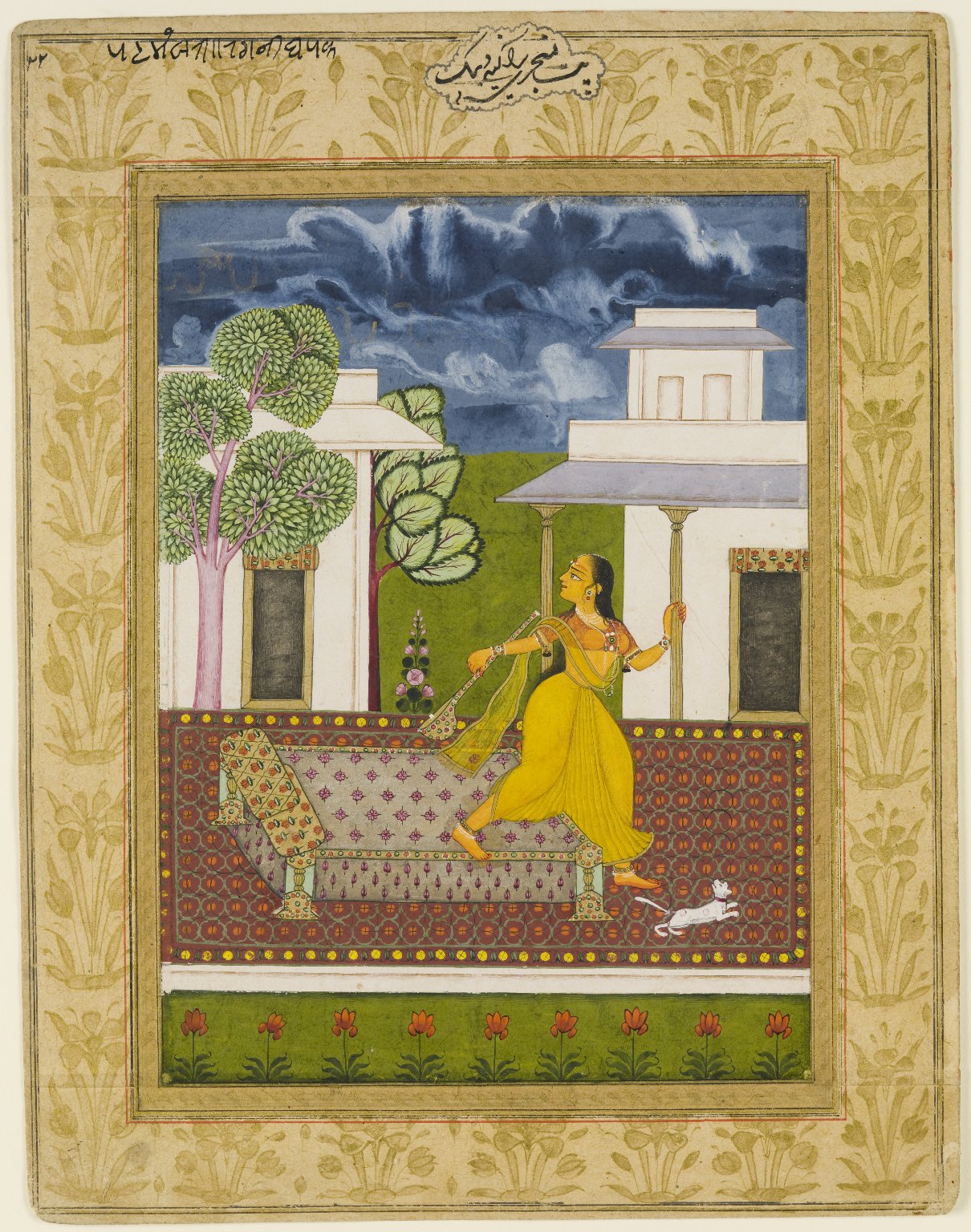
Detail of a Ragamala miniature entitled ‘Patamanjari ragini of Dipaka’, which depicts a young woman rushing towards the safety of her home, having been startled by the lightning and thunder of the monsoon.
No.7: The Castle of Coningsburgh, 1837
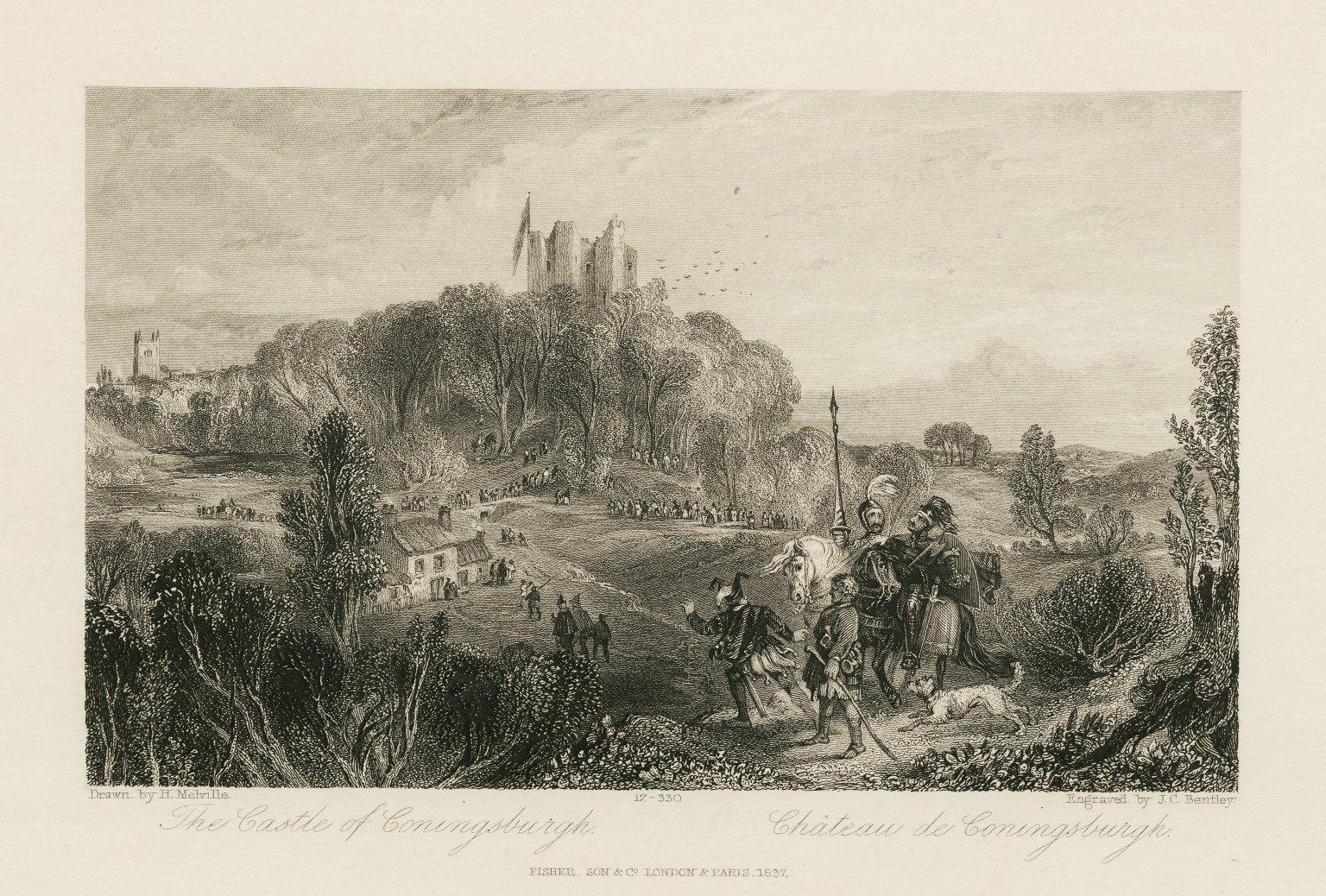
This steel engraving depicts a scene from Sir Walter Scott’s novel Ivanhoe. It shows King Richard, Ivanhoe, Gurth, and Wamba arriving at the Castle of Coningsburgh (modern-day Conisbrough, South Yorkshire) for Athelstane’s funeral.
No. 6: Orange-bellied squarrels: male and female, 1846
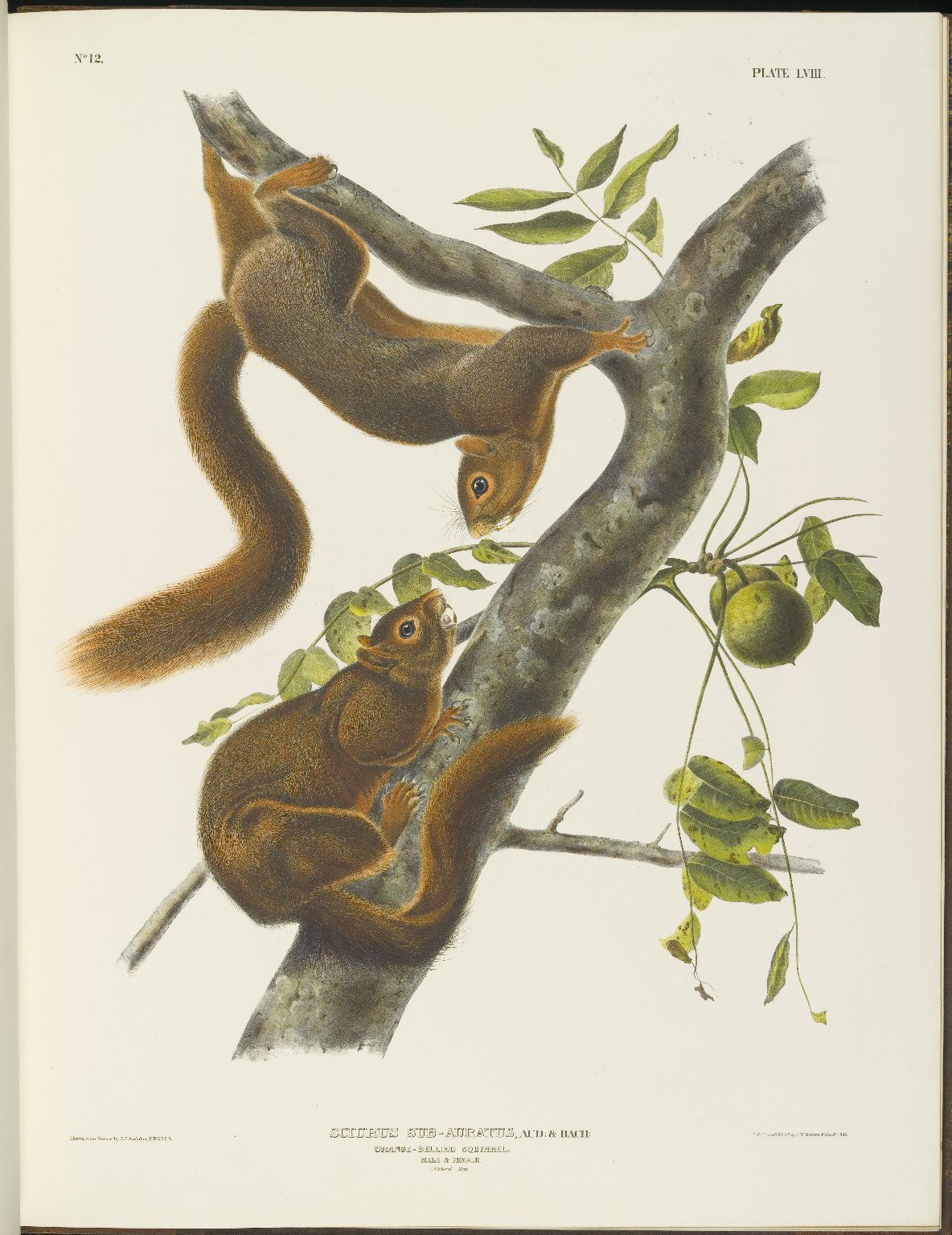
From John James Audubon’s The Viviparous Quadrupeds of North America,this image shows two squirrels in their natural habitat. The full work contains 150 hand-coloured lithographic plates, including illustrations of a polar bear, a raccoon and many other animals.
Mathematics at the CRC
Whilst preparing an introductory presentation for History of Science UG students, I came across this fascinating handwritten volume on geometry. It looks quite unassuming from the outside, but inside are the most precise and beautiful illustrations.
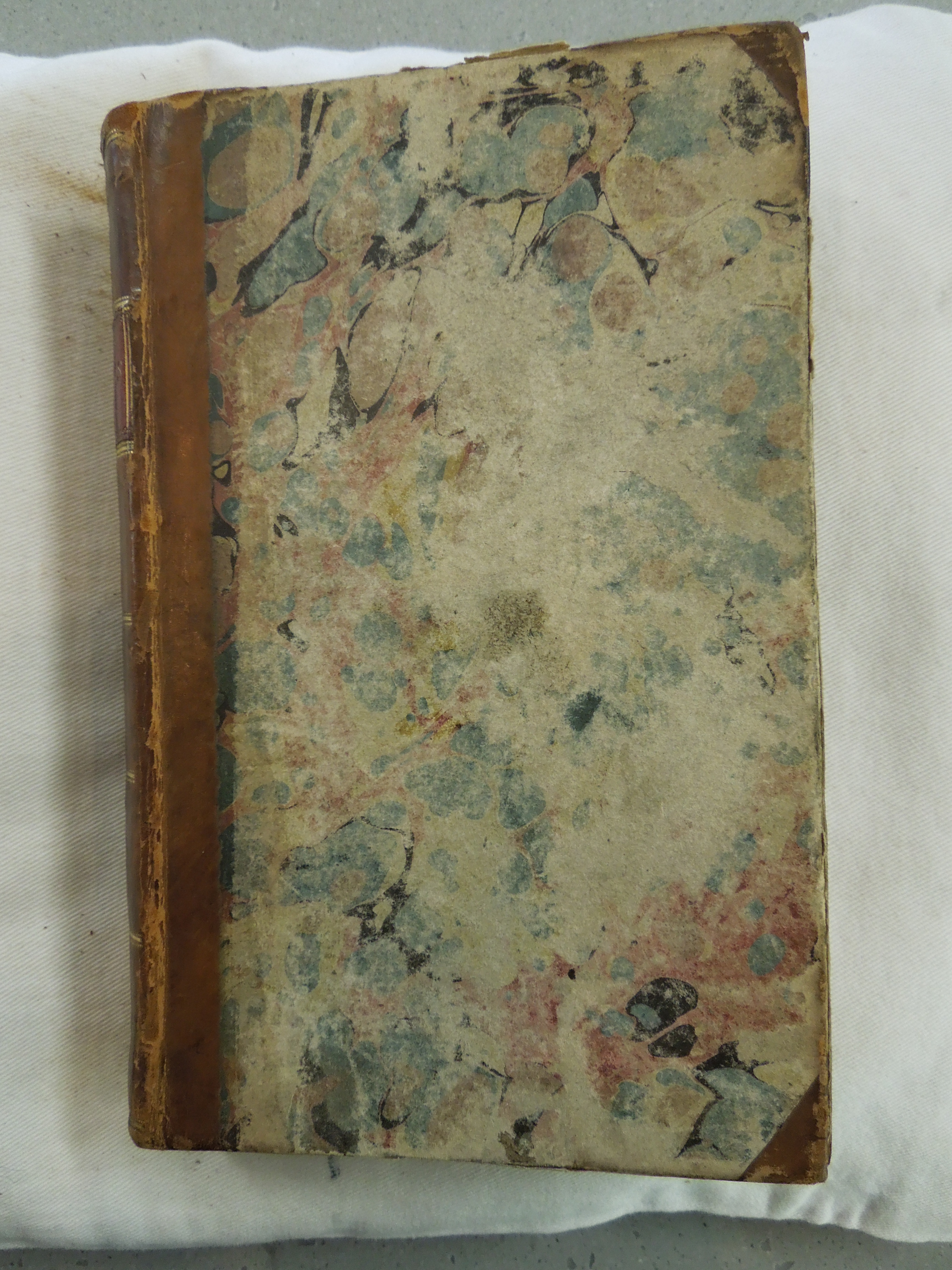
The inside cover of the volume says:
Work belonging to the late Professor Thomas Jackson of St Andrews supposed to have been done by himself, full of colour illustrations £3/3/
The book contains numerous notes on topics such as Euclid’s Elements and ‘Altimetry and Longimetry or the Mensuration of Heights and Distances’. It is part of the Laing Collection, shelfmark La.III.171. The name Thomas Jackson could refer to either of two individuals at St Andrew’s University: Professor Thomas Thomson Jackson (1798-1878) who taught biblical criticism from 1836-1851, or Professor Thomas Jackson Crawford (1812–1875) who was later professor of Divinity at Edinburgh University.1 However neither was a mathematician so the origin of the book is still mysterious.

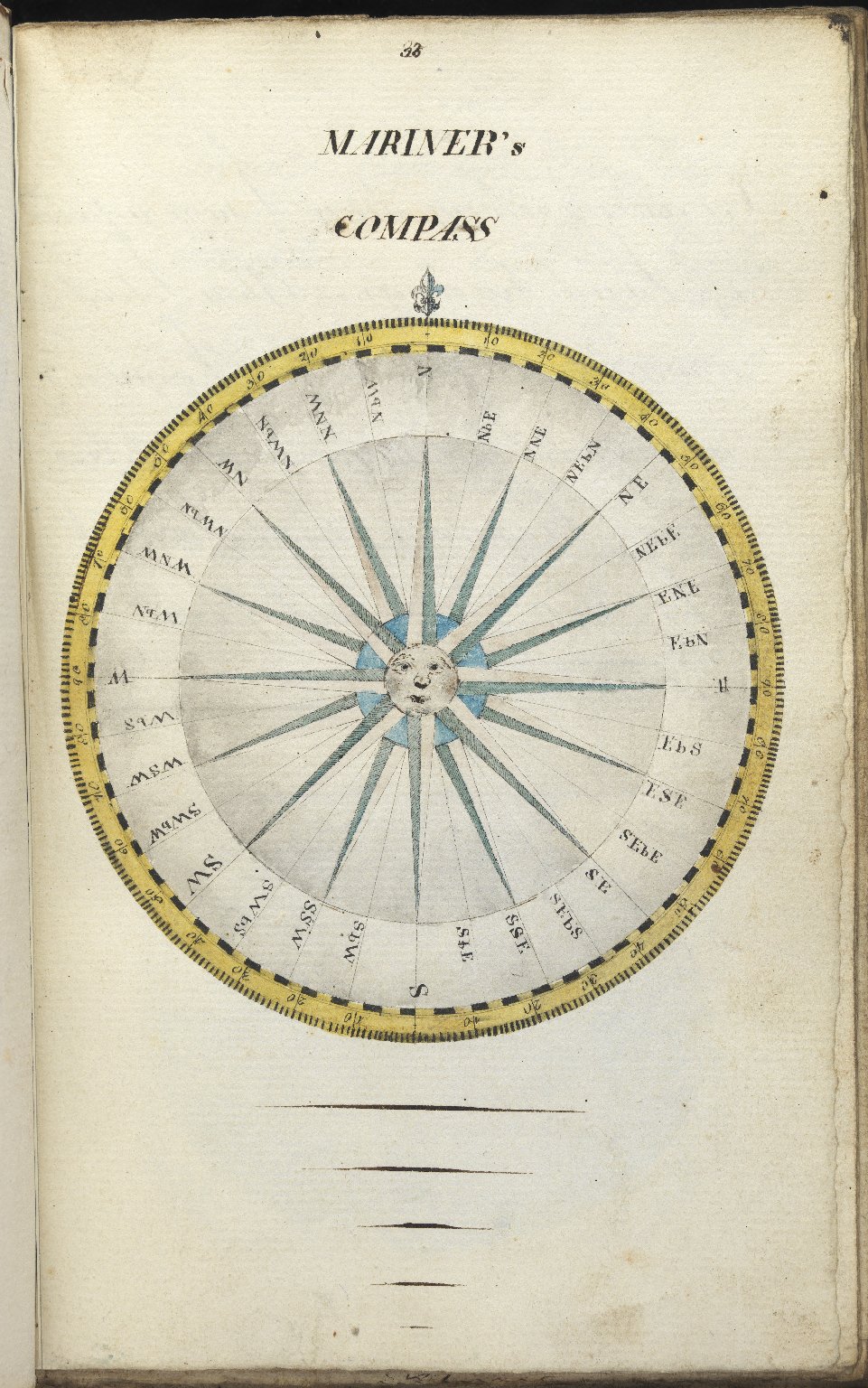
The section on altimetry (the measurement of altitude) and longimetry (the measurement of length) includes detailed watercolours of buildings, landscapes and seascapes, accompanied by mathematical annotations. It also has a detailed illustration of a mariner’s compass:
Within the Euclid section of the binding, there is even an incredible fold-out image ‘To Make Scales, Cords, Sines and Tangents’:

The Altimetry and Longimetry images are available to view on our image database: http://bit.ly/1BpB1JJ and were taken by the Digital Imaging Unit photographers.
References
1 https://pacific.st-andrews.ac.uk/DServe/dserve.exe?dsqIni=Dserve.ini&dsqApp=Archive&dsqDb=Catalog&dsqCmd=show.tcl&dsqSearch=(RefNo==’IM%2FLC%2FmsLF1119.A2X’) ; http://en.wikisource.org/wiki/Crawford,_Thomas_Jackson_(DNB00)
This item can be consulted at the Centre for Research Collections: www.ed.ac.uk/is/crc
Fran Baseby, Service Delivery Curator
Thing of the Month
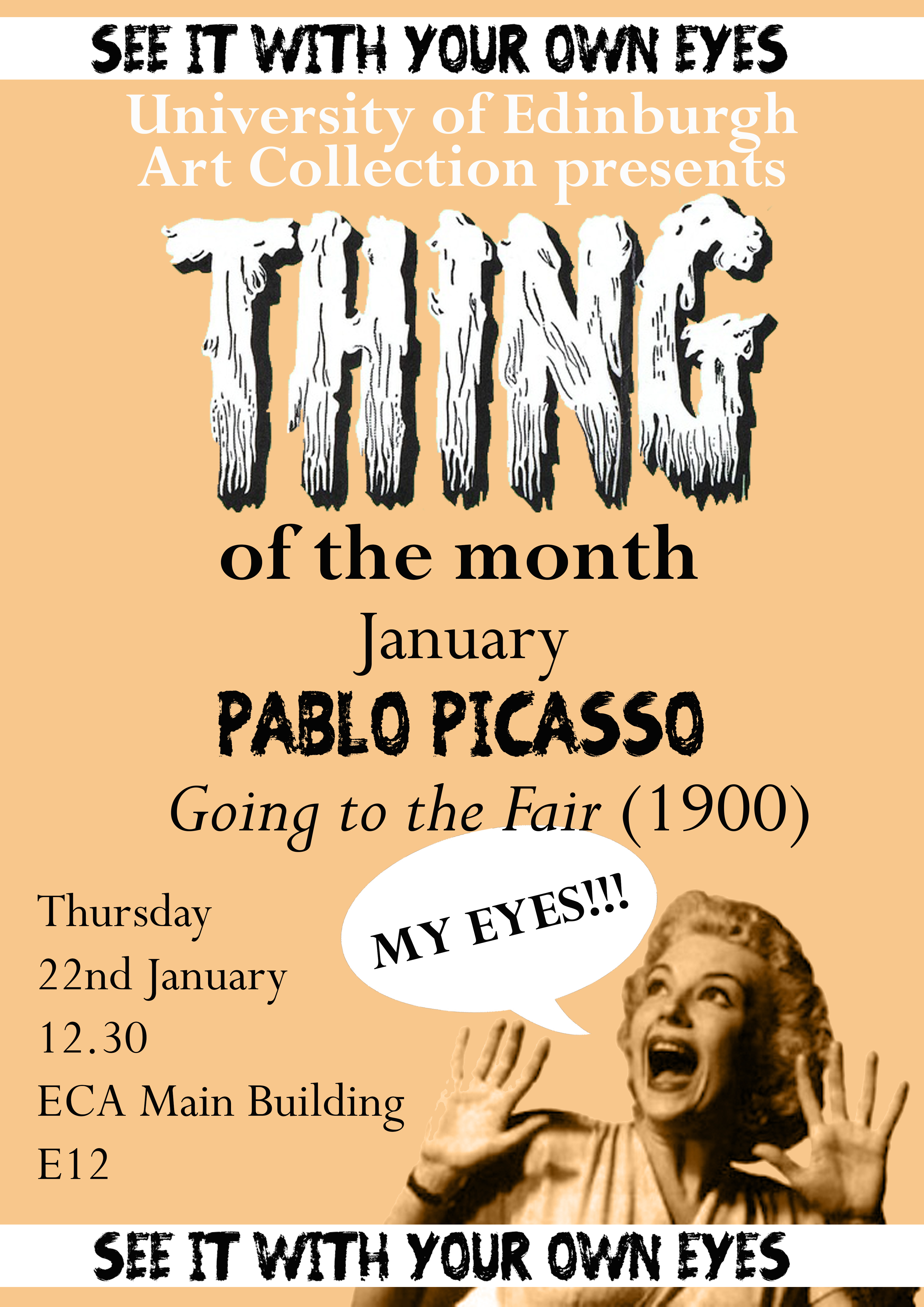
Starting next week is our new event at ECA: Thing of the Month.
Head over to E12 on your lunch break to get a close up look at a thing from the Art Collections and a chance to hear more about it.
On the 22nd we’re getting our Picasso pastel out, with Professor Neil Cox providing our first guest lecture.
See you there!
Edinburgh University Press and the Library Annexe
Part of the Special Collections material we keep here at the Library Annexe is the published output of the Edinburgh University Press; leading scholarly publisher of academic books and journals in Scotland. EUP publishes a range of research publications (in a wide variety of subjects), from research monographs and serials; to textbooks and materials which are available online (it is a part of University Publishing Online, the online platform of Cambridge University Press). It was established in 1940s and became wholly owned by The University of Edinburgh in 1992. All publications carry the imprimatur of the University and the University Library acts as a deposit library for all publications printed by the Press. This helps to ensure that EUP’s publications are collected systematically, to preserve the material for future use and to make it available for readers here and now. EUP material is available on a strictly reference basis under the same conditions as any other rare book or Special Collections item. Readers can consult the material either here or in the CRC (6th floor of the Main Library). The deliveries are twice a week, Mondays and Wednesdays at 1pm
To show the variety of material published by EUP, I did a quick search (key words Slovenia and Zizek) and found quite a few interesting articles and monographs.
- Matthew Sharpe and Geoff Boucher “Žižek and Politics: A Critical Introduction“
- Chris McMillan, “Žižek and Communist Strategy: On the Disavowed Foundations of Global
- “Scotland, Slovenia and a New Renaissance” [EUP Online]
- “Eastern European Liberalism and its Borderlines” [EUP Online]


Slavoj Žižek is undoubtedly the most renowned Slovenian author; philosopher and cultural theorist sometimes referred to as “Elvis of cultural theory” or “academic rock star”. Žižek achieved international recognition after the 1989 publication of his first book in English, The Sublime Object of Ideology.
Edinburgh University Press Official Site
About the University’s Special Collections
Marko Mlakar, Library Annexe Assistant
How the Library can help you in Semester Two?
Need help using or discovering Library resources? Need advice on referencing and citing? Not sure where to start with your systematic literature review? Or just want to know how to best use Google in an academic context?
 The Academic Support Librarian team are running several courses this semester through IS Skills which you can book onto via MyEd. These (mostly) 1 hour sessions allow you to get expert advice and hands-on experience, so whether you are a returning to the University after the winter vacation or are a brand new student at the University why not book on and become an expert yourself?
Downtime alert – Asahi Shimbun Kikuzo
Kikuzo II Visual from Asahi Shimbun Kikuzo will be down for maintenance between 9am and 11am on Tuesday 13th January.
Frozen: The story of Frostie the calf
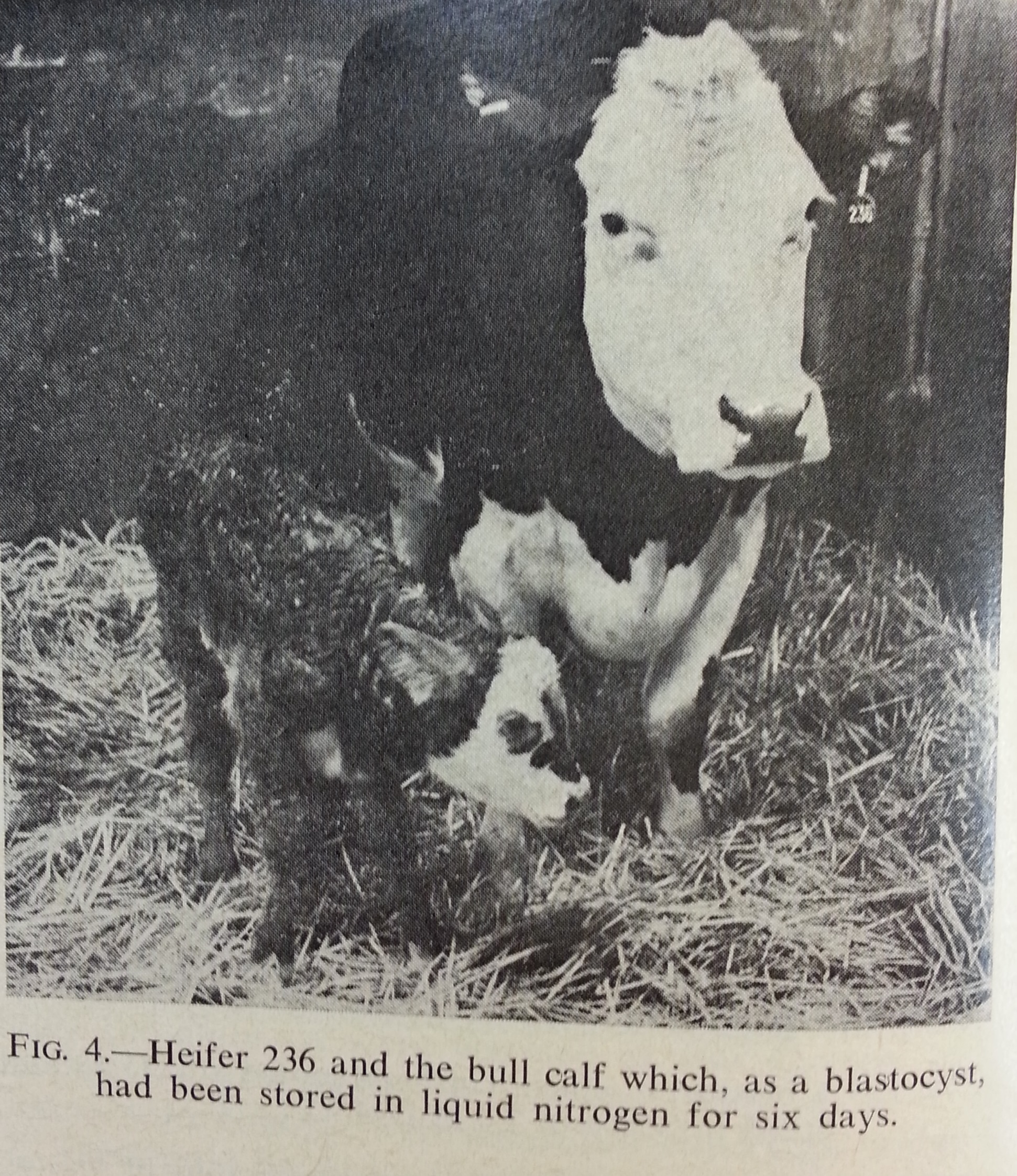 Ian Wilmut is best known for his involvement with the team which cloned Dolly the sheep in 1996. However, his scientific career, which spans more than five decades, includes a variety of groundbreaking achievements and discoveries, which are being revealed as his papers are catalogued as part of the continuing ‘Towards Dolly’ and ‘The Making of Dolly’ projects.
Ian Wilmut initially wished to work as a farmer, but he ‘shuffled sideways into scientific research’*, as he puts it, and ultimately won a scholarship as an undergraduate at Nottingham University to work for two months under Chris Polge at the Animal Research Station in Cambridge. His role was to help out generally with experiments, but he soon became fascinated by embryos, and returned to work with Polge once he graduated. Wilmut’s PhD, awarded in 1971, was on the freezing of boar semen. Copies of Wilmut’s published papers exist in the archive from 1969 onwards, and a glance through the papers which appeared over the next decade reveal Wilmut’s wide-ranging research on the effects of freezing, thawing and warming on embryos and spermatozoa in mice, sheep and cattle.
In 1973, Wilmut was the first scientist to successfully freeze a calf embryo (using liquid nitrogen), thaw it, and transfer it to a surrogate mother. This process led to the birth of a healthy red and white Hereford-Friesian cross calf, which Wilmut wryly named ‘Frostie’. Wilmut’s findings were published within a few weeks of Frostie’s birth in The Veterinary Record as ‘Experiments on the low-temperature preservation of cow embryos’ (June 30 1973, 686-690), and a copy of the reprint survives in the archives. Wilmut has remarked that this was ‘one of the fastest scientific publications ever’. It also led to some considerable interest from the world’s media, with Wilmut appearing on television and newspapers from as far away as New Zealand seizing upon the story. This media attention was a precursor to the storm which Wilmut, Keith Campbell and team would generate two decades later when Dolly the sheep was born. Wilmut’s discovery of the viability of frozen embryos to produce healthy offspring has since been used across many different species in agriculture and also for the conservation of rare breeds. The first human to be born from a frozen embryo was Zoe Leyland, born in Melbourne in 1984.
Wilmut’s work with Chris Polge equipped him with many of the techniques in reproductive physiology which would instruct his later work on cloning, nuclear transfer, stem cell and regenerative medicine in Edinburgh, where Wilmut moved in 1973. Throughout his career Wilmut has been inspired by the possibilities of advances in reproductive physiology and biotechnology for fertility treatments,practical applications to the farming industry and breakthroughs in treatments or cures for debilitating genetic diseases.
*All quotes taken from The Second Creation: the age of biological control by the scientists who cloned Dolly, I. Wilmut. K. Campbell and C. Tudge (London, 2000).
Clare Button
Project Archivist
‘Doing their bit’: the remarkable life of nurse Yvonne FitzRoy
Today’s blog is by Louise, archivist at Lothian Health Services Archive (LHSA), as she looks into a very singular wartime life:
On the surface, Yvonne FitzRoy (1891 – 1971) seemed an unlikely nurse. A privileged socialite (daughter of Sir Almeric FitzRoy and Katherine Farquhar), progressive and actress, she was in fact to serve on the battlefields of Russia and Romania as a nursing orderly to Elsie Inglis between 1916 and 1917 with the Scottish Women’s Hospitals (SWH).
The Scottish Women’s Hospitals were set up as soon as war broke out by Edinburgh clinician and suffragist Dr Elsie Inglis, with the financial support of the National Union of Women’s Suffrage Societies (NUWSS).

Dr Elsie Inglis (LHB8A/9)
The all-female SWH units were formed in order to offer medical support to front-line troops, and by the end of the war there had been units based in France, Corsica, Salonika, Serbia, Russia, Romania and Malta. Although rejected by the War Office in Scotland (the famous rebuke to Dr Inglis was that, as a woman, she should ‘go home and sit still’), the aid of the SWH was accepted first by the French Red Cross, and a hospital was set up in Calais to treat Belgian troops. A hospital in the abbey of Royaumant soon followed.
The SWH are perhaps best known through their units in Serbia (work that still links Scotland to the area today). However, the Serbian army’s defeat by Austrian troops forced their withdrawal – Dr Inglis was captured and was returned to Britain; others who could escape chose to retreat in treacherous conditions with the Serbian army. However, in 1916, the London Suffrage Society financed another SWH unit of 80 women to support the Serbian army in Russia and Romania, of which Yvonne FitzRoy was one. LHSA is lucky enough to hold two letter books (LHB8/12/6 and 7) and one scrapbook (LHB8/12/8) that trace Yvonne’s work on this eastern front.

Yvonne’s appointment letter to the SWH (LHB8/12/8)

Luggage label from Yvonne’s journey to serve with the SWH on a captured Austrian ship (LHB8/12/8). According to her memoirs, her luggage consisted of ‘one kit-bag, one haversack, and a rug.’
Although SWH archives are held by Glasgow City Archives and The Women’s Library, the pivotal role played by Elsie Inglis means that we have some intriguing material across LHSA collections (of which more as the weeks go on!): SWH work is reflected in archives from the Bruntsfield Hospital (where Dr Inglis was a surgeon), in the papers of the Elsie Inglis Memorial Maternity Hospital (opened as a memorial to Dr Inglis in 1925 with the remainder of the SWH funds) and in the personal collections of campaigners who fought to keep the memory of Dr Inglis alive. The letters and scrapbook created by Yvonne FitzRoy can be found in LHSA’s Bruntsfield Hospital collection.
Although not solely covering her time at the front, Yvonne’s scrapbook is dominated by the War and its aftermath. Reflecting her artistic and social life as well as her military one, the book is pasted with typed quotations, theatre scripts, postcards and programmes, indicating a love of words, the London stage and the idiosyncratic:

Memorabilia in Yvonne’s scrapbook (LHB8/12/8)
However, the levity of costume design, exhibitions and drama is soon punctuated by newspaper clippings of events in the theatre of war as European tensions grew in 1914.

A typical ‘text heavy’ page in Yvonne’s scrapbook (LHB8/12/8).
As a result of her services to the Russian sick and wounded, Yvonne FitzRoy was awarded a Russian medal for meritorious conduct, the ‘Order of Service’, which she was given government permission to wear:

Certificate of Yvonne FitzRoy’s ‘Order of Service’ medal (LHB8/12/8).
Her service throughout the war was also recognised by the British Red Cross and Order of St John organisations, which worked together during the war after forming a Joint War Committee:

Yvonne’s certificate for wartime services with the British Red Cross Society and the Order of St John of Jerusalem in England (LHB8/12/8).
Like others who served with SWH, Yvonne FitzRoy seemed to have been involved with the Voluntary Aid Detachments, women (who came to be known as VADs) who volunteered in county Red Cross hospitals. Yvonne seems to have used her literary skills in work for a hospital magazine, the Egginton Howl, the magazine of Egginton Hall Red Cross Hospital near Derby.
The Egginton Howl was even praised in this December 1916 article by The Spectator: http://bit.ly/1Ki26lQ. The letter by Rudyard Kipling mentioned in the article is in fact pasted into Yvonne’s scrapbook, indicating that at this time she must have been closely involved in the magazine’s production:

Letter from Rudyard Kipling to Yvonne FitzRoy (LHB12/8/8).
Not content with one literary autograph, Yvonne managed to collect another trophy, in the shape of a questionable pun and endearing sketch from author HG Wells:

HG Wells caricature (LHB8/12/8).
Following the war, Yvonne (like other SWH medical staff) chose to write a memoir of their experiences working on the front line. Her memoir, With the Scottish Nurses in Roumania, was published in 1918, giving an account of her life at the front – it was dedicated to Dr Inglis, who died from cancer on 26th November 1917 just as she had returned to Britain. Yvonne’s adventures did not end with peacetime, however. In 1921, she was appointed as Private Secretary to Alice, Marchioness of Reading, wife of the British Viceroy in India, a post that she occupied until 1926. Yvonne’s life in India can be pieced together through another memoir, Courts and Camps in India: Impressions of Viceregal Tours 1921 – 1924, or through her personal papers from this time held at the British Library. The cuttings and correspondence in her scrapbook also reflect this period of her life:

Greetings card sent from the Viceroy’s Camp, c. 1924 (LHB8/12/8).
Yvonne’s letters home to her parents are more directly focused upon her SWH period, covering September 1916 to January 1917, when she travelled between Russia and Romania with ‘Hospital A’, headed by Dr Inglis. From her journey east to life treating patients at the front and retreating and advancing in the wake of Allied campaigns, Yvonne’s collected letters cover her friendships, leisure time, daily life and the business of staying warm, including frequent mentions of ‘Swedish drill… all of us flat on our backs… waving our grey legs in the air’ (6th September 1916). Frequent references to the ‘Russian censor’ preclude any detailed references to military manoeuvres, victories or defeats, but on some occasions working conditions are mentioned in more detail:
‘Now we are about 10 miles from the firing line, and Hospital B has gone off to act as our clearing station. I am really glad to be in A. B won’t probably see more of the fighting than we shall, and from the medical point of view our work will be the most interesting as they simply dress the wounds and send the men straight on. Here they only stay a day or two if they are well enough but anyway that give us enough time to cope with things a little. Also I am with Dr Inglis and have got the pick of the sisters in my Ward headed by a Bart’s nurse – my word what a difference a big hospital training makes! We arrive just in time for the biggest rush of wounded they’ve yet had and got 100 in before we were half ready. Every soul worked like bricks but the first few days were just terrific. Now, in all the confusion, we are beginning to see daylight and in a day or two shall have our next two Wards open.’ (10th October 1916)
As the extract above hints, Yvonne’s letters also give her personal insight into Elsie Inglis. In a 1919 letter to Eva Shaw McLaren, who was to publish a history of the SWH and a biography of Elsie Inglis, Yvonne wrote:
‘You know it wasn’t at least an easy job to win the best kind of service from a mixed lot of women – the trained members of which had never worked under a woman before – and were ready with their very narrow outlook to seize on any and every opportunity for criticism. There was a tremendous amount of opposition, more or less grumblingly expressed at first. No-one hesitated to do what they were told – you wouldn’t with Dr Inglis as a chief, would you – but it was grudgingly done. In the end it was all for the best. If she had been the kind of person who took trouble to rouse an easy personal enthusiasm the whole thing would have fallen to pieces at the first stress of work – equally if she had never inspired more than respect she would never have won the quality of service she succeeded in doing.’ (9th November 1919)
Weighing up Dr Inglis’ ‘loveable personality that lay at the root of her leadership’ with her ‘strength and singleness of purpose’ (which did not always endear her to those around her at first sight), Yvonne provides a counter to the ‘fanatics’ (as she describes them) whose awe at the work of the SWH coloured their perceptions – also revealing Yvonne’s own individuality and strength, which must have carried her through a particularly harsh Russian winter.

Yvonne in her SWH uniform (LHB8/12/8).
Louise Williams, Archivist, Lothian Health Services Archive
Collections
 Hill and Adamson Collection: an insight into Edinburgh’s past
My name is Phoebe Kirkland, I am an MSc East Asian Studies student, and for...
Cataloguing the private papers of Archibald Hunter Campbell: A Journey Through Correspondence
My name is Pauline Vincent, I am a student in my last year of a...
Hill and Adamson Collection: an insight into Edinburgh’s past
My name is Phoebe Kirkland, I am an MSc East Asian Studies student, and for...
Cataloguing the private papers of Archibald Hunter Campbell: A Journey Through Correspondence
My name is Pauline Vincent, I am a student in my last year of a...
Projects
Cataloguing the private papers of Archibald Hunter Campbell: A Journey Through Correspondence
My name is Pauline Vincent, I am a student in my last year of a...
Archival Provenance Research Project: Lishan’s Experience
Presentation My name is Lishan Zou, I am a fourth year History and Politics student....