Home University of Edinburgh Library Essentials
April 6, 2026
Lingerie, Giant Frisbees and Heavy Lifting: Tackling the ITI Collection at Edinburgh University
By Abigail Hartley, Appraisal Archivist and Archives Collections Manager
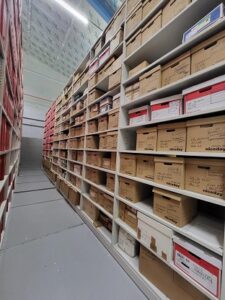
ITI prior to processing, totalling over 70 linear metres of material
Several months ago, my colleague Jasmine Hide and I wrote two introductory posts about our new roles and what they entailed. This time, I would like to draw attention to a collection we recently appraised, that of the Information Technology Infrastructure, or, in its condensed form, ITI.
Now, it is no secret that – aside from our crucial Digital and Web Archivist team members – most archivists are not experts on the early history of computing. Having said that, for sixty years Edinburgh has prided itself on its forward-thinking approach to IT, particularly artificial intelligence. This is therefore an important collection that needed processing.
Arriving from the Department of Computer Science in 2017, the collection contains material that shows the development of the Edinburgh Regional Computing Centre, as well as the development and implementation of large-scale computing projects, services, applications, and programs from 1966 up to around 2000. It will be of particular interest to anyone researching the development of computing science, both as a practical feature in people’s lives, as well as the academic field.
Student Research Rooms in HCA
Today’s blog post is a guest post from Clare Wilson, SRR Co-ordinator, about the superb book collections available to staff and students from HCA in the Student Research Rooms.
Here at Edinburgh University in the School of History, Classics and Archaeology (HCA), we are fortunate to have the Student Research Rooms (SRR). This is a busy study space that is home to ten book collections. These collections have been bequeathed by important figures in HCA’s history and are continuing to grow.
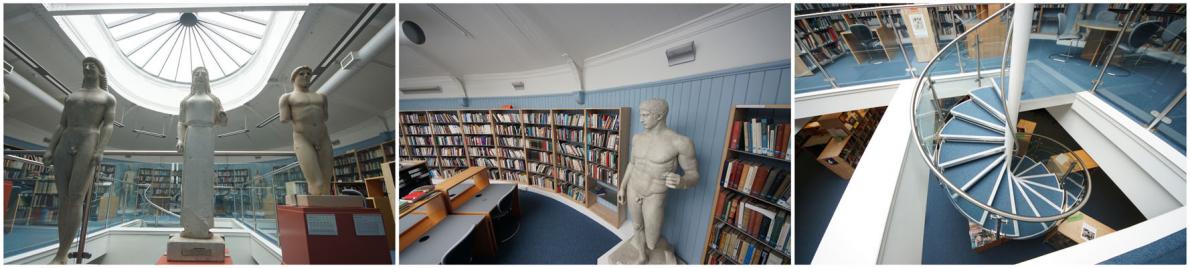
Among the individuals who have made valuable donations is Jim McMillan, a previous Head of School. As a European historian and researcher of modern French history, he was a pioneer in women’s and gender history. The SRR is also home to the Sellar and Goodhart collection, named after two of Edinburgh’s most influential Classics professors. The Jim Compton collection is an American History compendium of some 2,000 books and boasts some of the only known copies of publications of its kind in Scotland. Read More
Women in STEM studies and careers: Professor Beth Biller and Dr Mary Brück at the University of Edinburgh
Ash Mowat is one of our volunteers in the Civic Engagement Team. Ash has been looking into the career paths of two women in science: Professor Beth Biller, currently Professor at the Institute for Astronomy, part of the School of Physics and Astronomy at the University of Edinburgh, and Dr Mary Brück, previously a principal scientific officer at the Royal Observatory Edinburgh.
The aim of this blog is to explore the work of two women astronomers with links to the University of Edinburgh. Firstly Professor Beth Biller, currently in post at the Royal Observatory, and also an earlier pioneer Dr Mary Brück who was first a postgraduate student and later teacher here from the 1940s onwards. In doing so we’ll explore the historic and current levels of obstacles facing women accessing studies and careers within the STEM (science, technology, engineering and mathematics) fields.
Introducing Professor Beth Biller

(Image above courtesy of footnote 1 below)
Professor Beth Biller is a Professor, previously Chancellor’s Fellow, at the Institute for Astronomy, part of the School of Physics and Astronomy at the University of Edinburgh. According to her biography on the university’s website, her research interests centres around direct imaging detection and characterization of extrasolar planets and brown dwarfs.[1]
Professor Biller was part of the research team on the recent observations from the James Webb telescope surrounding the atmospheric features elements detected on Planet VHS 1256b, some 40 light years away from earth.[2] Professor Biller commented “There’s a huge return on a very modest amount of telescope time. With only a few hours of observations, we have what feels like unending potential for additional discoveries”.
These exciting early findings were also further covered on the BBC and elsewhere.[3] Further information on the James Webb telescope can be found here. [4]
Professor Biller kindly consented to answer a few questions to give a fascinating insight into her early childhood interest in the planets and journey from education into her current work and areas of interest.
Q1: Can you recall from childhood when you first experienced an enthusiasm for any STEM subject and what these were?
Oh, very early on for me — I was fascinated by the planets in our solar system when I was 5 or 6 years old, especially the fact that Venus has thick cloud cover with sulphuric acid rain!
Q2: During your school education were you aware of differing expectations placed on boys and girls in terms of their being encouraged to choose STEM subjects and of their actual or predicted academic achievements in these?
I wasn’t consciously aware of differing expectations, but I do think such expectations affected what academic subjects I was encouraged to pursue. I was good, but not spectacular at maths, but quite strong in humanities subjects. I found that I received more encouragement for pursuing a humanities degree than a science degree, since I wasn’t an obvious “math whiz”.
Q3: When were you first drawn to astronomy, what sparked it, and how long did it take for you to decide to study this at University?
I was very interested in astronomy as a small child, then in school found myself channelled more into the humanities (for the reasons described above). When I was in high school, the first extrasolar planets were detected — and I pretty much decided at that point that astronomy was what I wanted to study, even if I wasn’t “good at maths”. However, what I’ve discovered since then is that mathematics, like so many other things, is a learned skill — and practice makes perfect.
Q4: What was your experience like at University both in terms of the course structure and teaching, and the general experience as a student?
I had a very different student experience compared to students at large Universities like the University of Edinburgh.
I went to a “small liberal arts college” in the United State, which is a type of institution that simply doesn’t exist in the UK — a very small undergraduate degree-granting institution with only 1600 students. My initial degree was in Astrophysics. An undergraduate degree in any strand of physics is intense. To be honest, pursuing my undergraduate degree was more intense and stressful than my PhD or working in the field has been.
Q5: Can you please tell us a little about your areas of specialisation in your astronomy work currently, and why they are so compelling?
I work on direct imaging of exoplanets, in other words, removing starlight to be able to produce images of planets hiding in the glare of their stars. Right now, this technique is only possible for young, high-mass planets e.g. analogues to Jupiter, but caught right after they have formed, so they are a lot hotter and brighter than Jupiter. The planets I study right now have cloud-top temperatures of ~1000 K, similar to a candle flame, and clouds made up of very fine particles of silicates. This means these are very not-habitable planets. However, all the techniques we are developing now can be applied to image rocky habitable zone planets around stars similar to our own Sun in future decades. Direct imaging is the likely method by which we will discover the first true Exo-Earth twin — i.e. a 1 MEarth planet orbiting at 1 astronomical unit from a star with a similar mass as our Sun.
Q6: What has been your experience of the James Webb telescope and its future potential, and is there still valuable exploring to be done with others such as the very large telescope? Also what will new developments like the extremely large telescope add to what the James Webb is providing?
JWST is amazing! It is performing extremely well and it looks like it may have a 20+ year lifetime. I’ve been very lucky to be the co-PI of one of the JWST Early Release Science Programs. We’ve obtained coronagraphic imaging of a young exoplanet, spectra of a somewhat more widely separated planetary mass object, and coronagraphic imaging of a young, planet forming disk. All of the data have been absolutely superb, and in the spectroscopic data we are finding a veritable zoo of new spectral features that we have not been able to study previously from the ground. The upcoming extremely large telescopes will be very complementary to JWST — JWST lets us observe at wavelengths inaccessible from the ground (>5 um), while the ELTs will provide improved resolution and contrast, producing the first direct imaging detections of older and colder planets more similar to the planets in our own solar system.
Q7: What advice would you give to a child or young adult with a passion for astronomy who wants to learn more and improve their potential to study at university level?
Make sure to take maths and sciences Highers — and remember, mathematics, coding, and analytical skills are all things that can be learned through practice.
Q8: If you received an unlimited NASA or other budget to use, what would be your dream mission project to explore and why?
Oh, that would definitely be a successor telescope to JWST, with the potential to image and characterize Earth-like habitable planets!
Whilst the equal representation of women in STEM subjects is far from being realized, Dr Biller’s and many others examples are an encouraging indication of a positive momentum for change. The following recent BBC features describes substantive increases in the numbers of women entering STEM careers. [5] Furthermore the recent appointment of Dr Nicola Fox as Associate administrator for NASA’s Science Mission Directorate (the organisations head of science, and only the second woman to have held this role) demonstrates that the highest positions could and should be equally obtainable by anyone with the experience and expertise, regardless of gender.[6]
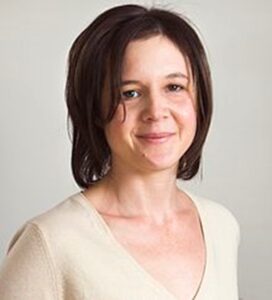
(Image of Dr Cordelia Fine above courtesy of footnote 7 below)
Dr Cordelia Fine[7], the Canadian author and philosopher of science and psychologist, has written several absorbing and brilliantly researched texts serve to dispel the myths of distinct male and female brains and exposes how restrictive gender constructs in how children are raised and not biology help precipitate reduced opportunities for women in STEM careers, and equally for men in more nurturing roles like primary school teaching. Dr Fine lived and schooled in Edinburgh before studying at Oxford and Cambridge, and won the Edinburgh Medal in 2018 for her work, and additionally won the Royal Society Science Book prize in 2017 for her book Testosterone Rex which includes the following: “Beyond the genitals sex is surprisingly dynamic, and not just open to influence from gender constructions, but reliant on them. There are no essential male or female characteristics”.
Dr Mary Brück Biography and University Archive materials
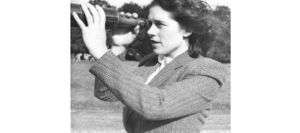
(Image above courtesy of footnote 8 below)
Dr Brück (nee Conway 1925-2008) was born in Ireland and became a STEM pioneer studying and later teaching in the fields of astronomy and astrophysics at the University of Edinburgh.[8] The Mary Brück building at the University of Edinburgh Kings Buildings campus was built in recognition of her academic achievements, research, findings and teachings, and as an empowering role model demonstrating the capabilities of women in subjects traditionally deemed only suitable for men. That she was active in delivering lectures and inspiring others well into her retirement and until near her death, is further evidence of her energy, resilience and highly valued expertise.
As well as becoming a senior lecturer Dr Brück continued research and published her findings academically, specialising in the area of stars, the interstellar medium and Magellanic Clouds. [9] She received the Lorimer Medal from the astronomical society of Edinburgh in 2001 for her extensive contribution in making the subject of astronomy accessible to and of interest to the widest audience, not solely to those in academia. She was further awarded a fellowship of Edinburgh University in 2005 at the age of eighty.
I was privileged to been granted access to some of her archive papers (as yet not catalogued) held at the University of Edinburgh Astronomy department on Blackford Hill. [10]
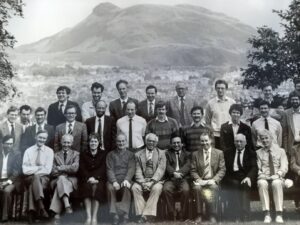
(Image of Dr Brück and colleagues at the Royal Observatory; she is seated in the front row fourth from the left).
It emerges very evidently from looking through her documents that Dr Brück was something of a polymath, with wider interests in sciences and mathematics, the visual arts, history, poetry etc. It seems clear that her lifelong academic passion was for astronomy, both in studying and teaching to bring her joy for the field onto others.
She devoted a lot of research and writing on the current and historic role of women in history, and early pioneer of women in STEM studies and careers.
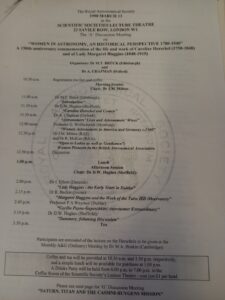
The above Women in Astronomy Perspective event was both organised and introduced by Dr Brück. This is remarkable evidence of her energy and commitment in her chosen science well into her retirement, as she was into her seventies and continuing research, writing, events and public speaking.
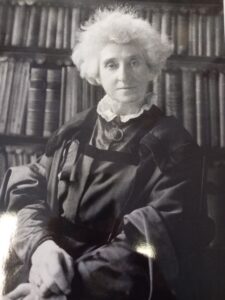
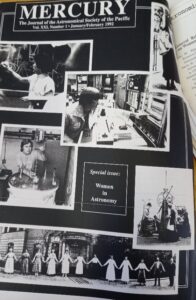
(Image on the above left of earlier woman astronomer pioneer Lady Margaret Huggins[11] whom Dr Brück extensively researched and wrote upon to promote her achievements and legacy. Image on the right of an issue of Mercury magazine cover with a special focus on women in astronomy).
In her records there is much evidence of Dr Brück’s Christian faith and how she strove to dispel the lazy myth that there is any discrepancy or conflict between being both a practitioner of science and having religious faith and convictions.
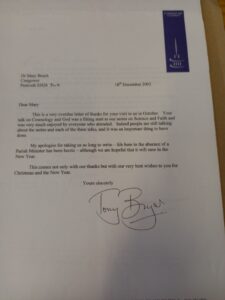
(The above letter refers to Dr Brück’s ongoing work on speaking to address the links between God and science).
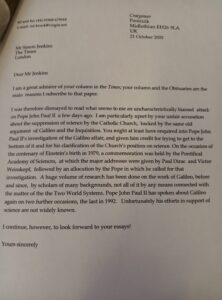
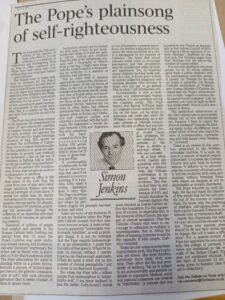
A further interesting exchange on religion and science is revealed in the article below on the left, and Dr Brück’s letter of response. The article was a Times newspaper critique of the Pope John Paul 11. Dr Brück responded to rebuke the antiquated reference to Galileo and historic disputes between science and religion that she argues have since been bridged with better shared understandings. It is perhaps notable that she elects not to respond to the journalist’s comments on the Catholic Church’s attitudes on homosexuality, contraception and the scope for women to enter the priesthood, although her main focus of her short response was to emphasise her assertions on the coexistence of practicing scientific endeavours and a religious faith.
A fascinating find amidst her records is a handwritten series of 8 lectures on astrophysics that Dr Brück both wrote and presented to students. It includes such topics as methods of observation (the different types and sizes of telescopes and their uses and capacities), the properties and types of stars (mass, luminosity, temperatures etc.), interstellar matter and the relationships between bodies in our solar system and beyond.
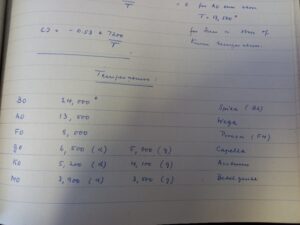
(Image from lecture notes above on comparative star types and temperatures).
From the introduction to the series of lectures she writes:
“In the following series of lectures I shall attempt to introduce you to the subject of astrophysics which, I believe, represents one of the most active and promising fields of present day scientific research. Astrophysics is a very young subject. However it has grown so much already and it is growing so rapidly that all I can say here is to give you a genuine summary of the main procedures under discussion, of the methods of investigation, and of the results obtained so far.”
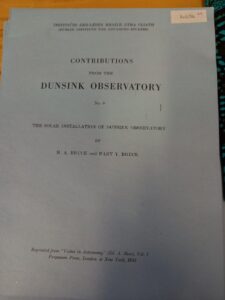
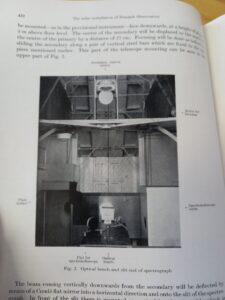
(Cover and image above from joint publication of Dr H.A and Dr Mary Brück)
In conclusion, it is abundantly evidenced in these archives that Dr Mary Brück was a formidable pioneer of women in science, and in her field of astronomy a passionate expert who sought to promote and teach the science to others, and who consistently strove to have recognised and valued the legacy of earlier women astronomers that preceded her. She tirelessly devoted a lifetime to her chosen academic field, continuing to pursue valuable research and lecturing roles well into her seventies and eighties. She should rightfully be celebrated as a major force in her academic achievements and teachings, and an early role model and inspiration to others for the opportunities and representations of women in STEM studies and careers.
Finally I should like to thank Professor Biller for finding the time to answer some questions on her areas of interest and expertise, with thanks also to staff at the University of Edinburgh Royal Observatory for kindly allowing access to view records from the Mary Brück archives.
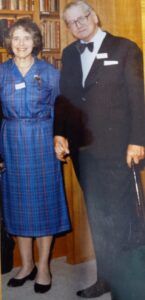
(The two fellow Dr Astronomers: Dr Mary Brück and her husband Dr Hermann Brück)
[1] https://www.ph.ed.ac.uk/people/beth-biller
[2] https://www.ph.ed.ac.uk/news/2023/distant-planets-features-revealed-by-webb-telescope-23-03-22
[3] https://www.bbc.co.uk/news/science-environment-65040983
[5] The women who left their jobs to code – BBC News
[8] https://www.ed.ac.uk/equality-diversity/celebrating-diversity/inspiring-women/women-in-history/mary-bruck
JIL Webinar: Writing about Information Literacy (report)
As well as bringing you news and updates from the library, we like to use this blog to report on some of the Continued Professional Development activities we get up to as Academic Librarians. This week several members of our team attended a webinar presented by the Journal of Information Literacy on the topic of Writing about Information Literacy, and we found it to be both useful and inspiring so we thought we’d share some of our key findings.
The session opened with a brief introduction to JIL, who they are and what they do. JIL is the professional journal of the CILIP Information Literacy Group, and if you’ve not encountered them before then they are a well respected publication in UK information literacy:
Founded in 2007, the Journal of Information Literacy (JIL) is an international peer-reviewed journal and is aimed at librarians, information professionals and academics who teach and/or research aspects of information literacy. The journal includes articles from established and new authors that investigate many different areas of information literacy, including school, academic and national libraries, health care settings, and the public sector such as the workplace and government.
A few of our team had previously attended sessions run by Editor-In-Chief Dr Alison Hicks and Managing Editor Dr Meg Westbury at the LILAC conference, so we knew we were in for an hour of useful tips, tricks and key information for submitting to this (but also any) journal.
The presenters addressed different types of submission they might accept in JIL, including Research Articles, Project Reports and Book or Conference Reviews, and briefly described the requirements for each. They looked at the submission process (and why it might feel that it takes so long!) and also suggested how to respond to feedback in a useful and concise way. There were lots of tips about how to stay focused, and a book recommendation for those of us who are worried about the best writing environment:
Sword, H. (2017) Air & light & time & space : how successful academics write / Helen Sword. Cambridge, Massachusetts: Harvard University Press.
You can find this book at the Main Library, details via DiscoverEd.
Meg also suggested writing Tiny Texts as a way to get started, which you can read more about on the slides which they presented as part of the ‘Getting Your Writing Groove Back’ session from the 2022 LILAC conference.
Overall those of us in the virtual room felt it was a really valuable hour which made academic writing seem accessible and useful to us as library practitioners. Unlike our colleagues in the States, publishing academic work is not a requirement for our jobs here. However we do engage in professional development activities to ensure we’re well informed about new developments particularly across the academic library sector, and reading and contributing to journals is just one of the ways we can do that. While it can seem difficult to make time to write and publish alongside our day jobs, the team at JIL seem to be more than willing to help develop fledgling writers and would be a great port of call for anyone looking to get started in writing about the Information Literacy initiatives in their institution. This session was presented in collaboration with the Information Literacy Group’s New Professionals team, though we would probably say it was useful for anyone considering writing up their work for publication – we certainly found it useful as not-so-new professionals!
If you’re interested in reading and writing more journal articles about library work, why not consider joining the Library Journal Club? We welcome members from any area of Library Services who have an interest in reading and critically discussing publications about libraries. We meet regularly both in person and on Teams, and have a trip to the Library of Mistakes planned for December! You can find us on Teams here.
The story behind the journal: Medicine Anthropology Theory
The DOAJ has recently been celebrating 20 years of service. As part of their celebrations they have been interviewing editors from some of the journals they index.
We are thrilled that Medicine Anthropology Theory (MAT) was selected for a chat about all things Open Access. MAT is a Diamond Open Access journal hosted by Edinburgh Diamond at the University of Edinburgh, and run by the Edinburgh Centre for Medical Anthropology. DOAJ spoke with Professor Ian Harper, Coordinating Editor and member of the MAT Editorial Collective, and Rebecca Wojturska, the Open Access Publishing Officer at the University of Edinburgh.
Read the full blog!
Blog: The story behind the journal: Medicine Anthropology Theory
Charles Lyell’s Books
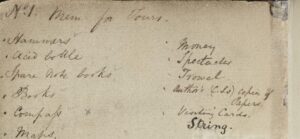
‘No. 1 Mem for Tours’ features ‘Author’s (CL’s) Copies of Papers’.
In his Scientific Notebook 1, dated March – April 1825, Charles Lyell lists things to take on his first geological tour, designed to gather the evidence for his first book. In the list, he notes ‘Author’s (C.Ls) copies of papers‘, and it’s delightful to see him describe himself in that role.
Felicity with Jeremy Upton, Director of Library & University Collections at Lyell exhibition opening.
Felicity MacKenzie came across Charles Lyell whilst completing her History degree at Bristol – and for a considerable part of that, consulted online versions of his books during lockdown conditions. Felicity has now completed her Masters degree at Cambridge, where again, she was able to focus on Lyell. She is currently applying for a PhD in order to be able to explore his life further. Here, she gives a thorough introduction to Lyell’s books, as well as current links to online versions.
The books that Charles Lyell wrote played an important role in the way in which he honed and communicated his geological work. When considered alongside each other, they offer the opportunity to trace the threads that run across Lyell’s thought and practice, as well as to compare and contrast his interests and concerns at different times in his career.
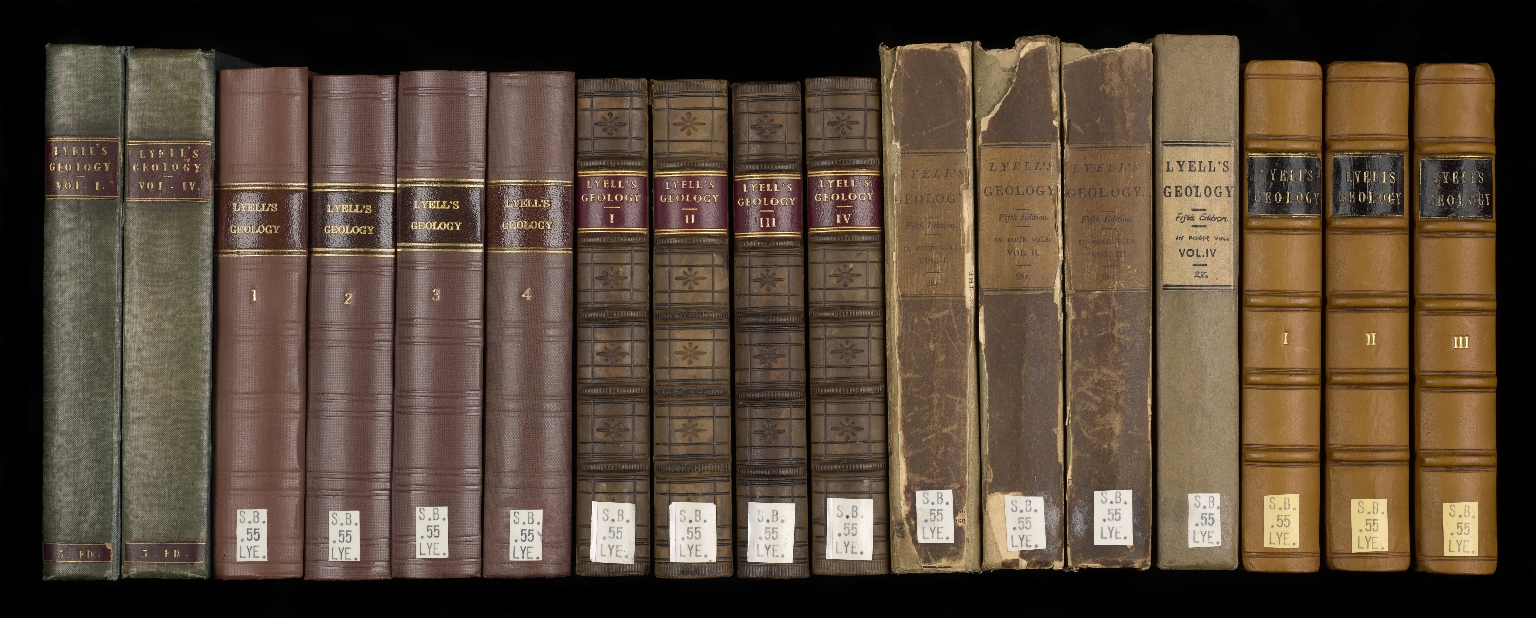
A selection of different editions of Lyell’s Principles, held at the University Library.
Lyell’s first and most famous book was the Principles of Geology: Being an Attempt to Explain the Former Changes of the Earth’s Surface, by Reference to Causes Now in Operation. Initially published in three volumes – volume I 1830, volume II 1832 and Volume III 1833, the Principles was reprinted in twelve editions over Lyell’s lifetime and sold over twenty-five thousand copies. As the name suggests, Lyell used the book to consolidate and promote the ‘principles’ by which he believed modern geological science should be conducted. The most central of these principles was Lyell’s insistence on the exclusive explanatory authority of the reliable, rationally trained human observer.
For Lyell, human witness and reason formed the only basis for truth. This led him to state his
famous case – that ‘the present is the key to the past’ based on the idea that the action of
geological causes in the present, fell within the remit of human observation, and so formed the only trustworthy basis for knowledge about the way in which such forces might have acted in the past.
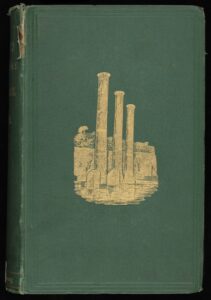
Principles, 10th Edition, volume 2, 1868.
This kind of human reason-centred geology had particular political ramifications in the 1830s, when ideas about reason versus revelation – and the bearing of the Bible upon truth – had significant implications for the politics of church, state and education. Lyell was aware that his work could produce heated debate and touch realms beyond geology. As a result, he structured his rhetoric in the Principles carefully. In so doing, he produced a masterpiece in the tactful presentation of controversial ideas. The Principles burst onto the British intellectual scene and remained an important cultural work throughout the nineteenth century and beyond.
Lyell’s second book was the Elements of Geology (1838). This was published in seven editions
between 1838 and 1871; its name changing to the Manual of Elementary Geology with the third
edition. This book was a practical, ‘how-to’ supplement to much of the material already covered
in the Principles, and taught the practitioner what they needed to know for application in the
field.
 Next, came Lyell’s American travelogues. Lyell was invited to give a series of lectures at the Lowell Institute in Boston in 1841. During this visit, Lyell not only lectured in Boston, Philadelphia and New York, but travelled extensively around the northern and southern states with his wife Mary, observing and collecting geological phenomena. On returning home, Lyell decided to write up his geological work alongside social and political commentary. This resulted in the Travels in America: With Geological Observations on the United States, Canada, and Nova Scotia volume I and volume II in 1845.
Both volumes include terrific foldouts, necessary to accommodate the scale of the country and its geological features.
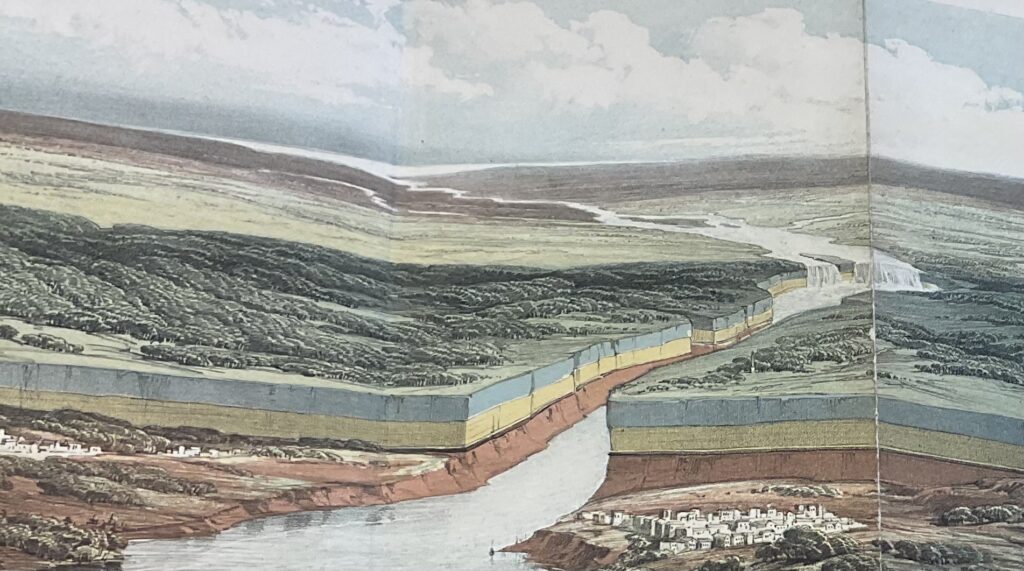
Illustrations were important to Lyell, and in his Travels he included a fantastic fold-out, necessary to accommodate the scale of Niagara
That same year, Lyell was invited to lecture again at the Lowell Institute, and factored in another nine-month stint of travelling. The results were published in his A Second Visit to the United States of North America volume I and volume II, in 1849. Once again, a significant portion of this work was dedicated to social and political commentary, which makes it an important insight into Lyell’s broader ideology. In particular, it sheds light on Lyell’s very problematic attitude to race and enslavement
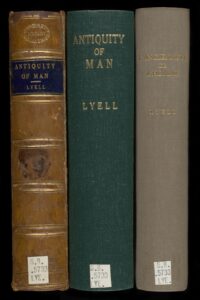 Lyell’s final book was the Geological Evidences of the Antiquity of Man, with remarks on theories of The Origin of Species by Variation (1863). This work focussed on the question of human antiquity and is famous for how many people Lyell upset with it. Charles Darwin was frustrated that Lyell did not take the opportunity – as a significant figure in the highest echelons of British science – to offer full support for an evolutionary account of human origins. Additionally, Lyell infuriated colleagues, such as Robert Owen, Hugh Falconer and John Lubbock, who accused him of plagiarising their own and others’ works.
Each of Lyell’s books had a different and important impact on the intellectual and cultural life of nineteenth-century Britain. Hugely successful, they chart a course over what was an amazing timeframe in both scientific findings and their popularisation.
Thank you Felicity for sharing your knowledge on Lyell’s books with us! Copies of Lyell’s books from the University’s collections, as well as Lyell’s own annotated copies, are featured in our current exhibition. We will be featuring Felicity’s comprehensive online book list, and more, in our forthcoming website.
Recommended further reading:
- James A. Secord, ‘Introduction’, in Principles of Geology (London; New York: Penguin Books, 1997)
- Martin J.S. Rudwick, Worlds before Adam: the reconstruction of geohistory in the age of reform, (Chicago: University of Chicago Press, 2008)
- Martin J.S. Rudwick, ‘The Strategy of Lyell’s Principles of Geology’, ISIS, 61:1 (1970), 4-33
- Roy Porter, ‘‘Charles Lyell and the Principles of the History of Geology’, The British Journal for the History of Science, 9:2 (1975), 91-103
- Stuart A. Baldwin, ’Charles Lyell: A Brief Bibliography’, (Essex: Baldwin’s Scientific Books, 2013)
- Robert H. Dott, Jr., ’Lyell in America: his lectures, field work and mutual influences 1841-1853’ Earth Sciences History, 15 (1996), 101-140
- W. F. Bynum, Charles Lyell’s ‘Antiquity of Man’ and Its Critics, Journal of the History of Biology, Summer, 1984, Vol. 17, No. 2 (Summer, 1984), pp. 153-187
My journey in Edinburgh
Guest blog post by Dr Raj Kumar Bhardwaj, Chief Librarian at St. Stephen’s College – University of Delhi, New Delhi, India.
About myself
I am Dr Raj Kumar Bhardwaj, Chief Librarian at St. Stephen’s College, University of Delhi and Assistant Professor at the Central University of Punjab. I am the author of 65 research papers and have delivered over 100 talks. Throughout my career, I have received a number of awards, such as the Commonwealth Professional Fellowship (UK).
I got an opportunity to avail myself of the two-week fellowship on Research Data Management hosted by the University of Edinburgh. My local mentor was Robin Rice, Data Librarian and Head of Research Data Support of the Information Services.
My experience in Edinburgh
Day #1
In the morning, I met Robin. She provided me with a comprehensive overview of the Research Data Services and introduced me to other team members: Simon, Kerry, Maeve, and Stefano.
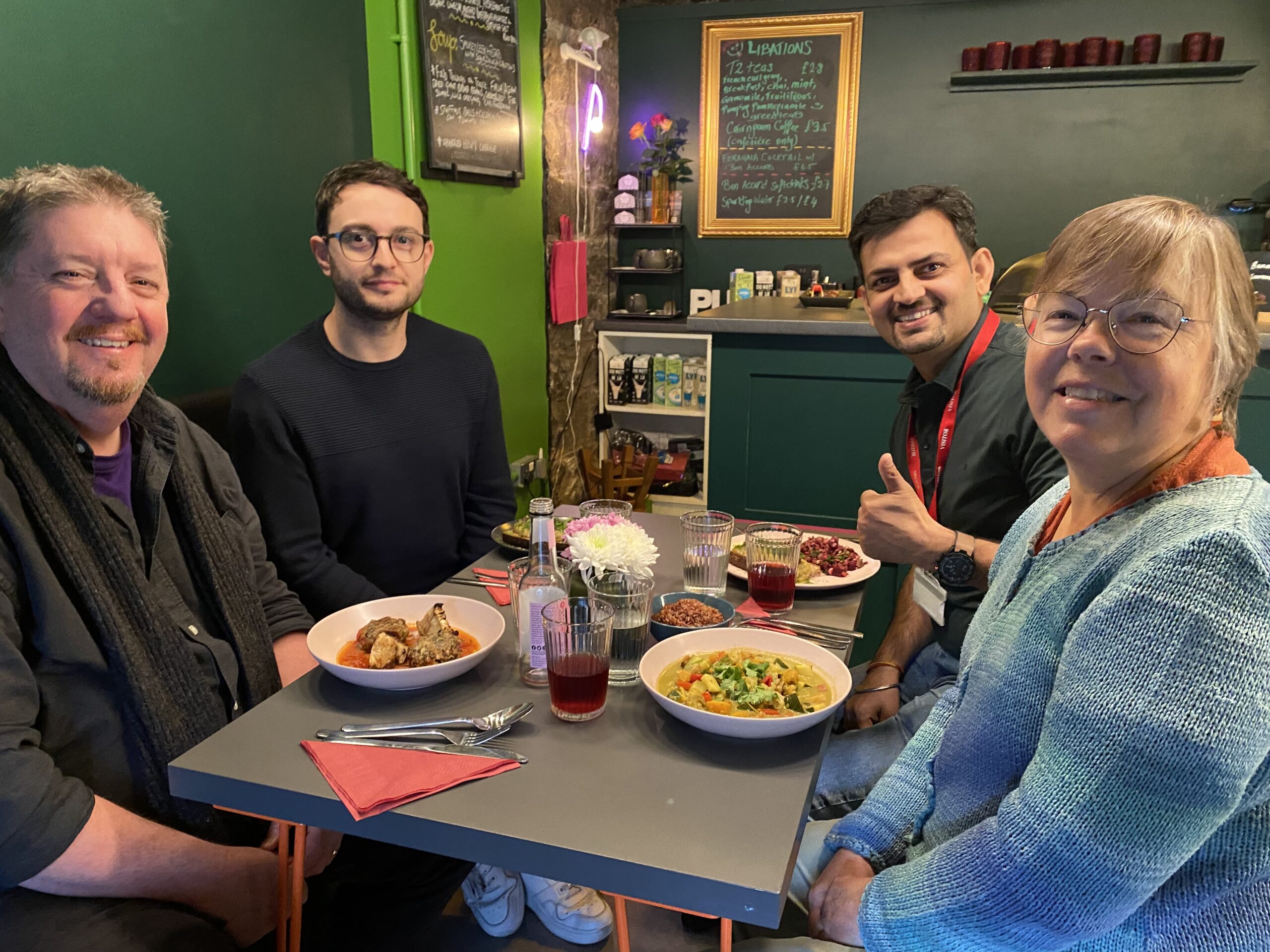
From left: Simon Smith, Stefano Bordoni, Raj Bhardwaj, Robin Rice at Pulse vegan cafe.
On the same day, I had the pleasure of meeting Dr Elizabeth Williams, Head of Library Academic Support, which is a primary link between Colleges and Schools, and the Library.
Later, I met Jeremy Upton, the Director of Library and University Collections. Jeremy shared his insights on the potential use of AI in the library to enhance results. To conclude the meeting, Jeremy took me on a library tour, where I had the opportunity to view the Makerspace section.
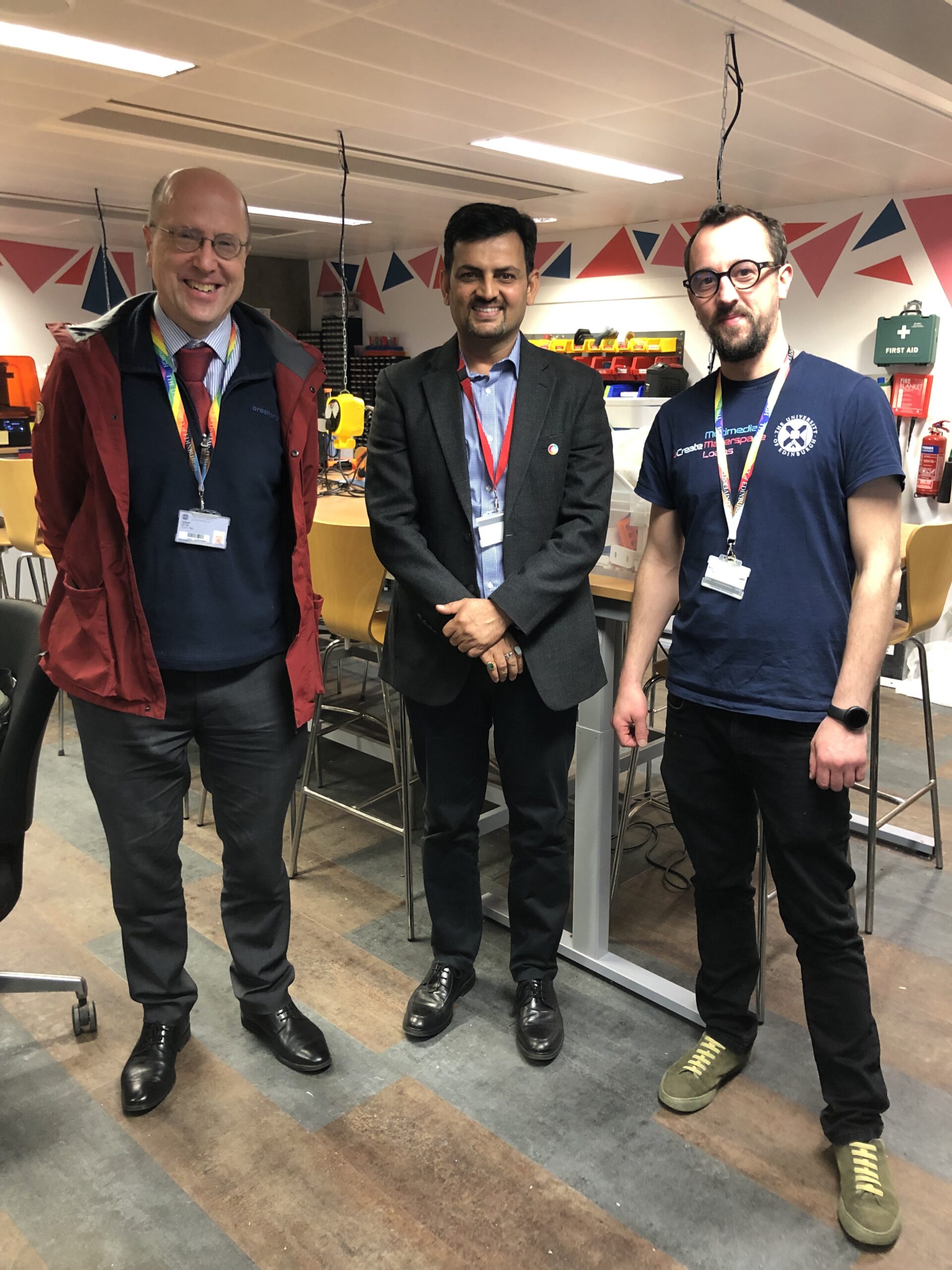
Jeremy Upton, Raj Bhardwaj, Simeon Newbatt (Makerspace Manager).
Day #2
On the 7th of November, I met Dominic Tate, Head of Library Research Support. Dominic explained the structure of the Converged Services in the university, where the library plays a vital role along with IT. We also discussed the roles and responsibilities of his team members in providing research support services.
The same day, I met Maeve McCann, who operates the DataVault facility. She thoroughly explained DataVault’s structure, and the fees applied for data over 100GB.
Later, I attended the workshop on open access publishing organized by Dr Theo Andrew. Theo emphasized the UoE strategies on this topic and showcased systems available to researchers, such as library-supported open access journals.
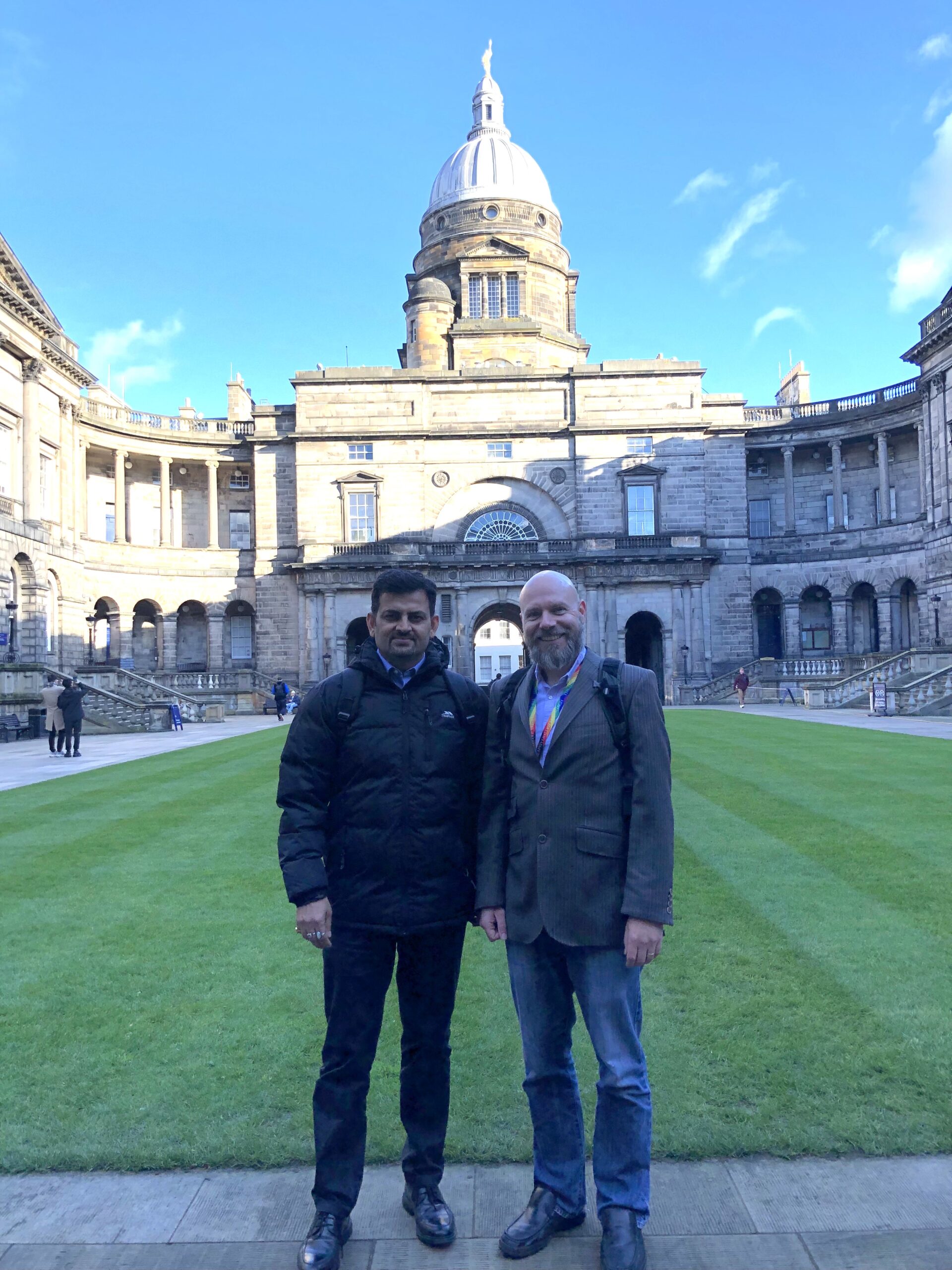
Raj and Theo at Old College
Day #3
The first meeting of the day was organized with Stefano Bordoni, who curates DataShare: the open access data repository of the university. He emphasized the popularity of DataShare among researchers. Stefano demonstrated the overall structure of DataShare.
Later, I met Simon Smith, another member of the RDS team. He explained the Data Management Plan tool, DMPOnline, which help users with their data management. He also delivers training.
Then, I met Sara Thomson, Digital Archivist of the University. Sara explained the significance of digital archiving within the university, especially non-published works. The University of Edinburgh made substantial investments on this.
Later, I met Mary Paulson-Ellis, Royal Literary Fellow who assists researchers 12 slots per week for researchers, including master’s students, on various aspects of academic writing.
The fifth meeting was with Kerry Miller. She promotes several initiatives on the topic of ethics and research integrity, cultural change and citizen science; among them, the Edinburgh Open Research Conference. She also delivers training on those subjects.
The last meeting of the day was with Kevin Ashley, Director of the Digital Curation Centre, who developed the DMPonline tool. He discussed a variety of aspects relating to the start of the National Data Service and discussed data produced under different national legislations.
Day #4
I first met Neil, the Citizen Science Engagement Officer at the University of Edinburgh (UoE). Neil delivers Participatory Science initiatives. They encourage researchers to integrate citizen science into their projects.
The last meeting of the day was with James Reid, the Geospatial Service Manager. Digimap, as a national service, covers multiple datasets, including ordinance data, environmental data, economic data, etc.
Day #5
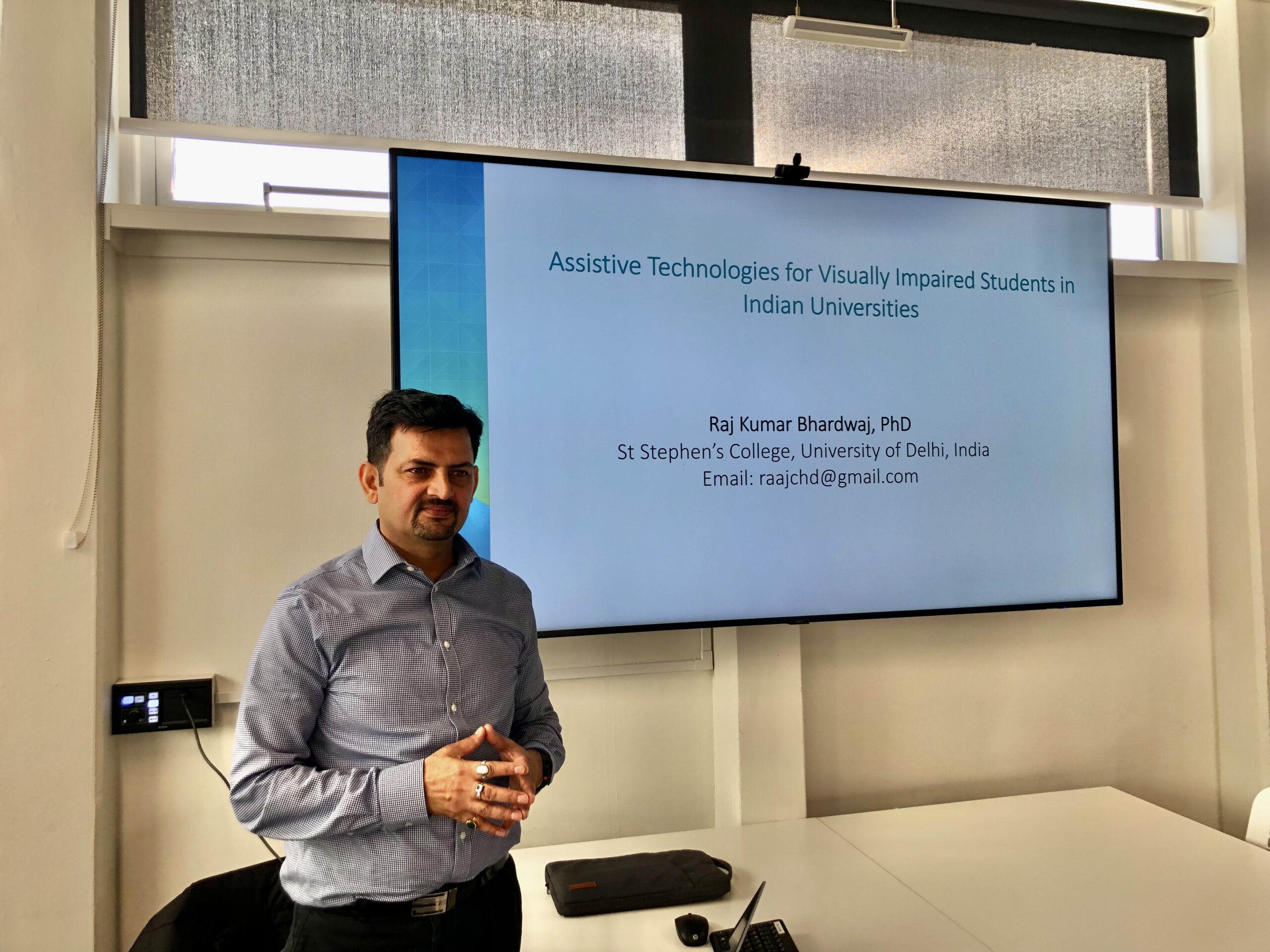
Raj giving his presentation at Napier University.
I delivered a talk at Edinburgh Napier University on “Assistive Technologies for the Visually Impaired in Indian Universities”, where I shared the work I conducted over the last three years. The response was positive, with several attendees and many questions asked.
In the afternoon, I met with Nik Tahirah Nik Hussin, who introduced me to Pure and Worktribe: two services storing research outputs and grant applications records.
I am highly grateful to Robin for this opportunity. I wish to work more with her wonderful team, which she leads graciously. My visit to the University of Edinburgh was full of joy and learning.
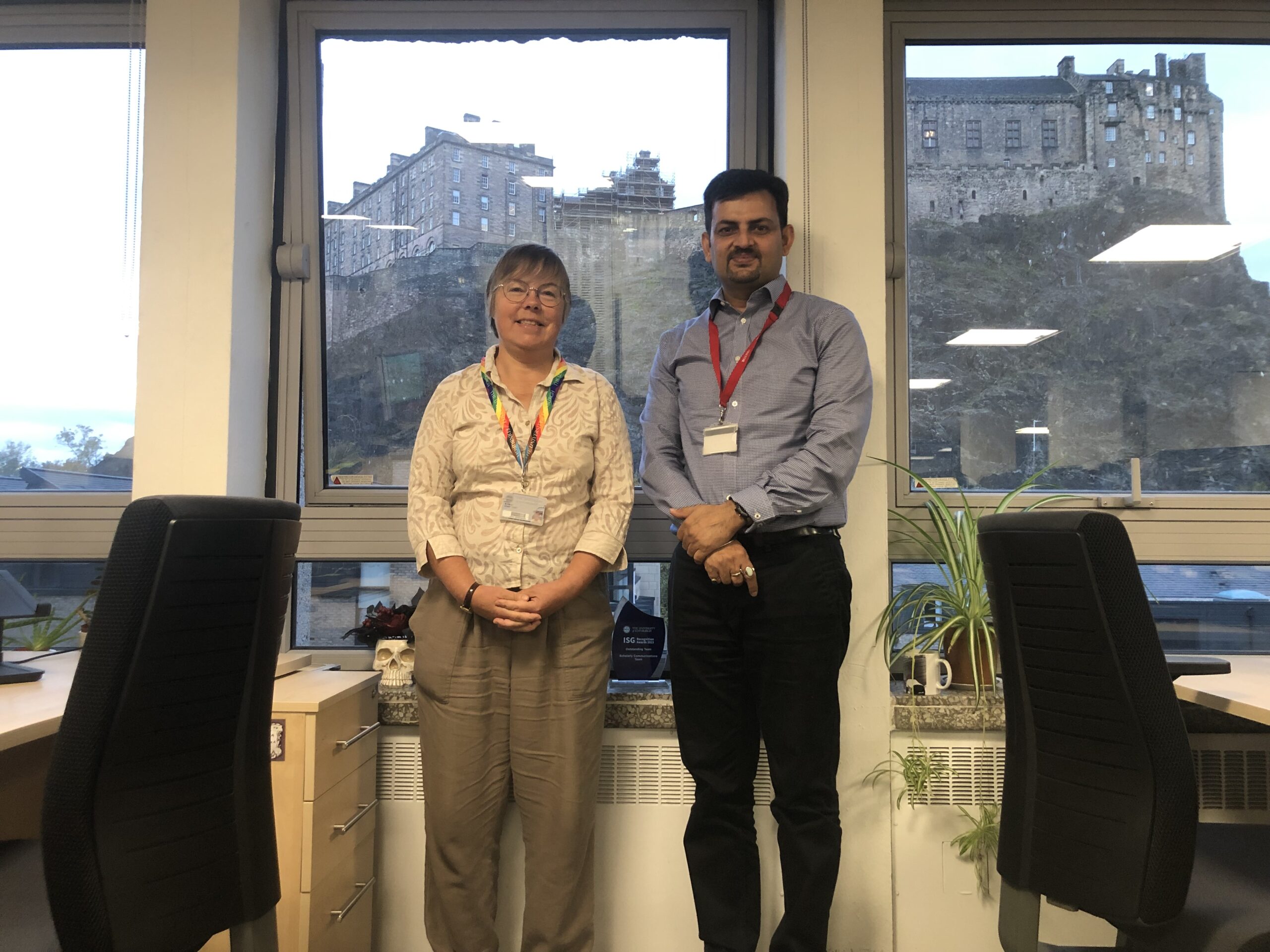
Robin and Raj at the team’s office in Argyle House.
Five reasons you should use LibSmart to prep for your assignments
Here we are midway through the first semester, and you may start to feel like you should be looking ahead to your end of semester assessments. Often students feel a bit overwhelmed before their first hand in, but here at the library we’re keen to help you feel confident from the start. Read on to find out why LibSmart is one of the best ways to prepare for your research and writing….
1. LibSmart shows you the basics of finding information in easy-to-follow lessons
Split into five simple sections, LibSmart I takes you through everything you need to find good material to base your assignments on. You’ll learn about how to search the library catalogue, how to double check your course reading, and suggestions of where to go for follow up resources.
2. You can dip in and out of it any time that suits you
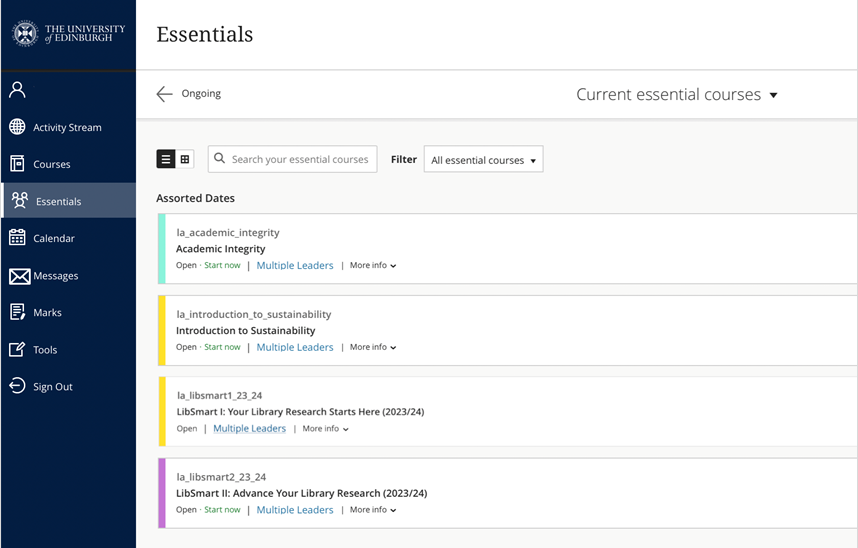
One of the great things about LibSmart is all new students are already enrolled! You just need to log in to learn and click on the ‘Essentials’ tab on the left to find it. It’s there whenever you need it all year long, so if you’re feeling like you need to be productive at 11pm one evening then log on and complete a module. We’re sure you’ll either learn something new or you’ll feel more confident that you’re on the right track.
3. The whole of LibSmart I can take less than one afternoon to work through
We designed LibSmart I so that it’s not a huge effort for you to complete. We know your time is precious and that you may have classes to get to, work shifts to make or social activities that are a huge and important part of your student experience. We wanted to make the information in LibSmart as accessible as possible, and while you can take it at whatever pace you like, we know that some students like to rattle through it in just one day. Whichever route you chose, we appreciate the time you spend there.
4. You’ll learn valuable skills on how to get started with referencing
Referencing is one of the top enquiries we Academic Support Librarians receive – people are confused by it or don’t understand what, where and how to do it properly. LibSmart I has a really useful introductory module that can help you get to grips with the foundations of referencing, and offers top advice on how to find the right style and systems for you. If you’re feeling stuck with where to start then this is the place to go.
5. It’s so much more than just library stuff!
We know it’s a lot to ask students to spend a few hours on looking specifically at library catalogues and databases especially when this isn’t prescribed reading on any particular course. However, students who’ve spent time on LibSmart believe it’s really made a difference to their experience as a student.
When I signed up, I assumed the course was just an introduction to the library but it has really been a guide to how academic research works. I wonder if more people would have signed up for this if they had realised it was not just a tour of the library to see where the books were kept. Along with the one hour “Study Skills” course I did, which was also surprisingly useful in its content, I feel I got as much learning from these free courses as the main one I paid for.
If you’re interested in giving LibSmart a go, you can find out more on our website.
Alternatively if you’re keen to get started straight away, just visit Learn and click on the Essentials tab on the left hand navigation. It’s all there ready for whenever you need it!
Did you know…? Study Space Traffic Lights
We’ve recently heard from students and staff that they would love for some kind of indicator of how busy the Law Library is when it comes to finding a study space. But did you know we’ve already got this information on our website?
If you visit the Law Library Location & Contact page you will find a traffic light panel that will tell you exactly how busy the library is at any time, and this information refreshes every 5 minutes! This is based on anonymised data taken from the swipe entry gates to the library, so while it doesn’t give us a seat-by-seat count of which spaces are available it’s a pretty good indicator of busy periods.
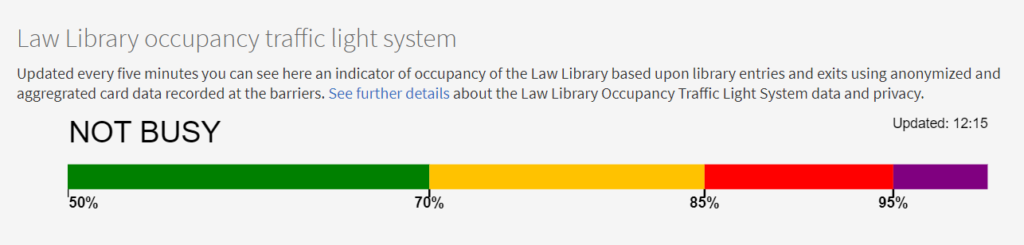
You’ll see above the colour coded lights that the bold text tells us that at 12.15 today the library is NOT BUSY. If you use your cursor to hover over the bar on the website a pop up text box will appear, which currently says “Library is at 20% of occupancy. You will find a choice of spaces in the library.”
If the library is full when you’re trying to visit you can check out the Study Spaces website for suggestions of where else you can go on central campus. You should also be aware that during the lead up to exams we make the MacLaren Stuart and Quad Teaching Rooms open for study. When these are available there will be large signs posted at the entrance to the library directing students to the available rooms.
NOTE: The traffic light sign is usually also displayed on the plasma screens next to the Helpdesk when you visit the Law Library, near the entrance to the Reserve section. At present this is not working properly but we are in the midst of getting it fixed, and will update when it is available again.
Women’s best friend: Histories of Animal Rights, Veterinary Science and Early Suffrage
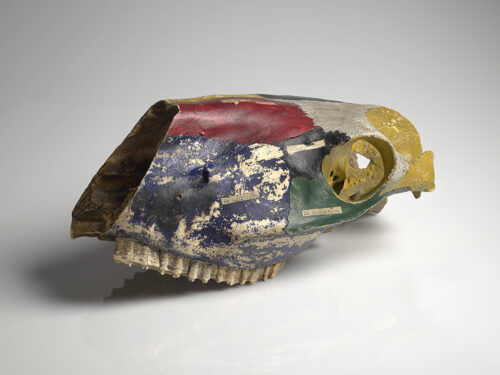
I am a recent addition to the Cultural Heritage Digitisation Service team. I was previously a studio photographer, with an additional specialism in biological and microscopic photography. My scientific artwork has been exhibited in Edinburgh and was recently shortlisted for the Royal Photographic Society’s International Open Call. My previous digitisation and archival experience stems from my master’s degree in biological photography, where we had an extensive selection of taxidermy animals, skeletons and pinned insects. Some moths were over 200 years old!
Collections
 Hill and Adamson Collection: an insight into Edinburgh’s past
My name is Phoebe Kirkland, I am an MSc East Asian Studies student, and for...
Cataloguing the private papers of Archibald Hunter Campbell: A Journey Through Correspondence
My name is Pauline Vincent, I am a student in my last year of a...
Hill and Adamson Collection: an insight into Edinburgh’s past
My name is Phoebe Kirkland, I am an MSc East Asian Studies student, and for...
Cataloguing the private papers of Archibald Hunter Campbell: A Journey Through Correspondence
My name is Pauline Vincent, I am a student in my last year of a...
Projects
Cataloguing the private papers of Archibald Hunter Campbell: A Journey Through Correspondence
My name is Pauline Vincent, I am a student in my last year of a...
Archival Provenance Research Project: Lishan’s Experience
Presentation My name is Lishan Zou, I am a fourth year History and Politics student....