Home University of Edinburgh Library Essentials
December 14, 2025
More of Sinclair’s Questions Discovered
The first blog about the Statistical Accounts of Scotland service described how in May 1790, Sir John Sinclair wrote to every Church of Scotland Minister in each of the 938 parishes in Scotland with a list of 160 questions plus an addendum of 6 further questions. Sir John intended to use the responses to his very thorough range of questions to elucidate the Natural History and Political State of Scotland or “the quantum of happiness” of its people.
Whilst researching the origins of the first Statistical Accounts for a performance at the Cabaret of Dangerous Ideas on the Edinburgh Fringe, myself and Nicola Osborne from EDINA discovered an additional five questions in the next very persuasive circular letter from Sir John Sinclair, which the Ministers received in January 1791, 8 months after the initial request.
SIR,
IT is with infinite pleasure I have the honour of acquainting you, that by the zeal and patriotism of the clergy of Scotland, I have already in my possession materials for drawing up a Statistical Account of a considerable part of the whole kingdom…
..But I am anxious that the Clergy of Scotland should not only do it well, but quickly; so that the state of the whole country should be known, if possible, at nearly the same period of time. I therefore hope, Sir, that, for the honour of our national church, you will make every exertion in your power to send me as full, and as accurate an account, as possible of your parish…
…In the queries formerly sent, some particulars were omitted, of which I should be glad to be informed, even from those gentlemen who have already favoured me with their answers: as,
1. What is the state of the schools in the parish; the salary and perquisites of the schoolmaster; and the number of his scholars?
2. What is the number of alehouses, inns, &c.; and what effect have they on the morals of the people?
3. What is the number of new houses or cottages which have been built within those ten years past; and how many old ones have been pulled down, or have become uninhabitable?
4. What has been the effect of employing cottagers in agriculture, or of working by hired servants in their stead? and,
5. What has been the number of prisoners in any jail in the district, in the course of the year 1790; and for what causes were they imprisoned?
Tables of births, marriages, and deaths, kept in any particular parish would be very desirable. Nor can the information respecting all points connected with the population of the country, be too accurate and minute.
We are not aware of what the “patriotic and zealous” Parish ministers thought when they received this request for yet more information, especially those who had already responded very promptly! It would be a further eight years before all of the twenty-one Volumes of the First Statistical Accounts of Scotland were published.
These questions, along with images and transcripts of the first 166 questions can be found within the Related Resources provided by the Statistical Accounts of Scotland service (note that related resources are only available to subscribing users of the service).
– Helen Aiton June 2015
Helen Aiton and Nicola Osborne present ‘Back to the Statistical Future‘ as part of The Cabaret of Dangerous Ideas at the Stand Comedy, Edinburgh.
How different is Scotland in 2015, to Scotland in 1835?
As good education is increasingly costly and inaccessible to the poor, are we seeing our modern ‘lords and gentlemen’ believing we will be ‘more obedient and dutiful, were [we] more ignorant, and had no education’?
Might our poor potentially be ‘corrupted, by being taught to read and write’? Might we be returning to a time when libraries are only sustained by subscriptions?
Join us for a whistle stop hover-board ride through the bizarre parallels between modern Scotland and the ‘New’ Statistical Accounts of Scotland (1834-1845).
@CODIfringe
We hope you have enjoyed this post: it is characteristic of the rich historical material available within the ‘Related Resources’ section of the Statistical Accounts of Scotland service. Featuring essays, maps, illustrations, correspondence, biographies of compliers, and information about Sir John Sinclair’s other works, the service provides extensive historical and bibliographical detail to supplement our full-text searchable collection of the ‘Old’ and ‘New’ Statistical Accounts.
New Books at New College Library – August (recommended by students)

 Student recommendations are in at New College Library! The recently purchased Oxford Handbook of the Psalms, edited by William Brown, is available as an ebook via DiscoverEd. Other student recommendations in the library include is Speaking of God : theology, language and truth, by D. Stephen Long, at BT40 Lon.
Read More
‘Der Tag’, Grand Fleets, and ‘Kia ora’: HMS New Zealand and the surrender of the German High Seas Fleet, 21st November, 1918
In March 1991 the Government of New Zealand presented Edinburgh University Library with the Library of New Zealand House, London. The New Zealand Studies Collection has recently been catalogued and is now fully accessible via our online catalogue.

One item which came to light in the process was a copy of Onward : H.M.S. New Zealand, detailing the ship’s construction and record of service in the First World War.

She was built by Fairfield Shipbuilding & Engineering Co., Govan, Glasgow, being commissioned on the 19th November, 1912. The cost of her construction was met by the Dominion of New Zealand, who then gave her to the British Navy.

She had a very active wartime service record, being present at the Battle of Heligoland Bight (August, 1914); the Battle of Dogger Bank (January, 1915); the Battle of Jutland (May-June, 1916); Second Battle of Heligoland Bight (November, 1917); during 1918 she was occasionally used on escort duty for convoys sailing between Britain and Norway, and was present at the time of the surrendering of the German High Seas Fleet in the Forth, in November, 1918.
Our copy is full of manuscript annotations from its original owner, P.J. Voyzey, Wardroom Messman. He lists all the ships he served on though a naval career of 38 years, spanning both world wars. He was on board H.M.S. New Zealand from 1917 to 1919, and so, presumably, was there at the surrender of the German Fleet.
With the signing of the Armistice on 11th November, 1918, the First World War was over. One stumbling block was the Allied powers’ failure to reach an agreement on what should happen to the German surface fleet. It was the suggestion of Admiral Rosslyn Wemyss that the fleet be interned in at Scapa Flow, Orkney, Scotland, to await a decision. The Grand Fleet would guard the German ships and their skeleton crews.
Germany was instructed to have her High Seas Fleet ‘ready to sail’ by the 18th November. Admiral Beatty, aboard his flagship, HMS Queen Elizabeth, had several meetings with Admiral von Hipper’s representative, Rear-Admiral Meurer, where the terms of surrender were worked out: U-boats would surrender to Rear-Admiral Tyrwhitt at Harwich; the surface fleet would sail to the Firth of Forth and surrender to Admiral Beatty. Thereafter, the fleet would be escorted to Scapa Flow to be interned.

The surrender was executed with great formality and as a great spectacle. Our collections include this framed chart showing the position of all the ships involved. H.M.S. New Zealand is in the group in the top left-hand corner.

Von Hipper refused to surrender the fleet himself, passing on the duty to Rear-Admiral von Reuter. On the morning of 21st November the light cruiser Cardiff met the German fleet, and led it to the rendezvous with the 250 ships of the British Grand Fleet and flotillas of the other allies. In all 70 German ships sailed that day: König (battleship) and Dresden (light cruiser), suffering engine trouble, were left behind. V30 (destroyer) was extremely unlucky in striking a mine en route and promptly sinking.
The German fleet was then escorted into the Firth of Forth. Once anchored, Beatty signalled:
The German flag will be hauled down at sunset today and will not be hoisted again without permission.
POSTSCRIPT
After nine months in Scapa Flow, waiting for a final decision on the fate of the fleet, Rear-Admiral von Reuter decided to scuttle the fleet rather than let it fall into hands of the British Navy. On 21st June 1919, after months of secret preparations – welding bulkhead doors open, laying charges and disposing of vital keys – the order to scuttle was given. Fifty-two ships were sunk while twenty were beached by the British Navy.
After the war H.M.S. New Zealand took Admiral Jellicoe on a tour of naval defences throughout the British Dominions, including Australia and New Zealand. She was sold for scrap in 1922, her armaments being regarded as obsolete. Various of her guns and other equipment were returned to New Zealand for re-use, and two were placed in front of the Auckland War Memorial Museum.
It took until 1944/45 for the Government of New Zealand to finally pay off the loan used to fund the construction of the ship.
Kia ora (“be well/be healthy”): a Māori native language greeting. It also forms the half- and running-titles of the book Onward : H.M.S. New Zealand.
Recording our instruments
Working in a museum of musical instruments we are constantly aware that, for many people, it is the sound of the objects that is important above all else. Needless to say, not all of our instruments are in playing condition – for various reasons – and those that are played often need to have constraints to ensure they are not subjected to any unreasonable risks. But it is a strong belief that everyone who visits the collection should be able to get some experience of the sound of the instruments if they wish.
As the team address our interpretation for when St Cecilia’s Hall reopens, we have been keeping sound at the forefront and have been working on a project to record a number of the instruments. This is not the easiest of undertakings, given that the care and safety of the objects is always our foremost priority.
As the instruments are currently housed for examination and conservation, it is the ideal time to do such a project. Teaming up with fine musicians, many who regularly play in one of Scotland’s top orchestras, and using the recording facilities at the Music Box, Edinburgh College, we are in the middle of a project which will see us record guitars, violins, cello, high brass, horns, a shawm, trombones and low brass.
Selecting the instruments to record involves examining them to ensure there is minimal risk from playing, and that the instrument is in good musical condition. Another factor which is important is to try and record instruments with which the museum visitor might be unfamiliar. If people think “I wonder what that instrument sounds like”, we hope to try and provide the sound to answer that.
We have been working alongside the Digital Imaging Unit from Library and Collections, who have been recording the project itself, taking still photographs of the musicians with the instruments, and collecting material for a time-lapse film of the event.
Occasionally the team have filmed one of the instruments as it is being recorded as shown above. This example is Sarah Bevan-Baker playing on one of our sixteenth-century Bassano violins. This remarkable instrument is from the time before the violin was standardized in shape, and even more unusually, the instrument has no sides, so that the front and back join together like a closed clam shell.
Sheep Showcase
Have you ever met Jordan, the Library Cat? What if there was another furry animal in the Library, maybe not as alive, but nonetheless as interesting?
The Main Library’s newest Fringe Festival exhibition opens on Friday 31st July 2015, featuring Dolly, the sheep!
Showcasing not only Dolly herself (on loan courtesy of National Museums Scotland), but also rare books, archive documents, pictures, sound and film clips from the University of Edinburgh’s Special Collections, presenting all the research that eventually led to the creation of Dolly, the first animal in the world to be cloned from an adult cell.

A sample of the University collections on display

The Fly Room – from the Towards Dolly exhibition
The Curator, Clare Button’s words about the exhibition:
“Dolly is the most famous chapter in Edinburgh’s long genetics history. This exhibition tells the wider story of the many pioneering discoveries which have taken place here, taking our visitors ‘towards Dolly’ and beyond.”
We, here at the Library Annexe, are happy to be able to contribute with a few books from our collections. These are:
- T.H. Morgan, A.H. Sturtevant, H.J. Muller, C.B. Bridges, The Mechanism of Mendelian Heredity (Shelfmark: 575.1 Mec.)
- T.H. Morgan and C.B. Bridges, Sex-Linked Inheritance in Drosophila (591.15: 595.772 Mor.)
- E. Altenburg, Genetics (575.11 Alt.)
If you become interested in the subject, and would like to have a look at these books, they will be requestable again after the end of the exhibition, through DiscoverEd.
Further links:
University of Edinburgh Exhibitions: Towards Dolly
News and Events: Dolly stars in genetics exhibition

‘Towards Dolly: A Century of Animal Genetics in Edinburgh’
The exhibition is free and open to the public from 31 July to 31 October 2015, Monday to Saturday, 10am to 5pm.
Exhibition Gallery, Main Library, George Square, Edinburgh, EH8 9LJ
Viktoria Varga, Library Annexe Assistant
Digital Humanities Oxford Summer School – days 3, 4 and 5
Apologies for the delay! Here are my highlights from the final three days of this year’s Digital Humanities Oxford Summer School:
– On Wednesday we learned all about the Text Encoding Iniative (TEI), a standard and guidelines created for the accurate representation of texts in digital form. The session included an excellent and detailed overview, a hands-on practical session, and a study of how the Bodleian converted its western medieval manuscripts collection from EAD to TEI and the issues they had to overcome.
– There was an interesting discussion on transcription as a curatorial process in its own right: the transcriber does not simply copy text word for word but engages in a selective and interpretive intellectual activity which, in turn, informs how the text is encoded. How would you transcribe the word ‘agreable’ in the image below?
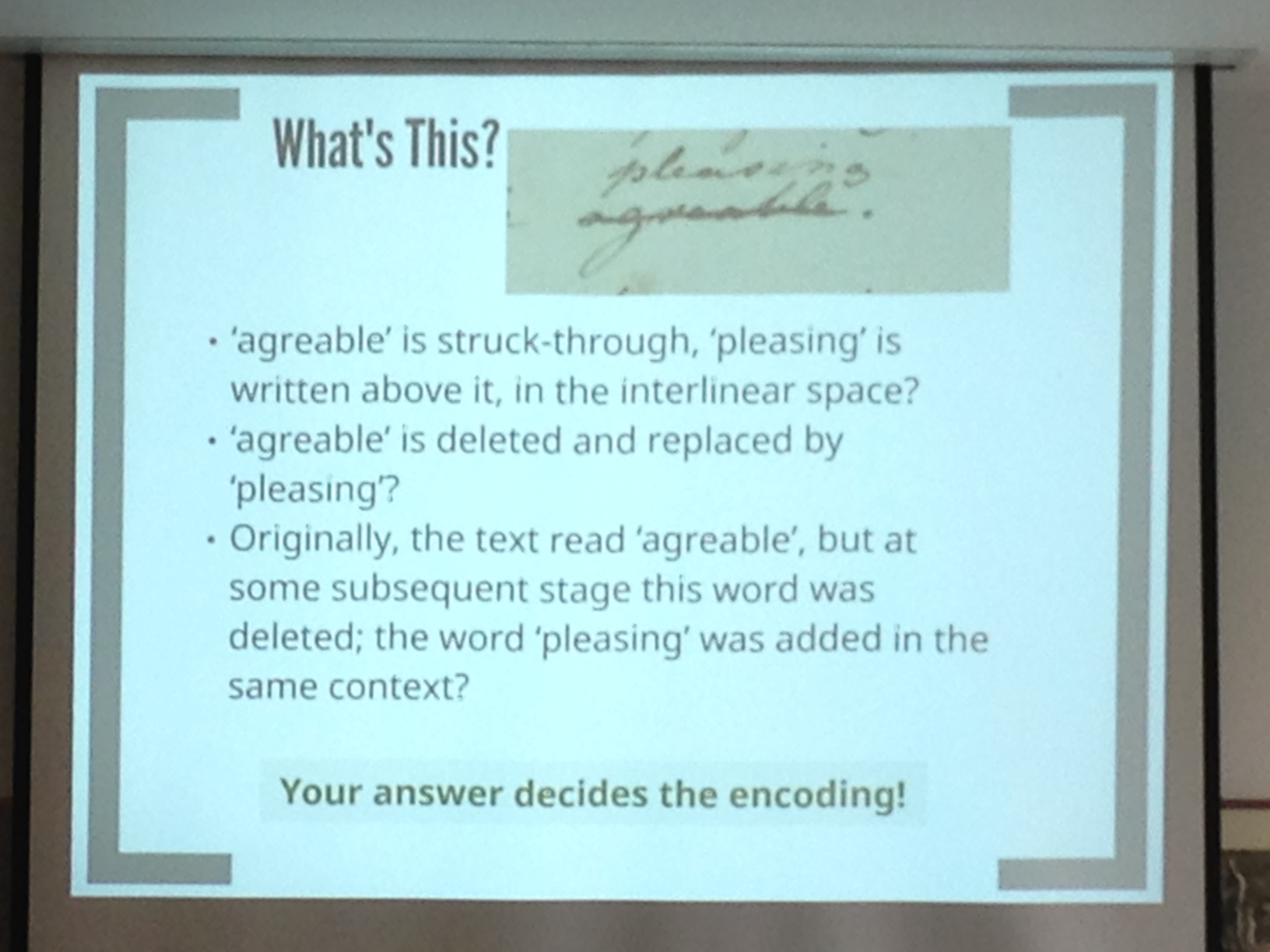
Transcription is subjective
– Further to this, there was also an intriguing debate about how to define the term ‘manuscript’. Is it simply any piece of text written by hand and, if so, can the definition be extended to manual process such as early forms of printing or even to a hand-painted shop sign, such as in the example below?
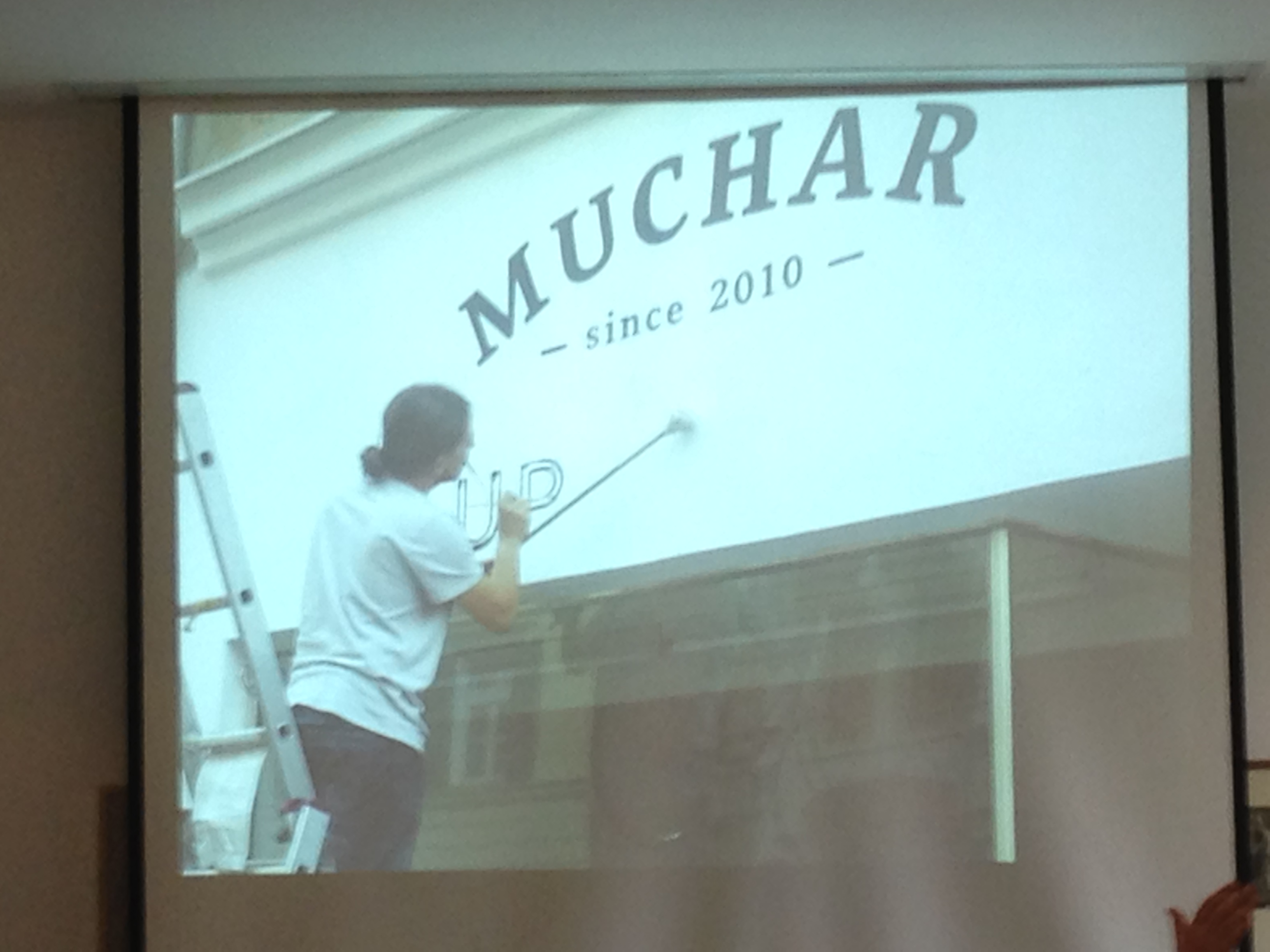
Is this a manuscript?
– Thursday dealt primarily with the International Image Interoperability Framework (IIIF), a new initiative established to improve the sharing and interoperability of heritage image databases.
– Its intention is to overcome the problems associated with image databases to improve access, use and delivery of digital images to users.
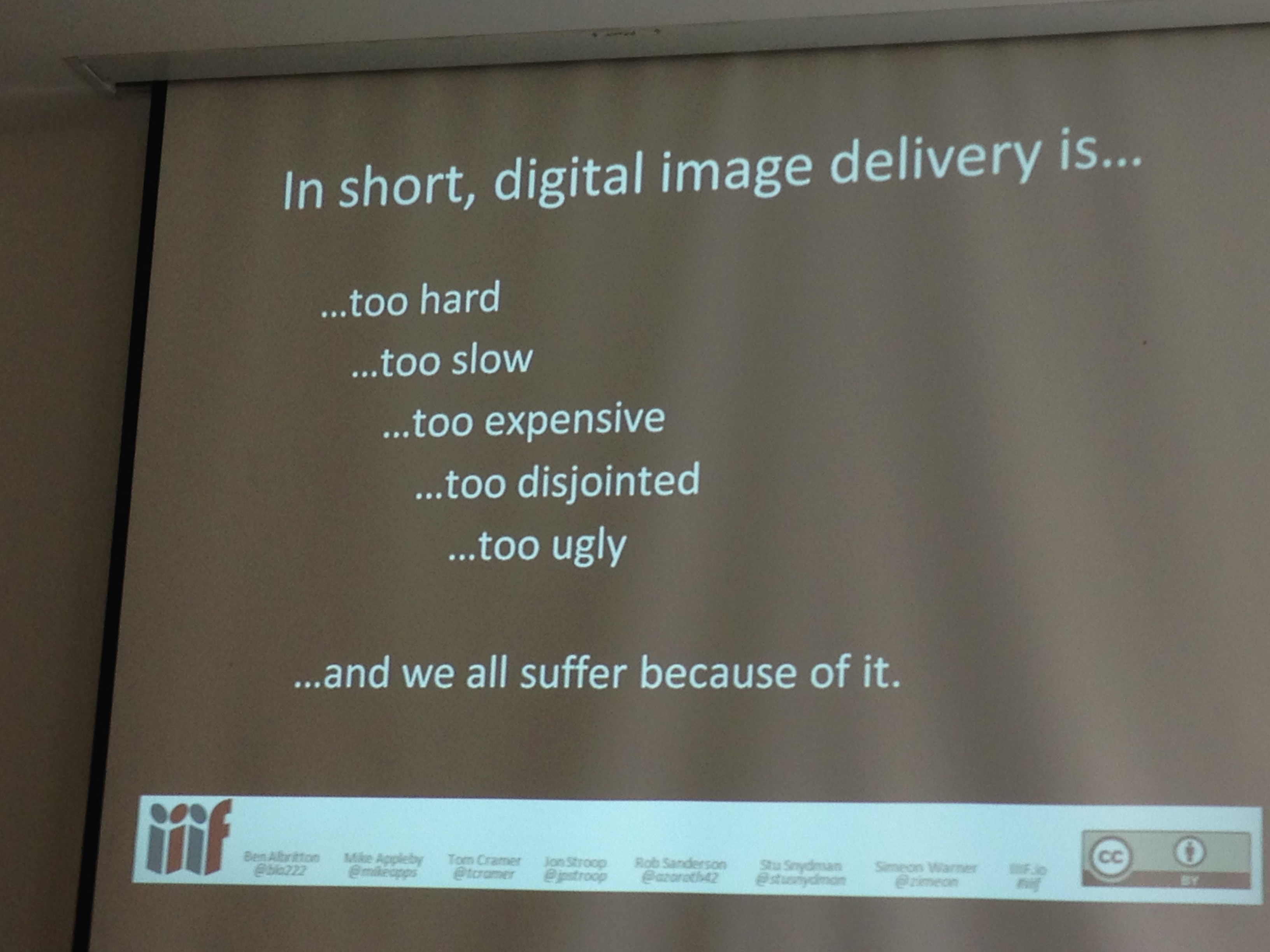
Just a few problems with image delivery…
– As well as a technical and practical overview of the framework, we were introduced to the Bodleian’s new IIIF-powered Digital Bodleian site and given an overview of the Digital Manuscripts Toolkit (DMT), a new initiative designed for medieval scholars to work with IIIF images. We also heard from four groups of PhD students and scholars who have been working with the Bodleian using the DMT.
– The great thing about IIIF is that it enables the user to source images from any IIIF-compliant institution and compare them in the same viewer (we used the Mirador viewer). It is a fantastic tool for bringing together disparate collections online and allows for the sharing, comparing and reuse of diverse image collections.
– On Thursday I also attended an excellent presentation from Victoria Van Hyning on the crowdsourcing platform Zooniverse, which now has an incredible 1.34 million volunteers engaged in 44 projects.
– The recently-launched Panoptes project is an excellent tool which allows people to set up their own crowdsourcing projects with minimal technical expertise – well worth exploring!
– As far as our own crowdsourcing initiatives at the University of Edinburgh are concerned, the key point I took from the presentation was that users’ intrinsic motivation and altruism is not enough on its own to keep people engaged. To retain interest and build a community it is crucial to provide participants with small, manageable task but make it clear that their work isn’t happening in isolation: the aggregation of multiple users’ work is driving research in many fields. As well as this, providing learning opportunities, access to experts and regular feedback all contribute to the sense of community within a crowdsourcing project.
– Another interesting point was that crowdsourcing initiatives should be targeted at non-specialists; evidence has shown that experts will not engage in this sort of activity in their area of expertise!
– Transcription is a major area that Zooniverse is not focusing on and they hope to make it a part of the Panoptes platform in the future.
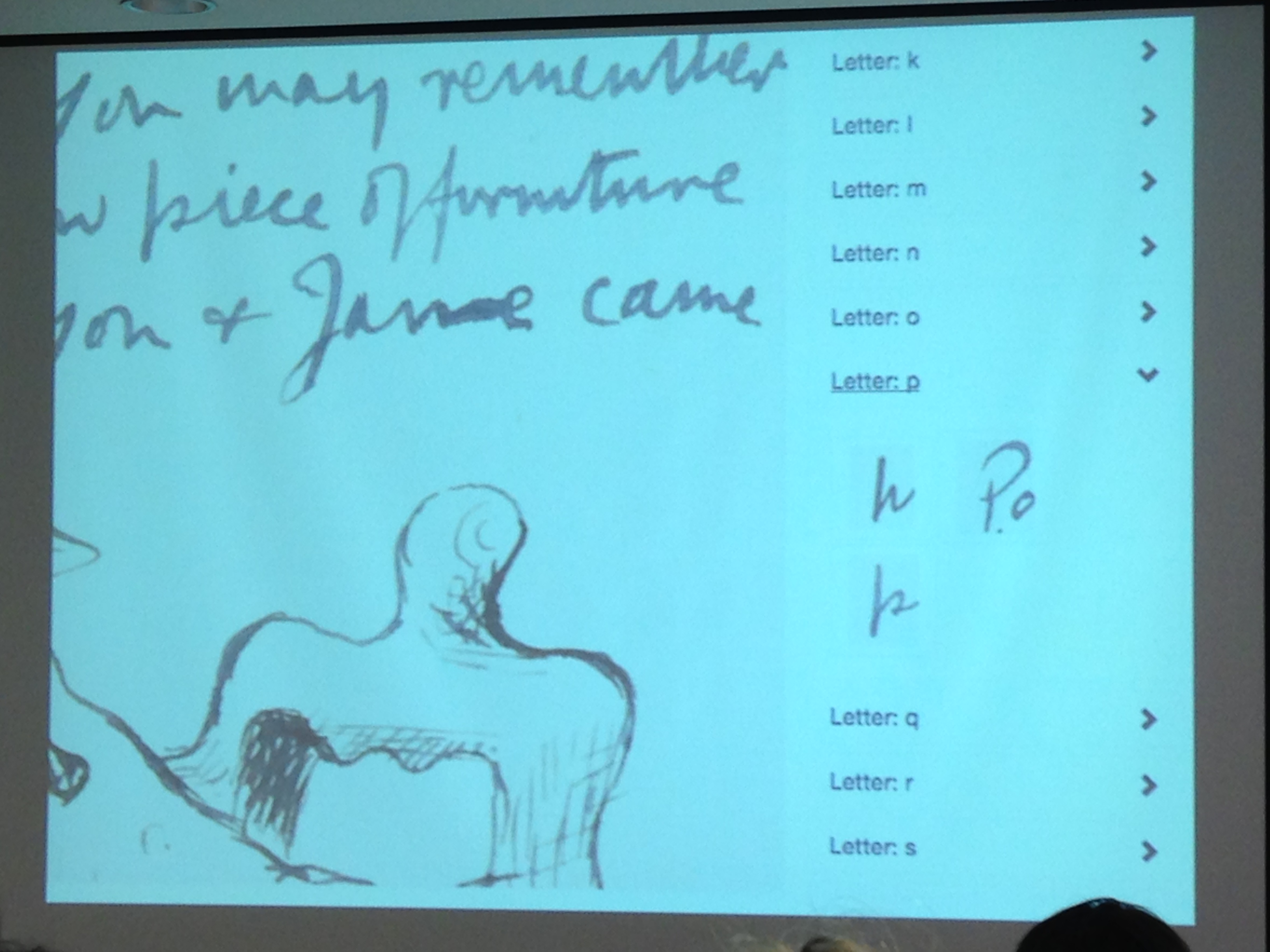
Slide from a new Zooniverse transcription project
On Thursday evening I also attended the DHOxSS dinner at the Hogwarts-esque Exeter College, which was very enjoyable.
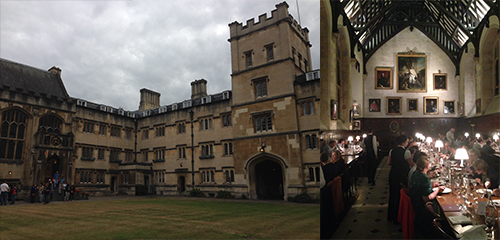
Evening meal at Exeter College
– The final day focussed on ‘social machines’ and social media, culminating in a hands-on ‘hackfest’ using data from the Early English Books Online database.
– Before that, James Loxley from the University of Edinburgh provided the closing keynote entitled ‘Uneasy Dreams: the Becoming of Digital Scholarship’. He published his slides on Buzzfeed before the talk, meaning the audience could interact with them as he was speaking http://www.buzzfeed.com/jamesloxley31/my-talk-for-dhoxss-1pkln.
These are just a few highlights from my time at the Digital Humanities Summer School and I would strongly recommend anyone with an interest in digital scholarship to attend next year’s event!
New Arts & Crafts Binding Acquisition
We are delighted to welcome a guest blog by art historian Dr Elizabeth Cumming, exploring an exciting new acquisition with a binding designed by Phoebe Anna Traquair.
The Psalms of David is the first Phoebe Anna Traquair HRSA (1852-1936) binding to be purchased by the university. Traquair was an outstanding Arts & Crafts artist in late nineteenth-century Scotland, working across a range of studio crafts and public art. She is perhaps best known today for her mural decoration of the Mansfield Traquair Centre and her equally extraordinary suite of four silk embroideries The Progress of a Soul in the Scottish National Gallery.

Book binding by Phoebe Anna Traquair, Guild of Women Book Binders, Bdg.s.40
The binding was made in 1898 while Traquair was busily working on both these artworks, and it joins an exquisite 1897 illuminated manuscript she made of details from the Song School at St Mary’s Episcopal Cathedral. Traquair already had a working space in the Dean Studio, a former church near Drumsheugh Swimming Baths, and was one of half a dozen Edinburgh women who met there to work alongside each other on bookcover tooling. They included Annie Macdonald who persuaded a London bookseller, Frank Karslake, to form the Guild of Women Binders. The Guild, with member groups from across Britain, had regular selling exhibitions on his premises at Charing Cross Road from 1897 till after 1900. They were well known and showed their books at the Paris World’s Fair in 1900.

Book binding by Phoebe Anna Traquair, Guild of Women Book Binders (back cover), Bdg.s.40
Traquair would have first selected and purchased a printed book, in this case a 1862 copy published by Samson Low, Son & Co. It was then bound in her choice of leather – this one is morocco, or goat’s skin – by T&A Constable, a commercial firm who were printers to the university. The plain leather was then worked on the bound book, using a knife first to outline the design before using broader blades to emboss it deep into the surface. The style used by the Edinburgh group, who never used coloured leathers, was said at the time to be a ‘revival of the monastic bindings of the Middle Ages’. Once completely embossed, including her signature (seen here as an upside-down monogram PAT at the foot of the front cover),Traquair would take her book to local silversmith J M Talbot to have a silver fastening made and applied: here only the mounts on the front and obverse have survived: the central silver bar fixing has been replaced at some date by a simple leather strip.
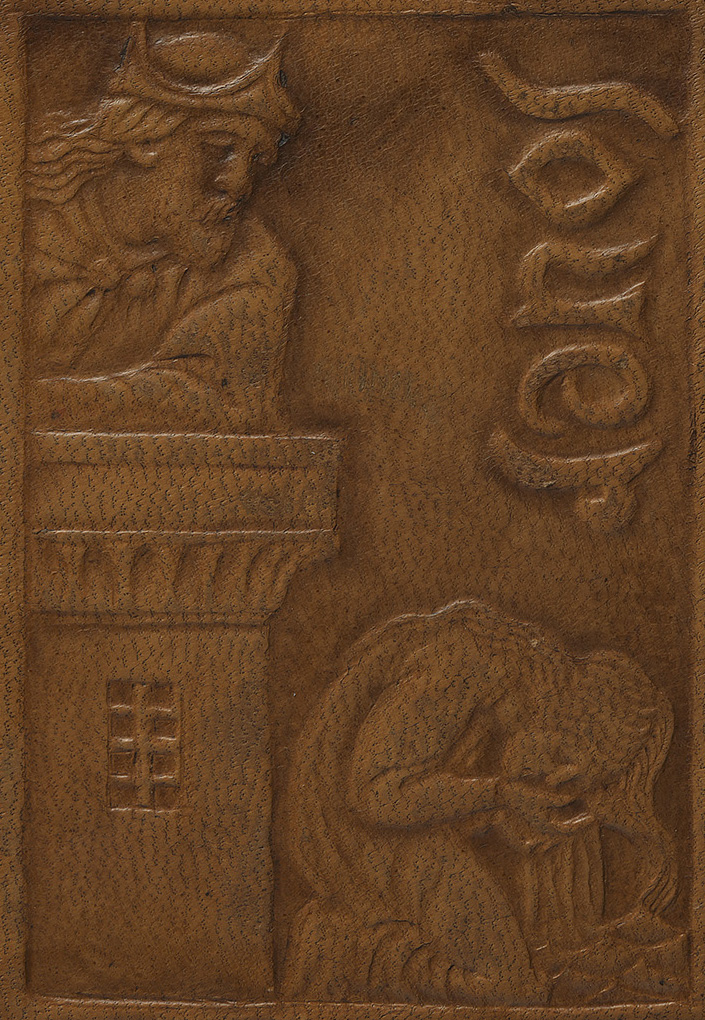
Detail, Bdg.s.40
The story of David also features in the artist’s Mansfield Traquair Centre decoration. She specifically turned to the ‘musical’ subject of the Psalms of David on several occasions, beginning by illuminating the text as early as 1884: those pages were also bound in 1898 (Scottish National Gallery). On the university binding David, the ‘Son of Jesse [and] King of Israel’, is variously represented as boy shepherd and harpist; as warrior, with the head of the giant Goliath; as lover, watching Bathsheba washing; and finally as king. The figural designs give the cover an animated sense of narrative common to much of her work.

Song School St Mary, Gen.852
Learn more about Phoebe Anna Traquair through these links:
- Catalogue entry for the Traquair binding of the Psalms of David
- Webpage of the Mansfield Traquair Trust
- Read Elizabeth Cumming’s book on Phoebe Anna Traquair published by the National Galleries of Scotland
- View images of the CRC’s other Traquair item, an illuminated manuscript of the artist’s murals for the Song School of St Mary.
Web of Science update on Sunday 26th July
 Thomson Reuters advise “This release, which will be live on July 26th, primarily focused on integrating ORCID data into our platform. We have always supported ORCID’s when they have been attached to a RID, and now we are able to display them individually.
Further information and other release information can be found at:
Digital Humanities Oxford Summer School – days 1 and 2
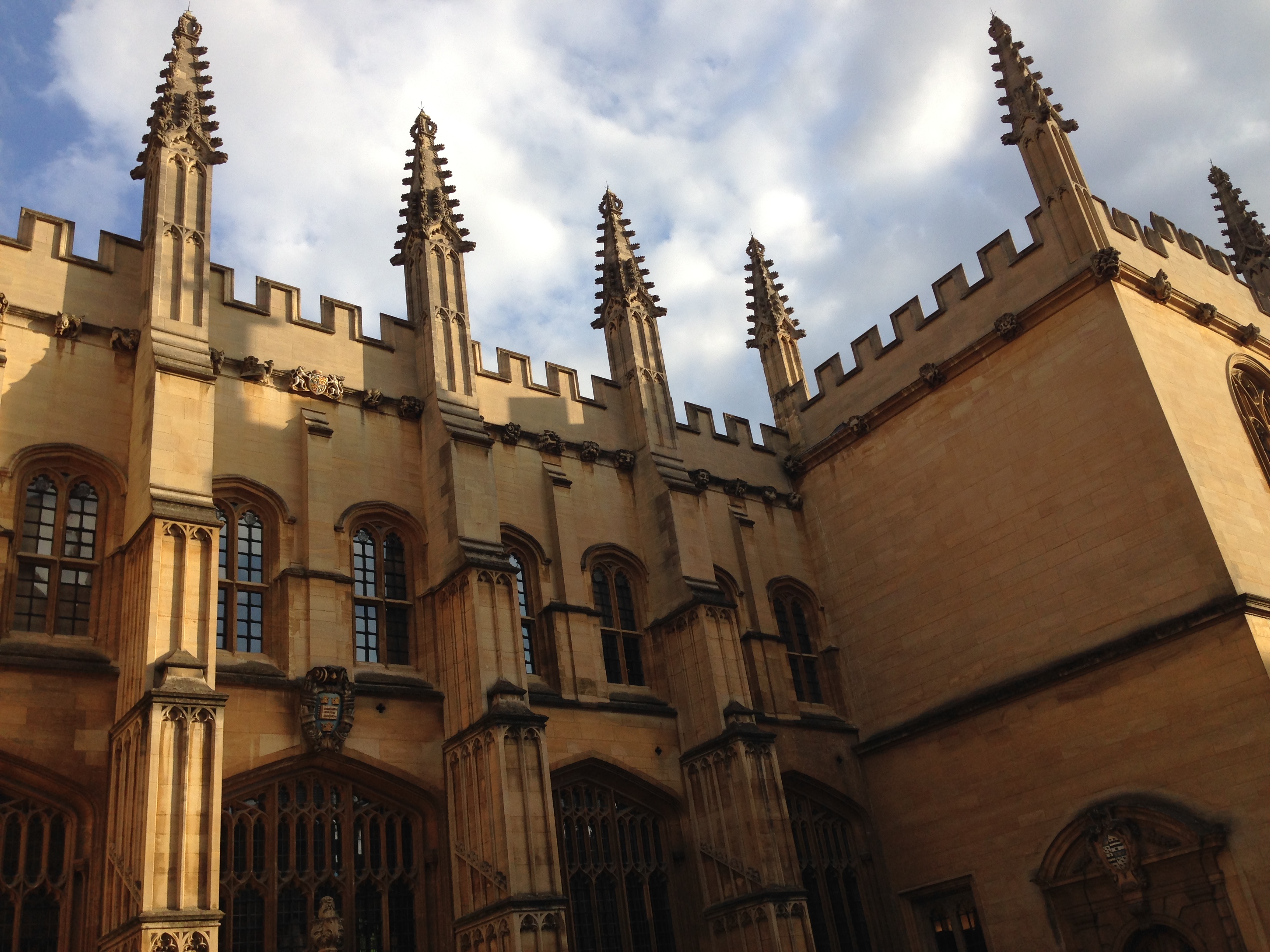
I’m down in Oxford this week for the Digital Humanities Oxford Summer School (DHOxSS), a five-day festival of digital scholarship showcasing the latest developments in research in the field and providing tools, guidance and advice on strategies for managing and using humanities data. I’ve signed up for the Digital Approaches in Medieval and Renaissance Studies (“the technologies of the present enhancing the study of the past”) which, throughout the week, focuses on topics ranging from ‘DIY digitisation’ and multispectral imaging, through to TEI, the Semantic Web, IIIF and social media as ‘social machines’. I plan to write up my full notes from the week once I’m back, but here is a small list of observations and useful links from days 1 and 2:
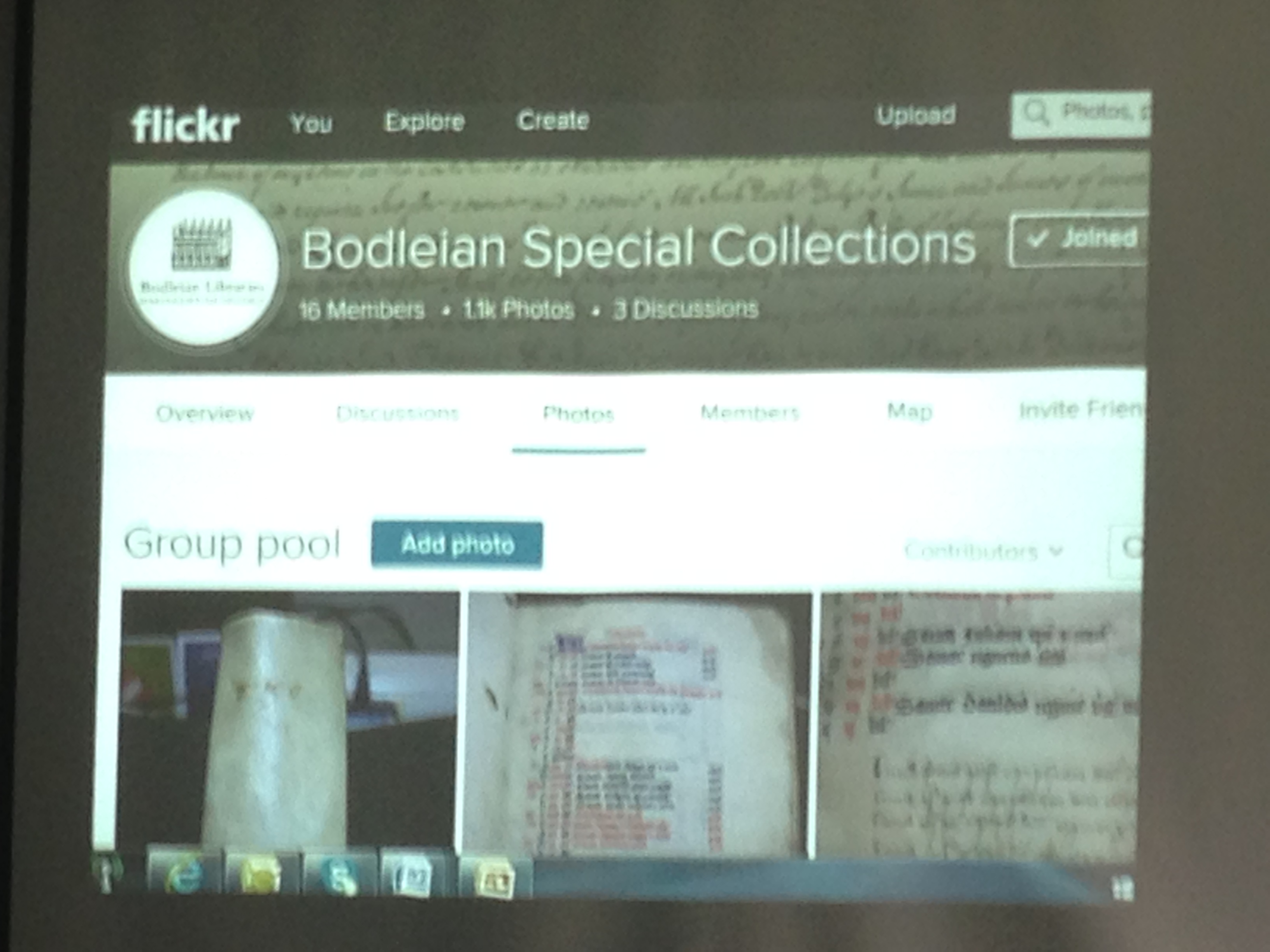
– ‘DIY digitisation’ is an excellent way for researchers to undertake their own small scale and low cost digitisation projects. The Bodleian encourages DIY digitisers to share their images on Flickr flickr.com/groups/bodspecialcollections, thereby encouraging discussion and debate and enabling the library to capture information about items its users want to see in digital format.
– Retroreveal http://retroreveal.org/ is a highly-recommended tool for uncovering what lies beneath the surface of digital images. It transforms images from the RGB colourspace perceived by the naked eye into other colourspaces, thereby revealing hidden text, annotations and images within digital files.
– The Walters Art Museum http://www.thedigitalwalters.org/ has been highlighted as something of a holy grail for digital humanities scholars: the entire collection is available on a CC-BY-SA licence in a variety of sizes and resolutions, right up to the 1200 dpi master TIFFs.
– There was an interesting discussion around the ethics of ‘DIY digitisation’ centered on what users should be allowed to do with images digitised in this way. One example was of the twitter account Medieval Reactions https://twitter.com/medievalreacts create humorous images / which tweets humorous, often offensive, memes using digitised images from rare books, and generates income from hosting promoted tweets. Should libraries be funding private income generation in this way?
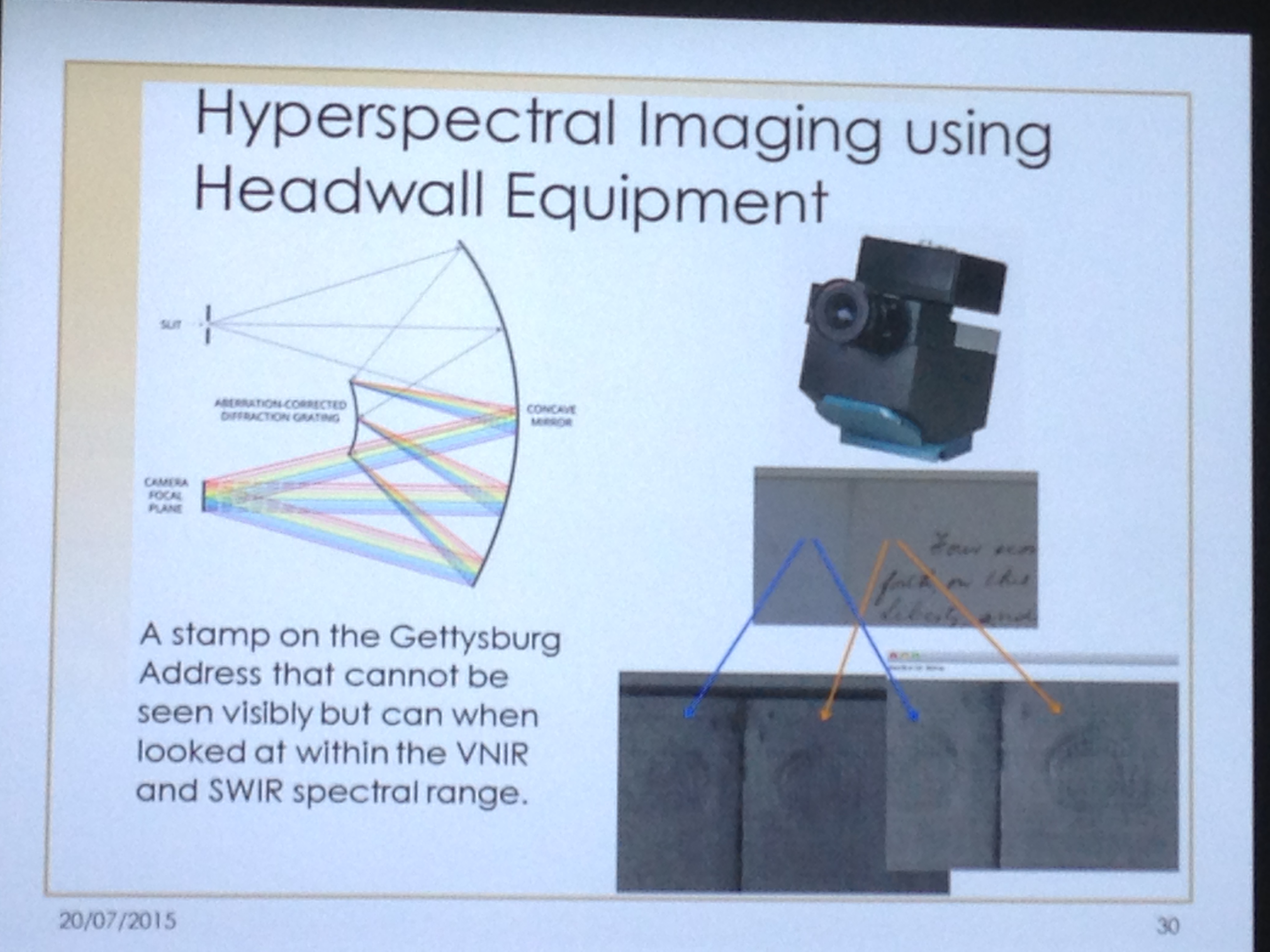
– The Bodleian is doing fascinating work on hyperspectral imaging http://www.bodleian.ox.ac.uk/news/2014/sep-16, enabling researchers to see hidden texts within images and analyse materials in a new way. In the image below, a stamp on the Gettsyburg Address not visible to the human eye can be seen when viewed within the VNIR and SWI spectral range. Hyperspectral images create huge file sizes (30GB+) and require complex data processing but can reveal secrets in documents which have never been uncovered before.
– OCR does an excellent job for printed, standardised documents but is not able to replicate the original structure of a document and it presents all text in a uniform size and font, even though it may not appear like this in the original document. As well as this, text can only be processed when it runs horizontally and faint items are not picked up well. The EMOP project http://emop.tamu.edu/ is an interesting tool which utilises crowdsourcing and other techniques to overcome some of these issues.
– Oxford museums have been experimenting with using the basal metabolic rate emitted by all smart phones to track and record (anonymously!) their visitors’ movements throughout the museum space; this approach is an interesting one which I had not come across before. The aim is to deliver relevant content to visitors along the lines of Amazon’s “maybe you’d like…” service, based on their viewing habits within the museum space.
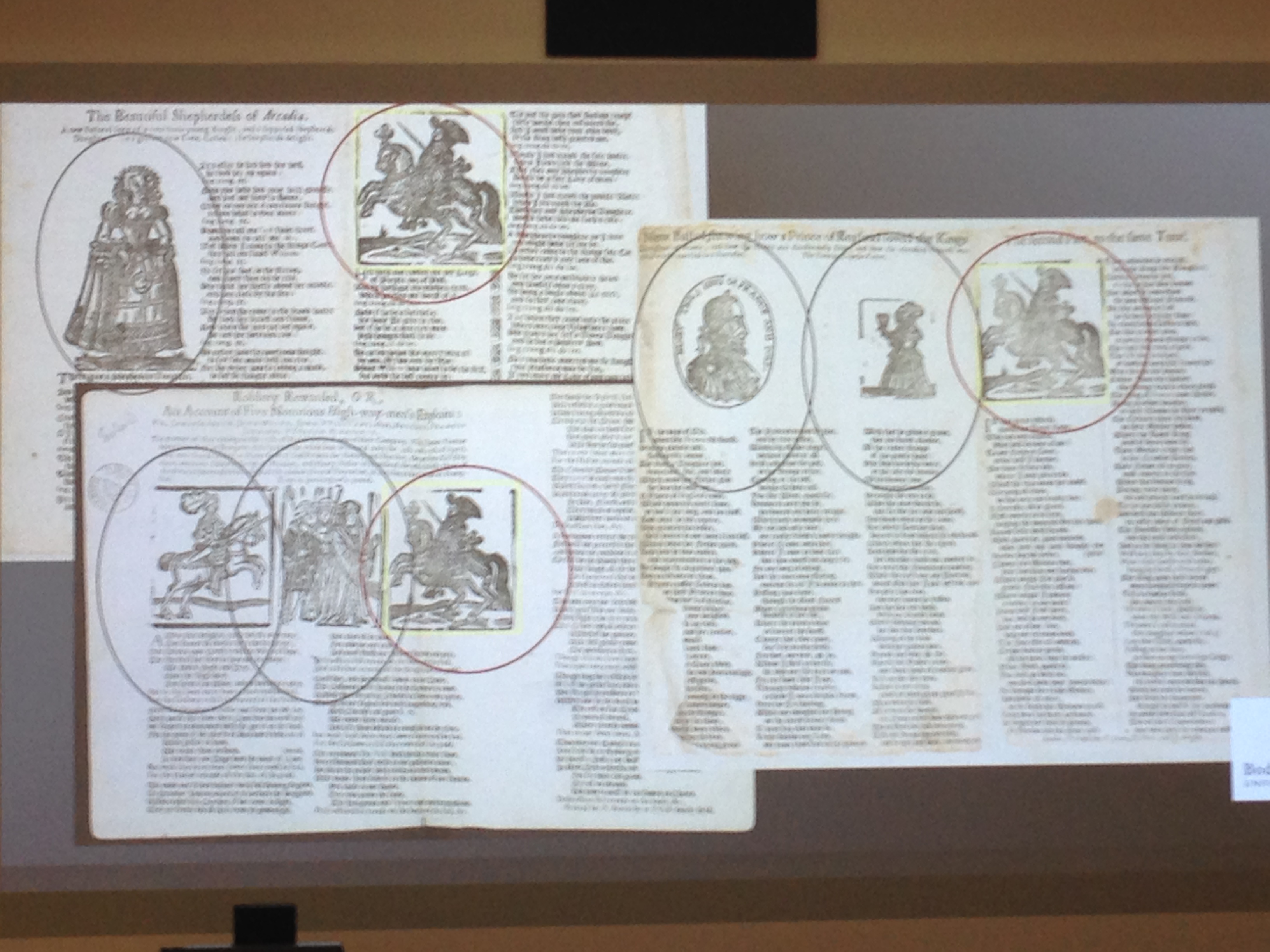
– Image recognition technology has been used in the Bodleian Broadsides project to identify wood blocks used by printers, shedding new light on the location and activities of printers across Europe in the early modern period http://imagematch.bodleian.ox.ac.uk:8000/page0. Image recogntion technology such as this could have profound implications for all institutions with a large backlog of poorly-described digital images.
The above is just a small snapshot of what I’ve learned so far from the Summer School. I’m not even halfway through yet, so there’ll be plenty more to come from me over the next few days!
Highlights from the RDM Programme Progress Report: May 2015
Work was completed on collating and assembling 17 self-assessment statements for Edinburgh DataShare’s Data Seal of Approval application for trusted digital repository status.
‘Recommended File Formats’ and ‘Trustworthiness’ pages have been added to Edinburgh DataShare documentation as evidence to support Edinburgh DataShare’s Data Seal of Approval application.
The DataSync service build, testing and documentation is now complete, and the service went live on 27th May 2015.
The RDM website continues to add new content. Links are being checked and corrected to match the format needed for the migration to Drupal.
A Call for Papers for the ‘Dealing with Data 2015’ conference has been was finalised, and an announcement was posted on the data blog and call for papers were sent out to Research Administrators, Directors of Research and Research staff in three colleges.
System design of the DataVault project funded by Jisc has commenced, with the architecture being developed jointly between the universities of Edinburgh and Manchester. Development is due to start in June. A ‘ skeleton service’ is currently being scoped, to offered as an interim service.
A one-page EPSRC compliance guide has been produced to assist PIs with meeting the EPSRC research data expectations.
The Data Library is currently looking at end user interface improvements to the new Mirage theme for DataShare.
Talks are continuing between the Data Library, Learning, Teaching & Web Division, and North Carolina about a MANTRA MOOC for academic year 2015-16.
Stuart Macdonald
RDM Service Coordinator / Associate Data Librarian
Collections
 Hill and Adamson Collection: an insight into Edinburgh’s past
My name is Phoebe Kirkland, I am an MSc East Asian Studies student, and for...
Cataloguing the private papers of Archibald Hunter Campbell: A Journey Through Correspondence
My name is Pauline Vincent, I am a student in my last year of a...
Hill and Adamson Collection: an insight into Edinburgh’s past
My name is Phoebe Kirkland, I am an MSc East Asian Studies student, and for...
Cataloguing the private papers of Archibald Hunter Campbell: A Journey Through Correspondence
My name is Pauline Vincent, I am a student in my last year of a...
Projects
Cataloguing the private papers of Archibald Hunter Campbell: A Journey Through Correspondence
My name is Pauline Vincent, I am a student in my last year of a...
Archival Provenance Research Project: Lishan’s Experience
Presentation My name is Lishan Zou, I am a fourth year History and Politics student....