Home University of Edinburgh Library Essentials
April 11, 2026

Thomson-Walker Internship – Round 2!
This week’s blog come from Victoria Haddock, a recent graduate, and our second Thomson-Walker intern….
I am currently approaching the end of my fourth week of a ten-week internship working on the Thomson-Walker collection of medical portrait prints at the CRC conservation studio here at the University of Edinburgh.
I graduated earlier this year from the MA paper conservation course at Camberwell College of Arts and have been fortunate to have been quite busy over the summer with various short term contracts and was overjoyed to have been offered this opportunity here. It has been quite a whirlwind of new people to meet, things to learn and see in the last month and I’m sad to think it has already passed by so quickly.

Victoria in the conservation studio
There is certainly no fear of me running out of work to do though, with a collection of approximately 2500 prints to work through! I’m the second of a planned series of interns who will have to remove these prints from their current storage, where some anonymous person decades ago lovingly spent hundreds of hours taping all of these prints onto board and paper which has now become very acidic and brittle and prevents further conservation work or digitisation projects taking place. Like many conservation projects, I have to undo all of this work done with the best of intentions previously, and throw the unsuitable board unceremoniously into the recycling bin. You can read about the importance of good housing in this blog by Special Collections Conservator, Emily.

Boxes of prints, before treatment in acidic boxes

Boxes of prints, after treatment in acid-free boxes
Following the procedures outlined by Samantha Cawson, the first Thomson-Walker intern (here is a link to her blog where she explains everything – with puns!), most of the adhesive tape (a paper gummed tape mainly) can be easily removed by applying lens tissue packages containing CMC (carboxymethyl cellulose) for anything up to 30 minutes, and peeling away the carrier.

Prints, during treatment
It has been a great experience so far, and I have been fortunate to have gone on a tour of the National Library of Scotland’s conservation studio, be part of some of the studio tours here and the conservation taster days run for the students. It is a great place to work as there is always something amazing being brought in to the studio and there is also a fabulous view, which as many conservators will know, that not being consigned to a cold basement is a rare and wonderful thing!

Print, after treatment
Databases on trial!
Some news of a few more databases currently on trial from ProQuest until the end of November.  While not directly related to PPLS subject areas, there is still much that will be of general interest to many of you, with lots of great reading on offer!
USC Shoah Foundation Visual History Archive
I’m pleased to let you know that the Library currently has trial access to the USC Shoah Foundation Visual History Archive®.

You can access this online archive via the E-resources trials page. You must register with the site to get access. Access is available on-campus or off-campus if using VPN.
Trial access ends 30th November 2016.
The Visual History Archive® is a collection of audiovisual interviews with witnesses and survivors of the Holocaust and other genocides and it allows users to search through and view more than 50,000 of these video testimonies. Read More
Los Angeles Times Archive on trial
For the month of November the Library has trial access to the Los Angeles Times Historical Archive, 1881-1992, from ProQuest.
You can access this online archive via the E-resources trials page. Access is available both on and off-campus.
Trial access ends 30th November 2016.
**Trial has now been extended until 31st December 2016**

Luther’s Werke (Weimarer Ausgabe)
 Martin Luther (1483-1546) is a central figure in the development of European culture, not only as a result of his religious influence but also for his contribution to the establishment of the High German language.
The Library now has trial access – until the end of November – to Luthers Werke (Weimarer Ausgabe). Read More
Three Japanese e-resources for trial
The Library has arranged a free trial for the following three e-resources from Japan:
- Fuzoku Gaho (風俗画報,1889 – 1916)
- Toyo Keizai Digital Archive(東洋經濟, 1895 – 1945)
- Mainichi Newspaper Maisaku(每日新聞, 1872 – 1999)
To access the trial, go to the Library’s E-Resources Trials website. The trial ends on 30 November 2016.
Fuzoku Gaho and Toyo Keizai Digital Archive are to be accessed on the JapanKnowledge platform which is in our Databases A-Z list. See the screenshot below:

Trial access to magazine and periodical archives
*The Library now has permanent access to the Women’s Magazine Archive I and II and News, Policy & Politics Magazine Archive. We also have access to all British Periodicals collections until 31st July 2024 as part of ProQuest Access 350.*
The Library currently has trial access to 3 magazine and periodical archives, British Periodicals III and IV, News, Policy & Politics Magazine Archive and Women’s Magazine Archive I and II. These give access to a wide range of full-text magazines from around the early 20th century onwards including The Tatler, The Illustrated Sporting and Dramatic News, Chatelaine, Newsweek, The Sketch, Good Housekeeping, Seventeen and Cosmopolitan.
You can access all of these online resources via the E-resources trials page. Access is available both on and off-campus.
Trial access ends on 30th November 2016.
**Trial has now been extended until 31st December 2016**
Women’s Magazine Archive I and II

Wicked Witches
In our last post we revealed some of the Halloween customs detailed in the Statistical Accounts, including some spooky ghost stories. Although superstitious beliefs seem to have been receding during the late Eighteenth Century, there are nevertheless many accounts of another devilish figure in the accounts: the witch. Such stories give us a real insight into what people in the eighteenth century and earlier believed in and how they dealt with alleged witches.
In Tongland, County of Kircudbright, the lower classes “firmly believed in ghosts, hobgoblins, fairies, elves, witches and wizards. There ghosts and spirits often appeared to them at night. They used many charms and incantations to preserve themselves, their cattle and houses, from the malevolence of witches, wizards, and evil spirits, and believed in the beneficial effects of these charms.” (OSA, Vol. IX, 1793, p. 328)
Several places are mentioned in the Statistical Accounts where witches were burnt. These include: near the Old Castle of Langholm in the County of Dumfries, where some of the witches here acted as midwives and had the power to transfer labour pains from the mother to the father! (NSA, Vol. IV, 1845, p.421); a hill in the parish of Mordington, County of Berwick, called Witch’s Know (OSA, Vol. XV, 1795, p. 187); another Witch’s Know in Gask, County of Perth (NSA, Vol. X, 1845, p. 282); and an upright granite stone located in the parish of New Monkland, County of Lanark, “where it is said, in former times, they burned those imaginary criminals, called witches” (OSA, Vol. VII, 1793, p. 280).

The Three Witches of Macbeth, 1824. John Downman [Public domain], via Wikimedia Commons
Indeed, you can find a number of accounts of trials for witchcraft in the Statistical Accounts. The most complete report of a trial is that of the Trial of William Coke and Alison Dick for Witchcraft on September 17th 1633, which is found in the accounts for Kirkaldy, County of Fife, OSA, Vol. XVIII, 1796 – p.656 to 662.
Other witches are mentioned too, such as the Bargarran Witches who were seven men and women accused of bewitching a young woman in the parish of Erskine, County of Renfrew (NSA, Vol. VII, 1845, p.507 to 508 and p.122). Other renowned witches are Lillias Adie who, in 1704, was accused of witchcraft and “afterwards died in the jail of Dunfermline, and was buried within the flood-mark between the villages of Torryburn and Torrie” (Torryburn, County of Fife, NSA, Vol. IX, 1845, p. 732) and Gorm Shuil, or blue-eyed, a famous witch from Laggan in the County of Inverness “who was such an adept in her profession that she could transform herself and others into hares, and crows, raise hurricanes from any quarter of the compass she pleased, and perform other wonderful exploits, too tedious to mention” (NSA, Vol. XIV, 1845, p. 426).
There is a really interesting piece by Sir John Sinclair on the Castle of Dunsinnan or Dunsinane and the probability that William Shakespeare had collected here its traditions on Macbeth to use it in his celebrated play! (Collace, County of Perth, OSA, Vol. XX, 1798, p.242)
Witches also had a hand in the formation of the Castle of Dumbarton! It seems that Kilpatrick, a village in Dumbartonshire, both derives its name from, and gave birth to, the celebrated saint of Ireland, Patrick. The Devil was so incensed at Patrick’s sanctity and success in preaching the gospel that he:
sent a band of witches against him; that the weird-sisters fell upon him so furiously, that he was forced to seek safety by flight; that finding a little boat near the mouth of the Clyde, he went into it and set off for Ireland; that they seeing it impossible to pursue him, for it seems they were not of that class of witches who can skim along the waters in an egg shell, or ride through the air on a broom stick, tore a huge piece of a rock from a neighbouring hill, and hurled it, with deadly purpose, after him; but that, missing their aim, the ponderous mass fell harmless, and afterwards, with a little addition from art, formed the Castle of Dumbarton.
(Kilpatrick-New, County of Dumbarton, OSA, Vol. VII, 1793 – p. 99)

Dumbarton Castle (Rawlinson 518) engraving by William Miller after Turner. Created 1 January 1836. [William Miller [Public domain], via Wikimedia Commons]
In Forfar there was “a witch-pricker called John Ford who was sent for to prick witches, and was admitted as a burgess, on the same day with Lord Kinghorn. The bridle which was placed in the mouths of the witches condemned to be burned, and with which they were fastened to the stake, is preserved in the burgh.” Also, the field in which the witches suffered is pointed out to strangers as a curiosity (OSA, Vol. VI, 1793, p. 524). Those people charged with witchcraft were brought to trial in Forfar by a special commission appointed by the Crown in 1661. Interestingly, ‘the records of these trials were preserved and contained many curious statements; but it has recently been amissing.’ (NSA, Vol. XI, 1845, p.695)
In Gladsmuir, County of Haddington, (NSA, Vol. II, 1845, p. 188) “the Lord Commissioner and Lords of the Articles, after bearing the petition, granted a commission for putting to death such of the above persons as were found guilty of witchcraft by confession, and for trying the others, which, if we may credit tradition, was put into execution”.
In the parish of Torryburn it is even reported that the first Presbyterian minister after the Revolution “Mr Logan’s great hobby appears to have been the prosecution of witches” and on April 4, 1709, Helen Kay was rebuked before the congregation for having said that the minister “was daft,” when she ” heard him speak against the witches”! (Torryburn, County of Fife, NSA, Vol. IX, 1845, p. 732)
It is actually frightening to think that people from judges to the parish elite had the power to put to death those accused of witchcraft based on such questionable evidence as witch-pricking and confessions forced under duress (torture and sleep deprivation). Thankfully, by the seventeenth century there was a growing scepticism of witchcraft and by the time Scotland became part of the Commonwealth with England and Ireland in 1652 there was a marked decline in witch trials and prosecutions. It is both a fascinating and troubled period of Scotland’s history, and the traces of this time that are to be found in the Statistical Accounts are well worth exploring.
5,000 Science and Engineering theses now online!
Library & University Collections is pleased to announce the upload of around 200 digitised Science and Engineering theses to our online repository, bringing to an end the University’s largest digitisation to date.
Over the last 18 months, almost 5,000 doctoral and masters’ level dissertations have been scanned, processed and OCR-ed by RedRock, a scanning company and member of the supported business framework. Following quality review by library staff, the scanned theses have been uploaded to the Edinburgh Research Archive (ERA), where they can now be viewed and downloaded for free by anyone with an internet connection.
The project has digitised over 1 million pages of unique Edinburgh research which was previously only available to readers in the KB Library Store. The collection dates from the early 1920s to the present day, with the earliest a 1923 work by Thomas Cameron, On the intestinal parasites of sheep and other ruminants in Scotland, and the most recent a 2011 thesis from Jannat-e Zereen, Characterization of the role of ACR4, a receptor like kinase in Arabidopsis thaliana.
Now that the collection is online, the Scholarly Communications team will be reassigning individual theses to relevant School collections on ERA. In the meantime, the digitised theses will be stored in a bulk deposit folder and can also be access by keyword search on the ERA homepage.
This project has enabled the library to streamline its mass digitisation workflows and has provided useful evidence to feed into our project to digitise the remaining 15,000 University of Edinburgh PhDs. Find out more about this project at: https://libraryblogs.is.ed.ac.uk/phddigitisation
Gavin Willshaw, Digital Curator, Library & University Collections
Some pictures from 1980s Punjab
In this project we tackle theses chronologically. We follow a spreadsheet that has been ordered, more or less, by date and name of author. As we move forwards, we have been noticing that:
1. theses get generally longer as the years go by;
2. there are definitely themes that at times, are more fashionable than others. The early 20th century hot PhD topic was, for example, Chorea whilst the 1980s saw an increase in the number of works written about infants and motherhood;
3. Theses get less and less visual as we scan.
It is possible, though, to find beautiful imagery in later thesis, as the 1987’s work Transcultural nursing: the role of the health visitor in multi-cultural situations by Susan Margaret Dobson exemplifies.The following pictures show how skilled (at least aesthetically) Dobson was when documenting her research. The composition, the lighting and the colours of these photographs immediately caught my attention.
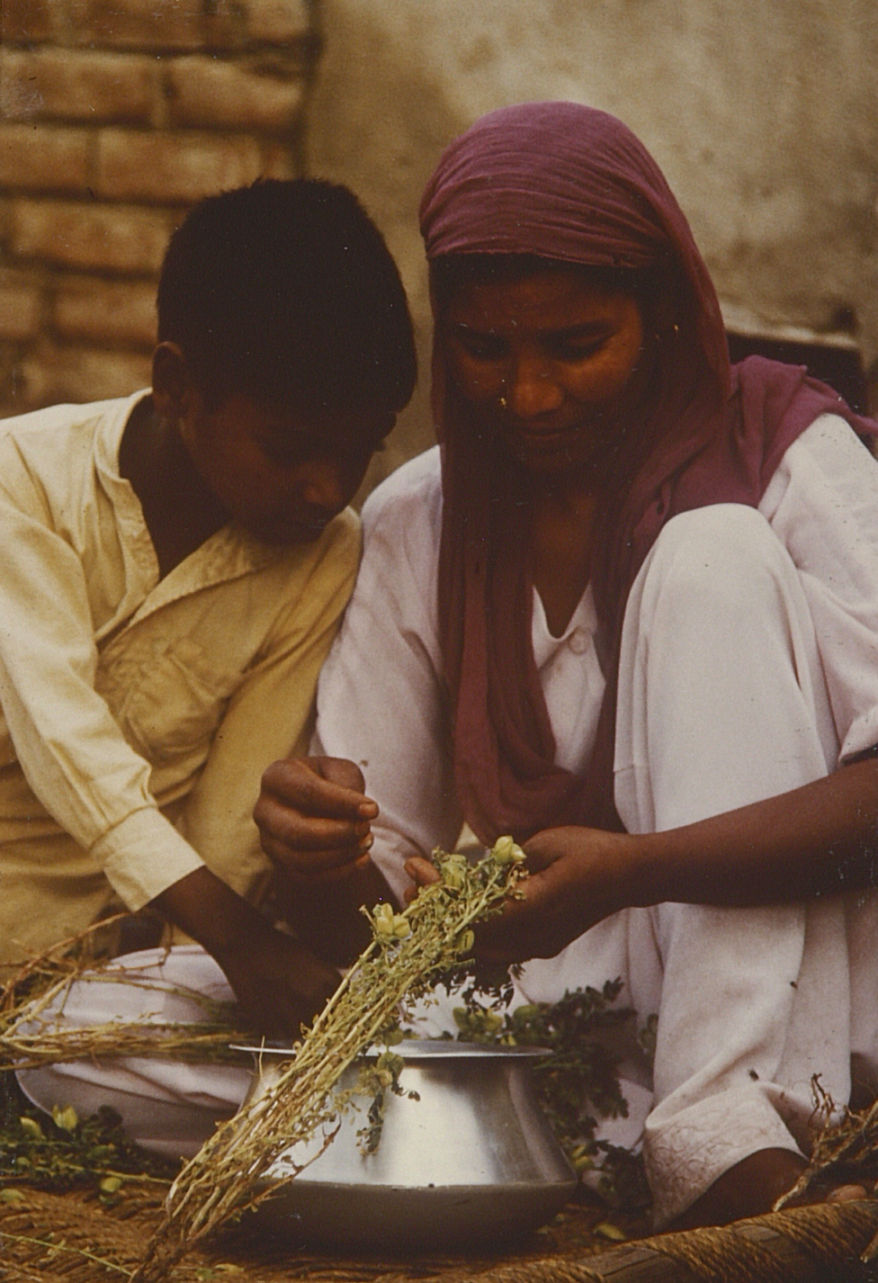


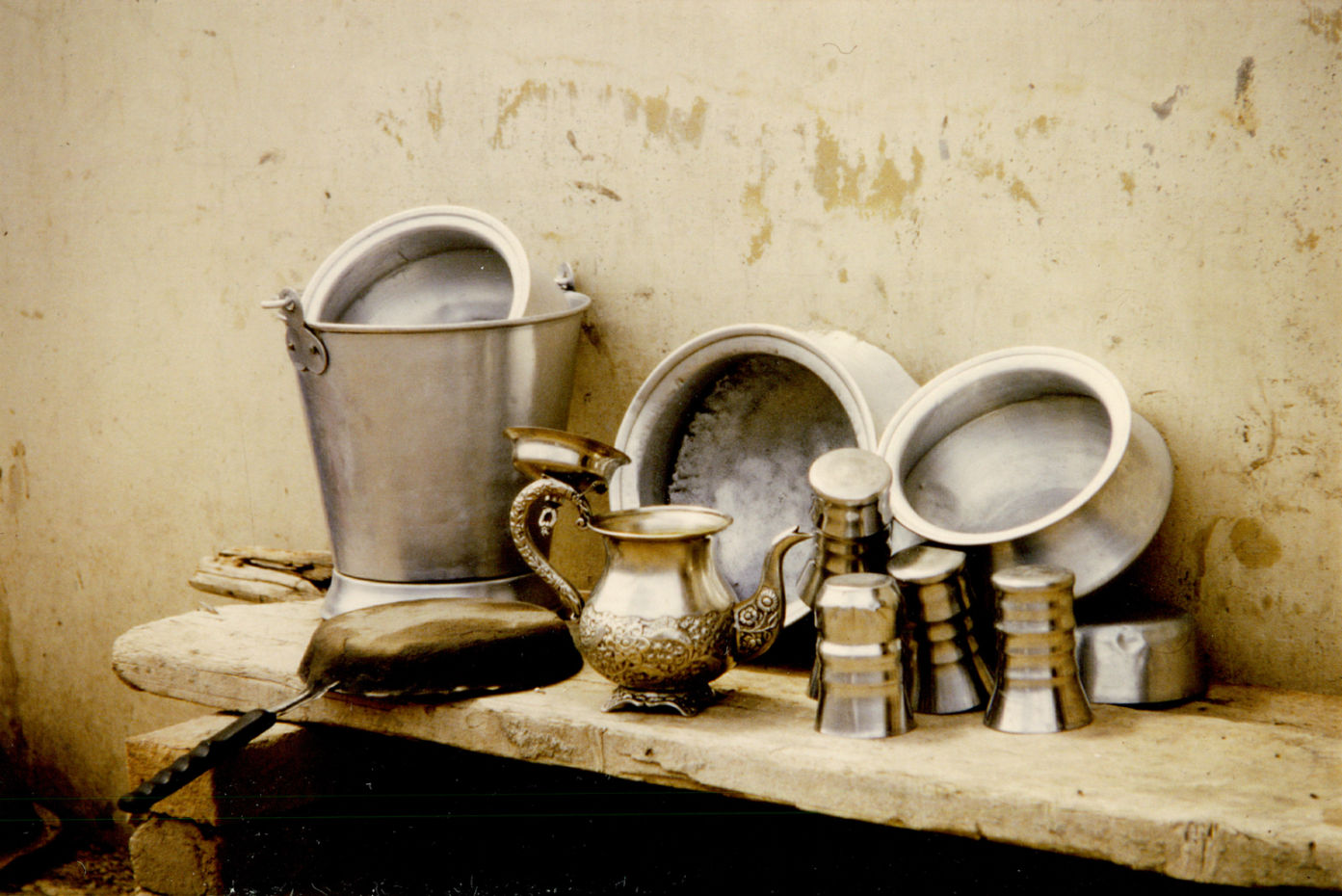
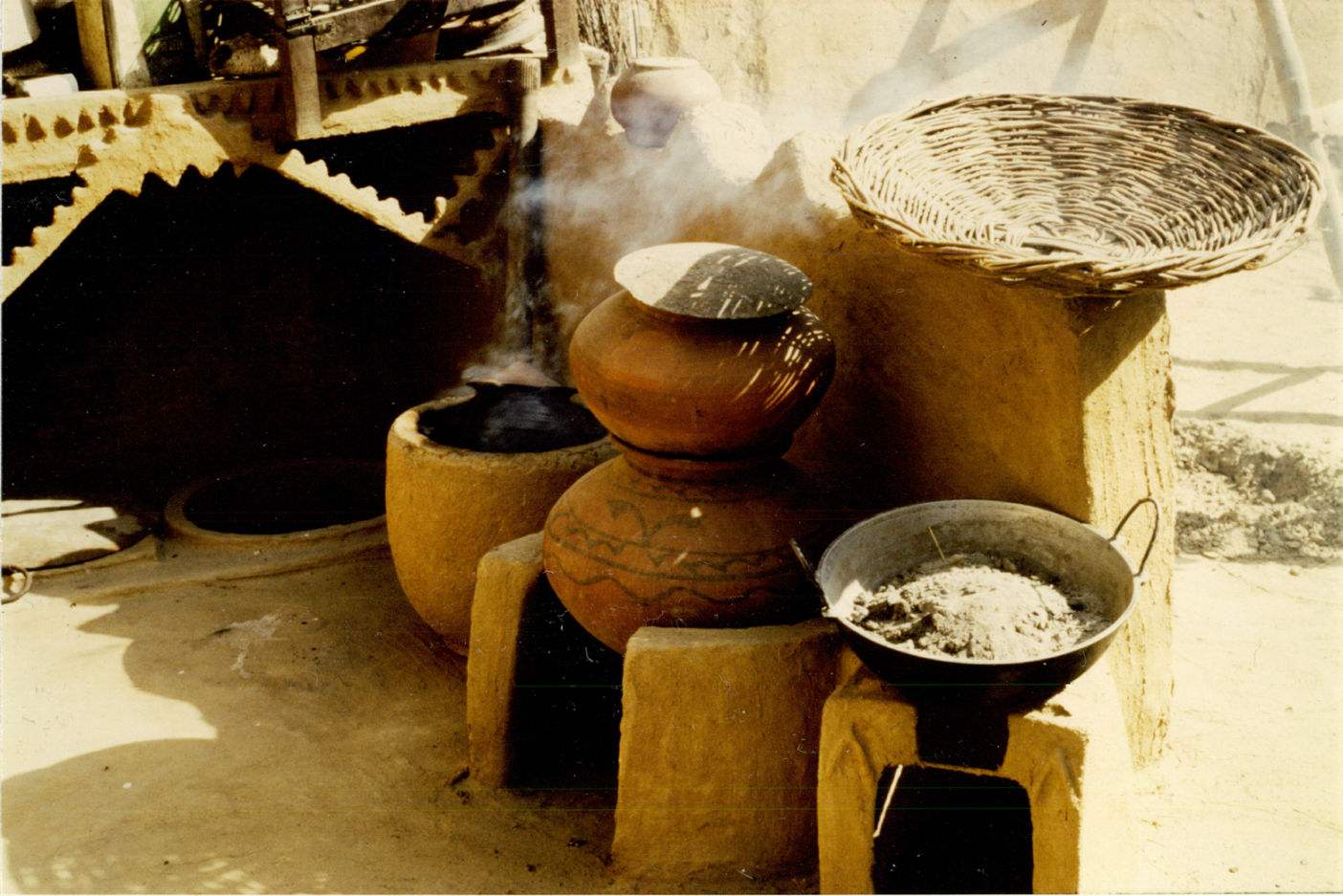
Collections
 Hill and Adamson Collection: an insight into Edinburgh’s past
My name is Phoebe Kirkland, I am an MSc East Asian Studies student, and for...
Cataloguing the private papers of Archibald Hunter Campbell: A Journey Through Correspondence
My name is Pauline Vincent, I am a student in my last year of a...
Hill and Adamson Collection: an insight into Edinburgh’s past
My name is Phoebe Kirkland, I am an MSc East Asian Studies student, and for...
Cataloguing the private papers of Archibald Hunter Campbell: A Journey Through Correspondence
My name is Pauline Vincent, I am a student in my last year of a...

Projects
Cataloguing the private papers of Archibald Hunter Campbell: A Journey Through Correspondence
My name is Pauline Vincent, I am a student in my last year of a...
Archival Provenance Research Project: Lishan’s Experience
Presentation My name is Lishan Zou, I am a fourth year History and Politics student....