Student newspaper digitisation project returns!

The Student newspaper digitisation project is back! Over the next six months we’ll be digitising back issues from the late 1980s and early 1990s and making them available online at the redesigned project site: https://libraryblogs.is.ed.ac.uk/thestudent/

banner-the-student

In 2014, the Library ran a pilot project to digitise copies of The Student newspaper from the academic year 1984 / 1985. The papers were released in real-time, exactly 30 years after they were first published, and provided an interesting insight into life as a student in Edinburgh in the mid 1980s.

Now, thanks to a generous grant from the Alumni Innovation Initiative, we are able to continue the project, starting from the point at which the pilot ended in summer 1985. Second Year History student Olivia Nolan will be working with us part time from November until April – we’re delighted to have her on board!

The original project blog has been updated and content will continue to be added as we digitise the back copies. As well as all the issues from the 1984/85 pilot, October 1985 is online now: https://libraryblogs.is.ed.ac.uk/thestudent/19851986-2/

As before, we’d be really keen to hear from you about your experiences of living in Edinburgh and studying or working at the University in the 1980s. We’ll be posting on the Centre for Research Collections’ Facebook page and tweeting from its Twitter account using the hashtag #studentarchive. Please join in!

If you would like more information about the project, please email Gavin.Willshaw@ed.ac.uk

Posted in Collections, Library, Library & University Collections, Projects | Tagged , , , , | Comments Off on Student newspaper digitisation project returns!

Scanning Scanty Moustaches: some medical theses from the turn of the century

A large proportion of the earliest thesis we have digitised from the turn of the century are medical thesis. However, they little resemble the modern medical thesis being produced today. They are full of the personality of the students who wrote them and the people they studied. Sometimes it feels like we are hearing voices that no one has listened to for a very long time.

For example, one student named Donald Sutherland Murray undertook a study of an outbreak of alopecia he witnessed in the small town of 9000 people where he was practicing medicine. His study presents a cross section of the town, his patients ranged in age from 8 to 65, and were students, joiners, bakers, apprentice engineers and domestic servants. His thesis also includes beautiful portraits, such as the one below of a joiner, ages 35 with a ‘scanty moustache’. This thesis may no longer be relevant for the treatment of alopecia, but it provides information about people’s lives that would not have survived had they not suffered from alopecia.
scanty-moustacheIt is also important to remember that the people who produced the hundreds of volumes that pass through our hands and scanners every week were human beings who probably wept and had many sleepless nights in behalf of the work we are digitising. Sometimes it is rewarding to try to find out more about these individuals. A few months ago I came across a medical thesis from 1906 written by a woman called Sheila M. Ross. It is entitled Acute hallucinatory insanity – a type of the confusional insanities, with clinical notes. As female authors from this period are relatively unusual, I sought to find out a little more about Dr. Ross. I haven’t manages to find masses of information, but I did discover that she was awarded a medal from the School of Medicine in 1899 for Systemic Anatomy. The medal, along with a few others from the same time period, were sold for £170 by the auction house Dix Noonan Web. I have also found a record of her graduation in the July 1904 edition of the British Medical Journal. Of a graduating class of about 130, 7 were women, Sheila M. Ross, Aimee E. Mills, Margaret H. Robinson, Isabelle Logie, Amy M Mackintosh, Eslpeth M. McMillan, Margaret CW Young and Mildred ML Cather.

sheila

Much of the early thesis collection are MD’s, however, their value lies not just within the realm of medicine. Murray’s thesis contains a snapshot of life in a small town at the turn of the century, and is unique in that it is the only thesis on alopecia we have come across thus far. Ross’s thesis contains information about the prevalence of mental illness in Scotland and elsewhere, but it can also be used to learn more about the history of women’s participation in the University, and the School of Medicine in particular.

D.S. Murray’s thesis is being processed in the current block and should be available on Edinburgh Research Archive in the next few weeks. Once it has been uploaded a link will be added to this post. 

Posted in Uncategorized | Comments Off on Scanning Scanty Moustaches: some medical theses from the turn of the century

Thesis scanning project: six months in!

thesisshelves

Friday 28 October marked the end of the first quarter of the Library’s PhD digitisation project, with over 3,000 theses scanned to date.

After a challenging first few months, the project is now very much up to speed and the team have exceeded initial scanning and processing targets. At the end of the first quarter, 706 unique and 2,464 duplicate theses had been scanned, 29% and 27% respectively of the in-house target for the whole project. Added to this, several thousand theses are due to be outsourced, with options being explored for their digitisation.

The team has focussed on the twentieth century collection, which is largely typed (and therefore can be OCR-ed), A4 in size and single sided, although, as you will see from the team’s project posts to date, content and structure vary significantly. Following scanning and processing, the theses are uploaded to a bulk import section in ERA and then transferred to their relevant School by the Scholarly Communications team.

A few highlights since the project began:

  • We welcomed two new members to the team: Pete joined the digitisation team in August and Nicole began working as the Project Conservator earlier this month.
  • We purchased a second Kodak document scanner, allowing us to double the speed at which we are able to destructively scan duplicate theses. On just one day in September, 46 duplicate theses were scanned (still a team record)!
  • In August the team took on responsibility for the thesis scanning service, which allows readers to pay a fee for the completion of a rush order: http://www.ed.ac.uk/information-services/library-museum-gallery/crc/services/copying-and-digitisation/scanning
  • We have come across some very interesting and diverse images in the thesis collection, and hope to provide a small exhibition of these images in the main library in 2017. More details to follow!

If you would like to learn more about the project, or to arrange a tour of the set up, please do get in touch.

Gavin Willshaw | Digital Curator and PhD Digitisation Project Manager | gavin.willshaw@ed.ac.uk | @gwillshaw

Posted in Uncategorized | Tagged , , | Comments Off on Thesis scanning project: six months in!

The Association For Historical And Fine Art Photography Conference 2016. “Photography delivers the curatorial message”.

This year’s conference was hosted by The Imperial War Museum London. Diane Lees Director-General of the Imperial War Museums opened this year’s conference with the idea that “Photography delivers the curatorial message”. The presentations that followed certainly backed that statement up and demonstrated the complexity of support that photography brings to the curatorial message. Of particular note during a varied day of talks an emphasis on photogrammetry emerged as opposed to 3D scanning. The presentations that left an impression on me are discussed below but abstracts of all the conference talks can be found here:

http://www.ahfap.org.uk/conferences/2016-conference/2016-abstracts/

3


The Drexel Digital Museum: Interpreting the digital historic fashion object.

This was a very engaging presentation by Daniel Caufield-Sriklad. He highlighted that there needs to be a different approach to digital interpretation as opposed to physical museum interpretation. Within his presentation he demonstrated how the Drexel Digital museum web site pulled in many different sources of information relating to the one physical object in the collection. Each object entry online could contain still photographs of the object and dedicated detailed shots. The entry would also contain moving image sequences and sound recordings relating to that object. In addition the object entry would also contain Giga Pan Process capturing 720 images per object and stitched those together to give a detailed 360 degree view of the object. These images “can be displayed at 1:1 scale, rotated 360 degrees, and zoomed into details far beyond what can be perceived by the unaided human eye”. 3D Motion capture was also used to create a 3D model to demonstrate the garment during movement using digital draping technology. HTML 5 was used to deliver their site. The overall approach provides multiple layers of interpretation in one central space.

http://digimuse2.westphal.drexel.edu/publicdrexel/index.php

http://gigapan.com/

http://www.danielc-s.com/portfolio/drexel-digital-museum/


The Strines Journal: Practice-led research into Historic Photographic Processes

Tony Richards from John Rylands Library Manchester gave an illuminating talk on his journey of trying to reproduce historic photographic processing. This included a lot of research into early wet processing formulas and their execution in studio practice. It revealed that published practice was misleading at times and it took a lot of cross referencing of published early formulas to finally achieve any kind of results similar to the early photographic collections that we hold in our museums. This work has brought the early photographic process to life again through in depth practice and research. Definitely an expert view in relation to our early photographic collections.

Digitising, Geo referencing and Transcribing 1100 Tithe maps

Scott Waby from The National Library of Wales delivered an engaging and well-paced talk on the progress of the project. It is an ambitious project to layer the Welsh national historical collection of maps on top of current map data for Wales. Scott and his team built a large curved magnetic wall to facilitate pin sharp capture of large maps in the collection. They had noticed that focus was falling off towards the edges of the map capture and so devised the curved wall to maintain the same focal length across the entire map whilst keeping the camera in a fixed position.


Day Two Workshops

 Tate Britians move to Digital X-Ray
An opportunity to view Tate’s new digital x-ray system launched in January this year, replacing old x-ray set with a more powerful one and specially designed art table.

Fascinating insight into the digital x-ray world. At a cost of £93k Tate Britain have established a digital x-ray work flow. The results of which have uncovered the working process of artist like Picasso, Rene Magritte and Reynolds to name a few. This appeared labour intensive with all six staff having to vacate the studio each time an x-ray is triggered. The capture area is around A3 size so the larger works require multiple exposures which are then stitched together and for the medium sized Reynolds painting that was demonstrated final image was around 1.45 Gb. This in itself adds another cost in terms of processing images. The set up included a tripod to mount the X-Ray generator for use in the field. This also included guidelines and markers to calibrate safe distances before triggering the x-ray.

All round a challenge to implement requiring government inspectors to assure no health risk and a sizeable space away from people. Obviously the final images are a huge boon to conservators and people marketing and studying these historic processes.


Metamorfoze Preservation Imaging Guidelines and its daily use 

Hans van Dormolen & Tony Harris

This was a practical real world walk through of studio implementation of the Metamorphose   guidelines approved by unanimous vote at 2D + 3D Practices and Prophecies conference 2014 Rijksmuseum Amsterdam. Metamorphose guidelines are now law in the Netherlands if you are photographing national collections. The guidelines were written over a seven year period of research by Hans van Dormolen a researcher at UK Government Art Collection.

The walk through consisted of a standard copy stand set up with lights and camera in a static position photographing a large version x-rite colour chart. The main opening point driven home by Hans was “Gain Modulation”. Put simply the lights and camera and distance from object all have to remain static in order to maintain a consistent gain modulation. Readings are taken from the digital image of the chart using capture one sampling tool focussing on the reading shown in the green band. These readings are then checked against the Metamorphose guidelines and adjustments are made to the lights until the required readings are achieved. This took 6-7 adjustments to the lights. There is a small tolerance allowed within the guidelines. Once the initial target square patch E5 on the x-rite reads at 242 the setting is achieved and reading continues on J6, F5, I6, K6, G5 etc. following the guidelines.

Hans noted that each x-rite chart has a batch number and advised that more recent charts would aid accuracy. Also clean your chart from dust. After numerous studio tests Hans also noted that a black background was preferable for placing your chart on for optimum colour accuracy.

The walk through diverged at this point into discussion around uniform illumination and how one could check this by photographing a white sheet of paper and using Photoshop’s histogram palette, using the illumination drop down menu and referring those readings to the Metamorphose guidelines. Uniform illumination can also be checked using the threshold tool again in Photoshop and noting the values at the point where black begins to enter the image and the point where white almost leaves the image.

The workshop never completed the task of calibrating for colour accuracy in the two and a half hour slot allocated with it has to be said the experts driving. It’s a complicated task to image using the guidelines and would only be useful in a real world setting where lighting and object distance were static so that gain modulation was static. However this could be achieved on projects that have same size objects like our recent glass plate negative project.


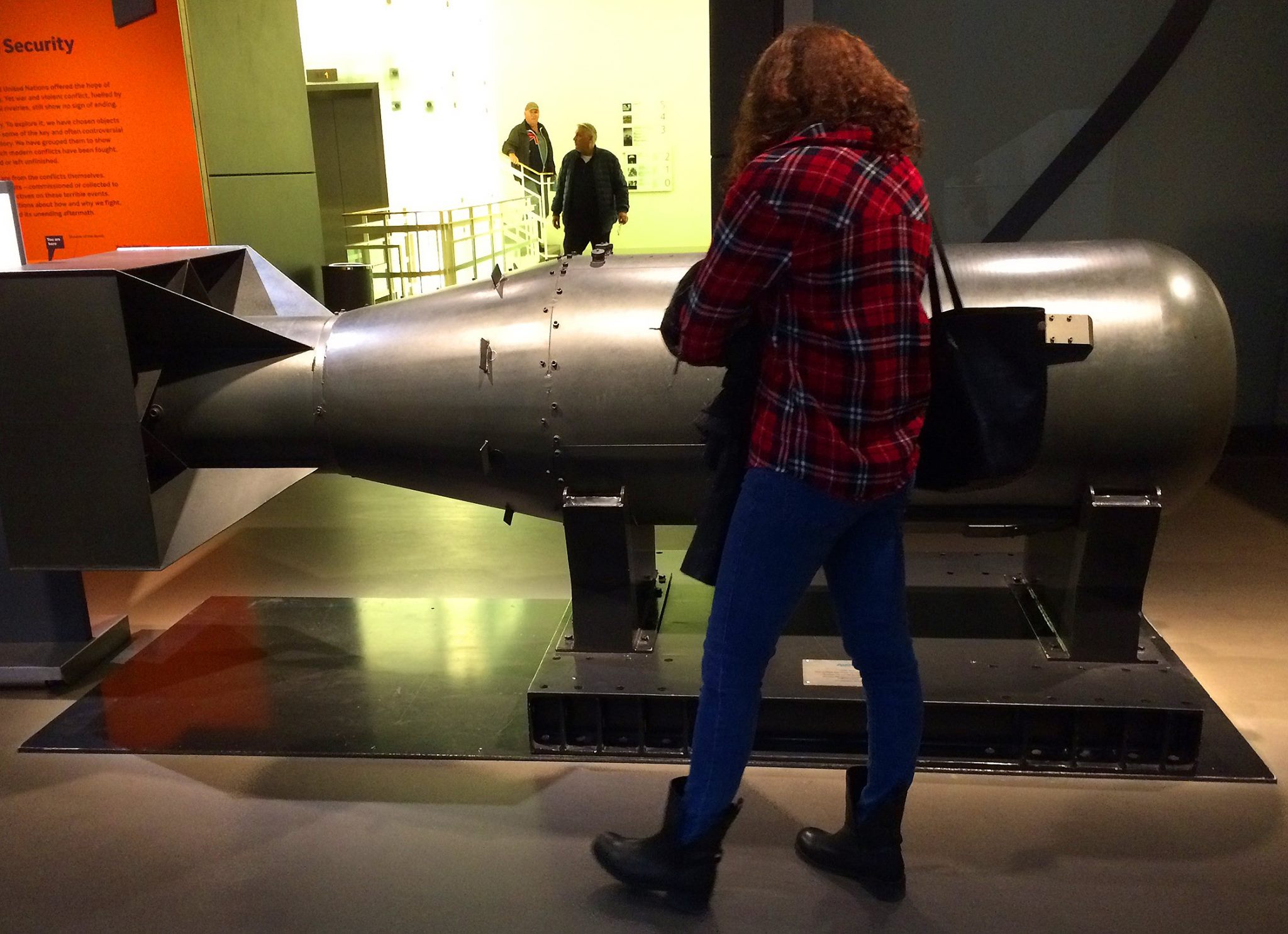
The Imperial War Museum was an astonishing museum in many ways, it had very clever use of moving images that merged with physical collections in an immersive way. However I was struck by just how much energy and physical effort and ingenuity human beings put into killing each other. Tremendously sad.


Malcolm Brown Deputy Photographer Library & University Collections Digital Imaging Unit
4

7

6

5

Posted in Edinburgh College of Art, Moray House School of Education and Sport, News, School of Informatics, School of Social and Political Science | Tagged , , , , | Comments Off on The Association For Historical And Fine Art Photography Conference 2016. “Photography delivers the curatorial message”.

Panoramas and Portraits: 1860’s China

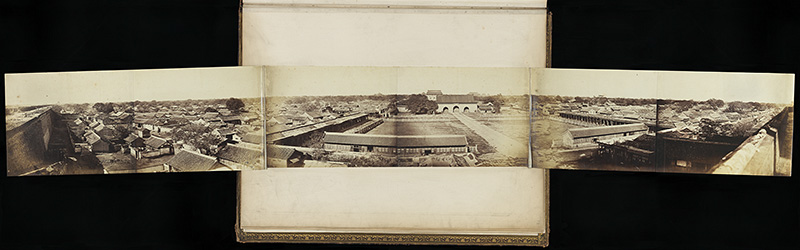
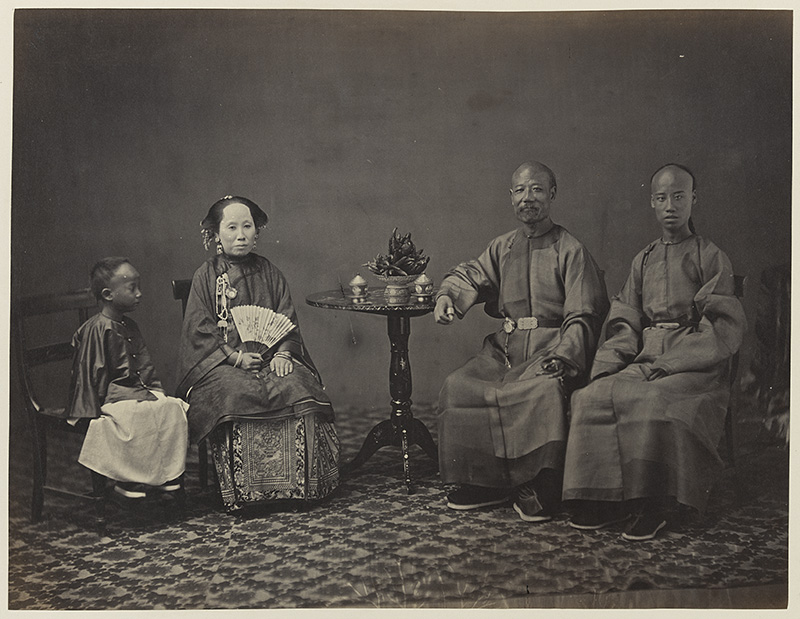
Following on from a visit from the Confucius Institute in September, it was agreed we should digitize our volume of photographs from Lord Elgin’s 1860 military campaign in China. Our former volunteer Caitlin Holton has already blogged about this album so you can read more about this fascinating set of photographs and their controversial history here

https://libraryblogs.is.ed.ac.uk/diu/2016/04/26/lord-elgin-records-19th-century-china/

We are very pleased to say that the complete set of photographs can now be found on LUNA, including the large fold-out panoramas. These proved quite challenging to capture, most needing to be photographed in 2 or 3 sections and stitched back together in Adobe Photoshop. Furthermore, the length of the fold-outs made it difficult to evenly light the photographs, while at the same time preventing shine. However, these old photographs show that panoramas are not a modern invention of smart phones and clever stitching software, they have been effectively produced since the earliest days of photography.

Below are some of my favourite images, and the full collection can be found here http://images.is.ed.ac.uk/luna/servlet/s/3n0c83

Susan Pettigrew, Photographer


Posted in Archive Collections, Edinburgh College of Art, LLC general, School of History, Classics and Archaeology, School of Philosophy, Psychology and Language Sciences | Comments Off on Panoramas and Portraits: 1860’s China

Research Data Management (RDM) Forum

The RDM Forum is a newly created platform that brings together from across the University researchers and research & IT support staff whose role involves helping academics in managing their research data. RDM service Read More

Posted in Research data management | Tagged , , | Comments Off on Research Data Management (RDM) Forum

Paper and Water: Conservation Principles

This week’s blog post comes from Special Collections Conservator, Emily, who recently attended a conservation training workshop in Edinburgh…

Earlier this year in September, I attended a two-day course organised by Helen Creasy from the Scottish Paper Conservation Studio and hosted by the National Library of Scotland entitled ‘Paper and Water: Conservation Principles’. The course was based on the book “Paper and Water: a Guide for Conservators” (Banik and Brückle), which has become an essential text for conservators since its publication in 2011, and provided by Doris Müller-Hess and Hildegard Homburger, private conservators from Vienna and Berlin, respectively.

This course examined the interaction between cellulose and water and the effect this has during conservation treatments. Paper conservators frequently use treatments that employ water, from simple treatments repairing a document using wheat starch paste, and using a poultice to remove historic repairs, to more complex treatments such as washing paper to reduce discolouration and acidity in the paper, so it is vital to understand this complex relationship.

Paper and Water: Conservation Principles

Paper and Water: Conservation Principles

Read More

Posted in Training | Tagged , | Comments Off on Paper and Water: Conservation Principles

Research Data Management (RDM) Forum

RDM Forum is a newly created platform to bring together both researchers and research & IT support staff from across the University whose role involves helping academics in managing their research data. The aim of the Forum is to share good practice, exchange experiences as well as discuss current and future challenges related to data curation, preservation and publishing. We hope that the Forum will allow its participants to learn from one another and gain a new perspective on some common issues.

The Forum takes the form of meetings as well as e-mail updates (done through the RDM Forum mailing list) and an online platform (SharePoint website) for sharing useful resources, engaging with each other and keeping up-to-date with recent developments in RDM.

The first meeting took place on 7th September 2016. There were 24 in attendance and participants had the opportunity to introduce themselves, ask questions, and provide their expectations and suggestions for future RDM Forum meetings, which have been summarised below:

  • Overcoming challenges:
    • Supporting academic engagement
    • Going beyond funder requirements
    • Engagement beyond training
    • Avoiding last-minute arrangements
    • Addressing concerns about data sharing and reuse
  • Finding solutions that will work
    • Early training
    • Establishing workflows for standard processes
    • Developing an Information Governance structure for data
    • Sharing real-life scenarios
  • Forum structure
    • Forming several user groups focused on specific aspects of RDM
    • Organising meetings around specific themes
    • Updates from Research Data Service team
    • Forum as a platform for training
    • Forum to meet every two months at different locations

The Forum is only open to the University of Edinburgh staff and postgraduate research students. If you are interested in joining the Forum mailing list you can do so at: https://mlist.is.ed.ac.uk/lists/info/rdm-forum
RDM Forum SharePoint website (access by request) is available at:
https://uoe.sharepoint.com/sites/rdmforum

Cuna Ekmekcioglu
Senior Research Data Officer

Posted in Uncategorized | Comments Off on Research Data Management (RDM) Forum

Go global with new BBC Monitoring service trial

bbc-monitoring

We have a new trial to BBC Monitoring, accessible from the Eresources trials web page. Please note the steps required to login. Read More

Posted in Library | Tagged , , , , , , , , , , , | Comments Off on Go global with new BBC Monitoring service trial

The University of Edinburgh Library Annexe

_dsc01731

Library Annexe, South Gyle

Many University staff and students are blissfully unaware of the existence of the Library Annexe (I know I was, before starting work here earlier this summer), which is situated in the heart of an industrial unit surrounded by bank and insurance offices – most would pass without giving it a second glance.

The Library Annexe has been operational since 2006, with the second phase opening in April 2011.

_dsc01621

Some of the 33,000 linear metres of storage on site.

Its purpose is to provide additional storage for low-use University collections or collections not currently in use. The Annexe also supports Estates redevelopment projects elsewhere, temporarily or permanently holding collections.

Material stored in the Library Annexe includes General collections material relocated including lesser used monographs, journals with current electronic subscriptions, and reference material not suitable for reclassification into the current lending collection. In addition, selected material from the Library’s Special Collections, University archives and Lothian Health Services Archive are stored there, in environmentally controlled conditions.

_dsc01521

Some of the ECA artworks stored on site.

There are over 1000 paintings and artworks from the Edinburgh College of Art stored in the Annexe.

_dsc01551

Sir Eduardo Paolozzi’s Tottenham Court Road tube station mosaic.

An interesting part of the collection is Sir Eduardo Paolozzi’s mosaic, rescued from Tottenham Court Road tube station, awaiting restoration.


_dsc01501

The musical instrument conservation workshop.

Another fascinating area of the annexe is the musical instrument conservation workshop, temporarily housed whilst St Cecilia’s Hall is being refurbished.

You can find more information about material stored in the Library Annexe on the University of Edinburgh website: www.ed.ac.uk/is/library-annexe

Pete Marsden

Thesis Digitisation Project


Posted in Uncategorized | Tagged , | Comments Off on The University of Edinburgh Library Annexe

Follow @EdUniLibraries on Twitter

Collections

Default utility Image Hill and Adamson Collection: an insight into Edinburgh’s past My name is Phoebe Kirkland, I am an MSc East Asian Studies student, and for...
Default utility Image Cataloguing the private papers of Archibald Hunter Campbell: A Journey Through Correspondence My name is Pauline Vincent, I am a student in my last year of a...

Projects

Default utility Image Cataloguing the private papers of Archibald Hunter Campbell: A Journey Through Correspondence My name is Pauline Vincent, I am a student in my last year of a...
Default utility Image Archival Provenance Research Project: Lishan’s Experience Presentation My name is Lishan Zou, I am a fourth year History and Politics student....

Archives

Subscribe to Blog via Email

Enter your email address to subscribe to this blog and receive notifications of new posts by email.