Home University of Edinburgh Library Essentials
April 11, 2026
The Statistical Accounts of Scotland Online – My statacc
This is the last in a series of blog posts about some of the functionality you may have come across (or may not have yet discovered!) in the new Statistical Accounts of Scotland Online. Here we concentrate on the new My statacc feature.
We have now introduced functionality to enable more personalisation when using the service. If you are a subscriber you can now save, annotate and tag individual pages, whole sections, illustrations and maps. You can use the star button to save. The label icon allows you tag items with one or two words of your choice, so that you can find them easily when you next visit (just type your words into the box), and the post-it note to write longer annotations which are stored alongside the item. If you are planning to coming back to a particular page, image or section, you can store information about why it is interesting, how it relates to your research or how you might want to use it.
These new features are designed to allow you to easily find and review content of particular interest to you. Tags and annotations are stored against your profile, and will remain there until you delete them. Just sign in and click on the My statacc red button on the top right of the page to find everything you have saved.

A page of the Statistical Accounts of Scotland showing personalisation features and the transcript. Screen-shot captured on Thursday 1st December 2016.
You can tag, annotate and save both sections and individual pages. Individual pages can be printed out and whole sections of the Statistical Accounts can now be downloaded as PDFs. You can even share what you have found on social media by clicking on the sharing icon and follow the links. Using these features is so easy – just click on the relevant icon and away you go!
We are particularly pleased to be able to offer such personalisation, which will help you to get the most out of your searching and browsing of the Statistical Accounts of Scotland Online. Please let us know what you think.
More information on all the features mentioned above, as well as others, can be found in the Statistical Accounts of Scotland Help Pages and the How to get the most out of the Statistical Accounts of Scotland online page. If you have any comments or queries please contact the EDINA Help Desk (edina@ed.ac.uk).
The Statistical Accounts of Scotland Online – Images and Words
This is the second in a series of blog posts about some of the functionality you may have come across (or may not have yet discovered!) in the new Statistical Accounts of Scotland Online. Here we concentrate on the images and maps, as well as the transcripts found on the website.
Images and maps
The new service contains a number of illustrations and maps published with the original accounts. Your search may result in a box containing the thumbnail views of related images or maps. As a subscriber you would be able click on these to view them (in a gallery view) in a much higher resolution than before. You are also able to zoom in and out, which is fantastic to be able to do! All other relevant images are on the left-hand side of the gallery view, making it easy to scroll and browse related illustrations and maps.
There are a number of interactive maps available in the service, which we are able to feature courtesy of the National Library of Scotland. One example is the map of Scotland on the homepage, where you can click on the map to open out a larger version, and as the mouse cursor moves over the map you will see the names of counties highlighted. There are also interactive maps available on the county pages, showing each of the parishes clearly within the county and allowing you to click through to more information on the parish.

The interactive map for the southern part of Northern Part of Ross and Cromarty Shires. Screen-shot taken from the Statistical Accounts of Scotland Online on Thursday 1st December 2016.
Transcriptions
Another greatly improved feature is that of the transcripts, which are available for most pages in the Statistical Accounts. The reading quality of the transcription has been improved through rendering the text in html, making it an even more useful to aid understanding when reading the Statistical Accounts.
We hope that these new features mean you get even more out of the wonderful wealth of information found in the Statistical Accounts of Scotland. More information on all the features mentioned above, as well as others, can be found in the Statistical Accounts of Scotland Help Pages and the How to get the most out of the Statistical Accounts of Scotland online page. If you have any comments or queries please contact the EDINA Help Desk (edina@ed.ac.uk).
Spotlight on Archives Unbound
This is the second in a (very) occasional series highlighting some of the online resources available at the Library that will be of interest to students and staff in History, Classics and Archaeology.
Archives Unbound from Gale Cengage provides access to topically-focused digital collections of historical documents. This is a vast array of valuable primary source material covering a broad range of topics from the Middle Ages onwards and the material supports the research and study needs of students and scholars. Most of collections are chosen for Archives Unbound based on requests from scholars, archivists, and students.

At present the Library has access to 9 collections from Archives Unbound, primarily covering topics and events from the twentieth century with one exception. Descriptions of these collections comes from the Archives Unbound site. Read More
Edinburgh University Students in Spain
It is 80 years since the Spanish Civil War broke out. Unlike both World Wars, we have no record of University of Edinburgh students who fought (and died) in Spain and this is the start of a process of trying to identify who did. This is very much work-in-progress and will be updated as we find additional information.
If you know of anyone missing from the list below, please contact the Deputy University Archivist, Grant Buttars
George Drever
George was born 31 March 1910 in Leith, the son of George Drever and Louisa (Balfour). He spent 6 years at Leith Academy before enrolling to study Science at the University of Edinburgh, gaining a First Class Honours BSc in Pure Science in 1933. Two years later he was awarded a PhD, his thesis being, Electrochemical studies in oxide formation on some metals.

First Matriculation: George Drever
Links
- A more detailed biography can be found on the Chess Scotland website.
- George features in
Frances Hughes Drew
Frances was born 12 May 1914 in Southampton. She was educated at Falmouth High School then at Blackpool Girls’ Secondary, enrolling to study medicine at the University of Edinburgh in 1932 and graduating MBChB in 1937.
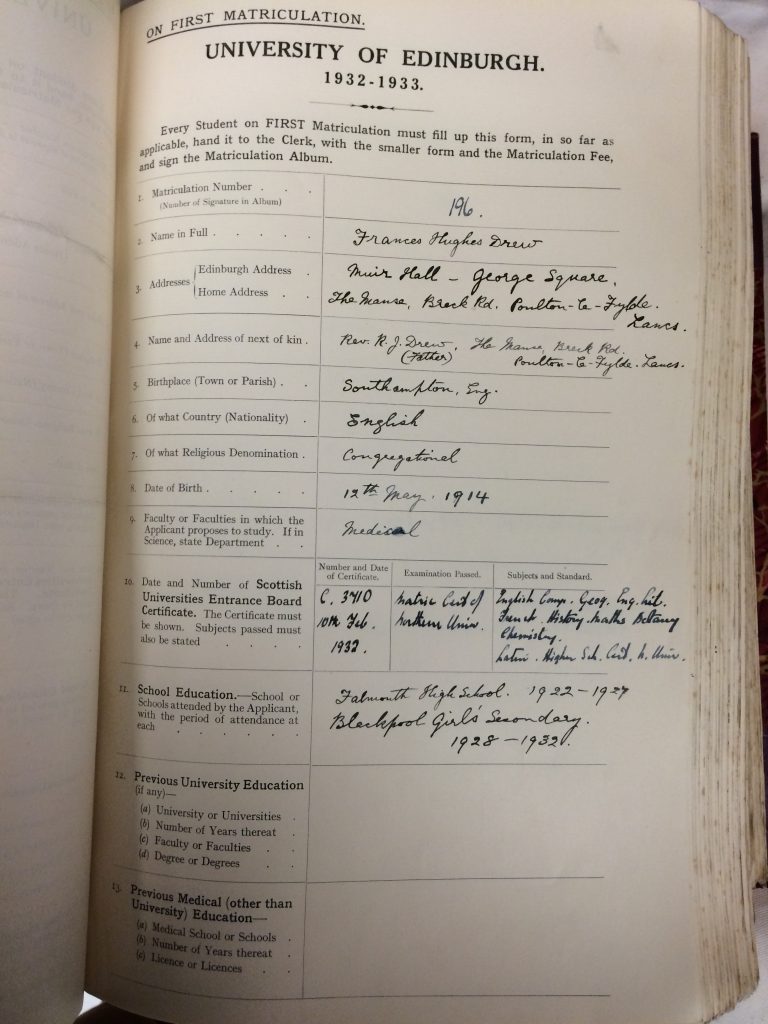
First Matriculation: Frances Hughes Drew
She was a member of the International Students’ delegation and one of six students in the British delegation of the (strongly Communist) World Student Association who visited Spain in the 1936/7 Christmas vacation and campaigned for the Republicans on her return.
John Peter Cowan Dunlop
Born 2nd July 1915 in Winnipeg, Canada, John was an accountancy student (non-graduating).
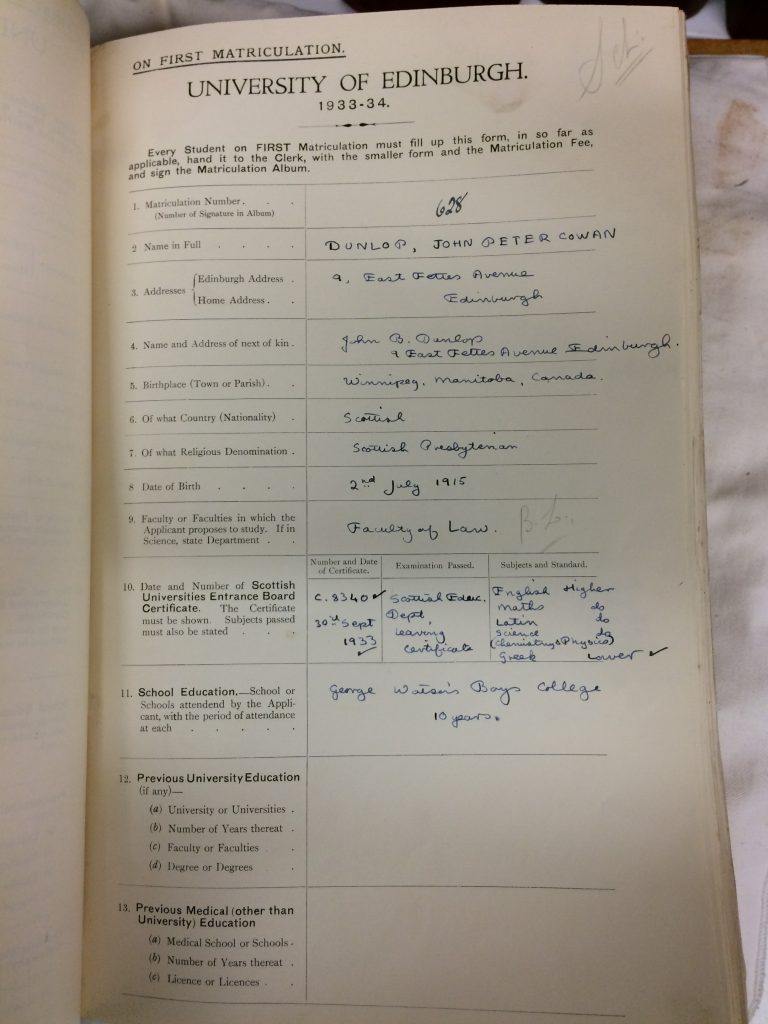
First Matriculation: John Peter Cowan Dunlop
John is listed on the International Brigades website:
Born: 2/7/1915, Winnipeg, Canada. Enlistment Address; 9 East Fettes Avenue, Edinburgh University Accountancy student. CPGB (1936) OTC in England. Single. Age 22. Arrived in Spain 19/5/1937. Enlisted in Battalion 22/5/1937. Joined the British Anti Tank-Gun Battery. Action’s participated in: Jarama, Brunete, Teruel, Belchite, Ebro. Wounded at Brunete in July 1937, (between the 6th and 12th) by shrapnel in the back. Recovered in hospital at Barcelona. Joined British Battalion on 10/11/1937. Wounded on 20/1/1938. In Hospital February-April 1938. Rifle No; 98101. No. 4 Company, Section 2, platoon 2. Confirmed Corporal on 30/4/1938. Sergeant. Wounded during the Ebro Offensive on 31/7/1938. In hospital 3/10/1938? Invalided home in October 1938. Set up his own printing business in Edinburgh upon his return.
He later became accountant to the International Brigade Association.
Links
- His entry on the International Brigades website.
- His papers are held by the National Library of Scotland: He died in 2006.
- An oral history interview is held at the Imperial War Museum
Hamish Fraser
Hamish was born 16 August 1913 in Inverness. He was educated at Preston School, Duns, Duns Public School, Berwickshire High School and at the Royal High School, Edinburgh. In 1931/2, he enrolled at the University of Edinburgh to study Technical Chemistry. The fact that his record specifies the subject rather than, as was the norm, simply recording the Faculty, suggests he was not enrolled in a full degree programme.
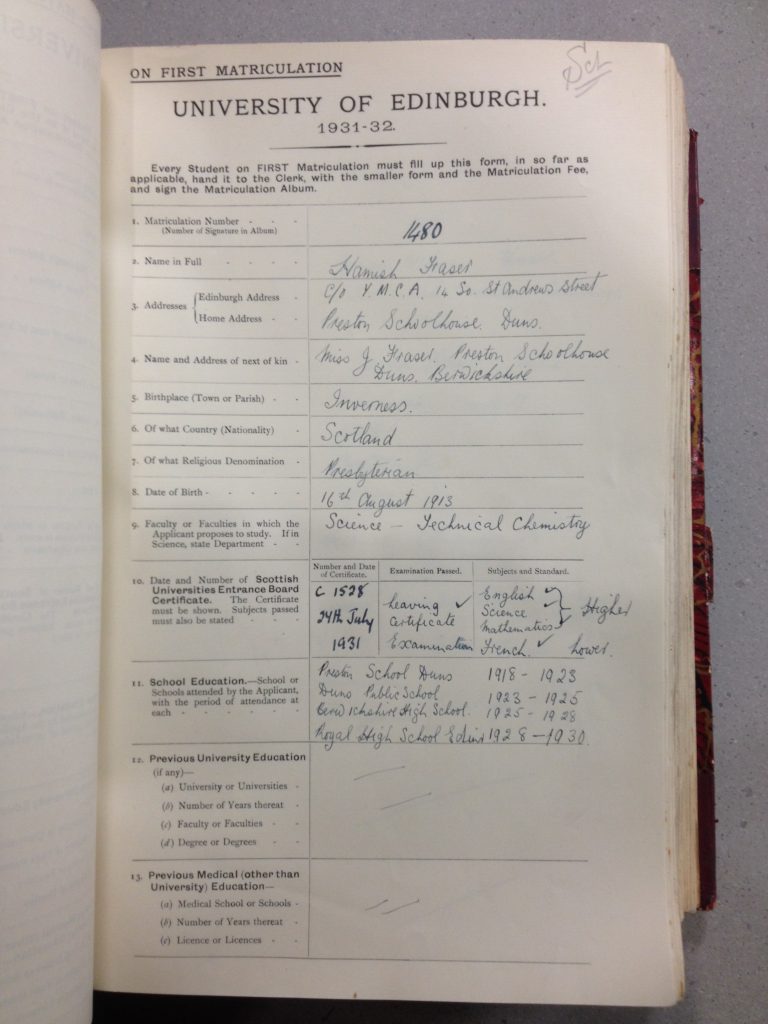
First Matriculation: Hamish Fraser
He claimed to have joined the Young Communist League while at University; he was certainly Propaganda Secretary of the Central London Federation of the YCL by the time the Spanish Civil War erupted in 1936,
Links
- Biographical sketch at Apropos (a magazine of which he served as editor after his conversion to Roman Catholicism)
Margot (Marguerite Rosabelle) Gale (later Kettle)
Margot was born in 1916. She was educated at King Arthur School, Musselburgh and St. Bride School, Edinburgh, enrolling at the Univerity of Edinburgh in 1934. While at University, she served as President of the Women’s Union, 1937-38. She graduated MA in 1938. In August 1938, she joined the Young Communist League.
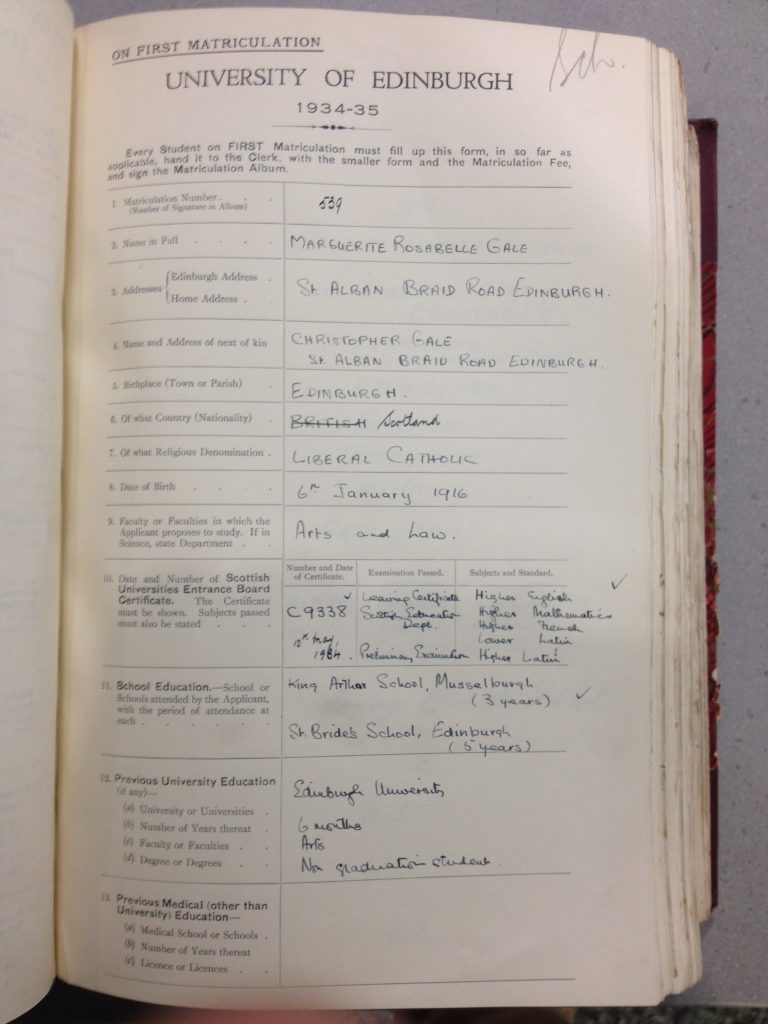
First Matriculation: Margot Gale
She was mother of Guardian journalist Martin Kettle.
Links
- Her papers are held at the Labour History Archive and Study Centre (Manchester)
David Mackenzie
His full name was William David Beveridge Mackenzie and he was born 14 November 1916, the son of Rear Admiral W. B. Mackenzie, in Rock, Cornwall. He was educated at Copthorne School, Sussex and at Marlborough College. He enrolled as a summer term only medical student at the University of Edinburgh in 1935, having previously studied history at Oxford.
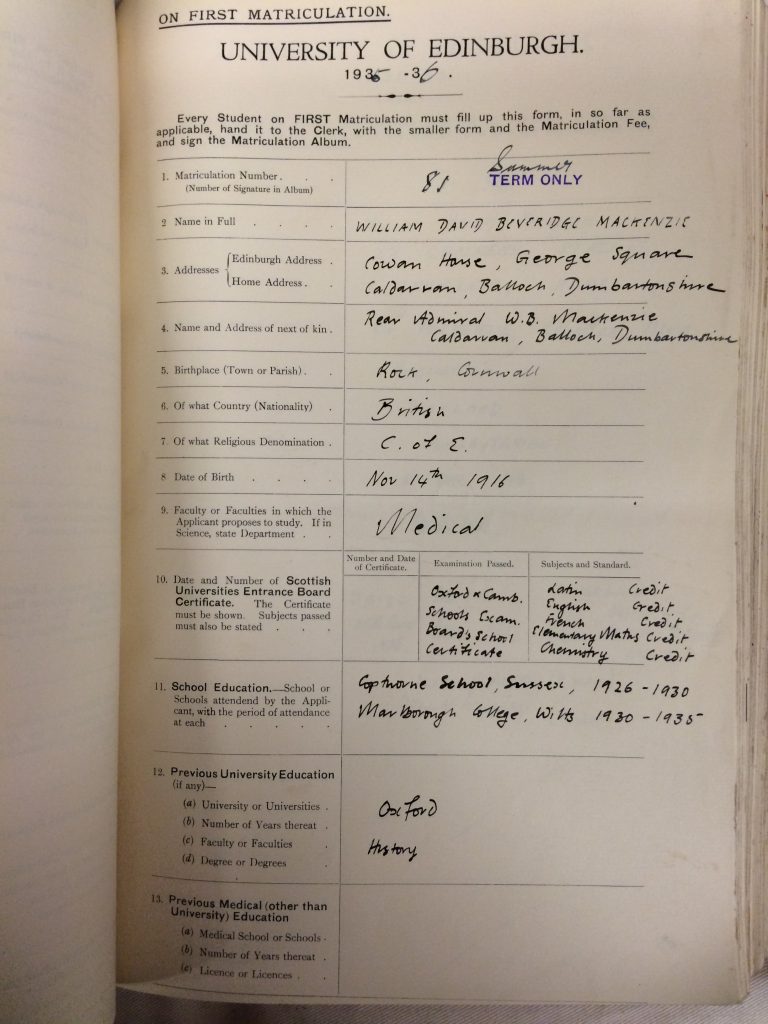
First Matriculation: William David Beveridge Mackenzie
David is listed on the International Brigades website:
c/o 16 King Street, London. (CPGB HQ) Oxford University. (History & Law) Medical Student at Edinburgh University. YCL. CPGB. Age: 20. Spain, 09/10/1936. French Commune de Paris Battalion, (Dumont Battalion) 11th International Brigade. Reported killed in error (25/11/1936) at the University City, Madrid, in the Daily Worker dated 05/12/1936. Returned to UK on 05/01/1937. (V.11 37a PF 45600) Battalion No. 947.
Links
- His entry on the International Brigades website
- Mentioned in an obituary of Bernard Knox (1977)
- Account of career in ‘Scottish Labour History’, 11 May 1977, p 41
Acknowledgements
I am very grateful to a number of people who have provided various leads on this subject, particularly Mike Arnott and Fraser Raeburn and of the Scotland and the Spanish Civil War Facebook Group.
2017 Library and University Collections calendar: Images from the Directory of Collections
The 2017 Library & University Collections calendar, which features a wide range of images from the Library’s Directory of Collections, is available to buy now from the Main Library and the University Gift Shop.
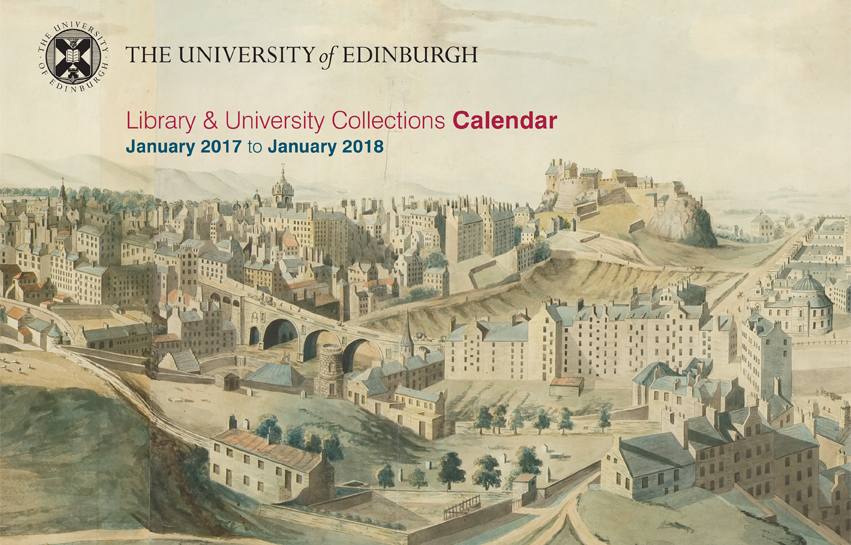
The Directory is a guide to the main named heritage collections of the University of Edinburgh and highlights some of the items the Library considers to be ‘iconic’ Some highlights include:
- The University Coat of Arms, which was formally granted in 1789 after the city’s seals were deemed ‘inconvenient and unsuitable to the dignity of the University.
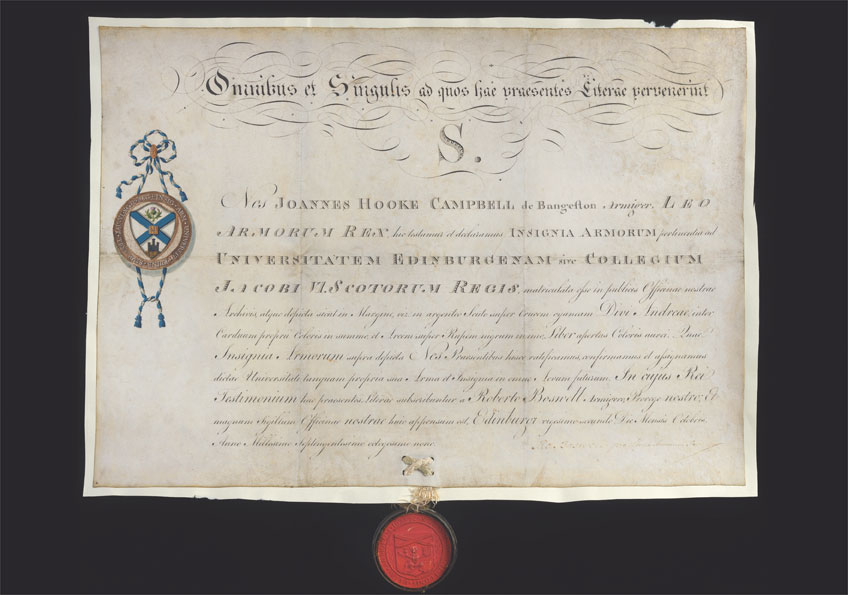
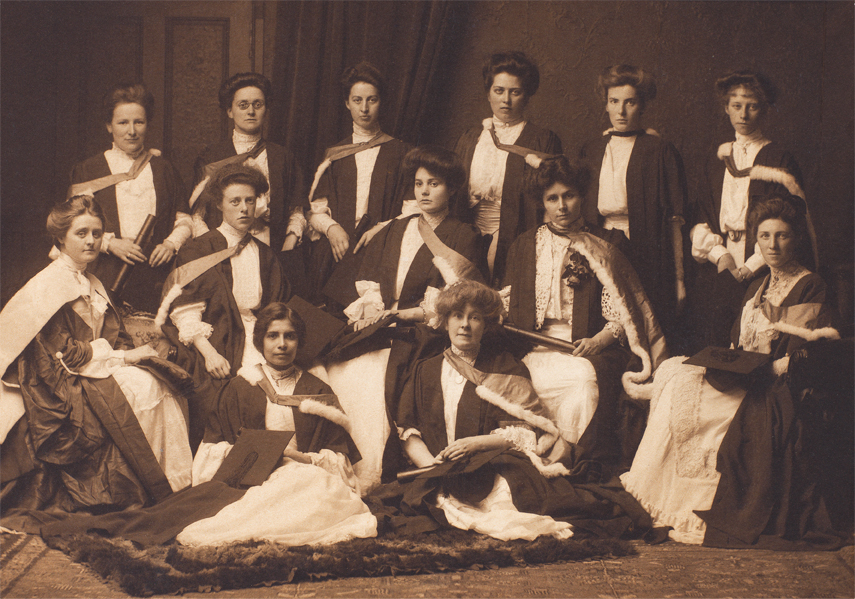
- Class of 1906: the University’s earliest group photograph of female medical graduates
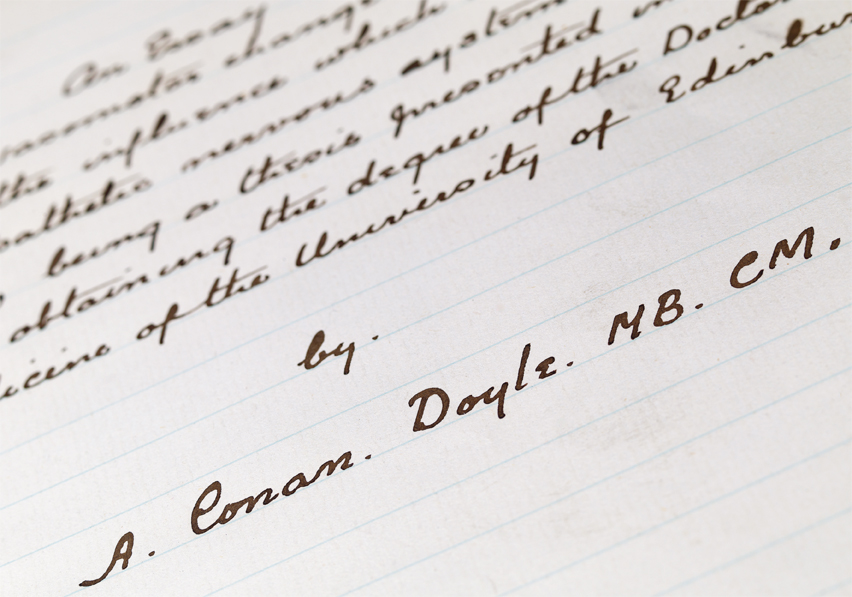
- Sir Arthur Conan Doyle’s PhD thesis, which discusses syphilis from a literary as well as a medical perspective.
- And much much more…
DataShare upgraded to v2.3 – The embargo enhancement release
The latest upgrade of Edinburgh DataShare, from version 2.2 to 2.3, brings in several useability improvements.
- Embargo expiry reminder
If you want to deposit your data in DataShare, but you want to impose a delay before your files become freely downloadable, you can apply an embargo to your submission – see our “Checklist for deposit” for a fuller explanation of the embargo feature. As of DataShare v2.3, if you apply an embargo to your deposit, DataShare will now send you an email reminder one week before the embargo is due to expire. This gives you time to make us aware if you need the embargo to be extended, or to send us the details of your paper if it has been published, so that we can add those to the metadata, to help users understand your data. - DOI added to the citation field immediately
When your DataShare deposit is approved by the curator, the system mints a new DOI for you. As of version 2.3, DataShare now immediately appends the URL containing that DOI into the “Citation” field, which is visible at the top of the summary view page of your item. The “Citation” field makes it easy for others to cite your data, because it provides them with text which they can copy and paste into any manuscript (or any other document where they want to cite the data). Previously you would have had to click on “Show full item record” to look for the DOI in the “Persistent identifier” field, or wait for an overnight script to paste the DOI onto the end of the “Citation” field.
- Tombstone records
We now have the ability to leave a ‘tombstone’ record in place for any DataShare item that is withdrawn. We only withdraw items in exceptional circumstances – for example where there is a substantive error or omission in the data, such that we feel merely labelling the item as “Superseded” is not sufficient. Now, when we tombstone an item, the files become unavailable indefinitely, but the metadata remain visible at the DOI and handle URLs. Whereas until now, every withdrawn item has become completely invisible, so that the original DOI and handle URLs produced a ‘not found’ error.
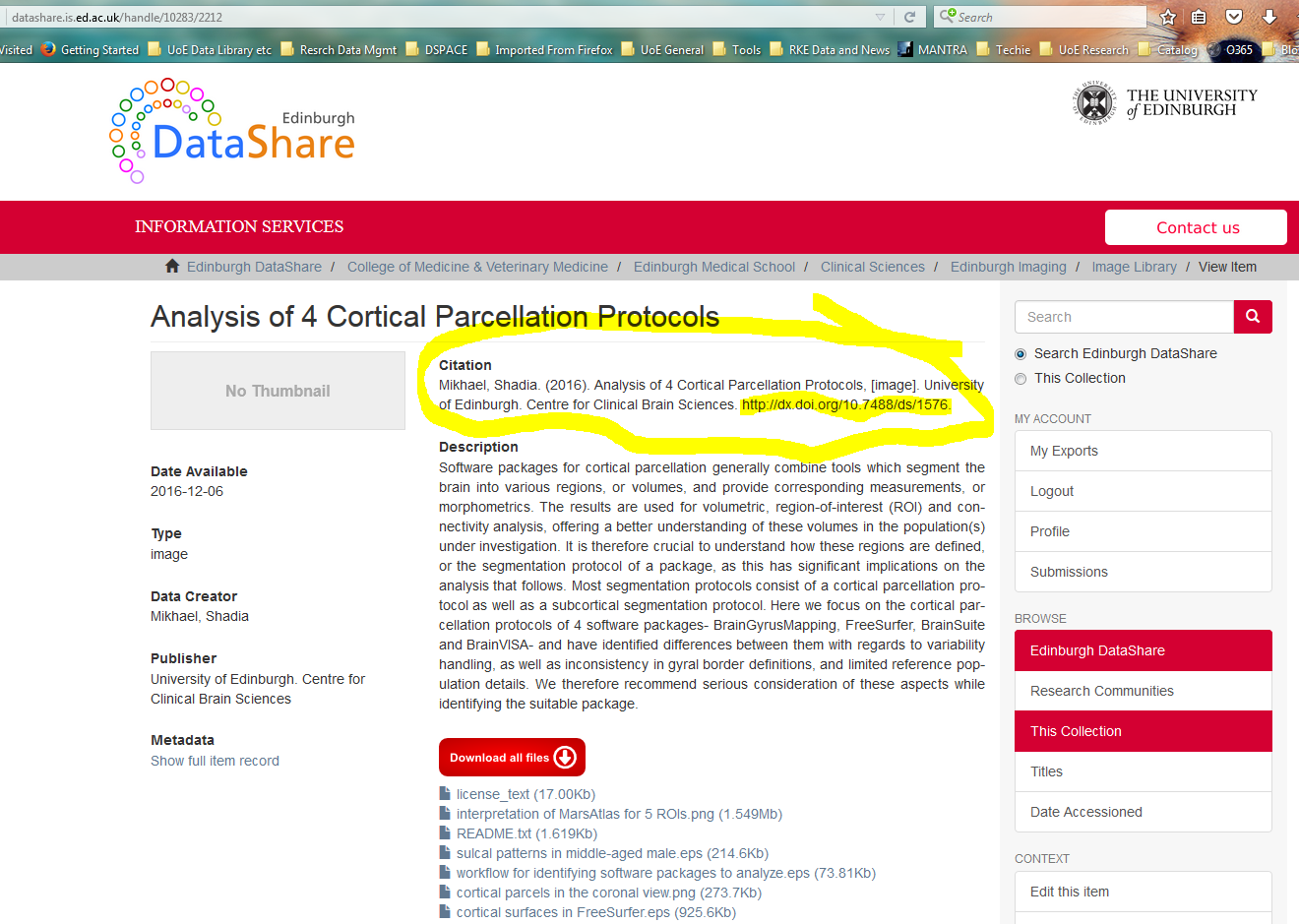
Cortical parcellation citation – now with DOI!
Enjoy!
Pauline Ward
Research Data Service
P.S. Many thanks to our software developer at EDINA, George Hamilton, who actually coded all these enhancements to DataShare, which uses the open-source DSpace system. EDINA’s DataShare code is available at https://github.com/edina/dspace .
Tripe discovery! Indian Exhibition Research Internship
This is a guest blog, written by one of our History of Art interns, Rose Hussey.
As part of my Master’s degree at the University of Edinburgh, I have undertaken an internship at the Centre for Research Collections. Throughout this term we have been preparing for the India Exhibition for summer 2017. My part in this involves cataloguing and researching nineteenth century photographic albums, filling in the gaps in the CRC’s database. During this process I have made an interesting discovery, in relation to one particular album.
Linnaeus Tripe (1822-1902) toured South India in the late 1850s as a government employee and photographed art and architecture that he considered to be under risk of falling into ruins. The University of Edinburgh has a good collection of these albums, with views of landscape and architecture from across India. Some of the best of these images are found in his album The Elliot Marbles, published 1858, which capture the contemporary Madras Museum’s collection of the ‘Amaravati Marbles’ (now mostly in the British Museum) from Amarāvatī Mahācaitya (or ‘great sanctuary’) in the Guntur district of India.
In fact, the University is in the rather the unique position of holding two copies of this album. These copies, one from the original University collection, the other incorporated in the collection after the 2011 merge with Edinburgh College of Art, were presumed to be identical. On a cataloguing mission, I have been going looking at these albums, and many others by Tripe, finding out as much as possible about each. Starting with the CRC’s original copy, I went through The Elliot Marbles, trying to identify the sculpture(s) in each photograph, comparing them to the actual objects now in the British museum, and putting together the narratives for every image. Particularly useful was the British Library, who have put a list of the images in their copy of the album online. Our copy seemed to match theirs precisely, so it was slightly surprising to discover that this was not the case when compared to the ECA copy!
Although these volumes only differ slightly, any disparity gives an insight into photographic practices in the nineteenth century, while also raising questions. While a single copy gives a great platform for understanding the album as an art object and an insight into documentations practices and priorities during the British Raj, two copies gives an incredibly unusual potential for comparison between editions.
Below are a few examples of how exactly these copies differed, and an indication of why this might be interesting to us.
One of the most common differences between these albums are different blacked out backgrounds. So far we cannot discover why these changes occurred. These photographs are all albumen prints, a technique that was popular in the mid-nineteenth century because of its glossy finish and susceptibility to nuanced light. Blacked-out backgrounds were a common way to make the object itself stand out on the page – particularly important for Tripe in his documentation of these marble fragments. This would have been done by painting over the negative.
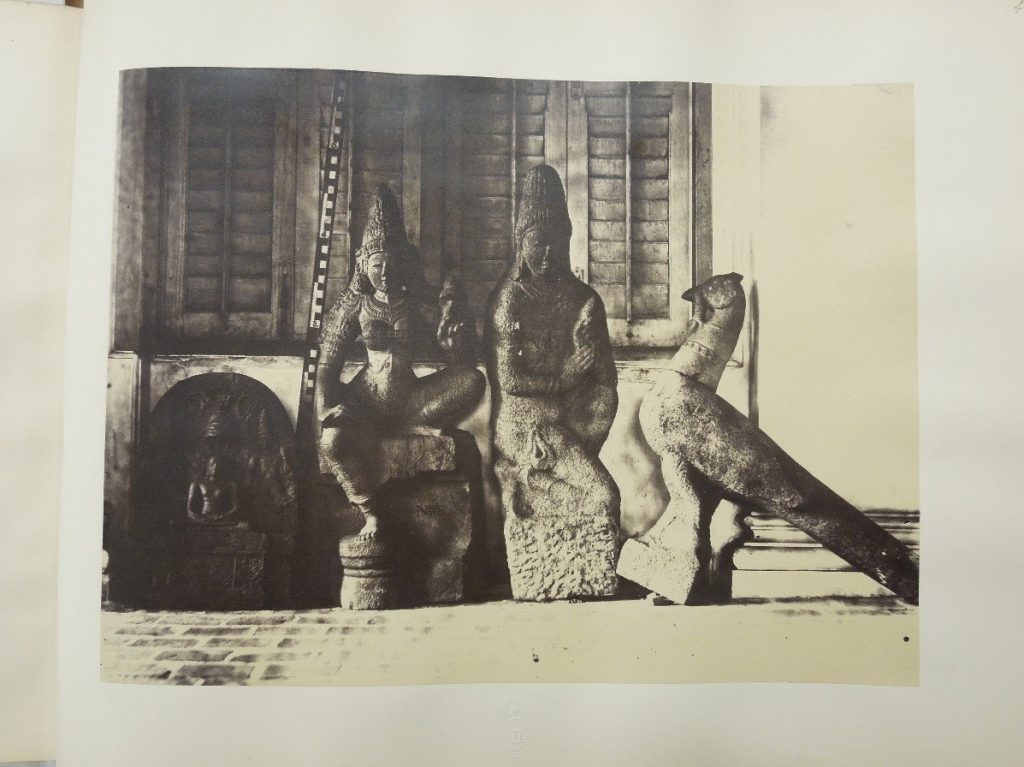
Linnaeus Tripe, Miscellaneous sculptural pieces in The Elliot Marbles, 1858 (CRC copy)
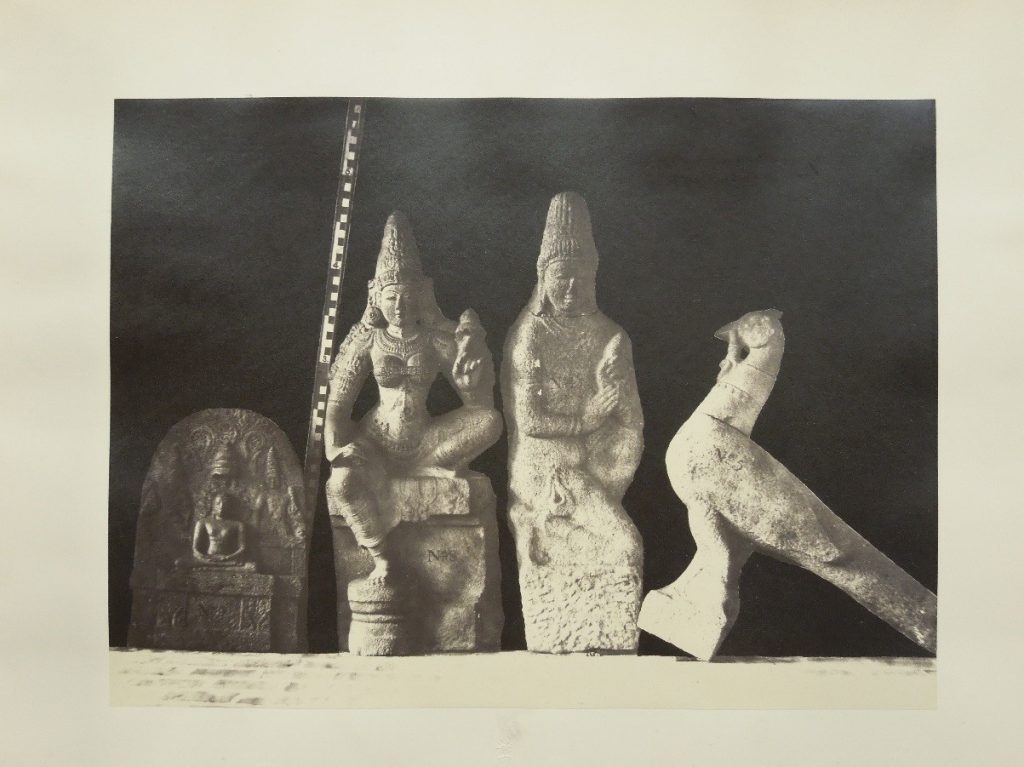
Linnaeus Tripe, Miscellaneous sculptural pieces in The Elliot Marbles, 1858 (ECA copy)
These differences shows how much contemporary photographers edited their negatives, which is interesting because at the time photography enjoyed the reputation of being relentlessly truthful- it was predominantly used as a factual or un-biased recording resource.
Other differences included an extra image and a removed image in each album, including/excluding detailed views. With the added image, it could be from an original negative that just wasn’t’ included in the CRC copy, or it could be a zoomed in print of a pre-existing negative.
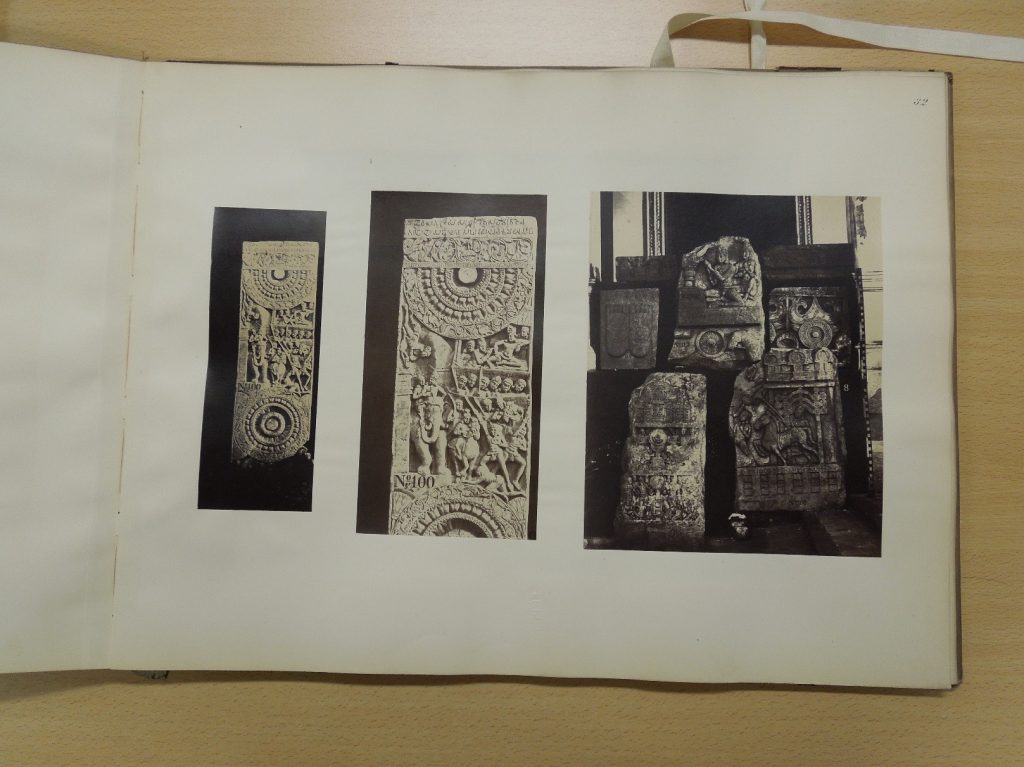
Linnaeus Tripe, Railing crossbar (inner face), Railing crossbar (inner face detail) and Miscellaneous sculptural pieces, in Elliot Marbles, 1858 (ECA copy)
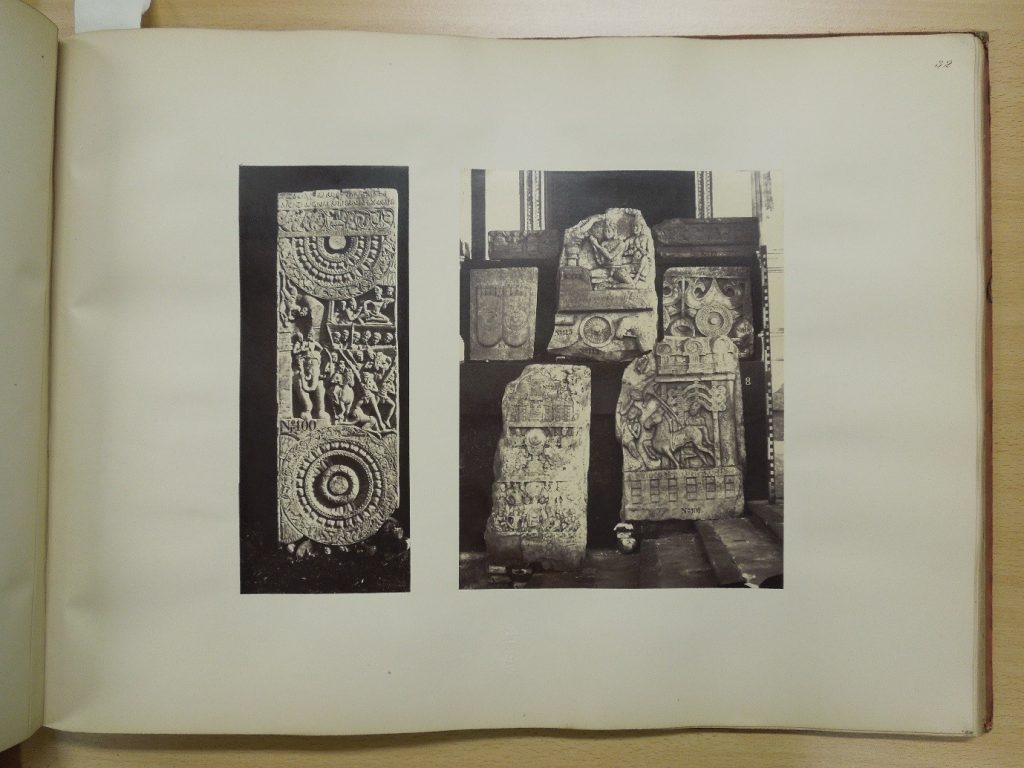
Linneaus Tripe, Railing crossbar (inner face) and Miscellaneous sculptural pieces, in Elliot Marbles, 1858 (CRC copy)
Then there are also formatting differences, which reinforce that each page was done by hand, the photograph stuck in with adhesive and then individual folios placed together and bound.
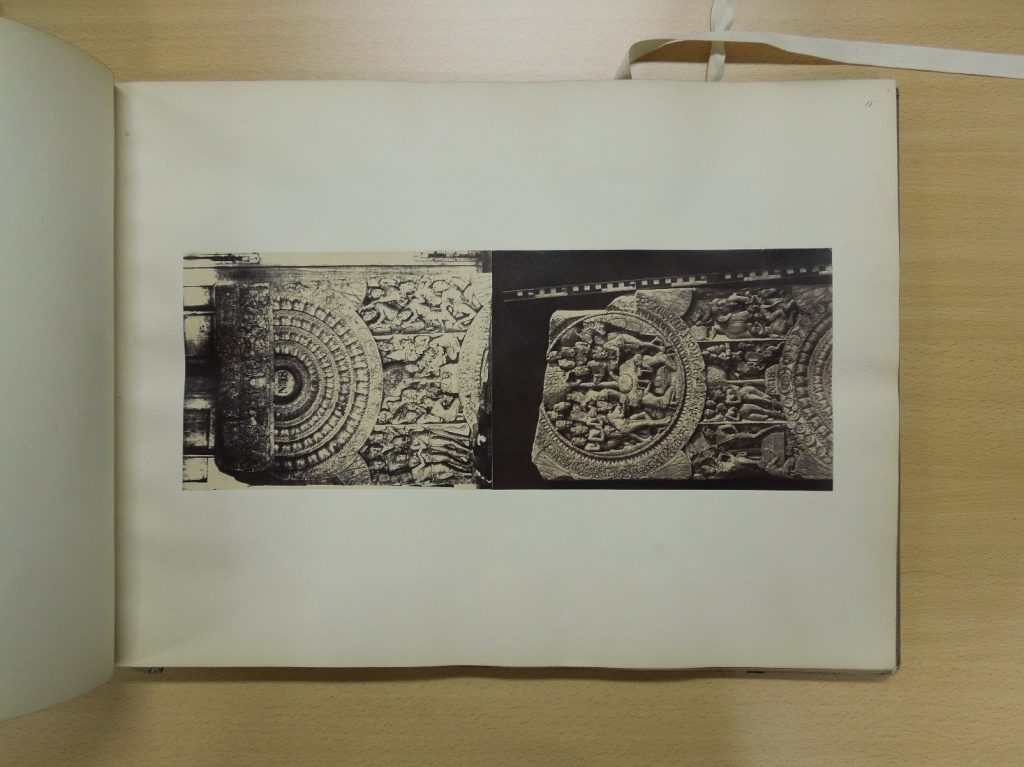
Linneaus Tripe, Inner face of railing pillar (upper portion) and Inner face of railing pillar (lower portion), in The Elliot Marbles, 1858 (ECA copy)
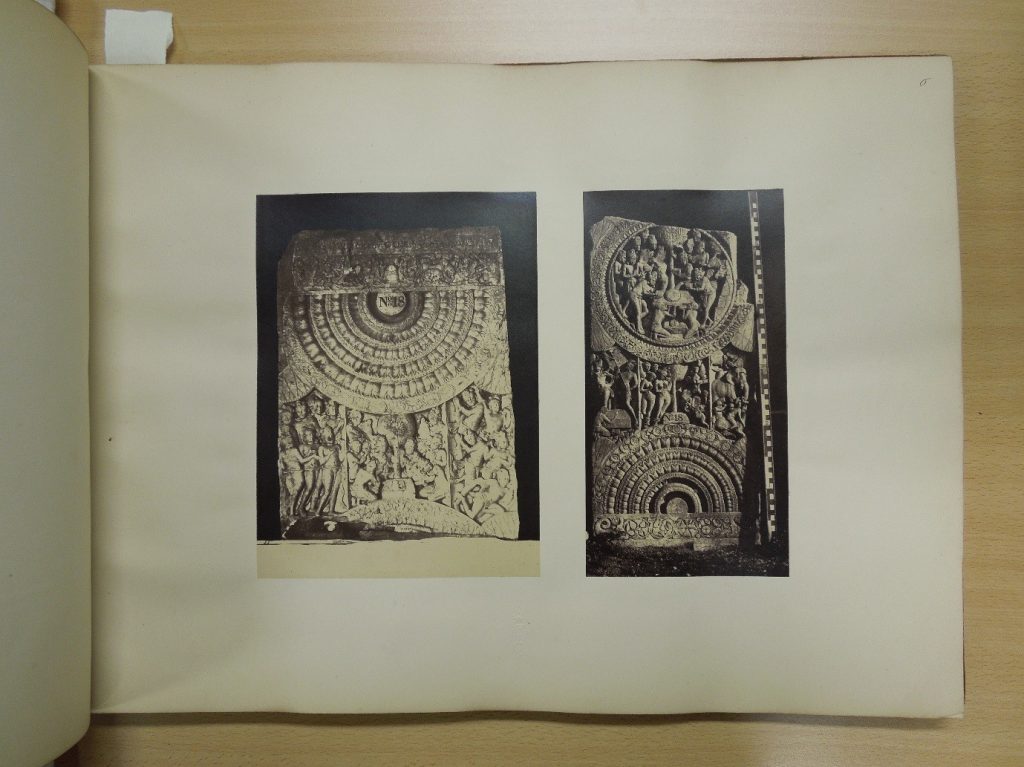
Linneaus Tripe, Inner face of railing pillar (upper portion) and Inner face of railing pillar (lower portion), in The Elliot Marbles, 1858 (CRC copy)
Furthermore, the measurements of each photograph were different in both albums, reinforcing the fact the each photograph would have been individually printed from the negative and then hand cut. Such differences, while individually small, reveal the individuality of these albums. An opportunity such as this, side-by-side comparison, is very rare and has yielded some interesting outcomes.
Over the line – a German medic’s war
In this month’s edition, Louise, Archivist in Lothian Health Services Archive (LHSA), finds a different view of the First World War….
Ernst Levin (1887 – 1975) was a German-born neurologist who first came to Edinburgh in 1933 to work with neurosurgeon Norman Dott in the Royal Infirmary of Edinburgh. Since Levin was Jewish, the Nazi rise to power meant that he could no longer work in his then-home of Munich, where he had just received a Chair in neurology at the city’s University.
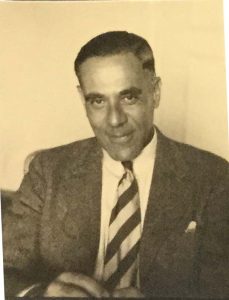 Ernst Levin (1887 – 1975)
We knew about Levin’s medical work in hospitals across the city and for the German consulate in Scotland through his medical papers, donated to LHSA in the 1970s. However, although we had a record of Ernst’s career, we knew little of his time in Germany or his experiences as an émigré, leaving a lot of blanks when interested researchers asked to know more about the man behind the archive.
In 2015, I was given the opportunity to acquire Levin’s personal papers for LHSA – letters, photographs and mementos that added to the clinical profile we already held. This was a first for us in combining private and career records to give a more complete picture of a prominent personality in Edinburgh’s medical life.
Through this new collection, I learnt that Levin served during the First World War and later, along with his wife Anicuta Belau, had a wide circle of friends in the artistic movements of the decadent Weimar Republic. With the Nazi rise to power, Levin came to Edinburgh, subsequently joined by Anicuta and their daughter, Anna. Levin (like many other European exiles) was interred (in the Isle of Man) during the Second World War – but still returned to live the rest of his life in Edinburgh.
One of the first things that I noticed about our new donation was a group of photographs and mementos from the First World War, when Levin served as Assistant Surgeon of the Reserve of the Bavarian Infantry Regiment. These images from the German lines were extremely striking, and gave an immediate view of the trenches that are rare from British troops. Although smaller cameras were popularising photography as a hobby by the time of the First World War, the British Army had imposed restrictions on private camera use by 1916. In contrast, personal photography was tolerated more on the German side. It appears that Levin was a keen photographer, and noted chemicals used in the development process on his photograph envelopes. There are a large number of First World War images in the collection, from photographs of the German lines:


… to soldiers relaxed and enjoying themselves:

As a first for us, LHSA has also acquired images of German field hospitals thanks to Levin’s collecting:


What really sticks out about Ernst’s First World War archive is the mixture of battlefield images and snatched moments of life for civilians under occupation – something that is reflected in his photography:


… but also by handmade postcards which were intermingled with his war memorabilia:

The postcards are signed, but we cannot be sure whether they were created under a pseudonym by Ernst himself or by an acquaintance. The word ‘Postkaart’ on their reverse may imply that they were drawn in Holland or Belgium, though:

We can guess where Ernst may have been stationed on account of the paper memorabilia he collected, from postcard books of places like Bruges and Tournai to maps of the front-lines:

As a medic, Levin far from escaped the dangers of the Front. In fact, he won a Military Medical Medal for his heroism in the Battle of the Somme. In August 1916, Levin was ordered to set up a dressing station in Cléry. Not only did he achieve this in an exposed area without artillery protection, but also showed bravery under fire when the station was shelled. The following is taken from Bavaria’s Golden Roll of Honour, compiled from the Bavarian War Archive:
“Whilst everyone took what shelter they could from the artillery fire, Dr Levin, hearing a wounded man cry out, immediately went to the aid of the casualty despite the firing and at the risk of his life. He bandaged the wounds and carried the man to the dug-out. Throughout the Battle of the Somme, Dr Levin distinguished himself by his spirit of sacrifice, his calmness and level-headed-ness and his strong sense of duty.”


Ernst Levin in uniform
It is lucky that a good proportion of this war archive is largely visual – most of Levin’s personal collection is written in German. There are, for example, bundles of letters like this one, sent home to Munich through the German military mail system, Feldpost:

And it is this language barrier that, at the moment, we are looking for ways to overcome, from involving academics to better understand the content of Levin’s archive to tracing the content of the collection through methods that do not involve deciphering the older-style German script in which manyof the letters are written. However, the visual clues I can decipher have already given me a privileged view behind the German lines.

All images from LHSA accession, Acc15/001.
New books in the Library for Social and Political Science
Thanks to recommendations from members of staff and requests via RAB from students the Library is continually adding new books to its collections both online and in print. Here are just a (very) small number of the books that have been added to the Library’s collections in semester one, 2016/17 for the School of Social and Political Science and these demonstrate the wide range of subjects being taught, studied and researched within School.
–> Find these and more via DiscoverEd.
 The new Northern Irish politics? by Jonathan Tonge (shelfmark: DA990.U46 Ton.)
International humanitarian law and the changing technology of war edited by Dan Saxon (shelfmark: KZ6471 Int.)
Digital sociologies edited by Jessie Daniels, Karen Gregory, Tressie McMillan Cottom (shelfmark: HM851 Dig.) Read More
Past Exam Papers Online
Exam time is approaching again and you may find it useful to look at recent past exam papers for your course.
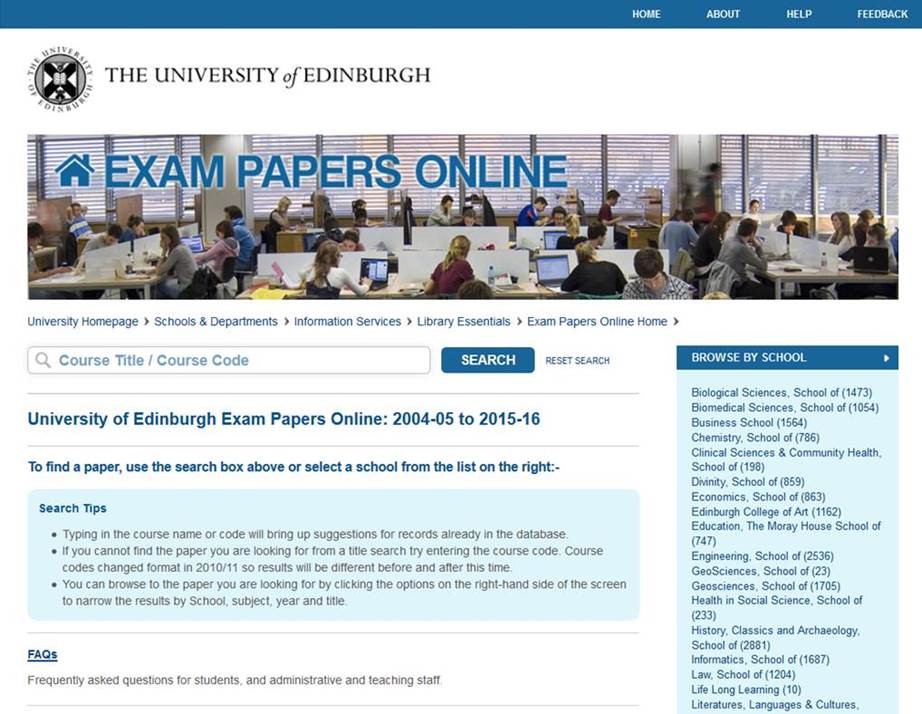
Our Exam Papers Online web page https://exampapers.ed.ac.uk/ provides on and off-campus access for staff and students of the University of Edinburgh to the collected degree examination papers of the University from 2004 onwards.
Following the links to the exam papers you require, you will be prompted for your EASE username and password. Remain within the same browser window and access should be seamless.
If you have any questions or comments about any aspect of Exams Online, please get in touch. Email: exam.papers@ed.ac.uk
Collections
 Hill and Adamson Collection: an insight into Edinburgh’s past
My name is Phoebe Kirkland, I am an MSc East Asian Studies student, and for...
Cataloguing the private papers of Archibald Hunter Campbell: A Journey Through Correspondence
My name is Pauline Vincent, I am a student in my last year of a...
Hill and Adamson Collection: an insight into Edinburgh’s past
My name is Phoebe Kirkland, I am an MSc East Asian Studies student, and for...
Cataloguing the private papers of Archibald Hunter Campbell: A Journey Through Correspondence
My name is Pauline Vincent, I am a student in my last year of a...
Projects
Cataloguing the private papers of Archibald Hunter Campbell: A Journey Through Correspondence
My name is Pauline Vincent, I am a student in my last year of a...
Archival Provenance Research Project: Lishan’s Experience
Presentation My name is Lishan Zou, I am a fourth year History and Politics student....