Home University of Edinburgh Library Essentials
June 12, 2026
Jewish Studies Collections at New College library : early books
This week New College welcomes the British Association for Jewish Studies Conference to Edinburgh. Delegates are welcome to visit New College Library where they’ll find a display of Jewish Studies related items from our Special Collections..
Early Jewish sacred texts, biblical scholarship and devotional works in Hebrew can be discovered throughout New College Library’s Special Collections.
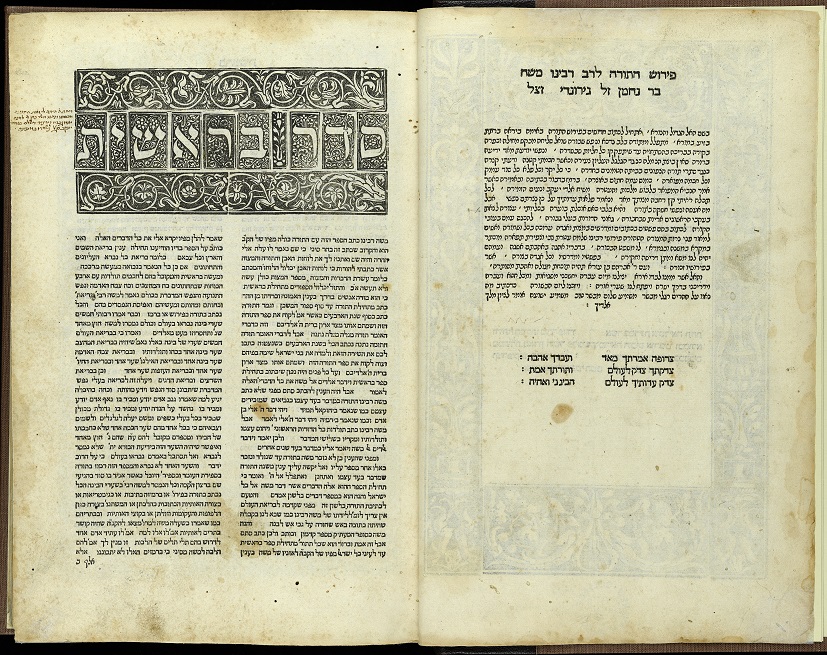
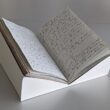
leha-Rav rabenu Mosheh bar Naḥman. Perush ha-Torah. Pisa: Bene Sontsino, 1514. Dal-Chr 15.
New to Library: Proceedings of the Prehistoric Society archive online
The Library has recently purchased the online archive to the journal Proceedings of the Prehistoric Society, covering the period 1935 (volume 1) until 2009 (volume 75).

The Library already has current online access to the Proceedings of the Prehistoric Society, covering the years 2010 (volume 76) onwards. So the purchase of the archive ensures the Library has full access to the entire run of this important journal in prehistoric research.
You can access both the archive and current access via DiscoverEd. Read More
Conservation Work Placement at St Cecilia’s Hall
In this week’s blog, Alberto Bonza, an apprentice from Italy, describes his time working with conservators from the CRC…
I am writing this blog post at the end of my six weeks of volunteering at the CRC, which I think came far too soon!
I am an apprentice keyboard instruments maker and restorer, working with my father in our family business in Italy. Before my placement in Edinburgh, I worked on various early instruments, such as the 1788 Taskin harpsichord in Milan ‘Castello Sforzesco’, and the 1782 J. A. Stein fortepiano. My most recent work has been the reconstruction of the chromatic harpsichord owned by the Prince of Venosa, Carlo Gesualdo. A few months ago, I decided to contact Musical Instrument Conservator, Jonathan Santa Maria Bouquet, to see if I could volunteer at the CRC in order to improve my skills.
New to the Library: History of Contemporary Chinese Political Movements, 1949-
I’m pleased to let you know that the Library has got a 1-year subscription to The Database for the History of Contemporary Chinese Political Movements, 1949-.

The database provides full-text primary source materials relating to the Chinese political movements after the founding of the People’s Republic of China in 1949.
You can access The Database for the History of Contemporary Chinese Political Movements, 1949- via the Databases A-Z list. Read More
OAI10, Geneva, 21-23 June 2017
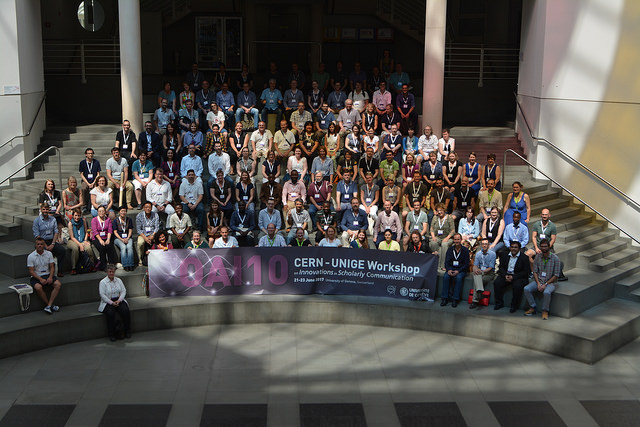
image courtesy of Elena Giglia (https://www.flickr.com/photos/eg65/35327695980/in/album-72157682640272443/)
The CERN – UNIGE Workshop on Innovations in Scholarly Communication took place at the University of Geneva in June 21st-23rd 2017. Two and a half days of speakers and workshops left us with lots to think about. The emphasis of the conference is innovations in scholarly communication and attracts attendees from across Europe and further afield.
There were seven main sessions;
- Opening keynote by Jean-Claude Burgelman
- Technical session
- Copyright and Licensing session
- OA transformation session
- OA outside session
- Social media session
- Future of repositories session
For me, one of the of most insightful sessions was the OA outside session, the experiences of the three speakers with open access really brings home what open access is all about and why it is so important beyond complying with funder’s policies and the next REF exercise. First up ElHassan ElSabry, a PhD candidate, talked about Who needs access to research? an overview of available evidence describing how there is more discussion about OA than actual studies on the benefits of OA. Next up, Dr. Nilam Ashra-McGrat from COMDIS reminding us how privileged we are in our institutions to be able to access so much research through journal subscriptions which non-governmental organization’s (NGO’s) have little or no access to. Her presentation ‘Is open access helping or hindering the international development agenda? Reflections from a consortium of developing country NGOs’ highlighted how many barriers there are to research, even so called ‘free’ research which requires users to register to access it. Finally, on a more positive note Alasdair Rae’s presentation ‘How open access opens doors – reflections on my recent ‘Megaregions of the United States’ paper’ came from a researcher’s perspective and he talked the benefits of open science and how open access opens door, he then talked us through one of his most recent OA papers which was only made possible through the benefits of open science.
Slides, recordings and links from all the presentations can be found online here.
New Chemistry E-Books
 We have purchased the 2017 copyright year collection of Royal Society of Chemistry e-books, the initial batch of published books are now available in DiscoverEd. Additional titles will be added to DiscoverEd as they are published throughout the year. A full list of the e-books can be found in the spreadsheet here.
Anti-German manifestos, cigarettes vouchers and a little girl called Gill: 3 objects found in PhD theses
When I was studying for my Masters dissertation, I kept finding dried flowers in between the pages of books I was borrowing from the library. Now, we all know that drying flowers in between books, especially library books, is a bad idea. If the flower is particularly big, the books will struggle to close properly and the colours of the petals, through the release of moisture, will transfer on the page. But despite all of it, I was happy to find daisies and freesias while revising, and I kept most of them. Now, I am still happy when I find objects in collection items, some of which have not been opened for almost 100 years. I have realised that all sort of things find their way in theses. I removed cigarettes buds found in 1910s book on bronchitis, read letters and I have seen that photographs, cigar vouchers and 1970s train tickets all seem to have been used as bookmarks or place orders and never have been removed from the pages of theses. Sometimes the objects and documents found in these theses seem to be related to the creation of the volumes themselves. For example, we found receipts and quotes from 20th-century Scottish bookbinders, library notes and interlibrary loans request slips. But sometimes what we have found is more original and not necessarily related to the content or the creation of the physical item.
Here are three examples of objects that found their way in between the pages of PhD theses.

The Anti-German Union pamphlet found in a 1916’s thesis
The ‘Anti-German Union’ pamphlet
Found in a 1916 medical thesis titled The treatment of tuberculosis this pamphlet relates to racist propaganda rather than medical knowledge. The leaflet promotes ethnocentric ideas of ‘Britishness’ presenting German workers, economic trade with Germany as a threat.
“The Anti-German Union has been formed to unite British-born men and women, without respect to party, class or creed, with the following aims and objects:
- To foster national ideals and to keep alive the patriotic spirit of the people
- To defend British freedom, rights and privileges from German invasion
- To defend British Industry and British labour against German competition.”
The pamphlet also includes a membership/registration form which was left blank. It was produced at the same time as the thesis was (around 1916). The AGU Later renamed ‘British Empire Union’ was an organisation instigating anti-German sentiment and was part of a bigger movement that grew after WW1 and the developing of Germany as an international power. The union promoted the expulsion of German immigrants and the obstructing of German trade.
It is not clear whether the examiner or the author itself accidentally left the pamphlet in the thesis, but at least we know that that the registration form was left blank. I was particularly fascinated by this object because it has no relation to the content of the thesis and there is a limited amount of similar documents on the same subject in digital image repositories. It is also a statement to a very specific time in history; the document could have only been written in 1915 or 1916, and it testifies the change in aims and perspective of an organisation.
Five Embassy Cigarettes Vouchers Objects found in theses, not only provide evidence for the political atmosphere that alumni were immersed in, but they also show a change in consumerist culture and advertising. One of my favourite discovery is ‘Five Embassy Vouchers’.
Not so common these days, cigarettes vouchers were given to smokers as a reward for their loyalty. This was a win/win situation: consumers could trade this vouchers in a store for their favourite cigarettes while companies found a way of retaining their customers.
Embassy is a cigarette brand first sold in 1914 by Imperial Tobacco. Originally branded ‘Strand’ it gained popularity in the 1960s as a coupon brand.
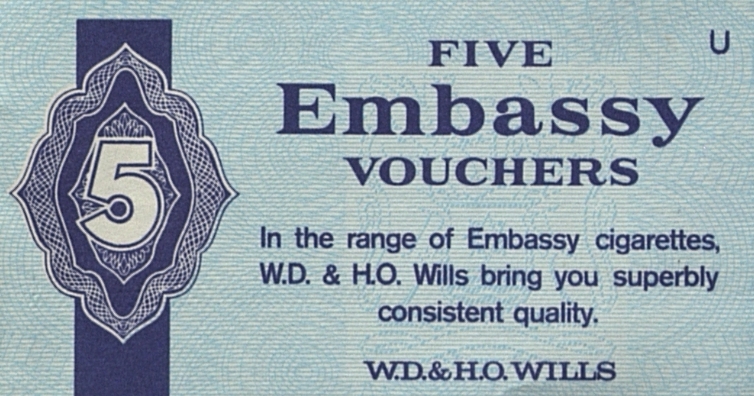
Five Embassy Vouchers (1960s)
Gill, 1966
The most common objects found loose in between the pages of theses are, after library slips, photographs. Some of these pictures are labelled, usually portraying graduating students; others remain a mystery.
One that we could find more information about is ‘Gill, 1966’. This picture fell from a 1970s duplicate copy of a thesis. We are unclear which thesis she originally came from as she fell when we picked up a couple of theses from our delivery. The volume it came in (as it is a duplicate) has been certainly destroyed now, but the picture remains a unique object, one portraying Gill in 1966, a little girl we know nothing about.

Gill, 1966
New! House of Lords Parliamentary Papers
I’m pleased to let you know that the Library has purchased access to the House of Lords Parliamentary Papers (1800-1910) from ProQuest. This resource provides online access to previously unseen and valuable historical documents and is the very first digitised collection of 19th century House of Lords Parliamentary Papers.

You can access the House of Lords Parliamentary Papers (1800-1910) via the Databases A-Z list.
The House of Lords Parliamentary Papers (1800-1910) is an essential research resource that, along with the existing House of Commons Parliamentary Papers database (which the Library already has access to), provides a complete picture of the working and influence of the UK Parliament during the pivotal 19th century. Read More
New E-Books from Cambridge Core

A further 253 e-books across most subject areas have been added to DiscoverEd. Cambridge Core hosts books from a variety of publishers including Edinburgh University Press, Cambridge University Press, Boydell & Brewer. A list of the new titles and subject areas can be found in the spreadsheet here.
International Journal of Sport Management and Marketing – new e-journal

We have a new e-journal subscription – International Journal of Sport Management and Marketing
International Journal of Sport Management and Marketing (IJSMM) is a multidisciplinary journal which aims to provide a unique focus on a wide range of sport management and sport technology topics. It covers advances in theory, new concepts, methods and applications and case studies. Each issue disseminates quality sport-related research relevant to sport technology and sport management, examining both hard and soft perspectives in managing sporting organisations in the public and private sectors.
Collections
 Hill and Adamson Collection: an insight into Edinburgh’s past
My name is Phoebe Kirkland, I am an MSc East Asian Studies student, and for...
Cataloguing the private papers of Archibald Hunter Campbell: A Journey Through Correspondence
My name is Pauline Vincent, I am a student in my last year of a...
Hill and Adamson Collection: an insight into Edinburgh’s past
My name is Phoebe Kirkland, I am an MSc East Asian Studies student, and for...
Cataloguing the private papers of Archibald Hunter Campbell: A Journey Through Correspondence
My name is Pauline Vincent, I am a student in my last year of a...
Projects
Cataloguing the private papers of Archibald Hunter Campbell: A Journey Through Correspondence
My name is Pauline Vincent, I am a student in my last year of a...
Archival Provenance Research Project: Lishan’s Experience
Presentation My name is Lishan Zou, I am a fourth year History and Politics student....