Home University of Edinburgh Library Essentials
June 27, 2026
Spotlight on Fiddles at St Cecilia’s Hall
Guest post from Olivia Thorne, a museums placement student at St Cecilia’s Hall
As a classically-trained cellist, the image that springs to mind for me when I hear the word ‘fiddle’ is a violin used by folk musicians to play jigs and reels. However, as I discovered during my internship at St Cecilia’s Hall, the fiddle family encompasses so much more. Organologists (that’s musical instrument specialists) use the term ‘fiddle’ to refer to any string instrument played with a bow. The more formal classification ‘bowed lute’ also applies to this class of instrument. Fiddles can be played held under the chin like a violin, held upright and rested on the knee, or played standing, propped on a spike. A wide variety of materials are used to make fiddles, from coconut shell to snakeskin to maple, ebony and ivory, and instrument designs vary from the simple to extremely complicated. Fiddles are a worldwide phenomenon, with most cultures possessing their own variation on the instrument, and fiddle-playing traditions connect groups of people from different corners of the globe. Over the course of this blog post, I will highlight some of the wacky and wonderful fiddles in the collection at St Cecilia’s Hall, and share some of the surprises that emerged during my research with these instruments. The examples discussed also reveal some insights into the process of identifying musical instruments, and the ongoing collection research which goes on behind the scenes in any museum.
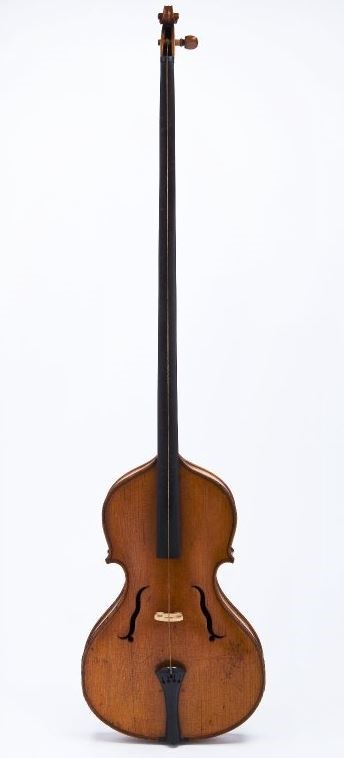
One-string fiddle
A circus runaway – the mysterious case of the one-string fiddle
When I first unwrapped this instrument from storage, I was confronted with an enigma. What was this instrument? It seemed to be a chimaera of the string instrument world, borrowing elements from lots of different instruments to make one very unusual fiddle. The top half is shaped like a violin, with a wide, rounded lower half which more closely resembles a 19th-century guitar. The soundholes are in a shape commonly seen on the viola d’amore – a member of the viol family popular in the 17th and 18th centuries. The very long neck and single string presented even more of a mystery. Single-string bowed instruments are rare worldwide, and even more so in the Western classical tradition to which the violin and viol family belong. However, string instruments have been the subject of experimentation for centuries, and the form of even the violin continues to evolve. Could this be an example of experimental innovation? Little information was collected about this instrument when it entered the museum’s collection in 1982. Luckily, the National Music Museum in South Dakota holds a perfect match within their collection. Documentation from the NMM revealed this to be a ‘violon du cirque’ – a circus violin – made in France c. 1900. This explains the motivation behind the maker’s experimental design – creating an instrument with a high novelty, entertainment and humour factor. The details of the circus routines in which this highly unusual fiddle might have played a part can only be imagined!
Looks can be deceiving

Złóbcoki

Baton-shaped kit
At first glance, this narrow-bodied instrument resembles a kit – a miniature fiddle popular as a portable instrument for private dancing tutors during the 17th and 18th centuries. Kits come in two basic categories – those shaped like miniature violins and those with long narrow bodies described as ‘baton-shaped’ by some authors and ‘gondola-shaped’ by others. However, this example is too large to be a kit, and doesn’t quite conform to the usual shape of the baton-style version. In fact, this is a złóbcoki, and has a completely different cultural context to the kit. While you would find a kit at home in the refined drawing rooms of London polite society in the 18th century, the złóbcoki is the folk fiddle of the Górale people of the Tatra Mountains in Poland. The złóbcoki was traditionally played at celebrations, weddings and marches, alongside a drum or basy (a Polish bass fiddle broadly comparable to the cello), and sometimes local bagpipes. This example demonstrates that within the twisting family tree of musical instruments, two instruments with very similar forms may have very different cultural contexts. However, the baton-shaped kit is thought to have evolved as a modification of the older rebec, a bowed instrument played widely in Europe during the Medieval and Renaissance eras. It is possible that future research may reveal that both the złóbcoki and the kit have their origins in the rebec – however without further data we can only speculate.
An imposter amongst the fiddles – identifying a Tibetan lute

Sgra-snyan
To tell the global story of music, musical instrument museums often collect examples from around the world. This means that organologists sometimes need to identify instruments from cultures other than their own, which can be confusing work. This striking red string instrument is carved from a single piece of wood, with a round resonator covered in hide which amplifies the sound of the strings. It was previously identified in museum records from the 1990s as a pi-wang, a type of bowed string instrument from Tibet. However, after a little research it became clear that this instrument did not have the cylindrical sound box of a pi-wang, and also had more than the standard two strings. Utilising the power of the internet, which makes finding reference images a breeze, I determined that it was definitely the wrong shape to be a pi-wang. After some further reading, another possible candidate emerged – the Himalayan plucked instrument called sgra-snyan (the name means ‘pleasant sound’). Traditionally, one of the roles of the sgra-snyan was to accompany nang-ma songs, associated with the music of the Dalai Lama’s court in the Tibetan city of Lhasa. Today, ensembles featuring the sgra-snyan along with the pi-wang and traditional flutes are played by the Tibetan community in exile in Bhutan and India, where the nang-ma repertory has been revived. Having revealed its true identity, this particular instrument can no longer be considered a fiddle. However, this example goes to show how the abundance of reference images and information on the internet has changed the task of musical instrument research between the 1990s and today. Understanding a museum collection is an ongoing process – there is always more to learn!
The varieties of fiddle held in the collection at St Cecilia’s Hall are far too numerous to research in a four-week internship, or cover in a single blog post. To explore more of the fascinating world of fiddles, visit the Laigh Hall or the Wolfson Gallery at the newly redeveloped museum.

Olivia Thorne
Further Reading
Cooley, T 1997, Ethnography, Tourism and Music-culture in the Tatra Mountains: Negotiated Representations of Polish Gorale Ethnicity, Doctoral Thesis submitted to Brown University, Rhode Island, accessed via ProQuest.
Durkin, R 2017, ‘The Dancing-Master’s Toolkit: a summary of the pochette of the seventeenth and eighteenth centuries and its role in society’, The Galpin Society Journal, no. LXX, pp. 65-79.
Halfpenny, E and Grame, TC 2017, ‘Stringed instrument’, Encyclopaedia Britannica Online, viewed 13th July 2017, accessible at <https://www.britannica.com/art/stringed-instrument#toc53709>.
Helffer, M 2000, ‘Tibetan Culture in South Asia’, in A. Arnold (ed.), The Garland Encyclopedia of World Music, Vol. 9, Garland, New York and London.
Henrion-Dourcy, I and Dhondup, T 2017, ‘Instruments – Tibetan Music’, in Grove Music Online, viewed 11th July 2017, accessible via Oxford Music Online.
Remnant, M 1984, ‘Kit’, in Grove Music online, viewed 13th July 2017, accessible via Oxford Music Online.
Stęszewski, J 2017, ‘Instruments – Poland’, in Grove Music Online, viewed 10th July 2017, accessible via Oxford Music Online.
70,000 high-quality images from National Palace Museum in Taipei

BBC News reported yesterday that the National Palace Museum in Taipei has placed 70,000 high-quality electronic images in a free-to-download archive so that online users can enjoy its exhibitions. It also provides a database for users to download information on the history and use of the cultural artefacts.
See more on http://www.bbc.co.uk/news/blogs-news-from-elsewhere-40594287
This BBC news page leads to the detailed information in Chinese at: http://www.thepaper.cn/newsDetail_forward_1730606
Korean newspapers online

The Library has arranged a free trial of two digitised Korean newspapers, Choson Ilbo Archive and Dong-A Ilbo Archive. The digitised full-text content of both newspapers date back to 1920, each containing over 3 million articles. They are searchable by keyword, full text, date, and so on.
To access the trials, please follow the links below:
Choson Ilbo Archive: http://srchdb1.chosun.com/pdf/i_archive/
Dong-A Ilbo Archive: http://news.donga.com/Pdf
Trial ends on 30 Sept 2017 for Choson Ilbo Archive and 31 Aug 2017 for Dong-A Ilbo Archive respectively.
This is the first time we have access to Korean e-resources. As the Korean Studies programme unfolds, there will be more library activities in this area in the near future.
Journal of Medical Entomology – archive access now available
 The Library has purchased the archive of Journal of Medical Entomology, 1964-1995, we now hold a full run of this journal online.
Journal of Medical Entomology publishes research related to all aspects of medical entomology and medical acarology, including the systematics and biology of insects, acarines, and other arthropods of public health and veterinary significance.
Access this e-journal via DiscoverEd.
“Manuscripts rare for the writing” and The Skeleton in the Library Cupboard: the Early Library Records Project
The Library holds a very rich collection of the records of its own activities, stretching right back to the charter of Clement Littil’s bequest in 1580, which started the library. Many of the books acquired at every period since then are still here, often bearing physical evidence of their history in the collections, in the form of inscriptions, old shelf marks, or bindings distinctive of a particular period. The records and the books have the potential to be a very rich source of information and useful to researchers in many different subjects, but currently they are poorly understood and documented and are very difficult to use.
This summer we welcome to CRC Nathalie Bertaud, an Employ.Ed intern, who is working on the records of the first two and half centuries, or thereabouts, of the library’s history, producing a research guide and collecting the data to improve the descriptions of the records on the catalogue of the University Archives. She has been making many discoveries:
Ever wonder how long a book or other object has been in the library and where it comes from? How much it cost or by whom it was given to the library? Or still, what the money given by students was spent on? With a good number of early press, subject and author catalogues, as well as matriculation and donation books, the history of the University’s library is not so dark a place to delve in. As we embrace these early records and their flimsy pages and characteristic smell, let us dive into the library’s history and follow, record after record, the life of its marvels.
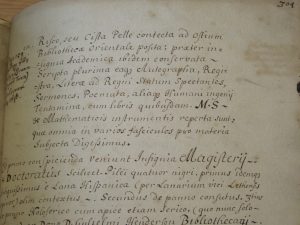 The library has, from very early on, been a welcoming home to objects other than books. This can be seen in items Da.1.18 and 19, as both contain several lists of wonders and curiosities. We are indeed told that precious items were kept in a chest – a sort of 17th century equivalent to our fire-safe! Among the items precious enough to go in the chest were the Bohemian Protest, the marriage contract between Mary Queen of Scots and Francis Dauphin of France, and a thistle banner printed on satin 1640 being found carelessly put in one of Mr Nairn’s books. What is more, a list is given us of portraits that were hung in the library, a celebration of illustrious men and women. Featured celebrities included Tiberius Claudius, Martin Luther, and Mary Queen of Scots. We still do hold some of these portraits. Items related to the discipline of anatomy were also gifted to the library, and we are told in several lists that these comprised the ‘skeleton of a French man’, or a ‘gravel stone (…) cut out of the bladder of Colonel Ruthven’, who, we are informed in Da.1.31, ‘lived six weeks thereafter’.
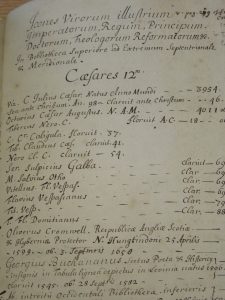

Now, where did the books and objects come from? Well, we know a fair amount about key benefactors of the library, as their names are listed over and over again, their generosity being commemorated by several library keepers. Such examples of commemorative lists can be found in Da.1.18 and 19, where the first page lists such generous men as Clement Litil, William Drummond or James Nairn.

Item Da.1.31, a book of donations started by the librarian William Henderson in the late 17th century, gives us short descriptions of benefactors, such as: ‘Isobell Mitchell, at the time of her decease which was upon the 19th of October 1667 left to the college as a token of her great love to the flourishing of piety and good learning the sum of a hundred merks Scots’. Yet, less renowned people also made a contribution to the library’s collection, and when we chance upon a brief description of these almost anonymous benefactors, we get a sense of how collections get built. Such an example is: ‘By Mr David Ferguson, student in Kirkcaldy, a youth of great hopes but was snatched away by an early death (…) a manuscript rare for the writing’, or ‘George Bosman book-seller, gave in the Breviary of the B. Virgin, a manuscript very curiously written & adorned with rich colours besides many exquisite pictures’, or still ‘Mr John MacGregory, student, gave in a Hebrew Bible’.

As lists of new accessions are fairly well represented in the records, we are also offered insight into what places were hubs for book purchasing in the 17th and 18th centuries. London and Holland seem to have been such places, as they are mentioned regularly, for instance in Da.1.32 and 34. The cost of the books purchased is sometimes given as well, and we quickly understand, from looking at the records, that books were purchased not only from donations but also from student fees. However, the money paid by the students was not always used for the purchase of books. We get a glimpse into the day-to-day management of the library when we run through items Da.1.32, 34 or 43, where we can read that money was spent on fees for services rendered, such as ‘for drink money for bringing in books gifted to the library’, ‘for washing 12 pictures’ or ‘for cleaning the library’. It was also spent on library necessaries like ‘paper, pens and ink, and postage’, ‘for binding books’ or still ‘for transcribing a copy of the New Catalogue for the library’. All these wonderful details, sometimes scribbled in tiny script, allow us to get a better understanding of the early history of the library and its management.


University of Edinburgh joins ICPSR for access to a wealth of datasets
The Data Library is pleased to announce it has secured access to a world-renowned data repository on behalf of the Research Data Service. The Inter-university Consortium for Political and Social Research (ICPSR), based at the University of Michigan, is a network of approximately 700 universities and colleges united in the acquisition, preservation, and distribution of social science data.
Staff and student researchers at the University of Edinburgh will now have access to over 10,000 American and international datasets covering an array of topics such as health and nutrition, crime reporting, youth development, election surveys, consumer attitudes and national economic indicators. ICPSR makes searching for suitable datasets easy through its Finding Data portal and provides data-related publications and resources for students.
Researchers can also take advantage of its highly regarded summer program of social science quantitative methods training, with a significant discount.
To view datasets and other resources visit https://www.icpsr.umich.edu. Many datasets are publicly available; some require registration and access from a University IP address.
Diarmuid McDonnell
EDINA and Data Library
New e-journal – BMJ Simulation and Technology Enhanced Learning
 The Library has taken out a subscription to BMJ Simulation & Technology Enhanced Learning.
BMJ Simulation & Technology Enhanced Learning focuses on the use of simulation and innovative technology as an educational method or intervention for professionals in all areas of health and social care education, workforce development and quality of care. The journal seeks to contribute to research, innovation and knowledge translation for practitioners, teachers, students and leaders in all health and social care professions who wish to improve clinical outcomes, patient experience, and safety.
Access this e-journal via DiscoverEd.
Jewish Studies Collections at New College Library : archives
Currently on display at New College Library for the British Association for Jewish Studies Conference to Edinburgh at New College is this lovely manuscript item from New College’s historic archive collections, originally coming from the Library of the General Assembly of the Church of Scotland.
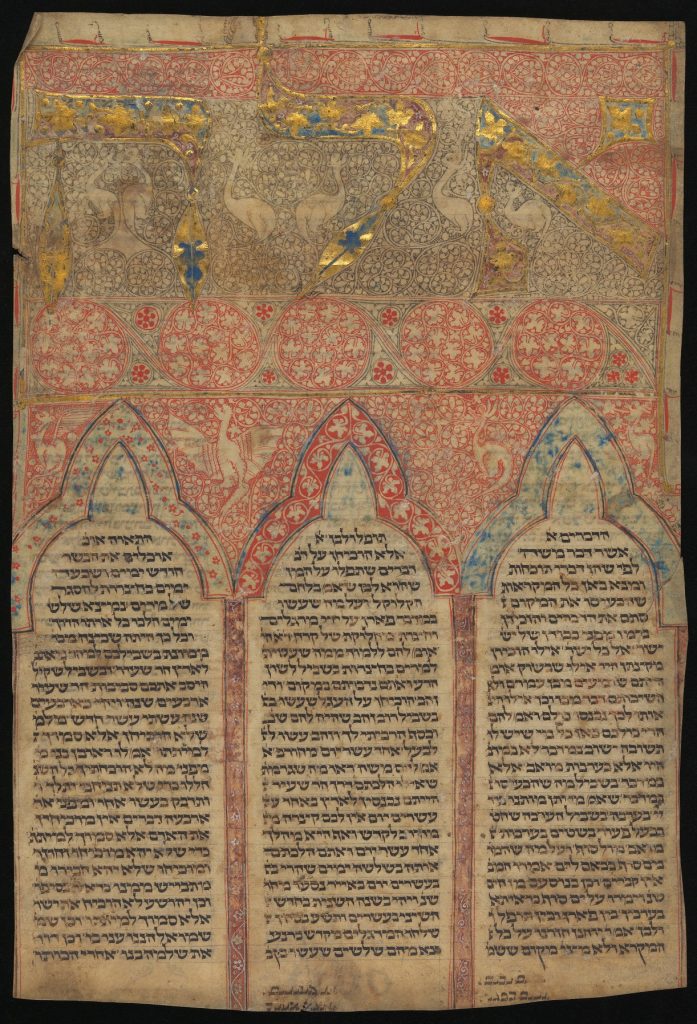
Yitzchaki, Shlomo. Commentary on Deuteronomy, undated. MS BOX 25.2
This is the first page of an illuminated Hebrew manuscript known as Rashi’s Commentary on Deuteronomy. Rashi was Rabbi Shlomo Yitzchaki (1040-1105), an acclaimed French medieval scholar, whose explanations of scriptures were valued for their precision and simplicity.
The New College Library archives hold the papers of Old Testament and Hebrew and Semitic Languages scholars such as Prof Oliver S Rankin (1885-1956), which contains many writings in German, teaching notes and notes on Jewish festivals, Prof John Duncan (1796-1870) and Prof Norman W Porteous (1898-2003). These papers are important sources for researching Christian academic engagement with the Jewish people and Jewish-Christian Relations. Read More
On trial: primary source collections from British Online Archives
Following a request from staff in HCA, the Library currently has trial access to two digital primary source collections from British Online Archives, Conscientious Objection during the World War 1 and The Middle East, its division into countries and the creation of Israel, 1879-1919.
Trial access ends 6th August 2017.
Conscientious Objection during the World War 1
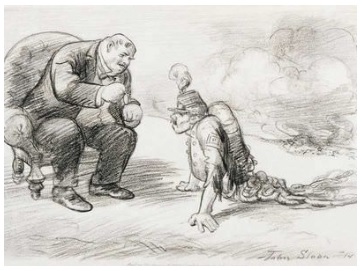 During World War One, Conscientious Objectors united to oppose the war despite the criticism they faced. Three of these anti-war protest groups included the Conscientious Objector Information Bureau, the Union of Democratic Control, and the No-Conscription Fellowship. Conscientious Objection during the World War 1 includes complete files of key anti-war publications. It also contains rare reports from the Conscientious Objector Information Bureau. The internal papers include minutes from the Union of Democratic Control and letters from the No-Conscription Fellowship. The Fellowship’s most prominent figure, Clifford Allen, wrote a number of these items. Local Fellowship branches in Willesden, Middlesex and in Hyde, Greater Manchester are also covered. Also included amongst the papers is Thomas Henry Ellison’s scrapbook. Thomas was a Conscientious Objector and spent much of his time during the war in prison. His scrapbook covers both his own experiences and the experience of the anti-war movement as a whole. Read More
Jewish Studies Collections at New College Library : nineteenth and twentieth centuries
The British Association for Jewish Studies Conference to Edinburgh at New College today covers a wide range of topics under its theme of ‘Jews on the Move’ including the theme of Jewish-Christian relations. New College Library’s collections from the nineteenth and early twentieth centuries provide a window into Jewish-Christian relations, particularly through travel writing, and through development of missions to Jews in the Middle East.
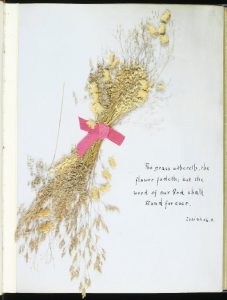
Bible Plants, 1887
New College Library’s collections are rich in the area of nineteenth century Christian encounters with Jews, usually in the form of mission to Jewish communities. The New College object collections include objects collected from trips to the Holy Land, including the pressed flower album of ‘Bible Plants’ above, phylacteries, a prayer shawl and a scale model of the Temple of Jerusalem. The book and archive collections include some fascinating materials from the Church of Scotland’s development of missions to Jews in the Middle East, including books, archives and objects relating to Rev. Andrew A. Bonar and Rev. Robert Murray McCheyne. Bonar and McCheyne were appointed by the Church of Scotland in 1838 as part of a deputation to visit Jewish communities in Europe and the Middle East, with a view to future mission activity.
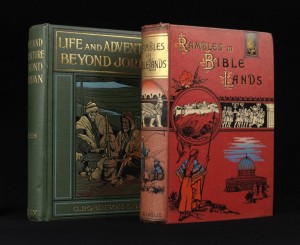
Books from the William Foakes Jackson Collection
The William Fulton Jackson Collection preserves the collection of man who was an enthusiastic armchair traveller to the Holy Land, with a popular, rather than academic interest in Israel and Palestine. His collection also includes many works on Jewish Studies, including encyclopedias and dictionaries, and demonstrates a keen interest in understanding Jews and Judaism.
New College Library’s Pamphlets Collection of over 35,000 items reflects a deliberate policy from the foundation of New College library in 1843 to collect pamphlets and ephemera on historical, religious and current issues. The collection includes these three pamphlets are examples of the publisher Victor Gollancz’s campaign to draw attention to the plight of the Jews in Europe and to demand that the British Government provide rescue and sanctuary for Jewish victims.
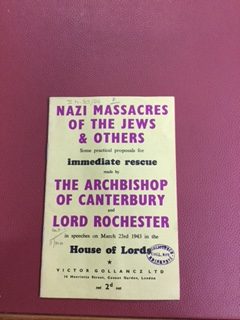
Nazi massacres of the Jews & others : some practical proposals for immediate rescue made by the Archbishop of Canterbury and Lord Rochester in speeches on March 23rd 1943 in the House of Lords. London, Gollancz, 1943. Z.h.30/24
One of the founders of the Council of Christians and Jews in 1942, Temple was at the forefront of the campaign to draw attention to the plight of the Jews in Europe and to demand that the British Government provide rescue and sanctuary for Jewish victims. His speech urges:
“The Jews are being slaughtered at the rate of tens of thousands a day on many days … we cannot rest as long as there is any sense among us that we are not doing all that might be done.”
Sadly no changes to refugee policy were made by the British Government and after William Temple died in 1944, the impetus for rescuing the Jews did not continue.
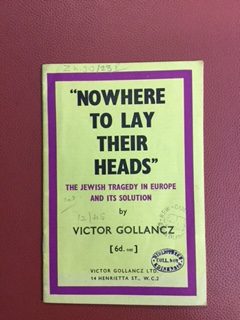
“Nowhere to lay their heads” : the Jewish tragedy in Europe and its solution. London : Gollancz, 1945. Z.h.30/33
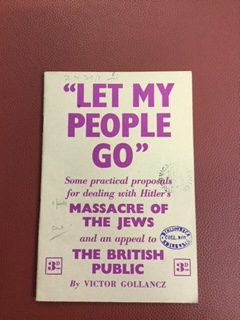
“Let my people go” : some practical proposals for dealing with Hitler’s massacre of the Jews and an appeal to the British public. London : Gollancz, 1943. Z.h. 30/1
Christine Love-Rodgers – Academic Support Librarian, Divinity
Collections
 Hill and Adamson Collection: an insight into Edinburgh’s past
My name is Phoebe Kirkland, I am an MSc East Asian Studies student, and for...
Cataloguing the private papers of Archibald Hunter Campbell: A Journey Through Correspondence
My name is Pauline Vincent, I am a student in my last year of a...
Hill and Adamson Collection: an insight into Edinburgh’s past
My name is Phoebe Kirkland, I am an MSc East Asian Studies student, and for...
Cataloguing the private papers of Archibald Hunter Campbell: A Journey Through Correspondence
My name is Pauline Vincent, I am a student in my last year of a...
Projects
Cataloguing the private papers of Archibald Hunter Campbell: A Journey Through Correspondence
My name is Pauline Vincent, I am a student in my last year of a...
Archival Provenance Research Project: Lishan’s Experience
Presentation My name is Lishan Zou, I am a fourth year History and Politics student....