Home University of Edinburgh Library Essentials
June 12, 2026
Nature Reviews Neurology – archive access now available
 The Library has purchased the archive of Nature Reviews Neurology 2005-2011, (published as Nature Clinical Practice Neurology from 2005 – 2009). We now hold a full run of this journal online.
Nature Reviews Neurology publishes content written by internationally renowned clinical academics and researchers targeted towards readers in the medical sciences, from postgraduate level upwards.
Access this e-journal via DiscoverEd.
Explore the Partition of India through our library resources
In August 1947 British India won its independence from the British and split into two new states, India and Pakistan (East Pakistan subsequently became Bangladesh), that would govern themselves. The Partition of India, as it was known, created a huge refugee crisis with millions of displaced people and the level of violence and loss of life prior to and after the Partition has caused reverberations over the years, with hostile relations between India and Pakistan continuing to this day.
With the 70th anniversary of the Partition of India being marked this month I’ve pulled together just a small selection of Library resources that will help you explore the Partition of India further.
What did the papers say?
The Library subscribes to a large number of online newspaper archives that will allow you to see what events were being reported on at the time and how they were being reported. Read full text articles, compare how different newspapers were covering the same issues and stories, track coverage from the start of the Indian independence movement in the 19th century until post-partition.
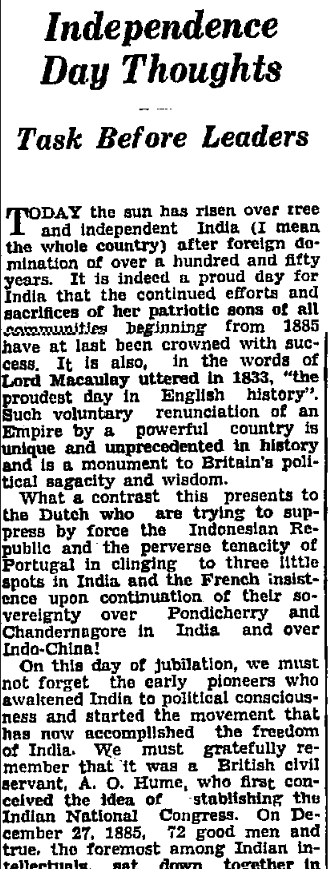
Screenshot from The Times of India.
The Times of India (1838-2007)
The Library has access to the online archive of The Times of India, which covers the period 1838-2007. The Times of India is the world’s largest circulation English daily newspaper and, as would be expected, is particular valuable for its coverage of key historical events in India, such as the Partition.
But how does this compare with how newspapers in the UK were reporting on it e.g. The Times, The Guardian and The Observer, The Scotsman, The Telegraph, etc., or how international newspapers were reporting on events e.g. The New York Times, Washington Post, Le Monde, Japan Times, etc?
Want to look at more recent coverage of the Partition of India? The Library also subscribes to databases, such as Factiva and Nexis UK, that allow you to search and access the full text of a large number of UK and international newspapers from around the 1980s up to date. You can access these, the databases mentioned above and many other newspaper archives and magazine archives from Newspaper Databases. Read More
Knovel – additional subject collections available
 We have expanded our subscription to Knovel to include e-books in the following subject collections:
Aerospace & Radar Technology
Covering all aspects of aircraft, helicopter, spacecraft and ballistic system design and manufacture, as well as the design, manufacture and operation of radar, microwave and antenna arrays. Including the MMPDS (MIL-HDBK-5), multiple volumes of the Engineering Design Handbook, unique handbooks on the use of composite materials and the fundamentals of various propulsion systems. This content offering is an essential engineering tool for aerospace, mechanical, manufacturing and materials engineers. 414 e-books added, see list here.
Civil Engineering & Construction Materials
Covers structural engineering, code compliance, earth moving, green building, road construction and building with materials such as concrete, wood and steel. Of use to civil engineers designing structures and developing infrastructure projects including bridges, dams, pipelines and roadways. 758 e-books added, see list here.
Electrical & Power Engineering
Covers power generation, plant design, energy storage including batteries, transmission line design and operation, electrical safety and energy efficiency. Of use to electrical, power, mechanical and civil engineers designing turbines, power generation plants, transmission towers and cabling, installing pipelines for underground transmission and electrical safety devices. 300 e-books added, see list here.
Environment & Environmental Engineering
Covers soil and ground remediation, water treatment, solid waste management, recycling, air quality monitoring, environmental pollution, indoor air quality control and total life cycle design. Of use to environmental, civil and geoenvironmental engineers designing treatment processes for industrial pollution, soil remediation, water treatment plants and integrated solid waste management plans. 365 e-books added, see list here.
Fire Protection Engineering & Emergency Response
Covers fire dynamics, modelling performance of suppression and ventilation systems, planning for the effective egress of people, staging of first responders and emergency management planning, fire resistant design of offshore structures, and design of fire protection systems in manufacturing and industrial applications. Of use to fire protection, mechanical, HVAC, plumbing and civil engineers designing, building and maintaining fire protection systems, equipment and plans. 115 e-books added, see list here.
General Engineering & Project Administration
Covers energy efficiency, fluid mechanics, mathematical functions, systems engineering, design of experiments, geographic information systems, new product development and materials properties. Of use to all engineers requiring quick refreshers on fundamental engineering principles, definitions of specific terms, equations and properties data about specific materials. 571 e-books added, see list here.
Mechanics & Mechanical Engineering
Covers design of motors and drives, pipe design, hydraulics, fluid mechanics and rheology, boiler and pressure vessel design, HVAC, systems and equipment, ship and vehicle design and manufacturing, Finite Element Method and control of vibration. Of use to mechanical, aerospace, manufacturing, plumbing and automotive engineers designing mechanical devices for improved performance, increased energy efficiency and user satisfaction. 631 e-books added, see list here.
Further info
Titles have been added to DiscoverEd. These collections will receive regular updates.
We already have a subscription to Knovel’s Chemistry & Chemical Engineering collection (618 titles).
JOVE – additional modules available

We have upgraded our subscription to JoVE (Journal of Visualised Experiments) to include JoVE Environment, the Advanced Biology Modules and the 3 newly available Psychology modules.
JoVE Environment is dedicated to research methodologies that address environmental concerns and seek to better understand Earth’s ecosystem. Special consideration is given to experimental methodologies that assess society’s impact on the environment, suggest solutions for protecting Earth’s resources, and develop sustainable fuel sources.
Essentials of Neuroscience provides an introduction to the field of neuroscience. These videos offer a glimpse of neuroscience at the practical and professional level, through an exploration of five major branches of study: neurophysiology, neuroanatomy, cell and molecular neuroscience, behavioural neuroscience, and developmental neuroscience.
Essentials of Developmental Biology introduces the field of developmental biology. Researchers in this discipline endeavour to understand the developmental processes that occur in organisms at every stage – starting from the single-celled embryo to the ageing adult. Based on current science, this collection is divided into five sub-categories: developmental genetics, molecular developmental biology, stem cell biology, organogenesis, and ageing and regeneration.
Essentials of Genetics focuses on genetics, the study of how genes build traits and how they are passed down from generation to generation. The collection is divided into five modules covering broad sub-disciplines: the genetics of individuals and populations, genetics and disease, gene expression, epigenetics, and genetic engineering. These videos briefly overview important discoveries and basic concepts of each field, introduce key questions being asked by geneticists today, and discuss common tools and experimental approaches used to study and manipulate genes.
Essentials of Cell Biology collection provides a glimpse into the field of cell biology. Despite the first observation of cells in the 1600s, scientists are still trying to decipher the questions related to the structure, growth, division, function, and dysfunction of cells. This collection profiles five important cellular phenomena: cell division, motility, endo- and exocytosis, metabolism and cell death. The videos review some of the landmark discoveries associated with these phenomena, highlight a few unanswered questions, and introduce the prominent methods used in cell biology labs today.
Essentials of Neuropsychology collection presents multidisciplinary techniques in behaviour, neurophysiology, anatomy, and functional imaging. Well-known behavioural paradigms, such as the Iowa Gambling Task, are demonstrated to diagnose brain damage and mental disorders. Neurophysiological methods, ranging from non-invasive brain stimulation to understanding how cardiac regulation relates to emotional recognition, are also discussed. Moreover, a number of functional magnetic resonance imaging techniques explores how the brain responds in particular behavioural states and to various objects.
Essentials of Sensation and Perception collection delves into a variety of procedures to study how the brain processes our complex sensory world and solves problems confronting conscious awareness and visual, tactile, and auditory perception. The videos explore just how well the brain creates assumptions during illusions, such as motion-induced blindness, and even chooses to ignore blatant objects in direct view, like when attention is focused on a demanding task.
Essentials of Social Psychology presents classical methods used to investigate how social contexts influence people’s actions, thoughts, and attitudes. Bringing the scientific method into our everyday lives, these videos showcase the wide range of human reactions to different social situations. Moreover, this collection provides a transparent look into social experiments, in order to understand how researchers manipulate situations to elicit behaviours.
Further new content
We will also have access to Essentials of Bioengineering and Essentials of Lab Safety once these modules have been published – expected later on this year.
Further info
These are the JoVE sections available to University of Edinburgh:

They have been added to DiscoverEd.
New to the Library: 4 new collections of declassified U.S. government documents
I’m pleased to let you know that after a successful trial in semester two, 2016/17, the Library has now purchased access to four more collections from ProQuest’s Digital National Security Archive (DNSA).

The four new collections are:
- Chile and the United States: U.S. Policy toward Democracy, Dictatorship, and Human Rights, 1970–1990
- Electronic Surveillance and the National Security Agency: From Shamrock to Snowden
- The Iran-Contra Affair: The Making of a Scandal, 1983–1988
- Iraqgate: Saddam Hussein, U.S. Policy and the Prelude to the Persian Gulf War, 1980–1994
You can access these collections and the other 7 collections we already own from DNSA from the Databases A-Z list or subject databases lists. See Spotlight on Digital National Security Archive (DNSA) for information about the 7 previously purchased collections. Read More
Last Day for Museums Collections Intern
During the summer the Museums Services Team took on a ten week ‘Museums Collections’ intern through the Employ.ed On Campus programme. This is her blog post, reflecting upon ten weeks of work in the Centre for Research Collections.
My name is Jill and I’m an Art History student at the University of Edinburgh, about to enter my fourth and final year of study in September. During the summer I have been interning in the Museum Services department in the Centre for Research Collections, working on a range of different projects, and developing a host of new skills. I started working in the CRC at the beginning of June, and now, ten weeks later, I have come to the end of my internship. I’m feeling quite sad to leave as I have really enjoyed my time here, and I’ve gained some fantastic hands on experience with the University’s fabulous Art Collection. While I have been primarily working with the Art Collection, my work has been varied, so I’ll share a little bit about what I’ve been up to each week.
Week 1
My first week consisted of several meetings with CRC staff, tours of the stores and museums, and getting to grips with the cataloguing software Vernon. These introductory meetings opened my eyes to the broad range of disciplines within the CRC, and allowed me to see how access to the collections is facilitated in a number of different ways. During this week, my line manager Anna taught me how to accession works of art on paper using Vernon. The software seemed daunting at first, but I soon got to grips with it, and by the end of the week I learned how to create and link image files to records. By the end of week 1, I accessioned 55 works of art on paper to the University Art Collection, and developed enough confidence using the software to work independently, while Anna was away on annual leave. Here are two examples of the artworks below.
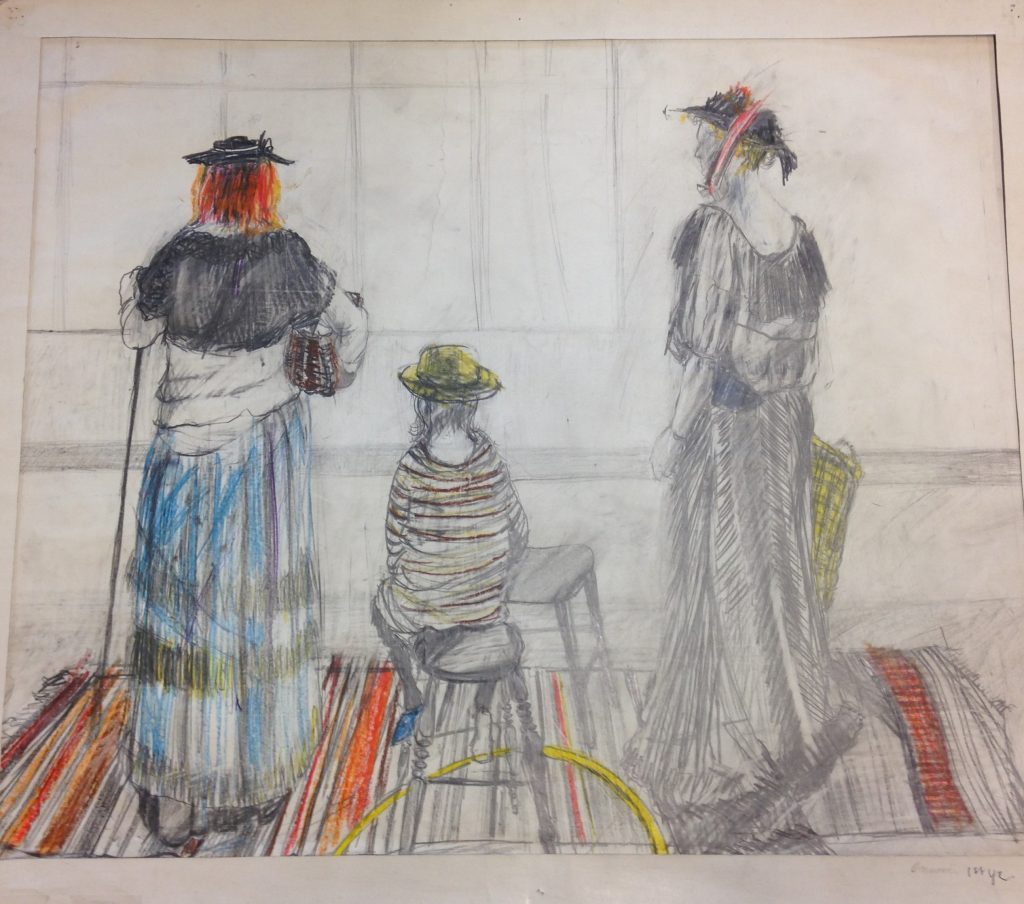
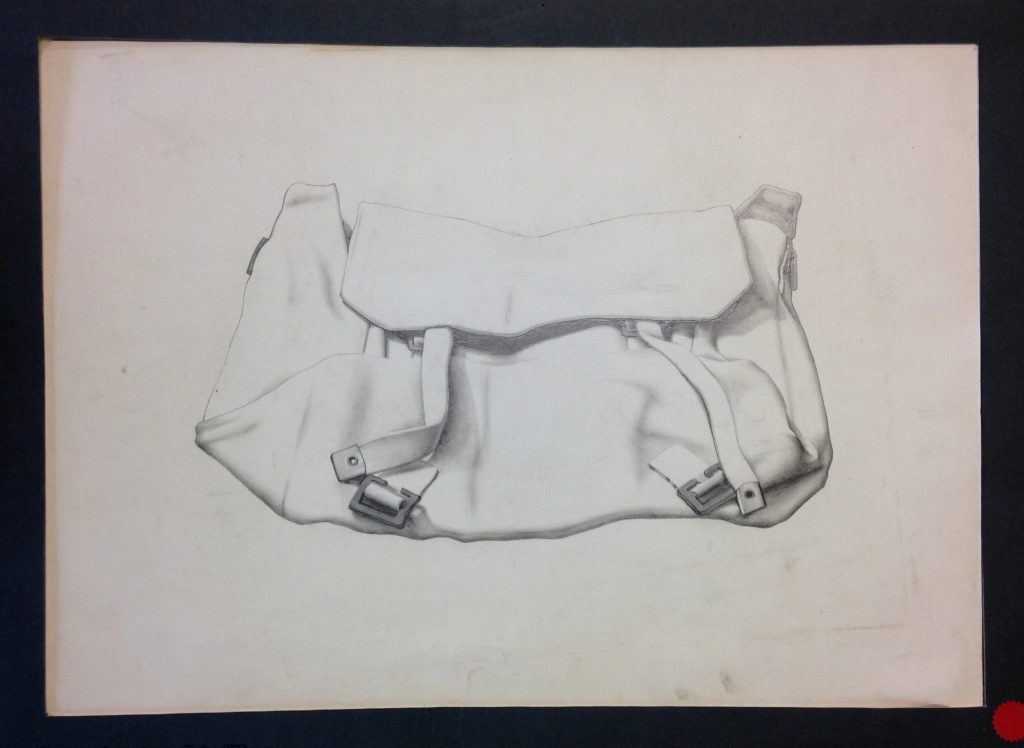
Untitled, Glen M. K. Onwin Untitled, James W. Birrell
Week 2
In weeks 2 and 3 I continued to accession works of art on paper, but also had the opportunity to work in different departments, while Anna was away. This week, I worked in the Anatomy Museum to help another Employ.ed intern, Ellen, with her project, which tackled a large collection of life and death masks from the University’s Phrenological collection. (Read more about Ellen’s project here: https://anatomicalmuseum.wordpress.com/ ) We worked together to unbox busts stored in the Anatomy building’s basement, next door to where anatomy students work with cadavers! Ellen’s manager Ruth taught me how to handle the busts with care, and how best to repack them, with tissue paper and bubble wrap. Over two days, Ellen and I documented and rehoused 23 death masks, allowing Ellen to make a start on her audit of the collection. We also visited the National Portrait Gallery, to look at the masks they have on display, as they still have some busts on loan from our collection.
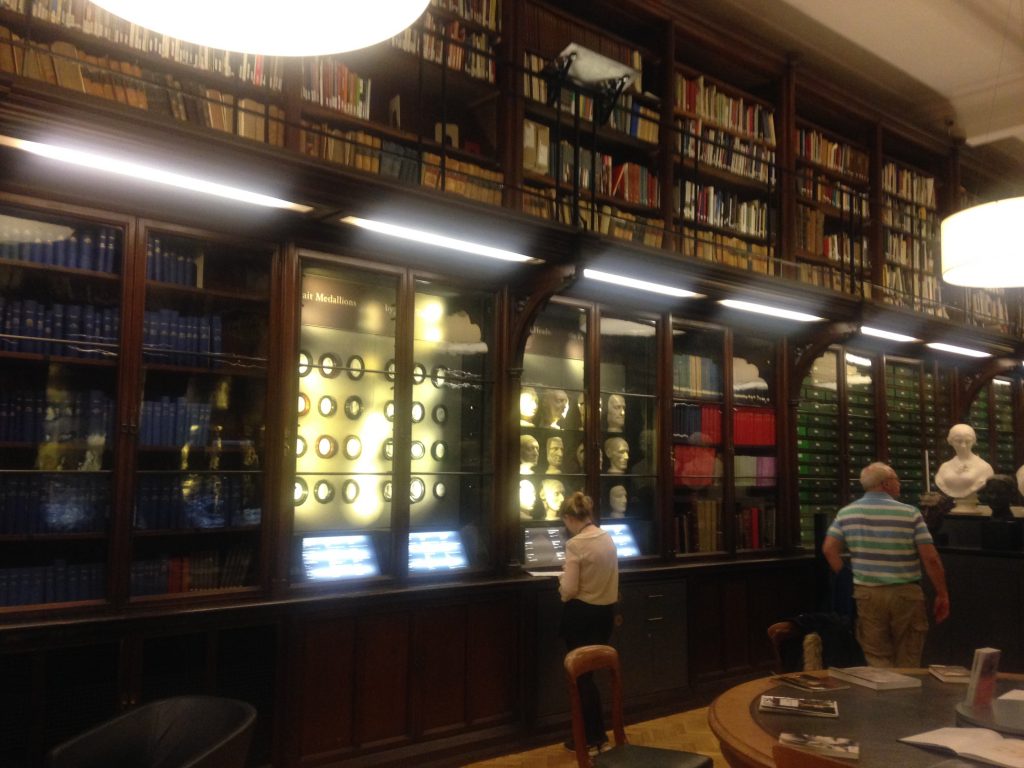
Ellen inspecting the National Portrait Gallery’s display
Week 3
In week 3, I moved from Anatomy to Conservation, and worked with another intern, Holly, to assist with her project, carrying out preventative conservation on recent donations to the rare book collection. (Read more about Holly’s project here: https://libraryblogs.is.ed.ac.uk/conservation/2017/06/08/new-conservation-internship-at-the-crc/ ) This involved surface cleaning books with vacuum cleaners, using small brush attachments to lift dust from the book’s pages. While surface cleaning the books, Holly taught me how to identify certain types of book damage, including red rot, which is commonly seen on leather bound books. Each time we cleaned a book, we would record it on a spreadsheet, and preform an assessment of its condition. As well as surface cleaning, I learned how to rehouse vulnerable books, by making ‘book shoes.’ These ‘book shoes’ are sturdy covers, made out of non-acidic card, in order to protect paper bound books, or books with loose spines or boards. By the end of the week Holly and I had cleaned approximately 600-800 books, and I made 22 book shoes for rehousing.
Week 4
At the beginning of week 4, my line manager Anna returned from holiday and we began an audit of artworks stored at the Annexe. This involved working closely with Anna to update the location and condition of accessioned works of art, and recording all information about un-accessioned works of art, including a description of style and materials, the artist’s name and date. We were also checking if the artworks have wall fixings, so that they can be hung in a new storage unit, which will be ready next year. Throughout the week I developed confidence in handling small and large scale artworks including paintings, drawings, and mixed media. I also developed skills in identifying damage to works of art, such as buckling paper, historic mould, and paint discolouration. Over the week Anna and I made real progress with the audit, and I also continued accession works of art on paper, adding 40 more to the art collection.
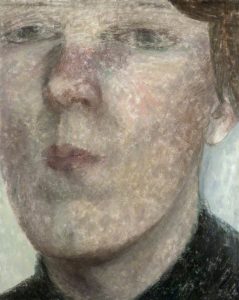
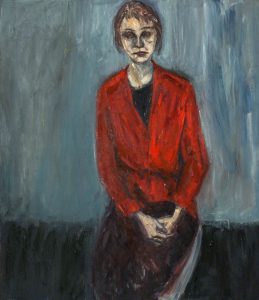
Large Head, Gwen Hardie My Friend Jackie, Claudia Pettriti
Week 5
During week 5 I got my first insight into exhibition management, by working with Kirsty to de-install the previous exhibition in the Main Library Gallery, ‘Sound Body, Sound Mind.’ (Read more about the exhibition here: https://exhibitions.ed.ac.uk/soundbody ) This involved handling rare books, anatomical objects, and a range of musical instruments, to remove them from their bespoke mounts, and repack them for storage. Initially we were both a little uncertain where to begin because neither of us where involved in installing the exhibition, but it was an enjoyable learning experience! As well as developing my skills in object handling and repacking, I gained an insight into how wasteful museum exhibitions tend to be. All of the graphics and decorative details of the exhibition had to be disposed of, and Kirsty worked hard to repurpose some of the details, such as decorative curtains. By the end of the week, the exhibition was completely de-installed and the gallery was prepared as a blank canvas for the next exhibition. During this week I also continued to accession works of art, adding 34 new works to the collection.
Week 6
During week 6 I continued accessioning works of art, and spent some time at the Annexe continuing the audit with Anna. The works of art I handled this week were particularly interesting as they included a range of prints from 2006 and 2007. Some of the prints were from a Norwegian collaborative project with ECA students. The prints demonstrate a range of contemporary printing techniques, many of which I have never seen before. This created some challenges for me, as identifying the printing techniques and materials was difficult, and I was unfamiliar with the technical differences. It was also difficult to record the names of artists and titles of the prints, as much of it was written in Scandinavian languages. By the end of the week I had accessioned 59 works of art on paper, and continued to make progress on the audit at the Annexe.
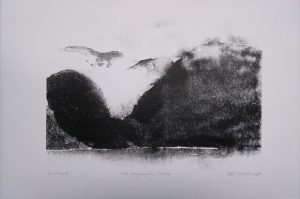
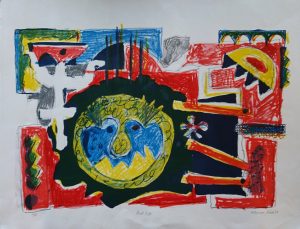
Ved Sognefjorden, Norge, Odd Melseth Pond Life, Alastair Mack
Week 7 + 8
During weeks 7 and 8 I was focused on helping Kirsty install the new exhibition into the Main Library exhibition space. The exhibition, which I hope you have all had the chance to see, is Highlands to Hindustan, an artistically and historically rich exhibition, which celebrates the 70th anniversary of Indian independence. (Read more about the exhibition here: https://exhibitions.ed.ac.uk/highlandstohindustan ) During these two weeks I had the opportunity to gain hands on experience installing a range of different objects, including 2,000 year old Gandharan sculptural fragments, the iconic Maharabatta, and 5th century copper plates. We often worked with gloves, and housed the objects in bespoke mounts, many with clear acrylic bases and discrete metal arms. I also gained training in preventative conservation techniques, including book strapping, which allows books to be held securely open while on display. The task I found most rewarding was the installation of two long, thin, fragile scrolls, illuminated manuscripts that are over 200 years old. This was a very delicate job and we worked without gloves to give us maximum dexterity. The scrolls unravelled and stayed in place much easier than I imagined, and we secured them with transparent melinex slips. By the end of week 8, the exhibition was ready, and the opening night was a great success!
Week 9 + 10
During the last two weeks, I have continued to accession works of art on paper to the art collection, continued the audit at the Annexe, and helped Kirsty with another exhibition installation. Last week I helped Kirsty to install the new exhibition in the 6th floor reception area, which celebrates the 50th anniversary of the Main Library. (Read more about the anniversary here: http://www.ed.ac.uk/edit-magazine/editions/issue-4/landmark ) This involved arranging photographs, and an old Apple Mac computer. The photos are really interesting, so I would definitely recommend a visit! Last week I accessioned 29 works of art, and we almost finished our audit at the Annexe. In total, I have added 270 works of art to the University’s Art Collection, de-installed, and installed 2 exhibitions, and assisted with projects in the anatomy and conservation departments.
Conclusion
I have really enjoyed my time working in the CRC this summer, and have really benefited from the varied nature of my internship. I’m very grateful to everyone who has worked with me over the past ten weeks, and to everyone who has let me work on their projects! I would encourage everyone to visit the exhibitions currently on display in the Main Library, and to explore the University’s collections online. There really is hidden treasure to find!
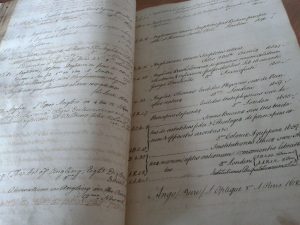
Early Library Records
Our intern, Nathalie, is reaching the end of the project, working on the earliest of the library records. She has achieved a great deal in the weeks she has been with us: we have a set of descriptions of the documents ready to transfer into the Archives cataloguing software, and the draft of a research guide to the early records ready to go onto the CRC web page. These have already helped us answer enquiries about the early library collections. We presented a short paper about the project and the records at the recent conference of the CILIP Library and Information History Group conference in Dundee.
Nathalie reflects on the project and what she has learnt. We wish her well as she goes back to her studies for the new academic year, and hope we have given her the bug for old library records!
The Early Library Records Project began as a project aimed at opening up a series of early records to make them easier to navigate. With just under 55 items to examine in 10 weeks, the project had clear objectives: the flagging up of items needing conservation work, or to prioritise for digitisation, the update of the information available on the online catalogue for early library records and the creation of a research guide to enable researchers, members of the public and CRC staff to understand early library records better. It is hoped that the results of the project will have far-reaching benefits. To enhance the data on the online catalogue, the type of information gathered from the records needed to be consistent, despite their being very varied in kind. The focus has thus been on: their approximate period of use, their purpose, their potential compilers and users and the language they are written in.
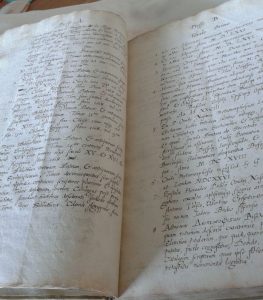
The diversity of these records is worth mentioning. The library possesses early press and author catalogues, account books, matriculation registers, borrowing registers, accessions books and subject catalogues. Some periods in the library’s history are richer in certain types of records, but overall, there is some record to be found for every half century up to now. These records not only give us precious general information about the management of the library, but also give us information about the university at large. They also contain numerous precious details which are at times surprising, comical, confusing or enlightening.
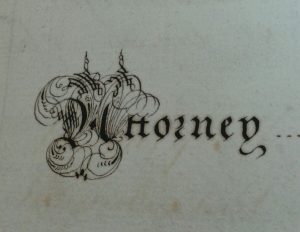
The project had its share of surprises. Scientific instruments such as telescopes, microscopes, globes and quadrants appeared from time to time, either in a list of instructions on how to use them, or in an account book when money had been spent to mend or purchase them. Equally, I met with volumes which had unexpected contents. Da.1.5 is such an item, as it is a collation of three different inventories: a manuscript author catalogue, followed by a printed version of the Nairn catalogue, itself followed by a manuscript list of pamphlets and other titles belonging to the library of the College of Surgeons. I was glad to come across a few references in Gaelic, such as the Gaelic translation of Dodsley’s work The Economy of Human Life and a few other entries, all in the 4-volume author catalogue compiled in the 1750s. Some of the earliest volumes exhibited physical conventions of early book production such as catchwords and folio numbers, while item Da.1.15 is a fantastic illustration of stationary binding, only used for certain types of records, especially ledgers. While working on the project, I became acquainted with several librarians through their observations, especially the Hendersons. Together, the father and his son were librarians to the university library for 80 years (1667-1747). Both left numerous notes in the catalogues and account books, and their comments, sometimes stern, allow us to get a glimpse into the day-to-day management of the library.
What is more, the outcome of the project goes further than suggested above. As a range of sources is now better known, new routes for future enquiry have emerged. As we know more about what kind of information can be had in these records, we can be bolder in our research questions. Interesting research could be done on the borrowing registers still surviving, and a study of the donations to the library could also be valuable. Beside these potential routes for future research, the project’s results have also challenged some previously-held beliefs. For example, it has been discovered that what was thought to be a 1636 author catalogue is in fact more likely to be a late 17th century author catalogue.
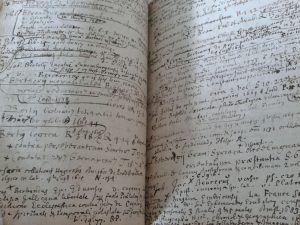
There have been challenges, for sure. Deciphering 17th century script was not always easy for me, as I did not have any previous experience in palaeography. Formatting the data I was compiling so that it would be easily transferable to Archives Space was also something I had to get my head round. Equally, I had to acquire some elementary knowledge about the university’s early history, its buildings and running, since these elements impacted on the library’s administration and evolution. Yet, these challenges have only had valuable outcomes, most likely because I was working in a particularly supportive environment.
Beside the benefits of the project’s results for CRC staff, researchers and members of the public, a significant outcome of the project is what it has brought to me, as an intern. I have not only learnt a great deal about the library’s management and history in the pre-Enlightenment and Enlightenment periods, but also gained experience in working with archival material. I have absorbed the basics of cataloguing, found out about digitisation projects, shadowed several people’s work and all this has given me an acute sense of what the CRC is about. This internship was a truly unique opportunity which has given me insight into the library and museum professional sector.
Oxford Scholarship – new e-books added

81 e-books published last month by Oxford University Press and available from Oxford Scholarship Online have now been added to DiscoverEd.
Subject disciplines include Business and Management, Classical Studies, Economics and Finance, History, Law, Linguistics, Literature, Mathematics, Music, Philosophy, Physics, Political Science, Psychology, Religion, Social Work and Sociology.
Access a spreadsheet of the new titles here.
International Journal of Performance Analysis in Sport – new subscription
 The Library now subscribes to International Journal of Performance Analysis in Sport.
International Journal of Performance Analysis in Sport provides analysis of actual performance in sport and exercise. Studies using observational methods, biomechanical analysis, self-report emanating from actual sports performance, qualitative observation and measurements such as heart rate response during actual sports performance are all within the scope of the journal. Laboratory studies of key techniques within sports are also of interest where such techniques are clearly important and cannot be analysed in detail during actual competition. Such techniques include tennis serves and golf swings. There may be other contributions that do not analyse sports performance at all that are within the scope of the journal. For example, interview studies or meta-analyses may lead to theoretical contributions explaining the nature of sports performance, tactics used and factors influencing performance. Other topics covered include technologies such as design of analysis systems, sports equipment, research into training, and modelling and predicting performance.
Access Info
International Journal of Performance Analysis in Sport has been added to DiscoverEd. Access is back to vol.1 (2001).
Journal of Computational Biology access now available

The Library now subscribes to the Journal of Computational Biology. It publishes in-depth statistical, mathematical, and computational analysis of methods, as well as their practical impact.
Journal of Computational Biology coverage includes:
- Genomics
- Mathematical modeling and simulation
- Distributed and parallel biological computing
- Designing biological databases
- Pattern matching and pattern detection
- Linking disparate databases and data
- New tools for computational biology
- Relational and object-oriented database technology for bioinformatics
- Biological expert system design and use
- Reasoning by analogy, hypothesis formation, and testing by machine
- Management of biological databases
Further info
This e-journal has been added to DiscoverEd. Access is back to Vol.1 (1994).
Collections
 Hill and Adamson Collection: an insight into Edinburgh’s past
My name is Phoebe Kirkland, I am an MSc East Asian Studies student, and for...
Cataloguing the private papers of Archibald Hunter Campbell: A Journey Through Correspondence
My name is Pauline Vincent, I am a student in my last year of a...
Hill and Adamson Collection: an insight into Edinburgh’s past
My name is Phoebe Kirkland, I am an MSc East Asian Studies student, and for...
Cataloguing the private papers of Archibald Hunter Campbell: A Journey Through Correspondence
My name is Pauline Vincent, I am a student in my last year of a...
Projects
Cataloguing the private papers of Archibald Hunter Campbell: A Journey Through Correspondence
My name is Pauline Vincent, I am a student in my last year of a...
Archival Provenance Research Project: Lishan’s Experience
Presentation My name is Lishan Zou, I am a fourth year History and Politics student....