
In this week’s blog I’m using some of the Library’s online resources to find primary source material relating to the popularity of women’s football during and just after the First World War and the decision by the FA to ban it.
The other night on catch-up I watched the Channel 4 documentary When Football Banned Women, programmed to coincide with the Women’s EURO 2017 (which Channel 4 just happens to be showing, it’s like they thought about their programming or something!) This interesting documentary looked at the rise in popularity of women’s football during the First World War and the subsequent decline after the decision by The Football Association (FA) to ban the women’s game in 1921.
If you’ve not seen it you can watch it on Box of Broadcasts (BoB).
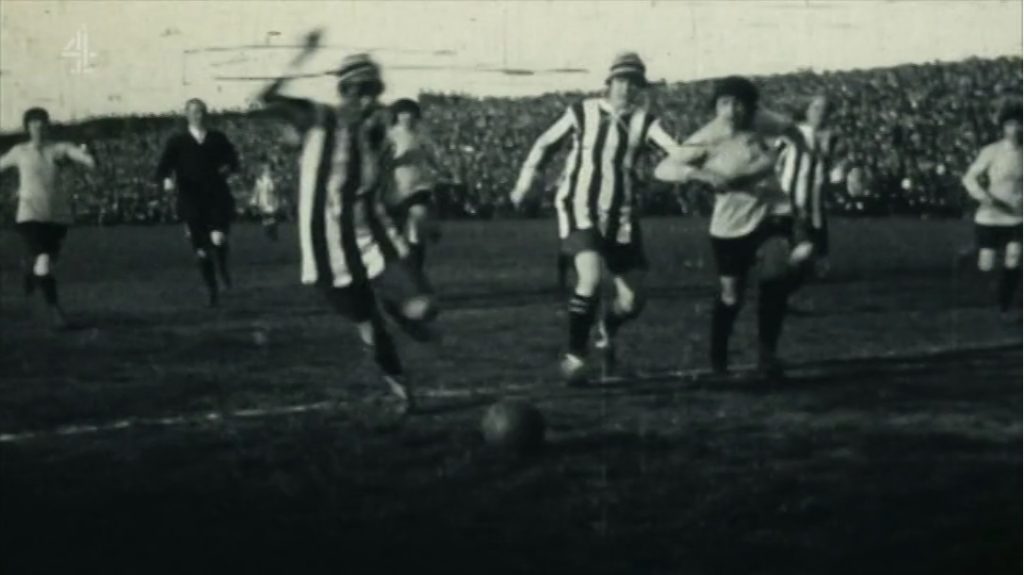
Screenshot from ‘When Football Banned Women’ (Channel 4).
As I am always looking for an excuse to use some of the University Library’s fantastic online primary source collections, I decided this was a perfect story to try and find out more about from our online archives.
While I primarily used some of the online newspaper archives the Library has access to for that period, I did do some searching in some other primary source collections that covered the period in question. You can find a list of the specific databases I used at the end of the post.
Women’s football in the First World War
With 1000s of men being called up to fight in the First World War, women were expected to take on roles as never before in the workplace and with this came other opportunities. Women’s football teams began to form, often put together or sponsored by the industries and companies now employing the vast female workforce. These teams began to play matches with the primary aim of raising money for charity and while spectators may have originally attended to help raise money and to watch what they thought of as a novelty, they continued to attend as the matches were good and the teams had skill. Continue reading

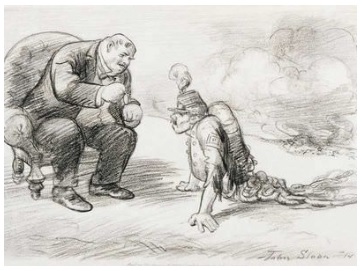 During World War One, Conscientious Objectors united to oppose the war despite the criticism they faced. Three of these anti-war protest groups included the Conscientious Objector Information Bureau, the Union of Democratic Control, and the No-Conscription Fellowship. Conscientious Objection during the World War 1 includes complete files of key anti-war publications. It also contains rare reports from the Conscientious Objector Information Bureau. The internal papers include minutes from the Union of Democratic Control and letters from the No-Conscription Fellowship. The Fellowship’s most prominent figure, Clifford Allen, wrote a number of these items. Local Fellowship branches in Willesden, Middlesex and in Hyde, Greater Manchester are also covered. Also included amongst the papers is Thomas Henry Ellison’s scrapbook. Thomas was a Conscientious Objector and spent much of his time during the war in prison. His scrapbook covers both his own experiences and the experience of the anti-war movement as a whole.

