Author Archives: abrodin

Hill and Adamson Collection: an insight into Edinburgh’s past

My name is Phoebe Kirkland, I am an MSc East Asian Studies student, and for the last 4 months, I have been a Digital Collections Assistant working on digitising and improving information available regarding the Hill and Adamson Collection. Although my own research does not deal with conservation or Scottish heritage, I have a lot of experience working with archives and archival documents. Further, as my research area is based in East Asia, many of the documents I need are stored in archives that would require a long and expensive flight, thus the power of digitisation in conservation is very valuable to me personally as it allows me access to vital documents. Therefore, I was thrilled to be able to improve the metadata of and help facilitate access to the digitised images from the Hill and Adamson Collection as part of my role as Digital Collections Assistant.

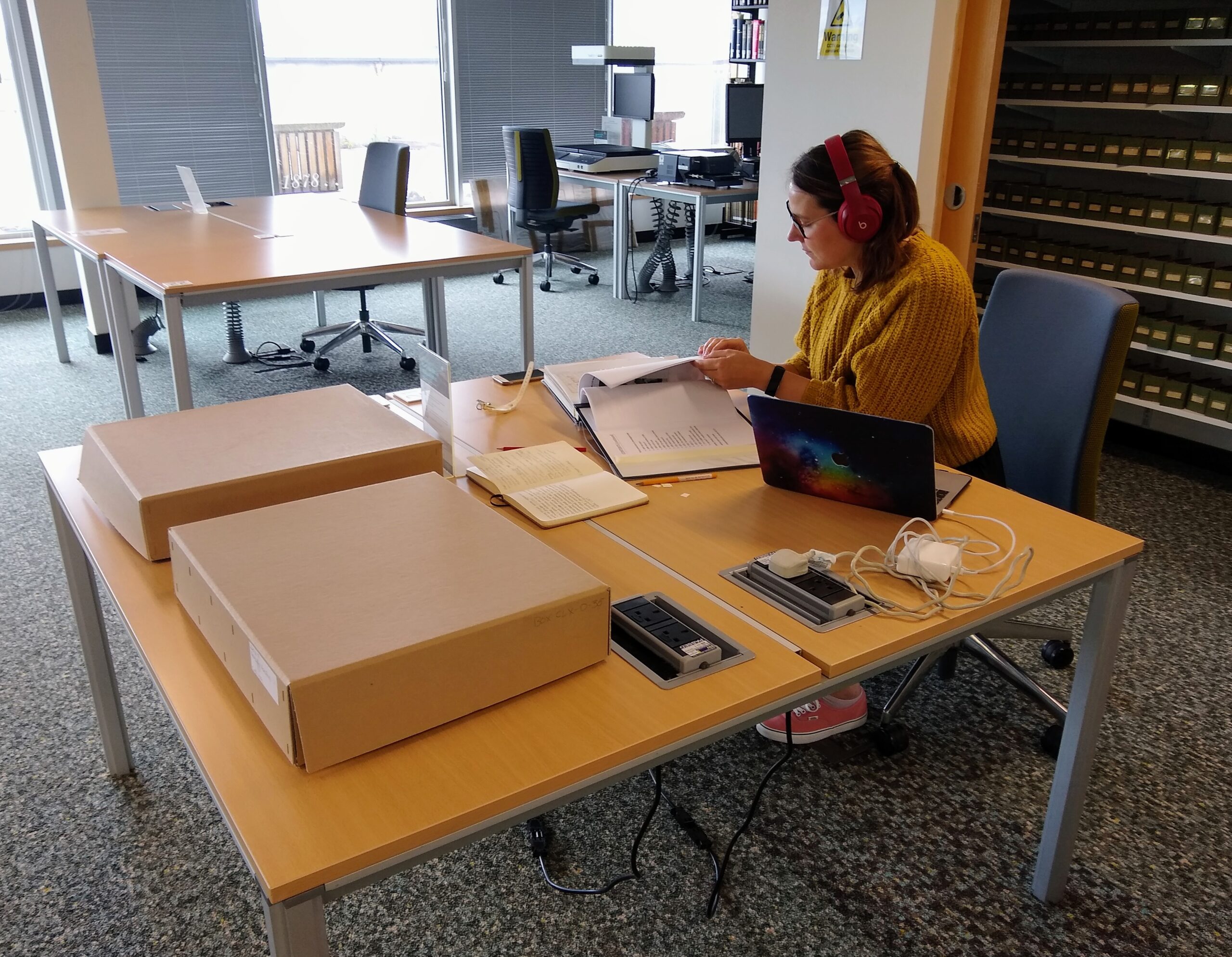
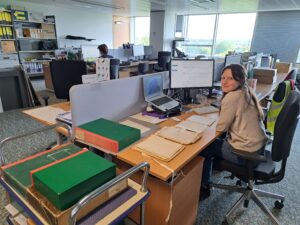
Phoebe at work in the CRC office.

The Hill and Adamson Collection is made up of 701 calotype photographs that were taken between 1843-1847 by photographers David Octavius Hill and Robert Adamson. They are some of the earliest photographs in history. As calotypes, they are different in their process from the more famous daguerreotypes which became the chosen process for photography. Calotypes are negatives which are made using paper coated with silver iodine, and specifically for Hill and Adamson, they used a type of ‘silver salted’ paper created by William Henry Fox. These calotypes in our collection are mostly of the 1843 Disruption, an event in which the Church of Scotland split, and the Free Church of Scotland was founded. The ministers who signed the Act of Declaration and Deed of Demission that signified this split are showcased in the portraits in this collection.

Other photographs in the collection include scenery of Edinburgh, such as Calton Hill and the Scott Monument, and laypeople of Edinburgh such as fishwives. It is an incredible collection that provides a snapshot into both the lives of clergymen, academics and laypeople in the 1840s in Edinburgh. Particularly, as photography was extremely expensive, and usually portraiture was at the expense of the subject, it is rare to find older photographs of laypeople. Therefore, this collection is very special in providing rare insight into these lives. Hill and Adamson were a powerful duo in the field of photography, but unfortunately Hill’s untimely death at the age of 26 in 1847 prematurely ended their partnership. Other collections of their works are kept at many different archives and museums around the world, further signifying the importance of their work to the fields of photography and history.

The aim of the project was to help provide better access to the digitised images of the Hill and Adamson Collection on the Library’s digital collections platform by providing fuller metadata for each photograph. The photographs’ descriptions were incomplete, and needed expanding upon. Creating information about the provenance and the people in the photographs, and then connecting this information to the existing digitised copy of the photograph was required. This was accomplished by looking through the physical collection, which is made up of 6 bound volumes, 4 loose-leaf collections kept in boxes, and one further box of photographs reproduced from the negative calotypes at a later time, from 1906 to 1920.

Most of the photographs were of white, upper-class men, who were members of the gentry, clergy, academia, or any combination of all three. Furthermore, the women in these photographs were very rarely identified by name, or even by relation to the man in the photograph, leading to confusion over their identities. Therefore, I made it my mission to identify as many of the women in the photographs as possible. However, within the collection, there were certain photographs that stood out to me as particularly interesting or novel, or providing key insight into politics and religion in the 1840s.

The Scott Monument

Coll-1073/7/45: Photograph of the Scott Monument in the 1840s.
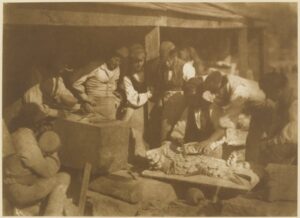
Coll-1073/6/9: Group portrait of workers building the Scott Monument, Edinburgh.

These photographs show the Scott Monument, and the masons working on carving a griffin for the construction of the Monument. These are beautifully shot and composed photographs that show a snapshot of 1840s Edinburgh, particularly the photograph of the Scott Monument, which we can see shortly after its completion in 1845, but before its inauguration in 1846. Many of the masons who worked on the construction of the Monument passed due to incredible back-breaking labour or respiratory issues from the stone dust. It is estimated that the monument killed half of all the masons that were employed to construct it due to lung disease.[1] Therefore, it is incredible to be able to see a photograph of those who worked on the construction, so they can be identified in some small way as those who contributed to such an iconic Edinburgh landmark.

Isabella (Burns) Begg
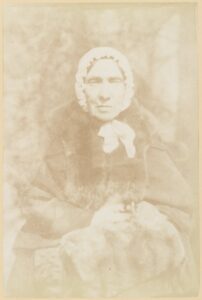
Coll-1073/1/24: Portrait of Isabella Begg (Burns).

This calotype shows Isabella Begg (Burns), youngest sister to Robert Burns, national poet of Scotland. She was born on 27 June 1771 and died on 4 December 1858, aged 87. She married John Begg at age 22, and had nine children with him. He died in 1813, leaving Begg a widow for 35 years.

Isabella was a valuable source of information into Burns as a poet, clarifying details of obscurity around his poems and stories, and identifying individuals in question. Her brother died when she was 25 years old. Begg has been identified as being 72 in this photograph, meaning it was taken around 1843.

This photo is one of the few photographs of women in the collection, especially one that has already been identified by the compiler. This portrait reveals a continued interest in Begg, despite the fact that Robert Burns had died nearly 50 years prior, and showed that she remained relevant to the Edinburgh community, as her photo was one of the first taken in the period of Hill and Adamson’s partnership.

Fishwives
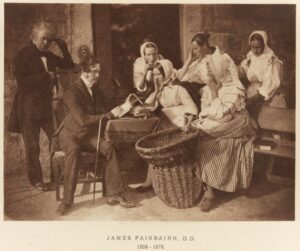
Coll-1073/3/8: Group portraits of James Fairbairn, James Gall Sen.r, and fishwives.

This group portrait is one of a number in the collection which showcases the fishwives of Edinburgh. As previously expressed, it is rarer to find photographs of the laypeople from this period due to the expense of photographic production. Fishwives were women who helped catch, prepared (i.e. cleaned and gutted), and sold fish. They were not always married, as wife here meant ‘woman’ and not ‘wife’. They were famed for being loud and outspoken, often swearing and presenting ‘uncouth’ behaviour that was not expected from women of the period. They were often self-sufficient as men were away fishing for long periods, therefore needing to help provide for themselves by successfully selling their wares. The Newhaven Fishwives (as shown in these photographs) were famous, even known to royalty. They were admired by Queen Victoria, and George IV thought they were ‘handsome’ (in the historical sense).[2]

Incredibly, four of the five women in this photograph are identified by name – Carnie Noble, Bessy Crombie, Mary Combe, and Margaret (Dryburgh) Lyall. The two men are identified as Reverend Dr James Fairbairn and James Gall. The calotype has been named ‘The Pastor’s Visit’ for this reason. This photograph potentially showcases James Fairbairn reading a pamphlet, perhaps religious, to the women, who sit in contemplation around him – focused? Or perhaps bored? – we cannot tell exactly. The posing for these photographs took around 3 minutes, a dramatic improvement from daguerreotypes which could take up to 15 minutes plus for exposure.[3]
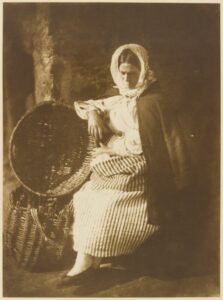
Coll-1073/5/34: Portrait of a fishwife.

Another portrait of a fishwife, this time an individual, also remarkably identified as Mrs Elizabeth Hall (Johnstone). This portrait, although posed again, provides insight into the typical clothing of fishwives of the 1840s. Although the photos are in black and white, we know that the Newhaven fishwives wore blue duffle coats and striped colourful petticoats, as well as a cap or headdress, and carried a creel which would have their fish.[4] All these items can be seen in this photograph, although unfortunately not in their striking colour.

[1] Tomlinson, Charles, “Stone”, in The Cyclopaedia of Useful Arts. Mechanical and Chemical, Manufactures, Mining and Engineering. Vol 2 Hammer to Zirconium, edited by Charles Tomlinson (London: James S. Virtue, 1854), pp.741–52.;
Donaldson, Ken, et al. “Death in the New Town: Edinburgh’s Hidden Story of Stonemasons’ Silicosis.” The Journal of The Royal College of Physicians of Edinburgh, 47.4 (2017), pp.375-383, doi:10.4997/JRCPE.2017.416.

[2] Bertram, James Glass, The Harvest of the Sea; a Contribution to the Natural and Economic History of the British Food Fishes, with Sketches of Fisheries & Fisher Folk (London, 1869), p.424.

[3] The Editors of Encyclopaedia Britannica (ed.), “Calotype”, Encyclopædia Britannica. Available at: <https://www.britannica.com/technology/calotype> [Accessed: 08 July 2025].

[4] Bertram, James Glass, The Harvest of the Sea; a Contribution to the Natural and Economic History of the British Food Fishes, with Sketches of Fisheries & Fisher Folk (London, 1869), p.429.
Cataloguing the private papers of Archibald Hunter Campbell: A Journey Through Correspondence

My name is Pauline Vincent, I am a student in my last year of a Master’s degree in Archives Management at the University of Haute-Alsace, in France. This year, I got the incredible opportunity to spend five months as an intern at the Centre for Research Collections, at the University of Edinburgh. I’ve always been interested in Scotland for its landscapes, culture and history and I was eager to discover more on Scotland through archives. I specifically wished for my internship to be at the University of Edinburgh because of the wide range and diversity of its collection in terms of time period, subjects and materials. I was also curious to see how Archives are considered and handled in the UK and how different, or similar, it is to the way Archives and heritage are seen in France.

During this internship, I have been cataloguing the private papers of Archibald Hunter Campbell (1902–1989), a professor of Law at the University of Edinburgh.

Pauline at her desk.

 Who was Archibald Hunter Campbell?

Born in Scotland in 1902, Archibald H. Campbell had an interesting academic journey. He was educated at George Watson’s College in 1919, at Edinburgh’s University, before heading to Oxford, where he pursued the Literae Humaniores course (also called ‘Greats’) then completed a Law degree from 1925 to 1927. His intellectual prowess earned him a fellowship at All Souls College in 1928. Later, in 1936, he became Professor of Jurisprudence at the University of Birmingham before taking up a role as Chair of Public Law at Edinburgh University. In 1958 he became Dean of the Faculty of Law. Beyond his academic life, Campbell contributed to history with his involvement during World War II, as he served as a codebreaker at Bletchley Park. There, he was decrypting non-Enigma signals from German, Italian and Japanese Air Forces and producing intelligence reports.

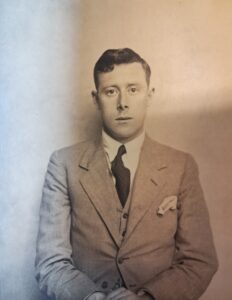
Undated photograph of Archibald H. Campbell.

The papers and their richness

Campbell’s private papers housed at the University of Edinburgh are wonderfully diverse, ranging from papers relating to his personal life (letters, photographs, genealogical documents, postcards collection and diaries) as well as documents relating to his professional life (notes on classes of Roman Law, Civil Law, International Law, Jurisprudence and juristic cases, literature studies booklets and publications on Law and Jurisprudence from himself and his European colleagues). Given the scale of the collection and the limited timeframe of my internship, I focused primarily on cataloguing the correspondence, a very diverse and interesting mission.

A window into History

Spanning from the 1920s to the 1980s, Campbell’s letters offer a peek not only into his personal and professional life but also into significant moments in history: Political movements (Hitler and Mussolini’s whereabouts in the 30s as well as the ascension of fascism), historical events in the UK (like the UK’s general strike of 1926 and UK’s general elections) but also in East Asia (such as the Shanghai International Settlement and the Second Sino-Japanese War), cultural shifts  (for instance the progress of medicine and surgery in the 60s, artificial insemination in the UK and its practice in the USA in the late 40s or homosexuality in the eyes of the Law in the 60s), and Edinburgh during the war (shortage in butter, cigarettes, cups and sweets; police activities such as rounding all the Italian ice cream merchants; occasional raids and bombing). His correspondence also reflects rich discussions on music, fine arts, travels across Europe (with a particular fondness for Italy, France, and Germany), and on literature (mostly French and English Literature). These discussions on literature offer a good window into who the famous writers were in France and the UK at the time, and offer interesting views and opinions on the books and their authors.

One of the most striking aspects of his letters is the extraordinary network he maintained. Campbell was in touch with a variety of influential figures: politicians, doctors, artists, historians, writers, philosophers, scholars and barristers. Some of his more commonly well know friends and correspondents include W. H. Auden, Stephen Spender and Christopher Isherwood. The intellectual exchanges between these individuals are a much interesting glimpse into the literary and academic circles of the time.

My favourite ‘discoveries’

While cataloguing Archibald H. Campbell’s correspondence, I had my personal favourites among his correspondents. Here are the three who stood out the most to me:

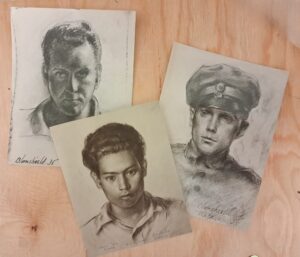
John Blomshield, a painter and portraitist who, though relatively unknown today, was well-regarded in his time. His work has been exhibited in leading galleries and museums in the major cities in the USA as well as in Paris, Rome, Oslo, the Far East and South America. He has painted portraits of various authors such as Ernest Hemingway or Scott Fitzgerald. What made his correspondence fun is the drafts of his portraits attached to the letters

Drawings by John Blomshield, dated somewhere between the 30s and the 40s.

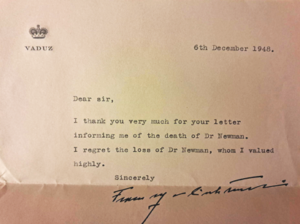
 Keith Newman, a pathologist at the County and City of Oxford Mental Hospital. His letters revealed friendships with members of European royal families — including those of Liechtenstein, Great Britain, and Austria. In his letters, Newman refers to the Prince Albrecht Schaumburg-Lippe as “his friend”, and mentions being invited by Prince Omar Halim, cousin of the king of Egypt, to fly to London with him. Keith Odo Newman was a rather influent person in the field of medicine and we know from a cutting from The Daily Mail dated May 1930 included in this correspondence that in he devised a blood-test whereby general paralysis may be detected in its early stages, which was a “remarkable advance” from the previous methods. This discovery represented, at the time, a new hope to find a cure for the disease.

Letter from Franz Joseph II, prince of Liechtenstein, regarding Newman’s passing

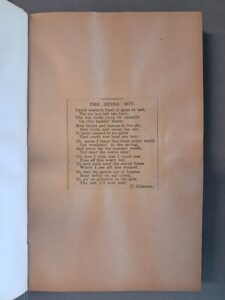
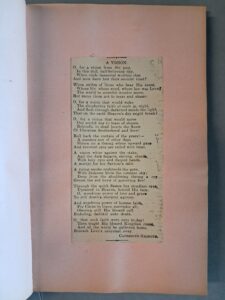
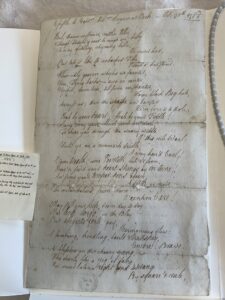
Catherine Gilmour, a friend of Archibald Campbell’s mother (Mary Campbell, fl 1881-1954) whom the correspondence includes a dozen of her poems that were published in newspapers at the time. These poems were very pleasant to read and offered a different format from the letters.

Poems by Catherine Gilmour

Poems by Catherine Gilmour.


I also enjoyed cataloguing the 2 boxes containing the Correspondence of possible juristic interest’. These professional letters focus on discussing and reviewing various publications (books, essays and articles) on Law and Jurisprudence with other European professors and researchers. These letters offered a break while cataloguing the usual personal letters (which can sometimes be monotonous) as they contain a great deal of knowledge regarding Law and Law Studies. Such correspondence could be very useful and enriching for Law students as they gather intellectual thinking and opinions and provide several bibliographical references.

My experience with cataloguing the Campbell’s letters

While cataloguing Campbell’s correspondence, I came across a few difficulties such as reading certain letters with poor handwriting, identifying the authors of the letters and identifying the letters containing personal data and sensitive personal data. Despite these occasional struggles, the cataloguing process was very smooth! I learned a lot on general history and sometimes witnessed very captivating discussions between highly intellectual people on various subjects. The letters offer deep insights into both personal and intellectual history, and it was very enriching to catalogue these papers in a way that will help future researchers.

Archival Provenance Research Project: Lishan’s Experience

Presentation

My name is Lishan Zou, I am a fourth year History and Politics student. As I enter my final year of undergraduate history, I have come to appreciate the importance of physical archives for historical research, especially for history beyond ideals and representations. My research interests lie in 20th century global history, with a particular focus on gender, sexuality and East Asian ethnic subjectivities. Finding archival material for my research is, by the nature of my interests, thematically and geographically difficult. I later realised that they are held in institutions all over the world, in Europe, America and Asia, with only a small proportion digitised and available for my research. This inspired me to learn more about archives and digitisation, and perhaps to contribute to the process. With a desire to touch some physical manuscripts, this Archival Provenance Research Assistant internship appealed to me.

Lishan at her desk.

Paleography

At first, I was quite nervous about my never-learned palaeography skills, apart from a talent for chaotic writing, as this position requires reading and transcribing handwriting, mostly from the early 20th century and occasionally from the 16th to 19th centuries. As a non-native speaker of English, my biggest challenge is the name of places and people. While I can make sense of the rest with contextual interpretation, many English and Scottish names (especially as they have variations in older forms) are completely foreign to me. Fortunately, my line manager Aline has been very warm and supportive, seeing through my nervousness and encouraging me to practice bit by bit. I have learnt to look up to confirm the spelling of names and to become more familiar with certain words related to the archival catalogue.

Provenance information creation

One of the main tasks of this internship is to comprehend the provenance information for two of the University’s legacy sequences, “Dc” and “Dk”, based on the information contained in an early twentieth-century registers, and to do further confirmation with the physical manuscripts. Provenance refers to the original source of an item and its history of transactions, which is important for historians to understand why an item was created and in what context. The collections typically contain items such as letters from intellectuals and aristocrats, lecture notes on medicine, law and philosophy, newspaper cuttings and manuscripts of books. Most of the people involved were either Scottish or concerned with Scotland in some way. Several times, as I tracked down the information of the related individuals, I found out that they lived on the very streets I passed in Edinburgh. I feel like a detective in locating the identities of these people. For example, I was checking the identity of an author of several letters who called himself “John Brown,” and later it turned out that there were four “John Brown” co-authors of these letters! Because Dr John Brown (1810-1882), shared the same name with his cousin, John Brown of Burnley (1842-1929), his son John Brown of Balquancal, and his father, Professor John Brown (1784-1858). It’s fascinating to see interactions between well-known figures back and forth on paper, revealing unexpected connections in the past. However, this documentation of certain subjects and the correspondence of certain individuals in the archives also highlight the socially constructive nature of historical preservation. That is, it is usually the more privileged social class, gender and ethnic group who were able to create and preserve their prints in visible forms.

Physical items

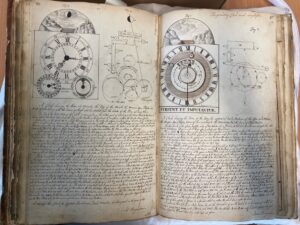
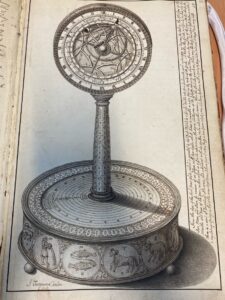
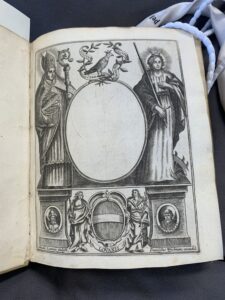
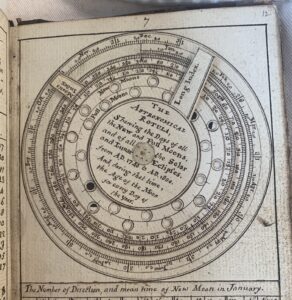
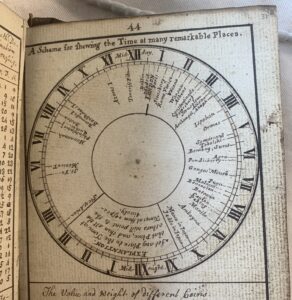
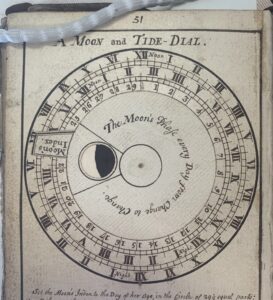
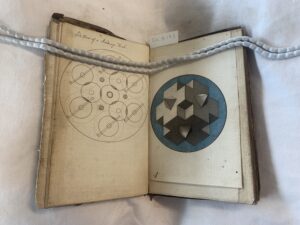
Perhaps the most enjoyable part of this internship is being able to touch the physical manuscripts. I have learned about their temporality through their fragility and the “encoding” of words that time has naturally created: labour for historians, beyond the more visible work of interpretation and presentation. It is also beautiful to have a visual representation of the intellectual labour of the past, and how it differs from that of the present. The following photographs, for example, are of a commonplace book by the Scottish astronomer James Ferguson, a form of noting and recording knowledge that was common in the eighteenth century.

Coll-2222, Volume entitled “James Ferguson’s Common Place Book”, c 1775 (Dk.7.33)

Coll-2222, Volume entitled “James Ferguson’s Common Place Book”, c 1775 (Dk.7.33)

Wider work and learning

The workplace is the University of Edinburgh’s Heritage Collections Office on the fifth floor of the Main Library, overlooking the beautiful Meadows. As a trainee, I am warmly welcomed by archivist colleagues. I am also offered the opportunity to attend a variety of training sessions and events. These include introductions to the storage and conditions of different types of archives, handling manuscripts, and visits to study centres with other archival resources. For my future studies I feel more familiar with finding and contacting the archives, which will be important for historical research at postgraduate level.

Card indexes at the School of Scottish Studies Archives.

View from the office.


Archival Provenance Project: Emily’s finds

              My name is Emily, and I’m the second of the two archive interns that are currently working on the Dc and Dk collections. I’m a part-time Masters student in the History, Classics and Archaeology department, and I’m just finishing up the first year of the Late Antique, Byzantine, and Islamic Studies course, which is an interdisciplinary degree. As you might imagine, that covers quite an eclectic range of subjects, and I have a variety of different research interests coming from a History and Literature background. During my degree, I spend quite a lot of time in the History and Divinity schools, so this internship was especially appealing as it’s allowing me to put my (limited) Latin skills into practice!

Emily working on the Dc sequence in the CRC Reading Room.

              I did my undergraduate degree at the University of Edinburgh, so I’d previously used the Centre for Research Collections to look at some books related to Machiavelli and the Lothian Health Archives, but I hadn’t conducted any individual research there myself. I did have a session there in recent weeks independent from my internship as part of a seminar on Islamic esotericism, so I got to look at some of the CRC Arabic and Persian collections, which proved to be absolutely fascinating. They actually have an edition of the Quran that would fit into the palm of my hand – it’s best not to think too hard about the logistics of creating something like that – years of work and immense eye strain, no doubt. I’ve also spent a little time in various archives around Edinburgh, including the Royal College of Physicians on Queen Street, so I was fairly familiar with reading rooms beforehand.

              We’re now four months into the project, and we’ve just last week completed the Dc collection, which proved to be a fascinating look into the history of Edinburgh and of the University itself. Coming from a Literature background, I’ve been especially enamoured with some of the more famous names to be featured in the Dc collection, including Percy Bysshe Shelley, Robert Burns, and William Wordsworth. Many of the volumes we looked at include sheafs of letters, files, and correspondence, some of which were from some of the more famous names of the day. I’m sure Maddie can attest to me spending ages poring over various letters and such that I’ve stumbled across.


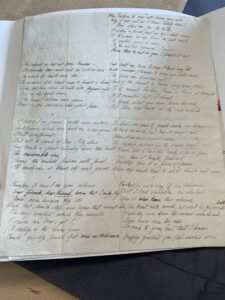
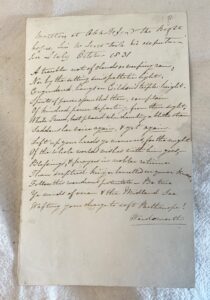
Some interesting letters and poems by Burns, Shelley and Wordsworth respectively.

              Thus far into the internship, Maddie and I have come across some fascinating books, including books on alchemy, science, and the history of the University, and my interest was piqued by the sheer amount of books in the collection that were written in Icelandic. However many you’re thinking, I can guarantee that there were more, including a saga on Nordic kingship. Exactly how the University accumulated so many Icelandic books is a mystery that I’m still working on, but it’s a fascinating discovery. I also stumbled across a version of Julian of Norwich’s ‘Revelations of Divine Love’ dating to approximately the seventeenth century, a woman whose life I find particularly interesting – an East Anglian anchorite and English mystic dating to the fifteenth century. Tucked away in the collection there was also a letter regarding the marriage of Mary, Queen of Scots to the French dauphin, which was, in all likelihood, contemporary. And as someone who has a particular interest in the history of medicine, I also found some interesting paraphernalia relating to the invention of anaesthesia, including a photo of the first child to be born whilst their mother was anaesthetised during the birth.

              I always like stumbling across photos tucked in the volumes, especially in collections of letters, as I feel like it gives a sense of the person who wrote them. In one collection of letters, there was a photo of an old soldier and aristocrat, alongside other personal effects donated by his family (including an invitation to the Duke of Wellington’s funeral and Queen Victoria’s coronation!). Another volume was written by a student here in the early twentieth century, and included photographs of his regiment – all of whom were fellow students at the University as well. As such, it really gives a sense of who created these volumes and what was important to them – in this case, he wanted to commemorate his friends and brothers.

              Photos and illustrations have been particularly prominent within this collection, whether it’s scribbled doodles in old textbooks (not so different from more modern student notes) to scientific diagrams illustrating different theorems. I’ve found a variety of different illustrations within the Dc collections, ranging from quick scribbles to beautifully detailed fly-leaf illustrations – so detailed, in fact, that it took me a while to figure out that it wasn’t printed.

Hand-drawn or printed? Hand-drawn, it turns out.

              With the prevalence of scientific notes in the collection, many of the volumes also featured detailed illustrations which were used to explain various biological, chemical, and physical concepts. Many of these works were by the more famous scientific names associated with the University – and at the very least, names that a visitor to the King’s Campus would be familiar with, such as Joseph Black and Colin Maclaurin. A particular favourite of mine was a volume on metaphysics that had moveable parts to help explain different concepts.

Three different scientific diagrams, all with moveable parts.

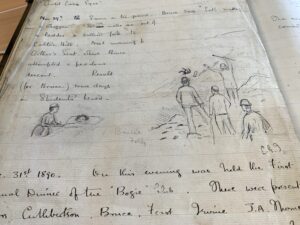
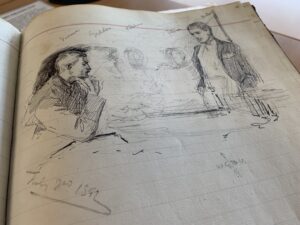
              One thing that these particular collections have in abundance is minute books from various clubs and societies associated with the University. Although seemingly slightly tedious, Dk.1.4 proved an especially interesting find, as someone had taken the time to illustrate the minutes. One such event that was recorded was an impromptu sledding session down Carlton Hill, where one of the party ended up in the University infirmary shortly afterwards.

Sledding down Carlton Hill. An age-old saga.

Minute book illustrations.

              And as a final note, there was an especially interesting aspect to these sorts of illustrations in the collection – the use of colour! Some of the volumes in particular felt like they’d been coloured in only yesterday – despite being at least three hundred years old. How they managed to keep it looking so pigmented is beyond me – and in any case, I’m sure it would be of interest to the art students.

This volume dates to 1771, if you can believe it!

              We’ve got a little over a month of the project left, and I’m excited to see what we’ll discover in the Dk collection. One thing’s for sure – it’ll be incredibly interesting!


Archival Provenance Project: a glimpse into the university’s history through some of its oldest manuscripts

              My name is Madeleine Reynolds, a fourth year PhD candidate in History of Art. I am fortunate to be one of two successful applicants for the position of Archival Provenance Intern with the Heritage Collections, University of Edinburgh. My own research considers early modern manuscript culture, translation and transcription, the materiality of text and image, collection histories, ideas of collaborative authorship, and the concept of self-design, explored through material culture methodologies. Throughout my PhD, I have visited many reading rooms, from the specialist collections rooms at the British Library and the Bodleian’s Weston Library, to the Wren Library at Trinity College, Cambridge and the Warburg Institute. Working first-hand with historical material has been crucial to the development of my work, and I was eager to spend time ‘behind-the-scenes.’ This internship was attractive to me because of the more familiar aspects – like the reading room environment and object handling – but it also presented an opportunity to expand my understanding of manuscript production and book histories, develop my provenance and palaeography skills, and understand the function of archival cataloguing fields as finding aids through my own enhancement of metadata.

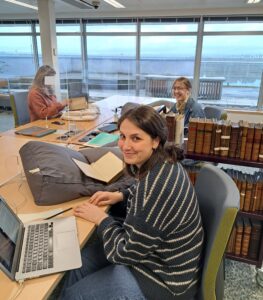
Madeleine (foreground) and Emily (background) in the Reading Room.

              The aim of the project is to create a comprehensive resource list concerning the library’s oldest manuscripts, which contain material from the 16th– 20th centuries, in particular pre-20th century lecture notes, documents, and correspondence of or relating to university alumni and staff, as well as historical figures like Charles Darwin, Frédéric Chopin, and Mary Queen of Scots (to name a few). An old hand-list (dating from 1934 or before) was provided for the shelf-marks under consideration, and, using an Excel spreadsheet with pre-set archival fields, provenance research is being used to uncover details such as authorship/creator or previous ownership, how the volume came to be part the university’s collections, and extra-contextual information, like how the manuscript or its author/creator/owner is relevant to the university’s history.

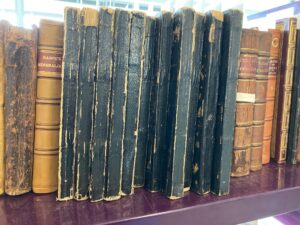
A collection of black notebooks containing transcribed lecture notes from 1881-1883. The lectures were given by various University staff on subjects such as natural philosophy, moral ethics, rhetoric, and English literature and were transcribed by different students.

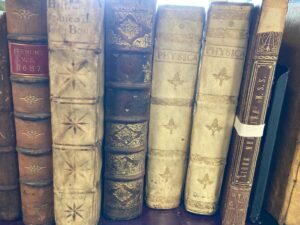
A great #shelfie featuring gold-tooling, banded spines, vellum bindings.

              In addition to enhancing the biographical details of relevant actors in the history of the university, the research into this ‘collection’ of manuscripts provides a deeper understanding of the interests, priorities, and concerns – political, religious, intellectual, etcetera –  of a particular society, or group, depending on the time period or place an individual object can be traced to. Inversely, thinking about what or who is not reflected in this subset of the archive is as informative as what material is present – unsurprisingly, a majority of this material is by men of a certain education and class. Though I would like to think of an archive as an impartial tool for historical research, I have to remind myself that decisions were made by certain individuals concerning what material was valuable or important (whatever that means!) to keep, or seek out, or preserve, and what might have been disregarded, or turned away.

              While there is a growing list of what I, and my project partner, Emily, refer to as ‘Objects of Interest’ (read as: objects we could happily spend all day inspecting), there are some which stand out, either for their content – some concern historical events pertaining to the university or Scotland more generally – or their form.

Dc.4.12 ‘Chronicle of Scotland’, front cover; Centre for Research Collections, University of Edinburgh.

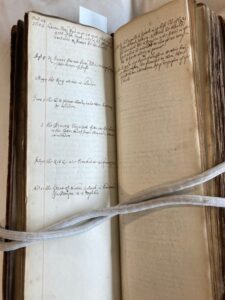
Dc.4.12 ‘Chronicle of Scotland’, ‘Mar 24 1603’; Centre for Research Collections, University of Edinburgh.

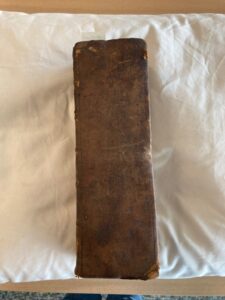
              This manuscript (above), ‘Chronicle of Scotland from 330 B.C. to 1722 A.D’, is notable for its slightly legible handwriting (a rarity) and its subject matter – the featured page recounts the death of Elizabeth I, James VI and I’s arrival in London, and later down the page, his crowning at Westminster. Mostly, its odd shape – narrow, yet chunky – is what was particularly eye catching. To quote an unnamed member of the research services staff: ‘Imagine getting whacked over the head with this thing!’

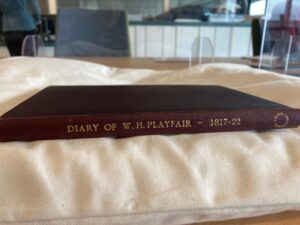
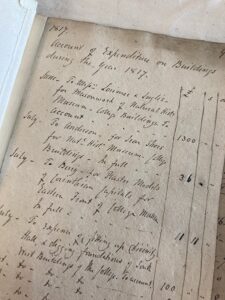
              Of interest to the history of the university is this thin, red volume (below) containing an account written by William Playfair concerning the construction of some university buildings and the costs at this time (1817-1822). This page covers his outgoings – see his payment for the making of the ‘plaster models of Corinthian capitals for Eastern front of College Museum’ and his payment for the ‘Masonwork of Natural Histy Museum – College Buildings.’

Dc.3.73 Abstract of Journal of William Playfair, binding, cover; Centre for Research Collections, University of Edinburgh.

Dc.3.73 Abstract of Journal of William Playfair, expenditures; Centre for Research Collections, University of Edinburgh.

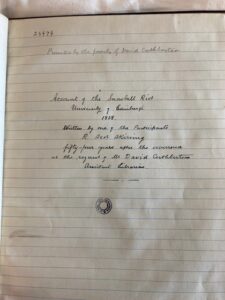
              Of course, you cannot understand the scope of the history of the University of Edinburgh without considering its ‘battles’ – by this, I mean the ‘Wars of the Quadrangle’, otherwise known as the Edinburgh Snowball Riot of 1838, a two-day battle between Edinburgh students and local residents which was eventually ended by police intervention. This manuscript is a first-hand account from Robert Scot Skirving, one of the five students, of the 30 plus that were arrested, to be put on trial.

Dc.1.87 Account of the snowball riot; Centre for Research Collections, University of Edinburgh.

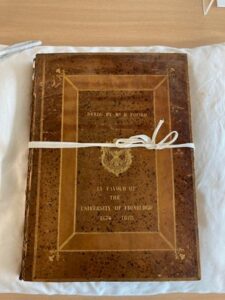
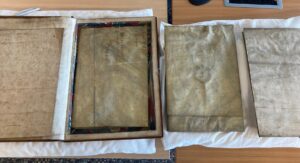
              Finally, this object (below), from the first day of research is particularly fascinating – a box, disguised as a book, used to hold deeds granting the university with six bursaries for students of the humanities, from 1674-1678. The grantor is Hector Foord, a graduate of the university. The box is made from a brown, leather-bound book, that was once held shut with a metal clasp. The pages, cut into, are a marbled, swirling pattern of rich blue, red, green, and gold. The cover is stamped in gold lettering, with a gold embossed University library crest. There are delicate gold thistles pressed into the banded spine. Upon opening the manuscript, it contains two parchment deeds, and two vellum deeds, the latter of which are too stiff to open. You can see still Foord’s signature on one of them, and the parchment deeds are extremely specific about the requirements that must be met for a student to be granted money.

Dc.1.22 Deeds by Mr. H Foord, cover; Centre for Research Collections, University of Edinburgh.

Dc.1.22 Deeds by Mr. H Foord, inside of ‘box’ with all four deeds; Centre for Research Collections, University of Edinburgh.

              The project has only just concluded its second month and we are lucky that it has been extended a month beyond the initial contract. Despite how much material we have covered so far, we are looking forward to discovering more interesting objects, and continuing to enhance our resource list. Stay tuned!

Volunteering at the CRC: Charlotte’s experience

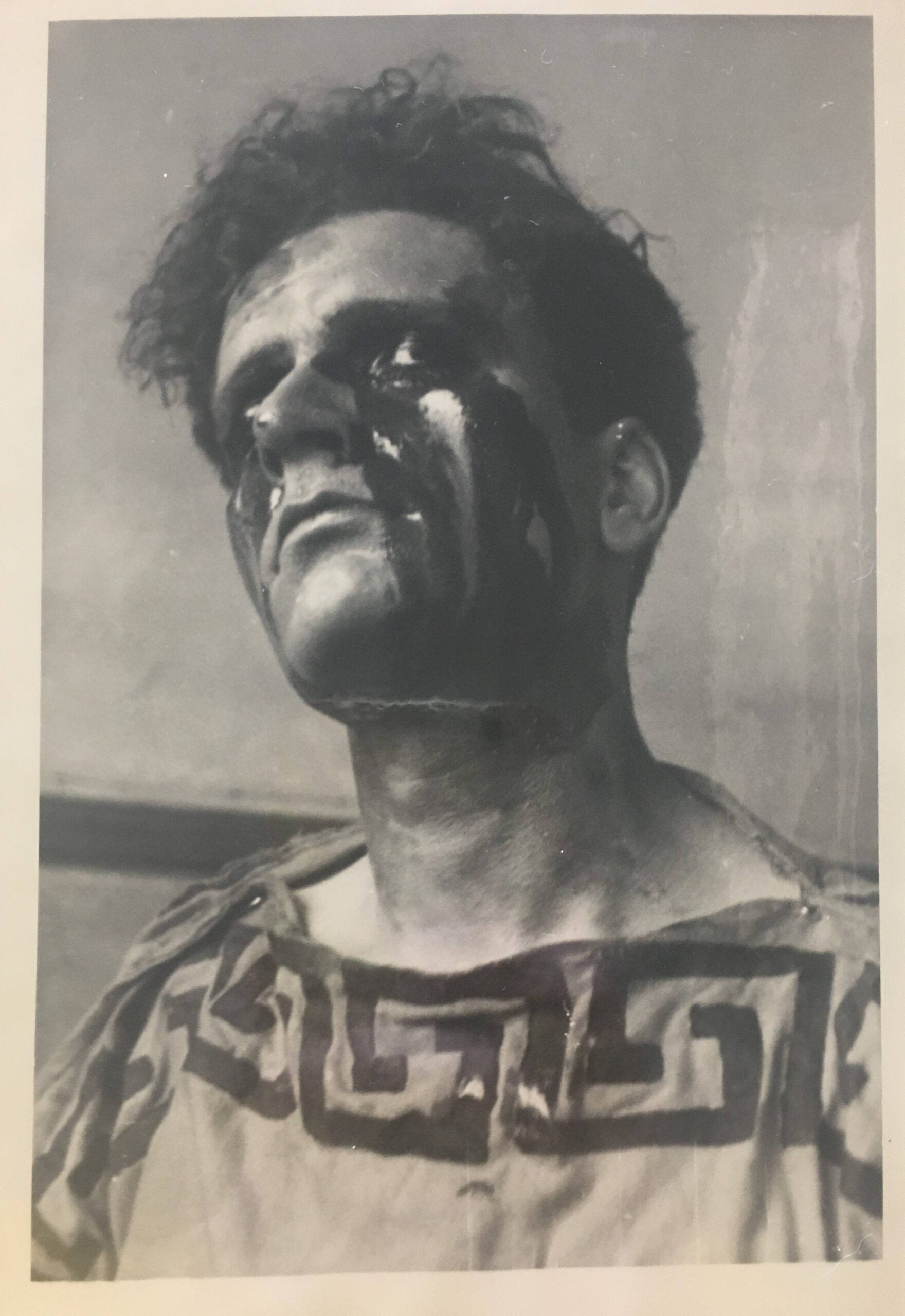
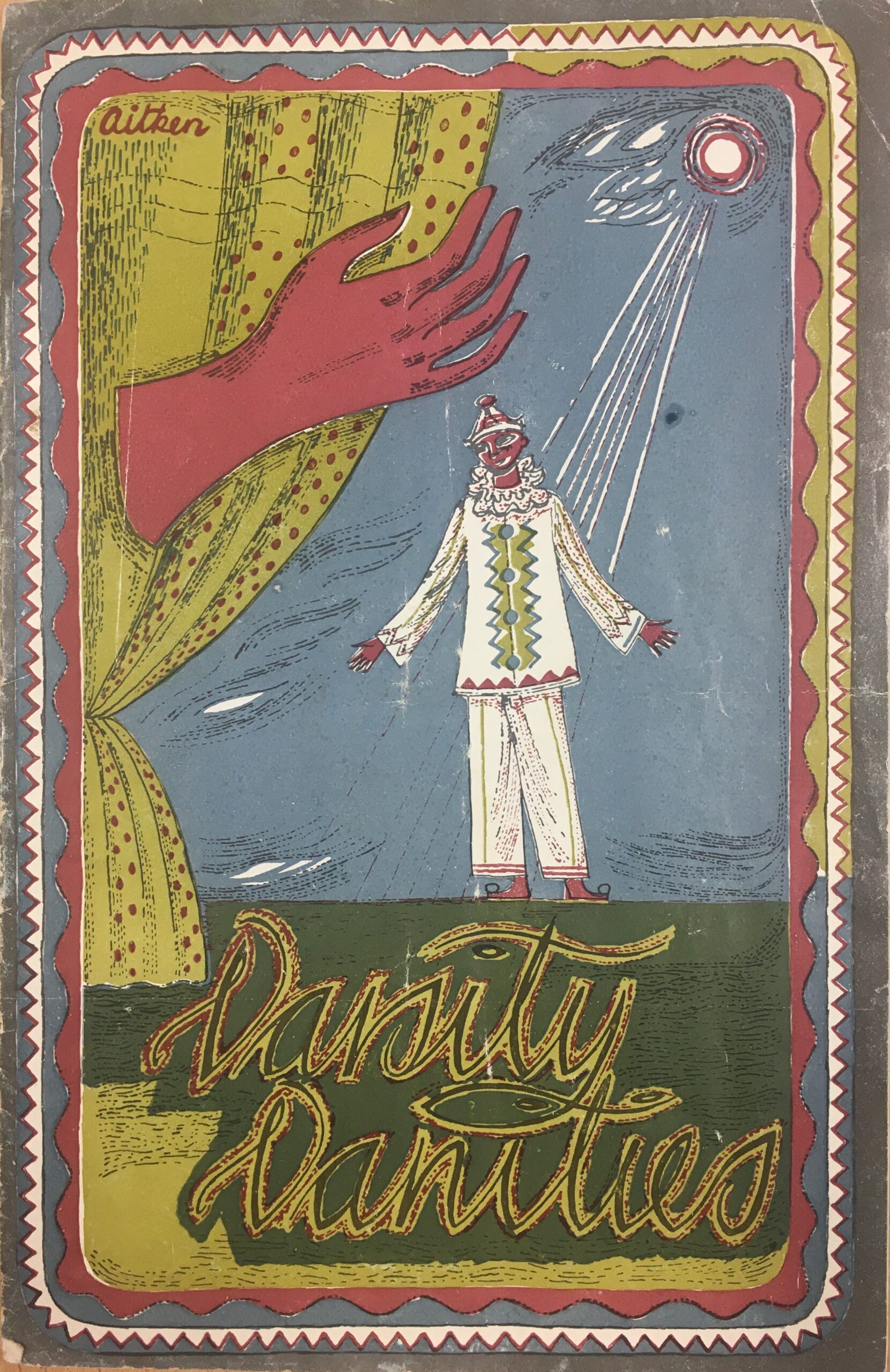
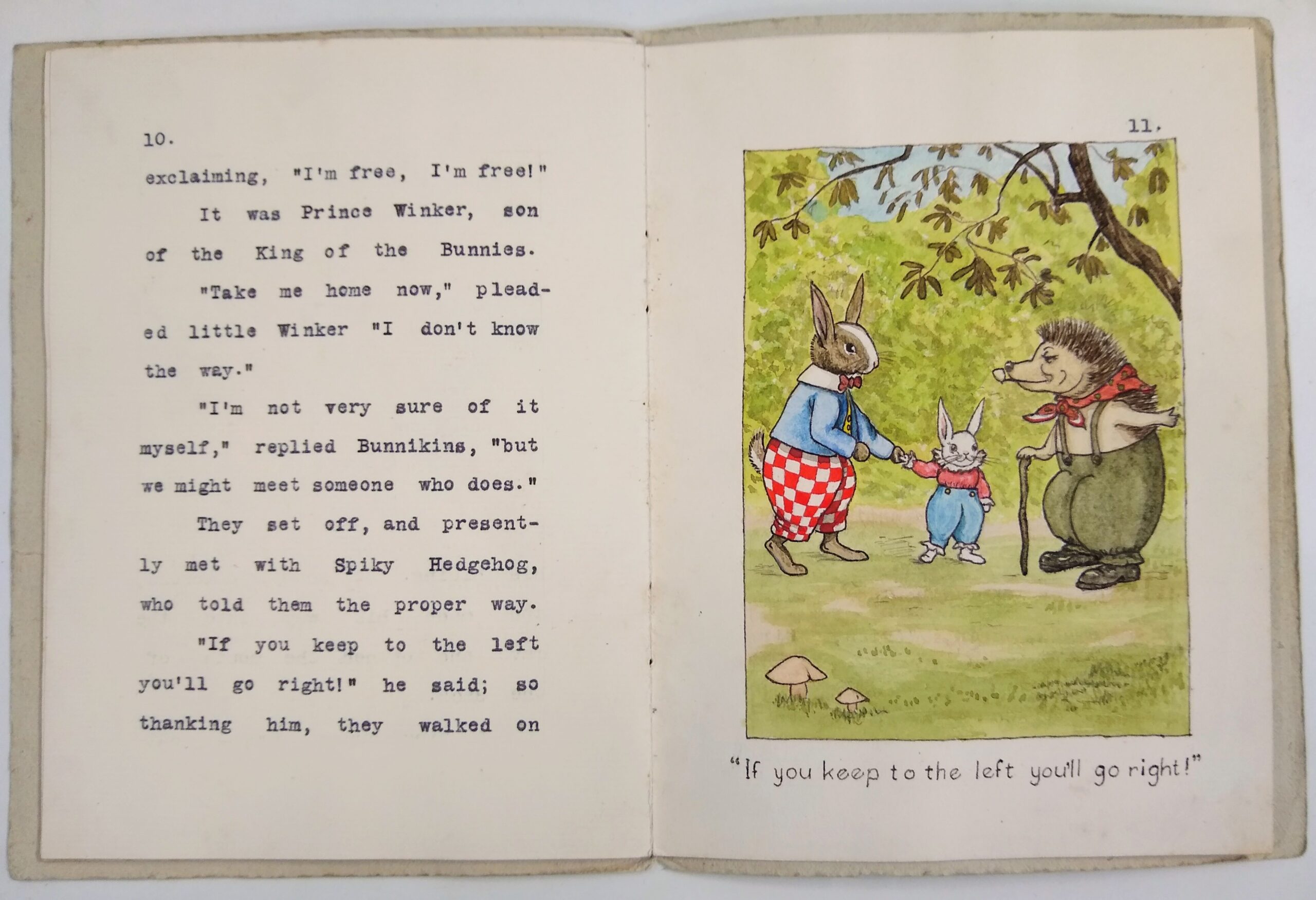
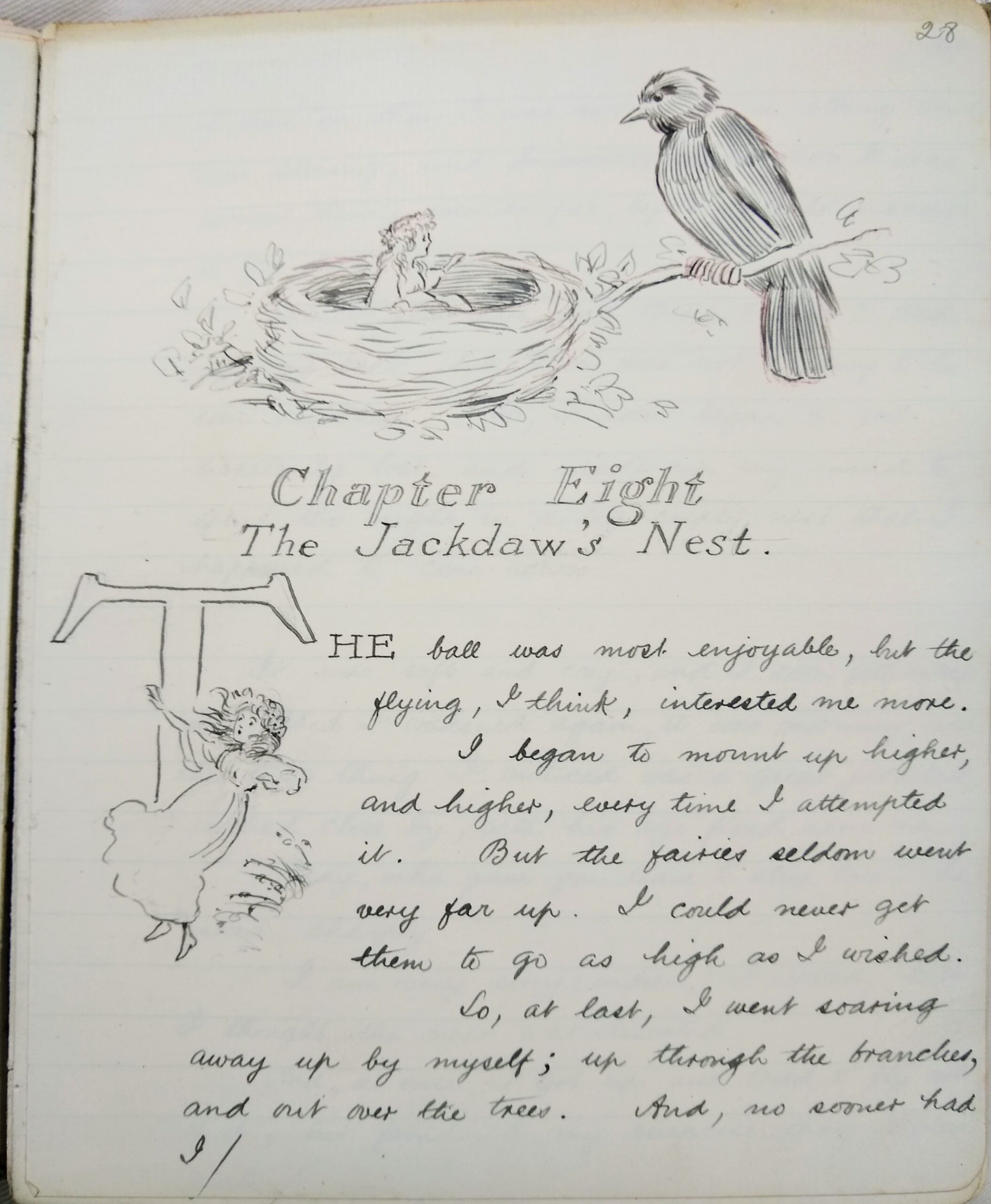
Today we’re introducing Charlotte Holmes, a postgraduate student who is doing some volunteer work under the supervision of archivist Aline Brodin. Her main task is to catalogue and box-list two very different collections from our archives, the Archive of Illustrators Richard and Alison Douglas Tod (Coll-2029) and the Archive of productions of Varsity Vanities and various dramatic groups (Coll-1581). Volunteering with the CRC is a great way to gain some new skills and some practical experience while working with our heritage collections. Charlotte tells us about her background and her work in our reading room:

Hi everyone! My name is Charlotte, and I am a final-year PhD student in History. My thesis is entitled “Domestic Medicine in Early Modern Scotland, c. 1650 – c. 1750”. Before this course, I spent a few years in the “real world” after my undergraduate and masters at Georgetown University in Washington, DC, and the University of Edinburgh respectively. My undergraduate degree was in History and French, concentrating on Western Europe and Africa, while my masters was in Renaissance and Early Modern Studies. I am interested generally in the history of Scotland, medicine, and gender.

Charlotte working in our reading room.

My position with the Centre for Research Collections is as a Box-Listing Volunteer. As it says on the tin, I have been listing what is in the boxes for two collections: the Richard and Alison Tod fonds and the Varsity Vanities fonds. Richard and Alison Tod were Scottish children’s book illustrators throughout the 20th century and the Varsity Vanities fonds contain photographs and programmes from Edinburgh University student theatre productions from the mid-20th century. Most of my role involves thinking about what researchers need to know about items in the collections: are the photographs or artwork in black and white or colour? Can we determine the year in which the item was created? Then, I enter this data into ArchivesSpace with other archival descriptors such as the call number.

A student acting in a Varsity Vanities play, 1940s (Coll-1581)

Varsity Vanities programme, 1940s (Coll-1581)

I took this position because I wanted to learn some basic archiving practices. As a researcher, I only look at the published side of the catalogue and I wanted to learn how it worked from the back end. I have certainly learned how much is involved in cataloguing items: it was challenging at first to fight my instincts to analyse them and to remain as objective as possible. But there were pieces in both collections that involved some subjectivity and further research. For example, there were racial depictions that are now commonly understood to be harmful to sections of society. So, I got to stretch my research muscles as well as exercise some subjectivity within the archiving process. It made me remember that there is a very human side to archival objectivity.

Booklet by Alison Tod entitled “Bunnikin’s Adventures”, with original illustrations, 1935 (Coll-2029/2/3/1)

Booklet by Richard or Alison Tod entitled “Fairyland Tales: Googoo’s Gamp”, 1939 (Coll-2029/2/1)

What I am leaving with from my time at the CRC is an incredibly positive learning experience. Everyone that works there, including and perhaps especially the front of house staff, are helpful and supportive. My supervisor, Aline is extremely patient and explains everything well and thoroughly. When I’m in, she makes a point to come say hi. I also have a regular table in the Reading Room, which is infinitely funny to me because of course my regular table wouldn’t be at a coffee shop or pub, but in a nerdy environment! Anyway, if you are interested at all in archives and history, I would highly recommend volunteering for the CRC. It’s worth climbing the six flights of stairs, I promise!

If you are interested in volunteering with us, you can find all the relevant information, including how to be added to our mailing list, on this page: Volunteers and Interns | The University of Edinburgh  

In popular culture, archives sometimes have a cryptic reputation: if some filmmakers were to be believed, in the middle of dust and darkness would rest ancient manuscripts and parchments containing secrets about the occult and the mystic, jealously kept by a lone archivist (or a librarian, since they often appear to be interchangeable)[1]. Even though archives do hold fascinating, touching, thought-provoking materials in a myriad of shapes and forms, any archivist would tell you that such a description is a bit more glamorous than the reality…or, is it? It turned out manuscripts can hold supernatural secrets, as I discovered in a mysterious (and bibliographic) quest started on a rainy autumnal Saturday…

Two years ago, while looking for something to do to entertain my French guests, I had found a web page describing an abandoned castle in the woods near Gifford, a small village 40-minute away from Edinburgh. It seemed like a lovely walk – and even better, a part of the castle was said to have been built in the 13th century by demoniac goblins summoned by a necromancer! Talk about intriguing. The three of us set off. The starting point of our walk was a little path heading into the woods in the middle of the countryside, near a lonely, faded Victorian house. This was a particularly rainy and quiet day; and our directions were not very clear – soon, we were lost. We knew the castle was there somewhere, ancient and hidden, but our position at the bottom of a small valley prevented us from seeing anything other than trees and colourful foliage. Eventually, we met three other walkers who sent us in the right direction. They smiled knowingly when we told them we were looking for Yester Castle, and told us they had left candles inside the vault, “for the atmosphere”… Even more intrigued, we continued our quest, passing a number of old stone bridges hidden by the autumn leaves: perhaps this trail used to be followed by the castle’s inhabitants and visitors?

One of the bridges on the way to Yester Castle.

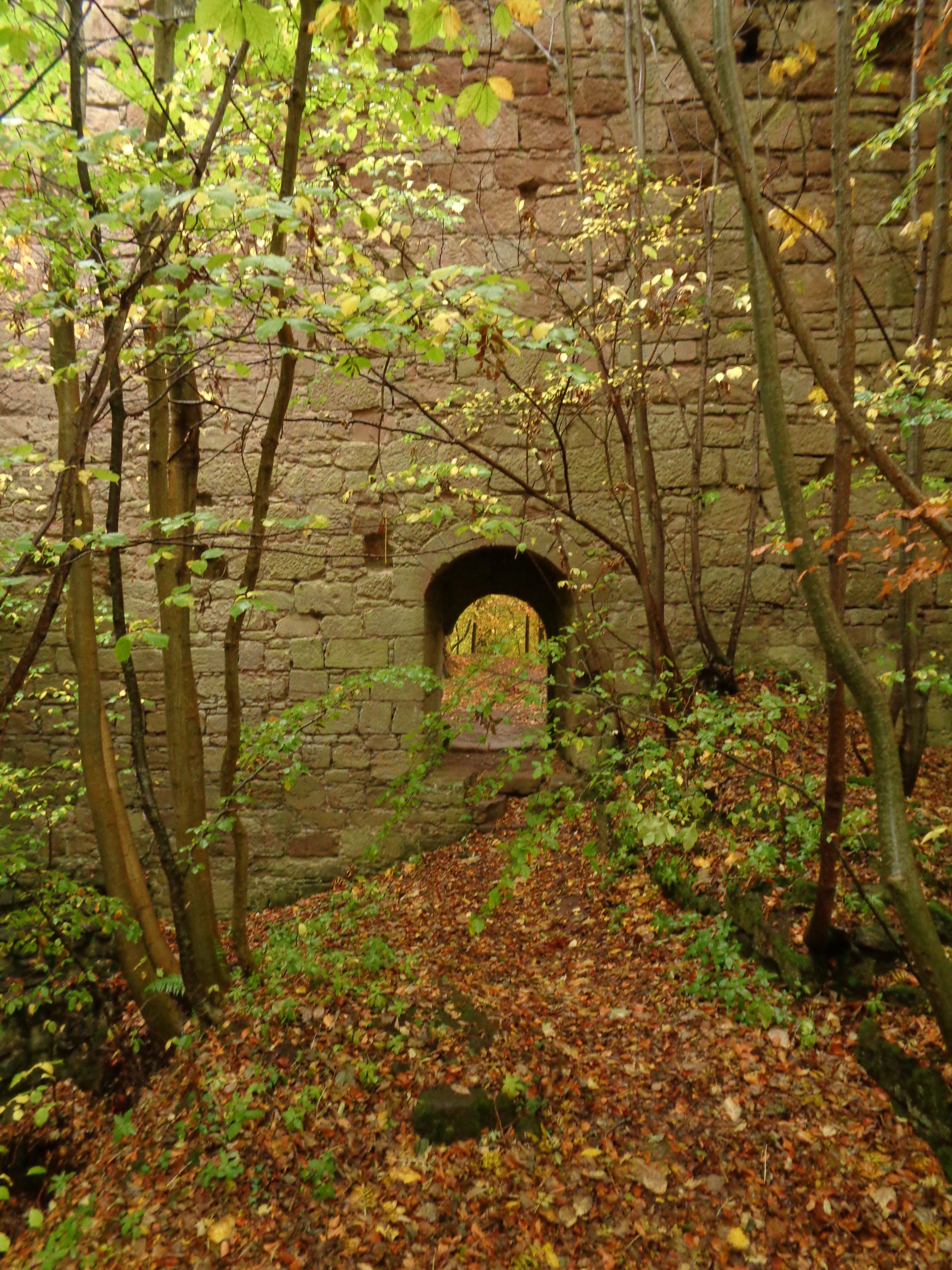
Finally, after an ultimate bridge curved over the river running at the bottom of the glen, we caught sight of a stone wall at the top of a hill. There it was! We had found our castle! And thanks to the rain, we had it for ourselves. The first edifices we encountered were an impressive tall wall, and the ruins of the stone keep. The castle had been built in the middle of the 13th century by the Laird of Yester Hugo de Giffard (or Hugh Gifford), descendent of a Norman immigrant who had been given land in East Lothian during the reign of David I[2].

The tall wall leading to Yester Castle.

A remaining tower.

We soon spotted stairs descending into a cold, large, dark chamber. That must be it – the vault supposedly built by the same Hugo de Giffard, a man who left an ambiguous trace in historical records. Officially, we know he was one of the Guardians of the young Alexander III of Scotland; and one of the Regents of the Kingdom appointed by the Treaty of Roxburgh on 20th of September 1255[3]. However, he also had the reputation to be a warlock and a necromancer, and according to the legend he had summoned hobgoblins to build a subterranean vault under his castle, known as Bohall or Goblin Ha’, that he subsequently used for his demoniac activities.

The former entrance (?) of the vault.

The stairs leading down to the vault.

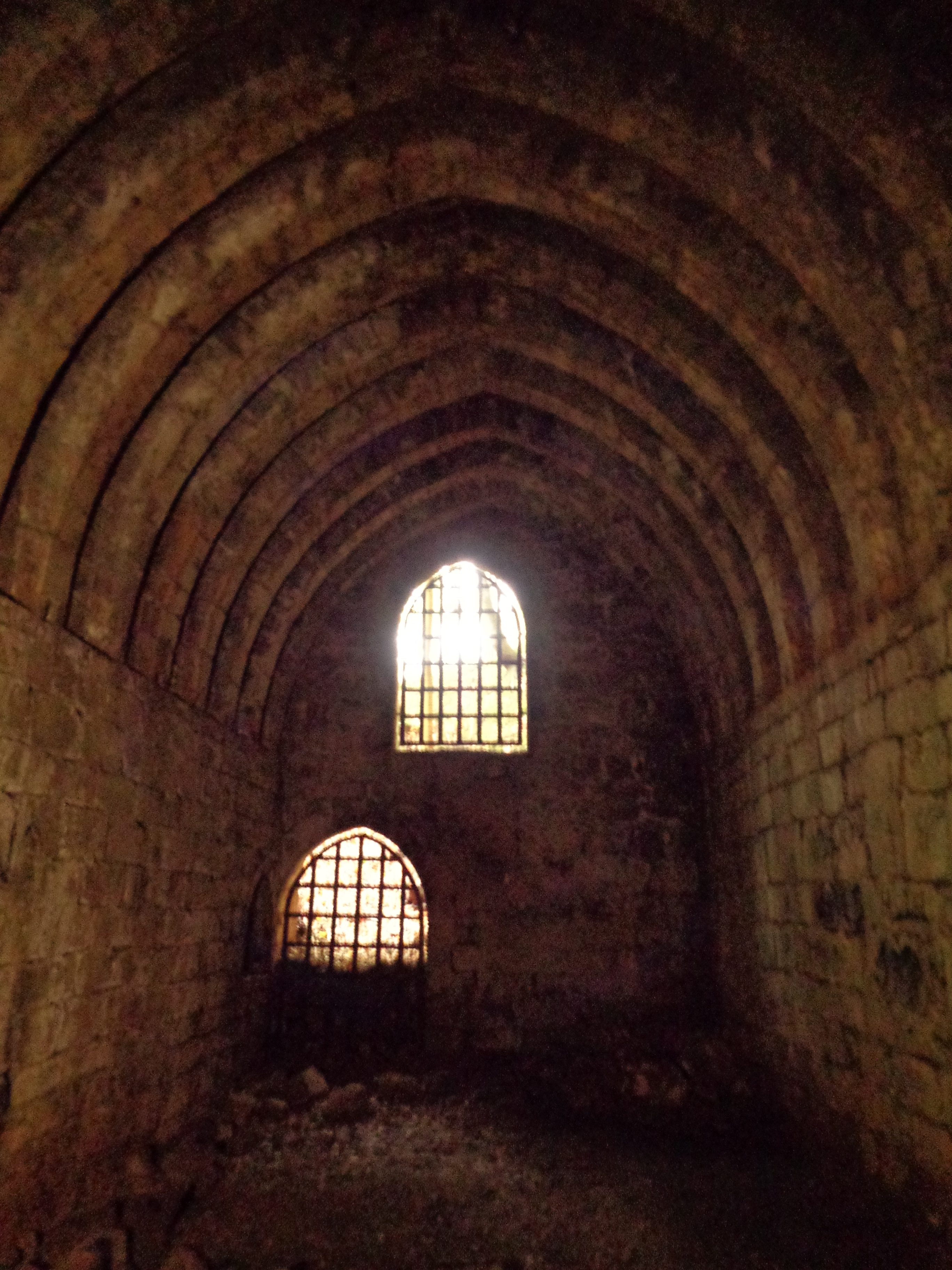
After wandering around the ruins for a while, we discovered a small entrance behind the castle, enabling us to enter the chamber by crouching through a narrow corridor in complete darkness. The size of the vault is still impressive today. The ceiling is high, and reminded me a stony, upside down rib cage. At one corner of the room there were stairs going down even more deeply into the ground. We were not disappointed.

Inside the Goblin Ha’.

Once back to the safety of our home, far from any threat of goblins or medieval wizard, we tried to learn more about this incredible place. Finding a trustworthy source for the occult legend surrounding Hugo de Giffard was not easy. The original citation on which a large part of Hugo’s dark reputation seems to have been built was quoted in his Wikipedia page as follows: “Fordun thus speaks of him in noting his death in 1267: “Hugo Gifford de Yester, moritur cujus castrum vel saltem caveam et dongionem arte demoniacula antiquae relationes fuerunt fabricatas,” (vol.ii, p. 105).” [4]. The quote can be translated as: “Hugo Gifford of Yester died. His castle, at least his cave and his dungeon, was said to have been formed by demoniac artifice”. The Wikipedia page for Yester Castle presented the same idea: “14th century chronicler John of Fordun mentions the large cavern in Yester Castle, thought locally to have been formed by magical artifice.”[5] This was very vague – there was no indication of the work where the quote had been found, and which edition… We decided to get to the bottom of things. After all, we thought, the ruins of a castle built by demoniac forces during the middle ages are only cool if it can be supported by genuine contemporary evidence, not some hearsay on Wikipedia!

The source was said to be Fordun – so we assumed at first that the quotation was from the Chronica Gentis Scotorum (“Chronicles of the Scottish people”) written by the Scottish chronicler John of Fordun in the 14th century[6]. This work was one of the first attempts to relate the history of the Scottish people, from its mythological origins to the death of David I in 1153. Which meant, of course, that it could not have mentioned Hugo de Giffard and his Goblin Ha’, built in the middle of the 13th century… We hit our first hurdle. To make matters more confusing, Sir Walter Scott himself mentions Hugo de Giffard and the infamous Goblin Hall in his book Marmion, published in 1808[7]. We wondered – was the quote just an imaginative addition from a 19th century author to give more credit to a local legend, inspired by Walter Scott’s novel? It seemed all the online mentions of this particular extract stemmed from the same inaccurate Wikipedia citation, copied and pasted in various websites. No recent scholarly publications available online seemed to examine the legend.

However, while reading more about Fordun and his chronicles, we did find a clue: in 1440 Fordun’s Chronica Gentis Scotorum was continued by a Scottish abbot named Walter Bower born around 1385 at Haddington in East Lothian, which is only a few miles away from our mysterious castle[8]. Ah! Could it be that the mention of the Goblin Ha’ was in Bower’s writings, rather than in Fordun’s chronicles? Bower, having grown up in the region, would have known about the local legend. The combined texts from Fordun and Bower are called the Scotichronicon, and are an invaluable source of Scottish history. Fordun was also commonly cited as the main author, especially in older sources, which would explain the mix up in the Wikipedia pages. The only edition available online was the Joannis de Fordun Scotichronicon: cum supplementis et continuatione Walteri Boweri, edited by Walter Goodall and published in 1759. Our Latin quote was in vol. 2, p. 105 – this seemed like the probable source of the Wikipedia entry, which mentioned a “vol. ii, p. 115”. Goodall’s work was for a long time the only complete edition of the Scotichronicon, and is based on Edinburgh University Library’s very own copy dating form 1510 (MS 186)[9]…
This is when I thought – why content yourself with a transcription when you can check the original source directly? I was at the time working with postgraduate students on a project to produce an online catalogue of our Western Medieval Manuscripts, so I took the opportunity to have a look at MS 186. I retrieved the medieval book, which is of an impressive size – it is one of the few manuscripts in our collection which still have its original binding, and I must say, it did look like my idea of an ancient esoteric grimoire full of dark secrets! I then located the capitulus X, liber 21 as instructed by the 1759 edition, and…. There it was! The very same sentence in Latin, about Hugo de Giffard and his vault built by Hobgoblins.

MS 186, with its original binding. The book measures 41 cm x 25 cm.

Original text in MS 186 – transcription in Latin – translation in English (from Scotichronicon, 8 volumes, ed. by D. E. R. Watt (Aberdeen: Aberdeen University Press, 1987))

I later put our Wikipedia editing training to good use by fixing the entries and clarifying the source and the author of the quote. This marked a satisfying ending to our quest for truth – we could rest easy knowing that our mysterious castle was an authentic ghoulish lair, and that we had done our part in disseminating knowledge through accurate bibliographical sources – could any archivist ask for more?

Aline Brodin, cataloguing archivist at the Centre for Research Collections.

References:

[1] Oliver, A. Daniel, A., “The Identity Complex: the Portrayal of Archivists in Film.” in Archival Issues 37, no. 1 (2015): pp. 48-70.

[2] Ritchie, Robert L. G., The Normans in Scotland (Edinburgh: Edinburgh University Press, 1954), p. 276.

[3] William Anderson, The Scottish Nation: Or The Surnames, Families, Literature, Honours, and Biographical History of the People of Scotland, vol. 2 (Edinburgh and London: A. Fullarton & co., 1862), p. 298.

[4] “Hugh de Giffard” (last edited in 2019), Wikipedia, Available at:  https://en.wikipedia.org/wiki/Hugh_de_Giffard (Accessed: October 2018).

[5] “Yester Castle” (last edited in 2020), Wikipedia, Available at: https://en.wikipedia.org/wiki/Yester_Castle (Accessed: October 2018).

[6]  “Fordun, John of”, in Encyclopædia Britannica, vol. 10, ed. By Hugh Chisholm, 11th edn. (Cambridge: Cambridge University Press, 1911). pp. 643-644.

[7] Scott, W., Marmion, 10th edn (Edinburgh: Archibald Contsable, 1821), p. 157.

[8] Watt, D. E. R., “A National Treasure? The Scotichronicon of Walter Bower”, in The Scottish Historical Review, Volume LXXVI, 1: No. 201 (April 1997), pp. 44-53.

[9] Scotichronicon, 8 volumes, ed. by D. E. R. Watt (Aberdeen: Aberdeen University Press, 1987). See in particular, ‘Introduction’ to Volume 1 and Volume 8.

Cataloguing the correspondence of Thomas Nelson & Sons (cont.)

Our intern Isabella has now finished her 10-week placement at the CRC, during which she was box-listing part of the records of Thomas Nelson & Sons Ltd. Her thoroughness and fine attention to details made her perfect for the job. Luckily for us, Isabella enjoyed her placement so much that she decided to keep working on the collection as a volunteer! We are delighted that she is going to keep doing excellent work on this great collection. Here are a few more of her great finds.

Isabella working in the CRC reading room.

1. Jane Borthwick Letter: While every other letter in this bundle is written in black or dark blue ink, with edits often made with red ink, Jane Borthwick writes a letter here in an aesthetically appealing purple ink. The letter concerns a manuscript which she was enlisted to read, review, and recommend for either publication or rejection. Unfortunately for the author, Ms. Borthwick found the piece too dull to be printed. On the back of the letter there is slight evidence of handling where several ink stained fingers held the letter. While the marks are slight and it cannot be determined if these are the product of Jane herself, an employee of Nelson & Sons or of a later cataloguer or archivist, it stands as evidence of this letters connection to the people that have interacted with it, carrying its handling history on its surface.1. Jane Borthwick’s letter

2. R. Anderson Letter: A letter from R. Anderson displaying discoloration of paper, dust and dirt – Some of the correspondence we are working to catalogue requires light conservation methods before we can return them to storage. In this letter from an R. Anderson, one side shows how protected and covered paper ages as that side has been stored firmly pressed against another letter, while the other side reveals how long-term exposure to the elements of stacks can fade, damaged and color the paper. In order to attempt to combat this issue a small dry sponge is used to wipe away what dirt or dust can be wiped away, however, due to the age of the ink on the paper we must be careful not to take any of the ink off the page itself. This then becomes a conundrum of whether to maintain the precision of the ink or to treat the residue before it becomes a larger and more expensive issue.

2. R. Anderson’s letter

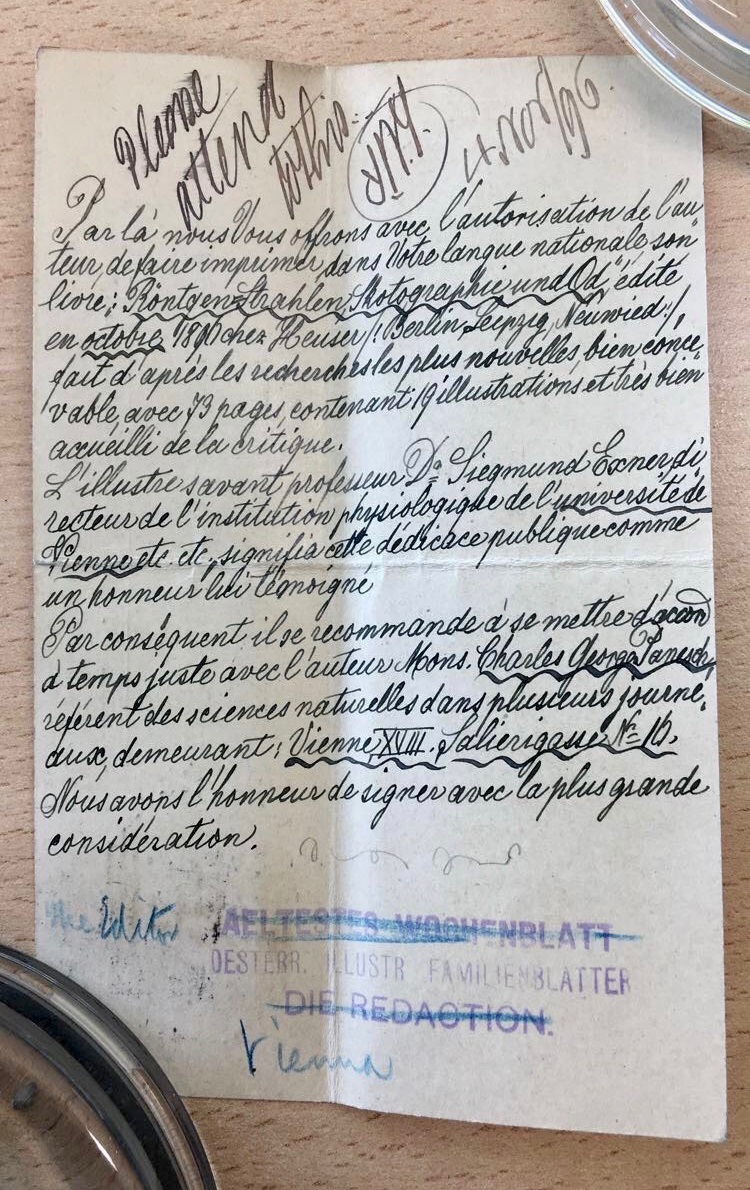
3. French Postcard: Here we have a postcard from Vienna written entirely in French. Unfortunately, our cataloguer does not read French and so help was requested from a fellow student from the Book History and Material Culture course, Eleanor Cambridge, as well as the cataloguer’s supervisor and resident Archivist with the Center for Research and Collections, Aline Brodin. The emersion of this postcard from the collection allowed for cooperation between postgraduates as well as Archivists to engage in a multi-national approach to decipher another element of the archive. This opportunity not only demonstrates the way archivists and cataloguers often work in tandem in order to contextualize information and collections, but it further speaks to the multi-national nature and reputation of Nelson & Sons.

3. French postcard

 4. J. A. Bains Letter: Pictured here is part of a collection of nine letters sent from one J. A. Bains on highly personalized stationery decorated with fastidiously carved print images on one side. Despite the intricacy of the prints on the stationary, their appearance is not entirely a surprise as if you look to the right-hand side of the image you will see that Mr. Bains was a bookseller as well as a Stationer. Mr. Bains interactions with Nelson & Sons was such that he had been writing a biography on the Norwegian explorer Fridtjof Nansen and was very determined to see his piece published with their company alone. This sentiment was made plain to Mr. Brown, a manager at the company, in the final line of Mr. Bains letter from May 12th, 1896 writing, ‘I am determined that Messrs. T. Nelson & Sons shall publish it – even if I have to wait for months or years! I have spent too much labor (even if amateur) too much money and wandered too many miles to gather information to let it fall through.’ Bains was a jovial correspondent, often using exclamation points in his letters, reasserting that he would have no one else publish his work but Nelson and Sons, and on two occasions joking that if Nansen, who was on expedition at the time of these letters, did not return then his book would be the first biography published and probably a roaring success. Unfortunately, Mr. Brown did not return his enthusiasm as he rejected the opportunity to publish the work, multiple times, and so Mr. Bains took his biography to Walter Scott Publishing Co. Ltd. and the book was published in 1897.

4. J. A. Bains’s letter

 5. Sophia Caulfield and Audrey Curtis Letters: Many of the manuscripts sent to Nelson & Sons were full of differing content and came from a variety of people throughout a number of countries. Audrey Curtis and Sophia Caulfield were two of those authors. Ms. Curtis submitted her manuscript of ‘a tale of the Huguenot persecution in France about the date 1685’ while Ms. Caulfield wrote about ‘little-known curiosities in the department of Natural History’ of London. Each woman worked on historical and amateur scientific novels. Curtis herself had previously been published by the National Society for her short story entitled “The Artist of Crooked Alley” as well as for her story for children titled “Little Miss Curlylocks”. Each woman was a fairly accomplished author by the time they came across Nelson & Sons for their publications with Ms. Caulfield identifying herself as one of the original writers for a popular magazine aimed at young women interested in science and politics. As well Ms. Caulfield included a written resume with her manuscript to Nelson & Sons of all that she had worked on which included compiling a dictionary of needlework, textiles, and lace, as well as editing magazine articles, and her latest book which had been shown at the Chicago “World’s Fair” as well as the ‘Great Paris Exposition’.

5. Audrey Curtis’s Letter

6. Rev. F. Docker Letter: The Reverend F. Docker, pictured here, was a religious short story author who sent several stories for potential publication to Nelson & Sons in 1896.  Along with his letter and his manuscripts he included a newspaper clipping from The Christian Age newspaper bearing one of the stories which he had written as well as his picture. If you peer at the heading of the paper, you will see that it is identified as No. 1,268. -Vol. XLVIII.-26. and was published in ‘London, Wednesday, December 25, 1895’ meaning that the story Reverend Docker submitted to the publishers was in fact a Christmas installment.

6. Rev. F. Docker’s Letter 

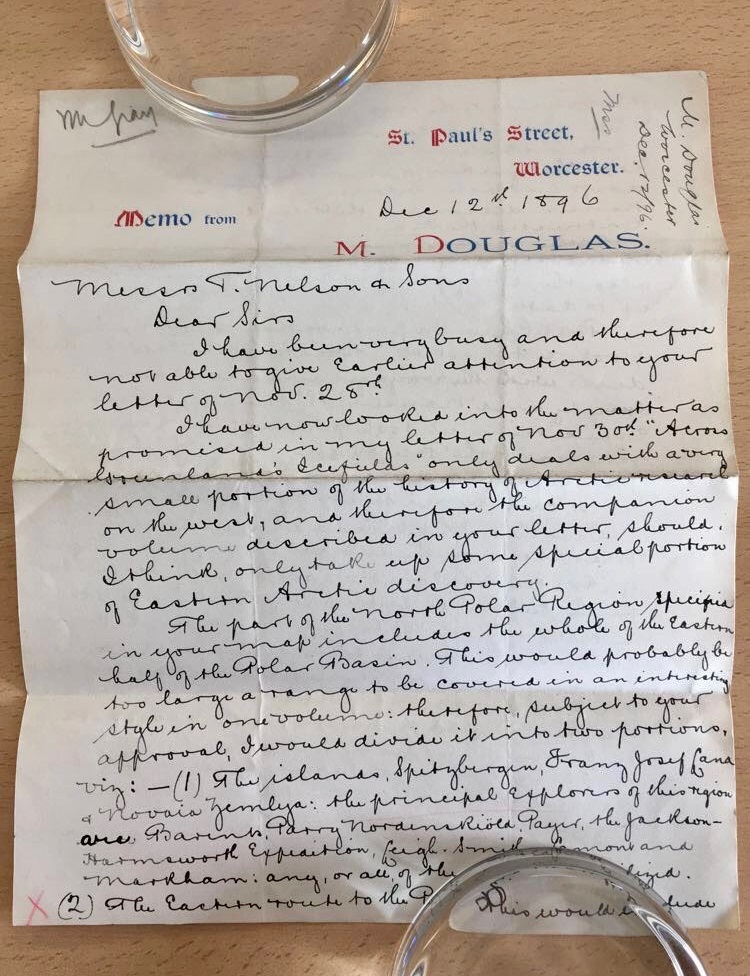
7. Miss M. Douglas Letter: Here we see another example of Nelson & Sons enlisting the help of an expert for practical scientific publications. M. Douglas was a woman who worked with Nelson & Sons when producing a new book about Arctic Exploration. She was the designated reader and critic for the configuration and aesthetic design of the maps illustrated in the book. Unfortunately, this letter does not give the reader any more background as to her work but rather it does prove she showed a high proficiency for spatial relations, math, and geography in order to conceptualize and stylize maps for the Arctic which in 1896 was still a relatively unknown climate. In her letter here she shows a high understanding of Polar currents as well as a strong familiarity with the literary histories of Arctic Exploration.

7. Miss M. Douglas’s letter 

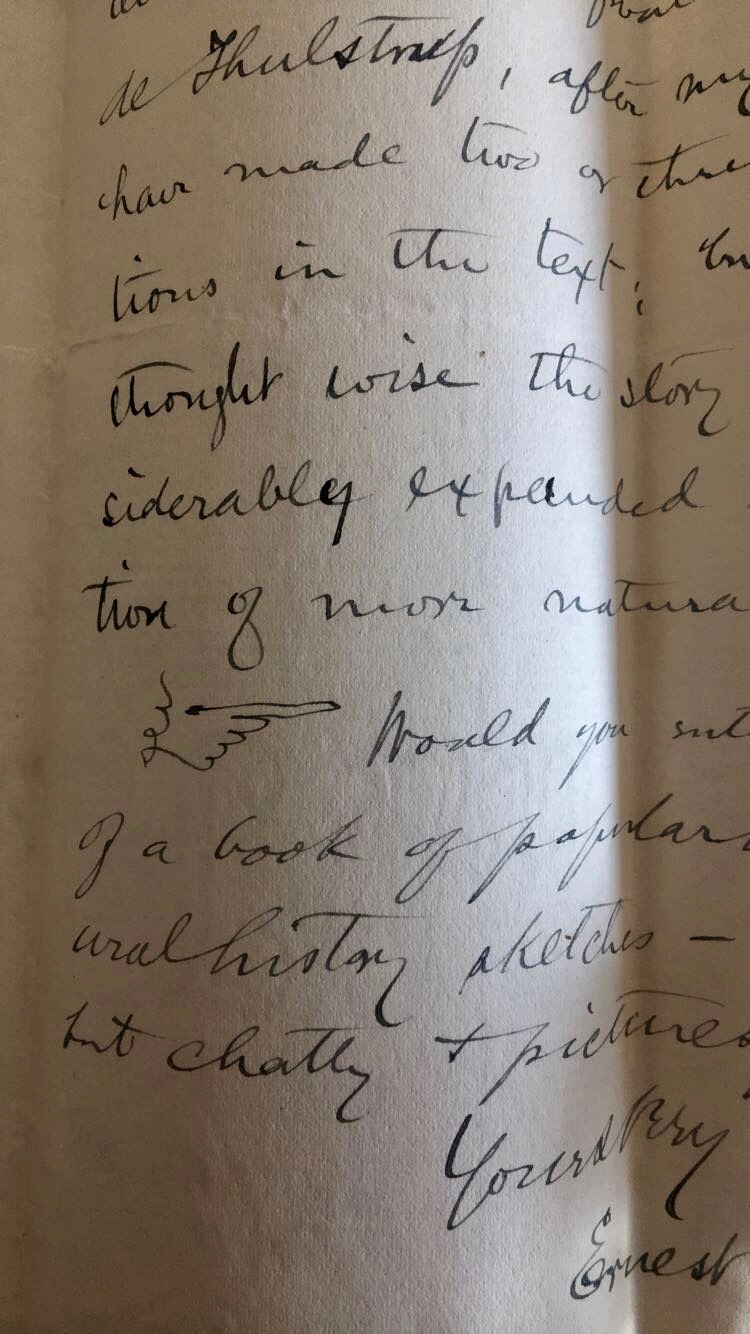
8. Ernest Ingersoll Book Submission: In 1896 Ernest Ingersoll submitted to Nelson & Sons his story entitled “A Railway Stowaway” which had previously been published in the United States by the well-known publishers of Harper & Brothers. In his letter Mr. Ingersoll offers Nelson & Sons ‘all rights outside the United States’ to the publication. While many authors include a full manuscript along with their letters, which they either request to be returned if they are rejected for publication, a gamble if the author has not written out or commissioned printed copies, Mr. Ingersoll included a small pocket copy of his story which was printed in the style of the Harper Collins 1882 edition. This particular copy was hand bound as you can see from the string threaded through the center pages and came complete with illustrations. The size of the copy enabled it to stay with the letter in this case, instead of the manuscript being returned or archived in a different location within the collection. This inclusion allowed us to not only understand the background of this submitted manuscript but also to collect the priority piece of knowledge that Nelson & Sons were offered sole rights to this piece for every publication outside of the United States. Unfortunately, Nelson & Sons decided to reject the offer. However, Mr. Ingersoll did not give up entirely and instead sent them a copy of one of his other stories entitled “The Ice Queen” which had been well received in the United States and which Harper & Brothers were willing to negotiate on copyright purchasing and illustrations expenses. While the last photo in the below series is not included in any copy of Ingersoll’s printed work, it is a wonderfully interesting example of marginalia which mimics medieval style. Referred to as a manicula, the hand design which was used to draw attention to specific passages, is used by Ingersoll here to identify the final paragraph of his letter.

8a. Ernest Ingersoll

8b. Ernest Ingersoll

8c. Ernest Ingersoll

8d. Ernest Ingersoll – manicula


Cataloguing the correspondence of Thomas Nelson & Sons

Last January, our intern Isabella started a 10-week placement at the CRC, as part of her MSc in Book History and Material Culture. Using our online system ArchivesSpace, she is cataloguing part of the records of Thomas Nelsons & Sons Ltd., a British publishing firm founded in Edinburgh in 1798. So far, she has been dealing with correspondence, advertising material, and printed material relating to publishing, all dating from the end of the 19th century. Here are some of her most interesting finds:

1. W. H. Allen & Co. Copy

1. W. H. Allen & Co.: Pictured above is a beautiful embossing from the stationary of W. H. Allen & Co. Ltd., a London based bookseller and publisher. The company were ‘publishers to the India office’ as can be noted on the seal. The coordination of a lion and a unicorn most likely represents the company’s work across Scotland and England.

2. There are three letters from one Mrs. Allan enquiring about the potential for her 15 year old son to take up an apprenticeship with Nelson & Sons. She describes her son as being a naturally gifted illustrator and when the company takes a bit long to reply she sends further letters describing how she and her son are ‘wearing of waiting’ for a response. Though the company eventually accepted samples of the young Mr. Allan’s work, he was not offered an apprentice position.

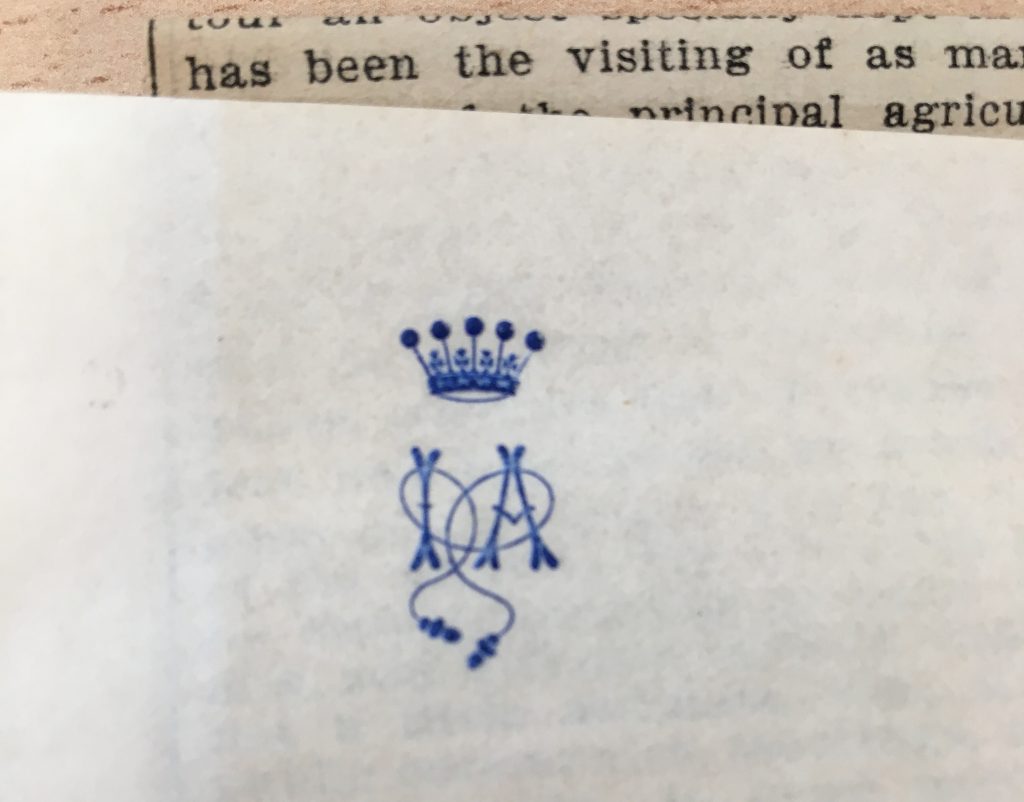
3. Lady Aberdeen Insignia

3. Lady Aberdeen Insignia: Pictured above is the signet of Lady Ishbel Aberdeen who wrote to the offices of Nelson & Sons on September 14th 1896, sending several copies of Canadian literary reports and magazines as well as personal letters inquiring as to whether the company would wish to send any penny or bargain literature they may have the copyrights for to Canada as she believes the country is in desperate need of ‘good, cheap literature.’ She speaks about her children’s magazine “Wee Willie Winkie” named after the Scottish fairy tale as well as the National Council of Women of Canada (NCWC). Lady Aberdeen was the founder of the NCWC, an advocate for the creation of the Victorian Order of Nurses as well as a well-known supporter of the Canadian suffrage movement. The signet is a blue embossed crown containing her initials wrapped together with a vine-esque tie (information on Lady Aberdeen acquired via the Canadian Encyclopaedia).

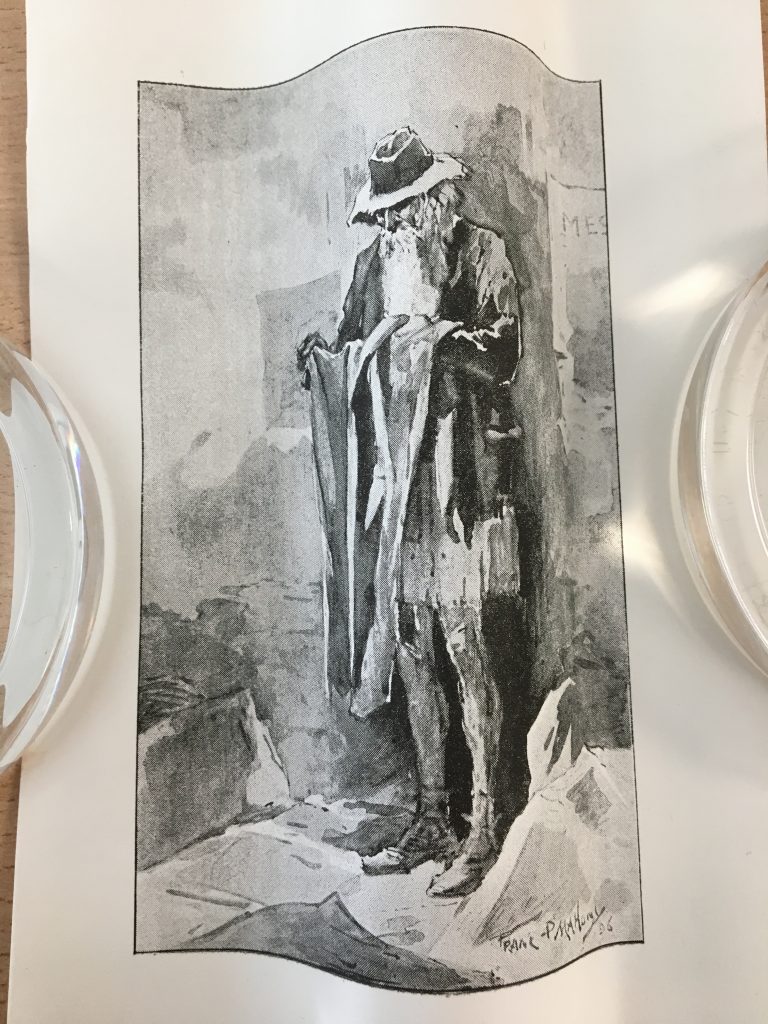
4. Frank Mahony (1)

4. Frank Mahony (2)

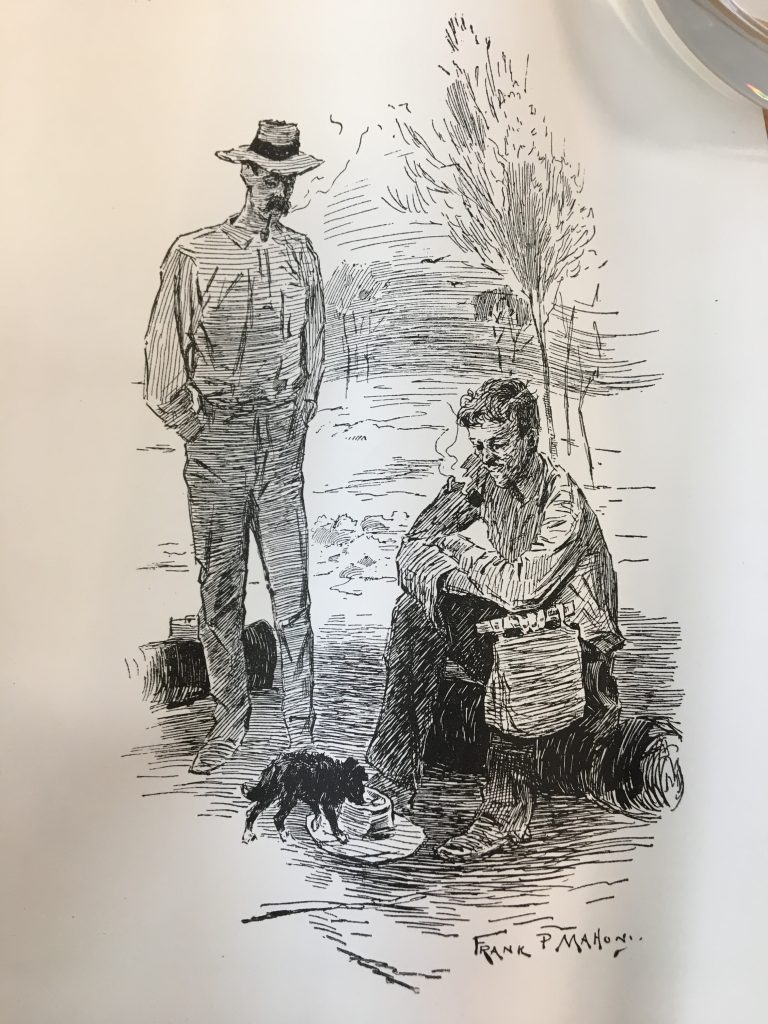
4. Frank Mahony (3)

4. Frank Mahony (4)

4. Frank Mahony (5)

4. Frank Mahony (6)

4. Frank Mahony: Pictured above are six printed illustrations from illustrator Frank P. Mahony. Mahony was an artist from Melbourne Australia whose work was used in the construction of the ‘New South Wales Reader’ a larger and heavily documented project undertaken by Nelson & Sons transcontinentally in congress with several agencies in Australia including leather workers, booksellers, and authors. As can be seen, the copies of the illustrations have been warped from years of being curled into a scroll-esque form at the centre of a group of letters and cost projections for the ‘New South Wales Reader.’ In order to examine each paper with minimal damage, two glass weights are placed at the edges of the copy pictures to examine them as a whole without compromising the form the paper has taken over years of storage.

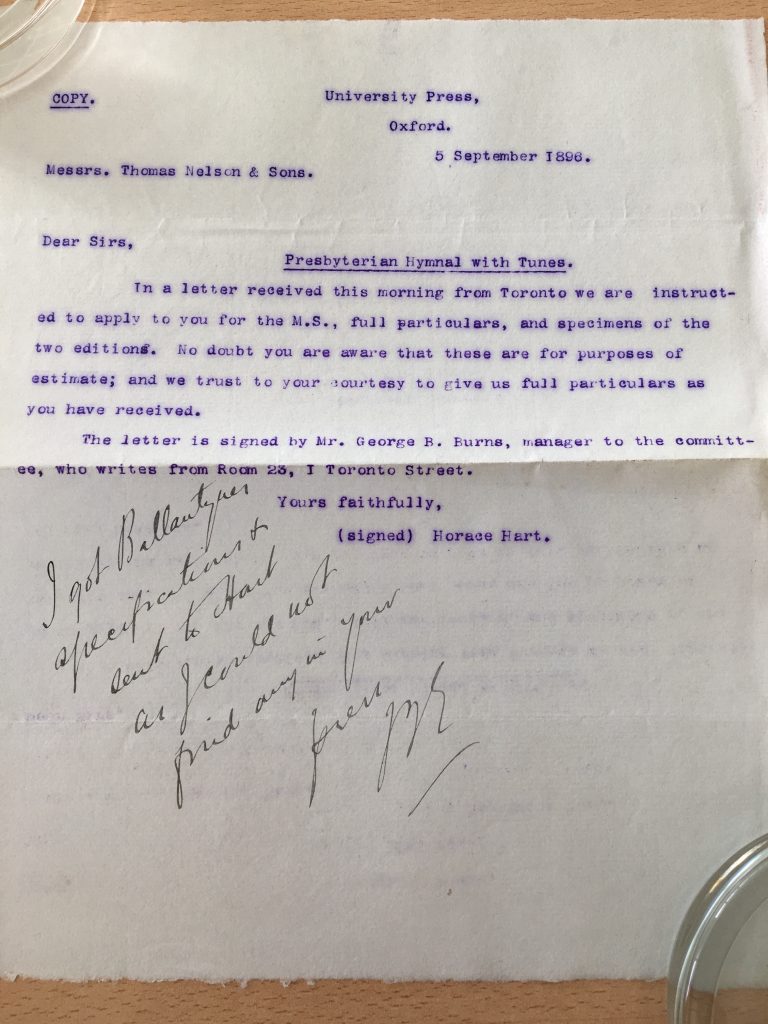
5. Oxford University Press

5. Oxford University Press: This letter addressed to Nelson & Sons is a copy of a letter from the University Press of Oxford requesting manuscript materials for the Presbyterian Hymnal with Tunes, a project which was spearheaded by Reverend James Anderson of Toronto. The initial correspondence regarding the publication of the Presbyterian Hymnal between Reverend Anderson and George Brown of Nelson & Sons deals mostly in obtaining or paying license for the use of tunes from other previously published hymnals. The various letters sent between the two men gives a glimpse into the nature of musical copyright laws and penalties in 1896 both in Canada, where the Reverend Anderson was based and in Scotland where Nelson & Sons offices were. The publication of the hymnal went on to be so successful that the University Press of Oxford requested to take up the publication of the piece as well.

6. Schwebius signature

6. Schwebius letter: Much of the cataloguing done for this archive requires some previous exposure to palaeography, or the study of dated handwriting. However, sometimes in deciphering particularly unclear script a second opinion or cross referencing is required to confirm the context of a letter in order to properly interpret the piece. For this letter, the name Schwebius, though written twice, was not entirely apparent in its spelling. The content of the letter referred to the sale of a foundry and various machines from a leatherworker in New York. The cataloguer referred to a digitized directory from the library of Hoboken, New York which not only lists the recipient of this letter, a George Schwebius, but mentions details of his business which were substantiated by the letter from the Nelson Archive. Corroborating information across archives and databases allowed not only for the correct spelling of the sender’s name to be identified but gave further insight into the transactions between the sender and Nelson & Sons.

7. George Brown’s signature

7. George Brown’s Signature: In 1896 Nelson & Sons decided to invest several substantial sums which were guaranteed by an American investment firm. Their correspondence with the American firm was directed to a Mr. Stewart Tods and concerned the investment of two separate sums of more than 10,000 dollars each. The letter, though entirely concerned with business, reflects the genial nature of professional signatures from the time. Here George Brown, a manager at Nelson & Sons, signs ‘Believe me, Yours Faithfully’. Though the letter concerns references to significant sums of money and is a reflection of a transaction, the signature is incredibly genial and far more affectionate than would be used in the same manner of business today.

8. Nelson & Sons employed a vast number of employees who all were integral to discovering, creating, and marketing literature. From travel writers to leather testers, Nelson & Sons often employed numerous professionals to vet their literature including Jane Macgregor and Jane Borthwick. Though each women worked with the company under other supervisions at various periods, Jane Borthwick was a translator of German hymns as well as a writer of English hymns, a collection of letters in this archive reveals that these two women were also engaged as test readers for the manuscripts sent to the company. Many of the letters sent by Borthwick and Macgregor reference literature they have been sent which contains female protagonists, from which it could be inferred that Nelson & Sons were recruiting female employees for female driven literature.

The Thomas Nelson collection (Coll-25) on our online catalogue: https://archives.collections.ed.ac.uk/repositories/2/resources/85801

Link

Re-discovering a forgotten songwriter: the archive of Louisa Matilda Crawford.

Daisy Stafford, CRC intern who catalogued the papers of Louisa Matilda Crawford, talks about her experience.

This summer I was offered the opportunity to undertake an archiving internship in the Centre for Research Collections, cataloguing the personal papers of Louisa Matilda Crawford, a nineteenth century songwriter. Other than her name and occupation, little information about Louisa was known. Through two months of close examination of her archive, I was able to stitch together a narrative of Louisa’s life. Here’s what I found…

Louisa Matilda Jane Crawford was born on the 27th September 1789 at Lackham House in Wiltshire. She was the daughter of Ann Courtenay (d. 1816) and George Montagu (1753-1815), an English army officer and naturalist. Louisa was related to nobility on both sides of the family; her maternal grandmother, Lady Jane Stuart, was the sister of Scottish nobleman John Stuart, 3rd Earl of Bute and Prime Minister to George III. Her father, meanwhile, was a descendent of Sir Henry Montagu, the first Earl of Manchester and also the great-grandson of Sir Charles Hedges, Queen Anne’s Secretary.

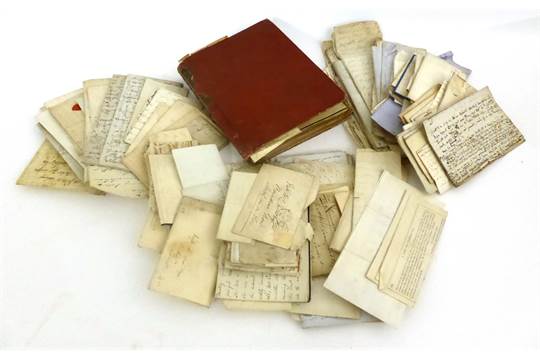
Papers of Louisa Matilda Crawford. Coll-1839 (picture from the seller’s catalogue)

Louisa had three older siblings; George Conway Courtenay (b. 1776), Eleanora Anne (b. 1780) and Frederick Augustus (b. 1783). Little direct information is known about Louisa’s childhood, but it must have been turbulent; in 1798 Montagu left his wife and family and moved to Kingsbridge in Devon to live with his mistress Elizabeth Dorville, with whom he had four more children. It is here that he wrote his two pioneering works, the Ornithological Dictionary; or Alphabetical Synopsis of Birds (1802) and Testacea Britannica, a History of British Marine, Land and Freshwater Shells, which saw several bird and marine species named after him, most notably Montagu’s harrier. The family’s disapproval of his relationship with Dorville ultimately cost him his ancestral home. On the death of his unmarried brother, James, the will stipulated that he would not inherit Lackham House, but had only “a rent charge of £800 a year subject to which the estates were left to his eldest son, George, for life.” The ensuing lawsuit between the pair resulted in huge debts which cost the family the estate; as Louisa wrote in The Metropolitan Magazine in 1835; “The thoughtless extravagance of youth, and the unwise conduct of mature age, caused the estates to be thrown into chancery” (vol. 14, pp. 308-309). Louisa reflected on seeing the native woods of her family home cut down upon its sale in a later poem (Coll-1839/7 pp.415-416):

Those brave old woods, when I saw them fall,

                Where they stood in their pride so long,

The giant guards of our ancient hall,

                And the theme of our household song;

I wept, that one of my Father’s race

                Could forget the name he bore,

And turn the land to a desert place,

                Where an Eden bloom’d before.

Louisa began courting Matthew Crawford, a barrister of Middle Temple, in 1817. Many of the papers consist of love letters and poems exchanged between the pair during this early period of their relationship, including three locks of hair, presumably Louisa’s. In 1822 the couple were married and Louisa moved to London, although their continued correspondence evidences that Matthew spent much of their marriage away working in the North of the country. It is then that Louisa began to earn an income through song writing and poetry, although the couple always struggled financially and frequently appealed to their wealthier relatives for aid.

Much of Louisa’s work appeared, often anonymously, in magazines and journals, was sold to publishers, and was set to music by composers Samuel Wesley, Sidney Nelson, Edward Clare and others. She frequently contributed both poems and prose, including several “autobiographical sketches”, to London literary journal The Metropolitan Magazine (which has subsequently been digitised by the HathiTrust and can be fully searched here). Many of her songs and poems related to historical events and persons; songs titled “Anne Boleyn’s Lamentation” (Coll-1839/7 p. 285) or “Chatelar to Mary Queen of Scots” (Coll-1839/7 pp. 381-382) are written from the point of view of famous queens. One poem (Coll-1839/3/1/9) tells the story of Frederick the Great (1712-1786), King of Prussia, who, in order to deceive his enemies as to his position during the Seven Years’ War, commanded that no light should be kindled throughout his encampment. However, a young soldier lit a taper to write a letter to his new bride. The second stanza reads:

His head was bent in act to write,

                The memories gusting o’er him –

When through the gloom of gathering night,

                Stood Frederick’s self before him!

Oh sternly spoke the Monarch then

                His doom of bitter sorrow

“Resume the seat – Resume the pen

                And add “I die tomorrow.”

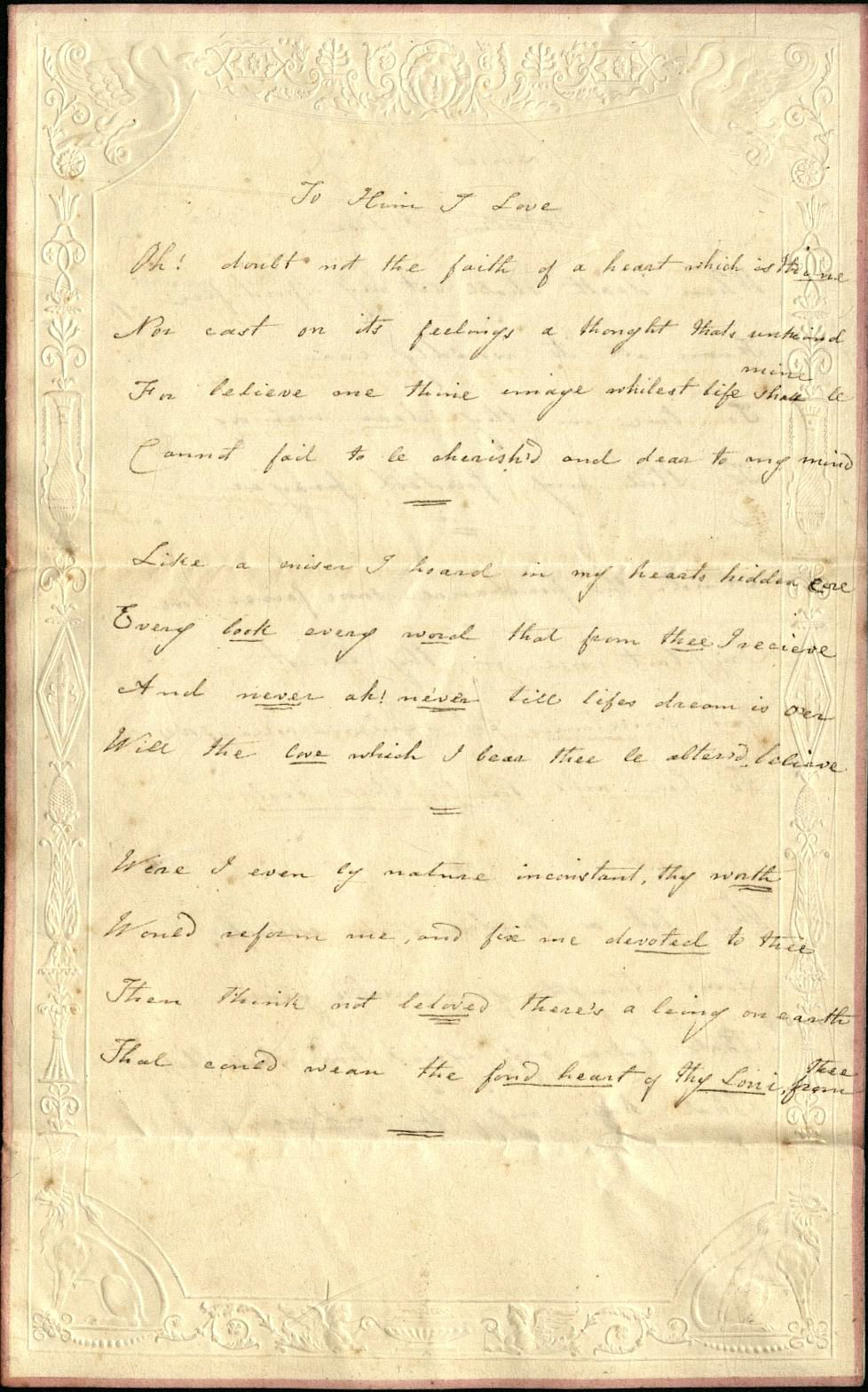
Other poems in the collection are more personal, including reflections on her childhood and family, such as “The Home of Our Childhood” (Coll-1839/7 pp. 17-18) and “On the Death of a Sister” (Coll-1839/7 p. 394). Many verses are addressed to her husband Matthew; one poem (Coll-1839/1/2/5) dated 23rd July 1817 and titled “To Him I Love”, begins:

Oh! Doubt not the faith of a heart which is thine

Nor cast on its feelings a thought thats unkind

For believe me thine image whilest life shall be mine

Cannot fail to be cherish’d and dear to my mind

Like a miser I hoard in my hearts hidden core

Every look every word that from thee I receive

And never ah! never till lifes dream is o’er

Will the love which I bear thee be alter’d believe

Coll-1839/1/2/5. Poem addressed to Matthew Crawford titled “To Him I Love” in the hand of Louisa Matilda Crawford, 23 July 1817.

Matthew often responded with poems of his own, and seems to have played a collaborative role in Louisa’s writing. She frequently included stanzas of her work in letters to him, asking him to look over and edit them.

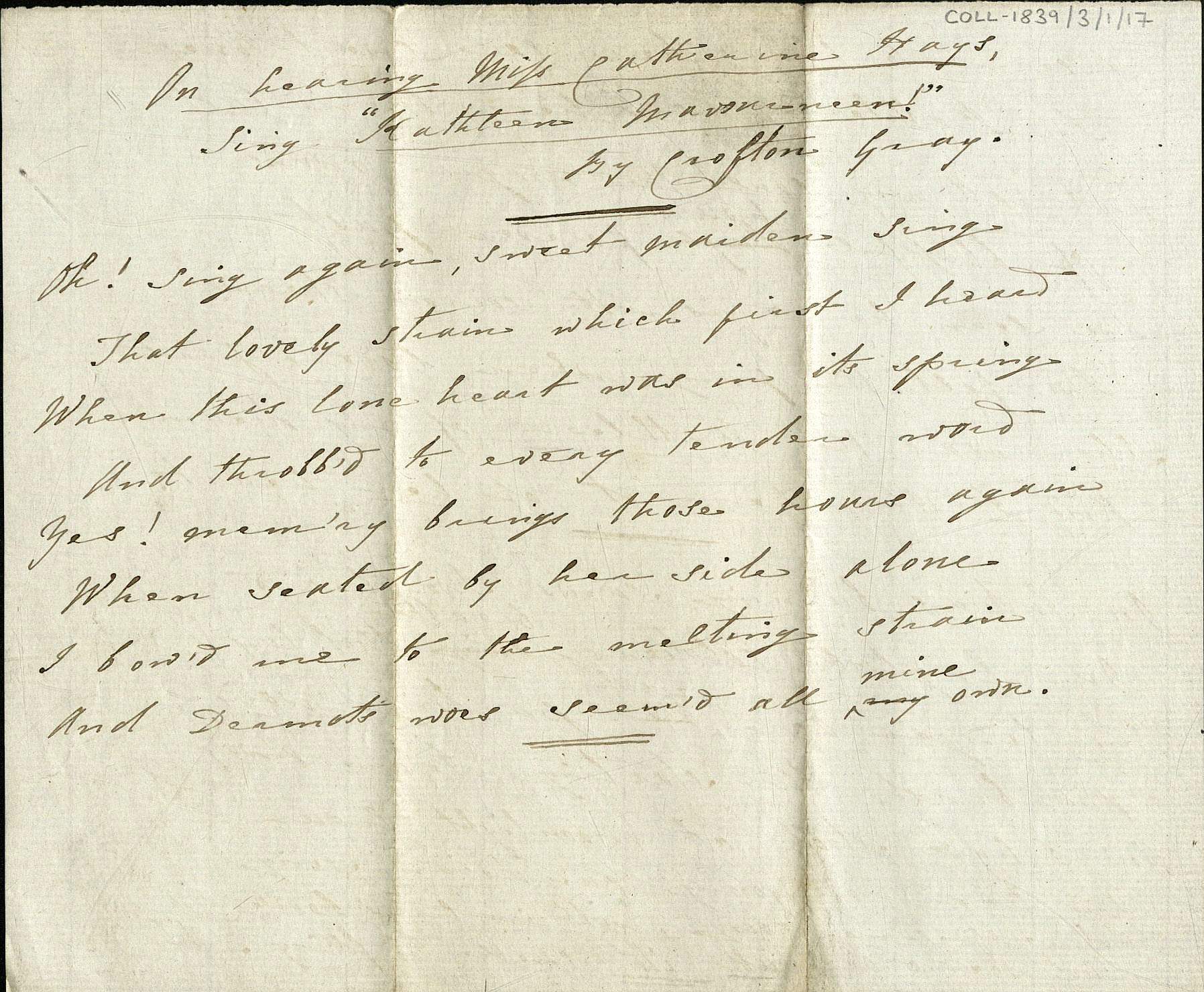
Louisa’s most successful song, “Kathleen Mavourneen,” was set to music by composer Frederick Crouch and enjoyed wide success in America where it was popularised by Irish Soprano Catherine Hayes on her international tours. Recordings of it still exist, and a version by Irish tenor John McCormack (1884-1945) can be found on youtube here. No original version of the song is amongst her papers, although there is a poem titled “On hearing Miss Catherine Hays [sic] sing “Kathleen Mavourneen!”” (Coll-1839/3/1/17). However, the song was frequently attributed solely to Crouch, or erroneously to Annie, Julia, or Marion Crawford.

Coll-1839/3/1/17. Poem titled “On hearing Miss Catherine Hays, sing “Kathleen Mavourneen!” by Crofton Gray” in the hand of Louisa Matilda Crawford, 1837-1857.

Louisa arranged her poems into small series, and the collection includes ten stitched booklets with titles such as “Irish ballads” and “Scotch songs”. Attempts to track down her work can be seen in correspondence with her publishers. In an undated later to magazine editor Mr Emery (Coll-1839/1/1/22) she requests copies of her published songs, writing; “I am not wanting them to give away, but to have them bound up in a volume since I find it impossible to keep single songs…I am going to beat up for recruits in all quarters where my bagatelles have been published, in order that I may have a little memorial to leave to those that will value the gift when I am gone.” A notebook containing 165 poems and songs neatly written in Louisa’s hand seems to be the result of these efforts.

Some outlying items in the collection initially seemed not to relate to Louisa at all, including a 17th century indenture on vellum, recording the sale of a messuage or house between waterman Thomas W Watson and master mariner Josiah Ripley of Stockton-on-Tees. However, a bit of biographical research revealed the answer. Many of these miscellaneous items reference Bayley and Newby, a firm of solicitors operating out of Stockton-on-Tees in the 19th century, which may explain the presence of the indenture. Matthew Crawford’s first cousin, William Crawford Newby (1807-1884) worked at the firm, and it seems that, since the couple were childless, their papers passed to him upon their deaths and thence on to his heirs. The latest item in the collection (Coll-1839/1/3/16) is a 1930 letter by William’s son, who writes:

I enclose a manuscript book written by Mrs Crawford including many well-known songs…Mrs Crawford was a Montagu of the Duke of Manchester family and died in 1857. She was married to Matthew Crawford a barrister. They had independent means which however they frittered away. My late father who was a 1st cousin of Matthew Crawford’s assisted them from time to time and their M.S.S. came to him on their death and through him to me. I am not anxious to part with them, but I am an old man and my family may not attach the same importance to their possession.

This would seem to account for how the papers came to be in the possession of the bookseller and for the few items relating to the Newby’s present in the collection.

Louisa died in 1857, the cause unknown, although Matthew refers to a long affliction of heart disease supplemented by attacks of Bronchitis in an 1846 letter (Coll-1839/2/6). Despite her obvious talent, and the clear enjoyment she derived from her work, she received little notoriety for her song writing during her lifetime and even less so after her death. Alongside gaining invaluable archival skills during this project it has been a pleasure to think that I have been able to increase the visibility of Louisa’s work and make her collection available to interested researchers. Although separated by over two centuries, I have come to know more about Louisa than any person living, and that is a great privilege.

You can see the catalogue of the papers on ArchivesSpace: https://archives.collections.ed.ac.uk/repositories/2/resources/86789

References:

Cleevely, R. J. “Montagu, George.” Oxford Dictionary of National Biography Online, 23 Sep. 2004, https://doi.org/10.1093/ref:odnb/19017. Accessed 19 Jul. 2018.

Crawford, Louisa Matilda Jane. The Metropolitan Magazine. Accessed 19 Jul. 2018.

  • “An Auto-Biographical Sketch. Lacock Abbey.” Vol. 12, Jan-Apr. 1835, pp. 400-402, https://babel.hathitrust.org/cgi/pt?id=nyp.33433081737904;view=1up;seq=412.
  • “Autobiographical Sketches Connected with Laycock Abbey.” 14, Sept-Dec. 1835, pp. 306-318, https://babel.hathitrust.org/cgi/pt?id=nyp.33433081737888;view=1up;seq=322.
  • “Autobiographical Sketches.” Vol. 22, 1838, pp. 310-317, https://babel.hathitrust.org/cgi/pt?id=umn.319510007530342;view=1up;seq=325.
  • “Autobiographical Sketches.” Vol. 23, Sept-Dec. 1838, pp. 189-194, https://babel.hathitrust.org/cgi/pt?id=nyp.33433081737839;view=1up;seq=203.

Cummings, Bruce F. “A biographical sketch of Col. George Montagu (1755-1815).” Zoologisches Annalen Würzburg, vol. 5, 1913, pp. 307–325, http://www.zobodat.at/pdf/Zoologische-Annalen_5_0307-0325.pdf. Accessed 19 Jul. 2018.

“Kathleen Mavourneen.” Wikipedia, https://en.wikipedia.org/wiki/Kathleen_Mavourneen. Accessed 19 Jul. 2018.

Pratt, Tony. Two Georgian Montagus: the manor of Lackham. Wiltshire College, second edition, 2015, https://tinyurl.com/y7tpp39h. Accessed 19 Jul. 2018.

Urban, Sylvanus. “Obituary – Rev. George Newby.” The Gentleman’s Magazine, vol. 26, 1846, pp. 100-101, https://tinyurl.com/yatonw6n. Accessed 19 Jul. 2018.

Written by Daisy Stafford, July 2018.