Home University of Edinburgh Library Essentials
March 19, 2026
A visit from the data jungle: My internship in research data management
This is a guest post from Dr. Tamar Israeli, who completed a work/study internship with the Research Data Support team last Autumn. A link to her report is available below.
Recently, there has been a rumor in Israel that research data should be managed. As a librarian and information specialist working in an academic institution, I decided to check if this was true.
When looking for a place for an internship on the role of the library in research data management (RDM), I was happy to find out that the University of Edinburgh RDM support team has a good reputation. I remember enjoying very much my visit to Edinburgh 30 years ago so I was very happy to get Robin Rice & Martin Donnelly’s kind invitation so I could boldly go where… I had already been before.
During September 2019, I worked with the RDM support team, attended some of the staff meetings and participated in one of the RDM trainings. As part of my internship we carried out a small scale study. The purpose of the study was mainly to understand what are the barriers that prevent researchers from using tools and services provided to them by the university when collaborating with data.
For that purpose, I interviewed six researchers from different schools and disciplines. The researchers were open and cooperative and the interviews were very interesting and insightful. If you’d like to learn about the way researchers collaborate and what influences their decision to use a particular tool or service, here is a link to our report: http://dx.doi.org/10.7488/era/2
Many thanks to the support team for their invitation and warm hospitality. It was one of the most pleasant months of my life.
Tamar Israeli
Librarian and information specialist
Western Galilee College
New to the Library: Bayeux Tapestry Digital Edition
Following a successful trial in semester one I am pleased to let you know the Library now has a subscription to the Bayeux Tapestry Digital Edition. This online version allows you to scroll through the entire Tapestry and zoom in on the Tapestry to the level of the actual weave.

You can access the Bayeux Tapestry Digital Edition via the Databases A-Z list and the Digital primary source and archive collections guide. You can also access it via DiscoverEd. Read More
Lyell Notebooks: Progress Report
Collection Curation
Since their arrival, the focus has been on a range of preliminary tasks to get the notebooks ready for digitisation, consultation and exhibition.
Exhibition

The first exhibition of Lyell’s notebooks
The first free public display of the Lyell collection is currently on at the University of Edinburgh’s Main Library on George Square, on the 6th floor in the Binks Exhibition Wall of the Centre for Research Collections (CRC). The volumes selected include a journal of a European tour of made by Lyell and his parents in 1818, an 1828 examination of the 1822 eruption of Vesuvius and an illustration of geology of Prosen Village (close to the Lyell family home at Kinnordy, Kirriemuir) in 1874. The exhibition also features an engraved portrait and a selection of geological specimens.
The exhibition also features a notebook which contains the description of shells sent to Lyell by Darwin, alongside the shells themselves. The shells and the geological specimens are part of a wider collection of around 100 stone artefacts (axes, spears and arrow heads), three meteorites, 25 fossils, 25 rocks. These were generously donated to the University in 1927 by the Lyell family (along with a significant collection of Lyell’s papers, now held in the CRC) and are held at the University’s Cockburn Geology Museum. Although the shells were already well known to us, finding documentation about them in the notebooks was a very exciting discovery.
The exhibition runs until 26 March.
Cataloguing
The notebooks fall into 5 series, the largest of these being Coll-203/A1, the principal scientific notebooks. The other series are Coll-204/A2 – travel journals, Coll-203/A3 – scientific journals / manuscript notes, Coll-203/A4 – Madeira and Canaries and Coll-203/A5 – Indexes. While full cataloguing will take some time and require to be resourced separately, skeletal catalogue entries for the first series has been created by repurposing a much earlier inventory. Some rudimentary entries have also been created for the volumes in the other series to allow them to be given unique identifiers, which are essential for managing digitisation, consultation and exhibition.
These catalogue records are not yet online but will be in the near future, once the notebooks are available for general consultation.
Conservation & Preservation

Notebooks shelved awaiting boxing
While primarily in pretty good condition a full conservation survey has been undertaken and work identified. In particular a good number the spine labels, which are an essential part of the materiality of the notebooks, are particularly fragile and will require some specific intervention.
Each notebook will require its own ‘book shoe’ after which they will then be boxed for efficient storage and retrieval. In the meantime, the notebooks have been temporarily shelved in sequence until this work can be carried out.
Digitisation
Two volumes have been selected as initial exemplars for digitisation. The first volume comes from the scientific notebooks and contains, “Geological notes and observation; Notes on modern causes”. The second is from scientific journals and contains some drafts of letters from Lyell to Charles Darwin.
A more ambitious plan of digitisation is currently being initiated, prioritising, in the first instance, the most physically robust volumes that require no or little intervention by a conservator.

Juliette Lichman working on Lyell digitisation assessment
Lyell in Context – New Post
The CRC is currently advertising an exciting new post: Project Archivist (Climate Change). This puts Lyell firmly in context, identifying his papers not solely as a record of his own life and work and of the history of his discipline but recognising its significance in terms of understanding our planet. Neither does Lyell stand in isolation. Crucial connections and interactions between him, his contemporaries and his successors run through a range of our collections and properly identifying and making these available for research is a high priority. Vital to understanding the Earth and its needs is understanding its history. This innovative post will scope out how Lyell’s papers and other collections here can play an important role.
As well as focussing on the collections, the Project Archivist will also have a responsibility to liaise with academic and other researchers and stakeholders and to establish and develop a cluster of research interest in and around the collections as a means of identifying the collaborative basis of future projects.
For further details on the post: https://www.vacancies.ed.ac.uk/ Vacancy Reference 050984
If you have any questions regarding the Lyell collections please contact in the first instance Rachel Hosker, Archives Manager and Deputy Head of Special Collections, at Rachel.Hosker@ed.ac.uk or to discuss the fundraising campaign or future funding needs; David McClay, Philanthropy Manager, Library & University Collections at david.mcclay@ed.ac.uk
Professor Richard Fortey on Lyell
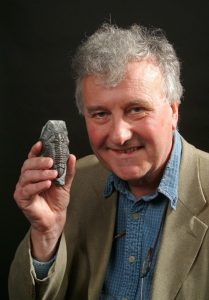
Lyell expert and enthusiast
Professor Richard Fortey is one of the most authoritative and engaging experts on the importance of Charles Lyell. A welcome supporter in the Lyell notebook campaign, he has recently been interviewed by Professor Brian Cox for the joint BBC and Royal Society series People of Science. Watch here for a persuasive account of Lyell’s scientific significance: People of Science
We’d also recommend Richard’s fascinating article on Lyell and deep geological time for the Geological Society (of which he is a past President): Lyell and Deep Time
On trial: World War 1 and the Spanish Civil War
I’m pleased to let you know that thanks to a request from an HCA student the Library currently has trial access to World War 1 and the Spanish Civil War: as reported by an Ambassador, 1863-1939 from British Online Archives. This fascinating digital archive contains over 37,000 pages from Esmé Howard’s personal and professional papers. Howard (1863-1939) is widely regarded as one of the most influential British diplomats of the early-20th century.

You can access this database from the E-resources trials page.
Access is available on and off-campus.
Trial access ends 22nd February 2020.
Howard held a number of important posts before serving as British Ambassador to the United States between 1924 and 1930. This collection contains Howard’s papers, from private correspondence to professional records. These documents provide an interesting insight into the evolution of British foreign policy during and between the two world wars. Read More
‘Norsk Hvalfangst-Tidende’ – a long run of the print periodical in the Salvesen Archive
THE SALVESEN ARCHIVE CONTAINS THE NORWEGIAN WHALING GAZETTE, FROM 1917 TO 1968 – A WEALTH OF RESEARCH ON WHALES AND WHALING FROM THE DECADES PRIOR TO THE INTERNATIONAL WHALING COMMISSION (IWC) MORATORIUM, 1986
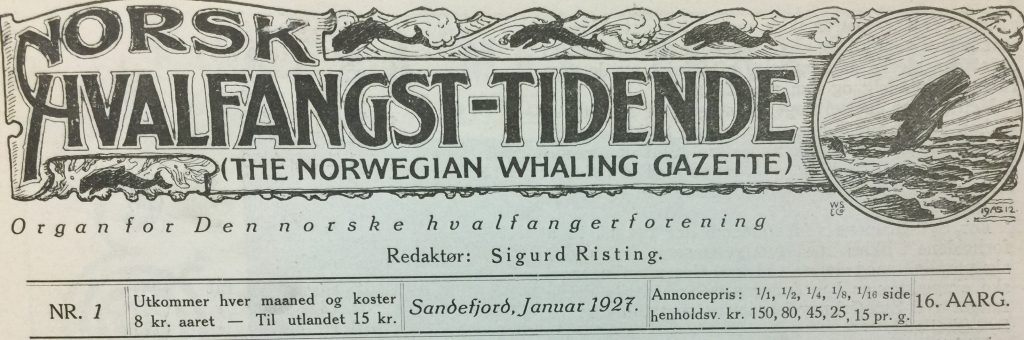 The Salvesen Archive is one of the larger collections in the care of the Centre for Research Collections (CRC). It is composed of manuscript and typescript material in the form of correspondence, diagrams, charts, accounting data, and photographs relating to some of the maritime and whaling activities of the long gone Christian Salvesen & Co. of Leith. It can be regarded as a ‘hybrid collection’ as well, containing printed pamphlets and journals, a small amount of books, and a few three-dimensional objects. Of particular interest to those keen to research the 20th century whaling industry is a reasonably long run of the periodical The Norwegian Whaling Gazette, or Norsk Hvalfangst-Tidende.

Bound copies of journal, ‘The Norwegian Whaling Gazette’ [Salvesen Archive]
Connections with the Norwegian Whaling Association became even closer on the appointment of Sigurd Risting (1870-1935) as editor in April 1922. Risting had been Secretary of the Norwegian Whaling Association. Formerly the headmaster of the local school, Risting had joined the editorial staff of the journal in June 1914.
On Risting’s death, Harald B. Paulsen (1898-1951) succeeded both as Secretary of the Whaling Association and as editor of the journal (Paulsen Peak in the Allardyce Range, South Georgia, was named after him). On his death, Einar Vangstein took over both jobs. Latterly, the journal had become a bimonthly title. In later years too, its articles appeared in both Norwegian and English.
By the late 1960s, all members of the International Association of Whaling Companies had ceased whaling and it was deemed no longer necessary for the continued publication of The Norwegian Whaling Gazette, and issue number 6, published November / December 1968, marked the end of its existence.
Articles in the journal were varied, scientific, and generally informative on many things cetacean, covering subjects such as: the determination of fat in whale meat extract; studies on the structure of baleen plates and their application to age determination; propellers for whaling ships made by KMW (Krauss-Maffei Wegmann, based in Munich); the marking of whales in New Zealand waters to measure resources; whales entangled in deep sea cables; the taxonomic position of the Pygmy Blue Whale; underwater sound from Sperm Whales; the cross-sectional anatomy of the dolphin; a new whaling station in Peru; and, the size of annual whale catches and annual seasonal oil production (indeed, throughout the life of the journal, the extent of whale catching and the size of the surviving whale was meticulously noted).
In addition, across many numbers of the journal during 1957 (Nos. 4-9), The Norwegian Whaling Gazette carried a historical narrative by the Norwegian Antarctic historian Hans Bogen, entitled Main events in the history of Antarctic exploration. Bogen also wrote a piece on Captain H. K. Salvesen for issue No. 9 of the journal in 1957.
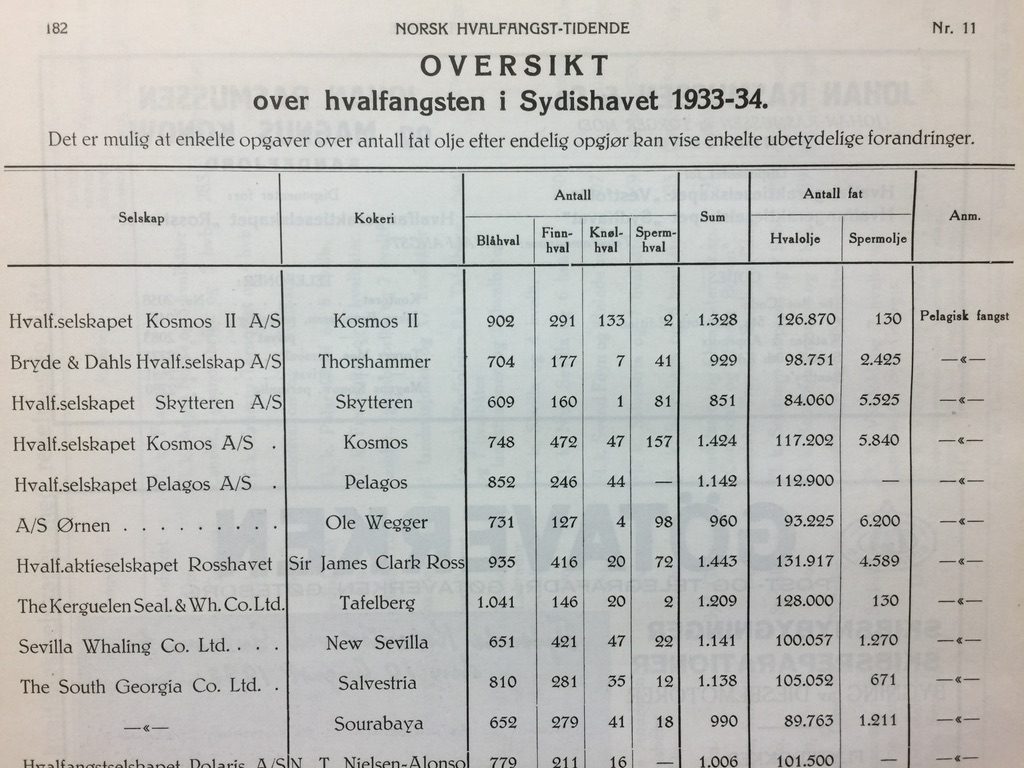
Article appearing in No.11 of ‘The Norwegian Whaling Gazette’, 1934, p.182, offering an overview of the whale catch in the Southern Ocean, 1933-34. The South Georgia Co. Ltd. was a subsidiary of Christian Salvesen Co. Ltd. and at that time the firm operated the whale factory ships ‘Salvestria’ and ‘Sourabaya’ as well as the ‘fast stasjon’ or land-based shore station at Leith Harbour, South Georgia. The other firm noted as having a shore station was Compañía Argentina de Pesca SA (the Argentine Fishing Co.) operating at Grytviken, South Georgia

The above illustrations together show a list appearing in No.11 of ‘The Norwegian Whaling Gazette’, 1934, p.182, describing the companies operating in the Southern Ocean during whale catch season 1933-1934. The columns show, from the left: name of company; type of ‘kokeri’, whether factory ship or shore station; number of whales caught, whether Blue Whale, Fin Whale, Humpback Whale (Knølhval), Sperm Whale; the combined total of all of these whale species; number of barrels of Whale Oil and Sperm Oil; and, notes on whether the production was during pelagic operations, or at a shore station
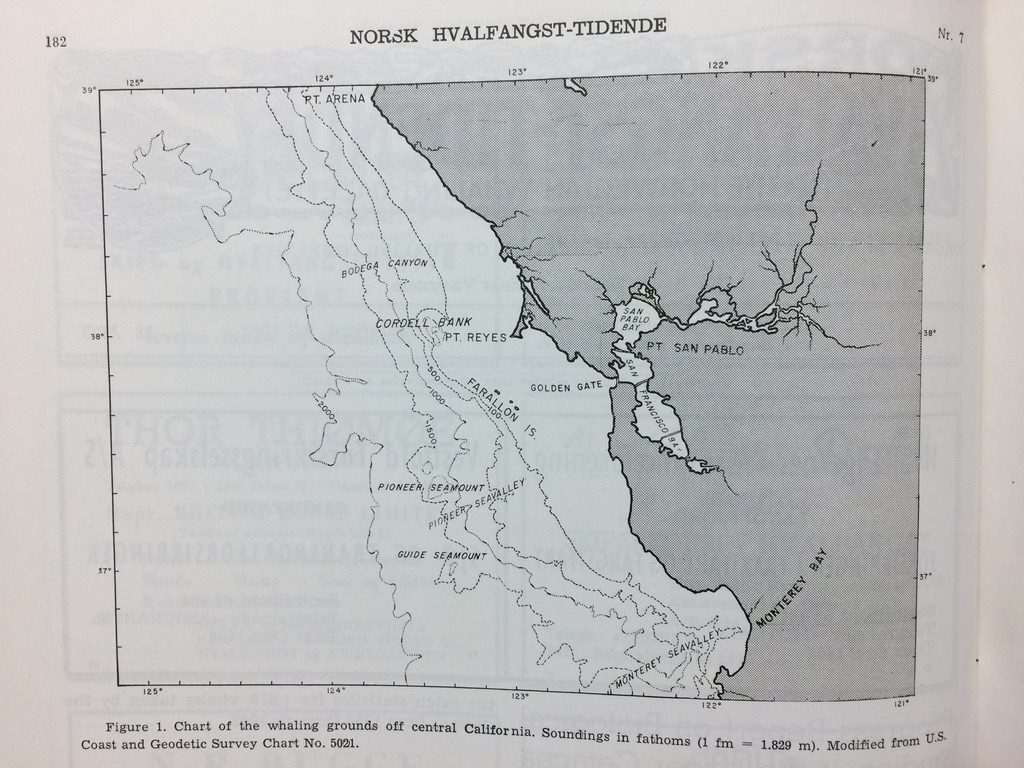
Chart of the whaling grounds off central California appearing in No.7 of The Norwegian Whaling Gazette, 1963, p.182. In the 21st century this maritime region can see 94% of migrating Pacific Grey Whales passing by, and Blue and Humpback Whales regularly feeding. Rather than facing slaughter, they are now the focus of a thriving tourist and whale watching industry. The main threats to nursing whales these days are ship propellers and Orca Whales
Advertising had provided the principal financial resource for the production of The Norwegian Whaling Gazette throughout its 57 years of life, with advertisements placed by firms involved in the supply to the whaling industry of goods and services as diverse as: industrial cookers and separators, ropes and line, whale cannons, explosives and gunpowder, marine oils and lubricants, and lowly milk powder.
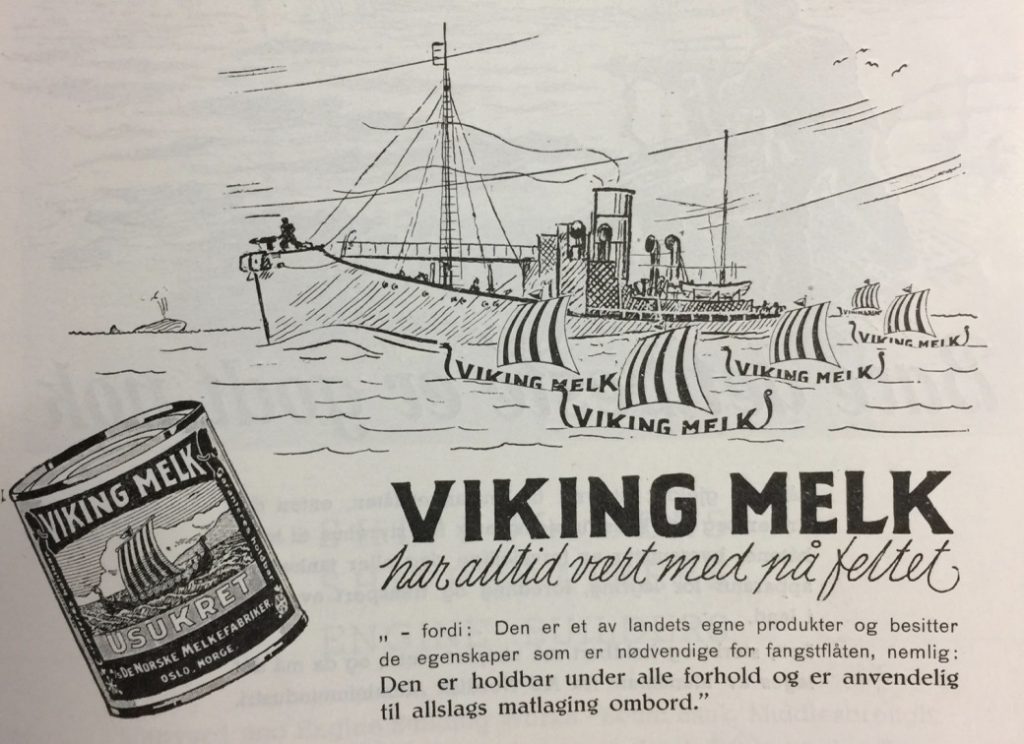
Ad’ for unsweetened ‘Viking Melk’ (dried milk powder) produced by De Norske Melkefabriker, Oslo, Norway. The firm claimed that ‘Viking Melk’ had always been ‘in the field’. Produced in Norway, the powder possessed all the characteristics necessary for use in the whaling grounds, namely: durability in all conditions and applicability to all types of cooking on board [Ad’ from an issue of ‘The Norwegian Whaling Gazette’, Salvesen Archive]
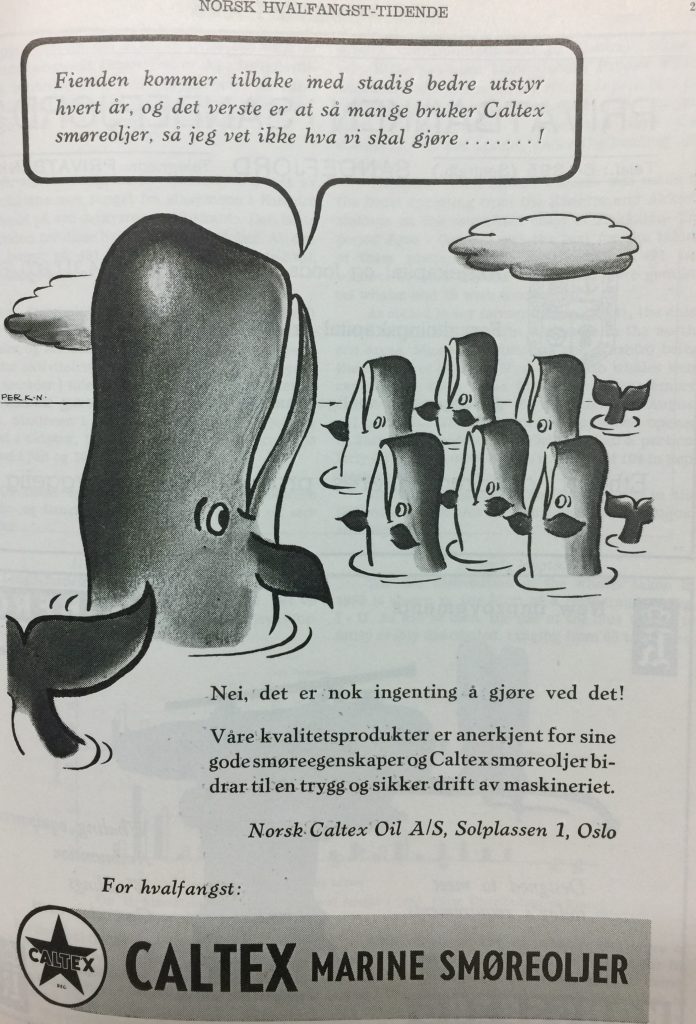
Ad’ for Caltex Marine Oils, placed by Norsk Caltex Oil A/S, Oslo, Norway. Caltex oils, the company claimed, were quality products recognized for their good lubricating properties, and Caltex lubricating oil contributed to a safe and secure operation of machinery. The ad’ was illustrated with a pod of whales. with the pod leader lamenting that the ‘enemy keeps coming with better equipment every year, the worst of it being that so many of them are using Caltex lubricating oil that I don’t know what we are going to do!’ [Ad’ from an issue of ‘The Norwegian Whaling Gazette’, Salvesen Archive]
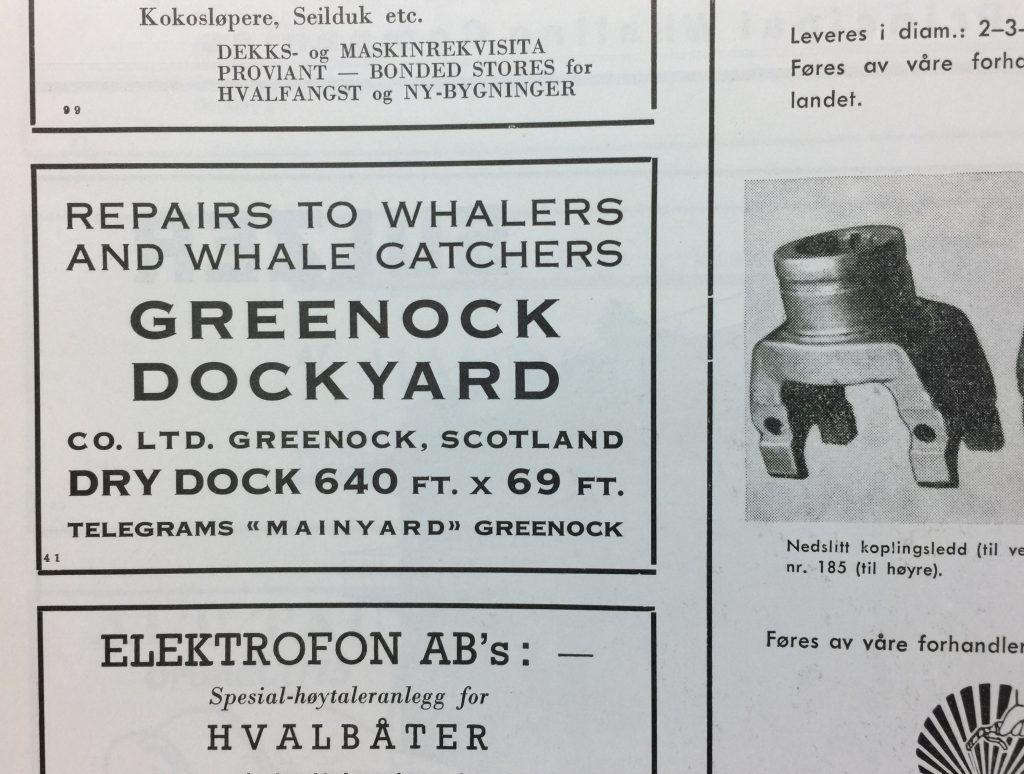
Ad’ placed by the Greenock Dockyard Company, Greenock, Scotland, a yard which built many types of vessel and performed repairs to them too. It was incorporated as Greenock Dockyard Co. Ltd. in 1920, and was earlier known as the Greenock & Grangemouth Dockyard Co., and before that had been owned by Russell & Co. of Greenock, and prior to that J. E. Scott of Greenock [Ad’ from an issue of ‘The Norwegian Whaling Gazette’, Salvesen Archive]
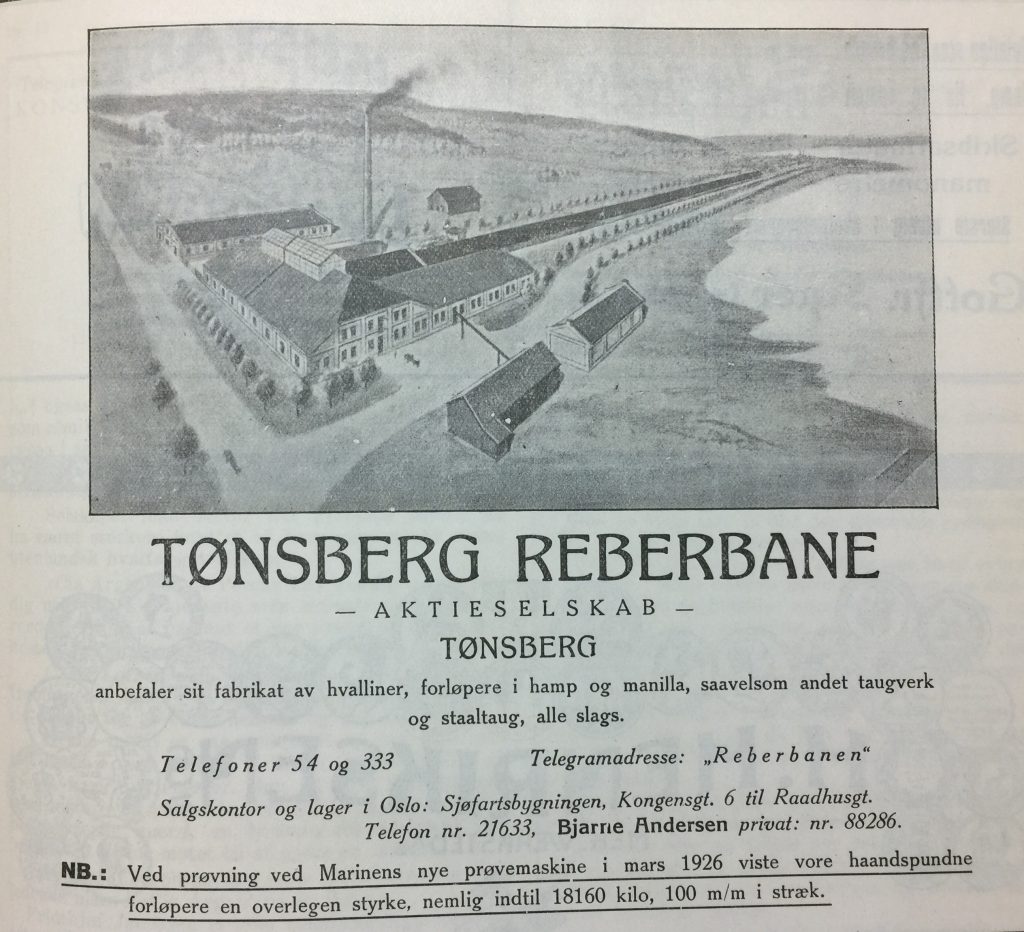
Ad’ for the former Tønsberg Reberbane AS, in Tnsberg, Vestfold, Norway. Tonsberg ropeworks….:
Graeme D. Eddie, Honorary Fellow, Centre for Research Collections, Edinburgh University Library… engaging with the Salvesen Archive of maritime trading and whaling
References:
Vangstein, Einar. ‘Editorial – The Norwegian Whaling Gazette’, Norsk Hvalfangst-Tidende, Vol.57. No.6, Nov/Dec.1968, p.117
If you have enjoyed reading this post, check out previous ones about the Salvesen Archive, or using Salvesen Archive content, which have been posted by units across CRC since 2014:
A narrative on the whaling industry: as told through a whale catch log-book and other items in the Salvesen Archive October 2019
Salvesen Archive – 50 years at Edinburgh University Library – 1969-2019 May 2019
Cinema at the whaling stations, South Georgia August 2016
Exploring the explorer – Traces of Ernest Shackleton in our collections May 2016
Maritime difficulties during the First World War – Christian Salvesen & Co. October 2015
Talk on the Salvesen Archive to members of the South Georgia Association November 2015
‘Empire Kingsley’ – 70th anniversary of sinking on 23 March 1945 March 2015
Pipe bombs, hurt sternframes, peas, penguins, stoways and cookery books: the Salvesen Archive July 2014
Whale hunting: New documentary for broadcast on BBC Four June 2014
Penguins and social life May 2014
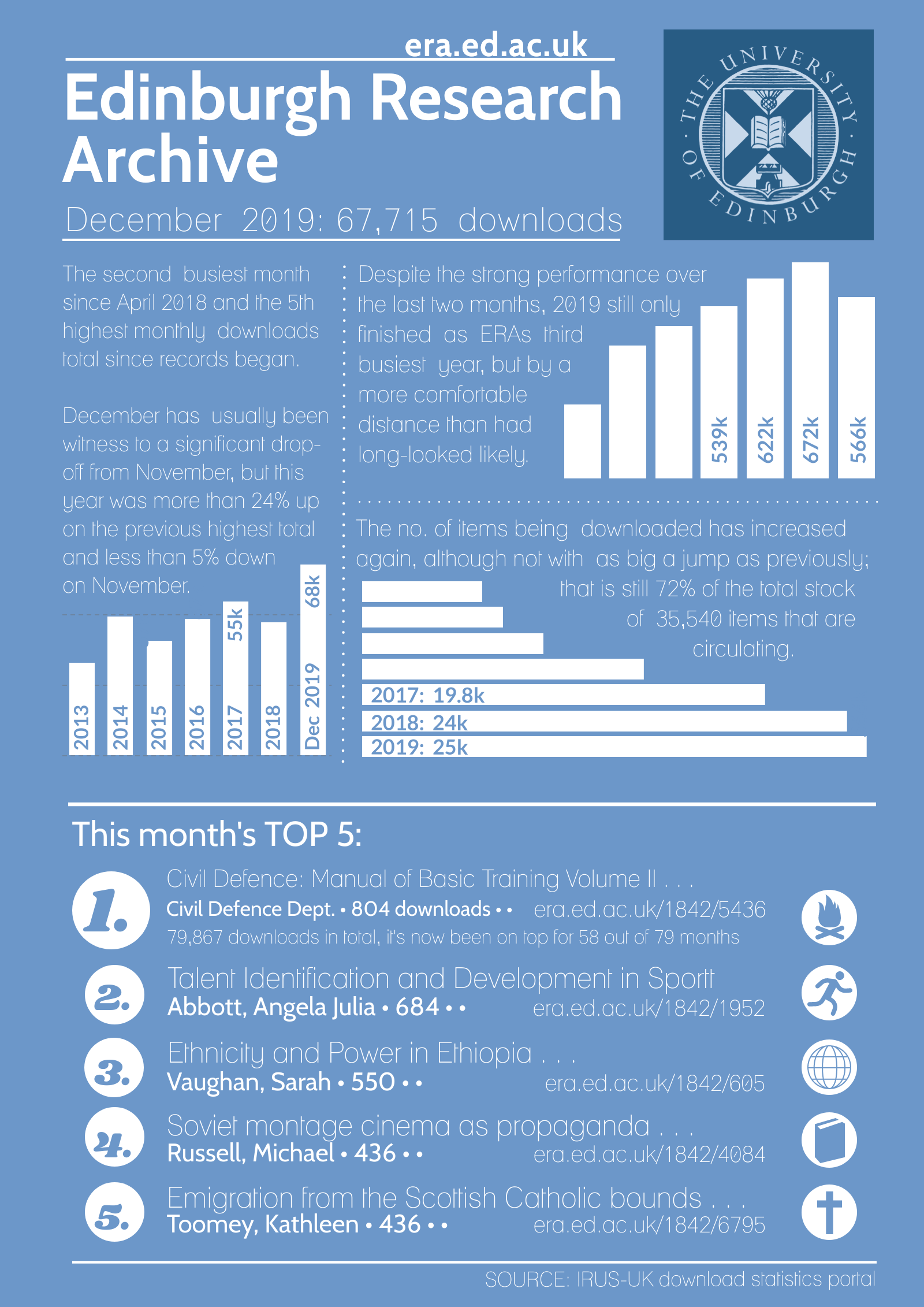
Edinburgh Research Archive Statistics: December 2019
On trial – World’s Fairs: A Global History of Expositions
Thanks to a request from a student in HCA the Library currently has trial access to World’s Fairs: A Global History of Expositions from Adam Matthew. Through this unique resource you can explore the phenomenon of world’s fairs from the Crystal Palace in 1851 and the proliferation of North American exhibitions, to fairs around the world and twenty-first century expos.

You can access from the E-resources trials page.
Access is available on and off-campus.
Trial access ends 14th February 2020.
World’s Fairs brings together for the first time official records, monographs, personal accounts and ephemera, including publicity, artwork and artifacts, for more than 200 fairs this collection offers a fascinating insight into international expositions. Read More
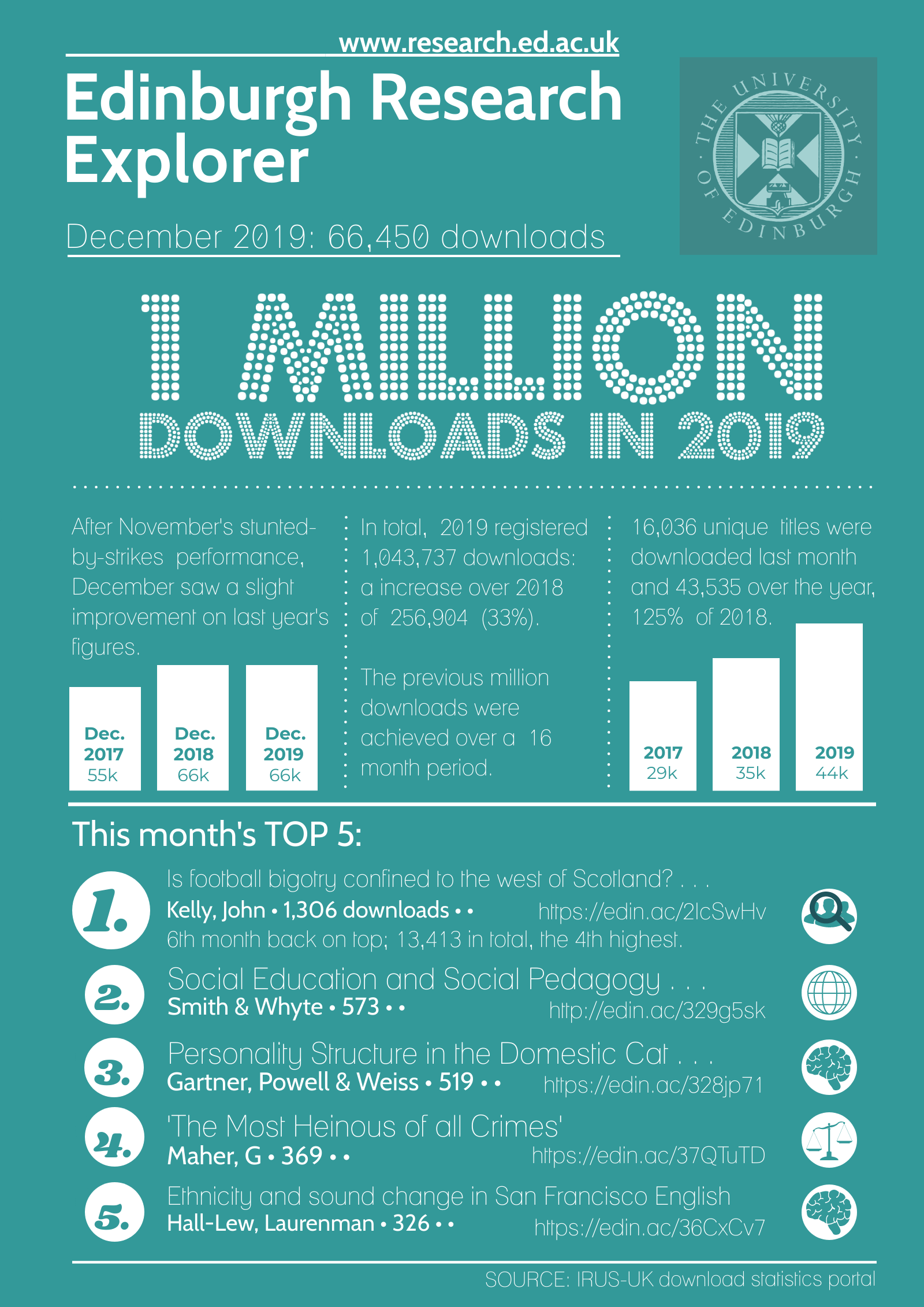
Edinburgh Research Explorer Statistics: December 2019
January Journal Club : Supporting systematic review for researchers
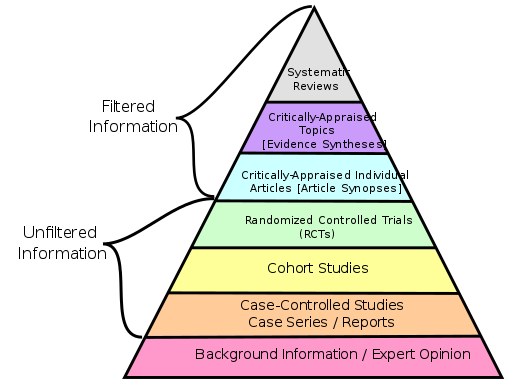
Research Design and Evidence Wikipedia Commons : https://creativecommons.org/licenses/by-sa/4.0
The first Journal Club of 2020 met on 8 January to talk about : Dalton, M., 2019. How individual consultations with a librarian can support systematic reviews in the social sciences. Journal of Information Literacy, 13(2), pp.163–172.
Our first discussion question was whether this article sufficiently defines what a systematic review is, and whether this is understood by student researchers in the social sciences. A key question we ask students in our courses is if they should be doing a systematic review at all. Systematic reviews entail very precise methodologies which can result in a large and time consuming piece of work. We find that in the social sciences, what many students want is to review the literature systematically, which is not the same. Read More
Collections
 Hill and Adamson Collection: an insight into Edinburgh’s past
My name is Phoebe Kirkland, I am an MSc East Asian Studies student, and for...
Cataloguing the private papers of Archibald Hunter Campbell: A Journey Through Correspondence
My name is Pauline Vincent, I am a student in my last year of a...
Hill and Adamson Collection: an insight into Edinburgh’s past
My name is Phoebe Kirkland, I am an MSc East Asian Studies student, and for...
Cataloguing the private papers of Archibald Hunter Campbell: A Journey Through Correspondence
My name is Pauline Vincent, I am a student in my last year of a...
Projects
Cataloguing the private papers of Archibald Hunter Campbell: A Journey Through Correspondence
My name is Pauline Vincent, I am a student in my last year of a...
Archival Provenance Research Project: Lishan’s Experience
Presentation My name is Lishan Zou, I am a fourth year History and Politics student....