Home University of Edinburgh Library Essentials
May 10, 2026
New Book in LUNA Book Reader
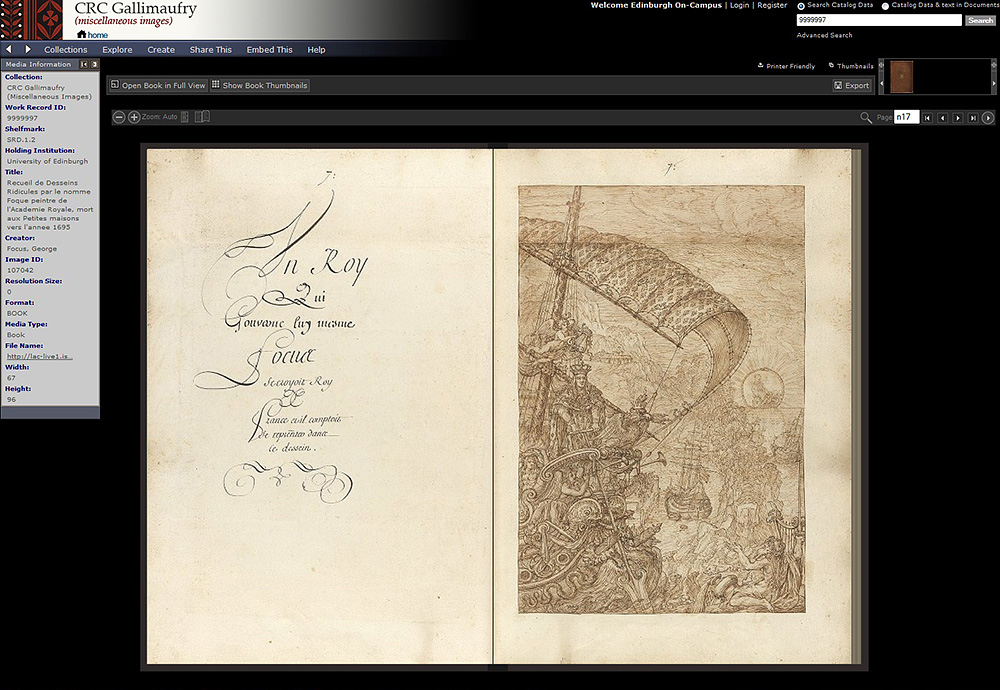
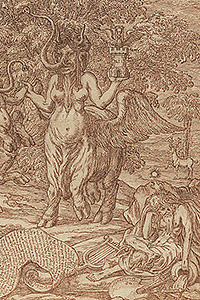
Last month we digitised the fantastic Recueil de Desseins Ridicules, 1695 by George Focus (shelfmark SRD.1.2) for an order, but were so fascinated by the images that we thought it worthy of further investigation. However, all we have really been able to find out is that he was born in Chateaudun circa 1639/40, that he was influenced by Nicolas Poussin & Gaspard Dughet & that he spent much of his adult life insane & “Confined to small houses” where he died in 1708.
The DIU would like to thank our Volunteer, Noah Salaman, for all the work he did prepping these images to go into the book reader software. We think this book has great potential for a crowd-sourcing project to transcribe & translate the text on each of the drawings- watch this space!
The Book Reader can be viewed at http://images.is.ed.ac.uk/luna/servlet/s/jedr3j
Or, you can zoom in on the full size pages at http://images.is.ed.ac.uk/luna/servlet/s/y3zwbv
From slave trader to ‘Amazing Grace’ – John Newton
![[Newton, John] / An authentic narrative of some remarkable and interesting particularas in the life of ********* ... London, 1786.](https://libraryblogs.is.ed.ac.uk/newcollegelibrarian/files/2013/07/z-1188.jpg)
[Newton, John] / An authentic narrative of some remarkable and interesting particularas in the life of ********* … London, 1786. New College Library Z.1188
In 1764, the year he was ordained as an Anglican priest, his Authentic Narrative appeared and quickly became a bestseller. Newton’s early life as a seaman slave trader coloured his experiences in later life, when he wrote and campaigned against slavery and is known to have met and advised William Wilberforce. He was a prominent hymn writer, and his legacy lives on today in the well known hymn ‘Amazing Grace’ .
New College Library has this sixth edition, at Z.1188, published in 1786, but it went through ten British and eight American editions before the end of the century. It was quickly translated into several other languages – New College Library also holds a Gaelic edition at Gaelic Coll. 137.
Sources
D. Bruce Hindmarsh, ‘Newton, John (1725–1807)’, Oxford Dictionary of National Biography, Oxford University Press, 2004; online edn, May 2010 [http://www.oxforddnb.com/view/article/20062, accessed 18 July 2013]
Open Access journal Concept publishes summer issue

Concept, The Journal of Contemporary Community Education Practice Theory has published its Summer 2013 issue.
As well as a contribution from internationally respected and well published academic, Mike Newman there is an article from Jo Northedge, a current student on the Community Education Msc programme at Moray House. Their articles characterise one of the key purposes of the journal, which is to encourage writers other than academics to contribute.
The first issue of Concept was published in the Spring of 1991. After a long and successful life in print, in late 2009, with the support of the library, Concept published the first online issue of the journal using Open Journal Systems (OJS).
There have been a variety of special issues and discrete publications on themes including including Youth Work, Participation, Citizenship and Community Development.
The new issue and a full archive of the online issues are available on the journal site: http://concept.lib.ed.ac.uk
LUNA highlights available on Flickr
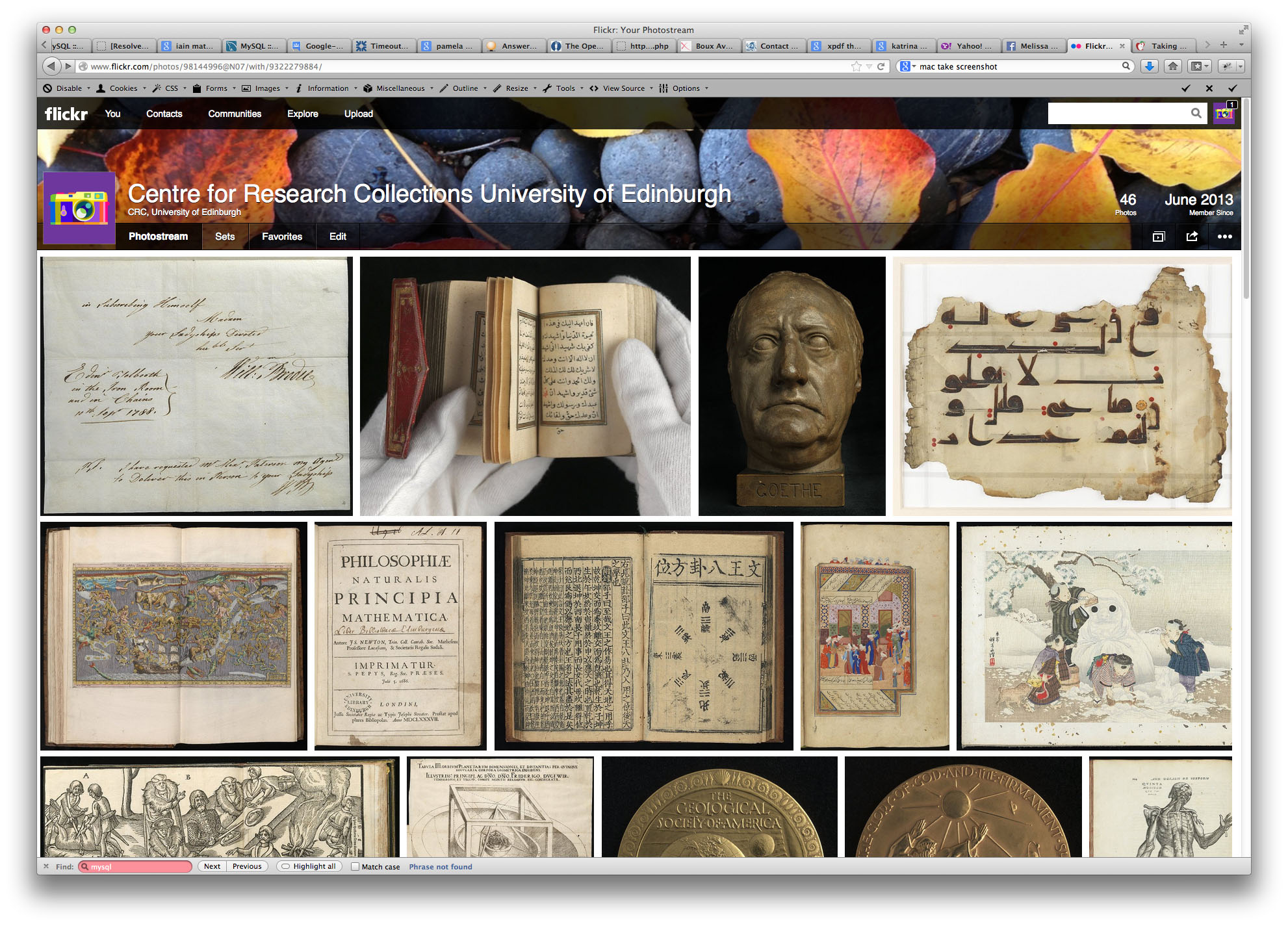
The CRC’s image collection is available through the LUNA image discovery tool, and can be accessed here.
This is great, but there’s a need to get the collections well-publicised, through as many means as possible, and because of this, the Digital Imaging Unit advised that a linked Flickr site would be a good vehicle to draw users in. The Digital Library Development team investigated ways of linking LUNA data to Flickr, and came up with a solution that involved interrogating the LUNA database, populating some MySQL tables, and using PHP to generate Flickr-compatible XML. From here, the Flickr App garden- an ‘Aladdin’s Cave’ of useful interfaces to Flickr resources- was checked to find a suitable load API, and indeed we found one. The results can be seen here:
Metadata for the records includes Title, Rights Statement, Description, Tags (Creators, Subjects, Ids, Shelfmarks) and a link back to the high resolution LUNA record.These highlights have had their metadata enriched by volunteers to improve the presentation of the records. However, there is a lot of work to be done to get all of LUNA up to this standard, and we’re aware of the need for more cataloguers. Could crowdsourcing be a valid approach to this? There’s a debate for another post!
Thanks to DIU interns Alice Tod and Jessica Macaulay for their hard work on these items.
Analogue Photoshop?
This week we started a trial – photographing some Glass Lantern Slides for the Towards Dolly Project, & one of the first images we took showed that there is nothing new under the sun…
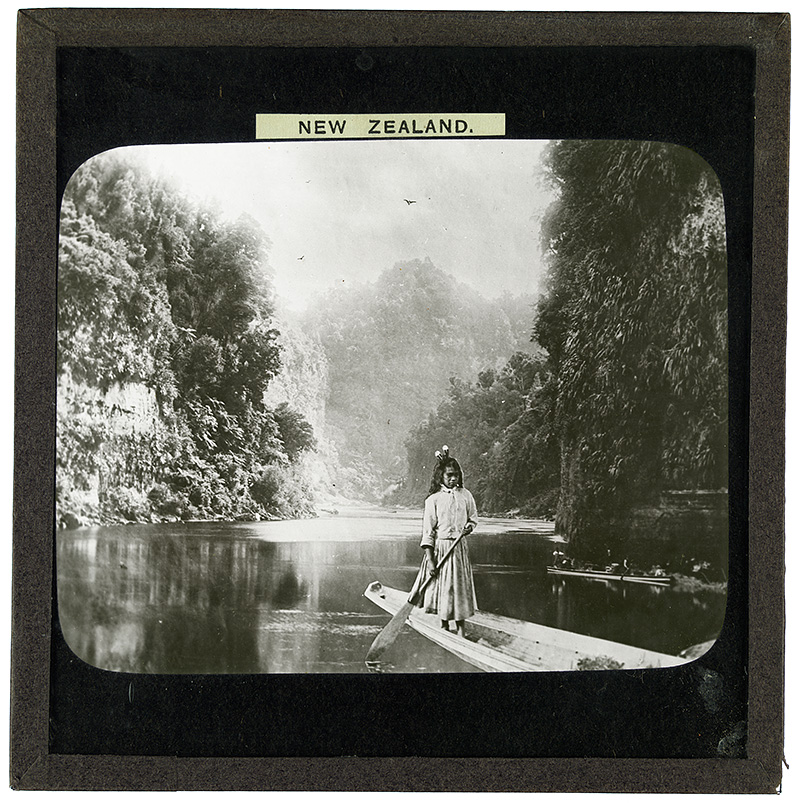
GB 237 Coll-1434 (Box 4), Roslin Glass Slides. The Drop Scene Two Miles Up the Wanganui River, New Zealand. Photograph of a Maori girl standing on a canoe at ‘the drop scene two miles up the Wanganui River’ in New Zealand in the late 19th or early 20th century. In the background there is another canoe, jungle and mountains.
Although this slide was produced in the early 20th C, there is clear evidence of photo manipulation. Once we zoomed in on the image it became clear that the Maori Girl in her Canoe on New Zealand’s Wanganui River was in fact a fraud! Sunlight doesn’t often come from 2 directions, nor does perspective suddenly alter proportions (compare the girl’s canoe with the smaller canoe behind her). Furthermore, she has the classic ‘cut-out’ look of early photo-montages. Despite this, on the small 8cm x 8cm original, it is hard to spot at a glance- one of the unexpected bonuses of digitisation is the ability to zoom in on small details.
Click on the image below to see a larger version.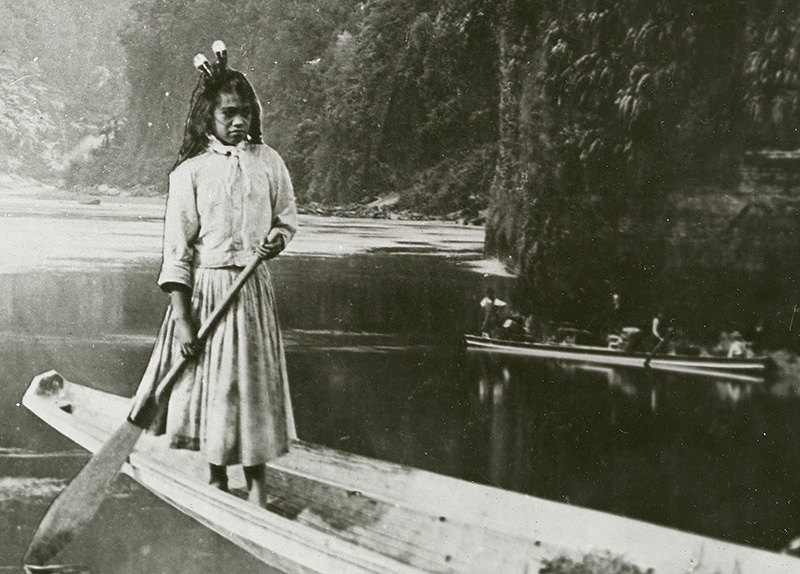
Shiny New Camera Arrives in the DIU
Last week saw the delivery of our brand new camera- the Hasselblad H5D-200MS. This camera is hot off the press with only a few in the country so far. Capable of capturing high quality files up to an astonishing 570MB, this should be fantastic for shooting exhibition images when large format printing is called for. The addition of a second copy unit will also help us to gear up towards increasing the departments output.
More information about the camera can be found at http://www.hasselblad.co.uk/promotions/h5d.aspx
ECA Collection at the Annexe : Dame Blackadder
A series of articles on the relationship between the Library Annexe and the ECA.
One of the gems being stored out at the Annexe amongst the ECA Collection is the below oil panting by Dame Elizabeth Violet Blackadder.

Tuscan Landscape by Elizabeth V. Blackadder, Oil on paper, 51 x 71 cm, Collection: ECA part of University of Edinburgh Fine Art Collection
A Scottish painter and printmaker, in 1962 Blackadder began teaching at Edinburgh College of Art where she continued until her retirement in 1986.
She is the first woman to be elected to both the Royal Scottish Academy and the Royal Academy.
Her work can be seen at the Tate Gallery, the Scottish National Gallery of Modern Art, and the Museum of Modern Art in New York, and has appeared on a series of Royal Mail stamps.
If you are interested in the paintings stored out at the Annexe, the BBC have digitised the collection and made it available on the web page ‘Your Paintings’.
Stephanie Farley (Charlie), Library Annexe Assistant
Research Data Management: good news fit to print!
Congratulations to Digital Curation Centre staffer Sarah Jones, who co-authored an article about UK University RDM initiatives with Jisc Programme Manager Simon Hodson in the Guardian Higher Education Network pages today:
“Seven rules of successful research data management in universities: Sound research rests on the ability to evidence, verify and reproduce results – managing your data enables all three.”
Sarah is helping the University develop support for Data Management Planning towards its RDM Roadmap goals as part of the DCC’s 21 institutional engagements providing tailored support to increase research data management capability.
A number of direct and indirect pointers to the University of Edinburgh’s work appear in this concise but well-presented piece, including the Research Data MANTRA online course, the formation of an RDM Steering Group, a roadmap to address EPSRC data sharing requirements, online guidance for staff, and librarian training.
John Calvin – Works and Correspondence now available online
![By Flemish school (Unknown) [Public domain], via Wikimedia Commons. On permanent display in Espace Ami Lullin of the Bibliothèque de Genève.](https://libraryblogs.is.ed.ac.uk/newcollegelibrarian/files/2013/07/488px-john_calvin_-_young.jpg)
John Calvin 1509-1564. By Flemish school (Unknown) [Public domain], via Wikimedia Commons.
On permanent display in Espace Ami Lullin of the Bibliothèque de Genève.
Online access for University of Edinburgh users is available via the Past Masters Database – see http://www.ed.ac.uk/is/databases-a-z under ‘P’.
This resource was purchased for the forthcoming Calvin in Context course at the School of Divinity, University of Edinburgh.
The Centre for Research Collections has launched a competition online using DIU Images!
The Centre for Research Collections is trying to find one image from the vast and immensely diverse Collections to stand out and proudly represent it. Some of the highlights captured by the Digital Imaging Unit have been selected and a Facebook competition asking people to help find the Iconic Image of the CRC was launched!
Some of the Treasures nominated for the best and most iconic image are various books from the William Shakespeare Collection, different beautiful medieval and oriental manuscripts, musical instruments and other objects which all deserve to win. However, only the one which receives the most Likes will win the competition!
Please vote for the image you like and think best embodies the Centre and its Collections!
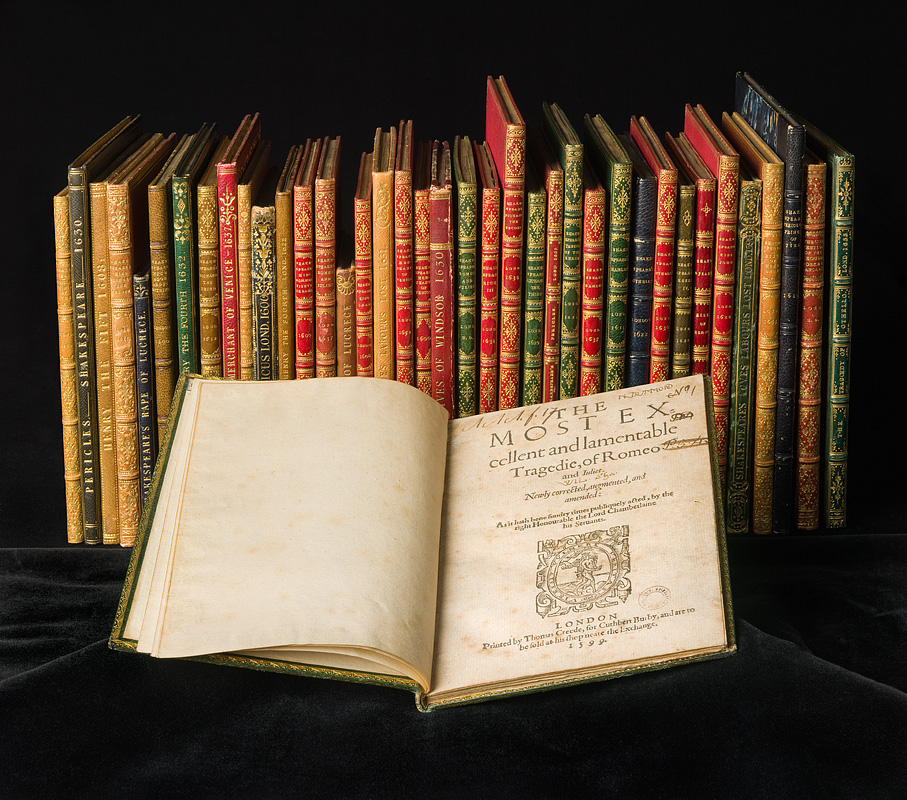
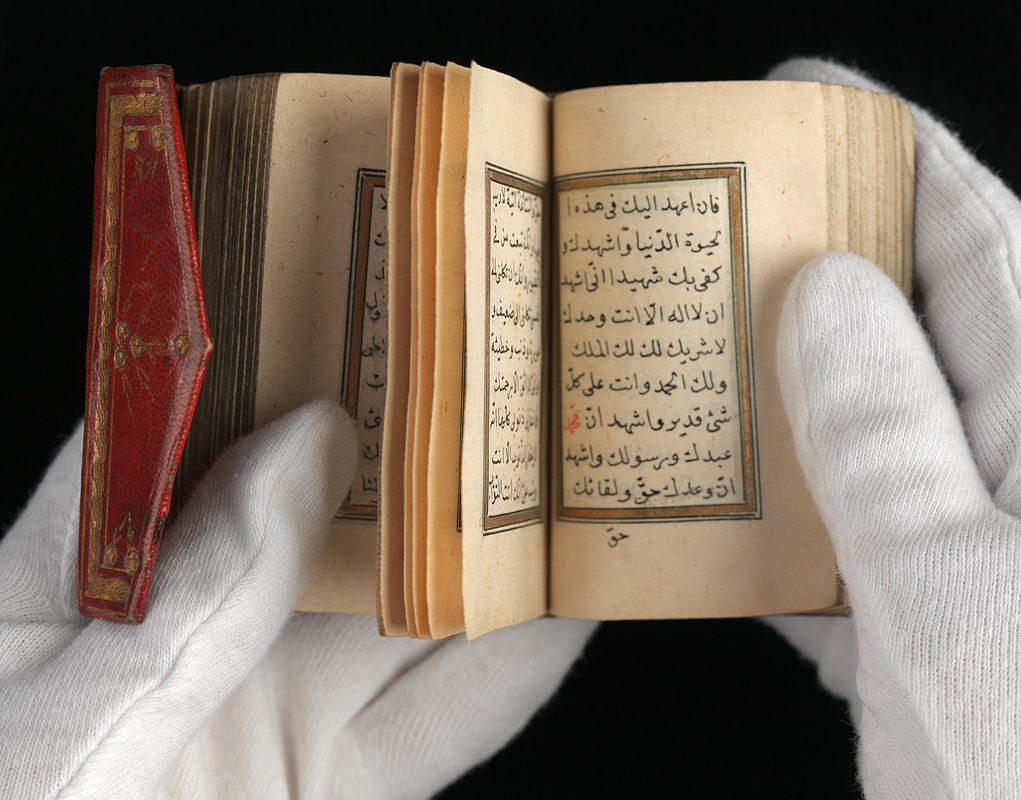
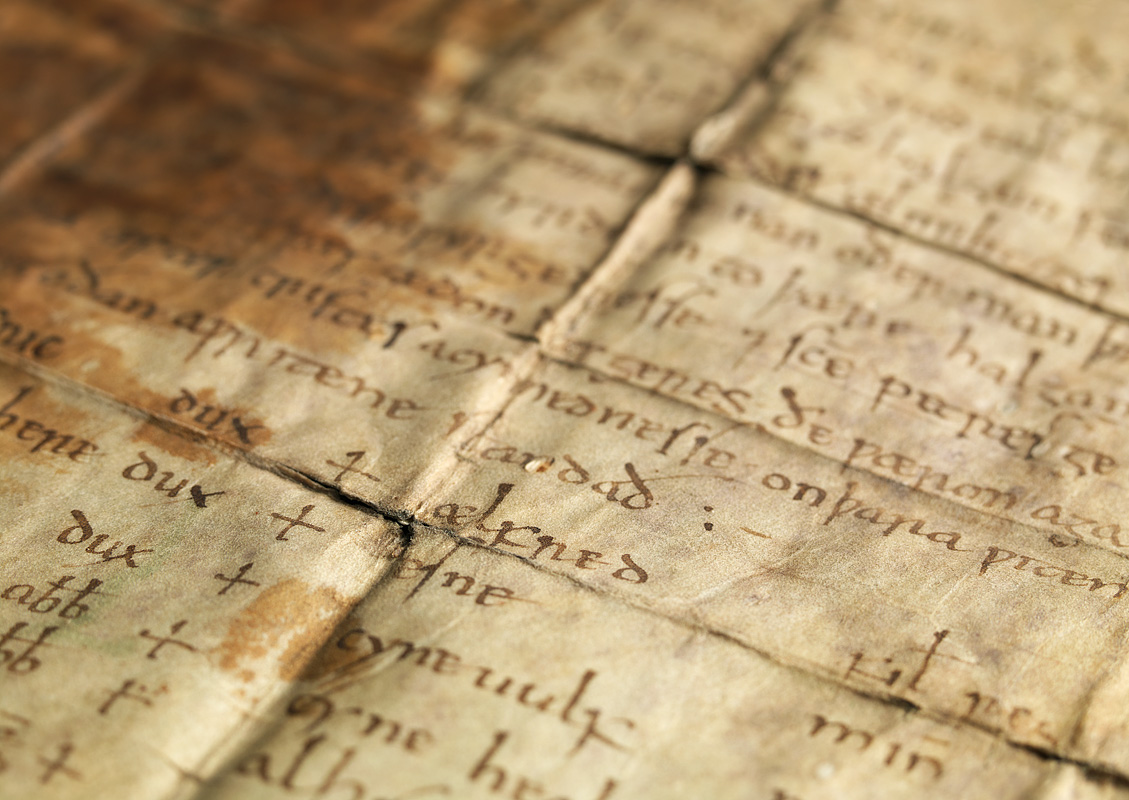
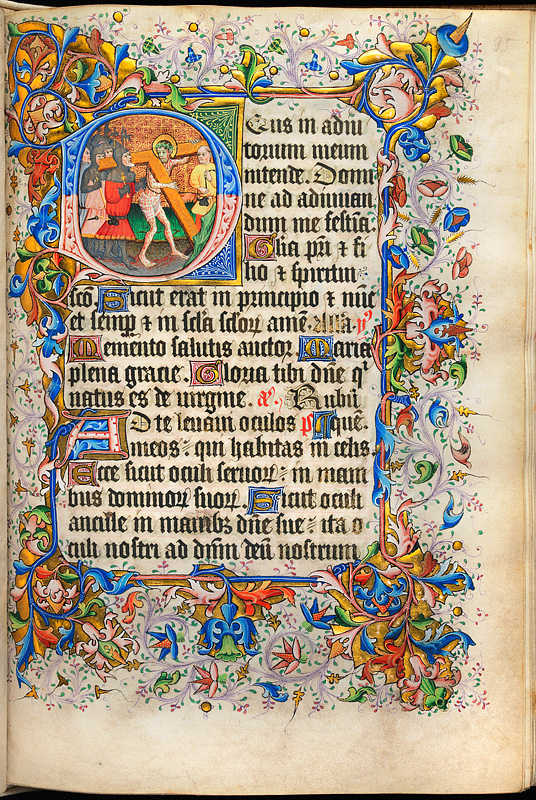

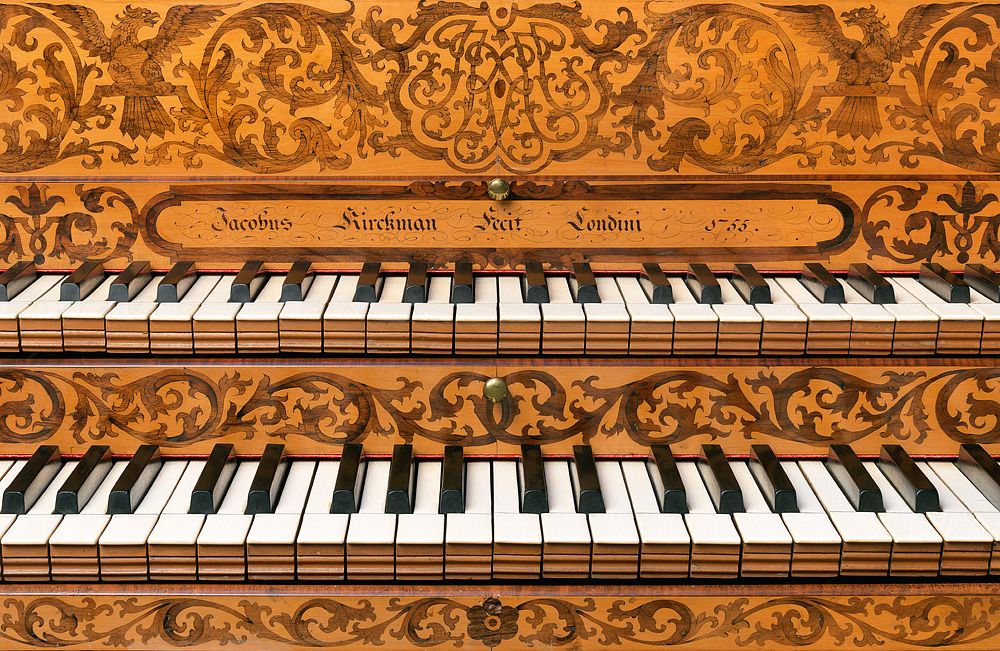
The CRC is looking forward to announcing the winner in the near future, so keep tuned for more updates and follow the Facebook page: https://www.facebook.com/crc.edinburgh
Collections
 Hill and Adamson Collection: an insight into Edinburgh’s past
My name is Phoebe Kirkland, I am an MSc East Asian Studies student, and for...
Cataloguing the private papers of Archibald Hunter Campbell: A Journey Through Correspondence
My name is Pauline Vincent, I am a student in my last year of a...
Hill and Adamson Collection: an insight into Edinburgh’s past
My name is Phoebe Kirkland, I am an MSc East Asian Studies student, and for...
Cataloguing the private papers of Archibald Hunter Campbell: A Journey Through Correspondence
My name is Pauline Vincent, I am a student in my last year of a...
Projects
Cataloguing the private papers of Archibald Hunter Campbell: A Journey Through Correspondence
My name is Pauline Vincent, I am a student in my last year of a...
Archival Provenance Research Project: Lishan’s Experience
Presentation My name is Lishan Zou, I am a fourth year History and Politics student....