Home University of Edinburgh Library Essentials
June 18, 2026
Electronic Laboratory Notebooks – help or hindrance to academic research?
On the 30 October 2013 the University of Edinburgh (UoE) organised what I believe to be the first University wide meeting on Electronic Lab Notebooks (ELN), and allowed a number of Principal Investigators (PIs) and others the opportunity to provide useful feedback on their user experiences. This provided an excellent opportunity to help discuss and inform what the UoE can do to help its researchers, and whether there is likely to be one ‘solution’ which could be implemented across the UoE or if a more bespoke and individual/discipline specific approach would be required.
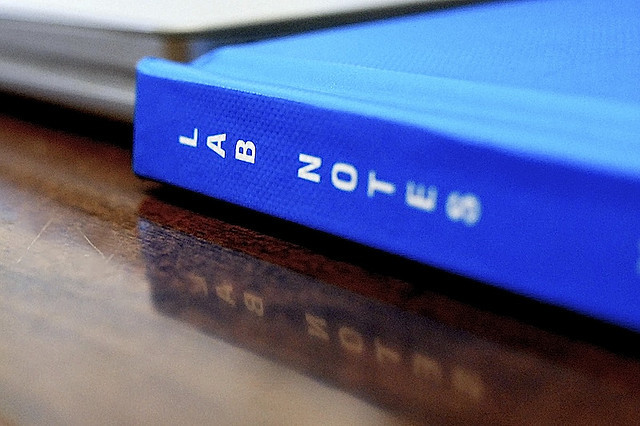
Lab Notes by S.S.K. – Flickr
Good research and good research data management (RDM) stem from the ability of researchers to accurately record, find, retrieve and store the information from their research endeavours. For many, but by no means all, this will initially be done by recording their outputs on the humble piece of paper. Albeit one contained within a hardbound notebook (to ensure an accurate chronological record of the work) and supplemented liberally with printouts, photographs, x-rays, etc. and reminders of where to look for the electronic data relevant to the day’s work (ideally at least).
Presentations from University researchers
Slides from these presentations are available to UoE members via the wiki.
The event kicked off with a live demonstration from the member of the School of Physics & Astronomy, and his positive experiences with the Livescribe system. This demonstration impressively articulated the functions of the electronic pen, which allows its user to record, stroke by stroke, their writings, and pass on this information either as a movie or document to others, and store the output electronically. Although there were some disadvantages noted, such as the physical size of the pen and the reliance on WiFi for certain features, and that to date, only certain iOS 7 devices are supported (although this list will grow in 2014). Clearly, this device has had a positive effect on both the presenter’s research and teaching duties. However the livescribe pen does not in itself help address how to store these digital files.
The remainder of the presentations from the academic researchers were from the fields of life science, although their experiences were quite diverse. This helpfully provided a good set-up for a healthy discussion, on both ELNs and indeed the wider aspects of RDM at the UoE.
Of the active researchers who presented, two were PIs from the School of Molecular, Genetic and Population Health Sciences and one was a postdoctoral researcher from the School of Biological Sciences. All three had prior experience in using previous versions of ELNs, and had sought an ELN to address a range of similar issues with paper laboratory notebooks.
Merits and pitfalls of electronic notebooks
I have chosen not to provide feedback on the specific ELNs trialled here, but the software discussed was Evernote, eCAT, and Accelyrs, and as the UoE does not recommend or discourage the use of any particular ELN to-date, I won’t either.
In all cases these electronic systems were purchased for help with key areas:
Motivation/Benefits
- Searchable data resource
- Safe archive
- Sharing data
- Copy and paste functions
- Functionality for reviewing lab member’s progress
- Ability to organise by experiments (not just chronologically)
- One system to store reagents/freezer contents with experimental data
And in general, key problematic issues raised with these systems were:
Barriers/Problems
- Need for reliable internet access
- Hardware integration into lab environment
- Required more time to document and import data
- Poor user interface/experience
- Copy and paste functions (although time-saving, may increase errors as data are not reviewed)
- Administration time by PI is required
- PhD students and postdocs (when given the choice*) preferred to use paper notebooks
*it was mooted that no choice should be given.
Infrastructure
A common theme with the use of ELNs was that of the hardware, and the reliance on WiFi. Clearly when working at the bench with reagents that are potentially hazardous (chemicals, radiation, etc) or with biologicals that you don’t wish to contaminate (primary cell cultures for instance) the hardware used is not supposed to be moved between such locations and ‘dry areas’ such as your office. A number of groups have attempted to solve this problem by utilising tablets, and sync to both the “cloud” and their office computers, and this is of course dependent on WiFi. Without WiFi, you might unexpectedly find yourself with no access to any of your data/protocols, which leads to real problems if you are in the middle of an experiment. Additionally this requires the outlay of monies for the purchase of the tablets, and provides a tempting means of distraction to group members (both of which may be frowned upon by many PIs). This monetary concern was identified as a potential problem for the larger groups, where multiple tablets would be required.
Research Data Management & Electronic Laboratory Notebooks
From an RDM perspective the subsequent discussions raised a number of interesting issues. Firstly, as a number of these ELN services utilise the “cloud” for storage, it was clear that many researchers, PIs included, were unaware of what was expected from them by both their funding councils and the UoE.

Secure Cloud Computing by FutUndBeidl – Flickr
The Data Protection Act 1998 sets out how organisations may use personal data, and the Records Management Section’s guidance on ‘Taking sensitive information and personal data outside the University’s secure computing environment’ details the UoE position on this matter, but essentially all sensitive or personal information leaving the UoE should be encrypted. This guidance would seem not to have reached a significant proportion of the researchers yet.
ELN? – not for academic research!
Whilst the first two presentations were broadly supportive of ELNs, the third researcher’s presentation was distinctly negative, and he provided his interpretation on the use of an ELN in an academic setting. Although broadly speaking this presentation was on one product, it was made clear that his opinions were not based on one ‘software product’ alone. In this case the PI has since abandoned the ELN (after four years of use and requiring his lab members to use it), citing reasons of practicality; it took too long to document the results (paper is always quicker), there is no standard for writing up documentation online**, and the data have effectively been stored twice.
He was also of the strong opinion that the use of ELNs:
“were not going to improve your research quality – it’s for those who want to spend time making their data look pretty.”
And –
“it is not for academic research, but more suited for service labs and industry.”
These would seem to be viewpoints that cannot easily be addressed.
The role of the PI
**Of course this is also true for paper versions, with the National Postdoctoral Association (USA) noting in their toolkit section on ‘Data Acquisition, Management, Sharing and Ownership’ that with the multinational approach to research that:
“many [postdocs] may prefer to keep their notes in their native language instead of English. Postdoc supervisors need to take this into consideration and establish guidelines for the extent to which record keeping must be generally accessible.”
The role of the PI cannot be overlooked in this process and to-date, even if a paper notebook is utilised, there is often no standard to observe.
The next generation of ELNs
Despite these concerns ResearchSpace Ltd are poised to release the next generation of an ELN, with an enterprise release of their popular eCAT ELN, to be called RSpace. The RSpace team seem confident that they are both aware and capable of addressing these various user requirements and it will certainly be interesting to see how they get on. Certainly they provided clear evidence of improved user interfaces, enhanced tools, knowledge of University policy, with the prospect of integration into the existing UoE digital infrastructure, such as the data repository, Edinburgh DataShare.
Researcher engagement
Importantly whilst this programme identified concerns and benefits with the various software systems available, it also highlighted issues with the UoE dissemination of RDM knowledge to the research community, and so perhaps fittingly the last word will be from the chair:
“The University has a lot of useful information on this area of data management; please look at the research support pages!”
So the fundamental question remains, what is the best way to engage researchers in RDM and how can we best address this need at all levels?
Links
- Research data management guidance
- Overview of data protection
-
Electronic Lab Notebooks at The University of Edinburgh – wiki notes/slides
David Girdwood
EDINA & Data Library
Photographing Geology Specimens
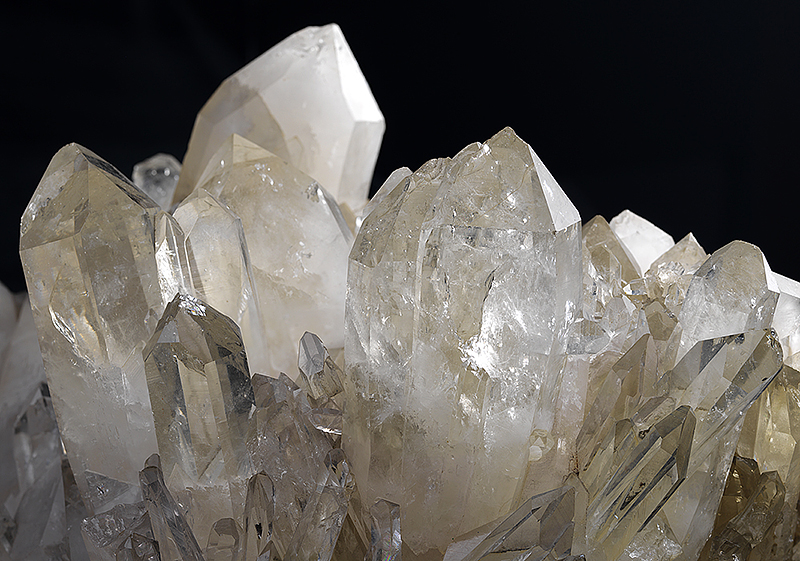
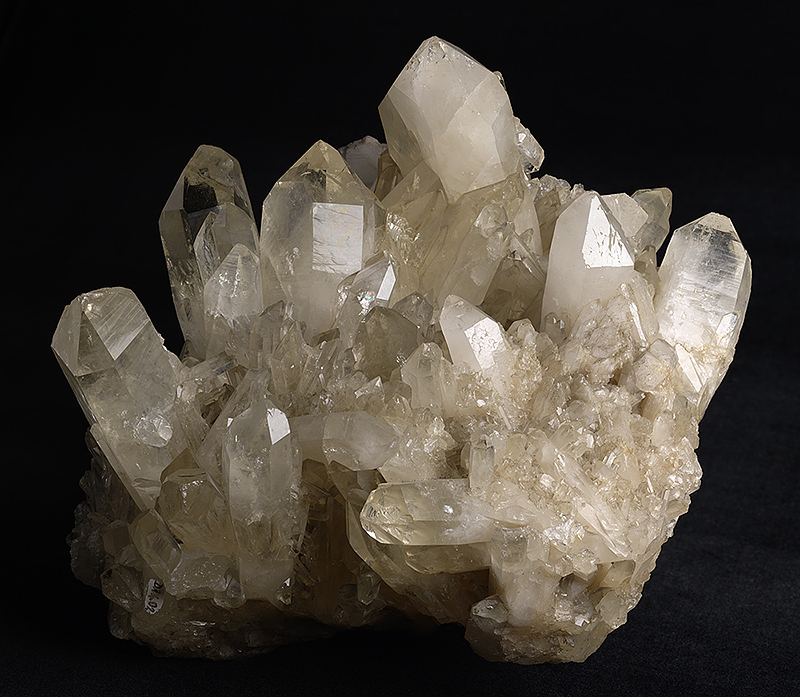
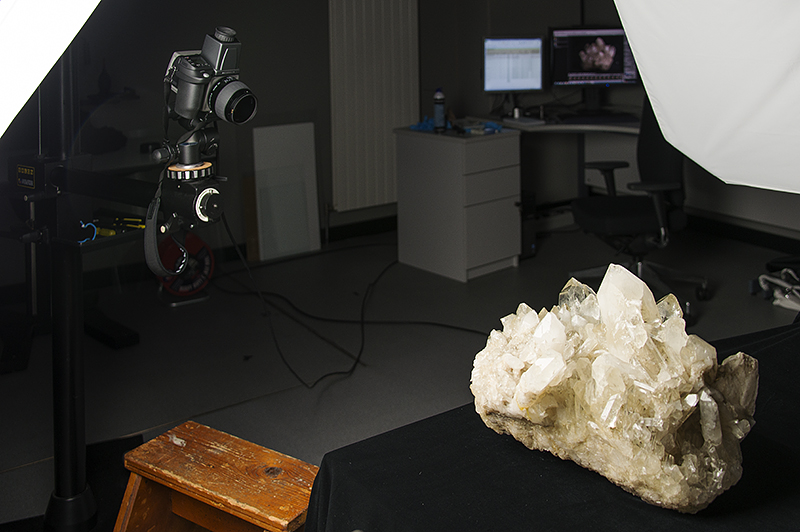
This image of Quartz crystals was commissioned for exhibition at University of Edinburgh Main Library but has also found a home at the School of Geo Science website http://www.geos.ed.ac.uk/facilities/ionprobe/TiQuartzStandards/ The image was created using 9 separate exposures each focusing on a different part of the crystal. Those were then imported into Photoshop as separate layers and a layer mask was added to each layer. Using the mask on each layer its was possible to hide or reveal parts of each individual exposure. This technique was used to create an image where many areas are in sharp focus to highlight the rich details of the crystal. The studio set up for this type of work consumes a lot of physical working space as demonstrated in the studio shots which can be seen below.
Malcolm Brown
Chinese rare books on display for Peking University at Edinburgh Day
 New College Library was part of the University of Edinburgh’s Peking at Edinburgh day on Monday 18 November with a display of Chinese items from our Special Collections. These included the beautiful Mustard Seed Garden Manual of Painting (Inglis 23). This is a classic treatise of calligraphic art on silk, by calligraphers Wen-Yuan T’ang and Chin-Ch’ang in 1682.
 Also on display was Robert Morrison’s Chinese New Testament (Inglis 20). Robert Morrison (1782–1834) arrived in China in September 1807, on the commission of the London Missionary Society first to learn Chinese, and then to make a Chinese translation of the Bible.
 We were also pleased to have on display a rare item from the Centre for the Study of World Christianity Archives, an Imperial Edition of the New Testament. Thank you to Dr Alexander Chow for providing this information about the item :
“This is a rare edition of the New Testament presented by a group of female missionaries to the Empress Dowager Cixi, on the occasion of her 60th birthday in 1894. The Bible is a Shangdi edition of the Delegates Version, printed in classical wenli Chinese by the American Bible Society. This particular copy was presented to the Church of Scotland missions hospital by the American Bible Society in October 1903. There were 250 copies of this Bible printed.”
Wallace on War: WWI Images in the Roslin Glass Slides Collection
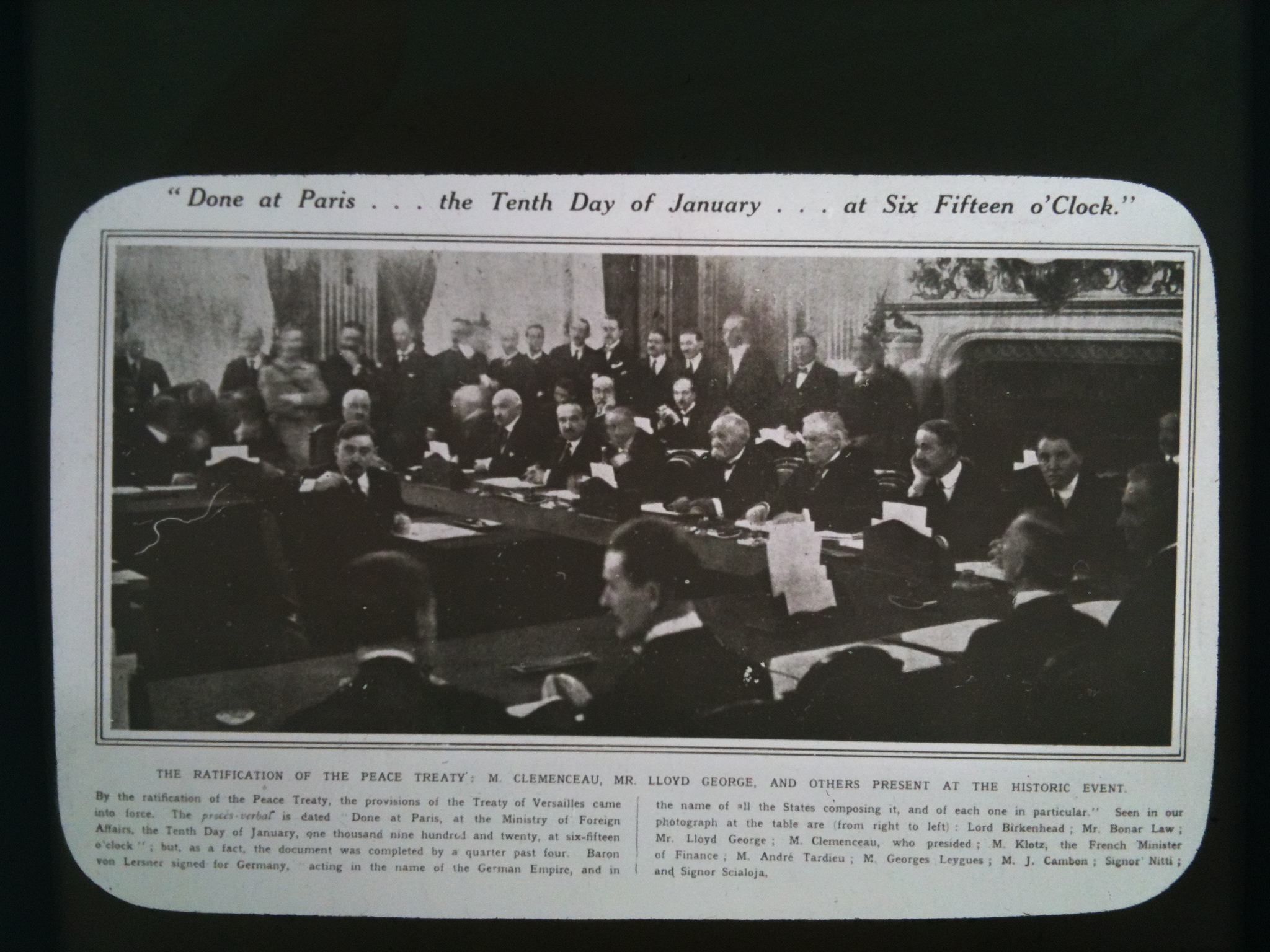
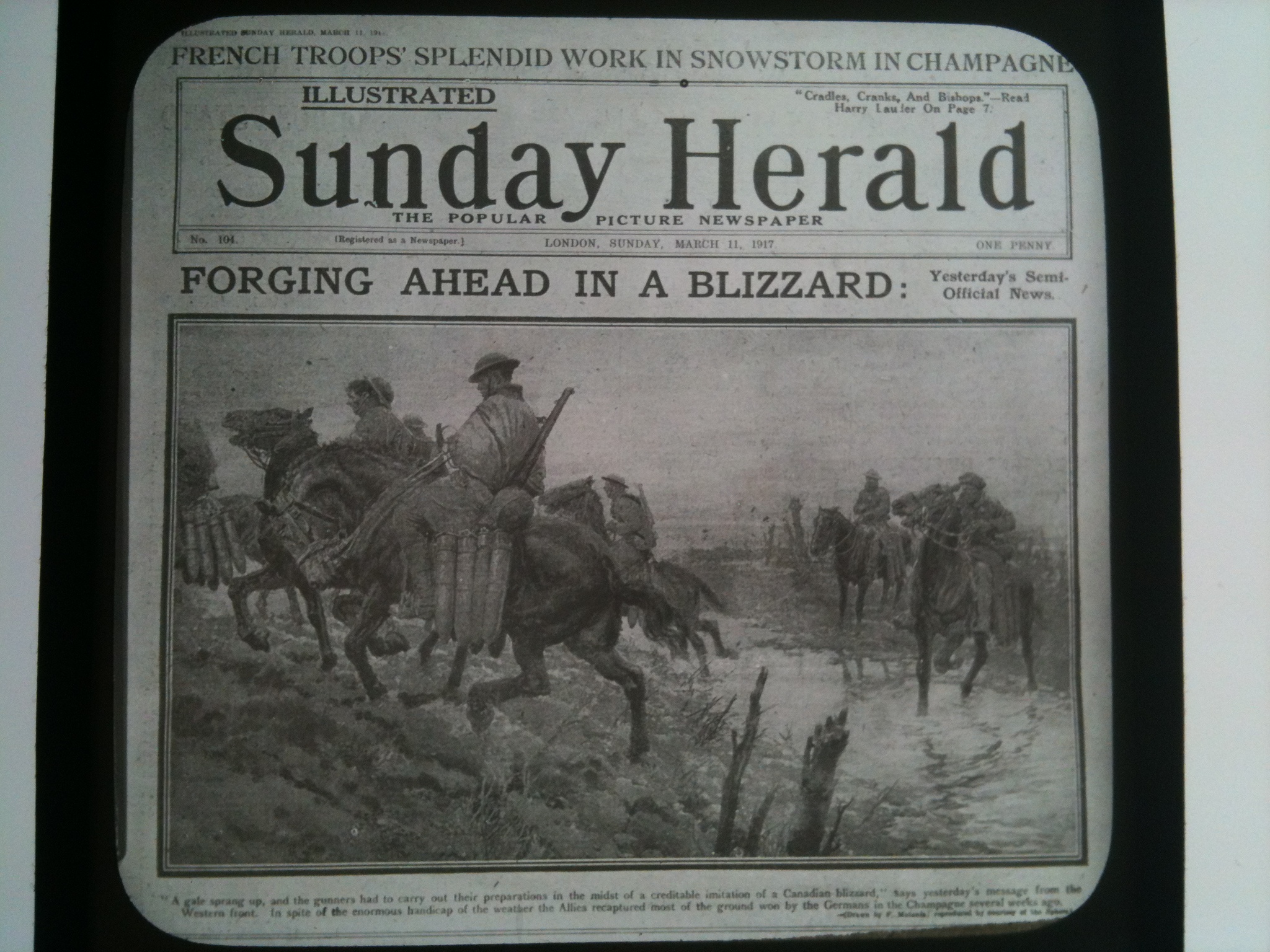
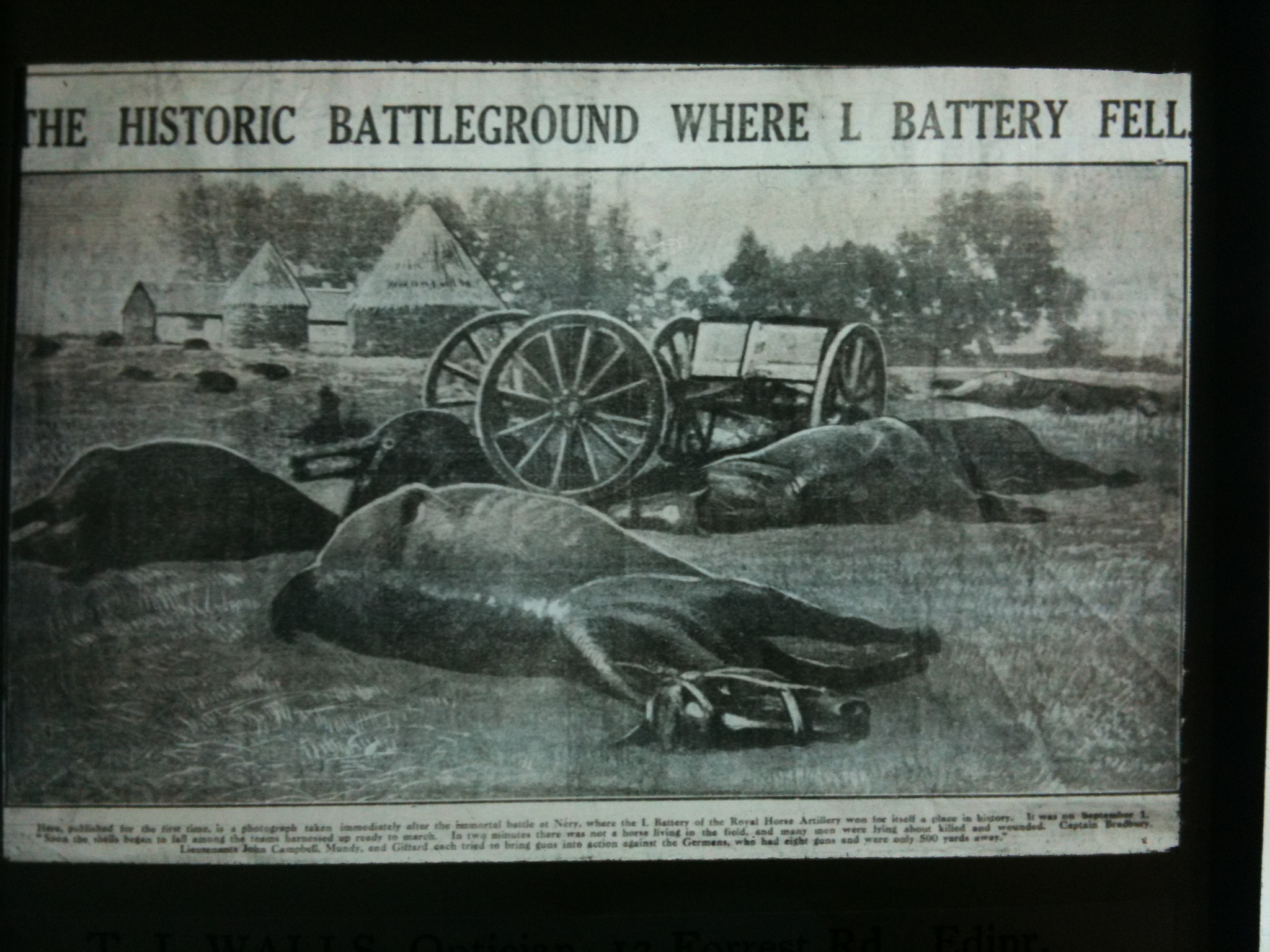
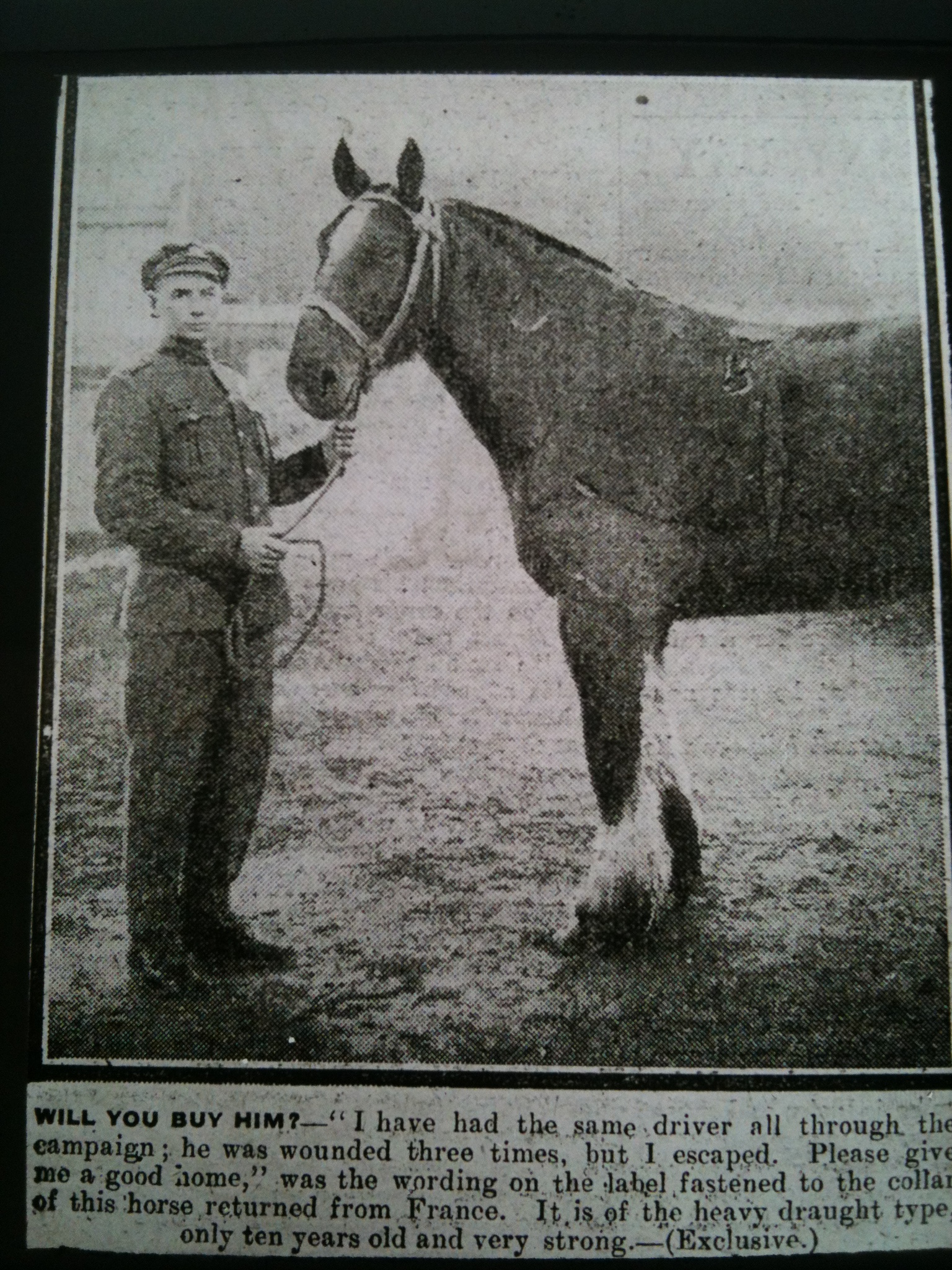
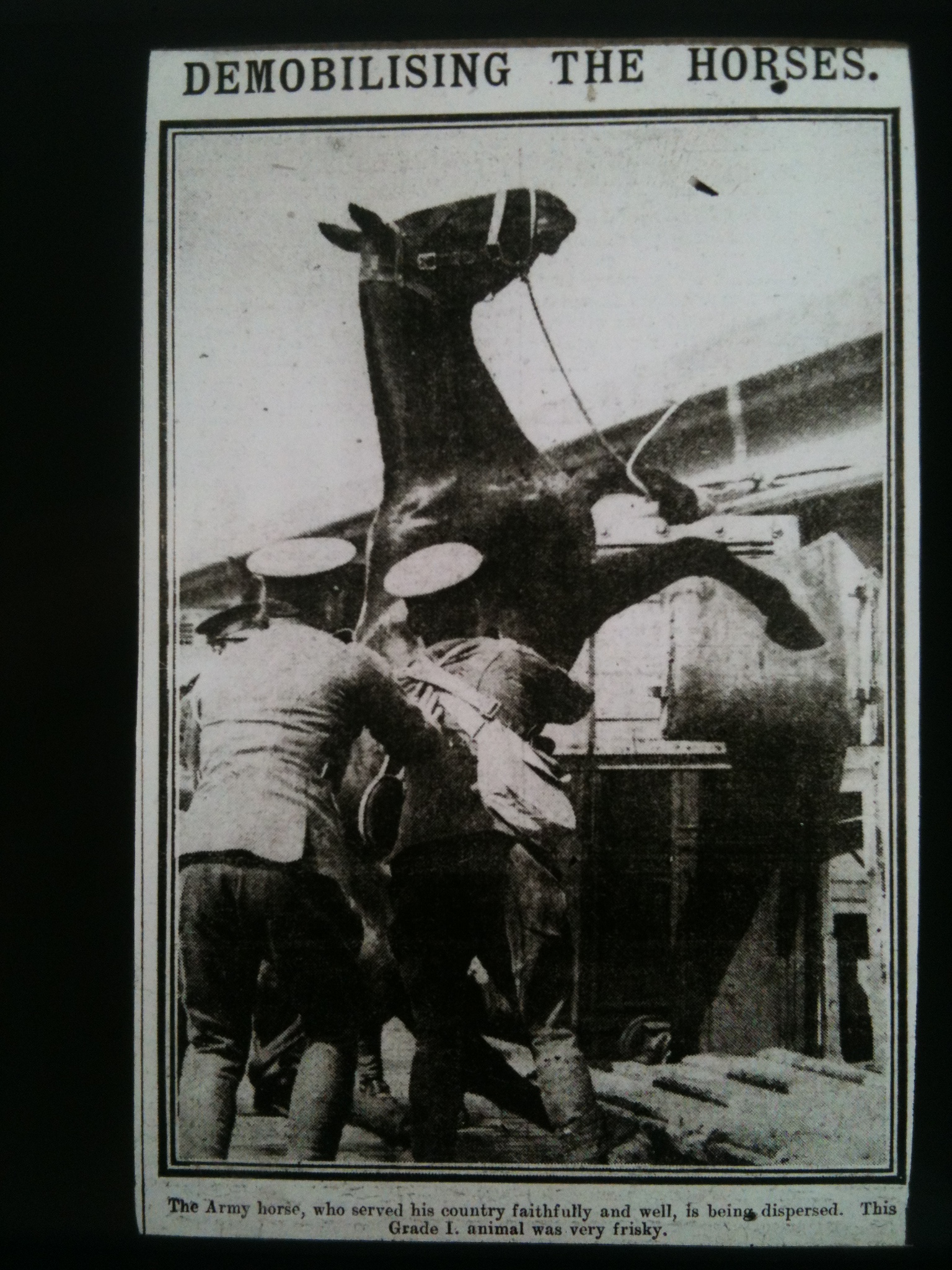
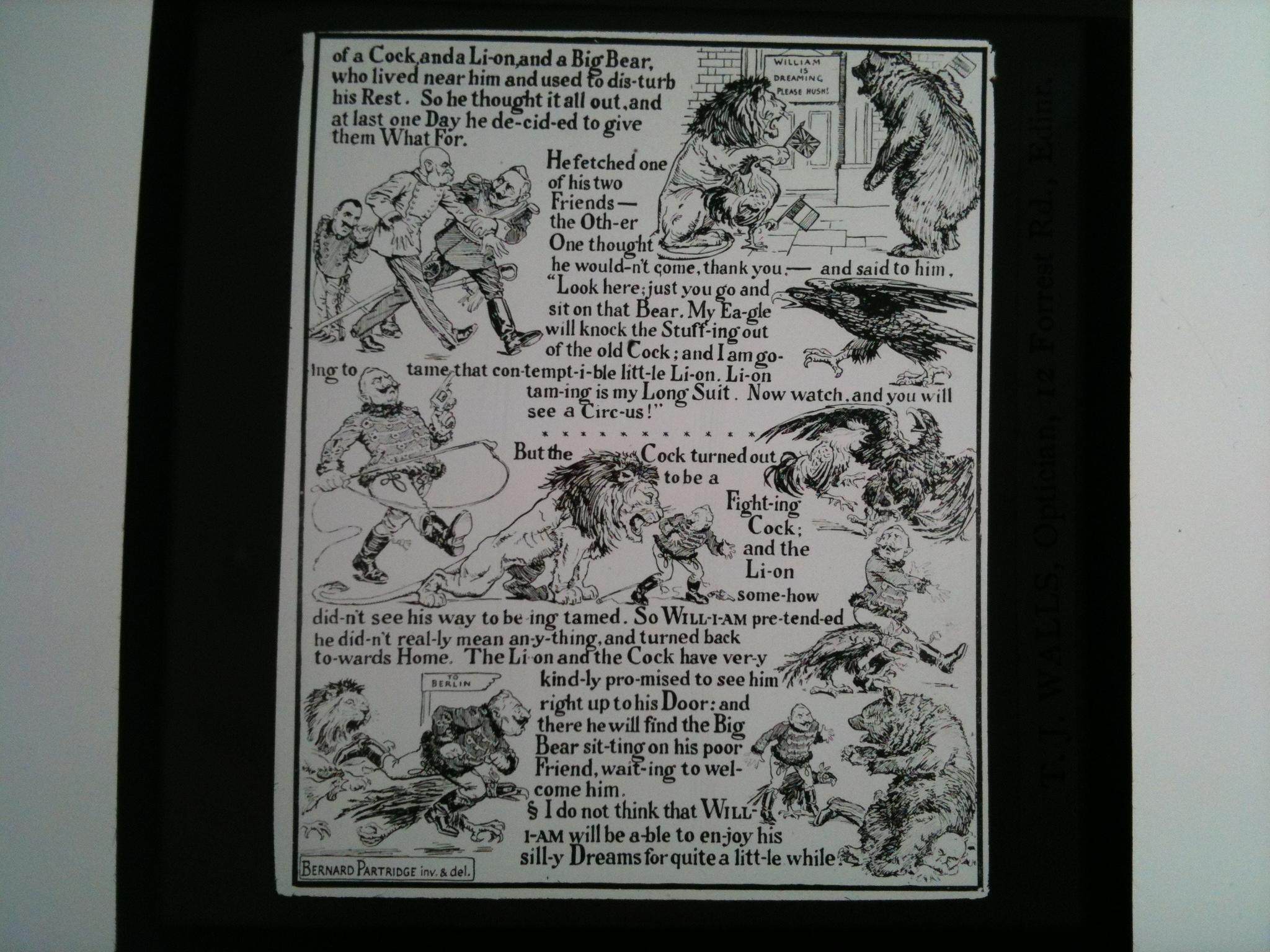
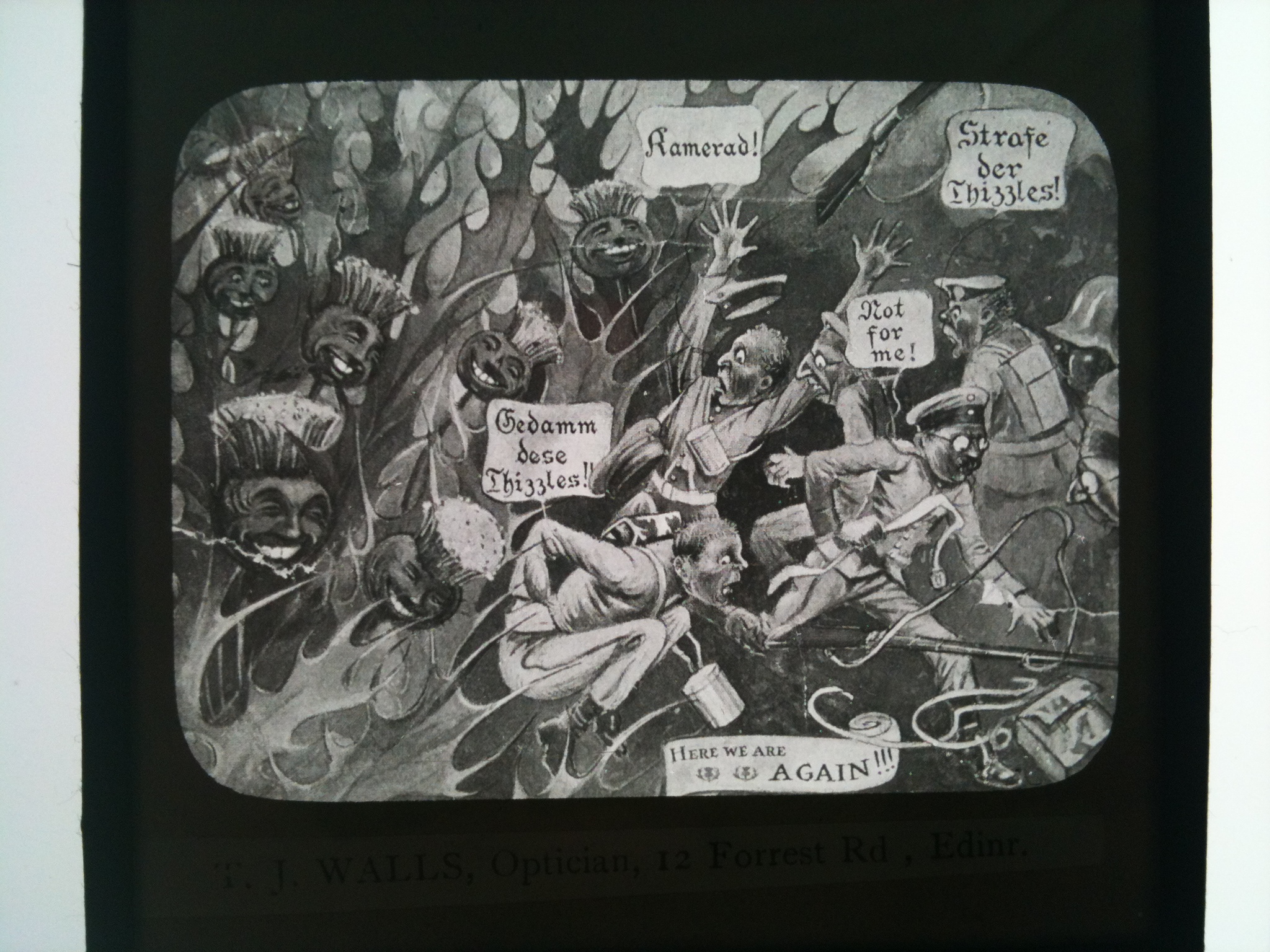
In a previous post, I wrote about Professor Robert Wallace, (1853 – 1939), who taught Scientific Agriculture and Rural Economy at the University of Edinburgh and how many of the glass slides in the Roslin Collection seem to belong to him. While many of these images focused on his teaching interests, there were quite a few on World War I concerns. Professor Wallace was passionately concerned about the treatment of war prisoners and hostages in Germany and Belgium during the war and wrote to the President of the United States of America, Woodrow Wilson between 1914 and 1917 with his concerns and urging him to send American troops to Europe to fight. These letters can beound in the Centre for Research Collections, Main Library, University of Edinburgh (Reference number: GB 237 GB 237 Coll-87 / Location Gen. 554-555; Gen. 867F).
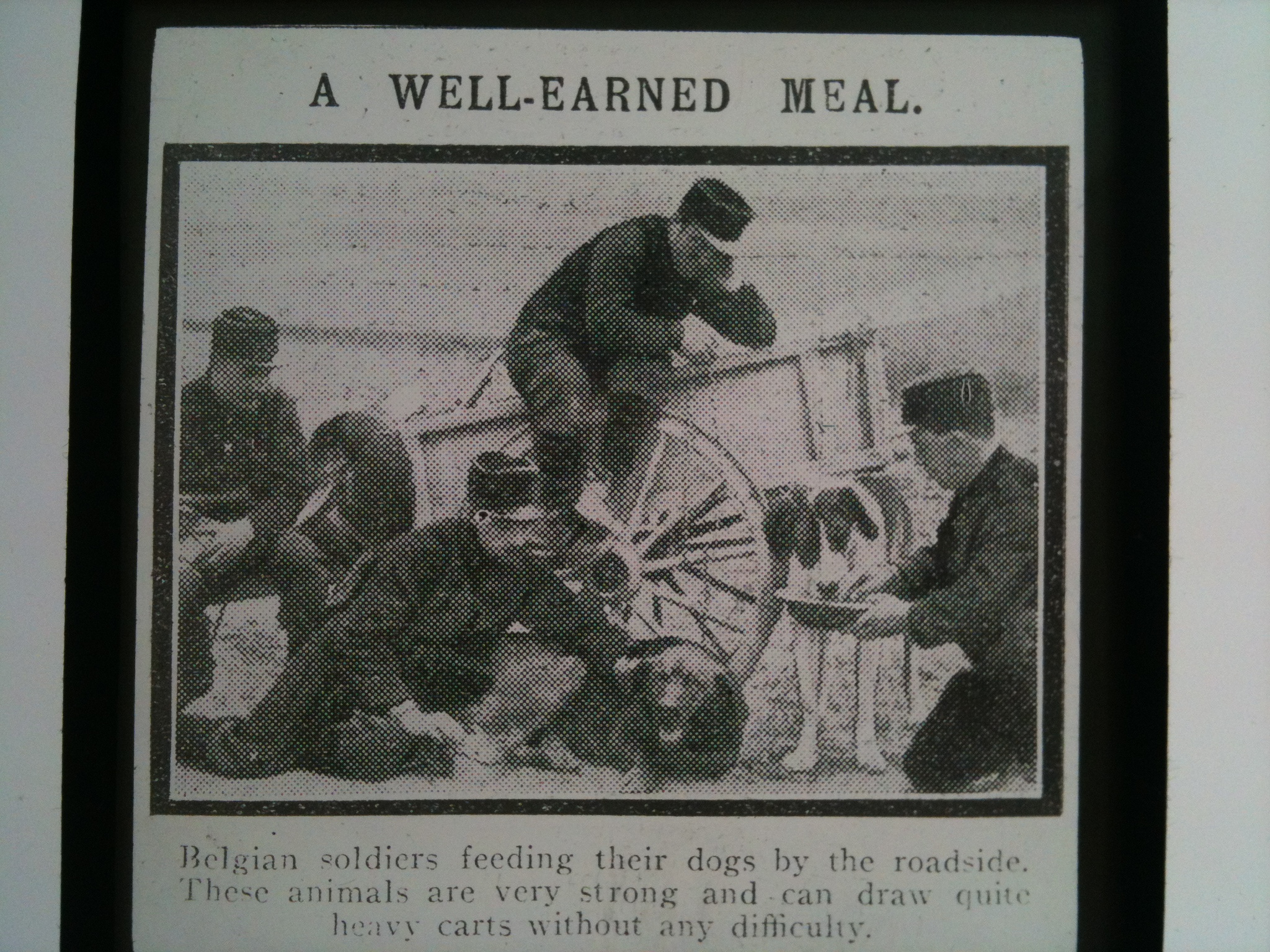
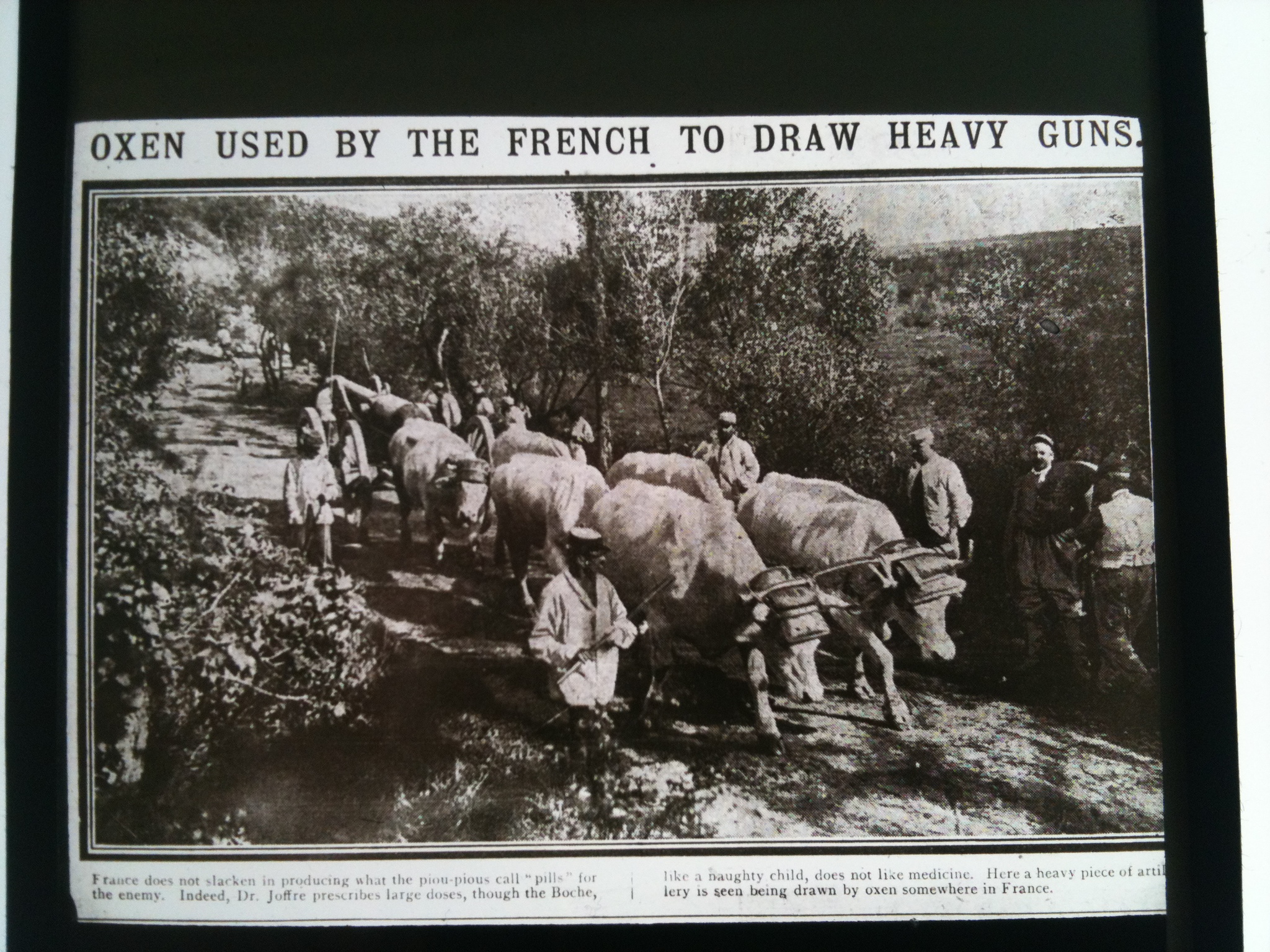
Here are a selection of images from the Roslin Glass Slides Collection featuring – animals during and after WWI and political cartoons:
Collect.Ed Exhibition: Curiosities from the University’s Collections
“How strange this mass of ancient treasures, mementos of past pains and pleasures.”
Charlotte Brontë

Opening: 6th December 2013 | Where: Exhibition Gallery, Main Library, George Square | Closing: 1st March 2014 | Curated by: Emma Smith
Shells, quartz crystals, cranium casts, meteorites and fossilised raindrops…
From the sixteenth century a developing social intrigue with the unknown and the mysterious manifested itself in vast collections of both natural and manmade curiosities. Such trophies were often the result of the respectable gentleman’s Grand Tour, or returned to Europe from expanding colonial frontiers. These ‘cabinets of curiosity’ not only served scientific study but also allowed objects to be viewed out of context and on a purely aesthetic level, providing fascinating juxtapositions and new opportunities for interpretation.
Embodying both the satisfaction of imposed order and the human desire to possess, early collecting focused on the unclassified and unique, aiming as much to instil wonder as to enlighten. This exhibition explores the unexpected and showcases the rare and remarkable from the University’s collections.
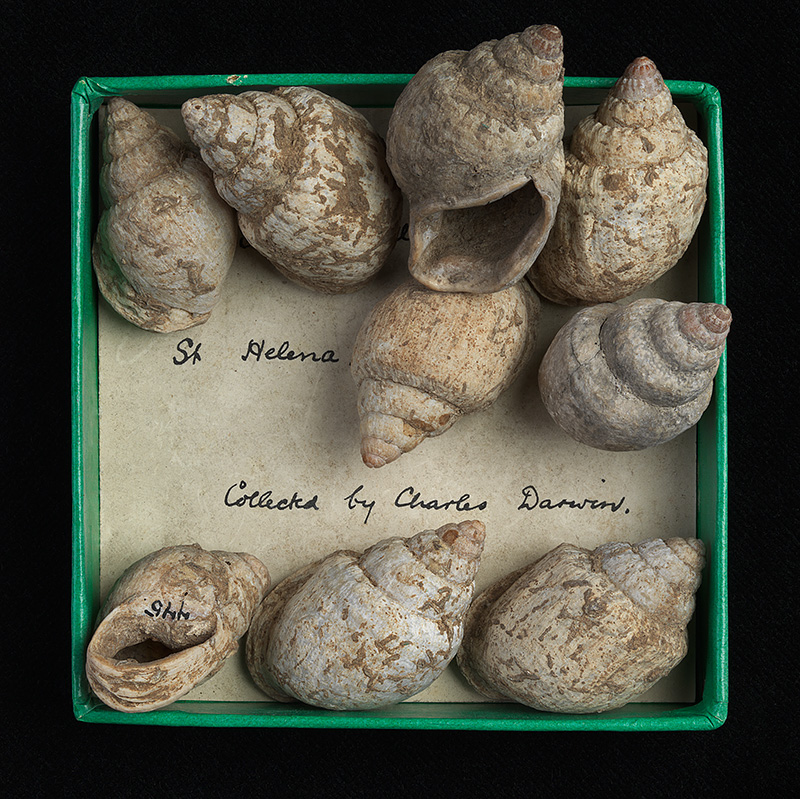
Selection of shells from Charles Lyell’s collection, Geology Collection, University of Edinburgh
For more images from the exhibition follow to the blog page at https://libraryblogs.is.ed.ac.uk/diu/2013/10/23/new-photography-for-upcoming-exhibition-collect-ed/
____________________________________________
Collect.ed is a collaboration between Library & University Collections and the Careers Service Employ.ed on Campus initiative.
Emma Smith is a final year Fine Art undergraduate at the University of Edinburgh
____________________________________________
Opening: 6th December 2013 | Where: Exhibition Gallery, Main Library, George Square | Closing: 1st March 2014 | Curated by: Emma Smith
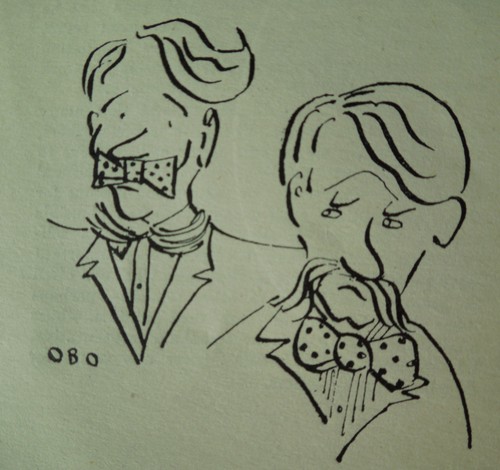
‘The Art Student’ Cartoons for Movember!
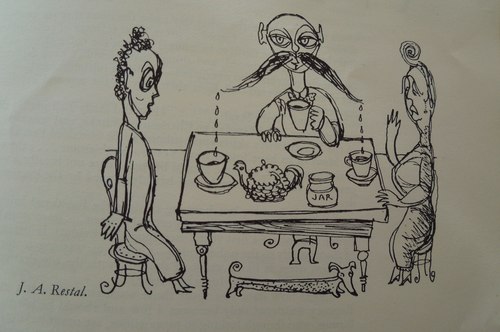
Today our volunteer Neasa found some interesting cartoons that include some unusual depictions of moustaches in the ECA ‘The Art Student’ magazines from 1950, 1951 and 1952. We hope you enjoy!


RDM & Cornell University
I’ve been fortunate to have been given the opportunity to take up a secondment at the Cornell Institute for Social and Economic Research (CISER) as Data Services Librarian, the primary tasks of which are to:
- Modernise the CISER data archive, and if possible, begin the implementation. Tasks include: introduction of persistent identifiers (DOIs) to all archival datasets (via EZID); investigate metadata mapping of archival datasets (DDI, DC, MARCXML); streamline data catalogue functionality (by introducing result sorting, relevance searches, subject classification), assist scoping a data repository solution for social science data assets generated by Cornell researchers
- Actively participate in the Research Data Management Services Group at Cornell, assisting researchers with their RDM plans, contributing to the advancement of the work of the group
- Actively consult with researchers about social science datasets and other data outreach activities.
- Co-ordinate and collate assessment statements in order to gain Data Seal of Approval for CISER data archive.
Last Friday I gave my first presentation on the CISER data archive along with other CISER colleagues (they talked about datasets used in restriction at the Cornell Restricted Access Data Centre, and the CISER Statistical Consultancy Service & ICPSR) at a Policy and Analysis and Management (PAM) workshop for graduate students. This was held at the Survey Research Institute (https://www.sri.cornell.edu/sri/ ) where much discussion centred around survey non-response and mechanisms to counter this increasingly common phenomenon.
On Tuesday of this week I presented on the University of Edinburgh RDM Roadmap at a meeting of the monthly Research Data Management Service Group (RDMSG – http://data.research.cornell.edu). This was followed by two presentations yesterday, one at a Demography Pro-seminar (for graduate students) on campus and later at a Cornell University Library Data Discussion Group meeting in the Mann Library set up to introduce the CISER Data Services Librarian to a range of subject librarians principally in the social sciences. In each case the Edinburgh RDM Roadmap was received with great enthusiasm and engendered much discussion, in particular the centralised and inclusive approach adopted by Edinburgh. Follow up discussion and meetings are being planned including the potential use of MANTRA and the RDM Toolkit for Librarians as materials to raise the profile of RDM at Cornell.
As an aside, at a CISER team meeting the subject was raised about password protection (in some instances passwords to CISER resources are changed on a very regular basis for security purposes) and issues surrounding inappropriate recording of passwords. A site licence for a software protection software package was seen as a possible solution to both user disgruntlement and possible security breaches. As a thought, this might be worth considering as part of the Active Data Infrastructure tool suite.
Stuart Macdonald
Associate Data Librarian, UoE / Visiting CISER Data Services Librarian
‘Who is that chap with the terrific head?!’
Robert Heriot Westwater’s most famous portrait is probably that of Christopher Murray Grieve (more widely known by his nom de plume, Hugh McDiarmid!). But Westwater also painted two very different portraits of Sir Godfrey Thomson in honour of his retirement in 1951:

Formal presentation of Thomson’s portrait at Moray House, 1951, with Lady Thomson on the right
Westwater’s first encounter with Thomson was as a student training as a teacher of art at Moray House:
I remember very clearly my first sight of Professor Thomson as he passed a group of us students in the corridor. “Who”, I demanded, “Who is that chap with the terrific head?”. For the rest of my course at the training college I vainly tried to screw up courage to approach him – the art students, alas, had no class under him – to ask him if he would sit for me. But I never quite succeeded. And in the intervening years I lamented this somewhat uncharacteristic lack of “brass neck”
Moray House Magazine, March 1951
Westwater was delighted several years later on being commissioned to paint the-chap-with-the-terrific-head’s portrait! The main portrait was to be a formal one in the striking red and white academic dress of the University of Durham DSc:

Westwater had some concern with regards to Thomson’s clothing outshining him in the painting:
With most other sitters such a garb would almost inevitably lead to a “portrait of robes with head attached.” But in Godfrey’s case, not so. When he arranged himself in the chair set ready, with complete dignity and composure, it was obvious at once that even such a gown could not compete. The “terrific head” easily subdued it to its proper and subordinate place.
Moray House Magazine, March 1951

Page with Thomson’s photograph from the Moray House Magazine, 1950
Westwater commented on the many and varied conversations he and Thomson had during Thomson’s sittings, informing the reader that they were even prone to a sing song now and again (Thomson’s secretary and students were quite used to him playing, singing, and humming Gilbert and Sullivan whenever the notion took him!). But my favourite passage by far is when Westwater gets rather verbose for his own good and waxes lyrical about the shape of Thomson’s head!:
The very bone structure of his skull begins the puzzle, for it is at once positive, virile, and yet almost frail in its delicacy. The eyes have an imperious authority and penetration, but the mouth under the forceful nose astonishes by its nearly feminine gentleness. it would be easy to cite another score of complexities, more subtle and more difficult from the painters point of view.
Moray House Magazine, March 1951
Quite! Westwater’s second portrait of Thomson was more informal, and was Thomson’s gift from Moray House :

This remained with the Thomson family for many years after Thomson’s death, eventually being donated to the University. Ever keen to see paintings around the university rather than in store, we are delighted that Thomson now hangs proud in the office of his greatest advocator! He is frequently seen and admired by a host of students and visitors.
Westwater clearly enjoyed painting Thomson, and likely he and Thomson would derive great pleasure from knowing his other portrait hangs in Moray House to to this day, reminding everyone, as Westwater put it, ‘of he whom they and I will always think of from different angles as “A Terrific Head”‘!
Reading Rooms and visiting the Annexe
We run a fast and effective retrieval service for Annexe materials. If you want to consult the whole item we can have it sent to a convenient library location via our twice daily courier deliveries, and if you are wanting a chapter or article we can scan and deliver a digital copy directly to your inbox.

Reading Room Annexe 1
Occasionally, however, you may want to browse through a larger selection of Annexe materials which include: lesser used books, back issues of journals,reference maps and atlases, newspaper indexes and microfilm.
The Annexe also stores selected material from the Library’s Special Collections, University Archives and Lothian Health Services Archive (LHSA).
Perhaps you want to search through part of a journal run for relevant articles or browse the microfilms for a couple of years’ worth of newspapers. If so you’ll find a well-stocked kitchen, friendly staff and plenty of study space to spread out as you work.
The Annexe has two comfortable reading rooms and we can offer visitors use of an open access PC, a microfilm reader and an OPAC (Online Public Access Catalog) for searching items in the catalogue.

Reading Room Annexe 2
To arrange access to items from the Library’s Special Collections, University Archive s and Lothian Health Services Archive (LHSA) material stored in the Annexe, contact the CRC to first determine if a visit to the Annexe would be suitable.
To arrange a visit to the Annexe to access any of the other material simply send us an email (library.annexe@ed.ac.uk) or give us a call (0131 651 1523) to discuss a suitable time.
Despite our remote location out in South Gyle we’re relatively easy to get to either by the 2, 22 or 35 buses or by hopping on one of the regular trains that call at Edinburgh Park. You could even sneak in a visit to Krispy Kreme’s over the road while you’re out this way.
Stephanie Farley (Charlie), Library Annexe Assistant
Maria O’Hara, Library Annexe Assistant
In the beginning was the word : Bibles at New College Library
-
- Geneva Bible, 1583
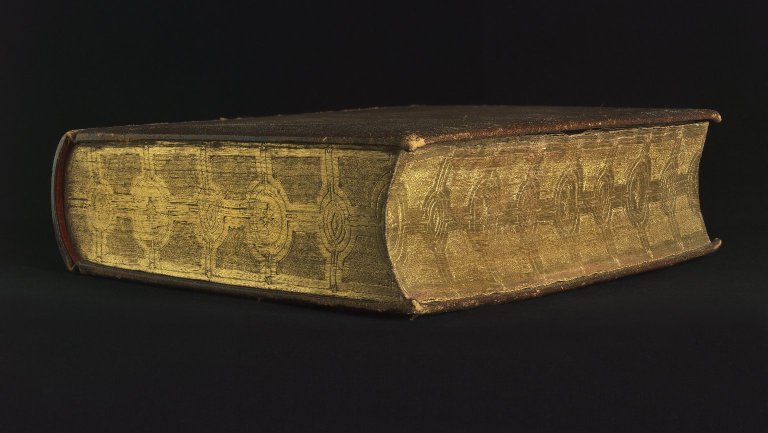
Yesterday we were pleased to welcome staff and students on exchange from Dartmouth College, USA to a classroom session viewing items from New College Library’s historic Bibles collection. Examples included a 1478 early Bible Latin manuscript version from our Incunabula Collection and our very earliest printed Bible, a Greek New Testament printed in Strassburg in 1524. The English Reformation was well represented by a Cranmer’s Bible (1541), a Matthew’s Bible (1549), a Bishop’s Bible (1585), a 1599 Geneva Bible and a 1611 King James version.
Our 1579 Bassandyne Bible has particular Scottish significance. Bassandyne was a Scotsman, who lived in Edinburgh in a house beside John Knox’s. He printed the first Bible published in Scotland, a Geneva version which became the regular pulpit Bible throughout Scotland.
The rich diversity of Bibles at New College Library was also shown by the Polyglot Bible – The Antwerp (1569), which contains the Bible text in Latin, Greek, Hebrew and Syriac. This was produced under the patronage of Philip II of Spain, at the suggestion of the famous printer, Christopher Plantin. Printed in Antwerp, it was sent to Spain by sea but the ship was wrecked and most of the volumes perished with it, only some 200 being rescued. Of these New College Library possesses one complete copy in excellent condition. The Polyglot Bible relied on the Bomberg Bible for its Hebrew text, which we were also able to have on display. New College Library holds the 1545 or second edition of the Bomberg Bible in its Dalman Christie Collection, which was recently catalogued as part of the Funk Projects.
Collections
 Hill and Adamson Collection: an insight into Edinburgh’s past
My name is Phoebe Kirkland, I am an MSc East Asian Studies student, and for...
Cataloguing the private papers of Archibald Hunter Campbell: A Journey Through Correspondence
My name is Pauline Vincent, I am a student in my last year of a...
Hill and Adamson Collection: an insight into Edinburgh’s past
My name is Phoebe Kirkland, I am an MSc East Asian Studies student, and for...
Cataloguing the private papers of Archibald Hunter Campbell: A Journey Through Correspondence
My name is Pauline Vincent, I am a student in my last year of a...
Projects
Cataloguing the private papers of Archibald Hunter Campbell: A Journey Through Correspondence
My name is Pauline Vincent, I am a student in my last year of a...
Archival Provenance Research Project: Lishan’s Experience
Presentation My name is Lishan Zou, I am a fourth year History and Politics student....