Home University of Edinburgh Library Essentials
April 6, 2026
New OUP ebook library collections for Social & Political Science

 We’ve recently expanded our e-book collections with the Oxford Handbooks Online collection for Political Science (43 titles). This includes high demand titles such as the Oxford Handbook of Comparative Politics and the Oxford Handbook of Political Institutions.

 The successful negotiation of consortial purchasing agreements across Scottish Higher Education institutions has now given us access to all the collections in Oxford Scholarship Online. We already had access to the Political Science collection, but we now also have access to titles in Sociology and Social Work.
These collections allow unlimited user access and (within copyright) printing and saving of articles, making them good choices for inclusion on student reading lists.
Christine Love-Rodgers, Academic Support Librarian – SPS
Anon Art
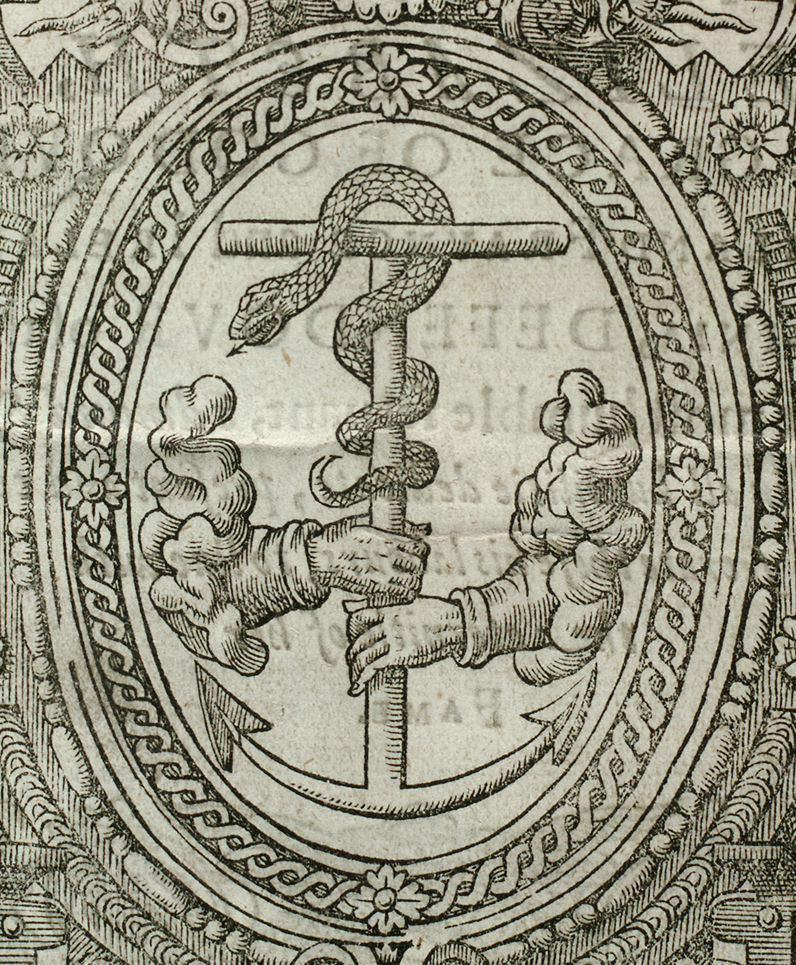
Another visual essay from me this week. I thought it would be interesting to share a closer look at the amazing work of the invisible artists who populate the title pages of many books in our collections. I am constantly astonished at the graphic accomplishment present in these works from anonymous artists. I have spent some time highlighting details that are inspiring works in their own right. These works stand on their own feet and in their own space. All images this week are details from ” The Faerie Queene “. Shelfmark JY 1096. Points of note are the best snake tongue ever drawn (see below) and a fantastic phoenix rising from flames. More images from the book can be found within our image collections at http://images.is.ed.ac.uk/
Deputy Photographer, Malcolm Brown.
Open Repositories 2014
Last week I travelled to Helsinki, Finland, for the Open Repositories 2014 Conference, which had more than 450 attendees. The five days whizzed by with so much going on and my nervous anticipation of having to present on Wednesday morning. The week kicked-off with a DSpace meeting, we host multiple DSpace repositories for the Scottish Digital Library Consortium, as well as repositories for the University of Edinburgh, including the admin site for our new collections online service http://collections.ed.ac.uk. It was therefore very interesting to hear of the latest news from the DSpace mothership DuraSpace.
The week was full of lively debate from the Open Keynote on Tuesday by Erin McKiernan, https://twitter.com/emckiernan13, a physiologist and neuroscientist based in Mexico, who is committed to only publishing in open access journals. Through to the individual repository user groups on Thursday and Friday, with discussions carried on into the evenings social events. Adam Field, University of Southampton, produced a daily Wordle to highlight the most popular topics on the #or2014 Twitter hashtag, showing the diversity of interests.
The final Wordle of the whole conference:

On Wednesday, Kim Shepherd, from the University of Auckland Libraries and Learning Services, and I presented a paper on the use of existing repository technology for cultural heritage and special collections. This paper is available online at http://or2014.helsinki.fi/?page_id=985 (Parallel Session 4A) if you wish to see it, along with all the other main track papers.
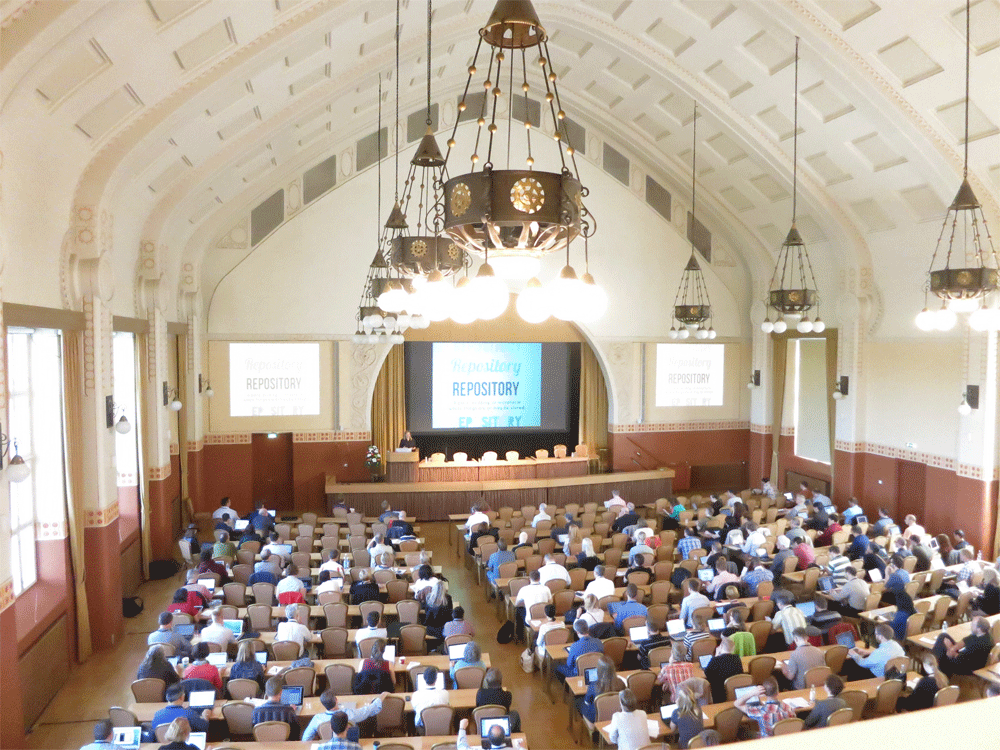
The Congress Hall in the Paasitorni, the former Helsinki Workers’ House where the conference was held:
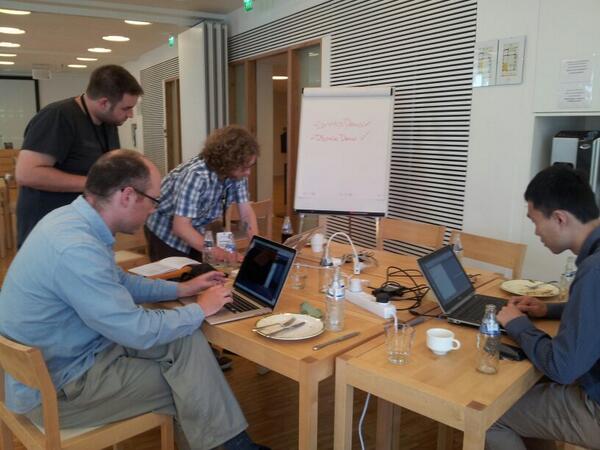
Kim and I also took part in the Developer Challenge in the ‘Fill My List’ team along with colleagues from the University of Southampton, where we wrote an application to populate drop-down boxes in forms with text and linked authority urls. The source code, list of team members and presentation is available at https://github.com/gobfrey/OR2014-chalege. We were chosen as one of the winning entries and hope to be able to develop this application into a service and integrate it with more systems.
The other members of the Fill My List Team:
Thank you to all the organisers and hosts of Open Repositories 2014 for an inspiring conference.
Claire Knowles, Library Digital Development Manager
@cgknowles
Manuscripts on display for Elizabeth Melville Day
From Monday 16th June to Friday 27th June manuscript work by Elizabeth Melville, Lady Culross is on display in New College Library. Two rare examples of early modern women’s writing are displayed together for the first time as part of the events around Elizabeth Melville Day on Saturday 21st June.
Elizabeth Melville, Lady Culross, was the first Scotswoman to see her work in print with the publication of her mini-epic ‘Ane Godlie Dreame’ in 1603.
She was the daughter of Sir James Melville of Halhill (1535/6–1617), the diplomat and autobiographer. Elizabeth was at the centre of a network supporting the exiled and imprisoned Presbyterian ministers, and her strong Calvinist faith is expressed in her writings.

Edinburgh University Library, Special Collections La.III.347
On display is a volume of original letters, received by the University of Edinburgh in 1878 as part of the David Laing collection. It contains two holograph letters by Elizabeth to her son James (dated 1625 and 1629), nine to Reverend John Livingstone (eight holographs and one 19th century transcription, dated 1629-32), and one holograph to the Countess of Wigtoun (1630), and is a unique source of information about the poet.

Mss Bru 2, New College Library Special Collections
This volume is displayed together with the Bruce Manuscripts, from New College Library Special Collections. The Bruce Manuscripts contains twenty nine sermons on Hebrews XI, preached in 1590-91 by Robert Bruce, Edinburgh minister. In 2002 Dr Jamie Reid-Baxter uncovered nearly 3500 lines of verse attributed to Elizabeth Melville contained in this manuscript.
Dr Joseph Marshall, Rare Books and Manuscripts Librarian & Christine Love-Rodgers, Academic Support Librarian – Divinity
Three different traits of open access publishers
This week I’ve been compiling some data for the next meeting of the RLUK Ethical and Effective Publishing Working Group. Some of the data itself is pretty interesting so I thought I would write a quick blog post and share some preliminary thoughts on what it means. The table below shows the top 5 publishers in terms of money spent on article processing charges (APCs) from the RCUK open access block grant in 2013-14.
| Publisher | Total spend | No. of APCs | Average APC | Discount on list price |
| Elsevier | £52,596 | 36 | £1,461.00 | 25% |
| Wiley | £51,781 | 35 | £1,479.46 | 25% |
| Public Library of Science (PLOS) | £23,737 | 24 | £989.04 | 0% |
| Nature Pub Group (NPG) | £21,226 | 8 | £2,653.25 | 0% |
| BioMed Central (BMC) | £20,746 | 16 | £1,296.63 | 15% |
Article processing charges (APC) for the most popular journals for Edinburgh authors.
We found that 2 publishers stood head and shoulders clear from the rest of the field. In terms of gross spend and number of articles published the top publisher was Elsevier, with £52.6k and 36 articles. In second place, with a similar publisher profile was Wiley with £51.8k and 35 articles. Both of these publishers were followed by PLOS, NPG and BMC who all had broadly similar spends of around £20k. Whilst the total cost per publisher is interesting, what is really noteworthy is the number of articles that money pays for, revealing something of the publisher’s strategy in the open access market place.
The lowest APCs are incurred from the open access journals – PLOS and BMC – who have fees roughly a third less than the other publishers. The highest APCs are incurred by hybrid journals, who also make money from subscriptions, and article reprints. NPG stand out from the crowd as they charge nearly double compared to their competitors.
In summary, what we see here are broadly 3 groups of publishers with different traits:
Money Makers – traditional publishers with the biggest market share, the highest number of articles published, APC set to the highest they think market can bear without losing submissions, initially offering biggest discounts for institutional deals to get sign ups (and easier access to authors).
Prestige reputation – traditional publishers trading on their reputational status. Significantly less articles published but with larger APCs levied to publish in the journals with the highest impact factors. Strategy of selling high end products and services to those that can afford them.
Emerging challengers – new business model and products, more reasonable APCs to attract a market share. However, it is worth noting that since being bought out by Springer, BMC have attracted criticism for raising APCs much quicker than the rate of inflation.
When we get round to submitting the final RCUK report we’ll release our full dataset of article processing charges.
[Minor edits made to original to correct grammar, headings and stylesheet]
Chrystal Macmillan Lecture: Professor Veena Das reading list
On Wednesday 18th June 2014 Professor Veena Das will deliver this year’s Chrystal Macmillan lecture.
Krieger-Eisenhower Professor at John Hopkins University and a founding member of the Institute of Socio-Economic Research in Development and Democracy, Professor Das is an established figure in Indian anthropology and her research interests also include feminist movements and gender studies, anthropology of violence, social suffering and subjectivity.
For the Chrystal Macmillan Lecture she will be speaking on the topic:
War and Intimate Violence: Reading the Ethnographic Record in the Light of the Mahabharata.
Professor Das has been published extensively and has worked as an editor on a number of publications. Using Resource Lists @ Edinburgh we’ve put together a Professor Veena Das reading list with just a small selection of books and articles authored or edited by Professor Das that University of Edinburgh staff and students can access through the University Library.
Professor Veena Das reading list
For more information on the 2014 Chrystal Macmillan lecture and how to book see:
Professor Veena Das to deliver 2014 Chrystal Macmillan lecture
For previous lectures see: Chrystal Macmillan lectures
Caroline Stirling – Academic Support Librarian for Social and Political Science
New Zealand Special Collections
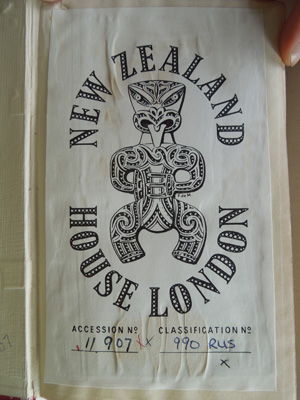
The New Zealand House Special Collection has now been fully catalogued by our Cataloguing Interns. It contains over 200 fascinating and rare items, dating from 1773 onwards. These books come from the larger New Zealand Collection which is distributed through the general collections. 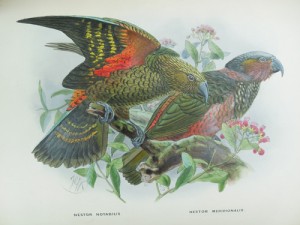
The Frank H. Taylor collection forms a large part of the rare material from New Zealand House, usually indicated by his own illustrated book plate or a special bookplate from the New Zealand House library. He was born c. 1885 in London, and was educated at public school until the age of fifteen when he ran away to New Zealand and began work for a farmer in 1901. In New Zealand he ultimately entered the dairy trade, and in 1930 he returned to London and was appointed inspector of dairy produce in the port of London for the New Zealand government.
For over 20 years he lived and worked in the city, collecting books, taking photos of his life and travels, and presenting lectures. Taylor’s 8,000 books were stored in London in bookcases in his main flat and in his overflow storage room where commercial butter boxes were stacked sideways to create shelves. Shortly after his retirement in the early 1950s, Taylor made his final trip to New Zealand and never returned to Britain and his books became part of the New Zealand House Collection.
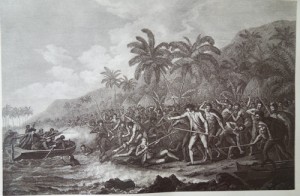 These include many books relating to immigrants newly settled in New Zealand: such as guides for emigrating, accounts from missionaries and their work and interactions with local populations, especially the Maori. There are several books relating to Maori culture, including tattooing, mythology, art and language, as well as bilingual books in Maori and English. Some of these wonderful works contain descriptions of New Zealand, including several versions of Captain Cook’s voyage round the world, including one published in Dublin in 1773. Natural history also features strongly including paintings of flora and fauna, such as Buller’s amazing birds.
In a 1949 lecture he described New Zealand as, “a land of contrasts, where flowers grow naturally in profusion and the roadside looks like a garden. Or it may be the reverse and, windswept and hungry, in it you may travel the long, lonely road where for miles you journey without seeing anyone”. This appreciation of the intensity and diversity of the islands is reflected in his book collection that is now part of Edinburgh University Library.
Researching Africa? Explore new resources @UniofEdinburgh
Here at the University of Edinburgh Library we’re developing our digital resources for African Studies.

 New this month is trial access to two new online resources for African Studies – Africa Yearbook Online and African Studies Companion Online They are both published by Brill, and the trial period ends 1st July 2014. Trial access is available via http://www.ed.ac.uk/is/databases-trials. Please tell us what you think as this helps us make a case for purchase.

We recently upgraded our online subscription to Africa Confidential, a hugely important source of information for researchers interested in what is going on in contemporary Africa. Current stories feature the first steps by new Egyptian President El Sisi, and developments in a Red Sea Missile drama between Sudan and Iran. You can find Africa Confidential on the library catalogue or via the E-journals A-Z list.
We’re continuing to build our e-book collections in Africa Studies. Titles purchased recently include:
![Inside African Anthropology [electronic resource] : Monica Wilson and her Interpreters. Volume 0. / Edited by Andrew Bank, Leslie J. Bank CUP 2013 - e-book](https://libraryblogs.is.ed.ac.uk/spslibrarian/files/2014/05/Inside-African-Anthropology.jpg)
Inside African Anthropology [electronic resource] : Monica Wilson and her Interpreters. Edited by Andrew Bank, Leslie J. Bank CUP 2013 – e-book
![AIDS and religious practice in Africa [electronic resource] / edited by Felicitas Becker and P. Wenzel Geissler. Brill 2009 ebook](https://libraryblogs.is.ed.ac.uk/spslibrarian/files/2014/06/Aidsandreligiouspractices.jpg)
AIDS and religious practice in Africa [electronic resource] / edited by Felicitas Becker and P. Wenzel Geissler. Brill 2009 ebook
| Christine Love-Rodgers, Academic Support Librarian – SPS |
International Library Staff Exchange Week 2014
Last week I was fortunate enough to have been able to participate in Helsinki University Library’s ISEW Library programme which ran from 2-6 June, 2014
The week was aimed at library professionals from Erasmus partner universities and participants came from a wide variety of library backgrounds. We all came from different university libraries across Europe including UK, Ireland, Iceland, Norway, Sweden, Greece, Lithuania, Belgium, Germany, Poland, France, Italy and Spain. All participants had a common interest in benchmarking of practices and networking with colleagues and we were all there to exchange experiences and good practice.
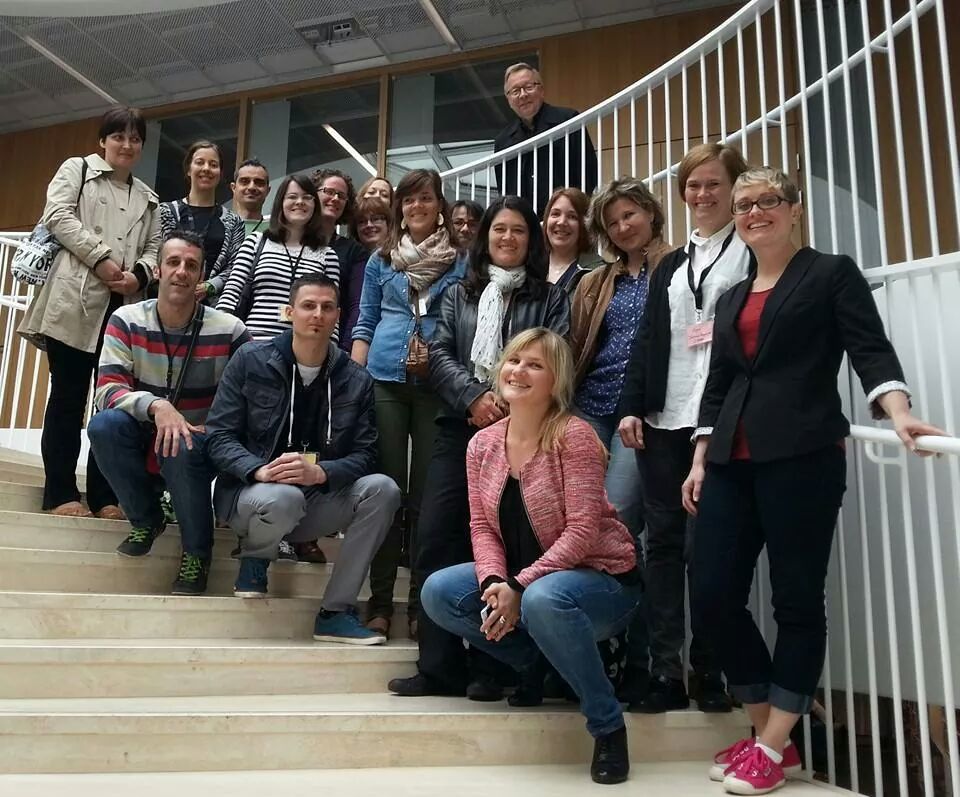
Helsinki University Library is the largest multi-disciplinary library in Finland and is open to everybody to use. Our first day was located at the University’s flagship main library at Kaisa House in the city centre, opened in 2012, this is a really impressive light and open space and well worth a visit if you happen to be in Helsinki.  The program for the week included general information about the Helsinki University Library and incorporated a visit to a different library each day based around a different theme. A series of presentations by the host university formed the basis for each day but there was also opportunity for participants in the exchange week to present to the group. There was lots of opportunity for discussion and each session was highly interactive and allowed for interesting debates. Some of the important topics discussed throughout the week were how the library stays relevant, increased demands on space, changing digital environment, open access, RDM, increasing importance of statistics and information literacy.
It wasn’t all hard work though, there were plenty of social opportunities available in the evening including sampling traditional Finnish food, a visit to the Sauna and an invite to the annual library staff summer party which we were able to enjoy in the sunshine followed by some dancing in the library!
It was an excellent week, superbly organised with a broad range of topics and participants from a wide variety of backgrounds and nationalities. I personally gained a lot throughout the week through sharing experiences with other participants, and hearing how their institutions tackled challenges we face in Edinburgh. I would highly recommend participating in an exchange week if you can. Not only was it insightful to see how other academic libraries work but it was a great opportunity to meet colleagues from a wide variety of backgrounds and to make connections with other universities from across Europe.
A Rocky Start to the Week

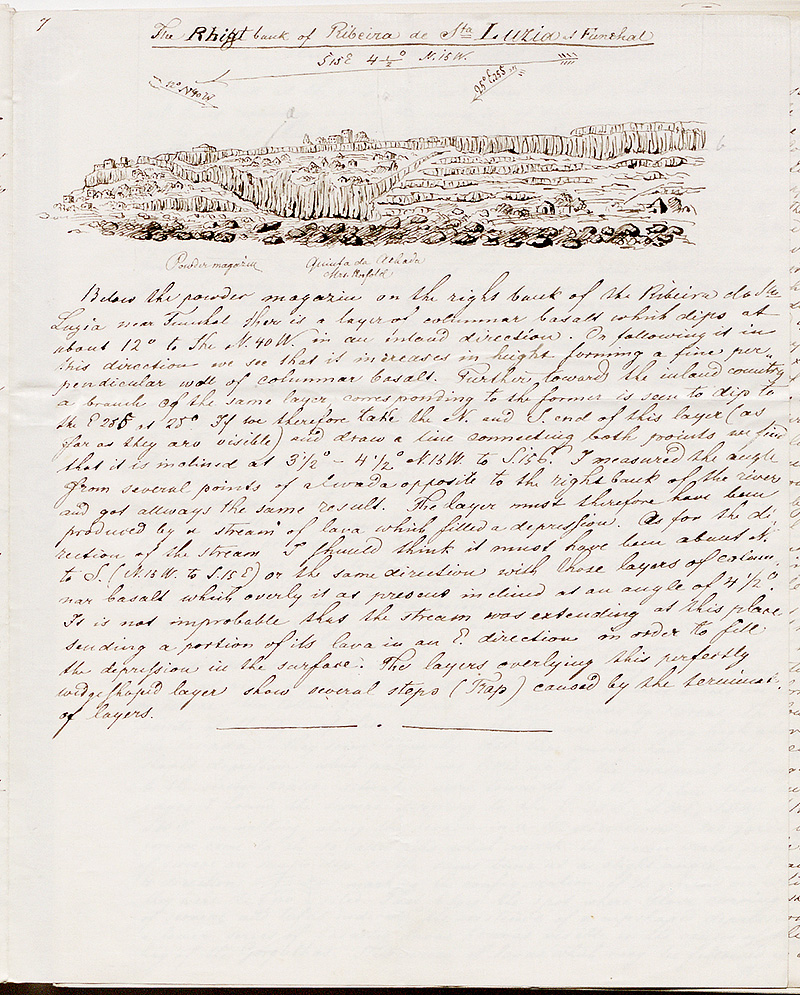
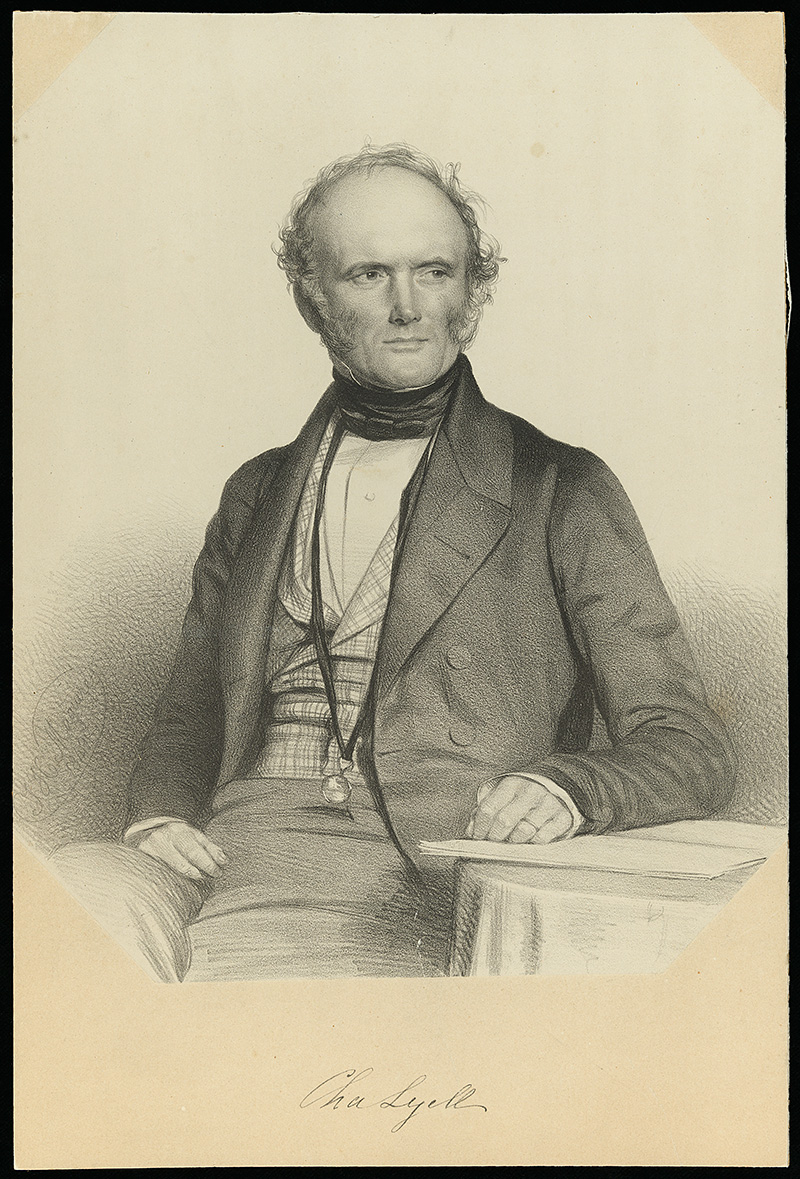
This week saw the start of a small project to digitise some papers that recently came to the CRC from the The Cockburn Museum, School of GeoSciences. The collection contains an interesting mixture of lecture notes, photos, etchings, scrolls, correspondence and large format drawings. What is more, many of these papers come from some of the biggest names in the field. Today I scanned 112 pages of Charles Lyell’s handwritten notes on mountain ranges in Madeira, including pen and ink geological sketches. These delicate and precise drawings of geological details show what fine draughtsman this influential geologist was (see http://en.wikipedia.org/wiki/Charles_Lyell).
The correspondence of Sir Archiblad Geikie also figures largely, along with a portrait photograph. Geikie was appointed the first Director of the Scottish branch of the Geological Survey in 1867, as well as holding the geology and mineralogy professorship here at the University (see http://en.wikipedia.org/wiki/Archibald_Geikie).

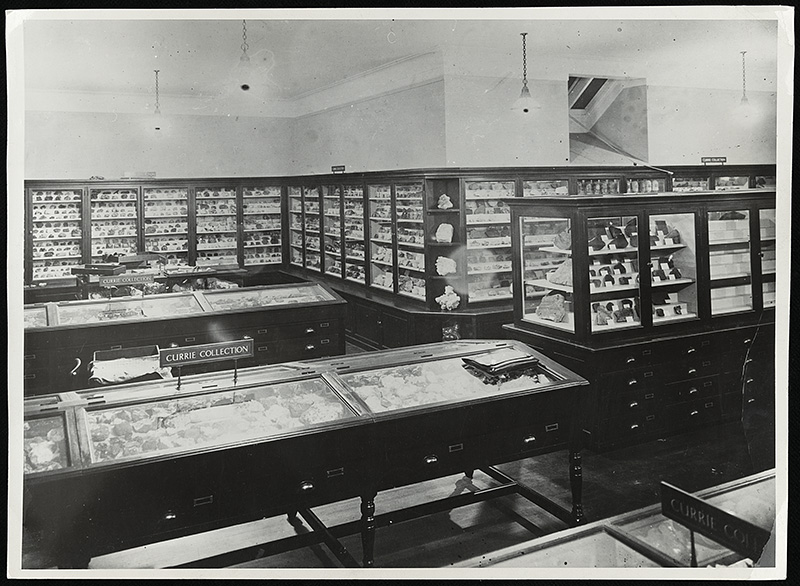
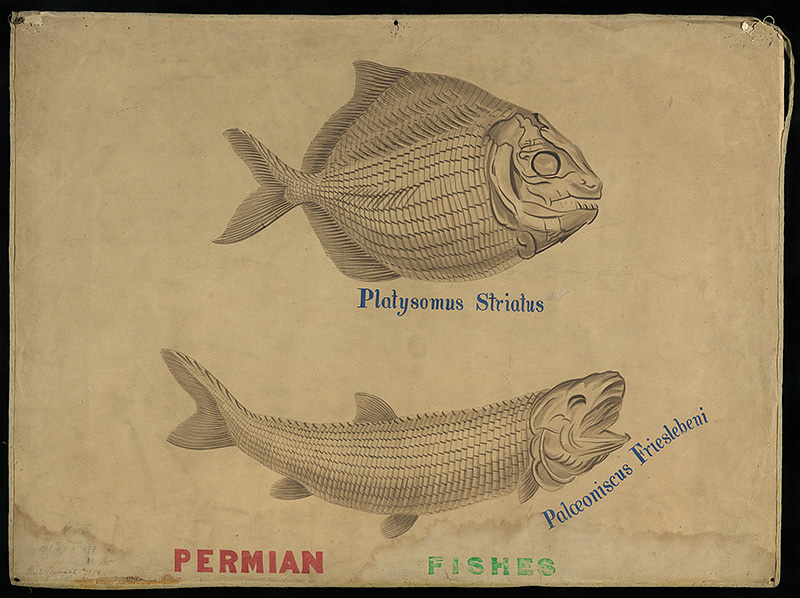
Also included are some photo’s of the old Geology Museum, and perhaps my favourite – 6 plates of fossilised fishes. We hope to be able to deliver these all online in the not too distant future!
Susan Pettigrew, Photographer
Collections
 Hill and Adamson Collection: an insight into Edinburgh’s past
My name is Phoebe Kirkland, I am an MSc East Asian Studies student, and for...
Cataloguing the private papers of Archibald Hunter Campbell: A Journey Through Correspondence
My name is Pauline Vincent, I am a student in my last year of a...
Hill and Adamson Collection: an insight into Edinburgh’s past
My name is Phoebe Kirkland, I am an MSc East Asian Studies student, and for...
Cataloguing the private papers of Archibald Hunter Campbell: A Journey Through Correspondence
My name is Pauline Vincent, I am a student in my last year of a...
Projects
Cataloguing the private papers of Archibald Hunter Campbell: A Journey Through Correspondence
My name is Pauline Vincent, I am a student in my last year of a...
Archival Provenance Research Project: Lishan’s Experience
Presentation My name is Lishan Zou, I am a fourth year History and Politics student....