Home University of Edinburgh Library Essentials
June 12, 2026
William Henry Playfair, architect
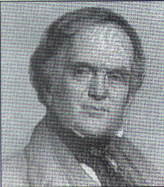
William Henry Playfair
On 2 Nov 2015, the CRC hosted a seminar which looked at the figure of William Henry Playfair (1790-1857), discussing his life and work and looking in some detail at a range of architectural drawings which had been selected from our collection.
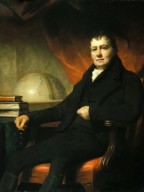
John Playfair
Playfair was born was born in Russell Square, London, July 1789. On the death of his father, architect James Playfair, he was sent to reside with his uncle in Edinburgh. Professor John Playfair, mathematician and geologist and a leading figure in the Edinburgh Enlightenment, took control of his nephew’s education. Following his father’s profession, the young Playfair studied under William Starke of Glasgow. Following Starke’s death in 1813, Playfair moved to London where he worked in the offices of James Wyatt and Robert Smirke, returning to Edinburgh in 1816.
He established himself professionally by winning the commission in 1817 to complete the unfinished University buildings (leaving the front as designed by Robert and James Adam). He also designed the city’s Royal Terrace and Regent Terrace on the Calton
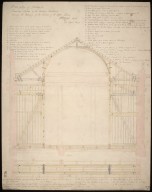
College of Edinburgh Transverse Section of the Southern Buildings
Hill estate; the unfinished National Monument on Calton Hill; and, the Royal Scottish Academy and the National Gallery on the Mound. While Playfair’s most important works in Edinburgh have been executed in the Greek revivalist or classical style – earning for Edinburgh the title of ‘Athens of the North’ – he was competent in other styles too. He designed New College for the ten newly established Free Church of Scotland, a jagged-lined rendering of the Gothic style. He also built country houses and mansions in the Italianate and Tudor styles.
The discussion in the seminar was not structured in any major way but flowed directly from looking at the drawings we had selected to view. Alongside the physical drawings, we also looked at digitised ones, using the complement of both to do things which one or other could not do alone.
With over 5000 to choose from, electing the drawings was never going to be an easy task. However we settled on one or more drawings relating to the following of Playfair’s projects:
- College of Edinburgh
- Royal Observatory
- Dollar Academy
- Blenheim Place
- Elm Row
- Royal Institution
- Royal Institution Additions
- National Monument
- Royal College of Surgeons
- Stewart Monument
- Donaldson’s Hospital
- New College Edinburgh
Links:
- All of the digitised drawings can be viewed in a dedicated online gallery
- View Playfair in the Archives Catalogue
LibQUAL+ Survey 2015

If you have been selected to complete the survey, please do before the 15th November. You could win one of four £50 prizes. Prizes include either a Blackwell’s vouchers or high street vouchers!
Thank you very much if you have already completed the survey. Your feedback shows us to where to make improvements, to give you the best possible library experience.
Sound as a Snake: conservation techniques for unusual materials
One of the MIMEd instruments that went under conservation treatment this month by

Sanxian prior to conservation
conservator Jonathan Santa Maria Bouquet is a Chinese sanxian (MIMEd 437). The instrument, played both as a solo or orchestral instrument in Chinese classical music, is a plucked instrument with three strings. This sanxian was made in the mid-nineteenth century and was collected by John Donaldson, the founder of the Music Classroom Museum of Edinburgh University, and has been part of the University’s collection since before 1872.
An interesting element of sanxian construction is that the front and back of the body are made of snake skin – often that of a python. Although visually stunning, this material is susceptible to damage. Unfortunately changes in relative humidity over the years has caused the skin of the back and front of our sanxian to stretch resulting in tears.

Tear in front of instrument body

Torn back section
To treat this instrument Jonathan used a technique he recently learned from a workshop given by Caroline Scharfenberg, a rare book conservator, which took place at the conservation studio of the Main Library. The technique is known as Japanese paper toning and it involves the use of Japanese paper to reinforce torn materials. The paper is then coloured using natural pigments to match the original material resulting in an inconspicuous repair. In the case of the sanxian Jonathan reinforced the tears in the snake skin, applying Japanese paper to the inside of the instrument. He then toned and texturized the paper to match that of the snake skin.

Front with Japanese paper before toning

Front with toned paper

Back with Japanese paper before toning

Back with toned paper

Instrument ready for display
Although the tears are still visible, this treatment has made the damage less noticeable and more stable. Now the instrument is ready for display in the redeveloped St Cecilia’s Hall.
Billy Graham and Tell Scotland
Saturday 7 November marks the 97th birthday of the famous evangelist Rev Billy Graham. He is probably best known for his crusades during the 1940s, 50s and 60s. He visited Scotland in 1954-1955 in what became known as the “Tell Scotland” movement. This movement was led by Rev Tom Allan, whose papers are kept here in the archives at New College Library.
Music was a very large part of the crusades and the Tell Scotland evangelistic events, with choirs of sometimes of thousands of singers being involved. This is evident in the archives, which contains a copy of a specially printed hymn book for the Tell Scotland Gorbals Mission (ref. AA6.3.5)
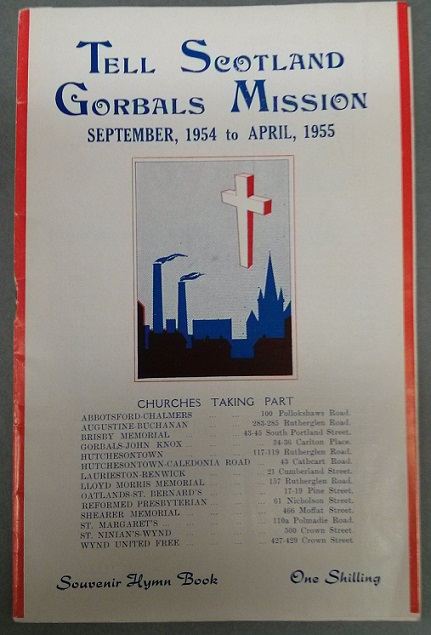
and a hymn entitled “Tell Scotland” (ref. AA6.3.6) written by Ian B Doyle and dedicated to Tom Allan.
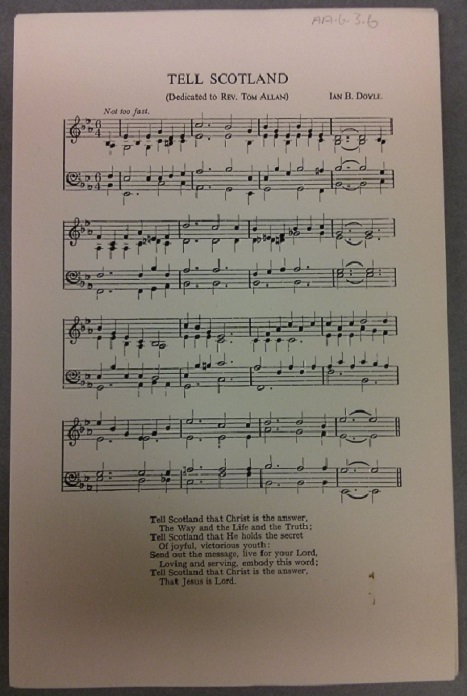
In addition, there is a photograph of the organisers of the Tell Scotland rallies with Billy Graham (front row, 4th from left) and his musical director Cliff Barrows (back row, 7th from left). Rev Tom Allan is front and centre next to Dr Graham.

Although now 60 years ago, the Tell Scotland rallies are well-remembered in Scotland for the significant impact they made. Hopefully, Billy Graham remembers them fondly too.
Happy Birthday, Dr Graham!
Kirsty M Stewart, New College Collections Curator
All of the above items can be seen at New College Library: http://www.ed.ac.uk/information-services/library-museum-gallery/using-library/lib-locate/newcoll-lib
New exhibition showcases unique items from the University’s Anatomical Museum
The Visual Dissection – The Art of Anatomy exhibition in the Main Library will give visitors an extremely rare opportunity to see a range of collections from the University’s Anatomical Museum, some of which have never been on display to the public before. The exhibition will tell the story of how anatomical representation of the body has changed over the years, taking you on a journey from the woodcuts and engravings of the 17th and 18th centuries, to the wax and papier mâché models of the 19th and 20th centuries, and then on to the digital technologies of today.
The late 18th and early 19th century was a golden age for the production of anatomical models and the Anatomical Museum collections are particularly rich with examples from across Europe. Exotic sounding manufacturers like ‘Maison Tramond’ and ‘Ziegler’ are well represented in the exhibition and visitors will be able to see for themselves the exquisite craftsmanship required to produce a resin cast of a lung or the corrosion cast of a foot. These objects have been used to help teach generations of medical students in the Anatomy Department at the University of Edinburgh. Many of the models on display are so accurate and detailed in their anatomical representation that they are still used for teaching today.
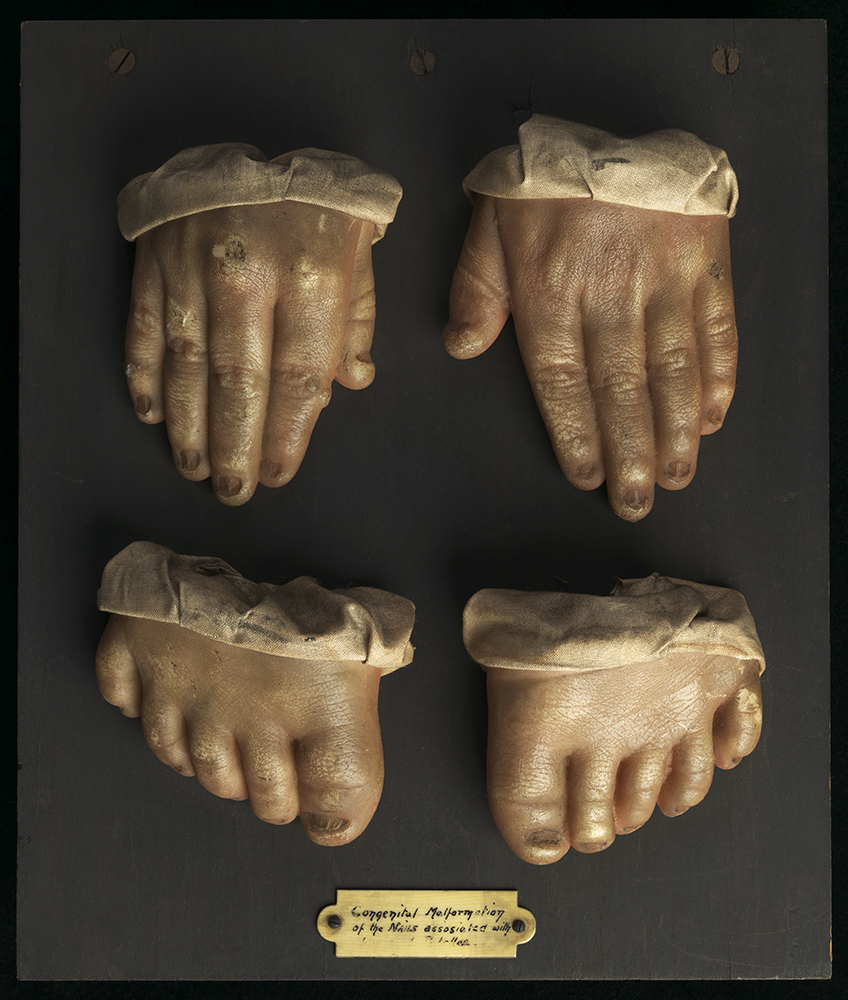
Wax moulage of hands and feet, early 20th century. This moulage shows a congenital malformation of the nails.
Part of the richness of this exhibition comes from the fact that these treasures of the Anatomical Collection are complemented by works from the University’s Fine Art and Special Collections. A particular notable example is the inclusion of Giambologna’s écorché figure of a horse (dating from 1585) from the Torrie Collection, which will be displayed for the first time alongside another of the University’s iconic items, Carlo Ruini’s Anatomia dell cavallo, infermita, et suoi rimedii (from 1618). As well as these rare illustrated books and the unique anatomical casts and models, the exhibition will also include a life sized hologram of the human body, believed to be the largest anatomical hologram ever made.
Visual Dissection presents the anatomical models on display as being a product of innovative collaborations between the worlds of art and science and perhaps just as importantly as works of art in their own right. Highlighting these collaborations in the displays is entirely appropriate as the exhibition itself is the result of a partnership between Doug Stevens, a 5th year student at Edinburgh College of Art, and the Anatomical Museum. Doug put the Visual Dissection exhibition proposal together as part of his Employ.ed internship. Doug’s initial exhibition vision was made into a reality thanks to the input of Anatomical Museum staff and additional funding from the Biomedical Teaching Organisation, Edinburgh College of Art, the School of Medicine and the Anatomical Society.
Doug, who is studying for an MA (Hons) Fine Art degree said ‘I first heard about the Internship through a fellow Fine Art student who had done it the previous year and thought that it would be a great way to combine the theoretical and research-based aspects of my course with the practical elements of exhibition design. Although I had no real experience of studying Anatomy, I feel I was able to apply approaches learnt through my studies to the Anatomical Collection and open up interesting ways of viewing and interpreting its constituent items.’
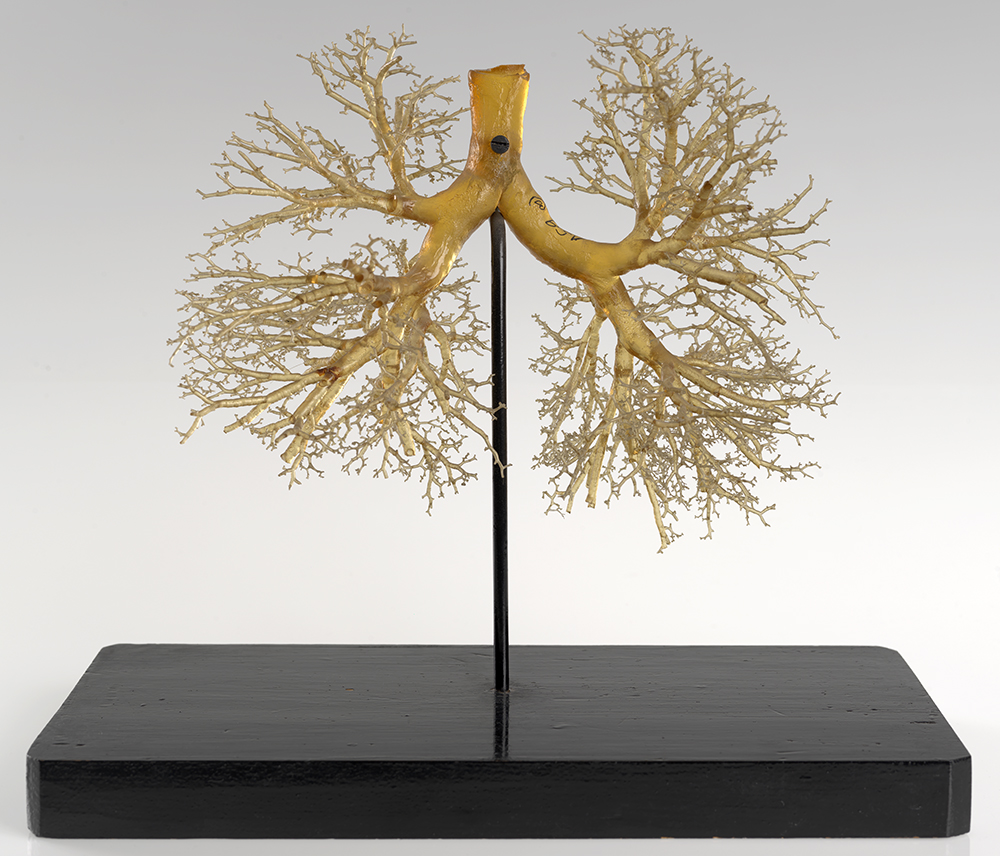
Mounted resin cast of lungs
Visual Dissection – The Art of Anatomy opens in the University of Edinburgh Main library gallery on the ground floor on 4th December and runs until 5th March 2016, it is open Monday – Saturday from 10am to 5pm and admission is free.
Trial access to Voxgov
Studying American politics? Finding it hard to search for and locate the swathes of information being published by the US Federal Government? Voxgov may be for you.
The Library has set up trial access to Voxgov, a distinctive resource that pulls together the vast amount of US Federal Government information, communications and publications and allows you to easily search, discover, compare and get full text access to this material.
You can access Voxgov from the E-resources trials page on the Library website (or direct at https://www.voxgov.com). On-campus access is direct. For off-campus access you will need to use the VPN.

1,000 Science and Engineering PhD theses added to ERA
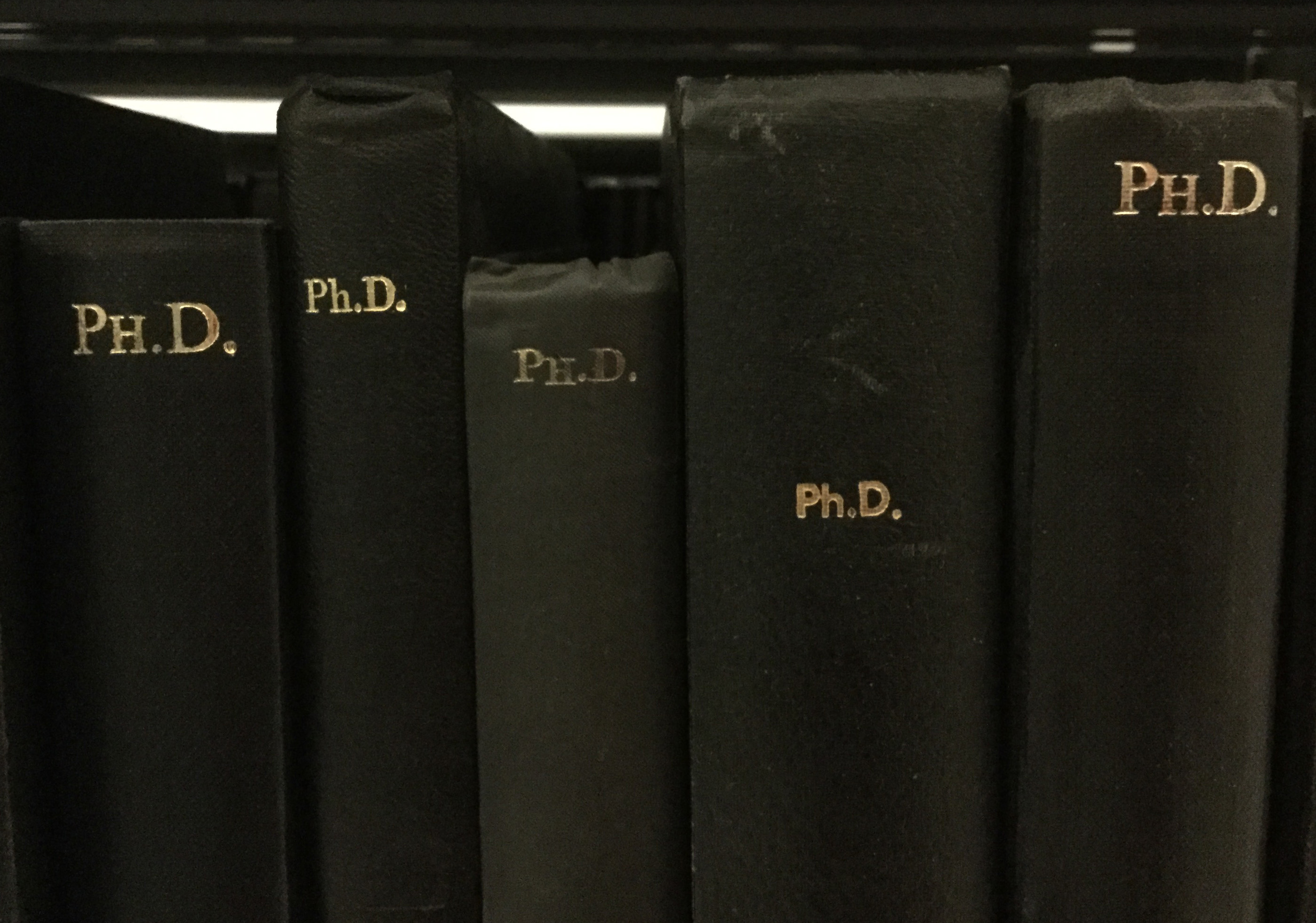
In the Library’s largest ever one-off digitisation project, L&UC have been working with RedRock, a scanning company and member of the supported business framework, to digitise and make available on-line over 5,000 University of Edinburgh Science and Engineering PhD theses.
We are delighted to announce that the first 1,000 theses are now available on ERA, the Library’s digital repository, at:
This incredibly diverse collection, dating from the early 1900s to the present day, contains unique works on almost every subject in the science and engineering field: some highlights include early work on DNA, analysis of E-coli and Salmonella and a study of the impact of electrification in the developing world.
The project, which involves the scanning of over 1 million pages, will double the number of fully-searchable Edinburgh theses available on-line and open up a vast collection of material which had previously only been accessible from the King’s Buildings’ library store. Over the coming weeks we will continue to upload more theses and intend to have the full collection of 5,000 available by the end of 2015.
Please contact Gavin Willshaw (gavin.willshaw@ed.ac.uk), Digital Curator, Library and University Collections, if you would like more information.
Talk given to Members of the South Georgia Association – on the Salvesen Archive
AT THE BUDONGO LECTURE THEATRE, EDINBURGH ZOO, SATURDAY 31 OCTOBER 2015
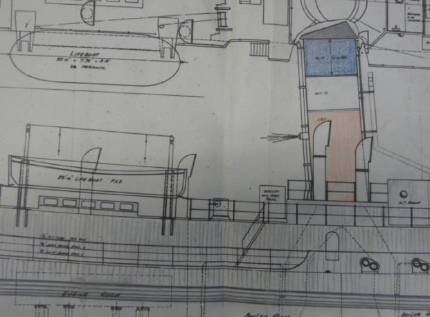
Plans for converting former naval vessels into whale-catchers – an item in the Salvesen Archive.
This past weekend – Saturday 31 October – saw Dr. Graeme D. Eddie of the Centre for Research Collections (CRC) participate in the Penguin City Meeting of the South Georgia Association (SGA), held at the Budongo Lecture Theatre, Edinburgh Zoo. The SGA is a non-profit organisation formed to give voice to those who care for South Georgia, a remote mountainous island in the South Atlantic.
 The SGA meeting had been organised and chaired by Dr. Bruce F. Mair, geologist. Also present among the geologists, glaciologists, botanists, ecologists, and former whalers, were Alexandra Shackleton, granddaughter of Sir Ernest Shackleton (1874-1922) and current President of the James Caird Society, descendants of Carl Anton Larsen (1860-1924) the Norwegian-British Antarctic explorer, and descendants of Sir James Mann Wordie (1889-1962) the Scottish Polar explorer and geologist.
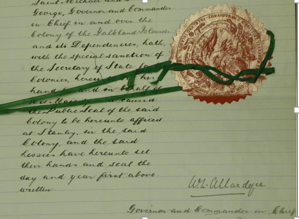
Signature of William Lamond Allardyce, Governor and Commander in Chief of the Falkland Islands, together with Seal, on the Lease agreed with the South Georgia Co., a firm raised by Christian Salvesen & Co. in 1909… an item in the Salvesen Archive.
Presentations on the day covered ‘Accessible Archives and the Industrial Past’, ‘Science and Field Work’ and ‘South Georgia 2015 and Beyond’ and, represented as an accessible archive, the CRC presentation was given in the first section of the Meeting.
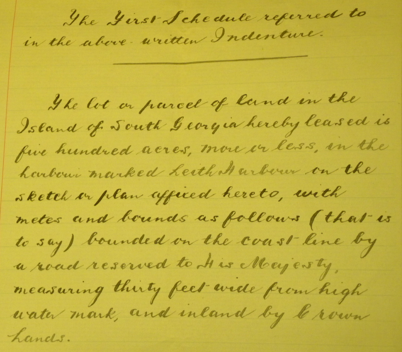
The Lease indicated that ‘five hundred acres, more or less, in the harbour marked Leith Harbour’, South Georgia, was to be allocated to the firm. The Lease permitted the firm to operate two whale-catcher vessels in addition to two associated with a Lease over Allardyce Harbour. Four vessels in the region made the whaling operation viable.
Profiling the Salvesen Archive, it offered a brief history of the firm of Christian Salvesen & Co. Ltd., and a look at the transfer in three stages of the archive of the company’s whaling business to Edinburgh University Library starting in 1969.
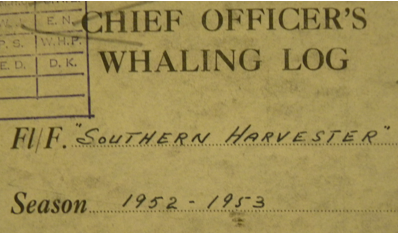
Cover of the ‘Whaling Log’ of the Salvesen & Co. whale factory-ship, ‘Southern Harvester’, season 1952-1953… an item in the Salvesen Archive.
The content of the Salvesen Archive was described with illustrations showing its variety. The talk looked at some of the conservation needs of the material, the use of the collection by researchers, and offered glimpses of the lives of personnel at the South Georgia stations.

While the ‘Whaling log’ has provided data of whales caught and processed to researchers of the past, it also provides climatological information to weather scientists and researchers today, giving information about ice, wind, and temperatures.
The transport of live penguins by the company to Europe – not least to Edinburgh Zoo – was also briefly explored through images from the Salvesen Archive.
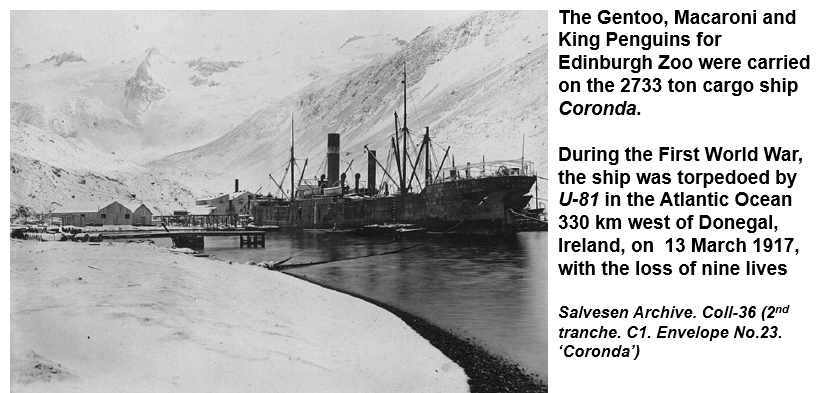
A slide from the presentation at the SGA Meeting.
The SGA meeting also saw presentations from the National Library of Scotland with the title ‘South Georgia on the Shelf’ and looking at the Map and Wordie collections, and from the South Georgia Heritage Trust & the National Museums of Scotland about a project to highlight the location of South Georgia related objects around the world. John Alexander who had spent winter seasons in the whaling industry gave a talk on ‘Sailing in the Antarctic with Salvesen’.
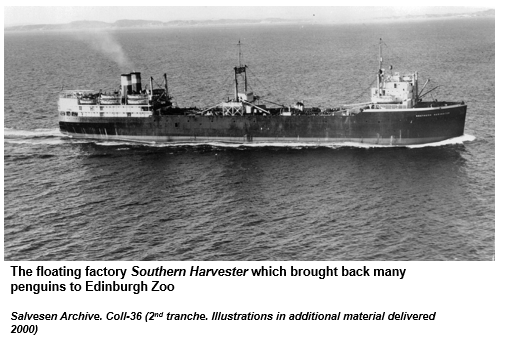
A slide from the presentation given at the SGA Meeting.
There were also presentations on tussock grass on South Georgia, the geology of the island, sustainable South Georgia fisheries management, and the rat eradication programme. The day was concluded with a visit to the penguin enclosure at Edinburgh Zoo.
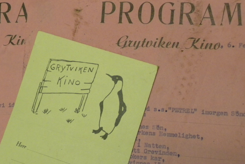
‘Membership card’ for the Grytviken Kino… the cinema at the Grytviken whaling station, South Georgia. At the time – up to the early 1960s – it was the most southerly cinema in the world after the cinema in Ushaia, Tierra del Fuego.
The host for SGA Meeting, Dr. Bruce F. Mair had been a geologist with the British Antarctic Survey and had carried out extensive mapping in an area of South Georgia around Brandt Cove, Larsen Harbour and Drygalski Fjord in the 1974-75 and 1976-77 field seasons. The region’s Mt. Mair is named after him!
Centre for Research Collections, Edinburgh University Library, 2 November 2015
Database trials for Chinese studies
We have been offered a free trial of the following e-resources for Chinese studies:

Access on the University network or off campus via VPN. Trial ends: 29 November
Access on the University network or off campus via VPN. Trial ends: 13 November. This resource is listed on our trials webpage and Discovered.
Pishu (皮书) refers to official white paper, blue paper or green paper policy documents in China. They offer candid, in-depth policy recommendations on topics including climate change, social responsibility, the economy, energy conservation, food/drug safety, health care, human rights, international development, and rule of law, regional security, and women’s rights. The database contains the full text of over 1,000 such books in Chinese and are full-text searchable.
A title list of volumes included in PISHU is also available here: http://www.eastview.com/online/ebooktitles
- 大成古纸堆 (including 申報)

Access on the University network or off campus via VPN. Trial ends: till further notice.
This resource contains the following sections:
老旧刊 (containing hundreds of full-text periodicals from the late Qing Dynasty to 1949. There are many titles that are not found in the Late Qing Periodicals 1833-1911 and Minguo periodicals 1911-1949 that we subscribe to.)
民国丛书 (books published between 1911 and 1949)
申报 (most important Chinese newspaper published between 1872 and 1949)
古方志集 (hundreds of historical local gazetteers)
古籍文献 (thousands of Chinese classics and rare books)
中共党史期刊数据库 (full-text periodicals published by the Chinese Communist Party before 1949)
顺天时报 (1907-1930)
- 四库全书存目丛书
On Chinamaxx database platform. Trial ends: till further notice
- 地方志
On Chinamaxx database platform. Trial ends: till further notice
Feedback can be sent to shenxiao.tong@ed.ac.uk
Hybrid open access revenue
Photo courtesy of Images_of_Money
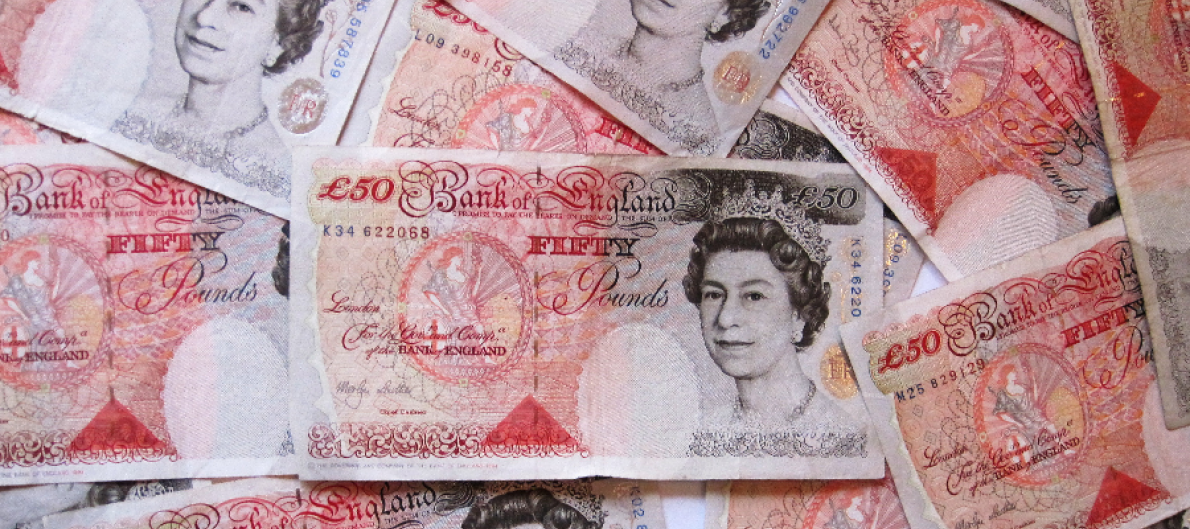
Over the last few weeks I’ve been preparing and reviewing various compliance and financial reports for funding agencies on their annual open access block grants awarded to our institution. One of the benefits of having sets of large data in front of you is that you start seeing trends and think of mildly* interesting things to do with it.
(* I say mildly because “The best thing to do with your data will be thought of by someone else“, which is one of the many reasons it is important to make your data open.)
Sequentially issued invoices
One of the things I’ve noticed is that one of the larger publishers (Elsevier) issues sequential invoices of the form W1234567 and 12345CV0. If we had enough invoices spread over a reasonable period of time we could estimate what their hybrid open access revenue is during that time period, and potentially extrapolate further. Just to be clear I’ve only picked Elsevier because they are the publisher that we have gathered the most information about open access expenditure due to their large market share.
Invoices issued from the European office
I looked through our admin records and noted invoice # W1274177 was issued on 30 April 2015 whilst invoice # W1300445 was issued on 22 October 2015. During this 175 day period there appears to be 26,268 invoices issued by the publishers European Corporate Office, which works out at about 150 APCs per day for their portfolio of hybrid journals.
Our average APC in 2014/15 (n=65) for this publisher is £2066.81 so their revenue for this period was in the region of £54,290,965, or an APC daily revenue of £310,234.
Invoices issued from the North American office
The publishers also issues invoices of the form 12345CV0 from their North American Corporate Office. Noting that invoice 11795CV1 was issued on 19th May 2015 and invoice 12306CV0 was issued on 15th October 2015 this suggests that 511 APCs were charged over the 149 day period, or around 3 APCs per day.
Using the same average APC (£2066.81) as before this gives us an estimate revenue of £1,056,140 during the time period, or £7,088 per day.
Note that the invoices issued from the regional offices do not reflect the revenue generated in that geographical area.
Global APC revenue
The combined daily APC revenue from the European and North American offices is in the region of £317,322. If we upscale this to a full year we can infer an annual APC revenue in the region of £115,822,530. This sounds like a hell of a lot of money, but put into perspective against the company’s total 2014 revenue of £5,773M (figure from the RELX Group annual report) this represents only 2% of their business income.
Assumptions
These are rough and ready calculations and should be taken with a pinch of salt because I make a number of assumptions including:
- The invoices really are sequentially issued
- No other types of transactions (e.g. journal subscriptions) are included in the invoicing sequence
- We have large enough data set to infer an annual revenue
- Daily APC rate is a good enough estimate
UPDATE
Stuart Lawson pointed out on Twitter that this estimate is likely to be on the high side:

Collections
 Hill and Adamson Collection: an insight into Edinburgh’s past
My name is Phoebe Kirkland, I am an MSc East Asian Studies student, and for...
Cataloguing the private papers of Archibald Hunter Campbell: A Journey Through Correspondence
My name is Pauline Vincent, I am a student in my last year of a...
Hill and Adamson Collection: an insight into Edinburgh’s past
My name is Phoebe Kirkland, I am an MSc East Asian Studies student, and for...
Cataloguing the private papers of Archibald Hunter Campbell: A Journey Through Correspondence
My name is Pauline Vincent, I am a student in my last year of a...
Projects
Cataloguing the private papers of Archibald Hunter Campbell: A Journey Through Correspondence
My name is Pauline Vincent, I am a student in my last year of a...
Archival Provenance Research Project: Lishan’s Experience
Presentation My name is Lishan Zou, I am a fourth year History and Politics student....