Home University of Edinburgh Library Essentials
April 4, 2026
E-Resources currently on trial
 American National Biography on trial until 11th February. This database offers portraits of more than 19,000 men and women — from all eras and walks of life — whose lives have shaped American history and culture. From astronauts to missionaries, chemists to musicians, and cowboys to Vikings, the portraits combine to reflect the rich diversity of American life, from pre-colonial times onward. More than a decade in preparation, the American National Biography is the first biographical resource of this scope to be published in more than sixty years.

Oxford Reports on International Law new modules • International Law in European Courts and • International Trade Law are on trial until 18th February. This resource brings together decisions on public international law from international law courts, domestic courts, and ad hoc tribunals. In this resource, the full scope of international case law is available in one place, accompanied by expert analysis and cross-case navigation via the Oxford Law Citator. New cases are added daily, making Oxford Reports on International Law the most up-to-date source of international case law available.

SAGE Video on trial until 12th March. This resource supports the teaching and learning needs of undergraduate students, through to the needs of the academic researcher within Counseling and Psychotherapy, Communication and Media Studies, and Education. With new and original video productions, including contributions from our book and journal editors and authors across the world, SAGE Video offers quick definitions, short tutorials and in-depth interviews for a range of academic viewpoints. It also features extensive footage of practitioners in real-life professional settings designed to illustrate best practice and provide a unique insight for students to master the theory, skills and techniques needed to succeed.

Feedback and further info
A list of e-resources on trial can be found on our trials webpage along with links to trial feedback forms – please do fill one out if you found the resource useful as your comments help decide future purchases. Resources on trial are also added to DiscoverEd – please note an entry for Sage Videos will be added to DiscoverEd later on this evening.
A Suffragette Belt
The CRC has recently acquired a rare belt previously owned by a Scottish suffragette. The belt has already been attracting lots of interest on Twitter so we’ve been exploring where it sits in the context of Suffragette textiles and symbolism.
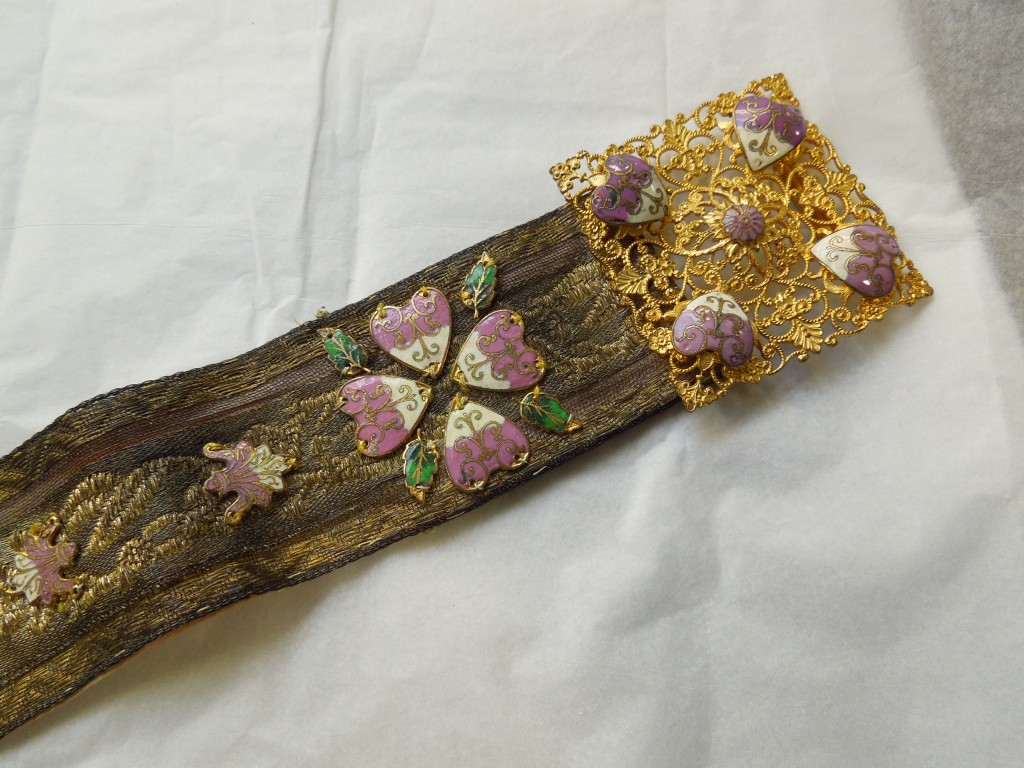 The belt is made from a strip of ribbon, embroidered with enamelled motifs in the signature white, green and purple associated with the suffrage movement. It has a pink lining on the reverse and a gilt buckle fastening. The belt is in amazing condition despite some oxidisation of the silver in the ribbon, leading the silver threads to turn dark grey.


Mockingbirds and Cuckoos
The library’s most borrowed books are all textbooks. Of course it is important that our library acts as a resource, but what can it offer you after you have completed your reading from Davidson’s Principles and Practice of Medicine? Certainly, we have more than textbooks here!
We compiled a list of some novels and autobiographies that the library holds. From Anne Frank’s The Diary of a Young Girl to Milan Kundera’s The Unbearable Lightness of Being, this list is full of great, thought-provoking reads:
- Junot Diaz, The Brief, Wondrous Life of Oscar Wao (PS3554.I259 Dia.)
- Jonathan Safran Foer, Everything is Illuminated (PS3606.O38 Foe.)
- Anne Frank, The Diary of a Young Girl (DS135.N6 Fra.)
- Joseph Heller, Catch-22 (PS3558.E476 Hel. )
- Ken Kesey, One Flew Over the Cuckoo’s Nest (PS3561.E667 Kes. )
- Milan Kundera, The Unbearable Lightness of Being (PG5039.21.U6 Kun.)
- Harper Lee, To Kill a Mockingbird (PS3562.E353 Lee. )
- Nelson Mandela, Long Walk to Freedom (DT1949.M35 Man.)
- George Orwell, Down and Out in Paris and London (PR6029.R8 Orw.)
- Randy Pausch, The Last Lecture (QA76.2.P38 Pau.)
- J.D. Salinger, The Catcher in the Rye (PS3537.A426 Sal.)
- Kathryn Stockett, The Help (PS3619.T636 Sto.)
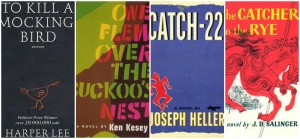
We were in the foyer of the Main Library today asking students which book on the list they found most inspiring. To Kill a Mockingbird was the clear winner, while One Flew Over the Cuckoo’s Nest and Catch-22 were tied for second place, closely followed by The Catcher in the Rye.
Do you agree? Tell us which of these books you find most inspiring! Haven’t read them? It only takes six minutes of quiet reading to relax you, so borrow one from the library and start today! You never know what might come from it.
Launch of our first Knowledge Exchange Week

Library and University Collections is delighted to announce its first Knowledge Exchange Week to take place 20 June -24 June 2016.
The programme is aimed at Library and Cultural Heritage Professionals from all backgrounds and career stages and we are inviting applications from the Erasmus partner universities and other academic institutions across Europe.
If you would like to discover more about the University of Edinburgh’s library and collections and share your own experiences with international colleagues then please follow the link below for further information.
http://www.ed.ac.uk/is/kew2016
Applications will be accepted during the period 5th February- 5th March 2016
Dating a Book
For the last couple of months I have had the pleasure of both volunteering with the DIU and now working a bit more seriously through my work placement as part of the MSc in Book History and Material Culture. My undergraduate degree is in Creative Writing and I primarily focus on Children’s Literature in my current studies, so the Digital Imaging Unit might seem like a strange fit for me at first glance. The exact opposite is true though. In the world of Children’s Literature, illustrations and images in general are essential to the construction and survival of texts. During my time here I have been working on compiling the metadata for our ECA Rare Books Image Collection. This project is dear to my heart for two reasons. 1) I am exposed to images and illustrations of every variety, both artistically and mechanically. 2) I learn something new every day. There are many books in this collection that are far out of my expertise and for that reason I am forced to research all sorts of things I have never even heard of. Because of this I have become a huge fan of nature lithography, Italian architecture and handmade books. The latter is what I would like to discuss today.
As I was researching the ECA Rare Book Collection, I found that many of the materials I was working with had no author and no date. Because of the nature of these type of handmade scrapbook-like works, there is no imprint or page of information on the piece. In this way, dating a work becomes a bit of a guessing game. If there is an attributed author or illustrator one can narrow down the production date to the lifetime of this person. If it is known to be made in a certain region by this person, for example, that can also narrow down the search for the date. It becomes a Sherlock Holmes kind of exploration to put all the pieces together and decide on a more narrow range of dates that a book could have been produced.
In this collection there are many examples of successful dating as well as some cases that have proved to be a bit trickier to pin down. I first noticed this when looking at a page from a hand created book titled by the cataloguer as ‘Album of printed initials, ornaments, illustrations and title pages, cut from books: collected as examples of typographical design, woodcut, engraving, illustration and ornament’. The particular page (see below) is of printed initials that have been cut from another book and then rearranged and adhered to the page as part of a collection of typographical designs, woodcuts, engravings, illustrations and ornaments. The book itself, or rather portfolio because the leaves are not bound together, has not been dated. The reason we know anything about the age of this book is from the age of the books in which were borrowed to create the new one. From some identified works, the collection of images comes from sometime around 1490 all the way to 1715. The pages themselves seem to have been compiled around 1880 to 1920.

A second example of dating from context is a curious photo album from Lord Elgin’s diplomatic missions to China. Unlike with the printed initials, these images have names attributed at points and even dates in the case below. Because of these acknowledgements, it becomes much easier to place this piece in history. Oddly enough though, some photographs are heavily annotated and others sit alone without any clues to what exactly they represent. We cannot be entirely sure when these were taken and if found out to be earlier or later than the other images, it could skew the data on the item as a whole.

A third very interesting undated book is that of calico samples that have been neatly cut and arranged, much like the printed initials from our earlier example. The manufacturers of these fabrics have been identified by the creator, which narrows down the date to the time in which these were all in business. The most helpful bit for this work though is a racehorse. One of the fabrics shows an image of ‘Gladiateur’, a racehorse who was accomplished from 1865-1866. This unsuspecting clue is mighty helpful when trying to confirm the time in which these fabrics would have been made and collected. If this particular horse had gone unnoticed, situated next to many other animal designs, we would know much less about this funny little collection.

One thing I didn’t expect to gain out of my work placement at the DIU was detective skills but it seems that I now know a bit more about how to date a book than I did a month ago. Unfortunately, there is one book that has no date and also has no catalogue information. This unique piece is a book of shawl designs that have been labelled and neatly placed on paper. There are some clues on these pieces that help us date it to a certain point (most noticeably the stamp from the Trustees for Manufacturers) but even with this it seems to remain quite mysterious. If you feel like testing your skills, feel free to check out the images of ‘Shawl Design’ at http://images.is.ed.ac.uk/luna/servlet/UoEwmm~3~3 and let me know if you find anything.


-Caitlin Holton, MSc Book History and Material Culture
Nashriyah: digital Iranian history
 The University of Manchester Library has just launched today, 1 Feb 2016, their digital project Nashriyah: digital Iranian history. It provides free access to 12,000 pages of digital versions of Iranian newspapers and periodicals capturing key historical events as they happened.
These newspapers and periodicals, many of which have been only partially accessible inside Iran, cover the defining moments from the following three eras:
- The premiership of Mohammad Mossadegh and the August 1953 coup d’état against his government (1950-53).
- The 1979 Revolution.
- The late 1990s/early 2000s ‘reform era’ of former President Mohammad Khatami.
For more details and access, please follow click here.
What can your library do for you?
Did you know that reading is one of the best ways to relax? Even as little as six minutes of quiet reading can be enough to make a difference! The type of reading that people do in this library is usually more geared towards study than relaxation, but taking some time to have a break is really important.
That’s why we’re going to be popping up in the Main Library foyer in the next few weeks and months, running short activities to inspire, relax, distract, and motivate anyone that is using the library. We know how hard and stressful it can be to be a student, and we want you to know that the library is here for you!
One of the things we’ll be starting with is a little distraction activity – we’ve made a few examples already:

Want to come and have a go? You can make some friends like these in the Main Library foyer on Wednesday, February 10th. Keep an eye on our Facebook and Twitter for other fun distractions!
Arkyves – new subscription

Following a successful trial last year, we now subscribe to Arkyves.
Arkyves: A Reference tool for the History of Culture is a database, treasure trove and toolbox for those interested in the History of Culture. It is a single access point for thematic searches across a wide variety of cultural heritage collections, contributed by partners like the Dutch Rijksmuseum, the Netherlands Institute for Art History, the Herzog August Bibliothek, and the university libraries of Milan, Utrecht, Glasgow, and Illinois. Ordering and re-ordering motifs, themes, stories and iconographic details in kaleidoscopic fashion, Arkyves will make you find many things you did not realize you were looking for.
Access Arkyves via the Databases AZ list or DiscoverED.
Playfair Revealed
The architect William Henry Playfair was born in Russell Square, London, July 1789. On the death of his father, Playfair was sent to reside with his uncle in Edinburgh. Professor John Playfair, mathematician and geologist and a leading figure in the Edinburgh Enlightenment, took control of his nephew’s education. Following his father’s profession, the young Playfair studied under William Starke of Glasgow. His first public appointment was the laying out of part of the New Town in Edinburgh in 1815.
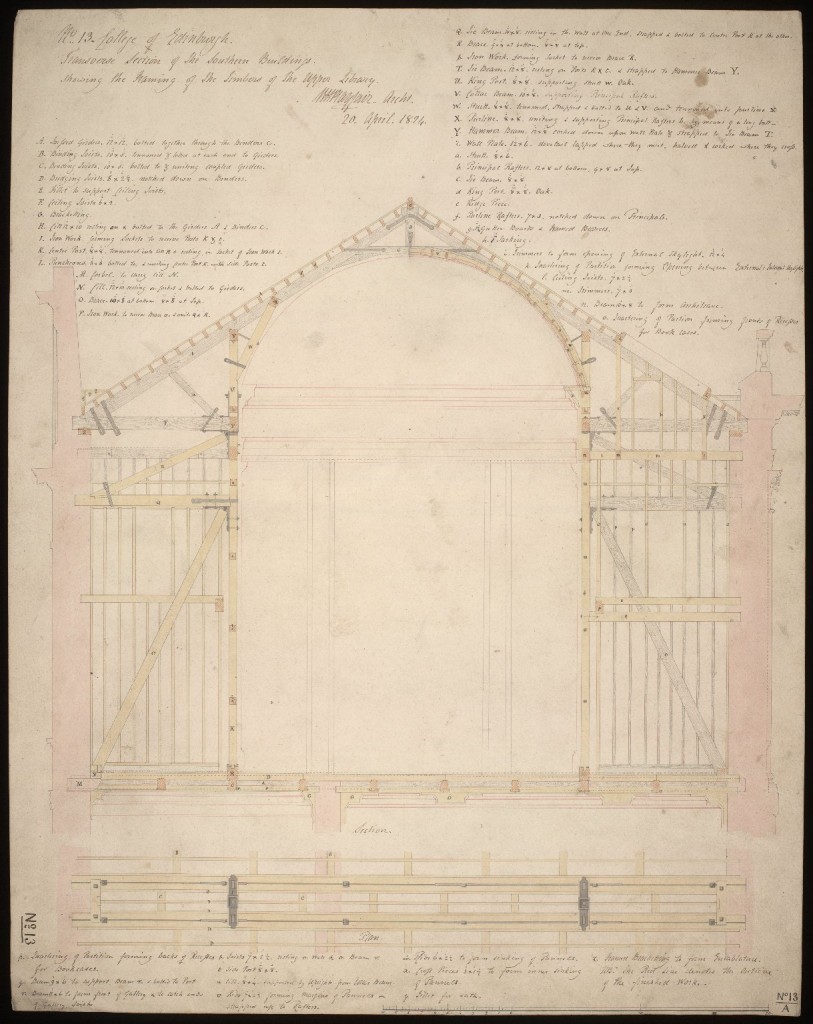
University of Edinburgh (Old College): Transverse section through southern range
Then, after a visit to France in 1816, he established himself professionally by winning the commission in 1817 to complete the unfinished University buildings (leaving the front as designed by Robert and James Adam). He also designed the city’s Royal Terrace and Regent Terrace on the Calton Hill estate; the unfinished National Monument on Calton Hill; and, the Royal Scottish Academy and the National Gallery on the Mound. While Playfair’s most important works in Edinburgh have been executed in the Greek revivalist or classical style – earning for Edinburgh the title of ‘Athens of the North’ – he was competent in other styles too. He designed New College for the ten newly established Free Church of Scotland, a jagged-lined rendering of the Gothic style. He also built country houses and mansions in the Italianate and Tudor styles.
Playfair died in Edinburgh after a long illness on 27 May 1857. His Trustees donated his drawings to the University the following year.
Containing over 5,000 drawings, and with largely only a typescript catalogue of the briefest of descriptions, the collection presents many challenges. Despite these it is one of our most frequently consulted collections. As part of our move to ArchivesSpace, we managed to get a the overarching structure of the catalogue keyed and online.
Late last year we hosted a very productive seminar on Playfair, where academics, curators and others discussed Playfair, the collection and issues around both. This month sees the start of a project where we have two architecture students on placement who are going to make a detailed study of a subset of the drawings, identifying key information within them. This will be both general information (e.g. date, scale, type of drawing etc.) and also detail more specific to Playfair and the buildings. This will allow us to both improve the existing catalogue almost immediately and also draft an overarching schema for cataloguing the collection as a whole. This will then allow us to more accurately estimate the resource that would be required.
Due to both the arrangement of the collection and familiarity (at least to some degree) with the building in question, the project will focus on drawings of Old College. We began with drawings covering the west range and south-west corner. These originally housed Chemistry, Practice of Physic and the Natural History Museum and, even at first glance, the drawings are yielding all sorts of information, such as Playfair’s work pattern – he was generally producing one drawing per day. He also produced a number of detailed drawings at 1:1 scale. There is also much evidence of his innovative use of structural iron work.
This project is a collaboration with Dr Richard Anderson (School of Architecture and Landscape Architecture), whose students, Federica and Xue, are contributing their expertise to a fascinating exploration of one of our most treasured collections.
British Politics

The Library has recently purchased back issue access to the e-journal British Politics. This now ensures that the Library has full access to this e-journal from 2006 (vol. 1) onwards.
 Published by Palgrave Macmillan, British Politics is a peer-reviewed academic journal designed to promote research in British political studies. It incorporates a range of research papers and review articles from all theoretical perspectives, and on all aspects of British politics.
The Library already had access to several years of this journal via other e-journal collections, however, this purchase ensures the Library has full and permanent access to this e-journal from it’s first volume and issue onwards.
You can access British Politics via DiscoverEd.
Caroline Stirling – Academic Support Librarian for Social and Political Science
Collections
 Hill and Adamson Collection: an insight into Edinburgh’s past
My name is Phoebe Kirkland, I am an MSc East Asian Studies student, and for...
Cataloguing the private papers of Archibald Hunter Campbell: A Journey Through Correspondence
My name is Pauline Vincent, I am a student in my last year of a...
Hill and Adamson Collection: an insight into Edinburgh’s past
My name is Phoebe Kirkland, I am an MSc East Asian Studies student, and for...
Cataloguing the private papers of Archibald Hunter Campbell: A Journey Through Correspondence
My name is Pauline Vincent, I am a student in my last year of a...
Projects
Cataloguing the private papers of Archibald Hunter Campbell: A Journey Through Correspondence
My name is Pauline Vincent, I am a student in my last year of a...
Archival Provenance Research Project: Lishan’s Experience
Presentation My name is Lishan Zou, I am a fourth year History and Politics student....